Preparation is the key to success in any interview. In this post, we’ll explore crucial Understanding of solar industry trends and technologies interview questions and equip you with strategies to craft impactful answers. Whether you’re a beginner or a pro, these tips will elevate your preparation.
Questions Asked in Understanding of solar industry trends and technologies Interview
Q 1. Explain the current trends in solar photovoltaic (PV) technology.
The solar PV technology landscape is constantly evolving. Currently, we see several dominant trends. Higher efficiency is a major focus, with advancements in monocrystalline silicon, PERC (Passivated Emitter and Rear Cell) technology, and tandem solar cells pushing conversion efficiencies beyond 20%. Think of it like getting more power from the same surface area. This is crucial for reducing land usage and overall system costs.
Another key trend is the rise of bifacial solar panels. These panels absorb light from both sides, increasing energy generation, particularly in areas with high albedo (reflectivity). Imagine placing a mirror under a solar panel – that’s the basic concept.
Perovskite solar cells represent a promising emerging technology. While still in early stages of commercialization, their potential for high efficiency and low manufacturing costs is significant. Think of it as a potential game-changer down the line.
Finally, flexible and lightweight solar cells are gaining traction for niche applications such as building integrated photovoltaics (BIPV) and portable power solutions. These offer more design flexibility than traditional rigid panels. For example, these cells can be integrated directly into roofing materials.
Q 2. Describe the different types of solar inverters and their applications.
Solar inverters are essential components in PV systems, converting the direct current (DC) electricity generated by solar panels into alternating current (AC) electricity used in homes and businesses. There are several types:
- String inverters: These are the most common and cost-effective. They connect multiple solar panels in series (a string) and convert the DC power from the entire string into AC. They’re simple and reliable but less efficient if one panel in the string malfunctions.
- Microinverters: Each panel has its own microinverter, converting DC to AC individually. This offers better efficiency and monitoring capabilities, as a single faulty panel doesn’t affect others. They are typically more expensive than string inverters but offer enhanced performance.
- Power optimizers: These sit between the solar panels and the string inverter, optimizing the power output of individual panels. They can mitigate the impact of shading or panel mismatch, improving overall system efficiency. They combine the advantages of both string inverters and microinverters to a degree.
- Central inverters: Commonly used in large-scale solar farms. They connect a large array of solar panels and convert the DC power from the entire array into AC. They’re suited for huge systems.
The choice of inverter depends on factors such as system size, budget, desired efficiency, and monitoring requirements. For example, residential systems frequently employ string inverters or microinverters based on cost considerations and panel performance expectations.
Q 3. What are the key factors influencing the cost of solar energy systems?
The cost of a solar energy system is influenced by a number of key factors. System size is paramount – a larger system (more panels and inverters) costs more.
The type of panels chosen greatly impacts cost. High-efficiency panels are more expensive upfront but offer higher energy production over their lifetime.
Installation costs vary depending on factors like roof complexity, local labor rates, and permitting requirements. A simple, flat roof installation will be cheaper than a complex, sloped roof.
Permits and inspections add to the overall expense. These costs vary significantly from location to location.
Financing options also play a critical role. Loans and leases can impact the upfront costs, but increase the total cost over time. Financing terms and interest rates should be carefully considered.
Finally, location influences cost as well, with some areas having higher labor costs or more stringent building codes than others.
Q 4. Discuss the impact of government policies and incentives on solar energy adoption.
Government policies and incentives play a crucial role in driving solar energy adoption. Tax credits, such as the federal Investment Tax Credit (ITC) in the United States, significantly reduce the upfront cost of solar installations, making them more financially attractive to homeowners and businesses.
Renewable portfolio standards (RPS) mandate that a certain percentage of electricity generation comes from renewable sources, creating demand for solar energy and stimulating investment in the industry.
Net metering policies allow solar energy system owners to sell excess electricity generated to the grid, further incentivizing investment in solar PV systems and offsetting electricity costs.
Feed-in tariffs (FITs) provide guaranteed payments for the electricity generated by solar systems, offering a stable and predictable revenue stream for solar energy producers. Different regions and countries have different schemes in place; these vary widely.
Conversely, lack of supportive policies or the presence of policies unfavorable to renewable energy can significantly hinder solar energy adoption.
Q 5. Compare and contrast different solar energy storage technologies.
Several technologies exist for storing solar energy, each with its strengths and weaknesses.
- Battery storage (Lithium-ion): Currently the most popular choice for residential and commercial applications. Lithium-ion batteries offer high energy density, relatively long lifespans, and fast charging/discharging capabilities. However, they can be expensive and their environmental impact during manufacturing and disposal needs consideration.
- Pumped hydro storage: A mature technology involving pumping water uphill during periods of excess solar generation and releasing it to generate electricity during peak demand. It’s cost-effective for large-scale applications but geographically limited to areas with suitable topography.
- Thermal energy storage: Stores solar energy as heat, often using molten salts or other materials that retain heat for extended periods. This technology is suitable for concentrated solar power (CSP) plants.
- Compressed air energy storage (CAES): Stores energy by compressing air, which is then used to drive turbines. This offers large-scale energy storage capacity and can handle high power outputs, although it can be expensive and requires significant space.
The best technology depends on the specific application, budget, and available resources. For example, residential applications frequently utilize lithium-ion batteries for their convenience and scalability, while large-scale energy storage often involves pumped hydro or CAES.
Q 6. What are the challenges associated with integrating solar energy into the electricity grid?
Integrating solar energy into the electricity grid presents several challenges. Intermittency is a major hurdle; solar power generation fluctuates depending on weather conditions (sunlight availability). This variability can impact grid stability.
Voltage and frequency regulation are crucial for grid stability, and the intermittent nature of solar power can make this challenging. Sophisticated grid management systems are needed to compensate for the fluctuating supply.
Grid infrastructure limitations may require upgrades to accommodate the influx of solar power. Existing grids may not be designed to handle the high volumes of electricity from large-scale solar farms.
Distribution system constraints need careful consideration. The distribution grid may need to be upgraded or reinforced to manage the local flow of solar energy generated within a neighborhood or region.
Protection and safety measures are necessary to prevent damage from overvoltage or reverse power flow from solar installations back into the grid. Robust safety protocols and grid-level protections are needed to mitigate these risks.
Q 7. Explain the concept of net metering and its implications for solar energy consumers.
Net metering is a billing mechanism that credits solar energy system owners for the excess electricity they generate and feed back into the grid. It essentially allows you to ‘sell’ your excess solar power to the utility company at the retail rate.
This means that during the day when your solar panels produce more electricity than your home consumes, the surplus energy flows back into the grid. At night, or during periods of low solar production, you draw power from the grid as usual. At the end of the billing cycle, the utility company nets the amount of electricity you generated against the amount you consumed, resulting in a lower overall electricity bill, or potentially even a credit.
Net metering’s implications for consumers are significant. It makes solar energy systems more financially attractive by allowing homeowners and businesses to offset a larger portion of their electricity costs. It also encourages greater adoption of solar energy, which contributes to a more sustainable energy system. However, the specific rules and regulations surrounding net metering can vary significantly from one region or utility provider to another.
Q 8. Discuss the environmental impact of solar energy production and disposal.
While solar energy is a clean energy source once operational, its production and disposal have environmental impacts. Manufacturing solar panels requires energy and resources, including silicon, metals, and chemicals. This process generates greenhouse gas emissions and waste. The mining of raw materials can lead to habitat destruction and water pollution. At the end of their lifespan, panels contain toxic materials like lead, cadmium, and arsenic, requiring careful recycling or disposal to prevent environmental contamination.
Mitigation Strategies: The industry is actively addressing these concerns. Improvements in manufacturing processes aim to reduce energy consumption and waste. Research is ongoing into developing more sustainable materials and more efficient recycling methods. Extended Producer Responsibility (EPR) schemes are emerging, holding manufacturers accountable for the end-of-life management of their products.
Example: A recent study showed that the carbon footprint of solar panel manufacturing has decreased significantly in recent years due to technological advancements and improved efficiency. However, responsible end-of-life management remains crucial to minimizing the overall environmental impact.
Q 9. What are the key performance indicators (KPIs) for evaluating the success of a solar project?
Key Performance Indicators (KPIs) for solar projects track various aspects of their success, from financial performance to environmental impact. The specific KPIs used will vary depending on the project goals, but common examples include:
- Energy Yield (kWh): Total energy produced by the system over a period. This is a fundamental measure of efficiency.
- Capacity Factor: The ratio of actual energy generated to the maximum possible energy output given the system’s capacity. A higher capacity factor indicates better system performance.
- System Availability: Percentage of time the system is operational and producing power. Downtime due to maintenance or faults negatively impacts this KPI.
- Performance Ratio (PR): A comprehensive measure of system efficiency that accounts for various losses, including shading and temperature effects. A high PR is desirable.
- Levelized Cost of Energy (LCOE): The average cost per unit of energy generated over the system’s lifetime, encompassing capital costs, operational costs, and financing.
- Return on Investment (ROI): A financial metric that assesses the profitability of the project over its lifetime.
- Environmental Impact: Metrics such as avoided CO2 emissions or the reduction in reliance on fossil fuels.
Practical Application: Regular monitoring of these KPIs is crucial for optimizing system performance, identifying potential issues, and ensuring the project meets its financial and environmental goals.
Q 10. How do you assess the suitability of a site for a solar energy system?
Assessing site suitability for a solar energy system involves a thorough evaluation of several factors. The primary goal is to maximize energy production while minimizing costs and environmental impact.
- Solar Irradiance: The amount of sunlight received at the site, measured in kilowatt-hours per square meter per year (kWh/m²/year). Higher irradiance translates to higher energy generation.
- Shading: Trees, buildings, or other obstructions can significantly reduce energy output. A detailed shading analysis is crucial.
- Roof or Land Area: Sufficient space is needed to accommodate the solar panels and associated equipment. The orientation and tilt angle of the available area also affect energy production.
- Accessibility: Easy access for installation, maintenance, and potential repairs is important. Consider proximity to roads and utilities.
- Grid Connection: The site must have access to the electricity grid for exporting excess energy. This involves checking grid capacity and interconnection procedures.
- Environmental Considerations: Potential impacts on wildlife, water resources, and other environmental factors must be assessed. Permits may be required.
- Soil Conditions (for ground-mounted systems): The soil’s stability and bearing capacity are crucial for supporting the system’s foundation.
Example: A site with high solar irradiance, minimal shading, and good grid connection would be more suitable than a site with significant shading and limited space.
Q 11. Describe the different types of solar trackers and their benefits.
Solar trackers enhance the efficiency of solar energy systems by dynamically adjusting the angle of the panels to follow the sun throughout the day. This maximizes solar energy collection, particularly in regions with significant variations in sun angle.
- Single-Axis Trackers: These trackers rotate around a single axis, typically east-west, to follow the sun’s movement from east to west. They are relatively simple and cost-effective.
- Dual-Axis Trackers: These advanced trackers rotate around both a horizontal and a vertical axis, allowing the panels to track the sun’s position with greater precision throughout the entire day. They offer higher energy yield but are more expensive and complex.
- Fixed-Tilt Systems: These systems have panels fixed at a specific angle, generally optimized for the average solar angle throughout the year. They’re simpler and cheaper than trackers, but produce less energy than tracking systems.
Benefits of Trackers: Increased energy production (typically 20-30% more than fixed-tilt systems), improved system efficiency, and potentially higher return on investment. The choice between tracker types depends on factors such as budget, site conditions, and desired energy output.
Q 12. Explain the difference between monocrystalline, polycrystalline, and thin-film solar cells.
These three types of solar cells differ primarily in their silicon crystal structure and manufacturing process, influencing their efficiency, cost, and other characteristics:
- Monocrystalline Silicon: Made from a single, pure silicon crystal, resulting in a uniform, dark-blue appearance. They are the most efficient type, offering higher energy output per unit area. However, they are typically more expensive.
- Polycrystalline Silicon: Made from multiple silicon crystals, resulting in a mottled, bluish-gray appearance. They are less efficient than monocrystalline cells but are generally cheaper to manufacture.
- Thin-Film Solar Cells: These cells are made by depositing a thin layer of semiconductor material onto a substrate. They are flexible and lighter than crystalline silicon cells, but generally less efficient. Different types of thin-film technology exist, including amorphous silicon, cadmium telluride, and copper indium gallium selenide (CIGS).
Example: A high-efficiency solar panel for a residential rooftop might use monocrystalline cells, while a large-scale solar farm might opt for polycrystalline cells to balance cost and performance.
Q 13. What are the various financing options available for solar energy projects?
Financing options for solar energy projects vary depending on the project size, location, and the owner’s financial situation. Common options include:
- Power Purchase Agreements (PPAs): The project developer owns and operates the system, and the customer buys the electricity generated at a pre-agreed price. This eliminates upfront capital costs for the customer.
- Loans: Similar to mortgages, loans provide funding for the upfront purchase and installation of the solar system, which is then repaid over a set period. Interest rates and loan terms vary.
- Leases: The customer leases the solar system from the installer, paying a monthly fee for the electricity generated. Ownership of the system remains with the installer.
- Grants and Incentives: Governmental and other organizations often provide grants or tax credits to encourage solar adoption, reducing the initial cost.
- Equity Financing: Seeking investments from investors in exchange for a share of the project’s profits. This is common for large-scale projects.
Example: A homeowner with limited funds might opt for a PPA, while a business with strong credit might finance a project through a loan or equity financing.
Q 14. Discuss the role of energy storage in improving the reliability and efficiency of solar energy systems.
Energy storage, typically using batteries, plays a vital role in improving the reliability and efficiency of solar energy systems. Solar power generation fluctuates depending on weather conditions. Energy storage allows for the storage of excess energy generated during peak sunlight hours and its use during periods of low generation or high demand.
- Increased Reliability: Storage ensures a consistent power supply, even when the sun isn’t shining. This is crucial for applications requiring uninterrupted power, such as residential homes or critical infrastructure.
- Improved Grid Stability: By storing excess solar energy and releasing it during peak demand periods, energy storage can help stabilize the electricity grid and reduce strain on the power system.
- Enhanced Efficiency: Time-of-use pricing plans incentivize shifting energy consumption from peak hours to off-peak hours. Storage allows users to store solar energy during off-peak times and utilize it during peak hours, reducing electricity costs.
- Self-Consumption: Storage maximises the use of self-generated solar power, reducing reliance on the grid and minimizing electricity bills.
Example: A residential solar system with a battery backup can provide power during nighttime or power outages, providing energy independence and enhanced resilience. In a commercial context, a large-scale solar farm with energy storage can sell power to the grid during peak demand times and earn higher revenues.
Q 15. What are some emerging trends in solar energy research and development?
Emerging trends in solar energy R&D are focused on enhancing efficiency, reducing costs, and improving the overall sustainability of solar power. Key areas include:
Perovskite Solar Cells: These offer the potential for significantly higher efficiency and lower manufacturing costs than traditional silicon cells. Research is ongoing to improve their stability and scalability for large-scale production.
Tandem Solar Cells: Combining different types of solar cells (like perovskites and silicon) allows them to absorb a broader spectrum of sunlight, leading to increased efficiency. This is like having two different types of filters on a camera, capturing a richer image.
Floating Solar Farms (Floatovoltaics): These systems utilize bodies of water to support solar panels, minimizing land use and reducing water evaporation. This is a clever way to address both land scarcity and water resource management.
Solar Tracking Systems: Advanced tracking systems optimize panel angle throughout the day to maximize energy capture, especially beneficial in areas with variable sunlight. Imagine a sunflower constantly turning towards the sun – these systems do the same for solar panels.
Artificial Intelligence (AI) in Solar Energy: AI is used for predictive maintenance, optimizing energy production, and improving grid integration. AI can predict potential failures and optimize energy output in real-time, much like a smart thermostat manages home heating.
Career Expert Tips:
- Ace those interviews! Prepare effectively by reviewing the Top 50 Most Common Interview Questions on ResumeGemini.
- Navigate your job search with confidence! Explore a wide range of Career Tips on ResumeGemini. Learn about common challenges and recommendations to overcome them.
- Craft the perfect resume! Master the Art of Resume Writing with ResumeGemini’s guide. Showcase your unique qualifications and achievements effectively.
- Don’t miss out on holiday savings! Build your dream resume with ResumeGemini’s ATS optimized templates.
Q 16. Explain the concept of bifacial solar panels and their advantages.
Bifacial solar panels are designed to absorb sunlight from both their front and back surfaces. The back surface is typically coated with a special anti-reflective material. This is unlike traditional panels which only absorb light from one side.
Advantages:
Increased Energy Yield: They can generate up to 30% more energy compared to monofacial panels, especially in environments with high albedo (reflectivity) like snow or desert sand.
Lower Levelized Cost of Energy (LCOE): While the initial cost might be slightly higher, the increased energy production leads to a lower cost per kilowatt-hour over the panel’s lifetime.
Land Use Efficiency: Higher energy yield from the same land area makes them ideal for large-scale solar farms.
Think of it like this: a monofacial panel is like a one-sided mirror, while a bifacial panel is like a two-sided mirror, capturing more light overall.
Q 17. What are the common challenges in solar panel maintenance and repair?
Solar panel maintenance and repair present several challenges:
Environmental Factors: Extreme weather conditions (heat, cold, hail, snow) can damage panels and accelerate degradation.
Soiling: Dust, dirt, bird droppings, and other debris reduce panel efficiency. Regular cleaning is crucial but can be labor-intensive, especially for large-scale installations.
Shading: Trees, buildings, or even other panels can cast shadows, significantly reducing energy output. Careful site selection and panel layout are crucial.
Hot Spots: These are areas on the panel with higher temperatures due to shading or defects, potentially causing damage to the panel. Regular inspection and thermal imaging can help identify hot spots.
Micro-cracks and Damage: Physical damage from hail, impacts, or even faulty installation can cause micro-cracks, affecting energy production.
Panel Degradation: Solar panels lose efficiency over time. Understanding the degradation rate is important for long-term planning and maintenance.
Addressing these challenges requires a proactive maintenance plan that includes regular inspections, cleaning, and repairs as needed.
Q 18. Describe your understanding of solar radiation modelling and its importance in solar energy projects.
Solar radiation modeling involves predicting the amount and intensity of solar radiation that will reach a specific location. This is crucial for designing and sizing solar energy systems accurately.
It uses various factors like:
Geographic location: Latitude, longitude, altitude affect solar irradiance.
Climate data: Cloud cover, atmospheric conditions impact solar radiation.
Terrain: Shading from hills or buildings influences radiation levels.
Time of year and day: Solar angle changes throughout the year and day.
Software packages use sophisticated algorithms and weather data to create accurate solar radiation maps and profiles. This information is critical for determining the size and output of a solar power system, ensuring it meets energy demands while optimizing return on investment. Without accurate modeling, you could over- or under-size a system, impacting both efficiency and cost.
Q 19. How do you ensure the safety of workers during the installation and maintenance of solar energy systems?
Ensuring worker safety during solar energy system installation and maintenance is paramount. Key measures include:
Comprehensive Training: Workers must receive thorough training on safety procedures, equipment handling, and hazard identification.
Personal Protective Equipment (PPE): Providing appropriate PPE, such as hard hats, safety glasses, fall protection harnesses, and insulated gloves, is mandatory.
Fall Protection: Rooftop work requires robust fall protection systems, including guardrails, safety nets, and harnesses.
Electrical Safety: Strict adherence to lockout/tagout procedures is critical to prevent electrical shocks when working with solar panels and inverters.
High-Altitude Safety: When working at heights, appropriate access equipment, safety lines, and rescue plans are essential.
Emergency Response Plan: Having a well-defined emergency response plan and readily available communication systems are critical in case of accidents.
Regular Safety Audits: Conduct frequent safety inspections to identify potential hazards and ensure compliance with safety regulations.
A commitment to safety is not just a legal requirement but a moral imperative in this industry.
Q 20. What software or tools do you use for solar energy system design and analysis?
Several software tools are used for solar energy system design and analysis. The choice often depends on project scale and specific needs.
PVsyst: A widely used simulation software for detailed design and performance analysis of photovoltaic systems. It helps in optimizing system sizing, orientation, and shading effects.
Helioscope: A cloud-based platform that allows for quick system design, shading analysis, and performance estimations. It offers 3D modeling capabilities, making visualization easier.
Aurora: Another popular software focusing on ease of use and efficiency. It offers features for site analysis, system design, and financial modeling.
SAM (System Advisor Model): A free software tool from the National Renewable Energy Laboratory (NREL) for detailed system analysis, including financial modeling, performance evaluation, and optimization.
Many tools also include features like GIS integration for site analysis and reporting capabilities for sharing project findings.
Q 21. Explain the concept of capacity factor and how it relates to solar energy production.
The capacity factor represents the actual power generated by a solar energy system over a period, relative to its maximum possible output. It’s expressed as a percentage.
For example, a 1 MW solar plant with a capacity factor of 20% will produce 200 MW of energy per year (1 MW * 8760 hours/year * 20%).
Factors affecting capacity factor include:
Solar irradiance: The amount of sunlight available at the location.
Weather conditions: Cloud cover, precipitation, and other weather patterns affect energy production.
System performance: Equipment degradation, maintenance issues, and system efficiency affect overall output.
Shading and soiling: These factors can significantly reduce energy production.
A higher capacity factor indicates a more efficient and productive solar energy system. It’s an important metric for evaluating the economic viability and performance of a solar energy project. It helps investors and developers understand the actual power generation potential compared to the system’s nameplate capacity.
Q 22. Describe your experience with different types of solar mounting systems.
Solar mounting systems are crucial for securely and efficiently attaching solar panels to rooftops, ground mounts, or other structures. The choice of system depends heavily on factors like roof type, structural integrity, and the specific solar panel design. I’ve extensive experience with several types:
- Roof-mounted systems: These are the most common for residential and commercial applications. I’ve worked with various configurations, including rail systems (often aluminum), which offer flexibility and are suitable for pitched and flat roofs; and integrated flashing systems, which provide a watertight seal directly integrated with the roof. I’ve also worked with different attachment methods, like using penetrations into the roof structure versus utilizing clamps and ballast for lighter roofs.
- Ground-mounted systems: These are ideal for large-scale projects like solar farms and utility-scale installations. My experience includes working with various ground mounts, including fixed-tilt systems (simplest, cost-effective, but less efficient angle-wise), single-axis trackers (optimize sun exposure throughout the day), and dual-axis trackers (maximize energy capture, but more complex and expensive). Ground mounts necessitate considerations for soil conditions and wind loads.
- Ballasted systems: Often used on flat roofs where penetration isn’t desirable, these systems rely on the weight of the ballast (sandbags, concrete blocks) to secure the panels. I’ve worked on projects where the ballast weight needed careful calculation to ensure structural integrity and wind resistance.
- Pole-mounted systems: These are frequently found in areas with limited roof space, or to install solar panels in open areas. They need to consider ground conditions and wind load, particularly in exposed areas.
Choosing the right mounting system requires a detailed site assessment considering factors like structural integrity, wind loads, snow loads, and local building codes. I always ensure the system is optimized for performance and longevity.
Q 23. How would you address a situation where a solar energy system is underperforming?
Underperforming solar systems need a systematic approach to diagnosis. My process involves these steps:
- Data Analysis: I begin by reviewing the system’s performance data. This usually involves analyzing inverter data (power output, energy production, error codes), reviewing weather data (irradiance, temperature), and visually inspecting the panels and wiring for any obvious damage.
- Visual Inspection: A thorough visual check is essential to identify any visible issues such as shading from trees or buildings, debris on panels, damaged wiring, or malfunctioning inverters.
- Testing and Diagnostics: Depending on the initial assessment, I may use specialized tools like IR cameras (to detect hot spots, indicative of cell failures), multimeters (to check voltage and current), and clamp meters (to measure current draw). I’ll systematically test each component to isolate the problem area.
- Troubleshooting and Repair: Once the problem is pinpointed, I take steps to address it. This might involve cleaning panels, replacing faulty components (inverters, panels, wiring), or even re-orienting the system to mitigate shading. If the underperformance is due to design issues, I would consult the system design to identify areas for improvement or modification.
- Performance Monitoring: After repairs or adjustments, I continue to monitor the system’s performance to confirm that the issue has been resolved and the system is operating at its optimal level.
For example, I once worked on a system that showed a significant drop in performance. The initial investigation revealed that a small section of panels was consistently shaded by a newly planted tree. By trimming the tree branches, the system quickly recovered its expected energy output.
Q 24. What are the different types of permits and approvals required for solar energy projects?
The permitting and approval process for solar energy projects varies significantly depending on location, project size, and the type of installation. Generally, the process includes:
- Building Permits: Almost all projects require building permits, covering structural aspects of the installation. This often necessitates engineering drawings and calculations to prove structural integrity.
- Electrical Permits: These permits are crucial to ensure the electrical system complies with safety standards and regulations, including interconnection with the utility grid.
- Interconnection Agreements: To connect to the utility grid, an agreement is required with the local utility company. This process involves submitting engineering designs and ensuring the system meets grid requirements, often including the installation of metering equipment.
- Fire Department Approvals: In many cases, fire department approvals are required to confirm that the installation meets fire safety codes.
- HOA Approvals (for residential): If the project is in a homeowner’s association (HOA), approval from the HOA is also typically needed.
- Environmental Permits (for large-scale projects): Large-scale solar farms might require environmental impact assessments and permits to assess and minimize the environmental consequences of the project.
Navigating the permit process requires a deep understanding of local codes and regulations. I always work closely with relevant authorities to ensure a smooth and compliant installation.
Q 25. Explain your understanding of the various solar energy market segments (residential, commercial, utility-scale).
The solar energy market is segmented into three major categories:
- Residential: This segment involves installing solar panels on individual homes or residences. This sector is driven by consumer adoption, government incentives, and falling prices of solar panels. It often involves smaller systems (typically 5-10 kW), and focuses on minimizing costs and maximizing energy independence.
- Commercial: This segment targets businesses and commercial buildings. It often includes larger systems than residential, ranging from 10 kW to several hundred kW. The focus here is on reducing energy bills, enhancing sustainability image, and potentially selling excess power back to the grid. It often considers things like rooftop space availability, load profiles, and financial incentives.
- Utility-scale: This segment involves large-scale solar farms, often exceeding megawatts in capacity. These projects are undertaken by utility companies or independent power producers and require significant capital investment. The primary goals are bulk energy production, grid stability and achieving economies of scale.
Each segment presents unique challenges and opportunities. Understanding these differences is crucial for effective project planning and execution.
Q 26. Describe the process of designing a solar energy system for a specific building or location.
Designing a solar energy system requires a multi-step process:
- Site Assessment: This crucial initial step involves analyzing the building or location’s characteristics, including roof orientation, shading analysis (using software like PVsyst or Helioscope), available roof space, and structural integrity. I’d consider any potential shading from trees, buildings, or other structures that could affect energy production.
- Energy Needs Analysis: I carefully examine the building’s energy consumption patterns to determine the size of the solar system required. This involves analyzing historical energy bills, appliance usage, and future energy demands.
- System Design: Based on the site assessment and energy needs, I design a solar system that optimizes energy production while adhering to safety standards and building codes. This involves selecting appropriate solar panels, inverters, and mounting systems.
- Financial Analysis: I analyze the financial viability of the project, considering the cost of equipment, installation, permits, and any incentives available (like tax credits, rebates). This ensures the project is financially sound for the customer.
- Permitting and Approvals: I handle the necessary permitting and approval process, ensuring all regulations are met before construction begins.
- Installation and Commissioning: I oversee the installation, ensuring quality workmanship and adherence to safety standards. This includes careful wiring, grounding, and connections to ensure optimum performance. Final commissioning involves testing the system to confirm it meets design specifications.
For example, when designing a system for a south-facing roof with significant shading in the afternoon, I might opt for an east-west orientation to maximize energy capture during the peak morning hours. Or if there’s limited roof space, I could suggest a higher-efficiency panel to reduce the overall footprint of the system.
Q 27. What are the potential environmental impacts associated with the manufacturing of solar panels?
The manufacturing of solar panels, while environmentally beneficial in the long run, does have some environmental impacts, primarily related to the extraction and processing of raw materials.
- Material Extraction: Silicon, a key component of solar panels, requires energy-intensive processes for extraction and purification. Mining for silicon can also lead to habitat destruction and water pollution.
- Manufacturing Processes: The manufacturing process itself consumes significant energy and water, and can release greenhouse gases and other pollutants. The use of hazardous chemicals in some manufacturing processes also raises concerns.
- Waste Management: At the end of a panel’s life, the disposal of solar panels poses a challenge. Improper disposal can lead to the release of hazardous materials into the environment. However, recycling technologies are improving and becoming increasingly prevalent.
- Transportation: The transportation of raw materials and finished panels also contributes to greenhouse gas emissions.
It’s important to acknowledge these impacts. However, advancements in manufacturing processes, more efficient panel designs, and improved recycling methods are constantly reducing the environmental footprint of solar panel production.
Q 28. Discuss your understanding of the life cycle assessment (LCA) of solar energy systems.
A Life Cycle Assessment (LCA) is a comprehensive analysis of the environmental impacts of a product or system throughout its entire life, from raw material extraction to disposal. For solar energy systems, this includes:
- Raw Material Acquisition: Assessing the environmental impacts of mining and processing raw materials such as silicon, aluminum, and glass.
- Manufacturing: Evaluating the energy consumption, water usage, and greenhouse gas emissions associated with the manufacturing process.
- Transportation and Installation: Analyzing the environmental impact of transporting materials and installing the solar system.
- Operation and Maintenance: Evaluating the ongoing energy consumption and environmental impacts during the operational phase.
- End-of-Life Management: Assessing the environmental impacts of decommissioning, recycling, or disposal of the system components.
An LCA provides a holistic view of the environmental performance of a solar energy system, enabling informed decision-making. While manufacturing impacts exist, the LCA usually demonstrates that the environmental benefits of solar energy production (reduced greenhouse gas emissions over the system’s lifetime) far outweigh the environmental costs associated with manufacturing and installation.
Different LCA methodologies exist, and the results can vary depending on the assumptions made and data used. However, overall, a well-conducted LCA provides valuable insights for assessing the overall sustainability of a solar energy system.
Key Topics to Learn for Understanding of Solar Industry Trends and Technologies Interview
- Solar Panel Technologies: Understanding the evolution from monocrystalline to polycrystalline silicon, thin-film technologies (CdTe, CIGS, Perovskite), and their respective efficiencies, costs, and applications. Explore the practical implications of these differences in large-scale projects versus residential installations.
- Energy Storage Solutions: Investigate battery technologies (Lithium-ion, flow batteries, etc.) and their role in grid stability and improving solar energy’s reliability. Consider the challenges and opportunities related to integrating energy storage into solar power systems, including economic factors and lifecycle analysis.
- Grid Integration and Policy: Learn about net metering, feed-in tariffs, renewable portfolio standards (RPS), and their impact on the solar industry. Analyze the challenges of integrating large-scale solar power into existing grid infrastructure and explore solutions for efficient grid management.
- Solar Market Trends: Research current market growth projections, pricing trends, technological advancements driving cost reductions, and the increasing role of solar power in combating climate change. Consider the impact of government incentives and subsidies on market adoption.
- Project Development and Finance: Understand the stages of solar project development (site selection, permitting, financing, construction, operation & maintenance). Explore various financing models, including PPAs (Power Purchase Agreements) and the role of financial institutions in the solar sector.
- O&M (Operations and Maintenance): Analyze the importance of effective O&M practices for maximizing solar plant performance and lifespan. Explore different maintenance strategies and technologies, and their impact on system efficiency and profitability.
- Sustainability and Environmental Impact: Research the environmental footprint of solar energy production and deployment (manufacturing, transportation, end-of-life disposal). Explore innovative approaches to minimize environmental impact and promote circular economy principles in the solar industry.
Next Steps
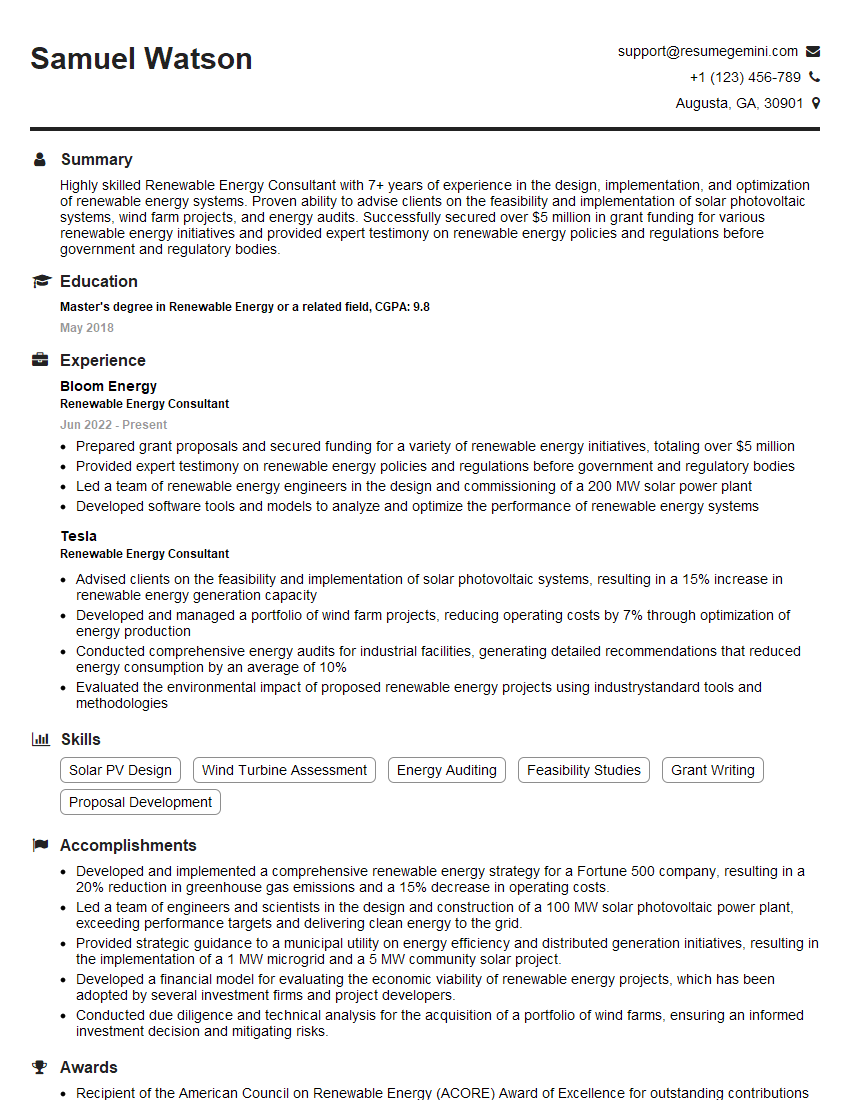
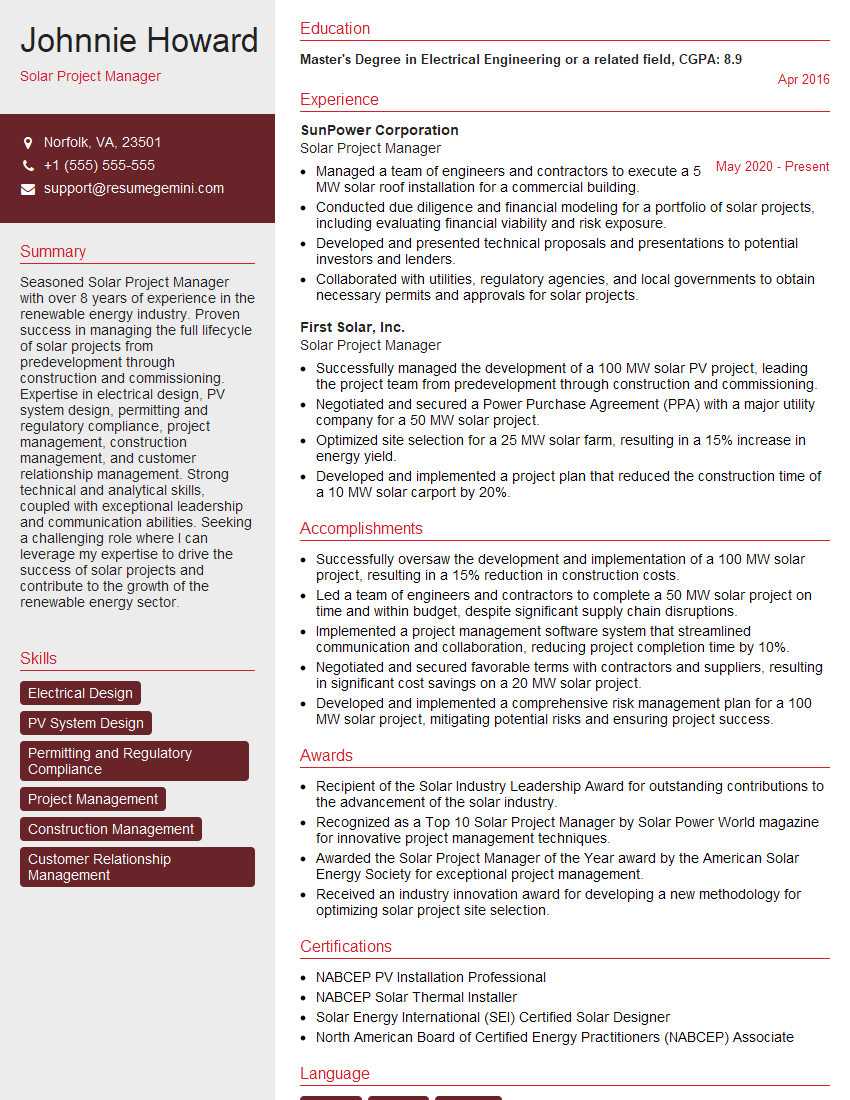
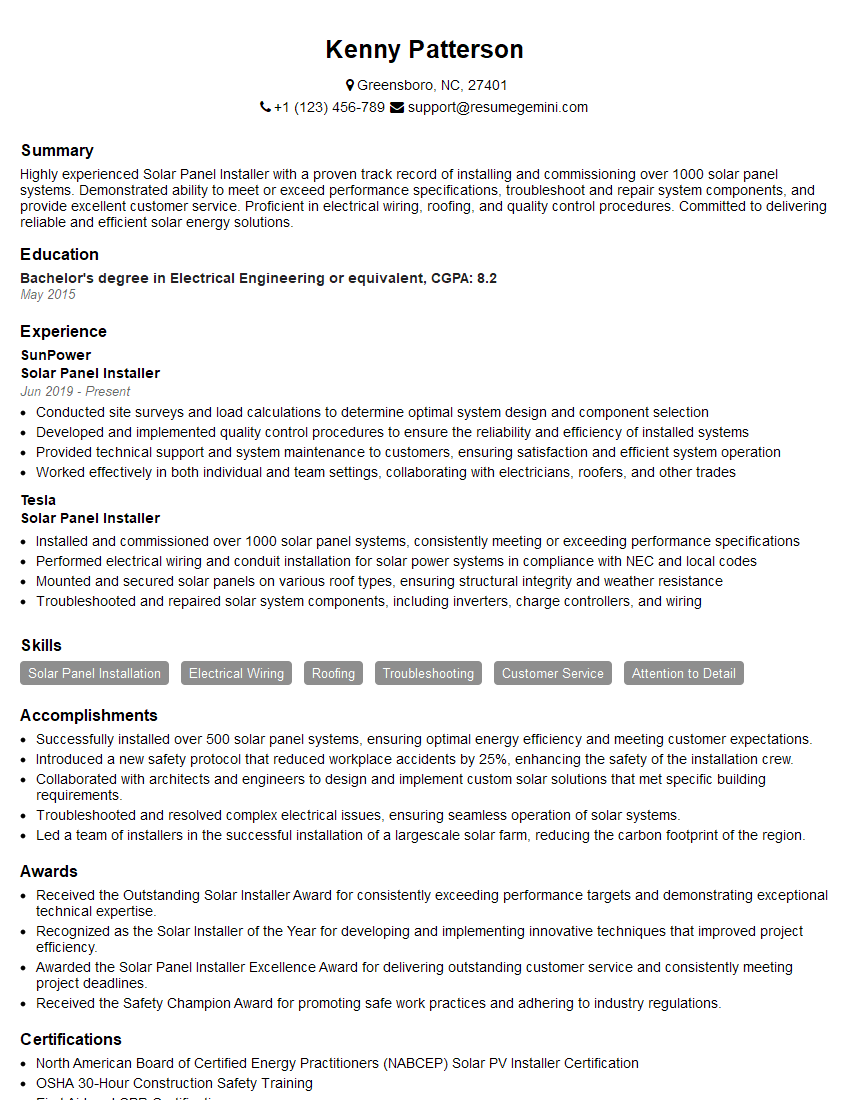
Mastering the intricacies of solar industry trends and technologies is crucial for career advancement in this rapidly evolving field. A strong understanding of these topics demonstrates expertise and positions you favorably for high-demand roles. To significantly increase your chances of landing your dream job, focus on crafting an ATS-friendly resume that highlights your skills and experience effectively. ResumeGemini is a trusted resource to help you build a professional, impactful resume. We provide examples of resumes tailored to showcase expertise in Understanding of solar industry trends and technologies, helping you present your qualifications compellingly to potential employers.


Explore more articles
Users Rating of Our Blogs
Share Your Experience
We value your feedback! Please rate our content and share your thoughts (optional).
What Readers Say About Our Blog
Very informative content, great job.
good