Interviews are more than just a Q&A session—they’re a chance to prove your worth. This blog dives into essential Understanding of staging layouts and set design principles interview questions and expert tips to help you align your answers with what hiring managers are looking for. Start preparing to shine!
Questions Asked in Understanding of staging layouts and set design principles Interview
Q 1. Explain the difference between a ground plan and a section drawing in set design.
In set design, a ground plan and a section drawing serve distinct but complementary purposes. Think of it like building a house: the ground plan is the blueprint viewed from above, showing the layout of the rooms and their relative positions, while the section drawing is a vertical slice, revealing the height and depth of the elements.
A ground plan is a two-dimensional view of the stage from directly above. It shows the placement of all set pieces, furniture, props, entrances, and exits, essentially mapping the stage’s physical environment. It’s crucial for understanding spatial relationships and actor movement. Imagine a bird’s-eye view of the set – that’s your ground plan.
A section drawing, on the other hand, is a two-dimensional representation of a vertical slice through the set. It displays the height and depth of elements, revealing how high walls are, the levels of platforms, and the relationship between different levels. It’s essential for understanding the three-dimensional nature of the design, particularly for lighting and scenic construction. Imagine cutting through your set with a giant knife – the section drawing shows you the resulting cross-section.
For example, a ground plan might show a table positioned center stage, but a section drawing would reveal that the table is 30 inches high and has a specific relationship to a backdrop that extends several feet above it. Both drawings are essential for effective communication and construction.
Q 2. Describe your process for creating a realistic budget for a theatrical set.
Creating a realistic theatrical set budget is a multi-step process requiring meticulous planning and attention to detail. I begin by thoroughly understanding the design concept and the scope of the project. This involves analyzing the ground plan and section drawings to determine the quantity and type of materials required. Then, I research the costs of those materials (lumber, paint, hardware, etc.), factoring in potential markups and transportation costs.
Next, I break down the construction process into phases, estimating labor costs for each. This includes the time required for building, painting, assembling, and installing the set pieces. I consult with carpenters, painters, and other relevant contractors to obtain accurate cost estimates. For specialized elements, like props or intricate scenic work, I acquire separate quotes from specialized vendors.
Contingency is key. I always add a percentage (typically 10-15%) to cover unforeseen costs or material shortages. Finally, I meticulously itemize every cost component, presenting the budget in a clear, organized format that outlines material costs, labor costs, rental fees (if applicable), and the contingency fund. This allows for transparency and allows for easy revision as the project progresses.
For example, I might itemize ‘lumber’ costs separately from ‘hardware’ costs, providing a breakdown of each component and source to avoid hidden fees.
Q 3. How do you incorporate audience sightlines into your stage layout design?
Incorporating audience sightlines is paramount in creating a successful stage layout. Poor sightlines can ruin a performance, leaving portions of the audience unable to see crucial moments. My process starts with a deep understanding of the performance space’s geometry. I consider the stage’s shape (proscenium, thrust, arena), seating configuration, and the number of audience members.
I utilize digital tools like CAD software to create a three-dimensional model of the space, including the audience seating. This model allows me to virtually ‘walk’ through the space from various audience positions, assessing visibility from all angles. Using this simulation, I can test different set configurations and adjustments. If needed, I strategically place set pieces to maximize visibility without obstructing essential scenes or actors.
I also consider the height of set pieces and props. Tall elements placed too close to the front of the stage could block the view of those sitting closer. I use elevation drawings to ensure that all crucial moments are visible to the entire audience. Finally, I factor in potential lighting placement as an obstacle; lighting fixtures can obscure sightlines if not carefully considered. The aim is to create a set design that prioritizes the audience’s experience, making sure everyone enjoys a clear and unobstructed view.
Q 4. What are some common challenges in designing sets for different performance spaces (e.g., proscenium, thrust, arena)?
Designing for different performance spaces presents unique challenges. The biggest differences arise from the audience’s relationship to the stage.
- Proscenium Arch: The traditional proscenium stage, with its audience facing a single performance area, allows for complex set designs with depth, but sightlines are relatively straightforward. The main challenge lies in creating a visually compelling design within the limitations of the arch and wings.
- Thrust Stage: A thrust stage extends into the audience, creating intimacy but posing challenges for sightlines. Set pieces must be carefully positioned to avoid blocking the view of audience members on the sides. Consideration also needs to be made for the three-quarter view of the actors.
- Arena Stage (Theatre-in-the-Round): An arena stage presents the most significant sightline challenges as the audience surrounds the performance area. Set pieces must be minimal, strategically placed to avoid obstruction, and designed to allow actors to move freely without impacting view lines from all angles. The design becomes more sculptural and less about masking.
Each space demands a thoughtful and creative approach, prioritizing the audience’s perspective and the specific needs of the production. The same set design will not work effectively across all these spaces. Flexibility, adaptability, and a thorough understanding of each space’s limitations are vital.
Q 5. How do you balance aesthetic design with practical considerations (e.g., actor movement, lighting, sound)?
Balancing aesthetic design with practical considerations is crucial for successful set design. It’s about finding a synergy between the visual impact and the functional requirements. I achieve this through iterative design and collaboration.
My process involves sketching initial concepts focusing on visual appeal. I then refine these concepts considering the practical limitations. For example, an aesthetically stunning staircase might be impractical if actors need to move quickly across the stage. I might need to alter the design or materials to accommodate swift movements or the use of specific lighting techniques.
Actor movement is a significant consideration. I ensure sufficient space for performers to move freely and express themselves without tripping over set pieces or getting stuck in tight spaces. Lighting design significantly influences my decisions; I collaborate with the lighting designer to ensure that the set pieces complement and enhance the lighting effects, avoiding shadows that obscure the action.
Sound considerations also influence the design, from the use of materials to minimize unwanted echoes to planning for sound system placement. The final design is a compromise, a carefully negotiated balance between aesthetic goals and functional necessities. The aesthetic should never compromise the functionality of the set; it’s a collaborative effort ensuring a seamless blend of form and function.
Q 6. Describe your experience with various set construction materials and techniques.
My experience encompasses a wide range of set construction materials and techniques. From traditional methods to modern approaches, the choice of materials depends heavily on budget, desired aesthetic, and the production’s demands.
I’ve worked extensively with lumber (for building frames and platforms), plywood (for walls and floors), and various fabrics (for drapes, backdrops, and upholstery). I’m skilled in carpentry techniques such as joinery, using different types of screws, and utilizing specialized fasteners for constructing sturdy and safe structures. Painting and finishing techniques are also essential aspects of my work, using various paints, stains, and finishes to achieve specific visual effects.
Modern techniques include the use of foam core (lightweight and easy to manipulate), PVC pipes and fittings (versatile and inexpensive), and various plastics (for creating unique forms and textures). I have experience with digital fabrication techniques, including 3D printing and CNC routing for creating intricate and customized components. Each project calls for a unique blend of traditional and modern methods to optimize both aesthetics and efficiency.
Q 7. How do you collaborate effectively with other design teams (lighting, sound, costumes)?
Effective collaboration with other design teams is crucial for a unified and successful production. I believe open communication and a shared vision are essential. My approach begins early in the design process, initiating meetings with lighting, sound, and costume designers to discuss the overall concept and the production’s goals.
We discuss the desired atmosphere, the mood, and the narrative elements to establish a cohesive design language. I provide the other designers with detailed ground plans and section drawings to inform their design choices. I work closely with the lighting designer to integrate the set’s form and materials with the lighting plan, ensuring that the lighting enhances the set and does not create visual conflicts.
Similarly, I collaborate with the sound designer to consider how the set’s materials and configuration might affect sound quality and acoustics. The costume designer and I collaborate on ensuring that costumes integrate seamlessly with the set’s aesthetic and don’t clash or create visual obstructions. Regular meetings and ongoing dialogue are crucial throughout the process, ensuring all design elements complement one another and contribute to a harmonious and effective whole.
Q 8. Explain your understanding of scale models and their use in set design.
Scale models are miniature representations of the set, crucial for visualizing the overall design and spatial relationships before actual construction. They allow for easy manipulation and experimentation with different design choices, helping to solve potential problems early on. Think of them as a 3D blueprint. For instance, a scale model of a Victorian mansion allows the director and production designer to visualize the flow of scenes, the placement of furniture, and even the lighting effects before committing to expensive construction.
Their use is multifaceted: they aid in communication between the design team, the director, and the producers; they help identify potential logistical challenges, like camera angles or actor movement; and they serve as a tangible reference point during construction, ensuring accurate execution of the design.
For example, I once used a scale model of a futuristic spaceship interior to refine the placement of interactive set pieces. By manipulating the miniature elements, we could easily determine optimal camera positions and the best flow for the actors’ movements within the confined space. The model saved us significant time and resources during the actual set construction.
Q 9. How do you ensure the safety of actors and crew during set construction and performance?
Ensuring safety on set is paramount. My approach involves a multi-pronged strategy that begins even before construction. This includes detailed risk assessments identifying potential hazards – things like unstable structures, electrical hazards, and fire risks. I collaborate closely with the construction team, emphasizing the importance of safe practices and adhering to building codes and industry safety standards.
During construction, regular inspections are crucial. I make sure that all materials are appropriately secured, that proper lighting and electrical systems are in place, and that access points are clearly marked and maintained. For example, ensuring proper fire exits and escape routes are always accessible and clearly marked is non-negotiable. For performances, I collaborate with the stage manager and crew to implement safety protocols during rehearsals and actual shows – carefully managing props, ensuring safe movement of actors, and having first-aid personnel readily available.
I also incorporate safety features directly into the set design itself, such as reinforced platforms, secure rigging points, and fire-resistant materials where necessary. For instance, if we are designing a scene that involves a large water feature, I’d ensure the area is properly drained and that appropriate safety measures are in place to prevent accidents.
Q 10. What software programs are you proficient in for set design and drafting?
My proficiency encompasses a range of software essential for set design and drafting. I’m highly skilled in AutoCAD for precise 2D drafting and technical drawings. This is invaluable for creating detailed floor plans, elevations, and sections of the set, ensuring precise dimensions and structural integrity.
I also utilize SketchUp extensively for 3D modeling. This allows me to create realistic visualizations of the set, which are indispensable for communication and client approval. It lets me easily experiment with different design iterations and showcase the set from various angles. Further, I use Vectorworks and Cinema 4D for complex 3D modeling, rendering, and animation to create photorealistic visualizations or even short walkthrough videos.
Finally, I’m adept at using image editing software like Photoshop to create mood boards, textures, and other visual elements that contribute to the overall aesthetic of the production.
Q 11. Describe your process for creating a mood board for a production.
Creating a mood board is a crucial step in establishing the visual direction of a production. My process begins with a thorough understanding of the script and the director’s vision. This includes researching relevant historical periods, locations, or artistic styles, depending on the production’s requirements. Then, I begin to gather visual references – these could be images from films, paintings, photographs, fabric swatches, or even found objects. The key is to establish a visual vocabulary that speaks to the desired tone, atmosphere, and aesthetic.
I organize these references on a digital or physical board, grouping them based on themes like color palettes, textures, lighting styles, or specific design elements. The board evolves organically, with constant refinement and adjustments as I deepen my understanding of the project’s needs. The final mood board acts as a visual guide throughout the design process, ensuring coherence and consistency.
For example, when working on a period drama set in 1920s Paris, my mood board might include images of Art Deco architecture, vintage fashion photographs, and paintings depicting Parisian street scenes. This ensures the set’s visual language reflects the desired period and atmosphere.
Q 12. How do you incorporate the director’s vision into your set design?
Incorporating the director’s vision is at the heart of successful set design. I start by engaging in extensive discussions with the director early in the process. This involves a detailed walkthrough of the script, exploring their interpretation of characters, themes, and the desired emotional impact of each scene. I’m keen to understand their artistic preferences, whether they lean towards realism, stylized representation, or something more abstract.
This initial conversation informs my initial design concepts. I present multiple options to the director, visually representing my understanding of their vision and how it can be translated into a functional and aesthetically pleasing set. Throughout the design process, I maintain open communication, presenting regular updates, seeking feedback, and making necessary adjustments to ensure alignment with their evolving vision. The goal is to be a collaborative partner, translating their artistic vision into a tangible reality.
For example, if a director emphasizes the claustrophobic nature of a particular scene, I might incorporate low ceilings, narrow corridors, or strategically placed shadows in the set design to amplify that feeling.
Q 13. Explain your approach to creating a historically accurate or stylized set.
Creating historically accurate or stylized sets requires meticulous research and a keen eye for detail. For historically accurate sets, I delve deeply into historical records, archives, and museum collections. This might involve studying period photographs, architectural blueprints, and even clothing styles to ensure authenticity. The challenge lies in striking a balance between historical accuracy and the practical requirements of the production.
In contrast, stylized sets allow for greater creative freedom, but still require a strong conceptual foundation. The stylization might involve exaggerating certain historical elements, combining elements from different periods, or creating a completely fantastical setting based on a specific artistic movement or theme. The key is to establish clear visual guidelines to ensure stylistic consistency throughout the set.
For instance, while designing a historically accurate Elizabethan-era set, I might consult period paintings and architectural drawings to accurately recreate the style of furniture, fabrics, and overall space. Conversely, for a stylized version, I might blend elements of Elizabethan style with elements from other periods, creating a unique visual language that still reflects the essence of the era, but with an artistic license.
Q 14. How do you handle changes or revisions to the set design during the production process?
Change is inevitable in the production process. I embrace it as an opportunity for refinement and optimization. My approach focuses on flexibility and open communication. Whenever a change request arises, I carefully assess its impact on the existing design, budget, and timeline. I then collaborate with the director, producers, and other stakeholders to explore potential solutions that address the change while minimizing disruptions.
This often involves generating revised drawings, 3D models, and cost estimates to evaluate the feasibility and implications of the changes. I prioritize efficient problem-solving, finding creative ways to accommodate adjustments without sacrificing the overall aesthetic and functionality of the set. Thorough documentation of all changes is critical, ensuring that everyone remains informed and the production stays on track.
For example, a last-minute script change might necessitate the addition or removal of a key set piece. I would work closely with the construction team to determine if this is feasible, factoring in any potential cost overruns or schedule adjustments, and present alternative solutions if necessary.
Q 15. What are your preferred methods for communicating your design ideas to the production team?
Effective communication is paramount in set design. I utilize a multi-pronged approach, prioritizing clarity and visual aids. This includes:
Detailed Sketching and 3D Modeling: I create comprehensive sketches and, increasingly, 3D models using software like SketchUp or Cinema 4D. These visuals provide a clear understanding of spatial relationships, material choices, and overall aesthetic. For example, a 3D model can preemptively showcase potential issues with sightlines or access points.
Annotated Plans and Technical Drawings: I prepare meticulous plans including dimensions, material specifications, and construction details. Clear annotations eliminate ambiguity and ensure the construction team understands the precise requirements.
Presentations and Meetings: I conduct regular meetings with the production team, presenting my designs, addressing concerns, and incorporating feedback. These presentations are interactive, utilizing visuals and walk-throughs to facilitate understanding. For instance, I might use a virtual reality headset to give the team a ‘walk-through’ of the completed set.
Collaboration and Open Communication: I foster a collaborative environment, encouraging open dialogue and feedback throughout the design process. This proactive approach ensures everyone is on the same page and potential challenges are identified and addressed early.
Career Expert Tips:
- Ace those interviews! Prepare effectively by reviewing the Top 50 Most Common Interview Questions on ResumeGemini.
- Navigate your job search with confidence! Explore a wide range of Career Tips on ResumeGemini. Learn about common challenges and recommendations to overcome them.
- Craft the perfect resume! Master the Art of Resume Writing with ResumeGemini’s guide. Showcase your unique qualifications and achievements effectively.
- Don’t miss out on holiday savings! Build your dream resume with ResumeGemini’s ATS optimized templates.
Q 16. Describe a time you had to solve a design challenge under pressure.
During a recent production of a period drama, we faced a significant challenge just three days before the shoot. The original location, a grand Victorian mansion, became unavailable due to unforeseen circumstances. We had to completely redesign the set, replicating the essential features of the mansion within a smaller, more modern studio space.
Under immense pressure, I immediately rallied my team. We used a combination of resourceful set construction techniques and clever camera angles to create the illusion of a much larger space. We employed forced perspective techniques, strategically placing smaller furniture pieces further away to enhance the feeling of depth. We also used projections and strategically placed lighting to simulate the lighting and ambience of the original location. We meticulously planned camera movements to avoid revealing inconsistencies, working closely with the director of photography. The result was successful; the final product looked incredibly authentic, and the change in location was imperceptible to the audience.
Q 17. How do you manage time effectively when working on multiple projects simultaneously?
Managing multiple projects simultaneously requires a structured and organized approach. I utilize project management tools and strategies, including:
Prioritization and Task Breakdown: I meticulously prioritize tasks based on deadlines and project importance, breaking down larger projects into smaller, manageable components.
Time Blocking and Scheduling: I allocate specific time blocks for each project, ensuring dedicated focus and preventing multitasking overload. I use digital calendars and task management software to stay on top of deadlines.
Regular Check-ins and Progress Reports: I maintain open communication with clients and team members, providing regular updates on project progress and addressing any roadblocks proactively.
Delegation and Team Collaboration: Where possible, I delegate tasks to team members, ensuring efficient workload distribution. This fosters collaboration and maximizes productivity.
This systematic approach allows me to maintain efficiency and deliver high-quality work across multiple projects without compromising quality or meeting deadlines.
Q 18. What are some common safety regulations you follow in set design and construction?
Safety is paramount in set design and construction. We adhere to a strict set of regulations, including:
Strict Adherence to Building Codes: We ensure all aspects of the set design and construction adhere to local building codes and fire safety regulations.
Proper Electrical Safety: All electrical work is undertaken by licensed electricians, ensuring safe wiring, proper grounding, and the use of appropriate safety equipment.
Safe Handling of Materials: We employ safe handling practices for all materials, including proper storage, transport, and disposal of hazardous substances. Personal Protective Equipment (PPE) is mandatory where appropriate.
Fall Protection and Scaffolding Safety: When working at heights, we employ appropriate fall protection measures, including safety harnesses and nets, and ensure scaffolding is properly erected and inspected.
Fire Safety Procedures: We establish clear fire safety procedures, including designated escape routes, fire extinguishers, and regular fire drills.
Regular safety inspections and training are integral parts of our process. We maintain a culture of safety awareness, ensuring everyone on set understands and follows safety protocols.
Q 19. Explain the importance of considering accessibility in set design.
Accessibility is crucial for inclusive set design. Failing to consider accessibility can exclude audience members or crew with disabilities, impacting the overall experience. This is achieved by:
Wheelchair Accessibility: Ensuring ramps, appropriate widths of walkways, and accessible restrooms are provided. This includes planning for sufficient space to maneuver wheelchairs.
Sightline Considerations: Designing sets with clear sightlines for wheelchair users and those with limited mobility, avoiding obstructions that might impede their view.
Audio Description and Captioning: Providing audio descriptions for visually impaired audience members and captions for those who are hearing impaired.
Accessible Lighting and Sound: Ensuring appropriate lighting levels and sound levels to accommodate individuals with sensory sensitivities.
Incorporating accessibility considerations from the outset is not only ethically responsible but also ensures a more welcoming and inclusive environment for all.
Q 20. How do you use lighting and sound to enhance the overall effect of the set?
Lighting and sound are integral to creating the desired mood and atmosphere on set. They enhance the overall impact by:
Mood and Atmosphere: Lighting can significantly impact the mood—soft, warm lighting might create a romantic atmosphere, while harsh, contrasting lighting can create tension or drama. Similarly, sound design can enhance the emotion, whether it’s the gentle sound of rain creating a melancholic feeling, or dramatic music heightening suspense.
Focus and Emphasis: Strategic lighting can direct the audience’s attention to specific areas or characters, emphasizing key moments in the narrative. Sound effects can similarly draw attention to particular actions or dialogue, emphasizing their importance.
Spatial Illusion: Lighting and sound can create illusions of space and depth, making a small set appear much larger or enhancing the realism of a particular location. For instance, strategically placed lighting and carefully designed soundscapes can give the impression of being in a vast forest or a bustling city street.
The interplay of lighting and sound design is crucial; they work in concert to shape the audience’s perception and experience.
Q 21. What are some innovative techniques you have used in your set designs?
I’ve incorporated several innovative techniques in my set designs, including:
Projection Mapping: Using projectors to map dynamic visuals onto set pieces, creating evolving backgrounds or interactive elements. This adds a layer of depth and realism, allowing for cost-effective changes of setting.
Augmented Reality (AR) Integration: Incorporating AR elements to enhance audience engagement. For example, viewers could use their smartphones to interact with elements on stage or uncover hidden narratives.
Sustainable Set Design: Prioritizing the use of recycled and reclaimed materials to minimize environmental impact. This includes using sustainable building practices and reducing waste throughout the production process.
Interactive Set Elements: Designing set pieces that actively engage the audience. This could involve incorporating touchscreens, kinetic sculptures, or other interactive components to create a more immersive experience.
These techniques not only enhance the aesthetic appeal of the set but also allow for increased audience engagement and a more immersive theatrical experience.
Q 22. Describe your familiarity with various theatrical styles and their impact on set design.
Understanding theatrical styles is fundamental to effective set design. Each style dictates a unique approach to visual storytelling, influencing everything from the set’s scale and materials to its color palette and level of detail. For instance, a minimalist production of a Samuel Beckett play might demand a stark, almost barren stage, reflecting the bleakness of the text, perhaps using only a single chair and a muted color scheme. In contrast, a lavish Broadway musical might necessitate elaborate, multi-level sets with detailed backdrops, vibrant colors, and possibly even moving parts, enhancing the spectacle and energy of the production. A naturalistic play, aiming for realism, would prioritize creating a believable environment, replicating the details of a specific time period and location. Conversely, an absurdist play might employ surreal and unexpected set elements, defying conventional expectations and mirroring the illogical nature of the script. My experience encompasses working across a wide range of styles, from Shakespearean productions in open-air theaters to contemporary experimental pieces in black box spaces. This allows me to adapt my design approach to suit the specific demands of each project and effectively serve the director’s vision.
Q 23. How do you balance functionality and aesthetics in your set design?
Balancing functionality and aesthetics is crucial in set design; it’s about creating a visually stunning environment that also serves the practical needs of the production. Think of it like building a beautiful house that is also perfectly functional. Aesthetically, the set should enhance the mood and themes of the play, guiding the audience’s emotional response. Functionally, it needs to accommodate actors’ movements, facilitate scene changes, and allow for lighting and sound effects. For example, designing a set with hidden doorways might provide for seamless transitions between scenes, while ensuring those doors don’t detract from the overall visual design. I typically start by creating detailed floor plans that map out actor pathways, prop placement, and technical elements. Then, I develop visual designs that incorporate these functional aspects seamlessly, ensuring the set’s beauty complements its practicality. Using sustainable materials and construction techniques can also help balance functionality and aesthetics while promoting environmentally conscious design.
Q 24. Describe your process for sourcing and procuring set pieces and props.
Sourcing and procuring set pieces and props is a multifaceted process requiring meticulous planning and resourcefulness. It begins with a thorough review of the script and director’s vision to identify the specific items required. Next, I explore various sourcing avenues. This could involve custom building elements using skilled carpenters and painters, renting from reputable theatrical supply houses, or even repurposing and upcycling existing materials to create unique pieces. I maintain a comprehensive network of contacts within the industry, including prop houses, salvage yards, and artisans, expanding my options. For example, for a period piece, I might source antique furniture from auction houses, while for a modern play, I might collaborate with local artists to create custom-designed props. A detailed budget is crucial at this stage, guiding decision-making and ensuring responsible spending. A meticulous tracking system is also essential to manage inventory, ensure timely delivery, and maintain accurate records throughout the production process.
Q 25. How do you manage the logistics of set construction and strike?
Managing the logistics of set construction and strike requires careful organization and coordination. I start by creating a detailed construction schedule, outlining tasks, timelines, and resource allocation. This usually involves collaborating with a team of carpenters, painters, and other skilled technicians. I employ project management software to track progress, manage materials, and ensure everyone stays on schedule. Safe working practices are paramount throughout this stage, requiring careful adherence to safety regulations. Similarly, the strike (dismantling the set) must be meticulously planned. This involves carefully cataloging and storing reusable components, disposing of waste materials responsibly, and ensuring the space is returned to its original state.
For a large-scale production, precise diagrams and instructions are essential for the crew, minimizing confusion and potential delays during both construction and strike. Clear communication with the stage manager is crucial to ensure the set meets technical requirements and facilitates smooth scene transitions. My approach emphasizes efficiency, safety, and respect for the production timeline and resources.
Q 26. Explain the importance of sustainability in set design.
Sustainability is no longer an option but a crucial consideration in modern set design. It’s about minimizing the environmental impact of productions while enhancing creativity. This involves making conscious choices about materials, construction techniques, and waste management. Prioritizing recycled, reclaimed, and repurposed materials significantly reduces the carbon footprint. For example, using reclaimed wood for set construction, or sourcing costumes from thrift stores, minimizes waste. Careful planning for material disposal and recycling is also key. Implementing sustainable practices not only reduces environmental harm but often reduces costs and fosters innovative design solutions. The drive for sustainability not only satisfies ecological concerns but also aligns with many theaters’ commitment to responsible practices and audience expectations.
Q 27. How would you design a set for a performance with limited budget?
Designing a set on a limited budget requires ingenuity and resourcefulness. The key is to prioritize what’s essential and creatively find cost-effective solutions. This might involve simplifying the set design, focusing on a few key elements, and using versatile pieces that can serve multiple functions. Instead of building elaborate structures, we might use strategically placed lighting and projections to create the illusion of depth and scale. Repurposing existing materials or collaborating with local artists and craftspeople can also help to reduce costs. For example, a simple backdrop painted with evocative imagery can replace expensive, detailed scenery. Clever use of lighting can significantly alter the mood and atmosphere, minimizing the need for complex set pieces. Creative solutions, careful planning, and resourcefulness can transform a limited budget into a visually compelling and functional stage setting.
Q 28. Describe your experience with using virtual reality or augmented reality in set design.
I have experience integrating virtual and augmented reality (VR/AR) technologies into the set design process. VR allows for immersive walkthroughs of the virtual set, enabling early identification of potential issues with spatial relationships and actor movement. This virtual prototyping helps refine the design before physical construction begins, saving time and resources. AR can be used during rehearsals to overlay digital elements onto the physical space, allowing actors to visualize the final set and interact with virtual props, enhancing their understanding of the production environment. For instance, we might use AR to project a digital forest onto a bare stage during rehearsals, allowing actors to experience the setting as it will appear in the finished production. While still a developing field in theatrical design, VR and AR offer powerful tools for enhancing communication, collaboration, and efficiency in the design and rehearsal process.
Key Topics to Learn for Understanding of Staging Layouts and Set Design Principles Interview
- Space and Composition: Understanding the effective use of space on stage – including proscenium, thrust, arena, and traverse staging – to enhance storytelling and audience experience. Explore concepts like sightlines, stage levels, and creating focus.
- Set Design Elements: Analyze the function and impact of various set design elements such as platforms, flats, drops, props, and lighting to build atmosphere, convey mood, and support the narrative. Consider practical applications like material choices, construction techniques, and scale.
- Technical Aspects: Grasp the practical application of technical elements like rigging, sound integration, and special effects within the context of set design and staging. Discuss the collaboration required with other technical departments.
- Design Process & Collaboration: Familiarize yourself with the typical design process – from initial concept sketches and model-making to technical drawings and collaboration with directors, technicians, and other designers. Practice articulating your design decisions.
- Style and Aesthetics: Explore different design styles and aesthetic approaches relevant to theatrical productions, film, or events. Be prepared to discuss the impact of specific choices on audience perception and interpretation.
- Problem-Solving & Adaptability: Showcase your ability to think creatively and solve practical challenges. Consider how to address issues of budget limitations, time constraints, and unexpected technical problems.
Next Steps
Mastering staging layouts and set design principles is crucial for career advancement in theatre, film, events, and related fields. A strong understanding of these concepts demonstrates your creative vision, technical skills, and collaborative abilities – highly sought-after qualities in the industry. To significantly boost your job prospects, focus on crafting an ATS-friendly resume that effectively highlights your skills and experience. ResumeGemini is a trusted resource that can help you build a professional and impactful resume tailored to your specific experience. Examples of resumes tailored to showcasing expertise in staging layouts and set design principles are available through ResumeGemini to guide your efforts.
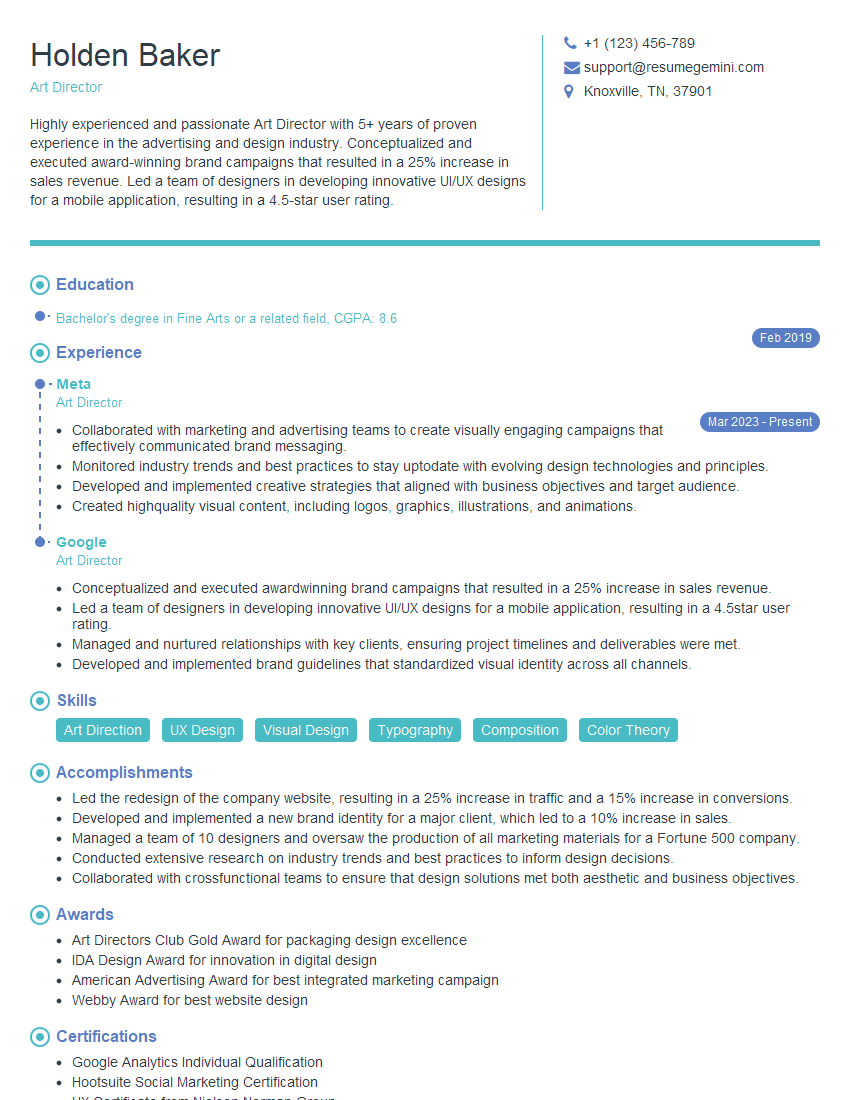
Art Director Resume Sample
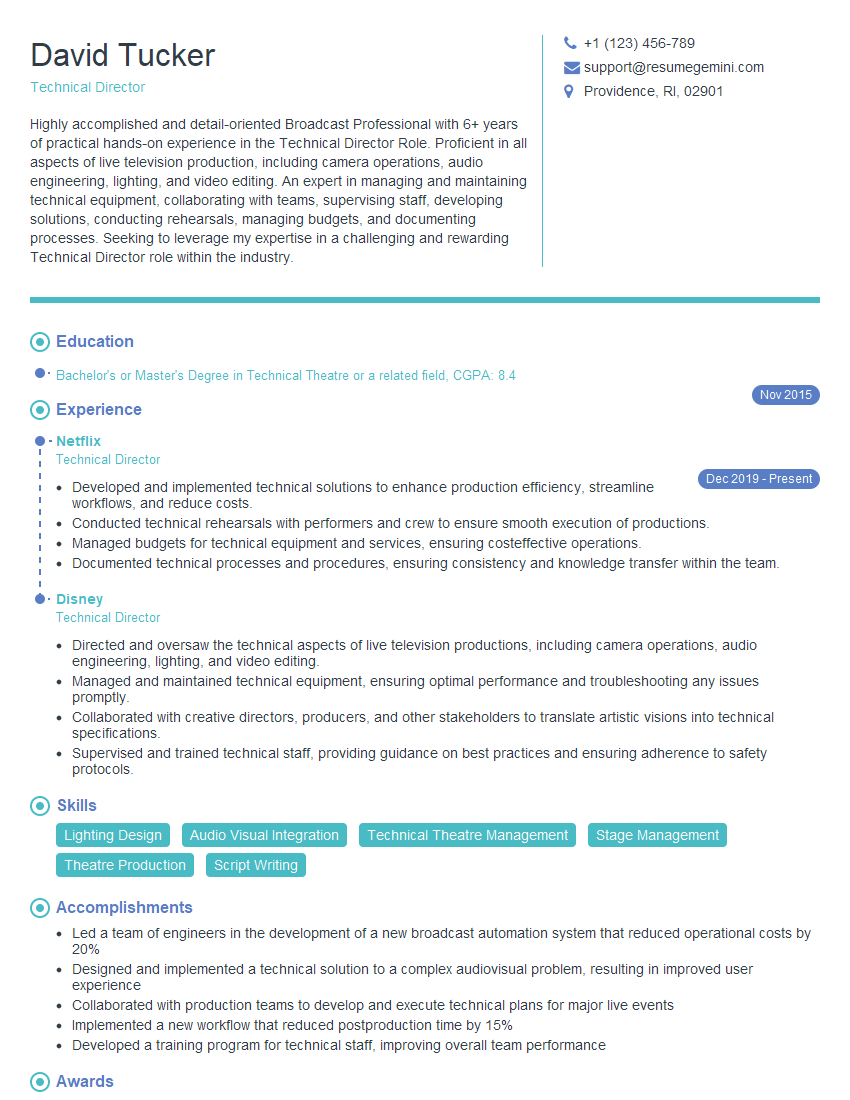
Technical Director Resume Sample
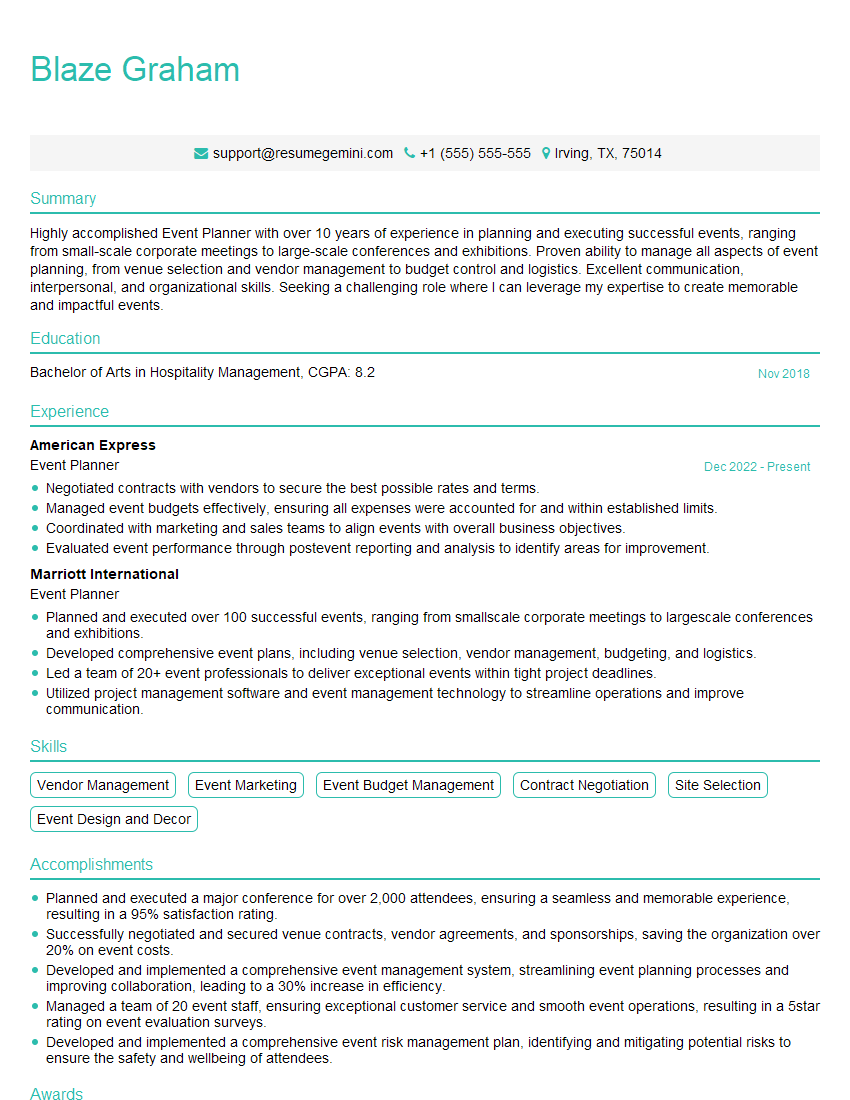
Event Planner Resume Sample
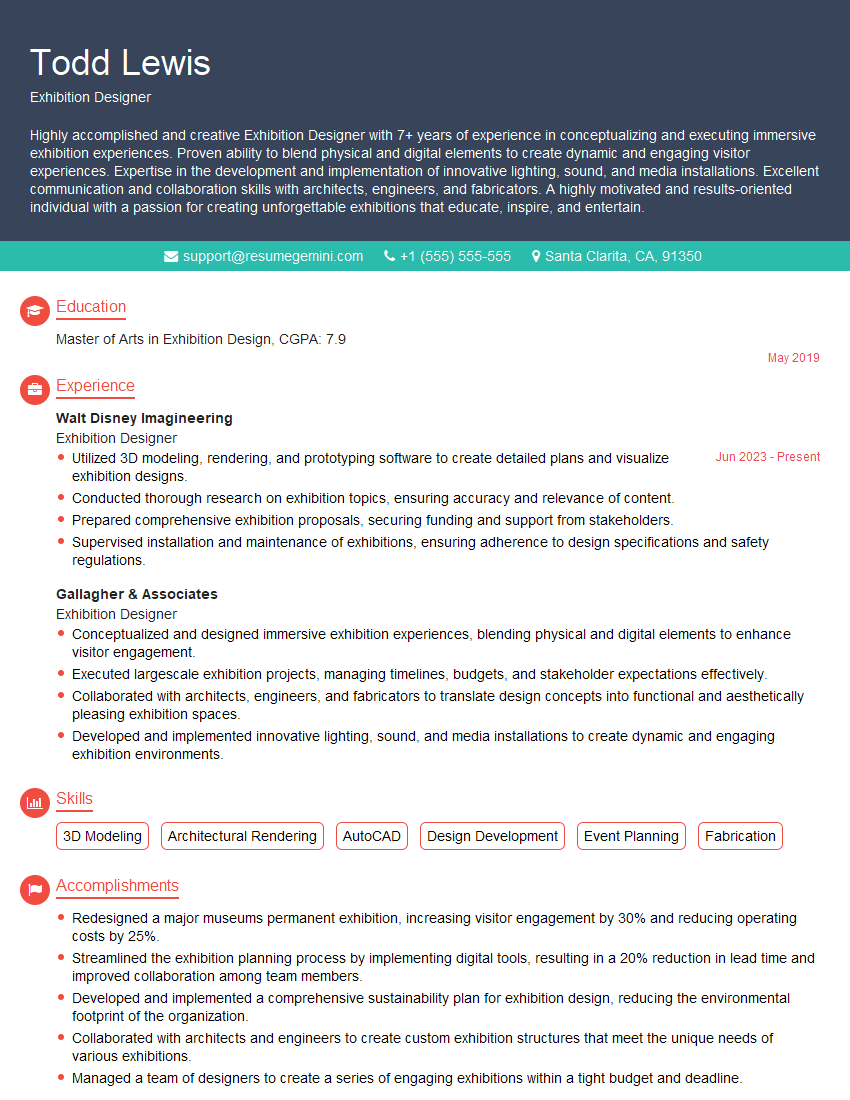
Exhibition Designer Resume Sample
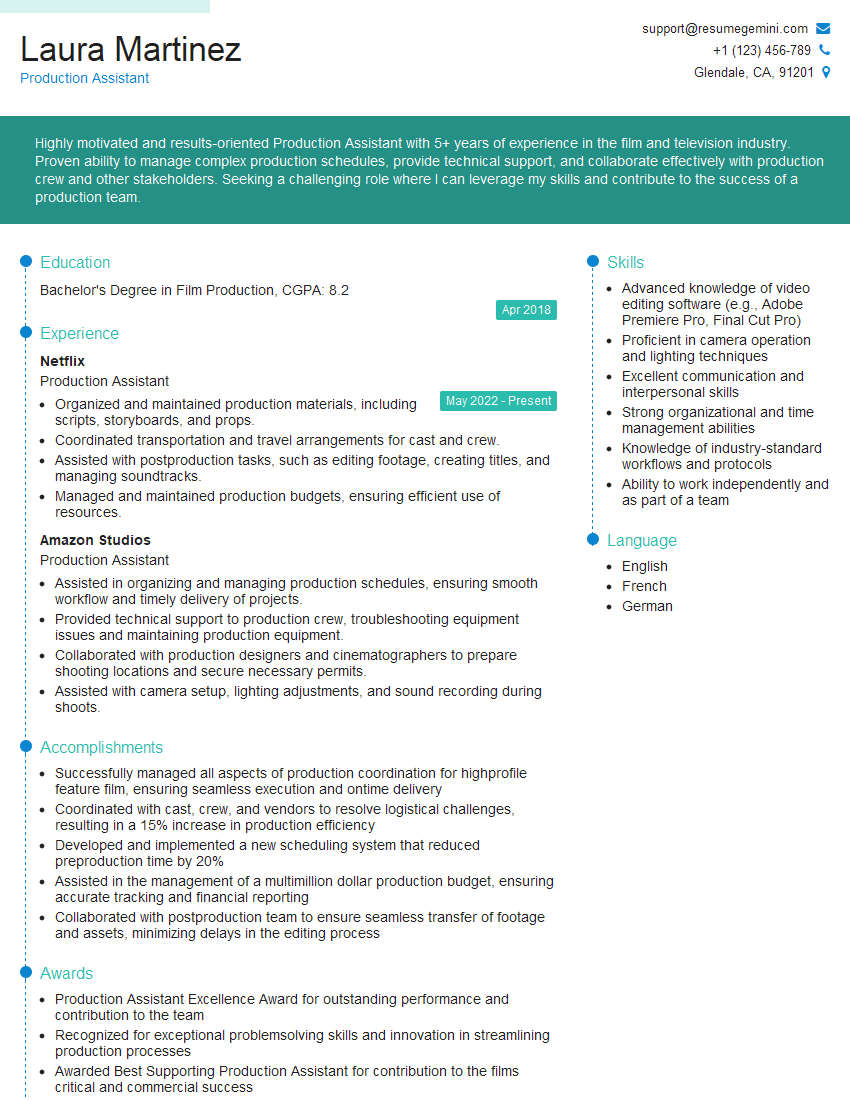
Production Assistant Resume Sample
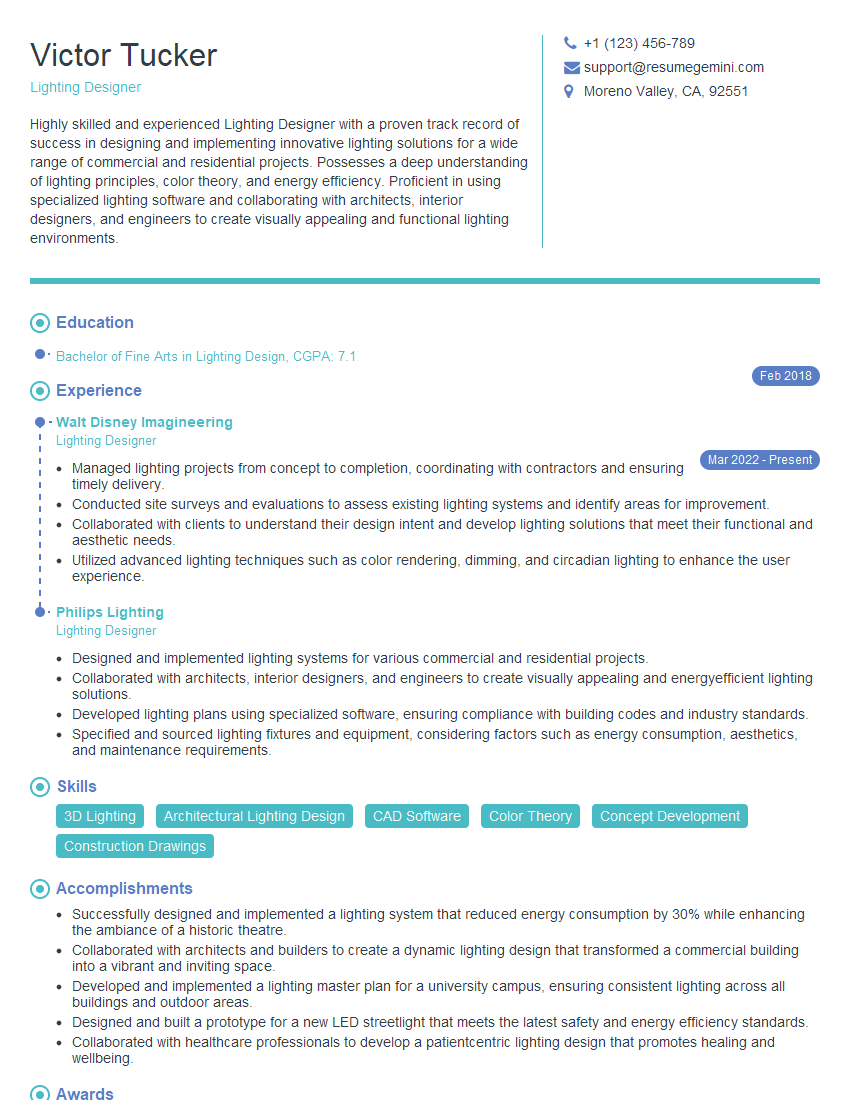
Lighting Designer Resume Sample
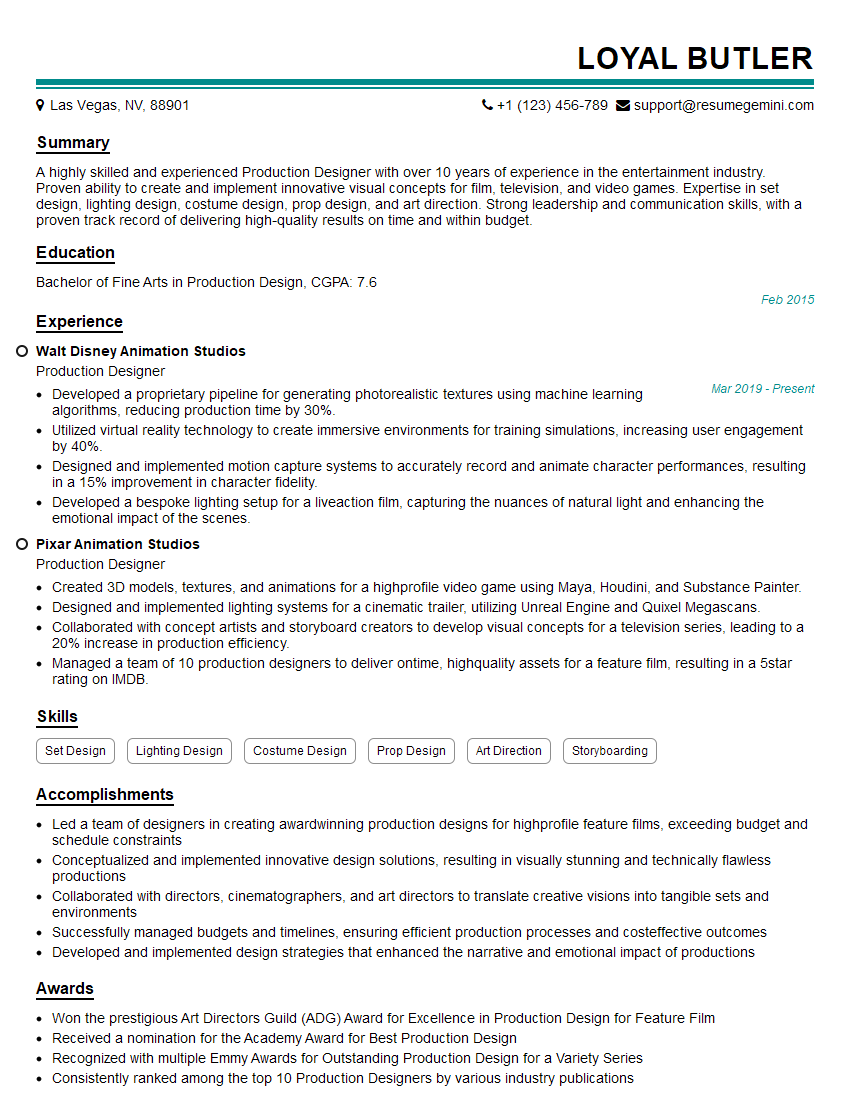
Production Designer Resume Sample
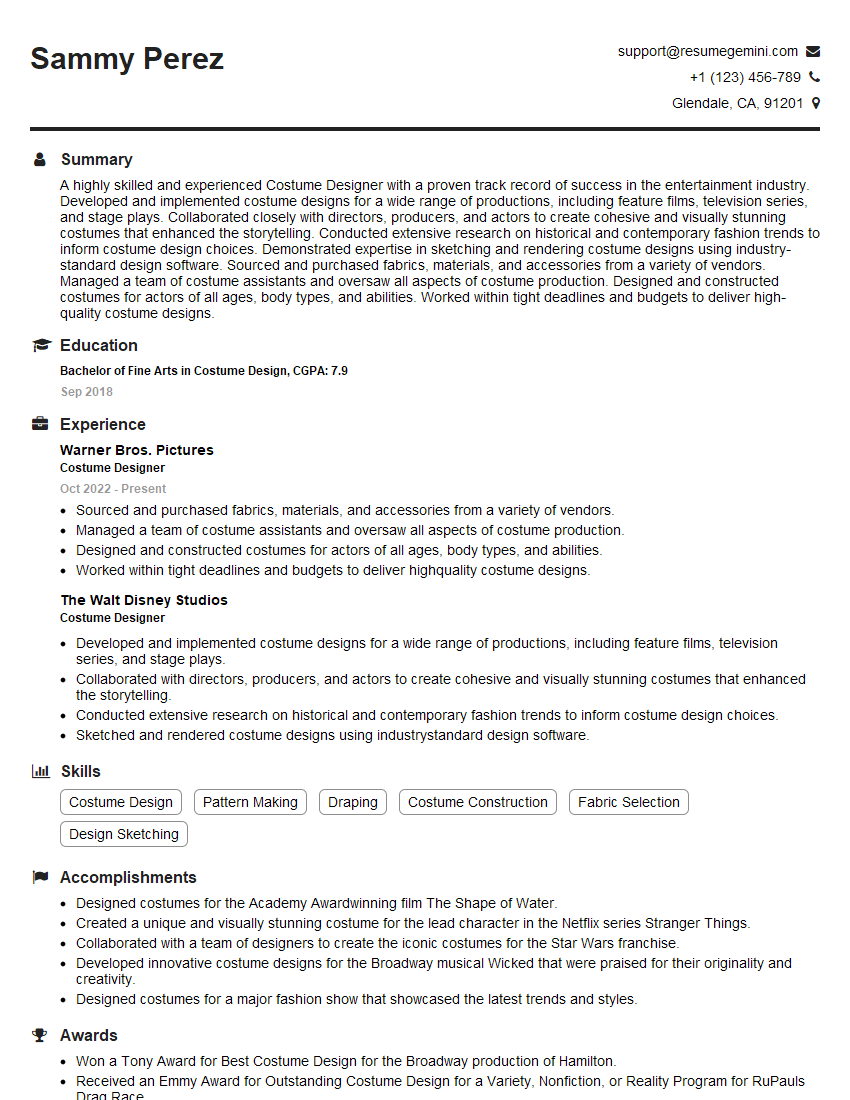
Costume Designer Resume Sample
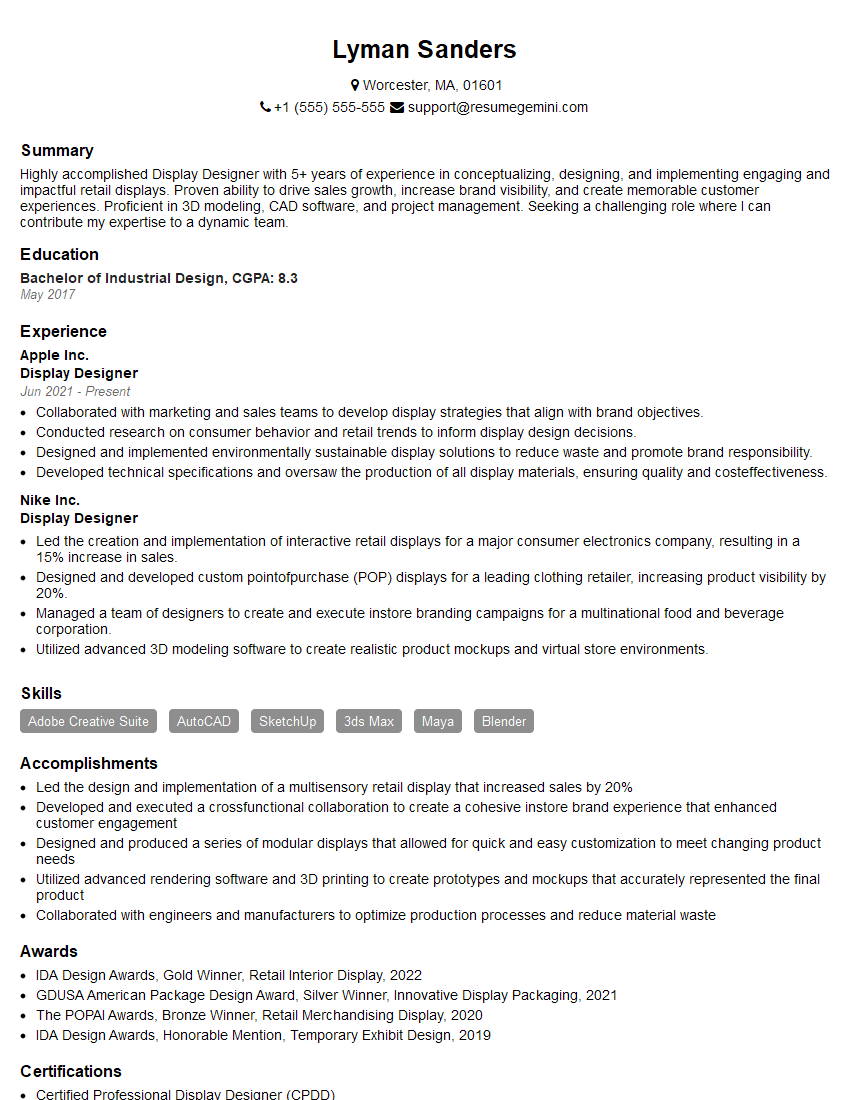
Display Designer Resume Sample
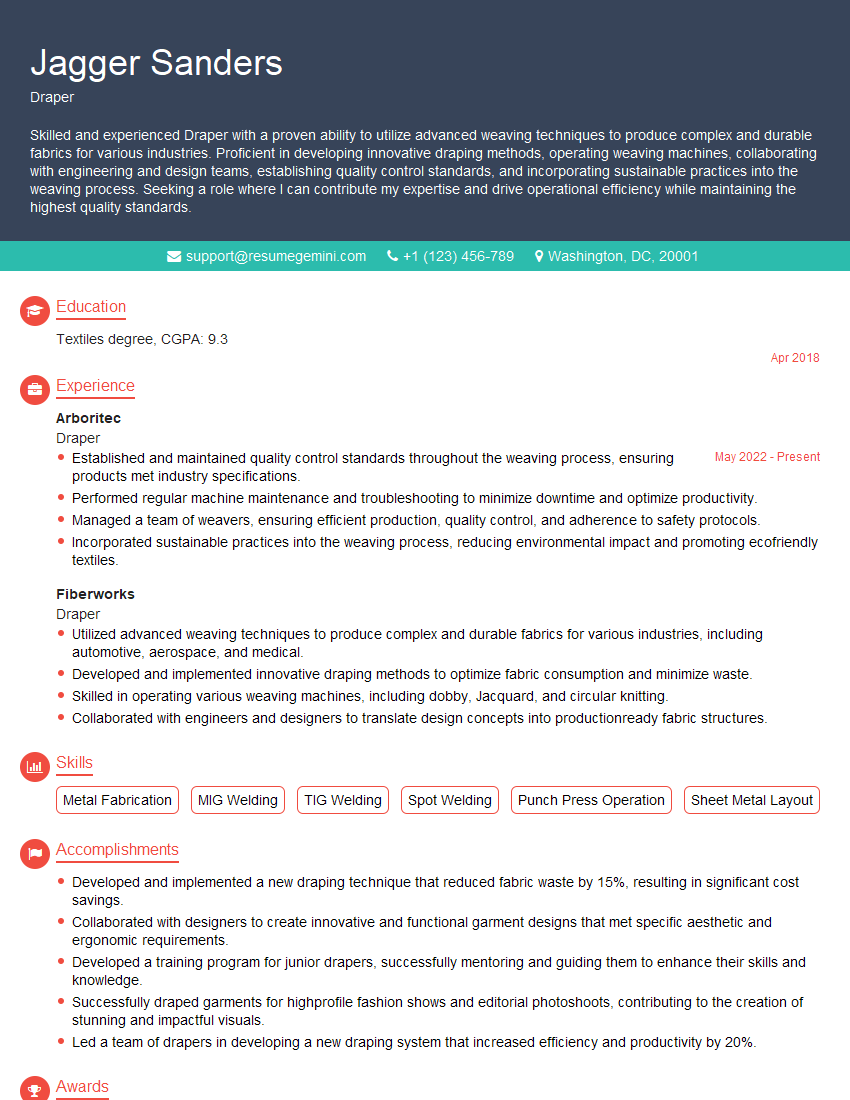
Draper Resume Sample
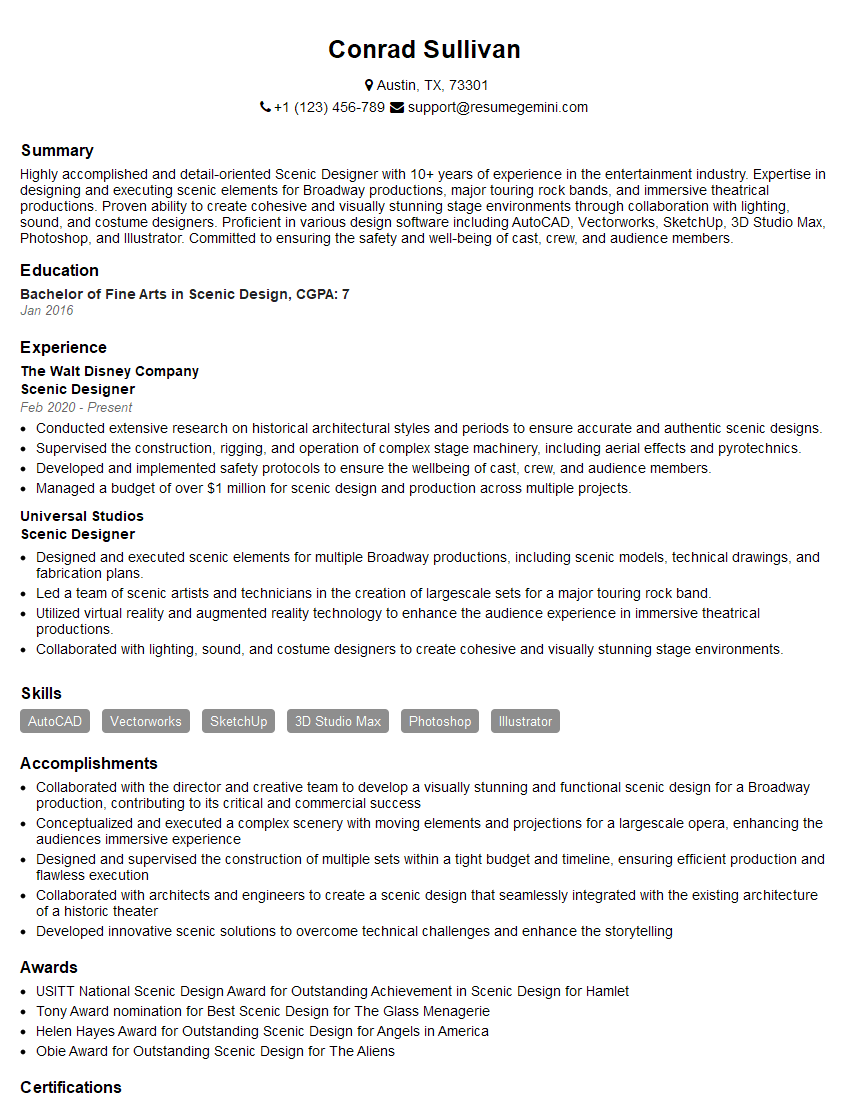
Scenic Designer Resume Sample
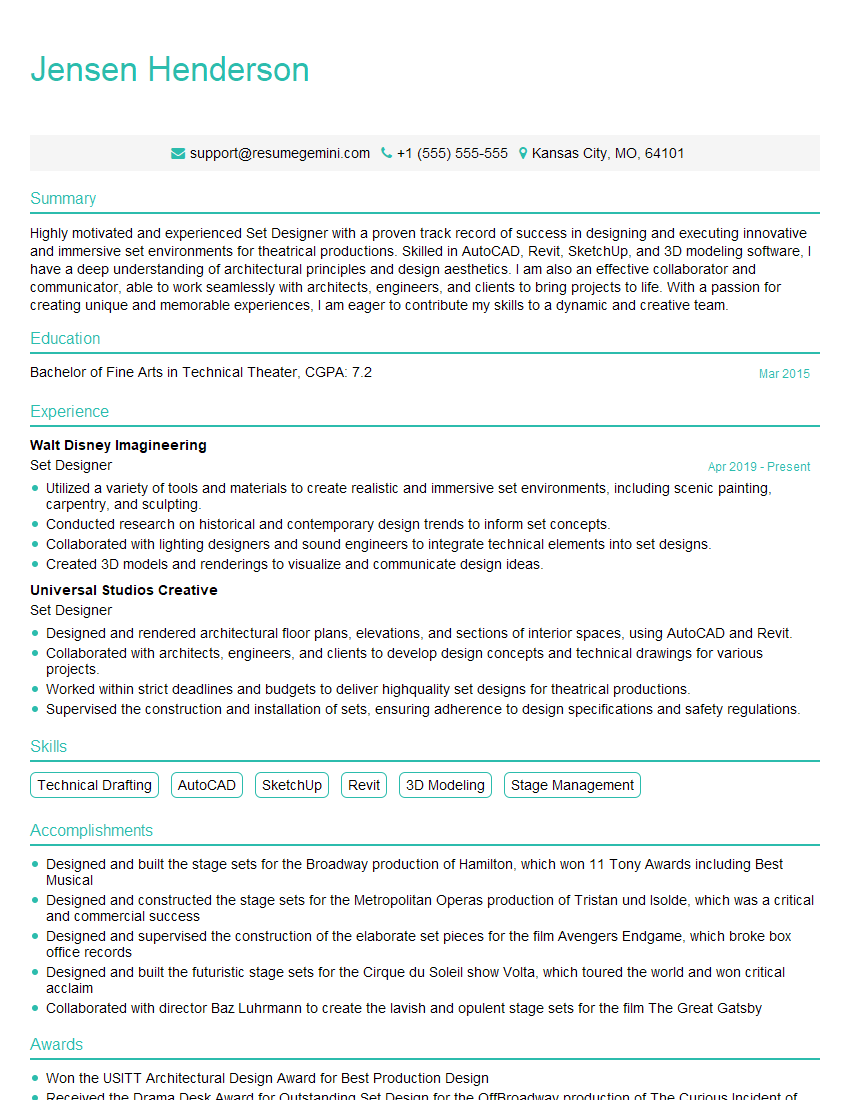
Set Designer Resume Sample
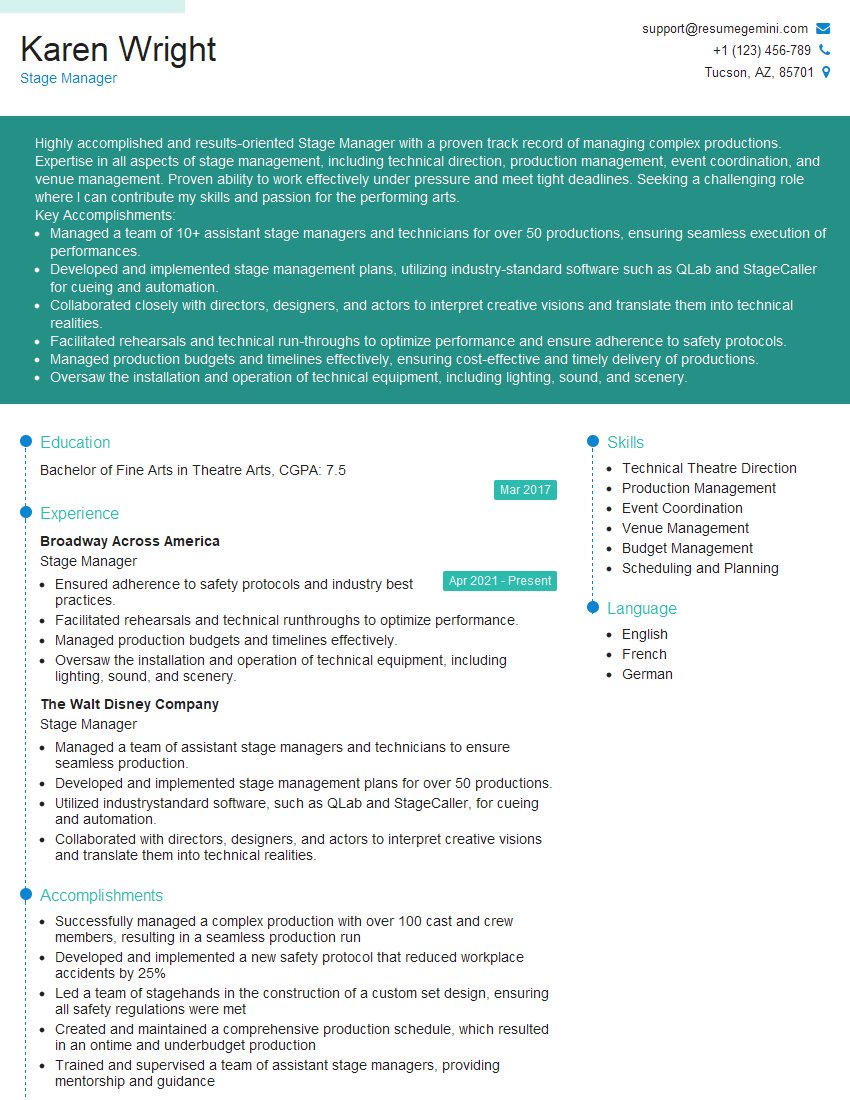
Stage Manager Resume Sample
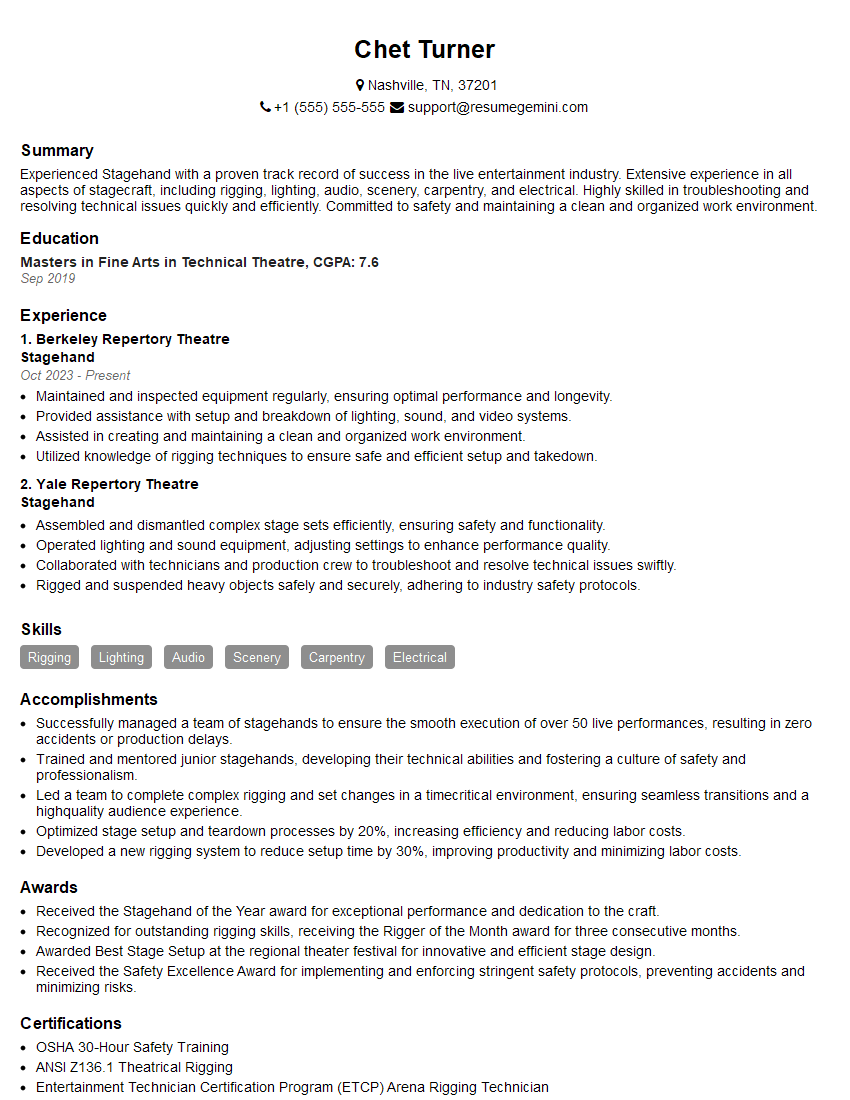
Stagehand Resume Sample
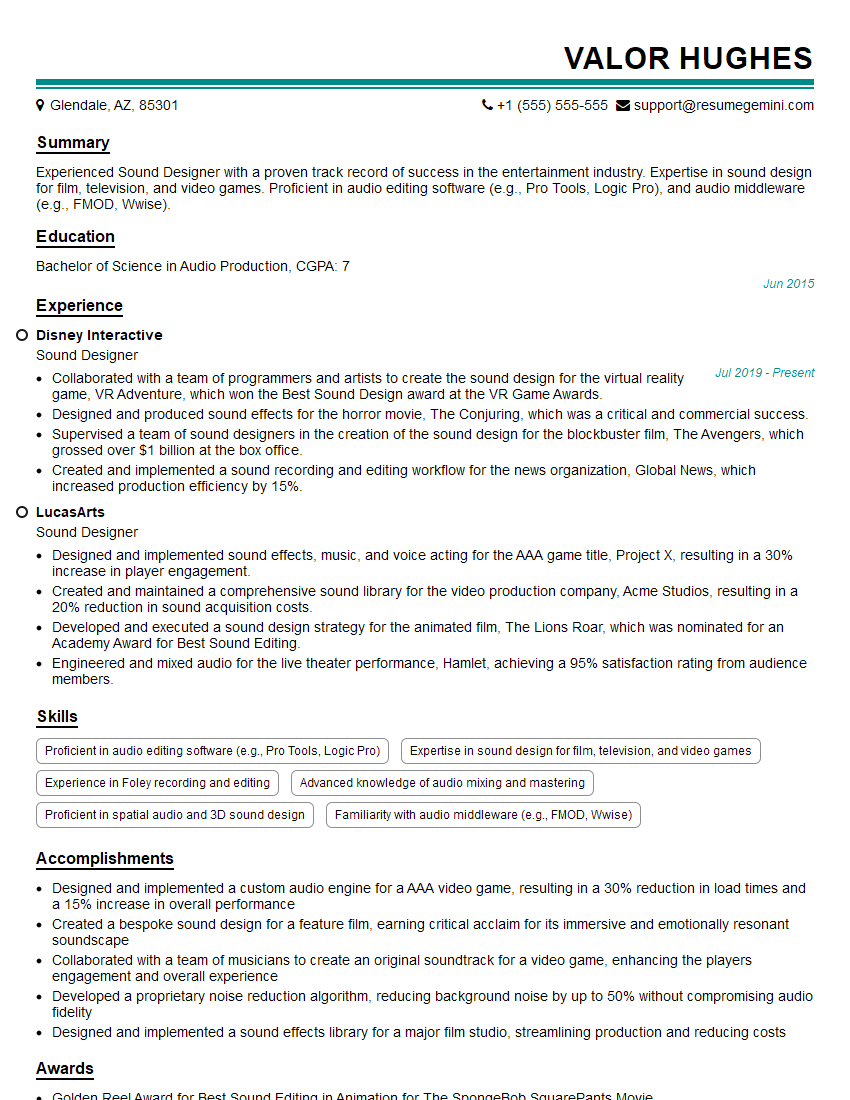
Sound Designer Resume Sample
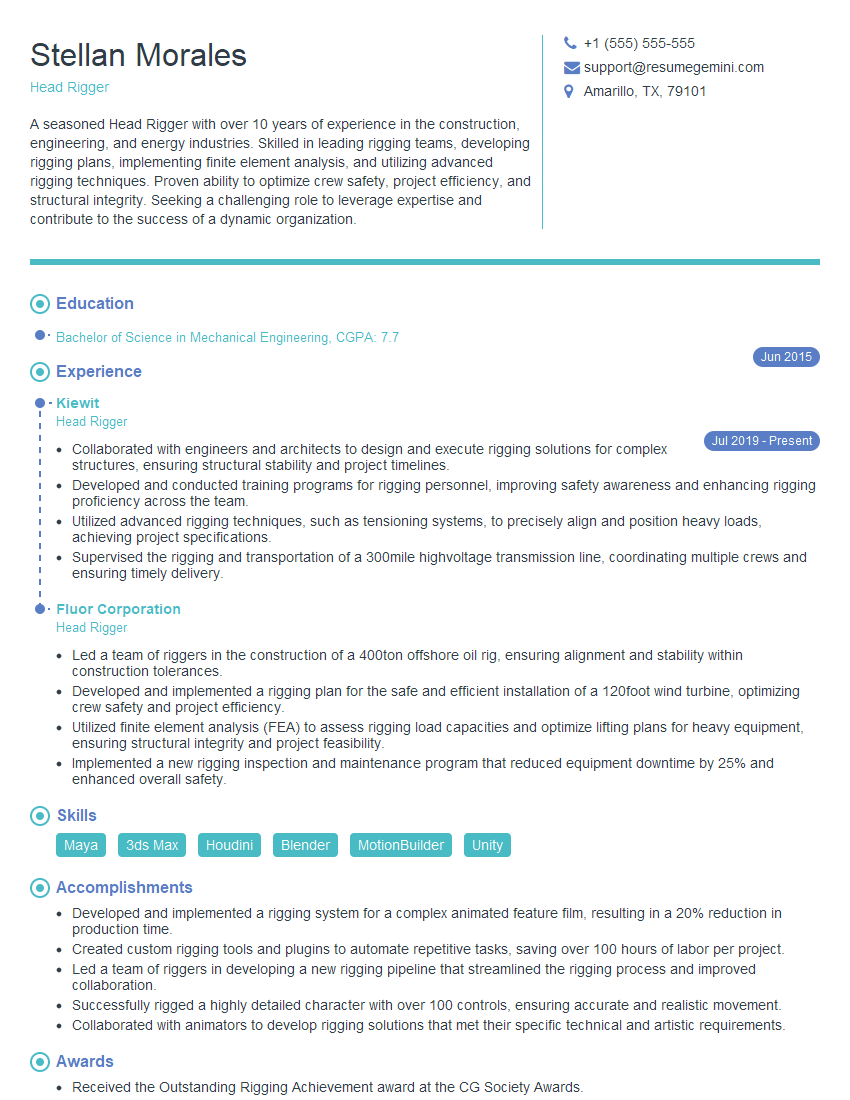
Head Rigger Resume Sample
Explore more articles
Users Rating of Our Blogs
Share Your Experience
We value your feedback! Please rate our content and share your thoughts (optional).
What Readers Say About Our Blog
Very informative content, great job.
good