Every successful interview starts with knowing what to expect. In this blog, we’ll take you through the top Understanding of statistical quality control principles interview questions, breaking them down with expert tips to help you deliver impactful answers. Step into your next interview fully prepared and ready to succeed.
Questions Asked in Understanding of statistical quality control principles Interview
Q 1. Explain the difference between common cause and assignable cause variation.
The difference between common cause and assignable cause variation lies in the source and predictability of the variation within a process. Common cause variation, also known as inherent or random variation, is the natural variability inherent in any process, even when perfectly controlled. It’s due to numerous small, unpredictable factors that are consistently present and difficult to isolate. Think of the slight variations in the weight of identical candies produced by a machine – minor differences in ingredients, temperature fluctuations, etc., all contribute. These variations are typically small and follow a predictable statistical distribution.
Assignable cause variation, on the other hand, is due to identifiable and correctable factors that lie outside of the inherent variability of the process. It represents a significant deviation from the norm and often signals a problem that needs immediate attention. For example, a sudden change in the weight of the same candies might indicate a malfunction in the filling mechanism, a change in ingredient supply, or a machine error. Identifying and eliminating assignable causes is crucial for process improvement.
Imagine baking cookies. Common cause variation might be the slight differences in size due to minor oven temperature fluctuations. An assignable cause would be burning a whole batch because you left the oven on high for too long.
Q 2. Describe the key principles of Statistical Process Control (SPC).
Statistical Process Control (SPC) relies on several key principles to monitor and improve process quality. These include:
- Data-driven decision making: SPC uses statistical methods to analyze data, providing objective evidence for process performance. Decisions are based on facts, not intuition.
- Process capability analysis: Understanding the process’ inherent variability and its ability to meet specifications is essential. This involves calculating metrics like Cp and Cpk to assess how well the process performs relative to its requirements.
- Early detection of problems: SPC aims to detect deviations from the process’s normal behavior early on, allowing for timely intervention and preventing the production of defective products or services.
- Continuous improvement: SPC isn’t just about detecting problems; it’s about using the data collected to improve processes over time and reduce variability. The goal is to move the process closer to its ideal state.
- Prevention rather than detection: A proactive approach where the focus is on preventing defects from occurring in the first place, rather than simply identifying and rejecting them after production.
By applying these principles, organizations can enhance quality, reduce costs, and improve customer satisfaction.
Q 3. What are control charts and how are they used in quality control?
Control charts are graphical tools used in SPC to monitor process behavior over time. They display data points plotted against control limits, which are calculated statistically. These limits represent the expected range of variation if only common cause variation is present.
How they’re used: Data (e.g., measurements, counts of defects) are collected at regular intervals and plotted on the chart. The pattern of data points provides insights into the process’s stability. Points falling within the control limits suggest the process is in control (only common cause variation present), while points outside the limits or exhibiting specific patterns indicate assignable cause variation, signaling a need for investigation and corrective action.
For instance, a manufacturer might use a control chart to monitor the diameter of manufactured parts. If data points consistently fall within the control limits, the process is considered stable. However, if points consistently fall above the upper control limit, this would suggest a problem that needs to be addressed.
Q 4. Explain the use of X-bar and R charts.
X-bar and R charts are used together to monitor the central tendency and dispersion of continuous data, such as measurements of length, weight, or temperature.
X-bar chart: This chart displays the average (mean) of subgroups of data collected at regular intervals. It tracks changes in the process mean over time.
R chart: This chart shows the range (difference between the largest and smallest values) within each subgroup. It monitors the process variability.
Using both charts simultaneously provides a more complete picture of process behavior. An out-of-control signal on either chart indicates the need for investigation. For example, a chemical plant might use X-bar and R charts to monitor the pH level of a chemical solution, with subgroups representing samples taken every hour.
Q 5. Explain the use of p-charts and c-charts.
p-charts and c-charts are used to monitor the proportion or count of defects, respectively. These are employed when the data is discrete (non-continuous).
p-chart: This chart monitors the proportion of nonconforming units in a sample. For example, a clothing manufacturer might use a p-chart to track the percentage of shirts with defects (e.g., stitching errors) in each batch. The chart would plot the proportion of defective shirts in each sample over time.
c-chart: This chart monitors the number of defects per unit. Imagine a car manufacturer tracking the number of defects found in each car during final inspection. The c-chart would plot the defect count per car over time.
Both charts help identify shifts in the proportion or count of defects, allowing timely intervention to prevent further issues.
Q 6. How do you interpret control chart patterns?
Interpreting control chart patterns requires a keen eye for detail. Points outside the control limits are obvious signals of assignable cause variation. However, even points within the limits can indicate problems when they display specific patterns:
- Trends: A series of points consistently increasing or decreasing suggests a gradual shift in the process mean.
- Cycles: A repeating pattern of high and low points indicates cyclical variations in the process.
- Stratification: Clustering of points above or below the central line suggests subgroups behave differently.
- Runs: A sequence of points all above or below the central line indicates unusual consistency.
These patterns should trigger investigations to identify and eliminate the underlying assignable causes. It’s important to remember that a single point outside the control limits is not enough for immediate action; it requires further investigation to verify the cause.
Q 7. What are the limitations of control charts?
Control charts, despite their usefulness, have limitations:
- Assumption of stability: Control charts assume the process is stable within the common cause variation range, which might not always be true, especially in processes undergoing significant change.
- Subjectivity in interpretation: While statistical rules provide guidance, interpreting patterns can sometimes involve subjective judgment, requiring experienced analysts.
- Data dependency: Control charts’ effectiveness relies heavily on the quality and accuracy of the collected data. Inaccurate data leads to incorrect interpretations.
- Time lag: Changes in the process might not be immediately reflected in the control charts, leading to a potential delay in identifying issues.
- Limited applicability: Control charts might not be effective for all types of processes or data. They’re best suited for relatively stable processes with a reasonable amount of data.
It’s important to consider these limitations and use control charts judiciously as part of a broader quality management strategy.
Q 8. Describe the process capability indices Cp and Cpk.
Process capability indices, Cp and Cpk, are statistical measures that assess how well a process can meet specified customer requirements. They tell us the inherent capability of a process to produce conforming output. Cp focuses solely on the process’s spread relative to the specification limits, while Cpk also considers the process’s centering, or how close the average is to the target value.
Q 9. How do you calculate Cp and Cpk?
Calculating Cp and Cpk involves several steps. First, you need to gather data from your process, calculating the sample mean (x̄) and sample standard deviation (σ). You also need the upper specification limit (USL) and lower specification limit (LSL) provided by the customer or determined by design requirements.
Cp (Process Capability): Cp = (USL – LSL) / (6σ)
This measures the potential capability of the process, assuming the process is perfectly centered.
Cpk (Process Capability Index): Cpk = MIN[(USL – x̄) / (3σ), (x̄ – LSL) / (3σ)]
This takes into account both the spread and the centering of the process. It’s the smaller of the two values indicating the process’s capability, considering both the upper and lower limits. It reflects the actual capability of the process given its current centering.
Example: Let’s say you’re manufacturing bolts with a specified length of 10cm ± 0.1cm. Your sample data shows a mean (x̄) of 9.99cm and a standard deviation (σ) of 0.02cm. USL = 10.1cm, LSL = 9.9cm.
Cp = (10.1 – 9.9) / (6 * 0.02) = 1.67
Cpk = MIN[(10.1 – 9.99) / (3 * 0.02), (9.99 – 9.9) / (3 * 0.02)] = MIN[0.35, 1.5] = 0.35
In this example, despite a high Cp, the Cpk is low due to poor process centering.
Q 10. What does a Cp and Cpk value of less than 1 indicate?
A Cp or Cpk value less than 1 indicates that the process is not capable of meeting the customer’s specifications. In simpler terms, it means the natural variation of the process is greater than the allowable tolerance. A significant portion of the output will likely fall outside the acceptable limits, leading to more defects and waste. For example, a Cpk of 0.8 means only about 80% of the output meets specifications.
Q 11. What is the difference between Cp and Cpk?
The main difference between Cp and Cpk lies in how they consider the process mean. Cp only considers the process spread (standard deviation) relative to the specification width, assuming the process is perfectly centered. It reflects the potential capability. Cpk, on the other hand, considers both the spread and the centering (how far the average is from the target). It indicates the actual capability, reflecting the reality of the process’s performance.
Think of it like this: Cp is the maximum potential of a basketball player’s shot accuracy, while Cpk is the actual accuracy considering how consistently the player hits the center of the hoop.
Q 12. Explain the concept of Six Sigma.
Six Sigma is a data-driven methodology aimed at minimizing defects and improving process efficiency. It’s more than just a quality control program; it’s a comprehensive approach to business management that focuses on delivering near-perfect quality and minimizing variations. The core concept revolves around reducing the number of defects to 3.4 defects per million opportunities (DPMO). This translates to a process sigma level of 6, representing a very high level of process capability.
Achieving Six Sigma involves using statistical methods, data analysis, and problem-solving tools to identify and eliminate sources of variation in processes. It focuses on continuous improvement and achieving customer satisfaction through well-defined, highly efficient processes.
Q 13. Describe DMAIC methodology.
DMAIC is a structured five-phase problem-solving methodology used extensively in Six Sigma projects. It provides a roadmap for identifying, analyzing, and resolving process issues. The five phases are:
- Define: Clearly define the problem, the project goals, and customer requirements. This involves understanding the ‘voice of the customer’ and setting measurable objectives.
- Measure: Collect data to understand the current process performance. This involves identifying key metrics, collecting data using appropriate tools, and analyzing the data to quantify the problem.
- Analyze: Analyze the data to identify the root causes of the problem. This often involves using tools like fishbone diagrams, Pareto charts, and regression analysis to identify the factors impacting process performance.
- Improve: Develop and implement solutions to address the root causes identified in the analysis phase. This may involve process redesign, automation, training, or other improvements.
- Control: Implement controls to maintain the improvements and prevent the problem from recurring. This involves monitoring key metrics, implementing process controls, and ensuring ongoing process capability.
DMAIC is an iterative process; you may need to cycle through the phases multiple times to achieve the desired level of improvement.
Q 14. What are some common tools used in Six Sigma projects?
Many tools are used in Six Sigma projects, depending on the phase and specific needs. Some of the most common include:
- Statistical Process Control (SPC) Charts: (e.g., control charts) used for monitoring process stability and identifying variations.
- Pareto Charts: Used for identifying the most significant contributors to defects or problems.
- Fishbone (Ishikawa) Diagrams: Used to brainstorm and identify potential causes of a problem.
- Histograms: Used to visualize the distribution of data.
- Scatter Diagrams: Used to identify correlations between variables.
- Failure Mode and Effects Analysis (FMEA): Used to identify potential failure modes and their effects.
- 5 Whys: A simple yet powerful technique for drilling down to the root cause of a problem by repeatedly asking ‘why’.
The selection of tools depends on the specific project and phase, but these are among the most widely used.
Q 15. Explain the role of Pareto charts in quality control.
Pareto charts are crucial in quality control because they visually represent the vital few causes contributing to a majority of problems. Imagine a factory producing widgets; some defects might be minor scratches, others might be major functional failures. A Pareto chart would graphically show that while many different defect types exist, perhaps 80% of all defects stem from just two or three root causes (the ‘vital few’). This allows us to focus our improvement efforts on the most impactful areas, maximizing our return on investment in quality improvements.
The chart uses bars to represent the frequency of each defect type, sorted in descending order. A line graph is overlaid, showing the cumulative frequency. This clearly highlights the significant few and the insignificant many. For example, if we find that 80% of customer complaints are due to late deliveries and incorrect billing, these two areas become the priorities for improvement.
Career Expert Tips:
- Ace those interviews! Prepare effectively by reviewing the Top 50 Most Common Interview Questions on ResumeGemini.
- Navigate your job search with confidence! Explore a wide range of Career Tips on ResumeGemini. Learn about common challenges and recommendations to overcome them.
- Craft the perfect resume! Master the Art of Resume Writing with ResumeGemini’s guide. Showcase your unique qualifications and achievements effectively.
- Don’t miss out on holiday savings! Build your dream resume with ResumeGemini’s ATS optimized templates.
Q 16. What is a Fishbone diagram and how is it used?
A Fishbone diagram, also known as an Ishikawa diagram or cause-and-effect diagram, is a brainstorming tool used to visually organize potential causes of a problem. It’s shaped like a fish skeleton, with the problem statement at the head and potential causes branching out as ‘bones’ along different categories. Think of it as a structured brainstorming session, ensuring you consider various aspects of a problem.
Each ‘bone’ represents a category of potential causes, such as materials, methods, manpower, machinery, measurements, and environment. Teams brainstorm potential causes within each category, leading to a comprehensive understanding of the problem’s root causes. For instance, if the problem is ‘low customer satisfaction’, a Fishbone diagram would help explore potential causes related to product quality, service delivery, marketing, etc., enabling a focused improvement strategy.
Q 17. Explain the concept of Design of Experiments (DOE).
Design of Experiments (DOE) is a structured approach to systematically investigating the effects of multiple factors on a response variable. Instead of changing one factor at a time (which is inefficient and may miss interactions), DOE allows us to study multiple factors simultaneously, using carefully planned experiments. This yields a more comprehensive understanding of the factors influencing the process or product and allows for optimization.
Imagine testing a new cake recipe. Instead of changing only one ingredient at a time (flour, sugar, baking powder), DOE allows you to systematically vary several ingredients simultaneously across multiple batches of cake, allowing you to identify the optimal combination of ingredients for the best taste and texture. This reduces the number of experiments needed to identify the optimal solution, saving time and resources.
Q 18. What are some common DOE techniques?
Several DOE techniques exist, each suited to different situations. Some common ones include:
- Full Factorial Designs: Test all possible combinations of factor levels. Useful for understanding all main effects and interactions, but can become large quickly with many factors.
- Fractional Factorial Designs: Test a subset of all possible combinations, efficient for screening many factors when interactions are less important.
- Taguchi Methods: Focuses on robust design, aiming for process parameters that are least sensitive to variations in input factors.
- Response Surface Methodology (RSM): Used for optimization when the relationship between factors and response is complex, often involving quadratic terms.
The choice of technique depends on the number of factors, the resources available, and the level of detail required in understanding the system.
Q 19. How do you use histograms to analyze process data?
Histograms are powerful tools for visualizing the distribution of process data. They display the frequency of data points within specified ranges (bins). By analyzing the shape of the histogram, we can assess the process’s capability and identify potential problems.
For example, a bell-shaped (normal) distribution indicates a stable, predictable process. A skewed distribution might indicate that a process is not centered or that there are some underlying problems or outliers. A bimodal distribution (two peaks) might suggest that two different processes or populations are mixed. The histogram provides a clear visual summary of the data, helping in identifying issues like excessive variation, off-center means, and non-normal distributions, which can lead to significant quality issues.
Q 20. How do you determine the sample size for a quality control study?
Determining the appropriate sample size for a quality control study is crucial for balancing cost and accuracy. Several factors influence sample size determination:
- Desired precision: How accurately do you need to estimate the population parameter (e.g., mean, standard deviation)? Higher precision requires a larger sample size.
- Acceptable confidence level: What is the probability that your estimate will fall within a specified range of the true population parameter? Higher confidence levels require larger samples.
- Population variability: More variable populations require larger sample sizes to achieve the same level of precision.
- Acceptable error rate (alpha): The probability of making a Type I error (rejecting a true null hypothesis).
- Power (1-beta): The probability of correctly rejecting a false null hypothesis (detecting a real difference).
Statistical software packages and specialized tables can be used to calculate the necessary sample size based on these factors. Failing to use proper sample size calculations can lead to inaccurate conclusions and inappropriate decisions.
Q 21. What are acceptance sampling plans?
Acceptance sampling plans are statistical procedures used to determine whether to accept or reject a batch of products based on the inspection of a sample drawn from that batch. This approach is often used when 100% inspection is too expensive or time-consuming. These plans define the sample size and the acceptance criteria (the maximum number of defective items allowed in the sample for the batch to be accepted).
For example, a plan might specify that a sample of 50 items be inspected from a batch of 1000. If more than 2 defective items are found in the sample, the batch is rejected; otherwise, it’s accepted. These plans involve risks – the risk of accepting a bad batch (producer’s risk) and the risk of rejecting a good batch (consumer’s risk). The design of acceptance sampling plans aims to balance these risks based on the cost of inspection, the cost of defective items, and the desired quality level.
Q 22. Explain different types of sampling plans (e.g., single, double, multiple).
Sampling plans are crucial in quality control, allowing us to inspect a representative subset of a larger population to infer the quality of the whole. Different plans offer varying levels of inspection stringency.
- Single Sampling Plan: This is the simplest. A random sample of size ‘n’ is drawn. If the number of defects (or non-conforming units) is less than or equal to the acceptance number ‘c’, the lot is accepted; otherwise, it’s rejected. Think of it like a single coin flip – heads (accept), tails (reject). It’s efficient but can be risky for batches with high variability.
- Double Sampling Plan: This offers a second chance. An initial sample of size ‘n1‘ is taken. If the number of defects is low, the lot is accepted; if it’s high, it’s rejected. If it falls in an intermediate range, a second sample of size ‘n2‘ is drawn. The combined results then determine acceptance or rejection. This allows for more nuanced decision-making.
- Multiple Sampling Plan: This extends the double sampling concept. Multiple samples are drawn sequentially until a decision is reached. This provides even more flexibility and the potential to reduce the total sample size required, but at the cost of increased complexity.
The choice of sampling plan depends on factors like the cost of inspection, the risk of accepting bad lots (producer’s risk), and the risk of rejecting good lots (consumer’s risk). For instance, a high-value product might warrant a double or multiple sampling plan to reduce risks.
Q 23. What is the operating characteristic (OC) curve?
The Operating Characteristic (OC) curve is a graphical representation of a sampling plan’s performance. It shows the probability of accepting a lot (y-axis) as a function of the actual percentage of defective items in that lot (x-axis). Think of it as a visual summary of the risks associated with a particular sampling plan.
The curve illustrates the producer’s risk (the probability of rejecting a good lot) and the consumer’s risk (the probability of accepting a bad lot). An ideal OC curve would show a probability of acceptance close to 1 for lots with low defect rates and close to 0 for lots with high defect rates. However, in practice, there’s always a trade-off between these two risks.
By analyzing the OC curve, we can select a sampling plan that balances these risks according to the specific requirements and tolerances of the product and the manufacturing process. For instance, a tighter OC curve might be chosen for safety-critical components.
Q 24. How do you handle outliers in your quality control data?
Outliers in quality control data require careful handling as they can significantly skew analysis and lead to incorrect conclusions. They shouldn’t simply be discarded without investigation.
- Investigation: First, I’d thoroughly investigate the cause of the outlier. Was there a measurement error? A process upset? A data entry mistake? This often involves examining the process logs and raw data to ensure data integrity.
- Data Transformation: If the outlier is determined to be a legitimate observation, data transformations (e.g., log transformation, Box-Cox transformation) can sometimes mitigate its influence on statistical analyses, but this should be done judiciously and with full understanding of the impact on the analysis.
- Robust Statistical Methods: Methods such as robust regression or median-based statistics are less sensitive to outliers than traditional methods like the mean and standard deviation. These methods can provide more reliable results.
- Non-parametric methods: If the data do not meet the assumptions of parametric tests, non-parametric methods like the Wilcoxon test or Mann-Whitney U test are often used because they are less affected by outliers.
It’s crucial to document the outlier investigation and any actions taken. Simply removing data without proper justification is unacceptable.
Q 25. Explain the concept of process capability analysis.
Process capability analysis determines whether a process can consistently produce outputs within specified customer requirements (or specifications). It uses statistical methods to assess the inherent variability of the process compared to the tolerance limits defined by the customer.
Common metrics include Cp, Cpk, and Pp, Ppk. Cp compares the process spread to the specification spread, ignoring the process centering. Cpk considers both the spread and the centering of the process relative to the target value. Pp and Ppk are similar but use the total sample data instead of data from a stable process. A higher Cpk value indicates greater process capability (a value of 1 or greater is usually considered acceptable).
For example, if you’re manufacturing bolts with a specified diameter of 10mm ± 0.1mm, process capability analysis would tell you if your manufacturing process is capable of producing bolts consistently within this tolerance. A low Cpk would indicate a need for process improvement.
Q 26. How do you use Gage R&R studies to assess measurement system variability?
Gage R&R (Gauge Repeatability and Reproducibility) studies assess the variability of a measurement system itself. It separates the total measurement variation into components: repeatability (variation due to the instrument itself when used by the same operator), reproducibility (variation due to different operators using the same instrument), and part-to-part variation (actual variation between the parts being measured).
The study typically involves multiple operators measuring the same set of parts multiple times. Statistical analysis, often using ANOVA, is then used to partition the total variation. The results are usually expressed as a percentage of the total variation attributable to each source. A high percentage of variation due to Gage R&R indicates that the measurement system is unreliable.
For example, if a Gage R&R study reveals that a significant portion of the total variation comes from the operator, it might signal a need for better training or a standardized measurement procedure.
Q 27. Describe your experience with statistical software (e.g., Minitab, JMP).
I have extensive experience with Minitab and JMP, using them for various statistical quality control tasks, including:
- Control chart creation and analysis: Constructing and interpreting various control charts (X-bar and R charts, p-charts, c-charts, etc.) to monitor process stability and identify out-of-control points.
- Capability analysis: Performing process capability studies to assess the capability of manufacturing processes to meet specifications.
- Gage R&R studies: Conducting Gage R&R studies to evaluate the precision and accuracy of measurement systems.
- Hypothesis testing: Performing hypothesis tests to compare process means, proportions, and variances.
- Design of Experiments (DOE): Designing and analyzing experiments to identify factors affecting process quality.
- Data mining and visualization: Exploring and visualizing large datasets to identify trends and patterns.
I’m proficient in using these software packages to not only generate statistical results but also to interpret the results effectively and communicate them to stakeholders. I can create customized reports, dashboards, and visualizations to help others understand and act upon the data.
Q 28. How would you approach a situation where a process is out of control?
When a process is out of control, a systematic approach is crucial. My approach would follow these steps:
- Verify the Out-of-Control Signal: Confirm that the out-of-control signal on the control chart is genuine, and not due to a random event. Consider the cause of the signal. Are there any assignable causes?
- Investigate the Root Cause: A thorough investigation is required. This often involves examining process logs, talking to operators, inspecting raw materials, and analyzing equipment performance. Use tools like 5 Whys, Fishbone diagrams, or Pareto charts to pinpoint the root cause.
- Implement Corrective Actions: Based on the root cause analysis, implement appropriate corrective actions to address the problem. This might include modifying the process parameters, improving equipment maintenance, retraining operators, or changing materials.
- Verify Corrective Actions: After implementing the corrective actions, closely monitor the process to confirm that it is back under control. This requires continued data collection and control chart monitoring.
- Preventative Measures: Once the process is stable again, implement preventative measures to avoid recurrence of the problem. This could include improvements to the process design, better training, or improved maintenance procedures.
Documentation at every stage is vital, providing a complete record of the problem, investigation, solutions, and preventive actions. This not only facilitates ongoing process improvement but also ensures accountability.
Key Topics to Learn for Understanding of Statistical Quality Control Principles Interview
- Control Charts: Understanding the purpose and construction of various control charts (e.g., X-bar and R charts, p-charts, c-charts), including interpreting control chart patterns to identify common and special cause variation.
- Process Capability Analysis: Calculating and interpreting Cp, Cpk, and Pp, and understanding their implications for process performance and customer requirements. Knowing how to use these metrics to assess whether a process is capable of meeting specifications.
- Statistical Process Control (SPC) Methodologies: Familiarization with various SPC techniques beyond control charts, such as acceptance sampling, design of experiments (DOE), and process improvement methodologies like DMAIC (Define, Measure, Analyze, Improve, Control).
- Hypothesis Testing and Statistical Inference: Understanding the principles of hypothesis testing as applied to quality control, including t-tests, ANOVA, and chi-square tests, and their use in evaluating process changes and improvements.
- Data Analysis and Interpretation: Proficiency in analyzing various types of data (continuous, discrete, attribute) relevant to quality control, identifying trends, and drawing meaningful conclusions.
- Practical Applications: Being able to discuss how these principles apply in real-world scenarios, such as manufacturing, healthcare, service industries, etc. Prepare examples where you can demonstrate your understanding.
- Problem-Solving Approaches: Knowing how to use statistical methods to identify root causes of quality problems, develop solutions, and implement improvements. Demonstrate your ability to think critically and systematically.
Next Steps
Mastering statistical quality control principles is crucial for advancing your career in many fields, significantly improving your problem-solving and analytical skills, making you a valuable asset to any organization. To maximize your job prospects, crafting a compelling and ATS-friendly resume is essential. ResumeGemini is a trusted resource to help you build a professional and impactful resume that showcases your skills and experience effectively. We provide examples of resumes tailored to highlight expertise in Understanding of statistical quality control principles to help you get started.

Quality Assurance Manager Resume Sample

Quality Control Supervisor Resume Sample
Reliability Engineer Resume Sample
Quality Systems Manager Resume Sample
Process Control Engineer Resume Sample
Metrologist Resume Sample
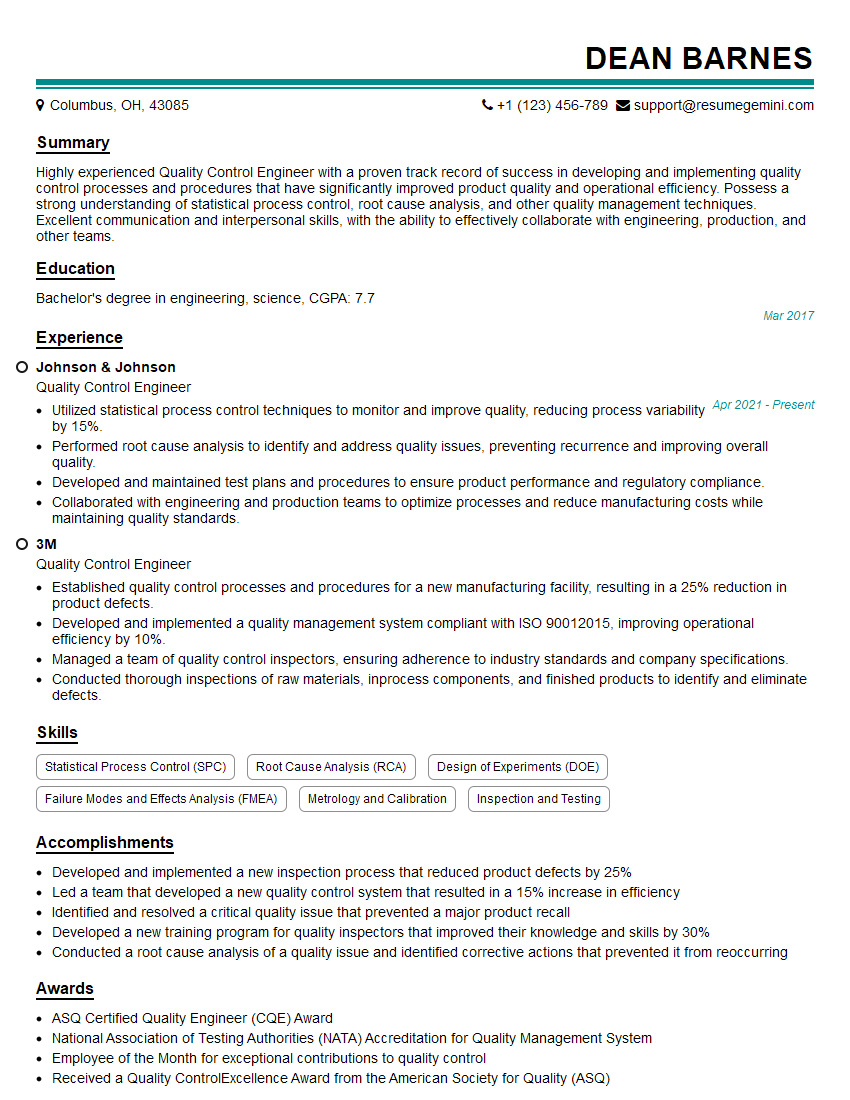
Quality Control Engineer Resume Sample
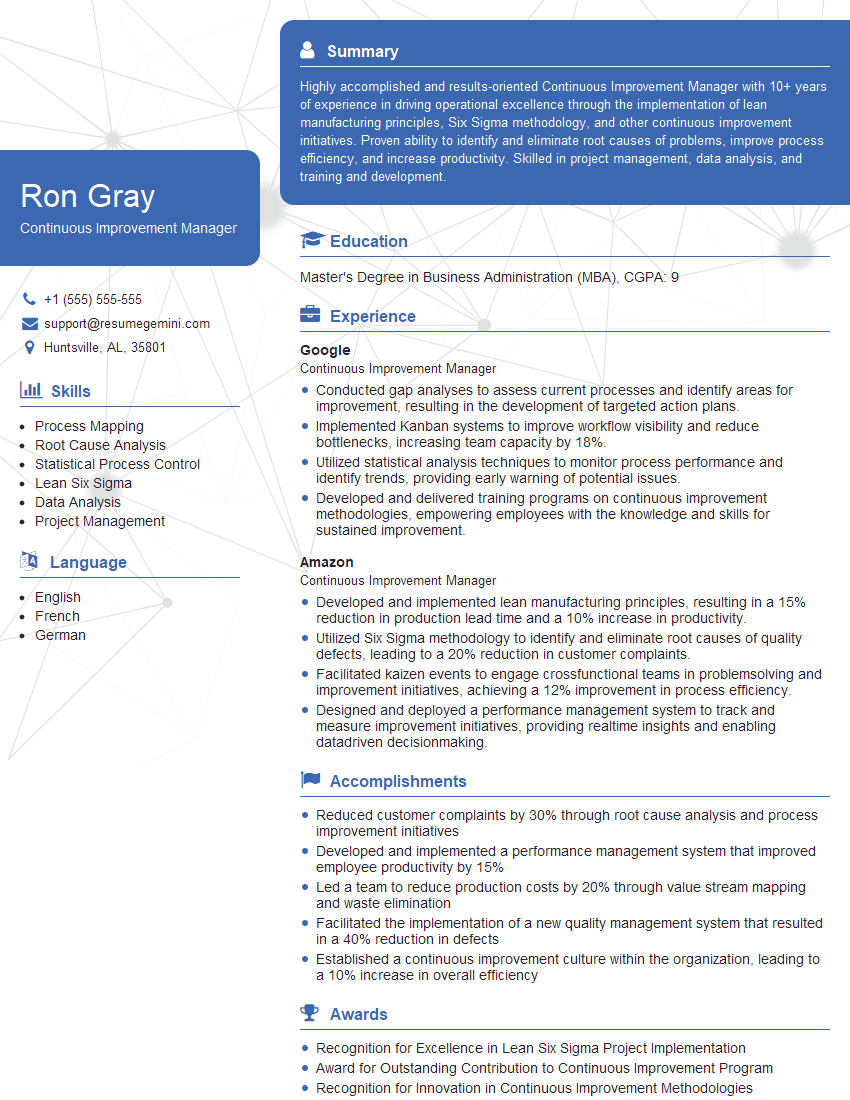
Continuous Improvement Manager Resume Sample
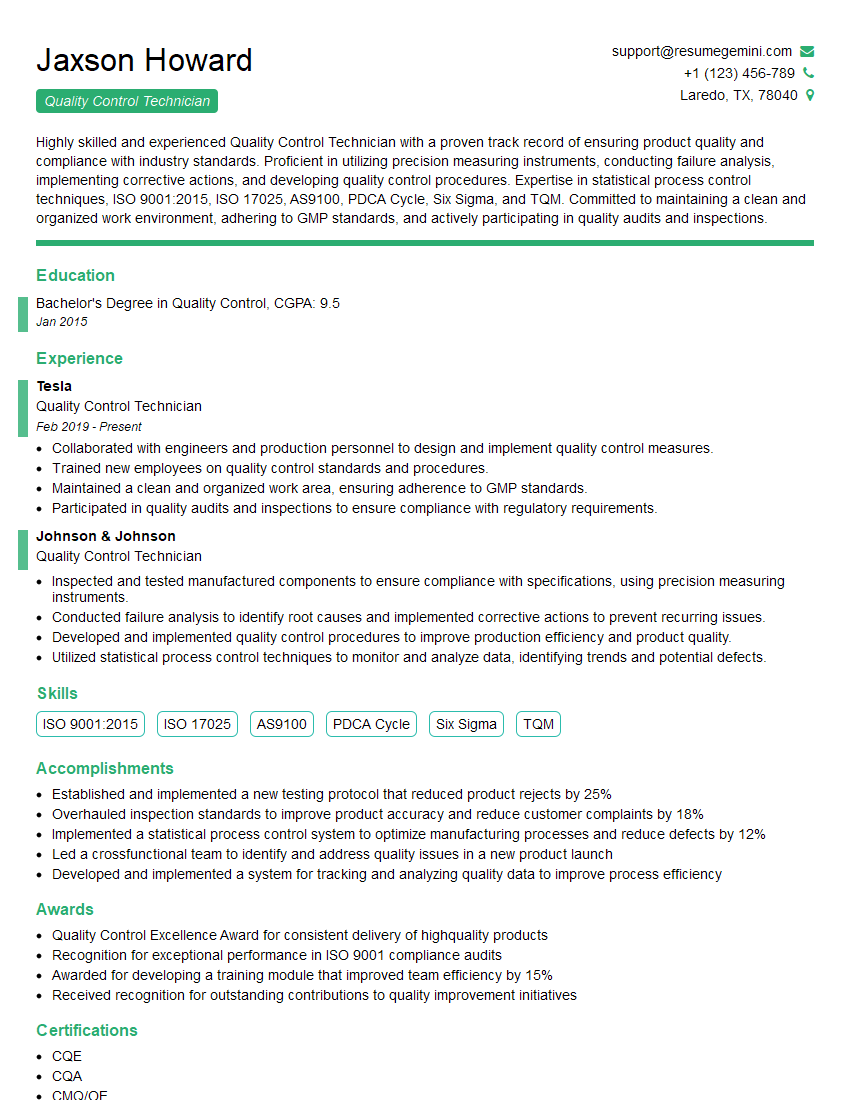
Quality Control Technician Resume Sample
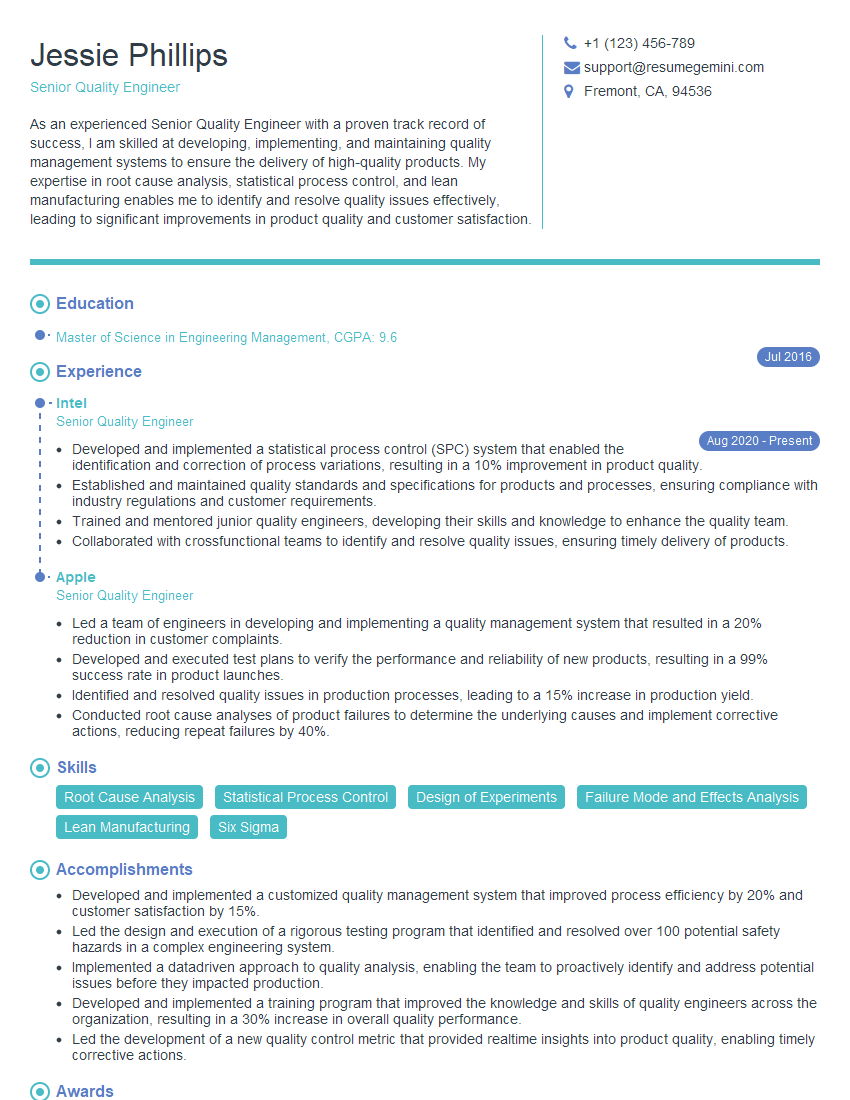
Senior Quality Engineer Resume Sample
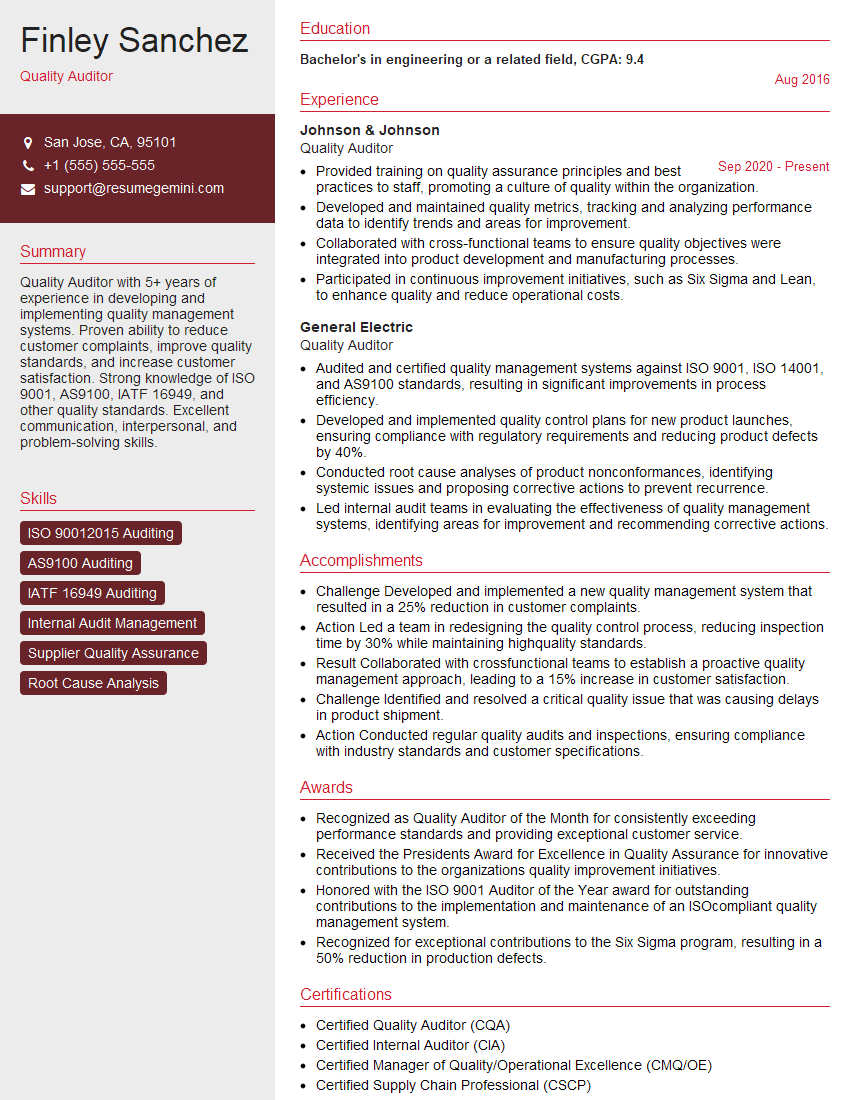
Quality Auditor Resume Sample
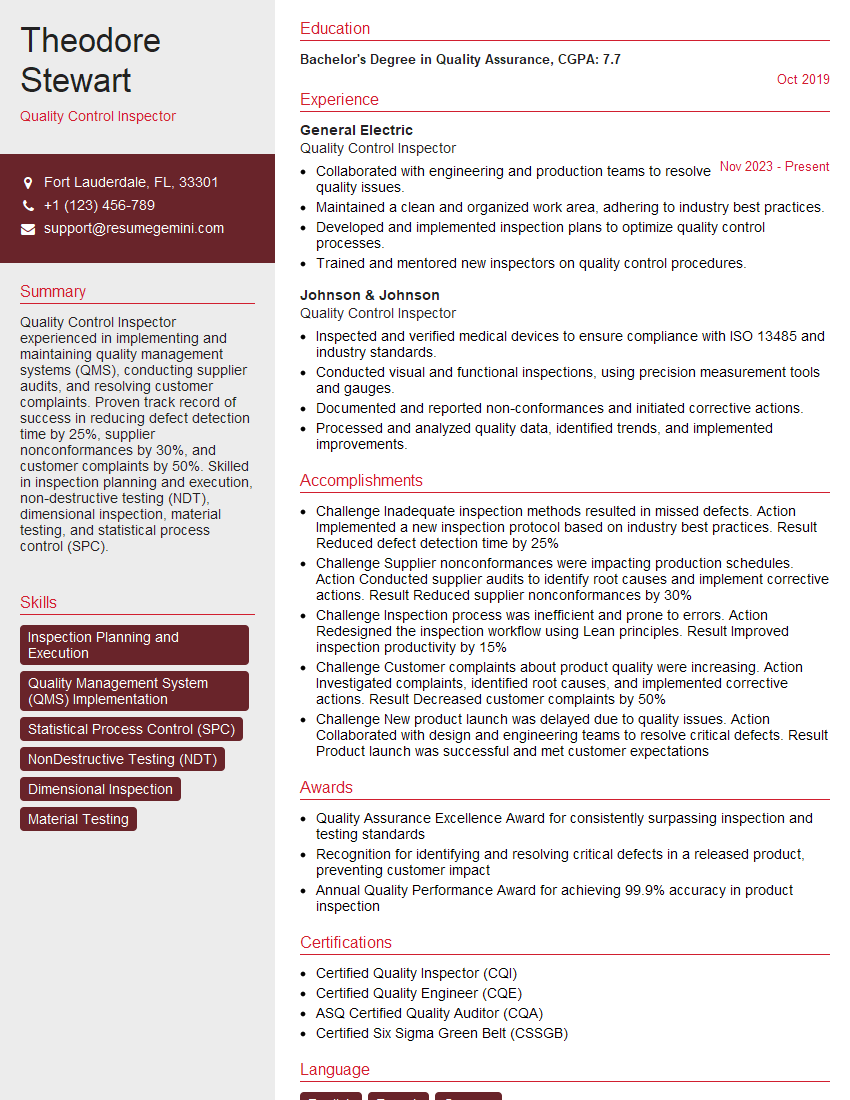
Quality Control Inspector Resume Sample
Explore more articles
Users Rating of Our Blogs
Share Your Experience
We value your feedback! Please rate our content and share your thoughts (optional).
What Readers Say About Our Blog
Hello,
we currently offer a complimentary backlink and URL indexing test for search engine optimization professionals.
You can get complimentary indexing credits to test how link discovery works in practice.
No credit card is required and there is no recurring fee.
You can find details here:
https://wikipedia-backlinks.com/indexing/
Regards
NICE RESPONSE TO Q & A
hi
The aim of this message is regarding an unclaimed deposit of a deceased nationale that bears the same name as you. You are not relate to him as there are millions of people answering the names across around the world. But i will use my position to influence the release of the deposit to you for our mutual benefit.
Respond for full details and how to claim the deposit. This is 100% risk free. Send hello to my email id: [email protected]
Luka Chachibaialuka
Hey interviewgemini.com, just wanted to follow up on my last email.
We just launched Call the Monster, an parenting app that lets you summon friendly ‘monsters’ kids actually listen to.
We’re also running a giveaway for everyone who downloads the app. Since it’s brand new, there aren’t many users yet, which means you’ve got a much better chance of winning some great prizes.
You can check it out here: https://bit.ly/callamonsterapp
Or follow us on Instagram: https://www.instagram.com/callamonsterapp
Thanks,
Ryan
CEO – Call the Monster App
Hey interviewgemini.com, I saw your website and love your approach.
I just want this to look like spam email, but want to share something important to you. We just launched Call the Monster, a parenting app that lets you summon friendly ‘monsters’ kids actually listen to.
Parents are loving it for calming chaos before bedtime. Thought you might want to try it: https://bit.ly/callamonsterapp or just follow our fun monster lore on Instagram: https://www.instagram.com/callamonsterapp
Thanks,
Ryan
CEO – Call A Monster APP
To the interviewgemini.com Owner.
Dear interviewgemini.com Webmaster!
Hi interviewgemini.com Webmaster!
Dear interviewgemini.com Webmaster!
excellent
Hello,
We found issues with your domain’s email setup that may be sending your messages to spam or blocking them completely. InboxShield Mini shows you how to fix it in minutes — no tech skills required.
Scan your domain now for details: https://inboxshield-mini.com/
— Adam @ InboxShield Mini
Reply STOP to unsubscribe
Hi, are you owner of interviewgemini.com? What if I told you I could help you find extra time in your schedule, reconnect with leads you didn’t even realize you missed, and bring in more “I want to work with you” conversations, without increasing your ad spend or hiring a full-time employee?
All with a flexible, budget-friendly service that could easily pay for itself. Sounds good?
Would it be nice to jump on a quick 10-minute call so I can show you exactly how we make this work?
Best,
Hapei
Marketing Director
Hey, I know you’re the owner of interviewgemini.com. I’ll be quick.
Fundraising for your business is tough and time-consuming. We make it easier by guaranteeing two private investor meetings each month, for six months. No demos, no pitch events – just direct introductions to active investors matched to your startup.
If youR17;re raising, this could help you build real momentum. Want me to send more info?
Hi, I represent an SEO company that specialises in getting you AI citations and higher rankings on Google. I’d like to offer you a 100% free SEO audit for your website. Would you be interested?
Hi, I represent an SEO company that specialises in getting you AI citations and higher rankings on Google. I’d like to offer you a 100% free SEO audit for your website. Would you be interested?
good