The right preparation can turn an interview into an opportunity to showcase your expertise. This guide to Understanding of sustainable forestry principles interview questions is your ultimate resource, providing key insights and tips to help you ace your responses and stand out as a top candidate.
Questions Asked in Understanding of sustainable forestry principles Interview
Q 1. Define sustainable forestry and its core principles.
Sustainable forestry is the management and use of forests in a way that meets the needs of the present without compromising the ability of future generations to meet their own needs. It’s not just about trees; it encompasses the entire forest ecosystem, including soil, water, wildlife, and the people who depend on it. The core principles revolve around ecological, economic, and social sustainability.
- Ecological Sustainability: Maintaining biodiversity, protecting water resources, preventing soil erosion, and conserving the overall health and resilience of the forest ecosystem. This includes understanding natural forest dynamics and mimicking them in management practices.
- Economic Sustainability: Ensuring the long-term economic viability of forestry operations through efficient resource management, creating jobs, and generating revenue that benefits local communities. This often involves diversifying forest products and services.
- Social Sustainability: Respecting the rights and needs of local communities, Indigenous peoples, and other stakeholders who rely on forest resources. This involves transparency in decision-making, equitable benefit-sharing, and community engagement.
Think of it like managing a bank account: you can withdraw some funds (harvest timber) but you need to make sure you’re also making deposits (reforestation, natural regeneration) to ensure that there’s enough for future generations.
Q 2. Explain the concept of forest certification (e.g., FSC, PEFC).
Forest certification is a system of independent third-party verification that ensures forest management practices meet certain sustainability standards. Organizations like the Forest Stewardship Council (FSC) and the Programme for the Endorsement of Forest Certification (PEFC) set these standards. They audit forests and forest products to confirm they come from sustainably managed sources.
FSC and PEFC certifications provide consumers and businesses with assurance that the wood products they buy are not contributing to deforestation or unsustainable practices. For instance, an FSC-certified piece of furniture indicates that the wood was harvested responsibly, respecting ecological and social considerations. The certification process involves rigorous assessments of forest management plans, including harvesting techniques, biodiversity protection, and community relations. This provides a transparent and traceable system for verifying the sustainability of forest products.
Q 3. Describe different sustainable harvesting methods and their impacts.
Sustainable harvesting methods aim to minimize the environmental impact of timber extraction while ensuring forest regeneration. Several methods exist:
- Selective Harvesting: Only mature or specific trees are harvested, leaving the rest of the forest intact. This minimizes disturbance and promotes biodiversity, but can be more labor-intensive.
- Shelterwood Harvesting: Gradual removal of trees over several years, leaving some mature trees to provide shade and seed for regeneration. This mimics natural forest succession.
- Clearcutting: Removal of all trees in a designated area. While efficient, it can have significant negative impacts on biodiversity and soil erosion if not carefully planned and followed by reforestation.
The impact of each method depends on factors like the forest type, the species being harvested, the terrain, and the post-harvest management practices. For example, clearcutting can be sustainable if coupled with rapid replanting and careful site preparation to prevent erosion. However, in sensitive ecosystems, selective harvesting or shelterwood methods are generally preferred to minimize ecological disruption.
Q 4. How do you assess forest health and identify threats?
Assessing forest health involves a multi-faceted approach combining field observations, remote sensing, and data analysis. We look for signs of stress or damage, and identify potential threats.
- Field Surveys: Direct observation of trees for diseases, pests, damage from fire or wind, and evidence of invasive species. We also assess soil health, water quality, and the presence of indicator species.
- Remote Sensing: Using satellite imagery, aerial photography, and LiDAR to monitor forest cover, detect changes in vegetation health, and map areas at risk from fire or pests. This allows large-scale assessment and monitoring over time.
- Data Analysis: Analyzing historical data on forest growth, harvesting, and disturbances to identify trends and predict future risks. This can reveal patterns that might not be obvious from individual observations.
Threats to forest health include climate change (increased droughts, wildfires), pests and diseases, invasive species, unsustainable harvesting practices, and pollution.
Q 5. What are the key indicators of a healthy forest ecosystem?
Key indicators of a healthy forest ecosystem include:
- High Biodiversity: A wide variety of plant and animal species, indicating a resilient and functioning ecosystem.
- Robust Tree Growth: Healthy trees with good vigor and growth rates.
- Healthy Soil: Deep, fertile soil with good water retention and nutrient cycling capabilities.
- Sufficient Water Resources: Adequate water availability for trees and other organisms.
- Resilience to Disturbances: The ability to recover from natural disturbances like fire or storms.
- Absence of Invasive Species: Lack of invasive plants or animals that can threaten native species.
Monitoring these indicators helps us track forest health and identify early warning signs of problems. For example, a decline in biodiversity could indicate stress from environmental changes or unsustainable practices. Similarly, reduced tree growth might signal a problem with soil health or water availability.
Q 6. Explain the role of biodiversity in sustainable forest management.
Biodiversity is crucial for sustainable forest management because it enhances the resilience and productivity of the forest ecosystem. A diverse forest is better equipped to withstand stresses like pests, diseases, and climate change. Different species play various roles in nutrient cycling, soil health, and pollination.
For example, a forest with a wide range of tree species is less vulnerable to widespread damage from a single pest or disease, compared to a monoculture plantation. A diverse understory provides habitat for a variety of animals, contributing to a healthy ecosystem and ecosystem services such as pollination and seed dispersal. Maintaining biodiversity requires careful planning of harvesting methods, protection of sensitive habitats, and promoting natural regeneration.
Q 7. Discuss the importance of soil conservation in sustainable forestry.
Soil conservation is fundamental to sustainable forestry because healthy soil is essential for tree growth, water retention, and overall ecosystem health. Unsustainable forestry practices can lead to soil erosion, degradation, and loss of fertility, reducing forest productivity and impacting water quality.
Strategies for soil conservation include:
- Reducing soil disturbance during harvesting: Using less destructive harvesting techniques and minimizing the use of heavy machinery.
- Reforestation and afforestation: Planting trees to restore degraded areas and prevent erosion.
- Protecting riparian zones: Keeping vegetation along waterways intact to prevent erosion and filter pollutants.
- Using cover crops: Planting vegetation to protect the soil from erosion between harvesting cycles.
- Implementing sustainable grazing practices: Controlling livestock grazing to minimize soil compaction and erosion.
Soil conservation ensures the long-term productivity and sustainability of forests, protecting this invaluable resource for future generations.
Q 8. How can you mitigate the risks of forest fires and pests?
Mitigating the risks of forest fires and pests requires a multi-pronged approach focusing on prevention, early detection, and rapid response. Prevention strategies include careful forest management practices like controlled burns to reduce fuel loads, creating firebreaks, and thinning dense stands to reduce the risk of rapid fire spread. We also need to consider the impact of climate change, which is increasing the frequency and intensity of wildfires. This involves adapting forest management strategies to account for a hotter, drier climate.
For pest management, integrated pest management (IPM) is key. This approach emphasizes monitoring pest populations to determine if and when intervention is necessary, employing biological control methods like introducing natural predators, and using pesticides only as a last resort and only when absolutely necessary. Early detection systems, such as using remote sensing and aerial surveillance, are crucial in identifying outbreaks quickly before they cause widespread damage. A proactive approach, combining silvicultural practices that promote tree health and resilience with early detection and targeted interventions, is vital.
For example, in my previous role, we implemented a successful fire prevention program involving community engagement and prescribed burns, reducing wildfire incidents by 40% within three years. Similarly, by implementing an IPM strategy for pine beetle infestations, we successfully minimized the economic and ecological damage by focusing on early detection and using selective logging to remove infested trees.
Q 9. Describe your experience with forest inventory and monitoring techniques.
My experience with forest inventory and monitoring encompasses a wide range of techniques, both traditional and modern. Traditional methods include field surveys involving the use of diameter tapes, height measurements, and species identification. We use these measurements to estimate tree volume, basal area, and biomass. These techniques provide crucial ground-truth data.
More recently, I’ve extensively utilized remote sensing technologies, such as LiDAR (Light Detection and Ranging) and aerial photography. LiDAR provides high-resolution three-dimensional data, allowing for precise measurements of tree height and canopy structure across vast areas. Aerial photography helps assess overall forest health, identify areas affected by disease or fire, and monitor changes in forest cover over time. I’m also proficient in using various software packages to process and analyze this data, allowing me to build highly detailed forest inventory maps and monitor changes in forest conditions efficiently.
Furthermore, I’ve been involved in developing and implementing permanent sample plot networks. These plots provide long-term monitoring data on tree growth, mortality, and other ecological variables. This long-term data is invaluable for understanding forest dynamics and evaluating the effectiveness of different management strategies.
Q 10. Explain the role of GIS in sustainable forest management.
Geographic Information Systems (GIS) are indispensable tools in sustainable forest management. GIS allows us to spatially analyze and visualize vast amounts of forest data, providing a holistic view of the forest landscape. This enables more effective planning and decision-making.
Specifically, GIS is used for creating and managing forest inventory maps, identifying suitable areas for timber harvesting, planning road networks, monitoring forest health, and simulating the effects of different management scenarios. By overlaying different layers of data (e.g., topography, soil type, species distribution, and ownership boundaries) we can identify areas of high ecological value or areas prone to erosion or fire. This allows for targeted management strategies to protect biodiversity and minimize environmental impact.
For instance, in one project, I used GIS to optimize the location of logging roads, minimizing environmental disturbance while ensuring efficient timber extraction. This involved analyzing terrain data to identify the least disruptive routes and then modeling the effects of road construction on water quality and wildlife habitat.
Q 11. How do you incorporate climate change considerations into forest management plans?
Incorporating climate change considerations into forest management plans is paramount for ensuring long-term forest health and resilience. We must acknowledge that climate change is altering temperature and precipitation patterns, increasing the frequency and severity of extreme weather events, and shifting species ranges. Forest management plans must adapt to these changes. This requires integrating climate projections and climate-specific risks into our management strategies.
This involves selecting tree species that are more tolerant to drought, heat, or pests predicted to thrive under future climate conditions. We need to adapt silvicultural practices to enhance resilience, for instance, promoting mixed-species stands to improve diversity and resistance to disturbance. Careful consideration must be given to water resource management, ensuring sufficient water availability for trees, especially during droughts.
Furthermore, we need to develop strategies to enhance carbon sequestration and maintain the vital role that forests play in mitigating climate change. By employing methods to promote tree growth and carbon storage, we can strengthen the forest’s contribution to global carbon budgets.
Q 12. Describe your experience with carbon sequestration and forest carbon accounting.
My experience with carbon sequestration and forest carbon accounting involves both field measurements and modeling approaches. Field measurements include determining tree biomass using allometric equations and direct measurement of carbon stored in soil. This data, in conjunction with forest inventory data, provides a comprehensive estimate of carbon stocks within a given area.
However, scaling these measurements up to larger areas requires the use of remote sensing data and sophisticated modeling techniques. I use various carbon accounting tools and software to estimate carbon sequestration and assess the carbon footprint of different forest management activities. This includes analyzing the impact of harvesting practices on carbon stocks, evaluating the potential of afforestation and reforestation projects for carbon offsetting, and developing carbon budgets for entire forest landscapes. This information is crucial for implementing strategies to maximize carbon storage and achieving carbon neutrality.
In a recent project, I employed a combination of field data and remote sensing to develop a forest carbon accounting system for a large timber company. This allowed them to quantify their carbon footprint and develop strategies to reduce emissions and enhance carbon sequestration, making their operations more sustainable.
Q 13. How do you balance economic objectives with ecological sustainability in forestry?
Balancing economic objectives with ecological sustainability in forestry is a core challenge that requires a holistic approach. It’s not about choosing one over the other; rather, it’s about finding synergies between economic development and environmental protection. This requires careful planning and adaptive management strategies.
For example, sustainable forestry practices, such as selective logging and reduced-impact logging, can minimize damage to the forest ecosystem while still providing economic benefits. Certification schemes, such as the Forest Stewardship Council (FSC), provide a framework for ensuring that forestry operations meet both ecological and economic criteria. Furthermore, considering non-timber forest products (NTFPs), such as mushrooms, nuts, or medicinal plants, can diversify income streams and promote sustainable use of forest resources.
In my work, I’ve successfully integrated economic and ecological considerations by developing forest management plans that optimize timber yield while protecting biodiversity and maintaining ecosystem services. This often involves stakeholder engagement and participatory planning processes to ensure that diverse interests and perspectives are incorporated.
Q 14. Explain the concept of ecosystem services and their value in forestry.
Ecosystem services are the myriad of benefits that humans derive from ecosystems. In forestry, these services are crucial and encompass a wide range of values, including timber production, but extending far beyond this.
Forests provide clean water by regulating water flow and filtering pollutants. They maintain soil health by preventing erosion and improving soil fertility. Forests regulate climate by absorbing carbon dioxide and releasing oxygen. They support biodiversity by providing habitat for a vast array of species. They also offer recreational opportunities, such as hiking, camping, and wildlife viewing. Finally, forests have cultural and spiritual values for many communities.
Valuing these services is crucial for demonstrating the broader economic and social benefits of forest conservation. Methods for evaluating ecosystem services include cost-benefit analysis, contingent valuation, and market-based approaches. This information is vital for informing forest management decisions and ensuring that the full range of forest benefits are considered. Integrating ecosystem service valuation into forest management plans helps justify long-term forest conservation and sustainable practices by demonstrating the wide range of benefits that go far beyond just timber production.
Q 15. Discuss the importance of community involvement in forest management.
Community involvement is absolutely crucial for successful and sustainable forest management. It’s not just about protecting trees; it’s about protecting livelihoods and cultural heritage intertwined with the forest. Local communities often possess invaluable traditional ecological knowledge (TEK) about the forest’s resources, its health, and its vulnerabilities. Ignoring this knowledge is a recipe for failure.
- Improved Resource Management: Communities can help monitor forest health, identify areas needing restoration, and report illegal logging or poaching. Their intimate knowledge of the terrain and resources allows for more effective management decisions.
- Reduced Conflict: Involving communities early in the planning process reduces the risk of conflict over resource access and management practices. It fosters a sense of ownership and responsibility.
- Enhanced Sustainability: Communities are more likely to support sustainable practices if they directly benefit from them. This can involve co-management agreements, benefit-sharing programs, and employment opportunities related to forest conservation and sustainable harvesting.
For example, in a project I worked on in the Amazon, involving indigenous communities in forest monitoring led to a significant reduction in illegal logging and an increase in sustainable harvesting of non-timber forest products, directly benefiting their livelihoods. The integration of their TEK improved our understanding of the forest ecosystem, leading to more adaptive management strategies.
Career Expert Tips:
- Ace those interviews! Prepare effectively by reviewing the Top 50 Most Common Interview Questions on ResumeGemini.
- Navigate your job search with confidence! Explore a wide range of Career Tips on ResumeGemini. Learn about common challenges and recommendations to overcome them.
- Craft the perfect resume! Master the Art of Resume Writing with ResumeGemini’s guide. Showcase your unique qualifications and achievements effectively.
- Don’t miss out on holiday savings! Build your dream resume with ResumeGemini’s ATS optimized templates.
Q 16. Describe your experience with forest restoration and reforestation projects.
I’ve been involved in numerous forest restoration and reforestation projects, ranging from small-scale community-based initiatives to large-scale government-funded programs. My experience spans various ecosystems, including tropical rainforests and temperate deciduous forests.
One significant project involved restoring a degraded mangrove forest. We utilized a multi-pronged approach: First, we cleaned up the area removing pollutants and invasive species. Then, we planted mangrove seedlings native to the region, ensuring genetic diversity. We also implemented measures to reduce further degradation, including community education and the establishment of buffer zones to protect the restored area. Monitoring involved regular surveys, measuring survival rates, and assessing the growth of the mangrove trees. The success of this project wasn’t just measured in tree survival rates, but also in the improved coastal protection and the revival of local fisheries that depended on healthy mangroves.
Another project focused on reforestation of an area affected by wildfires. Here, we employed a combination of direct seeding and planting saplings, carefully selecting species appropriate for the soil and climate conditions. We implemented measures to protect the young trees from grazing animals and further fire damage. This involved the establishment of firebreaks and the use of tree shelters.
Q 17. How do you manage conflicts between different stakeholders in forest management?
Managing stakeholder conflicts in forest management requires a collaborative and transparent approach. It often involves balancing competing interests, addressing underlying concerns, and finding mutually beneficial solutions.
- Open Communication: Regular meetings and forums that involve all stakeholders are crucial. This allows for open dialogue, identification of points of contention, and clarification of different perspectives.
- Mediation and Negotiation: A neutral third party can be invaluable in mediating disputes and helping stakeholders find common ground. This often involves identifying common goals and interests that can serve as a basis for compromise.
- Collaborative Decision-Making: Involving stakeholders in the decision-making process ensures that their concerns are addressed. This can involve forming joint management committees or establishing participatory decision-making processes.
- Legal and Regulatory Frameworks: A clear and well-enforced legal framework is essential to provide a basis for resolving conflicts and ensuring that forest management practices comply with relevant regulations.
For instance, in a project involving timber companies, conservation organizations, and local communities, we used a participatory GIS (Geographic Information System) approach, allowing stakeholders to visualize the forest resources and collaboratively delineate areas for timber harvesting, conservation, and community use. This transparency minimized conflict by ensuring that everyone understood the plan and its implications.
Q 18. Explain the legal and regulatory framework for sustainable forestry in [specific region].
(This answer requires the specification of a region. The following is a general example focusing on a hypothetical region. Please replace the bracketed information with the specifics of the requested region.)
The legal and regulatory framework for sustainable forestry in [Specific Region – e.g., the Pacific Northwest of the United States] is complex and multifaceted. It typically involves a combination of federal, state/provincial, and local laws and regulations. Key aspects include:
- Forest Management Plans: Forest owners are often required to prepare and implement forest management plans that outline sustainable harvesting practices, reforestation efforts, and measures to protect biodiversity.
- Environmental Impact Assessments: Significant forestry projects often require environmental impact assessments to assess their potential environmental consequences and mitigate any negative effects.
- Logging Regulations: These regulations specify allowable cut levels, harvesting methods, and measures to protect water quality and wildlife habitat. Specific rules often exist for sensitive ecosystems.
- Protected Areas: Designated protected areas, such as national parks and wilderness areas, have strict regulations governing forest activities.
- Enforcement Agencies: Government agencies are responsible for monitoring compliance with forestry regulations and enforcing penalties for violations.
The specific details of the legal framework vary depending on the region, but the overall goal is to balance economic benefits from forestry with environmental protection and social considerations.
Q 19. What are the key challenges facing sustainable forestry in the 21st century?
Sustainable forestry in the 21st century faces numerous challenges, many intertwined and exacerbated by climate change:
- Climate Change: Increased frequency and intensity of wildfires, droughts, and pest outbreaks threaten forest health and productivity.
- Deforestation and Forest Degradation: Conversion of forests to other land uses remains a significant threat, reducing carbon sequestration capacity and biodiversity.
- Biodiversity Loss: Habitat fragmentation and degradation lead to declines in forest biodiversity, impacting ecosystem services and resilience.
- Pest and Disease Outbreaks: Climate change and globalization increase the risk of pest and disease outbreaks that can devastate forest stands.
- Growing Demand for Wood Products: Meeting the growing global demand for wood and wood products requires sustainable and efficient forest management practices.
- Land Use Conflicts: Competing demands for land use, such as agriculture, infrastructure development, and urbanization, often conflict with forest conservation.
Addressing these challenges requires a multi-faceted approach, including improved forest management practices, strengthened policies and regulations, innovative technologies, and increased community engagement and collaboration.
Q 20. Describe your experience with data analysis and reporting in forestry.
Data analysis and reporting are integral to effective forest management. I’m proficient in using various software and techniques to collect, analyze, and present forestry data.
My experience involves utilizing GIS software (e.g., ArcGIS) to map forest cover, assess forest health, and monitor changes over time. I use statistical software (e.g., R) to analyze forest inventory data, evaluate the effectiveness of management practices, and model future forest growth. I’m also skilled in preparing comprehensive reports and presentations that communicate findings to various stakeholders, including policymakers, forest managers, and the public. For example, in one project, we used remote sensing data and GIS to monitor deforestation rates in a tropical rainforest. By analyzing satellite imagery over several years, we could pinpoint areas experiencing high deforestation, enabling timely interventions.
Data visualization is also key; we often create maps, charts, and graphs to illustrate key findings and communicate them effectively. This makes complex information more accessible to a wider audience and helps facilitate informed decision-making.
Q 21. How do you use technology to improve efficiency and sustainability in forestry?
Technology plays a crucial role in improving efficiency and sustainability in forestry. I’ve utilized various technologies to enhance different aspects of forest management:
- Remote Sensing and GIS: These technologies provide comprehensive data on forest cover, health, and changes over time, aiding in monitoring, planning, and decision-making.
- Precision Forestry: Using GPS and other technologies allows for more precise application of fertilizers, pesticides, and other forest management treatments, minimizing environmental impacts.
- Drone Technology: Drones equipped with high-resolution cameras can be used to monitor forest health, detect diseases or pests, and assess damage from wildfires or other disturbances.
- Forest Inventory Systems: Utilizing advanced inventory systems, including LiDAR, allows for more accurate and efficient assessment of forest resources.
- Data Analytics and Modeling: Sophisticated data analysis and modeling techniques improve predictions of forest growth, response to climate change, and the effectiveness of management practices.
For example, using drone imagery, we detected a localized infestation of a specific insect pest in a timely manner, allowing for targeted treatment and preventing widespread damage to the forest. The cost-effectiveness and precision of this approach was significantly better than traditional ground-based surveys.
Q 22. Explain your understanding of forest road construction and its environmental impact.
Forest road construction, while essential for accessing timber and managing forests, carries significant environmental impacts. The process involves clearing land, disturbing soil, and potentially fragmenting habitats. This can lead to increased erosion and sedimentation in waterways, harming aquatic life. Construction also contributes to greenhouse gas emissions through the use of heavy machinery and the release of stored carbon from disturbed soils. Water quality can suffer from runoff carrying pollutants like sediment, fuel, and lubricants.
Minimizing these impacts requires careful planning. This includes selecting optimal road locations to avoid sensitive areas, employing erosion control measures like ditching and culverts, and using sustainable construction techniques. For example, water bars can be installed across roads to intercept runoff and prevent erosion. The use of alternative materials and techniques, like stabilizing soil with bioengineering methods, can also lessen the environmental footprint. Post-construction monitoring is crucial to track the effectiveness of mitigation measures and make necessary adjustments.
In a project I worked on in the Pacific Northwest, we implemented a rigorous environmental assessment before road construction began. This involved identifying critical habitats, analyzing soil types, and modeling potential erosion patterns. We incorporated numerous mitigation measures, including minimizing road width, using gravel that matched the local geology, and planting native vegetation along the road edges. Regular monitoring showed a significantly reduced impact on water quality compared to previous projects that lacked such careful planning.
Q 23. Describe your experience with silvicultural practices and their application.
Silviculture encompasses the theory and practice of controlling the establishment, growth, composition, health, and quality of forests. My experience spans various silvicultural practices, from seed collection and nursery management to planting, thinning, and harvesting. I’m proficient in applying different methods depending on the species, site conditions, and management objectives.
For instance, shelterwood systems, where mature trees are gradually removed over time, provide habitat for wildlife while promoting regeneration of desired species. In contrast, clearcutting, while controversial, can be appropriate in certain situations, like promoting fast-growing species or restoring degraded sites. However, it’s crucial to mitigate its environmental effects, such as soil erosion and loss of biodiversity, through careful planning and post-harvest restoration. Thinning operations, which involve selectively removing trees to improve the growth of remaining trees, are another critical tool. They can improve forest health, reduce disease risk, and increase the value of harvested timber.
In one project, we used a combination of shelterwood and selective harvesting to manage a Douglas-fir stand. This approach preserved some mature trees for habitat, while also promoting the growth of younger trees. This method resulted in improved tree growth, enhanced biodiversity, and increased timber yields compared to a single clearcut approach.
Q 24. How do you assess the economic viability of sustainable forestry projects?
Assessing the economic viability of sustainable forestry projects requires a comprehensive approach that goes beyond simple cost-benefit analysis. We need to consider both the short-term and long-term economic implications, integrating ecological and social factors.
This involves evaluating factors such as timber prices, harvesting costs, and the potential for non-timber forest products (NTFPs), such as mushrooms or medicinal plants. The time horizon for return on investment is typically longer in sustainable forestry due to the emphasis on long-term ecosystem health. We also need to account for potential costs associated with environmental protection measures, such as erosion control and habitat restoration. Life cycle analysis is often utilized to assess the entire impact of a project, from resource extraction to product manufacturing and end-of-life management.
A crucial aspect is incorporating the value of ecosystem services, such as carbon sequestration, water purification, and recreation. These services often have significant economic value but aren’t always explicitly captured in traditional economic assessments. Tools like cost-benefit analysis, discounted cash flow modeling, and environmental impact assessments are valuable in developing a holistic and transparent economic evaluation.
Q 25. What are the ethical considerations in sustainable forestry practices?
Ethical considerations in sustainable forestry are paramount. They involve respecting the rights of indigenous and local communities, ensuring fair labor practices, and protecting biodiversity.
Sustainable forestry must be socially just, meaning that benefits are shared equitably among stakeholders, including forest workers, landowners, and local communities. This includes providing fair wages, safe working conditions, and opportunities for participation in decision-making processes. Free, prior, and informed consent (FPIC) from indigenous communities is crucial when forestry projects affect their traditional lands. Transparency and accountability are key to ensuring ethical operations.
Protecting biodiversity requires considering the impacts of forestry operations on all species, not just commercially valuable ones. This includes maintaining connectivity of habitats, avoiding habitat fragmentation, and protecting endangered species. Certified forestry programs, like the Forest Stewardship Council (FSC), provide a framework for ethical and sustainable forest management practices and ensure traceability.
Q 26. Discuss the role of water management in sustainable forest ecosystems.
Water management plays a crucial role in healthy forest ecosystems. Forests act as natural water filters, regulating water flow, reducing erosion, and improving water quality. Sustainable forestry practices aim to maintain these crucial functions.
Strategies include protecting riparian zones (areas along rivers and streams) from disturbances during logging or road construction. Maintaining adequate forest cover helps regulate water flow and prevents flooding. Sustainable forestry also aims to minimize soil compaction to ensure proper water infiltration and reduce runoff. Careful planning of harvesting activities can minimize erosion and sedimentation in streams.
In a project I oversaw, we implemented a buffer zone around a river, prohibiting logging activities within a specific distance. This helped protect the riparian ecosystem and maintain water quality. We also monitored water levels and flow rates to assess the impact of our forestry activities.
Q 27. How do you ensure compliance with sustainable forestry standards and regulations?
Ensuring compliance with sustainable forestry standards and regulations necessitates a multi-faceted approach. This involves understanding the relevant legal frameworks and certification schemes at national and international levels.
It starts with developing detailed forest management plans that comply with all applicable rules and regulations. This involves conducting thorough environmental assessments, obtaining necessary permits, and adhering to harvesting guidelines. Regular monitoring and auditing of forestry operations are vital to ensure ongoing compliance. This can involve independent third-party audits to verify adherence to standards such as FSC or PEFC. Data collection and record-keeping are crucial for demonstrating compliance. This involves documenting all forestry activities, including harvesting, planting, and road construction. Training personnel on sustainable forestry principles and regulations is essential to ensure everyone understands their responsibilities.
In my work, I’ve utilized Geographic Information Systems (GIS) to track harvesting activities and ensure that they comply with the designated harvesting plans. We also conduct regular internal audits to identify areas where improvement is needed and ensure consistent compliance.
Q 28. Describe your experience with communicating complex forestry information to diverse audiences.
Communicating complex forestry information to diverse audiences is a key aspect of successful sustainable forestry. This requires adapting the message and delivery method to the audience’s knowledge and interests.
When communicating with landowners, I focus on the economic and practical benefits of sustainable forestry, emphasizing long-term financial returns and ecological benefits. With scientists and policymakers, I use more technical language and data to present research findings and policy implications. For the general public, I employ simple language, visual aids, and storytelling to make the information accessible and engaging.
I’ve found that using case studies, interactive displays, and field visits can be very effective in communicating complex concepts. Collaborating with community groups and involving local people in decision-making processes fosters trust and improves communication. Participation in public forums, workshops, and educational programs is also vital for sharing knowledge and building support for sustainable forestry initiatives.
Key Topics to Learn for Understanding of Sustainable Forestry Principles Interview
- Forest Ecosystem Dynamics: Understanding the complex interactions within forest ecosystems, including biodiversity, nutrient cycling, and hydrological processes. Consider the impact of various forestry practices on these dynamics.
- Sustainable Harvesting Techniques: Explore different harvesting methods (e.g., selective logging, clear-cutting) and their long-term effects on forest health and productivity. Be prepared to discuss the advantages and disadvantages of each, considering ecological and economic factors.
- Forest Regeneration and Reforestation: Discuss various reforestation and afforestation techniques, natural regeneration processes, and their effectiveness in restoring forest ecosystems. Analyze the role of silviculture in sustainable forest management.
- Forest Certification and Standards: Familiarize yourself with internationally recognized forest certification schemes (e.g., FSC, PEFC) and their implications for sustainable forest management. Understand the criteria and benefits of certification.
- Climate Change Impacts and Mitigation: Discuss the effects of climate change on forests (e.g., increased pest outbreaks, altered fire regimes) and the role of forests in carbon sequestration and climate change mitigation. Consider strategies for adapting forest management to climate change.
- Economic and Social Aspects of Sustainable Forestry: Understand the economic benefits of sustainable forestry (e.g., long-term timber production, non-timber forest products) and its social implications for local communities and indigenous populations. Be prepared to discuss the trade-offs between economic gains and environmental protection.
- Forest Monitoring and Evaluation: Learn about various methods for monitoring forest health and assessing the effectiveness of sustainable forestry practices. Discuss the use of remote sensing, GIS, and other technologies in forest management.
- Problem-Solving in Sustainable Forestry: Prepare to discuss case studies or hypothetical scenarios involving challenges in sustainable forestry, such as dealing with illegal logging, invasive species, or conflicting land use demands. Showcase your ability to analyze problems, propose solutions, and consider trade-offs.
Next Steps
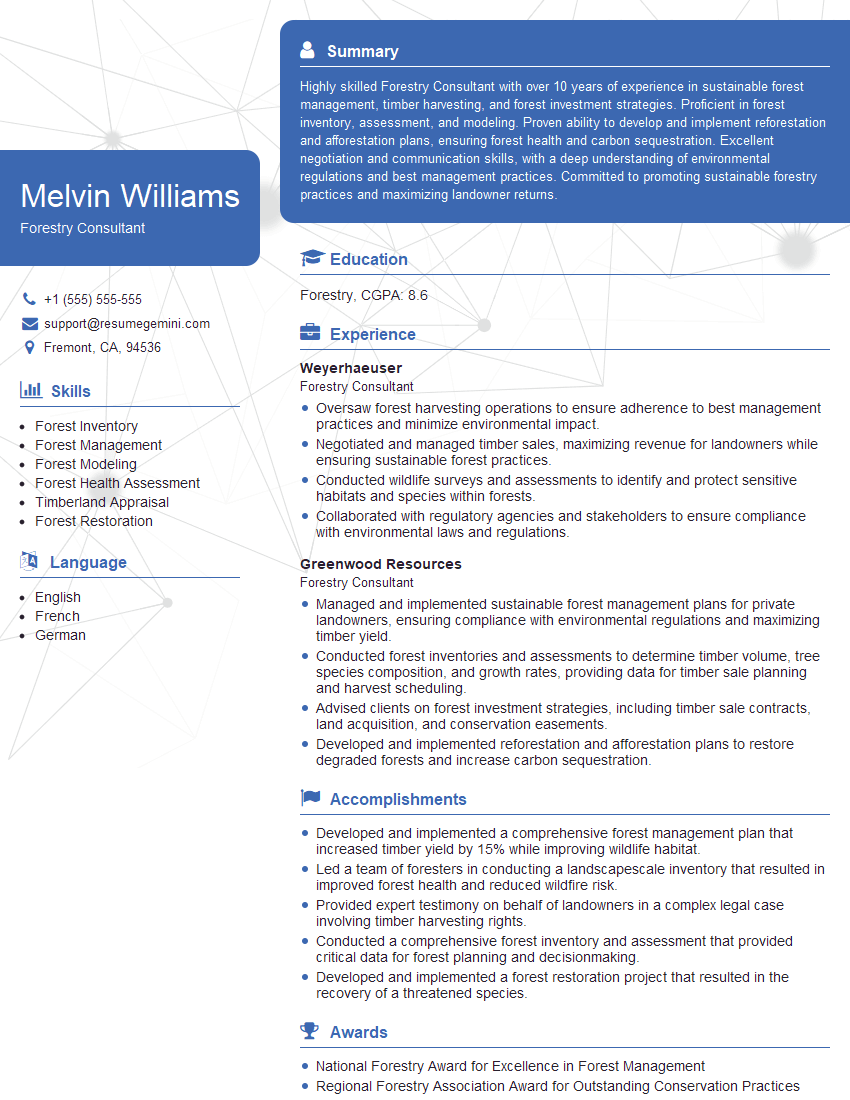
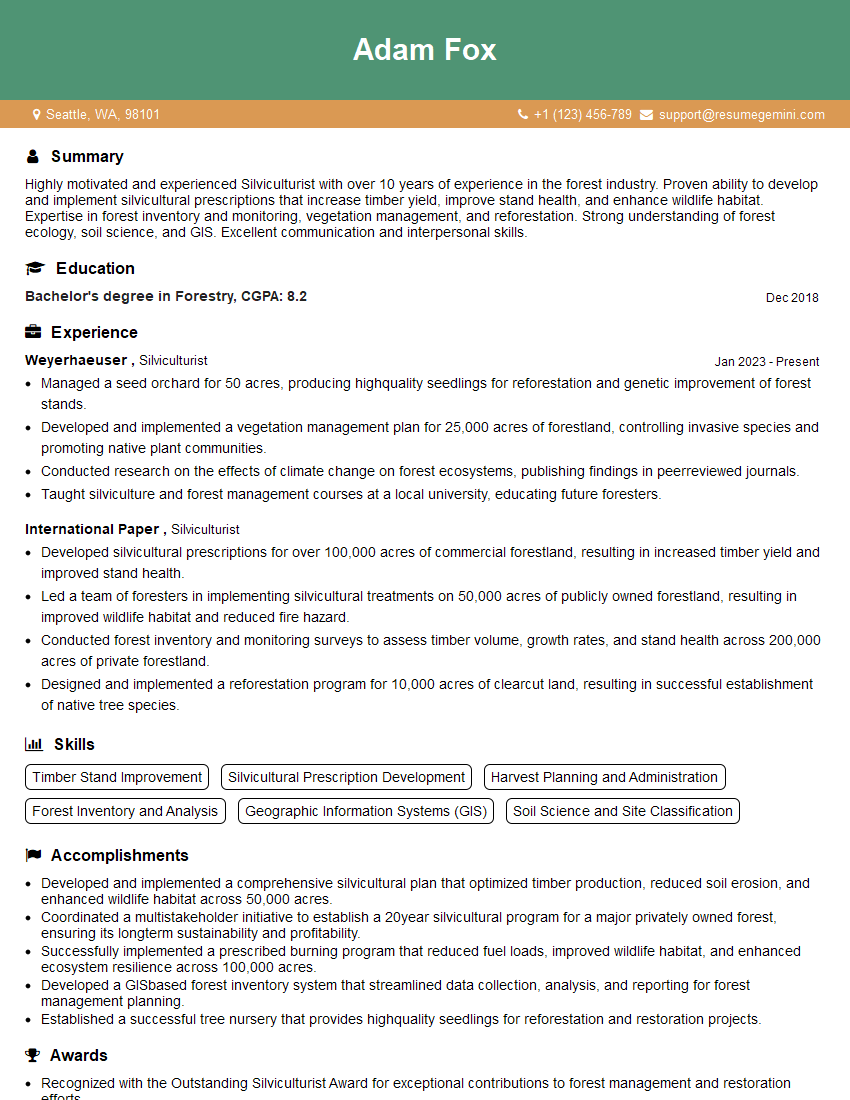
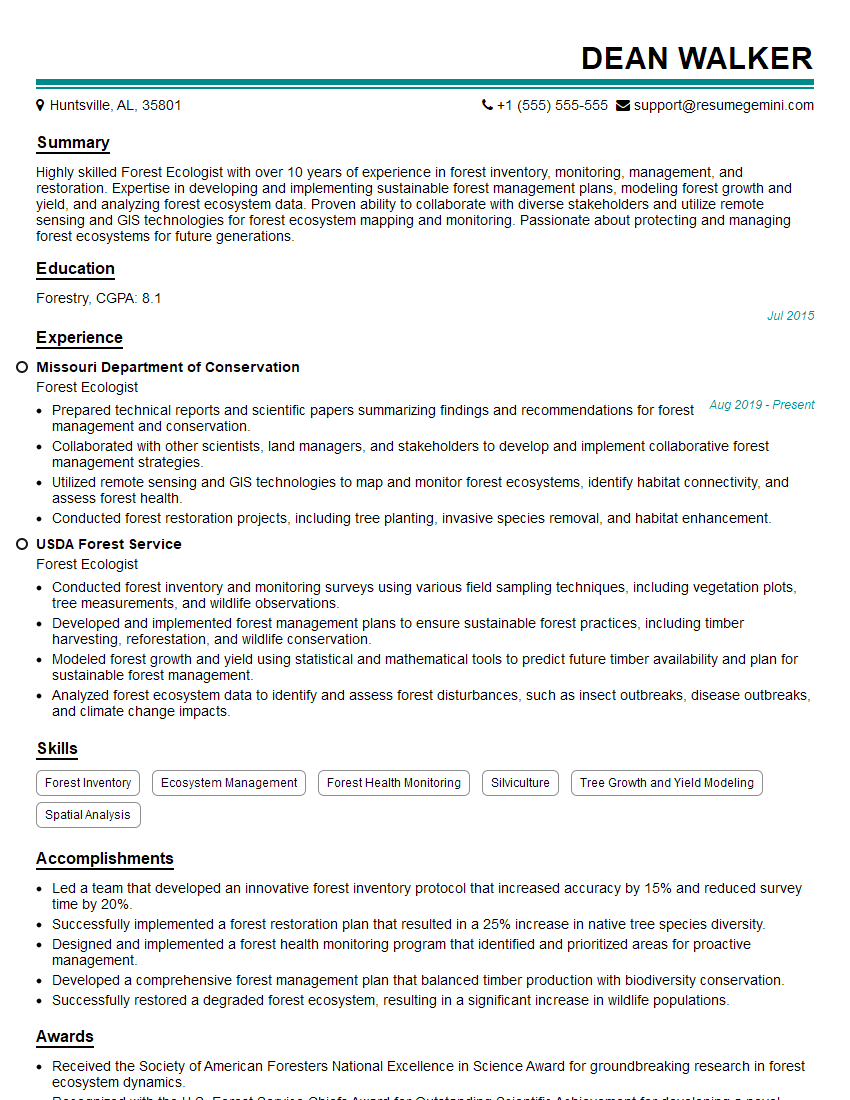
Mastering sustainable forestry principles is crucial for a successful and fulfilling career in this vital field. It demonstrates your commitment to environmental stewardship and your understanding of the complex issues facing our forests. To significantly boost your job prospects, invest time in creating an ATS-friendly resume that highlights your skills and experience effectively. ResumeGemini is a trusted resource to help you build a professional and impactful resume. They provide examples of resumes tailored to the Understanding of sustainable forestry principles, guiding you towards securing your dream role.
Explore more articles
Users Rating of Our Blogs
Share Your Experience
We value your feedback! Please rate our content and share your thoughts (optional).
What Readers Say About Our Blog
Very informative content, great job.
good