Unlock your full potential by mastering the most common Understanding of Thread Colors and Textures interview questions. This blog offers a deep dive into the critical topics, ensuring you’re not only prepared to answer but to excel. With these insights, you’ll approach your interview with clarity and confidence.
Questions Asked in Understanding of Thread Colors and Textures Interview
Q 1. Name three common types of textile fibers and describe their characteristic textures.
Three common textile fibers, each with distinct textural characteristics, are cotton, wool, and silk.
Cotton: Known for its soft, absorbent, and relatively smooth texture. Think of a comfortable t-shirt – that’s the feel of cotton. It can range from a fine, almost silky texture in high-quality cottons to a coarser, more rustic texture in heavier fabrics.
Wool: Offers a unique texture that’s often described as warm, fuzzy, and sometimes slightly scratchy. The texture depends on the breed of sheep and the processing. Fine merino wool is incredibly soft, while coarser wools have a more pronounced texture. Think of a cozy wool sweater versus a rougher wool coat.
Silk: Renowned for its luxuriously smooth, lustrous, and almost slippery texture. It’s incredibly soft to the touch and has a delicate drape. Imagine the feel of a high-quality silk scarf – that’s the epitome of silk’s textural qualities.
Q 2. How do you identify different types of thread based on their color and texture?
Identifying different thread types based on color and texture requires a keen eye and some experience. Color is relatively straightforward; we use standardized color systems (like Pantone) for consistent identification. However, texture analysis is more nuanced.
Texture Identification: We examine factors like:
- Fiber type: The fiber’s inherent properties (smoothness, roughness, softness) significantly influence the thread’s texture. Cotton threads feel different from silk or polyester threads.
- Twist: The amount of twist in the thread impacts its firmness and overall texture. Tightly twisted threads are stronger and smoother, while loosely twisted threads are softer and more pliable.
- Ply: Single-ply threads are smoother, while plied threads (multiple strands twisted together) are often stronger and fuller.
- Finish: Treatments like mercerization (for cotton) or singeing (for removing fiber ends) can significantly alter the texture, making the thread smoother or more lustrous.
By combining visual assessment (color) with tactile examination (texture), we can build a profile that allows us to identify specific thread types with a high degree of accuracy. For instance, a smooth, lustrous, pale yellow thread is highly likely to be silk, whereas a coarse, slightly fuzzy, deep blue thread could suggest wool.
Q 3. Explain the difference between a warp and weft thread.
In weaving, warp and weft threads are the two sets of threads that create the fabric structure. Think of it like building a wall with bricks; warp is the vertical (standing) bricks and weft is the horizontal (laying) bricks.
Warp threads: These are the lengthwise threads that are held taut on the loom. They are often stronger and more evenly spaced than weft threads, and they determine the overall length and width of the fabric. These are typically under more tension.
Weft threads: These are the crosswise threads that are interwoven through the warp threads to create the fabric. They provide width and pattern to the fabric. Weft threads can vary in thickness and color, allowing for a variety of patterns and textures.
The interaction between warp and weft threads, including their arrangement, tension, and thickness, determines the final fabric’s properties, like its drape, durability, and texture.
Q 4. What are the common methods for dyeing threads?
Several methods exist for dyeing threads, each with its own advantages and disadvantages:
Solution dyeing: The dye is added to the fiber solution *before* the fiber is spun into thread. This results in very even color throughout the thread, even after repeated washing, but it requires specialized equipment and is usually less cost-effective.
Yarn dyeing (or package dyeing): The thread is dyed after it has been spun but before it is woven into fabric. This allows for a wider range of colors than solution dyeing and is generally less expensive. However, the color may not be as even.
Piece dyeing: The fabric is dyed *after* it is woven, offering design flexibility as different sections can be dyed in different colors. It is relatively inexpensive but can sometimes be less colorfast compared to solution or yarn dyeing.
The choice of dyeing method depends on factors like the desired color consistency, cost, and the type of fiber being used. For high-quality and colorfast products, solution or yarn dyeing is preferred.
Q 5. Describe the relationship between thread count and fabric quality.
Thread count significantly influences fabric quality. It refers to the number of threads per inch (or centimeter) in both the warp and weft directions. For example, a thread count of 200 means 200 threads per inch in the warp and 200 threads per inch in the weft (200×200).
Higher thread count generally means:
Increased durability: More threads mean greater density, which leads to stronger and more tear-resistant fabrics.
Improved softness and smoothness: A higher thread count often translates to a finer, softer feel. Think of high-thread-count Egyptian cotton sheets.
Better drape and appearance: Fabrics with higher thread counts usually have a more luxurious drape and a smoother, more refined appearance.
However, thread count isn’t the *only* indicator of quality. The type of fiber, the twist of the thread, and the quality of the weaving process also play crucial roles.
Q 6. How does thread twist affect fabric drape and durability?
Thread twist significantly affects both fabric drape and durability. It refers to the number of turns per inch (tpi) that the fibers take when they are twisted to form a thread.
Effects of Thread Twist:
Drape: Loosely twisted threads produce a softer, more drapey fabric. Think of a flowing chiffon fabric – this would use a loose twist. Tightly twisted threads produce firmer fabrics that hold their shape better (e.g., denim).
Durability: Tightly twisted threads are stronger and more durable as the fibers are held together more firmly. They are also more resistant to abrasion. Loosely twisted threads are softer but can be more prone to breakage and pilling.
The optimal thread twist depends on the desired fabric properties. For example, clothing that requires durability, like workwear, would use tightly twisted threads, while garments that need a soft drape, like scarves, might use loosely twisted threads.
Q 7. What are some common issues related to thread colorfastness?
Colorfastness refers to a fabric’s ability to retain its color over time and after repeated washing or exposure to sunlight. Issues with thread colorfastness can lead to fading, bleeding (color running into other fabrics during washing), or discoloration.
Common Issues:
Poor dye quality: Using low-quality dyes can lead to fading and bleeding.
Inadequate dye fixation: If the dye is not properly fixed to the fibers, it can easily wash out or fade.
Exposure to sunlight: Ultraviolet (UV) radiation from sunlight can degrade dyes over time, leading to fading.
Improper washing methods: Using harsh detergents, hot water, or improper washing techniques can damage the dyes and reduce colorfastness.
Addressing colorfastness problems requires careful selection of high-quality, lightfast dyes, employing proper dyeing techniques to ensure adequate dye fixation, and educating consumers on proper washing and care instructions.
Q 8. How would you assess the quality of a thread sample?
Assessing thread quality involves a multifaceted approach, examining several key characteristics. First, we look at the strength; a strong thread will resist breakage under tension. We test this by pulling the thread and noting the force required for it to break. The evenness of the thread is crucial; a consistently thick and thin thread indicates consistent spinning and will lead to a more even stitch. This is easily observed visually, or with the aid of a magnifying glass. Fiber content is also key; natural fibers like cotton, silk, or linen possess unique properties and should be identifiable. We use tests like burning a small sample to differentiate fiber types. Finally, the finish significantly impacts quality and how it interacts with fabric; a well-finished thread will have consistent color and feel, lacking irregularities like knots or excessive fuzz. Think of it like judging the quality of a piece of string – the strength, consistency, material, and smoothness all contribute to the overall impression.
Q 9. What are some common thread defects, and how are they identified?
Common thread defects can significantly impact the final product. Broken ends are quite frequent, causing weak points and potentially missed stitches. They are easily spotted visually, particularly against a contrasting background. Thick and thin places (also known as neps) disrupt the evenness of the thread, resulting in an inconsistent stitch length and potentially weak areas. These irregularities can be detected through careful visual inspection or by running the thread through one’s fingers. Knots, frequently caused during manufacturing, create thick points that can damage the needle and result in broken stitches. These are visually obvious. Slubs are thicker, soft lumps in the thread, affecting the evenness and potentially snagging the fabric. These are identified through touch and visual inspection. Finally, pilling, while not initially a defect of the thread itself, is often exacerbated by low quality threads that shed fibers easily.
Q 10. Describe the different types of thread finishes and their effects on the fabric.
Thread finishes are crucial in determining how it interacts with the fabric and the overall outcome. Mercerized finishes enhance the thread’s luster and strength, adding a silky sheen that’s great for high-end garments. Waxed finishes reduce friction, useful for sewing heavy fabrics. They make the thread more durable, minimizing fraying. Sized finishes add stiffness for easier sewing and reduce lint formation, improving the thread’s handling. This is common for threads used in machine sewing. A soft finish is ideal for fabrics like delicate silks or lightweight cottons, preventing harshness or damage. Finally, dyed finishes offer a wide range of colors and colorfastness – their ability to resist fading over time or when washed is essential for a long-lasting product. Think of it as preparing the thread for its performance; each finish enhances a specific property for optimal results.
Q 11. Explain how different thread colors can be used to create visual effects in textiles.
Thread color is a powerful design tool that significantly impacts the visual appeal of textiles. Using contrasting thread colors on visible seams can create interesting design elements. For example, using a bright thread on a dark fabric can be highly effective. Subtle color coordination, where the thread color matches or closely complements the fabric, can result in a more seamless and refined look. Using thread that is several shades darker or lighter than the fabric creates a subtle shading effect. Embroidery and quilting heavily rely on thread color variation to create complex designs and patterns, turning plain fabrics into works of art. Think of the intricate designs in traditional quilts or the fine details in embroidered clothing; these visual effects are completely dependent on thoughtful thread color selection.
Q 12. How do you determine the appropriate thread type for a specific fabric application?
Choosing the right thread type is critical. The fabric’s weight and texture play a key role. For lightweight fabrics like silk or chiffon, a fine thread like a 50 wt cotton is ideal. Heavier fabrics like denim or canvas require stronger threads, such as a heavier weight cotton or polyester. The sewing method also matters; machine sewing often uses a slightly different thread than hand-sewing. Natural fibers are often preferred for delicate fabrics and eco-conscious applications. Synthetic threads offer superior strength and resilience in certain situations, particularly when machine-sewing heavy or durable fabrics. Think of it as matching the right tool to the job; a heavy-duty thread will break a delicate needle just as a fine thread will break under heavy strain.
Q 13. How does the choice of thread color impact the final appearance of a garment?
Thread color significantly affects the final appearance of a garment. A contrasting color can highlight seams, creating a decorative effect or even forming part of the design. A matching thread creates a clean, invisible finish. A slightly contrasting thread provides a subtle definition of seams without being overly noticeable. The color can also impact the overall color scheme of the garment; a subtly different color can add depth and complexity. A well-chosen thread can enhance the fabric color, making it appear richer, or it might subtly change the tone. Consider the difference between a classic white shirt with barely-visible seams versus one with bright yellow stitching – the color choice dramatically alters the perceived style.
Q 14. What are the advantages and disadvantages of using natural vs. synthetic threads?
Natural threads, such as cotton, linen, and silk, offer a softer hand and a more natural aesthetic. They’re often biodegradable, appealing to environmentally conscious consumers. However, they may be weaker than synthetic counterparts and can be more susceptible to damage from exposure to sunlight or harsh chemicals. Synthetic threads, such as polyester, nylon, and rayon, are typically stronger, more durable, and less prone to damage. They offer superior colorfastness and resistance to stretching, making them ideal for certain applications. However, they might lack the soft feel of natural threads, and some are not biodegradable. The choice depends on the desired properties, from aesthetics and environmental considerations to strength and durability. Think of it like selecting materials for construction; wood provides a certain aesthetic, while steel offers superior strength and durability for specific applications.
Q 15. How would you troubleshoot a problem with thread breakage during production?
Thread breakage during production is a common issue, but a systematic approach can pinpoint the cause. First, we need to identify where the breakage is occurring – is it at the needle, during winding, or somewhere else in the process? This helps narrow down the possibilities.
- Needle Issues: Incorrect needle size for the thread type is a frequent culprit. Too small a needle can damage the thread, while too large might not properly grip it. Dull needles also contribute significantly.
- Thread Tension: Improperly adjusted tension can cause excessive stress on the thread, leading to breakage. This is often seen as inconsistent stitching or thread snapping.
- Thread Quality: Damaged or low-quality thread is prone to breaking. Inspect spools for inconsistencies or defects. Consider switching to a reputable supplier for higher quality thread.
- Machine Maintenance: A poorly maintained sewing machine can introduce friction and stress points, causing thread breakage. This includes things like lint buildup and worn parts.
- Environmental Factors: Excessive heat, humidity, or static electricity can affect the thread’s strength and contribute to breakage.
Troubleshooting involves systematically eliminating each possibility. Start by checking the needle, then the tension, and move on to the thread quality and machine condition. Document findings and adjustments made to prevent future recurrences.
Example: If breakage consistently happens near the needle, try replacing the needle with a new one of the correct size. If the problem persists, check the tension settings.
Career Expert Tips:
- Ace those interviews! Prepare effectively by reviewing the Top 50 Most Common Interview Questions on ResumeGemini.
- Navigate your job search with confidence! Explore a wide range of Career Tips on ResumeGemini. Learn about common challenges and recommendations to overcome them.
- Craft the perfect resume! Master the Art of Resume Writing with ResumeGemini’s guide. Showcase your unique qualifications and achievements effectively.
- Don’t miss out on holiday savings! Build your dream resume with ResumeGemini’s ATS optimized templates.
Q 16. What are the standard industry terms for different thread thicknesses?
Thread thickness is typically described using a few different systems, often interchangeably, which can be confusing. The most common are:
- Tex: This system measures the weight in grams of 1000 meters of thread. A higher Tex number indicates a thicker thread.
- Denier: Similar to Tex, it represents the weight in grams of 9000 meters of thread. Again, a higher Denier means a thicker thread.
- Metric Number: This system uses a number to indicate thickness; higher numbers correspond to thicker threads.
- Weight (e.g., 30 wt, 40 wt): This is a common system in sewing and embroidery. A lower weight number represents a thicker thread; for example, 30 weight is thicker than 40 weight.
Understanding the relationship between these systems is crucial. Conversion charts are readily available to compare values between systems.
Q 17. Describe the various techniques used for measuring thread strength.
Measuring thread strength involves specialized equipment and standardized testing procedures to ensure accuracy and consistency. The most common methods include:
- Tensile Strength Testing: This involves clamping the thread in a machine and applying force until it breaks. The force at which it breaks is measured and recorded as its tensile strength, often expressed in grams or pounds. This is the most common method.
- Abrasion Resistance Testing: This evaluates how well the thread resists wear and tear. The thread is subjected to controlled abrasion, and the amount of damage or breakage is assessed.
- Knot Strength Testing: This method evaluates the strength of a knot tied in the thread, reflecting its ability to hold under stress.
The specific test chosen depends on the intended application of the thread. For example, thread used in heavy-duty stitching would require higher tensile strength and abrasion resistance compared to thread for delicate embroidery.
Example: A manufacturer might use a tensile strength test to ensure that the thread used in their safety harnesses meets or exceeds a specific minimum strength requirement.
Q 18. Explain how to determine the appropriate needle size for different thread types.
Matching the needle size to the thread type is essential to prevent thread breakage and ensure quality stitching. A rule of thumb is to use a needle that is slightly smaller than the thread, allowing it to penetrate the fabric without damaging the thread. This prevents the thread from being pinched or excessively stressed.
- Thread Thickness: Thicker threads require larger needles (e.g., size 16 or higher), while finer threads use smaller needles (size 8 or lower).
- Thread Material: The material of the thread will also influence needle selection. For example, polyester threads often need slightly sharper needles than cotton threads.
- Fabric Type: The fabric you’re sewing through will also have an impact on the needle size. Heavy fabrics typically need heavier needles than lightweight fabrics.
Needle size charts, available from needle manufacturers, often provide guidance on suitable needle sizes for various thread types and fabrics.
Example: When sewing with heavy-duty cotton thread (size 30 wt), you’d use a size 16 needle; whereas, for fine embroidery thread, a size 8 or 10 needle would be appropriate.
Q 19. How do you maintain accurate thread color consistency throughout production?
Maintaining consistent thread color throughout production requires careful attention to detail and a robust quality control system.
- Dye Lot Tracking: Use a strict dye lot control system to ensure that all the thread from a single production run comes from the same dye batch. Each dye lot should be clearly labelled and tracked.
- Color Calibration: Use colorimetric tools such as spectrophotometers to measure and maintain accurate color consistency throughout the entire production process, comparing to a standard sample.
- Regular Checks: Implement a system for routine color checks at various stages of production, including the raw thread and finished product. This allows for immediate correction if variations occur.
- Standardized Lighting: Ensure the same lighting conditions are used throughout the color checking process to eliminate any differences caused by inconsistent lighting.
- Supplier Relationships: Develop strong relationships with your thread suppliers to ensure a reliable supply of consistently colored thread.
Consistency is paramount; slight variations can be visible and lead to rejected products.
Q 20. How do environmental factors affect the color and texture of threads?
Environmental factors can significantly affect both the color and texture of threads, especially over time and storage.
- Sunlight Exposure: Prolonged exposure to direct sunlight can cause fading, bleaching, or discoloration of many types of thread. Ultraviolet (UV) light is a significant culprit.
- Humidity: High humidity can lead to mold and mildew growth, causing damage to the thread’s texture and weakening its strength. Conversely, very low humidity can also make some threads brittle.
- Temperature: Extreme temperatures can affect the physical properties of the thread. Excessive heat can cause shrinkage or weakening, while extreme cold can lead to brittleness.
- Chemical Exposure: Contact with certain chemicals, particularly acids or alkalis, can damage or discolor the thread.
Proper storage conditions, including protection from sunlight, controlled temperature and humidity, and avoidance of contact with chemicals, are crucial to maintain the quality of threads.
Q 21. What are the common industry standards for evaluating thread quality?
Industry standards for evaluating thread quality vary depending on the specific application and the relevant standards organizations (like ISO). However, common aspects include:
- Tensile Strength: Measures the thread’s resistance to breaking under tension, essential for strength and durability.
- Elongation: Describes how much the thread stretches before breaking. A balance between strength and elasticity is often desirable.
- Abrasion Resistance: Evaluates the thread’s ability to withstand wear and tear.
- Colorfastness: Measures how well the color resists fading or running when subjected to washing, light, or rubbing.
- Knot Strength: Assesses the strength of knots tied in the thread.
- Uniformity: Evaluates the consistency of the thread’s diameter and twist along its length.
These evaluations are often carried out using standardized testing methods to provide objective and comparable data for different thread types and manufacturers. Compliance with these standards ensures a predictable and reliable product for various applications.
Q 22. How does the choice of thread affect the cost of production?
The cost of thread is significantly impacted by its composition, construction, and treatment. Natural fibers like silk and Egyptian cotton are considerably more expensive than synthetics such as polyester or nylon due to higher raw material costs and more intricate processing. For example, high-quality mercerized cotton thread, known for its luster and strength, will cost more than a standard cotton thread. The thread’s twist – the number of turns per inch – also affects cost. A higher twist, indicating greater strength and durability, generally commands a higher price. Finally, specialized finishes like waxing or silicone coating, which improve sewability and durability, increase the overall cost. This is often seen in industrial settings where high-performance threads are required for heavy-duty applications. A simple analogy would be comparing a basic cotton t-shirt to a high-end cashmere sweater – the material cost directly impacts the final product’s price.
Q 23. Describe different methods for identifying the composition of a thread.
Several methods exist for identifying thread composition. A simple burn test can offer preliminary insights; natural fibers like cotton or silk will burn slowly, smell like burning paper or hair, and leave a soft ash. Synthetics like polyester or nylon will melt, often forming a hard bead, and emit a chemical odor. More precise analysis can be achieved through laboratory testing, utilizing techniques such as microscopy to examine fiber structure and chemical tests to determine fiber composition. This is particularly crucial in quality control for large-scale manufacturing. For example, a textile manufacturer may use burn tests for initial screening of thread batches, followed by lab testing to confirm composition and ensure consistency. Another method involves utilizing specialized fiber identification kits, using solvents and reagents to assess fiber characteristics. These kits are particularly useful for on-site analysis in quality control or forensic textile examination.
Q 24. How would you interpret a thread count specification?
Thread count specifications, often seen in fabrics rather than threads themselves, describe the number of warp (lengthwise) and weft (crosswise) yarns per square inch of fabric. For example, a ‘200 thread count’ sheet typically means 100 warp yarns and 100 weft yarns per square inch. However, the context is important as some manufacturers might use different counting methods. Higher thread counts usually signify finer, denser, and softer fabrics; this will affect the appearance and drape, not the thread itself. In the context of thread, ‘count’ might refer to the weight of the thread; finer threads have a higher count, a metric often expressed in terms like ‘tex’ or ‘denier’. A higher tex or denier indicates a thicker thread.
Q 25. Explain the impact of thread tension on the sewing process.
Thread tension plays a critical role in the sewing process. Proper tension ensures the stitches are uniform, strong, and aesthetically pleasing. Inadequate tension can lead to several problems. Too loose tension causes puckering, skipped stitches, and weak seams. Too tight tension results in broken threads, distorted fabric, and needle breakage. The optimal tension depends on several factors: thread type, fabric type, needle size, stitch length, and sewing machine settings. For example, sewing heavy denim requires more tension than sewing sheer silk. Professional sewers and industrial sewing machines use tension adjustments that fine-tune these parameters to achieve consistently excellent results. Incorrect tension leads to rejected work, increased fabric waste, and costly machine repairs.
Q 26. How do you address discrepancies between thread color samples and the final product?
Discrepancies between thread color samples and the final product can stem from several issues. Dye lot variations, where color consistency isn’t maintained between production batches, are a common culprit. Lighting conditions during sample viewing versus the actual production environment can also affect perceived color. Finally, the fabric’s inherent color and texture can subtly influence the appearance of the thread color. To address such discrepancies, rigorous color matching processes are needed, including using spectrophotometers for precise color measurement, maintaining consistent dye lots, and controlling environmental factors during production. In case of significant deviation, re-dyeing or using a replacement thread lot is needed. Maintaining detailed records of dye lots and color measurements is crucial for addressing future issues. Communication with clients about potential color variations is also vital to manage expectations and minimize disputes.
Q 27. What are the safety considerations related to handling different types of threads?
Safety considerations when handling threads vary depending on the type. Some synthetic threads can generate static electricity, posing a risk of sparks in flammable environments. Certain natural fibers may contain allergens or irritants, requiring protective measures like gloves or masks for sensitive individuals. Sharp ends of cut threads pose a minor risk of skin puncture. Proper disposal of thread waste is also crucial to avoid environmental contamination. For example, working with flammable threads near an open flame requires extreme caution. Always follow the manufacturer’s safety guidelines provided with the thread and ensure a well-ventilated work area, especially when handling threads that produce dust or fumes. Providing suitable personal protective equipment (PPE) to workers is essential to prevent health hazards.
Q 28. Describe your experience in using different types of sewing machines and their appropriate threads.
My experience encompasses a wide range of sewing machines, from basic domestic machines to industrial models like lockstitch, overlock, and coverstitch machines. Different thread types are best suited to these machines. For example, polyester thread is often preferred in industrial settings due to its strength and consistency. However, finer threads like silk or rayon might be better suited for delicate fabrics on a domestic machine. I am proficient in adjusting machine tension, needle selection, and stitch length to optimize performance with diverse thread types. Understanding the limitations of different machine types and their compatibility with different threads is paramount to avoiding damage to the equipment or producing substandard work. A comprehensive understanding of sewing machine mechanics and thread properties is essential for efficient and productive work.
Key Topics to Learn for Understanding of Thread Colors and Textures Interview
- Color Theory in Textiles: Understanding color relationships (complementary, analogous, etc.), color mixing, and the impact of dye processes on thread color consistency.
- Fiber Identification: Differentiating natural (cotton, silk, wool) and synthetic (polyester, nylon, acrylic) fibers based on their visual characteristics and tactile properties. This includes understanding the relationship between fiber type and resulting thread texture.
- Texture Analysis: Describing thread textures using precise terminology (e.g., smooth, rough, twisted, plied, etc.) and understanding how these textures impact drape, durability, and aesthetic appeal.
- Thread Count and Density: Understanding the relationship between thread count (threads per inch) and fabric properties like weight, strength, and softness. This includes the ability to interpret thread count specifications.
- Practical Applications: Analyzing thread samples to determine fiber content, color characteristics, and texture. Applying this knowledge to evaluate fabric quality, design choices, and potential production challenges.
- Problem-solving: Troubleshooting issues related to color inconsistencies, texture variations, or quality defects in thread production or fabric manufacturing.
- Industry Standards and Terminology: Familiarity with industry-standard color systems (e.g., Pantone) and common terms used in textile manufacturing and design.
Next Steps
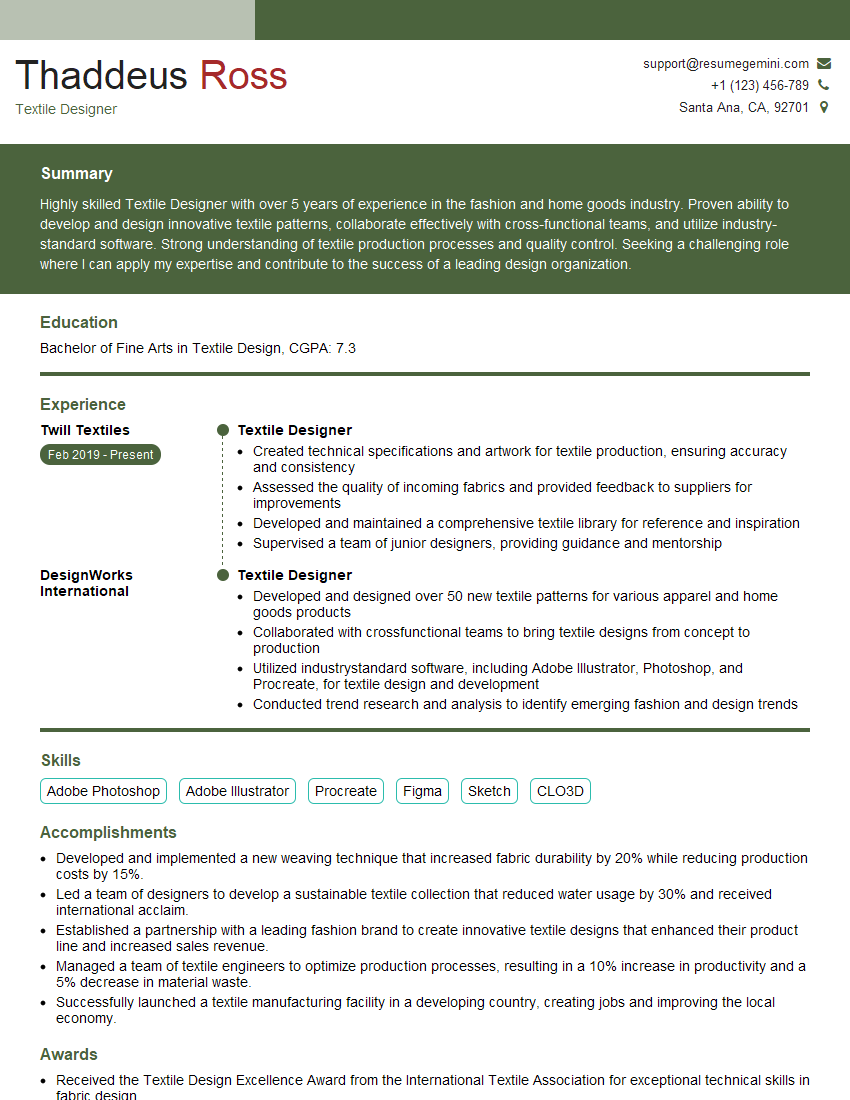
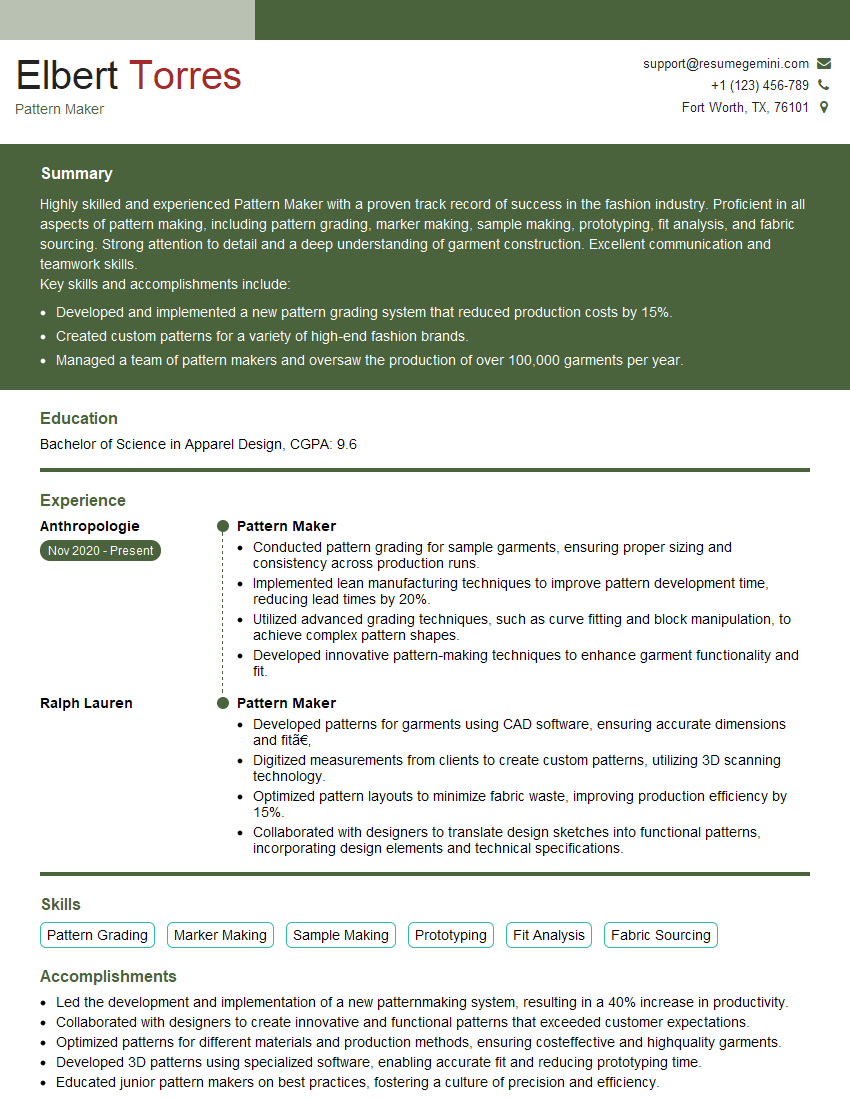
Mastering your understanding of thread colors and textures is crucial for career advancement in various textile-related fields, including design, manufacturing, and quality control. A strong understanding of these concepts demonstrates a keen eye for detail and a practical approach to problem-solving – highly valued attributes in this industry. To significantly boost your job prospects, create an ATS-friendly resume that highlights your relevant skills and experience. ResumeGemini is a trusted resource to help you build a professional and impactful resume. Examples of resumes tailored to highlight expertise in Understanding of Thread Colors and Textures are available to further guide your preparation.



Explore more articles
Users Rating of Our Blogs
Share Your Experience
We value your feedback! Please rate our content and share your thoughts (optional).
What Readers Say About Our Blog
Very informative content, great job.
good