The thought of an interview can be nerve-wracking, but the right preparation can make all the difference. Explore this comprehensive guide to Understanding of tree preservation and conservation interview questions and gain the confidence you need to showcase your abilities and secure the role.
Questions Asked in Understanding of tree preservation and conservation Interview
Q 1. Describe the different methods used for tree risk assessment.
Tree risk assessment involves evaluating the likelihood of a tree, or part of a tree, causing harm. This isn’t just about falling trees; it encompasses risks from branches dropping, roots damaging infrastructure, and even the spread of disease. Several methods are used, ranging from visual inspection to sophisticated technology.
- Visual Inspection: This is the most common method, involving a trained arborist carefully examining the tree for visible defects such as decay, cracks, leaning, or insect infestation. They assess the tree’s overall health, structural integrity, and the surrounding environment. For example, a large crack in the trunk, combined with proximity to a building, would warrant serious concern.
- Instrumentation: Sophisticated tools like resistographs (measuring wood density) and sonic tomography (using sound waves to detect internal decay) provide a more in-depth view of the tree’s internal structure. This helps identify hidden defects not visible to the naked eye. Imagine a seemingly healthy tree with internal rot – these tools can reveal this hidden danger.
- Computer Modeling: Advanced software can model the tree’s response to various stresses like wind, creating risk assessments based on complex calculations. This is often used for larger, more critical trees near populated areas.
The choice of method depends on several factors, including the size and species of the tree, its location, and the level of risk involved. A small tree in a park might only require a visual inspection, while a large tree near a school might necessitate a more thorough assessment involving instrumentation and possibly computer modeling.
Q 2. Explain the importance of tree preservation in urban environments.
Tree preservation in urban environments is crucial for numerous reasons. Trees are integral to the health and well-being of our cities.
- Environmental Benefits: Trees improve air quality by absorbing pollutants, reduce the urban heat island effect through shade, and support biodiversity by providing habitat for birds, insects, and other wildlife. They also help manage stormwater runoff, reducing the burden on drainage systems.
- Economic Benefits: Studies show that trees increase property values, attract tourism, and create a more attractive environment for businesses. They contribute to a healthier workforce, reducing healthcare costs associated with air pollution and stress.
- Social Benefits: Trees enhance the aesthetic appeal of our cities, offering opportunities for recreation, relaxation, and social interaction. They reduce noise pollution, and studies show a correlation between green spaces and improved mental health.
For instance, a well-planned tree canopy can significantly lower summer energy costs for buildings, and the presence of trees in parks creates communal spaces for recreation and socializing, thereby enhancing the quality of life for urban dwellers.
Q 3. What are the key factors to consider when selecting trees for planting in a specific location?
Selecting the right tree for a specific location is paramount for its long-term health and survival. Several key factors must be considered:
- Climate: The tree’s hardiness zones must align with the local climate, ensuring it can withstand the temperature fluctuations, rainfall, and snowfall. Planting a tropical tree in a cold climate is a recipe for failure.
- Soil Conditions: The soil type, pH, drainage, and nutrient content are critical. Some trees thrive in clay soil, while others prefer sandy soil. Poor drainage can lead to root rot.
- Space Availability: The mature size of the tree – its height, width, and root spread – must be considered, ensuring it won’t encroach on buildings, power lines, or sidewalks. A large oak tree won’t thrive in a small garden.
- Sunlight Exposure: The amount of sunlight the location receives dictates the tree species choice. Some trees need full sun, while others prefer shade or partial shade.
- Aesthetic Considerations: The tree’s shape, foliage color, and flowering characteristics contribute to the overall aesthetic appeal. Choosing trees with complementary features creates a visually pleasing landscape.
Careful planning, often involving consulting a local arborist, ensures that the selected tree species will not only survive but thrive in the chosen location, avoiding costly mistakes and ensuring the long-term benefits of the planting.
Q 4. How do you identify and manage common tree diseases and pests?
Identifying and managing tree diseases and pests requires a multi-pronged approach. Early detection is key.
- Visual Inspection: Regularly inspect trees for signs of disease or pest infestation, such as discoloration of leaves, unusual growths, insect activity, or wilting branches. Compare to known symptoms of diseases/pests in your area.
- Laboratory Testing: If a suspected disease or pest is difficult to identify visually, samples of leaves, branches, or insects can be sent to a laboratory for diagnosis.
- Integrated Pest Management (IPM): This holistic approach prioritizes preventative measures and employs various control methods only when necessary. It might involve pruning infected branches, introducing beneficial insects to control pests, or using targeted pesticides as a last resort.
For example, an outbreak of oak wilt might require immediate action such as removing infected trees and applying fungicide to prevent the disease’s spread. Conversely, a less severe infestation of aphids might be controlled by introducing ladybugs, natural predators of aphids, rather than resorting to chemical pesticides.
Q 5. Describe various tree planting techniques and their suitability for different tree species and sites.
Tree planting techniques vary depending on the tree species and site conditions. Proper planting is crucial for establishment and long-term health.
- Bare-Root Planting: Suitable for smaller trees, this involves planting the tree’s roots directly into the soil. Care must be taken to avoid damaging the roots and ensure proper soil contact.
- Container Planting: This is common for larger trees and shrubs, where the root ball is transplanted intact. It’s important to avoid root-bound trees and gently loosen the roots before planting.
- Balled and Burlapped (B&B): A larger tree planting method where roots and soil are protected in burlap. The burlap (or other material) needs to be removed to allow for root expansion.
- Soil Preparation: Before planting, the soil should be prepared by loosening compacted soil, amending with organic matter to improve drainage and fertility.
- Watering: Proper watering after planting is vital. Deep and infrequent watering encourages deeper root growth.
Choosing the right technique ensures the tree’s roots are properly established. A bare-root seedling will need more care than a larger, container-grown tree, for example. The size and type of tree dictate which method is appropriate and most likely to be successful.
Q 6. What are the legal and regulatory aspects of tree preservation in your area?
Legal and regulatory aspects of tree preservation vary significantly by location. Generally, regulations aim to protect significant trees and prevent unnecessary removal.
Many jurisdictions have tree preservation ordinances that may cover topics like:
- Protected Tree Species: Certain species might receive special protection due to their rarity or ecological significance.
- Tree Removal Permits: Permits are often required to remove trees exceeding a certain size or diameter, especially on public or protected land.
- Development Regulations: Developers may need to incorporate tree preservation plans into their projects, demonstrating mitigation of tree loss, planting new trees, or paying into a tree preservation fund.
- Penalties for Violations: Fines or other penalties are often imposed for illegal tree removal or damage.
It’s essential to consult local regulations and obtain the necessary permits before undertaking any tree removal or significant pruning. Ignoring these rules can lead to hefty fines and legal repercussions. Specifics vary by region and require local research.
Q 7. How do you develop and implement a tree preservation plan?
Developing and implementing a tree preservation plan involves a systematic approach:
- Inventory and Assessment: Conduct a thorough inventory of all trees, noting their species, size, health, and location. This may involve using GIS mapping for large areas.
- Risk Assessment: Assess the potential risks to the trees from various factors (disease, pests, weather, construction etc.).
- Prioritization: Prioritize trees based on their value (ecological, aesthetic, economic) and risk level. Focus on protecting the most important and vulnerable trees.
- Management Strategies: Develop strategies to address identified risks, such as pruning, pest and disease management, or structural support.
- Monitoring and Maintenance: Regularly monitor the trees for any changes in health or condition and implement appropriate maintenance activities.
- Community Engagement: Involve stakeholders (community members, developers, agencies) in the process to raise awareness and ensure broad support for the plan.
- Documentation: Maintain comprehensive documentation of the tree inventory, assessment, and management actions.
A well-structured plan ensures the long-term health and vitality of the tree population, preventing unnecessary losses and promoting a greener, healthier environment. This might involve creating a detailed map highlighting high-value trees and scheduling regular inspections to detect issues early.
Q 8. Explain the principles of root protection during construction activities.
Protecting tree roots during construction is paramount for the tree’s survival. Roots, especially the finer feeder roots, are incredibly sensitive to damage. Construction activities like excavation, compaction, and the introduction of impervious surfaces can severely disrupt their function, leading to decline and even death. The key principles revolve around minimizing root disturbance and maintaining soil integrity.
Root Protection Zones (RPZs): Establishing clear RPZs around trees is crucial. The size of the RPZ depends on the tree species, size, and soil conditions. Larger, older trees require significantly larger RPZs. Construction activities should be strictly prohibited within these zones unless absolutely necessary, and then only with extreme caution.
Minimizing Soil Compaction: Heavy machinery can severely compact the soil, restricting root growth and oxygen uptake. Using lighter equipment, employing ground protection mats, and avoiding unnecessary vehicle traffic within the RPZ are vital.
Maintaining Soil Structure: Avoid removing topsoil within the RPZ. This topsoil is rich in organic matter and is critical for root health. If excavation is unavoidable, carefully replace the soil and ensure it’s properly compacted to prevent settling.
Proper Drainage: Ensure adequate drainage to prevent waterlogging, which can suffocate roots. Diverting runoff away from the RPZ is recommended.
Root Air Pruning: In some instances, careful root pruning may be necessary if roots are in direct conflict with construction. This should only be done by qualified arborists using specialized techniques to minimize damage. This might involve cutting roots at a slight angle to encourage healing and avoid tearing.
For example, imagine constructing a building near a large oak tree. A thorough site assessment would be conducted to determine the extent of the root system and establish a large RPZ. Construction activities would be carefully planned to avoid this zone, and any unavoidable work within it would be overseen by an experienced arborist.
Q 9. What are the benefits of using bioremediation techniques for soil improvement around trees?
Bioremediation uses naturally occurring organisms like bacteria and fungi to improve soil conditions around trees. This is a sustainable and environmentally friendly approach compared to using chemical amendments. The benefits are numerous:
Enhanced Soil Structure: Bioremediation can improve soil structure by enhancing aggregation and reducing compaction. This leads to better water infiltration and aeration.
Increased Nutrient Availability: Certain microorganisms can break down complex organic matter, releasing essential nutrients like nitrogen and phosphorus that are then readily available for tree uptake.
Reduced Soil Salinity: In areas with saline soils, bioremediation can help reduce salt concentrations, making the soil more suitable for tree growth.
Remediation of Soil Pollutants: Bioremediation can help break down or immobilize various soil pollutants like hydrocarbons or heavy metals, mitigating their negative impacts on tree health.
Environmental Friendliness: Compared to chemical approaches, bioremediation is a less intrusive and eco-friendly method of soil improvement.
For instance, if a construction site has contaminated soil near trees, introducing specific bacterial strains known to degrade hydrocarbons could help clean up the soil, minimizing the harm to the trees and promoting long-term health.
Q 10. Describe different pruning techniques and their application to various tree species.
Pruning techniques vary greatly depending on the tree species, its age, and the reason for pruning (e.g., structural improvement, disease control, aesthetic shaping). Three main techniques stand out:
Crown Thinning: This involves selectively removing branches to reduce density, improving light penetration and air circulation within the crown. It’s crucial to avoid creating stubs. This technique is particularly beneficial for dense-canopy trees like maples and oaks to prevent disease and improve overall structure.
Crown Reduction: This involves reducing the overall size of the crown by shortening major branches. It’s a more drastic technique than thinning and should only be performed by trained arborists. This is generally done to reduce the tree’s height or spread, often near buildings, power lines, or other structures. Incorrect crown reduction can lead to serious structural damage to the tree, hence specialized knowledge is necessary.
Crown Cleaning: This involves the removal of dead, dying, diseased, or weak branches. It’s a crucial maintenance technique that promotes tree health and reduces the risk of branch failure. Crown cleaning is essential for all tree species.
Applying these techniques depends heavily on the specific tree. For instance, while thinning is generally safe for many species, crown reduction should be approached cautiously for certain species (like pines) as they may be more prone to dieback.
Q 11. How do you determine the appropriate pruning timing for different tree species?
Pruning timing is species-specific and depends on several factors. Generally, the best time is during the tree’s dormant season (late winter or early spring), when trees are not actively growing. This minimizes stress on the tree. However, there are exceptions:
Deciduous Trees: Late winter or early spring, before bud break, is typically the ideal time. This allows the wounds to close before new growth commences.
Evergreen Trees: The ideal time is often during late winter or early spring, but pruning can also be done in late summer or early fall for some evergreens. Excessive pruning in the heat of summer can be detrimental, increasing the risk of disease and stress.
Disease Control: Infected branches should be removed immediately, regardless of the season, to prevent the spread of disease. Careful sanitation techniques after removal are essential.
Safety Concerns: Dangerous, overhanging branches posing an immediate threat should be removed at any time of year.
For example, a maple tree (deciduous) should be pruned in late winter, while a pine tree (evergreen) might have a more flexible window, considering the weather and risk of stress.
Q 12. Explain the importance of soil health for tree growth and vitality.
Soil health is fundamental to tree growth and vitality. A healthy soil provides the essential nutrients, water, and oxygen necessary for robust root development. A poor soil structure or nutrient deficiencies significantly impede growth and increase susceptibility to disease and pests.
Nutrient Supply: Healthy soil provides a balanced supply of macronutrients (nitrogen, phosphorus, potassium) and micronutrients, essential for various metabolic processes.
Water Availability: Well-structured soil with good drainage and water retention ensures consistent water availability to the roots, crucial especially during periods of drought.
Oxygen Supply: Soil aeration is essential for root respiration. Compacted or waterlogged soils limit oxygen availability, leading to root suffocation and decline.
Microbial Activity: A diverse microbial community in healthy soil is vital for nutrient cycling, decomposition of organic matter, and disease suppression.
Imagine two trees of the same species and size, one planted in rich, well-drained soil and the other in compacted, nutrient-poor soil. The tree in the healthy soil will flourish, exhibiting vigorous growth and resistance to stress, while the tree in poor soil will likely struggle, showing stunted growth, susceptibility to diseases, and reduced overall vitality. Soil testing is frequently used to assess nutrient levels and amend the soil when necessary. This is key in establishing successful tree health in planting projects.
Q 13. How do you assess the structural integrity of a tree?
Assessing tree structural integrity requires a combination of visual inspection and, in many cases, specialized tools. It’s a crucial step in determining the tree’s risk of failure and deciding on appropriate management strategies.
Visual Assessment: This involves a thorough examination of the tree’s crown, trunk, and root system. Look for signs of decay, cracks, cavities, leaning, and unusual branch angles.
Use of Instruments: Tools such as resistographs (to measure wood density) and sonic tomography (to detect internal decay) can provide a more detailed assessment of the tree’s internal condition.
Consideration of Site Factors: Site conditions, such as soil type, wind exposure, and proximity to structures, should be factored in.
Professional Assessment: For complex cases or when high risk is involved, consulting a qualified arborist is crucial. They have the expertise and tools to provide a thorough evaluation and make informed recommendations.
For example, a large oak tree with a significant lean and visible cracks in its trunk would be considered high risk. A qualified arborist might use sonic tomography to assess the extent of internal decay and determine if remedial actions like cabling or bracing are necessary, or if removal is warranted to prevent potential harm.
Q 14. What are the common signs of tree stress and how do you diagnose them?
Several signs can indicate tree stress. Early detection and diagnosis are essential for implementing effective management strategies.
Changes in Foliage: Discoloration (yellowing, browning), thinning crown, leaf scorch, premature leaf drop are common indicators. These can be caused by drought, nutrient deficiencies, pest infestations, or disease.
Dieback: Death of branches or twigs, often starting at the branch tips, indicates stress. This can signal drought, disease, or root damage.
Reduced Growth Rate: Noticeably slow growth compared to similar trees in the area is a concern. This could result from various factors like poor soil conditions, root damage, or competition for resources.
Presence of Pests or Diseases: Visible signs of insects (e.g., boring holes, defoliation) or disease (e.g., cankers, fungal fruiting bodies) indicate significant stress. Early identification and treatment are key.
Structural Weakness: Leaning, cracks in the trunk or branches, and broken branches are clear signs of structural instability, often stemming from decay or previous damage.
Diagnosing the cause requires a thorough investigation, often involving visual inspection, soil testing, and perhaps laboratory analysis of samples. For example, a tree exhibiting yellowing leaves and stunted growth could indicate a nutrient deficiency. Soil testing might reveal low levels of nitrogen or other crucial elements, allowing for targeted soil amendment as a solution.
Q 15. Explain different tree cabling and bracing techniques.
Tree cabling and bracing are crucial techniques used to strengthen weak or damaged tree structures, preventing limb failure and enhancing tree longevity. These methods involve strategically installing cables and braces to redistribute weight and provide support.
- Cabling: This involves using strong, flexible cables to connect separate limbs or branches, distributing stress and preventing them from splitting apart under wind or ice loads. Think of it like adding guy wires to a tent pole. We typically use galvanized steel or high-strength synthetic cables, choosing the appropriate diameter based on the branch size and expected loads. Installation involves carefully drilling small holes through the branches, then threading and securing the cables using specialized hardware like thimbles and eyebolts. Proper tensioning is critical to avoid damaging the tree.
- Bracing: This involves using rigid components, often steel rods or bars, to support weak branch unions or entire limbs. Braces provide more direct support than cabling and are often used for more severe structural issues. They’re essentially providing a strong external splint to a weakened joint in the tree. Installation involves securely fastening the brace to both the trunk and the limb, again taking care to avoid excessive pressure or damage to the bark.
Choosing between cabling and bracing depends on the specific structural issue, the tree species, and the overall tree health. In some cases, a combination of both techniques might be necessary. For example, a large, heavy branch with a weak union at the trunk might benefit from both a brace to support the weight directly and cables to distribute the weight along the limb.
Career Expert Tips:
- Ace those interviews! Prepare effectively by reviewing the Top 50 Most Common Interview Questions on ResumeGemini.
- Navigate your job search with confidence! Explore a wide range of Career Tips on ResumeGemini. Learn about common challenges and recommendations to overcome them.
- Craft the perfect resume! Master the Art of Resume Writing with ResumeGemini’s guide. Showcase your unique qualifications and achievements effectively.
- Don’t miss out on holiday savings! Build your dream resume with ResumeGemini’s ATS optimized templates.
Q 16. How do you manage the impact of invasive species on tree health?
Invasive species pose a significant threat to tree health, often outcompeting native flora and introducing diseases or pests. Management strategies require a multi-pronged approach:
- Early Detection and Rapid Response: This is crucial. Regular monitoring of tree populations allows for early identification of infestations. Early intervention prevents widespread damage. Imagine a small wildfire – it’s much easier to extinguish in its initial stages.
- Mechanical Removal: Physically removing invasive plants can be effective, especially for smaller infestations. This could involve hand-pulling, cutting, or mowing. However, this needs to be done carefully to avoid causing damage to surrounding native vegetation.
- Biological Control: Introducing natural predators or pathogens of the invasive species can provide a long-term solution. This requires careful research to ensure the introduced organism doesn’t create further ecological problems.
- Chemical Control: Herbicides can be used to control invasive species, but this should be done judiciously and selectively to minimize harm to native plants and beneficial insects. The application method is crucial – spot treatment is preferable to broad-scale spraying.
- Restoration: After removal of the invasive species, it’s important to replant the area with native trees and shrubs to help restore the ecosystem. This creates a more competitive environment, making re-invasion less likely.
An example of a successful integrated approach is managing the spread of Emerald Ash Borer. This invasive beetle decimates ash trees. The strategy involves using a combination of biological control (parasitic wasps), chemical control (insecticides), and removal of heavily infested trees.
Q 17. What are the environmental impacts of tree removal?
Removing trees has far-reaching environmental consequences that extend beyond the immediate loss of the tree itself.
- Loss of Biodiversity: Trees provide habitat for a vast array of organisms, from insects and birds to mammals and fungi. Their removal eliminates this habitat, potentially leading to population decline or extinction of certain species.
- Soil Erosion: Tree roots help stabilize the soil, preventing erosion. Removing them leaves the soil vulnerable to wind and water erosion, particularly on slopes. This can lead to nutrient loss and sedimentation in waterways.
- Reduced Carbon Sequestration: Trees absorb carbon dioxide from the atmosphere, playing a vital role in mitigating climate change. Removing them reduces this capacity, releasing stored carbon back into the atmosphere.
- Water Cycle Disruption: Trees influence the water cycle through evapotranspiration (release of water vapor from leaves). Their removal can alter local rainfall patterns and increase the risk of flooding or drought.
- Air Quality Degradation: Trees act as natural air filters, removing pollutants from the air. Removing them reduces air quality, negatively impacting human and animal health.
For instance, deforestation in the Amazon rainforest contributes significantly to global warming by releasing massive amounts of stored carbon and altering regional rainfall patterns. Urban tree removal reduces air quality and increases the urban heat island effect.
Q 18. Describe strategies for promoting biodiversity within tree planting schemes.
Promoting biodiversity in tree planting schemes involves careful selection of species and planting strategies.
- Species Diversity: Planting a variety of native tree species is crucial. This ensures a wider range of habitats and resources are available to support diverse wildlife. Avoid monocultures, which can be vulnerable to disease and pests.
- Structural Diversity: Incorporate trees of different sizes, ages, and growth forms. This creates a more complex forest structure with varied canopy layers, providing habitat for different species at different heights.
- Spatial Arrangement: Don’t plant trees in uniform rows. Create irregular patterns that mimic natural forest structures. This creates a more diverse and resilient ecosystem.
- Understory Planting: Include shrubs and herbaceous plants along with trees. These species provide additional food and habitat for a wider range of organisms.
- Consider Soil Health: Healthy soil supports diverse plant life. Choose appropriate soil amendments and avoid practices that compact the soil.
For example, a planting scheme designed to enhance pollinator biodiversity might include various flowering trees and shrubs that provide nectar and pollen at different times of year, attracting a wide range of bees, butterflies, and other pollinators.
Q 19. What are the ethical considerations involved in tree management?
Ethical considerations in tree management are central to responsible arboriculture.
- Respect for Life: Trees are living organisms deserving of respect. Decisions to remove or prune trees should be made carefully and only when necessary. Alternatives to removal, such as pruning or relocation, should always be considered first.
- Intergenerational Equity: Tree management decisions should consider the needs of future generations. Planting trees for future benefits is a key ethical responsibility.
- Environmental Stewardship: We must minimize the environmental impact of tree management practices. Sustainable techniques should be prioritized over those that may harm the environment.
- Community Engagement: Tree management decisions should involve the community, especially those who may be affected by such decisions. Transparency and participatory decision-making processes are critical.
- Economic Considerations: While cost is a factor, it should not outweigh the ecological and social value of trees. Prioritizing long-term sustainability over short-term financial gains is crucial.
For example, a decision to remove a large, mature oak tree for a new development needs careful consideration of the tree’s ecological value, community sentiment, and alternative options before proceeding.
Q 20. How do you communicate complex arboricultural information to non-technical audiences?
Communicating complex arboricultural information to non-technical audiences requires clear, simple language and effective visual aids.
- Use Analogies and Metaphors: Relate technical concepts to everyday experiences. For example, comparing tree roots to the foundations of a house can help people understand their importance for stability.
- Avoid Jargon: Use plain language and define any technical terms you must use. Imagine explaining to a child why they shouldn’t pull a cat’s tail; you wouldn’t use complicated scientific terms about musculature.
- Visual Aids: Use photographs, diagrams, and maps to illustrate complex information. A picture is worth a thousand words, especially when dealing with the physical attributes of trees.
- Interactive Presentations: Interactive elements such as quizzes or demonstrations can improve understanding and engagement.
- Storytelling: Weaving narratives about the importance of trees can make the information more relatable and memorable. A story of a community working together to save a historic tree is far more engaging than a lecture on tree preservation techniques.
For example, when discussing the benefits of tree planting to a community group, I might use a simple slide showing how a tree filters air pollution, accompanied by a narrative about the health benefits to the community.
Q 21. Describe your experience with tree inventory and mapping techniques.
Tree inventory and mapping are essential for effective tree management. My experience encompasses various techniques:
- Field Surveys: This involves physically visiting the site to assess each tree. Data collected includes species, diameter at breast height (DBH), height, condition, and location (using GPS). This is a fundamental process that allows you to visually assess each tree’s health, growth potential, and any structural issues.
- Data Collection Software: I use specialized software such as i-Tree or similar programs to record and manage tree data efficiently. These programs often allow for integration with GPS data and mapping software for efficient data management.
- Remote Sensing: LiDAR (Light Detection and Ranging) and aerial photography are useful for large-scale inventories, providing data on tree density and cover. This is particularly useful in large parks or forests where physically surveying every tree would be impractical.
- GIS Mapping: Geographic Information Systems (GIS) software is used to create maps showing the location and characteristics of individual trees or tree clusters. This allows for visualization and analysis of tree distribution, identifying areas of high or low tree density and potential risks.
For example, I recently conducted a tree inventory for a large municipal park using a combination of field surveys and i-Tree software. The resulting GIS map allowed the park management to visualize tree distribution, identify areas needing attention, and prioritize resources for tree maintenance and planting efforts.
Q 22. Explain your understanding of tree protection orders (TPOs).
Tree Protection Orders (TPOs) are legal instruments used by local authorities to safeguard individual trees or groups of trees deemed important for their amenity value, landscape character, or ecological significance. They essentially prohibit the felling, lopping, topping, uprooting, or damaging of a protected tree without the council’s express permission. Think of it as a legal shield for a tree, preventing its unwarranted removal.
Obtaining permission typically involves submitting a detailed application, which may include arboricultural reports assessing the tree’s health and the impact of proposed works. The council then weighs the benefits of the proposed work against the value of preserving the tree. In some cases, they may grant permission with conditions, such as requiring replacement planting or specific mitigation measures. Failure to comply with a TPO can result in hefty fines and even prosecution.
For example, a TPO might protect a mature oak in a residential area that provides significant shade and contributes to the area’s aesthetic appeal, even if it’s located on private property. This prevents its removal during a renovation without a proper assessment and council approval.
Q 23. How do you use GIS technology in tree management and preservation?
GIS (Geographic Information System) technology is invaluable in tree management and preservation. It allows us to create detailed maps showing the location, species, size, health, and other relevant attributes of individual trees. This spatial data provides a powerful tool for planning, analysis, and decision-making.
Imagine a city-wide tree inventory: GIS allows us to visualize the distribution of different tree species, identify areas with high tree density, pinpoint trees at risk from disease or development, and even model the potential impact of climate change on tree populations. We can then use this information to prioritize preservation efforts, plan planting schemes, and effectively manage tree resources.
For instance, by overlaying tree data with development plans in a GIS environment, we can identify potential conflicts and proactively plan mitigation strategies. This could involve rerouting roads, adjusting building footprints, or implementing tree protection measures during construction. GIS analysis can even quantify the environmental benefits provided by existing trees, such as carbon sequestration and air purification, helping to demonstrate their value in cost-benefit analysis.
Q 24. What is your experience with tree planting and establishment practices?
My experience encompasses all aspects of tree planting and establishment, from site selection and soil preparation to ongoing maintenance and monitoring. Successful tree establishment relies on careful planning and attention to detail.
Site preparation is critical. This includes analyzing soil conditions, ensuring adequate drainage, and considering factors like sunlight and wind exposure. The right planting techniques, such as appropriate root ball handling and backfilling, are crucial for minimizing transplant shock. Choosing the right species for the site is also essential; selecting species that are well-suited to local climate, soil type, and anticipated environmental stress. Post-planting care involves regular watering, mulching, and protection from pests and diseases. Successful establishment is monitored through regular inspections, noting growth rates, assessing health, and addressing any problems that may arise. I have considerable practical experience in this, having personally overseen projects ranging from small-scale residential plantings to large-scale urban afforestation programs. In these projects, we meticulously track the survival rates and growth of planted trees to refine our methods and improve overall success.
Q 25. Describe your approach to managing conflicts between tree preservation and development projects.
Managing conflicts between tree preservation and development is a delicate balancing act, requiring a collaborative and strategic approach. It’s not simply about protecting trees at all costs; it’s about finding sustainable solutions that accommodate both development needs and environmental goals.
My approach involves early engagement with all stakeholders – developers, planners, arborists, and the community. Open communication and collaborative planning are essential. We start by assessing the significance of the trees involved, considering their age, species, condition, and ecological importance. We then explore all possible options, including tree relocation (where feasible and appropriate), adjusting development plans to minimize tree loss, and incorporating trees into the design. We also use arboricultural reports to guide decision-making and quantify the ecological value of the trees. In some cases, mitigation measures, such as planting replacement trees or creating compensatory habitats, may be necessary. Ultimately, the goal is to arrive at a mutually agreeable solution that minimizes environmental impact while enabling responsible development.
For example, in a recent project involving a new road construction, we worked with the developer to adjust the road alignment, saving a cluster of mature oak trees. The resulting minor changes to the design had minimal impact on the overall project timeline or budget, yet significantly enhanced the project’s environmental sustainability.
Q 26. What are the key indicators of tree decline and mortality?
Several key indicators can signal tree decline and mortality. These can be broadly categorized into visual symptoms, physiological changes, and environmental factors.
Visual symptoms include crown dieback (loss of branches), leaf discoloration (chlorosis or browning), reduced leaf density, presence of cankers (sunken areas on the bark), and evidence of insect or disease damage. Physiological changes can be identified through reduced growth rates, diminished vigor, and changes in the tree’s overall structure. Environmental factors such as drought stress, soil compaction, pollution, and inappropriate pruning practices can significantly impact tree health and contribute to decline. Advanced techniques like using resistance measurements can objectively confirm health status. Assessing the root system for damage, including soil analysis, can highlight other contributing factors.
For instance, observing a significant portion of a tree’s crown showing browning leaves, combined with signs of root damage from nearby construction, could indicate serious decline that needs immediate attention.
Q 27. How do you prioritize tree preservation efforts within a budget constraint?
Prioritizing tree preservation efforts under budget constraints requires a strategic approach focusing on maximizing impact within available resources.
This involves a multi-step process: First, a thorough assessment of all trees, prioritizing those with the highest ecological, amenity, or heritage value. This prioritization considers factors like species rarity, size, health, location, and contribution to the surrounding environment. Next, we develop a ranked list of preservation actions based on their cost-effectiveness and potential impact. This might involve focusing on preventative measures (like disease management) before resorting to more expensive interventions (like structural pruning). High-impact, low-cost actions, such as improving soil health or implementing water conservation strategies, are often prioritized. We utilize cost-benefit analysis, comparing the cost of each preservation action with its estimated benefits (e.g., carbon sequestration, flood mitigation). Finally, we develop a phased implementation plan, tackling the highest-priority actions first while allocating resources efficiently.
For example, we might choose to treat a significant number of trees suffering from a common disease with cost-effective preventative measures, rather than investing in extensive remedial work on a single, less-important tree.
Q 28. Explain your knowledge of different tree species and their specific requirements.
My knowledge of different tree species and their specific requirements is extensive. This encompasses understanding their growth habits, soil preferences, water needs, tolerance to environmental stresses (such as drought, frost, or pollution), and susceptibility to pests and diseases.
For instance, I know that oak trees prefer well-drained soil and are relatively tolerant of drought, while willows thrive in moist or wet conditions and are more susceptible to certain fungal diseases. Similarly, I’m aware of the specific needs of urban trees, which often face challenges such as compacted soils, limited root space, and exposure to pollution. This detailed knowledge helps me make informed decisions about species selection, appropriate planting techniques, and ongoing maintenance strategies. It also enables me to assess the suitability of different tree species for specific sites, ensuring long-term success and maximizing the benefits each tree provides. Selecting the wrong species can lead to premature death and wasted resources; thus, appropriate species selection is pivotal.
Understanding these species-specific requirements is essential for creating resilient and sustainable urban landscapes. For example, planting drought-tolerant species in arid climates is crucial for reducing water consumption and enhancing landscape sustainability.
Key Topics to Learn for Understanding of Tree Preservation and Conservation Interview
- Tree Biology and Physiology: Understanding tree growth, health indicators, and common diseases and pests. This includes knowledge of different tree species and their specific needs.
- Tree Risk Assessment: Methods for evaluating tree health and identifying potential hazards, including practical experience with assessing structural integrity and developing mitigation strategies.
- Conservation Techniques: Familiarization with various preservation techniques, such as pruning, cabling, and bracing, along with the principles of sustainable forestry practices.
- Legal and Regulatory Frameworks: Knowledge of relevant legislation, permits, and best practices concerning tree preservation and removal in different contexts (e.g., urban vs. rural).
- Environmental Impact Assessment: Understanding the ecological role of trees and the potential environmental consequences of tree removal or damage. This includes knowledge of ecosystem services provided by trees.
- Sustainable Urban Forestry: Principles of incorporating trees into urban planning, considering factors like site selection, species suitability, and long-term maintenance.
- Communication and Collaboration: The ability to effectively communicate technical information to diverse audiences (clients, stakeholders, colleagues) and collaborate on complex projects.
- Problem-Solving and Decision-Making: Developing solutions to challenges related to tree preservation, considering economic, social, and environmental factors. This involves prioritizing and justifying decisions.
- Data Analysis and Reporting: Understanding and interpreting data related to tree health, growth, and impact; presenting findings clearly and concisely in reports or presentations.
Next Steps
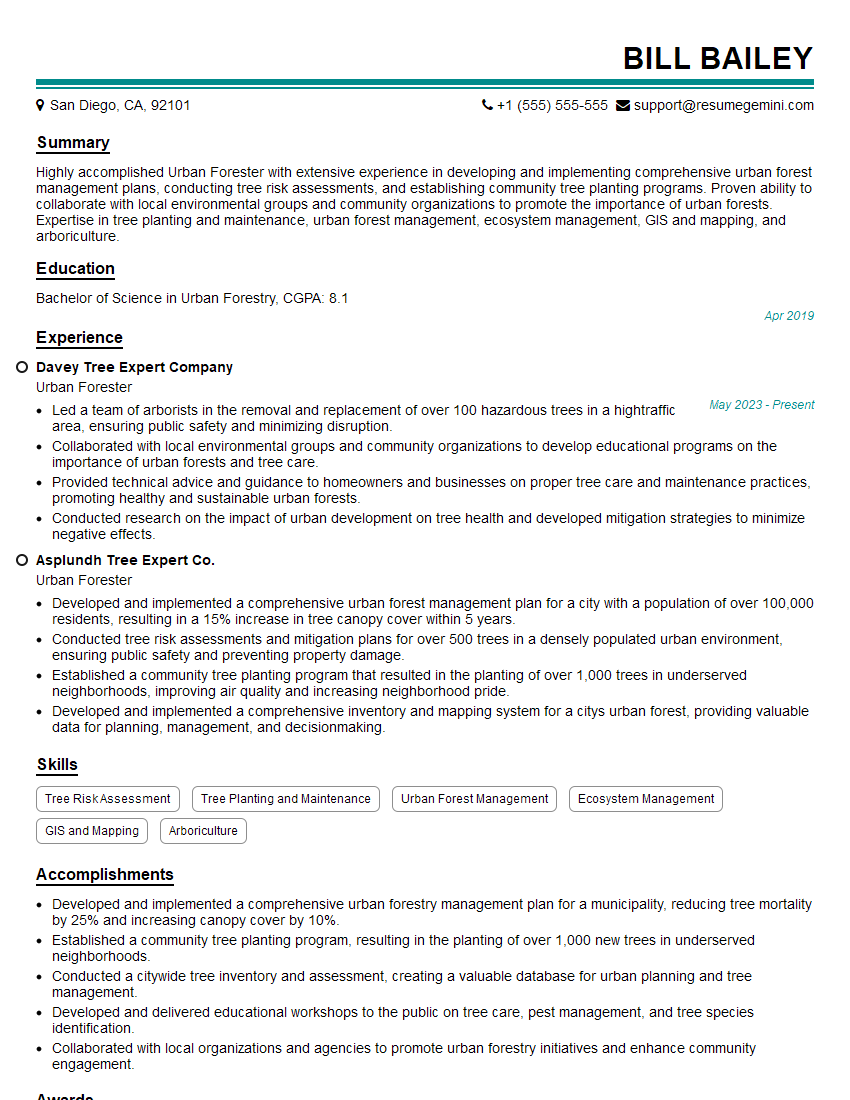
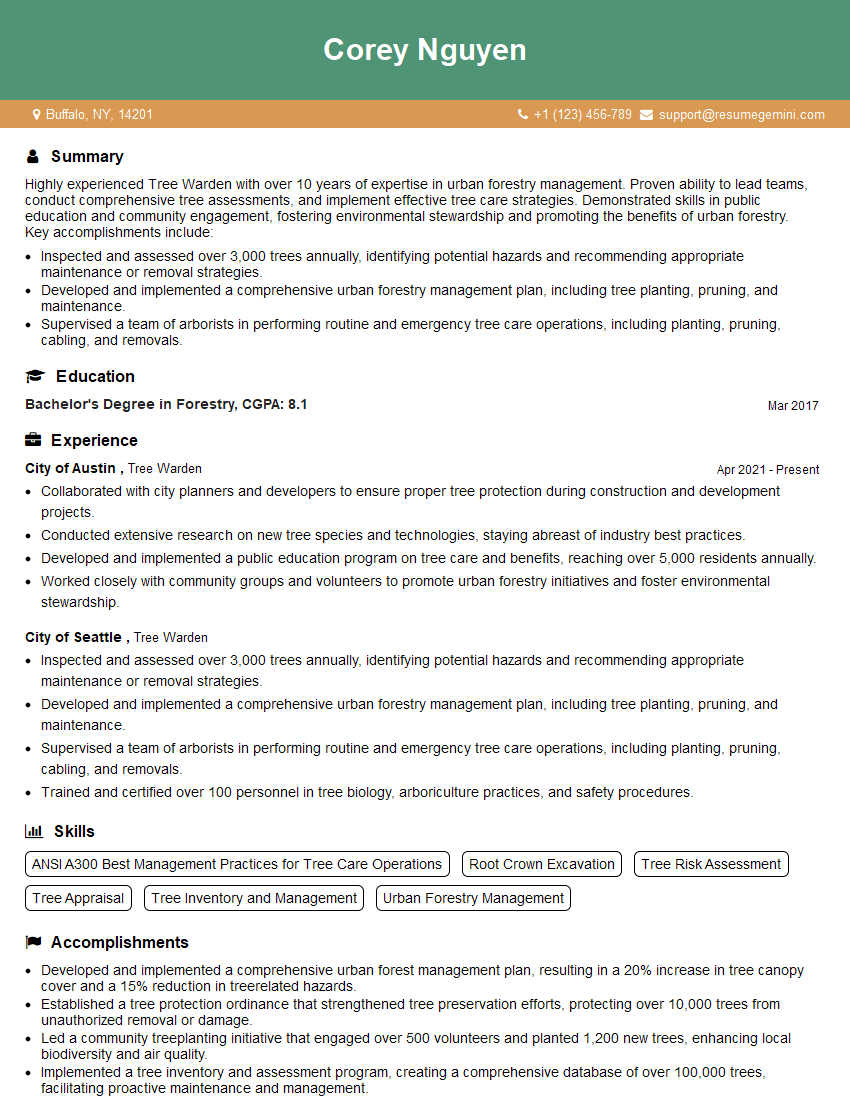
Mastering the understanding of tree preservation and conservation is crucial for career advancement in this growing field. A strong understanding of these topics will significantly enhance your interview performance and demonstrate your commitment to environmental stewardship. To maximize your job prospects, it’s essential to create a professional and ATS-friendly resume that highlights your skills and experience effectively. ResumeGemini is a trusted resource that can help you build a compelling resume tailored to the specific requirements of your target roles. Examples of resumes tailored to Understanding of tree preservation and conservation are available to help guide you.




Explore more articles
Users Rating of Our Blogs
Share Your Experience
We value your feedback! Please rate our content and share your thoughts (optional).
What Readers Say About Our Blog
Very informative content, great job.
good