Interviews are opportunities to demonstrate your expertise, and this guide is here to help you shine. Explore the essential Understanding of tree protection and conservation interview questions that employers frequently ask, paired with strategies for crafting responses that set you apart from the competition.
Questions Asked in Understanding of tree protection and conservation Interview
Q 1. Explain the difference between pruning and trimming trees.
Pruning and trimming, while often used interchangeably, have distinct meanings in arboriculture. Trimming is generally a lighter, more superficial cut, primarily focused on removing dead, diseased, or crossing branches to improve the tree’s appearance and maintain clearance from structures or walkways. Think of it as a ‘haircut’ for your tree. Pruning, on the other hand, is a more deliberate and structural process. It involves carefully selecting and removing branches to shape the tree, improve its overall health, and promote strong, balanced growth. Pruning often aims to correct structural weaknesses, reduce the risk of damage, and even enhance fruiting in fruit trees. Imagine pruning as a ‘surgical procedure’ for your tree.
For example, trimming might involve simply removing small, dead twigs from the lower branches of a street tree to improve visibility. Pruning, however, might entail removing a large, lower branch on a young oak tree to create a strong central leader and prevent future structural issues as it grows.
Q 2. Describe common tree diseases and their management strategies.
Trees, like all living organisms, are susceptible to a variety of diseases. Some common examples include:
- Dutch Elm Disease: A fungal disease spread by bark beetles, causing vascular wilt and ultimately tree death. Management involves early detection, removal of infected trees, and preventative measures like insecticide treatments to control beetle populations.
- Anthracnose: A fungal disease affecting leaves and twigs, causing leaf spots and blight. Management focuses on improving tree vigor through proper fertilization and watering, and the use of fungicides in severe cases. Good sanitation, removing fallen leaves, helps reduce the spread of the disease.
- Oak Wilt: Another devastating vascular wilt disease, specifically affecting oak trees. Management involves early detection, sanitation, and in some cases, treatment with fungicides or the creation of a trench to prevent fungal spread through root grafts.
Effective disease management requires accurate identification of the pathogen and a multi-faceted approach. This often includes preventative measures like promoting tree health through proper care, sanitation practices to reduce disease inoculum, and targeted treatments if necessary. Early detection is crucial for successful management, often minimizing the long-term impact on the tree.
Q 3. What are the key considerations when selecting tree species for urban environments?
Selecting appropriate tree species for urban environments requires careful consideration of several factors:
- Mature Size: Choosing trees with a mature size appropriate for the planting site is crucial to avoid conflicts with infrastructure like power lines or buildings.
- Growth Rate: Selecting species with moderate growth rates can reduce maintenance needs and prevent rapid outgrowing of the site.
- Tolerance to Stress: Urban environments present various stresses, such as compacted soil, air pollution, and limited water availability. Selecting species tolerant to these conditions is vital for their survival.
- Pest and Disease Resistance: Choosing disease- and pest-resistant species can reduce the need for costly and potentially environmentally harmful treatments.
- Aesthetic Qualities: Factors such as flower color, fall foliage, and overall form contribute to the tree’s visual appeal within the urban landscape.
- Root System: Consider the root system of the chosen species. Aggressive root systems can damage pavements and underground utilities. Choosing trees with less aggressive or fibrous root systems is often preferred.
For example, in a small residential yard, a compact flowering crabapple might be a better choice than a large-growing oak tree.
Q 4. How do you assess tree risk and implement mitigation strategies?
Tree risk assessment is a crucial process that involves evaluating the potential for a tree to cause damage or injury. This involves several steps:
- Visual Inspection: A thorough visual examination of the tree, including its trunk, branches, roots, and surrounding environment.
- Data Collection: Measuring tree dimensions, noting any defects like decay, cracks, or leaning, and assessing the presence of hazards in its proximity (power lines, buildings etc.).
- Risk Assessment: Using a combination of visual observations and professional judgment, the arborist will assess the probability of failure and the potential consequences if failure occurs.
- Mitigation Strategies: Based on the assessment, appropriate mitigation strategies are recommended. These could range from pruning to remove hazardous branches, cabling or bracing to reinforce weak structures, or ultimately removing the tree if the risk is considered unacceptable.
A common risk assessment system uses a matrix to quantify the likelihood and consequence of failure, allowing for prioritizing mitigation efforts based on the overall risk level. Think of it like a risk assessment for a building – regular inspections, preventative maintenance, and potentially remediation are necessary to reduce potential harm.
Q 5. What are the best practices for tree planting and aftercare?
Successful tree planting and aftercare are vital for the tree’s long-term health and survival:
- Proper Planting Techniques: This includes selecting the right planting site, ensuring adequate soil preparation (loosening compacted soil, amending soil with organic matter), digging a hole appropriately sized for the root ball, and planting the tree at the correct depth.
- Watering: Regular and deep watering, especially during the first few years, is crucial for establishment. This often requires more frequent watering during dry spells.
- Mulching: Applying a layer of organic mulch around the base of the tree (avoiding direct contact with the trunk) helps retain moisture, suppress weeds, and regulate soil temperature.
- Fertilization: Appropriate fertilization, based on soil testing, can provide the necessary nutrients for optimal growth. Over-fertilization can be harmful.
- Protection from Pests and Diseases: Monitoring for pests and diseases, and implementing appropriate control measures when necessary.
- Stake and Guy-wiring (If Needed): Young trees may require staking or guy-wiring to protect them from wind damage. However, these supports should be removed once the tree is established.
Imagine planting a tree like planting a new vegetable garden – it requires preparation, consistent care, and vigilance against pests and diseases to achieve optimal results.
Q 6. Explain the importance of tree inventories in urban planning.
Tree inventories are essential tools in urban planning, providing crucial data on the existing tree population. This information helps in many ways:
- Assessing Urban Forest Health: Provides data on tree species composition, size distribution, and overall health, allowing for targeted management and conservation efforts.
- Planning for Future Tree Planting: Helps determine areas where tree planting is needed most to meet specific goals like increasing canopy cover or improving air quality.
- Managing Urban Resources: Informs decisions on resource allocation for tree care, maintenance, and removal. It helps in identifying high-risk trees requiring attention.
- Environmental Impact Assessment: Used to assess the environmental impact of development projects on existing tree resources.
- Community Engagement: Provides valuable information for educating the public about the importance of urban trees and promoting community stewardship.
A comprehensive tree inventory can be a powerful tool that allows urban planners to make informed decisions that maximize the benefits of urban forests while minimizing potential risks. Think of it as a census for the city’s trees.
Q 7. Describe various tree protection methods during construction projects.
Protecting trees during construction projects is vital to minimize damage and ensure their survival. Common methods include:
- Protective Barriers: Erecting fences or barriers to protect the tree’s root zone from compaction and damage from heavy equipment.
- Root Protection Zones: Establishing protected zones around the tree’s root system, restricting vehicle access and construction activities within this area.
- Tree Protection Wraps: Wrapping the trunk of the tree with protective material to prevent damage from equipment or construction debris.
- Mulching and Watering: Maintaining healthy soil moisture levels through regular watering and mulching to reduce the stress caused by construction.
- Temporary Support: Providing temporary supports for the tree, such as staking or cabling, to reinforce the tree and prevent damage from wind or construction-related stress.
- Construction Monitoring: Regular monitoring by qualified arborists to ensure that construction activities are not harming the tree.
Protecting trees during construction requires careful planning and collaboration between construction teams and arborists to ensure the long-term health and survival of the trees.
Q 8. How do you identify invasive tree species and manage their spread?
Identifying invasive tree species requires a multi-faceted approach combining botanical knowledge with ecological awareness. We first visually assess the tree, noting its leaf shape, bark texture, branching pattern, and overall morphology. This initial observation helps narrow down possibilities. We then consult field guides and online databases with detailed species descriptions and range maps. Genetic testing can confirm identification, especially for closely related species.
Managing the spread involves a range of techniques tailored to the specific invasive species and its context. These include:
- Mechanical removal: This involves physically removing the tree, including the roots. This is effective for smaller infestations but can be labor-intensive and potentially disruptive to the surrounding environment.
- Chemical control: Herbicides, applied strategically, can effectively kill invasive trees. This approach requires careful consideration of non-target impacts on surrounding vegetation and waterways. It’s crucial to follow all label instructions and best practices.
- Biological control: This involves introducing natural enemies such as insects or pathogens specific to the invasive species. This is a more environmentally friendly approach but requires rigorous research to ensure the introduced organism doesn’t become a new invasive itself.
- Preventative measures: This is the most cost-effective long-term strategy. It includes measures like border inspections to prevent further introductions, public education campaigns to increase awareness, and monitoring programs to detect new infestations early.
For example, I recently worked on managing the spread of Mimosa pigra in a riparian zone. A combination of mechanical removal and targeted herbicide application, along with ongoing monitoring, proved effective.
Q 9. What are the ecological benefits of trees in urban areas?
Trees offer a multitude of ecological benefits in urban areas, significantly improving the quality of life and environmental health.
- Improved air quality: Trees absorb pollutants like particulate matter and ozone, reducing respiratory problems and improving overall air quality.
- Reduced urban heat island effect: Trees provide shade and evapotranspiration, lowering ambient temperatures and reducing energy consumption for cooling.
- Stormwater management: Tree roots help absorb rainwater, reducing runoff and mitigating flooding. They also filter pollutants from stormwater.
- Enhanced biodiversity: Trees provide habitat and food sources for a variety of wildlife, increasing biodiversity within urban ecosystems.
- Noise reduction: Trees act as natural sound barriers, reducing noise pollution from traffic and other urban sources.
- Improved mental health and well-being: Studies have shown that access to green spaces, including trees, reduces stress, improves mood, and enhances cognitive function.
Imagine a city without trees – scorching temperatures, poor air quality, and a stark, lifeless landscape. Trees are fundamental to creating vibrant, healthy, and livable urban environments.
Q 10. Explain the principles of sustainable forestry management.
Sustainable forestry management aims to balance the economic benefits of timber production with the ecological integrity and long-term health of forests. It’s based on several key principles:
- Maintaining biodiversity: Sustainable forestry protects and enhances the diversity of tree species, plants, animals, and other organisms within the forest ecosystem.
- Protecting soil and water resources: Sustainable practices minimize soil erosion and protect water quality by avoiding clear-cutting and other practices that damage the soil and riparian zones.
- Conserving forest structure: Sustainable forestry preserves the structural complexity of forests, including the age and size distribution of trees, to support biodiversity and resilience.
- Utilizing appropriate harvesting techniques: Selective logging, which removes only specific trees, minimizes disturbance and helps maintain forest health. It’s a far cry from the destructive clear-cutting practices that devastate whole ecosystems.
- Reforestation and afforestation: Replanting trees after harvesting and planting trees in deforested areas are crucial for maintaining forest cover and carbon sequestration.
- Community engagement: Successful sustainable forestry management involves collaboration with local communities and stakeholders to address their concerns and ensure their participation.
A good example is the Forest Stewardship Council (FSC) certification, which provides a globally recognized standard for responsible forest management.
Q 11. How do you utilize GIS technology for tree management and conservation?
GIS (Geographic Information Systems) technology is invaluable for tree management and conservation. It allows us to map and analyze spatial data related to trees, enabling effective planning and decision-making.
Applications include:
- Tree inventory and mapping: GIS enables the creation of detailed maps showing the location, species, size, and health of individual trees, offering a comprehensive overview of the tree population.
- Risk assessment: GIS can be used to identify trees at risk from disease, pests, or environmental hazards, allowing for proactive management interventions.
- Urban planning: GIS supports the integration of tree planting into urban design and development, maximizing their ecological benefits while minimizing conflicts.
- Monitoring and evaluation: GIS facilitates the tracking of tree growth, health, and survival rates over time, providing valuable data for evaluating the effectiveness of management practices.
- Data analysis: GIS allows the analysis of spatial patterns and relationships between tree distribution and other environmental factors. For instance, we can identify areas with high tree density or areas where planting could most effectively reduce urban heat islands.
For instance, using ArcGIS, we can overlay tree data with soil type maps and elevation models to predict suitable locations for tree planting.
Q 12. Discuss the role of tree protection in mitigating climate change.
Tree protection plays a crucial role in mitigating climate change. Trees act as significant carbon sinks, absorbing atmospheric carbon dioxide during photosynthesis and storing it in their biomass (leaves, branches, trunk, and roots) and the soil.
The benefits are numerous:
- Carbon sequestration: Trees absorb CO2, reducing the concentration of this greenhouse gas in the atmosphere. The rate of absorption varies depending on factors such as species, age, and growing conditions.
- Reduced greenhouse gas emissions: Forests prevent soil erosion, which releases carbon stored in the soil. They also prevent the release of methane from wetlands – another powerful greenhouse gas.
- Improved air quality: Trees filter pollutants, improving air quality and reducing respiratory illnesses, which indirectly helps reduce healthcare costs and associated carbon emissions.
- Climate change adaptation: Trees can moderate temperatures and improve water management, making communities more resilient to the impacts of climate change, such as extreme weather events.
Protecting existing forests and planting new trees is a cost-effective strategy to mitigate climate change. The benefits extend beyond carbon sequestration, improving ecosystem health and human well-being.
Q 13. Describe different tree root protection techniques.
Protecting tree roots is crucial for their health and survival. Damage to roots can weaken trees, making them more vulnerable to diseases, pests, and environmental stress. Effective root protection techniques vary depending on the circumstances.
- Root protection barriers: Physical barriers, such as plastic or metal barriers, are placed in the ground to protect roots from damage during construction or other ground-disturbing activities. Proper placement and depth are crucial for effectiveness.
- Soil management: Maintaining healthy soil, with good drainage and aeration, prevents root stress and allows for optimal root growth. This involves minimizing soil compaction, avoiding excessive fertilization, and using mulch to protect the soil surface.
- Tree planting guidelines: Following appropriate planting techniques, including proper hole size and backfilling, helps prevent root damage during planting. Avoid burying the root flare, the point where the trunk transitions to the roots.
- Avoidance of construction and other activities: The best way to protect tree roots is to avoid ground-disturbing activities in their vicinity as much as possible. Careful planning and site assessment are essential.
- Root pruning (when necessary): In some cases, careful root pruning may be necessary to minimize root damage during construction. This requires the expertise of arborists to minimize stress on the tree.
For example, when constructing a building near a mature oak tree, a root protection barrier should be installed well beyond the drip line (the outer edge of the tree’s canopy) to protect the extensive root system.
Q 14. Explain the importance of soil health for tree growth and survival.
Soil health is paramount for tree growth and survival. Healthy soil provides trees with the necessary nutrients, water, and aeration required for robust root development and overall tree vigor.
Key aspects of soil health impacting trees:
- Nutrient availability: Soil rich in organic matter provides a steady supply of essential nutrients to the tree. Soil testing can determine nutrient deficiencies and guide appropriate fertilization practices.
- Water retention and drainage: Well-structured soil with good water retention capacity provides a consistent supply of water to the tree’s roots, while proper drainage prevents waterlogging, which can suffocate roots.
- Soil aeration: Good soil aeration is crucial for root respiration, allowing roots to absorb oxygen and nutrients efficiently. Compacted soil hinders aeration and restricts root growth.
- Soil structure and aggregation: A stable soil structure, characterized by aggregates (soil particles clumped together), promotes water infiltration, drainage, and root penetration.
- Soil biology: A healthy soil ecosystem teeming with microorganisms, earthworms, and other soil organisms, plays a critical role in nutrient cycling and decomposition, providing trees with essential nutrients.
A simple analogy: Imagine trying to grow a plant in a container filled only with concrete versus a pot filled with well-drained potting soil rich in organic matter. The latter provides the necessary support and nutrients, ensuring healthy growth, while the former hinders growth and survival. Similarly, healthy soil is essential for healthy trees.
Q 15. What are the legal considerations related to tree protection and removal?
Legal considerations surrounding tree protection and removal are complex and vary significantly depending on location (national, regional, and local laws). Generally, laws exist to protect significant trees, often defined by size, species, or location (e.g., within a protected area or near a waterway). These laws often require permits for removal or significant pruning, and may involve fines or other penalties for unauthorized actions. For instance, many municipalities have ordinances outlining tree protection within designated zones, specifying minimum tree size before removal is allowed, and dictating replacement requirements. Some jurisdictions even classify specific trees as ‘heritage trees,’ offering them the highest level of protection. Before any action involving trees, it’s crucial to consult relevant legislation and obtain necessary permits. Failure to do so can result in legal repercussions, including costly fines and legal battles. A thorough understanding of these legal frameworks is essential for responsible tree management.
Example: A construction project near a protected woodland might require an environmental impact assessment that meticulously details the impact on existing trees and proposes mitigation strategies, including potential tree relocation or planting of replacements. The process might involve submitting detailed plans to the relevant authorities and gaining approval before work can commence.
Career Expert Tips:
- Ace those interviews! Prepare effectively by reviewing the Top 50 Most Common Interview Questions on ResumeGemini.
- Navigate your job search with confidence! Explore a wide range of Career Tips on ResumeGemini. Learn about common challenges and recommendations to overcome them.
- Craft the perfect resume! Master the Art of Resume Writing with ResumeGemini’s guide. Showcase your unique qualifications and achievements effectively.
- Don’t miss out on holiday savings! Build your dream resume with ResumeGemini’s ATS optimized templates.
Q 16. How do you communicate effectively with stakeholders about tree management?
Effective communication about tree management necessitates a multi-pronged approach tailored to diverse stakeholder interests. Transparency is key. Stakeholders—residents, businesses, developers, and environmental groups—need clear, concise, and accessible information. This often involves using plain language, avoiding technical jargon, and presenting information visually (e.g., maps, photos). Active listening is crucial; understanding concerns and addressing them directly builds trust. For example, holding public forums, distributing informative brochures, and using online platforms facilitate communication and encourage feedback. Collaboration is essential – working with stakeholders to find mutually agreeable solutions is paramount for effective tree management. Consider the use of visual aids like maps showing tree locations and proposed management actions to clarify your plan.
Example: When proposing a tree removal due to disease or safety concerns, it’s essential to explain the reasoning clearly, outlining the risks if the tree remains, and presenting alternative solutions such as planting replacement trees. Providing documentation of the tree’s condition, such as photos or expert assessment reports, can strengthen communication and enhance understanding.
Q 17. Describe your experience with tree health assessments.
My experience with tree health assessments involves a thorough, multi-faceted approach. It starts with a visual inspection of the tree, noting any visible signs of stress, disease, or damage (e.g., crown dieback, leaning, cavities, pest infestation). I then use various diagnostic tools such as a resistograph (to assess wood decay) and soil probes to analyze soil health and moisture content. This assessment helps identify potential issues such as root rot, nutrient deficiencies, or compaction. Beyond the physical assessment, I delve into the tree’s history – location, planting circumstances, previous treatments – to understand its overall health trajectory. Based on this comprehensive data, I provide a detailed report with clear recommendations for treatment, including pruning, fertilization, or other necessary interventions. The ultimate goal is to ensure the long-term health and safety of the tree.
Example: In assessing a large oak showing signs of decline, I might use a resistograph to detect internal decay, soil samples to check for nutrient deficiencies, and visual examination to assess any structural weaknesses or pest infestations. This would allow for a precise diagnosis and targeted treatment plan.
Q 18. Explain your knowledge of different pruning techniques.
Pruning techniques vary widely depending on the tree species, its age, and the objectives of the pruning. There are essentially three main approaches: thinning, reduction, and cleaning. Thinning removes branches to improve light penetration and air circulation, reducing disease risk and improving tree structure. Reduction shortens branches to reduce the overall size of the tree, often for clearance reasons. Cleaning involves removing dead, diseased, or damaged branches. There are specific techniques to follow for each method. For example, the three-cut method for reducing large branches minimizes bark tearing and protects the tree from injury. Choosing the wrong method or improper technique can damage the tree and reduce its lifespan significantly. It is crucial to have the necessary knowledge and expertise to handle pruning safely and effectively.
Example: When thinning an overgrown maple tree, I would selectively remove smaller, interior branches to open up the crown while maintaining the natural form of the tree. However, if reducing a large oak overhanging a building, I would use the three-cut method to progressively shorten the branches, minimizing risk of bark tearing and damage.
Q 19. How do you develop and implement tree management plans?
Developing and implementing a tree management plan requires a systematic approach. It begins with a thorough inventory of existing trees, assessing their species, size, health, and location. This information is then used to define objectives – e.g., enhancing tree health, improving aesthetics, mitigating risks. The plan includes detailed management strategies for each tree or group of trees, specifying pruning schedules, fertilization needs, pest and disease control methods, and risk mitigation strategies (e.g., bracing weak branches). Crucially, the plan considers the long-term implications, encompassing future growth and potential hazards. Regular monitoring and evaluation are essential to ensure the plan’s effectiveness and allow for adjustments as needed. The whole process requires effective communication and collaboration with all stakeholders.
Example: For a large park, the plan might involve a detailed map identifying high-risk trees requiring monitoring, a schedule for routine pruning, a fertilization program tailored to soil conditions, and a strategy for managing pest infestations, all of which would be continuously evaluated and updated based on monitoring data.
Q 20. What are the key indicators of tree stress?
Several key indicators can signal tree stress. Visual symptoms include crown dieback (loss of leaves or branches from the top of the tree), discoloration of foliage (yellowing, browning, or other unusual coloration), and reduced leaf size or density. Physical signs might include cracks or cavities in the trunk or branches, leaning, excessive fruiting, or dieback of smaller branches. Soil conditions also play a major role: poor drainage, compacted soil, and nutrient deficiencies can all lead to stress. Finally, environmental factors such as drought, pollution, or extreme temperatures can contribute to tree stress. A combination of these indicators often points to underlying problems that require attention.
Example: A tree exhibiting significant crown dieback, leaf yellowing, and cracked bark might indicate a combination of drought stress, root damage, and possible pest infestation, requiring a thorough assessment and appropriate intervention.
Q 21. How do you handle situations involving damaged or diseased trees?
Handling damaged or diseased trees involves a structured approach. The first step is a thorough assessment to diagnose the problem, determining its severity and potential causes. For example, using a resistograph to detect internal decay or submitting samples to a laboratory to identify pathogens. Based on the diagnosis, I develop a treatment plan that could involve pruning, fertilization, fungicide or insecticide applications, or cavity filling. In severe cases, removal might be necessary to ensure public safety and prevent the spread of disease. Proper disposal of diseased material is vital to minimize further risks. For instance, chipped wood from a diseased tree might need to be burned or disposed of responsibly rather than reused as mulch. In cases where removal is necessary, replacement planting should be part of the mitigation strategy.
Example: If a tree is severely damaged by lightning strike, a safety assessment is crucial. If the tree is deemed structurally unsound, safe removal becomes paramount. The plan would then involve removal, proper disposal, and replacement planting, all communicated clearly to stakeholders.
Q 22. Describe your experience with tree planting and establishment techniques.
Successful tree planting and establishment hinge on meticulous site preparation, species selection, and ongoing care. My experience encompasses all these stages. Site preparation involves assessing soil conditions, drainage, and sunlight exposure to choose the most suitable species. I’ve worked extensively with various planting techniques, from bare-root planting, where the roots are exposed, to containerized planting, where the tree is already established in a pot, ensuring minimal root disturbance. Proper planting depth and root spread are crucial; planting too deep can suffocate the tree, while planting too shallow can lead to instability. Post-planting care is equally important, including regular watering, mulching to retain moisture and suppress weeds, and protection from pests and diseases. For example, I once oversaw a project planting over 1000 saplings in a newly developed park. We implemented a detailed planting plan that included pre-planting soil amendment, strategic placement to maximize light and minimize competition, and a rigorous watering schedule during the critical first year. The survival rate was over 95%, a testament to the effectiveness of our approach.
- Site Assessment: Soil testing, sun exposure analysis, water availability.
- Species Selection: Choosing native, climate-adapted species with appropriate size and growth rate for the location.
- Planting Techniques: Bare-root, containerized, ball-and-burlap.
- Post-Planting Care: Watering, mulching, pest and disease management, staking (if needed).
Q 23. Explain the role of arboriculture in urban sustainability.
Arboriculture plays a pivotal role in urban sustainability. Trees are essential components of a healthy urban ecosystem, contributing significantly to environmental quality and human well-being. They improve air quality by absorbing pollutants, reduce the urban heat island effect through shade and evapotranspiration, manage stormwater runoff, and enhance biodiversity by providing habitat for various organisms. Proper arboricultural practices, like pruning and disease management, ensure the long-term health and vitality of urban trees, maximizing their environmental benefits. For instance, strategic tree planting along streets can significantly reduce the need for air conditioning, lowering energy consumption and greenhouse gas emissions. Furthermore, healthy trees increase property values and enhance the aesthetic appeal of urban spaces, improving the quality of life for residents.
Q 24. How do you balance tree preservation with urban development needs?
Balancing tree preservation with urban development requires careful planning and collaboration. It’s not about a simple either/or proposition but a thoughtful integration. We use various strategies including:
- Tree Inventories and Assessments: Conducting thorough surveys to identify significant trees and their ecological value.
- Mitigation Planning: Developing strategies to minimize tree loss during construction projects, perhaps through careful site planning, relocation of trees where feasible, or compensation planting.
- Tree Protection Plans: Implementing detailed plans to safeguard trees during construction, involving protective barriers, root protection measures, and construction phasing.
- Negotiation and Collaboration: Engaging with developers and stakeholders to find mutually acceptable solutions that prioritize tree preservation whenever possible.
- Public Education: Raising awareness about the importance of urban trees and the benefits of incorporating them into development projects.
For example, in one project, we successfully negotiated with a developer to adjust the building footprint to preserve a mature oak tree of significant ecological value, even redesigning a section of the landscaping to incorporate the tree as a focal point.
Q 25. What is your experience with tree protection ordinances and regulations?
My experience includes working directly with various tree protection ordinances and regulations, ranging from local municipal codes to state and federal guidelines. I’m familiar with legal frameworks that govern tree removal permits, protection zones around trees, and requirements for tree replacement. I understand the importance of adhering to these regulations to ensure the legal and ethical protection of trees. I’ve assisted in the development of tree protection plans for construction projects, ensuring compliance with all relevant regulations. Understanding these ordinances is critical in managing risk and preventing costly legal battles. A detailed understanding of permit applications, appeal processes, and enforcement mechanisms is essential. For instance, I’ve helped developers navigate the complexities of obtaining tree removal permits, ensuring compliance with all stipulations before initiating work.
Q 26. Describe your familiarity with different tree identification methods.
I’m proficient in various tree identification methods, combining visual observation with the use of field guides and digital resources. Visual identification involves examining characteristics such as leaf shape, bark texture, branching patterns, fruit or flower type, and overall tree form. Field guides, both print and digital, provide detailed descriptions and images of tree species specific to a region. Digital tools, including mobile apps and online databases, offer advanced image recognition capabilities and detailed species information. I’ve also participated in workshops and training sessions that hone my tree identification skills. For example, distinguishing between similar species like red oak and black oak requires close attention to leaf lobe shape and bark characteristics. Often a combination of traits, along with location context, is necessary for confident identification.
Q 27. How do you use data analysis to inform tree management decisions?
Data analysis plays a crucial role in evidence-based tree management. I use various data sources, including tree inventories, environmental monitoring data, and growth measurements, to assess tree health, identify at-risk trees, and predict future needs. GIS (Geographic Information Systems) software is invaluable in visualizing tree locations, assessing spatial patterns, and analyzing relationships with other environmental factors. Statistical analysis helps identify trends, correlations, and potential problems, for example, we might analyze the relationship between tree mortality and soil conditions. Predictive modeling allows for proactive management by identifying trees likely to experience problems and prioritizing interventions. This data-driven approach optimizes resource allocation and ensures efficient and effective tree management strategies. For example, by analyzing historical tree mortality data, I was able to identify areas with poor drainage that were predisposing trees to root rot, allowing us to implement targeted remediation strategies.
Q 28. Explain your knowledge of tree species specific to your region.
(Please specify the region for a tailored response. This answer will vary depending on the geographical location.) For example, if the region is the Pacific Northwest of the United States, I’d highlight my knowledge of species like Douglas Fir, Western Redcedar, Bigleaf Maple, and various species of oak. I would detail their growth habits, ecological roles, susceptibility to pests and diseases specific to this region, and appropriate management techniques.
Key Topics to Learn for Understanding of Tree Protection and Conservation Interview
- Tree Physiology and Health: Understanding tree growth, stress factors (disease, pests, pollution), and indicators of tree health. Practical application: Diagnosing tree problems in the field and recommending appropriate treatments.
- Urban Forestry and Tree Management: Techniques for planting, pruning, and maintaining trees in urban environments. Practical application: Developing and implementing tree management plans for municipalities or private properties.
- Conservation Biology and Ecosystem Services: The role of trees in maintaining biodiversity and providing ecosystem services (carbon sequestration, water purification). Practical application: Assessing the ecological impact of tree removal or development projects.
- Sustainable Forestry Practices: Principles of sustainable forest management, including selective logging, reforestation, and forest certification schemes. Practical application: Evaluating the sustainability of forestry operations.
- Tree Risk Assessment and Management: Identifying and mitigating risks posed by trees, including assessing structural stability and potential hazards. Practical application: Developing strategies to reduce the risk of tree-related accidents or damage.
- Legal and Regulatory Frameworks: Understanding relevant legislation and regulations pertaining to tree protection and conservation. Practical application: Ensuring compliance with environmental regulations during tree-related projects.
- Climate Change and its Impact on Trees: The effects of climate change on tree health and distribution, and strategies for adaptation and mitigation. Practical application: Developing climate-resilient tree planting and management strategies.
- Community Engagement and Education: The importance of public awareness and engagement in tree conservation efforts. Practical application: Designing and implementing educational programs to promote tree protection.
Next Steps
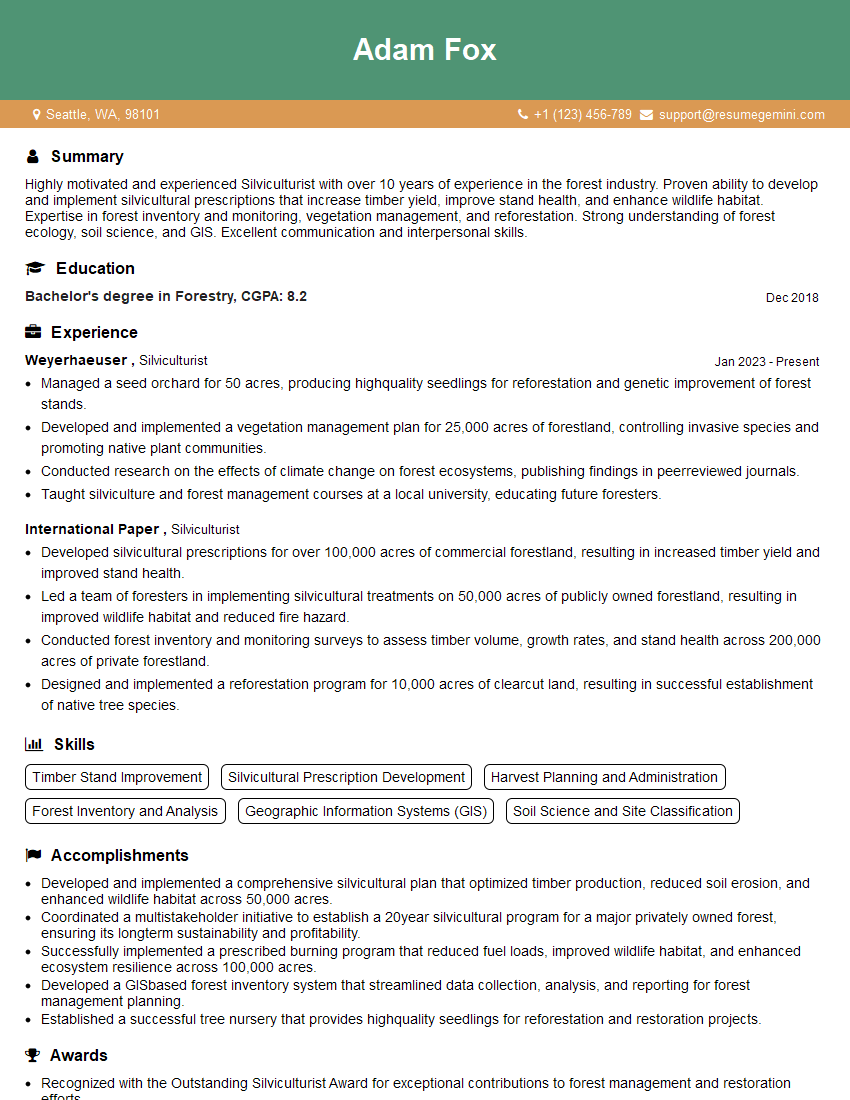
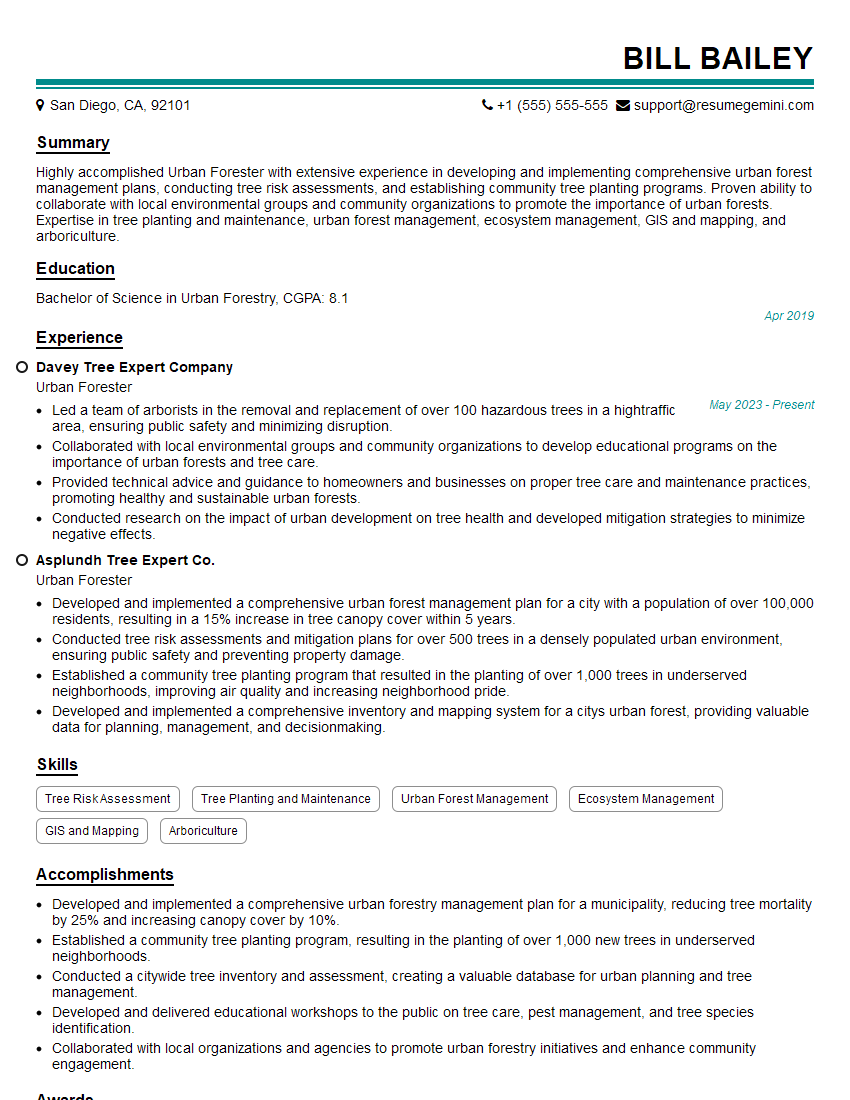
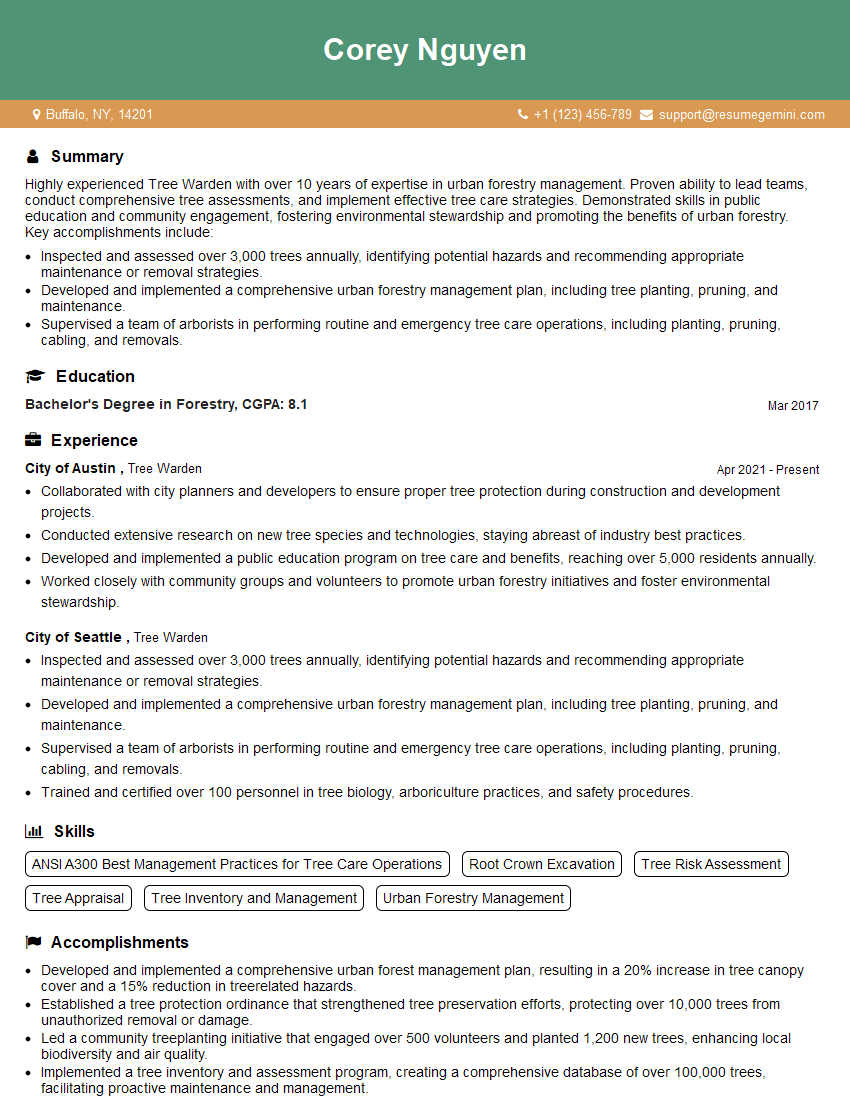
Mastering the understanding of tree protection and conservation opens doors to rewarding careers in environmental management, urban planning, forestry, and arboriculture. A strong resume is crucial for showcasing your expertise and securing your dream role. Crafting an ATS-friendly resume that highlights your skills and experience is key to getting noticed by potential employers. ResumeGemini is a trusted resource that can help you build a professional and effective resume. We provide examples of resumes tailored to the field of tree protection and conservation to guide you through the process, ensuring your qualifications shine.


Explore more articles
Users Rating of Our Blogs
Share Your Experience
We value your feedback! Please rate our content and share your thoughts (optional).
What Readers Say About Our Blog
Very informative content, great job.
good