The thought of an interview can be nerve-wracking, but the right preparation can make all the difference. Explore this comprehensive guide to Understanding of visual merchandising principles interview questions and gain the confidence you need to showcase your abilities and secure the role.
Questions Asked in Understanding of visual merchandising principles Interview
Q 1. Describe your experience creating effective window displays.
Creating effective window displays is all about storytelling and capturing attention within seconds. It’s a blend of art and science, focusing on creating a visually appealing narrative that entices customers to enter the store. My approach involves understanding the target audience, the current marketing campaign, and the overall brand aesthetic.
For example, during a recent holiday season, I designed a window display for a high-end jewelry store. Instead of simply showcasing individual pieces, I created a miniature winter scene, with snow-dusted branches, strategically placed jewelry acting as ornaments, and subtle lighting to enhance the luxurious feel. This created an immersive experience that went beyond a simple product display, resulting in a significant increase in foot traffic and sales.
In another instance, for a clothing boutique targeting a younger demographic, I used bold colors, dynamic mannequins in active poses, and interactive elements like a QR code linking to a shoppable online catalog. This approach catered to their preference for immediate engagement and digital interaction. Both examples demonstrate my ability to tailor window displays to specific audiences and achieve desired outcomes.
Q 2. Explain your understanding of planograms and how you use them.
Planograms are schematic diagrams that show the optimal placement of products on shelves or displays. They’re essential for maximizing space, improving product visibility, and boosting sales. My use of planograms is not simply about following a pre-determined layout; I actively participate in their creation and adaptation.
I start by analyzing sales data, identifying high-performing products and those needing a boost. Then, I consider factors like product size, shape, color coordination, and customer flow within the store. For instance, I’ll often place impulse buys near the checkout counter, and highlight bestsellers in prime locations.
I utilize planogram software to create and refine these layouts. This allows for easy adjustments and experimentation, enabling me to A/B test different arrangements to see what produces the best results. The software also facilitates efficient communication with the merchandising team and ensures consistency across all store locations.
Q 3. How do you stay up-to-date with current visual merchandising trends?
Staying ahead in visual merchandising requires constant learning and adaptation. I actively pursue several strategies to keep my knowledge current.
- Industry Publications and Blogs: I regularly read trade magazines, blogs, and online resources dedicated to visual merchandising, retail design, and marketing trends.
- Social Media: Platforms like Instagram, Pinterest, and TikTok are excellent sources of inspiration, showcasing creative displays and innovative techniques from around the world. I follow leading visual merchandisers and brands.
- Trade Shows and Conferences: Attending industry events allows for networking, hands-on learning, and exposure to new technologies and materials.
- Competitor Analysis: Regularly visiting competitor stores allows for benchmarking and identifying best practices.
By combining these methods, I develop a comprehensive understanding of the latest trends and incorporate relevant aspects into my work.
Q 4. How would you approach merchandising a new product line?
Merchandising a new product line involves a systematic approach, starting with a deep understanding of the product itself.
- Product Knowledge: Thoroughly research the product’s features, benefits, target audience, and brand story.
- Theme and Storytelling: Develop a compelling visual narrative that highlights the product’s unique selling points and resonates with the target customer.
- Space Planning: Determine the most effective location within the store to maximize visibility and accessibility. Consider factors like customer traffic patterns and adjacent product categories.
- Visual Elements: Select appropriate props, colors, lighting, and signage to create an engaging and cohesive display. The overall aesthetic should align with the brand identity.
- Testing and Iteration: Continuously monitor sales and customer feedback, making adjustments to the display as needed to optimize performance. A/B testing different approaches can be beneficial.
For example, when launching a new sustainable clothing line, I’d incorporate natural materials in the display, use earthy tones, and highlight the eco-friendly aspects through signage and messaging.
Q 5. Describe a time you had to adapt a visual display due to unforeseen circumstances.
During a major store renovation, a critical delivery of mannequins was delayed, impacting the launch of our fall fashion display. This created a significant challenge, as the initial plan heavily relied on those mannequins.
To overcome this, I quickly repurposed existing display fixtures and creatively used alternative props, such as vintage suitcases and draped fabrics, to showcase the clothing. This makeshift display, while unplanned, maintained the overall theme and showcased the new collection effectively. We incorporated clever lighting and signage to highlight the clothing itself, minimizing the impact of the missing mannequins. Customer feedback was positive, and sales were only marginally impacted, demonstrating adaptability and resourcefulness.
Q 6. How do you measure the success of a visual merchandising campaign?
Measuring the success of a visual merchandising campaign goes beyond simply looking at sales figures. While sales are crucial, it’s important to analyze a range of metrics.
- Sales Data: Track sales of featured products before, during, and after the campaign.
- Foot Traffic: Monitor customer traffic flow in the areas where the displays are located. This can be done through observation or with store analytics tools.
- Customer Feedback: Gather feedback through surveys, online reviews, or direct interactions with customers. This gives valuable insights into customer perceptions and the effectiveness of the display.
- Conversion Rates: Measure the percentage of customers who view the display and make a purchase. This reflects the effectiveness of the display in converting viewers into buyers.
- Social Media Engagement: If the display is promoted on social media, monitor likes, shares, and comments to assess its reach and impact.
By combining these quantitative and qualitative metrics, a holistic view of the campaign’s effectiveness can be achieved. This helps to inform future displays and optimize merchandising strategies.
Q 7. What software or tools are you proficient in for visual merchandising?
I am proficient in several software and tools relevant to visual merchandising.
- Planogram Software: I have extensive experience using industry-standard planogram software (e.g., JDA Space Planning, SAS Retail Intelligence) for designing and managing shelf layouts.
- CAD Software: Proficiency in CAD software (e.g., AutoCAD, SketchUp) allows for detailed store design and display mockups. This helps in visualizing and planning displays before implementation.
- Image Editing Software: I am skilled in Adobe Photoshop and Illustrator for creating marketing materials, editing photos, and developing visual concepts for displays.
- Presentation Software: I can effectively utilize PowerPoint or similar software to present visual merchandising plans and concepts to stakeholders.
Beyond software, I’m adept at using various hardware tools such as measuring tapes, lasers, and lighting equipment to execute displays in a practical setting.
Q 8. Explain your understanding of color theory and its application in visual merchandising.
Color theory is the foundational principle guiding how we use color to create specific moods and impact customer behavior in visual merchandising. It’s not just about choosing pretty colors; it’s a strategic tool. We consider the color wheel – understanding primary, secondary, and tertiary colors, and the relationships between them: complementary (opposites), analogous (side-by-side), and triadic (equidistant).
In practice, this means using complementary colors to create high-contrast, eye-catching displays, such as pairing a vibrant orange with a deep teal. Analogous colors, like shades of blues and greens, create a calming, serene atmosphere, perfect for a spa or luxury boutique. Triadic colors, for instance, red, yellow, and blue, can be used to create a bold and energetic display, suitable for a fast-fashion store targeting a younger demographic.
For example, when working with a brand selling earthy, natural products, I might employ analogous earth tones (browns, greens, beiges) to evoke a sense of calmness and connection with nature. Conversely, a tech brand might benefit from a triadic scheme involving blues, greens, and oranges to suggest innovation and energy.
Q 9. How do you balance brand consistency with creative visual displays?
Balancing brand consistency and creative visual displays is a crucial aspect of visual merchandising. It’s about finding that sweet spot where innovative design enhances, not contradicts, the brand’s identity. Brand guidelines—the logo, font, color palette, and overall brand messaging—serve as a compass. Creativity is then expressed within those parameters.
For example, if a brand is known for its minimalist aesthetic, I wouldn’t suddenly introduce overly cluttered displays. Instead, I’d find creative ways to highlight products within that minimalist framework—perhaps using negative space effectively or focusing on clean lines and simple forms. I might use unexpected textures or materials to add visual interest without compromising the brand’s core identity. A strong brand identity provides a strong foundation for creative expression, not a limitation.
Q 10. Describe your experience working with different retail environments (e.g., luxury, fast fashion).
My experience spans diverse retail environments. In luxury retail, I’ve worked with brands emphasizing exclusivity and high-end aesthetics. This involves creating sophisticated, understated displays that highlight the quality and craftsmanship of the products. The focus is on creating an immersive and aspirational experience for the customer. Clean lines, high-quality materials, and meticulous attention to detail are paramount.
In contrast, fast fashion demands a rapid turnaround of displays, reflecting the latest trends. Here, the visual merchandising needs to be dynamic, engaging, and trend-driven. I’ve utilized bright colors, bold patterns, and creative props to create eye-catching displays that attract impulse purchases. The key is speed and adaptability.
The approach differs significantly: luxury retail favors understated elegance, while fast fashion demands vibrant dynamism. The underlying principle, however, remains the same—creating displays that effectively communicate the brand’s message and entice the customer to buy.
Q 11. How do you incorporate storytelling into your visual merchandising strategies?
Storytelling is central to effective visual merchandising. It transforms a simple product display into an engaging narrative that resonates with the customer on an emotional level. I achieve this by creating themed displays that evoke a feeling or tell a story around the products. This might involve using props, backdrops, mannequins, and lighting to create a specific atmosphere.
For instance, a winter clothing display might be designed around a cozy cabin scene, featuring soft lighting, plush textures, and perhaps even a faux fireplace. This creates a visual narrative that connects the clothing to a feeling of warmth and comfort, encouraging the customer to associate those emotions with the product. It’s about immersing the customer in a world that reflects the brand and the products being showcased.
Q 12. How do you manage a team to achieve visual merchandising goals?
Managing a visual merchandising team requires clear communication, delegation, and a collaborative approach. I begin by establishing clear goals and expectations, ensuring everyone understands their roles and responsibilities. I provide regular feedback and training, fostering a supportive and creative environment. I encourage open communication and actively solicit ideas from team members.
I use project management tools to track progress and ensure deadlines are met. This includes setting milestones, assigning tasks, and monitoring performance. Regular team meetings allow for brainstorming sessions, problem-solving, and the sharing of best practices. Ultimately, a strong visual merchandising team is built on trust, collaboration, and a shared vision.
Q 13. Explain your experience with budget management in visual merchandising.
Budget management is crucial in visual merchandising. I start by creating a detailed budget proposal outlining all anticipated costs, including materials, props, labor, and any potential outsourcing. This proposal is then reviewed and approved by relevant stakeholders. I utilize cost-effective strategies, such as sourcing materials from multiple vendors, repurposing existing props, and collaborating with in-house design teams.
Throughout the process, I track expenses meticulously and regularly review the budget to ensure we’re on track. I employ value engineering techniques to identify areas where cost savings can be achieved without compromising the quality or effectiveness of the displays. Transparency and regular communication with the finance team are vital to ensuring the budget is managed responsibly and efficiently.
Q 14. How do you handle constructive criticism regarding your visual displays?
Constructive criticism is invaluable for growth. I welcome it as an opportunity to learn and improve my work. I listen attentively to the feedback, asking clarifying questions to ensure I fully understand the concerns. I then analyze the criticism, determining whether it’s valid and applicable. If so, I incorporate it into my future strategies.
For example, if feedback suggests a display is too cluttered, I might simplify it by focusing on fewer key products and using more negative space. If the feedback highlights a lack of brand consistency, I would review the brand guidelines to ensure alignment. I maintain a professional and open attitude, viewing criticism as a tool for improvement and refinement, not as a personal attack. The goal is to continuously refine and elevate the quality of visual merchandising displays.
Q 15. What are some common challenges in visual merchandising, and how do you overcome them?
Visual merchandising, while aiming to create enticing displays, faces several challenges. One common hurdle is maintaining consistency across various store locations, especially with differing store sizes and layouts. Another is adapting to unexpected stock shortages or delays, requiring quick, creative solutions. Budget constraints can also limit the scope of ambitious displays. Finally, keeping up with ever-changing trends and consumer preferences demands constant adaptation and analysis.
To overcome these, I employ a multi-pronged approach. For consistency, I develop detailed visual merchandising guides with clear instructions and photography. These guides are supplemented by regular training for store staff. To handle stock issues, I design displays with flexible components that can easily adapt to different product quantities. For budget management, I explore cost-effective alternatives, such as repurposing existing fixtures or collaborating with local artists for unique, budget-friendly displays. Finally, I actively track sales data and customer feedback, as well as industry trends, using this data to inform future displays and ensure relevance.
Career Expert Tips:
- Ace those interviews! Prepare effectively by reviewing the Top 50 Most Common Interview Questions on ResumeGemini.
- Navigate your job search with confidence! Explore a wide range of Career Tips on ResumeGemini. Learn about common challenges and recommendations to overcome them.
- Craft the perfect resume! Master the Art of Resume Writing with ResumeGemini’s guide. Showcase your unique qualifications and achievements effectively.
- Don’t miss out on holiday savings! Build your dream resume with ResumeGemini’s ATS optimized templates.
Q 16. Describe your process for creating a compelling in-store experience.
Creating a compelling in-store experience starts with a thorough understanding of the target audience and the brand’s story. My process involves several key steps:
- Concept Development: I begin by brainstorming themes and ideas that align with the brand’s identity and the current marketing campaign. This often involves mood boards and trend research.
- Space Planning: Careful consideration is given to the store’s layout and traffic flow. Displays should naturally guide customers through the space, highlighting key products and creating a smooth shopping journey.
- Product Selection: I strategically select products for each display, considering factors such as color coordination, price points, and current promotions.
- Fixture and Prop Selection: The right fixtures and props play a crucial role in creating visual interest and enhancing the overall aesthetic. This selection needs to reflect the brand image.
- Lighting Design: Appropriate lighting is essential to showcase products effectively and create a welcoming atmosphere. Different lighting techniques can highlight textures and colors.
- Implementation and Monitoring: After the display is implemented, I closely monitor its impact on sales and gather customer feedback to further refine future displays.
For instance, when working with a clothing retailer, I might create a display that tells a story, like a “weekend getaway” theme, incorporating related products like luggage, clothing, and accessories. This approach creates a more immersive experience than just presenting clothes alone.
Q 17. How do you ensure consistency in visual merchandising across multiple store locations?
Maintaining visual merchandising consistency across multiple store locations requires a structured and systematic approach. I achieve this through:
- Detailed Visual Merchandising Guides: These guides act as a blueprint, including photos, diagrams, and written instructions for each display. They specify product placement, fixture arrangement, color palettes, and even lighting requirements.
- Digital Asset Library: A centralized digital library containing high-quality images of displays, fixtures, and props ensures consistent visual references across all locations.
- Regular Training and Communication: Store staff must understand the brand’s visual guidelines. This often involves on-site training sessions and regular communication to answer questions and address any inconsistencies.
- Regular Store Visits and Audits: On-site visits allow for quality control and prompt identification of deviations from the established standards. Audits help in assessing and improving the consistency of displays.
- Technology: Using visual merchandising software allows for centralized design and control, ensuring consistent implementation across different stores.
For example, using a shared online platform where each store can upload photos of their displays allows for rapid review and feedback, ensuring brand standards are maintained. This system helps catch inconsistencies quickly and allows for immediate corrective action.
Q 18. Explain your understanding of lighting and its impact on visual merchandising.
Lighting is a crucial element in visual merchandising; it dramatically impacts how products are perceived. It can enhance colors, textures, and create different moods. Different types of lighting serve different purposes.
- Accent Lighting: This highlights specific products or areas of a display, drawing the customer’s attention to key items.
- Ambient Lighting: This provides general illumination, setting the overall mood and atmosphere of the store.
- Task Lighting: This type of lighting ensures adequate illumination for tasks such as browsing or trying on clothing. This is often incorporated above fitting rooms or shelves.
For example, warm, yellowish lighting can create a cozy and inviting atmosphere, ideal for a home goods store. In contrast, cool, bright white lighting can create a clean and modern feel, appropriate for a minimalist clothing boutique. Incorrect lighting can wash out colors, make textures appear dull, or create an unwelcoming space. Therefore, understanding how different light temperatures and intensities affect the overall perception is critical.
Q 19. How do you use props and fixtures to enhance a visual display?
Props and fixtures are the building blocks of effective visual merchandising. They provide structure, add visual interest, and help tell a story. The key is to use them strategically to enhance the display and not detract from the products.
- Fixtures: These provide the framework of the display. Examples include shelves, mannequins, display cases, and hanging racks. Their choice is dictated by the type of product and the overall design aesthetic.
- Props: These are additional elements used to add context, visual interest, and enhance the storytelling aspect of the display. Examples range from decorative items like plants and vases to lifestyle props that help to showcase how a product is used in a real-world setting.
For example, in a display for high-end skincare, I might use sleek, minimalist fixtures, along with props like smooth stones, orchids, and brushed metal accents. This helps to create a sense of luxury and sophistication. In contrast, a casual clothing store might use rustic wooden shelves and vintage props to convey a relaxed and informal feel. The choice of props and fixtures should always reflect the brand identity and target audience.
Q 20. How do you incorporate seasonal trends into your visual merchandising plans?
Incorporating seasonal trends requires proactive planning and market research. I stay updated on upcoming trends through various means – fashion blogs, industry magazines, social media analysis, and attending trade shows. This allows me to anticipate changes well in advance.
My approach typically involves:
- Trend Forecasting: Early identification of color palettes, textures, and themes that will be popular during a particular season.
- Adapting Displays: Modifying existing displays or creating entirely new ones that reflect the seasonal trends. This may involve changing the color schemes, incorporating seasonal props, and showcasing relevant products.
- Product Selection: Choosing products that align with the dominant seasonal trends. For example, lighter clothing and bright colours for summer and darker, warmer tones for autumn/winter.
- Thematic Displays: Creating displays around specific seasonal events or holidays, such as Christmas, Halloween, or summer sales.
For example, a back-to-school display might feature backpacks, stationery, and technology, using earthy tones and an organized, functional design. A summer display could feature beachwear, sunglasses, and swimwear in bright, vibrant colors, possibly with beach-themed props.
Q 21. Describe your experience with creating visual merchandising for online stores.
Visual merchandising for online stores differs significantly from brick-and-mortar stores, relying heavily on high-quality photography, interactive elements, and user experience design. My experience encompasses creating engaging product photography, implementing 360° product views, and utilizing virtual reality (VR) technology for a more immersive experience.
Key aspects of my approach include:
- High-Quality Product Photography: Professional photos are crucial, showcasing products from various angles and highlighting key features and details.
- Interactive Elements: Features like zoom functionality, 360° views, and video demonstrations enhance the online shopping experience, allowing customers to examine products closely.
- Lifestyle Imagery: Using lifestyle photography helps customers visualize how a product fits into their everyday life, enhancing relatability.
- User Experience (UX) Design: Designing an intuitive and user-friendly interface that makes it easy for customers to browse, search, and purchase products.
- Personalized Recommendations: Using algorithms and data analytics to offer customers personalized product recommendations, enhancing their shopping experience.
For example, I might design a virtual showroom experience for furniture using VR technology, allowing potential customers to “walk” through the showroom and inspect the furniture virtually before making a purchase. This creates a unique and engaging online shopping experience.
Q 22. How do you ensure accessibility in your visual merchandising designs?
Ensuring accessibility in visual merchandising is crucial for creating an inclusive shopping experience. It’s about designing displays that are usable and enjoyable for everyone, regardless of their abilities. This involves considering several key aspects:
- Clear Signage: Using large, clear fonts, high contrast colors, and simple language on all signage. Avoid using solely visual cues; incorporate tactile elements or audio descriptions where appropriate.
- Accessible Pathways: Maintaining wide, unobstructed walkways to accommodate wheelchairs and other mobility devices. Avoid clutter and ensure sufficient space for maneuvering.
- Diverse Display Heights: Placing key products and information at a range of heights to cater to individuals of different statures, including those using wheelchairs.
- Alternative Formats: Providing product information in alternative formats such as braille or large print for visually impaired customers. Consider audio descriptions for video displays.
- Lighting Considerations: Using appropriate lighting levels to minimize glare and shadows, which can be particularly challenging for individuals with visual impairments.
For instance, in a clothing store, I’d ensure that mannequins are strategically placed to not obstruct pathways, and that clothing descriptions are available in large print upon request.
Q 23. Explain your understanding of the principles of visual hierarchy.
Visual hierarchy is the arrangement of elements in a design to guide the viewer’s eye through the space. It dictates what information is seen first, second, and so on, leading them to a desired action (e.g., purchasing a product). It’s akin to telling a story with visual cues.
The principles involve:
- Size: Larger elements naturally draw more attention.
- Color: Bold, contrasting colors stand out. Think of using a vibrant color to highlight a sale item.
- Contrast: The difference between elements (light/dark, color/texture) creates visual interest and guides the eye.
- Placement: Items placed centrally or at eye level receive more attention.
- Space: White space (negative space) helps to emphasize elements. Clustering related items and isolating key products enhances their impact.
- Font: Bold, larger fonts can make important information instantly clear.
For example, in a window display, I’d use a large, eye-catching image of the featured product, strategically place it in the center, and use bright, contrasting colors to draw attention to it. Secondary items would be smaller and less prominently displayed.
Q 24. How do you measure the ROI of visual merchandising initiatives?
Measuring the ROI of visual merchandising is crucial for justifying its investment. It’s not simply about aesthetics; it must directly impact sales and brand perception. We track several key metrics:
- Sales Lift: Tracking sales increases in specific areas after implementing new visual merchandising strategies. This requires comparing sales before and after changes, isolating the effect of the visual merchandising itself.
- Conversion Rates: Measuring the percentage of shoppers who make a purchase after viewing a display. This helps pinpoint the effectiveness of particular displays in converting browsers into buyers.
- Average Transaction Value (ATV): Tracking the average value of transactions in areas with specific visual merchandising strategies. Enhanced displays might lead to customers buying more expensive items.
- Customer Dwell Time: Monitoring how long customers spend in specific areas of the store. Engaging displays increase dwell time, leading to higher sales.
- Foot Traffic Analysis: Tracking the number of shoppers passing through various sections of the store. Heat maps can identify high-traffic areas that could be further optimized.
- Social Media Engagement: Measuring the engagement (likes, shares, comments) on social media posts featuring the store’s visual merchandising displays. This indicates the effectiveness in creating a visually appealing and shareable brand experience.
By comparing these metrics before and after implementing changes, we can determine the direct financial return on our visual merchandising investments.
Q 25. Describe a time you had to solve a problem related to space optimization in a store.
In a small boutique, we faced a challenge with limited space. The initial layout felt cramped and overwhelming, impacting customer flow and product visibility. Our solution was a multi-pronged approach:
- Vertical Merchandising: We maximized vertical space by using tall shelving units and hanging displays, allowing us to showcase more products without cluttering the floor.
- Strategic Product Placement: We strategically placed high-demand products at eye level and easy reach, drawing customers’ attention immediately. Low-demand items were placed on higher shelves.
- Open Display Fixtures: We replaced closed cabinets with open display shelving and fixtures to create a sense of spaciousness and allow customers to see more products.
- Clear Pathways: We ensured that the main pathways were wide and unobstructed, creating a smooth and inviting shopping experience.
- Creative Zoning: We divided the small space into distinct zones using visual cues like rugs, different flooring materials or lighting to differentiate product categories.
The result was a transformed space that felt airy and organized, improving both customer flow and sales.
Q 26. How do you balance visual appeal with functionality in a retail environment?
Balancing visual appeal and functionality is essential in retail. A beautiful display is useless if it doesn’t drive sales or provide a pleasant shopping experience. The key is to find the intersection between aesthetics and practicality.
- Strategic Product Placement: Ensure highly sought-after items are easily accessible and highly visible.
- Clear Signage and Information: Combine stylish signage with easy-to-understand information about products and pricing.
- User-Friendly Layout: Organize the space logically to ensure effortless navigation and product discovery.
- Effective Use of Space: Utilize space efficiently without making the store feel cramped or cluttered.
- Ergonomic Considerations: Think about the ease of access and handling for store staff as well as customers.
- Material Selection: Choose materials that are durable, safe, and aesthetically pleasing.
For example, a visually stunning display of delicate glassware would be useless if it was placed in a high-traffic area prone to accidents. I would choose a location with less foot traffic, but still in a high-visibility zone, perhaps adding protective barriers to ensure safety and functionality.
Q 27. How do you incorporate customer feedback into your visual merchandising strategies?
Incorporating customer feedback is paramount to creating effective visual merchandising. It allows us to understand shopper preferences, identify areas for improvement, and tailor displays to meet their needs. We gather feedback through:
- Surveys: Conducting both in-store and online surveys to gauge customer opinions on display effectiveness and store layout.
- Focus Groups: Organizing focus groups to get detailed feedback on specific aspects of the visual merchandising.
- Social Media Monitoring: Tracking social media mentions and reviews to identify trends in customer opinions.
- In-Store Observation: Observing shopper behavior in the store to see how they interact with displays and navigate the space.
- Direct Customer Interactions: Engaging with customers directly to solicit feedback on their shopping experience.
For example, if customer surveys reveal dissatisfaction with the clarity of signage, we would redesign the signage to be more prominent and easier to read. If observations show customers struggling to access products on high shelves, we might adjust the shelf height or product placement.
Q 28. Describe your experience collaborating with marketing and sales teams on visual merchandising projects.
Collaboration with marketing and sales teams is essential for successful visual merchandising. It’s a joint effort to create a cohesive brand experience and achieve sales goals. My experience involves:
- Marketing Alignment: Working closely with marketing to ensure that visual merchandising reflects the overall brand messaging, current campaigns, and seasonal themes. We collaborate on color palettes, messaging, and branding elements.
- Sales Data Integration: Utilizing sales data provided by the sales team to inform display placement, product promotion, and overall store layout. Top-selling items get prominent placement.
- Joint Planning Sessions: Participating in regular meetings with marketing and sales to discuss upcoming campaigns, promotions, and seasonal changes, and to integrate visual merchandising plans accordingly.
- Performance Tracking and Reporting: Sharing performance data with the marketing and sales teams to assess the effectiveness of visual merchandising initiatives and make data-driven decisions.
- Feedback Loops: Establishing clear communication channels for feedback and suggestions from both marketing and sales to refine strategies.
For example, during a back-to-school promotion, I worked with the marketing team to design displays that featured the campaign’s theme and color scheme, while also incorporating sales data to highlight popular back-to-school items.
Key Topics to Learn for Understanding of Visual Merchandising Principles Interview
- Store Planning & Design: Understanding space planning, fixture selection, and traffic flow to maximize product visibility and sales.
- Visual Communication: Applying principles of color theory, typography, and visual hierarchy to create compelling displays.
- Product Presentation: Mastering techniques for showcasing products effectively, including prop selection, lighting, and signage.
- Branding & Storytelling: Integrating brand identity into visual displays to create a cohesive and engaging customer experience.
- Trend Analysis & Forecasting: Staying current with industry trends and adapting visual merchandising strategies accordingly.
- Window Displays & Experiential Design: Creating captivating window displays and in-store experiences that attract and engage customers.
- Measurement & Analysis: Tracking key performance indicators (KPIs) to measure the effectiveness of visual merchandising strategies and make data-driven improvements.
- Budgeting & Resource Management: Effectively managing budgets and resources allocated to visual merchandising projects.
- Teamwork & Collaboration: Working effectively with other departments (marketing, buying, etc.) to achieve common goals.
- Problem-Solving & Adaptability: Responding to unexpected challenges and adapting visual merchandising plans as needed.
Next Steps
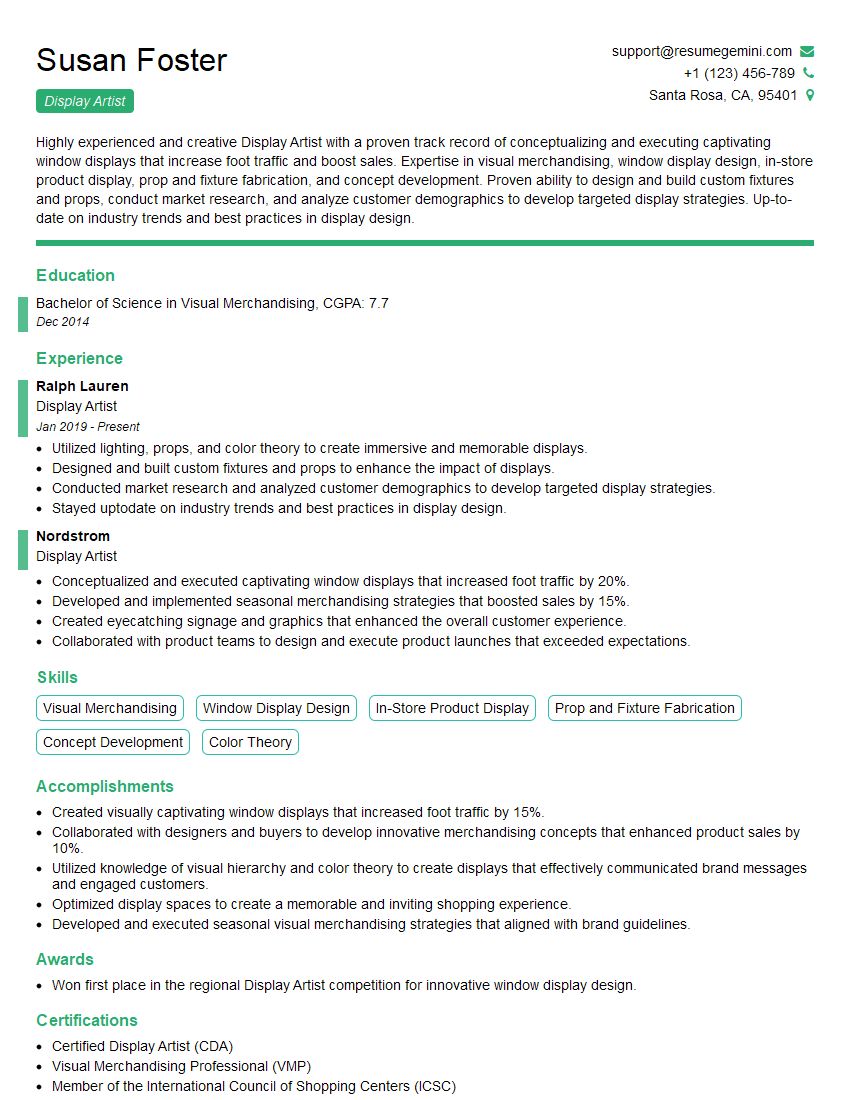
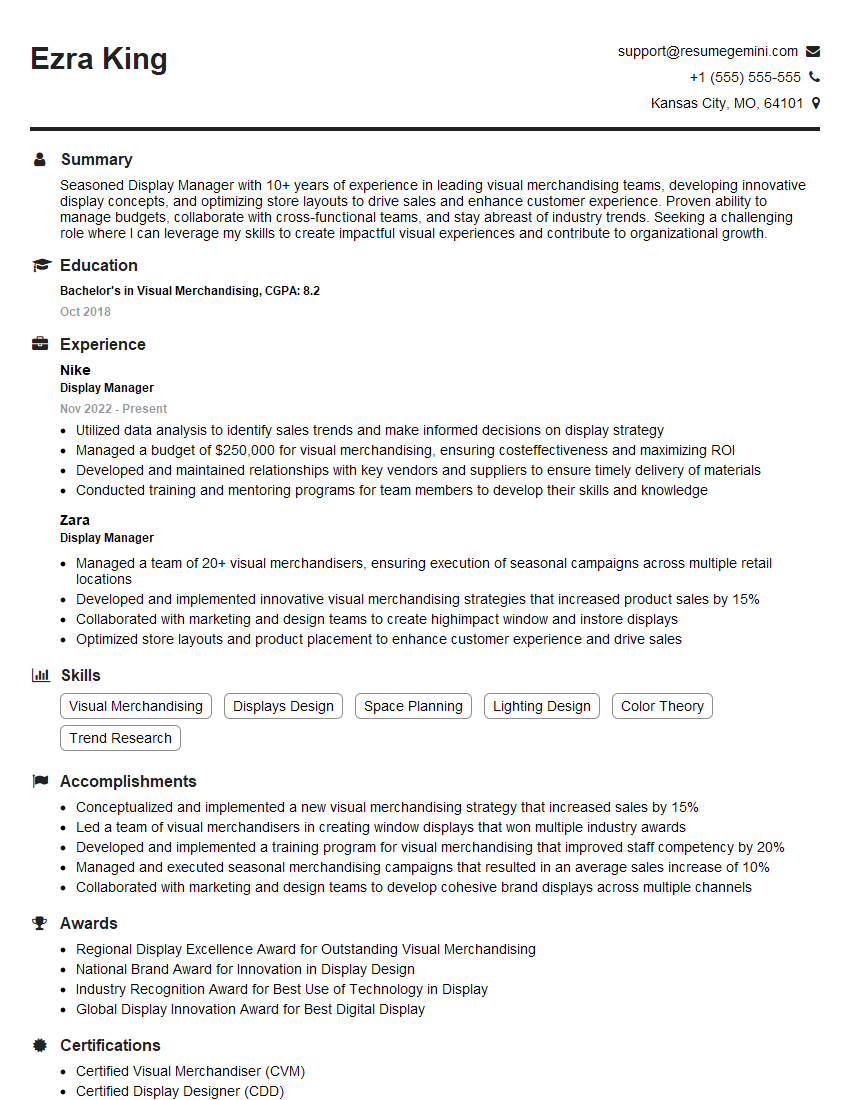
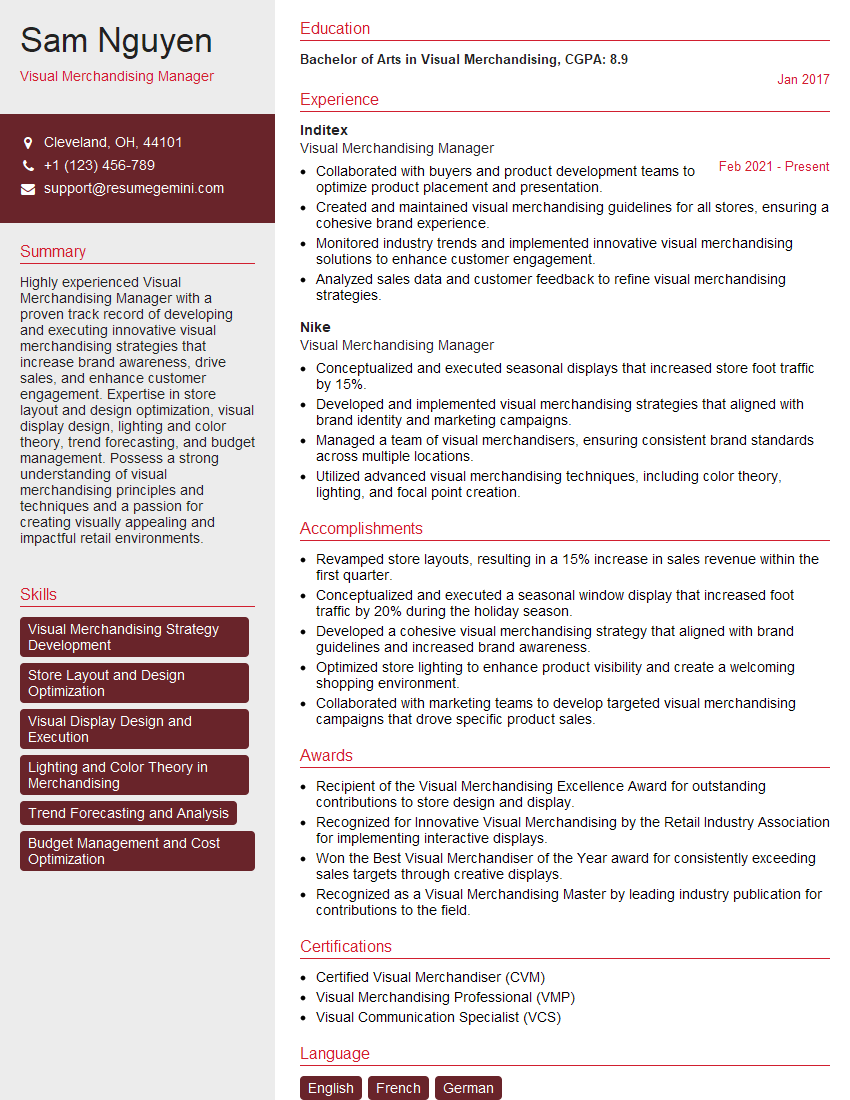
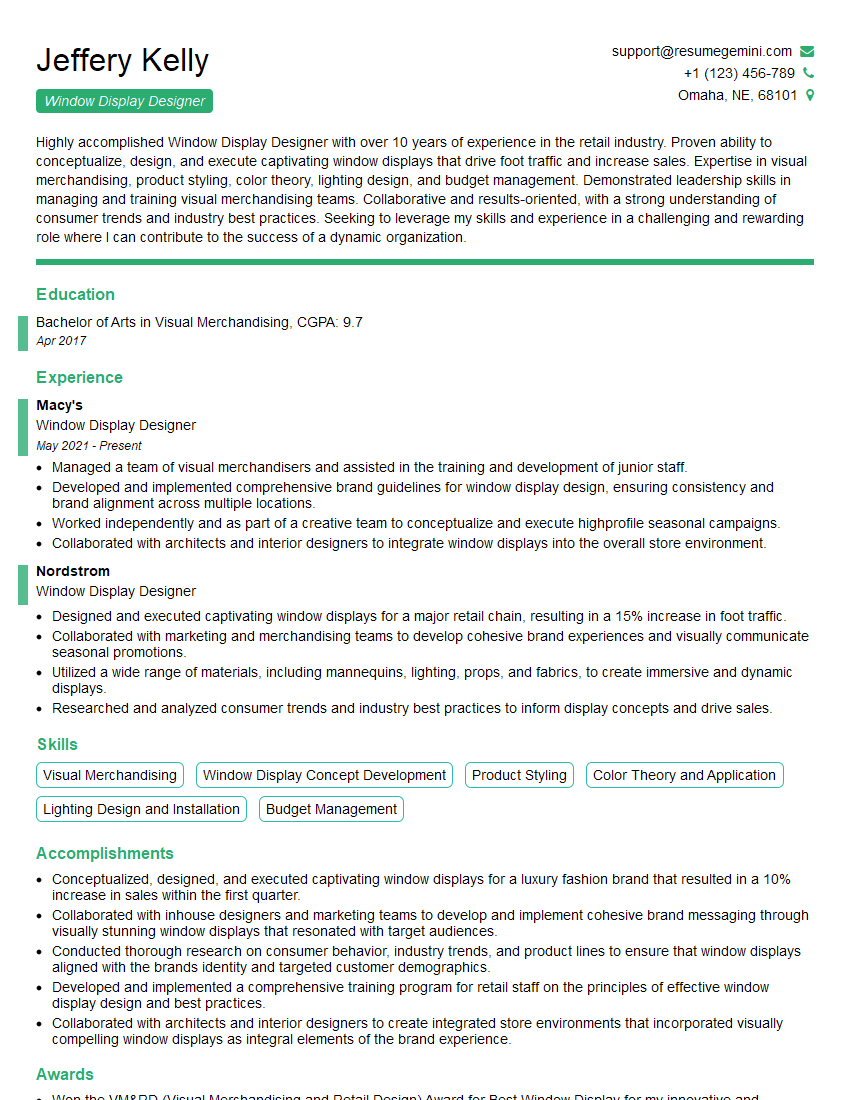
Mastering visual merchandising principles is crucial for career advancement in retail and related fields. A strong understanding of these principles demonstrates your ability to create engaging customer experiences, boost sales, and contribute significantly to a company’s bottom line. To maximize your job prospects, focus on crafting an ATS-friendly resume that effectively showcases your skills and experience. ResumeGemini is a trusted resource to help you build a professional and impactful resume. We provide examples of resumes tailored to visual merchandising principles to guide you. Take advantage of these resources to present yourself effectively to potential employers.
Explore more articles
Users Rating of Our Blogs
Share Your Experience
We value your feedback! Please rate our content and share your thoughts (optional).
What Readers Say About Our Blog
good