Every successful interview starts with knowing what to expect. In this blog, we’ll take you through the top Unloading and Loading interview questions, breaking them down with expert tips to help you deliver impactful answers. Step into your next interview fully prepared and ready to succeed.
Questions Asked in Unloading and Loading Interview
Q 1. Describe your experience with different types of loading equipment.
My experience encompasses a wide range of loading equipment, from basic hand trucks and pallet jacks to advanced automated systems. I’m proficient with forklifts (both sit-down and stand-up), cranes, conveyor belts, and loading dock levelers. I’ve also worked with specialized equipment like vacuum lifters for delicate or heavy loads and robotic palletizers for high-volume operations. For example, in my previous role at a distribution center, we utilized a sophisticated warehouse management system (WMS) integrated with automated guided vehicles (AGVs) to optimize the loading and unloading process. This system significantly reduced loading times and minimized human error.
My experience extends to understanding the specific capabilities and limitations of each piece of equipment. I know when a hand truck is sufficient and when a forklift is necessary, considering factors like weight, size, fragility, and the terrain. This knowledge allows me to select the appropriate equipment for each task, ensuring efficiency and safety.
Q 2. How do you ensure the safety of yourself and others during loading and unloading operations?
Safety is paramount in loading and unloading operations. My approach is based on a multi-layered strategy encompassing pre-operational checks, adherence to safety regulations, and constant vigilance. Before commencing any task, I thoroughly inspect the equipment for any defects or malfunctions – ensuring brakes are functioning, tires are in good condition, and safety features are operational. I also ensure the work area is clear of obstructions and properly lit. I always wear appropriate Personal Protective Equipment (PPE), including safety shoes, high-visibility vests, and gloves, depending on the materials being handled.
I strictly follow all company safety protocols and regulations, including weight limits, proper lifting techniques, and communication procedures. Clear communication is vital; I always communicate with colleagues and drivers before starting and throughout the process, especially during maneuvering heavy equipment. I’m trained in spotting hazards, and I never hesitate to stop work if I identify a safety risk. Finally, I regularly participate in safety training to stay updated on best practices and emerging hazards.
Q 3. What methods do you use to efficiently unload a truck?
Efficient unloading relies on a well-planned and organized approach. First, I confirm the shipment details match the accompanying paperwork. Next, I assess the truck’s contents to determine the optimal unloading method. If using a forklift, I strategically position it for efficient access to pallets. For smaller items, I might utilize hand trucks or dollies. I prioritize unloading the most urgent or perishable goods first. I frequently employ techniques such as cross-docking – directly transferring goods from the incoming truck to outgoing trucks – to minimize storage time and improve throughput. In scenarios where goods are stacked in a less than ideal manner, I strategically reposition them to aid efficient removal, prioritizing safety and minimizing the risk of damage.
For example, when unloading a truck containing various sized boxes, I’d start with larger, heavier pallets first using a forklift, followed by smaller boxes using hand trucks, ensuring efficient space management in the unloading area. This systematic approach minimizes congestion and keeps the workflow smooth.
Q 4. Explain your process for verifying the accuracy of shipments upon unloading.
Verification of shipment accuracy is a crucial step. I begin by cross-referencing the quantity and type of goods received against the accompanying bill of lading or packing list. I carefully inspect each item for visible damage. This often involves scanning barcodes or using handheld scanners to match the physical goods with the electronic inventory system. Any discrepancies are immediately noted and reported, including damaged or missing items. I meticulously document all findings, including photographs of damaged goods and discrepancies in quantities. This detailed record-keeping provides essential traceability and is critical for resolving any potential issues with the shipper or carrier. Following this procedure safeguards against inventory errors and ensures accurate stock levels.
For instance, if the packing list indicates 100 boxes of apples but I only receive 98, I document this discrepancy, take photos of the received items, and notify the relevant parties immediately. This approach ensures accountability and prevents potential inventory problems down the line.
Q 5. How do you handle damaged goods during unloading?
Handling damaged goods requires a structured approach. First, I carefully document the damage, taking clear photos and noting the extent of the damage. This documentation is critical for insurance claims or resolving issues with the supplier. Then, I segregate the damaged goods from undamaged ones to prevent further damage or contamination. Depending on the nature of the damage and company policy, I might set aside the damaged goods for repair, return, or disposal. I’ll immediately report the damage to my supervisor, who will guide on the appropriate action. Communication with the supplier is key in such situations, ensuring transparency and a swift resolution.
If a pallet of glassware arrives with several broken items, I photograph the damage, separate the broken glass from the undamaged ones, and report this to the supervisor for appropriate disposal and notification to the supplier to initiate a replacement.
Q 6. What is your experience with inventory management in relation to unloading and loading?
Inventory management is intrinsically linked to loading and unloading. Accurate and timely data entry during unloading is vital for maintaining accurate inventory records. I’m proficient in using various inventory management systems (IMS), from simple spreadsheets to sophisticated WMS. Using scanners and mobile devices, I update the system with the exact number of items unloaded, noting any discrepancies. My experience includes cycle counting, verifying physical inventory against the system records, to ensure data accuracy. This continuous monitoring and reconciliation process helps maintain stock control, prevents stockouts and overstocking, and optimizes warehouse space. I’m also familiar with techniques such as First-In, First-Out (FIFO) and Last-In, First-Out (LIFO) inventory management strategies and how these apply to effective unloading and subsequent placement in storage.
For example, accurate scanning during unloading ensures that the inventory management system accurately reflects the quantity of each item in stock, enabling timely replenishment orders and preventing stock-outs.
Q 7. Describe your experience with different types of packaging and how it impacts unloading.
Different types of packaging significantly impact unloading efficiency and safety. Sturdy pallets wrapped securely with shrink wrap are far easier to handle than loose, poorly packaged items. Damage during transport is minimized with suitable packaging. Conversely, poorly packaged items increase the risk of damage during unloading and can cause delays. I’m familiar with various packaging materials, including cardboard boxes, wooden crates, plastic containers, and specialized packaging for fragile goods. My experience allows me to quickly assess the type of packaging and adjust my unloading technique accordingly. I can quickly identify potential issues like inadequate protection, poor stacking, or insufficient labeling, ensuring appropriate handling to minimize damage and improve unloading efficiency. For example, I’d handle a pallet of electronics in sturdy boxes differently from a pallet of loose produce, ensuring the electronics are treated with extra care and that the produce is handled to prevent bruising. Understanding packaging types improves safety and speed.
Q 8. How do you prioritize tasks when dealing with multiple shipments?
Prioritizing tasks with multiple shipments involves a strategic approach that balances urgency, deadlines, and resource allocation. I typically use a system that combines urgency and importance. First, I identify shipments with the strictest deadlines or those involving perishable goods or time-sensitive deliveries. These become my high-priority tasks. Next, I consider the size and complexity of each shipment – larger, more intricate loads may require more time and resources, influencing their position in the queue. Finally, I factor in the available resources – personnel, equipment, and dock space. Think of it like a Tetris game; you want to fit the largest and most urgent pieces in first, optimizing space and time. This ensures efficient workflow and prevents bottlenecks. For example, if I have a shipment of pharmaceuticals with a strict delivery window and another shipment of less urgent, non-perishable goods, the pharmaceuticals would take precedence.
- Urgent and Important: Immediate attention. (e.g., perishable goods with tight deadlines).
- Important, Not Urgent: Scheduled for later, but still planned. (e.g., large, non-perishable orders).
- Urgent, Not Important: Requires quick action, but may not necessitate immediate attention. (e.g., a small, last-minute order).
- Neither Urgent nor Important: Can be postponed. (e.g., small, non-perishable orders with flexible deadlines).
Q 9. What safety protocols do you follow when operating a forklift?
Forklift safety is paramount. My protocol begins with a pre-operational inspection – checking fluid levels, tire pressure, lights, horn, and ensuring there are no visible mechanical issues. I always wear the appropriate personal protective equipment (PPE), including a high-visibility vest, safety shoes, and hearing protection. Before starting, I assess the area for obstructions, pedestrians, and potential hazards. I operate at a safe speed, adjusting to the conditions, and always yield the right of way. Loads are secured properly to prevent shifting or falling. I never lift a load that exceeds the forklift’s capacity – I’m very familiar with weight limits and capacity charts. Throughout the operation, I maintain awareness of my surroundings, using mirrors and looking over my shoulder to check blind spots. Finally, after completing the task, I park the forklift in a designated area, set the parking brake, and shut off the ignition. One example of adhering to safety protocols involved a situation where a pallet was unexpectedly unstable. Instead of attempting to lift it, I secured it further with additional strapping and alerted my supervisor to find a safer alternative.
Q 10. How do you manage time constraints during peak loading and unloading periods?
Managing time constraints during peak periods requires meticulous planning and efficient execution. I leverage technology, such as load-planning software, to optimize routes and minimize unnecessary movements. I communicate effectively with the loading and unloading teams to ensure everyone is synchronized and aware of deadlines. I also prioritize tasks based on urgency and shipment deadlines, as previously discussed. In addition, during peak times, we often utilize additional personnel to improve efficiency, dividing tasks logically. Visual aids like clear signage, well-defined drop-off zones, and pre-assigned loading bays streamline the process. Flexibility is key – if a delay occurs, I re-evaluate the schedule and adjust priorities accordingly to minimize the impact on the overall timeline. One time, we experienced an unexpected surge in deliveries. By implementing a rapid task assignment system and streamlining the flow of goods, we managed to avoid significant delays and meet most of our deadlines.
Q 11. What is your experience with different types of cargo (e.g., fragile, hazardous)?
I have extensive experience handling diverse cargo types, including fragile items, hazardous materials, and oversized shipments. Each type requires a specific approach. Fragile goods require careful handling, appropriate packaging (like bubble wrap or protective foam), and gentle placement to avoid damage. Hazardous materials demand strict adherence to regulations; I am familiar with the proper documentation, handling procedures (including personal protective equipment), and storage requirements for various hazardous substances. I’ve worked with chemicals, flammables, and other materials requiring special caution. Oversized loads need meticulous planning for transport and placement to ensure safety and prevent damage to surrounding property or equipment. I’ve handled everything from delicate antique furniture to large industrial machinery, each requiring specialized handling techniques and safety measures.
Q 12. Describe a time you had to solve a problem related to loading or unloading.
During a major shipment of glass panels, a sudden rainstorm caused a significant delay and created a risk of damage to the already loaded panels. The problem was that the loading dock was exposed to the elements. My solution involved quickly coordinating with the receiving team to find a covered area to temporarily store the loaded panels until the rain subsided. Simultaneously, I reorganized the remaining panels in a way that minimized exposure to rain, utilizing available tarps and prioritizing the most vulnerable glass first. Once the rain stopped, we resumed loading, minimizing the loss of time and preventing any damage to the panels. This involved quick thinking, effective communication, and the creative use of available resources.
Q 13. How do you maintain a clean and organized loading/unloading dock?
Maintaining a clean and organized loading/unloading dock is essential for safety and efficiency. This involves regular sweeping and removal of debris, spills, and packaging materials. We use designated areas for different types of waste – recyclable materials, general trash, and hazardous waste, to promote efficient waste disposal. Proper storage of materials is crucial – pallets are stacked neatly, ensuring they’re stable and not obstructing walkways or access points. We use clearly labeled storage areas for different products. Regular preventative maintenance helps keep equipment in good working order and contributes to a safer environment. Signage is critical in directing traffic and keeping the area orderly. We also practice a system of regular spot checks throughout the day to maintain cleanliness and prevent build-ups of debris or potential hazards.
Q 14. What is your experience with using loading and unloading checklists?
I have extensive experience using loading and unloading checklists. They’re invaluable for ensuring that all steps in the process are completed accurately and safely. Checklists provide a structured approach, minimizing errors and omissions. A typical checklist includes pre-loading and post-loading inspections, securing the load, documenting the shipment, and verifying the count of items. Using a checklist helps prevent accidents and ensures compliance with safety regulations. It provides a clear record of each shipment and offers traceability in case of any issues. I find that checklists help improve efficiency by guiding the team through each stage of the loading process. It promotes better communication within the team and simplifies the accountability aspect. By consistently using checklists, we’ve significantly reduced errors and improved the overall safety and efficiency of our operations.
Q 15. Describe your familiarity with warehouse management systems (WMS).
Warehouse Management Systems (WMS) are the backbone of efficient warehouse operations. I’m very familiar with various WMS platforms, including their core functionalities such as inventory management, order fulfillment, and tracking. My experience encompasses everything from data entry and order processing to advanced features like slotting optimization and labor management. A good WMS allows for real-time visibility into inventory levels, order status, and resource allocation, which is crucial for minimizing delays and maximizing throughput. For example, in a previous role, we implemented a new WMS that reduced our order picking time by 15% by optimizing picking routes and integrating directly with our shipping carrier’s system.
My proficiency extends to understanding various WMS integrations with other enterprise resource planning (ERP) systems, ensuring seamless data flow and accurate reporting. This integration is critical for accurate forecasting and proactive management of inventory levels. I’m also comfortable with customizing WMS configurations to adapt to specific business needs and processes. In essence, a WMS is not just software; it’s a strategic tool for enhancing operational efficiency and profitability, and I am adept at utilizing its full potential.
Career Expert Tips:
- Ace those interviews! Prepare effectively by reviewing the Top 50 Most Common Interview Questions on ResumeGemini.
- Navigate your job search with confidence! Explore a wide range of Career Tips on ResumeGemini. Learn about common challenges and recommendations to overcome them.
- Craft the perfect resume! Master the Art of Resume Writing with ResumeGemini’s guide. Showcase your unique qualifications and achievements effectively.
- Don’t miss out on holiday savings! Build your dream resume with ResumeGemini’s ATS optimized templates.
Q 16. How do you handle discrepancies between the shipping manifest and actual contents?
Discrepancies between the shipping manifest and the actual contents are a serious issue, potentially leading to customer dissatisfaction, financial losses, and operational disruptions. My approach is systematic and prioritizes accuracy and accountability. First, I would meticulously compare the manifest with the physical inventory, documenting all discrepancies with photos and detailed descriptions. This often involves using handheld scanners to verify item quantities and condition. Then, depending on the nature of the discrepancy (missing items, incorrect quantities, damaged goods), I would initiate the appropriate corrective actions.
If items are missing, I would investigate potential causes, such as theft, mis-picking, or errors during the packing process. For incorrect quantities, I’d verify inventory records and potentially initiate a recount. Damaged goods necessitate documentation for insurance claims and communication with the sender. A thorough investigation ensures that the root cause is identified and addressed to prevent recurrence. Clear and timely communication with the relevant parties, including the shipper, receiver, and warehouse management, is vital throughout this process, ensuring transparency and accountability. This meticulous approach ensures efficient resolution while minimizing potential negative impact.
Q 17. How do you ensure the proper storage of unloaded goods?
Proper storage of unloaded goods is paramount to maintaining their quality and preventing damage. This involves understanding the specific requirements of each product, such as temperature sensitivity, susceptibility to moisture or light, and appropriate stacking methods. We utilize a combination of techniques, including FIFO (First-In, First-Out) and FEFO (First-Expired, First-Out) storage methods for perishable goods. Proper organization and labeling are also key—clear identification of each item ensures quick retrieval and minimizes the risk of misplacement or damage. We also consider factors like weight distribution and pallet stability to avoid structural collapses. Pallet racking systems, shelving units, and dedicated areas for specific product categories are implemented to optimize space utilization and improve accessibility.
For example, temperature-sensitive products are stored in designated climate-controlled areas with regular temperature monitoring. Heavy items are stored at lower levels to minimize the risk of collapse. Regular inspections of storage areas help identify potential issues early on. Adherence to these methods ensures not only the preservation of goods but also workplace safety and compliance with industry best practices.
Q 18. What are your strategies for preventing theft or damage during loading and unloading?
Preventing theft and damage during loading and unloading requires a multi-faceted approach that incorporates security measures, procedural protocols, and employee training. Security measures include surveillance systems (CCTV), access control systems, and well-lit loading docks. Procedural protocols involve strict adherence to check-in and check-out procedures, regular inventory counts, and reconciliation with manifests. Employee training emphasizes awareness of theft prevention techniques, proper handling procedures for different types of goods, and reporting mechanisms for suspicious activities. Regular audits of security practices are essential to identify vulnerabilities and implement corrective actions.
For instance, we use barcoding and RFID technology for tracking goods throughout the entire loading and unloading process. This allows for real-time monitoring and helps prevent unauthorized removal or tampering. Employing a system of checks and balances across the loading and unloading phases and maintaining strong communication between staff ensures every item is accounted for. A culture of responsibility and accountability, fostered through regular training and reinforcement, is essential in preventing these incidents.
Q 19. What is your understanding of load balancing and weight distribution?
Load balancing and weight distribution are critical for ensuring safe and efficient transportation. Understanding the weight limits of vehicles and the center of gravity is crucial to prevent accidents and damage. Uneven weight distribution can lead to instability, increased fuel consumption, and potential structural damage to vehicles. Effective load balancing involves strategically placing heavier items at the bottom and distributing weight evenly across the vehicle. This ensures the center of gravity remains low and stable. Weight distribution is also vital for maximizing space utilization while minimizing the risk of shifting or tipping during transit.
I’ve experienced firsthand the impact of improper weight distribution, leading to a vehicle rollover. That incident reinforced the importance of proper planning and execution. Using load-planning software and employing standardized procedures can minimize risks and ensure compliance with safety regulations. In my experience, proper load balancing contributes to more efficient transport, reduced risk of accidents, and improved overall operational efficiency.
Q 20. How do you communicate effectively with drivers and other warehouse staff?
Effective communication is essential in a warehouse environment. My approach is proactive and multi-faceted. With drivers, clear and concise instructions regarding loading procedures, documentation requirements, and delivery schedules are crucial. I ensure clear communication channels—such as designated check-in points and digital communication platforms—are readily available. With warehouse staff, I emphasize team-based communication through daily briefings, regular updates on key metrics, and open forums to address concerns and feedback.
For example, I utilize daily checklists and briefings to clarify tasks, deadlines, and potential issues. I’m a strong believer in fostering open communication and addressing issues promptly. In a busy warehouse environment, proactive and clear communication reduces the potential for errors and misunderstandings, significantly improving efficiency and overall team morale.
Q 21. What is your experience with different types of pallets and their handling?
I have extensive experience handling various types of pallets, including wooden pallets, plastic pallets, and even specialized pallets for specific goods like hazardous materials. Understanding the different types and their handling requirements is crucial for maintaining the integrity of goods and ensuring worker safety. Wooden pallets require careful inspection for damage before use, while plastic pallets are more durable and hygienic. The size and weight capacity of each type must be considered during stacking and loading to prevent accidents.
Specialized pallets for hazardous materials often have unique features, such as leak-proof construction and clearly visible hazard labels. My experience includes working with various pallet sizes and configurations, optimizing space and ensuring efficient storage and handling. Proper handling procedures and knowledge of their load-bearing capacities prevent structural failure and damage. Safety is paramount, and ensuring every pallet is used according to its specifications is essential to maintain workplace safety and minimize damage to the goods.
Q 22. How familiar are you with OSHA regulations regarding loading and unloading?
OSHA regulations regarding loading and unloading are paramount to workplace safety. My familiarity extends to key areas like hazard communication (understanding and handling hazardous materials), personal protective equipment (PPE) requirements like proper footwear, gloves, and high-visibility vests, and safe lifting techniques to prevent musculoskeletal injuries. I’m well-versed in regulations concerning load securing, preventing falls from heights (during loading/unloading of elevated containers), and the use of appropriate machinery and equipment. I understand the importance of regular inspections to identify potential hazards and the procedures for reporting accidents and near misses. For instance, I’m intimately familiar with the requirements for properly securing loads on trailers to prevent shifting and accidents during transit. This includes understanding the different types of securement devices and their proper application based on the type of cargo and transportation method. I also have a solid understanding of the requirements for training employees on safe loading and unloading procedures.
Q 23. Describe your experience working in a fast-paced environment.
I thrive in fast-paced environments. My previous role at a major distribution center involved handling hundreds of shipments daily, often under tight deadlines. We were regularly faced with unexpected surges in volume, requiring quick thinking and adaptability. For example, during peak holiday season, we had to manage a 300% increase in daily shipments. To maintain efficiency, we implemented a system of prioritized loading zones and utilized cross-training among team members to ensure no single bottleneck hindered the overall process. This experience honed my ability to prioritize tasks, effectively delegate responsibilities, and maintain composure even under significant pressure. I’m comfortable working long hours when required to meet deadlines without compromising safety or accuracy.
Q 24. How do you maintain accuracy while working quickly?
Maintaining accuracy while working quickly is a delicate balance achieved through a combination of meticulous organization and efficient workflow. I use checklists to ensure all items are accounted for, double-checking against manifests and inventory lists. Technology also plays a vital role. I’m proficient using barcode scanners and inventory management software to streamline processes, reducing the chances of errors. For example, when unloading a truck containing fragile items, I take extra care to visually inspect each item before and after handling. My methodical approach ensures speed doesn’t compromise accuracy. I view each item as a component of a much larger puzzle and understand the consequences of errors. A misloaded item, even a small one, can have serious repercussions further down the line.
Q 25. What is your approach to teamwork during loading and unloading?
Teamwork is crucial in loading and unloading operations. My approach involves open communication, clear role assignment, and mutual respect. I believe in fostering a collaborative environment where everyone feels comfortable sharing ideas and concerns. I actively listen to my teammates, offering support and guidance where needed. Effective communication is key; for example, during complex loading scenarios, I make sure everyone understands the plan, including the sequence of loading and the precise placement of items to maximize space and safety. I believe in leading by example, demonstrating diligence and commitment to shared goals. A strong team ensures not only efficiency but also a safe working environment for everyone.
Q 26. How do you adapt to changing work priorities?
Adapting to changing priorities is a daily occurrence in this field. My approach is to prioritize tasks based on urgency and impact, often using a system of prioritization matrices. For instance, if a high-priority rush order arrives, I’ll immediately communicate this to the team, re-adjust the loading schedule, and ensure that the necessary resources are allocated to meet the new deadline without jeopardizing safety standards. I’m comfortable making quick decisions based on available information, and I’m always willing to learn and adjust my methods based on the demands of the situation.
Q 27. Describe your problem-solving skills in relation to unexpected challenges during loading and unloading.
Problem-solving is an essential skill in loading and unloading. I approach unexpected challenges systematically. First, I assess the situation, identifying the root cause of the problem. Then, I brainstorm potential solutions, considering their feasibility and impact. Finally, I implement the best solution, monitoring its effectiveness and making adjustments as needed. For example, if a piece of equipment malfunctions, I would first ensure the safety of my team and the surrounding area before attempting to troubleshoot the problem or contacting maintenance. If a shipment arrives damaged, I’d document the damage thoroughly, communicate the issue to the appropriate parties, and follow established procedures for handling damaged goods. A systematic, safety-conscious approach helps resolve issues efficiently and prevent further complications.
Q 28. How do you handle stressful situations and maintain efficiency?
Stressful situations are inevitable. I handle them by staying calm, focusing on the task at hand, and utilizing effective time management techniques. Taking short breaks to regain focus can be crucial. I also prioritize effective communication with my team to ensure everyone understands the situation and our plan of action. I’ve learned that maintaining a positive attitude and practicing self-care outside of work significantly enhances my ability to manage stress and maintain peak performance. Ultimately, a proactive, well-organized approach minimizes stress and maximizes efficiency. My experience in high-pressure environments has taught me that composure under pressure is as important as skill.
Key Topics to Learn for Unloading and Loading Interview
- Safety Procedures and Regulations: Understanding and adhering to OSHA regulations, safe lifting techniques, and hazard identification (e.g., identifying potential slips, trips, and falls).
- Equipment Operation and Maintenance: Familiarization with various unloading and loading equipment (forklifts, conveyors, pallet jacks), their safe operation, and basic maintenance checks.
- Inventory Management and Tracking: Understanding inventory control systems, accurate counting and documentation of goods, and reporting discrepancies.
- Efficient Loading and Unloading Techniques: Optimizing space utilization in vehicles, minimizing loading/unloading times, and employing strategies for efficient workflow.
- Communication and Teamwork: Effective communication with colleagues, supervisors, and potentially clients or delivery drivers to ensure smooth operations.
- Problem-Solving and Troubleshooting: Identifying and resolving issues that may arise during the loading and unloading process, such as damaged goods or equipment malfunctions.
- Physical Demands and Stamina: Understanding the physical requirements of the job and maintaining appropriate physical fitness for demanding tasks.
- Warehouse Layout and Organization: Familiarity with warehouse organization, storage locations, and efficient movement of goods within the facility.
Next Steps
Mastering Unloading and Loading skills opens doors to a wide range of opportunities within logistics, warehousing, and supply chain management, offering potential for career advancement and increased earning potential. A strong resume is crucial for showcasing your skills and experience to potential employers. Creating an ATS-friendly resume is essential to ensure your application is effectively reviewed. We highly recommend using ResumeGemini, a trusted resource for building professional resumes, to craft a compelling document that highlights your qualifications. Examples of resumes tailored to Unloading and Loading positions are available to help you get started.

Warehouse Manager Resume Sample

Transportation Specialist Resume Sample
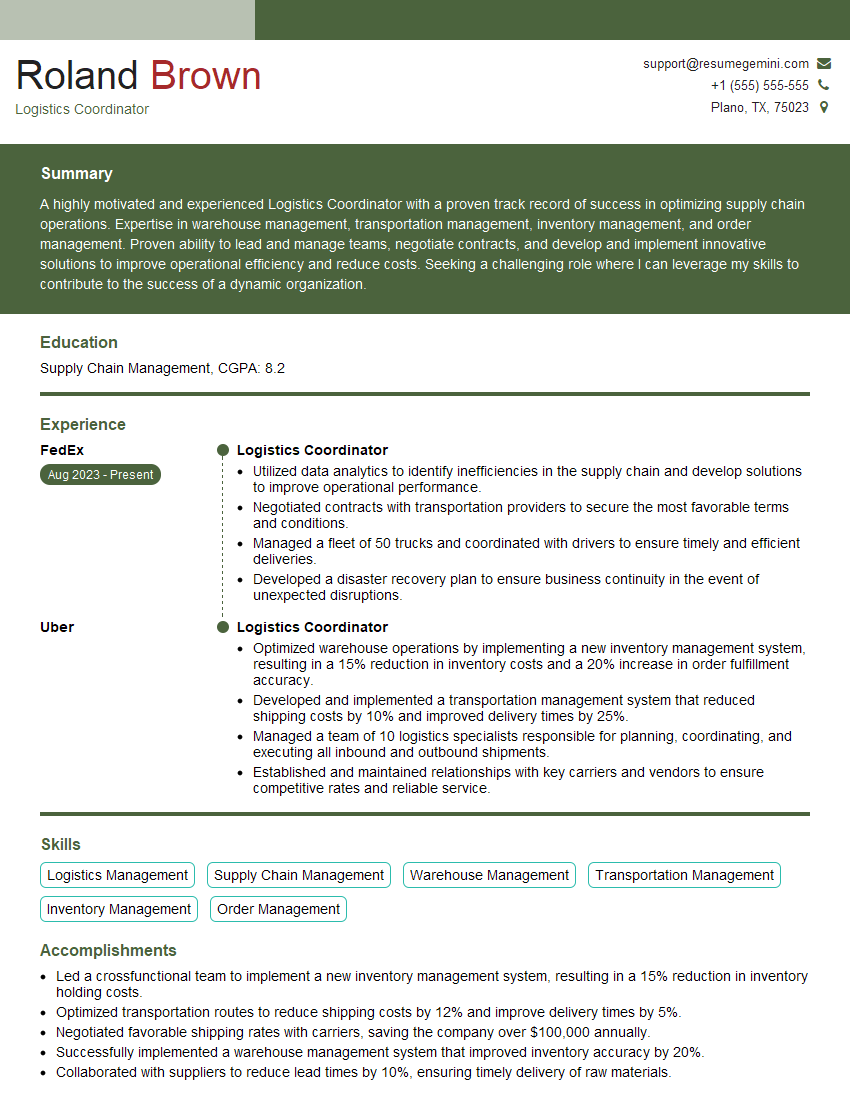
Logistics Coordinator Resume Sample

Order Filler Resume Sample

Freight Forwarder Resume Sample

Inventory Control Specialist Resume Sample

Shipping and Receiving Clerk Resume Sample
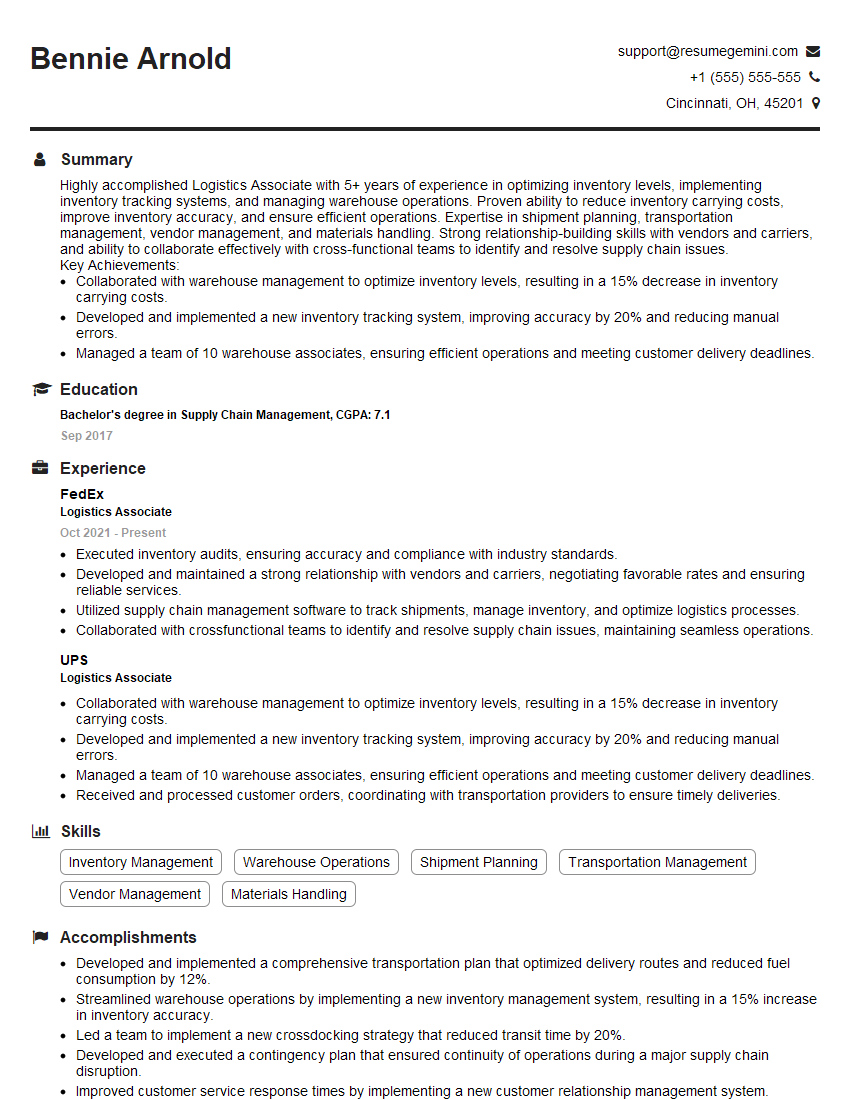
Logistics Associate Resume Sample
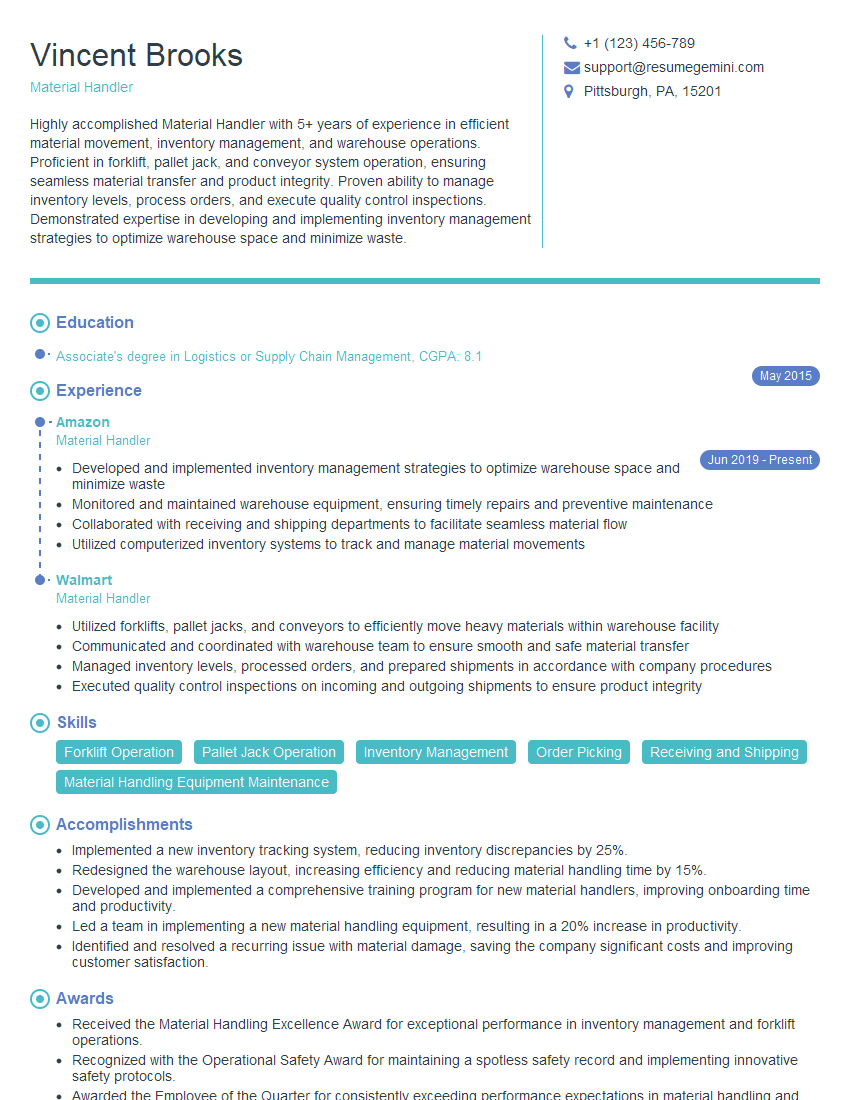
Material Handler Resume Sample
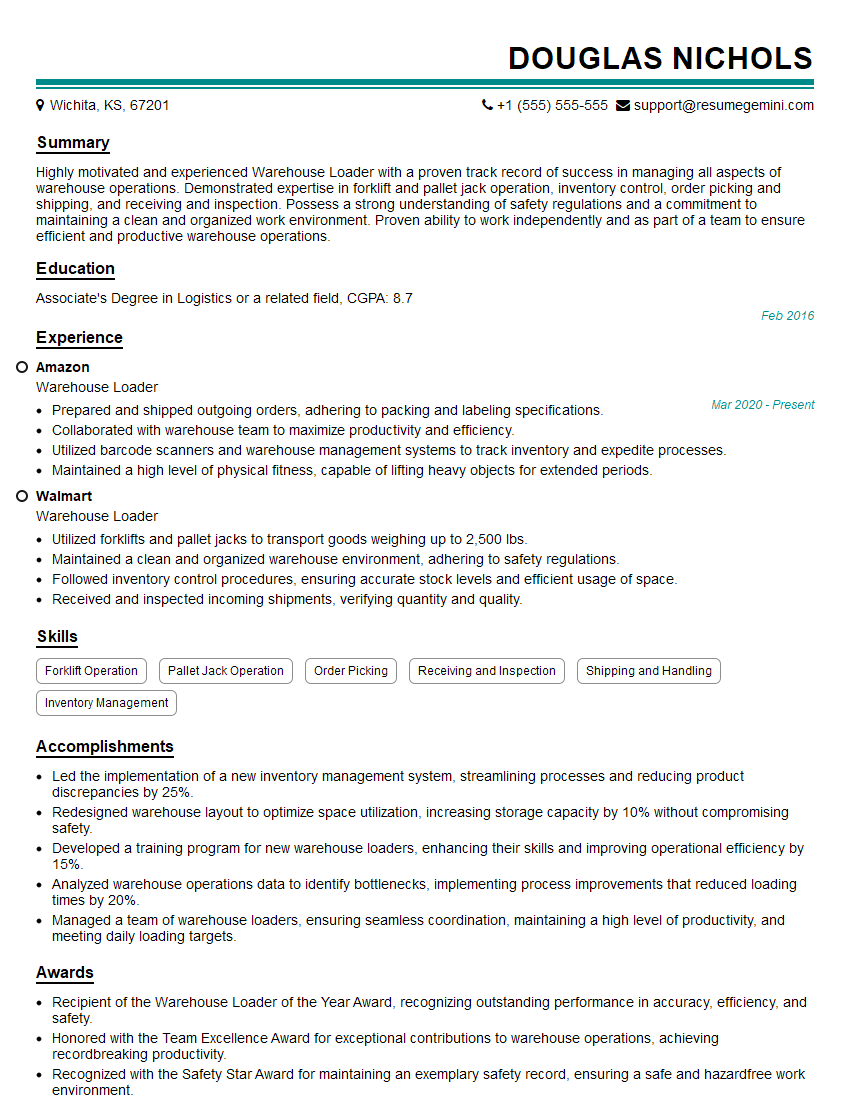
Warehouse Loader Resume Sample
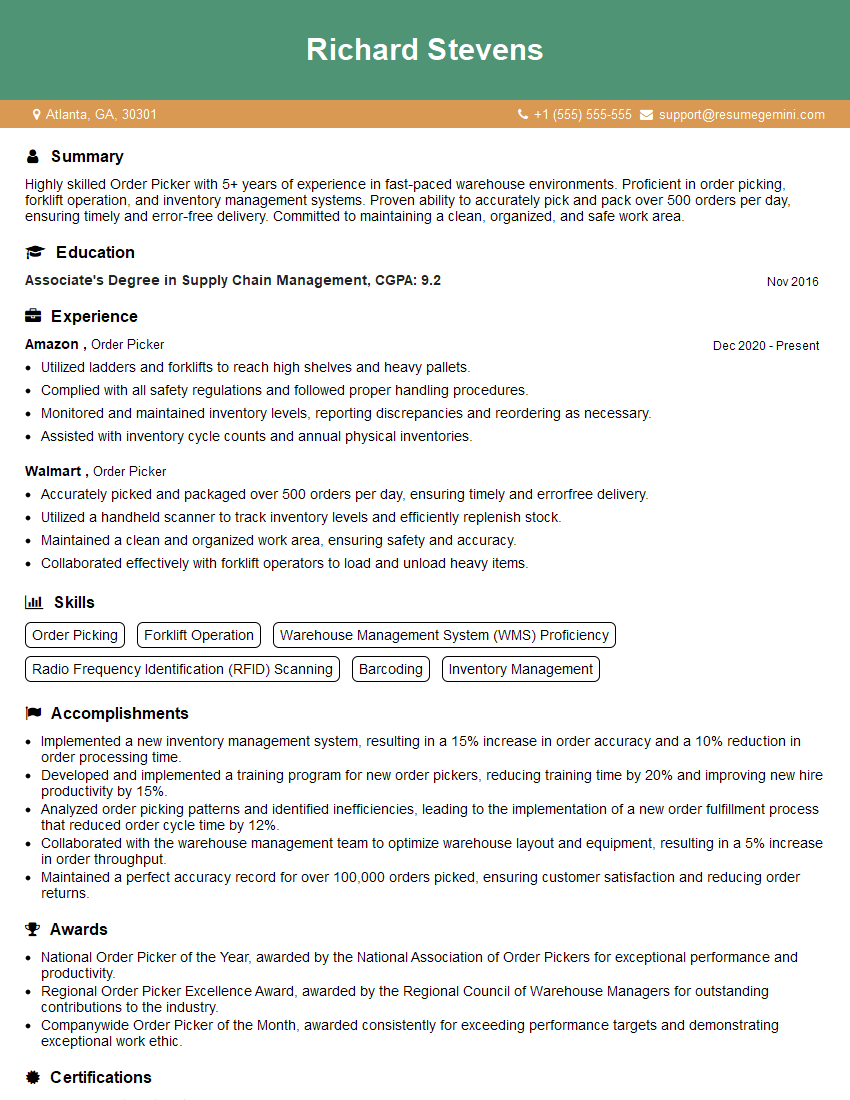
Order Picker Resume Sample
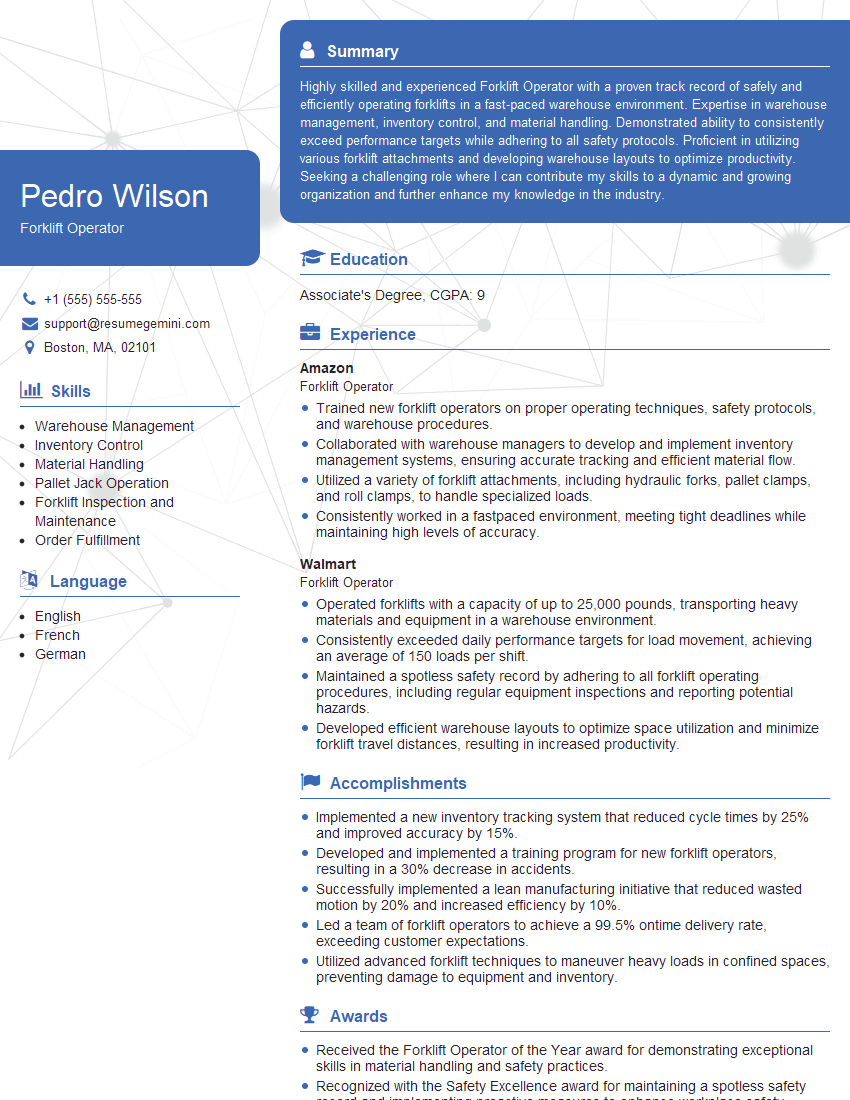
Forklift Operator Resume Sample
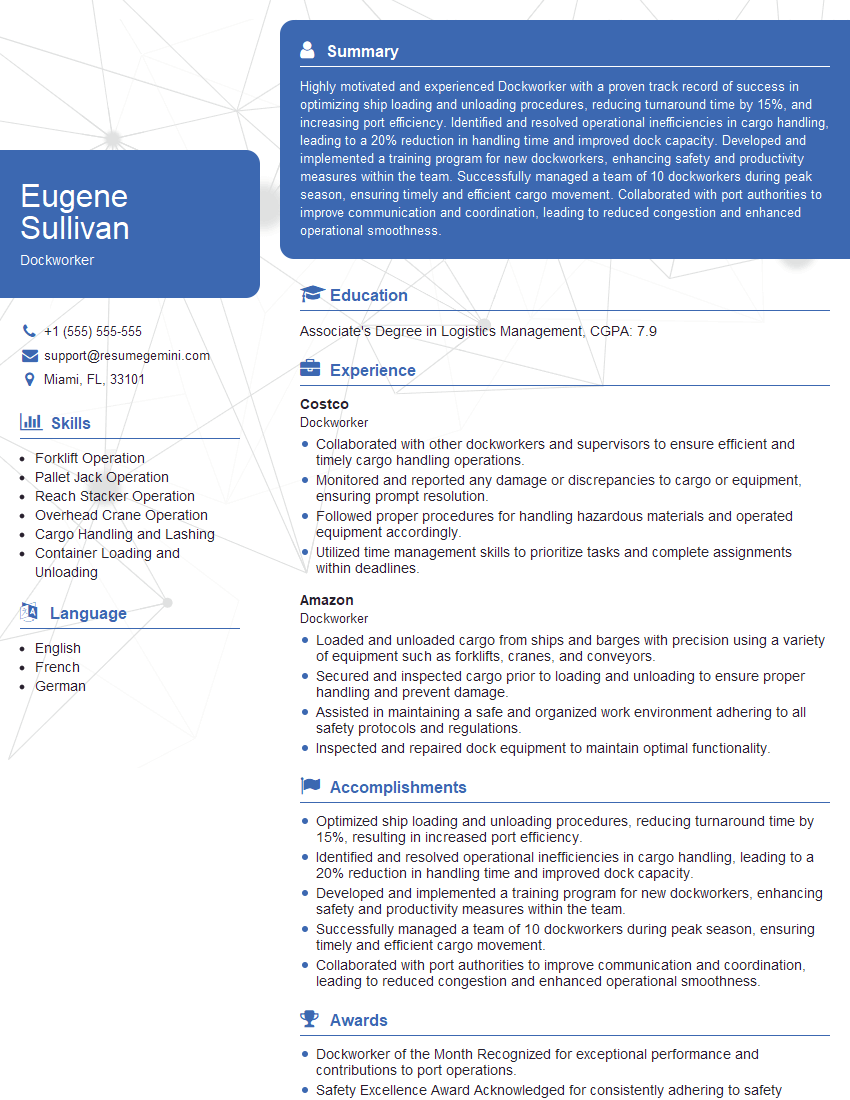
Dockworker Resume Sample
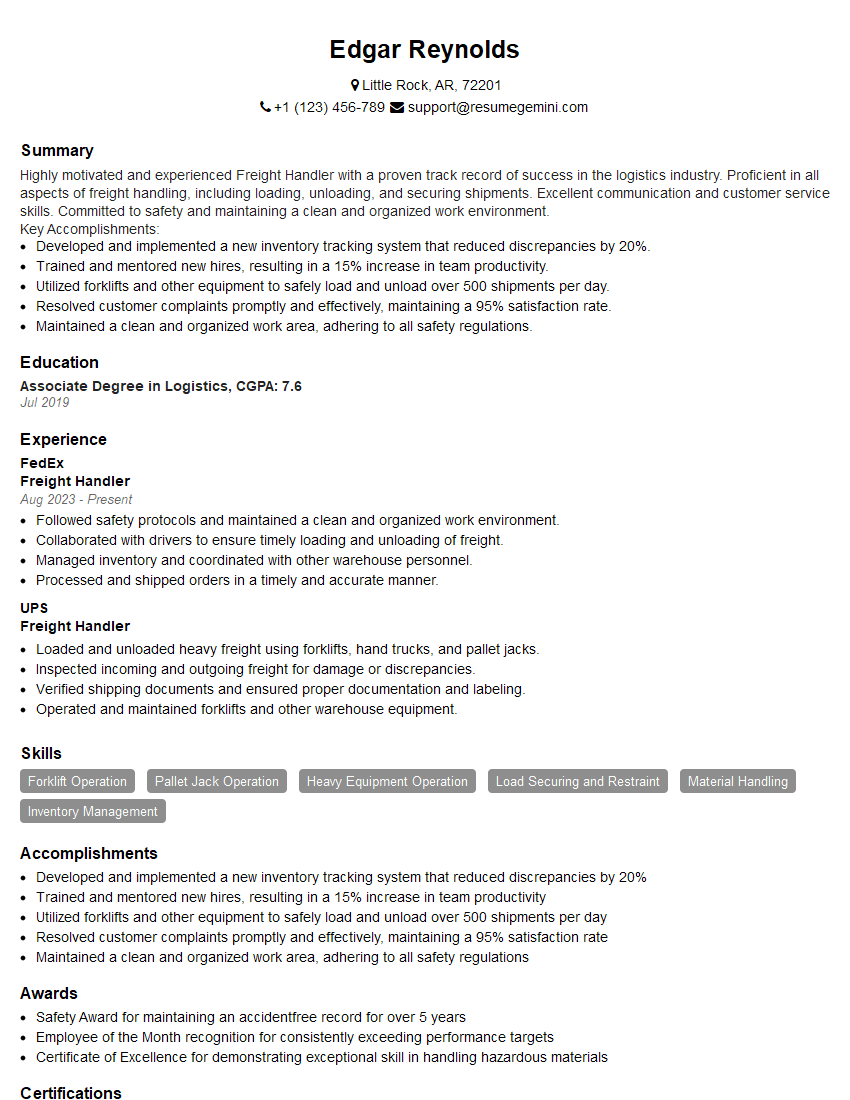
Freight Handler Resume Sample
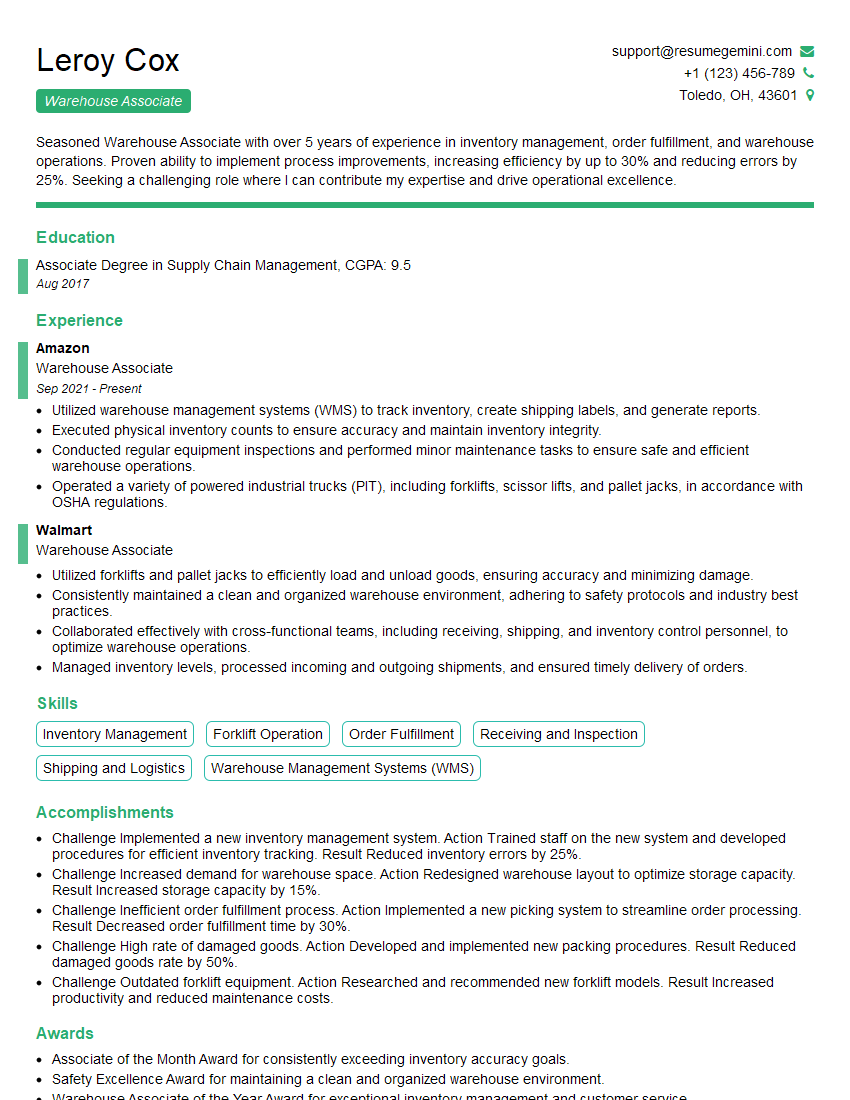
Warehouse Associate Resume Sample
Explore more articles
Users Rating of Our Blogs
Share Your Experience
We value your feedback! Please rate our content and share your thoughts (optional).
What Readers Say About Our Blog
Very informative content, great job.
good