Are you ready to stand out in your next interview? Understanding and preparing for Use of heavy equipment interview questions is a game-changer. In this blog, we’ve compiled key questions and expert advice to help you showcase your skills with confidence and precision. Let’s get started on your journey to acing the interview.
Questions Asked in Use of heavy equipment Interview
Q 1. Describe your experience operating an excavator.
My experience operating excavators spans over eight years, encompassing a wide range of projects from residential site preparation to large-scale infrastructure development. I’m proficient in operating both hydraulic and cable-operated excavators, mastering various attachment types like buckets, rippers, and hammers. I’ve worked with machines from several manufacturers, including Caterpillar, Komatsu, and John Deere, gaining expertise in their unique operating systems and maintenance requirements. For instance, on a recent highway project, I utilized a 336D excavator to precisely dig trenches for utility lines, maintaining accuracy within a few centimeters. My expertise extends to working in diverse terrains and environments, adhering strictly to safety protocols and maximizing efficiency throughout the operation.
A crucial part of my expertise is understanding the nuances of different excavation techniques. For example, I am adept at using the ‘swing-and-dig’ method for faster earthmoving in open areas, while carefully employing the ‘step-and-dig’ technique for precision work near structures or utilities, minimizing the risk of damage.
Q 2. Explain the different types of bulldozers and their applications.
Bulldozers are categorized primarily by their blade type and application. The most common types include:
- Crawler Bulldozers: These use continuous tracks for superior traction and stability, ideal for rough terrain and heavy pushing tasks. They’re often used in large-scale earthmoving projects, mining operations, and land clearing.
- Wheel Bulldozers: These use wheels for faster travel speeds and maneuverability on smoother surfaces. They are commonly seen in road construction, site preparation for building projects, and material spreading.
- Angle Dozers: These feature a blade that can be angled to the left or right, enhancing versatility for pushing, spreading, and sloping. They’re exceptionally useful in shaping terrain and creating embankments.
The choice of bulldozer depends heavily on the job requirements. For example, a crawler bulldozer is indispensable when pushing large quantities of soil or working on uneven ground, while a wheel bulldozer might be preferred for moving materials across paved surfaces where speed is prioritized. I’ve personally utilized all three types across a variety of projects, allowing me to adapt quickly and efficiently to changing demands.
Q 3. What safety procedures do you follow when operating heavy equipment?
Safety is paramount in heavy equipment operation. My safety procedures are rigorous and consistently applied. They encompass:
- Pre-Operational Checks: Thoroughly inspecting the machine for any mechanical issues, fluid levels, and ensuring all safety devices are functioning correctly.
- Personal Protective Equipment (PPE): Always wearing appropriate PPE including hard hats, safety glasses, hearing protection, and high-visibility clothing.
- Site Awareness: Maintaining constant awareness of the surroundings, including workers, other equipment, and potential hazards, keeping a safe distance and signaling appropriately.
- Safe Operating Practices: Adhering strictly to operating manuals, observing speed limits, never exceeding the machine’s lifting capacity, and avoiding risky maneuvers.
- Communication: Maintaining clear communication with other workers, using hand signals or radios when necessary, and ensuring everyone understands planned movements.
- Emergency Procedures: Knowing the location of emergency exits, shutdown procedures, and emergency contact information.
On one occasion, I noticed a crack on a colleague’s excavator’s boom during a pre-operational check. By reporting it immediately, we prevented a potentially serious accident. This emphasizes the critical importance of diligent safety checks.
Q 4. How do you perform pre-operational checks on heavy machinery?
Pre-operational checks are crucial for ensuring the safe and efficient operation of heavy machinery. My procedure typically includes:
- Visual Inspection: Checking for any visible damage, leaks, or loose components on the entire machine, including tracks, tires, and attachments.
- Fluid Levels: Verifying the levels of engine oil, hydraulic fluid, coolant, and fuel, ensuring they are within the acceptable ranges.
- Safety Systems: Testing the functionality of all safety systems, including brakes, lights, horns, seatbelts, and emergency shut-off switches.
- Tire Pressure (for wheeled equipment): Checking tire pressure to ensure optimal performance and stability.
- Operational Test: Performing a brief operational test to check the responsiveness of controls, hydraulic functions, and the overall performance of the machine.
I document all checks using pre-printed checklists, providing a clear record of maintenance and mitigating any potential liability. This systematic approach helps prevent downtime and ensures safe operation. Think of it like a pilot’s pre-flight checklist – crucial for success and safety.
Q 5. What are the common causes of heavy equipment malfunctions?
Heavy equipment malfunctions can stem from various causes, often preventable through diligent maintenance and safe operation. Common causes include:
- Hydraulic System Issues: Leaks, worn seals, contaminated fluid, or faulty pumps can lead to reduced performance or complete failure.
- Engine Problems: Worn components, fuel system issues, inadequate lubrication, or overheating can lead to engine malfunction.
- Electrical Faults: Wiring problems, short circuits, or faulty sensors can disrupt the machine’s electrical system.
- Wear and Tear: Normal wear and tear of components, particularly in high-use machines, can result in reduced performance and eventual failure.
- Operator Error: Incorrect operation or overloading the machine can cause damage and malfunctions.
Understanding these potential issues allows for proactive maintenance, preventing costly downtime and potential safety hazards. Regular maintenance, proper operation, and operator training are key to mitigating these issues.
Q 6. How do you handle unexpected equipment failures on a job site?
Unexpected equipment failures require immediate and decisive action, prioritizing safety and minimizing downtime. My approach involves:
- Immediate Shutdown: Safely shutting down the equipment according to established procedures.
- Safety Assessment: Assessing the situation for any immediate safety hazards to personnel or the environment.
- Reporting: Reporting the failure to the supervisor and relevant personnel, providing a detailed description of the incident and any potential causes.
- Troubleshooting (if safe and within capabilities): Attempting basic troubleshooting if it is deemed safe to do so. Otherwise, avoid any further attempts at repair.
- Secure the Site: Ensuring the area around the failed equipment is secure and appropriately cordoned off to prevent accidental injury.
- Await Maintenance: Waiting for qualified maintenance personnel to arrive to diagnose and repair the issue.
In one instance, a hydraulic hose ruptured on an excavator during operation. By immediately shutting down the machine, reporting the incident, and securing the area, we prevented any further damage or injuries, illustrating the efficacy of rapid response and clear communication.
Q 7. Describe your experience with GPS-guided heavy equipment.
I have extensive experience using GPS-guided heavy equipment, primarily on large-scale earthmoving and grading projects. This technology significantly enhances accuracy and efficiency. Systems like Topcon and Trimble allow for precise control of the machine, enabling automated grading, digging, and other tasks. The GPS system provides real-time position data and guidance, allowing operators to maintain accuracy within millimeters, minimizing rework and material waste.
For example, during a recent project involving the creation of large retention ponds, the GPS-guided excavator was instrumental in achieving the precise depth and contours required. This eliminated the need for manual surveys and adjustments, greatly accelerating the project timeline and resulting in significant cost savings. Furthermore, the improved accuracy minimized the environmental impact by reducing the amount of excess excavation needed.
Q 8. Explain your understanding of load capacity and weight distribution.
Load capacity refers to the maximum weight a piece of heavy equipment can safely lift or carry. Weight distribution is how that load is balanced across the equipment’s structure. Understanding both is critical for safe operation. Think of it like balancing a seesaw: if you overload one side (exceeding load capacity) or distribute the weight unevenly, the whole thing tips over. For instance, a crane has a specific load chart detailing the maximum weight it can lift at different boom angles and radii. Exceeding this limit, regardless of weight distribution, risks catastrophic failure. Uneven weight distribution, even within the load capacity, can cause instability and tipping, especially on slopes or uneven ground. Therefore, operators must always consult load charts and distribute weight carefully to maintain stability and prevent accidents.
Q 9. How do you ensure the stability of heavy equipment on uneven terrain?
Ensuring stability on uneven terrain requires a multi-pronged approach. First, a thorough site assessment is necessary to identify potential hazards like soft ground, slopes, and obstacles. Next, careful positioning of the equipment is crucial – using outriggers (for cranes and excavators) to distribute weight across a wider base significantly improves stability on uneven surfaces. Choosing the right gear is also key – some equipment like articulated dump trucks are specifically designed for rough terrain, offering better maneuverability and stability. Operating at slower speeds and making smoother movements prevents sudden shifts in weight that could upset balance. Finally, experience plays a significant role. A seasoned operator can intuitively judge ground conditions and adjust their technique accordingly to maximize stability. Imagine driving a car on a bumpy road – you’d slow down and avoid sudden turns; the same principle applies to heavy equipment operation.
Q 10. What are the different types of crane operations and their safety considerations?
Crane operations are diverse, including:
- Overhead Cranes: Used in factories and warehouses for lifting and moving materials. Safety requires regular inspections of the crane structure, hoisting mechanism, and load-bearing capacity. Proper signaling and communication between crane operator and ground crew is vital to prevent accidents.
- Mobile Cranes: These are highly versatile, used in construction and infrastructure projects. Safety demands stringent attention to load charts, outrigger deployment on uneven terrain, and awareness of surrounding hazards. Wind speed and direction are critical factors affecting stability.
- Tower Cranes: Employed on large construction sites, they offer a high reach. Safety procedures involve regular inspections, robust anchoring, and strict adherence to load limits. Proper assembly and disassembly processes are paramount.
Regardless of the type, fundamental safety considerations include pre-operational checks, regular maintenance, load capacity awareness, adherence to load charts, and proper signaling procedures. Never exceed the rated load capacity, and always be mindful of the surrounding environment and potential hazards.
Q 11. How do you maintain accurate records of equipment usage and maintenance?
Accurate equipment records are essential for safety, maintenance, and cost control. Many companies utilize computerized maintenance management systems (CMMS) to track operational hours, maintenance schedules, repairs, fuel consumption, and other critical data. Manually, detailed logbooks or spreadsheets can be used, recording each operation, the duration, the materials handled, any issues encountered, and the subsequent maintenance performed. For maintenance, a checklist approach ensures all necessary checks are carried out regularly. This systematic record-keeping enables proactive maintenance, preventing costly breakdowns, and extends the life of the equipment. Furthermore, these records provide crucial data for analyzing operational efficiency, identifying potential issues, and supporting insurance claims if needed. This meticulous approach ensures that all aspects of equipment management are transparent and easily auditable.
Q 12. Describe your experience with different types of hydraulic systems.
I have extensive experience with various hydraulic systems, including those used in excavators, loaders, and cranes. These systems typically involve hydraulic pumps, valves, actuators (cylinders), and hoses. I’m familiar with open-center and closed-center systems, understanding their advantages and disadvantages in different applications. Open-center systems are simpler but less energy-efficient, while closed-center systems offer better control and responsiveness. I’ve worked with various types of hydraulic fluids, understanding their properties and maintenance requirements. Troubleshooting hydraulic system problems is a critical skill I possess, encompassing leak detection, pressure testing, and component replacement. I’m also knowledgeable about safety protocols related to handling high-pressure hydraulic systems, emphasizing proper safety procedures for preventing injuries due to high-pressure fluid.
Q 13. How do you handle challenging weather conditions while operating heavy equipment?
Operating heavy equipment in challenging weather conditions requires extra caution and adaptability. Heavy rain reduces visibility and can make ground unstable, requiring significantly slower speeds and increased attention to traction. Strong winds can affect the stability of taller equipment, potentially causing tipping, necessitating modifications to operational procedures or even suspension of work depending on severity. Snow and ice drastically reduce traction, necessitating careful maneuverability and potentially the use of special equipment or tire chains. Extreme temperatures can affect both the equipment and operator. Extreme cold can cause hydraulic fluid to thicken, while extreme heat can lead to overheating. These conditions necessitate thorough pre-operation checks, awareness of the weather forecast, and adherence to safety protocols, including implementing contingency plans for unexpected situations.
Q 14. What are the different types of soil and how do they affect equipment operation?
Different soil types significantly impact equipment operation. For instance:
- Clay soil: Can be very sticky when wet, leading to reduced traction and increased tire wear. When dry, it can be very hard, requiring heavier equipment and possibly specialized tools for excavation.
- Sandy soil: Generally provides good drainage but can be unstable, prone to collapse and sinkholes, particularly when wet. Equipment selection needs to account for the risk of getting bogged down.
- Rocky soil: Requires robust equipment with high ground clearance and durable components to prevent damage from rocks and obstructions. Specialized attachments may be required for efficient excavation.
- Silty soil: Similar to sandy soil but with finer particles. It can be susceptible to erosion, and machinery operation needs to consider preventing soil displacement.
Understanding these characteristics allows for selection of appropriate equipment, appropriate operating techniques, and adjustments to speed and load to maintain both productivity and safety. For example, operating an excavator in clay soil requires more power and careful control than in sandy soil to avoid ground collapse.
Q 15. Explain your understanding of the different types of attachments used with excavators.
Excavators are incredibly versatile machines, and their functionality is greatly expanded through the use of various attachments. Think of them as interchangeable tools that allow the excavator to perform a wide range of tasks beyond basic digging. These attachments are typically attached to the excavator’s arm or boom via a quick-coupling system, allowing for rapid changes between jobs.
Buckets: These are the most common attachment, coming in various sizes and designs. For instance, a narrow ditching bucket is ideal for precise trenching, while a wide, heavy-duty bucket is better suited for moving large volumes of earth. There are also specialized buckets like rock buckets (with reinforced teeth), demolition buckets (for breaking up materials), and clean-up buckets (for finishing work).
Hydraulic Breakers (Demolition Hammers): These powerful attachments use hydraulic force to break up concrete, rock, and other tough materials. They’re essential in demolition projects and road construction.
Hydraulic Thumbs: These act like a second claw, providing exceptional grip and control, especially helpful when handling irregularly shaped materials or placing objects with precision. Imagine using it to carefully pick up a large pipe or a stone without damaging it.
Grapples: Grapples are used to handle logs, scrap metal, or other bulky materials. They have multiple claws which clamp down on the object, providing a secure hold. Different grapples are designed for specific material types.
Augers: These are drilling attachments used to bore holes in the ground, often used for foundation work, planting posts, or installing utilities.
Rakes: Used for leveling and grading work, these attachments are especially important for landscaping and creating smooth surfaces.
Choosing the right attachment depends entirely on the specific job requirements. On a recent project, we used a combination of a heavy-duty bucket for initial excavation, a hydraulic breaker to demolish an old concrete slab, and a clean-up bucket for the final grading.
Career Expert Tips:
- Ace those interviews! Prepare effectively by reviewing the Top 50 Most Common Interview Questions on ResumeGemini.
- Navigate your job search with confidence! Explore a wide range of Career Tips on ResumeGemini. Learn about common challenges and recommendations to overcome them.
- Craft the perfect resume! Master the Art of Resume Writing with ResumeGemini’s guide. Showcase your unique qualifications and achievements effectively.
- Don’t miss out on holiday savings! Build your dream resume with ResumeGemini’s ATS optimized templates.
Q 16. How do you communicate effectively with other workers on a job site?
Effective communication on a job site is crucial for safety and productivity. It’s more than just shouting instructions across the site; it requires clear, concise, and consistent methods.
Pre-Job Briefings: Before starting any task, a team briefing ensures everyone understands the plan, potential hazards, and assigned roles. This is where we establish hand signals and communication protocols.
Visual Cues and Hand Signals: In noisy environments, hand signals become invaluable for communicating direction, stopping, or warning of potential danger. We adhere to standardized hand signals to avoid miscommunication.
Two-Way Radios: These are essential for communicating across larger sites or when visibility is limited. Clear and concise radio communication is vital for safety and efficiency. We use radio codes for common messages to avoid unnecessary chatter.
Written Communication: For complex instructions, detailed plans, or safety procedures, written instructions supplement verbal communication.
Respectful and Professional Demeanor: A positive and collaborative attitude fosters better communication and teamwork. Addressing colleagues by name and listening actively to their concerns is vital.
For instance, during a recent pipeline project, clear radio communication between the excavator operator, the spotter, and the pipeline installers prevented a potential accident by promptly alerting everyone to an unexpected underground obstruction.
Q 17. Describe your experience with preventative maintenance on heavy equipment.
Preventative maintenance is the cornerstone of keeping heavy equipment operational and safe. It involves regularly scheduled checks and servicing to identify and address potential problems before they escalate into major breakdowns or safety hazards. Think of it as a regular health checkup for your machine.
Daily Inspections: This is the first line of defense. Each day before operation, I inspect fluid levels (hydraulic oil, engine oil, coolant), tire pressure, belts, hoses, and any visible damage. I document all findings in a logbook.
Scheduled Maintenance: This involves more extensive checks and servicing based on the manufacturer’s recommendations and operating hours. This could include oil changes, filter replacements, greasing components, and inspections of more complex systems.
Component Replacements: Wear and tear are inevitable. Predictive maintenance helps us anticipate when components might fail and schedule their replacement proactively. Replacing parts before failure prevents major damage.
For example, I recently noticed a slight leak in a hydraulic hose during a daily inspection. Replacing that hose proactively prevented a potentially significant hydraulic failure that could have resulted in costly downtime and safety risks.
Q 18. What is your experience with troubleshooting hydraulic leaks?
Troubleshooting hydraulic leaks requires a systematic approach, combining knowledge of hydraulic systems and careful observation. Hydraulic leaks can be dangerous, so safety is paramount.
Identify the Leak: Pinpoint the exact location of the leak. Is it from a hose, fitting, cylinder, or pump?
Assess the Severity: Is it a slow drip, a steady stream, or a major gush? The severity determines the urgency of repair.
Check Fluid Levels: Monitor the hydraulic fluid reservoir level to assess the extent of the leak. Low levels indicate a significant leak requiring immediate attention.
Inspect Hoses and Fittings: Look for cracks, abrasions, or loose connections. Tighten any loose fittings carefully; replace damaged hoses.
Check Cylinders and Seals: Inspect cylinder rods and seals for damage. Seals are often the source of hydraulic leaks.
Pressure Test: In some cases, a pressure test may be necessary to identify leaks that aren’t easily visible.
I once encountered a significant leak in the hydraulic system of a large excavator. By carefully following this procedure, we isolated the leak to a damaged hose near the boom cylinder, enabling a quick and safe repair.
Q 19. How do you ensure the safety of yourself and others while operating heavy equipment?
Safety is my top priority, both for myself and others on the job site. Operating heavy equipment carries inherent risks, and a proactive approach to safety is essential.
Pre-Operational Checks: Always perform thorough pre-operational checks, including inspecting the equipment for any mechanical issues or damage.
Site Awareness: Before starting any work, I carefully assess the job site for potential hazards – overhead power lines, underground utilities, uneven terrain, and the presence of other workers.
Safe Operating Procedures: I always adhere to strict operating procedures and manufacturer’s guidelines. This includes maintaining a safe speed, avoiding sharp turns, and ensuring the load is within the machine’s capacity.
Communication: Maintain clear and consistent communication with other workers, using hand signals, radios, and other methods to ensure everyone is aware of the machine’s movements.
Personal Protective Equipment (PPE): Always wear appropriate PPE, including hard hats, safety glasses, hearing protection, and high-visibility clothing.
Emergency Procedures: Familiarize myself with emergency procedures in case of accidents or equipment malfunctions.
One time, a careless worker almost walked into the swing radius of the excavator. My constant site awareness and clear communication prevented a serious accident. Safety is not just a set of rules, it’s a mindset.
Q 20. Explain your understanding of operating permits and regulations.
Operating heavy equipment requires adherence to various permits and regulations, which vary depending on location and the type of work being performed. Ignoring these can lead to hefty fines and legal consequences.
Operating Licenses and Certifications: I hold all necessary licenses and certifications to operate the specific types of heavy equipment I use. These demonstrate my competency and adherence to safety standards.
Work Permits: Before starting any project, we often need work permits from local authorities. These permits ensure the work complies with all regulations and environmental standards.
Site-Specific Regulations: Each job site might have specific safety regulations and procedures that must be followed. These are typically detailed in site-specific safety plans.
Environmental Regulations: Many projects are subject to environmental regulations regarding soil disturbance, waste disposal, and noise pollution. We need to comply with relevant environmental protection acts.
Traffic Control and Signage: When working near roads or public areas, we need to follow regulations for traffic control and signage to ensure public safety.
On a recent project, obtaining the necessary permits and adhering to local environmental regulations was crucial for the timely and legal completion of the project. Ignoring these regulations could have resulted in significant delays and penalties.
Q 21. What are the different types of rollers and their applications?
Rollers are essential compaction equipment used to compress soil, asphalt, or other materials to create a stable and even surface. Different types of rollers are designed for specific applications.
Smooth Drum Rollers: These rollers have smooth drums and are ideal for compacting asphalt pavements and other smooth surfaces. They provide uniform compaction and a good finish.
Pneumatic Rollers: These rollers have several large tires filled with air. The pneumatic tires provide excellent compaction of granular materials like gravel and base layers for roads. They’re also good for less stable ground conditions.
Vibratory Rollers: These rollers incorporate internal vibratory mechanisms that significantly increase compaction efficiency. Vibratory rollers are used for compacting a wide range of materials, including soil, gravel, and asphalt.
Combination Rollers: These combine features of smooth drum and vibratory rollers, offering versatility for various compaction needs. They can be used on different materials and for multiple layers.
For instance, on a recent road construction project, we used smooth drum rollers for the asphalt top layer and pneumatic rollers for compacting the gravel base layer to ensure a durable and even road surface. The selection of rollers depends heavily on the material being compacted and the required compaction level.
Q 22. Describe your experience operating a loader.
My experience operating loaders spans over eight years, encompassing various models from Caterpillar, John Deere, and Komatsu. I’m proficient in both wheel loaders and backhoe loaders, adept at tasks like loading trucks, excavating, and material handling. For instance, on a recent project involving a large-scale earthmoving operation, I efficiently used a Caterpillar 950 wheel loader to load over 200 dump trucks with topsoil in under a week, exceeding the project’s timeline expectations. My expertise extends to understanding the nuances of different bucket types and attachments, optimizing their use based on material characteristics and job requirements. I’m also skilled in pre-operation checks, ensuring the loader’s operational safety and efficiency.
Q 23. How do you handle emergency situations involving heavy equipment?
Handling emergencies with heavy equipment requires a calm and methodical approach. My first priority is always safety – securing the immediate area and ensuring no personnel are at risk. This involves shutting down the equipment correctly and using appropriate warning signals. Following safety protocols, I then assess the situation: Is it a mechanical failure, a near-miss incident, or something else? Depending on the nature of the emergency, I might perform basic troubleshooting (if I’m trained and equipped to do so), contact maintenance personnel, or call emergency services as necessary. For example, during a hydraulic line failure on a backhoe loader, I immediately shut down the machine, secured the area with warning cones, and radioed for maintenance support, preventing further damage or injury. Proper documentation of the incident is crucial for future preventative measures.
Q 24. Describe your experience with different types of grading techniques.
My experience with grading techniques includes various methods, such as fine grading, rough grading, and finish grading. I’m familiar with different grading tools and their applications, including motor graders and bulldozers. I’ve worked on projects requiring precise grading for roads, building foundations, and landscaping. One project involved creating a perfectly level foundation for a large warehouse using a motor grader. The process involved multiple passes, ensuring consistent elevation and slope. This required careful use of the blade and close attention to the grade stakes and laser levels to achieve the desired outcome. Understanding soil types and their behavior is crucial for effective grading; different soils need different approaches. I also have experience with GPS-guided grading systems, which improve accuracy and efficiency.
Q 25. What is your understanding of ground compaction techniques?
Ground compaction is essential for ensuring stability and preventing settlement in construction. I understand various compaction techniques, including using vibratory rollers, static rollers, and pneumatic rollers. The choice of method depends on the soil type, required density, and project specifications. For example, on a highway construction project, we used vibratory rollers for base course compaction to achieve the required density for supporting heavy traffic loads. I’m also familiar with the use of plate compactors for smaller areas and understand the importance of proper overlap and passes to ensure uniform compaction. Monitoring compaction using density tests is crucial to guarantee the structural integrity of the ground.
Q 26. How do you ensure efficient fuel consumption while operating heavy equipment?
Efficient fuel consumption is crucial for cost savings and environmental responsibility. My approach involves several strategies: Firstly, I perform regular pre-operation checks to ensure optimal engine performance. Secondly, I avoid aggressive acceleration and braking, opting for smooth and controlled movements. Thirdly, I select the appropriate gear for the load and terrain to maximize fuel efficiency. Lastly, I properly maintain the equipment, ensuring the engine is tuned and filters are clean. For example, when operating a bulldozer in a relatively flat area, I utilize lower gears and avoid unnecessary idling to minimize fuel wastage. Proper planning and efficient operation significantly impact fuel consumption.
Q 27. Describe your experience working with different types of materials (e.g., rock, soil, concrete).
I have extensive experience working with diverse materials. My work has included excavating rock formations using excavators equipped with rock breakers, handling different soil types (clay, sand, silt) with loaders and dozers, and working with concrete using specialized equipment. Each material requires a different approach and tool selection. For example, while excavating a rocky area, the correct choice of rock breaker and the appropriate excavator size is essential for efficiency and safety. Similarly, handling clay requires a different technique than handling sandy soil to prevent machine damage and ensure optimum performance. Understanding the material properties helps in choosing the right equipment and techniques to improve the efficiency of any project.
Q 28. What are your salary expectations for this position?
My salary expectations are in the range of $70,000 to $85,000 per year, depending on the benefits package and the specific responsibilities of the position. This is based on my experience, skills, and the prevailing market rates for experienced heavy equipment operators in this region.
Key Topics to Learn for Use of Heavy Equipment Interview
- Equipment Operation & Maintenance: Understanding the mechanics, controls, and preventative maintenance procedures for various heavy equipment types (e.g., excavators, loaders, bulldozers, cranes).
- Safety Procedures & Regulations: Demonstrating knowledge of OSHA regulations, site safety protocols, pre-operational checks, and emergency procedures.
- Practical Application: Describing real-world scenarios where you’ve utilized heavy equipment, highlighting problem-solving skills, efficient operation, and adherence to safety standards.
- Site Assessment & Planning: Explaining how you assess a worksite, plan operations, and adjust techniques based on terrain, weather conditions, and project requirements.
- Troubleshooting & Repair: Demonstrating the ability to identify and diagnose common mechanical issues, perform minor repairs, and understand when to call for professional assistance.
- Load Capacity & Stability: Understanding weight limits, center of gravity, and safe lifting and operating techniques to prevent accidents.
- Communication & Teamwork: Highlighting your ability to effectively communicate with supervisors, colleagues, and other personnel on-site.
- Technological Advancements: Demonstrating awareness of GPS technology, automated systems, and other advancements in heavy equipment operation.
Next Steps
Mastering the use of heavy equipment opens doors to rewarding and high-demand careers in construction, mining, and infrastructure development. A strong understanding of these skills is crucial for career growth and advancement. To significantly increase your job prospects, create a compelling and ATS-friendly resume that showcases your abilities effectively. ResumeGemini is a trusted resource to help you build a professional resume that gets noticed. We provide examples of resumes tailored to the use of heavy equipment to guide you through the process. Take the next step towards your dream career today!

Crane Operator Resume Sample
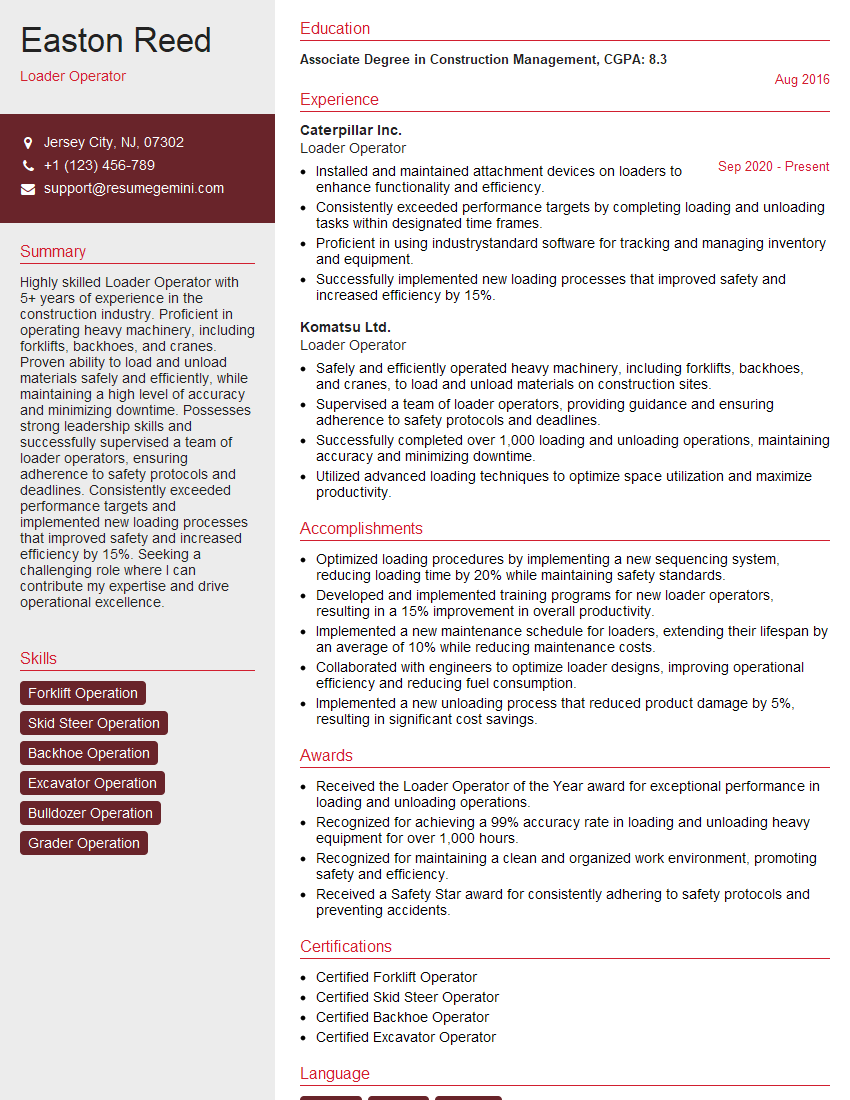
Loader Operator Resume Sample

Heavy Equipment Operator Resume Sample

Roller Operator Resume Sample

Backhoe Operator Resume Sample

Bulldozer Operator Resume Sample

Excavator Operator Resume Sample

Forklift Operator Resume Sample

Grader Operator Resume Sample
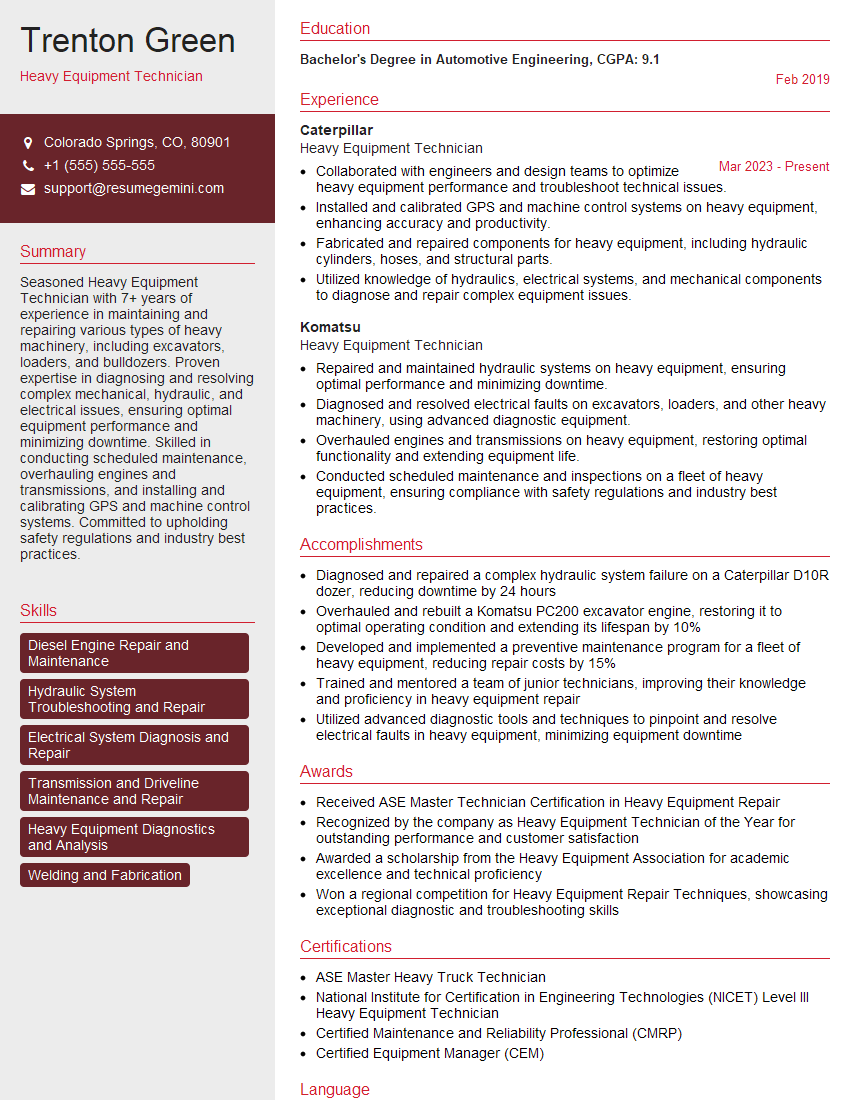
Heavy Equipment Technician Resume Sample

Construction Equipment Mechanic Resume Sample

Heavy Equipment Mechanic Resume Sample
Explore more articles
Users Rating of Our Blogs
Share Your Experience
We value your feedback! Please rate our content and share your thoughts (optional).
What Readers Say About Our Blog
Very informative content, great job.
good