Preparation is the key to success in any interview. In this post, we’ll explore crucial Using a Chainsaw interview questions and equip you with strategies to craft impactful answers. Whether you’re a beginner or a pro, these tips will elevate your preparation.
Questions Asked in Using a Chainsaw Interview
Q 1. What safety precautions must be taken before operating a chainsaw?
Safety is paramount when operating a chainsaw. Before even starting the engine, you need a comprehensive pre-operation check. This involves ensuring you’re wearing the correct personal protective equipment (PPE), including safety glasses or a face shield, hearing protection, chainsaw chaps (leg protection), sturdy work boots with steel toes, and gloves.
- Inspect the area: Clear the work area of any obstacles, such as debris, rocks, or other people. Think of a 360-degree radius around where you’ll be working. Imagine a basketball court; you don’t want anyone on it while you are making shots!
- Check the chainsaw: Make sure the chain brake is engaged, the chain is properly tensioned and lubricated, and the air filter is clean. A dull chain increases kickback risk significantly.
- Plan your cuts: Before you begin cutting, carefully plan your cuts, considering the direction the tree will fall. Assess escape routes in case of unexpected events.
- Weather conditions: Avoid operating a chainsaw in wet or stormy weather, as this significantly increases the risk of electric shock (if near powerlines) or slips and falls.
Failing to follow these steps can lead to serious injury or even death. I once saw a colleague seriously injure his leg because he wasn’t wearing chainsaw chaps – it was a stark reminder of the importance of consistent safety practices.
Q 2. Describe the different types of chainsaws and their applications.
Chainsaws come in various types, each suited to specific tasks. The most common categories are:
- Top-Handle Chainsaws: These smaller, lighter saws are ideal for pruning, limbing, and working in tight spaces. Think trimming branches high up in a tree.
- Rear-Handle Chainsaws: These are larger, more powerful saws designed for felling trees and bucking (cutting logs into smaller pieces). The classic image of a chainsaw is often a rear-handle model.
- Farm/Ranch Chainsaws: These are a blend of the previous two, offering a balance of power and maneuverability. Useful for a mix of tasks on a farm or ranch.
- Battery-Powered Chainsaws: Becoming increasingly popular, these are quieter and cleaner than gas-powered saws, making them suitable for residential use and areas sensitive to noise pollution. However, power can be limited for larger tasks.
Choosing the right chainsaw depends entirely on the job. Trying to fell a large tree with a top-handle saw would be incredibly dangerous and inefficient.
Q 3. Explain the proper technique for felling a tree.
Felling a tree safely requires meticulous planning and execution. Here’s a step-by-step approach:
- Assess the tree and the surrounding area: Check for any obstacles or hazards that could affect the tree’s fall.
- Determine the felling direction: Choose a felling direction that considers the tree’s lean, the wind direction, and the surrounding terrain. Avoid felling towards any obstacles such as powerlines, buildings, or other trees.
- Make the notch cut: This creates a hinge that guides the tree’s fall. It involves a horizontal cut (facing cut) followed by a vertical cut (back cut), leaving a hinge of wood.
- Make the back cut: This cut is made on the opposite side of the notch, several inches above the notch’s base. Avoid cutting all the way through the hinge.
- Felling wedges: If necessary, use felling wedges to help control the tree’s fall and prevent binding. Wedges are particularly useful for trees leaning away from the felling direction.
- Ensure escape route: Before making the back cut, ensure you have a clear escape route, at a 45-degree angle from the felling direction. Run away from the falling tree as soon as the cut is complete.
Remember, felling a tree is a complex operation. If you’re unsure about any aspect, it’s best to consult with a professional arborist.
Q 4. How do you assess tree risk before cutting?
Assessing tree risk involves a combination of visual inspection and understanding of potential hazards. Factors to consider include:
- Tree species and health: Some species are inherently more prone to failure than others. Look for signs of disease, decay, or insect infestation (like holes in the trunk).
- Lean and structural defects: A tree leaning significantly or exhibiting cracks, cavities, or broken branches poses a higher risk.
- Surrounding environment: Proximity to power lines, buildings, or other trees increases the risk. A tree falling onto a power line could cause serious damage or injury.
- Weather conditions: High winds, heavy snow, or ice storms can significantly weaken trees and increase the risk of failure.
- Root system: Exposed or damaged roots can make a tree more susceptible to falling.
If there’s any doubt about the safety of a tree, it’s always best to err on the side of caution and consult a professional arborist for assessment and removal. The cost of a professional assessment is much less than the potential cost of an accident.
Q 5. What are the signs of a dull chainsaw chain?
A dull chainsaw chain shows several telltale signs:
- Reduced cutting speed and power: The saw requires more effort to cut through wood, and the cutting process becomes slower and less efficient.
- Increased vibration: A dull chain will cause the saw to vibrate more intensely, making it uncomfortable to operate and potentially damaging the equipment.
- Dust-like sawdust: Instead of creating long, consistent wood chips, a dull chain will produce fine sawdust, indicating that it is not cutting cleanly.
- Overheating: A dull chain causes excessive friction, leading to overheating of the bar and chain.
- Kickback: Dull chains increase the chances of kickback, a dangerous phenomenon where the chain gets pinched and violently throws the saw backwards.
Ignoring these signs can lead to inefficiency, equipment damage, and, most importantly, increased risk of injury.
Q 6. How do you sharpen a chainsaw chain?
Sharpening a chainsaw chain requires a chainsaw file, a depth gauge tool, and a vice or other clamping device to hold the bar securely. Here’s the process:
- Secure the bar: Clamp the bar securely in a vise.
- Adjust the depth gauge: Using the depth gauge tool, set the depth gauge to the correct height. This ensures the chain teeth cut at the proper depth.
- File each tooth: Using the chainsaw file, file each cutter tooth at the correct angle. Follow the manufacturer’s instructions for the specific file size and angle.
- Maintain consistent filing pressure and angle: Apply even pressure and keep the file at a constant angle to ensure a uniform sharpening.
- Check chain sharpness: After sharpening, check the sharpness of the chain by running your fingernail along the sharpened edge of each tooth.
Proper sharpening is crucial for safety and efficiency. A poorly sharpened chain is more prone to kickback and reduces cutting performance significantly. If you’re uncomfortable sharpening a chain yourself, many saw shops offer this as a service.
Q 7. How often should a chainsaw chain be lubricated?
Chainsaw chain lubrication is vital for preventing overheating, extending the life of the bar and chain, and ensuring smooth, efficient cutting. Lubrication should occur continuously during operation. The oil automatically feeds to the bar and chain if properly adjusted and filled with the correct type of bar and chain oil.
Most modern chainsaws have an automatic oiler. Regularly check the oil level before each use and refill as needed. Running a chainsaw without sufficient lubrication will cause significant damage in a short period. It can ruin the bar and chain requiring replacement, a costly mistake.
Q 8. Describe the different types of chainsaw bars and their uses.
Chainsaw bars are the crucial components that connect the cutting chain to the chainsaw’s engine. Different types cater to various needs and wood types. Choosing the right bar is vital for efficient and safe cutting.
- Standard/Full-Comp Bars: These are the most common type, offering a balance of performance and versatility. They’re suitable for a wide range of cutting tasks, from felling trees to bucking logs.
- Semi-Skip-Tooth Bars: Designed with fewer teeth and larger gaps, they’re ideal for cutting hardwoods and frozen wood, reducing the risk of chain clogging. Think of it like having fewer, stronger teeth to bite through tougher material.
- Skip-Tooth Bars: These bars have significantly fewer teeth and larger gaps, making them excellent for cutting extremely hard or abrasive wood, like oak or very knotty pine. These are best for when you need a powerful cut through tough materials.
- Specialty Bars: These include narrow bars for pruning and carving, and longer bars for felling very large trees. The bar length determines your reach and the size of the wood you can comfortably handle.
For example, a lumberjack felling large trees in a dense forest would opt for a longer bar, while an arborist trimming branches would use a shorter, narrow bar. The choice depends entirely on the task at hand.
Q 9. What are the proper procedures for maintaining a chainsaw?
Maintaining your chainsaw is crucial for safety and longevity. Regular maintenance prevents accidents and ensures optimal performance. It’s like regularly servicing your car – vital for its continued smooth operation.
- Chain Sharpening: A dull chain is dangerous and inefficient. Sharpen the chain regularly using a chainsaw file or electric sharpener, following the manufacturer’s recommendations. A sharp chain cuts cleanly, reducing vibration and kickback risk.
- Bar Lubrication: Always ensure the bar is properly lubricated with the correct oil. Lack of lubrication can lead to rapid bar and chain wear and increased friction, potentially causing damage or accidents.
- Cleaning: After each use, clean the chainsaw, removing sawdust and debris from the bar, chain, and engine. This prevents build-up and ensures smooth operation.
- Tension Adjustment: Check and adjust chain tension regularly. A loose chain can cause it to jump off the bar, creating a potentially hazardous situation.
- Air Filter Cleaning: A clogged air filter restricts airflow, reducing engine performance. Clean or replace the air filter as per the manufacturer’s schedule.
Think of it like this: a well-maintained chainsaw is a reliable tool; neglecting maintenance is like driving a car with worn-out brakes – dangerous and risky.
Q 10. How do you handle kickback?
Kickback is a dangerous event where the guide bar suddenly rises and rotates backward towards the operator. It’s often caused by pinching or binding of the chain. Proper techniques and awareness are crucial to prevent this.
- Maintain a Firm Grip: Always maintain a secure grip on both handles.
- Avoid Pinching: Don’t let the chain become pinched between the wood and the guide bar.
- Proper Cutting Techniques: Use the correct cutting techniques, such as using the top and bottom of the bar for different cuts. Using the proper cutting techniques helps avoid pinching.
- Use a Kickback-Reducing Chain: Consider using a chainsaw with a low-kickback chain. These chains are designed with features to lessen the impact of kickback.
- Anticipate Kickback: Be aware of situations where kickback is more likely to occur, such as cutting small limbs or making unsupported cuts.
Imagine kickback as a sudden, unexpected jolt – proper technique helps to manage this force and prevent injury.
Q 11. What are the emergency procedures in case of a chainsaw accident?
Chainsaw accidents can be serious. Knowing what to do in an emergency is paramount. Quick action can save lives and minimize injuries.
- First Aid: Immediately administer first aid to any injuries, controlling bleeding and preventing further harm.
- Call for Help: Call emergency services immediately. Describe the situation, your location, and the severity of the injuries.
- Isolate the Area: Secure the area to prevent further accidents or injuries, switching off the chainsaw and making sure it’s safely stored.
- Do Not Move the Injured Person (Unless Necessary): Unless absolutely necessary for safety, avoid moving the injured person as this could worsen any injuries.
- Cooperate with Emergency Responders: Provide relevant information to the paramedics and emergency personnel.
Remembering the steps – First Aid, Call for Help, Isolate – can help you respond effectively during a crisis.
Q 12. Explain the importance of proper PPE when using a chainsaw.
Proper Personal Protective Equipment (PPE) is non-negotiable when using a chainsaw. It’s your shield against injury. Cutting wood is inherently risky, so protecting yourself is paramount.
- Safety Helmet: Protects your head from falling debris and kickback.
- Eye Protection: Safety glasses or a face shield protect your eyes from flying debris.
- Hearing Protection: Earmuffs or earplugs protect your hearing from the loud noise of the chainsaw.
- Gloves: Provide protection for your hands and improve grip.
- Chaps (Chain Saw Protective Trousers): These specialized trousers are designed to protect your legs from chain saw cuts, a vital piece of PPE.
- High-visibility clothing: This is essential to be seen, particularly in forests or other areas with limited visibility.
Think of PPE as your armor – it gives you the confidence and protection to work safely and effectively.
Q 13. How do you identify different types of wood and their cutting properties?
Identifying wood types and understanding their cutting properties is vital for selecting the right techniques and equipment. Different woods behave differently under a chainsaw.
- Visual Inspection: Observe the color, grain pattern, texture, and presence of knots. These features provide clues about the species.
- Hardness: Hardwoods (like oak and maple) are denser and more difficult to cut than softwoods (like pine and fir). This impacts the speed and technique needed.
- Grain Orientation: The direction of the wood grain affects cutting ease. Cutting across the grain requires more power and can increase the risk of kickback.
- Moisture Content: Wet wood is more difficult to cut and can dull the chain faster. Frozen wood can also pose additional challenges.
For example, cutting across the grain of a hardwood like oak necessitates a slower, more controlled approach, whereas a softwood like pine might require a more aggressive cutting technique. Experience and knowledge helps make these distinctions.
Q 14. Describe the process of limbing a felled tree.
Limbing a felled tree involves removing branches after it has been cut down. It’s a crucial step in preparing the tree for transport or processing.
- Safety First: Ensure the tree is stable and secure before beginning. Clear the area of any obstacles and use appropriate PPE.
- Start from the Top: Begin limbing from the top of the tree, working your way down. This helps prevent branches from falling and damaging the log.
- Strategic Cuts: Use a combination of cuts to efficiently remove branches. Avoid pinching the chain by making precise cuts.
- Handle Large Limbs Carefully: Use proper cutting techniques when dealing with large limbs to prevent kickback and ensure clean cuts.
- Maintain Balance: Keep a balanced stance and be aware of your surroundings.
Imagine it like carefully peeling layers from a huge carrot—step-by-step, methodical removal, with safety as the top priority.
Q 15. What are the best practices for bucking a log?
Bucking a log, or cutting it into smaller sections, requires precision and safety. The first step is always assessing the log – its size, position, and any potential hazards like hidden rocks or uneven terrain. Then, I’d make my first cut, a notch cut about 1/3 the diameter of the log on the side I want it to fall. This directs the fall. The next cut is the felling cut, made several inches above the notch, aiming for a smooth, controlled drop. The key is to leave a small hinge section on the opposite side of the notch, to guide the log’s fall. I always make sure I have a clear escape route before beginning, and I never stand directly behind the log as it falls. Think of it like this: the notch is your guide, the felling cut is the release, and the hinge is the control. Proper bucking prevents kickback and ensures a safe and efficient process.
- Assess the log: Size, position, potential hazards.
- Make the notch cut: About 1/3 the diameter of the log.
- Make the felling cut: Above the notch, leaving a hinge.
- Ensure a clear escape route: Never stand behind the falling log.
Career Expert Tips:
- Ace those interviews! Prepare effectively by reviewing the Top 50 Most Common Interview Questions on ResumeGemini.
- Navigate your job search with confidence! Explore a wide range of Career Tips on ResumeGemini. Learn about common challenges and recommendations to overcome them.
- Craft the perfect resume! Master the Art of Resume Writing with ResumeGemini’s guide. Showcase your unique qualifications and achievements effectively.
- Don’t miss out on holiday savings! Build your dream resume with ResumeGemini’s ATS optimized templates.
Q 16. How do you handle different terrain and weather conditions while operating a chainsaw?
Terrain and weather significantly impact chainsaw operation. On uneven ground, I use wider stances for better balance, always checking for secure footing before making any cuts. Steep slopes demand extra caution, with a preference for working uphill to avoid the chainsaw slipping. In bad weather, such as rain or snow, I reduce my speed, increase my vigilance, and ensure my footing is extra secure. Wet wood is also harder to cut and more likely to bind the chain, so I’d adjust the cutting technique accordingly. High winds are incredibly dangerous and often necessitate postponing the job until conditions improve. Safety is always the priority; if conditions are too hazardous, I don’t work.
- Uneven ground: Wide stance, secure footing.
- Steep slopes: Work uphill.
- Bad weather: Reduced speed, increased vigilance.
- High winds: Postpone work.
Q 17. What are the regulations and legal requirements for chainsaw operation in your area?
Regulations vary by location, but generally, operating a chainsaw requires proper training and certification. This often involves a safety course that covers equipment maintenance, safe operating procedures, and emergency response. Personal protective equipment (PPE), including safety helmets, eye protection, hearing protection, and chainsaw chaps, is mandatory. There may be restrictions on operating hours, particularly near residential areas. Also, specific permits might be required for working in certain areas or for specific projects. I always check with local authorities and forestry departments to stay fully compliant with all applicable regulations.
Q 18. Explain your experience with different chainsaw models.
I’ve worked extensively with various chainsaw models, from smaller homeowner models for light pruning to larger professional saws designed for heavy-duty felling and bucking. I’ve found that Stihl and Husqvarna models consistently deliver high performance and reliability. Features like chain brakes and automatic oilers are crucial for safety. The size and power of the saw should always match the job; using an underpowered saw for a large tree is both inefficient and dangerous, whereas using an oversized saw for pruning is clumsy and potentially risky. Experience allows me to select the optimal saw for the task at hand and to adapt my technique accordingly.
Q 19. Describe a time you had to troubleshoot a chainsaw malfunction.
Once, during a large-scale logging operation, my saw suddenly lost power. After performing a basic safety check and ensuring the chain was properly lubricated, I suspected a carburetor problem. I systematically checked the fuel lines for blockages, verified the air filter’s cleanliness and, ultimately, found a small piece of debris lodged in the fuel filter. After carefully removing the debris and reinstalling the filter, the saw resumed its normal operation. This highlights the importance of routine maintenance and thorough troubleshooting procedures; systematically checking each component often leads to quick identification of the problem.
Q 20. How do you ensure the safety of others while operating a chainsaw?
Ensuring the safety of others is paramount. Before starting any work, I establish a safety zone around my work area, clearing the area of any obstacles or potential hazards. I use clear communication, ensuring everyone understands my intentions and the boundaries of the safety zone. I never operate the saw near anyone, and always make sure that my cuts are controlled and that the falling tree is directed away from people or property. Using hand signals to communicate with others is essential, and everyone involved should wear appropriate safety gear.
Q 21. What are your strategies for efficient chainsaw operation?
Efficient chainsaw operation relies on several key strategies. First, proper maintenance is crucial. A well-maintained saw runs smoothly and requires less effort. Secondly, using the correct technique minimizes effort and reduces wear and tear on both the saw and the operator. This includes proper stances, efficient cutting methods (for example, using a combination of cutting techniques to avoid binding), and maintaining a consistent pace. Finally, planning the work beforehand, assessing the area, and having the right tools saves time and ensures a smoother, safer process. It’s about combining precision with efficiency to maximize productivity while minimizing risks.
Q 22. What are the signs of a malfunctioning chainsaw?
A malfunctioning chainsaw can be dangerous and inefficient. Recognizing the signs early is crucial for safety and productivity. Common signs include:
- Reduced cutting power: If the saw struggles to cut through wood of its usual capacity, it may indicate a dull chain, a clogged air filter, or problems with the carburetor.
- Excessive vibration: Unusually strong vibrations could mean loose chain tension, a worn-out chain, or problems with the engine bearings. This is a serious issue and demands immediate attention.
- Unusual noises: Grinding, squealing, or knocking sounds are clear indications of a problem. A grinding sound could mean a dull or damaged chain, while a knocking sound might suggest engine problems.
- Chain slipping: If the chain repeatedly slips off the bar, check the chain tension, bar lubrication, and the chain itself for damage.
- Difficult starting: If the chainsaw is difficult to start, the problem might be a lack of fuel, a clogged air filter, or a problem with the spark plug or ignition system.
- Excessive smoke or unusual smells: Black smoke usually indicates fuel-related problems, while burning smells might suggest something is overheating.
Addressing these issues promptly is critical to avoid accidents and ensure smooth operation. Regular maintenance, as I’ll describe later, is key to preventing many of these problems.
Q 23. How do you prevent chainsaw injuries?
Preventing chainsaw injuries requires a multifaceted approach. Safety starts long before the saw is ever started.
- Proper Training and Certification: This is paramount. I highly recommend attending a professional chainsaw safety course to learn the correct techniques and procedures.
- Personal Protective Equipment (PPE): Always use appropriate PPE: This includes chainsaw chaps (leg protection), safety helmet with face shield or safety glasses, gloves, and hearing protection. Don’t skimp on safety gear!
- Pre-use Inspection: Before every use, thoroughly inspect the chainsaw, checking the chain tension, bar lubrication, fuel levels, and overall condition. Make sure the chain brake is functioning correctly.
- Safe Operating Techniques: Maintain a firm grip, use the correct cutting techniques (discussed below), and never reach across the cutting path. Never operate the chainsaw in poor visibility conditions or while tired.
- Clear Work Area: Before starting, clear away any debris, rocks, or obstructions in the immediate area around your work zone to prevent kickbacks or accidents.
- Physical Fitness: Ensure you’re physically up to the task. Chainsaw work can be strenuous.
- Awareness of Surroundings: Always be aware of your surroundings and potential hazards. Consider the position of the sun and wind direction.
Remember: Safety is not just a guideline, it’s a fundamental requirement. A moment of carelessness can have devastating consequences.
Q 24. Describe your experience with various cutting techniques.
My experience spans various cutting techniques, each suited to different situations and wood types. These include:
- Bucking: Cutting a log into shorter lengths. This requires precise cuts to avoid kickbacks and ensure clean, straight cuts. I’ve mastered the technique of using a combination of top cuts and bottom cuts.
- Felling: Cutting down a tree. This involves careful planning of the felling direction, considering the tree’s lean, wind direction, and surrounding obstacles. I’ve had experience felling trees of various sizes and types.
- Limbing: Cutting off the branches from a felled tree. This needs to be done carefully to avoid damaging the trunk. Techniques vary depending on branch size and position.
- Boring: Cutting a hole or notch in the wood. This is used for a variety of tasks, such as creating notches for felling or shaping the wood.
Mastering these techniques requires skill and practice, combined with constant adherence to safety protocols. My years of experience have honed my abilities to adapt to diverse logging situations. For example, I have effectively felled trees on slopes or in areas with limited maneuvering space, always prioritizing safety.
Q 25. How do you select the appropriate chainsaw for a specific task?
Choosing the right chainsaw depends on the task’s nature and the type of wood involved. Consider these factors:
- Engine size: Smaller engines (e.g., 30-40cc) are suitable for smaller jobs like limbing and pruning. Larger engines (e.g., 60cc and above) are necessary for felling large trees or bucking thick logs.
- Bar length: The bar length determines the cutting capacity. Longer bars are needed for larger logs, while shorter bars are more maneuverable for smaller tasks. A 16-inch bar is versatile for many jobs.
- Power type: Gas-powered chainsaws offer more power and are suited for demanding tasks, while electric chainsaws are quieter, cleaner, and better for smaller jobs. Battery-powered chainsaws offer convenience and reduced emissions.
- Chain type: Different chains are designed for different applications. Low-profile chains are good for precision cutting and minimizing kickback. Full chisel chains are for cutting hardwoods.
- Features: Consider features such as chain brakes, anti-vibration systems, automatic chain lubrication, and ease of maintenance.
For instance, for trimming small branches in a garden, a lightweight electric chainsaw would be perfectly suitable. Conversely, for felling large trees in a forest, a powerful gas-powered chainsaw with a long bar is necessary.
Q 26. How familiar are you with different chainsaw attachments?
I’m familiar with several chainsaw attachments that expand the saw’s versatility beyond cutting wood. These include:
- Pruning attachments: These allow for more precise cutting of smaller branches and delicate trimming work.
- Pole saw attachments: They extend the reach of the chainsaw, enabling the safe removal of high branches.
- Debarking tools: These specialized attachments remove bark from logs more efficiently than by hand.
- Crosscut guides: These aid in creating precise and straight cuts when bucking logs.
The choice of attachment depends on the specific task. For example, a pole saw attachment is crucial when dealing with high branches, while debarking tools are useful for processing logs for specific uses, like milling lumber.
Q 27. Describe your experience with chainsaw maintenance and repair.
Chainsaw maintenance and repair are essential for safety and longevity. My experience includes:
- Chain sharpening: I regularly sharpen the chain using a file or a sharpening tool to maintain optimal cutting performance and reduce the risk of kickback. This is a skill that requires practice to do correctly.
- Bar lubrication: I ensure proper lubrication of the bar and chain to minimize friction and extend the lifespan of the components. Regular checks are crucial.
- Air filter cleaning: I regularly clean or replace the air filter to prevent engine problems. A clogged air filter reduces engine performance and can lead to damage.
- Spark plug maintenance: I inspect and clean or replace the spark plug as needed to ensure reliable starting and smooth operation. A fouled spark plug can cause starting difficulties.
- Carburetor adjustment: I’m capable of adjusting the carburetor to maintain the proper fuel-air mixture for optimal performance.
- Minor repairs: I can handle minor repairs such as replacing worn-out parts, like the chain brake. For more significant repairs, I contact a qualified professional.
Proactive maintenance prevents costly repairs and ensures the chainsaw operates safely and efficiently. I always keep a log of maintenance performed and follow the manufacturer’s recommendations.
Q 28. What are your personal safety practices while operating a chainsaw?
My personal safety practices are unwavering and prioritize preventing accidents. They include:
- Always wearing appropriate PPE: I never compromise on the use of chaps, helmet, safety glasses, gloves, and hearing protection.
- Thoroughly inspecting the chainsaw before each use: This includes checking the chain tension, lubrication, and overall condition of the saw.
- Maintaining a firm grip on the saw: I ensure a secure hold to prevent any loss of control.
- Never reaching across the cutting path: I carefully plan each cut to maintain a safe distance from the cutting area.
- Working in a clear area: I clear all obstructions from the work area to prevent any accidents.
- Being aware of the surroundings: I carefully consider the direction of the wind, sun, and any potential hazards, like overhead power lines.
- Never working alone: Whenever possible, I work with a partner who can assist in case of an emergency.
- Knowing my limits: I avoid using the chainsaw when tired or under the influence of any substances.
Safety isn’t optional; it’s integral to every step of my work. It’s about respecting the tool and the potential consequences of its misuse.
Key Topics to Learn for Using a Chainsaw Interview
- Chainsaw Safety Procedures: Understanding and applying proper safety protocols, including personal protective equipment (PPE) selection and use, safe starting and stopping procedures, kickback prevention techniques, and emergency response protocols.
- Chainsaw Maintenance and Operation: Knowing how to properly fuel, maintain, and sharpen a chainsaw. This includes understanding carburetor adjustments, chain tensioning, bar lubrication, and recognizing signs of malfunction.
- Felling Techniques: Mastering the art of felling trees safely and efficiently, considering factors such as tree size, lean, and surrounding obstacles. Understanding proper notch cuts, felling cuts, and escape routes.
- Limbing and Bucking: Safe and efficient techniques for removing branches (limbing) and cutting felled trees into manageable sections (bucking). This includes understanding proper body positioning and handling of potentially unstable logs.
- Chainsaw Types and Applications: Familiarity with different chainsaw types (e.g., gas-powered, electric) and their appropriate applications based on job requirements and environmental factors.
- Troubleshooting and Problem-Solving: Diagnosing common chainsaw problems, such as chain binding, carburetor issues, and starting difficulties. Understanding preventative maintenance to minimize issues.
- Environmental Considerations: Awareness of environmental regulations and best practices related to chainsaw use, such as minimizing damage to surrounding vegetation and proper disposal of waste.
Next Steps
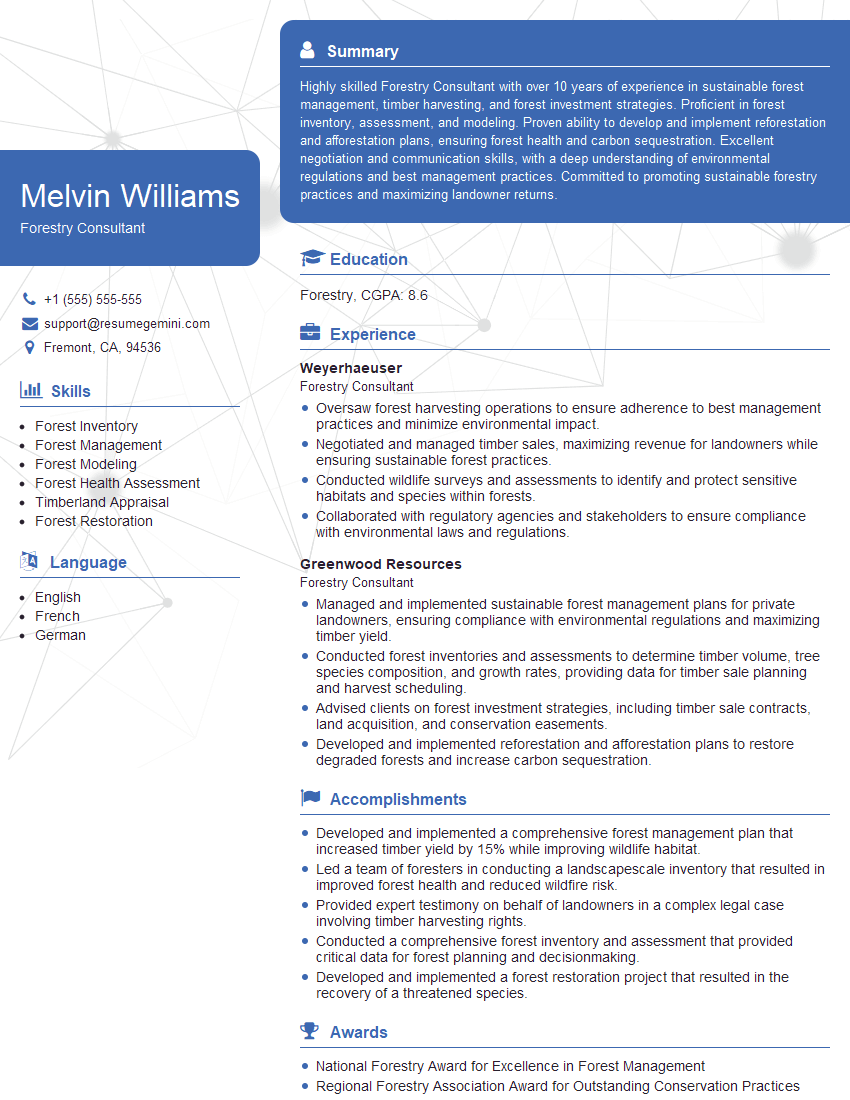
Mastering the use of a chainsaw opens doors to a variety of rewarding careers in forestry, arboriculture, landscaping, and construction. A strong understanding of safe and efficient chainsaw operation is highly valued by employers. To maximize your job prospects, creating an ATS-friendly resume is crucial. ResumeGemini is a trusted resource that can help you build a professional and impactful resume that highlights your skills and experience. Examples of resumes tailored to Using a Chainsaw are available to help guide you in showcasing your expertise effectively.





Explore more articles
Users Rating of Our Blogs
Share Your Experience
We value your feedback! Please rate our content and share your thoughts (optional).
What Readers Say About Our Blog
Very informative content, great job.
good