Interviews are more than just a Q&A session—they’re a chance to prove your worth. This blog dives into essential Validation Protocol Creation interview questions and expert tips to help you align your answers with what hiring managers are looking for. Start preparing to shine!
Questions Asked in Validation Protocol Creation Interview
Q 1. Describe your experience in creating validation protocols for equipment.
Throughout my career, I’ve been heavily involved in creating and executing validation protocols for a wide array of equipment, including analytical instruments (HPLC, GC-MS), autoclaves, environmental chambers, and manufacturing equipment like filling lines and tablet presses. My experience encompasses all phases, from initial risk assessment and protocol design to execution, data analysis, and report writing. For example, I recently led the validation of a new high-performance liquid chromatography (HPLC) system, ensuring its suitability for the analysis of drug substances and products. This involved detailed method validation alongside the instrument qualification itself. Another significant project involved validating a new autoclave for sterilization processes, requiring careful consideration of parameters like temperature, pressure, and cycle time to meet strict regulatory standards.
Q 2. Explain the different phases involved in a typical equipment validation protocol.
A typical equipment validation protocol follows a phased approach, often mirroring the lifecycle of the equipment itself. These phases typically include:
- Installation Qualification (IQ): Verifying that the equipment is correctly installed in its intended location and meets the manufacturer’s specifications. This includes checking for proper utilities, environmental conditions, and physical setup.
- Operational Qualification (OQ): Demonstrating that the equipment performs within its specified operational parameters under various conditions. This might involve testing across a range of temperatures, pressures, or flow rates, for example.
- Performance Qualification (PQ): Confirming that the equipment consistently produces accurate and reliable results under actual operating conditions. For an analytical instrument, this could involve analyzing samples with known concentrations and comparing the results to expected values. For manufacturing equipment, it might involve production runs under realistic scenarios.
Think of it like building a house: IQ is making sure the foundation is properly laid, OQ is testing the plumbing and electrical systems, and PQ is demonstrating the functionality of the finished house.
Q 3. How do you determine the appropriate acceptance criteria for a validation protocol?
Acceptance criteria are the limits or thresholds defining whether the equipment meets predetermined requirements. These are crucial for objective assessment. They are derived from several sources:
- Regulatory Requirements: GMP guidelines, pharmacopoeias, or other regulations often specify minimum acceptance criteria.
- Manufacturer’s Specifications: The equipment manufacturer’s specifications provide baseline performance expectations.
- Risk Assessment: A thorough risk assessment identifies critical parameters that significantly impact product quality or patient safety, influencing the stringency of acceptance criteria for those parameters.
- Historical Data: If similar equipment has been validated before, historical data can inform acceptable ranges.
For instance, in an autoclave validation, acceptance criteria might include a minimum temperature hold time of 15 minutes at 121°C, with temperature deviation not exceeding ±1°C. These criteria ensure sterility and process consistency.
Q 4. What are the key elements of a well-written validation protocol?
A well-written validation protocol is clear, concise, and comprehensive. Key elements include:
- Protocol Title and Version Number: Clearly identifies the protocol and its revision status.
- Objective: States the purpose of the validation.
- Scope: Defines the specific equipment and parameters covered.
- Methodology: Details the procedures, test methods, and acceptance criteria.
- Equipment List: Specifies all equipment and software used.
- Materials and Reagents: Lists all materials and reagents utilized.
- Responsibilities: Assigns roles and responsibilities to individuals involved.
- Data Tables and Templates: Provides standardized forms for recording raw data.
- Acceptance Criteria: Defines the limits or thresholds for successful validation.
- Deviation Management Procedures: Outlines how deviations are identified, investigated, and documented.
- Approval Section: Includes signatures from authorized personnel indicating approval and review.
Using a standardized template ensures consistency and traceability.
Q 5. How do you handle deviations during validation activities?
Deviations from the validation protocol are inevitable. A robust deviation management process is essential. When a deviation occurs, immediate action is required. The process typically includes:
- Immediate Action: To mitigate the impact of the deviation. For instance, stopping the process, isolating affected equipment, etc.
- Investigation: Determining the root cause of the deviation and documenting all findings.
- Corrective Actions: Implementing measures to prevent recurrence.
- Preventive Actions: Implementing measures to prevent similar deviations in future validations.
- Documentation: Meticulously documenting every step of the deviation management process. This documentation is crucial for regulatory compliance and continuous improvement.
For example, if the temperature in an autoclave deviates during a validation run, a thorough investigation might reveal a malfunctioning temperature sensor, leading to corrective action (sensor replacement) and preventive action (enhanced calibration procedures).
Q 6. Describe your experience with deviation investigations.
My experience with deviation investigations involves a systematic approach following a predefined procedure, focusing on the ‘5 Whys’ method to identify root cause. In one instance, during the validation of a tablet press, we discovered inconsistent tablet weight. The investigation revealed a worn die, which was replaced, and preventive action included a more frequent die inspection schedule. Another case involved a HPLC system producing erratic results. By systematically reviewing the method, the instrument logs, and environmental factors, we identified a faulty pump seal as the root cause. The thoroughness of the investigation is crucial. Each deviation investigation is documented thoroughly, with conclusions clearly stated and corrective and preventive actions outlined. These findings are reviewed and approved to ensure effectiveness.
Q 7. Explain the concept of risk assessment in validation protocol design.
Risk assessment is a critical step in validation protocol design. It helps prioritize aspects requiring more rigorous validation and influences the stringency of acceptance criteria. A formal risk assessment typically identifies hazards (potential problems) and analyzes their likelihood and severity. This process involves considering factors like the potential impact on product quality, patient safety, and regulatory compliance. A risk matrix is often used to visualize these findings. High-risk parameters require stricter validation procedures and more stringent acceptance criteria. For instance, in the validation of a filling machine, potential hazards might include underfilling or overfilling, leading to potentially harmful doses or product waste. A risk assessment will guide the design of the PQ, specifying the precision required for the filling volume measurement and the appropriate acceptance limits.
Q 8. How do you ensure the reproducibility of your validation results?
Reproducibility is paramount in validation. Think of it like baking a cake – if you follow the recipe exactly, you should get the same result every time. To ensure reproducible validation results, we meticulously document every step of the process, from equipment settings and test methods to environmental conditions and personnel involved. This detailed documentation acts as a blueprint, allowing others to replicate our work precisely. We use standardized operating procedures (SOPs) and validated methods to minimize variability. For instance, if we’re validating a temperature-controlled chamber, we’ll specify the exact thermocouple placement, calibration procedures, and data logging intervals. We also utilize version-controlled software and document management systems to track changes and prevent accidental modifications. This ensures that if a result is questioned, we can easily trace back to the exact conditions and parameters used.
Furthermore, we incorporate robust quality control measures throughout the validation process, including regular instrument calibration and maintenance, as well as blind samples or replicates to assess the accuracy and precision of our methods. By following these rigorous practices, we eliminate ambiguity and establish a reliable and traceable audit trail for our validation efforts.
Q 9. What are some common challenges in creating and executing validation protocols?
Creating and executing validation protocols presents several challenges. One significant hurdle is the sheer volume of documentation required. Regulatory compliance demands exhaustive records, which can be time-consuming to create and manage. Another common challenge is the need to balance thoroughness with practicality. Overly complex protocols can be inefficient, while overly simplified ones might not adequately address all relevant aspects. We sometimes encounter unexpected deviations or failures during testing, requiring us to adapt the protocol or investigate the root cause. For example, a piece of equipment might fail to meet specifications, requiring troubleshooting, recalibration, or even replacement. Resource constraints, such as limited personnel or budget, can also impede the validation process. Effective communication and collaboration between different teams, like engineering, quality assurance, and operations, are crucial to overcome these challenges. Lastly, the evolving nature of regulatory requirements and technologies requires continuous adaptation and updates to our validation protocols.
Q 10. How do you ensure compliance with regulatory requirements (e.g., FDA, EMA, etc.) in validation protocols?
Compliance with regulatory requirements, such as those from the FDA and EMA, is paramount. We achieve this through meticulous adherence to Good Manufacturing Practices (GMP) and Good Laboratory Practices (GLP) guidelines. Our validation protocols explicitly outline the regulatory framework we’re adhering to and include all necessary details to support compliance. We ensure that our documentation is complete, accurate, and easily auditable. This includes using approved methods, calibrated equipment, and trained personnel. We incorporate risk assessments to identify potential areas of non-compliance and implement mitigating controls. For example, we might perform more frequent testing in critical areas or utilize redundant systems to ensure continuous operation. We regularly review and update our protocols to reflect changes in regulations and industry best practices. Additionally, participation in regular internal and external audits helps identify and rectify any potential compliance gaps proactively. It’s akin to regularly inspecting a building’s foundation to ensure structural integrity; proactive compliance auditing prevents bigger issues down the line.
Q 11. Explain the difference between IQ, OQ, and PQ in equipment validation.
In equipment validation, IQ, OQ, and PQ represent distinct stages focusing on different aspects of the equipment’s suitability. Installation Qualification (IQ) verifies that the equipment is correctly installed and aligns with specifications. Imagine unpacking a new oven; IQ confirms it’s the right model, properly connected to power, and the installation space meets the requirements. Operational Qualification (OQ) confirms that the equipment performs as designed across its operational range. For our oven, this includes testing its ability to reach and maintain various temperatures accurately. Finally, Performance Qualification (PQ) assesses the equipment’s ability to consistently produce a desired outcome under actual operating conditions. For the oven example, PQ might involve baking a standard product multiple times to verify consistent results.
These three qualifications, done sequentially, ensure the equipment is not only installed correctly but also functions reliably and produces expected results over time. The PQ stage, in particular, often involves prolonged testing and real-world product runs to demonstrate consistent and reliable operation.
Q 12. What software or tools do you use for managing and documenting validation protocols?
We utilize a combination of software and tools to manage and document validation protocols. A validated electronic document management system (EDMS) forms the backbone of our system, providing version control, audit trails, and secure storage. This allows for easy access, sharing, and review of protocols. We often employ dedicated validation software, which may include features for scheduling tests, data logging, analysis, and report generation. This software often integrates with our EDMS for seamless data transfer and management. Spreadsheet software like Microsoft Excel can be used for data entry and basic analysis, especially when dealing with less complex validation procedures. For example, we might use spreadsheets to track calibration data or summarise results from simple tests. However, such usage is always within a robust system of controls for version management and audit compliance.
Q 13. How do you ensure the proper training of personnel involved in validation activities?
Proper training is crucial for personnel involved in validation activities. We develop comprehensive training programs tailored to specific roles and responsibilities. This includes both theoretical and hands-on training, covering aspects such as GMP/GLP principles, validation methodologies, documentation requirements, and the use of specific equipment or software. The training programs are documented and include assessments to ensure competency. We utilize a combination of classroom instruction, online modules, and practical demonstrations. Regular refresher training is provided to maintain competency and address any updates to protocols or regulations. For example, if a new piece of equipment is introduced, or a regulatory update occurs, all relevant personnel will receive supplementary training. This rigorous approach ensures that everyone involved in validation understands their role and can perform their tasks effectively and in compliance with regulatory expectations.
Q 14. Describe your experience with computer system validation (CSV).
I have extensive experience in Computer System Validation (CSV), covering the entire lifecycle from risk assessment and requirement specification to testing and ongoing maintenance. I’m proficient in designing and executing validation protocols for various software systems, including those used in manufacturing execution systems (MES), laboratory information management systems (LIMS), and enterprise resource planning (ERP) systems. My experience includes the use of various testing methodologies such as unit testing, integration testing, system testing, and user acceptance testing (UAT). I am familiar with various validation approaches, including the traditional waterfall method and more agile approaches. I’ve worked with different regulatory guidelines, including 21 CFR Part 11. A recent project involved the validation of a new LIMS system for a pharmaceutical company. This included risk assessment, defining validation requirements, developing and executing test scripts, and documenting all activities to meet 21 CFR Part 11 compliance. My experience ensures that computer systems used in regulated environments are validated to meet stringent regulatory requirements, ensuring the integrity, reliability, and security of data.
Q 15. Explain the process of validating analytical methods.
Analytical method validation is a crucial process in ensuring the reliability and accuracy of analytical tests used in pharmaceutical and other regulated industries. It’s like rigorously testing a measuring tool before using it for a critical task. The process involves systematically demonstrating that the method is suitable for its intended purpose. This typically involves several stages:
- Development and Optimization: This initial phase focuses on refining the method to ensure its precision, accuracy, and sensitivity. It involves experimenting with different parameters until optimal performance is achieved.
- Validation Proper: This is where the real testing begins. We assess several key parameters, including:
- Specificity: Can the method accurately measure the target analyte without interference from other components in the sample?
- Linearity: Does the response of the method show a linear relationship with the concentration of the analyte over a specified range?
- Accuracy: How close are the measured values to the true values? We often use recovery studies to assess this.
- Precision: How reproducible are the results when the same sample is measured multiple times? We evaluate repeatability (intra-day) and intermediate precision (inter-day).
- Limit of Detection (LOD) and Limit of Quantification (LOQ): These determine the lowest concentration of the analyte that can be reliably detected and quantified, respectively.
- Robustness: How sensitive is the method to small variations in experimental conditions (e.g., temperature, reagent concentration)?
- Reporting and Documentation: Finally, all results are meticulously documented and a comprehensive validation report is compiled. This report serves as evidence that the method is fit-for-purpose.
For example, in validating a High-Performance Liquid Chromatography (HPLC) method for analyzing a drug substance, we might perform multiple injections of standard solutions at different concentrations to assess linearity and then analyze spiked samples to evaluate accuracy and precision. The entire process is documented, and deviations are investigated and justified.
Career Expert Tips:
- Ace those interviews! Prepare effectively by reviewing the Top 50 Most Common Interview Questions on ResumeGemini.
- Navigate your job search with confidence! Explore a wide range of Career Tips on ResumeGemini. Learn about common challenges and recommendations to overcome them.
- Craft the perfect resume! Master the Art of Resume Writing with ResumeGemini’s guide. Showcase your unique qualifications and achievements effectively.
- Don’t miss out on holiday savings! Build your dream resume with ResumeGemini’s ATS optimized templates.
Q 16. How do you manage and review validation documents?
Managing and reviewing validation documents requires a systematic approach to ensure data integrity and regulatory compliance. We typically employ a system based on electronic document management (EDM) software. This software helps with version control, audit trails, and electronic signatures, critical for 21 CFR Part 11 compliance.
The review process usually follows a multi-level approach:
- Author Review: The person who created the document performs a thorough self-check before submitting it for review.
- Peer Review: A qualified peer independently reviews the document for accuracy, completeness, and adherence to procedures.
- Management Review: A manager reviews the document to ensure compliance with regulatory requirements and company standards.
Throughout the entire process, version control is strictly maintained. Each revision is clearly identified and tracked, and the rationale for any changes is meticulously documented. We use a controlled document distribution system ensuring only the latest approved versions are accessible.
For example, if a validation report is found to have an error, a change control procedure will be initiated, the error corrected, and a new version of the document issued. The previous version remains accessible but clearly marked as superseded. This ensures a clear audit trail and helps us easily trace any changes made to the document.
Q 17. How do you handle discrepancies between expected and actual results in validation?
Discrepancies between expected and actual results during validation are thoroughly investigated. It’s not a matter of simply dismissing the deviation; it’s about understanding the root cause and ensuring the method’s reliability. Our approach involves a structured investigation, which typically follows these steps:
- Initial Assessment: Identify the magnitude of the discrepancy and determine if it falls within acceptable limits (pre-defined acceptance criteria).
- Root Cause Analysis: Investigate potential reasons for the discrepancy. This might involve reviewing the experimental procedures, checking equipment calibration, examining raw data, and potentially re-running tests.
- Corrective and Preventive Actions (CAPA): If the root cause is identified, implement corrective actions to address the immediate problem and preventive actions to prevent recurrence. This might involve recalibrating equipment, revising the method, or improving training procedures.
- Documentation: All findings, actions, and decisions related to the discrepancy investigation are meticulously documented. This documentation becomes part of the validation report.
For instance, if the accuracy of an analytical method is outside the acceptance criteria, we might investigate potential sources of error, such as the purity of reference standards, the accuracy of weighing balances, or the proper functioning of the analytical instrument. If a systemic issue is identified, the method might need to be revised, and re-validation may be required.
Q 18. Describe your experience with change control procedures related to validated systems.
Change control is critical for validated systems to maintain their integrity and compliance. Any changes, no matter how seemingly minor, must follow a documented process to ensure that the change does not negatively impact the system’s performance or regulatory compliance. My experience involves using a formal change control system, typically incorporating these steps:
- Change Request: A formal request is submitted, clearly describing the proposed change, its rationale, and its potential impact.
- Risk Assessment: The potential impact of the change is assessed, identifying potential risks and mitigation strategies.
- Approval: The change request is reviewed and approved by the relevant stakeholders, ensuring alignment with quality and regulatory standards.
- Implementation: The change is implemented according to a defined protocol.
- Verification: After implementation, the system’s performance is verified to ensure that the change hasn’t negatively affected its functionality.
- Documentation: All aspects of the change control process, including the request, assessment, approval, implementation, and verification, are meticulously documented.
For example, if a software upgrade is planned for an instrument used in a validated analytical method, a change control process would be followed. This process would involve evaluating the impact of the upgrade, testing the updated instrument, and documenting the entire process. The updated method would then need to be re-validated, to ensure its continued compliance.
Q 19. What is your understanding of the 21 CFR Part 11 requirements related to validation?
21 CFR Part 11 outlines the FDA’s requirements for electronic records and signatures in regulated industries. In the context of validation, this means that all validation documentation—from protocols and raw data to reports and approvals—must meet specific requirements to ensure their integrity and authenticity. Key aspects include:
- Data Integrity: Ensuring the accuracy, completeness, consistency, and trustworthiness of the data. This includes using systems with audit trails that track all changes made to documents and data.
- Electronic Signatures: Utilizing electronic signatures that are secure, uniquely attributable, and tamper-evident. This ensures accountability for all activities related to validation.
- System Security: Implementing measures to protect the validation data from unauthorized access, modification, or deletion. This might involve access controls, encryption, and regular system backups.
- Audit Trails: Maintaining comprehensive audit trails that record all actions taken on electronic records and systems. This provides a clear and traceable history of all events.
Failure to comply with 21 CFR Part 11 can have severe consequences, including regulatory actions and potential product recalls. Therefore, adhering to these guidelines is paramount in validation activities.
Q 20. How do you ensure data integrity in validation protocols and documentation?
Ensuring data integrity in validation protocols and documentation is paramount. It’s the cornerstone of reliable and trustworthy results. Our strategies include:
- Use of Electronic Systems: Employing validated electronic data acquisition and management systems to reduce manual data entry errors and provide an audit trail.
- Standard Operating Procedures (SOPs): Implementing detailed SOPs for all aspects of validation, ensuring consistency and reducing the risk of errors.
- Data Review and Verification: Regularly reviewing and verifying data for accuracy and completeness. This often involves independent verification by a second person.
- Data Backup and Archiving: Implementing robust data backup and archiving procedures to protect against data loss or corruption.
- Data Security: Ensuring the security of data through access controls, encryption, and regular security audits.
- ALCOA+ Principles: Adhering to the ALCOA+ principles (Attributable, Legible, Contemporaneous, Original, Accurate, Complete, Consistent, Enduring, Available) for data management.
For example, raw data from analytical instruments are directly imported into validated software systems, minimizing manual transcription and potential errors. The systems provide electronic signatures and robust audit trails to track any changes or edits. Any deviation from expected results is investigated thoroughly, and the investigation is thoroughly documented, creating a traceable record of any action taken.
Q 21. Explain your experience with process validation, including design space considerations.
Process validation is the documented evidence that a process consistently produces a product meeting its predetermined specifications and quality attributes. It’s different from analytical method validation; it focuses on the entire manufacturing process rather than a single analytical test. Design space is a critical component of modern process validation.
My experience includes conducting process validations, incorporating design space considerations which allows for a more flexible and efficient manufacturing process. The process typically involves:
- Process Understanding: A thorough understanding of the process, including all critical process parameters (CPPs) and critical quality attributes (CQAs).
- Design Space Definition: Defining a design space—a multidimensional combination of input variables (e.g., temperature, pressure, time) and material attributes which provide assurance that the resulting products consistently meet their predetermined quality attributes.
- Validation Runs: Conducting a series of validation runs within the defined design space to demonstrate the process’s consistency and capability to deliver a quality product.
- Risk Assessment: Conducting a risk assessment to identify potential sources of variability and implement control strategies to mitigate these risks.
- Documentation: Thoroughly documenting the entire process, including the rationale for design space selection, results of validation runs, and risk assessments.
For instance, in validating a pharmaceutical tablet manufacturing process, we’d define the design space based on factors like compression force, blend uniformity, and granule size, while CQAs may include tablet hardness, weight variation, and drug content uniformity. The design space would allow for flexibility in the manufacturing process, while ensuring the quality of the final product remains consistent within the defined parameters.
Q 22. What are the key performance indicators (KPIs) you use to monitor the effectiveness of validation activities?
Monitoring the effectiveness of validation activities relies on a suite of Key Performance Indicators (KPIs). These KPIs provide a quantitative measure of success and identify areas needing improvement. Crucially, the specific KPIs will vary depending on the validation type (e.g., cleaning validation, computer system validation, analytical method validation), but some common examples include:
- Percentage of validation activities completed on time and within budget: This KPI measures project management efficiency and adherence to timelines.
- Number of deviations and their severity: High numbers of deviations, particularly those classified as critical, indicate potential process weaknesses or protocol flaws.
- Number of corrective and preventive actions (CAPAs) generated: The number of CAPAs and their timely resolution demonstrate the effectiveness of the validation process in identifying and addressing issues.
- Compliance with regulatory requirements: This KPI ensures that validation activities meet all relevant guidelines and standards (e.g., FDA, GMP, ISO).
- Validation success rate: A simple yet powerful KPI showing the percentage of validation tests that passed and met pre-defined acceptance criteria.
For example, during a cleaning validation, a key KPI could be the percentage of cleaning samples that demonstrate residual levels below the defined acceptance criteria. Regular monitoring of these KPIs allows for proactive adjustments and improvements in validation processes, ensuring high-quality results and regulatory compliance.
Q 23. How do you prioritize validation projects and allocate resources effectively?
Prioritizing validation projects and allocating resources effectively is crucial for success. My approach involves a structured process. First, I assess the risk associated with each project, considering factors such as regulatory requirements, potential impact on product quality or patient safety, and business criticality. Then, I use a combination of methods for prioritization, such as:
- Risk-based prioritization: High-risk projects, like those involving critical equipment or processes, receive top priority.
- Urgency: Projects with immediate deadlines or those related to regulatory compliance requirements take precedence.
- Impact: Projects with the largest potential impact on the business are prioritized.
Resource allocation follows the prioritization. This includes assigning personnel with the appropriate skills and experience, allocating necessary budget, and securing required equipment and materials. I regularly monitor progress against allocated resources and adjust as needed. Using a project management tool allows for clear visualization of resource allocation and tracking progress against defined deadlines. For example, using a Gantt chart can effectively show timelines and resource assignments.
Q 24. Describe your experience with auditing validation protocols and related documentation.
Auditing validation protocols and documentation is a critical part of ensuring compliance and maintaining a robust quality system. My experience encompasses various aspects, including review of:
- Protocol design and execution: I evaluate the thoroughness of the protocol, ensuring all necessary steps are included and that the methodology is scientifically sound and appropriate for the validation objective.
- Data integrity and traceability: I assess the accuracy, completeness, and traceability of all data generated during validation activities. This includes checking raw data, calculations, and documentation for any inconsistencies or anomalies.
- Deviation management: I examine how deviations were handled, ensuring appropriate investigation, corrective actions, and preventive actions were implemented.
- Compliance with regulatory expectations: I ensure that the protocol and the associated documentation meet all relevant regulatory requirements (e.g., GMP, FDA guidelines).
During an audit, I use checklists to ensure consistency and completeness of the review. I meticulously document findings and communicate these findings clearly to the validation team. A critical part of the process is following up on the corrective actions to ensure that the issues are addressed effectively.
Q 25. How do you approach troubleshooting issues during validation execution?
Troubleshooting during validation execution requires a systematic approach. My strategy typically involves:
- Identify the problem: Clearly define the issue, gathering all relevant data and information.
- Review the protocol: Examine the validation protocol to ensure the procedures were followed correctly.
- Analyze the data: Thoroughly analyze the data to identify potential root causes.
- Investigate potential causes: This may involve reviewing equipment logs, operator training records, or environmental monitoring data.
- Implement corrective actions: Based on the root cause analysis, develop and implement corrective actions to resolve the issue.
- Document findings: Thoroughly document all findings, corrective actions, and preventive actions.
For instance, if a cleaning validation fails to meet acceptance criteria, we might investigate the cleaning procedure, the equipment used, or the analytical method. We’d then implement changes to resolve the issue and prevent recurrence, documenting everything in a deviation report.
Q 26. How do you ensure the timely completion of validation projects while maintaining high quality?
Ensuring timely completion of validation projects while maintaining high quality requires meticulous planning and execution. My strategies include:
- Realistic planning: Develop realistic timelines and allocate sufficient resources from the outset, incorporating buffer time for unexpected issues.
- Effective communication: Maintain clear communication among all team members, stakeholders, and management to ensure everyone is informed and aligned on project goals and progress.
- Risk management: Proactively identify and mitigate potential risks throughout the project lifecycle.
- Regular progress monitoring: Track progress against the project plan and promptly address any deviations.
- Quality control checks: Implement quality control checks at different stages of the project to ensure data integrity and compliance.
Using project management software and regular team meetings facilitates progress monitoring and helps in identifying and addressing potential delays early on. For example, a daily stand-up meeting can keep the team informed and help to resolve problems quickly.
Q 27. Describe a situation where you had to adapt a validation protocol to address unforeseen circumstances.
During a computer system validation (CSV) project, we encountered an unforeseen issue. A critical software update became necessary midway through the validation process. This was not initially included in the validation plan. Rather than halting the project, we:
- Assessed the impact: We carefully assessed the potential impact of the update on the validated system and its functionality.
- Developed a supplemental protocol: We developed a supplemental validation protocol to address the software update, focusing on verifying that the update didn’t compromise the system’s functionality or security.
- Implemented the update: We implemented the update following our change control process and documented everything.
- Executed the supplemental protocol: We executed the supplemental validation protocol, ensuring rigorous testing and documentation of the results.
- Updated the validation documentation: We updated the original validation documentation to include the supplemental protocol and its results.
This adaptive approach prevented significant project delays and ensured that the validated system remained compliant and secure. This highlighted the importance of flexibility and a robust change control process in validation projects.
Key Topics to Learn for Validation Protocol Creation Interview
- Understanding Validation Requirements: Grasping the regulatory landscape (e.g., GMP, FDA guidelines) and how they dictate protocol design.
- Defining Objectives and Scope: Clearly articulating the purpose of the validation and specifying the equipment, processes, or systems under scrutiny.
- Risk Assessment and Methodology Selection: Identifying potential risks and selecting appropriate validation methodologies (e.g., IQ, OQ, PQ) based on risk and regulatory requirements.
- Protocol Design and Development: Structuring a clear, concise, and comprehensive protocol that includes detailed procedures, acceptance criteria, and data analysis plans.
- Data Integrity and Documentation: Understanding the critical importance of maintaining accurate, complete, and auditable documentation throughout the validation process.
- Deviation Management and Corrective Actions: Knowing how to handle deviations from the protocol and implementing appropriate corrective and preventive actions (CAPA).
- Report Writing and Interpretation: Preparing a comprehensive and well-structured validation report that clearly summarizes the results and conclusions.
- Practical Application: Case Studies: Analyzing real-world examples of validation protocols for different equipment and processes to understand best practices.
- Problem-Solving in Validation: Developing troubleshooting skills to address challenges that may arise during validation execution and reporting.
Next Steps
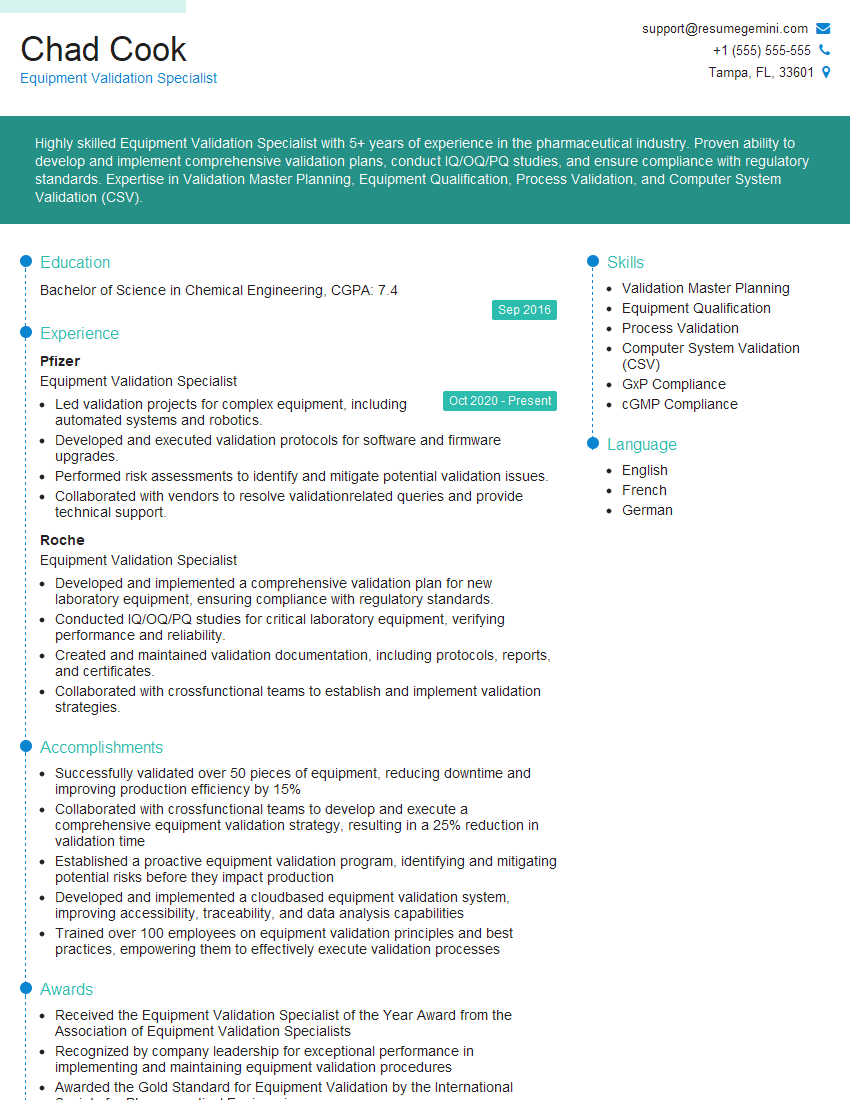
Mastering Validation Protocol Creation is crucial for advancement in regulated industries, opening doors to senior roles and increased earning potential. A well-crafted resume is your key to unlocking these opportunities. Make sure your resume is ATS-friendly to ensure it gets noticed by recruiters. ResumeGemini offers a powerful tool to help you build a professional and impactful resume that highlights your skills and experience in Validation Protocol Creation. We provide examples of resumes tailored to this specific field to give you a head start. Invest in your career – create a resume that showcases your expertise and helps you land your dream job.
Explore more articles
Users Rating of Our Blogs
Share Your Experience
We value your feedback! Please rate our content and share your thoughts (optional).
What Readers Say About Our Blog
Hello,
we currently offer a complimentary backlink and URL indexing test for search engine optimization professionals.
You can get complimentary indexing credits to test how link discovery works in practice.
No credit card is required and there is no recurring fee.
You can find details here:
https://wikipedia-backlinks.com/indexing/
Regards
NICE RESPONSE TO Q & A
hi
The aim of this message is regarding an unclaimed deposit of a deceased nationale that bears the same name as you. You are not relate to him as there are millions of people answering the names across around the world. But i will use my position to influence the release of the deposit to you for our mutual benefit.
Respond for full details and how to claim the deposit. This is 100% risk free. Send hello to my email id: [email protected]
Luka Chachibaialuka
Hey interviewgemini.com, just wanted to follow up on my last email.
We just launched Call the Monster, an parenting app that lets you summon friendly ‘monsters’ kids actually listen to.
We’re also running a giveaway for everyone who downloads the app. Since it’s brand new, there aren’t many users yet, which means you’ve got a much better chance of winning some great prizes.
You can check it out here: https://bit.ly/callamonsterapp
Or follow us on Instagram: https://www.instagram.com/callamonsterapp
Thanks,
Ryan
CEO – Call the Monster App
Hey interviewgemini.com, I saw your website and love your approach.
I just want this to look like spam email, but want to share something important to you. We just launched Call the Monster, a parenting app that lets you summon friendly ‘monsters’ kids actually listen to.
Parents are loving it for calming chaos before bedtime. Thought you might want to try it: https://bit.ly/callamonsterapp or just follow our fun monster lore on Instagram: https://www.instagram.com/callamonsterapp
Thanks,
Ryan
CEO – Call A Monster APP
To the interviewgemini.com Owner.
Dear interviewgemini.com Webmaster!
Hi interviewgemini.com Webmaster!
Dear interviewgemini.com Webmaster!
excellent
Hello,
We found issues with your domain’s email setup that may be sending your messages to spam or blocking them completely. InboxShield Mini shows you how to fix it in minutes — no tech skills required.
Scan your domain now for details: https://inboxshield-mini.com/
— Adam @ InboxShield Mini
Reply STOP to unsubscribe
Hi, are you owner of interviewgemini.com? What if I told you I could help you find extra time in your schedule, reconnect with leads you didn’t even realize you missed, and bring in more “I want to work with you” conversations, without increasing your ad spend or hiring a full-time employee?
All with a flexible, budget-friendly service that could easily pay for itself. Sounds good?
Would it be nice to jump on a quick 10-minute call so I can show you exactly how we make this work?
Best,
Hapei
Marketing Director
Hey, I know you’re the owner of interviewgemini.com. I’ll be quick.
Fundraising for your business is tough and time-consuming. We make it easier by guaranteeing two private investor meetings each month, for six months. No demos, no pitch events – just direct introductions to active investors matched to your startup.
If youR17;re raising, this could help you build real momentum. Want me to send more info?
Hi, I represent an SEO company that specialises in getting you AI citations and higher rankings on Google. I’d like to offer you a 100% free SEO audit for your website. Would you be interested?
Hi, I represent an SEO company that specialises in getting you AI citations and higher rankings on Google. I’d like to offer you a 100% free SEO audit for your website. Would you be interested?
good