Are you ready to stand out in your next interview? Understanding and preparing for Value Control interview questions is a game-changer. In this blog, we’ve compiled key questions and expert advice to help you showcase your skills with confidence and precision. Let’s get started on your journey to acing the interview.
Questions Asked in Value Control Interview
Q 1. Define Value Control and its importance in project management.
Value control in project management is the systematic process of planning, monitoring, and controlling the value delivered throughout a project’s lifecycle. It ensures that the project delivers the maximum value for the investment made. This isn’t simply about staying within budget; it’s about ensuring that the final product or service meets its intended purpose and provides the expected benefits to the stakeholders. Think of it like baking a cake – you need the right ingredients (resources), the correct recipe (plan), and a watchful eye (monitoring) to ensure a delicious (valuable) outcome.
Its importance stems from several key factors: it optimizes resource allocation, minimizes waste and unnecessary costs, increases stakeholder satisfaction by delivering on promised value, and ultimately enhances the overall success and profitability of the project.
Q 2. Explain the difference between Value Engineering and Value Analysis.
While both Value Engineering (VE) and Value Analysis (VA) aim to improve value, they differ in their approach and application. Value Analysis is a systematic approach to identifying and eliminating unnecessary costs without sacrificing functionality or performance. It focuses on analyzing existing designs or processes to find areas for improvement. Imagine dissecting a pre-existing product to see how its components can be improved or simplified while retaining its main functions.
Value Engineering, on the other hand, is a more proactive approach applied during the design and planning phases of a project. It explores alternative solutions and designs to optimize value from the outset. This is like starting with a clean sheet of paper and designing a product from scratch to deliver maximum value while keeping an eye on costs and functionality. Essentially, VA is retrospective, focusing on existing projects and VE is prospective, integrated within the project’s lifecycle.
Q 3. Describe your experience with Earned Value Management (EVM).
I have extensive experience using Earned Value Management (EVM) to track and manage project performance. EVM is a powerful project management technique that integrates scope, schedule, and cost to provide a comprehensive view of project status. I’ve successfully utilized EVM on multiple large-scale projects, from infrastructure development to software implementation.
My typical workflow involves establishing a baseline plan, including a Work Breakdown Structure (WBS) with associated costs and durations. I then regularly track the Earned Value (EV), Planned Value (PV), and Actual Cost (AC) to calculate key metrics like Schedule Variance (SV), Cost Variance (CV), and Schedule Performance Index (SPI) and Cost Performance Index (CPI). These metrics provide a clear indication of project health and allow for proactive intervention when deviations from the baseline plan occur. For instance, a negative CV indicates a cost overrun, prompting immediate investigation into the causes and corrective actions. I also use EVM for forecasting project completion dates and budget requirements, improving stakeholder communication and decision-making.
Q 4. How do you identify and quantify value in a project?
Identifying and quantifying value requires a multifaceted approach. First, I clearly define project objectives and stakeholder expectations. What constitutes ‘value’ is subjective and depends on the project’s goals. Is it reduced cost, improved efficiency, enhanced quality, or increased market share?
Next, I employ techniques like Value Decomposition to break down the project into its constituent components and assess the value contribution of each. This often involves qualitative and quantitative assessments. For quantitative measures, I use metrics like Return on Investment (ROI), Net Present Value (NPV), and payback periods. Qualitative assessments might involve surveys, stakeholder interviews, or focus groups to capture intangible benefits like improved customer satisfaction or enhanced brand reputation. Ultimately, a holistic approach combining both quantitative and qualitative data allows for a comprehensive understanding of project value.
Q 5. What are the key metrics you use to track value control?
The key metrics I use to track value control are:
- Earned Value (EV): The value of work completed to date.
- Planned Value (PV): The planned value of work scheduled to be completed at a given point in time.
- Actual Cost (AC): The actual cost incurred to date.
- Cost Variance (CV): EV – AC (positive indicates under budget, negative indicates over budget).
- Schedule Variance (SV): EV – PV (positive indicates ahead of schedule, negative indicates behind schedule).
- Cost Performance Index (CPI): EV / AC (measures cost efficiency).
- Schedule Performance Index (SPI): EV / PV (measures schedule efficiency).
- Return on Investment (ROI): A measure of profitability, calculated as (Gain – Cost) / Cost.
By monitoring these metrics regularly, I can quickly identify potential problems and take corrective action to prevent value erosion.
Q 6. Explain your approach to managing cost overruns in a project.
My approach to managing cost overruns involves a proactive, multi-pronged strategy. First, I analyze the root causes of the overrun using data analysis and stakeholder interviews. This might reveal issues like inaccurate estimations, unforeseen risks, scope creep, or inefficient resource allocation.
Once the causes are identified, I develop a corrective action plan. This plan might involve negotiating with vendors to reduce costs, optimizing resource utilization, adjusting the project scope (with stakeholder approval), or accelerating critical activities to shorten the project duration. The plan is regularly monitored and revised as needed. Regular communication with stakeholders is essential to keep them informed about the situation and the corrective actions being taken. Transparency and open communication are crucial to maintaining trust and confidence.
Q 7. Describe a situation where you had to make trade-offs between cost, schedule, and scope to maximize value.
On a recent software development project, we faced a critical trade-off between cost, schedule, and scope. The initial scope was ambitious, demanding a highly sophisticated user interface and extensive features. As the project progressed, it became clear that meeting the original schedule and staying within budget would require compromising on some of the less critical features.
After careful analysis and stakeholder consultations, we prioritized features based on their value contribution. We decided to postpone less critical features to a future release, allowing us to deliver a core product on time and within budget. This required difficult decisions, but the resulting product was still highly valuable to our clients, and the delayed features could be implemented in subsequent phases, maximizing overall value while managing constraints effectively. This approach demonstrated the importance of flexible decision-making and proactive risk management in value control.
Q 8. How do you prioritize value-enhancing activities in a project?
Prioritizing value-enhancing activities requires a structured approach. We start by clearly defining what constitutes ‘value’ for the project – this might be measured in financial returns, improved efficiency, enhanced customer satisfaction, or a combination thereof. Then, we use techniques like a Value Prioritization Matrix, which plots activities against their potential value and effort required. High-value, low-effort activities are prioritized first. We may also use a scoring system that weighs various value dimensions according to stakeholder input. For example, a project to develop a new software feature might prioritize fixing critical bugs (high value, low effort) before adding minor enhancements (lower value, higher effort). This ensures that we focus our resources on what delivers the most significant impact.
Consider a project to renovate a hospital wing. ‘Value’ might be defined as increased patient satisfaction, improved staff efficiency, and reduced operational costs. We’d prioritize activities that directly impact these, such as upgrading outdated equipment (high value) before repainting the walls (low value). This ensures alignment with the project’s primary goals.
Q 9. What tools and techniques do you use for value control?
Value control relies on a combination of tools and techniques. We leverage Earned Value Management (EVM) to track progress against planned value. EVM uses metrics like Planned Value (PV), Earned Value (EV), and Actual Cost (AC) to assess schedule and cost performance, providing insights into value delivery. We also utilize Value Stream Mapping to visualize the flow of value creation and identify bottlenecks. This helps us optimize processes and eliminate waste. Regular stakeholder meetings and progress reports are crucial, along with tools like project management software (e.g., Jira, Asana) to track activities, allocate resources, and monitor progress. Data visualization techniques, such as charts and dashboards, are important for conveying complex information simply and effectively.
For instance, in a software development project, we’d use a burndown chart to track progress and identify potential deviations from the planned value. A Value Stream Map would help identify areas where the development process can be streamlined to deliver value more efficiently.
Q 10. How do you communicate value-related information to stakeholders?
Effective communication is vital in value control. We use various methods to keep stakeholders informed about value-related information. Regular progress reports, including key performance indicators (KPIs) related to value creation, are crucial. Visual dashboards providing a clear overview of project status and value delivery are highly effective. We conduct regular stakeholder meetings to discuss progress, challenges, and any necessary adjustments to the value delivery plan. Transparent and proactive communication builds trust and ensures that everyone is aligned on project goals and value expectations.
For example, we might present a dashboard showing the projected ROI against actual ROI over time, along with an explanation of any variances. We’d also highlight successes and address concerns transparently. These presentations are tailored to the audience, focusing on information relevant to their concerns and responsibilities.
Q 11. How do you incorporate risk management into your value control processes?
Risk management is intrinsically linked to value control. We identify potential risks that could negatively impact value delivery (e.g., schedule delays, cost overruns, technical challenges). We assess the likelihood and impact of these risks, developing mitigation strategies to reduce their probability or minimize their effect. This often includes contingency planning, which involves allocating resources or creating buffer time to handle unexpected events. By proactively addressing potential threats, we protect the project’s value and enhance the likelihood of achieving the desired outcomes. We track and monitor identified risks throughout the project lifecycle to ensure that the mitigation plans remain effective.
In a construction project, a risk might be a supplier delay. Our risk management plan might involve securing multiple suppliers, setting up buffer time in the schedule, or negotiating penalty clauses in contracts. This proactive approach protects the project’s value against potential disruptions.
Q 12. Describe your experience with different value control methodologies.
I have experience with various value control methodologies, including Earned Value Management (EVM), Agile methodologies, and Lean principles. EVM provides a structured framework for tracking cost and schedule performance against planned value, while Agile prioritizes iterative development and continuous feedback to ensure that value is delivered incrementally. Lean principles focus on eliminating waste and optimizing processes to enhance efficiency and value creation. The best approach often depends on the project’s nature and context. In some projects, a hybrid approach, combining aspects of different methodologies, is the most effective strategy.
For example, in a large-scale infrastructure project, EVM might be ideal for comprehensive cost and schedule control. In contrast, for a software development project with evolving requirements, Agile principles would likely be more suitable. I adapt my approach depending on the project context, always striving for maximum value and efficiency.
Q 13. How do you ensure that value control efforts are aligned with overall organizational goals?
Aligning value control efforts with organizational goals is paramount. We start by understanding the organization’s strategic objectives and how the project contributes to achieving them. This involves aligning project value definitions with organizational priorities. We then incorporate organizational KPIs into our project value tracking system. Regular reporting to senior management demonstrates the project’s contribution to overall strategic goals. This alignment ensures that resources are directed towards activities that generate maximum value for the organization as a whole, fostering a cohesive strategy.
For instance, if an organization’s goal is to increase market share, a project focused on developing a new product would need its value defined in terms of market penetration, revenue growth, and competitive advantage. Value control in this project would then directly track progress towards these organizational goals.
Q 14. How do you measure the success of your value control efforts?
Measuring the success of value control efforts involves comparing the actual value delivered to the planned value. Key metrics include Return on Investment (ROI), Net Present Value (NPV), and other financial metrics that reflect the project’s economic value. Qualitative metrics, such as customer satisfaction and stakeholder feedback, also play a crucial role, as they provide insights into the project’s impact on non-financial aspects. We use a combination of quantitative and qualitative data to provide a comprehensive assessment of the project’s value generation. Post-project reviews are essential to analyze performance, identify lessons learned, and inform future projects.
For example, comparing the projected ROI of a marketing campaign against the actual ROI achieved provides a quantitative measure of success. Customer surveys provide qualitative data about customer satisfaction, which may not be directly reflected in the financial metrics, but significantly influences the overall value of the campaign.
Q 15. Explain your understanding of the value chain and how it relates to value control.
The value chain depicts the series of activities a company undertakes to create and deliver value to its customers. Value control, in essence, is the systematic management of these activities to maximize value creation while minimizing waste and inefficiencies. It’s about ensuring that every step in the value chain contributes meaningfully to the final product or service’s value proposition.
For example, consider a car manufacturer. Their value chain includes design, sourcing materials, manufacturing, marketing, and after-sales service. Value control in this context would involve optimizing each stage: ensuring efficient material procurement, minimizing production defects, effective marketing campaigns that resonate with the target audience, and timely and efficient after-sales support. By managing these aspects, the company can maximize the perceived value of its vehicles and improve profitability.
The relationship is deeply intertwined; effective value control relies on a thorough understanding of the value chain. Identifying value-adding and non-value-adding activities allows for strategic resource allocation and process improvement, ultimately leading to increased profitability and customer satisfaction.
Career Expert Tips:
- Ace those interviews! Prepare effectively by reviewing the Top 50 Most Common Interview Questions on ResumeGemini.
- Navigate your job search with confidence! Explore a wide range of Career Tips on ResumeGemini. Learn about common challenges and recommendations to overcome them.
- Craft the perfect resume! Master the Art of Resume Writing with ResumeGemini’s guide. Showcase your unique qualifications and achievements effectively.
- Don’t miss out on holiday savings! Build your dream resume with ResumeGemini’s ATS optimized templates.
Q 16. How do you handle conflicts between different stakeholders regarding value priorities?
Stakeholder conflicts regarding value priorities are common. Resolving them requires a structured approach. I typically start by facilitating open communication and collaborative discussions. This often involves using a value prioritization matrix, where stakeholders can visually represent and discuss the relative importance of different value aspects (e.g., cost, quality, time-to-market).
Next, I employ techniques like Pareto analysis to identify the ‘vital few’ value drivers that contribute most significantly to overall value. This helps focus attention on the most critical aspects and reduce disagreements over less significant issues. Finally, I employ a balanced scorecard approach, ensuring that we are tracking progress on multiple dimensions of value, not just one, which helps satisfy diverse stakeholder perspectives. The key is to find a balance that meets the critical needs of all key stakeholders, even if it’s not a perfect solution for every single one.
For instance, in a software development project, engineers might prioritize functionality, marketers might focus on user experience, and clients might be most concerned about budget. The balanced scorecard allows us to measure and manage progress in all areas, minimizing conflicts and maximizing overall project success.
Q 17. Describe your experience with using value control in different industries.
My experience with value control spans diverse industries. In the construction industry, I’ve applied it to optimize project schedules and resource allocation, minimizing cost overruns and delays. This involved meticulous tracking of material costs, labor hours, and equipment utilization, ensuring that every aspect contributes to delivering the project on time and within budget. The key was to identify and eliminate non-value-adding activities, such as unnecessary rework or delays caused by poor communication.
In the healthcare sector, I’ve helped improve operational efficiency in hospitals by streamlining processes, reducing patient wait times, and enhancing the quality of care. This required identifying bottlenecks in the patient flow and optimizing resource allocation (e.g., nurses, doctors, equipment). The focus here was on improving both the efficiency and effectiveness of the healthcare system, which directly improves the value delivered to patients.
Furthermore, my work in manufacturing involved optimizing production lines through lean methodologies, reducing waste and improving product quality. This included implementing techniques such as Kaizen to encourage continuous improvement suggestions from the production team. The focus here was improving manufacturing processes to maximize output while minimizing waste, which directly impacts the value proposition of the company’s products.
Q 18. How do you adapt your value control approach to different project types?
My approach to value control adapts based on project type. For example, a complex, long-term infrastructure project requires a more formal, structured approach with detailed planning, rigorous monitoring, and regular reporting. This necessitates a more detailed risk assessment and contingency planning process. In contrast, a short-term, agile software development project might employ more iterative and flexible methods, adapting the value control process as the project progresses and priorities evolve.
Regardless of the project type, the core principles remain the same: clearly define value, establish metrics to track progress, regularly monitor and evaluate performance, and make necessary adjustments. The key difference lies in the level of detail, formality, and the specific tools and techniques employed. In agile projects, we might use Kanban boards to visualize workflow and track progress, while larger projects might require more comprehensive Earned Value Management (EVM) systems.
Q 19. What are the common challenges faced in value control, and how have you overcome them?
Common challenges in value control include inaccurate estimations, lack of stakeholder alignment, and insufficient data. Inaccurate estimations can lead to unrealistic targets and subsequent project failures. I address this by employing robust estimation techniques, involving key stakeholders in the process, and using historical data to inform future estimates.
Lack of stakeholder alignment can hinder progress and create conflicts. My approach, as discussed earlier, involves open communication, collaborative decision-making, and using a balanced scorecard to track progress across different value dimensions. Insufficient data can limit the effectiveness of value control. I overcome this by implementing robust data collection systems, utilizing data analytics tools to identify trends and insights, and ensuring data quality.
Another key challenge is resistance to change. Introducing new value control processes requires effective communication, training, and demonstrating the benefits of the changes to gain buy-in from the team. A gradual implementation and a focus on continuous improvement can ease the transition and foster acceptance.
Q 20. How do you use data analytics in value control?
Data analytics plays a crucial role in value control. I use data analytics to identify trends, patterns, and anomalies that might impact value creation. This includes analyzing cost data to pinpoint areas of inefficiency, monitoring project progress to identify potential delays, and evaluating customer satisfaction to understand areas for improvement.
Specifically, I use techniques like regression analysis to predict future costs, forecasting models to anticipate demand, and data visualization tools to present insights in a clear and accessible manner. For example, by analyzing historical data on material costs and labor hours, we can create predictive models to estimate future costs and identify potential risks more accurately. Similarly, analyzing customer feedback data can help identify areas where the product or service falls short of customer expectations.
Ultimately, data-driven decision-making is key to effective value control. By leveraging data analytics, we can proactively identify and address potential issues, optimize processes, and maximize value creation.
Q 21. Explain your experience with value control software or tools.
I have extensive experience using various value control software and tools. My experience includes using project management software like MS Project and Primavera P6 for scheduling, cost control, and resource allocation. These tools allow for centralized tracking of project progress, facilitating better communication and collaboration among stakeholders. Additionally, I’ve utilized Earned Value Management (EVM) software for detailed performance tracking and reporting.
Furthermore, I’m proficient in using data analytics platforms like Tableau and Power BI for data visualization and reporting. These platforms enable me to create insightful dashboards that provide a clear and concise overview of project performance and identify areas for improvement. The choice of software depends heavily on the project’s scale, complexity, and industry-specific requirements. However, the underlying principle remains the same: leveraging technology to enhance data collection, analysis, and reporting to make better informed decisions.
Q 22. Describe a situation where you had to improve value control processes.
In a previous project involving the development of a new mobile banking application, we faced challenges in managing the value delivered against the allocated resources. Initially, our value control process was reactive, focusing primarily on cost tracking rather than proactively managing value creation. This led to feature creep and a final product that, while feature-rich, wasn’t delivering the core value propositions identified at the beginning—improved user experience and increased transaction security. To improve this, I implemented a Value-Driven Delivery framework. This involved clearly defining our target user personas, establishing key value metrics (e.g., user engagement, transaction success rate, customer satisfaction scores), and integrating these metrics into our sprint reviews and daily stand-ups. We prioritized features based on their contribution to these key metrics, and we regularly reviewed and adjusted our product backlog to ensure we were always focusing on high-value activities. This resulted in a more streamlined development process, a product that better addressed user needs, and an improved ROI.
Q 23. How do you ensure that value control is integrated throughout the project lifecycle?
Ensuring value control is integrated throughout the project lifecycle requires a proactive and holistic approach. It begins with a clear definition of value at the initiation phase. This involves collaborative workshops with stakeholders to define what constitutes success, identify key performance indicators (KPIs), and establish a baseline for value measurement. During the planning phase, the project plan should incorporate value-based milestones and deliverables, enabling continuous monitoring of value creation. Throughout execution, regular value reviews (e.g., daily stand-ups, sprint reviews) are crucial to track progress against KPIs and identify any potential deviations. Change requests should be evaluated based on their value contribution, not just their feasibility. Finally, during the closure phase, a comprehensive value assessment should be conducted to determine overall value delivered compared to the initial plan. Tools like a Value Management Matrix (linking activities to value streams) and regular reporting dashboards are invaluable for this process. Think of it like building a house: you wouldn’t just start laying bricks; you’d have blueprints (defining value), measure progress continuously (monitoring), and check if you’re building the house you planned (review).
Q 24. How do you identify and mitigate value leakage?
Value leakage occurs when resources are consumed without generating commensurate value. Identifying it requires a combination of proactive and reactive measures. Proactively, we use techniques like value stream mapping to pinpoint bottlenecks and inefficiencies. This visual representation helps to identify areas where resources are being wasted. Regularly reviewing project plans and comparing actual progress to planned value delivery provides early warning signs of potential leakage. Reactively, we analyze deviations from the baseline value metrics. Significant variances trigger an investigation to understand the root cause—scope creep, inefficient processes, or unexpected risks. Mitigation strategies depend on the cause; they might involve process improvements, resource reallocation, risk mitigation plans, or even scope adjustments. For example, if we find that a particular feature is consuming significant resources but not contributing significantly to our key value metrics, we might consider de-prioritizing or removing it entirely.
Q 25. What are the key performance indicators (KPIs) that you would use to measure value delivery?
The KPIs used to measure value delivery depend heavily on the project’s specific objectives and context. However, some common and effective KPIs include:
- Net Present Value (NPV): Measures the overall profitability of the project, considering the time value of money.
- Return on Investment (ROI): Shows the return on investment made in the project.
- Customer Satisfaction (CSAT): Measures how satisfied customers are with the delivered product or service.
- User Engagement: Tracks user activity and interaction with the product or service.
- Time to Market: Measures the speed of delivery, a crucial aspect for projects where early entry is valuable.
- Value Delivered per Unit of Effort: Provides a ratio reflecting the value created per resource unit used. This helps identify the most valuable activities.
The selection of KPIs should be driven by the strategic goals of the project and regularly reviewed to ensure they remain relevant and effective.
Q 26. How do you deal with situations where value control measures conflict with other project constraints?
Conflicts between value control measures and other project constraints (e.g., time, budget, resources) are common. Resolving these conflicts requires a balanced approach, using a prioritization framework. We often use a weighted scoring system, assigning weights to different constraints based on their relative importance to the project’s overall success. For example, if delivering a minimal viable product (MVP) by a critical deadline is paramount, we might accept a slightly lower NPV to meet that deadline. The key is transparency and communication with stakeholders to ensure everyone understands the trade-offs being made. This may involve renegotiating project scope, adjusting timelines, or reallocating resources. Decision-making must be data-driven and clearly documented. It is crucial to have clearly defined acceptance criteria with the stakeholders, helping to avoid any surprises later. The process is iterative, requiring continuous monitoring and adjustment as the project progresses.
Q 27. Describe your experience with conducting value control audits.
I’ve conducted numerous value control audits, typically involving a three-stage process. First, a planning phase which involves defining the scope of the audit, identifying key value drivers, and selecting appropriate data sources. This is followed by data collection and analysis, where we review project documentation, interview stakeholders, and analyze performance data against established KPIs. Finally, we prepare a comprehensive report detailing our findings, including areas of strength and weaknesses in value control processes, and recommendations for improvement. This report is presented to stakeholders, who can then use this feedback to enhance their future project value management practices. For instance, in a recent audit of a large-scale construction project, our analysis revealed inefficiencies in material procurement leading to significant cost overruns. We identified the root cause and recommended a centralized procurement system to improve efficiency and reduce waste. The outcome was improved cost control and a more efficient process.
Key Topics to Learn for Value Control Interview
- Defining Value and Cost: Understanding the fundamental differences and how they interact within a business context. This includes exploring various cost accounting methodologies.
- Value Engineering & Analysis: Practical application of techniques to optimize value while minimizing cost. Consider case studies of successful value engineering projects.
- Value Chain Analysis: Identifying and assessing the key activities that contribute to value creation and potential areas for improvement within the entire value chain.
- Metrics and KPIs: Understanding and interpreting key performance indicators (KPIs) related to value control, including ROI, efficiency ratios, and cost-benefit analysis.
- Cost Reduction Strategies: Exploring various methods for reducing costs without compromising quality or value, including process optimization, waste reduction, and negotiation strategies.
- Budgeting and Forecasting: Developing and managing budgets, forecasting future costs, and analyzing variances between planned and actual costs.
- Risk Management in Value Control: Identifying and mitigating potential risks that could impact value creation and cost control.
- Communication and Collaboration: Effective communication of value control strategies and results to stakeholders at all levels.
- Data Analysis and Reporting: Utilizing data analysis techniques to track performance, identify trends, and support decision-making related to value control.
Next Steps
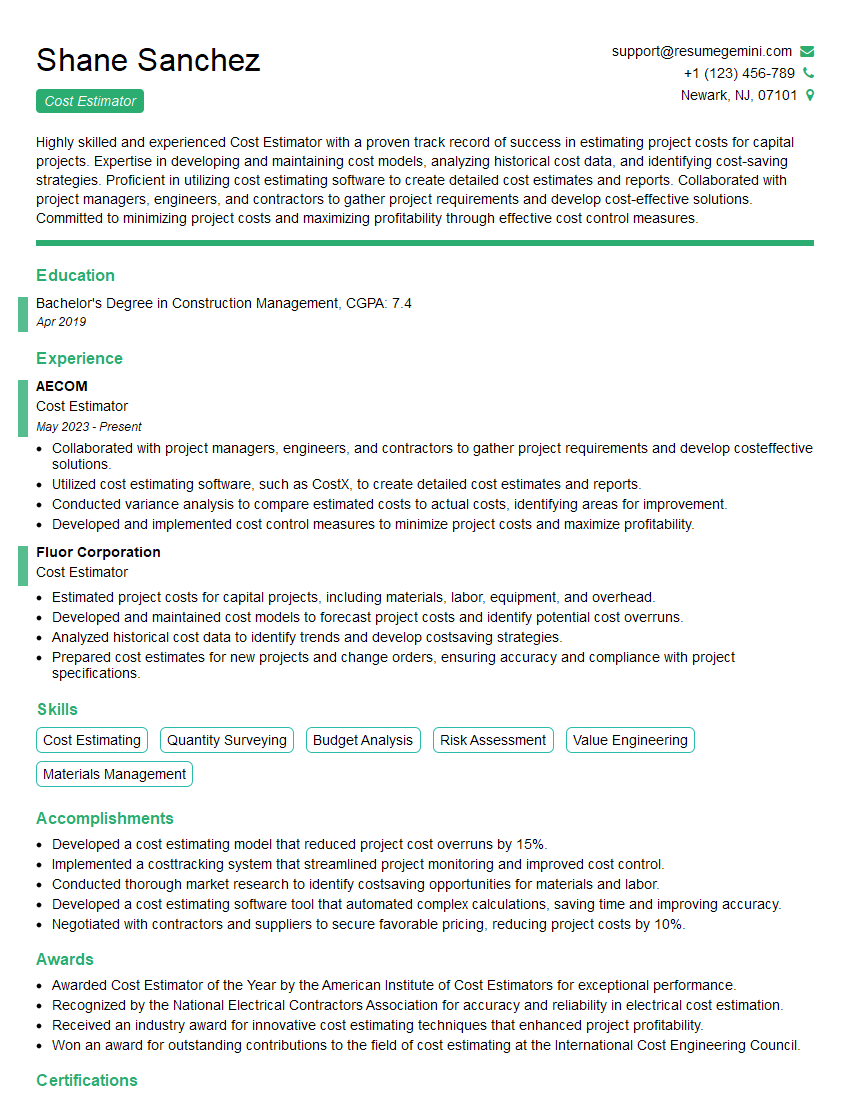
Mastering Value Control is crucial for career advancement in today’s competitive landscape. Demonstrating expertise in this area significantly enhances your marketability and opens doors to higher-level roles with increased responsibility and compensation. To maximize your job prospects, create an ATS-friendly resume that effectively showcases your skills and experience. We highly recommend using ResumeGemini, a trusted resource, to build a professional and impactful resume. ResumeGemini provides examples of resumes tailored to Value Control, ensuring your application stands out from the competition.
Explore more articles
Users Rating of Our Blogs
Share Your Experience
We value your feedback! Please rate our content and share your thoughts (optional).
What Readers Say About Our Blog
Very informative content, great job.
good