Unlock your full potential by mastering the most common Vegetation Management Techniques interview questions. This blog offers a deep dive into the critical topics, ensuring you’re not only prepared to answer but to excel. With these insights, you’ll approach your interview with clarity and confidence.
Questions Asked in Vegetation Management Techniques Interview
Q 1. Explain the principles of Integrated Vegetation Management (IVM).
Integrated Vegetation Management (IVM) is a holistic approach to managing vegetation that considers ecological, economic, and social factors. Instead of relying on a single, often aggressive, method like blanket herbicide spraying, IVM prioritizes a coordinated strategy that uses a variety of techniques tailored to specific situations. The core principles revolve around:
- Minimizing environmental impact: IVM aims to reduce the negative consequences on wildlife, water quality, and soil health. This often involves reducing herbicide use and favoring selective methods.
- Optimizing cost-effectiveness: By strategically employing various methods, IVM seeks to maximize effectiveness while minimizing long-term costs. This involves careful planning and assessment of risk.
- Prioritizing safety: Safety for workers, the public, and the environment is paramount. This means following strict safety protocols and choosing the least hazardous methods when possible.
- Long-term sustainability: IVM strives for sustainable solutions that minimize the need for repeated interventions. This might involve promoting biodiversity or restoring native vegetation.
- Adaptive management: IVM recognizes that conditions change. Regular monitoring and evaluation allows for adjustments to the management plan, ensuring its continued effectiveness.
For example, managing vegetation near a power line might involve a combination of targeted herbicide application on specific problem weeds, selective pruning of trees, and mowing in areas where growth is less dense. This approach is more efficient and environmentally friendly than simply clear-cutting the entire area.
Q 2. Describe different vegetation control methods and their suitability for various environments.
Vegetation control methods span a wide range, each with its own strengths and weaknesses. The suitability depends heavily on the specific environment, target vegetation, and desired outcome.
- Mechanical Methods: These include mowing, trimming, cutting, and clearing. They are effective for maintaining clear zones but can be labor-intensive and disruptive to the environment, especially in sensitive ecosystems. They are suitable for open areas, but less so for steep slopes or dense vegetation.
- Chemical Methods (Herbicides): Herbicides offer targeted control of specific weeds and unwanted plants. They are highly effective but require careful application and adherence to safety regulations to minimize environmental impact. They are suited for both open and dense areas, but selection of herbicide is crucial depending on the target species and environment.
- Biological Methods: These involve using natural enemies, such as insects or pathogens, to control unwanted vegetation. They are environmentally friendly but often slower acting and may not be suitable for all plant species or situations. They are best applied in conjunction with other methods for broader impact.
- Prescribed Burning: Controlled burns can effectively reduce biomass and alter vegetation composition. However, it’s a highly regulated method requiring specialized expertise and careful consideration of weather and fire risk. It is ideal for managing flammable vegetation but unsuitable for areas with high fire danger or sensitive ecosystems.
Choosing the right method requires a thorough assessment of the site, vegetation, and potential environmental impacts. For instance, using herbicides in a wetland requires a different approach than using them in a dry grassland, considering potential water contamination.
Q 3. What are the safety precautions involved in herbicide application?
Herbicide application demands stringent safety precautions to protect both human health and the environment. These include:
- Personal Protective Equipment (PPE): Always wear appropriate PPE, including gloves, goggles, respirators, and protective clothing, to prevent skin and respiratory exposure.
- Calibration and application technique: Properly calibrate the equipment to ensure the correct application rate and use techniques that minimize drift and runoff.
- Environmental protection: Avoid spraying near water bodies, sensitive ecosystems, and during periods of high wind or rain. Use appropriate buffer zones to protect non-target vegetation.
- Labeling and handling: Always follow the instructions on the herbicide label carefully. Store herbicides securely and dispose of them properly.
- Emergency response plan: Have a plan in place in case of accidental exposure or spills. This plan should include procedures for decontamination and medical attention.
- Training and certification: Ensure that applicators receive proper training and are certified to handle and apply herbicides.
Failure to follow these precautions can lead to serious health consequences for applicators and environmental damage. For example, improper herbicide application can contaminate groundwater and harm non-target organisms.
Q 4. How do you assess the risk associated with vegetation encroachment on power lines?
Assessing the risk of vegetation encroachment on power lines involves a multi-faceted approach that considers several factors:
- Vegetation type and density: Different species grow at different rates and have varying levels of flammability. Dense vegetation poses a greater risk than sparse vegetation.
- Proximity to power lines: Vegetation closer to the lines presents a higher risk of contact and short circuits.
- Line voltage and design: Higher voltage lines are more susceptible to damage from vegetation contact. The design of the power line also influences the risk.
- Climate and weather conditions: High winds, heavy snow, and ice storms can increase the risk of vegetation contact and damage.
- Fire risk: Flammable vegetation near power lines poses a fire hazard.
A risk assessment typically involves a visual inspection of the area, possibly supplemented by aerial surveys or specialized equipment. The assessment will then quantify the risk levels based on the factors mentioned above and propose appropriate management strategies. For example, areas with high risk may necessitate more frequent and aggressive vegetation management, while low-risk areas may require less intensive interventions.
Q 5. What are the environmental regulations related to vegetation management in your area?
Environmental regulations related to vegetation management vary significantly by location. However, common themes include:
- Herbicide use restrictions: Many jurisdictions have regulations governing the types and quantities of herbicides that can be used, often specifying buffer zones around water bodies and sensitive habitats.
- Protection of endangered species: Regulations may protect specific plant and animal species, requiring avoidance or mitigation of impacts during vegetation management activities.
- Water quality protection: Regulations aim to prevent herbicide runoff and other pollutants from entering water sources.
- Air quality regulations: Regulations may restrict activities like prescribed burning to minimize air pollution.
- Permitting requirements: Certain vegetation management activities may require permits, especially in protected areas or near water bodies.
It is crucial to be thoroughly familiar with all applicable regulations in a specific area before undertaking any vegetation management activities. Failure to comply with these regulations can result in significant penalties.
For example, in some regions, the use of certain herbicides near wetlands is strictly prohibited, requiring alternative management strategies.
Q 6. Explain the process of developing a vegetation management plan.
Developing a comprehensive vegetation management plan involves a structured process:
- Assessment and planning: This initial stage involves a thorough assessment of the area, including vegetation type, density, proximity to infrastructure, and environmental sensitivities. The goals and objectives of the plan are defined, along with the desired outcomes.
- Risk assessment: A risk assessment identifies potential hazards associated with vegetation growth, such as fire risk or power line contact.
- Method selection: Based on the assessment and risk assessment, appropriate vegetation management methods are selected. This often involves integrating several methods for optimal effectiveness and environmental protection.
- Implementation plan: A detailed implementation plan outlines the specific tasks, timelines, resources, and personnel required for each method.
- Monitoring and evaluation: The plan includes a monitoring program to assess the effectiveness of the chosen methods and make necessary adjustments to ensure that objectives are met. This often involves regular inspections and data collection.
- Reporting and documentation: Regular reporting documents the progress of the vegetation management program, highlighting achievements, challenges, and modifications made to the plan.
A well-developed plan is crucial for effective and sustainable vegetation management, ensuring that the chosen methods are efficient, safe, and environmentally sound. It also provides a framework for long-term management, adapting to changing conditions over time.
Q 7. How do you monitor the effectiveness of vegetation management programs?
Monitoring the effectiveness of vegetation management programs is critical for ensuring they achieve their objectives and are cost-effective. This involves:
- Regular inspections: Visual inspections, often supplemented by aerial surveys or remote sensing technologies, are used to assess vegetation growth and identify areas needing attention.
- Data collection: Quantitative data, such as vegetation density, height, and species composition, are collected to track changes over time.
- Performance indicators: Specific indicators, such as the number of vegetation-related incidents, cost per unit area managed, or the number of species present, are used to measure performance.
- Comparison with baseline data: Performance is assessed by comparing current data to baseline data collected before the program started.
- Adaptive management: Based on the monitoring results, the vegetation management plan may be adapted to improve efficiency, address unforeseen issues, or incorporate new techniques.
For example, if monitoring reveals that a particular herbicide is not effective against a specific weed, the plan can be adjusted to include an alternative method. Regular monitoring ensures that the vegetation management program remains relevant and effective over the long term.
Q 8. What are the key considerations when selecting vegetation control techniques for sensitive ecosystems?
Selecting vegetation control techniques for sensitive ecosystems requires a multifaceted approach prioritizing minimal environmental impact. We must carefully consider the target species, the ecosystem’s overall health, and potential effects on non-target organisms.
- Species-Specific Methods: For example, in a wetland, we might use biological controls like introducing specific insects that prey on invasive plants, rather than herbicides which could contaminate the water. For a rare plant species, targeted hand-removal might be the only acceptable option.
- Non-Target Impacts: Herbicide selection is crucial. We need to choose products with low toxicity to beneficial insects, amphibians, and birds, and with minimal soil runoff. For example, using a selective herbicide targeting only the invasive species is better than a broad-spectrum herbicide which could affect many plants.
- Ecosystem Considerations: The overall health of the ecosystem dictates the approach. A stressed ecosystem might be more vulnerable to disturbance from any control method. Monitoring soil health, water quality, and biodiversity before and after any intervention is crucial. We might choose more labor-intensive methods in sensitive areas to reduce environmental risk.
- Long-term Effects: We must consider the long-term implications of our chosen methods. For example, while mowing might seem like a simple solution, repeated mowing can damage the soil and change species composition over time. A holistic approach that considers the ecosystem’s future health is needed.
Q 9. Describe your experience with GIS mapping in vegetation management.
GIS mapping is indispensable in vegetation management. I’ve extensively used GIS software such as ArcGIS to map vegetation types, identify invasive species infestations, plan treatment zones, and track project progress. For example, in one project managing roadside vegetation, we used GIS to overlay vegetation maps with road safety data to prioritize areas needing treatment near blind curves or intersections where sightlines needed to be improved. This allowed for optimized resource allocation and minimized disruption to traffic flow. The GIS data also facilitated the creation of detailed reports with before-and-after images, demonstrating the effectiveness of our interventions. Beyond simple mapping, I have experience using spatial analysis tools to predict the spread of invasive species, helping us proactively manage potential problems before they become major issues.
Q 10. How do you handle unexpected issues or emergencies during vegetation management projects?
Unexpected issues are inevitable in vegetation management. My approach focuses on preparedness, quick response, and clear communication. For instance, if a wildfire starts near a treatment site during prescribed burning, the team must immediately implement the pre-defined emergency response plan. This might involve deploying fire suppression resources, contacting fire departments, and ensuring the safety of personnel and surrounding areas. In another scenario, if heavy rain causes erosion and herbicide runoff, a rapid assessment of the affected area is crucial to minimize environmental damage. We would collect water samples, contact regulatory agencies, and potentially implement soil remediation measures. The key is having a robust risk assessment and contingency plan in place for various scenarios. Open communication with stakeholders and timely reporting to regulatory agencies are paramount in mitigating the impact of any unforeseen event.
Q 11. Explain your understanding of herbicide classification and labeling.
Herbicide classification and labeling are critical for safe and effective use. Herbicides are classified by their mode of action (how they affect the plant), chemical family, and target species (broadleaf, grass, etc.). The label provides crucial information, including active ingredients, application rates, safety precautions, and environmental concerns. Understanding these classifications allows for targeted application, minimizing negative impacts on non-target species and the environment. For example, a selective herbicide might only affect broadleaf weeds, sparing grass species; while a non-selective herbicide would kill all vegetation. Always following label instructions precisely, including personal protective equipment (PPE) requirements like gloves and eye protection, is critical for user safety and regulatory compliance. Failure to do so could result in serious health consequences, property damage, or environmental contamination.
Q 12. What are the different types of vegetation cutting equipment and their applications?
Various vegetation cutting equipment exists, each suitable for specific applications:
- Chainsaws: Powerful for larger trees and woody vegetation, requiring skilled operators for safety.
- Brush Cutters (String Trimmers): Versatile for smaller vegetation, grasses, and weeds; ideal for areas inaccessible to larger equipment.
- Rotary Cutters: Efficient for large areas of grass and brush, but can damage trees and other vegetation if not used carefully.
- Flail Mowers: Similar to rotary cutters but with more maneuverability and less damage to underlying vegetation.
- Tractor-mounted Mowers: High-capacity mowing for expansive areas, increasing efficiency.
Equipment selection depends on factors such as vegetation type, terrain, access, and the desired outcome. For example, a delicate ecosystem might benefit from manual cutting, while a large, open area might require a tractor-mounted mower for efficiency.
Q 13. How do you ensure compliance with relevant environmental and safety standards?
Ensuring compliance with environmental and safety standards is paramount. This involves understanding and adhering to federal, state, and local regulations. This includes obtaining necessary permits before initiating any projects. For example, for herbicide applications, we need to follow strict protocols like maintaining buffer zones around sensitive areas and only using approved products at prescribed rates. Detailed records of applied chemicals, locations treated, PPE usage, and employee training must be kept. Safety protocols include regular equipment inspections, ensuring the team is properly trained, implementing emergency response plans, and conducting regular risk assessments. Compliance audits are also conducted to ensure continued adherence to standards. Failure to comply can lead to significant fines, project delays, and damage to reputation. Proactive compliance is a crucial part of responsible vegetation management.
Q 14. Describe your experience with vegetation management in different soil types.
Vegetation management strategies vary significantly depending on soil type. In sandy soils, water retention is lower, meaning plants may need more frequent watering if using methods like seeding or planting. Herbicide application also needs adjustments as sandy soils allow for easier runoff, potentially leading to greater environmental impact. Conversely, clay soils tend to retain moisture well but can be challenging for root establishment. Therefore, pre-treatment soil amendment might be necessary. Loamy soils represent an ideal medium, offering good drainage and water retention. My experience includes working across these various types, adjusting our approaches accordingly. This entails careful consideration of soil properties when choosing plants for restoration projects, applying appropriate irrigation strategies, and selecting suitable herbicides and application methods based on soil permeability and water retention characteristics. Soil testing before any major undertaking aids in informed decision-making and better project outcomes.
Q 15. What are the impacts of invasive species on vegetation management?
Invasive species wreak havoc on vegetation management by outcompeting native plants for resources like sunlight, water, and nutrients. Their aggressive growth can lead to significant ecological imbalances, altering entire habitats.
- Resource Depletion: Invasive plants often have higher growth rates and consume resources at a faster rate than native species, leading to a decline in native plant populations.
- Habitat Alteration: They can change the physical structure of habitats, making them unsuitable for native wildlife. For example, dense thickets of invasive vines can overshadow and kill native trees.
- Increased Fire Risk: Some invasive species are highly flammable, increasing the risk and intensity of wildfires, which further damage native vegetation.
- Economic Impacts: The control and management of invasive species can be extremely costly, impacting budgets allocated for other vegetation management activities.
For instance, the kudzu vine in the southeastern United States has completely overtaken vast areas, smothering native forests and impacting biodiversity. Effective management requires a multi-pronged approach, including early detection, prevention, and various control methods such as herbicide application, mechanical removal, and biological control.
Career Expert Tips:
- Ace those interviews! Prepare effectively by reviewing the Top 50 Most Common Interview Questions on ResumeGemini.
- Navigate your job search with confidence! Explore a wide range of Career Tips on ResumeGemini. Learn about common challenges and recommendations to overcome them.
- Craft the perfect resume! Master the Art of Resume Writing with ResumeGemini’s guide. Showcase your unique qualifications and achievements effectively.
- Don’t miss out on holiday savings! Build your dream resume with ResumeGemini’s ATS optimized templates.
Q 16. How do you manage vegetation in areas with high wildlife activity?
Managing vegetation in areas with high wildlife activity requires a delicate balance between maintaining healthy vegetation and protecting animal habitats. It’s crucial to employ methods that minimize disturbance and harm to wildlife.
- Timing: Avoid vegetation management activities during sensitive periods like breeding seasons or migration times. This helps prevent disruption to animal life cycles.
- Method Selection: Opt for less invasive techniques, such as selective mowing or targeted herbicide application, instead of broad-spectrum treatments. Consider using hand tools to avoid harming animals in sensitive areas.
- Habitat Preservation: Create buffer zones around sensitive wildlife habitats to minimize the impact of vegetation management activities. Leaving untouched areas provides vital refuge for animals.
- Monitoring: Regular monitoring after vegetation management is crucial to assess the impact on wildlife populations and adjust strategies as needed.
For example, when managing vegetation near nesting birds, we might employ techniques like mowing around nests, leaving untouched areas for cover and nesting, and conducting work outside breeding season. Close collaboration with wildlife biologists and ecologists is essential to ensure environmentally responsible practices.
Q 17. Describe your experience with budget management in vegetation management projects.
Budget management is critical in vegetation management. I have extensive experience developing detailed budgets, tracking expenses, and ensuring projects stay within allocated funds.
- Detailed Budgeting: I begin by meticulously estimating costs for all aspects, including labor, equipment, materials (herbicides, seeds, etc.), permits, and unforeseen contingencies. I use budgeting software to track progress and maintain accuracy.
- Value Engineering: I consistently explore cost-effective methods without compromising quality. This might involve negotiating favorable contracts with suppliers, utilizing less expensive yet effective techniques, or optimizing labor scheduling.
- Regular Monitoring: I monitor expenses throughout the project lifecycle, comparing actual costs against the budget regularly. This helps identify potential overruns and allows for timely adjustments.
- Reporting: I provide transparent and regular budget reports to stakeholders, highlighting progress and any deviations from the plan.
In a recent project, we were able to reduce costs by 15% by optimizing herbicide application techniques and negotiating bulk discounts for materials. This allowed us to complete the project on time and within budget while maintaining high quality.
Q 18. How do you communicate effectively with stakeholders regarding vegetation management plans?
Effective communication with stakeholders is paramount. I employ a multi-faceted approach, ensuring transparency and inclusivity throughout the process.
- Initial Consultation: I begin with thorough consultations to understand stakeholder needs and concerns, gathering input on preferences and priorities.
- Clear Communication: I present vegetation management plans in clear, concise language, avoiding technical jargon. Visual aids like maps and diagrams enhance understanding.
- Regular Updates: I provide timely and regular updates on project progress, including any challenges encountered and how they are being addressed.
- Feedback Mechanisms: I establish open communication channels for feedback and address concerns promptly and professionally.
- Community Engagement: For projects affecting public spaces, community engagement events are helpful in explaining the plan and answering questions.
In one instance, I held public forums to present a riparian buffer restoration project. This led to valuable community input and resulted in a plan that better addressed local concerns, improving buy-in and project success.
Q 19. What are the key performance indicators (KPIs) for evaluating vegetation management success?
Key Performance Indicators (KPIs) are crucial for evaluating the success of vegetation management projects. They provide quantifiable measures to assess progress and identify areas for improvement.
- Species Composition: Monitoring the abundance of target species (native plants) and invasive species. This helps assess the effectiveness of control measures.
- Cover Percentage: Measuring the percentage of ground covered by desirable vegetation. This shows the overall health and density of the vegetation.
- Biomass: Measuring the total weight of vegetation. This indicates the overall productivity of the managed area.
- Biodiversity: Assessing the variety of plant and animal species present. A healthy ecosystem should have high biodiversity.
- Cost-effectiveness: Calculating the cost per unit area managed. This helps to optimize resource allocation.
For example, tracking the reduction in invasive species cover percentage over time can demonstrate the effectiveness of an invasive species management program. Regular monitoring of these KPIs is critical for adaptive management, allowing for adjustments to improve results.
Q 20. Explain the importance of regular maintenance in vegetation management.
Regular maintenance is crucial for long-term vegetation management success. It prevents the resurgence of unwanted vegetation and ensures the sustainability of management efforts.
- Early Intervention: Addressing small problems early on is far more efficient and cost-effective than dealing with large-scale infestations later.
- Preventing Infestations: Regular maintenance prevents the establishment and spread of invasive species or undesirable plants.
- Maintaining Desired Vegetation: Regular pruning, mowing, or other maintenance activities ensure the health and vigor of desirable plants.
- Protecting Infrastructure: Maintaining vegetation around infrastructure, such as power lines or roads, prevents damage and improves safety.
Imagine a park where weeds are allowed to grow unchecked. It quickly becomes unkempt and unattractive. Regular weeding and maintenance keep the park beautiful and functional, showcasing the importance of proactive care.
Q 21. How do you address vegetation growth near water bodies or wetlands?
Managing vegetation near water bodies and wetlands demands extra care to protect water quality and aquatic ecosystems. It requires a targeted and environmentally sensitive approach.
- Erosion Control: Proper vegetation management helps prevent soil erosion, which can lead to water pollution from sediment and runoff.
- Water Quality Protection: Avoiding the use of herbicides and pesticides near water bodies is crucial to prevent water contamination.
- Native Species Selection: Prioritize the use of native plants that are well-suited to riparian zones (areas along rivers and streams). These plants are more adapted to the conditions and less likely to cause problems.
- Mechanical Methods: Utilize mechanical methods like mowing or hand-clearing where feasible to minimize environmental impact.
- Buffer Zones: Establish buffer zones of native vegetation along the water’s edge. These act as filters, trapping pollutants and preventing runoff.
For example, when managing vegetation near a lake, we might use manual methods such as selective cutting and removal of invasive species, while ensuring that any debris is removed to prevent waterway blockage and pollution. We would prioritize native vegetation to ensure biodiversity and ecosystem health.
Q 22. Describe your experience with using remote sensing technology for vegetation monitoring.
Remote sensing is invaluable for vegetation monitoring, allowing for large-scale assessments impossible with ground-based methods alone. I have extensive experience using technologies like multispectral and hyperspectral imagery, LiDAR (Light Detection and Ranging), and satellite data (e.g., Landsat, Sentinel). For instance, in a recent project managing vegetation along a major power transmission line, we used multispectral imagery from drones to identify areas with excessive tree growth encroaching on the lines. This allowed for targeted trimming, minimizing environmental impact and maximizing efficiency compared to blanket clearing. The data analysis involved using GIS software to process the imagery, creating vegetation density maps that highlighted risk zones. We then used this information to optimize the scheduling and routes for our crews.
Hyperspectral imagery, with its ability to detect subtle differences in plant health and species, was particularly useful in identifying invasive species early on, allowing for prompt intervention. This preemptive approach prevents the species from spreading and drastically reduces the long-term management effort. Similarly, LiDAR provided detailed 3D information on tree heights and locations, critical for ensuring safe clearances around power lines and predicting potential hazards.
Q 23. What is your approach to dealing with complaints related to vegetation management activities?
Addressing complaints regarding vegetation management is crucial for maintaining positive relationships with the community. My approach involves a three-step process: first, actively listening to the complainant and validating their concerns. This demonstrates respect and shows that we’re taking their feedback seriously. Second, I thoroughly investigate the complaint, reviewing the relevant work orders, site plans, and any photographic evidence. This step often includes a site visit to assess the situation firsthand. Finally, I communicate my findings transparently to the complainant, explaining the actions taken or planned to address their concern. This might include remedial work, adjustments to future plans, or simply providing further clarification on the methodology employed. For example, a complaint about damaged landscaping during vegetation trimming might lead to replanting or compensation, and a future review of the procedures to prevent similar incidents.
Q 24. How do you ensure the long-term sustainability of your vegetation management strategies?
Long-term sustainability is paramount in vegetation management. My strategies center around integrated pest management (IPM) principles, prioritizing ecological balance and minimizing environmental impact. This means moving away from solely relying on chemical herbicides towards a more holistic approach. This includes:
- Promoting biodiversity: Planting native species strengthens the ecosystem, creating a more resilient and naturally pest-resistant environment.
- Targeted treatments: Using methods like selective herbicide application, mechanical removal (e.g., mowing, trimming), and biological controls (e.g., introducing natural predators) to minimize disruption to the overall ecosystem.
- Monitoring and adaptive management: Regularly monitoring vegetation health and adjusting strategies based on the results. This might involve changing herbicide types or adjusting treatment schedules based on the observed response.
- Collaboration and education: Working with stakeholders, land managers, and the public to create awareness and foster a shared commitment to sustainable practices.
For instance, instead of broad-spectrum herbicide use, we might employ species-specific herbicides or biological controls to manage invasive plants, allowing native species to thrive.
Q 25. What is your experience with using different types of herbicides and their dilutions?
My experience encompasses a wide range of herbicides, each with its own strengths, weaknesses, and application requirements. I’m familiar with both systemic and contact herbicides and understand the importance of selecting the appropriate herbicide for the target species and the environmental conditions. I am proficient in calculating dilutions according to label instructions and always adhere to safety regulations concerning personal protective equipment (PPE) and proper disposal methods. For instance, glyphosate is frequently used for broadleaf weed control, but its dilution varies based on the specific formulation and target plant. Always checking the label for precise instructions is crucial. I’m also experienced with using less-toxic, bio-based herbicides as a more sustainable alternative wherever possible, always considering their efficacy alongside environmental impact. Accurate dilution is crucial; incorrect dilutions can lead to insufficient control, damage to non-target plants, or even environmental contamination.
Q 26. Describe your experience with vegetation management in urban vs. rural settings.
Vegetation management in urban vs. rural settings presents significantly different challenges. In urban areas, the focus is often on aesthetics, safety, and minimizing disruption to infrastructure. Techniques might include pruning trees to avoid overhead wire contact, removing weeds from sidewalks and pavements, and maintaining green spaces. Safety is paramount, requiring careful consideration of pedestrian and vehicular traffic. In contrast, rural settings often involve larger areas and different priorities, such as preventing wildfire hazards, managing agricultural land, or protecting biodiversity. Methods might range from prescribed burning to large-scale herbicide application, requiring considerations for environmental impact and potential effects on wildlife. For example, in an urban park, we might selectively prune trees, carefully removing only dead or hazardous branches, maintaining the overall aesthetic value. In a rural forested area prone to wildfires, we might implement a controlled burn to remove underbrush and reduce fire risk.
Q 27. What are the common challenges encountered in vegetation management, and how do you address them?
Common challenges in vegetation management include:
- Invasive species: These plants often outcompete native species and require aggressive control measures.
- Budgetary constraints: Effective vegetation management can be costly, particularly in large areas. Careful planning and prioritization are essential.
- Environmental regulations: Compliance with environmental laws and regulations is crucial to avoid legal issues and protect the ecosystem.
- Public perception: Gaining public acceptance of management strategies can be challenging, especially if they involve herbicide use or tree removal.
- Technological limitations: Accessing and managing vegetation in difficult-to-reach areas can be problematic.
Addressing these requires a multifaceted approach. For invasive species, an IPM strategy is crucial; for budget constraints, prioritisation using risk assessment and remote sensing can optimize resource allocation. Strong communication with stakeholders is crucial to build trust and manage public perception. Overcoming technological limitations may involve utilizing drones or other remote technologies for data collection and treatment application.
Key Topics to Learn for Vegetation Management Techniques Interview
- Integrated Vegetation Management (IVM): Understand the principles of IVM, including its ecological, economic, and social aspects. Consider its application in various environments.
- Herbicide Application Techniques: Explore different application methods (e.g., aerial, ground, foliar), their effectiveness, safety protocols, and environmental impact. Be prepared to discuss specific herbicide types and their appropriate use.
- Mechanical Vegetation Control: Discuss various mechanical methods like mowing, cutting, and mulching. Analyze their advantages, disadvantages, and suitability for different vegetation types and terrains.
- Prescribed Burning: Understand the principles of prescribed fire, including planning, execution, and monitoring. Discuss safety procedures and environmental considerations.
- Vegetation Monitoring and Assessment: Explain techniques for monitoring vegetation health and growth, including data collection, analysis, and reporting. Discuss the use of GIS and remote sensing technologies.
- Environmental Regulations and Compliance: Demonstrate knowledge of relevant environmental laws and regulations pertaining to vegetation management. Be ready to discuss permit applications and best practices for compliance.
- Risk Assessment and Mitigation: Explain how to assess risks associated with vegetation management practices, such as fire hazards or ecological impacts. Discuss strategies for mitigating these risks.
- Economic Considerations: Understand the cost-effectiveness of different vegetation management techniques and how to justify choices based on economic factors.
Next Steps
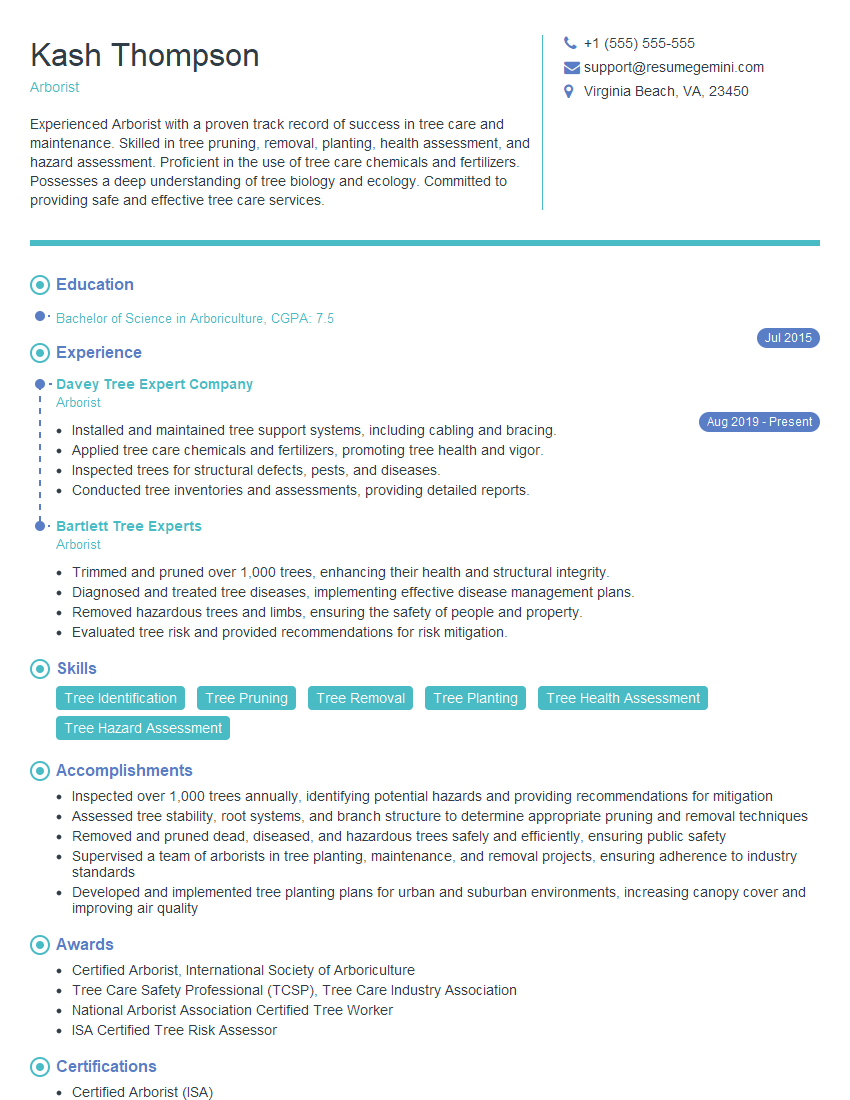
Mastering Vegetation Management Techniques is crucial for career advancement in this dynamic field. Proficiency in these techniques positions you for leadership roles and opens doors to diverse opportunities within the industry. To maximize your job prospects, creating an ATS-friendly resume is essential. A well-structured resume highlights your skills and experience effectively, increasing your chances of landing interviews. ResumeGemini is a trusted resource that can help you build a professional and impactful resume. Take advantage of their tools and resources to craft a compelling document that showcases your qualifications. Examples of resumes tailored to Vegetation Management Techniques are available to guide your process.
Explore more articles
Users Rating of Our Blogs
Share Your Experience
We value your feedback! Please rate our content and share your thoughts (optional).
What Readers Say About Our Blog
Very informative content, great job.
good