Interviews are more than just a Q&A session—they’re a chance to prove your worth. This blog dives into essential Vehicle Design and Development interview questions and expert tips to help you align your answers with what hiring managers are looking for. Start preparing to shine!
Questions Asked in Vehicle Design and Development Interview
Q 1. Explain the process of designing a vehicle’s chassis for optimal safety and handling.
Designing a vehicle chassis for optimal safety and handling involves a complex interplay of factors, focusing on structural integrity, weight distribution, and suspension geometry. It’s like building a strong, yet agile, skeleton for the vehicle.
Structural Integrity: The chassis must withstand significant forces during impacts. This requires careful selection of materials (high-strength steel, aluminum alloys, or composites) and the use of finite element analysis (FEA) to optimize the structure’s strength-to-weight ratio. We strategically place reinforcements in high-stress areas identified through simulations. For instance, crash simulations predict impact forces, guiding the design of crumple zones to absorb energy and protect occupants.
Weight Distribution: Even weight distribution is crucial for handling. An uneven distribution can lead to oversteer or understeer. We achieve this by carefully positioning the engine, transmission, and other heavy components. Center of gravity (CG) calculations are essential here; a lower CG generally improves handling and stability.
Suspension Geometry: The suspension system significantly impacts handling. We design the suspension geometry – including control arm angles, spring rates, and damper characteristics – to optimize the vehicle’s response to different driving conditions. Consider a sports car versus an SUV; their suspension designs will drastically differ to achieve their intended handling characteristics.
Safety Features Integration: The chassis design must accommodate various safety features like airbags, seatbelts, and crumple zones. These elements are not merely add-ons but integral parts of the chassis design, demanding careful consideration of their placement and interaction with the overall structure.
Q 2. Describe your experience with CAD software for vehicle design.
I have extensive experience using various CAD software packages, including CATIA, SolidWorks, and NX. My proficiency extends beyond basic modeling to encompass advanced features like surface modeling, assembly management, and design for manufacturing (DFM). For example, in a recent project designing a new electric vehicle platform, I used CATIA to create complex 3D models of the chassis, body panels, and interior components. This involved creating detailed parametric models, allowing for easy modification and optimization throughout the design process. We leveraged the software’s simulation capabilities for early validation of designs, avoiding costly physical prototypes.
Furthermore, I’m proficient in using CAD software for generating manufacturing drawings, ensuring seamless transition from design to production. My experience extends to managing large assemblies and collaborating effectively within a team using cloud-based platforms for version control and data sharing.
Q 3. How do you ensure aerodynamic efficiency in vehicle design?
Aerodynamic efficiency is crucial for reducing fuel consumption and improving vehicle performance. We achieve this through a combination of computational fluid dynamics (CFD) simulations and wind tunnel testing. Think of it like shaping a body to effortlessly slice through the air.
CFD Simulations: CFD software helps us visualize and analyze airflow around the vehicle. We use this data to identify areas of high drag and optimize the vehicle’s shape, reducing drag coefficient (Cd). For instance, we might simulate different spoiler designs to find the best balance between downforce and drag.
Wind Tunnel Testing: This complements CFD simulations, providing real-world validation of our designs. We use wind tunnels to measure aerodynamic forces and refine our designs based on experimental data. The data obtained from the wind tunnel will influence the final design iterations, particularly in fine-tuning aspects like underbody aerodynamics and air intake design.
Design Features: Specific design elements like streamlined body shapes, underbody panels, and carefully designed air intakes and outlets contribute significantly to aerodynamic efficiency. For example, designing an undertray smooths airflow under the vehicle, minimizing drag and improving stability at high speeds.
Q 4. What are the key considerations for designing a vehicle’s interior for ergonomics and comfort?
Designing a comfortable and ergonomic interior involves considering the human-machine interface (HMI) and ensuring ease of use and occupant well-being. It’s about creating a space that feels intuitive and relaxing.
Ergonomics: This includes optimizing the position of seats, steering wheel, pedals, and controls to reduce driver fatigue and discomfort. We use anthropometric data – measurements of the human body – to ensure that the design accommodates people of different sizes and builds. We might conduct ergonomic studies with potential users to validate our designs.
Comfort: Factors like seat cushioning, climate control, noise insulation, and vibration damping significantly impact comfort levels. Material selection plays a crucial role here. We carefully choose materials based on their tactile qualities, durability, and ability to maintain a comfortable temperature.
Visibility and Accessibility: Ensuring good visibility through the windows and effective placement of controls and displays is essential for safety and ease of use. Accessibility features for people with disabilities must also be considered.
Space Optimization: Maximizing interior space while maintaining structural integrity is a design challenge. Clever packaging of components, such as the placement of the HVAC system and infotainment units, is important to improve passenger comfort and space.
Q 5. Explain the role of CAE (Computer-Aided Engineering) in vehicle design and development.
Computer-Aided Engineering (CAE) plays a pivotal role throughout the vehicle design and development process. It’s the virtual testing ground where we evaluate and refine our designs before physical prototyping. Think of it as a digital twin of the vehicle, enabling us to perform extensive simulations.
Structural Analysis (FEA): This helps determine the structural integrity of components under various loading conditions, including crash simulations. It’s crucial for ensuring passenger safety.
Fluid Dynamics (CFD): CFD helps optimize aerodynamic performance and reduce drag, improving fuel efficiency and high-speed stability.
Thermal Analysis: This analysis is vital for optimizing the cooling systems of the engine and battery (in electric vehicles) to maintain optimal operating temperatures.
Durability Analysis: We use CAE tools to predict the fatigue life of components and ensure their longevity under typical operating conditions. This is important for cost savings by reducing warranty issues and improving durability.
NVH (Noise, Vibration, and Harshness): CAE tools are used to simulate and mitigate noise and vibration, enhancing passenger comfort and perceived quality.
Q 6. How do you balance performance, cost, and safety in vehicle design?
Balancing performance, cost, and safety is a constant challenge in vehicle design. It requires a multidisciplinary approach involving engineers, designers, and management. We use a structured approach to achieve this balance.
Target Setting: We establish clear targets for performance (e.g., acceleration, fuel efficiency), cost (manufacturing cost, material cost), and safety (crashworthiness, regulatory compliance). These targets are based on market analysis, competitor benchmarking, and regulatory requirements.
Trade-off Analysis: Often, improvements in one area come at the expense of others. We use systematic analysis to identify the optimal trade-offs. For instance, using lighter materials improves performance and fuel efficiency, but it might increase the cost. We evaluate different combinations of materials and designs to find the best balance.
Design Optimization: We utilize optimization techniques, often integrated within CAE software, to find designs that meet our targets efficiently. This involves exploring various design parameters and evaluating their impact on performance, cost, and safety.
Value Engineering: This focuses on identifying and implementing cost reductions without compromising performance or safety. We frequently revisit design choices to eliminate unnecessary complexity or explore more cost-effective materials and manufacturing processes.
Q 7. Describe your experience with vehicle dynamics simulation.
I have extensive experience with vehicle dynamics simulation using software like ADAMS and CarSim. These tools allow us to virtually test and optimize the vehicle’s handling, ride comfort, and stability before physical prototypes are built.
Handling Simulation: We simulate various maneuvers, such as lane changes and emergency braking, to evaluate the vehicle’s response and stability. This involves modeling the chassis, suspension, steering, and tire characteristics. These simulations help fine-tune suspension geometry and steering parameters to optimize handling and safety.
Ride Comfort Simulation: We simulate the vehicle’s response to different road surfaces to assess ride comfort. This allows us to optimize the suspension parameters, dampers, and body mounts to achieve a comfortable ride, reducing vibrations and shocks.
Stability Analysis: We simulate critical maneuvers and emergency situations to evaluate vehicle stability, ensuring it remains predictable and controllable under demanding conditions. These simulations help to predict and prevent issues such as oversteer, understeer, and rollover.
Control System Design: Vehicle dynamics simulations are used in conjunction with control systems design to optimize the performance of active safety systems like ABS, ESC, and adaptive cruise control.
Q 8. How do you address NVH (Noise, Vibration, and Harshness) concerns in vehicle design?
Addressing NVH (Noise, Vibration, and Harshness) is crucial for creating a comfortable and refined driving experience. It’s a multifaceted challenge tackled throughout the design process, from material selection to structural optimization.
We start by identifying NVH sources using simulations (like Finite Element Analysis or FEA) and physical testing. For instance, engine noise is addressed through better engine mounts, improved intake and exhaust systems, and sound-deadening materials in the engine bay. Road noise is reduced using stiffer body structures, advanced tire designs, and underbody treatments that absorb vibrations. Wind noise is minimized through aerodynamic design, careful sealing of gaps around windows and doors, and optimized mirror shapes.
Then, we use various techniques to mitigate the identified issues. This can include adding damping materials (like constrained layer damping) to absorb vibrations, optimizing component stiffness and mass distribution to reduce resonant frequencies, and employing active noise cancellation systems to counteract unwanted sounds. For example, strategically placed sound-absorbing materials in the dashboard and door panels can effectively reduce interior noise levels. Finally, thorough testing in both controlled environments and real-world driving conditions is vital to ensure that the NVH performance meets target specifications.
Q 9. Explain the design process for crashworthiness and safety features.
Crashworthiness and safety feature design is a rigorous process prioritizing occupant protection in various impact scenarios. It starts with defining safety targets, adhering to regulatory standards (like those set by NHTSA and Euro NCAP), and understanding potential crash modes (frontal, side, rollover).
We utilize sophisticated computer simulations, particularly FEA, to model the vehicle’s structural response during crashes. This allows us to optimize the design of crucial safety elements like the crumple zones (designed to absorb impact energy), intrusion beams (to prevent cabin deformation), and airbags (to protect occupants). We also design the seatbelts to restrain occupants effectively, ensuring they remain positioned in a safe area.
Physical crash testing is also crucial. It validates our simulations and allows us to fine-tune our designs. We employ high-speed cameras and other sensors to record data, providing a detailed analysis of the vehicle’s behavior during impact. We use this data to iterate on designs, continuously improving safety performance. The entire process is iterative, with simulations, testing, and design revisions occurring repeatedly until all targets are met and regulations are surpassed.
Q 10. What are the key considerations for designing a vehicle’s powertrain for efficiency and performance?
Powertrain design for efficiency and performance requires a careful balance of several factors. For efficiency, we prioritize factors such as engine downsizing (using smaller engines with turbocharging to maintain performance), the use of lightweight materials, and the optimization of the combustion process to minimize fuel consumption. For example, the adoption of direct injection systems and advanced valve timing control improves combustion efficiency.
Performance considerations focus on maximizing power output and torque across the engine’s operating range. This involves optimizing engine components like the intake manifold and exhaust system, using advanced turbocharging technologies, and tuning the engine control unit (ECU) to achieve the desired performance characteristics. Transmission design is also crucial – a well-engineered transmission system that provides smooth shifting and optimal gear ratios is vital for achieving a balance of fuel economy and performance.
Hybrid and electric powertrains present unique design challenges and opportunities. For example, the optimal placement and size of the battery pack for an electric vehicle need careful consideration to minimize its impact on vehicle handling, passenger space and weight distribution. Careful integration of the electric motor with the chassis and other powertrain components is also crucial.
Q 11. How do you manage design changes and revisions throughout the development process?
Managing design changes and revisions throughout the development process requires a robust engineering change management (ECM) system. This involves clearly defining change requests, assessing their impact on the design, cost, and schedule, and implementing a controlled process for approving and implementing those changes. We often use a digital Product Lifecycle Management (PLM) system to track all design changes, ensuring that all team members have access to the latest updated information.
A well-defined change request form helps to standardize this process, ensuring that all relevant information is captured. This form typically includes the reason for the change, the proposed solution, and the impact assessment. Before approval, design changes undergo rigorous reviews by engineers, designers and manufacturing experts. This minimizes the potential for conflicts and issues during production.
Traceability is key; we maintain a clear record of each modification, its rationale, and the individuals involved. This is critical for auditing purposes and for ensuring that issues are properly tracked and resolved. Regular design reviews help proactively identify and address potential issues early in the development cycle. This reduces the need for costly and time-consuming changes later in the process.
Q 12. Describe your experience with design for manufacturing (DFM).
Design for Manufacturing (DFM) is a critical aspect of vehicle design, focusing on creating products that are easily and cost-effectively manufactured. My experience involves collaborating closely with manufacturing engineers from the earliest stages of design to ensure manufacturability. This includes considering factors such as material selection (choosing materials readily available and easily processed), part simplification (reducing the number of parts and simplifying assembly processes), and tolerance analysis (defining acceptable variations in component dimensions to prevent assembly issues).
For example, during the design of a body panel, we would ensure that it can be stamped effectively using available tooling and that the design minimizes the need for complex welding or joining processes. We might use injection molding for smaller parts and select materials that resist warping or cracking during manufacturing. We extensively use simulations to predict manufacturing processes and identify potential problems before they arise in the production line.
DFM also integrates with supply chain management, considering the availability and cost of materials and the capabilities of our manufacturing partners. Successful DFM leads to reduced manufacturing costs, shorter lead times, and higher product quality.
Q 13. How do you incorporate sustainability considerations into vehicle design?
Sustainability is a key consideration in modern vehicle design. We aim to reduce the environmental impact throughout the vehicle’s lifecycle, from manufacturing to end-of-life. This involves using lightweight, recyclable materials (like aluminum and recycled steel), improving fuel efficiency (or using electric powertrains), and designing for ease of disassembly and recycling.
Lightweighting reduces fuel consumption and emissions, while material selection focuses on using recycled content and materials with lower carbon footprints. For instance, we might explore the use of bio-based materials or recycled plastics for interior components. Design for disassembly (DfD) is incorporated to simplify the separation and recycling of different components at the end of the vehicle’s life. This involves using standardized fasteners, modular designs, and clear component labeling to streamline the recycling process.
We also consider the environmental impact of the manufacturing process. This includes reducing energy consumption, minimizing waste generation, and using cleaner manufacturing techniques. Furthermore, life cycle assessments (LCAs) are used to quantify the overall environmental impact of the vehicle, allowing us to identify areas for improvement across its entire lifecycle.
Q 14. What are the different types of vehicle body structures, and what are their advantages and disadvantages?
Vehicle body structures are broadly classified into several types, each with its own advantages and disadvantages:
- Unibody (Monocoque) Construction: The body shell forms the structural backbone of the vehicle. Advantages: Lightweight, high stiffness-to-weight ratio, good crashworthiness. Disadvantages: More complex to manufacture, less resistant to localized damage.
- Body-on-Frame Construction: A separate chassis frame provides the structural support, with the body panels mounted onto it. Advantages: Easier to repair, more robust for off-road vehicles, allows for greater design flexibility. Disadvantages: Heavier, lower stiffness-to-weight ratio, typically less crashworthy than unibody structures.
- Space Frame Construction: A framework of interconnected tubes or beams forms the vehicle’s skeleton. Advantages: Very lightweight and high strength, excellent crash absorption. Disadvantages: Complex to manufacture, more expensive.
The choice of structure depends on factors like the vehicle type (e.g., passenger car, SUV, truck), target weight, cost constraints, and desired safety performance. For example, passenger cars are mostly unibody for fuel efficiency, while pickup trucks and SUVs might favor body-on-frame for their higher load-carrying capacity. High-performance vehicles might opt for space frame for weight optimization and crash safety.
Q 15. Explain your understanding of vehicle regulations and standards (e.g., safety, emissions).
Vehicle regulations and standards are crucial for ensuring safety, environmental responsibility, and consistent performance. These regulations vary by region and often involve a complex interplay of laws, industry standards, and testing protocols. Key areas include:
- Safety Standards: These cover aspects like crashworthiness (e.g., occupant protection, pedestrian safety), braking performance, lighting, and visibility. Organizations like the National Highway Traffic Safety Administration (NHTSA) in the US and the European New Car Assessment Programme (Euro NCAP) set benchmarks that influence design decisions. For instance, the design of crumple zones in a vehicle’s front and rear is directly influenced by crash test standards and regulations aimed at mitigating the impact on occupants.
- Emission Standards: These focus on reducing harmful pollutants from vehicle exhaust, including carbon monoxide (CO), nitrogen oxides (NOx), and particulate matter (PM). Regulations like the European Union’s Euro standards and the US Environmental Protection Agency’s (EPA) standards drive the development of cleaner engines and emission control systems. Meeting these standards often requires sophisticated engine management systems, catalytic converters, and exhaust gas recirculation (EGR) systems. The design of the entire exhaust system is a direct consequence of emission regulations.
- Fuel Efficiency Standards: These aim to improve fuel economy and reduce greenhouse gas emissions. Regulations often mandate specific minimum fuel economy levels for different vehicle classes. This drives innovations in engine design, aerodynamics, and lightweighting strategies. For example, the focus on aerodynamic design leads to features like carefully sculpted body panels and underbody covers to reduce drag and improve fuel efficiency.
Understanding these regulations is paramount for compliance and avoiding costly recalls or legal issues. It necessitates close collaboration with regulatory bodies and thorough testing throughout the design and development process.
Career Expert Tips:
- Ace those interviews! Prepare effectively by reviewing the Top 50 Most Common Interview Questions on ResumeGemini.
- Navigate your job search with confidence! Explore a wide range of Career Tips on ResumeGemini. Learn about common challenges and recommendations to overcome them.
- Craft the perfect resume! Master the Art of Resume Writing with ResumeGemini’s guide. Showcase your unique qualifications and achievements effectively.
- Don’t miss out on holiday savings! Build your dream resume with ResumeGemini’s ATS optimized templates.
Q 16. How do you handle conflicting design requirements?
Conflicting design requirements are common in vehicle development. For example, you might need to balance safety, performance, and cost. My approach involves a structured process:
- Identify and Document Conflicts: Clearly define all conflicting requirements, quantifying their impact whenever possible. For example, using lighter materials improves fuel economy but might compromise safety in a crash.
- Prioritization and Trade-off Analysis: Rank requirements based on importance using methods such as weighted scoring or Pugh matrix. This involves carefully weighing the pros and cons of different design choices and making informed trade-offs. Consider the cost of implementation against its impact on performance or safety.
- Compromise and Optimization: Seek solutions that minimize the negative impact of compromises. This often involves iterative design, simulation, and testing to find optimal solutions that meet the most critical requirements.
- Decision Making and Documentation: Clearly document the rationale behind all design choices and trade-offs. This is vital for transparency, accountability, and future reference.
For instance, if lighter materials compromise crash safety, I might explore alternative materials, design enhancements, or advanced safety systems to compensate. The decision-making process should be transparent and involve all relevant stakeholders.
Q 17. Describe your experience with different materials used in vehicle construction.
My experience encompasses a wide range of materials used in vehicle construction, each with its own strengths and weaknesses:
- Steels: High-strength, low-alloy (HSLA) steels are commonly used for their balance of strength, formability, and cost-effectiveness. Advanced high-strength steels (AHSS) offer even greater strength for lighter weight designs, especially in critical safety zones.
- Aluminum Alloys: These are lighter than steel, improving fuel efficiency. However, they can be more expensive and may require specialized joining techniques. Aluminum is frequently used in body panels, engine components, and suspension parts.
- Plastics and Composites: These offer design flexibility and lightweighting opportunities, often used in interior trim, exterior panels, and structural components. Carbon fiber reinforced polymers (CFRP) are increasingly used in high-performance vehicles for their exceptional strength-to-weight ratio, but they come at a high cost.
- Magnesium Alloys: These are even lighter than aluminum but more challenging to process. They find use in specific components where weight reduction is crucial, such as wheels and engine parts.
Material selection depends on factors like cost, weight, strength, durability, recyclability, and manufacturing feasibility. Often, a combination of materials is used to optimize vehicle performance.
Q 18. What are your preferred design tools and methodologies?
My preferred design tools and methodologies include:
- Computer-Aided Design (CAD) Software: I’m proficient in software such as CATIA, NX, and SolidWorks for 3D modeling, simulation, and design visualization.
CAD software allows for complex geometric modeling, simulations to assess design strength, and manufacturing process planning. - Computer-Aided Engineering (CAE) Tools: I utilize tools like ANSYS and ABAQUS for finite element analysis (FEA) to predict the structural behavior of vehicle components under various loads, ensuring safety and durability.
FEA simulations help to optimize designs and predict component failures before physical prototyping. - Design for Manufacturing (DFM): This methodology ensures designs are optimized for efficient and cost-effective manufacturing processes. This involves considering factors like material selection, part complexity, and assembly procedures.
- Design for Six Sigma (DFSS): This approach is crucial for improving design quality, reducing defects, and meeting customer expectations.
Furthermore, I leverage design thinking principles, focusing on user-centered design and iterative prototyping to validate design concepts.
Q 19. Explain your experience with testing and validation processes for vehicle design.
Testing and validation are critical steps in vehicle development. My experience encompasses various testing methodologies:
- Component Testing: Individual components like engines, brakes, and suspension systems are rigorously tested for performance, durability, and safety. This often involves environmental chamber testing to simulate extreme temperatures and humidity.
- System Testing: Integrated systems such as powertrain and braking systems are tested to evaluate their interaction and overall performance.
- Vehicle-Level Testing: Complete vehicles undergo extensive testing, including crash tests, durability tests, and emissions testing, to ensure compliance with regulations and performance standards. This often involves driving tests under various conditions and sophisticated data acquisition systems.
- Simulation and Virtual Testing: Computer simulations and virtual prototyping are increasingly utilized to reduce the reliance on physical prototypes and accelerate the design process. This also helps to test designs for diverse conditions and scenarios that may be difficult or costly to recreate physically.
Data analysis is vital throughout the testing process, enabling the identification of areas for improvement and design optimization. The goal is to validate design assumptions and ensure the vehicle meets all specified requirements.
Q 20. How do you prioritize tasks and manage deadlines in a fast-paced design environment?
Prioritizing tasks and managing deadlines in a fast-paced environment requires a structured approach:
- Task Breakdown and Prioritization: Break down large projects into smaller, manageable tasks. Prioritize tasks based on urgency, importance, and dependencies using tools like project management software (e.g., Jira, MS Project). This ensures that critical tasks are addressed first.
- Time Management Techniques: Employ time management techniques such as timeboxing, the Pomodoro Technique, and Eisenhower Matrix to allocate time effectively and avoid procrastination.
- Risk Management: Identify potential risks and delays and develop mitigation strategies. Regularly monitor progress and make adjustments as needed.
- Communication and Collaboration: Maintain open communication with team members and stakeholders to address any issues or delays promptly. Regular project status meetings can help to identify and resolve potential roadblocks.
For example, I utilize agile methodologies, employing sprints and daily stand-up meetings to maintain focus and track progress. Visual tools like Kanban boards can help visualize the workflow and identify bottlenecks.
Q 21. Describe your experience with working in a team environment on complex design projects.
I thrive in team environments, especially on complex projects. My experience demonstrates strong teamwork capabilities, including:
- Effective Communication: I actively listen, clearly articulate ideas, and effectively communicate both technical and non-technical information to team members with diverse backgrounds.
- Collaboration and Consensus Building: I work collaboratively with engineers, designers, and other stakeholders to reach consensus on design decisions. I value the input of others and am comfortable with challenging ideas constructively.
- Conflict Resolution: I am skilled at resolving conflicts effectively and professionally, focusing on finding mutually beneficial solutions.
- Mentorship and Guidance: I am willing to mentor junior team members and share my expertise to foster a collaborative and supportive team environment.
For example, on a recent project involving the development of a new electric vehicle platform, I played a key role in coordinating the efforts of multiple engineering teams, ensuring seamless integration of various systems. This involved regular communication, collaborative problem-solving, and the effective management of resources.
Q 22. Explain your approach to problem-solving in vehicle design.
My approach to problem-solving in vehicle design is systematic and iterative, emphasizing a holistic view. I begin by clearly defining the problem, considering all constraints—functional, regulatory, cost, and manufacturing. This often involves creating a detailed problem statement and stakeholder matrix. Next, I brainstorm potential solutions using techniques like morphological analysis, where I systematically explore different design parameters and their interactions. Then, I evaluate each solution using a multi-criteria decision analysis (MCDA), weighting factors like performance, cost, and manufacturability. This leads to the selection of the most promising solution, which is then refined through simulations and prototyping. I use Design of Experiments (DOE) methodologies to optimize the design efficiently and iteratively test and refine the design, incorporating feedback from simulations, physical testing, and manufacturing input. This cyclical process continues until an optimal solution is reached, always keeping in mind the need to balance performance, cost, and safety.
For example, when designing a new suspension system, I’d start by defining the target performance (handling, ride comfort), considering manufacturing limitations (cost of materials, assembly time) and regulatory requirements (crash safety standards). Then, using simulation software, I’d test various suspension geometries and component parameters before building and testing physical prototypes to validate the simulation results and refine the design.
Q 23. How do you stay current with the latest advancements in vehicle design and technology?
Staying current in vehicle design and technology is crucial. I achieve this through a multi-pronged approach. I actively participate in industry conferences and workshops such as SAE International events, gaining insights into the latest trends and breakthroughs. I subscribe to leading automotive engineering journals and publications like Automotive Engineering International and read industry news from reliable sources like Automotive News. Furthermore, I regularly attend webinars and online courses provided by organizations such as Coursera and edX, focusing on areas like autonomous driving, electric vehicle technology, and advanced materials. Networking with colleagues through professional organizations and attending industry-specific meetups helps me access the latest information and diverse perspectives. Finally, I actively monitor patent filings and research papers focusing on emerging technologies to understand future trends and research breakthroughs.
Q 24. Describe your experience with different types of vehicle testing (e.g., crash testing, durability testing).
My experience encompasses a wide range of vehicle testing methodologies. I have been actively involved in various phases, including crash testing, durability testing, and performance testing. In crash testing, I’ve worked with finite element analysis (FEA) simulations to predict crashworthiness and ensure compliance with safety regulations. This includes utilizing software like LS-DYNA to model vehicle impact scenarios and optimize structural design for occupant protection. Durability testing has involved designing and implementing fatigue and endurance tests to evaluate a vehicle’s ability to withstand prolonged use and environmental stresses. This often involves accelerated life testing methods. Finally, performance testing involves evaluating vehicle attributes such as braking performance, handling, and fuel efficiency, leveraging track testing and data acquisition systems. Each test type has its unique requirements and data analysis techniques. Understanding data acquisition systems and data analysis software is crucial for interpreting test results and making informed design improvements.
Q 25. How do you ensure the manufacturability of your designs?
Ensuring manufacturability is a critical aspect of my design process. It’s not enough to create a functional and aesthetically pleasing design; it must also be economically feasible to produce. From the initial design phase, I collaborate closely with manufacturing engineers and utilize Design for Manufacturing and Assembly (DFMA) principles. This involves selecting appropriate materials and manufacturing processes, minimizing part count, and simplifying assembly procedures. I also use computer-aided design (CAD) software with built-in DFMA tools to assess the manufacturability of my designs, identifying potential challenges early on. This prevents costly redesigns later in the development process. Furthermore, tolerance analysis is performed to ensure parts can be manufactured to the required precision and still fit together correctly. Finally, I conduct feasibility studies with potential suppliers to validate manufacturing processes and costs.
For instance, I might choose injection molding over machining for a plastic part to reduce cost and improve production speed. Or, I may simplify a complex assembly by using fewer parts and standardized fasteners.
Q 26. Explain your understanding of different engine types and their design considerations.
My understanding of engine types includes internal combustion engines (ICEs), electric motors, and hybrid powertrains. ICEs encompass various designs: gasoline, diesel, and rotary. Design considerations for ICEs include optimizing combustion efficiency, minimizing emissions, enhancing power output, and improving fuel economy. These are heavily influenced by factors such as engine size, compression ratio, and the fuel injection system. Electric motors, on the other hand, involve considerations such as motor type (AC or DC), power density, efficiency, and thermal management. Hybrid powertrains present a unique set of design challenges, requiring careful integration of both ICEs and electric motors, including energy management strategies and power split configurations. The choice of engine type is heavily influenced by the target vehicle application, regulatory requirements (emissions standards), and the desired performance characteristics. For example, a sports car might utilize a high-performance gasoline engine, while a city car may benefit from a highly efficient hybrid powertrain.
Q 27. What is your experience with integrating different vehicle systems (e.g., powertrain, chassis, body)?
Integrating different vehicle systems requires a strong understanding of each system’s functionality and interactions. I’ve worked extensively on integrating powertrain, chassis, and body systems. This involves utilizing simulation tools to model system interactions, ensuring compatibility and optimizing overall vehicle performance. For example, the powertrain’s torque characteristics impact the chassis design (suspension tuning, braking system). The body structure’s stiffness affects the NVH (noise, vibration, harshness) characteristics. Effective integration relies heavily on collaboration with different engineering teams (powertrain, chassis, body). Data exchange between different teams using standardized formats (e.g., STEP files for CAD data) is critical. Interface control documents (ICDs) clearly define interfaces and requirements for seamless integration. Addressing potential conflicts and validating the integrated systems through simulations and physical testing are essential steps to ensure a functional and reliable vehicle.
Q 28. Describe a challenging design problem you faced and how you overcame it.
One challenging design problem involved optimizing the aerodynamics of a high-performance sports car while maintaining its desired styling. The initial design, while aesthetically pleasing, had unacceptable levels of drag. To overcome this, I employed computational fluid dynamics (CFD) simulations to analyze airflow around the vehicle. This iterative process involved modifying various design elements, such as the underbody, rear diffuser, and side mirrors, to reduce drag. Furthermore, wind tunnel testing was used to validate the CFD results and fine-tune the design. The challenge was to make these changes without compromising the car’s intended styling and maintaining its visual appeal. The final design incorporated subtle aerodynamic features, such as active aero elements, which significantly reduced drag without drastically altering the vehicle’s appearance. This required a collaborative effort between aerodynamicists, stylists, and manufacturing engineers to balance performance, aesthetics, and manufacturing feasibility. The solution successfully lowered drag by 15%, improving fuel economy and top speed, whilst retaining the vehicle’s distinctive character.
Key Topics to Learn for Vehicle Design and Development Interview
- Vehicle Dynamics and Control: Understanding concepts like steering, suspension, braking systems, and their impact on vehicle handling and stability. Practical application includes analyzing and optimizing vehicle performance through simulations and testing.
- CAD/CAM and Modeling: Proficiency in using industry-standard software for 3D modeling, design, and manufacturing processes. Practical application involves creating detailed vehicle models and generating manufacturing documentation.
- Powertrain Systems: Knowledge of internal combustion engines, electric motors, transmissions, and their integration into the vehicle. Practical application includes evaluating fuel efficiency, emissions, and performance characteristics.
- Structural Design and Analysis: Understanding the principles of structural mechanics and applying them to vehicle design for strength, safety, and weight optimization. Practical application involves performing Finite Element Analysis (FEA) to simulate stress and strain on vehicle components.
- Safety Engineering: Knowledge of vehicle safety regulations and standards, including passive and active safety systems. Practical application includes designing and analyzing safety features like airbags, seatbelts, and advanced driver-assistance systems (ADAS).
- Manufacturing Processes: Familiarity with various manufacturing techniques used in vehicle production, including stamping, welding, painting, and assembly. Practical application involves optimizing manufacturing processes for efficiency and quality.
- Materials Science: Understanding the properties of different materials used in vehicle construction, including metals, polymers, and composites. Practical application includes selecting appropriate materials based on performance requirements and cost considerations.
- Legislation and Regulations: Awareness of relevant industry standards, safety regulations, and emission compliance requirements. Practical application involves ensuring that designs meet all legal and regulatory standards.
Next Steps
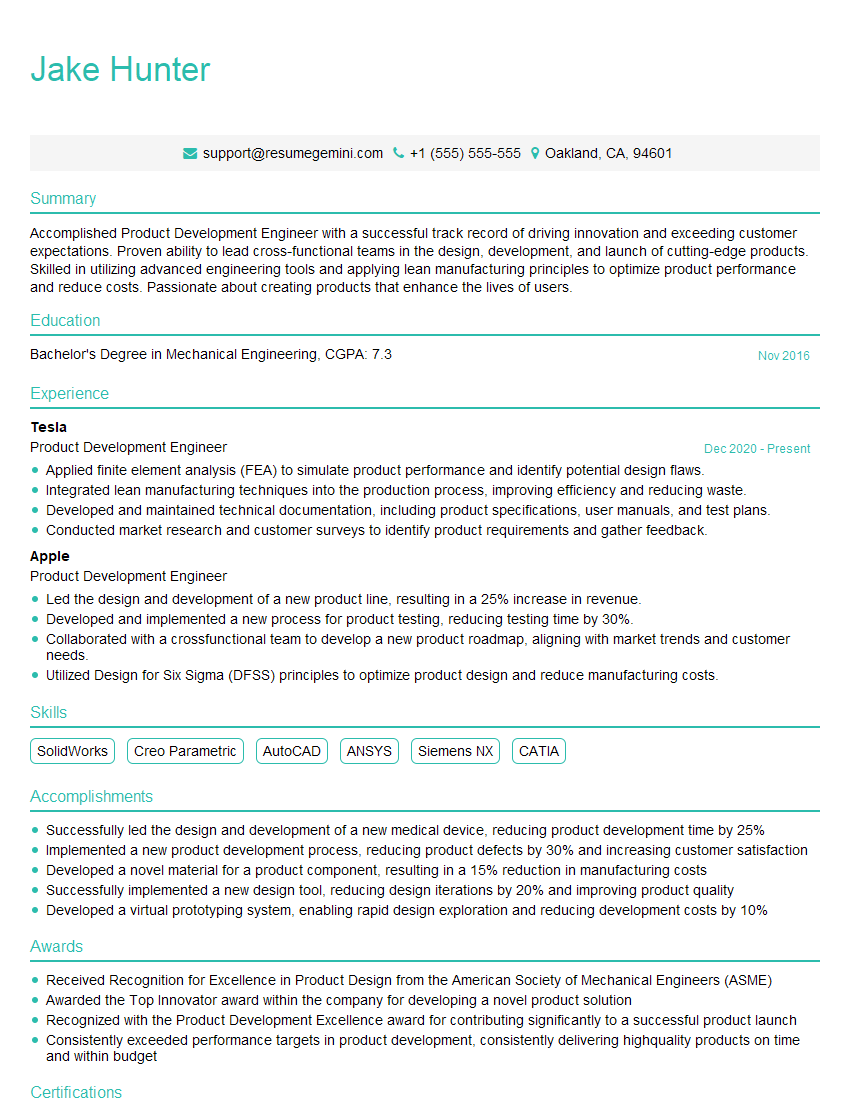
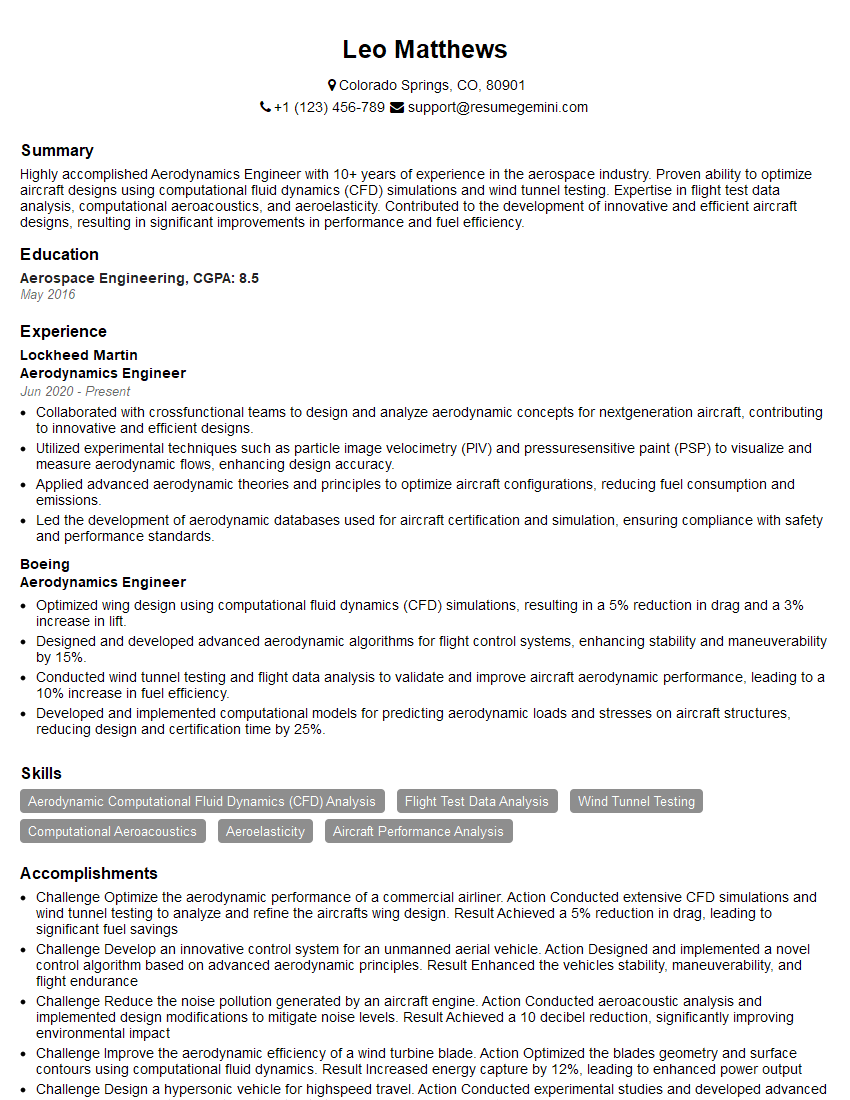
Mastering Vehicle Design and Development opens doors to exciting and impactful careers in the automotive industry. To maximize your job prospects, create a compelling and ATS-friendly resume that showcases your skills and experience effectively. ResumeGemini is a trusted resource to help you build a professional and impactful resume. They provide examples of resumes tailored specifically to Vehicle Design and Development, ensuring your application stands out from the competition. Invest time in crafting a strong resume—it’s your first impression and a critical step in securing your dream role.
Explore more articles
Users Rating of Our Blogs
Share Your Experience
We value your feedback! Please rate our content and share your thoughts (optional).
What Readers Say About Our Blog
Very informative content, great job.
good