Interviews are more than just a Q&A session—they’re a chance to prove your worth. This blog dives into essential Ventilation and Gas Control interview questions and expert tips to help you align your answers with what hiring managers are looking for. Start preparing to shine!
Questions Asked in Ventilation and Gas Control Interview
Q 1. Explain the difference between positive and negative pressure ventilation systems.
Positive and negative pressure ventilation systems differ in how they manage airflow relative to the surrounding environment. Think of it like inflating and deflating a balloon.
Positive pressure ventilation pushes air into a space, creating higher pressure inside than outside. This prevents outside air (and contaminants) from entering. Imagine a cleanroom where maintaining sterility is crucial; positive pressure ensures that only filtered air enters, preventing outside airborne particles from contaminating the environment.
Negative pressure ventilation does the opposite; it pulls air out of a space, creating lower pressure inside than outside. This pulls contaminants outwards, preventing them from spreading to other areas. A negative pressure system is ideal for isolating potentially hazardous environments like a hospital isolation room or a laboratory handling infectious agents. The air is pulled out and filtered, preventing the spread of airborne pathogens.
The choice between positive and negative pressure depends heavily on the specific application and the desired level of containment or protection.
Q 2. Describe various types of gas detectors and their applications.
Gas detectors are critical for safety in various industries. They fall into several categories, each using different detection methods:
- Combustible Gas Detectors: These detect flammable gases like methane, propane, or hydrogen. They typically utilize catalytic combustion or infrared sensors. A common application is in industrial settings with potential gas leaks, like refineries or chemical plants.
- Toxic Gas Detectors: These are designed to detect poisonous gases like carbon monoxide, hydrogen sulfide, or chlorine. Electrochemical sensors are frequently used. Examples include detectors in mines, wastewater treatment plants, or manufacturing facilities where toxic chemicals are used.
- Oxygen Sensors: These measure the oxygen level in the air. Low oxygen levels can be hazardous, leading to asphyxiation. They are commonly used in confined spaces or environments with potential oxygen depletion.
- Multi-Gas Detectors: These combine several sensors into a single unit, providing detection of multiple gases simultaneously. They offer comprehensive monitoring in complex environments.
Choosing the right detector depends on the specific hazards present in a particular setting. A thorough risk assessment is always necessary to identify potential gas hazards and select appropriate detection technology.
Q 3. How do you calculate the required airflow rate for a specific ventilation system?
Calculating required airflow for a ventilation system involves several factors. There’s no single formula, but rather a process that often involves using the following considerations:
- Air Changes per Hour (ACH): This specifies how many times the entire volume of air in a space is replaced per hour. ACH is often specified by regulations or industry best practices for the particular type of space (e.g., higher ACH for cleanrooms).
- Space Volume: The cubic volume of the area needing ventilation needs to be calculated (length x width x height).
- Contaminant Concentration: The rate at which contaminants are generated needs to be known. This information can come from source emission rates or industrial hygiene surveys.
- Dilution Ventilation: If the goal is to dilute contaminants, the airflow rate must be high enough to reduce the contaminant concentration to an acceptable level.
- Local Exhaust Ventilation (LEV): If specific sources are generating contaminants, LEV systems are designed to capture and remove those contaminants at their source. The required airflow depends on the source’s emission rate and the capture efficiency of the LEV system.
Example: To achieve 10 ACH in a room with a volume of 1000 cubic meters, the required airflow would be 10,000 cubic meters per hour (10 ACH * 1000 cubic meters).
Note that safety factors and additional considerations are often included in the final airflow calculation to provide a margin of safety and account for variations in the system’s performance. Detailed calculations often involve specialized software and require the expertise of a ventilation engineer.
Q 4. What are the safety regulations and codes related to gas handling and ventilation?
Safety regulations and codes related to gas handling and ventilation vary by location and industry, but there are some common themes. Regulations generally address:
- Permits and Licensing: Many jurisdictions require permits for handling certain gases, particularly hazardous ones.
- Gas Detection and Monitoring: Regulations mandate the use of gas detectors in areas where hazardous gases might be present, often requiring regular calibration and maintenance. Alarm thresholds and response procedures are often clearly defined.
- Ventilation Requirements: Minimum airflow rates and ventilation system design standards are usually specified, often based on the type of gas, concentration, and occupancy of the space.
- Emergency Response Plans: Procedures for gas leaks or other emergencies must be established, including evacuation plans, alarm systems, and trained personnel.
- Personal Protective Equipment (PPE): Appropriate PPE must be provided and used when handling gases.
- Training: Workers handling gases must receive adequate training on safety procedures and emergency response.
Specific codes and standards often referenced include OSHA (Occupational Safety and Health Administration) standards in the US, and similar standards in other countries. Consulting local regulations is crucial, as requirements vary significantly.
Q 5. Explain the principles of air change rate and its importance in ventilation design.
Air change rate (ACR), also known as air changes per hour (ACH), is a fundamental parameter in ventilation design. It represents the number of times the entire volume of air within a space is completely replaced in one hour.
Importance: A sufficient ACR is vital for maintaining good indoor air quality (IAQ) by:
- Diluting Contaminants: Higher ACRs effectively dilute pollutants, reducing their concentration and minimizing exposure risks.
- Removing Odors: Fresh air intake replaces stale, odor-laden air, improving the overall smell of a space.
- Controlling Temperature and Humidity: ACR impacts the ability to maintain desired temperature and humidity levels within a space.
- Preventing Mold Growth: Adequate ventilation helps prevent the accumulation of moisture, reducing the risk of mold growth.
The optimal ACR depends on factors such as the type of occupancy, the presence of potential contaminants, and relevant regulations. For example, a hospital operating room would need a much higher ACR than a typical office space.
Q 6. Describe different methods for controlling air quality in industrial settings.
Controlling air quality in industrial settings involves a combination of strategies:
- General Dilution Ventilation: This involves providing sufficient airflow to dilute contaminants to acceptable levels. This is often a primary strategy and is the most common method of air quality control.
- Local Exhaust Ventilation (LEV): LEV systems capture contaminants at their source, preventing them from spreading into the wider environment. Examples include fume hoods in laboratories or downdraft tables for welding.
- Air Filtration: High-efficiency particulate air (HEPA) filters or other specialized filters remove particulate matter and certain gaseous contaminants from the air. This is essential in cleanrooms or environments requiring very high air quality.
- Air Cleaning Technologies: Various technologies, including activated carbon adsorption, can remove specific gaseous pollutants from the air stream. The choice of technology depends on the specific pollutants present.
- Process Control: Minimizing the generation of contaminants at the source through process improvements is often the most cost-effective approach.
Implementing a comprehensive air quality control strategy often involves combining several of these methods to achieve the necessary level of cleanliness and safety.
Q 7. How do you troubleshoot a malfunctioning ventilation system?
Troubleshooting a malfunctioning ventilation system requires a systematic approach:
- Identify the Problem: What exactly is malfunctioning? Is there insufficient airflow, uneven air distribution, unusual noises, or a complete system failure?
- Inspect the System: Visually inspect the system components, including fans, ducts, filters, dampers, and controls. Check for obvious problems like clogged filters, broken belts, or loose connections.
- Check Airflow: Use an anemometer to measure airflow rates at various points in the system. Compare the measurements to the design specifications to identify any significant deviations.
- Examine Control Systems: Verify that the control systems (thermostats, sensors, timers, etc.) are functioning correctly and that the setpoints are appropriate.
- Review Maintenance Records: Check the maintenance log for the system to see if there are any recent issues or scheduled maintenance that may be contributing to the problem.
- Consult System Diagrams and Documentation: Review the system’s design documents and schematics to better understand how the various components interact and to help pinpoint the source of the problem.
- Consider Environmental Factors: External factors such as unusually high outside temperatures or blocked air intakes might be affecting system performance.
- Consult Experts: If the problem persists, it is advisable to contact qualified HVAC technicians or ventilation engineers for assistance.
Remember safety first! Always de-energize equipment before performing any maintenance or repairs.
Q 8. What are the common causes of gas leaks and how are they detected?
Gas leaks can stem from various sources, from simple equipment malfunctions to more serious pipeline failures. Common causes include corrosion in aging pipes, faulty connections, damaged seals, and human error during installation or maintenance. Improperly sealed fittings are a frequent culprit, especially in older systems. In industrial settings, equipment failures like cracked welds on pressure vessels or leaking valves can lead to significant leaks.
Detection methods vary depending on the gas and the environment. For visible leaks, soapy water applied to suspected areas will create bubbles if gas is escaping. Electronic leak detectors, using sensors sensitive to specific gases, are crucial for detecting invisible leaks like methane or carbon monoxide. These devices often measure gas concentration in parts per million (ppm). Gas chromatography is a more sophisticated laboratory method for identifying and quantifying different gases in a sample. Infrared cameras can also be used to detect leaks of certain gases by their heat signature. Regular inspections and preventive maintenance are vital to catch leaks early, before they escalate into hazardous situations.
Q 9. Explain the importance of ventilation in preventing the spread of airborne contaminants.
Ventilation plays a critical role in preventing the spread of airborne contaminants by diluting and removing them from the air. Imagine a room with a single source of pollution – perhaps a chemical spill. Without ventilation, the contaminants would concentrate, potentially reaching hazardous levels. However, a well-designed ventilation system constantly draws in fresh air, mixes it with the contaminated air, and then expels the diluted mixture to the outside. This reduces the concentration of contaminants, minimizing the risk of exposure and the potential for health problems. Different ventilation strategies, such as exhaust ventilation or dilution ventilation, can be employed based on the nature and concentration of the contaminant, the size and usage of the space, and the sensitivity of the occupants. Effective ventilation systems help maintain a safe and healthy environment by controlling the concentration of airborne pathogens, dust, fumes, gases, and other harmful substances.
Q 10. Describe different types of ventilation equipment and their applications.
Ventilation equipment encompasses a wide range of technologies, each suited to specific applications.
- Exhaust Fans: These remove contaminated air from a space, often drawing it through a duct system and releasing it outside. They are commonly used in bathrooms, kitchens, and industrial settings.
- Supply Fans: These deliver fresh, filtered air into a space. They are often paired with exhaust fans to create a balanced system.
- Heat Recovery Ventilators (HRVs): These units transfer heat from the outgoing exhaust air to the incoming fresh air, improving energy efficiency. They are particularly beneficial in climates with extreme temperatures.
- Air Handling Units (AHUs): These large, centralized systems condition, filter, and circulate air throughout a building. They are commonly found in large commercial and industrial buildings.
- Variable Air Volume (VAV) systems: These systems adjust the volume of air supplied to individual zones within a building, optimizing comfort and energy efficiency. They’re used in large commercial buildings and office spaces to regulate temperatures individually.
The choice of equipment depends on factors like the size and type of building, the level of air cleanliness required, and the specific contaminants needing control.
Q 11. How do you design a ventilation system for a cleanroom environment?
Designing a ventilation system for a cleanroom demands meticulous attention to detail, as the goal is to maintain an extremely low level of airborne particles and contaminants. The design process typically involves several steps:
- Defining Cleanroom Class: Determine the required cleanliness level (e.g., ISO Class 5, ISO Class 7) based on the intended application (e.g., pharmaceuticals, microelectronics). This dictates the allowable particle count per cubic meter of air.
- Airflow Pattern: A unidirectional airflow pattern, commonly achieved through HEPA-filtered laminar flow hoods or vertical laminar flow clean benches, prevents particle recirculation. This ensures that particles are swept away from the critical area.
- HEPA Filtration: High-Efficiency Particulate Air (HEPA) filters are essential for removing nearly all particles from the air. Multiple stages of filtration are often used for optimal performance.
- Pressure Control: Maintaining a positive pressure differential within the cleanroom compared to adjacent areas prevents the ingress of contaminants. This is often controlled through careful selection of fans and adjustment of air flow patterns.
- Air Changes per Hour (ACH): The number of times the cleanroom’s air is completely replaced per hour is carefully calculated to meet cleanliness standards. This requires precise calculations and modeling of the room’s characteristics and required air volume.
- Monitoring and Control System: Sensors monitor air quality parameters (particle counts, temperature, humidity) and provide feedback to the ventilation system to ensure it maintains the necessary cleanroom conditions.
Designing a cleanroom is a highly specialized undertaking, requiring the expertise of engineers with extensive experience in cleanroom technology. Proper design prevents costly contamination issues and ensures that manufacturing processes run without defects.
Q 12. What are the factors to consider when selecting a ventilation system for a specific building?
Selecting a ventilation system involves carefully evaluating several crucial factors:
- Building Occupancy and Use: A school requires a different ventilation strategy than a manufacturing plant. Occupancy levels influence the required airflow rates.
- Climate: Extreme temperatures or high humidity necessitate ventilation systems with heating or cooling capabilities. Location affects the external load on the system.
- Indoor Air Quality (IAQ) Requirements: The presence of potential contaminants like volatile organic compounds (VOCs) or biological agents necessitates specific filtration and exhaust capabilities. Building codes and health regulations set standards for IAQ.
- Energy Efficiency: Factors like energy costs and sustainability goals should be considered. HRVs and VAV systems offer significant energy savings compared to simple exhaust fans.
- Budget and Maintenance: The initial cost of equipment, installation, and ongoing maintenance must be factored into the decision-making process.
- Noise Levels: Noise generated by the ventilation system, particularly in occupied spaces, should be minimized through careful equipment selection and ductwork design.
- Building Code Compliance: All ventilation systems must meet local building codes and safety regulations. This influences all design decisions
A thorough assessment of these factors ensures that the selected ventilation system effectively meets the needs of the building while remaining cost-effective and energy-efficient.
Q 13. Explain the concept of ductwork design and sizing.
Ductwork design and sizing are critical aspects of ventilation system performance. The ductwork distributes air throughout a building, and its design directly affects airflow, pressure drop, and noise levels.
Design considerations include the layout of the ductwork to minimize bends and ensure efficient airflow; the material selection (e.g., galvanized steel, fiberglass) based on durability, corrosion resistance, and fire safety; and the insulation of ducts to reduce energy loss.
Sizing is determined by calculating the required airflow rate for each zone or space within the building. This involves determining the air changes per hour (ACH) needed and the total volume of air to be handled. Various engineering formulas and software are used to calculate appropriate duct diameters and velocities, ensuring minimal pressure drop while maintaining desired airflow.
Inadequate duct design can lead to issues like reduced airflow, excessive noise, uneven air distribution, and increased energy consumption. Proper ductwork design and sizing are crucial for optimal ventilation system efficiency and performance.
Q 14. Describe different types of fans used in ventilation systems and their characteristics.
A variety of fans are used in ventilation systems, each with unique characteristics.
- Centrifugal Fans: These fans use a rotating impeller to increase the pressure of the air, making them suitable for high-pressure applications and long duct runs. They are commonly used in AHUs and larger ventilation systems.
- Axial Fans: These fans have blades that move air directly along their axis, providing high airflow rates at lower pressures. They are commonly found in exhaust fans and smaller ventilation systems.
- Backward-inclined Centrifugal Fans: These combine aspects of centrifugal and axial fans. Their blades are inclined backward, resulting in high efficiency and low noise levels, often used in applications with stringent noise limits.
- Forward-curved Centrifugal Fans: These fans offer high airflow but with relatively lower efficiency and higher noise levels. They are generally used for lower-pressure applications.
The selection of a fan type depends on factors such as required pressure, airflow rate, noise level requirements, and efficiency considerations. Each fan type has its own performance curve, which plots the relationship between airflow and pressure. Careful selection is crucial to optimize the performance of the ventilation system.
Q 15. How do you ensure proper ventilation in underground spaces?
Ensuring proper ventilation in underground spaces is critical for worker safety and equipment longevity. It involves a multifaceted approach focused on minimizing hazardous gas buildup and maintaining breathable air quality. This requires a thorough understanding of the space’s geometry, potential sources of contaminants (e.g., methane, carbon monoxide, radon), and the expected occupancy levels.
- Ventilation System Design: The core involves designing a robust system that effectively removes contaminants and introduces fresh air. This typically involves a network of ducts, fans, and sensors strategically placed to achieve even airflow throughout the space. We need to consider factors like air velocity, pressure differentials, and the location of inlets and outlets to optimize efficiency.
- Monitoring and Control: Continuous monitoring of gas concentrations using fixed or portable sensors is vital. This data informs adjustments to the ventilation system’s operation, ensuring rapid response to any hazardous buildup. Automated control systems, often integrated with building management systems (BMS), can automatically adjust fan speeds based on sensor readings, optimizing both safety and energy efficiency.
- Emergency Procedures: Emergency procedures must be in place, including alarm systems, backup power for ventilation, and evacuation plans. Regular drills and training are essential to ensure that workers know how to respond to potential gas leaks or ventilation failures.
- Regular Maintenance: Preventive maintenance is crucial to ensure the continued effectiveness of the ventilation system. This includes regular inspections of ducts, fans, and sensors, along with cleaning and filter replacements as needed. Ignoring this can lead to reduced efficiency and potential safety hazards.
For example, in a mine, we might employ a combination of primary and auxiliary ventilation systems, with strategically placed exhaust fans drawing air away from potential gas sources and fresh air being supplied to working areas. Regular monitoring of methane levels using sensors would inform decisions about modifying airflow rates to maintain safe concentrations.
Career Expert Tips:
- Ace those interviews! Prepare effectively by reviewing the Top 50 Most Common Interview Questions on ResumeGemini.
- Navigate your job search with confidence! Explore a wide range of Career Tips on ResumeGemini. Learn about common challenges and recommendations to overcome them.
- Craft the perfect resume! Master the Art of Resume Writing with ResumeGemini’s guide. Showcase your unique qualifications and achievements effectively.
- Don’t miss out on holiday savings! Build your dream resume with ResumeGemini’s ATS optimized templates.
Q 16. Explain the principles of exhaust and supply air balancing.
Exhaust and supply air balancing ensures that the designed airflow rates are achieved throughout a ventilation system. Imbalances can lead to reduced effectiveness, energy waste, and even safety concerns. The principle is straightforward: the amount of air exhausted from a space must equal the amount of air supplied to it, while maintaining correct pressures to prevent backdrafting or negative pressure conditions.
- Exhaust Air Balancing: This involves measuring the actual airflow rate at each exhaust point and adjusting dampers or other control devices to achieve the designed values. We use calibrated flow hoods or pressure gauges to take measurements.
- Supply Air Balancing: Similarly, supply air balancing measures the airflow at each supply point and adjusts dampers or other control devices to match the design values. This often involves careful coordination with exhaust balancing to maintain overall system equilibrium.
For instance, if a room has a designated exhaust rate of 1000 cubic feet per minute (CFM) and is only exhausting 800 CFM due to a blocked damper, we’d adjust the damper to achieve the 1000 CFM. Conversely, a supply air imbalance could result in insufficient fresh air, leading to stagnant conditions and potential contaminant buildup. Accurate balancing ensures that the system operates as intended, minimizing waste and maximizing safety and comfort.
Q 17. What are the environmental considerations related to ventilation system design?
Environmental considerations in ventilation system design are paramount, influencing both the system’s impact on the environment and its resilience to environmental factors. These considerations extend beyond merely meeting regulatory requirements; they involve proactive steps to minimize environmental footprint and ensure system longevity.
- Energy Consumption: Ventilation systems consume significant energy. We must consider energy-efficient fans, variable frequency drives (VFDs), and optimized system design to minimize energy waste and reduce carbon emissions. Heat recovery systems can capture heat from exhaust air and use it to preheat incoming fresh air, further reducing energy demand.
- Air Quality Impacts: The ventilation system itself should not introduce pollutants. Proper selection of materials, avoiding the use of VOC-emitting materials in ductwork and components, is crucial. Moreover, effective filtration ensures that the system doesn’t contribute to outdoor air pollution.
- Noise Pollution: Ventilation equipment can generate considerable noise. We must select quiet components and implement noise reduction strategies, such as sound attenuators in ductwork and vibration dampening mounts for fans, to minimize impacts on surrounding environments.
- Climate Change Resilience: Systems should be designed to withstand extreme weather events, including high winds, heavy rainfall, and temperature fluctuations. This includes robust construction and protection from the elements.
For example, a green building design might prioritize natural ventilation, using strategically placed windows and vents to minimize the need for mechanical ventilation and reduce energy consumption. Furthermore, selecting low-energy fans with heat recovery would significantly lessen the environmental impact of the system.
Q 18. Describe different types of gas control valves and their operation.
Gas control valves are crucial safety components in ventilation and gas handling systems, preventing dangerous gas leaks or explosions. Different types exist, each suited to specific applications and gas properties.
- Solenoid Valves: These are electrically actuated valves that open or close when an electrical current is applied. They are commonly used for on/off control of gas flow and are relatively simple and inexpensive. However, they are susceptible to failure if the power supply is interrupted.
- Pneumatic Valves: These valves are actuated by compressed air, offering a higher level of safety and reliability than solenoid valves, especially in hazardous environments. They’re less susceptible to power outages and can handle higher pressures.
- Motorized Valves: These valves use an electric motor for actuation, providing precise control of gas flow and often integrating with automated control systems. They allow for modulation of flow based on sensor readings, increasing efficiency and safety.
- Pressure-Relief Valves: These valves automatically open when a certain pressure threshold is exceeded, preventing dangerous pressure buildup within a gas system. This is a vital safety feature to prevent explosions or equipment damage.
- Ball Valves: These simple valves offer a quick, positive on/off function. Although simpler than other types, their quick operation is advantageous in emergency shutdowns.
Selecting the right valve depends on factors like gas type, pressure, flow rate, required accuracy of control, and the overall safety requirements. For example, a high-pressure natural gas pipeline might use a motorized valve with precise flow control and safety interlocks, while a smaller process gas line might utilize a simpler solenoid valve.
Q 19. How do you maintain and inspect ventilation and gas control systems?
Maintaining and inspecting ventilation and gas control systems is critical for ensuring safety, efficiency, and compliance with regulations. A proactive approach to maintenance minimizes the risk of failure and extends the life of the system.
- Regular Inspections: Regular visual inspections should be conducted, checking for signs of damage, corrosion, leaks, and blockages in ducts, fans, valves, and sensors. Frequency depends on the application and complexity of the system, but at minimum, it could be quarterly or semi-annually.
- Performance Testing: Periodic testing of the system’s performance is essential. This includes measuring airflow rates, pressure differentials, and gas concentrations to verify that the system is operating within its design parameters. Leak detection tests are crucial for gas control systems.
- Preventative Maintenance: Preventive maintenance tasks, such as filter replacements, lubrication of moving parts, and cleaning of components, should be performed according to a schedule to prevent equipment wear and tear.
- Calibration and Verification: Sensors and instruments used for monitoring gas concentrations and airflow must be regularly calibrated and verified to ensure accuracy. Calibration frequency should align with manufacturer recommendations.
- Documentation: Detailed records of all inspections, maintenance activities, and test results should be meticulously maintained. This is vital for compliance and aids in troubleshooting issues.
For example, a monthly inspection of a ventilation system in a manufacturing facility might involve checking fan operation, observing for any unusual noises, and verifying that filters are clean. Yearly inspections may include more thorough testing involving measuring airflow rates at various points in the system using a flow hood.
Q 20. What are the energy efficiency considerations in ventilation design?
Energy efficiency is a major concern in ventilation design, impacting both operational costs and the environmental impact of the building. Minimizing energy consumption without compromising safety or air quality is paramount.
- Energy-Efficient Equipment: Selecting high-efficiency fans, motors, and other components is crucial. Variable-frequency drives (VFDs) allow for precise control of fan speed, optimizing airflow based on demand and minimizing energy waste.
- Heat Recovery Systems: Heat recovery ventilators (HRVs) and energy recovery ventilators (ERVs) can significantly reduce energy consumption by reclaiming heat or energy from exhaust air to preheat or precool incoming fresh air. This is particularly beneficial in climates with significant temperature swings.
- Demand-Controlled Ventilation: Implementing demand-controlled ventilation (DCV) systems based on occupancy and CO2 levels optimizes airflow only when and where needed, reducing energy consumption during periods of low occupancy.
- Optimized Duct Design: Proper duct design minimizes pressure drops and reduces fan power requirements. This involves selecting appropriate duct sizes, minimizing bends and fittings, and using smooth interior surfaces.
- Building Envelope Design: A well-insulated and airtight building envelope reduces heat loss or gain, lessening the load on the ventilation system.
For example, using an HRV in a residential building can dramatically reduce the heating and cooling loads during the shoulder seasons. Similarly, employing DCV systems in office buildings can significantly reduce energy consumption by only ventilating occupied spaces, adjusting ventilation based on measured CO2 levels.
Q 21. Describe your experience with different building automation systems related to HVAC.
I’ve had extensive experience working with various Building Automation Systems (BAS) related to HVAC, including Tridium Niagara, Siemens Desigo, and Johnson Controls Metasys. These systems provide centralized control and monitoring of HVAC systems, enhancing operational efficiency, energy management, and safety.
- System Integration: My experience involves integrating various components, such as sensors, actuators, and controllers, into a cohesive BAS framework. This includes programming logic controllers (PLCs), configuring communication protocols (e.g., BACnet, Modbus), and developing user interfaces for monitoring and control.
- Data Analysis and Optimization: I’ve utilized BAS data to analyze system performance, identify areas for improvement, and optimize energy consumption. Trend analysis, fault detection, and diagnostic capabilities are all integral parts of this process.
- Remote Monitoring and Control: Many of these BAS offer remote access capabilities, allowing for remote diagnostics, troubleshooting, and system adjustments, improving response times and reducing downtime.
- Energy Management Strategies: I’ve implemented various energy management strategies through BAS, such as scheduling, setpoint optimization, and demand-based control, leading to significant energy savings.
In one project involving a large commercial building, we implemented a Metasys system to integrate the HVAC, lighting, and security systems. This allowed for optimized control of the ventilation system based on occupancy and external weather conditions, resulting in substantial energy savings and improved environmental comfort.
Q 22. Explain the importance of regular maintenance for gas detection systems.
Regular maintenance of gas detection systems is paramount for ensuring worker safety and preventing catastrophic incidents. Think of it like this: your smoke alarm needs a new battery; a gas detector needs regular calibration and checks to ensure it’s accurately detecting potentially lethal gases. Neglecting maintenance leads to false readings, delayed alerts, or complete system failure, putting lives and property at risk.
- Calibration: Gas detectors drift over time, meaning their readings become less accurate. Regular calibration, often using certified gas mixtures, ensures that the system accurately reflects the gas concentration in the environment.
- Sensor checks: Sensors degrade over time due to exposure to contaminants. Regular visual inspections and functional tests ensure sensors are functioning correctly and haven’t been damaged.
- System testing: A complete system test, including alarms and communication components, verifies that the entire gas detection system is functioning as designed. This might involve simulating a gas leak to verify the alarm response.
- Documentation: Meticulous record-keeping of all maintenance activities is crucial. This documentation helps track the system’s performance and demonstrates compliance with safety regulations.
For example, in a chemical processing plant, failing to calibrate a hydrogen sulfide detector could lead to a delayed warning of a leak, potentially resulting in serious injury or fatality. A well-maintained system, on the other hand, provides peace of mind and proactive protection.
Q 23. What are the potential hazards associated with inadequate ventilation?
Inadequate ventilation poses a multitude of hazards, ranging from minor discomfort to severe health problems and even fatalities. Essentially, it’s about the buildup of harmful substances and the lack of fresh air.
- Oxygen deficiency: In confined spaces, inadequate ventilation can lead to oxygen depletion, causing hypoxia (low oxygen levels in the blood), which can impair judgment, lead to unconsciousness, and ultimately, death.
- Toxic gas buildup: Many industrial processes generate toxic gases (e.g., carbon monoxide, methane, hydrogen sulfide). Without proper ventilation to dilute or remove these gases, workers face significant health risks, including respiratory issues, neurological damage, and even death.
- Heat stress: In environments with high temperatures and humidity, inadequate ventilation can lead to heat stress, heat exhaustion, and heat stroke, particularly in physically demanding work.
- Fire and explosion hazards: The buildup of flammable gases in poorly ventilated areas creates a significant fire and explosion hazard. This is particularly relevant in industries handling volatile organic compounds.
- Mold and mildew growth: Insufficient ventilation can create damp conditions, promoting the growth of mold and mildew, which can lead to respiratory problems and other health issues.
Imagine a confined space like a sewer; without proper ventilation, workers risk exposure to dangerous gases like methane and hydrogen sulfide, both of which are odorless at dangerous levels and can be lethal.
Q 24. Describe your experience with commissioning and testing of HVAC systems.
My experience with commissioning and testing HVAC systems spans over 10 years, encompassing a wide range of projects, from small commercial buildings to large industrial facilities. Commissioning involves verifying that the system is installed and operates according to the design specifications, while testing involves evaluating its performance against established standards.
My typical approach involves a phased process:
- Pre-commissioning: This involves reviewing the design documents, inspecting the equipment, and ensuring that all components are correctly installed. This is where we identify and rectify any potential issues before the system is fully operational.
- Functional testing: This phase involves testing individual components and subsystems to verify their operation. This might include testing the operation of fans, dampers, sensors, and controllers.
- Integrated testing: After individual components are verified, integrated testing is performed to assess the overall system performance. This could involve load testing, airflow measurements, and temperature/humidity monitoring.
- Balancing: This critical step ensures that the airflow distribution within the building meets design requirements. It involves adjusting dampers and other control devices to achieve optimal performance.
- Documentation: Thorough documentation of all testing procedures, results, and any deviations from design specifications is crucial for demonstrating compliance and ensuring long-term system performance.
For instance, on a recent hospital project, we meticulously tested the HVAC system’s ability to maintain specific temperature and humidity levels in different areas, ensuring optimal patient comfort and preventing the spread of airborne pathogens. We used advanced measurement tools and software to validate system performance and generate comprehensive reports.
Q 25. How do you handle emergency situations related to gas leaks or ventilation failures?
Handling emergency situations related to gas leaks or ventilation failures requires a calm, decisive approach following established protocols. Safety is always the top priority.
- Immediate evacuation: If a dangerous gas leak or ventilation failure is detected, the immediate priority is to evacuate the affected area. This involves activating emergency alarms and following established evacuation procedures.
- Isolate the source: If possible and safe to do so, isolate the source of the gas leak or ventilation failure to prevent further escalation. This might involve shutting down equipment or closing valves.
- Emergency services: Contact emergency services immediately. Provide them with accurate information, including the location, type of gas involved, and the number of people potentially affected.
- Ventilation: If safe, initiate emergency ventilation procedures to remove the gas from the affected area. This may involve opening windows, doors, or activating backup ventilation systems.
- Post-incident investigation: After the emergency is over, a thorough investigation is crucial to determine the root cause of the incident and implement corrective actions to prevent similar incidents in the future. This often involves detailed documentation and analysis of event logs.
For example, during a gas leak incident at a manufacturing plant, I coordinated the safe evacuation of personnel, contacted emergency responders, and helped isolate the gas line, ultimately minimizing the impact of the incident.
Q 26. Explain the differences between natural and mechanical ventilation.
Natural and mechanical ventilation differ fundamentally in how they move air. Natural ventilation relies on natural forces like wind and temperature differences, while mechanical ventilation uses powered equipment such as fans.
- Natural Ventilation: This relies on pressure differences caused by wind, stack effect (temperature differences), or opening windows and doors. It is often simpler and cheaper to implement but less controllable and reliable, especially in adverse weather conditions. Think of a simple window opening to let in fresh air – that’s natural ventilation.
- Mechanical Ventilation: This involves using fans and other equipment to force or induce air movement. It’s more reliable, controllable, and efficient at removing pollutants and maintaining specific environmental conditions, but it is more complex and expensive to install and maintain. Think of a sophisticated HVAC system in a modern office building – that’s mechanical ventilation.
Many systems use a combination of both, with mechanical ventilation providing the core functionality and natural ventilation supplementing it for energy efficiency. A hospital operating room, for instance, would use highly controlled mechanical ventilation to maintain a sterile and contaminant-free environment, while a smaller office space might rely on a mix of mechanical and natural ventilation for cost-effectiveness.
Q 27. What are the key performance indicators (KPIs) for a successful ventilation system?
The key performance indicators (KPIs) for a successful ventilation system depend on its application, but several common metrics are used to assess its effectiveness:
- Air changes per hour (ACH): This measures how many times the air in a space is completely replaced in an hour. A higher ACH generally indicates better ventilation but needs to be balanced against energy consumption.
- Airflow rates: Measured at various points in the system, airflow rates ensure proper air distribution and removal of contaminants.
- Temperature and humidity control: The system’s ability to maintain the desired temperature and humidity levels within specified tolerances is crucial for occupant comfort and health.
- Contaminant levels: Monitoring levels of specific pollutants (CO2, VOCs, etc.) determines the system’s effectiveness in removing harmful substances. This might involve continuous monitoring or spot checks.
- Energy efficiency: The energy consumption of the ventilation system is a critical KPI, often expressed as kilowatt-hours (kWh) per square meter or similar unit. Efficient systems minimize operating costs and environmental impact.
- Maintenance costs: Tracking maintenance costs helps in assessing system reliability and identifying areas for improvement.
- System uptime: The percentage of time the system operates effectively indicates its reliability and prevents downtime.
By tracking these KPIs, we can assess the ventilation system’s overall performance, identify areas for improvement, and ensure it meets the required standards for safety, comfort, and energy efficiency.
Key Topics to Learn for Ventilation and Gas Control Interview
- Fundamentals of Ventilation: Understanding airflow principles, pressure differentials, and ventilation system design. Consider exploring different ventilation types (natural, mechanical, etc.) and their applications.
- Gas Detection and Monitoring Systems: Familiarize yourself with various gas detection technologies (e.g., electrochemical sensors, infrared sensors), their limitations, and calibration procedures. Practice applying your knowledge to real-world scenarios such as identifying potential hazards and implementing safety measures.
- Safety Regulations and Standards: Thoroughly review relevant safety regulations and industry standards related to ventilation and gas control. Understand the implications of non-compliance and best practices for maintaining a safe working environment.
- Control Systems and Automation: Explore different control systems used in ventilation and gas control applications, including Programmable Logic Controllers (PLCs) and Supervisory Control and Data Acquisition (SCADA) systems. Understand their operation and troubleshooting techniques.
- Energy Efficiency and Optimization: Learn about strategies for optimizing ventilation systems for energy efficiency, including variable speed drives, demand-controlled ventilation, and heat recovery systems. Be prepared to discuss the economic and environmental benefits of energy-efficient practices.
- Troubleshooting and Problem Solving: Develop your ability to diagnose and solve common problems related to ventilation and gas control systems. Practice using systematic approaches to identify the root cause of malfunctions and implement effective solutions.
- HVAC Integration: Understand how ventilation systems integrate with larger HVAC systems, and the impact of ventilation design on overall building performance.
Next Steps
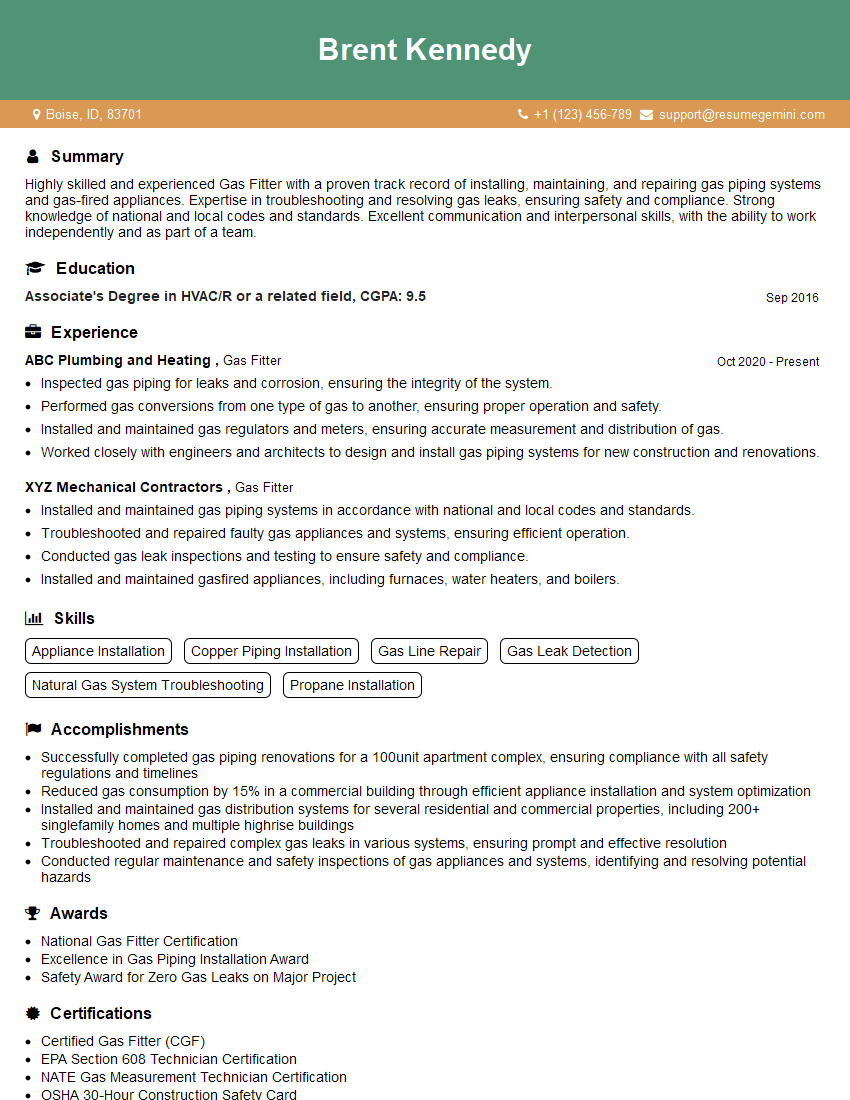
Mastering Ventilation and Gas Control opens doors to exciting career opportunities with significant growth potential in various industries. A strong understanding of these critical concepts positions you for success in a competitive job market. To further enhance your job prospects, focus on building a professional and ATS-friendly resume that effectively highlights your skills and experience. ResumeGemini is a trusted resource that can help you create a compelling resume that gets noticed. They provide examples of resumes tailored to Ventilation and Gas Control, ensuring your application stands out from the competition. Invest time in crafting a strong resume – it’s your first impression with potential employers.
Explore more articles
Users Rating of Our Blogs
Share Your Experience
We value your feedback! Please rate our content and share your thoughts (optional).
What Readers Say About Our Blog
Very informative content, great job.
good