Preparation is the key to success in any interview. In this post, we’ll explore crucial Vessel Safety and Inspection interview questions and equip you with strategies to craft impactful answers. Whether you’re a beginner or a pro, these tips will elevate your preparation.
Questions Asked in Vessel Safety and Inspection Interview
Q 1. Explain the International Safety Management (ISM) Code.
The International Safety Management (ISM) Code is a mandatory international standard for the safe management and operation of ships and for pollution prevention. Think of it as a comprehensive safety manual for every ship. It’s not about specific equipment, but about the management systems in place to ensure safe operations.
Essentially, the ISM Code requires companies to establish a Safety Management System (SMS). This SMS outlines policies, procedures, responsibilities, and resources dedicated to ensuring safety. Key elements include a Safety Management System documentation detailing the company’s safety and environmental protection policy, a designated Safety Management Officer, regular safety training for crew, and procedures for incident reporting and investigation.
- Company Responsibility: The company is ultimately accountable for the safety of its ships and the environment.
- Safety Management System (SMS): A documented system covering all aspects of ship safety and pollution prevention.
- Designated Personnel: Specific individuals are responsible for implementing and maintaining the SMS.
- Regular Audits and Reviews: The SMS is regularly reviewed and updated to maintain effectiveness.
- Continuous Improvement: The system is designed for continuous improvement based on lessons learned from incidents and audits.
For example, a company might implement a system for reporting near misses, allowing proactive identification and correction of potential hazards before they escalate into accidents. This is a crucial aspect of a robust SMS, preventing future incidents by learning from near misses rather than only serious incidents.
Q 2. Describe your experience conducting vessel inspections.
My experience in conducting vessel inspections spans over 10 years, encompassing a wide range of vessel types, from small tankers to large container ships. I’ve conducted both pre-departure inspections and periodic surveys, focusing on both structural integrity and operational safety. I’m proficient in using various inspection checklists and regulatory guidelines, and I always prioritize a thorough and systematic approach.
During inspections, I meticulously examine critical equipment such as life-saving appliances (lifeboats, life rafts, and fire-fighting equipment), navigation systems (GPS, radar, and autopilots), and machinery spaces (engines, generators, and pumps). I also carefully review the ship’s documentation, including certificates, logs, and maintenance records. A key part of my inspection involves assessing the crew’s competency and understanding of safety procedures. I regularly interact with the crew to gauge their level of preparedness and their understanding of emergency response plans. One memorable experience involved uncovering a faulty fire detection system on a cargo vessel – a potential hazard that was quickly rectified after my report. Addressing such issues early prevents significant risks.
Q 3. How do you identify and assess safety hazards on a vessel?
Identifying and assessing safety hazards on a vessel requires a systematic approach combining observation, documentation review, and crew interaction. I use a combination of techniques including checklists, walkthroughs, and interviews.
- Visual Inspection: A thorough walk-through of the vessel, looking for any obvious hazards like damaged equipment, unsafe working practices, or poor housekeeping.
- Documentation Review: Examining ship’s logs, maintenance records, and certificates to identify potential problems. This also includes reviewing the SMS documentation.
- Crew Interviews: Speaking with crew members to gather information about potential hazards they may have encountered, near misses, or areas of concern.
- Risk Assessment: After identifying potential hazards, I assess the likelihood and severity of each hazard to prioritize my recommendations.
For example, during a recent inspection, I noticed that the securing of cargo was not up to standard in one section of the hold. This presented a risk of cargo shifting during rough seas. My assessment considered the likelihood of encountering rough seas (high) and the severity of cargo shifting (high potential for damage and injury). Based on that, this was classified as a high-priority hazard.
Q 4. What are the key elements of a thorough risk assessment?
A thorough risk assessment involves a systematic process to identify, analyze, and control potential hazards. It’s a critical part of any safety management system.
- Hazard Identification: Identifying all potential hazards related to the vessel’s operation, including operational procedures, equipment, environment and human factors.
- Risk Analysis: Evaluating the likelihood and severity of each identified hazard, often using a risk matrix that visually represents levels of risk.
- Risk Evaluation: Determining the overall risk level by combining the likelihood and severity of each hazard.
- Risk Control: Developing and implementing appropriate controls to mitigate identified risks, this includes using hierarchy of controls (elimination, substitution, engineering controls, administrative controls, PPE).
- Monitoring and Review: Regularly monitoring the effectiveness of implemented controls and updating the risk assessment as needed.
A common method involves a risk matrix, assigning numerical values to likelihood and severity. For example, a high likelihood and high severity event (such as a fire in the engine room) would necessitate immediate corrective action, while a low likelihood and low severity event might only require documentation and monitoring.
Q 5. Explain the importance of SOLAS and its key conventions.
The International Convention for the Safety of Life at Sea (SOLAS) is a crucial international maritime treaty that establishes minimum safety standards for ships. It’s essential for protecting the lives of seafarers and preventing marine pollution. Think of it as the foundational safety legislation for the shipping industry.
Key SOLAS conventions cover various aspects of ship safety:
- Chapter II-1: Construction – Structure, Subdivision and Stability, Machinery and Electrical Installations: Covers the structural integrity of the vessel, its stability, and the design and installation of machinery and electrical systems.
- Chapter III: Life-saving Appliances and Arrangements: Details the requirements for life-saving equipment, such as lifeboats, life rafts, and life jackets.
- Chapter IV: Radiocommunications: Outlines the requirements for radio communication systems, ensuring effective communication with shore and other vessels.
- Chapter V: Safety of Navigation: Addresses navigation safety, including requirements for navigational equipment, watchkeeping, and voyage planning.
- Chapter VI: Carriage of Cargoes: Sets minimum safety standards for the carriage of various types of cargo.
- Chapter XI-1: Special Measures to Enhance Maritime Safety: Addresses various safety management measures, including the ISM Code.
SOLAS conventions are regularly updated to reflect advancements in technology and safety practices, ensuring continuous improvement in maritime safety standards. Non-compliance can lead to serious consequences, including detention of the vessel.
Q 6. Describe your experience with Port State Control inspections.
I have extensive experience with Port State Control (PSC) inspections. PSC inspections are conducted by governments to verify that ships visiting their ports meet international safety and environmental standards. My role often involves preparing vessels for these inspections, ensuring compliance with relevant regulations, and addressing any identified deficiencies.
I understand the PSC’s focus on key areas such as the ship’s documentation, its condition, crew qualifications, and the vessel’s compliance with international conventions, including SOLAS and MARPOL. I have assisted in the resolution of numerous minor deficiencies identified during PSC inspections. In one instance, a minor deficiency relating to the maintenance records of a lifeboat was promptly rectified following a PSC inspection. Effective communication and a proactive approach are essential in managing these inspections effectively. A detailed understanding of the PSC guidelines is paramount for ensuring smooth inspections.
Q 7. How do you handle non-conformances during an inspection?
Handling non-conformances during an inspection requires a systematic and professional approach. The goal is to address the issues promptly and effectively, ensuring compliance with relevant regulations.
My approach involves:
- Immediate Documentation: Documenting each non-conformity clearly and concisely, including photographic evidence where necessary. This ensures clear communication and transparency.
- Prioritization: Categorizing non-conformances by severity, addressing the most critical issues first. This could involve immediate corrective actions to prevent further risks.
- Corrective Actions: Developing and implementing corrective actions to rectify each identified non-conformity. This needs to include clear actions, responsibility assignment, timelines, and verification of completion.
- Follow-up: Following up to verify that the corrective actions have been implemented effectively and that the non-conformity has been resolved. Documentation of all actions and verifications is important.
- Reporting: Reporting the non-conformances and corrective actions to relevant authorities as required. Maintaining clear, precise, and well-documented records is vital.
For example, if a non-conformity involves a safety-critical item like a lifeboat, immediate action will be taken to repair or replace it, ensuring it’s seaworthy before the vessel sails. The entire process is carefully documented to ensure transparency and prevent future recurrences.
Q 8. What are the different types of marine surveys?
Marine surveys are essential for ensuring the seaworthiness and safety of vessels. They are conducted by qualified marine surveyors and can be broadly categorized into several types, each serving a specific purpose.
- Hull and Machinery Surveys: These are comprehensive examinations of a vessel’s structure, engines, and other machinery. They assess the overall condition, identify potential defects, and ensure compliance with safety standards. A common example is a pre-purchase survey where a buyer hires a surveyor to inspect a vessel before purchasing it.
- Damage Surveys: These are conducted after an incident, such as a collision or grounding, to assess the extent of damage and determine the cause. This is crucial for insurance claims and repairs.
- Insurance Surveys: These are carried out to assess the insurability of a vessel, verifying its condition and compliance with insurance requirements. They might be required annually or before a policy renewal.
- Condition Surveys: These provide a detailed assessment of a vessel’s overall condition, often used for determining its market value or for planning future maintenance and repairs.
- Special Surveys: These are more in-depth examinations focused on specific aspects of the vessel, such as its cargo handling equipment or life-saving appliances, often mandated by classification societies or regulatory bodies.
The type of survey required depends on the vessel’s age, type, intended use, and the specific circumstances. For instance, a newly built vessel will require a different set of surveys compared to an older vessel undergoing a major refit.
Q 9. Explain the role of the Chief Mate in vessel safety.
The Chief Mate plays a crucial role in vessel safety, acting as the captain’s second-in-command and holding significant responsibility for the safe operation of the ship. Their duties encompass a wide range of safety-related tasks.
- Navigation and Watchkeeping: The Chief Mate is responsible for ensuring safe navigation, maintaining a proper watchkeeping system, and adhering to the Collision Regulations (COLREGs). They might stand watch themselves and supervise the other watchkeeping officers.
- Cargo Operations: They oversee the safe loading, securing, and unloading of cargo, ensuring compliance with safety regulations and preventing accidents. This includes properly stowing cargo to maintain stability.
- Maintenance and Repairs: The Chief Mate is involved in the day-to-day maintenance of the vessel and its equipment, including life-saving appliances, fire-fighting systems, and navigation equipment. They oversee the work of the crew in this regard and conduct regular checks.
- Emergency Preparedness: They are key to the ship’s emergency response plan. This includes participating in drills, ensuring the readiness of safety equipment, and leading the crew in the event of an emergency.
- Crew Management: The Chief Mate helps maintain a safe working environment and addresses any safety concerns raised by the crew. They are responsible for ensuring the crew’s compliance with safety regulations and procedures.
In essence, the Chief Mate is the safety manager of the vessel, working alongside the Captain to minimize risks and ensure safe operations. Their experience and competence are vital to the vessel’s overall safety record.
Q 10. Describe your experience with emergency response procedures.
Throughout my career, I’ve been extensively involved in various emergency response procedures, both in training exercises and real-world scenarios. My experience spans several types of emergencies.
- Fire Emergencies: I have participated in numerous fire drills and have directly responded to several onboard fire incidents. My actions involved initiating the ship’s fire-fighting procedures, using appropriate fire-fighting equipment, coordinating the crew’s response, and ensuring the safety of all personnel. In one instance, I led the team in controlling a small engine room fire, preventing significant damage to the vessel.
- Man Overboard (MOB) Drills and Incidents: Regular MOB drills have honed my skills in quick response and using life-saving equipment. I’ve also responded to actual MOB situations, coordinating search and rescue efforts and using the ship’s rescue boat and communication systems effectively.
- Grounding and Collision Response: I have taken part in many emergency response drills for grounding and collision scenarios. These drills focus on damage control, assessing the vessel’s condition, and coordinating repairs.
- Medical Emergencies: I have experience in administering first aid and managing medical emergencies onboard, coordinating with medical professionals ashore when necessary. This includes using the ship’s medical kit and communicating effectively with shore-based medical assistance.
My experience has taught me the importance of clear communication, swift action, and effective teamwork during emergencies. A strong understanding of the emergency response plan, coupled with the ability to adapt to unforeseen circumstances, is crucial for successful outcomes.
Q 11. How familiar are you with the STCW Convention?
I am very familiar with the STCW Convention (Standards of Training, Certification and Watchkeeping for Seafarers). This international convention sets the minimum standards for the training, certification, and watchkeeping for seafarers worldwide. I understand its significance in ensuring a high level of competency and safety within the maritime industry.
My understanding extends to the various sections of the convention, including:
- Management Level: The responsibilities of senior officers in safety management and training.
- Operational Level: Specific training and certification requirements for various roles such as deck officers, engine officers, and ratings.
- Specific Training Requirements: Knowledge of requirements for different types of vessels and operational areas, such as tankers, passenger ships, and specialized cargo vessels.
- Certification and Documents: The processes for obtaining and maintaining certification and maintaining valid seafarer’s documents.
Compliance with STCW is not just a legal requirement; it’s integral to ensuring the safety and efficiency of maritime operations. Regular updates and amendments to the convention reflect the evolving needs of the industry and advancements in technology.
Q 12. Explain your understanding of stability and trim.
Vessel stability and trim are fundamental concepts related to a ship’s equilibrium and safe operation. Understanding these concepts is crucial for preventing capsizing or other stability-related incidents.
- Stability: This refers to a vessel’s ability to return to its upright position after being subjected to an external force, such as waves or a shifting cargo. A stable vessel will resist heeling (tilting) and will right itself if it tilts slightly. Factors influencing stability include the vessel’s shape, weight distribution, and the location of its center of gravity.
- Trim: This refers to the difference in draft (the depth of the vessel in the water) between the bow (front) and the stern (rear). A vessel can be trimmed by the bow (bow heavier) or by the stern (stern heavier). Proper trim is essential for optimal performance and stability. It impacts the vessel’s seakeeping qualities and its ability to maneuver safely.
Imagine a seesaw: Stability is like the balance point – a properly balanced seesaw is stable. Trim is like the position of the seesaw relative to the ground. If the seesaw is not level, it’s trimmed. A well-trimmed and stable vessel is less likely to experience problems with stability or maneuverability.
Calculations related to stability and trim are performed using hydrostatic data and load distribution information. Knowledge of these calculations is essential for safe cargo loading and ballast operations.
Q 13. How do you verify compliance with environmental regulations?
Verifying compliance with environmental regulations is a critical aspect of vessel operations. It involves a multi-faceted approach ensuring protection of the marine environment.
- Documentation Review: I meticulously review the ship’s documentation, including the International Air Pollution Prevention (MARPOL) certificate, the Oil Record Book (ORB), and Garbage Record Book (GRB). These records demonstrate compliance with waste disposal and emission control regulations.
- Visual Inspections: I carry out visual inspections to ensure proper operation of pollution prevention equipment, such as oil-water separators, incinerators, and bilge treatment systems. I check for evidence of illegal discharges or spills.
- Sampling and Testing: Where necessary, I arrange for sampling and testing of bilge water, sludge, and other waste streams to verify compliance with discharge limits. This usually involves using approved methods and submitting samples to a certified laboratory.
- Crew Interviews: I interview crew members to assess their understanding and adherence to environmental regulations. This helps uncover any potential gaps in knowledge or compliance issues.
- Port State Control Inspections: I understand the importance of preparing for and cooperating with Port State Control inspections, which are conducted by authorities to verify compliance with international environmental regulations. This might include preparing all necessary documentation for inspectors.
Environmental compliance is not merely a regulatory requirement; it’s a moral responsibility. Failure to comply can result in severe penalties, damage to a company’s reputation, and even environmental damage with lasting consequences.
Q 14. Describe your experience with fire prevention and control.
Fire prevention and control are paramount in maritime safety. My experience encompasses both proactive measures and reactive responses.
- Fire Prevention Measures: I have extensive experience in conducting regular fire drills, ensuring the proper maintenance of fire-fighting equipment (fire extinguishers, hoses, sprinkler systems, etc.), and overseeing the implementation of fire prevention plans. This includes proper storage of flammable materials and maintaining clear escape routes. I am familiar with different fire classes and the appropriate extinguishing agents for each.
- Fire Fighting Procedures: I have participated in numerous fire drills and have responded to actual fire incidents. My experience involves understanding and using various fire-fighting techniques, including using fire extinguishers, deploying fire hoses, and coordinating crew response using the ship’s fire control plan. I’m comfortable using different types of fire-fighting equipment and protective gear.
- Investigation of Fire Incidents: In the event of a fire, I’m involved in investigating the cause of the incident to prevent similar events in the future. This involves collecting evidence, interviewing witnesses, and analyzing the sequence of events.
- Crew Training: I play a significant role in training the crew in fire prevention and control procedures. This includes ensuring every crew member understands their roles and responsibilities during a fire emergency, and that they are familiar with the location and use of fire-fighting equipment.
Fire safety is not just about reacting to a fire; it’s about rigorously preventing one. A proactive approach, supported by regular training and diligent maintenance, significantly reduces the risk of fire-related incidents.
Q 15. Explain your understanding of load line regulations.
Load line regulations are crucial for ensuring the safe operation of vessels by limiting the amount of cargo they can carry based on factors like vessel size, type, and the prevailing weather conditions. Think of it like a bathtub with a maximum fill line – exceeding it risks overflowing. These regulations are internationally standardized through the International Convention on Load Lines, 1966, as amended. Each vessel has a Load Line Certificate indicating the maximum permissible draft (depth of the vessel submerged in water) in different conditions. These conditions are represented by different lines marked on the vessel’s hull, each corresponding to a specific season and geographic area (e.g., Tropical, Summer, Winter, Winter North Atlantic). Exceeding the assigned load line significantly increases the risk of capsizing or structural damage due to overloading, especially in rough seas.
For example, a vessel might be allowed a deeper draft (more cargo) in summer in the tropics compared to winter in the North Atlantic because of the higher risk of severe storms in the latter. Inspectors verify compliance during surveys, checking both the load line markings and the vessel’s actual draft to ensure it hasn’t been overloaded.
Career Expert Tips:
- Ace those interviews! Prepare effectively by reviewing the Top 50 Most Common Interview Questions on ResumeGemini.
- Navigate your job search with confidence! Explore a wide range of Career Tips on ResumeGemini. Learn about common challenges and recommendations to overcome them.
- Craft the perfect resume! Master the Art of Resume Writing with ResumeGemini’s guide. Showcase your unique qualifications and achievements effectively.
- Don’t miss out on holiday savings! Build your dream resume with ResumeGemini’s ATS optimized templates.
Q 16. How do you assess the competency of crew members related to safety?
Assessing crew competency in relation to safety involves a multi-faceted approach. It begins with verifying their certifications and training records – ensuring they possess the necessary qualifications for their roles. This includes STCW (Standards of Training, Certification and Watchkeeping) certificates, which are internationally recognized standards for seafarers. Beyond paper qualifications, I conduct practical assessments to evaluate their skills and knowledge in handling emergency situations, operating safety equipment, and understanding relevant safety procedures. This could involve observing them performing tasks, such as using lifeboats or fire-fighting equipment, or conducting drills and simulations. Furthermore, I look at their understanding of safety regulations and their proactive approach to identifying and mitigating potential hazards. Regular competency assessments and refresher training are key to maintaining a high safety standard aboard vessels.
For instance, a chief mate needs to demonstrate practical skills in navigation and cargo handling, while a junior engineer must show proficiency in maintaining the engine room equipment. Any deficiencies identified during these assessments lead to focused retraining or further practical demonstrations to ensure the crew meets the required competency levels.
Q 17. Describe your experience with cargo handling safety.
My experience with cargo handling safety encompasses various aspects, from pre-loading inspections to securing cargo and post-loading checks. Before cargo is loaded, I meticulously check the vessel’s stability calculations and ensure the cargo stowage plan complies with safety regulations and best practices. This includes checking the integrity of the cargo securing devices, ensuring that the cargo is properly distributed, and verifying that it won’t shift during transit, potentially causing instability. During loading operations, I oversee the process to prevent accidents such as falls, crush injuries, and cargo damage. Post-loading, I inspect the secured cargo to ensure it’s stable and properly secured for the voyage. I also have experience with different types of cargo, understanding the specific hazards associated with each (e.g., hazardous materials, heavy lifts). Documentation is crucial, maintaining detailed records of the cargo handling operations to demonstrate compliance with safety regulations.
For example, loading a heavy container requires specialized equipment and procedures to prevent damage to the vessel or injury to personnel. This involves using appropriate cranes, securing the container effectively, and ensuring adequate weight distribution.
Q 18. How do you ensure effective safety management systems are in place?
Ensuring effective safety management systems (SMS) involves a systematic approach focusing on risk assessment, planning, implementation, and review. It’s not just about having a document; it’s about a living, breathing system integrated into every aspect of the vessel’s operations. This starts with a thorough risk assessment identifying potential hazards and the likelihood and severity of associated risks. Based on this, a safety plan is developed, outlining procedures and measures to mitigate those risks. This plan is then implemented and integrated into the daily routine, including regular training, inspections, and audits. Crucially, the system needs continuous monitoring and review, using data from incidents, accidents, and audits to make improvements and maintain a high level of safety. Communication is key – ensuring that everyone onboard is aware of and actively participates in the SMS.
For instance, an SMS might include regular safety meetings, documented procedures for handling emergencies (fire, man overboard), and a system for reporting near misses or unsafe acts. Regular audits are essential to check the effectiveness of the implemented measures.
Q 19. What are the key aspects of a safety management system audit?
A safety management system audit verifies the effectiveness of the SMS in maintaining a safe working environment and compliance with international regulations. A comprehensive audit covers several key aspects. It involves reviewing documentation like the Safety Management Manual, safety procedures, training records, and risk assessments to ensure they are up-to-date and implemented consistently. On-site observations are crucial, assessing crew familiarity with safety procedures, inspecting safety equipment for proper functioning, and verifying that safety measures are in place and adhered to. The audit also involves interviewing crew members to understand their understanding of safety procedures and the adequacy of the safety culture on board. Finally, a detailed report is generated outlining any non-conformances, recommending corrective actions, and suggesting improvements for the SMS.
During the audit, for instance, I would check the condition of life rafts, examine the fire-fighting equipment, observe emergency drills, and interview crew members about their safety awareness and training.
Q 20. Describe your familiarity with various types of lifesaving appliances.
My familiarity with lifesaving appliances is extensive. This includes lifeboats, life rafts, life jackets, immersion suits, buoyant apparatus, and other associated equipment. I’m proficient in inspecting their condition, ensuring they are properly maintained, serviced, and ready for immediate use in case of emergency. This involves checking for any damage, ensuring proper inflation systems are functional, and verifying that they are adequately stocked with provisions and emergency supplies. I understand the operational procedures for launching and deploying these appliances, including the safety precautions required during drills and actual emergencies. I have experience with different types of lifeboats – ranging from free-fall lifeboats to conventional lifeboats. Furthermore, I’m familiar with the regulations concerning the number and type of lifesaving appliances required based on vessel size, passenger capacity, and the type of voyage.
For example, a thorough inspection of a life raft involves checking the buoyancy, inspecting the seams for damage, testing the inflation system, and verifying the presence of essential survival equipment like flares, first aid kit, and food rations.
Q 21. Explain your experience with accident investigation and reporting.
My experience with accident investigation and reporting involves a structured approach, aiming to identify the root cause of incidents and implement corrective actions to prevent recurrence. This begins with securing the scene and gathering evidence such as witness statements, photographs, and any relevant data from equipment logs. Then, a thorough investigation is conducted using various techniques, including causal analysis (like fault tree analysis or fishbone diagrams) to identify contributing factors. The investigation process involves examining all aspects – human factors, equipment failures, procedural lapses, and environmental conditions. Once the root causes are established, recommendations for preventative measures and corrective actions are developed. A comprehensive report documenting the incident, the investigation process, findings, and recommendations is generated and submitted to relevant authorities. This report is crucial for improving safety procedures and preventing similar incidents.
For example, investigating a collision might involve analyzing the navigation logs, radar data, weather conditions, and crew actions to determine the sequence of events and identify the root causes, such as navigational errors or equipment malfunctions.
Q 22. How do you manage safety risks related to human factors?
Managing safety risks related to human factors requires a multi-pronged approach focusing on crew competence, fatigue management, and effective communication. It’s about recognizing that people, not just equipment, are a critical part of the safety equation.
- Crew Competence: This starts with rigorous pre-employment screening, including thorough competency assessments, and continues with ongoing training and refresher courses focusing on areas like emergency procedures, risk assessment, and human factors training. For example, we’d use simulator training to address crisis management scenarios and improve teamwork.
- Fatigue Management: Addressing fatigue is crucial. This involves implementing and monitoring rest hours strictly according to regulations (like the Maritime Labour Convention, MLC), providing adequate crew accommodation, and promoting a culture that values sufficient rest. We’d monitor crew rest patterns and adjust schedules as needed to prevent fatigue-related incidents.
- Effective Communication: Clear and concise communication across all levels is essential. We encourage open communication channels, regular safety meetings, and the use of standardized communication protocols to minimize misunderstandings, which are a significant source of human error. For instance, implementing a structured bridge resource management (BRM) system improves communication and teamwork in the wheelhouse.
Essentially, a proactive, preventative culture that prioritizes human factors is key. It’s not enough to just have the rules; we need to foster an environment where everyone understands their role in maintaining safety.
Q 23. Explain your knowledge of different types of marine pollution and prevention measures.
Marine pollution encompasses various forms, each requiring specific prevention methods. The main types include oil pollution, sewage, garbage, and air pollution.
- Oil Pollution: This is a major concern. Prevention involves proper maintenance of machinery to prevent leaks, robust oil spill response plans, and adherence to MARPOL Annex I regulations for oil discharge, including the use of oil record books and regular inspections.
- Sewage: The discharge of sewage is regulated under MARPOL Annex IV. Prevention includes proper treatment of sewage using approved systems before discharge or retention on board until disposal at designated facilities. Regular inspections of the sewage treatment plant are critical.
- Garbage: MARPOL Annex V strictly regulates garbage disposal. This includes proper segregation, storage, and disposal of different types of waste, using designated garbage reception facilities. Strict adherence to the Garbage Record Book is paramount.
- Air Pollution: This involves emissions from ship engines. The International Maritime Organization (IMO) is constantly implementing stricter regulations to reduce emissions, particularly sulfur oxides (SOx) and nitrogen oxides (NOx), through measures like the use of low-sulfur fuel and Exhaust Gas Cleaning Systems (scrubbers).
Prevention involves a combination of technology, robust procedures, crew training, and consistent monitoring and enforcement. It’s all about adhering to international conventions and regulations, coupled with proactive maintenance and a culture of environmental responsibility.
Q 24. How do you ensure the proper maintenance of safety equipment?
Ensuring proper maintenance of safety equipment is vital and relies on a comprehensive program. It’s not a one-time task, but an ongoing process.
- Regular Inspections: We conduct regular visual inspections and functional tests of all safety equipment according to a pre-defined schedule and in accordance with manufacturer’s guidelines. This includes lifeboats, life rafts, fire extinguishers, fire detection and suppression systems, and personal protective equipment (PPE).
- Preventative Maintenance: Preventative maintenance is crucial. This involves scheduled servicing, lubrication, and replacement of parts before they fail. For example, fire extinguishers are hydrostatically tested and recharged periodically.
- Record Keeping: Meticulous record-keeping is essential, documenting all inspections, maintenance activities, and repairs. This creates a clear audit trail, ensuring compliance and assisting with future maintenance planning.
- Crew Training: Training crew on the proper use and maintenance of safety equipment is just as crucial as the equipment itself. Regular drills and simulations ensure crew competency in using safety equipment in emergency situations.
A well-structured maintenance program, coupled with detailed records and crew training, is what guarantees reliable safety equipment readiness. This system allows us to identify potential problems early and prevent incidents.
Q 25. Describe your experience working with different flag states and their regulations.
My experience working with different flag states and their regulations has highlighted the significant variations in their approaches to maritime safety. Each flag state has its own set of regulations, inspection procedures, and enforcement mechanisms.
For example, I’ve worked with vessels flagged in Panama, Liberia, and the Marshall Islands, each having different levels of scrutiny and detailed requirements. Some flag states have more rigorous inspection regimes and enforcement capabilities than others. This necessitates a deep understanding of each flag state’s specific requirements to ensure compliance and safety.
Navigating these differences requires thorough familiarity with the relevant international conventions (like SOLAS, MARPOL, STCW) and the specific requirements of each flag state. It involves careful documentation, proactive communication with flag state authorities, and ensuring the vessel meets all applicable standards.
Understanding these differences is key in ensuring compliance and maintaining the highest safety standards regardless of the vessel’s flag state. This includes not only understanding the regulations themselves but also understanding the different cultures and approaches to safety enforcement.
Q 26. Explain how you would address a critical safety deficiency found during an inspection.
Addressing a critical safety deficiency discovered during an inspection requires a systematic approach that prioritizes immediate action and thorough documentation.
- Immediate Corrective Action: If the deficiency poses an immediate threat to safety, it must be addressed immediately. This might involve temporarily restricting operations or taking immediate steps to repair the issue.
- Detailed Documentation: The deficiency is meticulously documented, including photographs, descriptions of the problem, and the potential risks. This documentation is crucial for reporting to the flag state and for tracking the corrective actions.
- Developing a Corrective Action Plan: A detailed plan is developed, outlining the steps to rectify the deficiency, timelines, and responsible parties. This plan should consider both short-term and long-term solutions.
- Implementation and Verification: The corrective action plan is implemented, and the work is verified to ensure the deficiency has been resolved effectively. Documentation of the completed repairs and tests is essential.
- Reporting to Flag State: The findings and corrective actions are reported to the relevant flag state authorities. This ensures transparency and compliance with regulations.
The goal is not just to fix the immediate problem, but to prevent similar issues from occurring in the future. This might involve improvements to maintenance procedures, crew training, or even changes to vessel design or operations.
Q 27. How do you stay updated on changes in maritime safety regulations?
Staying updated on changes in maritime safety regulations requires a multi-faceted approach.
- Subscription to Regulatory Bodies: Subscribing to newsletters and updates from the International Maritime Organization (IMO) and relevant national maritime authorities keeps me informed about new regulations and amendments.
- Industry Publications and Conferences: Regularly reviewing industry publications and attending relevant conferences allows me to learn about current trends, new technologies, and emerging safety concerns. This is particularly crucial in learning about interpretations and best practices.
- Professional Networks: Engaging with professional networks and organizations provides opportunities to discuss current issues, share experiences, and stay connected with the latest developments.
- Training and Certification: Participating in regular training programs and maintaining relevant certifications ensures that my knowledge and skills remain current and comply with the latest standards.
Staying up-to-date is a continuous process, requiring diligence and proactive engagement with information sources. It’s not merely about reading regulations but understanding their implications for safety practices.
Q 28. Describe a time you had to deal with a challenging safety situation.
During a recent inspection, I discovered a significant deficiency in the vessel’s fire detection system. A critical sensor was malfunctioning, rendering a large section of the engine room inadequately protected. This posed a serious risk of fire spreading undetected, potentially leading to catastrophic consequences.
My immediate response was to halt operations in the affected area, initiate a thorough investigation into the cause of the malfunction, and direct immediate corrective actions. This involved contacting the ship’s engineers, confirming the sensor failure, and ordering immediate replacement parts. In parallel, we conducted a temporary, albeit less effective, workaround to partially mitigate the risk while awaiting the new sensor.
The challenge was balancing the urgency of the situation with the need for a thorough and documented response. This required careful communication with the vessel’s crew and management, ensuring transparency and a clear understanding of the risks and corrective actions. We meticulously documented every step of the process, from the initial discovery to the final repair verification and subsequent report to the flag state.
This experience reinforced the importance of proactive maintenance, rigorous inspection procedures, and the crucial role of clear communication in managing safety-critical situations. It also highlights that even minor discrepancies can have significant safety implications and require prompt, thorough attention.
Key Topics to Learn for Vessel Safety and Inspection Interview
- International Maritime Organization (IMO) Regulations: Understanding key conventions like SOLAS, MARPOL, and STCW is crucial. Focus on practical application of these regulations in daily inspections.
- Vessel Stability and Buoyancy: Know the principles of hydrostatic stability, trim, and freeboard. Be prepared to discuss real-world scenarios involving stability issues and their solutions.
- Safety Management Systems (SMS): Familiarize yourself with the implementation and auditing of SMS onboard vessels. Understand the role of the company’s safety officer and crew involvement.
- Fire Prevention and Control: Study fire detection and suppression systems, emergency procedures, and the role of fire-fighting equipment. Be ready to discuss practical application and maintenance.
- Life-Saving Appliances and Equipment: Gain a thorough understanding of the inspection, maintenance, and testing requirements for lifeboats, life rafts, and other life-saving equipment.
- Cargo Handling and Securing: Learn about safe cargo handling practices, securing methods, and the risks associated with different cargo types. Be able to discuss potential hazards and mitigation strategies.
- Pollution Prevention: Understand MARPOL Annexes and their practical application in preventing oil, garbage, and other forms of marine pollution. Be prepared to discuss relevant procedures and reporting.
- Risk Assessment and Mitigation: Learn how to conduct risk assessments related to vessel operations and identify appropriate mitigation strategies. This is a key skill for any inspector.
- Port State Control Inspections: Understand the process and purpose of Port State Control inspections and the potential consequences of non-compliance.
- Navigational Safety: Demonstrate familiarity with navigational equipment, charts, and publications and their role in maintaining safe navigation.
Next Steps
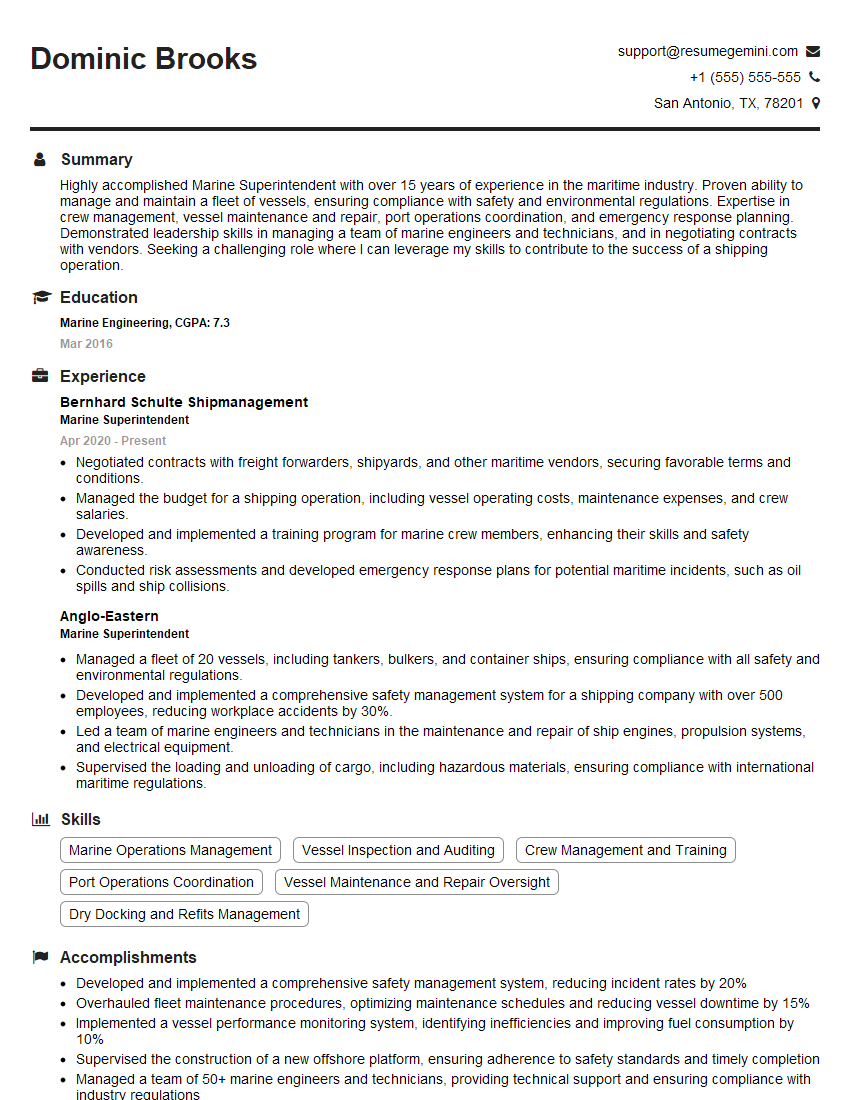
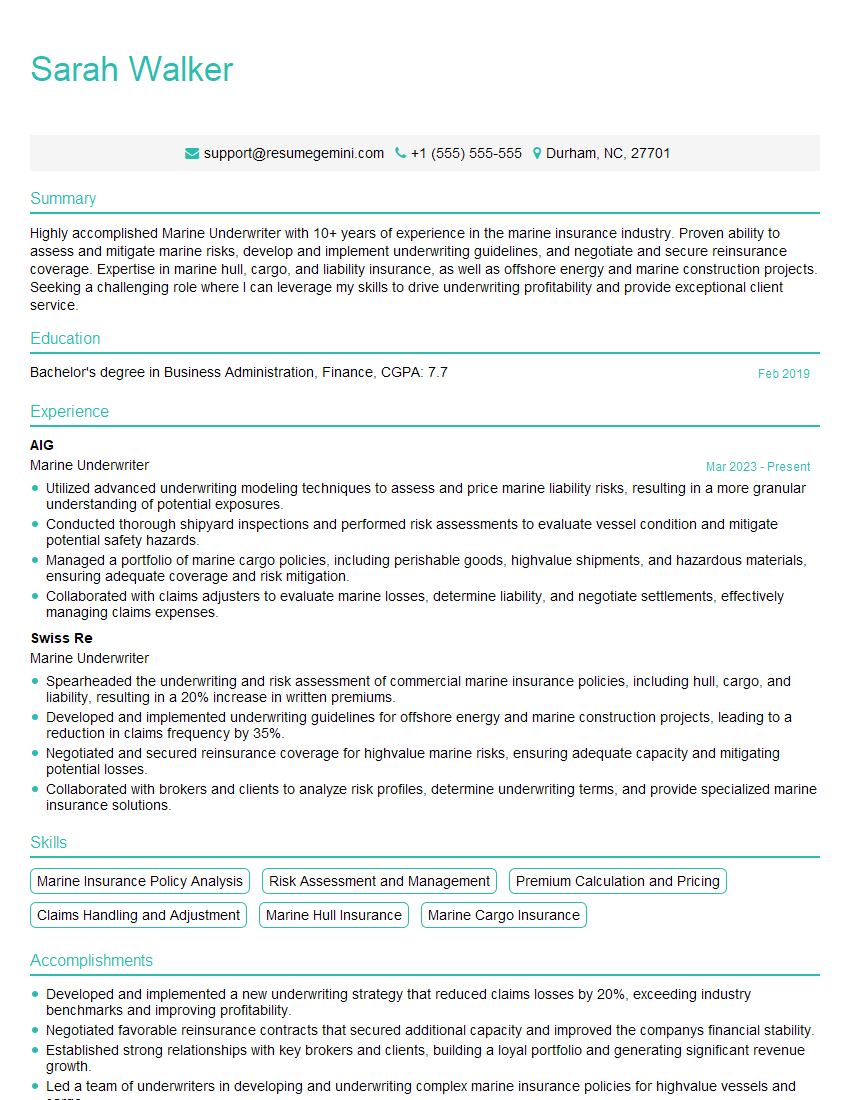
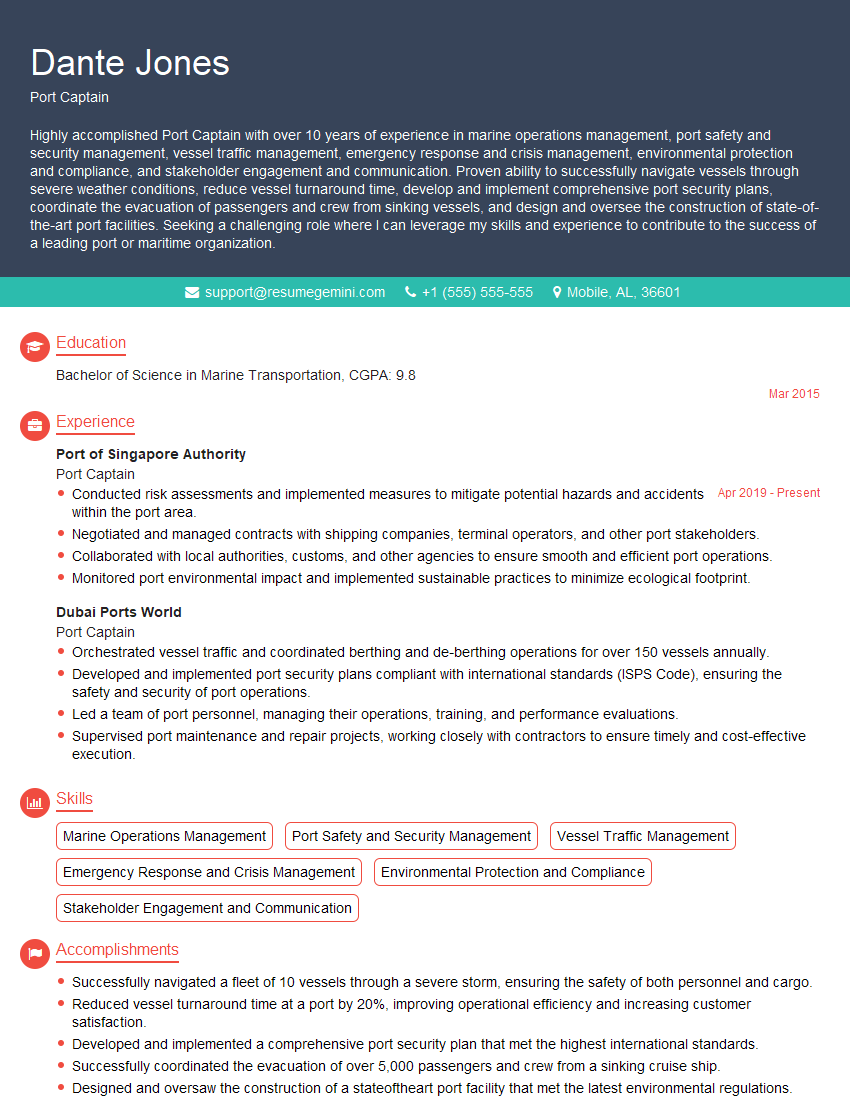
Mastering Vessel Safety and Inspection opens doors to a rewarding career with significant growth potential in a vital industry. A strong resume is your key to unlocking these opportunities. Creating an ATS-friendly resume that showcases your skills and experience is essential. ResumeGemini is a trusted resource to help you build a professional and impactful resume that gets noticed. We offer examples of resumes tailored to Vessel Safety and Inspection roles to help guide you. Take the next step towards your dream career today!
Explore more articles
Users Rating of Our Blogs
Share Your Experience
We value your feedback! Please rate our content and share your thoughts (optional).
What Readers Say About Our Blog
Very informative content, great job.
good