The thought of an interview can be nerve-wracking, but the right preparation can make all the difference. Explore this comprehensive guide to Veterinary First Aid and Emergency Care interview questions and gain the confidence you need to showcase your abilities and secure the role.
Questions Asked in Veterinary First Aid and Emergency Care Interview
Q 1. Describe the steps involved in performing CPR on a small dog.
Performing CPR on a small dog requires a slightly different approach than on a human due to their size and anatomy. The primary goal is to restore circulation and breathing until professional veterinary help arrives. Remember, this is first aid; immediate veterinary care is crucial.
- Assess the scene and ensure your safety: Check for immediate dangers before approaching the dog.
- Check for responsiveness: Gently call the dog’s name and check for a response. If unresponsive, proceed to the next step.
- Open the airway: Carefully extend the dog’s neck to open the airway. Avoid excessive extension.
- Check for breathing: Look, listen, and feel for breathing for no more than 10 seconds. If not breathing or only gasping, begin chest compressions.
- Chest compressions: Position your hands on the dog’s chest, just behind the elbow, placing one hand on top of the other. Compress the chest at a rate of approximately 100-120 compressions per minute, allowing the chest to fully recoil between compressions. For a small dog, the depth of compressions should be about one-third to one-half the depth of the chest.
- Rescue breaths (optional): If you are comfortable and trained in providing rescue breaths, after 30 chest compressions, give two rescue breaths by making a seal over the dog’s nose and mouth and gently blowing air into its lungs. Observe for chest rise.
- Repeat: Continue cycles of 30 chest compressions and two rescue breaths until the dog starts breathing on its own or professional help arrives.
- Monitor: Once the dog starts breathing on its own, monitor its breathing and pulse closely, and seek veterinary attention as soon as possible.
Important Note: CPR is physically demanding. If you are tired, switch with another person if possible. Improper CPR can cause harm, so familiarity with the technique is essential before attempting it. Consider enrolling in a pet first aid and CPR course.
Q 2. How would you stabilize a cat with suspected spinal trauma?
Suspected spinal trauma in a cat requires immediate and careful stabilization to prevent further injury to the spinal cord. The priority is to minimize movement of the head, neck, and spine.
- Do not move the cat: Unless there is immediate danger, avoid moving the cat. Moving a cat with spinal trauma can cause irreversible damage.
- Create a makeshift stretcher: Use a rigid surface such as a flat board or a stiff piece of cardboard, large enough to support the cat’s entire body. Gently slide the cat onto this stretcher. Do not lift or pull.
- Immobilization: If possible, use soft materials like towels or blankets to gently support the cat’s head, neck and body, preventing any movement. A rolled-up towel can gently support the head and neck.
- Maintain airway and breathing: Monitor the cat’s breathing and ensure its airway is clear. If the cat is having difficulty breathing, seek immediate veterinary care.
- Keep the cat warm: Cover the cat with a blanket to maintain body temperature. Hypothermia is a significant risk for animals in shock.
- Seek immediate veterinary attention: Transport the cat to a veterinary hospital immediately using the stretcher to keep it immobile. Explain the suspected spinal trauma to the veterinary staff.
Remember, handling a cat with a suspected spinal injury requires a delicate touch and expertise. Improper handling can worsen the injury. Immediate veterinary care is paramount for the best possible outcome.
Q 3. Explain the procedure for administering oxygen to a dog in respiratory distress.
Administering oxygen to a dog in respiratory distress requires careful handling and appropriate equipment. The goal is to increase the oxygen levels in the blood to help the dog breathe easier.
- Assess the situation: Before administering oxygen, assess the dog’s breathing rate, depth, and effort. Note any signs of cyanosis (blue discoloration of the gums).
- Choose the appropriate oxygen delivery system: A flow-by system (simply directing oxygen towards the animal’s nose) is often suitable for dogs, but a mask or flow-by with a nasal catheter may be necessary for better oxygen delivery. Use a low flow rate to avoid stress or panic.
- Oxygen flow rate: Begin with a low flow rate and monitor the dog’s response. A veterinarian should guide the appropriate flow rate. Never force oxygen on the animal if it becomes agitated.
- Secure the mask (if used): If using an oxygen mask, ensure a good seal around the dog’s nose and mouth to prevent oxygen leakage. For larger dogs, secure the mask with straps or your hands.
- Monitor the dog: Closely monitor the dog’s respiratory rate and effort while administering oxygen. Look for signs of improvement or deterioration.
- Transport to veterinary care: Continue oxygen therapy during transport to a veterinary hospital for appropriate diagnosis and treatment.
Oxygen therapy is a supportive measure and should only be used under the guidance of a veterinarian, or by trained professionals. It does not replace professional veterinary care.
Q 4. What are the signs of shock in a cat and how would you treat it?
Shock is a life-threatening condition characterized by inadequate blood flow to the body’s tissues. In cats, signs of shock can be subtle or dramatic.
- Pale gums: Pale pink or white gums are a key indicator.
- Weak pulse: A rapid but weak pulse is common.
- Rapid breathing: Increased respiratory rate and difficulty breathing can be present.
- Cold extremities: The cat’s paws and ears might feel cold to the touch.
- Lethargy or weakness: The cat may appear weak, lethargic, or unresponsive.
- Low body temperature: The cat’s body temperature may be lower than normal.
Treatment for shock involves addressing the underlying cause while supporting the cat’s vital functions.
- Keep the cat warm: Wrap the cat in a blanket to prevent hypothermia.
- Administer fluids (only if trained): If you are qualified to do so, carefully administer subcutaneous fluids to increase blood volume. But, this is only done if properly trained.
- Keep the cat still and quiet: Minimize stress and movement.
- Seek immediate veterinary attention: Transport the cat to a veterinarian immediately. Shock is a life-threatening condition requiring immediate professional care.
The specific treatment will depend on the underlying cause of the shock. Never attempt to treat shock without appropriate training and guidance from a veterinarian.
Q 5. How do you assess the airway, breathing, and circulation (ABCs) in an injured animal?
Assessing the ABCs (Airway, Breathing, Circulation) in an injured animal is a crucial first step in providing emergency care. It helps prioritize treatment and determine the severity of the injury.
- Airway: Check if the airway is open and clear. Look for any obstructions, such as blood, vomit, or foreign objects. Gently clear any obstructions with your fingers or a sterile gauze pad. In cases of significant trauma, carefully open the mouth to ensure the airway is not blocked by the tongue or other obstacles. Be aware of potential head and neck injuries and proceed with extreme care.
- Breathing: Assess the animal’s breathing rate, depth, and effort. Look for signs of difficulty breathing such as labored breathing, rapid breathing, or gasping. Feel for the chest rise and fall to confirm breathing is occurring. If breathing is absent or inadequate, begin rescue breathing (if trained).
- Circulation: Check the animal’s pulse rate and strength. Feel for a pulse in the femoral artery (inner thigh) or carotid artery (neck). Check for signs of bleeding, pale gums, or cold extremities (indicative of poor circulation). If there is significant bleeding, control it using direct pressure and seek immediate veterinary attention. Check capillary refill time: Gently press a gum and release. In a healthy animal, the color should return within 2 seconds. A slower refill indicates poor circulation.
Remember, this assessment must be performed swiftly and systematically. Immediately after assessment, prioritize life-threatening injuries. Timely intervention can make a significant difference in the outcome of the emergency.
Q 6. What are the common causes of heatstroke in dogs, and what first aid measures would you take?
Heatstroke in dogs is a serious and potentially fatal condition. It occurs when a dog’s body temperature becomes dangerously high due to an inability to regulate its temperature effectively.
- Overexertion in hot weather: Excessive exercise or activity in hot and humid conditions.
- Leaving dogs in hot cars: Even on a moderately warm day, a car’s interior can reach dangerously high temperatures quickly.
- Lack of shade or ventilation: Dogs left outside without adequate shade and ventilation are at increased risk.
- Certain breeds: Brachycephalic breeds (dogs with short noses like Bulldogs and Pugs) are more susceptible due to their difficulty breathing.
First aid measures for heatstroke in dogs involve rapid cooling and immediate veterinary care.
- Move the dog to a cool location: Get the dog out of the heat and into a cool, shaded area or air-conditioned environment.
- Apply cool (not cold) water: Gently pour cool water over the dog’s body, focusing on its paws, belly, and groin area. Avoid ice water as it can cause vasoconstriction and further reduce blood flow to vital organs.
- Fan the dog: Use a fan to help evaporate the water and increase cooling.
- Offer cool water to drink (if the dog is conscious): If the dog is alert and conscious, offer small amounts of cool water to drink. Avoid forcing water.
- Transport to veterinary care: Immediate veterinary attention is crucial. Heatstroke can rapidly lead to organ damage and death.
Remember, prevention is key. Never leave your dog unattended in a hot car, provide adequate shade and water, and avoid strenuous exercise during the hottest parts of the day.
Q 7. How would you manage a dog with a severe laceration?
Managing a dog with a severe laceration requires careful wound care to prevent infection and promote healing. The goal is to control bleeding, clean the wound, and seek veterinary attention.
- Control bleeding: Apply direct pressure to the wound using a clean cloth or bandage to stop the bleeding. Elevate the injured limb if possible. If bleeding is severe and uncontrolled, seek immediate veterinary attention.
- Clean the wound (with caution): Gently clean the wound with a sterile saline solution. Avoid using hydrogen peroxide or other harsh antiseptic solutions that can damage the tissue. Only clean away gross debris; extensive cleaning should be performed by a vet.
- Bandage the wound: Cover the wound with a sterile bandage to protect it from further contamination. Do not tightly constrict the wound. Leave space for the wound to breathe to prevent secondary infections.
- Transport to veterinary care: Seek veterinary care as soon as possible. The vet will properly assess the wound, clean and debride it, address any deeper injuries, and determine if stitches are required. Deep or significant lacerations often need professional attention.
Severe lacerations can lead to significant blood loss and infection if not treated properly. Even if the bleeding seems controlled, veterinary attention is essential for adequate wound care and to prevent complications.
Q 8. Describe the appropriate handling techniques for an aggressive animal requiring first aid.
Handling an aggressive animal requiring first aid necessitates prioritizing safety for both the animal and yourself. Never approach a frightened or injured animal directly. Instead, utilize a calm and slow approach, minimizing sudden movements.
Assessment is key: Observe the animal from a safe distance to assess the level of aggression. Note any signs of pain or fear that might be exacerbating the behavior. If possible, use a sturdy barrier (like a crate or a large, sturdy cardboard box) between you and the animal.
- Use protective equipment: Always wear thick gloves, ideally puncture-resistant, and consider eye protection. If the animal is large, consider protective clothing such as a thick jacket.
- Calm and controlled movements: Slow, deliberate movements help reduce the animal’s perceived threat. Avoid direct eye contact, which can be interpreted as a challenge.
- Muzzle if possible and safe to do so: If you can safely approach the animal, a muzzle, ideally a basket style to allow panting, is crucial to prevent bites. Improper muzzle application can cause more stress; if unsure, prioritize your safety and seek professional assistance.
- Create a safe space: If the environment is noisy or crowded, try to move the animal to a quiet, confined area. This reduces stimuli and potential stressors.
- Seek professional help: For severely aggressive animals, never attempt first aid alone. Contact your veterinarian or animal control immediately.
Example: Imagine a dog hit by a car – it’s in pain and understandably aggressive. Using a blanket or towel to gently cover its head to reduce visual stimuli, while simultaneously offering safe space and calmly talking to the animal could help alleviate stress, allowing for a safer assessment.
Q 9. How would you assess the severity of a fracture in a cat?
Assessing a fracture in a cat involves a careful and gentle approach, prioritizing the animal’s safety and minimizing pain. A definitive diagnosis requires veterinary examination, but you can assess the severity through initial observation.
- Pain and Swelling: Palpate (gently feel) the limb for pain or swelling. A fracture will usually be painful to the touch, causing the cat to flinch or cry out. Significant swelling indicates internal bleeding or inflammation.
- Deformity: Look for any obvious deformity or unnatural angulation in the limb. A bone that is broken will often be visibly out of place or bent at an unnatural angle.
- Limited Movement: Assess the range of motion. The cat will likely be reluctant to use the affected leg, demonstrating significant restriction in its movement. Attempting to move the limb will likely elicit significant pain.
- Crepitus: (This requires experience and should be done cautiously). A grating or crackling sensation felt when moving the limb may indicate broken bone fragments rubbing together. This is rarely assessable by non-professionals.
- Neurological Function: Assess the cat’s ability to feel and move its toes below the affected area. Loss of sensation or movement indicates potential nerve damage, necessitating immediate veterinary attention.
Severity Classification: While not a definitive diagnosis, the signs above can help estimate severity. Obvious deformity, significant swelling, inability to use the limb, and pain suggest a severe fracture needing immediate professional care.
Important Note: Never attempt to reset a fracture. Immobilization using splints or other makeshift supports is possible for transport, but professional veterinary care is crucial for accurate diagnosis and treatment.
Q 10. Explain the procedure for applying a bandage to a dog’s leg.
Bandaging a dog’s leg requires a methodical approach to ensure proper support and prevent further injury. Cleanliness is crucial to minimize infection risk.
- Gather Supplies: You’ll need sterile gauze pads, roller bandages (different widths depending on the leg size), non-stick padding, and ideally, vet wrap (self-adhering bandage). Scissors are also needed.
- Clean the Wound: Before bandaging, gently clean any wounds with sterile saline solution. Avoid using harsh chemicals or hydrogen peroxide.
- Apply Padding: Place non-stick padding directly over the wound, extending beyond the wound edges. This prevents the bandage from sticking to the wound and causing further trauma.
- Bandage Application: Start at the distal part of the leg (farthest from the body) and wrap the bandage snugly but not too tightly. Overlap each wrap by about half its width. Apply a figure-eight pattern around the joint (if a joint is involved). Check blood flow – the limb below the bandage should be pink and warm.
- Secure the Bandage: Secure the end of the bandage using tape or clips, ensuring it stays in place. Do not make it too tight to cut off circulation.
- Monitoring: Regularly check the bandage for tightness, dampness, or any slippage. Remove and re-apply the bandage if necessary.
Example: Imagine a dog with a cut on its front leg. After cleaning, we would apply non-stick pads, ensuring a comfortable amount of padding on the wound, then bandage upwards, overlapping layers, using a spiral pattern around the lower leg, followed by a figure-eight pattern around the knee joint. We’d secure it and regularly check for constriction.
Q 11. How would you treat a dog experiencing a seizure?
Treating a dog experiencing a seizure involves prioritizing the animal’s safety and minimizing further injury.
- Ensure Safety: Move the dog to a safe, padded area to prevent injury during the seizure. Remove any surrounding hazards.
- Time the Seizure: Note the duration and type of seizure. This helps the veterinarian assess the condition and severity.
- Protect the Head: Gently cushion the dog’s head to protect it from hitting hard surfaces. Never attempt to restrain the dog forcefully.
- Observe Breathing: Monitor the dog’s breathing. If breathing stops, initiate artificial respiration immediately.
- Post-Seizure Care: After the seizure, keep the dog quiet and warm. Monitor for any unusual behaviour or weakness.
- Do Not Give Medications: Avoid giving any medication unless explicitly directed by a veterinarian.
- Veterinary Care: Immediately seek veterinary attention after the seizure. This is crucial for diagnosis and managing the underlying cause.
Important Note: Seizures can have various causes, from underlying medical conditions to poisoning. Prompt veterinary care is essential for determining the cause and providing appropriate treatment.
Q 12. What are the signs of poisoning in a pet, and what actions would you take?
Recognizing poisoning in pets requires awareness of various symptoms, which can be highly variable depending on the toxin ingested.
- Gastrointestinal Signs: Vomiting, diarrhea (often bloody), loss of appetite, abdominal pain.
- Neurological Signs: Tremors, seizures, weakness, incoordination, disorientation, collapse.
- Cardiovascular Signs: Rapid or slow heart rate, difficulty breathing.
- Other Signs: Excessive drooling, skin irritation, unusual urination or defecation.
Actions to Take:
- Identify the Poison: If possible, identify the substance the pet ingested. This is crucial for effective treatment.
- Contact Vet or Poison Control: Immediately contact your veterinarian or an animal poison control center (such as the ASPCA Animal Poison Control Center).
- Do Not Induce Vomiting: Unless explicitly instructed by a veterinarian or poison control center, do not attempt to induce vomiting. Some poisons are more dangerous if vomited.
- Gather Information: Provide the animal poison control center or your vet with details: animal’s species, breed, weight, amount of substance ingested, time of ingestion.
- Follow Instructions: Follow the instructions provided by the poison control center or your vet carefully.
Example: A dog ingesting chocolate could show vomiting, diarrhea, and hyperactivity. Knowing what the pet has ingested (chocolate) is crucial to inform treatment.
Q 13. Explain the importance of maintaining a sterile environment when performing wound care.
Maintaining a sterile environment during wound care is paramount to prevent infection and promote healing. Infection can significantly complicate recovery, potentially leading to serious complications or even death.
- Cleanliness: Wash your hands thoroughly with soap and water before and after handling the wound. Ideally, use an antimicrobial soap.
- Sterile Supplies: Use sterile gloves, gauze pads, and other instruments. Avoid touching sterile surfaces with non-sterile hands.
- Wound Cleaning: Gently clean the wound with sterile saline solution or other recommended antiseptic solution, starting from the center and working outward to prevent spreading contaminants. Avoid using hydrogen peroxide or harsh chemicals.
- Proper Bandaging Technique: Apply bandages correctly to protect the wound and maintain a clean environment. Replace the bandage regularly as needed.
- Environment: Ensure the environment is clean and minimizes potential contamination sources.
Consequences of Non-Sterile Technique: Failure to maintain sterility can lead to bacterial contamination, increasing the risk of localized infection, abscess formation, sepsis (a life-threatening systemic infection), and delayed wound healing. Simple practices like hand washing and using sterile materials drastically reduce these risks.
Q 14. Describe the different types of shock and their management.
Shock is a life-threatening condition characterized by inadequate blood flow to vital organs. Different types of shock have various causes and management strategies.
- Hypovolemic Shock: This is caused by significant blood or fluid loss (e.g., hemorrhage, severe dehydration). Management involves fluid replacement (intravenously by a vet) and addressing the cause of fluid loss.
- Cardiogenic Shock: Caused by the heart’s inability to pump enough blood (e.g., heart failure). Management requires advanced veterinary interventions, such as medication to support heart function and potentially surgery.
- Septic Shock: Caused by overwhelming infection. Management involves aggressive fluid therapy, antibiotics, and supportive care.
- Anaphylactic Shock: A severe allergic reaction. Management necessitates immediate administration of epinephrine (by a vet), supportive care, and monitoring for respiratory distress.
- Neurogenic Shock: Caused by damage to the nervous system. Management requires stabilizing the spinal cord and supportive care to address blood pressure issues.
General Management of Shock: Regardless of the type, immediate veterinary attention is crucial. In the meantime, while transporting the animal to the vet, keep the animal warm (hypothermia is common), handle gently, ensure a quiet environment, and monitor breathing and pulse.
Note: Recognizing shock involves observing pale gums, rapid weak pulse, rapid breathing, and lethargy. Early recognition and rapid intervention are crucial for improving outcomes.
Q 15. How would you handle a case of animal ingestion of a toxic substance?
Handling a toxic ingestion case begins with immediate action. First, identify the toxin if possible – this helps guide treatment. Next, prevent further exposure. This might involve removing the animal from the contaminated area or preventing further licking or chewing. Then, contact your veterinarian or a veterinary emergency hospital immediately. While waiting for veterinary care, you might be instructed to induce vomiting (only if advised by a vet; never induce vomiting without professional guidance, as it can be dangerous), administer activated charcoal (again, only as directed), or provide supportive care such as keeping the animal warm and quiet. Time is critical in many toxic ingestions. Remember, providing the vet with details about the suspected toxin, amount ingested, and the time of ingestion is crucial for effective treatment.
For example, if a dog ingests rat poison, immediate veterinary intervention is vital as many rodenticides cause internal bleeding. Every minute counts in such cases.
Career Expert Tips:
- Ace those interviews! Prepare effectively by reviewing the Top 50 Most Common Interview Questions on ResumeGemini.
- Navigate your job search with confidence! Explore a wide range of Career Tips on ResumeGemini. Learn about common challenges and recommendations to overcome them.
- Craft the perfect resume! Master the Art of Resume Writing with ResumeGemini’s guide. Showcase your unique qualifications and achievements effectively.
- Don’t miss out on holiday savings! Build your dream resume with ResumeGemini’s ATS optimized templates.
Q 16. What are the potential complications of improperly administered IV fluids?
Improperly administered IV fluids can lead to several serious complications. Overhydration, where the body receives too much fluid, can cause pulmonary edema (fluid in the lungs), leading to respiratory distress. Underhydration, conversely, fails to address the animal’s dehydration, worsening its condition. Infiltration, where the fluid leaks out of the vein into surrounding tissues, causes swelling, pain, and potential tissue damage. Air embolism, the introduction of air into the bloodstream, can be fatal. Thrombophlebitis, inflammation of the vein, can occur due to irritation from the catheter. Finally, incorrect fluid choice or rate can worsen electrolyte imbalances, further compromising the animal’s health. Proper training and careful monitoring are essential to prevent these problems.
Think of it like this: IV fluids are like carefully balancing a delicate ecosystem within the body. Too much or too little, or administering them incorrectly, throws this balance off, leading to potentially disastrous consequences.
Q 17. Explain the differences between types of bandages and their uses.
Bandages serve various purposes in veterinary first aid, and the choice of bandage type depends on the injury.
- Conforming gauze bandages: These are highly versatile, adhering to the body’s contours without needing tape. Ideal for covering wounds and applying topical medications.
- Robert Jones bandages: These are bulky, supportive bandages used for immobilizing limbs after fractures or injuries. They provide significant padding and support.
- Ehmer sling: Specifically designed for injuries of the forelimbs; provides support and limits movement.
- Velpeau sling: Used for injuries to the hindlimbs or shoulder region; offers stability and support.
- Pressure bandages: Used to control bleeding; apply direct pressure to the wound.
For instance, a minor laceration might be adequately covered with conforming gauze, while a fractured femur would necessitate a Robert Jones bandage for immobilization and support.
Q 18. How do you immobilize an animal with a suspected limb fracture?
Immobilizing a limb fracture requires careful technique to prevent further injury and pain. The primary goal is to stabilize the limb, reducing movement at the fracture site. This usually involves splinting or bandaging the affected area. For a suspected limb fracture, gently restrain the animal (if necessary, with the assistance of another person). Avoid excessive movement of the injured limb. Apply a splint, which can be a rigid object (such as a piece of wood or cardboard) or a soft splint (like rolled-up towels or bandages). The splint should extend beyond the joints above and below the fracture. Secure the splint with bandages, ensuring it is snug but not constricting blood flow. Transport the animal to a veterinary hospital as soon as possible for proper diagnosis and treatment.
Imagine it like building a small, supportive cast. The splint is the base, and the bandages act as the supportive tape. It’s important to make sure that the ‘cast’ is not too tight or loose, for proper support.
Q 19. What is the purpose of using a muzzle during first aid?
A muzzle is used in veterinary first aid to protect both the animal and the handler. It prevents biting, which is a natural response to pain, fear, or stress, particularly during an emergency. This protects both you and others from potential injury and allows for safer handling and assessment of the animal. The muzzle should be applied correctly to avoid impeding breathing. There are different types of muzzles available, each suited for different situations. Remember, a muzzle is not a punishment but a safety precaution.
Think of it like using safety goggles when handling hazardous materials – it’s a precautionary measure to prevent potential harm.
Q 20. How would you handle an animal with a foreign body obstruction in its airway?
A foreign body obstruction in the airway is a life-threatening emergency requiring immediate action. If you see the obstruction, carefully attempt to remove it using forceps, but avoid pushing it further down. If you can’t see the obstruction, do not attempt a blind finger sweep. If the animal is conscious but struggling to breathe, carefully try to dislodge the object by striking the animal firmly but gently on the back between the shoulder blades. If the animal is unconscious and not breathing, commence cardiopulmonary resuscitation (CPR) immediately, while simultaneously seeking veterinary help. CPR involves chest compressions and rescue breaths.
This is a time-critical situation that demands swift action. Every second counts.
Q 21. Describe your experience with administering medications in an emergency setting.
I have extensive experience administering medications in emergency situations. My experience includes administering intravenous fluids, analgesics (pain relievers), antiemetics (to prevent vomiting), and other medications as directed by a veterinarian. I’m proficient in calculating dosages, selecting appropriate routes of administration (IV, IM, SQ), and monitoring patients for adverse reactions. Proper aseptic technique is paramount to prevent infection. I meticulously document each medication administered, including the time, dose, route, and any observed reactions. Patient safety and accurate record-keeping are my top priorities in this aspect of emergency veterinary care.
One instance that sticks with me is a dog who arrived with severe hypovolemic shock. Administering fluids rapidly and carefully was vital to saving its life. Precise dosage and monitoring were critical to avoid overhydration and allow its system to slowly recover.
Q 22. What are the legal implications of providing first aid to an animal?
The legal implications of providing first aid to an animal are complex and vary by location. Generally, you’re protected under ‘Good Samaritan’ laws if you act reasonably and without negligence. This means you should provide aid to the best of your ability within your skillset, but you cannot be held liable for unforeseen complications if you acted in good faith. However, exceeding your competence or acting recklessly can lead to legal repercussions. For example, performing a procedure you are not qualified to do, and causing harm, could result in legal action. Always prioritize the animal’s well-being, but understand your limitations. It’s crucial to seek professional veterinary attention as soon as possible after providing initial first aid. Documenting your actions clearly and concisely is also important; this may involve noting the time of the incident, the observed injuries, the first aid given, and the subsequent transfer to veterinary care.
Q 23. How do you determine when to transport an animal to a veterinary hospital?
Deciding when to transport an animal to a veterinary hospital requires careful assessment of the animal’s condition. Think of it like this: if you wouldn’t hesitate to call 911 for a human, you should seek immediate veterinary attention. This includes situations involving:
- Severe bleeding (inability to control bleeding)
- Respiratory distress (difficulty breathing, bluish gums)
- Seizures
- Trauma (serious injuries from accidents)
- Poisoning (ingestion of toxins)
- Unconsciousness
- Shock (pale gums, rapid weak pulse, lethargy)
- Prolonged vomiting or diarrhea
- Any signs of severe pain
In less immediately life-threatening cases, you should still carefully monitor the animal. Signs of worsening condition or any uncertainty warrant veterinary consultation. Remember, early intervention often leads to better outcomes.
Q 24. Explain your understanding of triage in veterinary emergencies.
Triage in veterinary emergencies is a system for prioritizing patients based on the urgency of their need for treatment. It’s crucial for efficient resource allocation, particularly during mass casualty incidents or when resources are limited. We use a similar system to human medicine, applying a similar system of prioritizing patients into categories:
- Immediate: Life-threatening conditions requiring immediate intervention (e.g., severe bleeding, respiratory arrest).
- Urgent: Serious but not immediately life-threatening conditions requiring prompt attention (e.g., fractures, severe dehydration).
- Non-urgent: Conditions that can be treated later without immediate risk to life (e.g., minor lacerations, non-infected wounds).
Veterinary triage involves rapidly assessing an animal’s breathing, heart rate, level of consciousness, and the presence of any obvious life-threatening injuries. This allows me to quickly identify those needing the most urgent care.
Q 25. How would you handle a situation where multiple animals require simultaneous care?
Handling multiple animals simultaneously demands efficient teamwork and prioritization. My approach involves:
- Rapid Assessment: Quickly assess each animal using a triage system, identifying those in immediate need.
- Prioritization: Focus on stabilizing the animals with the most critical injuries first (following the triage guidelines).
- Delegation (if applicable): If working with a team, delegate tasks effectively, ensuring clear communication and understanding of roles.
- Stabilization: Once initial stabilization of the most critical cases is achieved, attention can be given to the remaining animals.
- Continuous Monitoring: Continuously monitor all patients, as conditions can change rapidly. This includes regularly reassessing vital signs.
This process ensures that the most urgent cases receive immediate attention while other animals still receive necessary care, minimizing risk and maximizing successful outcomes.
Q 26. Describe a challenging emergency case you handled and how you managed it.
One challenging case involved a dog hit by a car. He arrived severely hypotensive (low blood pressure), with a fractured femur, significant internal bleeding, and a pneumothorax (collapsed lung). My immediate actions were:
- Establish Airway: Assisted breathing using a bag-valve mask until oxygen was available.
- Control Bleeding: Applied pressure to external wounds while initiating intravenous fluid therapy to combat hypotension.
- Chest Decompression: Performed needle thoracostomy to relieve pressure on the collapsed lung.
- Pain Management: Administered analgesics to control pain.
- Rapid Transport: Immediately transported the dog to the veterinary hospital for advanced care (surgery, imaging etc.).
Despite the severity, the coordinated response and rapid transport significantly increased his chances of survival. The experience highlighted the importance of rapid assessment, decisive actions, and effective communication with the veterinary team for optimal patient outcomes. He eventually made a full recovery.
Q 27. How do you stay up-to-date with advancements in veterinary emergency care?
Staying current in veterinary emergency care is paramount. I utilize several methods:
- Continuing Education Courses: Regularly attend workshops and conferences focused on advanced techniques and protocols.
- Professional Journals and Publications: I subscribe to leading veterinary journals and regularly read research articles on advancements in emergency care.
- Online Resources and Webinars: I actively engage with online platforms offering updated information, webinars, and case studies.
- Networking with Colleagues: Maintaining professional relationships with colleagues and specialists allows for the sharing of knowledge and experience.
Continuous learning ensures I am proficient in the latest techniques and best practices, thereby providing the highest quality of care.
Q 28. What are your strengths and weaknesses related to Veterinary First Aid and Emergency Care?
Strengths: My strengths lie in my quick assessment skills, decisive action under pressure, and my commitment to continuing education. I also excel in teamwork and communication.
Weaknesses: Like everyone, there’s always room for improvement. While I’m experienced, handling extremely rare or complex cases can be challenging. I constantly work on improving my knowledge and skills through continuing education to mitigate this. My ability to manage highly stressful situations under significant pressure could also benefit from further enhancement.
Key Topics to Learn for Veterinary First Aid and Emergency Care Interview
- Cardiopulmonary Resuscitation (CPR): Understanding canine and feline CPR techniques, including chest compressions, airway management, and recognizing effective resuscitation.
- Trauma Management: Assessing and stabilizing animals with traumatic injuries, including hemorrhage control, wound management, and splinting fractures. Practical application involves knowing how to properly apply bandages and splints in various scenarios.
- Shock Recognition and Treatment: Identifying different types of shock (hypovolemic, septic, etc.) and implementing appropriate supportive care, such as fluid therapy and maintaining body temperature.
- Emergency Drug Administration: Safe and effective administration of common emergency medications, understanding dosages, routes of administration, and potential side effects. This includes practical knowledge of drug calculations.
- Basic Diagnostics: Performing and interpreting basic diagnostic tests in an emergency setting, such as assessing vital signs (heart rate, respiratory rate, temperature, capillary refill time), and recognizing signs of pain and distress.
- Poisoning and Toxin Exposure: Recognizing common toxins and poisons affecting animals and outlining initial treatment strategies, understanding the importance of contacting a veterinary toxicologist.
- Seizure Management: Understanding the causes and treatment of seizures in animals, including patient safety and post-seizure care.
- Patient Handling and Restraint: Safe and effective techniques for handling and restraining animals of various sizes and temperaments during emergencies.
- Communication and Teamwork: Effectively communicating with clients, colleagues, and other emergency personnel, prioritizing information and working collaboratively in high-pressure situations.
- Legal and Ethical Considerations: Understanding your responsibilities and limitations within the scope of practice for veterinary first aid and emergency care.
Next Steps
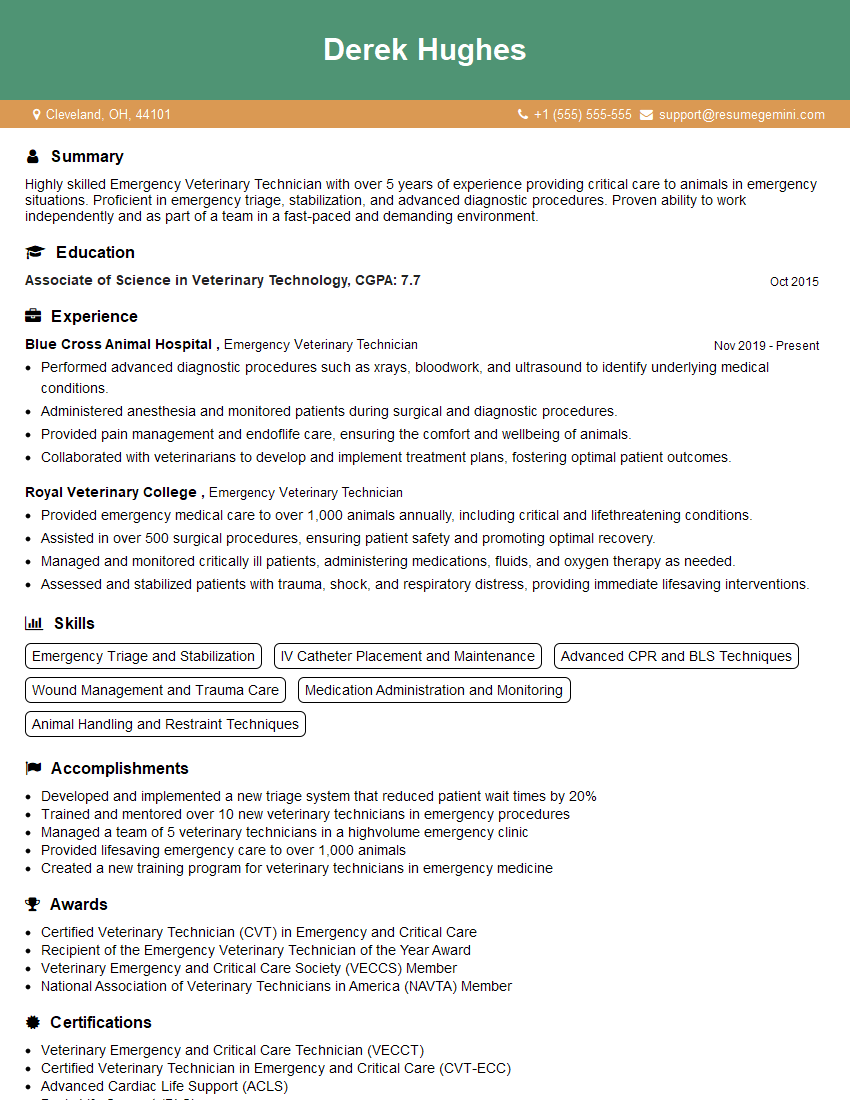
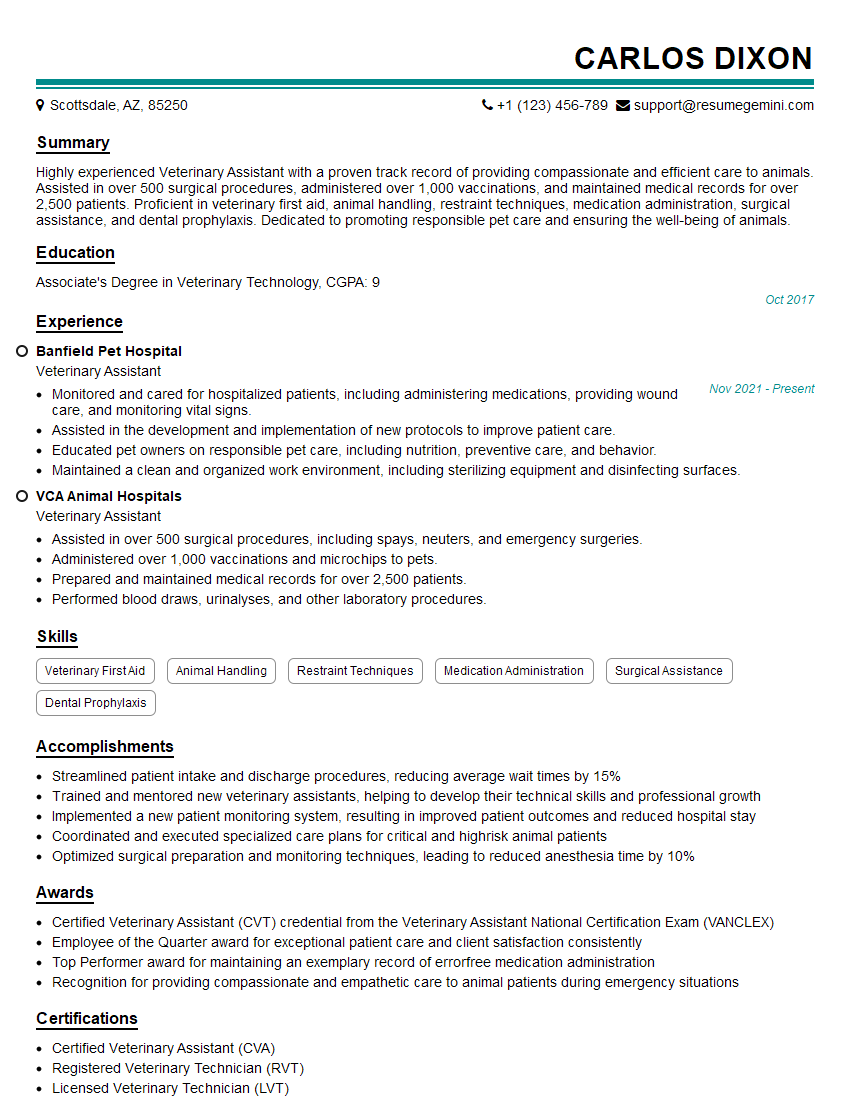
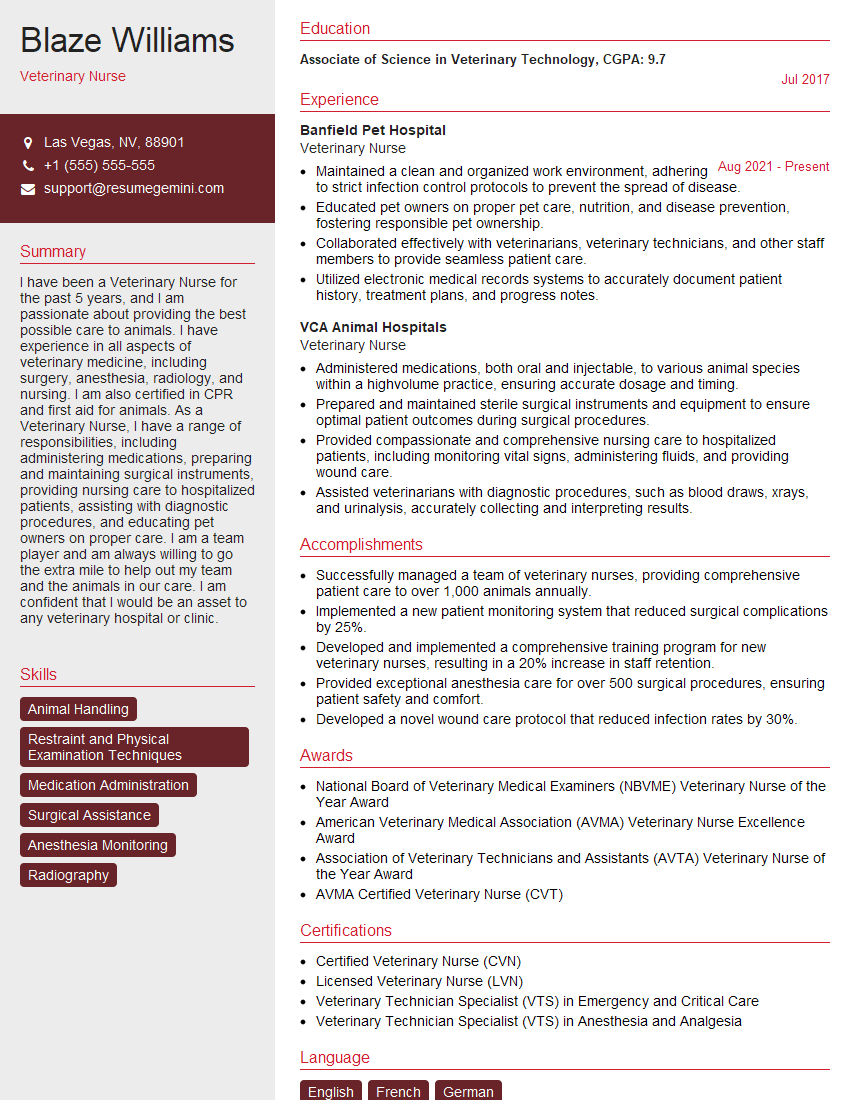
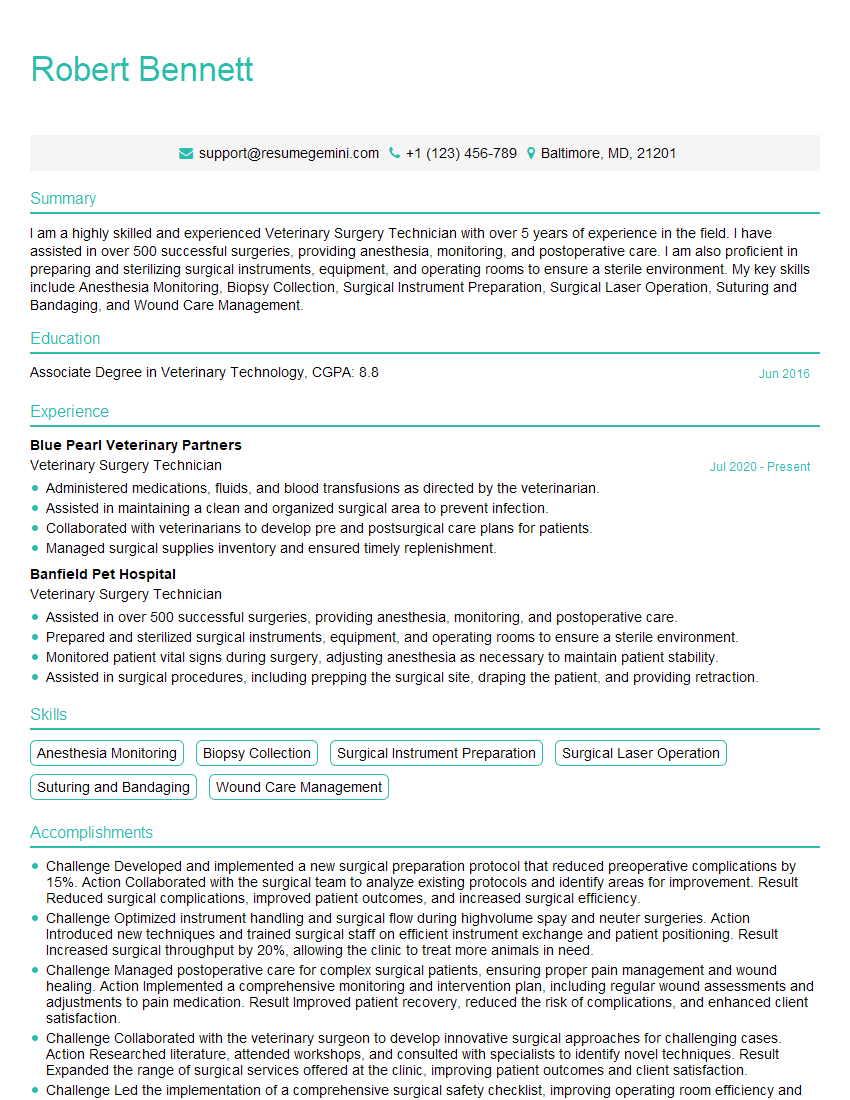
Mastering Veterinary First Aid and Emergency Care significantly enhances your value as a veterinary professional, opening doors to exciting career opportunities and specialization within emergency and critical care. To secure your dream role, a strong resume is crucial. Creating an ATS-friendly resume is vital for getting noticed by employers. ResumeGemini offers a trusted platform to build a professional and impactful resume that highlights your skills and experience effectively. ResumeGemini provides examples of resumes tailored to Veterinary First Aid and Emergency Care to help guide you. Take the next step towards your career success today!
Explore more articles
Users Rating of Our Blogs
Share Your Experience
We value your feedback! Please rate our content and share your thoughts (optional).
What Readers Say About Our Blog
Very informative content, great job.
good