Every successful interview starts with knowing what to expect. In this blog, we’ll take you through the top Victim Services interview questions, breaking them down with expert tips to help you deliver impactful answers. Step into your next interview fully prepared and ready to succeed.
Questions Asked in Victim Services Interview
Q 1. Describe your experience providing crisis intervention to victims of trauma.
Crisis intervention for trauma victims requires immediate action to stabilize their emotional and physical state. It involves assessing the immediate danger, providing emotional support, and connecting them with necessary resources. My experience involves utilizing techniques such as active listening, validation of their feelings, and helping them regain a sense of control.
For example, I once worked with a woman who had just escaped domestic violence. She was visibly shaken, hyperventilating, and struggling to articulate her needs. My immediate focus was on ensuring her safety by finding her a safe place to stay. I then helped her calm down through slow, deep breathing exercises and offered empathetic validation of her fear and trauma. Once she was calmer, we began to discuss her immediate needs, such as food, shelter, and medical care.
Another example involved supporting a young man after a serious car accident. He was experiencing intense shock and anxiety. My intervention involved staying with him, providing comfort, and calmly explaining the next steps of medical care while reassuring him that he was safe.
Q 2. Explain your understanding of trauma-informed care and how you apply it in your work.
Trauma-informed care is a strengths-based approach that recognizes the pervasive impact of trauma and emphasizes safety, trustworthiness, choice, collaboration, and empowerment. It understands that a person’s behavior is often a direct result of past trauma. In my work, I apply this by creating a safe and non-judgmental environment. I empower victims to make choices about their care, collaborate with them to develop individualized support plans, and focus on their strengths and resilience rather than solely on their deficits.
For instance, I avoid using language that might trigger a victim (e.g., instead of ‘What happened to you?’, I might ask ‘Can you tell me about your experience?’). I always respect their pace and boundaries, offering choices whenever possible. If a victim doesn’t want to discuss a specific detail, I don’t push it. I let them lead the conversation.
Q 3. How do you assess the immediate safety needs of a victim?
Assessing immediate safety involves a thorough and systematic approach. It begins with direct questions about their current situation, identifying any immediate threats to their physical safety. This includes questions about potential aggressors, access to weapons, and the availability of safe housing. I also assess their psychological state, looking for signs of suicidal ideation or self-harm.
My assessment involves using a combination of open-ended questions, observational skills, and validated screening tools. For example, I might ask: “Are you currently in danger?”, “Is there anyone who might harm you?”, “Do you have a safe place to go right now?”. I also pay attention to their nonverbal cues, such as body language and anxiety levels. If I suspect immediate danger, I will take steps to ensure their safety, which may include contacting law enforcement or arranging for emergency shelter.
Q 4. What are the key components of a comprehensive victim support plan?
A comprehensive victim support plan is tailored to the individual’s needs and circumstances. Key components include:
- Safety Planning: Identifying immediate and long-term safety strategies, including emergency contacts, escape routes, and safe places.
- Crisis Intervention: Providing immediate support during acute distress and connecting the victim with necessary mental health services.
- Advocacy: Assisting the victim in navigating the legal and social service systems, including accompanying them to court or assisting with applications for benefits.
- Case Management: Coordinating services from multiple agencies to provide holistic support.
- Trauma-Informed Counseling: Providing therapeutic interventions to address trauma-related symptoms.
- Resource Referral: Connecting the victim with relevant community resources such as housing assistance, financial aid, and support groups.
- Follow-up and Ongoing Support: Providing regular check-ins and continued support as needed.
The plan should be collaboratively developed with the victim, ensuring their active participation and informed consent.
Q 5. Describe your experience working with diverse populations experiencing victimization.
Working with diverse populations requires cultural humility and sensitivity. My experience includes supporting victims from various ethnic backgrounds, socioeconomic levels, sexual orientations, and gender identities. I understand that victimization can manifest differently across various cultural contexts and that traditional approaches might not always be effective.
For example, working with an immigrant victim requires sensitivity to their immigration status, potential language barriers, and cultural beliefs surrounding disclosure. Similarly, supporting an LGBTQ+ victim necessitates understanding their unique challenges and creating a safe and affirming space. I always strive to use interpreters when needed and adapt my approach to be culturally responsive. I make sure to utilize resources that cater to the specific needs of the individual.
Q 6. How do you maintain client confidentiality while adhering to legal and ethical mandates?
Maintaining client confidentiality is paramount. I adhere strictly to legal and ethical mandates, such as HIPAA and mandated reporting laws. I only disclose information when legally required, such as in cases of child abuse or imminent danger to the victim or others. I obtain informed consent before sharing any information, and I carefully document all interactions in a secure manner.
For example, I would never discuss a client’s case with anyone outside the agency unless I have their explicit consent or it is legally mandated. I also use secure electronic systems to store client data and ensure that all documents are appropriately secured.
Q 7. How do you handle situations where a victim is reluctant to cooperate or participate in services?
Reluctance to cooperate or participate in services is common among trauma victims. My approach is based on building trust and rapport. I avoid pressuring the victim and instead focus on validating their feelings and empowering them to make choices. I might start by offering limited assistance, such as providing information or connecting them with a specific resource, and gradually building a relationship over time.
Sometimes, it’s crucial to recognize that it’s not my job to force them into services. Instead, I make sure they feel safe and heard. Sometimes simply being present and offering unconditional support can be the most effective intervention. I will continue to assess their needs and offer support whenever possible, adjusting my approach based on their level of willingness and comfort. Sometimes, simply having a consistent point of contact and showing empathy can lay the groundwork for future engagement.
Q 8. Describe your experience advocating for victims within the legal system.
My experience advocating for victims within the legal system spans over ten years, encompassing diverse roles from direct victim advocacy to policy influencing. I’ve worked extensively with survivors of domestic violence, sexual assault, and human trafficking, navigating the complexities of the criminal justice system to ensure their voices are heard and their rights protected. This includes accompanying victims to court hearings, preparing them for testimony, assisting with applications for protective orders, and advocating for their needs within the legal proceedings. For instance, I successfully advocated for a victim of domestic violence to receive a restraining order, ensuring her safety and empowering her to rebuild her life. Beyond individual cases, I’ve also participated in legislative advocacy efforts, working with lawmakers to improve victim services and strengthen legislation.
I understand that navigating the legal system can be daunting and retraumatizing for victims, so I focus on providing clear, compassionate support tailored to each individual’s needs and circumstances. My goal is always to empower them to participate actively in their legal journey, fostering a sense of agency and control, while remaining mindful of their emotional well-being. This also includes working closely with prosecutors and defense attorneys to ensure a victim-centered approach to justice.
Q 9. Explain your understanding of different types of victimization and their unique needs.
Victimization encompasses a wide range of experiences, each demanding a unique approach to support. For example, victims of domestic violence often grapple with feelings of isolation, fear, and economic dependence on their abuser. Their needs may include safe housing, financial assistance, and support groups. In contrast, survivors of sexual assault frequently struggle with intense emotional trauma, physical injuries, and the stigma associated with their experience. They may benefit from crisis intervention, counseling, medical care, and forensic services. Victims of human trafficking face complex challenges including exploitation, psychological manipulation, and physical abuse. Their needs involve escaping exploitative situations, securing essential resources like housing and healthcare, and receiving specialized trauma-informed care.
- Domestic Violence: Safety planning, legal advocacy, financial assistance.
- Sexual Assault: Medical care, forensic examination, counseling, support groups.
- Human Trafficking: Safe housing, legal assistance, healthcare, specialized trauma-informed therapy.
- Hate Crimes: Counseling, support groups for marginalized communities, legal assistance to address bias-motivated crimes.
Understanding these distinct needs is crucial for providing appropriate and effective support. A one-size-fits-all approach is insufficient; instead, we must tailor our services to the specific vulnerabilities and circumstances of each victim.
Q 10. How do you build rapport and trust with victims who have experienced trauma?
Building rapport and trust with trauma survivors requires patience, empathy, and a deep understanding of the impact of trauma. It’s not about fixing their problems, but about creating a safe space where they feel heard, validated, and respected. I begin by actively listening without judgment, acknowledging the validity of their experience, and ensuring their comfort. I use trauma-informed communication techniques, being mindful of my tone, body language, and pace of speech.
For example, I always start by introducing myself clearly and explaining my role, ensuring the victim has complete control over the interaction. I might begin by asking open-ended questions like, “What’s most important for you right now?” or “Can you tell me more about what you’ve been going through?” It’s essential to avoid pressuring them to disclose details they’re not ready to share, respecting their boundaries and pace of healing. Building trust is a process, not a destination; it requires consistent respect, compassion, and demonstrating competence and reliability over time. Ultimately, the relationship is centered on empowerment— helping the victim regain a sense of control and agency in their own life.
Q 11. Describe your experience collaborating with other professionals (e.g., law enforcement, medical personnel).
Collaboration is fundamental to effective victim services. I regularly work with law enforcement officers to ensure victims’ needs are met during the investigation and prosecution of crimes. This includes coordinating access to protective services, providing victim updates on the case progress, and advocating for their concerns. With medical personnel, my collaboration focuses on ensuring victims receive appropriate medical care, including forensic examinations, treatment for injuries, and referrals for mental health services. I also frequently collaborate with social workers, therapists, and other support professionals to develop a comprehensive care plan.
For instance, in a recent case involving a victim of sexual assault, I worked closely with law enforcement to ensure a sensitive and respectful investigation. I then coordinated with medical professionals to ensure access to a forensic examination and to establish a comprehensive treatment plan that included mental health counseling. Furthermore, I linked the victim with housing and financial assistance resources. Such inter-agency collaboration ensures victims receive holistic and coordinated support, which ultimately improves outcomes and enhances the efficacy of the justice system.
Q 12. How do you identify and address secondary trauma in yourself and your colleagues?
Secondary trauma, the emotional distress caused by exposure to others’ trauma, is a significant concern for those working in victim services. Recognizing the signs of secondary trauma in myself and my colleagues is crucial for maintaining our well-being and ensuring effective service delivery. We regularly engage in self-care practices such as mindfulness exercises, stress management techniques, and regular supervision sessions with licensed mental health professionals. Our organization also provides access to employee assistance programs (EAPs) and promotes a culture of open communication where staff feel comfortable discussing their emotional needs and seeking support without fear of stigma.
We utilize regular debriefing sessions following particularly challenging cases, creating a safe space for processing emotions and sharing experiences. These sessions, facilitated by a trained professional, help us process vicarious trauma, build resilience, and strengthen our ability to support victims effectively. By proactively addressing secondary trauma, we prioritize our well-being and maintain our capacity to provide compassionate and effective service to those we serve.
Q 13. How do you utilize resources and referrals to support victims’ needs?
Utilizing resources and referrals is a cornerstone of effective victim services. I’m familiar with a wide range of local, state, and national resources available to victims, including shelters, legal aid organizations, mental health services, financial assistance programs, and support groups. I meticulously assess each victim’s individual needs, tailoring my referrals to address their specific circumstances. For example, a victim needing immediate shelter would be referred to a local domestic violence shelter, while someone needing legal representation would be connected with a legal aid organization.
My approach involves more than simply providing a list of resources. I explain the services each organization offers, assist with application processes, and even accompany victims to appointments when appropriate. I maintain close contact with these organizations to ensure seamless transitions and coordinated care. Regular updates on clients’ progress are part of my ongoing management of their referrals, ensuring the services continue to meet their changing needs. This active and comprehensive approach maximizes the effectiveness of referrals and helps victims navigate the complex landscape of available support services.
Q 14. Describe your experience with case management and tracking client progress.
Case management is a crucial aspect of my work, involving comprehensive tracking of client progress and needs throughout the service process. I utilize a case management system to document client interactions, service plans, referrals, and progress notes. This ensures consistency in service delivery, facilitates efficient collaboration among professionals, and enables thorough monitoring of clients’ well-being. I conduct regular check-ins with clients to assess their progress, identify any barriers to service, and modify care plans as needed.
Data analysis from the case management system helps identify trends and gaps in services, allowing for continuous program improvement. For example, if I observe a high number of clients struggling with housing instability, it might indicate a need for increased collaboration with housing agencies and increased advocacy for affordable housing initiatives. Through meticulous record-keeping and data analysis, the case management system is fundamental in optimizing service delivery and ensuring that every client receives the support they need to recover and thrive.
Q 15. What are the ethical considerations involved in working with victims of crime?
Ethical considerations in victim services are paramount, guiding our actions and ensuring we prioritize the well-being and rights of those we serve. These considerations revolve around several key principles: Confidentiality is central; victims must trust us with sensitive information. We must maintain strict confidentiality, only sharing information with appropriate authorities with the victim’s informed consent or as mandated by law. Respect for autonomy means valuing the victim’s choices and decisions, even if we disagree. We support their autonomy in deciding their course of action, whether that involves reporting the crime to law enforcement, seeking medical attention, or participating in the legal process. Non-judgmental support is crucial. We must avoid any bias or judgment, accepting individuals regardless of their background, choices, or circumstances. We provide support without imposing our values or opinions. Beneficence and non-maleficence are core tenets of ethical practice. We must strive to act in the best interests of the victim, while simultaneously avoiding any actions that could cause them harm or further distress. This includes being mindful of potential re-traumatization during the service delivery process. Finally, Justice and fairness requires us to advocate for victims’ rights and ensure they have access to resources and support, fighting against any discrimination or inequality they may face.
For example, if a victim discloses information about past trauma, we handle this with utmost care, providing support and ensuring they feel safe and respected, without pushing them to share more than they are comfortable with. We also avoid inadvertently blaming the victim for the crime committed against them.
Career Expert Tips:
- Ace those interviews! Prepare effectively by reviewing the Top 50 Most Common Interview Questions on ResumeGemini.
- Navigate your job search with confidence! Explore a wide range of Career Tips on ResumeGemini. Learn about common challenges and recommendations to overcome them.
- Craft the perfect resume! Master the Art of Resume Writing with ResumeGemini’s guide. Showcase your unique qualifications and achievements effectively.
- Don’t miss out on holiday savings! Build your dream resume with ResumeGemini’s ATS optimized templates.
Q 16. How do you ensure culturally competent service delivery?
Culturally competent service delivery acknowledges that victims come from diverse backgrounds and experiences, shaping their understanding and interaction with the justice system and support services. To ensure this competency, we begin with self-reflection on our own biases and assumptions, engaging in ongoing education and training to broaden our understanding of diverse cultures and communities. We then actively seek out and utilize culturally appropriate resources and materials, including translation services, interpreters, and culturally sensitive educational materials. We actively build relationships and partnerships with community organizations and leaders representing different cultural groups to develop trust and understanding. Crucial to this process is active listening and empathy, adapting our communication style to match the individual needs and communication preferences of each victim. This includes being aware of non-verbal cues that might differ across cultures. We respect and incorporate culturally informed practices into our support plans whenever possible, recognizing, for example, that family and community structures may vary significantly and might influence how a victim engages with services.
Imagine working with a refugee who has experienced domestic violence. We would need to be sensitive to their potential trauma related to displacement and loss, the complexities of their immigration status, and cultural beliefs regarding family honor and public disclosure. We would need to navigate the challenges of language barriers, while ensuring they understand their rights and options. Partnering with a refugee support organization to understand their cultural context and access appropriate translation services would be crucial.
Q 17. How do you deal with difficult or challenging clients?
Working with difficult or challenging clients requires a multifaceted approach rooted in empathy and understanding. It’s crucial to remember that challenging behaviors often stem from the trauma the victim has experienced. We address these situations by applying the principles of trauma-informed care, recognizing that their responses are likely linked to their experiences. First, we work on establishing a safe and trusting relationship, using active listening and validation to convey understanding. We need to be mindful of setting clear and consistent boundaries to ensure both the victim’s and our safety. Next, we should engage in collaborative goal-setting; involving the victim in the process increases their sense of control and empowers them. We use de-escalation techniques to manage potentially volatile situations, maintaining a calm and reassuring demeanor while communicating clearly. We might need to adjust our approach, offering flexibility to better meet their individual needs. When necessary, we seek supervision or consultation from colleagues or supervisors to discuss the challenges and develop a collaborative strategy. Collaboration may also involve linking the client with other specialists, such as mental health professionals, should their needs extend beyond our scope of expertise.
For example, a client might display anger or distrust. We would address this by validating their feelings, assuring them of our commitment to their well-being, and carefully setting boundaries while still providing empathetic support. We would also work with them collaboratively to define realistic goals for their support plan.
Q 18. Describe a time you had to manage a complex or high-stakes situation involving a victim.
I once worked with a young woman who had been a victim of a severe assault and kidnapping. The case was particularly complex because she was initially hesitant to cooperate with law enforcement due to fear and distrust. She was also struggling with significant emotional distress, including PTSD and severe anxiety. This situation required a delicate balance of support and advocacy. My initial focus was on building rapport and creating a safe space for her to share her experiences at her own pace. I provided immediate crisis support, connecting her with mental health services, and ensured she had access to safe housing. I then worked collaboratively with her and the investigating officers to help her navigate the legal process, offering emotional support throughout investigations, court appearances, and follow-up appointments. This involved accompanying her to appointments, providing information, and assisting with communication with legal and medical professionals. Throughout the process, I constantly reassessed her needs and adjusted my support plan accordingly, demonstrating flexibility and responsiveness. In the end, she was able to testify and see her attacker brought to justice, demonstrating the crucial role of consistent, compassionate victim support in such complex cases.
Q 19. What are your strengths and weaknesses in providing victim services?
My strengths lie in my ability to build rapport quickly with victims, creating a safe and trusting environment. I’m adept at active listening, demonstrating empathy and understanding even in challenging situations. I possess strong advocacy skills, effectively navigating complex systems to secure resources and support for victims. I also excel at case management, developing tailored support plans and coordinating services to meet individual needs. My ability to remain calm and composed under pressure enables me to manage high-stakes situations effectively. However, I recognize that my perfectionism can sometimes lead to overworking, so I actively focus on maintaining work-life balance and practicing self-care to avoid burnout. I’m also continuously working on improving my skills in working with clients who have particularly complex needs, particularly those who may experience difficulties in expressing themselves, or those with more severe mental health needs, seeking additional training and supervision to better meet those challenges.
Q 20. How do you stay up-to-date on best practices in victim services?
Staying current on best practices requires a multifaceted approach. I regularly attend professional development workshops and conferences offered by organizations such as the National Organization for Victim Assistance (NOVA) and the International Association of Victim Support (IAVS). I actively participate in peer supervision groups, exchanging experiences and learning from colleagues. I subscribe to professional journals and publications focusing on victim services, trauma-informed care, and related fields. I regularly review and update my knowledge of relevant legislation and policies, ensuring my practice remains compliant and informed. Furthermore, I actively seek out new research and evidence-based practices in the field, integrating these findings into my work to enhance the effectiveness and quality of my service delivery. Maintaining membership in professional associations keeps me abreast of emerging trends and advancements in the field.
Q 21. Explain your understanding of the legal rights of victims.
Victims’ legal rights vary depending on jurisdiction and the type of crime, but several key rights are commonly recognized. These include the right to be informed about the progress of the investigation and prosecution. Victims generally have the right to participate in the legal proceedings, which may include testifying, providing victim impact statements, and being involved in plea bargain negotiations. They have the right to protection from intimidation and harassment from the offender and their associates, often including protective orders or witness protection programs. There is often a right to restitution or compensation for financial losses resulting from the crime. This could include medical bills, lost wages, and property damage. Finally, there is often a right to privacy concerning personal information disclosed during the legal process. It’s crucial to emphasize that these are general rights and their specific application can vary depending on the local laws and the nature of the specific offense. It is crucial to refer to local, state, and federal statutes to understand the exact rights and protections afforded to victims within a specific area.
Q 22. How do you measure the effectiveness of your interventions with victims?
Measuring the effectiveness of victim services interventions is crucial for continuous improvement and demonstrating impact. We use a multifaceted approach, combining quantitative and qualitative data.
- Quantitative Data: This includes tracking key performance indicators (KPIs) like the number of clients served, types of services provided (e.g., counseling sessions, advocacy support, referrals), client satisfaction scores through surveys, and changes in reported levels of fear, anxiety, or depression using standardized scales like the PTSD Checklist (PCL) or the Generalized Anxiety Disorder 7-item scale (GAD-7). For example, a reduction in PCL scores after therapy sessions demonstrates the intervention’s efficacy in reducing PTSD symptoms.
- Qualitative Data: This involves gathering in-depth information through interviews, focus groups, or case notes. We analyze client feedback to understand their experience and identify areas where our services can be improved. For example, a client’s narrative describing their increased sense of safety and empowerment after receiving advocacy support provides invaluable qualitative data.
- Program Evaluation: We regularly conduct program evaluations to assess the overall effectiveness of our services. These evaluations may involve comparing outcomes between intervention and control groups, using statistical methods to analyze the data, and incorporating feedback from clients, staff, and stakeholders.
By combining quantitative and qualitative data, we gain a comprehensive understanding of our intervention’s effectiveness and identify areas for improvement, ensuring our services are truly impactful for those we serve.
Q 23. Describe your experience working with different types of documentation and reporting.
My experience encompasses a wide range of documentation and reporting, all crucial for maintaining client confidentiality, ensuring accountability, and facilitating effective collaboration with other agencies.
- Case Files: I maintain detailed case files containing all relevant information about each client, including their history, the nature of the victimization, services provided, and progress notes. These files are meticulously organized and secured according to strict confidentiality protocols.
- Incident Reports: I’m proficient in completing accurate and timely incident reports, documenting events related to client safety or program operations. These reports are essential for informing decision-making and ensuring appropriate follow-up actions.
- Statistical Reporting: I regularly prepare statistical reports summarizing our program’s activities and outcomes. This data informs funding applications, agency performance reviews, and program development. I use data visualization techniques (like charts and graphs) to present complex information clearly.
- Collaboration with Other Agencies: I often collaborate with law enforcement, child protective services, and other agencies, requiring the careful exchange of information adhering to strict privacy and data-sharing regulations. Understanding and adhering to these regulations is paramount.
Maintaining accurate and complete documentation is paramount not only for ethical practice but also for legal and financial accountability. Furthermore, strong documentation is critical in building effective collaborations with other agencies for the benefit of the client.
Q 24. How do you prioritize multiple cases and competing demands on your time?
Prioritizing multiple cases and competing demands requires a structured and flexible approach. I utilize several strategies to manage my workload effectively.
- Triaging Cases: I assess each case based on urgency and risk level. Clients facing immediate danger or significant needs receive priority attention. This often involves using a risk assessment tool to systematically evaluate each client’s situation.
- Time Management Techniques: I use time management tools like scheduling software and task lists to allocate my time efficiently. Breaking down large tasks into smaller, manageable steps helps improve focus and productivity.
- Collaboration and Delegation: When appropriate, I collaborate with colleagues and delegate tasks to maximize efficiency. This might involve coordinating care with other professionals or referring clients to appropriate resources.
- Self-Care: Recognizing my own limitations is crucial. Taking breaks and practicing self-care strategies prevents burnout and ensures I can provide the best possible service to clients.
The key is to remain organized, flexible, and proactive, ensuring that the most vulnerable clients always receive the immediate support they need.
Q 25. What is your understanding of vicarious trauma and how do you mitigate it?
Vicarious trauma is the emotional toll that professionals in helping roles experience as a result of working with traumatized individuals. It’s not about being traumatized ourselves but experiencing the secondary trauma of exposure to others’ suffering. Symptoms can include emotional numbness, anxiety, depression, and changes in worldviews.
Mitigating vicarious trauma is essential for maintaining both my mental well-being and my effectiveness as a professional. My approach is multifaceted:
- Self-Reflection and Supervision: Regular supervision with a qualified professional provides a safe space to process emotions and experiences related to my work. It helps me identify potential signs of vicarious trauma and develop coping strategies.
- Self-Care Practices: This includes prioritizing activities that promote physical and mental well-being such as exercise, spending time in nature, engaging in hobbies, and maintaining strong social connections.
- Setting Boundaries: I clearly define boundaries between my work life and personal life to prevent emotional exhaustion. This includes setting limits on caseloads, not taking work home, and prioritizing my personal time.
- Peer Support: Connecting with colleagues who understand the challenges of this work provides a supportive network for emotional support and sharing experiences.
Addressing vicarious trauma proactively is not a sign of weakness but a testament to professional commitment and the understanding that taking care of myself is essential for effective service delivery. It’s akin to a pilot performing pre-flight checks; ensuring personal well-being is a crucial element for safe and effective operation.
Q 26. Describe your experience in crisis de-escalation techniques.
Crisis de-escalation is a crucial skill for victim service professionals. It involves techniques to calm a person experiencing an emotional crisis and prevent escalation to violence or self-harm. My approach is based on de-escalation principles that emphasize safety, empathy, and communication.
- Active Listening: I focus on actively listening to the client, validating their feelings, and demonstrating empathy. This involves paying attention to their verbal and nonverbal cues.
- Empathetic Communication: I use calming language, maintaining a calm and respectful tone of voice. I avoid judgmental language and focus on understanding their perspective.
- Creating a Safe Space: I ensure the environment is safe and comfortable, reducing external stressors as much as possible. This might involve moving to a quieter location or removing potential triggers.
- Collaboration and Referral: If necessary, I collaborate with other professionals, such as law enforcement or mental health specialists, to provide appropriate support and intervention.
For example, I recently helped a client experiencing a severe panic attack. By using active listening, maintaining a calm demeanor, and offering reassurance, I helped her calm down and regain control. I then connected her with appropriate mental health resources for ongoing support.
Q 27. How do you ensure client safety and well-being in both in-person and remote settings?
Ensuring client safety and well-being is my paramount concern, both in person and remotely. This requires a multi-pronged approach incorporating various measures.
- In-Person Safety: This involves maintaining a safe and secure environment. This includes meeting in well-lit, public areas, ensuring a readily available escape route, and being mindful of personal safety precautions. I always inform a colleague or supervisor of my location and meeting details.
- Remote Safety: In virtual settings, I confirm the client’s location and ensure their privacy. Utilizing secure communication platforms like encrypted video conferencing and avoiding disclosing identifying information are essential steps.
- Safety Planning: I collaboratively develop safety plans with clients, identifying potential risks and developing strategies to minimize them. This involves discussing emergency contacts, escape routes, and strategies for handling dangerous situations.
- Risk Assessment: I regularly assess the level of risk to the client, adjusting my approach accordingly. This ongoing assessment allows for prompt intervention if the client’s safety is compromised.
- Collaboration and Referral: I work closely with other agencies when necessary to enhance client safety and provide a comprehensive support system. This might involve coordinating with law enforcement, social services, or mental health providers.
Client safety is a continuous process, demanding vigilance and proactive measures to address potential risks in both in-person and remote settings. It is a shared responsibility between myself, the client, and other support systems.
Key Topics to Learn for Your Victim Services Interview
- Trauma-Informed Care: Understanding the impact of trauma on victims and applying trauma-sensitive approaches in your interactions and support strategies.
- Crisis Intervention: Practical application of crisis intervention techniques, including active listening, de-escalation strategies, and resource mobilization during immediate crisis situations. Consider the various emotional and psychological states victims might present.
- Advocacy and Case Management: Navigating the legal and support systems to advocate for victims’ rights and needs, including coordinating with law enforcement, medical professionals, and other relevant agencies. This includes case planning and follow-up.
- Ethical Considerations: Understanding professional boundaries, confidentiality, and legal limitations within the context of victim support. Be prepared to discuss ethical dilemmas and how you’d approach them.
- Support Services & Resources: Familiarity with the range of available services for victims (e.g., shelters, counseling, legal aid) and the ability to effectively connect victims with appropriate resources.
- Vicarious Trauma & Self-Care: Recognizing the potential for vicarious trauma and implementing effective self-care strategies to maintain your own well-being and professional effectiveness.
- Communication & Empathy: Demonstrate an understanding of how to communicate effectively and empathetically with individuals experiencing a wide range of emotions and trauma levels.
- Cultural Sensitivity & Inclusivity: Addressing the unique needs of diverse victim populations, considering factors such as cultural background, language barriers, and disabilities.
Next Steps
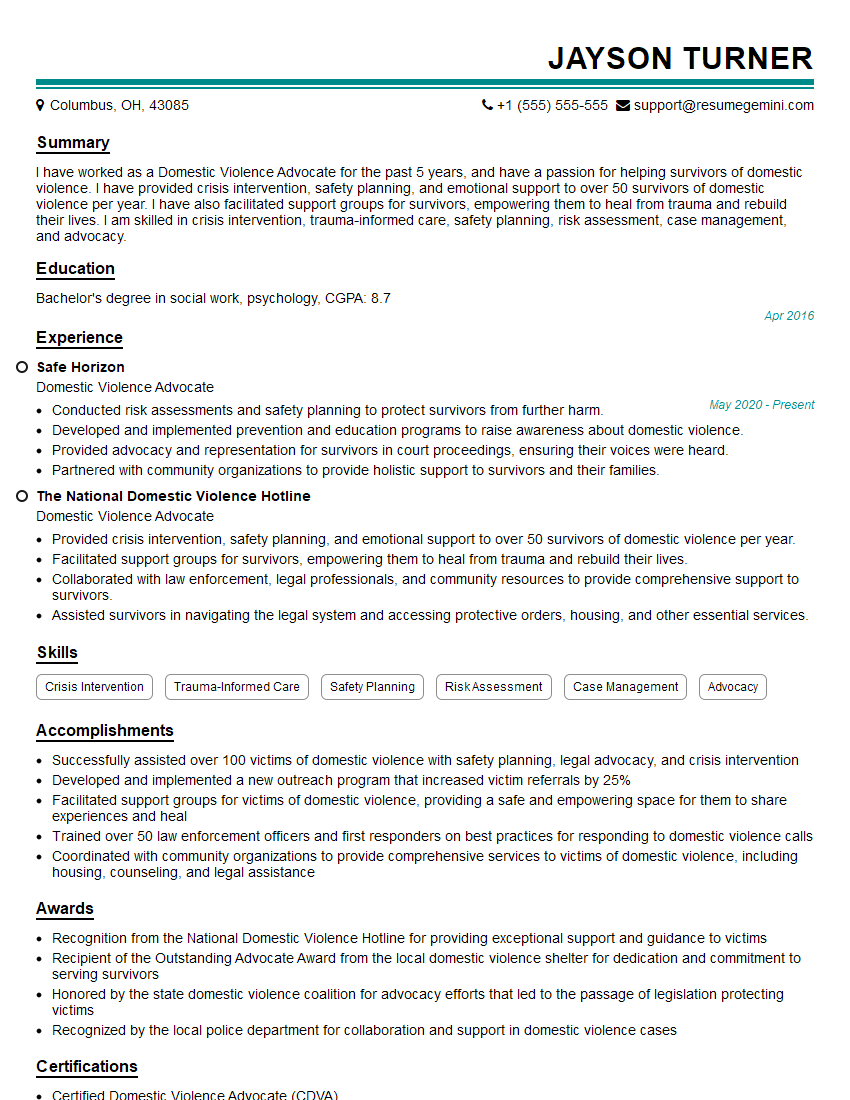
Mastering the principles of Victim Services is crucial for a fulfilling and impactful career, opening doors to diverse opportunities within the field. A strong, ATS-friendly resume is your key to unlocking these opportunities. Make your qualifications shine by crafting a compelling resume that highlights your skills and experience effectively. We highly recommend using ResumeGemini to build a professional and impactful resume tailored to the Victim Services field. ResumeGemini provides examples of resumes specifically designed for this sector, ensuring your application stands out.

Explore more articles
Users Rating of Our Blogs
Share Your Experience
We value your feedback! Please rate our content and share your thoughts (optional).
What Readers Say About Our Blog
Very informative content, great job.
good