Interviews are more than just a Q&A session—they’re a chance to prove your worth. This blog dives into essential Video Analysis and Scouting interview questions and expert tips to help you align your answers with what hiring managers are looking for. Start preparing to shine!
Questions Asked in Video Analysis and Scouting Interview
Q 1. Describe your experience using video analysis software (e.g., Hudl, Dartfish).
My experience with video analysis software spans several years and platforms, including Hudl and Dartfish. I’m proficient in using their features for importing, tagging, annotating, and analyzing video footage. Beyond basic functionalities, I leverage advanced tools like drawing tools to highlight specific movements, slow-motion playback for detailed analysis, and data export features for generating reports and creating visualizations. For instance, in Hudl, I frequently utilize the drawing tools to chart passing lanes in soccer or track the movement of a specific player during a basketball game, which helps in visualizing patterns and team dynamics. With Dartfish, I’ve utilized its sophisticated measurement tools to quantify aspects like sprint speed or jump height, providing concrete data to supplement qualitative observations.
Q 2. Explain your methodology for coding player actions within video analysis.
My methodology for coding player actions involves a structured approach prioritizing consistency and accuracy. First, I define a comprehensive coding scheme specific to the sport and the aspects under scrutiny. This scheme utilizes standardized abbreviations and categories to ensure consistent data collection. For example, in basketball, actions might be coded as: PASS, SHOT, REBOUND, DEFENSE, each with further sub-categories like PASS_ASSIST, SHOT_MADE, REBOUND_OFF, etc. I employ a hierarchical structure for detail. Then, I meticulously review the video footage, frame by frame if necessary, precisely noting each relevant action and coding it according to the defined scheme. Quality control is crucial. I often review coded footage to identify and correct any inconsistencies or mistakes. This rigorous approach ensures the reliability of the data for subsequent analysis.
Q 3. How do you identify key performance indicators (KPIs) relevant to a specific sport?
Identifying Key Performance Indicators (KPIs) requires a deep understanding of the specific sport and the objectives of the analysis. It’s crucial to distinguish between leading indicators (predictive of future performance) and lagging indicators (reflecting past performance). For example, in soccer, leading indicators could include pass completion percentage or defensive actions per game, whilst lagging indicators might be goals scored or assists made. The process involves collaborating with coaches and athletes to identify the most critical aspects of the game. We might focus on KPIs directly related to winning the game (like possession percentage or conversion rate) or on improving a player’s specific skill set (like dribbling efficiency or shooting accuracy). The chosen KPIs should be measurable, relevant, achievable, and time-bound (SMART).
Q 4. How do you quantify qualitative observations from video analysis?
Quantifying qualitative observations is achieved through structured observation and the development of rating scales. For example, if assessing a player’s defensive positioning, instead of simply noting “good defense,” I use a scale, say from 1 to 5, with 1 representing poor positioning and 5 representing excellent positioning. Each level on the scale is clearly defined with specific behavioral characteristics. This enables me to assign numerical values to previously qualitative observations. Furthermore, I might use frequency counts. For instance, I might count the number of times a player commits a particular type of error to establish quantifiable metrics for qualitative aspects of performance. This conversion allows for statistical analysis and comparative evaluations across different players or games.
Q 5. Describe your process for creating a scouting report.
Creating a scouting report is a systematic process beginning with a clear definition of the purpose. Is this for recruitment, performance evaluation, or opponent analysis? Then, I gather relevant data, including video analysis, game statistics, and any available background information on the player. The report focuses on strengths and weaknesses, highlighting specific behaviors and patterns observed through the video analysis using the coded data and quantified observations. This typically involves a combination of descriptive and quantitative data, supported by visual elements like screenshots from the video. I tailor the format and content of the report to the intended audience, using clear and concise language. Finally, I provide actionable recommendations based on the analysis and the report’s purpose.
Q 6. How do you assess a player’s potential versus current performance?
Assessing a player’s potential versus current performance requires a multifaceted approach. I look at current performance through statistical data and video analysis of their recent games. However, to gauge potential, I examine factors such as athleticism (speed, agility, strength), technical skill, tactical understanding, and mental attributes (e.g., work ethic, resilience). I might compare their performance to players with similar profiles who have reached higher levels, using this as a benchmark. I also consider the player’s age and developmental stage, understanding that young athletes are still developing their skills. Looking for trends (improvement over time, consistency in performance) helps to separate fleeting brilliance from true potential. It’s a holistic judgment, not solely based on numbers, but considering various aspects of their game and developmental trajectory.
Q 7. Explain your approach to identifying talent in young athletes.
Identifying talent in young athletes requires a different lens than evaluating established players. I focus less on polished skills and more on inherent athletic ability, coachability, and competitive spirit. Observing fundamental movement skills and athletic potential is key. For example, a young basketball player’s natural body coordination and jumping ability could be strong indicators of future potential, even if their shooting form needs work. I also observe their decision-making on the field—do they make quick, intuitive plays or are they hesitant? Beyond physical attributes, observing their engagement during training, their willingness to learn and improve, and their reaction to setbacks provides insight into their long-term prospects. This holistic approach, combining objective performance measures with subjective assessments, improves the identification of raw talent that can be further developed.
Q 8. How do you handle discrepancies between video analysis and live observation?
Discrepancies between video analysis and live observation are common in sports scouting. Live observation provides a holistic feel for the game’s flow, player interactions, and intangible elements like intensity and decision-making under pressure, which video might miss. Conversely, video allows for detailed, repeatable analysis of technical skills and tactical patterns, revealing things that are easily missed in the heat of the moment.
To handle these discrepancies, I employ a triangulation approach. I don’t consider either source of information superior; rather, they complement each other. For example, if video analysis shows a player consistently misses long passes, but live observation reveals the player made excellent short passes, I might investigate further. Perhaps the player adjusts their passing style depending on the game situation. Perhaps the long passes were attempted under pressure and this pressure isn’t fully reflected in the isolated video analysis. I’d then refine my analysis by looking at contextual factors such as game state and opponent positioning, combining this with notes from live observation to get a complete picture.
In essence, I use the strengths of each method to offset the weaknesses of the other. This holistic approach minimizes the impact of individual biases present in either observation type.
Q 9. What are the ethical considerations of using video analysis in scouting?
Ethical considerations in using video analysis for scouting are paramount. Privacy is a major concern; consent must be obtained for the recording and subsequent analysis of players’ performances. This involves informing participants about the purpose of the recording and ensuring their data is handled securely and responsibly.
Another ethical challenge involves bias. Unconscious biases can heavily influence our analysis. For example, we might overemphasize a positive trait in a player we already favor, or overlook negative ones. Addressing this requires conscious effort to adopt objective metrics and use standardized assessment tools whenever possible. We must strive for fairness and ensure that our analyses aren’t used to unfairly disadvantage players based on factors unrelated to performance.
Finally, data security and integrity are crucial. The security of video data must be guaranteed to prevent unauthorized access or misuse. All analysis must be backed by accurate and reliable data to avoid misleading conclusions and unfair assessments.
Q 10. How do you present your video analysis findings to coaches or management?
Presenting video analysis findings effectively requires a clear and concise communication strategy. I start by summarizing key findings using simple, non-technical language, avoiding jargon. I’d begin with an overview of the player or team’s strengths and weaknesses, supported by visual aids like highlight reels, charts, and graphs generated from the analysis. For instance, I might show a graph illustrating a player’s shooting accuracy at varying distances.
Next, I present specific examples from the video footage to support my claims. These clips can be brief, focused on specific events that illustrate the points I’m making, and always contextualized. Following this, I offer actionable recommendations for improvement in training or game strategy. The ultimate aim is not to simply present data, but to facilitate a discussion and collaborative problem-solving session. A strong presentation ends with a Q&A session that helps bridge any gaps in understanding and clarifies any questions the coaches or management might have.
Q 11. What are some common biases in video analysis, and how do you mitigate them?
Common biases in video analysis include confirmation bias (seeking information that confirms pre-existing beliefs), availability bias (overemphasizing recent or easily recalled events), and anchoring bias (over-relying on initial impressions).
To mitigate these, I employ several strategies. First, I utilize a structured assessment rubric based on objective metrics. This ensures that my analysis is consistent and avoids relying solely on subjective impressions. Second, I use blind analysis whenever possible, where identifying information is removed to avoid bias influencing my evaluation. Third, I seek feedback from colleagues and subject-matter experts to detect biases I might have missed. Finally, I always try to analyze the data from multiple perspectives, challenging my initial interpretations and looking for alternative explanations. Using multiple analysts can also lessen the effects of biases by leveraging differing perspectives.
Q 12. How do you utilize video analysis to inform training programs?
Video analysis plays a crucial role in creating targeted training programs. For example, if video analysis reveals that a basketball player consistently misses free throws due to poor follow-through, the training program can focus on drills to correct this technique. This could involve slow-motion analysis of successful and unsuccessful attempts, followed by tailored drills to improve consistency.
Similarly, if analysis shows a soccer player is slow to react to through-balls, the training might incorporate drills focusing on decision-making and faster reactions. Specific metrics can be tracked and measured, using video to provide feedback and monitor improvement. This iterative process, integrating video analysis with training and reassessment, leads to more efficient and personalized training interventions.
Q 13. Describe your experience with data visualization tools relevant to video analysis.
My experience encompasses a range of data visualization tools. I am proficient in using software like Kinovea for detailed frame-by-frame analysis and annotation, as well as Dartfish for creating highlight reels and generating performance metrics. I also utilize data visualization software like Tableau and Power BI to create interactive dashboards and reports which allow for clear representation of complex data sets and to easily share insights. These tools are essential for effectively communicating performance data in a digestible and persuasive manner. Furthermore, I’m comfortable using scripting languages like Python with libraries such as OpenCV and Matplotlib to perform advanced analysis and create customized visualizations tailored to the specific needs of the team or athlete.
Q 14. How do you integrate video analysis with other performance data sources?
Integrating video analysis with other performance data sources is crucial for a holistic understanding of athlete performance. For instance, I would combine video analysis with GPS data to assess a player’s movement patterns and speed during a game, correlating their tactical decisions with physiological data. This might reveal that, despite a strong tactical plan, a player’s high heart rate might affect their decision-making later in a game.
Similarly, integrating video analysis with wearable sensor data (like accelerometers or gyroscopes) can provide a more precise picture of the biomechanics of movements. This combined approach allows for a deeper understanding than using any single data source alone. For example, I could compare the technique observed through video with the force and speed of the movement recorded by sensors. By integrating this data, we can more accurately determine the causes of performance shortcomings and develop targeted interventions.
Q 15. How familiar are you with different statistical models used in sports analysis?
My familiarity with statistical models in sports analysis is extensive. I’m proficient in using a range of techniques, from basic descriptive statistics like averages and percentages to more advanced models. These include:
- Regression analysis: Predicting outcomes based on various factors like player performance, opponent strength, and game conditions. For example, I might build a model predicting the probability of a successful three-point shot based on distance, shot angle, and defender proximity.
- Poisson and Negative Binomial distributions: Modeling the number of goals scored or points earned in a game, accounting for the inherent randomness in these events. This helps predict the likely score range of a match.
- Markov Chains: Analyzing sequences of events, like possession changes in basketball or rallies in tennis. This allows for understanding patterns in game flow and identifying strategic advantages.
- Machine Learning algorithms: More sophisticated techniques like Random Forests or Support Vector Machines can be employed for more complex tasks like player classification (e.g., identifying playmakers vs. defensive specialists), predicting injury risk, or optimizing team formations.
I also understand the limitations of each model and choose the most appropriate one based on the available data and the specific analytical question.
Career Expert Tips:
- Ace those interviews! Prepare effectively by reviewing the Top 50 Most Common Interview Questions on ResumeGemini.
- Navigate your job search with confidence! Explore a wide range of Career Tips on ResumeGemini. Learn about common challenges and recommendations to overcome them.
- Craft the perfect resume! Master the Art of Resume Writing with ResumeGemini’s guide. Showcase your unique qualifications and achievements effectively.
- Don’t miss out on holiday savings! Build your dream resume with ResumeGemini’s ATS optimized templates.
Q 16. How do you adapt your analysis methodology to different sports or playing styles?
Adapting my analysis methodology to different sports and playing styles is crucial. While the core principles of video analysis remain the same—identifying patterns, evaluating performance, and informing strategy—the specific metrics and approaches differ significantly.
- Sport-specific metrics: In basketball, I might focus on assists, turnovers, and points in the paint, while in soccer, I’d analyze passing accuracy, shot conversion rate, and defensive actions.
- Playing style adaptations: A team employing a high-pressing style will require a different analytical focus compared to a team prioritizing possession. For example, I would analyze pressing intensity and effectiveness in the first case and passing networks and ball retention in the second.
- Data Collection Methods: The methods for data collection also change depending on the sport. Some sports require more manual coding of events, while others lend themselves better to automated tracking systems.
My approach is always to first understand the nuances of the sport and the team’s playing style before defining the relevant metrics and analysis techniques. This ensures that the analysis is both relevant and actionable.
Q 17. Describe your experience with opponent analysis using video scouting.
My experience with opponent analysis through video scouting is extensive. I have worked with numerous teams across various sports, systematically reviewing game footage to understand their strengths, weaknesses, and typical strategies.
This involves:
- Identifying Key Players: Pinpointing the most influential players on the opposing team, analyzing their skill sets, preferred plays, and tendencies.
- Analyzing Set Plays: Breaking down their offensive and defensive sets, identifying patterns, and identifying potential vulnerabilities.
- Studying Tactical Approaches: Understanding their overall game plan—their approach to possession, transitions, pressure, and defensive strategies.
- Evaluating Weaknesses: Identifying any recurring errors, lapses in concentration, or exploitable weaknesses in their game.
The goal is not just to identify what they do well, but to discover how we can exploit their weaknesses and neutralize their strengths.
Q 18. How do you identify tactical patterns and weaknesses in opposing teams?
Identifying tactical patterns and weaknesses involves careful observation and systematic analysis of video footage. I employ several techniques:
- Repeated viewing and annotation: I meticulously review the game footage multiple times, annotating key events, formations, and player movements.
- Formation analysis: I identify the different formations used by the opponent and analyze their effectiveness in different situations.
- Transition analysis: I study how they transition from defense to offense and vice versa, highlighting any weaknesses or predictability.
- Individual player analysis: I study individual player performances, paying close attention to their strengths, weaknesses, and tendencies.
- Heatmaps and positional data: Utilizing specialized software, I can create heatmaps visualizing player movement and possession density, which help identify patterns of play and congested areas on the field.
By combining these approaches, I can create a comprehensive understanding of the opponent’s tactics and identify areas where they are vulnerable.
Q 19. Explain your process for tracking player movement and positioning.
Tracking player movement and positioning involves a combination of manual and automated methods. Manual tracking involves using video analysis software to manually code the position of players at specific time intervals during the game. This is often done frame-by-frame for crucial plays or moments, allowing detailed analysis.
Automated tracking systems use computer vision and machine learning algorithms to automatically track players. These systems are becoming increasingly sophisticated and accurate, allowing for a more efficient and high-throughput analysis of large datasets. However, manual verification and refinement are often necessary to ensure accuracy.
The data generated provides a basis for creating positional heatmaps, calculating distances covered, analyzing spatial relationships between players, and understanding tactical movements.
Q 20. How do you use video analysis to improve team strategy and decision-making?
Video analysis plays a pivotal role in improving team strategy and decision-making. It provides objective data and insights to guide coaching decisions and player development. By studying game footage, I can:
- Identify tactical inefficiencies: Pinpoint areas where the team’s strategy needs refinement, for example, ineffective transition play or poor defensive coverage.
- Develop counter-strategies: Design strategies to exploit opponents’ weaknesses and counter their tactical approaches.
- Improve player performance: Provide players with specific feedback on their technical and tactical performance, helping them to improve their individual skills and decision-making.
- Enhance set play effectiveness: Optimize set pieces, both offensive and defensive, based on analysis of previous game situations.
- Evaluate training effectiveness: Assess the impact of training sessions by comparing pre- and post-training game performances.
The insights gained through video analysis contribute to more informed decision-making at all levels, resulting in improved performance and better results.
Q 21. Describe a situation where your video analysis led to a significant improvement.
In one instance, we were struggling against a team that employed a very effective zone defense. Our offensive players were struggling to find open shots, resulting in low scoring games. Through detailed video analysis, I identified that the opponents’ zone defense had a specific weakness: a gap between two defenders near the baseline, exploited successfully only by one specific opposing team. By creating specific drills and plays designed to exploit this weakness, we were able to significantly increase our scoring efficiency against them. This led to a substantial improvement in our win percentage against similar defensive strategies in subsequent games.
Q 22. What are some limitations of video analysis in sports performance assessment?
Video analysis, while powerful, has limitations. One key issue is the two-dimensional nature of the recording. We’re capturing a 3D event on a 2D plane, losing crucial information about depth and spatial relationships. This can lead to misinterpretations of player movement and actions, especially in sports like basketball or soccer where positioning is critical.
Another limitation is the potential for bias. The analyst’s own knowledge, expectations, and even the camera angle can influence their interpretations of the footage. For example, focusing solely on a single player might miss crucial team interactions contributing to success or failure.
Finally, environmental factors can impact the accuracy of the analysis. Poor lighting, camera quality, or even obstructions can hinder the clarity of the footage, making it difficult to reliably track movement or analyze specific technical aspects.
To mitigate these limitations, I use multiple camera angles, employ sophisticated tracking software, and always maintain a critical self-awareness of my own biases. Triangulation of data from different sources helps to verify findings and minimize inaccuracies.
Q 23. How do you stay up-to-date with new technologies and trends in video analysis?
Staying current in video analysis requires a multi-pronged approach. I regularly attend conferences like the American College of Sports Medicine (ACSM) and International Society of Biomechanics (ISB) events to learn about cutting-edge technologies and research.
I also subscribe to relevant journals, such as Journal of Strength and Conditioning Research and Sports Biomechanics, and actively engage in online communities and forums dedicated to sports science and video analysis. This constant interaction with experts in the field ensures I remain aware of new developments.
Furthermore, I actively explore new software and hardware options by testing free trials and attending webinars offered by leading vendors. This hands-on experience allows me to critically evaluate their strengths and weaknesses and determine their suitability for my workflows.
Q 24. How do you manage large volumes of video data efficiently?
Managing large video datasets necessitates a structured approach. First, I employ a robust file naming convention that includes date, team, player, and event details, ensuring easy searchability and organization.
I use cloud-based storage solutions like Amazon S3 or Google Cloud Storage to handle the sheer volume of data efficiently, ensuring backups and accessibility from multiple locations. These platforms allow for easy scalability as my data grows.
Secondly, I utilize video analysis software with sophisticated search and filtering capabilities. This allows me to quickly locate specific clips based on events (e.g., ‘shot attempts,’ ‘tackles’), player actions (e.g., ‘dribbling speed,’ ‘passing angles’), or time stamps. This process substantially reduces the time spent reviewing irrelevant footage. The software I use often has capabilities for creating customized metadata tags to further refine search parameters.
Q 25. What software and hardware are you proficient with related to video analysis?
My expertise spans various software and hardware. I’m proficient with industry-standard video analysis software like Dartfish, Kinovea, and Hudl. I’m also comfortable using motion capture systems such as OptiTrack for more detailed kinematic analysis, when applicable.
In terms of hardware, I’m experienced with a range of cameras, including high-speed cameras for capturing fine details of movement, as well as standard HD and 4K cameras for game recordings. I also utilize various editing software, such as Adobe Premiere Pro and Final Cut Pro for video editing and post-processing.
Furthermore, my skills extend to the utilization of various data processing and analysis tools, including Python with libraries like OpenCV and Scikit-learn to automate some analysis tasks and generate statistical summaries of the video data.
Q 26. Describe your experience with different types of cameras and recording equipment.
My experience encompasses a variety of camera types. I’ve used fixed-position cameras for capturing wide-field views of entire games, as well as multiple, synchronized cameras for more detailed analysis of player actions from different perspectives.
High-speed cameras are essential for capturing rapid movements, like a tennis serve or a baseball pitch, providing frame rates exceeding the standard 60 fps. This allows for a much more detailed analysis of the technique.
I’m also familiar with wearable cameras, such as those used on helmets or jerseys, providing a first-person perspective. Each camera type offers unique advantages, and my choice depends on the specific requirements of the analysis, the budget, and the desired level of detail.
In addition to cameras, I have experience with various recording devices, from simple camcorders to professional broadcast-quality equipment, choosing the optimal setup based on the quality of video needed for the analysis.
Q 27. How do you prioritize different aspects of player performance when conducting analysis?
Prioritizing aspects of player performance depends heavily on the context. For example, analyzing a point guard in basketball, the prioritization would likely be different than for a center. The key is to define clear objectives upfront.
A common approach involves a hierarchical framework. At the highest level, we might assess overall game impact (e.g., points scored, assists, rebounds). Then, we dive into tactical aspects such as decision-making, positioning, and execution of specific plays. Finally, technical aspects such as shooting form, passing accuracy, and footwork are evaluated. This framework helps to stay organized and ensures a comprehensive analysis.
Furthermore, we must consider the athlete’s current stage of development and their specific training goals. A young player might prioritize fundamental skills, while an elite athlete could focus on refining subtle aspects of their technique to gain a marginal advantage. The analysis should always align with their individual needs and the team’s strategic objectives.
Q 28. How do you balance objective data with subjective observations in your analysis?
The balance between objective and subjective data is crucial for robust analysis. Objective data, like speed, distance covered, or shooting percentage, is quantifiable and measurable. Subjective data, like effort, decision-making quality, or body language, requires interpretation.
I use objective data to create a quantitative foundation, grounding my analysis in solid facts. However, these numbers alone don’t tell the whole story. Subjective observations provide context and help interpret the objective findings. For example, a high shooting percentage might be attributed to good shot selection and accurate technique (subjective observations) corroborated by quantitative measurements of shot accuracy, release time, and arc.
The integration of both data types is key. I strive to minimize subjective bias by documenting observations with supporting evidence from the video and by cross-referencing multiple analysts’ assessments. This approach enhances the reliability and overall validity of the analysis, yielding more accurate and insightful conclusions.
Key Topics to Learn for Video Analysis and Scouting Interview
- Game Film Breakdown & Coding: Understanding how to efficiently organize and code video footage for analysis. This includes proficiency in relevant software and effective annotation techniques.
- Tactical Analysis: Identifying team strengths and weaknesses, opponent tendencies, and potential game-plan vulnerabilities. Practical application involves creating reports and presentations based on your analysis.
- Player Performance Evaluation: Developing objective metrics to assess individual player skillsets. This includes understanding statistical analysis and translating qualitative observations into quantitative data.
- Data Visualization & Presentation: Communicating your findings clearly and effectively using charts, graphs, and other visual aids. This involves tailoring your presentation to the audience and demonstrating strong communication skills.
- Recruiting & Talent Identification: Applying your analysis to identify and evaluate prospective players, considering factors beyond raw statistics.
- Software Proficiency: Demonstrating expertise in video analysis software (e.g., Hudl, Sportscode) and data analysis tools (e.g., Excel, statistical packages).
- Problem-Solving & Critical Thinking: Highlighting your ability to identify patterns, draw inferences from incomplete data, and offer proactive solutions to enhance team performance.
Next Steps
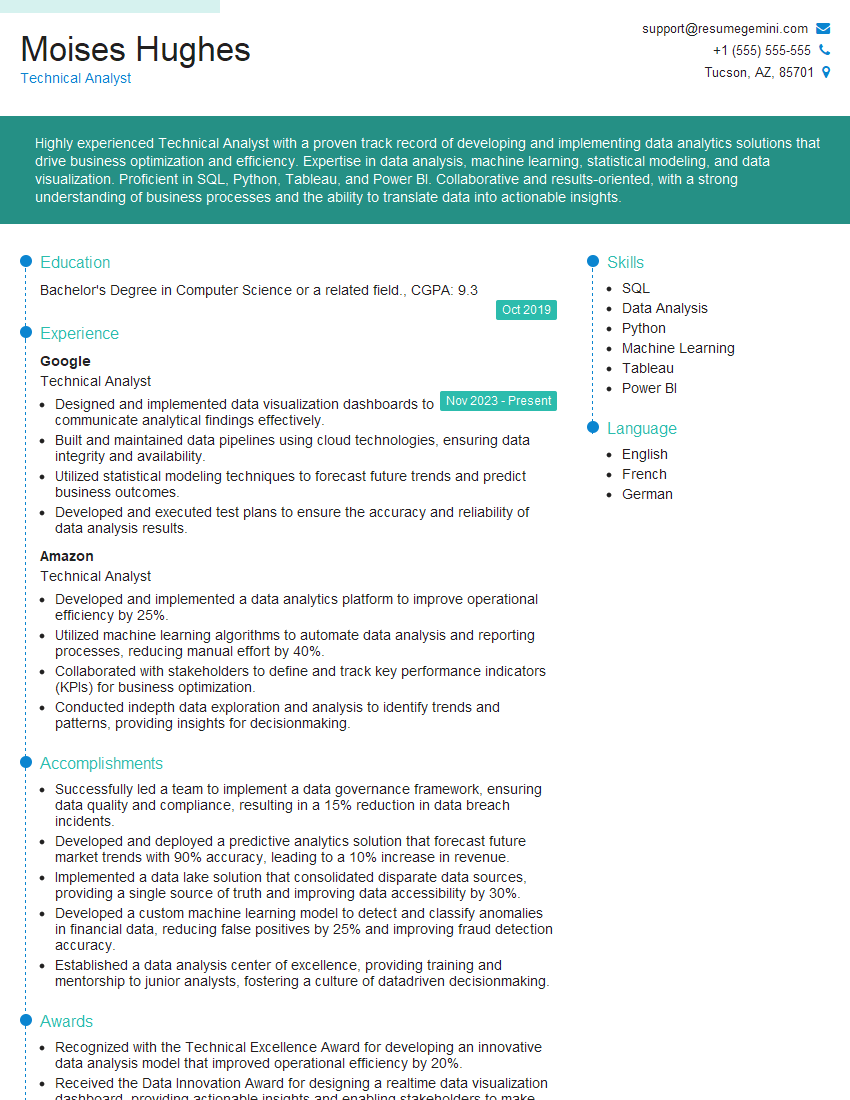
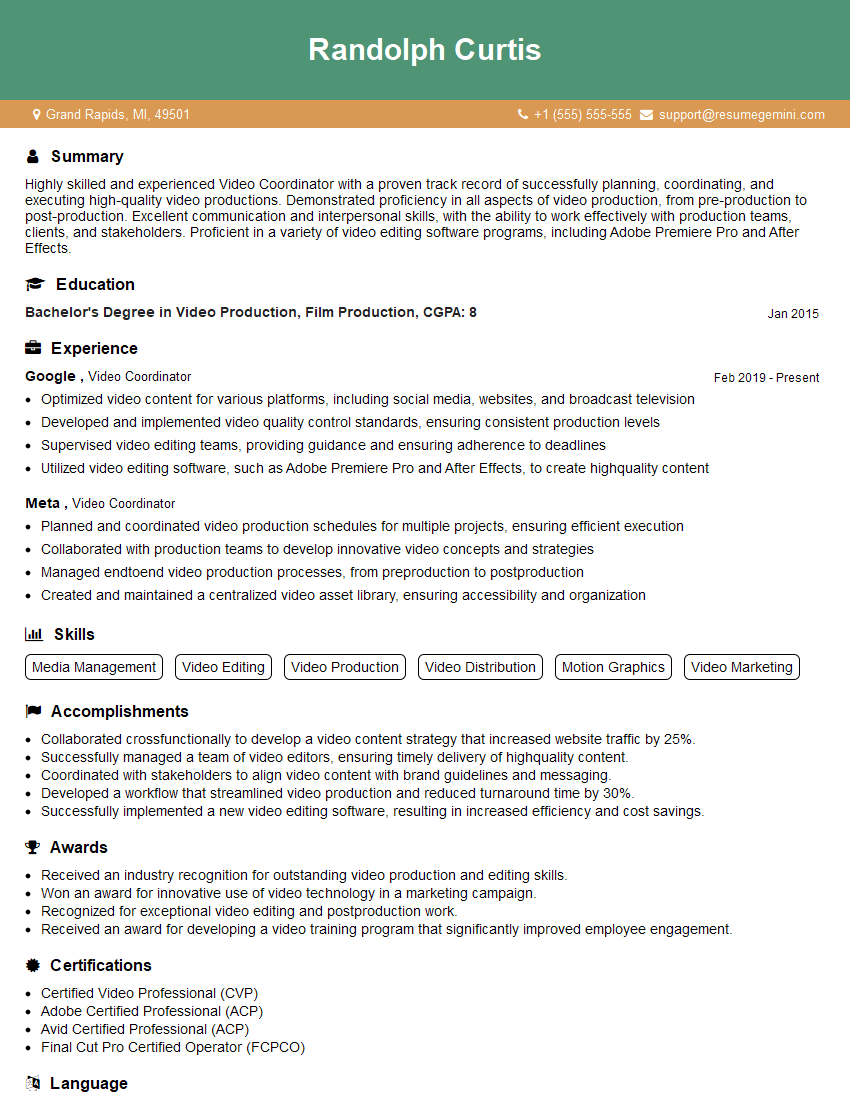
Mastering Video Analysis and Scouting is crucial for a thriving career in sports. It opens doors to exciting roles offering unique challenges and significant impact on team success. To maximize your job prospects, crafting a strong, ATS-friendly resume is essential. ResumeGemini is a trusted resource to help you build a professional and impactful resume that showcases your skills and experience effectively. We provide examples of resumes tailored specifically to Video Analysis and Scouting to guide you in crafting yours. Take the next step toward your dream career – build a winning resume with ResumeGemini!
Explore more articles
Users Rating of Our Blogs
Share Your Experience
We value your feedback! Please rate our content and share your thoughts (optional).
What Readers Say About Our Blog
Very informative content, great job.
good