Every successful interview starts with knowing what to expect. In this blog, we’ll take you through the top Visual and Sensory Evaluation interview questions, breaking them down with expert tips to help you deliver impactful answers. Step into your next interview fully prepared and ready to succeed.
Questions Asked in Visual and Sensory Evaluation Interview
Q 1. Explain the difference between affective and descriptive sensory testing.
Affective and descriptive sensory testing represent two distinct approaches to evaluating consumer perceptions of a product. Affective tests focus on measuring the overall liking or preference for a product. They gauge the consumer’s emotional response, often using hedonic scales (e.g., ‘like extremely’ to ‘dislike extremely’). Think of it like a simple thumbs up or thumbs down – it tells you if people enjoy the product, but not necessarily *why*. In contrast, descriptive sensory tests aim to quantify the sensory attributes of a product itself. These tests employ trained panelists to identify and measure specific characteristics like aroma, texture, or taste intensity. For example, a descriptive test might quantify the sweetness, bitterness, and sourness of a beverage using numerical scales. The difference is akin to asking ‘Do you like this?’ (affective) versus ‘Describe the taste’ (descriptive). Descriptive analysis provides deeper insights into *why* consumers like or dislike a product, allowing for more targeted product development.
Q 2. Describe the principles of a balanced sensory panel.
A balanced sensory panel is crucial for reliable and objective results. It requires careful selection and training of panelists to minimize bias and maximize sensitivity. The principles include:
- Recruitment: Panelists should be screened for sensory acuity, health (e.g., no allergies impacting the product), and motivation. They should also represent the target consumer group.
- Training: Panelists receive training to develop a common vocabulary and understanding of sensory attributes. This involves practicing scale use, calibration sessions, and referencing standard samples.
- Motivation: Regular training, feedback sessions, and even compensation can enhance panelist engagement and reduce fatigue, maintaining consistent performance over time.
- Diversity: A diverse panel, representing different age groups, genders, and ethnicities, can improve the generalizability of results. However, diversity shouldn’t compromise sensory acuity.
- Statistical Analysis: Data from a balanced panel can undergo rigorous statistical analysis to assess reliability and identify individual panelist performance.
Q 3. What are the common biases in sensory evaluation, and how can they be mitigated?
Several biases can affect sensory evaluation. Order effects (e.g., first impression bias, central tendency bias) occur when the order of sample presentation influences judgment. Halo effect arises when one attribute unduly influences judgments of others. Contrast effect is when the perception of one sample is influenced by preceding samples. Expectation bias occurs when preconceived notions affect evaluation. Demand bias is where panelists provide the responses they believe are expected. Mitigation strategies include:
- Randomization: Randomizing the presentation order of samples minimizes order effects.
- Blind testing: Using coded samples prevents expectation and demand biases.
- Balanced incomplete block designs: These statistical designs help control for order effects in larger tests.
- Panel training: Training emphasizes objective evaluation and awareness of potential biases.
- Use of visual aids: Providing standardized scales and reference samples minimizes subjective interpretation.
Q 4. How do you ensure the reliability and validity of sensory data?
Ensuring reliability and validity is paramount. Reliability refers to the consistency of results, while validity measures whether the test actually assesses what it intends to. We achieve this through:
- Replicate tests: Repeating the tests with the same samples and panelists ensures the consistency of results.
- Statistical analysis: Analyzing data for variability between panelists and across trials helps determine reliability (e.g., using ANOVA, repeatability measures).
- Careful experimental design: A well-designed test reduces extraneous variables, enhancing validity.
- Calibration sessions: Regularly calibrated panelists exhibit higher reliability.
- Standard operating procedures (SOPs): Standardizing procedures across trials ensures consistency and validity.
Q 5. Explain different scaling methods used in sensory evaluation (e.g., hedonic, magnitude estimation).
Several scaling methods exist. Hedonic scales measure overall liking, typically using a labeled scale ranging from ‘like extremely’ to ‘dislike extremely’. They’re simple but lack nuance. Magnitude estimation allows panelists to assign numerical values to sensory attributes based on their perceived intensity, using a reference sample as a baseline (e.g., assigning a value of 10 to a reference and then rating others proportionally). Category scales use predefined categories with numerical values (e.g., 1-7 scale for intensity). Line scales are visual aids where panelists mark a point along a line representing the intensity. Ratio scales involve comparing the relative intensity of one sample to another. The choice depends on the research question and the sophistication required. For example, hedonic scales are ideal for consumer preference studies, while magnitude estimation is better for differentiating intensity differences between samples.
Q 6. Describe your experience with different sensory test methodologies (e.g., triangle test, duo-trio test, ranking test).
I’ve extensive experience with various sensory tests. The triangle test involves presenting three samples, two identical and one different; panelists identify the odd one out. It’s effective for detecting perceptible differences. The duo-trio test presents a reference sample and two others, one matching the reference; panelists choose the matching sample. It’s similar to the triangle test but easier to understand. Ranking tests require panelists to rank samples in order of preference or intensity of an attribute. They are straightforward but sensitive to order effects. I’ve used these tests for diverse products, from comparing the texture of yogurt to evaluating the aroma of coffee. The choice of test depends on the specific objective and the expected magnitude of difference between samples. For example, a triangle test might be suitable for detecting subtle differences in the aroma of two teas, while a ranking test might be more appropriate to determine the preference order of several different types of chocolate.
Q 7. How do you handle outliers in sensory data?
Outliers in sensory data represent extreme values that deviate significantly from the rest. Handling them requires careful consideration. First, I visually inspect the data (e.g., using box plots or scatter plots) to identify potential outliers. Next, I investigate the cause. Was there a data entry error? Did the panelist misunderstand instructions? If the outlier is due to an error, I correct or remove it. If the outlier is a genuine observation, I assess its impact on the overall results. Removing outliers without justification can bias results. Non-parametric statistical methods (less sensitive to outliers) or robust statistical methods are often employed. Alternatively, a trimmed mean (discarding a specific percentage of data at both ends) might be used. The approach should be documented and justified to maintain transparency. For instance, in a cheese tasting, if one panelist consistently gives extreme ratings compared to others, a careful evaluation of their data is needed to determine if they had an unusual experience or if they misunderstood the instructions before deciding how to proceed with their data point.
Q 8. What statistical analyses are commonly used in sensory evaluation?
Sensory evaluation relies heavily on statistical analysis to ensure the objectivity and reliability of findings. The choice of analysis depends on the type of sensory test used. Commonly employed methods include:
- Descriptive Analysis: Techniques like analysis of variance (ANOVA) are used to determine significant differences between samples across multiple attributes. For example, comparing the sweetness, acidity, and aroma scores of different orange juice samples.
- Difference Tests (e.g., paired comparison, triangle test): These often utilize binomial or chi-squared tests to assess if panelists can reliably distinguish between samples. A paired comparison might be used to determine if consumers prefer one cola over another.
- Affective Tests (e.g., hedonic scaling): Data from rating scales (e.g., 9-point hedonic scale) can be analyzed using ANOVA, t-tests, or non-parametric tests like the Mann-Whitney U test, depending on the data distribution and experimental design. This could be used to determine consumer preference for a new chocolate bar compared to a competitor’s.
- Principal Component Analysis (PCA): PCA is a powerful dimensionality reduction technique often used to visualize and interpret large descriptive sensory datasets. It helps to identify key sensory attributes driving overall perception differences.
Choosing the right statistical test is crucial for drawing valid conclusions. Factors to consider include the type of data (e.g., continuous, categorical), the number of samples, and the experimental design.
Q 9. How do you design a sensory test protocol for a new product?
Designing a sensory test protocol for a new product requires a systematic approach. Here’s a step-by-step process:
- Define Objectives: Clearly state the purpose of the test. Are you comparing your product to competitors? Assessing consumer preferences? Identifying key sensory attributes?
- Select Appropriate Test Method: Choose a test method aligned with your objectives. Difference tests are suitable for simple comparisons, while descriptive analysis reveals detailed sensory profiles. Hedonic scales measure liking and preference.
- Develop a Sample Preparation Protocol: Ensure all samples are prepared identically to avoid bias. This includes factors such as temperature, serving size, and presentation.
- Recruit and Screen Panelists: Carefully select panelists based on relevant criteria (discussed later). Provide clear instructions and conduct training sessions.
- Create Sensory Booths/Testing Environment: Control the environment to minimize distractions (see Question 3).
- Develop Questionnaires and Scoring Sheets: Design clear and concise questionnaires and scoring sheets tailored to the chosen test method.
- Pilot Test: Conduct a small-scale pilot test to identify any problems with the protocol before the main study.
- Data Analysis and Interpretation: Analyze the data using appropriate statistical methods and draw conclusions based on your findings.
For instance, if a company wants to assess consumer preference between two versions of a yogurt, a simple hedonic scale paired with a paired comparison test would be appropriate. But if they want a deeper understanding of the sensory attributes impacting consumer preference, they might use quantitative descriptive analysis (QDA).
Q 10. Describe your experience with sensory booths and their importance.
Sensory booths are individual testing cubicles designed to minimize external influences and ensure panelists can focus solely on the sensory evaluation. They are essential for providing a controlled environment during sensory testing.
My experience with sensory booths includes designing, managing, and overseeing testing sessions in facilities equipped with individual booths. These booths typically offer features such as:
- Individual cubicles: To prevent visual and auditory distractions from other panelists.
- Neutral lighting and colour scheme: To minimize visual cues affecting sensory perception.
- Neutral odor environment: To prevent interference from extraneous smells. Sometimes, there will be air filters or an odor removal system.
- Water and spittoon: Providing panelists with materials to cleanse their palate between samples.
- Counterspace: To safely and organizedly handle samples and questionnaires.
Their importance stems from their ability to reduce bias and improve the reliability of sensory data. A poorly controlled environment could lead to inconsistent results, compromising the validity of the study.
For example, if a panelist can see what other panelists are scoring, it can influence their own judgment, leading to social desirability bias. Similarly, the aroma of coffee brewing in the testing area would make a sensory evaluation of a new coffee brand unreliable.
Q 11. Explain the concept of sensory thresholds (detection, recognition, difference).
Sensory thresholds represent the minimum level of a stimulus that can be detected or distinguished by a person. There are three main types:
- Detection Threshold (Absolute Threshold): The lowest concentration of a stimulus that can be detected by 50% of the panelists. For example, the lowest concentration of sugar in water a person can taste.
- Recognition Threshold: The lowest concentration of a stimulus that can be correctly identified by 50% of the panelists. For example, the lowest concentration of vanilla extract in a pudding that a person can correctly identify as vanilla.
- Difference Threshold (Just Noticeable Difference, JND): The smallest difference between two stimuli that can be detected by 50% of the panelists. For example, the smallest difference in sweetness between two different sodas a person can detect.
Understanding these thresholds is crucial in product development. For example, if a food company wants to reduce the sugar content in a product without consumers noticing, they need to stay below the JND for sweetness. Similarly, when formulating a new flavor, understanding the recognition threshold ensures the flavor is noticeable but not overpowering.
Q 12. How do you manage and train a sensory panel?
Managing and training a sensory panel is critical for obtaining reliable and consistent results. The process involves several key steps:
- Recruitment: Select panelists based on factors like sensory acuity, health, and absence of food sensitivities (as detailed in question 6).
- Initial Screening: Evaluate panelists’ sensory abilities using various tests to identify those with the necessary skills.
- Training: Provide extensive training to educate panelists on the test methodology, product background, and scoring procedures. This may include vocabulary training, practical exercises and discussion of sensory attributes.
- Calibration Sessions: Conduct regular calibration sessions to ensure panelists maintain consistent scoring. These sessions aim to harmonize panelists’ sensory perceptions and vocabulary use. The consistency is checked using statistical measures.
- Motivation and Retention: Keep panelists motivated and engaged. Regular feedback, incentives, and appreciation are essential. Regular attendance and consistent performance are critical.
- Performance Monitoring: Continuously monitor panelist performance to identify inconsistencies or biases, and address them proactively. Statistical measures of panelist consistency provide metrics to manage performance.
For example, I once worked with a panel that struggled to consistently describe the ‘mouthfeel’ of yogurt. Through focused training on tactile vocabulary and repeated practice, we significantly improved their ability to provide accurate and consistent ratings.
Q 13. What are the key factors to consider when selecting panelists for a sensory evaluation?
Selecting appropriate panelists is crucial for the success of a sensory evaluation. Key factors to consider include:
- Sensory Acuity: Panelists should possess a keen sense of taste, smell, and other relevant senses. Screening tests are used to assess this.
- Health Status: Panelists should be free from any conditions that could affect their sensory perception (e.g., colds, allergies).
- Absence of Food Sensitivities: Panelists should not have allergies or aversions to the products being tested.
- Motivation and Availability: Panelists should be motivated, reliable, and available for the duration of the study.
- Training and Experience: Prior sensory evaluation experience is beneficial, although training can be provided.
- Demographics: Depending on the product and study objectives, specific demographic characteristics (e.g., age, gender) might be considered for targeted testing.
For example, when evaluating the taste of a new beer, it’s vital to select panelists who are not allergic to beer or other related products and have a sensitive palate for beer flavours. It would be less useful to recruit panelists who dislike all forms of beer.
Q 14. Explain the importance of controlling environmental factors during sensory testing.
Controlling environmental factors is critical in sensory testing to ensure objectivity and minimize bias. Uncontrolled environments can significantly influence panelists’ perceptions and lead to unreliable results. Key factors to control include:
- Lighting: Consistent, neutral lighting prevents visual cues from influencing taste and aroma perceptions. Ideally, the lighting should mimic daylight.
- Temperature: Maintain a comfortable and consistent temperature to prevent discomfort and influence taste perception.
- Odor: Eliminate extraneous odors using air filtration or odor removal systems. Neutralizing background odors is crucial.
- Noise: Minimize background noise to prevent distractions and ensure concentration. A quiet environment is preferred.
- Visual Distractions: Avoid visual distractions by using plain containers and ensuring samples are presented consistently.
- Ambient Conditions: The air in the room should be fresh and of a constant temperature.
Imagine conducting a sensory test for a new chocolate bar in a room filled with strong coffee aromas. The coffee smell would undoubtedly interfere with the panelist’s ability to accurately assess the chocolate’s aroma and flavor profile.
Q 15. Describe your experience with sensory data analysis software.
My experience with sensory data analysis software spans several years and encompasses a variety of platforms. I’m proficient in using software like FIZZ, XLSTAT, and Sensory Spectrum, all of which are crucial for managing, analyzing, and visualizing sensory data. For example, in a recent project assessing consumer preferences for a new line of yogurt, I utilized FIZZ to manage the panelists’ responses, perform statistical analyses like ANOVA and PCA, and generate insightful visualizations such as heatmaps and spider plots, allowing us to pinpoint key flavor and texture attributes driving consumer choice. My expertise extends to data cleaning, outlier detection, and the appropriate selection of statistical tests depending on the research design and data type. I also possess strong programming skills (R, Python) enabling me to perform advanced data analysis and modeling tasks, including building predictive models to forecast consumer response to product reformulations based on sensory attributes.
Career Expert Tips:
- Ace those interviews! Prepare effectively by reviewing the Top 50 Most Common Interview Questions on ResumeGemini.
- Navigate your job search with confidence! Explore a wide range of Career Tips on ResumeGemini. Learn about common challenges and recommendations to overcome them.
- Craft the perfect resume! Master the Art of Resume Writing with ResumeGemini’s guide. Showcase your unique qualifications and achievements effectively.
- Don’t miss out on holiday savings! Build your dream resume with ResumeGemini’s ATS optimized templates.
Q 16. How do you interpret sensory data and communicate findings to stakeholders?
Interpreting sensory data involves a multi-step process. Firstly, I carefully examine the descriptive data gathered from trained panelists, looking for patterns and consistencies in their descriptions. Then, I analyze the quantitative data using statistical methods appropriate to the study design (e.g., ANOVA, t-tests, Principal Component Analysis, cluster analysis). This allows me to identify significant differences between products or treatments. For communicating these findings to stakeholders, I use clear, concise visuals such as graphs, charts, and heatmaps to illustrate key results. I avoid overly technical jargon, tailoring my communication style to the audience’s level of understanding. For instance, when presenting to a marketing team, I focus on the practical implications for product development and consumer appeal, while with a research and development team, I highlight the statistical significance and potential areas for further investigation. A recent presentation on a chocolate bar reformulation involved showing how a slightly higher cocoa percentage, as detected by the panelists and confirmed by statistical analysis, led to significantly higher preference scores.
Q 17. How do you ensure the ethical conduct of sensory evaluations?
Ethical conduct in sensory evaluation is paramount. This begins with ensuring informed consent from all panelists. Participants must be fully aware of the study’s purpose, procedures, and any potential risks or discomforts. Maintaining panelist anonymity and confidentiality is crucial. Data collected is only used for the stated research objectives and appropriate safeguards are in place to protect sensitive information. Preventing bias is also essential. This means careful selection of panelists to ensure a representative sample, using balanced designs to minimize order effects, and providing standardized testing conditions to eliminate environmental influences. Panelist training should be rigorous and consistent, ensuring that they are capable of accurately and objectively describing sensory characteristics. Regular quality control checks throughout the evaluation are also implemented, helping us maintain the integrity and validity of the data. In instances where potential conflicts of interest might arise, transparent protocols are in place to mitigate such risks. For example, panelists with known allergies to test products are excluded.
Q 18. What is the role of visual attributes in overall product perception?
Visual attributes play a dominant role in overall product perception, often acting as the first point of contact between the consumer and the product. Think about buying fruits and vegetables: we instinctively select those that appear fresh, vibrant, and appealing. This initial visual assessment influences our expectation of taste, texture, and even aroma. A product’s color, shape, size, texture, and gloss can significantly impact perceived quality, desirability, and even price point. For example, a deep red strawberry suggests ripeness and sweetness, while a dull, pale one might be perceived as tasteless. Packaging design also falls under visual attributes, playing a critical role in attracting consumers’ attention and communicating brand identity. A well-designed package can enhance the perceived value and desirability of the product, increasing its overall appeal.
Q 19. Describe the various methods for assessing visual attributes of a product.
Several methods exist for assessing visual attributes:
- Colorimetry: Using instruments like spectrophotometers to objectively measure color parameters (L*, a*, b* values) according to standardized color scales (e.g., CIE L*a*b*).
- Image analysis: Employing software to quantitatively analyze digital images of products, measuring texture parameters (e.g., roughness, homogeneity), gloss, and surface characteristics.
- Trained panels: Using descriptive sensory analysis with trained panelists to evaluate visual aspects such as color intensity, hue, brightness, uniformity of appearance, and texture characteristics using standardized scales or lexicons. This approach provides qualitative insights.
- Consumer panels: Evaluating consumer preferences through visual assessments, such as ranking or rating the visual appeal of different products. This provides insights directly related to market acceptability.
Q 20. How do you quantify visual attributes like color, texture, and gloss?
Quantifying visual attributes involves a combination of instrumental and sensory techniques.
- Color: Colorimeters provide objective measurements of color in terms of L*a*b* coordinates. L* represents lightness, a* represents the red-green axis, and b* represents the yellow-blue axis. These values can be compared between samples or over time to assess color differences or changes.
- Texture: Image analysis software can quantify surface texture by measuring parameters like roughness, homogeneity, and fractal dimension. Tactile texture can be assessed using trained sensory panels, using standardized scales to describe parameters such as smoothness, roughness, graininess, etc.
- Gloss: Glossmeters measure the specular reflection of light from the product surface, providing a numerical value representing the gloss level. Higher values indicate a higher gloss.
Q 21. How does color perception influence consumer preferences?
Color perception significantly impacts consumer preferences. Color evokes strong emotional responses and cultural associations. For example, red might be associated with energy and excitement, while blue might suggest calmness and trust. These associations can influence product perception and purchasing decisions. The color of food products is particularly important as it affects perceived taste, freshness, and quality. For example, a vibrant green in vegetables signals freshness, whereas a dull green might suggest staleness. Packaging color is also crucial. Certain colors are associated with specific brands or product categories. Marketing and branding strategies use this knowledge to create desirable visual identities and influences consumer choices. In the food industry, subtle color variations can significantly affect consumer acceptance and purchasing intent. Therefore, it’s crucial to carefully consider color choices during product development.
Q 22. Explain the concept of visual fatigue and how to minimize its impact on sensory evaluations.
Visual fatigue, also known as eye strain, is the tiredness or discomfort experienced in the eyes after prolonged visual tasks. In sensory evaluation, this is a significant concern because accurate assessment relies on sharp visual perception. Imagine trying to judge the color of a fine wine after hours of scrutinizing samples – your eyes will be less reliable!
Minimizing its impact requires careful planning. We must strategically manage the evaluation session to avoid prolonged exposure to intense stimuli. This includes:
- Scheduled breaks: Incorporating regular short breaks allows the eyes to rest and refocus.
- Appropriate lighting: Consistent, glare-free lighting prevents eye strain. Think of a well-lit tasting room versus a dimly lit one.
- Sample presentation: Samples should be presented in a way that minimizes eye strain, using contrasting colors and clear labeling. For instance, avoid placing similarly colored samples next to each other.
- Controlled environment: Reducing extraneous visual distractions minimizes mental fatigue, which often accompanies visual fatigue.
- Color calibration: Using calibrated monitors and lighting ensures consistency and reduces eye strain from color discrepancies.
By implementing these strategies, we ensure the evaluator’s visual acuity remains consistent throughout the evaluation, leading to more reliable and accurate results.
Q 23. Describe your experience with instrumental color measurement devices.
I have extensive experience using instrumental color measurement devices, primarily spectrophotometers and colorimeters. These instruments provide objective measurements of color, unlike subjective human perception. This objectivity is crucial for ensuring consistent and reliable color evaluations, especially across different evaluators or over time.
My work has involved using these devices to:
- Characterize product color: Measuring the color of food products, beverages, and textiles to establish a baseline color profile.
- Monitor color consistency: Tracking color changes during processing or storage to ensure quality control.
- Compare color differences: Quantifying the difference between a sample and a standard, often using color difference formulas like Delta E (ΔE).
- Develop color standards: Establishing color specifications for products to ensure consistent manufacturing.
For example, I once used a spectrophotometer to analyze the color of a batch of strawberry jam to determine whether it met the pre-defined color standards. The data from the instrument helped identify a subtle shift in hue, which could have otherwise been overlooked by visual inspection alone.
Q 24. How do you integrate visual and sensory data to get a complete product evaluation?
Integrating visual and sensory data is key to a complete product evaluation, offering a holistic understanding beyond what either aspect provides individually. Visual data provides the first impression and helps us understand things like appearance, texture, and even size which often influence sensory perception. Sensory data then provides information on aroma, taste, texture and mouthfeel.
The integration process often involves:
- Simultaneous evaluation: Evaluating visual and sensory attributes concurrently. For instance, noting the color and aroma of a coffee simultaneously.
- Statistical analysis: Employing statistical methods like correlation analysis to identify relationships between visual and sensory attributes. For instance, does a deeper red color in jam correlate with a sweeter taste?
- Descriptive analysis: Using descriptive sensory analysis to link visual characteristics to sensory experiences. We describe the visual appearance (“bright red, glossy”) alongside sensory descriptions (“sweet, tart, and slightly acidic”).
- Data visualization: Creating charts and graphs that illustrate the relationships between visual and sensory data. For example, a scatter plot showing the correlation between color intensity and perceived sweetness.
This integrated approach provides a more comprehensive and reliable understanding of consumer perception, helping us fine-tune product development and enhance consumer satisfaction.
Q 25. What are the challenges of conducting sensory evaluations across different cultures?
Conducting sensory evaluations across different cultures presents unique challenges due to cultural variations in food preferences, sensory perceptions, and even the way people express their opinions. For instance, what one culture considers ‘sweet’ might be perceived differently by another.
Key challenges include:
- Cultural biases: Preconceived notions and preferences based on cultural background can significantly influence sensory perception and evaluation. A person from a culture that prizes spiciness may rate a mildly spicy food as bland.
- Language barriers: Effective communication is vital. Translating sensory terms accurately across languages is crucial to prevent misinterpretations.
- Sensory thresholds: Differences in sensory sensitivity across cultures can affect how products are perceived. Some cultures might have a higher tolerance for bitterness than others.
- Ethical considerations: Respecting cultural sensitivity and ensuring the evaluation process is culturally appropriate and inclusive is paramount.
To mitigate these challenges, we employ careful planning. We use trained panelists from the target culture, adapt evaluation protocols to reflect local customs, and ensure clear and culturally appropriate communication.
Q 26. Explain your experience with different types of sensory product displays and presentation.
My experience encompasses a wide range of sensory product displays and presentations, from simple coded samples to sophisticated computerized systems. The goal is always to ensure controlled conditions, minimize bias, and optimize the evaluator’s experience. The choice of presentation depends on the specific evaluation objectives and product characteristics.
Examples of different types I’ve used include:
- Coded samples: Using random three-digit codes to avoid bias from product familiarity.
- Boths: Using individual booths to minimize distractions and interaction between panelists.
- Controlled temperature environments: Maintaining consistent temperatures for temperature-sensitive products.
- Computerized systems: Utilizing software to deliver stimuli, record responses, and manage data. This allows for more sophisticated data analysis.
- Specialized presentation tools: Using tools like calibrated glassware or specialized spoons to ensure consistent sample presentation.
For example, during a wine tasting evaluation, we would use clear, neutral-colored glasses to avoid color bias, and we’d ensure the temperature of the wine is carefully controlled.
Q 27. Describe your experience with creating and managing sensory evaluation reports.
Creating and managing sensory evaluation reports is a crucial part of the process, conveying findings in a clear, concise, and professional manner. The report should be understandable to both technical and non-technical audiences.
My approach to creating these reports includes:
- Clear methodology description: Detailing the methods used, including the panel selection, training, evaluation procedure, and statistical analysis.
- Data presentation: Using tables, graphs, and charts to present data effectively. This makes it easy to interpret even complex datasets.
- Statistical analysis interpretation: Clearly interpreting statistical results, explaining their implications in relation to the evaluation objectives.
- Conclusions and recommendations: Drawing clear conclusions based on the data and offering specific, actionable recommendations for product improvement or marketing strategies.
- Quality control: Rigorous review and editing to ensure accuracy, consistency, and clarity.
A well-structured report allows stakeholders to quickly understand the findings and their implications for decision-making, be it product reformulation or marketing strategy. For instance, a report might conclude that a slight increase in sweetness is preferred by the target consumer segment.
Q 28. How do you stay current with the latest advancements and trends in sensory and visual evaluation?
Staying current in this field requires continuous learning and engagement with the latest advancements. I actively participate in several strategies to keep my knowledge fresh:
- Professional memberships: I am a member of professional organizations like the Institute of Food Technologists (IFT) and Sensory Science Society, which provide access to journals, conferences, and networking opportunities.
- Scientific literature review: Regularly reviewing peer-reviewed scientific journals and publications to stay informed about the latest research findings and methodologies.
- Conferences and workshops: Attending industry conferences and workshops to learn about new techniques, technologies, and trends.
- Online resources: Utilizing online resources and databases to access updated information and best practices. This includes tracking new software and analytical techniques.
- Collaboration and networking: Collaborating with other professionals in the field to share knowledge and experiences. This includes discussions with colleagues and attending industry events.
This ongoing professional development allows me to employ the most accurate and efficient methods in my work and ensure I’m offering the most cutting-edge services to clients.
Key Topics to Learn for Visual and Sensory Evaluation Interview
- Fundamentals of Sensory Perception: Understanding the physiological mechanisms behind vision, taste, smell, touch, and hearing; exploring the impact of individual differences and biases.
- Visual Evaluation Techniques: Mastering colorimetry, texture analysis, and shape assessment; applying these techniques to food, cosmetics, textiles, and other relevant industries.
- Sensory Testing Methodologies: Proficiency in various sensory evaluation methods like descriptive analysis, affective testing, difference testing, and threshold testing; understanding their strengths, weaknesses, and appropriate applications.
- Data Analysis and Interpretation: Competence in statistical analysis of sensory data; interpreting results to draw meaningful conclusions and make informed recommendations.
- Experimental Design and Methodology: Designing robust and reliable sensory experiments; controlling for bias and ensuring data validity and reproducibility.
- Instrumentation and Technology: Familiarity with common instruments used in visual and sensory evaluation (e.g., spectrophotometers, texture analyzers); understanding their capabilities and limitations.
- Legal and Regulatory Frameworks: Understanding relevant regulations and standards related to sensory evaluation in different industries (e.g., food safety, cosmetic safety).
- Communication and Report Writing: Effectively communicating sensory evaluation results to technical and non-technical audiences; preparing clear, concise, and persuasive reports.
- Problem-solving and Critical Thinking: Applying knowledge to solve practical problems related to product development, quality control, and consumer preference.
Next Steps
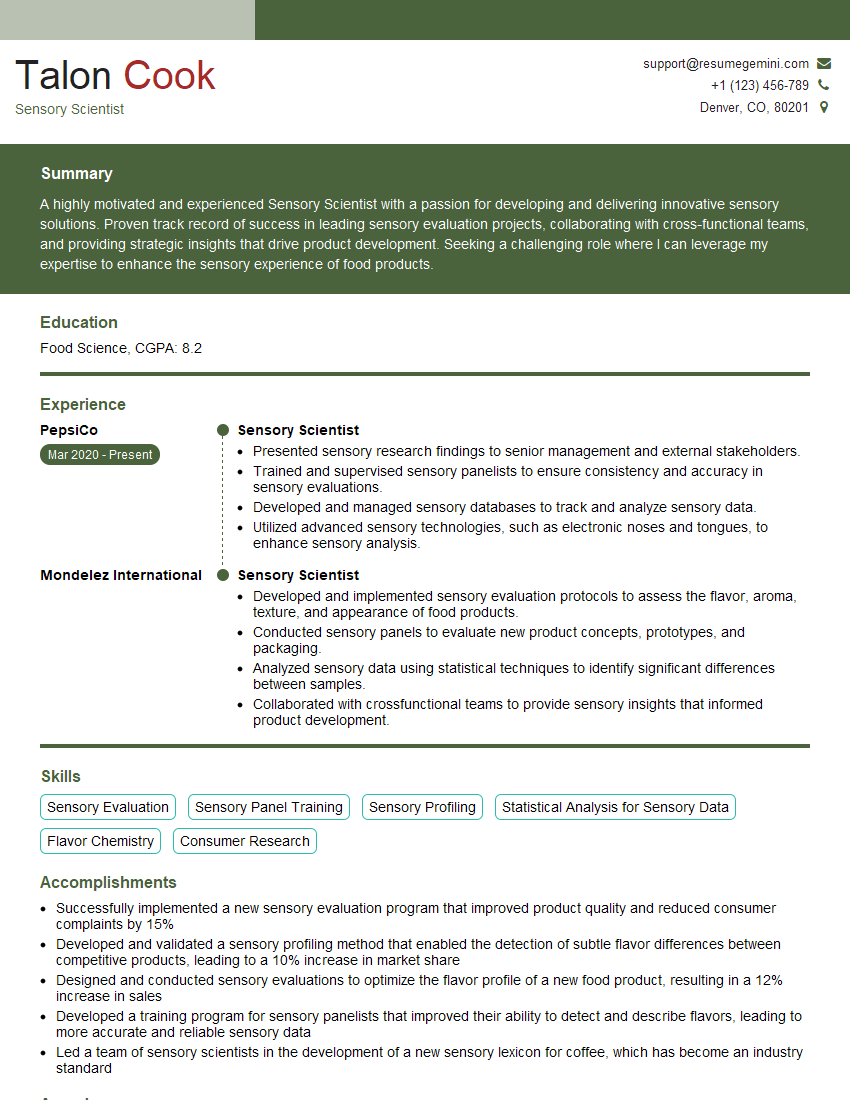
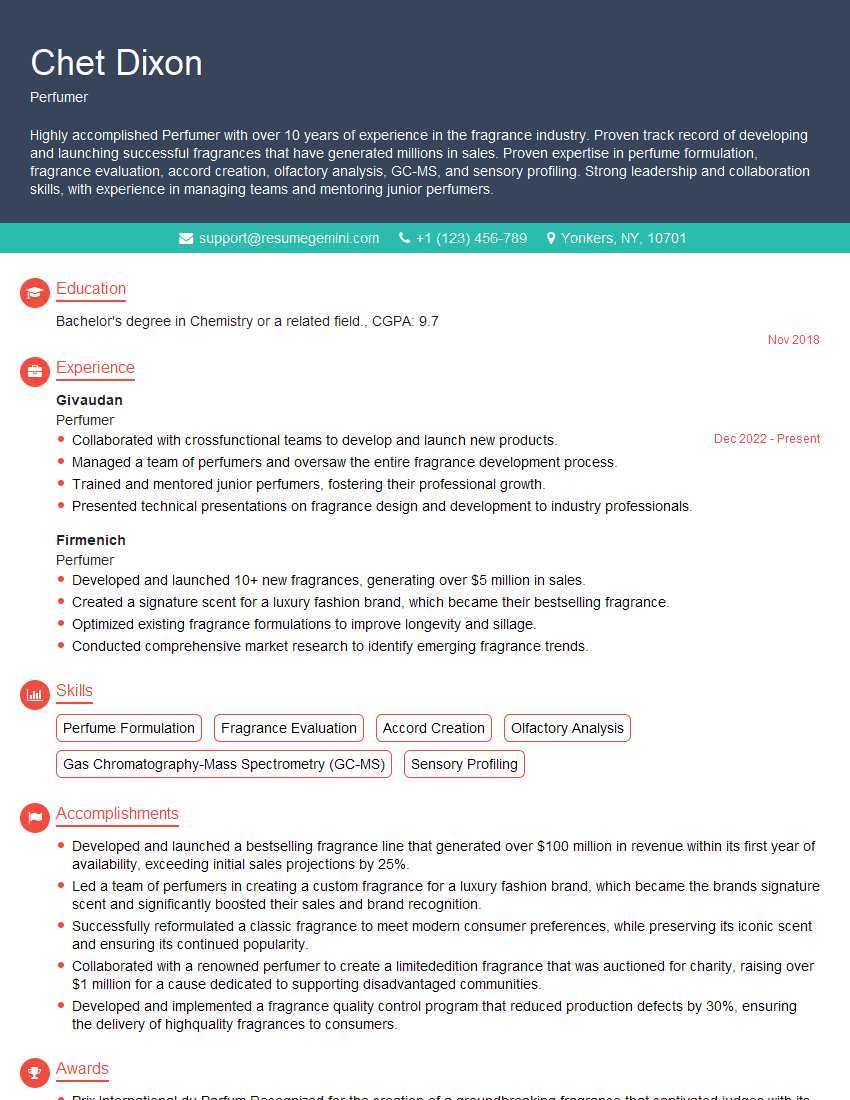
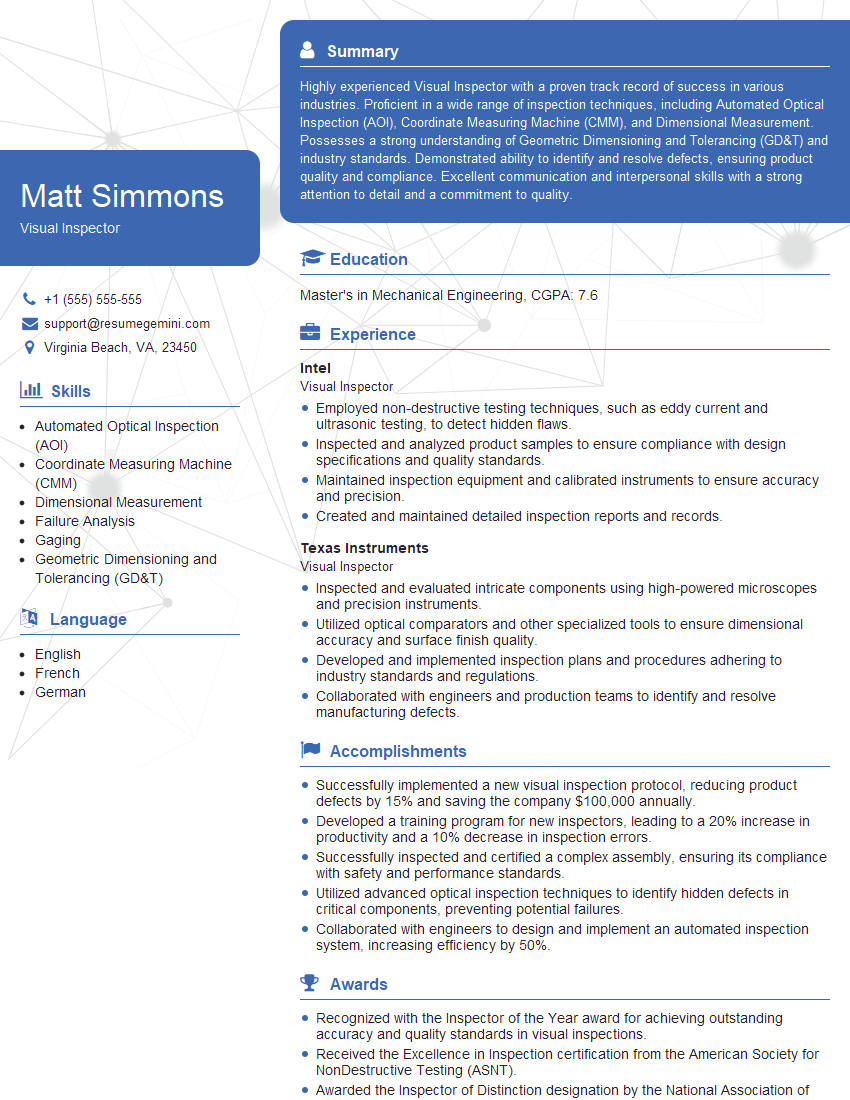
Mastering Visual and Sensory Evaluation opens doors to exciting career opportunities in diverse fields, from food science and consumer product development to cosmetics and pharmaceuticals. A strong understanding of these principles is highly valued by employers. To maximize your job prospects, creating a compelling and ATS-friendly resume is crucial. ResumeGemini is a trusted resource that can help you build a professional resume that showcases your skills and experience effectively. Examples of resumes tailored to Visual and Sensory Evaluation roles are available to help you get started. Invest the time to craft a strong resume—it’s your first impression with potential employers.
Explore more articles
Users Rating of Our Blogs
Share Your Experience
We value your feedback! Please rate our content and share your thoughts (optional).
What Readers Say About Our Blog
good