Are you ready to stand out in your next interview? Understanding and preparing for Wardrobe Supervision interview questions is a game-changer. In this blog, we’ve compiled key questions and expert advice to help you showcase your skills with confidence and precision. Let’s get started on your journey to acing the interview.
Questions Asked in Wardrobe Supervision Interview
Q 1. Describe your experience managing a wardrobe department budget.
Managing a wardrobe department budget requires meticulous planning and proactive cost control. It’s not just about tracking expenses; it’s about strategic allocation of funds to maximize impact within the given constraints. My approach starts with a detailed breakdown of anticipated costs, including rentals, purchases, alterations, cleaning, and personnel. I use budgeting software to meticulously track every expense against the allocated budget. For instance, on a recent period drama, I identified potential cost savings by sourcing vintage clothing instead of commissioning new pieces for background extras. This not only stayed within budget but also added authenticity to the production. Regular monitoring of spending allows for adjustments as needed and prevents unexpected overruns. Furthermore, negotiating favorable rates with vendors and suppliers is crucial for efficient budget management.
Q 2. How do you maintain the integrity of costumes throughout a production?
Maintaining costume integrity is paramount for a successful production. It’s all about proactive preservation and careful handling. This begins with a thorough pre-production assessment of each costume, identifying any potential vulnerabilities. I implement a strict cleaning and maintenance protocol, utilizing appropriate techniques for different fabrics. We establish a clear chain of custody, tracking each costume’s movement and condition. A detailed inventory system is crucial, including photographic documentation of the condition of each item before and after use. During shoots, designated wardrobe assistants are responsible for careful handling and immediate attention to any damage. For example, we employed specialized garment bags and humidifiers to prevent damage to delicate historical pieces during a recent historical film. Regular inspections and timely repairs further mitigate potential damage. Following each shoot day, costumes undergo thorough cleaning and any necessary repairs. This rigorous approach ensures costumes are preserved in pristine condition throughout the entire production.
Q 3. Explain your process for tracking and organizing costumes.
My system for tracking and organizing costumes is a combination of physical and digital methods. Physically, I use a color-coded system for categorizing costumes by character, scene, and size. Each costume is assigned a unique ID number that’s linked to a detailed inventory sheet, including information about the fabric, construction, and any special instructions. Digitally, I utilize a dedicated wardrobe management software (more details in answer 5). This software allows for detailed inventory tracking, generating reports on costume usage, and producing packing lists for actors. This system provides a clear overview of each costume’s location, status, and maintenance needs. For instance, when an actor needs a specific costume, the system generates the location, ensuring smooth and efficient access. This system also includes an image database, offering a visual inventory which facilitates quick identification of items.
Q 4. How do you handle last-minute wardrobe emergencies?
Handling last-minute wardrobe emergencies requires quick thinking, resourcefulness, and a well-prepared team. My first step involves assessing the situation’s severity and identifying the required solution. This might involve minor adjustments, like a quick stitch or replacing a damaged accessory. For more significant issues, I leverage our existing inventory, utilizing similar items from the existing wardrobe or the standby wardrobe we maintain to substitute. If a complete replacement is necessary, I might rely on my network of costume designers and suppliers for quick turnaround solutions. In a recent production, a crucial button broke on the lead actor’s shirt just before a crucial scene. My team had a backup shirt ready and replaced the button in under five minutes. Having a well-organized emergency kit, containing basic sewing supplies, fabric swatches, and common accessories, is also vital in these situations.
Q 5. What software or systems do you use for wardrobe management?
I utilize a combination of software and systems for wardrobe management, primarily a dedicated wardrobe management software like Wardrobe Tracker Pro (example name, many comparable software exist) or Costume Manager. These software packages offer crucial features like inventory tracking, rental management, cost analysis, and reporting. In addition, I use spreadsheets (like Google Sheets or Excel) for supplementary tracking and reporting purposes. This is particularly helpful in creating detailed budgets and visualizing cost trends. Beyond software, I maintain a physical filing system for crucial documents like costume schematics, fitting notes, and vendor contracts. These multiple systems work in tandem to give me a comprehensive, accessible overview of the wardrobe department’s status at any time.
Q 6. Describe your experience with fitting actors and actresses.
Fitting actors is a crucial aspect of wardrobe supervision. It’s not just about ensuring the costumes fit; it’s about creating a collaborative environment that helps actors feel confident and comfortable. I always begin with a thorough discussion of the character and the production’s requirements. I then take detailed body measurements and consider the actor’s comfort and movement requirements. Fitting sessions are collaborative; I encourage the actor’s feedback to ensure the costume is functional and enhances their performance. For example, I’ve modified costumes to accommodate an actor’s specific movement style, improving both their comfort and the visual impact of the performance. I maintain detailed fitting notes for each actor and costume, documenting any alterations or special considerations.
Q 7. How do you ensure costumes are historically or thematically accurate?
Ensuring historical or thematic accuracy is paramount. This requires extensive research. I start by examining historical sources, including period paintings, photographs, and writings. For instance, when working on a period piece, I consult books and museum archives to understand the specific styles, fabrics, and embellishments of the time. I also consult with historical consultants or subject matter experts, who can provide crucial insights. I’m meticulous in sourcing materials and techniques, ensuring their authenticity. Sourcing fabrics from appropriate vendors and using traditional construction methods are key components to my work. When necessary, I replicate historical techniques – for example, hand-stitching certain elements to maintain authenticity. This commitment to research and accuracy helps create historically or thematically accurate costumes that immerse the audience in the story.
Q 8. How do you communicate effectively with actors and directors regarding wardrobe?
Effective communication with actors and directors is paramount in wardrobe supervision. I prioritize building strong, trusting relationships from the outset. This involves active listening, clear and concise communication, and a collaborative approach. Before fittings, I’ll often have a preliminary meeting to discuss the director’s vision for the character’s look, reviewing the script and character breakdowns. During fittings, I present options, explaining the rationale behind each choice—considering period accuracy, character arc, and the actor’s comfort and movement. I use visual aids, such as mood boards or sketches, to ensure everyone is on the same page. If an actor expresses concerns or preferences, I actively listen and work to find mutually agreeable solutions. Regular check-ins throughout the production process keep communication flowing and prevent misunderstandings.
For instance, on a recent period drama, an actor found a particular corset restrictive. Instead of dismissing their concern, I collaborated with the costume designer to explore alternative undergarments that provided support while enhancing comfort and movement. The result was a happy actor and a seamlessly believable performance.
Q 9. Explain your method for creating a wardrobe call sheet.
My wardrobe call sheet is meticulously organized to streamline the fitting and production process. It typically includes:
- Date, Time, and Location: Clear details about the call.
- Actor’s Name and Character: Identifying information.
- Scene Number and Description: Context for wardrobe choices.
- Required Costumes: A detailed list of specific garments and accessories.
- Notes: Any special instructions, such as specific alterations or accessories.
- Contact Information: For both actors and wardrobe assistants.
I use a digital format (like a spreadsheet or dedicated wardrobe software) for easy updating and sharing. This ensures everyone involved has the most up-to-date information, eliminating confusion and delays on set.
Q 10. Describe your experience with alterations and repairs of costumes.
Alterations and repairs are an integral part of wardrobe supervision. My expertise spans a wide range of techniques, from basic stitching and mending to complex pattern adjustments and specialized repairs. I possess proficiency in various sewing methods, including hand-stitching, machine stitching, and the use of specialized tools. I’m adept at working with diverse fabric types, understanding the properties of each material and employing appropriate techniques to ensure longevity and maintain the integrity of the costume.
For example, in a recent musical, a dancer ripped the seam of their costume mid-performance. I quickly assessed the damage and, using a strong, flexible thread, made an invisible repair backstage, allowing the performance to continue without interruption. I also regularly manage more complex alterations, such as adjusting sleeve length, waistlines, or hemlines to fit actors perfectly. I can also work with a skilled seamstress or tailor if needed, for especially intricate work.
Q 11. How do you manage a team of wardrobe assistants?
Managing a wardrobe team requires clear communication, delegation, and collaborative leadership. I foster a positive and efficient work environment by clearly defining roles and responsibilities. Regular team meetings keep everyone informed and address potential challenges proactively. I delegate tasks based on team members’ strengths and experience, ensuring optimal utilization of their skills. I provide regular feedback, both positive reinforcement and constructive criticism, creating opportunities for growth and development within the team. This involves mentoring junior assistants and providing training where necessary. I also strive to create an inclusive and supportive team atmosphere where everyone feels valued and empowered.
On a large-scale production, for instance, I might assign one assistant to be in charge of maintaining the costume inventory, while others focus on fittings, alterations, and on-set wardrobe changes.
Q 12. How do you handle disagreements between actors and the wardrobe department?
Disagreements between actors and the wardrobe department are sometimes unavoidable. My approach focuses on diplomacy and finding solutions that satisfy both parties. The key is active listening—understanding the actor’s concerns and explaining the rationale behind wardrobe choices. I always strive to find a compromise. Sometimes a slight alteration or providing alternative options can resolve the issue. If a compromise cannot be reached, I involve the director or producer to mediate and make a final decision.
For example, an actor may have a concern about the practicality of a particular costume. Rather than dismissing their concern, I’d explore alternatives or make the necessary adjustments, ensuring both the artistic vision and the actor’s comfort are considered.
Q 13. How do you source and acquire costumes for a production?
Sourcing costumes is a multifaceted process. It begins with a thorough understanding of the production’s needs, including the period, style, and budget. I utilize various methods:
- Costume Houses: Renting from established costume houses offers a wide selection and saves on production costs.
- Online Retailers and Auctions: Finding unique or specific items via online platforms.
- Thrift Stores and Vintage Shops: Discovering unique, affordable pieces requiring minimal alterations.
- Custom-Made Costumes: For unique pieces or when exact specifications are needed, commissioning a costume designer or seamstress.
Throughout the process, I meticulously track costs and maintain accurate records. I prioritize finding cost-effective solutions without compromising the quality or integrity of the costumes.
Q 14. How familiar are you with different fabric types and their care?
Extensive knowledge of fabric types and their care is essential. I’m familiar with various fibers (natural like silk, cotton, wool; and synthetics like polyester, nylon) and their properties—drape, durability, texture, and how they react to different cleaning methods. This allows me to select appropriate fabrics for each costume, considering factors like the period, character, and the actors’ needs. I also understand the specific care instructions for each fabric, preventing damage and ensuring the longevity of costumes. I’m skilled in stain removal and basic fabric repair, and I know when to consult a specialist for delicate fabrics or extensive damage.
For example, I know that delicate silk requires hand-washing and specialized cleaning solutions, while a durable canvas can withstand more rigorous cleaning methods. This ensures that costumes are treated appropriately and maintained in optimal condition throughout the production.
Q 15. How do you address issues with costume damage or loss?
Addressing costume damage or loss requires a proactive and systematic approach. It starts with meticulous inventory management from the moment a costume enters the wardrobe department. Each item is carefully cataloged, often with photos, and its condition noted. This allows us to track any damage or discrepancies immediately.
For minor damage, like a small tear or loose button, our team performs on-site repairs. We have a dedicated mending kit with needles, thread, and other essential tools. For significant damage, I assess the extent and decide if an in-house repair is feasible or if it needs to be sent to a specialist. For example, a delicate antique gown would be sent to a professional conservator.
In case of loss, a thorough investigation is launched. We check all storage areas, examine the filming locations, and even contact the cast and crew. We also maintain a detailed log of costume movements, which is crucial in tracing lost items. A replacement might involve recreating the costume, sourcing a similar piece, or even adjusting the script if a replacement isn’t feasible. We always aim to minimize disruption to filming and inform the production team of any loss or damage as soon as possible. Insurance claims, when appropriate, are handled promptly.
Career Expert Tips:
- Ace those interviews! Prepare effectively by reviewing the Top 50 Most Common Interview Questions on ResumeGemini.
- Navigate your job search with confidence! Explore a wide range of Career Tips on ResumeGemini. Learn about common challenges and recommendations to overcome them.
- Craft the perfect resume! Master the Art of Resume Writing with ResumeGemini’s guide. Showcase your unique qualifications and achievements effectively.
- Don’t miss out on holiday savings! Build your dream resume with ResumeGemini’s ATS optimized templates.
Q 16. What is your experience with dry cleaning and laundry processes?
My experience with dry cleaning and laundry processes is extensive, encompassing both traditional methods and specialized techniques for delicate fabrics. I understand the importance of selecting appropriate cleaning methods based on fabric composition and garment construction. For instance, delicate silks and lace require hand-washing or a specialized dry cleaning process, while sturdy materials may withstand machine washing.
I work closely with reputable dry cleaners and laundries, providing detailed instructions on the care of each costume. This includes specifying preferred cleaning agents, pressing techniques, and special handling requirements. I always prioritize maintaining the integrity and longevity of the garments. I also regularly inspect cleaned items upon their return, checking for any damage or flaws that may have occurred during the cleaning process. We sometimes even perform pre-treatments for stains before sending items to the cleaners to maximize the chance of successful cleaning.
Furthermore, I am familiar with the use of different garment bags for storage to prevent damage, such as acid-free tissue paper for delicate items and breathable bags for everyday wear to protect from dust and moisture. My experience includes handling a variety of materials like linen, wool, silk, leather, and synthetic fabrics, each requiring its unique cleaning and handling protocols.
Q 17. How do you maintain a clean and organized wardrobe room?
Maintaining a clean and organized wardrobe room is essential for efficiency and preservation of the costumes. My approach is based on a combination of meticulous organization, regular cleaning, and preventative measures. The wardrobe room is divided into sections based on factors such as the production, actor, and garment type (dresses, shirts, outerwear, accessories). Each costume is assigned a unique identification number, and its storage location is meticulously tracked.
We use various storage solutions such as garment racks, shelves, and drawers. Garments are stored appropriately, using acid-free tissue paper and garment bags to protect against damage. Regular cleaning involves vacuuming the floor, dusting shelves, and spot-cleaning any spills or stains immediately. We also conduct more thorough deep-cleaning sessions at the end of each production phase. A color-coded system for labeling and storage helps ensure quick retrieval of specific items.
A clear inventory system is crucial. We use a combination of physical inventory lists and digital databases to keep precise records of every item, its location, and condition. This system also allows us to generate reports on inventory levels, track rental items, and provide quick access to needed information. A regular audit of our inventory, which may involve a complete re-inventory of items, is crucial to ensure that all items are accounted for. This helps catch losses or damage before they escalate.
Q 18. How do you plan for wardrobe needs during different filming locations?
Planning for wardrobe needs across multiple filming locations requires meticulous pre-production work and adaptability. I start by closely reviewing the script and shooting schedule to identify all the locations and their specific climatic conditions. This helps anticipate the type of clothing needed and the potential challenges. For example, filming in a desert environment requires lightweight, breathable clothing, while filming in a snowy environment requires warm, layered clothing.
I then create a detailed packing list, ensuring that we have sufficient costumes for each scene and location. This list accounts for potential wardrobe malfunctions or accidental damage. I also arrange for transportation of the costumes, using appropriate containers and climate-controlled vehicles when necessary. The costumes are clearly labeled and organized for easy access on-location. This includes the use of appropriately labeled crates, bins, or bags to organize the garments by character or scene.
On-location, I establish a temporary wardrobe space, usually a dedicated trailer or room, ensuring it’s well-organized and protected from the elements. I also plan for contingency measures, like having backup costumes readily available for quick changes or unexpected events. Communication with the production team is key, keeping everyone informed about any potential wardrobe challenges or changes in the shooting schedule. For example, having a readily available spare suit for the leading character is not uncommon. Finally, regular updates of the wardrobe inventory as costumes are used and returned are also crucial for managing resources.
Q 19. Describe your experience with different wardrobe styles (e.g., period, modern).
My experience spans a wide range of wardrobe styles, from period pieces to contemporary designs. For period costumes, I conduct extensive research to ensure historical accuracy. This involves studying artwork, photographs, and written records from the relevant time period. I might collaborate with historians or costume designers to faithfully recreate period clothing. I also need to understand the nuances of fabrics, silhouettes, and accessories characteristic of different eras. For example, recreating a Victorian gown requires meticulous attention to detail and sourcing appropriate fabrics.
Modern wardrobe styling requires a keen understanding of current fashion trends, including silhouette, colors, and textures. This requires collaboration with the production designer to ensure the costumes align with the overall visual style of the project. In modern pieces, I’m also responsible for ensuring that the clothing is appropriate to the character and the scene. I also need to manage the fit of the costumes and make any necessary alterations. For instance, fitting a modern business suit would necessitate precise alterations to ensure both comfort and on-screen aesthetic appeal.
Working with both period and modern styles demands diverse skill sets, encompassing historical research, pattern making, fabric sourcing, alterations, and the ability to interpret a director’s vision and translate it into visually compelling costumes. The challenge often lies in finding a balance between authenticity and practicality, ensuring the costumes are both visually stunning and comfortable for the actors to wear during long filming days. My experience includes managing wardrobes in both large-scale productions and smaller independent projects.
Q 20. How do you ensure costumes fit within the overall production design?
Ensuring costumes fit within the overall production design is a collaborative effort involving close communication with the production designer and art director. This starts in the pre-production phase, where we review concept art, mood boards, and color palettes to establish a visual vocabulary. I work to select fabrics, colors, and styles that complement the set design, lighting, and overall aesthetic direction of the film.
For instance, if the film’s setting is a rustic farm in the 1950s, the costumes must reflect that era and setting without clashing with the background. The color palettes, fabric textures, and styles of the clothing are carefully considered to ensure harmony with the scenery. If the production is a fantasy setting, costumes need to fit the overall design, which may include designing original costume pieces or even using practical special effects.
Regular meetings and consultations with the production design team are crucial to ensure alignment. I might present fabric swatches and costume sketches to ensure the costumes blend seamlessly with the overall visual scheme. We might discuss potential alterations, additions, or substitutions to ensure optimal visual cohesion. The costumes should enhance the film’s narrative and visual appeal without dominating the scene or distracting from other visual elements. My role involves not only creating costumes but also using them to contribute to the film’s overall cohesive visual presentation.
Q 21. How do you handle requests for costume changes during filming?
Handling costume change requests during filming requires efficiency and preparedness. I ensure that backup costumes are readily available for quick changes, particularly for scenes involving action sequences, stunts, or changes in weather conditions. A well-organized wardrobe truck or room is essential for this. A clearly labeled system helps to quickly find and retrieve the required costumes.
I assign a dedicated assistant to manage costume changes on set. This assistant works closely with the director and actors to ensure a smooth and timely transition between costumes. Communication is key; we keep a constant line of communication with the actors and director to anticipate and address any potential issues or requests for wardrobe changes. The use of walkie-talkies or other communication tools helps ensure efficient and rapid responsiveness to costume needs on set.
In addition to managing changes, my team and I are also responsible for maintaining the costumes’ cleanliness and appearance throughout the day. We handle minor repairs or adjustments as needed. This proactive approach ensures that actors always look their best, maintaining a cohesive and professional look throughout the filming process. I also maintain a thorough understanding of the shooting schedule to anticipate needs and minimize downtime due to costume changes.
Q 22. How do you prioritize tasks within a fast-paced production environment?
Prioritizing tasks in a fast-paced production environment requires a systematic approach. I utilize a combination of methods, including a prioritized task list, a visual scheduling tool (like a Kanban board), and constant communication with the production team.
Firstly, I identify time-sensitive tasks, such as those directly impacting a shoot day or critical deadlines. These tasks always take precedence. For example, ensuring all costumes for a crucial scene are ready and on set before filming begins is paramount.
Secondly, I break down larger tasks into smaller, manageable components. This allows for better tracking of progress and allows flexibility in case of unexpected delays or changes. Let’s say we need 50 period costumes altered; I’ll divide this into smaller batches, assigning each batch to a specific tailor or seamstress for parallel processing.
Finally, I regularly review and adjust my priorities based on new information or changes in the production schedule. This requires adaptability and open communication with the costume designer, director, and other relevant personnel. A daily huddle ensures everyone’s aligned on priorities and potential roadblocks.
Q 23. Describe your experience with special effects makeup and wardrobe integration.
My experience with special effects makeup and wardrobe integration is extensive. It often involves meticulous planning and collaboration. Understanding the makeup design is crucial before selecting costumes. For instance, if a character requires extensive prosthetic makeup, the costume must accommodate it both functionally and aesthetically. We need to consider access points for application and removal of prosthetics, ensuring no damage occurs during costume changes.
Fabric selection is paramount. Certain fabrics may not work well with certain makeup effects—for example, a highly textured fabric might snag delicate prosthetic pieces. We also factor in the practical considerations of potential bleeding, staining, and cleanup of the special effects makeup on the costumes.
In one particular project involving a zombie character, the costume needed to withstand the application and removal of decaying skin prosthetics, without tearing or showing any signs of damage. This required careful selection of durable, easily cleaned materials and the creation of a simple undergarment to help protect both costume and prosthetic.
Q 24. What strategies do you use for managing multiple actors’ wardrobes simultaneously?
Managing multiple actors’ wardrobes requires a highly organized system. I employ a combination of color-coded systems, detailed spreadsheets, and dedicated wardrobe assistants. Each actor has a dedicated wardrobe rack clearly labelled with their name, and a detailed inventory list is associated with each. This list notes the specific pieces assigned, their condition, and their location.
A color-coded system helps quickly locate items: For example, each actor might have a specific color assigned to their wardrobe items, or we might use color-coded tags for scene-specific costumes. A central digital spreadsheet tracks every item, its assigned actor, and its status (e.g., ‘in use,’ ‘in laundry,’ ‘in storage’). This provides an at-a-glance view of the wardrobe situation, enabling quick identification and addressing any issues or gaps immediately. Regular spot checks throughout the day with assistants further ensure everything is accounted for.
Q 25. How do you ensure the safety and comfort of actors in their costumes?
Ensuring actor safety and comfort is paramount. This begins with careful costume selection and fitting. I always prioritize costumes made from breathable fabrics and ensure they allow for a full range of movement. Tight or restrictive clothing can inhibit an actor’s performance and potentially cause injury.
Regular checks throughout the day are vital. I and my team monitor actors for any discomfort or issues related to the costumes. This could range from noticing a costume is too tight, or a seam has come undone, to ensuring the costumes are appropriate for weather conditions and the type of physical activity involved in the shoot. We also provide essential adjustments and on-set repairs immediately when needed. For example, quick fixes like replacing buttons or tailoring hems can prevent discomfort and delays.
We also establish clear communication channels so actors feel comfortable bringing any concerns to our attention. In one instance, an actor felt a costume was too heavy for a long day of filming, so we provided a lighter alternative to ensure their comfort and avoid strain.
Q 26. How do you maintain accurate records of costume inventory?
Accurate costume inventory is crucial for efficient management and budget control. I use a combination of digital and physical methods. Each costume piece has a unique identification number, along with detailed information about the material, size, condition, and any special requirements. This information is recorded both on physical tags attached to the garments and in a digital database.
The digital database allows for efficient searching and tracking of items. I use a dedicated software solution (or a spreadsheet if the project is small) to track the location of each item – whether in storage, on set, at the cleaners, or with an actor. This software often includes features like image uploads and condition reporting to provide a visual and comprehensive record of each item. Regular audits of the physical inventory against the digital record ensure accuracy and allow for prompt identification and remediation of discrepancies.
This system prevents loss, damage, and misplacement of costly items and facilitates quick response times when a specific costume is needed. For example, if a costume is damaged or needs replacement, the database quickly indicates its location and replacement requirements, minimizing delays and costs.
Q 27. What is your experience working with actors with special needs or concerns regarding wardrobe?
Working with actors with special needs requires sensitivity and careful planning. I prioritize open communication with the actor and their representatives to understand their specific needs and concerns. This includes allergies to certain fabrics, mobility limitations, or sensory sensitivities.
For actors with mobility issues, we might adjust costumes to accommodate wheelchairs or other assistive devices. For those with allergies, we select hypoallergenic fabrics and ensure proper laundering and handling to minimize exposure to irritants. For actors with sensory sensitivities, we prioritize comfort and minimize constricting elements or potentially irritating textures.
In one instance, an actor with a prosthetic limb required a costume alteration to ensure a comfortable and secure fit. We worked closely with the actor and a prosthetist to design custom modifications to accommodate the prosthetic, resulting in a flawless costume fit and confident performance.
Q 28. How do you ensure the timely return of rented or borrowed costumes?
Ensuring the timely return of rented or borrowed costumes involves meticulous tracking and communication. I establish clear return schedules with rental houses or lending parties well in advance. These schedules outline the precise date and time of return, as well as the condition requirements. A detailed checklist is used to inspect the costumes both before and after use, recording any damage or necessary cleaning.
I meticulously document the process using digital records and signed agreements. These agreements clearly define the responsibilities of both parties, including any fees related to late returns or damage. A pre-arranged method of transportation—courier service or dedicated personnel—is also established, to guarantee prompt and safe return.
Once the costumes are returned, they are immediately inspected against the initial condition report, any discrepancies are documented, and communication with the lender is initiated. Proactive communication minimizes potential disputes and maintains positive relationships with rental houses for future projects. This detailed system has always ensured timely returns without issue, helping maintain a reliable reputation and long-term relationships with suppliers.
Key Topics to Learn for Wardrobe Supervision Interview
- Budgeting and Cost Management: Understanding and adhering to allocated budgets for wardrobe purchases, rentals, and maintenance; developing cost-effective strategies.
- Inventory Management: Implementing and maintaining a detailed inventory system for tracking wardrobe items; ensuring proper storage and organization.
- Wardrobe Styling and Selection: Collaborating with designers and production teams to select appropriate garments; understanding character development and period accuracy.
- Maintenance and Repairs: Overseeing garment care, cleaning, and repairs; managing relationships with dry cleaners and tailors.
- Team Management and Communication: Supervising and delegating tasks to wardrobe assistants; effective communication with actors, directors, and other crew members.
- Problem-solving and Quick-Thinking: Addressing on-set wardrobe emergencies effectively; developing contingency plans for unexpected issues.
- Legal and Ethical Considerations: Understanding copyright and intellectual property laws related to costumes; ensuring ethical sourcing and fair labor practices.
- Health and Safety Protocols: Implementing and enforcing safety procedures related to handling costumes and wardrobe equipment.
- Technological Proficiency: Utilizing wardrobe management software and other relevant technologies to streamline processes.
Next Steps
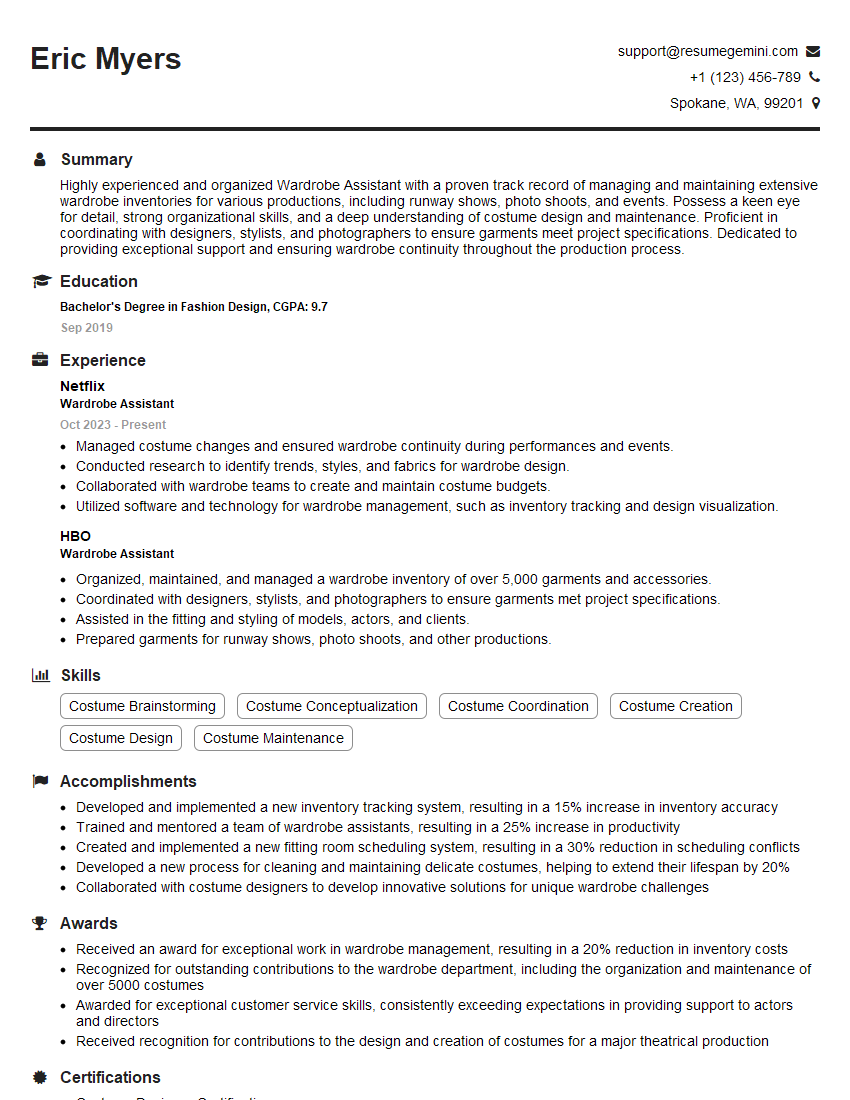
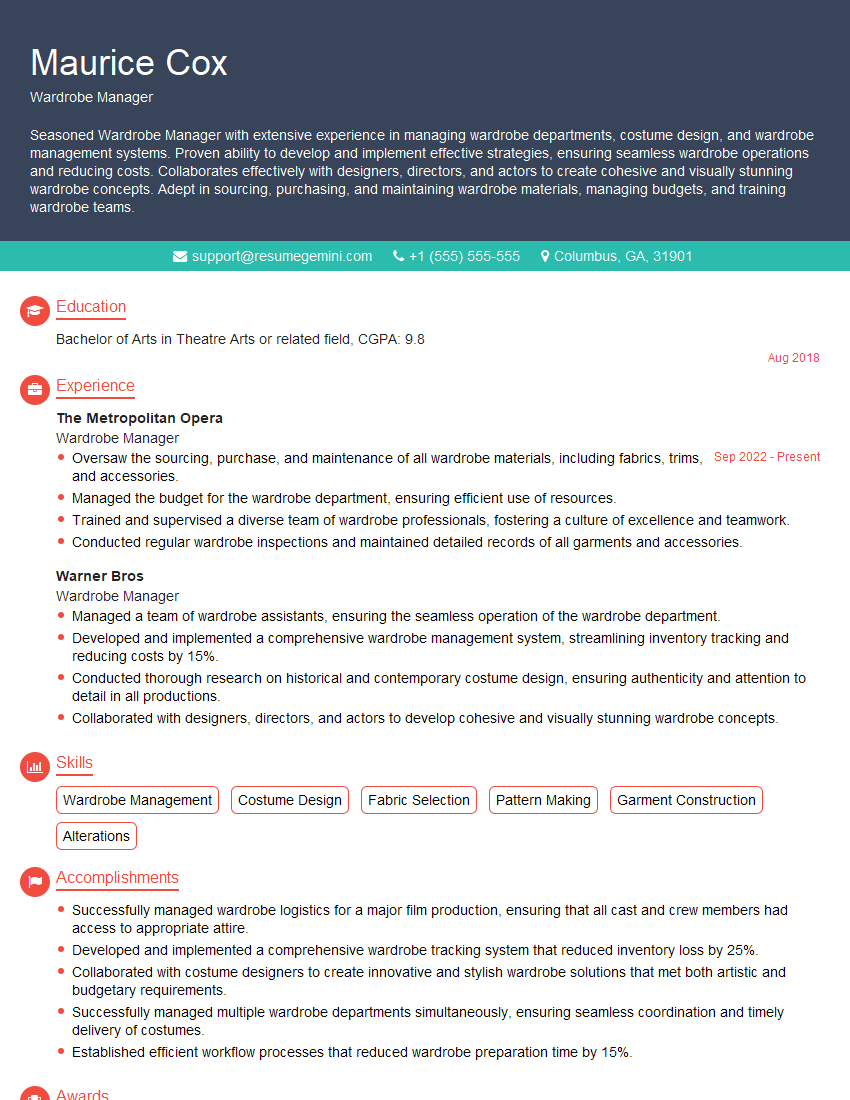
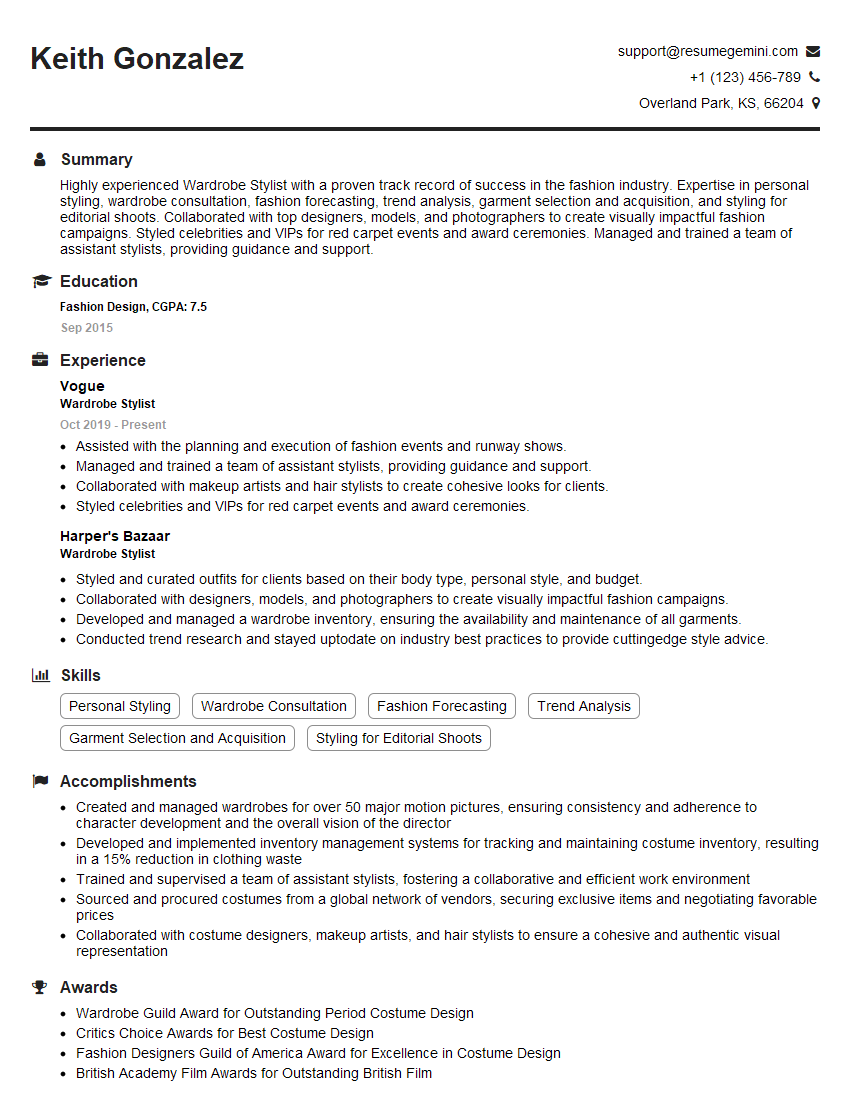
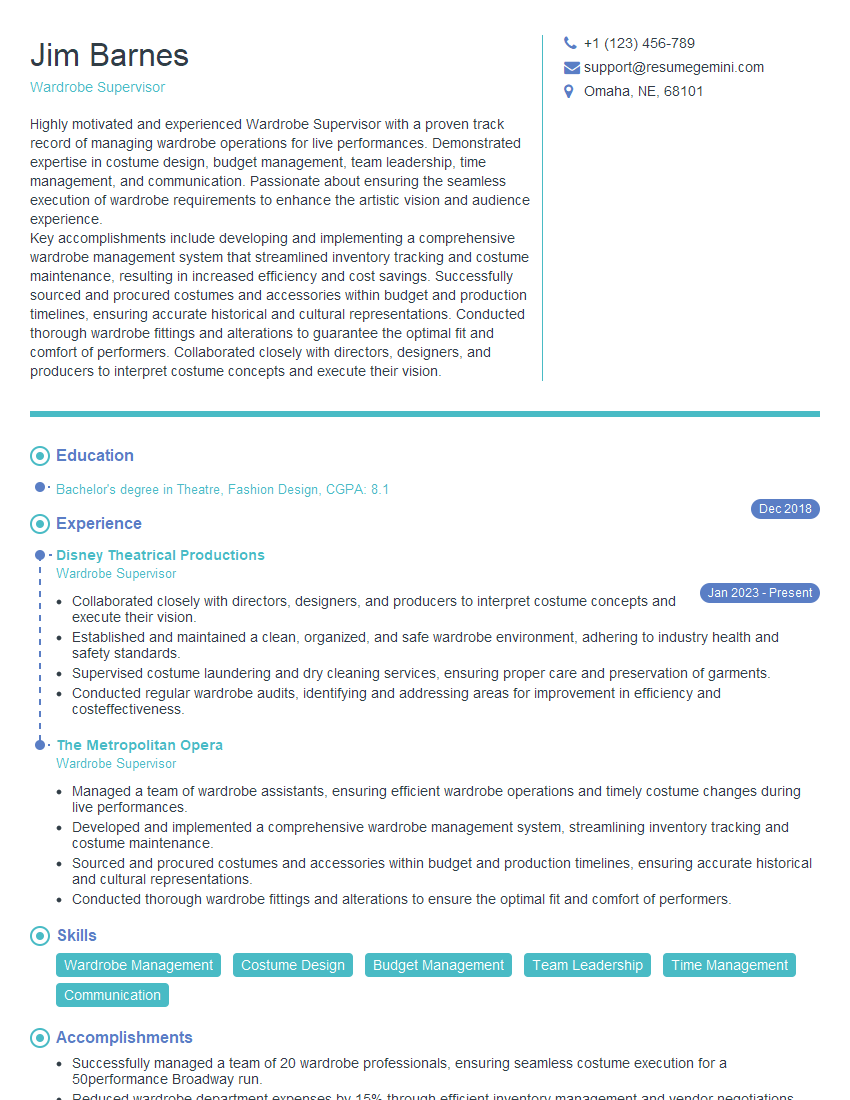
Mastering Wardrobe Supervision opens doors to exciting career advancements, from leading larger productions to taking on creative leadership roles. A strong, ATS-friendly resume is your key to unlocking these opportunities. To make your application stand out, invest time in crafting a professional and impactful resume. ResumeGemini is a trusted resource that can help you build a resume that effectively showcases your skills and experience. We provide examples of resumes tailored specifically to Wardrobe Supervision to guide you. Take the next step toward your dream career today!

Explore more articles
Users Rating of Our Blogs
Share Your Experience
We value your feedback! Please rate our content and share your thoughts (optional).
What Readers Say About Our Blog
Attention music lovers!
Wow, All the best Sax Summer music !!!
Spotify: https://open.spotify.com/artist/6ShcdIT7rPVVaFEpgZQbUk
Apple Music: https://music.apple.com/fr/artist/jimmy-sax-black/1530501936
YouTube: https://music.youtube.com/browse/VLOLAK5uy_noClmC7abM6YpZsnySxRqt3LoalPf88No
Other Platforms and Free Downloads : https://fanlink.tv/jimmysaxblack
on google : https://www.google.com/search?q=22+AND+22+AND+22
on ChatGPT : https://chat.openai.com?q=who20jlJimmy20Black20Sax20Producer
Get back into the groove with Jimmy sax Black
Best regards,
Jimmy sax Black
www.jimmysaxblack.com
Hi I am a troller at The aquatic interview center and I suddenly went so fast in Roblox and it was gone when I reset.
Hi,
Business owners spend hours every week worrying about their website—or avoiding it because it feels overwhelming.
We’d like to take that off your plate:
$69/month. Everything handled.
Our team will:
Design a custom website—or completely overhaul your current one
Take care of hosting as an option
Handle edits and improvements—up to 60 minutes of work included every month
No setup fees, no annual commitments. Just a site that makes a strong first impression.
Find out if it’s right for you:
https://websolutionsgenius.com/awardwinningwebsites
Hello,
we currently offer a complimentary backlink and URL indexing test for search engine optimization professionals.
You can get complimentary indexing credits to test how link discovery works in practice.
No credit card is required and there is no recurring fee.
You can find details here:
https://wikipedia-backlinks.com/indexing/
Regards
NICE RESPONSE TO Q & A
hi
The aim of this message is regarding an unclaimed deposit of a deceased nationale that bears the same name as you. You are not relate to him as there are millions of people answering the names across around the world. But i will use my position to influence the release of the deposit to you for our mutual benefit.
Respond for full details and how to claim the deposit. This is 100% risk free. Send hello to my email id: lukachachibaialuka@gmail.com
Luka Chachibaialuka
Hey interviewgemini.com, just wanted to follow up on my last email.
We just launched Call the Monster, an parenting app that lets you summon friendly ‘monsters’ kids actually listen to.
We’re also running a giveaway for everyone who downloads the app. Since it’s brand new, there aren’t many users yet, which means you’ve got a much better chance of winning some great prizes.
You can check it out here: https://bit.ly/callamonsterapp
Or follow us on Instagram: https://www.instagram.com/callamonsterapp
Thanks,
Ryan
CEO – Call the Monster App
Hey interviewgemini.com, I saw your website and love your approach.
I just want this to look like spam email, but want to share something important to you. We just launched Call the Monster, a parenting app that lets you summon friendly ‘monsters’ kids actually listen to.
Parents are loving it for calming chaos before bedtime. Thought you might want to try it: https://bit.ly/callamonsterapp or just follow our fun monster lore on Instagram: https://www.instagram.com/callamonsterapp
Thanks,
Ryan
CEO – Call A Monster APP
To the interviewgemini.com Owner.
Dear interviewgemini.com Webmaster!
Hi interviewgemini.com Webmaster!
Dear interviewgemini.com Webmaster!
excellent
Hello,
We found issues with your domain’s email setup that may be sending your messages to spam or blocking them completely. InboxShield Mini shows you how to fix it in minutes — no tech skills required.
Scan your domain now for details: https://inboxshield-mini.com/
— Adam @ InboxShield Mini
support@inboxshield-mini.com
Reply STOP to unsubscribe
Hi, are you owner of interviewgemini.com? What if I told you I could help you find extra time in your schedule, reconnect with leads you didn’t even realize you missed, and bring in more “I want to work with you” conversations, without increasing your ad spend or hiring a full-time employee?
All with a flexible, budget-friendly service that could easily pay for itself. Sounds good?
Would it be nice to jump on a quick 10-minute call so I can show you exactly how we make this work?
Best,
Hapei
Marketing Director
Hey, I know you’re the owner of interviewgemini.com. I’ll be quick.
Fundraising for your business is tough and time-consuming. We make it easier by guaranteeing two private investor meetings each month, for six months. No demos, no pitch events – just direct introductions to active investors matched to your startup.
If youR17;re raising, this could help you build real momentum. Want me to send more info?
Hi, I represent an SEO company that specialises in getting you AI citations and higher rankings on Google. I’d like to offer you a 100% free SEO audit for your website. Would you be interested?
Hi, I represent an SEO company that specialises in getting you AI citations and higher rankings on Google. I’d like to offer you a 100% free SEO audit for your website. Would you be interested?