Cracking a skill-specific interview, like one for waste management certification, requires understanding the nuances of the role. In this blog, we present the questions you’re most likely to encounter, along with insights into how to answer them effectively. Let’s ensure you’re ready to make a strong impression.
Questions Asked in waste management certification Interview
Q 1. Explain the different types of waste streams.
Waste streams represent the various types of waste generated from different sources. Categorizing them is crucial for effective management. Think of it like sorting your laundry – you wouldn’t wash your delicates with your jeans! Here are some key categories:
- Municipal Solid Waste (MSW): This is everyday trash from homes and businesses, including paper, plastics, food scraps, yard waste, etc. Imagine the garbage you put out curbside weekly.
- Industrial Waste: This encompasses waste generated from manufacturing processes, ranging from scrap metal and chemicals to packaging materials. A factory producing cars would generate a very different waste stream than a food processing plant.
- Hazardous Waste: This is waste that poses a substantial or potential threat to public health or the environment due to its ignitability, corrosiveness, reactivity, or toxicity. Think used batteries, pesticides, or medical waste. This requires specialized handling and disposal.
- Construction and Demolition (C&D) Waste: This includes materials from building projects, like concrete, wood, drywall, and asbestos. Renovating a house will generate a significant amount of C&D waste.
- Medical Waste: This includes waste from healthcare facilities, such as sharps (needles), contaminated dressings, and bodily fluids. Requires strict protocols for safe disposal to prevent infection spread.
- Electronic Waste (e-waste): This is rapidly growing and includes discarded electronic devices like computers, phones, and televisions. Contains valuable recyclable materials but also hazardous components.
Understanding the specific composition of each waste stream allows for tailored management strategies, maximizing resource recovery and minimizing environmental impact.
Q 2. Describe the hierarchy of waste management.
The waste management hierarchy prioritizes waste reduction methods, aiming to minimize environmental impact and conserve resources. It’s like a pyramid, with the most preferred options at the top:
- Prevention/Reduction: The ultimate goal is to avoid generating waste in the first place, through designing products for durability, reducing packaging, and promoting reuse. Think of reusable water bottles instead of single-use plastics.
- Reuse: Giving items a second life, instead of discarding them. Repurposing glass jars or donating clothing are excellent examples.
- Recycling: Processing waste materials into new products. This conserves resources and reduces landfill burden. Recycling aluminum cans is a classic example.
- Recovery/Energy Recovery: Extracting energy from waste through incineration or anaerobic digestion. Incineration generates heat or electricity, while anaerobic digestion produces biogas.
- Disposal: This is the least desirable option, involving landfilling or other methods where waste is permanently stored. Landfills occupy valuable land and can pose environmental risks.
This hierarchy guides waste management policies and practices, prioritizing the most sustainable options first. Effective implementation requires public education and robust infrastructure.
Q 3. What are the key regulations concerning hazardous waste disposal?
Regulations surrounding hazardous waste disposal are stringent due to the potential harm to human health and the environment. These regulations vary by location but generally include:
- Manifest System: A tracking system documenting the generation, transportation, and disposal of hazardous waste. This ensures accountability and prevents illegal dumping.
- Treatment, Storage, and Disposal (TSD) Facilities: Hazardous waste must be handled by licensed facilities equipped to manage specific waste types safely.
- Environmental Protection Agency (EPA) Regulations (US): Comprehensive regulations, like the Resource Conservation and Recovery Act (RCRA), dictate handling, storage, transportation, and disposal requirements for various hazardous waste categories. Similar regulations exist in other countries.
- Generator Responsibilities: Businesses generating hazardous waste are responsible for proper labeling, packaging, storage, and disposal. Improper handling can lead to significant penalties.
- Emergency Response Plans: Facilities handling hazardous waste must have plans in place for accidental spills or releases.
Non-compliance with hazardous waste regulations can result in hefty fines, legal action, and reputational damage. Thorough training and adherence to best practices are vital.
Q 4. How do you conduct a waste audit?
A waste audit is a systematic process of evaluating the composition of waste streams to identify opportunities for waste reduction and resource recovery. It’s like taking an inventory of your trash to see what you can improve. Here’s a step-by-step approach:
- Planning and Preparation: Define the scope, objectives, and timeframe of the audit. Select representative sampling periods and locations.
- Data Collection: Collect and weigh waste samples from various sources. Sort the waste into predetermined categories (e.g., paper, plastic, food waste). This often involves manual sorting of the waste.
- Data Analysis: Calculate the weight and percentage of each waste category. Identify the main waste generators and types of waste generated.
- Reporting and Recommendations: Prepare a report summarizing the findings, including recommendations for waste reduction and recycling programs. This may involve suggesting changes in procurement, improving recycling infrastructure, or implementing composting programs.
- Implementation and Monitoring: Implement the recommended actions and monitor progress over time to measure the effectiveness of the changes.
Waste audits provide valuable data for informed decision-making, enabling organizations to optimize their waste management practices and reduce their environmental footprint.
Q 5. What are the benefits of recycling and composting?
Recycling and composting offer significant environmental and economic benefits:
- Recycling:
- Conserves natural resources: Reduces the need to extract virgin materials, conserving energy and minimizing habitat destruction.
- Reduces landfill waste: Decreases the volume of waste sent to landfills, extending their lifespan and reducing potential environmental pollution.
- Creates jobs: Supports a growing industry involved in collecting, processing, and manufacturing recycled products.
- Saves energy: Producing goods from recycled materials typically requires less energy than using virgin materials.
- Composting:
- Creates nutrient-rich soil amendment: Improves soil health, reducing the need for chemical fertilizers.
- Reduces greenhouse gas emissions: Decomposing organic waste in landfills produces methane, a potent greenhouse gas. Composting significantly reduces these emissions.
- Diverts organic waste from landfills: Extends the lifespan of landfills and reduces leachate (liquid waste from landfills).
- Reduces reliance on chemical fertilizers: Improves soil fertility naturally, promoting sustainable agriculture.
By promoting recycling and composting, we can move towards a more circular economy, reducing waste and conserving resources.
Q 6. Describe different waste treatment technologies.
Various waste treatment technologies exist, each suitable for different waste types and contexts:
- Incineration: Burning waste at high temperatures to reduce volume and generate energy. Requires air pollution control systems.
- Anaerobic Digestion: Breaking down organic waste in the absence of oxygen to produce biogas (methane) which can be used for energy generation. A more sustainable method for organic waste than landfills.
- Mechanical Biological Treatment (MBT): A combination of mechanical processes (shredding, screening) and biological processes (composting, anaerobic digestion) to treat municipal solid waste, improving recyclability and reducing landfill volume.
- Landfilling: Storing waste in designated areas. Requires careful management to minimize environmental impacts, such as leachate collection and methane capture.
- Plasma Gasification: Using extremely high temperatures to convert waste into syngas, a fuel source. Advanced technology that can handle a range of waste types, but costly to implement.
- Pyrolysis: Heating waste in the absence of oxygen to break it down into valuable products such as biochar, bio-oil, and syngas.
The choice of technology depends on factors such as waste composition, available resources, environmental regulations, and economic considerations.
Q 7. Explain the concept of Life Cycle Assessment (LCA) in waste management.
Life Cycle Assessment (LCA) is a comprehensive methodology for evaluating the environmental impacts of a product or process throughout its entire lifespan, from raw material extraction to disposal. In waste management, LCA helps assess the environmental performance of different waste management strategies. It’s like a detailed report card for a product or process.
For example, an LCA of a plastic bottle might consider:
- Raw material extraction: The energy and resources needed to extract and process petroleum to make plastic.
- Manufacturing: Energy consumption and emissions during plastic bottle production.
- Transportation: Fuel consumption and emissions during the transport of raw materials and finished products.
- Use phase: Any environmental impacts during the use of the plastic bottle (e.g., water consumption if it’s a water bottle).
- End-of-life: The environmental impacts associated with recycling, incineration, or landfilling of the plastic bottle.
By comparing the environmental impacts of different waste management options using LCA, decision-makers can select the most sustainable approaches, leading to more environmentally responsible waste management practices.
Q 8. How do you calculate waste diversion rates?
Waste diversion rate calculation measures the effectiveness of waste reduction and recycling programs. It represents the percentage of waste materials diverted from landfills and incinerators through recycling, composting, and other methods. The calculation is straightforward:
(Total Waste Generated - Total Waste Landfilled) / Total Waste Generated * 100%
For example, if a city generates 100 tons of waste and 30 tons are diverted through recycling and composting, the diversion rate is (100 – 70) / 100 * 100% = 30%.
Accurate calculation requires precise data on waste generation and disposal methods. This often involves tracking waste through various streams, employing waste audits and regular monitoring. Improving diversion rates requires focusing on specific waste streams, public education, and improving recycling infrastructure.
Q 9. What are the challenges associated with landfill management?
Landfill management presents several significant challenges. One key issue is environmental pollution. Landfills can leach harmful substances into groundwater, contaminating drinking water supplies. Methane gas, a potent greenhouse gas, is produced during decomposition and contributes to climate change. Furthermore, landfills occupy valuable land, leading to habitat loss and aesthetic concerns.
Financial burdens are also substantial, encompassing site selection and preparation, waste disposal, ongoing monitoring, and eventual closure and remediation costs. Regulatory compliance demands rigorous monitoring and reporting of environmental impacts, which can be expensive and complex. Finally, the limited lifespan of landfills necessitates continuous planning for new sites, which often faces local opposition.
Addressing these challenges involves adopting advanced waste management techniques such as landfill gas capture and energy generation, improved liner systems to prevent leachate, and implementing stringent monitoring protocols.
Q 10. How do you ensure compliance with environmental regulations?
Ensuring compliance with environmental regulations requires a multi-faceted approach. Firstly, a thorough understanding of all applicable laws and regulations is crucial. This involves regularly reviewing and updating knowledge on changes in legislation and interpreting guidelines. Secondly, establishing robust internal processes and procedures for waste handling is essential. This may involve implementing detailed waste management plans, training staff on proper procedures, and conducting regular internal audits.
Thirdly, meticulous record-keeping is paramount. This includes detailed documentation of waste generation, disposal methods, and monitoring results. This documentation should be readily available for regulatory inspections. Finally, proactive communication and collaboration with regulatory agencies are essential. This involves transparent reporting, responding promptly to any concerns or deficiencies, and actively participating in regulatory initiatives. Failing to comply can result in hefty fines, operational shutdowns, and reputational damage.
Q 11. Explain the role of Extended Producer Responsibility (EPR).
Extended Producer Responsibility (EPR) shifts responsibility for end-of-life product management from consumers and governments to producers. Producers are held accountable for the environmental impacts of their products throughout their entire lifecycle, from design and manufacturing to disposal. This incentivizes manufacturers to design products for recyclability, durability, and reduced environmental impact. It also encourages investment in recycling and waste management infrastructure.
For instance, EPR schemes often require manufacturers to pay fees based on the amount of waste they generate or to finance recycling programs for their products. This encourages innovation in product design and material selection to minimize waste and maximize recyclability. EPR schemes are particularly effective for products with high environmental impacts, such as electronics or packaging.
Q 12. What are the best practices for source reduction?
Source reduction, also known as waste prevention, focuses on minimizing waste generation at its source. This is the most environmentally sound approach to waste management, prioritizing prevention over treatment and disposal.
Best practices include:
- Design for durability and repairability: Creating products that last longer and can be easily repaired reduces the need for replacements.
- Minimizing packaging: Using less packaging material and opting for recyclable or compostable alternatives reduces waste and environmental impact.
- Promoting reuse and refill programs: Encouraging consumers to reuse containers and refill products reduces waste and consumption.
- Implementing efficient procurement practices: Businesses can reduce waste by purchasing products in bulk, avoiding single-use items, and selecting products with minimal packaging.
- Implementing composting programs: Composting organic waste reduces landfill waste and creates valuable soil amendments.
Successfully implementing source reduction requires a holistic approach involving producers, consumers, and governments, promoting awareness and changing consumption habits.
Q 13. Describe your experience with different waste sorting techniques.
My experience encompasses various waste sorting techniques, ranging from manual sorting to highly automated systems. Manual sorting is labor-intensive but allows for detailed segregation of various materials, essential for high-value recycling streams. I’ve overseen operations using conveyor belt systems with manual sorters, who visually identify and separate recyclables from general waste. This system is cost-effective for smaller-scale operations.
For larger-scale facilities, I’ve implemented automated sorting systems using technologies like optical sorters, which utilize sensors and air jets to identify and separate materials based on their physical and chemical properties. These systems are more efficient and offer higher throughput but require significant capital investment. I’ve also worked with eddy current separators for metal separation and other advanced technologies, carefully selecting the appropriate methods based on factors such as waste composition, volume, and budget. Each method’s effectiveness depends greatly on the initial quality of the waste stream.
Q 14. How do you manage and mitigate risks associated with waste handling?
Managing and mitigating risks associated with waste handling is crucial for worker safety and environmental protection. Risk assessment is the first step, identifying potential hazards such as injuries from handling sharp objects, exposure to hazardous materials, and fire risks. This involves a comprehensive analysis of all stages of the waste handling process, from collection to disposal.
Mitigation strategies include implementing appropriate personal protective equipment (PPE) such as gloves, safety glasses, and respirators; establishing safe handling procedures and training staff; and providing regular health and safety training. For hazardous waste, specialized handling and transportation protocols are essential, adhering to strict regulations and using appropriate containment and disposal methods. Regular inspections and maintenance of equipment are crucial to preventing accidents. Furthermore, emergency response plans should be in place to address unforeseen events like spills or fires.
A strong safety culture, emphasizing proactive risk management and a commitment to worker well-being, is essential for successful waste handling.
Q 15. What are the key performance indicators (KPIs) in waste management?
Key Performance Indicators (KPIs) in waste management are crucial for monitoring efficiency, effectiveness, and environmental impact. They allow us to track progress towards sustainability goals and identify areas for improvement. Think of them as the vital signs of a waste management system.
- Waste Diversion Rate: This measures the percentage of waste diverted from landfills through recycling, composting, or other waste reduction strategies. A high diversion rate indicates success in minimizing landfill burden. For example, a 70% diversion rate means 70% of the waste generated is processed sustainably.
- Recycling Rate: This specifically tracks the percentage of recyclable materials successfully recycled. It helps assess the effectiveness of recycling programs and identifies potential bottlenecks.
- Landfill Waste Volume: This measures the amount of waste sent to landfills. A decreasing trend indicates successful waste reduction initiatives.
- Cost per Ton of Waste Processed: This KPI helps assess the economic efficiency of the waste management operations. Lower costs indicate better resource management.
- Greenhouse Gas Emissions: Measuring the amount of greenhouse gases (like methane) produced from landfills and waste processing facilities is crucial for environmental accountability.
- Compliance Rate: This measures adherence to environmental regulations and permits, ensuring legal and ethical operations.
- Citizen Satisfaction: Feedback from the community on waste collection services, recycling programs, and overall cleanliness plays a vital role in understanding public perception and identifying areas needing improvement.
Regular monitoring and analysis of these KPIs are essential for continuous improvement and informed decision-making in waste management.
Career Expert Tips:
- Ace those interviews! Prepare effectively by reviewing the Top 50 Most Common Interview Questions on ResumeGemini.
- Navigate your job search with confidence! Explore a wide range of Career Tips on ResumeGemini. Learn about common challenges and recommendations to overcome them.
- Craft the perfect resume! Master the Art of Resume Writing with ResumeGemini’s guide. Showcase your unique qualifications and achievements effectively.
- Don’t miss out on holiday savings! Build your dream resume with ResumeGemini’s ATS optimized templates.
Q 16. How do you develop and implement a waste management plan?
Developing and implementing a waste management plan requires a systematic approach. It’s like building a house – you need a solid foundation and a clear blueprint.
- Waste Characterization: First, we need to understand the type and quantity of waste generated. This involves analyzing the waste stream to identify recyclable, compostable, and hazardous materials. This is done through visual inspection, sampling, and potentially laboratory analysis.
- Goal Setting: Next, we establish specific, measurable, achievable, relevant, and time-bound (SMART) goals. This could include reducing landfill waste by 20% in five years or increasing the recycling rate by 15% within three years.
- Strategy Development: Based on the waste characterization and goals, we develop a strategy involving various methods like source reduction, reuse, recycling, composting, and proper disposal. For example, promoting reusable bags, establishing curbside recycling, and creating composting programs.
- Implementation: This involves putting the plan into action. This could mean procuring equipment, training personnel, and engaging with the community.
- Monitoring and Evaluation: Regular monitoring using KPIs is essential to track progress and make adjustments. This ensures the plan remains effective and adaptable to changing circumstances. Regular reports highlight areas needing improvement.
- Communication and Education: Successful waste management involves community participation. Educational programs and clear communication channels are vital to raise awareness and encourage responsible waste disposal.
A well-structured waste management plan ensures efficient resource use, minimizes environmental impact, and promotes a cleaner and healthier community.
Q 17. Describe your experience with waste transportation and logistics.
My experience in waste transportation and logistics spans over [Number] years, encompassing various aspects from fleet management to route optimization and compliance with regulations. I’ve worked with [Mention specific types of waste] and managed teams responsible for the safe and efficient transfer of waste materials from collection points to processing facilities.
I’m adept at:
- Route optimization: Using software to plan the most efficient collection routes, minimizing fuel consumption and travel time. I have experience with GPS tracking and route planning software.
- Fleet management: Overseeing vehicle maintenance, driver training, and ensuring compliance with transportation regulations. This includes managing driver schedules and ensuring adequate vehicle capacity.
- Waste tracking and documentation: Maintaining meticulous records of waste transported, ensuring traceability and compliance with environmental regulations. We use specialized software to track waste movement, weight and disposal method.
- Incident management: Developing and implementing protocols for handling spills and other emergencies during transportation. This involves creating emergency response plans and conducting regular training for drivers.
- Negotiating contracts: Securing favorable contracts with transportation providers and disposal facilities to optimize cost-effectiveness.
My experience emphasizes safety, efficiency, and regulatory compliance, ensuring responsible waste transportation and logistics operations.
Q 18. What is your understanding of waste-to-energy technologies?
Waste-to-energy (WtE) technologies involve converting non-recyclable waste into usable energy. It’s a sustainable approach that reduces landfill burden and generates renewable energy. Imagine turning trash into electricity!
Several technologies exist, including:
- Incineration: This involves burning waste at high temperatures, recovering energy from the heat generated. This process requires stringent emission controls to minimize air pollution.
- Gasification: Waste is heated in the absence of oxygen, producing a syngas which can then be used to generate electricity or fuel.
- Anaerobic Digestion: This biological process breaks down organic waste in the absence of oxygen, producing biogas (methane) which can be used as a renewable energy source.
While WtE offers environmental and economic benefits, it’s crucial to consider factors like air emissions, ash management, and public perception. A thorough environmental impact assessment is always necessary before implementing any WtE technology.
Q 19. How do you handle emergency situations related to waste spills?
Handling waste spills requires a swift and well-coordinated response. It’s all about minimizing environmental damage and ensuring public safety. Think of it as a fire drill, but for waste.
- Immediate Containment: The first step is to contain the spill to prevent further spread. This may involve using absorbent materials, barriers, or other containment methods. Safety of personnel is paramount.
- Emergency Response Team Activation: Contacting the appropriate emergency response team (including local authorities, environmental agencies, and potentially specialized hazardous waste cleanup crews) is crucial.
- Risk Assessment: Quickly assess the nature of the spill and its potential hazards. Is it hazardous? Does it pose a threat to human health or the environment?
- Cleanup and Remediation: Following established protocols, carefully remove and dispose of the spilled waste. This may involve specialized equipment and techniques depending on the nature of the waste.
- Documentation and Reporting: Thorough documentation of the incident, including the type and quantity of spilled waste, cleanup methods, and any environmental impacts, is required for regulatory compliance and future prevention.
- Post-Incident Review: After the cleanup, conduct a thorough review of the incident to identify contributing factors and implement preventative measures to avoid future occurrences.
Having a well-defined emergency response plan and conducting regular training exercises are crucial for effective spill management.
Q 20. Explain the importance of waste characterization.
Waste characterization is the process of identifying the composition and properties of waste materials. It’s like taking an inventory of your trash to understand what you’re dealing with. It’s the foundation for effective waste management.
Why is it important?
- Optimizing Waste Management Strategies: Accurate characterization helps determine the most appropriate waste management methods (recycling, composting, incineration, etc.).
- Improving Recycling and Recovery Rates: Identifying recyclable materials allows for efficient separation and processing, maximizing resource recovery.
- Ensuring Safe Disposal: Characterization helps identify hazardous materials requiring special handling and disposal procedures.
- Meeting Regulatory Requirements: Many regulations require detailed waste characterization data for compliance reporting.
- Cost Optimization: By understanding the waste stream, we can choose the most cost-effective management strategies.
Methods for waste characterization include visual inspection, physical sorting, laboratory analysis (to identify chemical composition), and sampling techniques.
Q 21. What are the environmental impacts of improper waste disposal?
Improper waste disposal has severe environmental impacts, affecting air, water, and soil quality. It’s like neglecting your health; the consequences can be significant and long-lasting.
- Air Pollution: Open burning of waste releases harmful pollutants into the air, contributing to respiratory problems and climate change.
- Water Pollution: Leachate from landfills contaminates groundwater and surface water, harming aquatic life and potentially human health. Improper disposal of hazardous waste is particularly damaging.
- Soil Contamination: Improperly disposed waste contaminates soil, making it unsuitable for agriculture and potentially impacting plant and animal life.
- Greenhouse Gas Emissions: Landfills release methane, a potent greenhouse gas, contributing to climate change. This is particularly true for organic waste that isn’t composted.
- Habitat Destruction: Landfills occupy significant land areas, leading to habitat loss and biodiversity reduction.
- Spread of Disease: Improperly managed waste can become breeding grounds for disease vectors, posing risks to public health.
Implementing proper waste management practices is crucial to mitigate these negative environmental consequences and protect our planet.
Q 22. How do you address stakeholder concerns regarding waste management projects?
Addressing stakeholder concerns in waste management projects requires a proactive and transparent approach. It’s crucial to understand their perspectives – are they worried about environmental impacts, cost overruns, community disruption, or something else? I begin by actively listening and validating their concerns. Then, I clearly communicate the project’s goals, methodology, and anticipated outcomes, using simple, non-technical language where necessary. This often involves visual aids like maps, charts, and infographics to illustrate the project’s scope and benefits.
For example, if a community is concerned about increased truck traffic due to a new recycling facility, I’d present data on optimized routes, reduced transportation times, and noise mitigation strategies. If cost is a concern, I’d explain the long-term cost savings associated with improved waste diversion and reduced landfill fees. Regular updates and open communication channels, including community forums or town hall meetings, are essential for maintaining trust and building consensus.
Ultimately, successful stakeholder management involves building relationships based on mutual respect and a shared understanding of the project’s value. It’s about demonstrating that we are not just implementing a project, but actively addressing their needs and concerns.
Q 23. Describe your experience with waste data analysis and reporting.
My experience with waste data analysis and reporting is extensive. I’m proficient in using various software tools to collect, analyze, and visualize data related to waste generation, composition, diversion rates, and recycling efficiency. I’ve worked with datasets ranging from simple spreadsheets to complex databases, employing techniques such as descriptive statistics, regression analysis, and trend forecasting. This data informs critical decision-making processes, such as optimizing waste collection routes, identifying opportunities for improved waste reduction, and evaluating the effectiveness of implemented programs.
For instance, in a previous role, I analyzed waste composition data to identify areas where recycling rates were low. This analysis revealed a lack of public awareness regarding proper sorting practices. Based on this insight, we developed a targeted public education campaign that resulted in a significant increase in recycling rates within six months. I’m also experienced in preparing comprehensive reports for various stakeholders, including government agencies, private companies, and community groups. These reports clearly communicate key findings, using data visualizations to enhance understanding and facilitate informed decision-making.
Q 24. What are the ethical considerations in waste management?
Ethical considerations in waste management are paramount. They encompass environmental justice, social equity, and economic responsibility. For example, the location of landfills and waste processing facilities must be carefully considered to avoid disproportionately impacting vulnerable communities. Ensuring safe and fair working conditions for waste management workers is crucial, addressing issues such as exposure to hazardous materials and proper personal protective equipment. Transparency in reporting waste data and the environmental impact of waste management practices is essential for building public trust.
Further ethical considerations include responsible sourcing and procurement, promoting the use of recycled materials, and minimizing the environmental footprint of waste management operations. This involves evaluating the entire lifecycle of materials, from extraction to disposal, and minimizing greenhouse gas emissions and pollution throughout the process. Moreover, promoting sustainable waste management practices, such as composting and anaerobic digestion, plays a vital role in mitigating climate change and protecting natural resources. Ethical decision-making in waste management requires a holistic perspective, balancing environmental, social, and economic concerns to ensure sustainable and equitable outcomes.
Q 25. How do you stay updated on the latest advancements in waste management?
Staying updated in the rapidly evolving field of waste management requires a multi-faceted approach. I regularly attend conferences and workshops, both national and international, to learn about the latest technologies, best practices, and regulatory changes. I actively participate in professional organizations, such as the Solid Waste Association of North America (SWANA), to network with other professionals and stay abreast of industry trends. I subscribe to leading journals and publications in environmental science and waste management, keeping me informed about groundbreaking research and innovative solutions.
Additionally, I actively seek out online resources, webinars, and podcasts to enhance my knowledge and skills. Following key researchers and influencers on social media helps to identify emerging topics and debates within the field. Continuous learning and professional development are essential for remaining a leading expert in this dynamic field.
Q 26. Describe a time you solved a complex waste management problem.
In a previous project, we faced a significant challenge with illegal dumping in a densely populated urban area. The problem was multifaceted, involving limited enforcement resources, inadequate waste collection infrastructure, and a lack of community engagement. To tackle this, I implemented a three-pronged approach: first, we enhanced community outreach by organizing neighborhood cleanups, educational workshops, and public awareness campaigns. This fostered a sense of ownership and encouraged residents to report illegal dumping activities.
Second, we improved waste collection infrastructure by strategically installing additional bins in high-traffic areas and optimizing collection routes based on waste generation data. Third, we collaborated with local law enforcement to increase patrols and implement stricter penalties for illegal dumping. This combined strategy successfully reduced illegal dumping incidents by over 70% within a year. This experience highlighted the importance of integrating community engagement, infrastructure improvements, and enforcement measures to address complex waste management issues.
Q 27. What are your salary expectations for this role?
My salary expectations for this role are commensurate with my experience, skills, and the industry standard for similar positions. Based on my research and understanding of the market rate for professionals with my expertise in waste management certification and project management, I am seeking a salary range of [Insert Salary Range Here]. I am open to discussing this further and am confident that my contributions will significantly benefit your organization.
Q 28. What are your long-term career goals in waste management?
My long-term career goals in waste management center around driving innovation and sustainability within the industry. I aspire to lead and mentor teams in developing and implementing cutting-edge solutions for waste reduction, recycling, and resource recovery. I am particularly interested in exploring the potential of emerging technologies, such as AI and machine learning, to optimize waste management operations and enhance environmental protection. Ultimately, I aim to contribute to a future where waste is minimized, resources are maximized, and our planet’s ecosystems are preserved for generations to come.
Key Topics to Learn for Your Waste Management Certification Interview
- Waste Characterization and Assessment: Understanding different waste streams (municipal solid waste, hazardous waste, industrial waste), their composition, and environmental impacts. Practical application: Analyzing waste composition data to optimize waste collection and processing strategies.
- Waste Reduction and Recycling Technologies: Exploring various methods for reducing waste generation (source reduction, reuse, recycling) and the technologies involved in processing different recyclable materials. Practical application: Evaluating the feasibility and effectiveness of different recycling technologies for a specific community.
- Waste Treatment and Disposal Methods: In-depth knowledge of landfill management, composting, incineration, anaerobic digestion, and other treatment methods; including their environmental impacts and regulatory compliance. Practical application: Designing a sustainable waste management plan for a specific region, considering various treatment and disposal options.
- Waste Management Regulations and Compliance: Understanding relevant environmental laws, regulations, and permits related to waste management at local, state, and federal levels. Practical application: Ensuring compliance with regulations during all stages of waste management operations.
- Environmental Impact Assessment and Life Cycle Analysis: Assessing the environmental footprint of different waste management options, including greenhouse gas emissions, water pollution, and land use. Practical application: Conducting a life cycle assessment of a proposed waste-to-energy facility.
- Risk Management and Emergency Response: Understanding potential risks associated with waste management operations (e.g., leachate contamination, fire hazards) and developing effective emergency response plans. Practical application: Developing a contingency plan for a landfill fire.
- Sustainable Waste Management Practices: Exploring circular economy principles and sustainable waste management strategies to minimize environmental impacts. Practical application: Implementing a zero-waste initiative within an organization.
Next Steps: Unlock Your Career Potential
Mastering your waste management certification opens doors to exciting and impactful career opportunities in a growing field. To stand out, create a resume that showcases your skills and experience effectively. An ATS-friendly resume is crucial for getting your application noticed by potential employers. ResumeGemini is a trusted resource to help you build a professional and impactful resume. We offer examples of resumes tailored to waste management certification to help guide you. Let us help you make a strong impression and land your dream job!
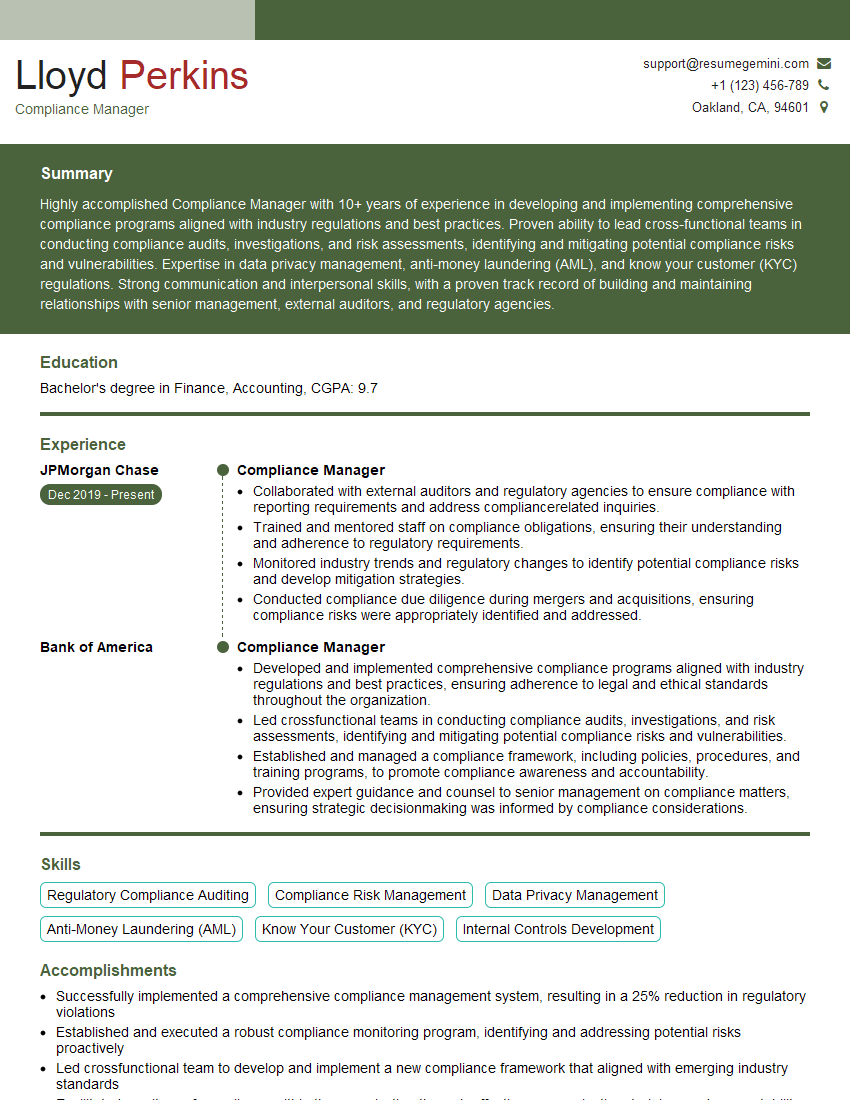
Compliance Manager Resume Sample
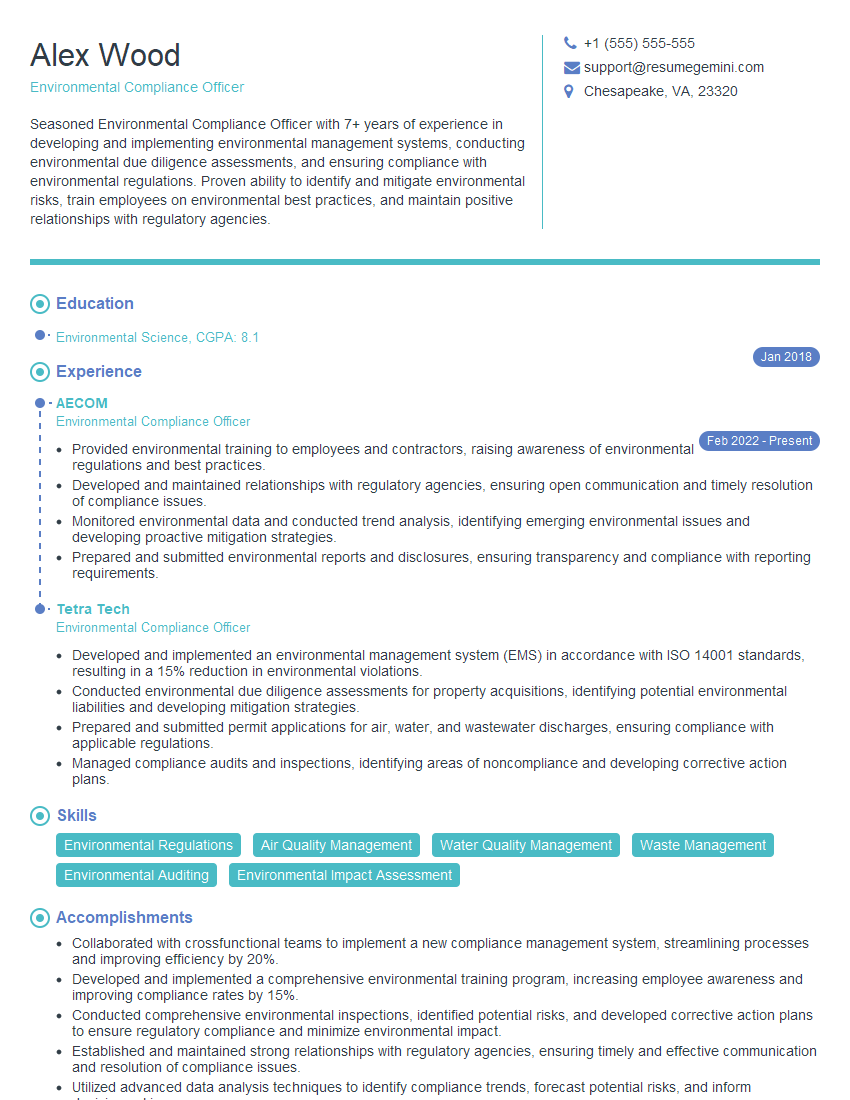
Environmental Compliance Officer Resume Sample
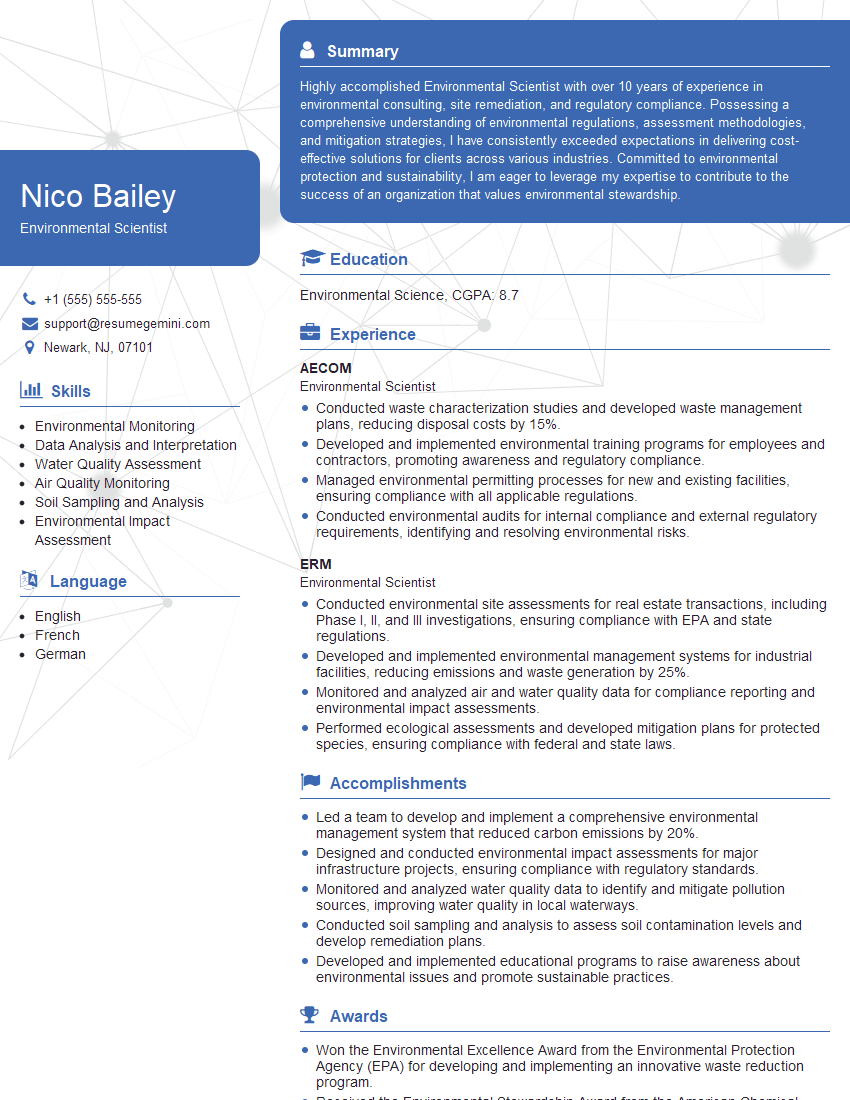
Environmental Scientist Resume Sample
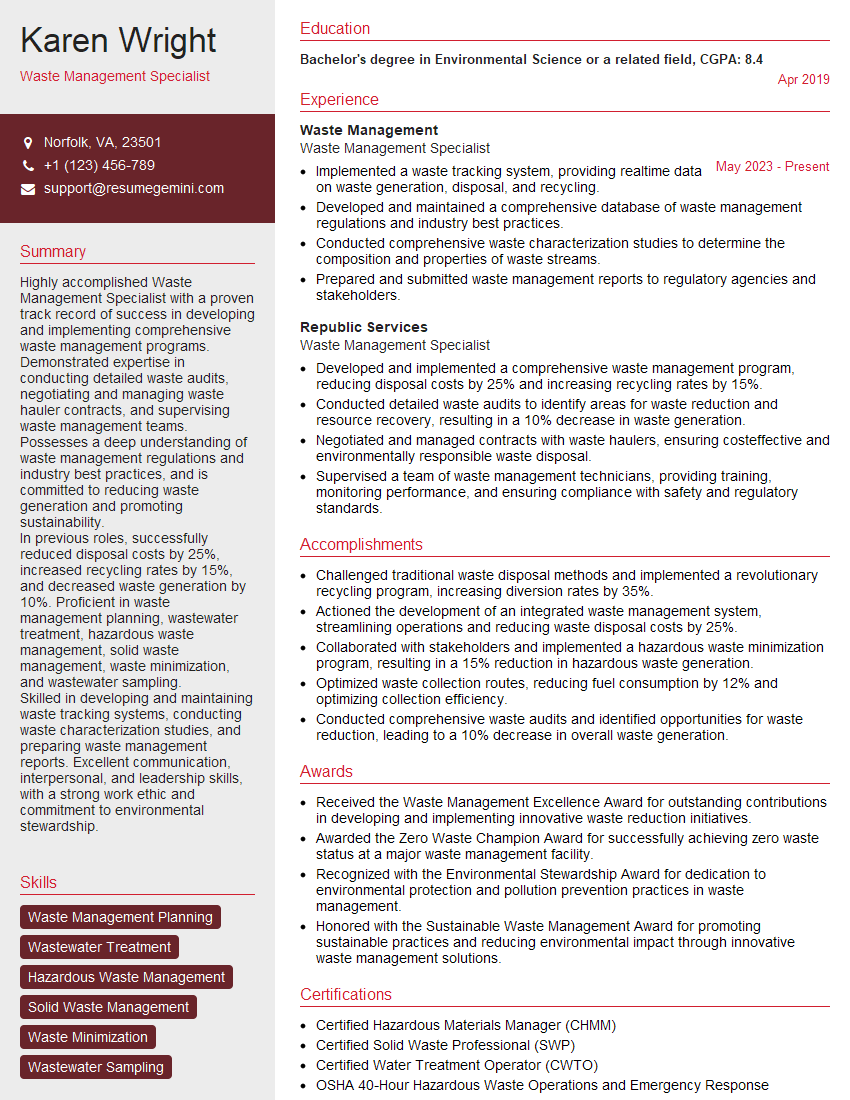
Waste Management Specialist Resume Sample
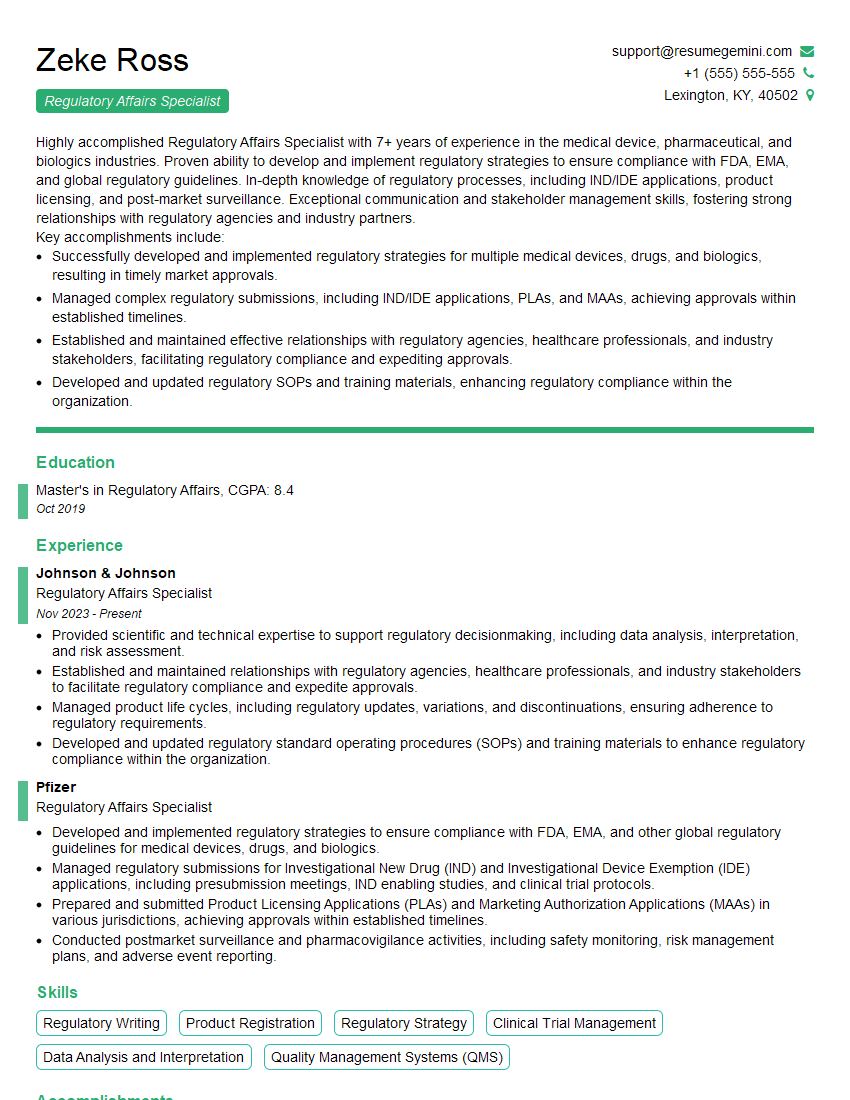
Regulatory Affairs Specialist Resume Sample

Sustainability Consultant Resume Sample
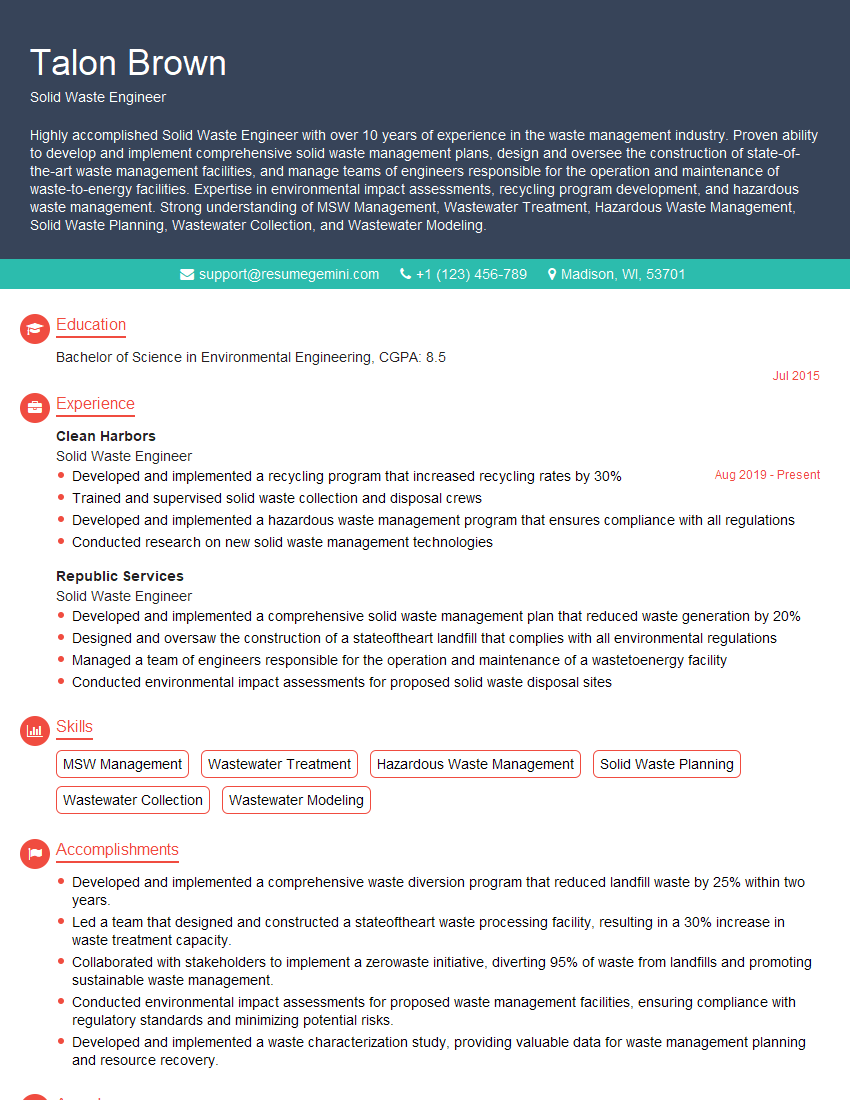
Solid Waste Engineer Resume Sample
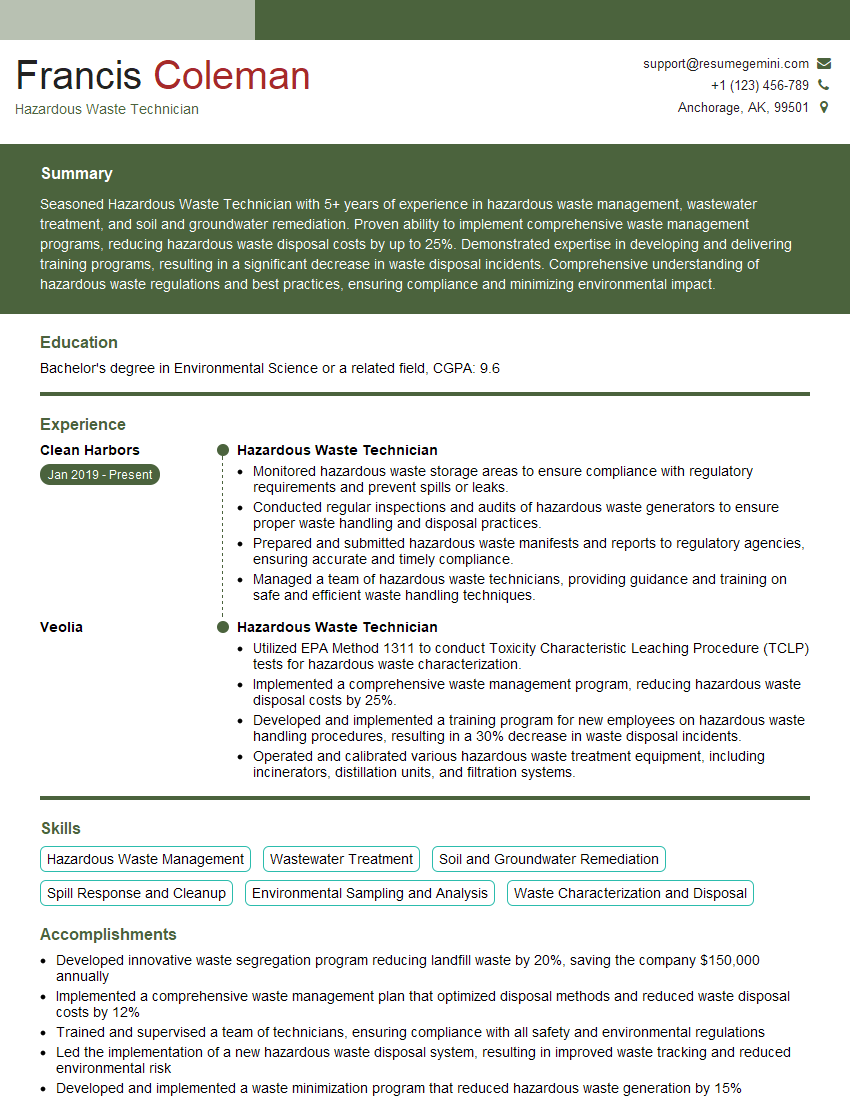
Hazardous Waste Technician Resume Sample
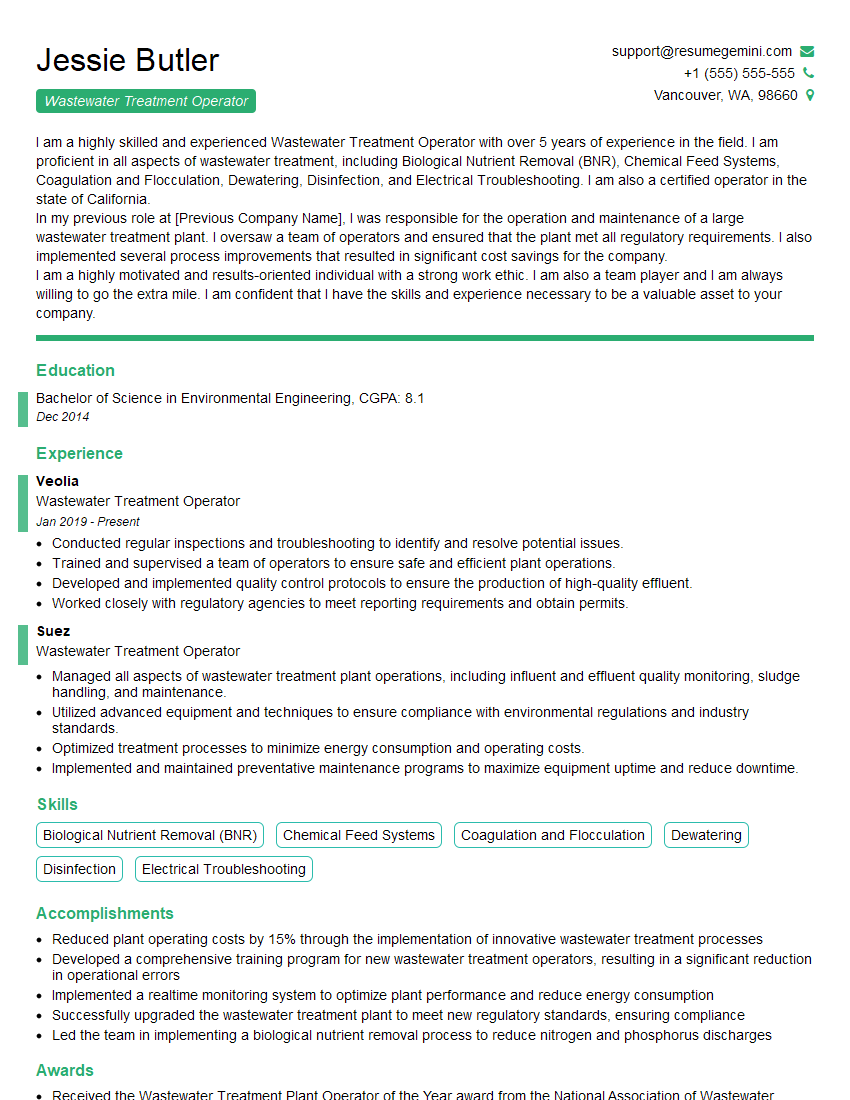
Wastewater Treatment Operator Resume Sample
Explore more articles
Users Rating of Our Blogs
Share Your Experience
We value your feedback! Please rate our content and share your thoughts (optional).
What Readers Say About Our Blog
good