Interviews are more than just a Q&A session—they’re a chance to prove your worth. This blog dives into essential Waste Reduction and Value Stream Mapping interview questions and expert tips to help you align your answers with what hiring managers are looking for. Start preparing to shine!
Questions Asked in Waste Reduction and Value Stream Mapping Interview
Q 1. Describe your experience with Value Stream Mapping.
Value Stream Mapping (VSM) is a lean manufacturing technique used to visually represent the flow of materials and information in a process. It’s like creating a blueprint of your process, highlighting both value-added and non-value-added activities. My experience encompasses numerous VSM projects across diverse industries, from automotive parts manufacturing to food processing. I’ve led workshops, facilitated team discussions to map current states, and then collaborated on future state maps to identify and implement improvements. A recent project involved mapping the production line for a medical device manufacturer, resulting in a 15% reduction in lead time and a 10% decrease in defects. I’m proficient in using both manual and software-based VSM tools.
Q 2. What are the seven wastes (muda) in Lean manufacturing?
The seven wastes, or muda, in Lean manufacturing are:
- Transportation: Unnecessary movement of materials or products.
- Inventory: Excess materials, work-in-progress (WIP), or finished goods.
- Motion: Unnecessary movements of people or equipment.
- Waiting: Idle time due to delays in the process.
- Overproduction: Producing more than is needed or before it’s needed.
- Over-processing: Performing more work than is necessary to meet customer requirements.
- Defects: Producing faulty products or services that require rework or scrap.
Think of it like a perfectly choreographed dance; each movement is purposeful, and nothing is wasted. Any deviation from this efficiency leads to these wastes.
Q 3. Explain how to identify and eliminate non-value-added activities in a process.
Identifying and eliminating non-value-added activities requires a systematic approach. First, you must clearly define what constitutes value from the customer’s perspective. Then, using a Value Stream Map, meticulously analyze each step in the process. Ask yourself, for each step: “Does this activity add value to the customer?” If the answer is no, it’s a candidate for elimination or improvement. For instance, if a step involves excessive paperwork or unnecessary inspections that don’t improve the product’s quality or functionality, it’s a non-value-added activity. Elimination can involve automation, process simplification, or even removing the step altogether. One example: I worked with a client where multiple approvals were required for a simple order. By streamlining the approval process, we reduced processing time by 50%.
Q 4. How do you measure the effectiveness of waste reduction initiatives?
Measuring the effectiveness of waste reduction initiatives requires quantifiable metrics. Key Performance Indicators (KPIs) should be established before implementing any changes. These might include:
- Lead time reduction: How much faster is the process now?
- Inventory reduction: How much less inventory is being held?
- Defect rate reduction: How many fewer defects are being produced?
- Throughput improvement: How much more product is being produced in a given time?
- Cost reduction: How much money has been saved?
Regular monitoring and data analysis are crucial to track progress and make adjustments as needed. Benchmarking against industry standards can also provide valuable insights into performance.
Q 5. What are the key elements of a successful Value Stream Map?
A successful Value Stream Map needs several key elements:
- Clear process boundaries: Defining the start and end points of the process.
- Accurate data: Using reliable data about process times, inventory levels, and defect rates.
- Visual representation: Using symbols and notations that clearly illustrate the flow of materials and information.
- Identification of value-added and non-value-added activities: Clearly differentiating between steps that add value to the customer and those that don’t.
- Data on lead time, cycle time, and inventory: Quantifying the performance of the process.
- Team involvement: Creating the map collaboratively with the people who perform the work ensures accuracy and buy-in.
Think of it as a visual story of your process, complete with all the details needed to understand and improve it.
Q 6. How do you prioritize improvement opportunities in a Value Stream Map?
Prioritizing improvement opportunities in a VSM involves a combination of quantitative and qualitative analysis. Focus on areas with the highest impact. This often involves calculating the total lead time and identifying bottlenecks. The Pareto principle (80/20 rule) is frequently applied – 80% of the problems often stem from 20% of the causes. Areas with significant lead times, high defect rates, or large inventory levels are prime targets for improvement. A simple approach is to rank opportunities based on their potential impact (reduction in lead time, cost savings, etc.) and feasibility of implementation. Use a matrix or scoring system to rank and prioritize these opportunities.
Q 7. Describe your experience with different Value Stream Mapping techniques.
My experience includes using various VSM techniques, including:
- Current State Mapping: Documenting the existing process as-is.
- Future State Mapping: Designing the improved process after identifying and addressing waste.
- Material and Information Flow Mapping: Visualizing both the physical flow of materials and the flow of information.
- Process Mapping: A simplified version focused on specific steps within a process.
- Detailed VSM: Incorporating detailed data for more in-depth analysis.
The choice of technique depends on the complexity of the process and the level of detail required. I adapt my approach based on the specific needs of each project. For example, a simple process might only need process mapping, whereas a complex manufacturing line may require a detailed VSM with material and information flow analysis.
Q 8. How do you handle resistance to change during process improvement projects?
Resistance to change is a common hurdle in process improvement projects. It stems from fear of the unknown, loss of control, or perceived extra workload. To overcome this, I employ a multi-pronged approach focusing on communication, collaboration, and demonstrating value.
- Proactive Communication: I start by clearly explaining the why behind the changes, emphasizing the benefits for the team and the organization. This includes demonstrating how the improvements will streamline their work, reduce wasted effort, and ultimately improve their work life.
- Collaborative Approach: I actively involve the team in the process. This might involve brainstorming sessions, feedback mechanisms, and joint problem-solving. Making them stakeholders rather than just recipients of change is crucial. For instance, I might ask the team to identify pain points in the current process as a starting point for improvement.
- Pilot Projects and Gradual Rollout: Instead of a complete overhaul, I often suggest starting with a pilot project to test changes on a smaller scale. This allows for adjustments based on feedback and demonstrates the improvements in a less threatening way. A successful pilot project then helps build confidence and buy-in for broader implementation.
- Demonstrating Value: Using data and metrics, I showcase the tangible benefits of the changes. Before and after comparisons can powerfully illustrate the positive impact on efficiency and waste reduction. For example, if we reduce lead time by 20%, I’ll make sure everyone understands how that translates to more time for value-added activities.
Addressing concerns openly and honestly is paramount. By actively listening and addressing their worries, I foster trust and create an environment conducive to change.
Q 9. What is the role of data analysis in Value Stream Mapping?
Data analysis is the backbone of effective Value Stream Mapping. It provides the objective evidence needed to identify waste, bottlenecks, and areas for improvement. Without data, the map becomes an opinion, not a fact-based representation of the process.
- Cycle Time Measurement: Data on the time it takes to complete each step in the process is essential. This highlights bottlenecks and areas where cycle times are excessively long. For example, tracking the time spent waiting for materials or approvals reveals significant waste.
- Inventory Levels: Analyzing inventory levels (work-in-progress, raw materials, finished goods) reveals potential issues like overstocking or shortages. This data directly impacts the map’s representation of inventory holding costs.
- Defect Rates: Data on the number and types of defects helps pinpointing quality problems and their root causes. These areas are often visually represented in the map using a variety of symbols.
- Value-Added vs. Non-Value-Added Time: This is perhaps the most crucial data. It differentiates between time spent on activities that directly add value to the customer (e.g., manufacturing) and activities that don’t (e.g., waiting, rework). This data is critical for determining improvement priorities.
Using tools like spreadsheets, databases, or dedicated VSM software, I compile and analyze this data to create a truly accurate and insightful map.
Q 10. Explain the difference between a current state and future state Value Stream Map.
The current state Value Stream Map depicts the as-is process – how things are currently operating. The future state map depicts the to-be process – how the process will function after implemented improvements. Think of it like a ‘before’ and ‘after’ photo.
- Current State Map: This map highlights existing processes, bottlenecks, inventory levels, and waste. It’s a factual representation of the current workflow, often including metrics such as lead times, cycle times, and defect rates. It often reveals areas with significant inefficiencies.
- Future State Map: This map showcases the envisioned improved process. It reflects the proposed changes after addressing the identified bottlenecks and wastes from the current state map. It’s a visual representation of how the process should operate, once the improvements have been implemented. It should include projected improvements in key metrics.
The comparison between these two maps serves as a powerful communication tool, demonstrating the potential impact of process improvements.
Q 11. How do you ensure accuracy and consistency in Value Stream Mapping?
Accuracy and consistency are crucial for the usefulness of a Value Stream Map. To ensure this, I follow a rigorous approach:
- Team Collaboration: The mapping process should involve individuals directly involved in the process. This ensures accurate representation of the current reality and avoids assumptions.
- Standardized Symbols and Notation: Using a consistent set of symbols and notation (e.g., those used in Lean methodologies) ensures clarity and prevents ambiguity. This standardisation aids communication and facilitates comparison of different maps.
- Data Verification: All data included in the map should be verified through multiple sources, such as observation, data logs, or interviews, to avoid errors. Using documented data allows for validation of the map’s accuracy.
- Regular Updates: VSMs aren’t static documents. As the process evolves, the map needs updating to reflect the changes and ensure its ongoing accuracy. Regular reviews and updates are essential.
- Documenting Assumptions and Limitations: Clearly stating any assumptions or limitations of the map enhances transparency and helps avoid misinterpretations. This builds trust and shows commitment to accuracy.
By rigorously adhering to these practices, the map’s reliability is enhanced, and it serves as a valuable tool for improvement.
Q 12. What software or tools have you used for Value Stream Mapping?
Over the years, I’ve used several software and tools for Value Stream Mapping. My experience includes:
- Microsoft Excel and Visio: For simpler processes, spreadsheets and drawing software are often sufficient. Excel can handle the data analysis, while Visio provides the visual mapping capabilities.
- Lean tools such as Value Stream Mapping software: Dedicated VSM software packages (various commercial options exist) offer features like automated calculations, process simulation, and collaborative editing. These tools are particularly helpful for complex processes.
- Whiteboards and Sticky Notes: For rapid-fire brainstorming and initial mapping sessions, a physical whiteboard is invaluable for collaborative visualization and flexibility.
The choice of tool depends heavily on the complexity of the process, team preferences, and available resources.
Q 13. Describe your experience with Kaizen events.
Kaizen events, or Kaizen workshops, are short, focused improvement projects involving a cross-functional team. I’ve led numerous Kaizen events to address specific process bottlenecks identified during Value Stream Mapping.
My approach typically involves these steps:
- Defining the Scope: Selecting a specific area for improvement, usually a bottleneck or area with significant waste identified in the VSM.
- Team Formation: Assembling a cross-functional team with expertise relevant to the chosen area.
- Data Gathering and Analysis: Reviewing relevant data from the VSM and gathering additional information to support the improvement efforts.
- Brainstorming and Idea Generation: Facilitating brainstorming sessions to identify potential solutions.
- Solution Selection and Implementation: Selecting the most promising solution and developing a plan for implementation.
- Monitoring and Evaluation: Tracking the implemented changes to assess their effectiveness and make further refinements.
For instance, during one Kaizen event, we successfully reduced the lead time for a critical product by 40% by simplifying a complex approval process identified as a bottleneck in the VSM. The event’s focus and structured approach proved highly effective.
Q 14. How do you use Value Stream Mapping to support continuous improvement?
Value Stream Mapping is not a one-time exercise; it’s a critical tool for supporting continuous improvement. It provides a dynamic visual representation of the process that can be revisited and updated regularly.
- Regular Reviews: The VSM should be reviewed periodically (e.g., monthly or quarterly) to track progress, identify new bottlenecks, and update metrics.
- Tracking Key Metrics: Monitoring key metrics such as lead time, cycle time, and defect rates provides insights into the effectiveness of improvements and highlights areas needing further attention.
- Using the Map for Communication: The VSM serves as a powerful communication tool, providing a shared understanding of the process and progress towards improvement goals.
- Facilitating Kaizen Events: The VSM pinpoints specific areas for Kaizen events, ensuring focus on high-impact improvements.
- Promoting a Culture of Continuous Improvement: By making the VSM a living document and engaging the team in its use, a culture of continuous improvement is fostered.
In essence, the VSM acts as a roadmap for continuous improvement, guiding the team towards achieving operational excellence.
Q 15. What are some common challenges in implementing Value Stream Mapping?
Implementing Value Stream Mapping (VSM) can present several challenges. One major hurdle is resistance to change. People are often comfortable with existing processes, even if inefficient. Overcoming this requires strong leadership, clear communication of the benefits of VSM, and active engagement of all stakeholders.
Another common challenge is data collection. Accurate data is the lifeblood of effective VSM, but gathering it can be time-consuming and require dedicated resources. Incomplete or inaccurate data leads to flawed maps and ineffective improvements.
Lack of defined roles and responsibilities is another frequent problem. Without clear ownership of specific tasks and accountability, projects can lose momentum and fail to achieve their objectives.
Finally, lack of management support can cripple VSM initiatives. If leadership isn’t fully committed to the process and doesn’t allocate necessary resources, the effort will likely fail. This can manifest in insufficient time allocated for team members to participate or a reluctance to implement changes identified through VSM.
Career Expert Tips:
- Ace those interviews! Prepare effectively by reviewing the Top 50 Most Common Interview Questions on ResumeGemini.
- Navigate your job search with confidence! Explore a wide range of Career Tips on ResumeGemini. Learn about common challenges and recommendations to overcome them.
- Craft the perfect resume! Master the Art of Resume Writing with ResumeGemini’s guide. Showcase your unique qualifications and achievements effectively.
- Don’t miss out on holiday savings! Build your dream resume with ResumeGemini’s ATS optimized templates.
Q 16. How do you measure the ROI of Value Stream Mapping projects?
Measuring the ROI of Value Stream Mapping projects requires a multi-faceted approach. We can’t just look at the direct costs of the VSM project itself; we need to quantify the improvements realized. This typically involves comparing pre- and post-VSM metrics.
For example, we might measure reduction in lead time (the time it takes to complete a process), reduction in inventory (reducing storage costs and waste), and improvement in defect rates (lowering costs associated with rework and scrap). These improvements translate into direct cost savings which, when compared to the cost of the VSM project, provide a clear ROI calculation.
We also consider indirect benefits, such as improved employee morale (leading to reduced turnover), enhanced customer satisfaction (potentially leading to increased sales), and improved quality (leading to better reputation). These are harder to quantify directly but are extremely valuable and should be factored into the overall assessment of ROI. A well-structured cost-benefit analysis can illuminate this.
Q 17. What metrics do you use to track waste reduction progress?
Tracking waste reduction progress requires a suite of metrics tailored to the specific process. However, some commonly used metrics include:
- Lead Time Reduction: Measuring the time it takes to complete a process from start to finish. A shorter lead time indicates improved efficiency.
- Inventory Reduction: Tracking the reduction in raw materials, work-in-progress, and finished goods. Less inventory means less capital tied up and reduced storage costs.
- Defect Rate: Monitoring the number of defective products or services produced. Lower defect rates translate into cost savings from rework and improved customer satisfaction.
- Cycle Time: The time it takes to complete a single unit of work. Reducing cycle time is a crucial indicator of efficiency.
- Throughput: The rate at which a process produces output. Higher throughput suggests improved efficiency.
- Operational Efficiency: A broad measure encompassing multiple factors such as lead time, defect rate, and inventory turnover.
These metrics, when tracked over time, provide a clear picture of progress in waste reduction efforts. Regular review of these metrics allows for course correction and ensures the VSM initiative remains on track.
Q 18. Describe a situation where you successfully identified and eliminated waste in a process.
In a previous role at a manufacturing plant, we used VSM to analyze the assembly line for a key product. Our initial map revealed significant bottlenecks and excessive inventory buildup between several workstations. The process involved multiple manual handoffs, which created delays and opportunities for errors.
Through VSM, we identified muda (waste) in the form of: Transportation (excessive movement of parts), Inventory (large piles of parts waiting for processing), and Motion (unnecessary movements by workers).
To eliminate this waste, we implemented a series of changes: We rearranged the workstations to optimize the flow of materials, implemented a Kanban system to manage inventory levels, and trained workers on standardized work procedures to minimize unnecessary motion.
The results were impressive. Lead time reduced by 30%, inventory levels dropped by 40%, and defect rates decreased by 25%. This translated to significant cost savings and improved customer satisfaction.
Q 19. How do you involve stakeholders in Value Stream Mapping initiatives?
Involving stakeholders is crucial for the success of Value Stream Mapping initiatives. It’s not just about presenting the finished map; it’s about active participation throughout the entire process.
We start by clearly communicating the objectives of the VSM project and its potential benefits to each stakeholder group. This helps to garner support and buy-in from the outset. Then, we ensure representation from all relevant departments in the VSM team, including production, engineering, quality, and even customer service. This ensures diverse perspectives are considered and potential issues are identified proactively.
We use interactive workshops and visual tools like whiteboards and sticky notes to facilitate group participation. This allows for open discussions, collaborative brainstorming, and the sharing of expertise. We encourage active feedback and iterate on the map based on the team’s input.
Finally, we ensure that stakeholders are involved in implementing and monitoring the changes identified by the VSM. This ensures ownership and accountability for the improvements.
Q 20. Explain the relationship between Value Stream Mapping and Six Sigma.
Value Stream Mapping and Six Sigma are complementary methodologies focused on process improvement. While they share the common goal of eliminating waste and enhancing efficiency, their approaches differ.
Six Sigma is a data-driven methodology focused on reducing variation and defects in processes. It uses statistical tools like DMAIC (Define, Measure, Analyze, Improve, Control) to identify and eliminate root causes of variation.
Value Stream Mapping provides a visual representation of the entire process flow, highlighting value-added and non-value-added activities. It helps to identify bottlenecks and areas for improvement.
The relationship can be seen as follows: VSM provides a high-level overview of the process, identifying areas for improvement. Six Sigma then provides the tools and techniques to systematically analyze and improve those specific areas. In practice, they often work together; VSM identifies the problem areas, and Six Sigma provides the tools to solve them. It’s a powerful combination.
Q 21. How do you use Value Stream Mapping to improve customer satisfaction?
Value Stream Mapping directly contributes to improved customer satisfaction by focusing on aspects of the process that impact the customer experience.
By mapping the entire process from the customer’s perspective, we identify areas where delays, errors, or other inefficiencies negatively affect the customer. For example, a long lead time, late deliveries, or high defect rates directly impact customer satisfaction.
VSM allows us to pinpoint these issues and develop solutions to address them. By streamlining the process, reducing lead time, improving quality, and ensuring on-time delivery, we enhance the customer experience. This leads to higher customer satisfaction, increased loyalty, and a stronger competitive advantage.
Furthermore, understanding the customer’s perspective through VSM allows companies to align their internal processes with their customer’s needs and expectations, enhancing overall customer value.
Q 22. Describe your experience with 5S methodology.
5S is a methodology focused on workplace organization and efficiency. It’s an acronym for five Japanese words: Seiri (Sort), Seiton (Set in Order), Seiso (Shine), Seiketsu (Standardize), and Shitsuke (Sustain). In my experience, implementing 5S has consistently yielded significant improvements in waste reduction.
Seiri (Sort): This involves identifying and removing unnecessary items from the workspace. Think of it as decluttering – getting rid of anything not needed for daily operations. In a manufacturing setting, this could mean removing obsolete tools or parts.
Seiton (Set in Order): Once unnecessary items are removed, the remaining items are organized for easy access and use. This might involve implementing a visual management system, like shadow boards for tools or color-coded storage bins for parts.
Seiso (Shine): This step focuses on cleaning the workplace and maintaining a high standard of cleanliness. Regular cleaning helps identify potential problems (leaks, loose connections) before they escalate.
Seiketsu (Standardize): This involves creating standardized procedures for maintaining the first three S’s. Checklists and visual aids are crucial here to ensure everyone understands and follows the established processes.
Shitsuke (Sustain): This is arguably the most crucial aspect. It’s about developing a culture where 5S is not just a program but a way of working. Regular audits, employee engagement, and continuous improvement are essential for sustained success. I’ve found that regular kaizen events (continuous improvement meetings) are extremely effective for maintaining 5S over time.
For example, in a previous role at a packaging facility, implementing 5S reduced material waste by 15% and improved production efficiency by 10% through streamlined workflows and reduced search times for materials.
Q 23. How do you ensure the sustainability of improvements achieved through Value Stream Mapping?
Sustaining improvements from Value Stream Mapping (VSM) requires a multi-faceted approach. It’s not enough to just create a map; you need to embed the changes into the organization’s culture and processes.
Standardization: Document all improvements clearly and create standard operating procedures (SOPs). This ensures that the improvements are consistently followed even if team members change.
Training and Communication: Train all affected personnel on the new processes and communicate the rationale behind the changes. Clearly explaining the benefits helps with buy-in and commitment.
Monitoring and Measurement: Establish key performance indicators (KPIs) to track the success of the improvements. Regular monitoring allows for early detection of issues and quick corrective action.
Continuous Improvement (Kaizen): Integrate continuous improvement practices into daily routines. Regularly review the VSM, identify areas for further optimization, and implement small, incremental changes.
Leadership Support: Secure commitment and support from leadership. This ensures that resources are allocated to sustain improvements and that the organization fosters a culture of continuous improvement.
For instance, after a VSM project in a logistics company that reduced delivery times, we instituted daily huddles to review on-time delivery rates, and created visual dashboards for all employees to track progress. This ensured that improvements were not just implemented but also maintained and improved over time.
Q 24. What are the limitations of Value Stream Mapping?
While Value Stream Mapping is a powerful tool, it does have limitations. Some key limitations include:
Complexity: Mapping highly complex processes can be challenging and time-consuming. The sheer volume of data and interdependencies can make it difficult to create a comprehensive and accurate map.
Subjectivity: The process of identifying and quantifying waste can be subjective. Different individuals may have varying interpretations of what constitutes waste.
Resistance to Change: Implementing changes identified through VSM can face resistance from employees who are comfortable with existing processes. This requires careful change management and communication.
Data Accuracy: The accuracy of the VSM depends on the reliability of the data used. Inaccurate data can lead to inaccurate analysis and ineffective improvements.
Limited Scope: VSM often focuses on a specific process or product line, neglecting the broader organizational context. Improvements in one area may negatively impact other areas.
It’s crucial to acknowledge these limitations and use VSM as one tool among many in a comprehensive improvement strategy.
Q 25. How would you approach Value Stream Mapping in a highly complex process?
Mapping a highly complex process requires a phased approach and potentially the use of additional tools.
Break Down the Process: Divide the complex process into smaller, more manageable subprocesses. This makes it easier to map each subprocess individually and then integrate them into a larger map.
Prioritize Subprocesses: Identify the most critical or high-impact subprocesses for mapping first. This allows for focusing resources on the areas that will yield the greatest returns.
Use Multiple Mapping Techniques: Supplement VSM with other tools, such as process flowcharts or swim lane diagrams, to capture detailed information about the process.
Data Aggregation: Use data aggregation techniques to summarize and simplify large amounts of data. This helps to make the map easier to understand and interpret.
Iterative Approach: Use an iterative approach, refining the map as more data becomes available and as understanding of the process deepens.
Technology Assistance: Consider using VSM software to manage the complexity of data and diagrams.
For example, when mapping the entire order fulfillment process of a large e-commerce company, we began by mapping the order processing subprocess, then the warehousing subprocess, and finally integrated those into a complete VSM of the entire fulfillment process.
Q 26. Explain the concept of takt time and its importance in Value Stream Mapping.
Takt time is the rate at which a company must produce to meet customer demand. It’s calculated by dividing the available production time by the customer demand. Takt Time = Available Production Time / Customer Demand
In VSM, takt time is crucial for aligning production with customer demand. It serves as a benchmark for process improvement, highlighting areas where production is slower than the customer’s pace. By identifying bottlenecks and non-value-added activities that cause delays, we can improve the process to meet the takt time and reduce waste.
For example, if a customer needs 100 units per day and the available production time is 8 hours (480 minutes), the takt time is 4.8 minutes per unit (480 minutes / 100 units). Any process step taking longer than 4.8 minutes represents a bottleneck and a potential area for improvement.
Q 27. How do you integrate Value Stream Mapping with other process improvement methodologies?
Value Stream Mapping integrates seamlessly with other process improvement methodologies. Here are some examples:
Lean Manufacturing: VSM is a core tool in Lean, helping identify and eliminate waste (muda) in the production process. It complements other Lean tools like 5S, Kaizen, and Kanban.
Six Sigma: VSM can be used to identify root causes of defects and variation within a process, aligning well with Six Sigma’s DMAIC (Define, Measure, Analyze, Improve, Control) methodology. The data gathered during VSM can be used to inform Six Sigma projects.
Theory of Constraints (TOC): VSM helps pinpoint bottlenecks, which are central to TOC. By identifying and addressing the constraints revealed by VSM, organizations can optimize their entire system.
Agile Development: In software development, VSM can visualize the workflow, helping identify bottlenecks and improve the efficiency of software delivery. This aligns well with agile principles of iterative development and continuous improvement.
In practice, I’ve often combined VSM with Kaizen events to collaboratively identify and eliminate waste in a specific process. The VSM provided a visual representation of the process, while the Kaizen event facilitated brainstorming and implementation of improvements.
Q 28. Describe your experience with using Value Stream Mapping to improve safety.
Value Stream Mapping is a powerful tool for improving safety by visualizing potential hazards and inefficiencies that contribute to accidents.
Identifying Safety Risks: By mapping the process, we can identify steps that pose safety risks. These might be areas with heavy machinery, hazardous materials, or ergonomically poor workspaces.
Reducing Unnecessary Movement: A poorly designed process can lead to unnecessary movement, increasing the chances of accidents. VSM helps optimize workflows, minimizing unnecessary movement and reducing the risk of slips, trips, or falls.
Improving Ergonomics: VSM can be used to assess the ergonomics of different tasks. Identifying and redesigning workspaces to improve ergonomics can prevent musculoskeletal injuries.
Implementing Safety Controls: The VSM map can help determine where specific safety controls (e.g., machine guards, warning signs, personal protective equipment) are needed.
Enhancing Communication and Training: The VSM provides a visual aid for safety training, enabling better communication of safety procedures and risk mitigation strategies.
In one project, a VSM revealed a significant risk of injury associated with manual handling of heavy boxes in a warehouse. By redesigning the layout and incorporating conveyors and lift equipment, we significantly reduced the number of manual handling incidents.
Key Topics to Learn for Waste Reduction and Value Stream Mapping Interview
- Waste Identification and Classification: Understanding the 7 Muda (types of waste) – Transportation, Inventory, Motion, Waiting, Overproduction, Over-processing, Defects – and their application in various industry settings. Practical application includes analyzing a process flow to pinpoint areas of waste.
- Value Stream Mapping (VSM) Methodology: Mastering the creation and interpretation of VSM diagrams, including current state and future state mapping. Practical application involves using VSM to visualize a process, identify bottlenecks, and propose improvements.
- Lean Principles and Kaizen: Understanding the core principles of Lean manufacturing and the iterative improvement methodology of Kaizen. Practical application involves proposing Kaizen events to address identified waste and optimize processes.
- Data Analysis and Metrics: Using key performance indicators (KPIs) to measure waste reduction efforts and track progress. Practical application includes calculating efficiency gains and return on investment (ROI) from waste reduction initiatives.
- 5S Methodology: Implementing 5S (Sort, Set in Order, Shine, Standardize, Sustain) to create a more organized and efficient work environment. Practical application involves leading a 5S implementation project within a team.
- Problem-Solving Techniques: Applying root cause analysis (RCA) tools like the 5 Whys and fishbone diagrams to identify the underlying causes of waste. Practical application involves leading a root cause analysis to resolve recurring issues in a process.
- Software Tools for VSM: Familiarity with software applications used for creating and analyzing value stream maps. This could include specific software names or general knowledge of digital tools used in this field.
Next Steps
Mastering Waste Reduction and Value Stream Mapping opens doors to exciting career opportunities in operations management, process improvement, and lean manufacturing. To maximize your job prospects, create a compelling and ATS-friendly resume that showcases your skills and experience. ResumeGemini is a trusted resource that can help you build a professional resume tailored to the specific requirements of your target roles. Examples of resumes tailored to Waste Reduction and Value Stream Mapping are available to help you craft a winning application.
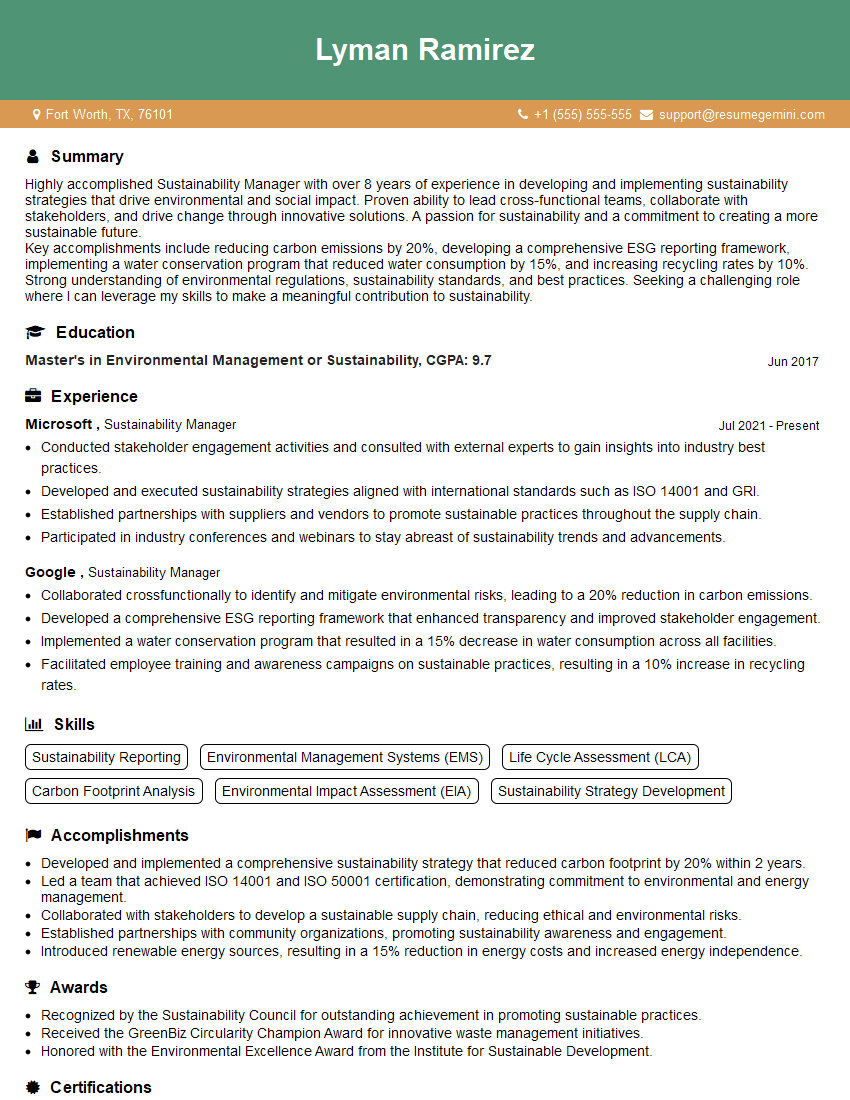
Sustainability Manager Resume Sample
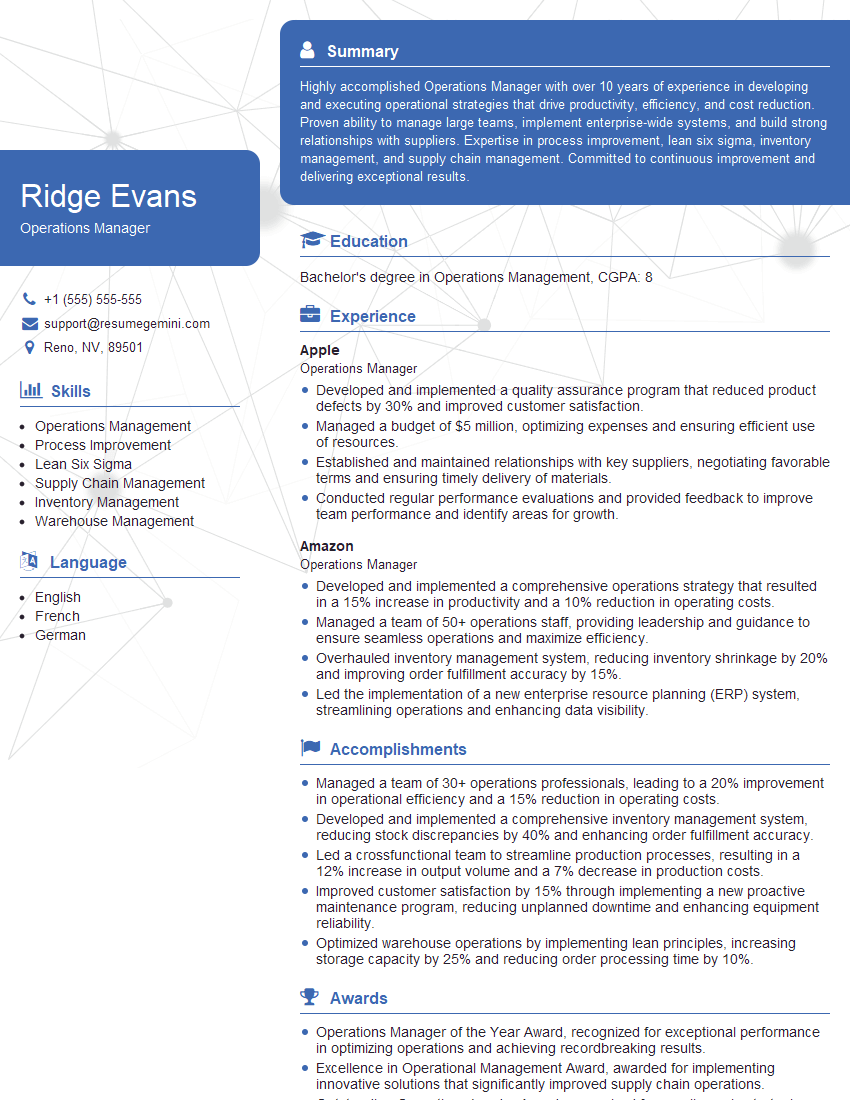
Operations Manager Resume Sample
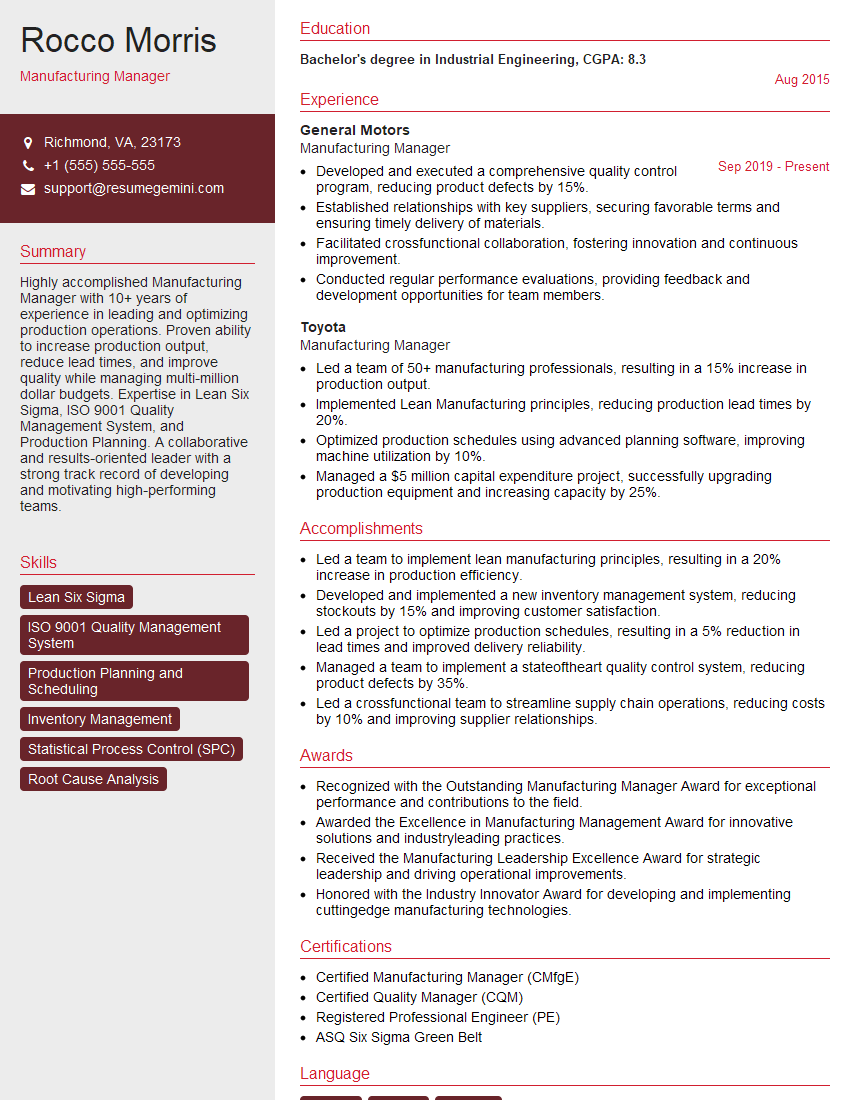
Manufacturing Manager Resume Sample
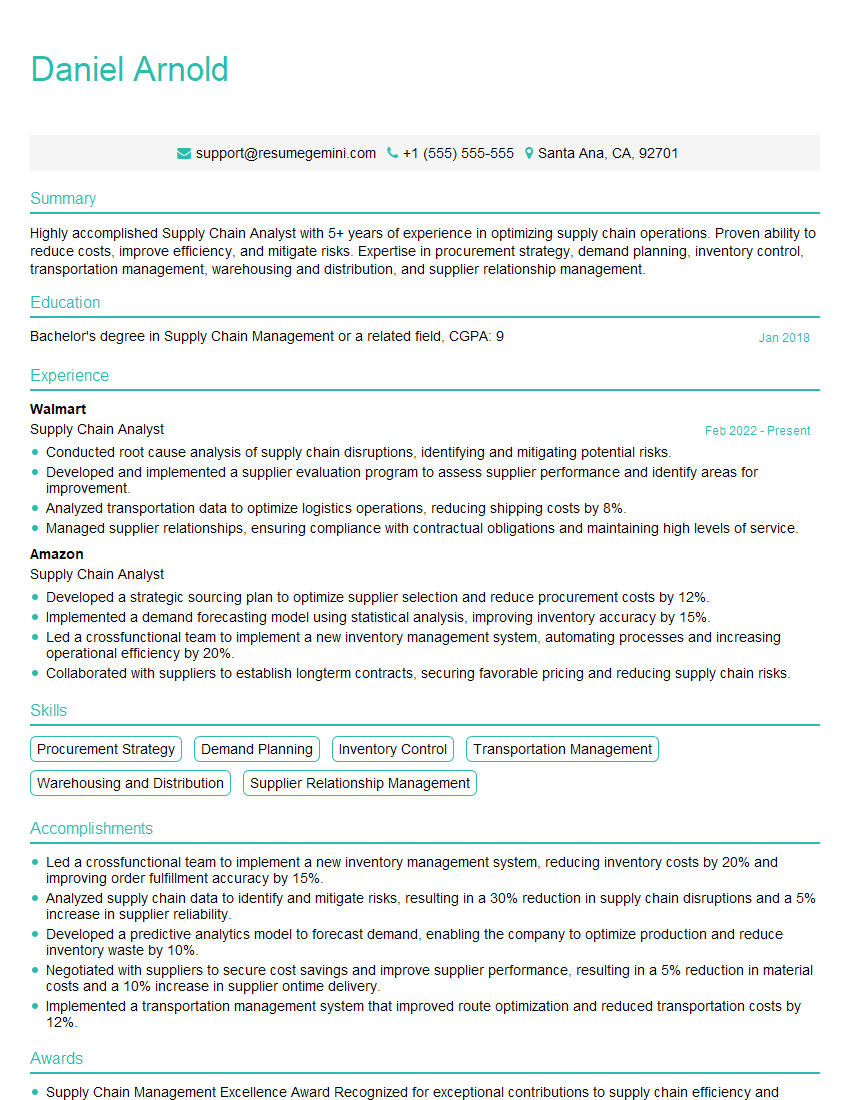
Supply Chain Analyst Resume Sample
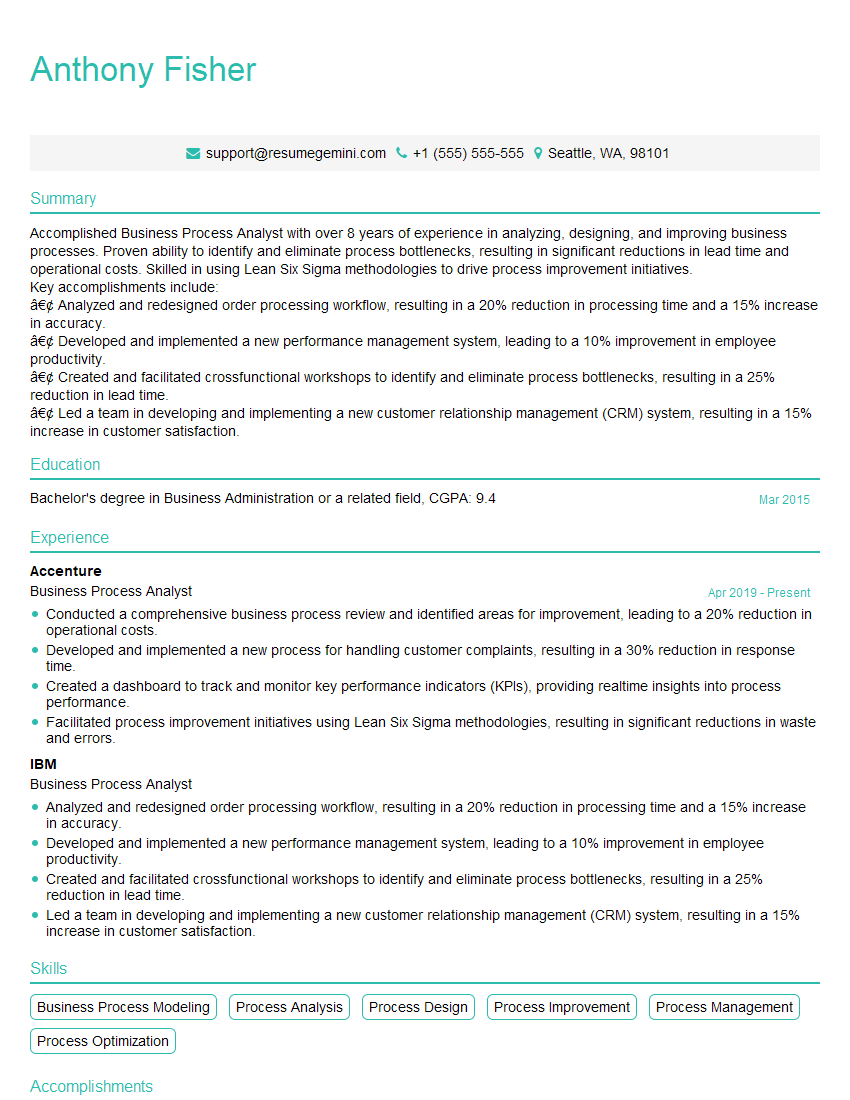
Business Process Analyst Resume Sample

Operations Research Analyst Resume Sample
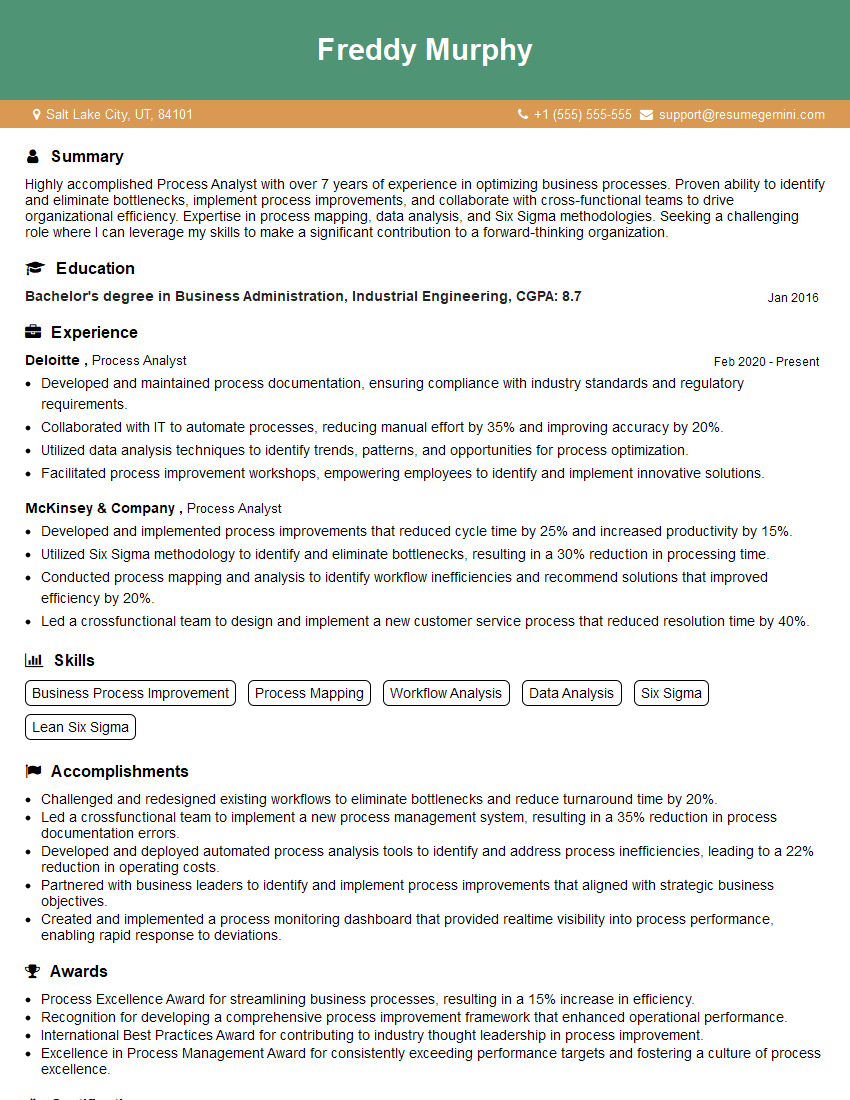
Process Analyst Resume Sample
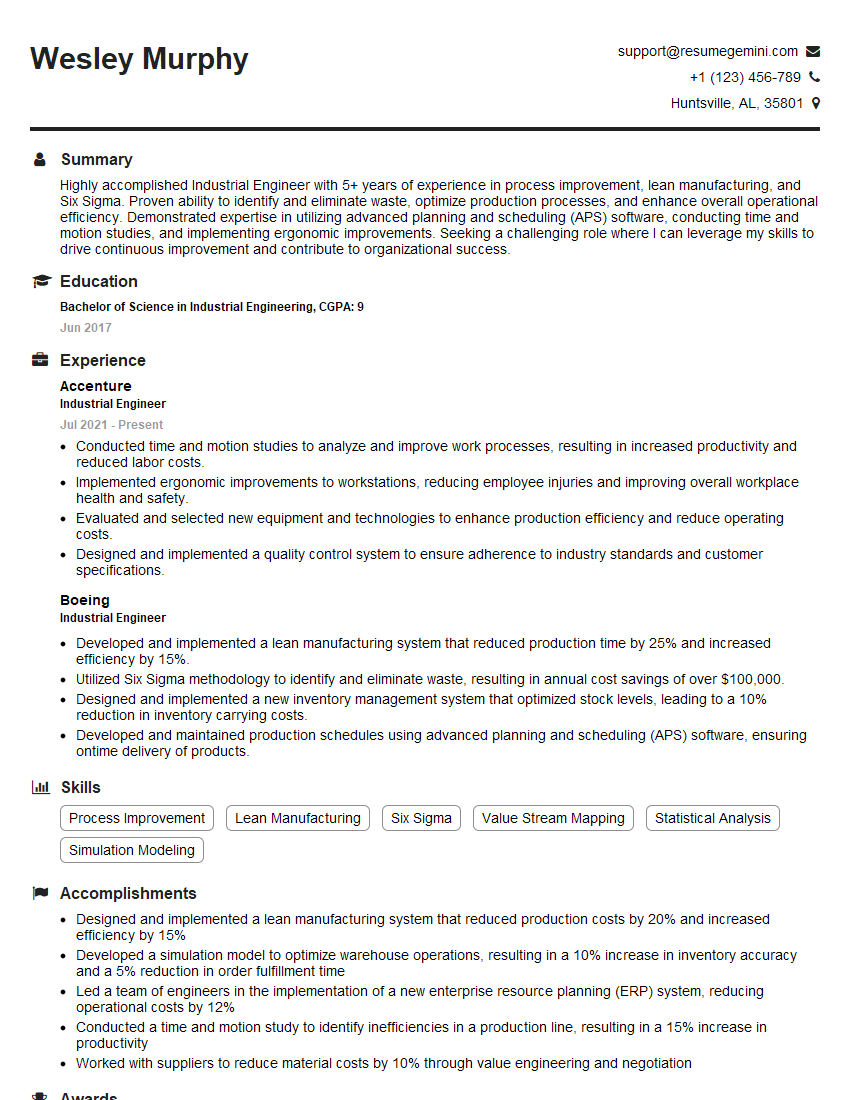
Industrial Engineer Resume Sample
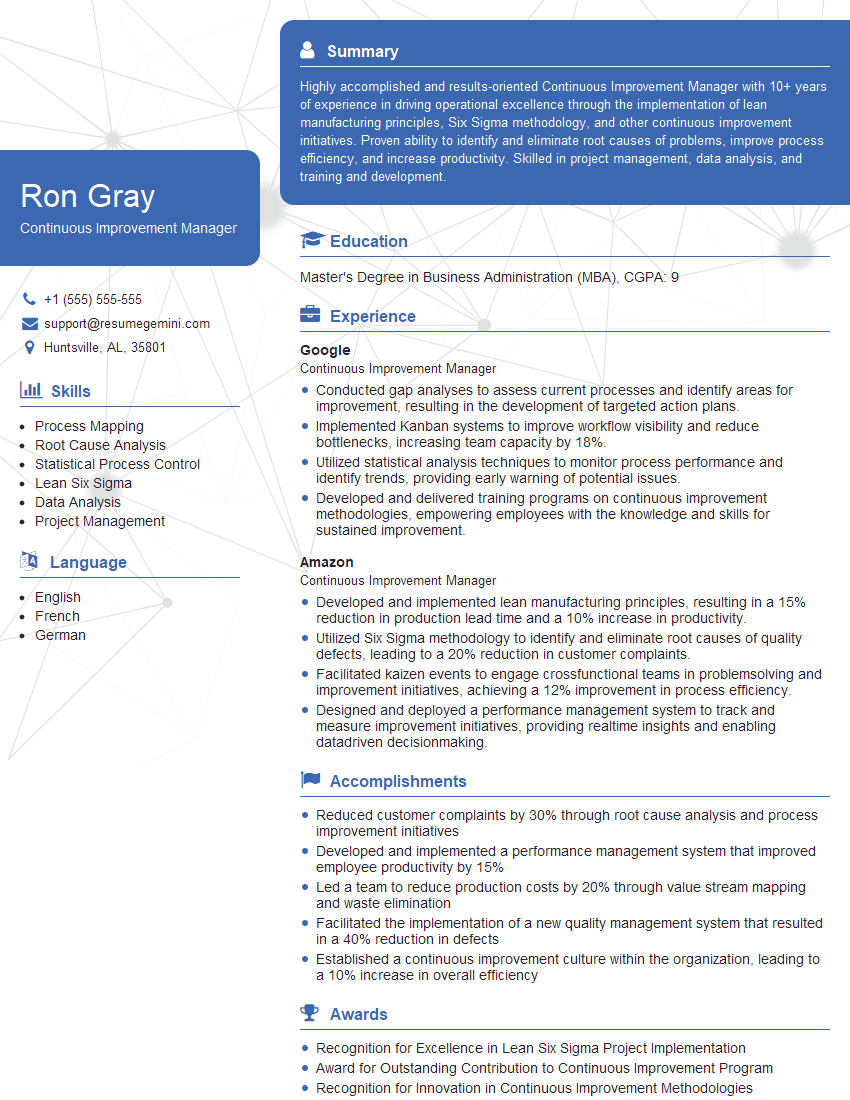
Continuous Improvement Manager Resume Sample
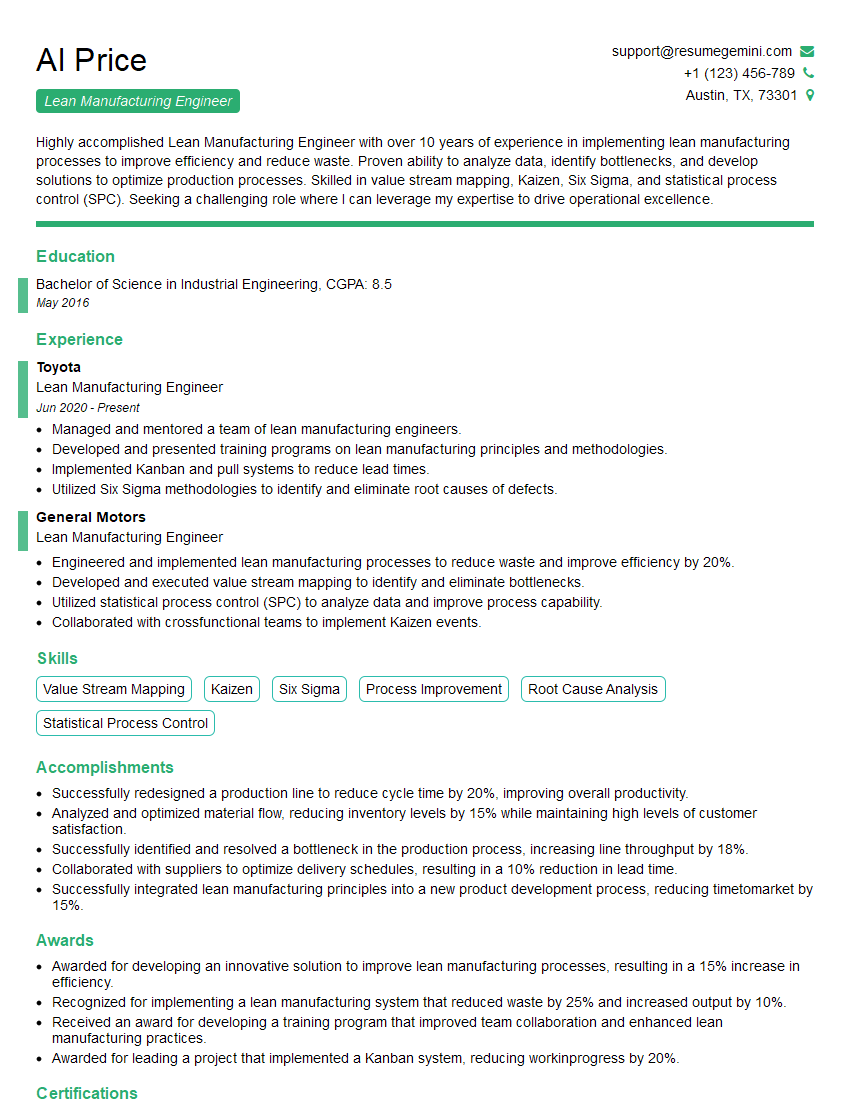
Lean Manufacturing Engineer Resume Sample
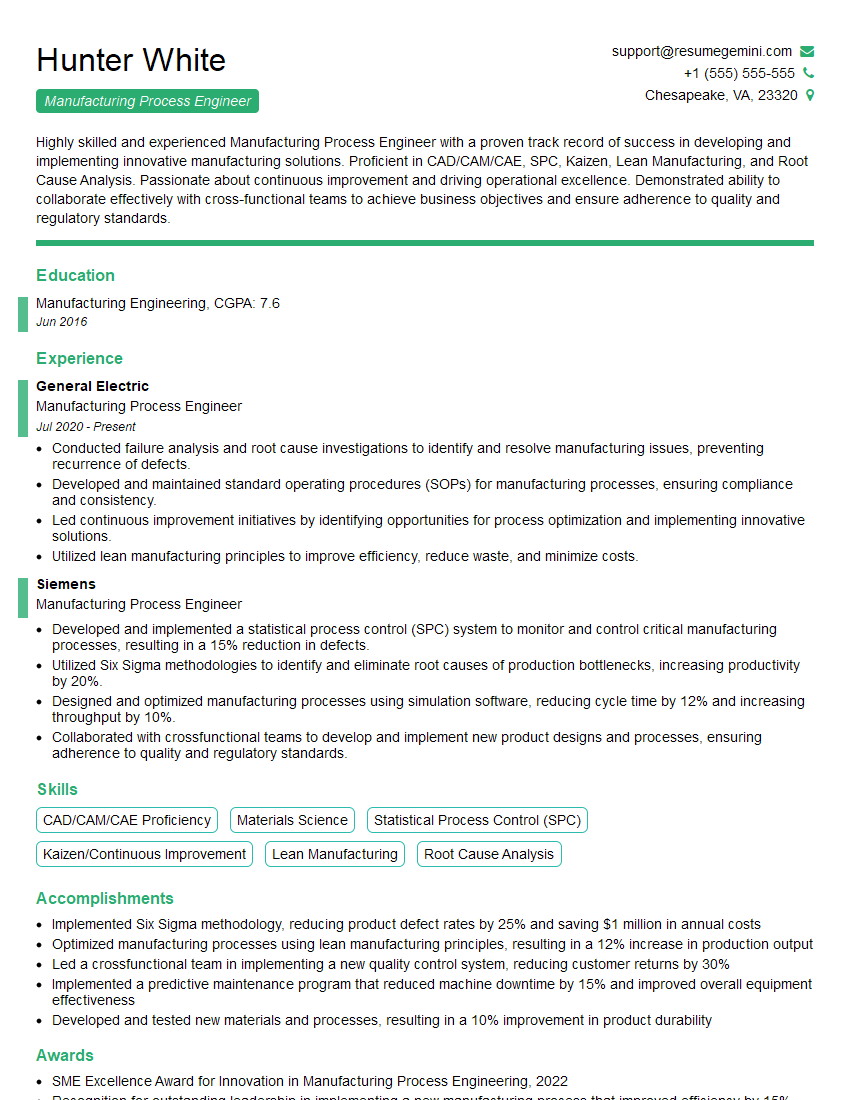
Manufacturing Process Engineer Resume Sample
Explore more articles
Users Rating of Our Blogs
Share Your Experience
We value your feedback! Please rate our content and share your thoughts (optional).
What Readers Say About Our Blog
Very informative content, great job.
good