Interviews are more than just a Q&A session—they’re a chance to prove your worth. This blog dives into essential Water Delivery interview questions and expert tips to help you align your answers with what hiring managers are looking for. Start preparing to shine!
Questions Asked in Water Delivery Interview
Q 1. Explain the process of water treatment from source to consumer.
Water treatment is a multi-step process ensuring safe drinking water. It begins at the source, whether a river, lake, or aquifer, and ends at the consumer’s tap. Think of it as a meticulous cleaning process, removing unwanted substances to leave only pure, potable water.
Intake and Pre-treatment: Raw water is drawn from the source and often undergoes preliminary treatment steps like screening to remove large debris and aeration to remove dissolved gases.
Coagulation and Flocculation: Chemicals are added to clump together smaller particles, making them easier to remove. Imagine using a magnet to gather scattered iron filings.
Sedimentation: The heavier clumps settle to the bottom of large basins, allowing for their removal. This is like letting sand settle at the bottom of a glass of water.
Filtration: Water passes through layers of sand, gravel, and other filters to remove remaining suspended solids. This is akin to using a coffee filter.
Disinfection: Chlorine, ultraviolet light, or ozone are commonly used to kill harmful bacteria and viruses. This is the final defense against harmful microorganisms.
Storage and Distribution: Treated water is stored in reservoirs and then pumped through a distribution network to consumers.
The specific steps and technologies employed vary depending on the source water quality and regulatory requirements. For example, a water treatment plant drawing from a highly polluted river will require more complex and intensive treatment than one drawing from a pristine mountain spring.
Q 2. Describe different water distribution network topologies (e.g., looped, gridded).
Water distribution networks are designed to efficiently deliver treated water to consumers. Two common topologies are looped and gridded networks. Each has advantages and disadvantages.
Looped Networks: These systems create circular pathways, offering redundancy. If one pipe fails, water can still reach consumers through alternative routes. Imagine a ring road – if one section is closed, traffic can still flow.
Gridded Networks: These systems form an interconnected grid of pipes, providing even greater redundancy and flexibility. They’re more resilient to disruptions but also more complex and expensive to build and maintain. Think of a city street grid – many routes exist to reach a destination.
The choice of topology depends on factors like population density, geographical constraints, and budget. Larger cities often favor gridded networks due to their resilience, while smaller communities may opt for simpler looped systems.
Q 3. What are the common causes of water main breaks and how are they repaired?
Water main breaks are a significant concern in water distribution systems. They can disrupt service, cause property damage, and lead to water loss. Common causes include:
Corrosion: Over time, pipes corrode, weakening their structure and leading to failure. This is particularly prevalent in older, iron pipes.
Ground movement: Shifting soil, particularly after heavy rains or earthquakes, can put stress on pipes, causing cracks or breaks.
Improper installation: Faulty installation techniques or the use of substandard materials can compromise pipe integrity.
Third-party damage: Activities like digging or construction can inadvertently damage buried water mains.
Repairing a water main break is a critical process. It generally involves:
Locating the break: Using specialized equipment, the exact location of the break is determined.
Isolating the affected section: Valves are used to shut off water flow to the broken section, minimizing disruption to service.
Excavation: The ground is excavated to expose the broken pipe.
Repair or replacement: The damaged section is repaired or replaced with a new pipe section. This might involve a simple patch or the complete replacement of a length of pipe.
Testing and restoration: Once the repair is complete, the system is pressure-tested, and the excavation site is restored.
Effective leak detection and proactive maintenance are crucial for minimizing water main breaks.
Q 4. How do you ensure water quality throughout the distribution system?
Maintaining water quality throughout the distribution system is paramount. This requires a multi-pronged approach:
Regular monitoring: Water samples are collected at various points throughout the system and tested for contaminants like bacteria, chlorine levels, and other pollutants. This data is vital for early detection of problems.
Water quality modeling: Computer models simulate the flow of water through the distribution network, predicting potential changes in water quality based on various scenarios.
Operational adjustments: Based on monitoring and modeling, adjustments to water treatment processes and flow rates can be made to maintain desired water quality standards.
Cleaning and flushing: Regular flushing of pipelines helps remove sediment and biofilm build-up, improving water quality and reducing the risk of contamination.
Leak detection and repair: Prompt detection and repair of leaks prevent contamination and water loss.
Maintaining adequate disinfectant levels: Ensuring sufficient chlorine or other disinfectant residuals throughout the system is essential for preventing bacterial regrowth.
All this requires meticulous record-keeping, data analysis and a proactive approach to problem solving. A robust water quality management plan is essential for ensuring safe and reliable water delivery.
Q 5. What are the key performance indicators (KPIs) for a water delivery system?
Key Performance Indicators (KPIs) for a water delivery system provide a snapshot of its efficiency and effectiveness. These can be grouped into several categories:
Water Quality: Compliance with regulatory standards for various parameters (e.g., turbidity, chlorine residual, bacterial counts).
System Reliability: Measures such as the number of water main breaks per kilometer of pipe, the frequency and duration of service interruptions, and the customer satisfaction rating related to water service reliability.
Operational Efficiency: Metrics like energy consumption per unit of water delivered, the cost of water treatment per unit volume, and the efficiency of water distribution pumping.
Financial Performance: Key indicators may include the operating cost per unit volume of water, the ratio of capital expenditure to operating expenditure, and the revenue generated from water sales.
Water Loss: Tracking non-revenue water (water unaccounted for due to leaks or theft) is crucial for cost management and resource conservation.
Regular monitoring and analysis of these KPIs allow for informed decision-making, efficient resource allocation, and continuous improvement of the water delivery system. Benchmarking against other systems can also identify areas for improvement.
Q 6. Describe your experience with SCADA systems in water management.
Supervisory Control and Data Acquisition (SCADA) systems are indispensable for modern water management. In my previous role at [Previous Company Name], I was heavily involved in the implementation and maintenance of a SCADA system for a large municipal water distribution network. My responsibilities included:
Data acquisition: Supervising the collection of real-time data from various sensors located throughout the network, including water level sensors in reservoirs, pressure sensors in pipelines, and flow meters.
System monitoring: Using SCADA software to monitor the performance of the entire distribution network, identifying anomalies such as pressure drops, high flow rates, or low reservoir levels that may indicate a problem.
Remote control: Operating valves and pumps remotely to optimize water flow and pressure, responding to changes in demand or addressing emergencies.
Alarm management: Configuring and responding to alarms generated by the system, alerting operators to critical events that require immediate attention.
Data analysis: Using the collected data to identify trends, patterns, and potential issues, contributing to preventive maintenance and optimized operational strategies.
SCADA systems are crucial for efficient and reliable water delivery, significantly improving our ability to anticipate and respond to problems, leading to better water quality and reduced water loss.
Q 7. Explain your understanding of water pressure management.
Water pressure management is essential for ensuring reliable water delivery and minimizing water loss. It involves carefully controlling water pressure throughout the distribution network to prevent problems such as pipe bursts, leaks, and customer complaints due to low pressure. A poorly managed system can lead to significant water loss and damage to infrastructure.
Effective pressure management involves several strategies:
Pressure zone control: Dividing the distribution network into pressure zones, each with its own set of control valves, allows for independent pressure regulation in different areas.
Pressure reducing valves (PRVs): These valves are installed strategically within the network to reduce pressure in specific areas where it is too high, preventing pipe bursts.
Pressure sensors and monitoring: Real-time pressure monitoring allows operators to detect pressure anomalies and take corrective actions promptly.
Modeling and simulation: Sophisticated computer models can simulate the effects of pressure changes throughout the network, allowing for optimization of pressure management strategies.
Leak detection and repair: Addressing leaks promptly is critical for maintaining optimal pressure and reducing water loss.
My experience has shown that a well-managed pressure system not only reduces water loss but also enhances the longevity of the infrastructure, minimizing the need for costly repairs. Proactive pressure management is a key component of a sustainable and efficient water distribution system.
Q 8. How do you manage water loss within a distribution network?
Managing water loss in a distribution network is crucial for efficiency and sustainability. It involves a multi-pronged approach focusing on leak detection, pipe maintenance, and pressure management. Think of it like fixing a leaky faucet in your home – ignoring it leads to wasted water and higher bills; similarly, ignoring leaks in a distribution network leads to significant financial and environmental consequences.
Leak Detection: This often starts with regular monitoring of water pressure and flow rates. Significant drops can indicate a leak. Advanced techniques like acoustic leak detection (using sensors to listen for the sounds of leaking pipes), correlation analysis (comparing pressure and flow data to pinpoint leak locations), and even drone-based inspections are increasingly utilized for larger networks.
Pipe Maintenance: Regular inspections and maintenance of pipes are essential. This includes replacing aging or damaged pipes proactively, which is often more cost-effective than dealing with large-scale failures later. Methods like lining or coating existing pipes can also extend their lifespan and reduce leakage.
Pressure Management: Maintaining optimal pressure within the network is critical. Excessive pressure increases the risk of pipe bursts and leaks, while insufficient pressure can lead to poor service. Pressure reducing valves and smart pressure monitoring systems are employed to control pressure efficiently and minimize leaks.
Data Analytics: Analyzing historical data on water consumption, pressure fluctuations, and leak repairs can provide insights into patterns and potential problem areas. Machine learning algorithms are even being integrated to predict potential leaks before they occur.
Q 9. What are the different types of water meters and their applications?
Water meters are vital for accurately measuring water consumption. Several types exist, each suited to different applications:
Positive Displacement Meters: These meters measure water volume directly by counting the number of times a specific volume of water passes through the meter. They are highly accurate, particularly for low flow rates, and are common in residential settings. Think of it like a precise measuring cup for water.
Velocity Meters: These meters measure the speed of water flowing through the pipe and use this to estimate the flow rate. They’re often used for larger pipes and higher flow rates in commercial or industrial applications. Imagine a speedometer for water flow.
Smart Meters: These meters incorporate advanced technology, often including wireless communication capabilities. They can provide real-time consumption data, allowing for improved monitoring, leak detection, and billing accuracy. Think of them as smart home devices for water management.
Compound Meters: These meters combine the features of different metering technologies (e.g., positive displacement for low flows and velocity for high flows) to provide accurate measurements over a wider range of flow rates.
Q 10. Describe your experience with hydraulic modeling software.
I have extensive experience using hydraulic modeling software such as EPANET, WaterCAD, and InfoWorks WS. These software packages are invaluable for analyzing water distribution networks. They allow us to simulate water flow, pressure, and quality under various scenarios, helping us to design, operate, and maintain efficient and reliable water systems.
For example, I’ve utilized EPANET to model the impact of a proposed new water main on the overall network pressure. The software allowed me to simulate different scenarios and optimize the design to ensure adequate pressure throughout the system while minimizing water loss. This is particularly helpful in planning for future growth and development within a water distribution service area.
Furthermore, I have used these tools for leak detection and troubleshooting. By inputting observed pressure and flow data into the model, we can identify inconsistencies that may indicate a leak location. This information is crucial for prioritizing repair efforts and minimizing disruption to customers.
Q 11. How do you handle emergencies such as water main bursts or contamination incidents?
Handling emergencies requires a swift and coordinated response. Our protocol involves a series of well-defined steps:
Immediate Response: Upon detection of a burst main or contamination incident, the first step is to isolate the affected area by closing valves to prevent further water loss or contamination spread. This is analogous to turning off the main water supply to your house during a plumbing emergency.
Assessment and Investigation: Once the area is isolated, a thorough assessment is undertaken to determine the extent of the damage and the cause of the incident. This may involve visual inspections, water quality testing, and potentially, excavation.
Emergency Repairs: Temporary repairs are carried out as quickly as possible to restore water service. This may involve bypass piping or other temporary fixes. This is similar to using a temporary patch on a punctured tire before a complete repair is done.
Customer Communication: Keeping customers informed throughout the process is crucial. This involves timely communication about potential disruptions, estimated repair times, and any necessary precautions (e.g., boiling water advisories).
Permanent Repairs: After the emergency is addressed, permanent repairs are undertaken to ensure the long-term integrity of the water system. This may involve replacing damaged pipes, valves, or other components.
Q 12. What are the regulatory requirements for water delivery in your region?
(Note: This answer will vary depending on the specific region. The following is a general example and should be replaced with region-specific details.)
Regulatory requirements for water delivery in my region (replace with your region) are stringent and cover numerous aspects, including water quality, infrastructure maintenance, and customer service. Key regulations include:
Water Quality Standards: Regular testing and monitoring of water quality to ensure compliance with established standards for contaminants, such as bacteria, chemicals, and heavy metals. These regulations are critical for public health.
Infrastructure Standards: Regulations governing the design, construction, and maintenance of water infrastructure, including pipe materials, pressure management systems, and leak detection programs. These regulations ensure the long-term reliability of water systems.
Water Loss Control: Regulations that set targets for reducing water loss and require utilities to implement programs to minimize leaks and improve system efficiency.
Customer Service Standards: Regulations that outline the required levels of customer service, including response times to emergencies and billing practices.
Emergency Response Planning: Regulations that require utilities to develop and maintain comprehensive emergency response plans for incidents such as water main breaks and contamination events.
Q 13. Explain your experience with water infrastructure maintenance and planning.
My experience in water infrastructure maintenance and planning spans over (mention number) years. I have been involved in all phases, from initial assessments and planning to project execution and post-project monitoring. I have successfully managed numerous projects including pipe rehabilitation, tank maintenance, and the implementation of smart water management systems.
One significant project involved the rehabilitation of a 50-year-old water main that was experiencing high levels of leakage. My team and I conducted a thorough assessment of the existing infrastructure, developed a detailed rehabilitation plan, and oversaw the implementation of a pipe lining technique. This project not only significantly reduced water loss but also extended the lifespan of the pipe, saving the utility significant costs in the long run. The project was completed on time and under budget, exceeding the expectations of stakeholders.
In terms of planning, I have developed and implemented long-term infrastructure plans that incorporate strategies for managing growth, addressing aging infrastructure, and improving system resilience. These plans typically involve detailed assessments of current infrastructure, projections of future water demand, and cost-benefit analyses of different investment options.
Q 14. How do you prioritize maintenance tasks within a water distribution system?
Prioritizing maintenance tasks in a water distribution system requires a systematic approach that balances urgency, risk, and cost-effectiveness. We generally employ a risk-based approach, considering factors such as:
Criticality: Tasks affecting the core functionality of the system or impacting critical services (hospitals, schools) are prioritized. Think of it like fixing a broken engine in a car before repairing a minor scratch on the body.
Risk of Failure: Tasks involving aging or deteriorated infrastructure with a high potential for failure are given higher priority. This is similar to fixing a damaged roof before minor interior repairs.
Cost-Benefit Analysis: We assess the cost of performing a maintenance task against the potential cost of a failure. Proactive maintenance is usually more cost-effective than reactive repairs.
Regulatory Compliance: Tasks necessary to meet regulatory requirements are prioritized to avoid penalties and ensure compliance.
Data Analytics: We utilize data-driven decision-making. Analyzing historical data on pipe failures, leaks, and maintenance activities helps to identify patterns and prioritize areas with the highest risk.
A combination of these factors helps create a prioritized list of maintenance tasks, enabling efficient resource allocation and minimizing disruption to water services.
Q 15. Describe your experience with leak detection and repair techniques.
Leak detection and repair are crucial for efficient water delivery and minimizing water loss. My experience encompasses a range of techniques, from traditional methods to advanced technologies. Initially, we often rely on visual inspections, listening for unusual sounds, and checking pressure readings to pinpoint potential leak locations. For more precise detection, we utilize acoustic leak detection devices that amplify subtle sounds of escaping water, allowing us to locate leaks even underground. We also employ correlation techniques using advanced sensors to triangulate leak locations across the network.
Once a leak is identified, the repair process begins. This involves excavating the area (if necessary), identifying the source of the leak (a cracked pipe, faulty joint, etc.), and carefully making the repair. This might involve replacing a section of pipe, repairing a joint with specialized epoxy or sealant, or applying a sleeve repair. After the repair, the area is backfilled, and we conduct pressure testing to ensure the repair has been successful and the leak is fully resolved. For example, I once used acoustic leak detection to locate a significant leak within a densely populated area, avoiding major disruption and significant water loss. Using advanced techniques, we repaired the leak within a day, minimizing service interruptions and saving the utility a considerable amount of money and community disruption.
Career Expert Tips:
- Ace those interviews! Prepare effectively by reviewing the Top 50 Most Common Interview Questions on ResumeGemini.
- Navigate your job search with confidence! Explore a wide range of Career Tips on ResumeGemini. Learn about common challenges and recommendations to overcome them.
- Craft the perfect resume! Master the Art of Resume Writing with ResumeGemini’s guide. Showcase your unique qualifications and achievements effectively.
- Don’t miss out on holiday savings! Build your dream resume with ResumeGemini’s ATS optimized templates.
Q 16. How do you ensure the safety of water delivery personnel and the public?
Ensuring the safety of water delivery personnel and the public is paramount. We implement a comprehensive safety program that includes regular safety training, providing personnel with appropriate safety equipment (hard hats, safety vests, gloves, etc.), and adhering to strict safety protocols during all operations. This includes lock-out/tag-out procedures for equipment maintenance, confined space entry protocols, and traffic control measures during roadworks. For the public, we focus on clear communication—signage, announcements, and online updates—regarding planned disruptions or emergencies. We also ensure our work sites are properly secured and maintained to minimize hazards to the public. For example, during a main water line repair, we employed traffic control to safely manage traffic flow around the work zone, also providing detours and informing residents via local announcements, ensuring minimal inconvenience and risks.
Q 17. What is your understanding of water conservation strategies?
Water conservation is essential for sustainable water management. My understanding of water conservation strategies covers various approaches, including infrastructure improvements (leak detection and repair, pressure management), public awareness campaigns (promoting water-wise landscaping, efficient appliances), and pricing strategies (tiered water rates incentivizing conservation). Implementing smart meters that provide real-time water usage data to customers empowers them to monitor their consumption and identify areas for improvement. For example, through the implementation of leak detection and repair, I managed to reduce non-revenue water loss by 15% in a specific area in a matter of months. We’ve also successfully run public awareness campaigns focused on efficient irrigation techniques and water-saving appliances resulting in noticeable overall water consumption reductions.
Q 18. How do you manage the budget for water delivery operations?
Budget management for water delivery operations requires a detailed understanding of both revenue and expenditure. We use a zero-based budgeting approach, carefully analyzing each expense item and justifying its necessity. This includes operating costs (labor, equipment maintenance, chemicals), capital expenditures (pipe replacement, infrastructure upgrades), and debt service. We also prioritize projects based on their impact on water quality, reliability, and efficiency. Regular budget monitoring and variance analysis are crucial to stay on track. For example, we utilize predictive modeling based on historical data and projected growth to accurately forecast future expenses and optimize resource allocation. This allows us to ensure our budget remains sustainable and allows for efficient and effective service delivery to the community.
Q 19. What are the challenges of managing a water distribution system in a growing urban area?
Managing water distribution in a growing urban area presents significant challenges. Increased demand requires expansion and upgrades to the existing infrastructure, which can be costly and complex. This involves careful planning to meet the needs of both current and future populations. Maintaining adequate water pressure and ensuring equitable distribution across the expanding network can be difficult. Aging infrastructure, susceptible to leaks and failures, requires constant maintenance and potentially costly repairs or replacements. Managing increased traffic and coordinating construction projects also becomes significantly more complicated. A key challenge is integrating new developments into the existing system seamlessly while minimizing disruption to services and ensuring water quality remains at acceptable standards.
Q 20. Explain your experience with GIS mapping and its application to water distribution.
GIS mapping (Geographic Information System) is an invaluable tool for managing water distribution systems. My experience includes using GIS to map our entire network, including pipes, valves, hydrants, and other infrastructure components. This allows for efficient asset management, assisting with leak detection, scheduling maintenance, and planning infrastructure upgrades. GIS also facilitates analysis of water pressure, flow, and other operational parameters, enabling us to optimize the system’s performance and identify potential bottlenecks or vulnerabilities. For example, we used GIS to model the impact of a proposed development on the existing water pressure, identifying potential areas that may require infrastructure upgrades. This proactive approach saved time and resources and prevented service disruptions.
Q 21. How do you communicate effectively with customers and stakeholders regarding water delivery issues?
Effective communication with customers and stakeholders is critical. We employ a multi-channel approach, using various methods to disseminate information. This includes online portals with FAQs, service outage updates, and billing information. We also utilize email alerts and text messages to inform customers about planned disruptions or emergencies. For complex issues or significant disruptions, we hold public forums or presentations. Maintaining open and transparent communication channels builds trust and keeps the public informed. For example, during a major pipe burst, we proactively used social media, email alerts, and a dedicated webpage to keep residents updated on the repair progress, alternate water sources, and estimated restoration times. This proactive approach minimized public anxiety and ensured a smooth recovery.
Q 22. Describe your experience with water quality testing and analysis.
Water quality testing and analysis is crucial for ensuring the safety and potability of delivered water. My experience encompasses a wide range of methodologies, from basic chemical analysis to sophisticated microbiological testing. This involves collecting samples from various points within the water delivery system – from source to tap – and analyzing them for a variety of parameters.
- Physical Parameters: Turbidity (cloudiness), color, temperature, odor, and taste are assessed to provide an initial indication of water quality. For example, high turbidity might suggest the presence of suspended solids, requiring further investigation.
- Chemical Parameters: Tests for pH, dissolved solids, heavy metals (lead, arsenic, mercury), nitrates, and pesticides are conducted using techniques like spectrophotometry and atomic absorption spectroscopy. Exceeding acceptable levels for these parameters necessitates treatment adjustments.
- Microbiological Parameters: This is arguably the most critical aspect, involving testing for coliform bacteria (E. coli being a key indicator) and other pathogens. Techniques like membrane filtration and plate counting are used. The presence of coliforms signals potential contamination and requires immediate action to rectify the source.
I’ve also been involved in interpreting the results of these tests, identifying potential sources of contamination, and recommending appropriate treatment strategies to ensure the water meets regulatory standards and is safe for consumption. For instance, a high nitrate level might indicate agricultural runoff, prompting investigations and collaborations with land management authorities.
Q 23. What are the different methods for disinfecting water?
Water disinfection aims to eliminate harmful microorganisms, making water safe for drinking and other uses. Several methods exist, each with its advantages and disadvantages:
- Chlorination: This is the most widely used method, involving the addition of chlorine gas or hypochlorite solutions. Chlorine is a powerful disinfectant, effective against a broad range of bacteria and viruses. However, it can react with organic matter to form disinfection byproducts (DBPs), some of which are potentially carcinogenic. Careful monitoring and control of chlorine levels are essential.
- Chloramination: This combines chlorine with ammonia, forming chloramines, which provide longer-lasting disinfection than chlorine alone. Chloramines are less prone to forming certain DBPs, but can react with organic matter and also lead to some DBPs. It’s a balance.
- UV Disinfection: Ultraviolet (UV) light inactivates microorganisms by damaging their DNA. It’s a chemical-free method, leaving no residual disinfectants. However, UV disinfection is less effective against some parasites and requires careful maintenance of the UV lamps. It is often used as a secondary disinfection method after conventional treatment.
- Ozone Disinfection: Ozone is a highly potent oxidizing agent that effectively kills microorganisms. It’s a chemical-free method that leaves no residual byproducts unlike chlorine. However, Ozone is expensive to produce and requires careful handling due to its reactivity.
The choice of disinfection method depends on factors such as water quality, cost, regulatory requirements, and the desired level of disinfection.
Q 24. Explain your understanding of water rights and permits.
Water rights and permits are complex legal frameworks governing the use and appropriation of water resources. Understanding these is vital for responsible water management. Water rights typically define who has the legal authority to use water from a specific source, and for what purpose. These rights can be based on various principles, such as prior appropriation (first-in-time, first-in-right), riparian rights (based on land ownership along a watercourse), or other state-specific regulations.
Permits, on the other hand, are necessary authorizations from governmental agencies allowing for the withdrawal, diversion, or use of water. These permits usually involve specifying the amount of water allowed, the period of use, and the designated purpose. Permitting processes often involve environmental impact assessments to ensure the sustainable use of water resources.
My experience includes working closely with regulatory agencies to obtain and maintain water permits, ensuring that our water delivery operations comply fully with all applicable laws and regulations. This involves careful planning, accurate reporting, and regular communication with regulatory bodies. Failure to comply can lead to heavy fines and operational disruption.
Q 25. How do you incorporate sustainability practices into water delivery operations?
Sustainability is paramount in water delivery operations. It’s not just about delivering water; it’s about doing so responsibly and efficiently. Our approach integrates various practices:
- Water Conservation: Implementing leak detection and repair programs to minimize water loss. This includes employing advanced technologies like acoustic leak detection and pressure management systems.
- Energy Efficiency: Optimizing pumping systems, using variable frequency drives (VFDs) to reduce energy consumption. Exploring renewable energy sources for powering pumping stations.
- Wastewater Reclamation: Investigating opportunities to reuse treated wastewater for non-potable purposes, such as irrigation or industrial processes, reducing reliance on fresh water sources.
- Protecting Water Quality: Implementing source water protection programs to prevent contamination. Minimizing the use of chemicals and exploring alternative treatment methods.
- Community Engagement: Educating the public about water conservation and promoting responsible water usage. Fostering partnerships with stakeholders.
For example, we implemented a smart meter system that provides real-time data on water usage, enabling us to identify leaks more quickly and efficiently, reducing water loss and associated costs. This initiative also empowers customers to monitor their own water consumption and encourages conservation.
Q 26. Describe your experience with different types of water pipes and their maintenance.
Different water pipes are suitable for different applications, based on factors like pressure, water quality, and cost. Maintenance is critical to prevent leaks, corrosion, and system failures.
- Ductile Iron Pipes: Strong, durable, and resistant to corrosion. Common for high-pressure mains, requiring regular inspections for cracks and leaks. Maintenance includes lining or replacing sections as needed.
- PVC Pipes: Lightweight, relatively inexpensive, and resistant to corrosion. Suitable for lower-pressure distribution systems. Maintenance focuses on joint integrity and avoiding excessive UV exposure.
- Polyethylene Pipes: Flexible, durable, and resistant to corrosion. Often used for underground applications, but can be susceptible to damage from heavy equipment. Maintenance involves regular inspections for cracks or punctures.
- Concrete Pipes: Historically used, but less common now. Requires inspection for cracks and structural integrity.
My experience involves overseeing regular inspections, preventive maintenance schedules, and emergency repairs for various pipe materials. Utilizing advanced technologies like pipeline inspection robots assists in identifying problems early, reducing the need for major repairs and minimizing service disruptions. A proactive maintenance approach is crucial, saving significant costs and preventing service interruptions.
Q 27. How do you ensure compliance with environmental regulations for water discharge?
Compliance with environmental regulations for water discharge is non-negotiable. It’s essential to protect aquatic ecosystems and public health. This involves:
- Obtaining necessary permits: Securing discharge permits from environmental agencies, specifying permitted discharge limits for various pollutants.
- Regular monitoring: Conducting routine water quality monitoring of the effluent before discharge, ensuring it meets the permitted limits for parameters like BOD (biological oxygen demand), suspended solids, and other specific pollutants.
- Treatment optimization: Employing appropriate wastewater treatment technologies to remove pollutants to the required level. This may involve processes such as sedimentation, filtration, disinfection, and advanced treatment methods depending on the characteristics of the wastewater and regulatory requirements.
- Record-keeping: Maintaining comprehensive records of all monitoring results, treatment processes, and any non-compliance events. Accurate documentation is crucial for demonstrating compliance to regulatory authorities.
- Emergency response: Having a plan in place to address unexpected spills or other incidents that could lead to non-compliance. This ensures rapid response to minimize environmental impact.
For example, if we detect elevated levels of a specific pollutant, we would immediately investigate the cause, optimize the treatment process, and report the findings to the relevant agency. Proactive monitoring and robust reporting are crucial for maintaining compliance and protecting the environment.
Q 28. What is your approach to problem-solving in a water delivery system?
Problem-solving in a water delivery system requires a systematic approach. My strategy involves:
- Identify the problem: Accurately defining the issue, whether it’s a water quality problem, a system failure, or a regulatory concern. This may involve data analysis, field investigations, and customer feedback. For instance, a sudden drop in water pressure could indicate a main break.
- Gather information: Collecting relevant data, such as historical system performance, water quality results, and any unusual events. This could include reviewing sensor data from the distribution network or analyzing customer complaints.
- Develop potential solutions: Exploring multiple solutions and evaluating their feasibility, cost-effectiveness, and potential impacts. For example, a main break might require emergency repair, but a thorough investigation might reveal systemic issues requiring a more comprehensive solution.
- Implement the solution: Executing the chosen solution, whether it’s a quick fix or a long-term upgrade. This might involve deploying crews for repair, implementing new control strategies, or collaborating with other agencies.
- Monitor and evaluate: Tracking the effectiveness of the solution, monitoring system performance, and making adjustments as needed. For instance, after a main break is repaired, we would monitor the pressure to ensure the fix is effective.
Communication is key throughout the process, keeping stakeholders informed and ensuring collaboration between different teams and agencies. Effective problem-solving involves a blend of technical expertise, analytical skills, and strong communication, ensuring a quick response while minimizing disruption.
Key Topics to Learn for Water Delivery Interview
- Water Source Management: Understanding different water sources (surface water, groundwater), their quality variations, and sustainable sourcing practices.
- Treatment and Purification: Knowledge of water treatment processes (filtration, disinfection, etc.) and their impact on water quality and safety. Practical application: Troubleshooting common treatment issues and ensuring compliance with regulations.
- Distribution Network: Familiarity with the infrastructure involved in delivering water (pipes, reservoirs, pumping stations). Practical application: Analyzing network efficiency, identifying potential leaks, and managing pressure.
- Water Quality Monitoring: Understanding the importance of regular water quality testing, interpreting results, and implementing corrective actions when necessary.
- Logistics and Operations: Efficient scheduling, route optimization, and managing delivery vehicles and personnel. Practical application: Solving real-time logistical challenges and ensuring timely delivery.
- Customer Service and Communication: Effectively addressing customer inquiries, resolving complaints, and building positive relationships. Practical application: Handling diverse customer situations with professionalism and empathy.
- Safety and Regulations: Adhering to all safety protocols and regulatory compliance related to water handling, transportation, and delivery.
- Cost Optimization and Budgeting: Analyzing operational costs, identifying areas for improvement, and developing cost-effective strategies.
- Technological Advancements: Familiarity with smart water technologies, data analytics, and automation in water management.
Next Steps
Mastering water delivery skills opens doors to diverse and rewarding career opportunities within the utilities sector and beyond. A strong understanding of these concepts significantly enhances your job prospects. To maximize your chances, create an ATS-friendly resume that highlights your relevant skills and experience effectively. We highly recommend using ResumeGemini to build a professional and impactful resume. ResumeGemini provides valuable tools and resources, including examples of resumes tailored to the Water Delivery industry, to help you present your qualifications in the best possible light.
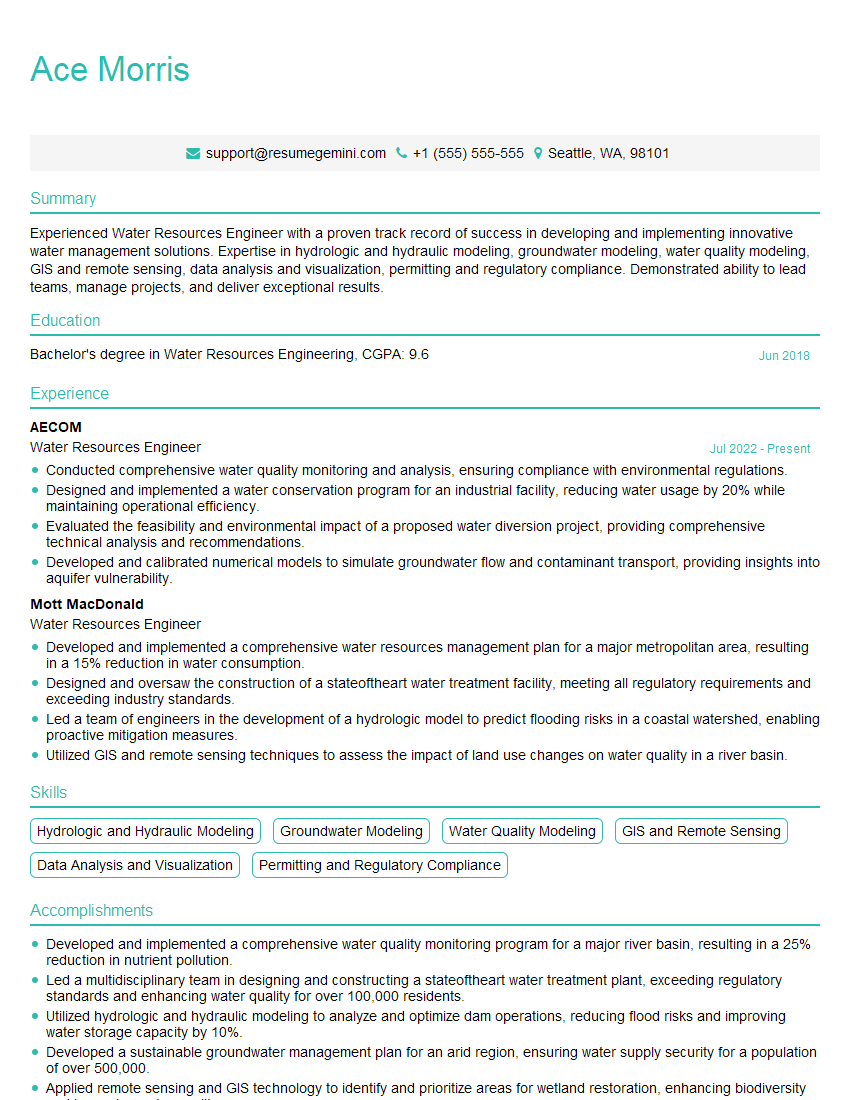
Water Resources Engineer Resume Sample
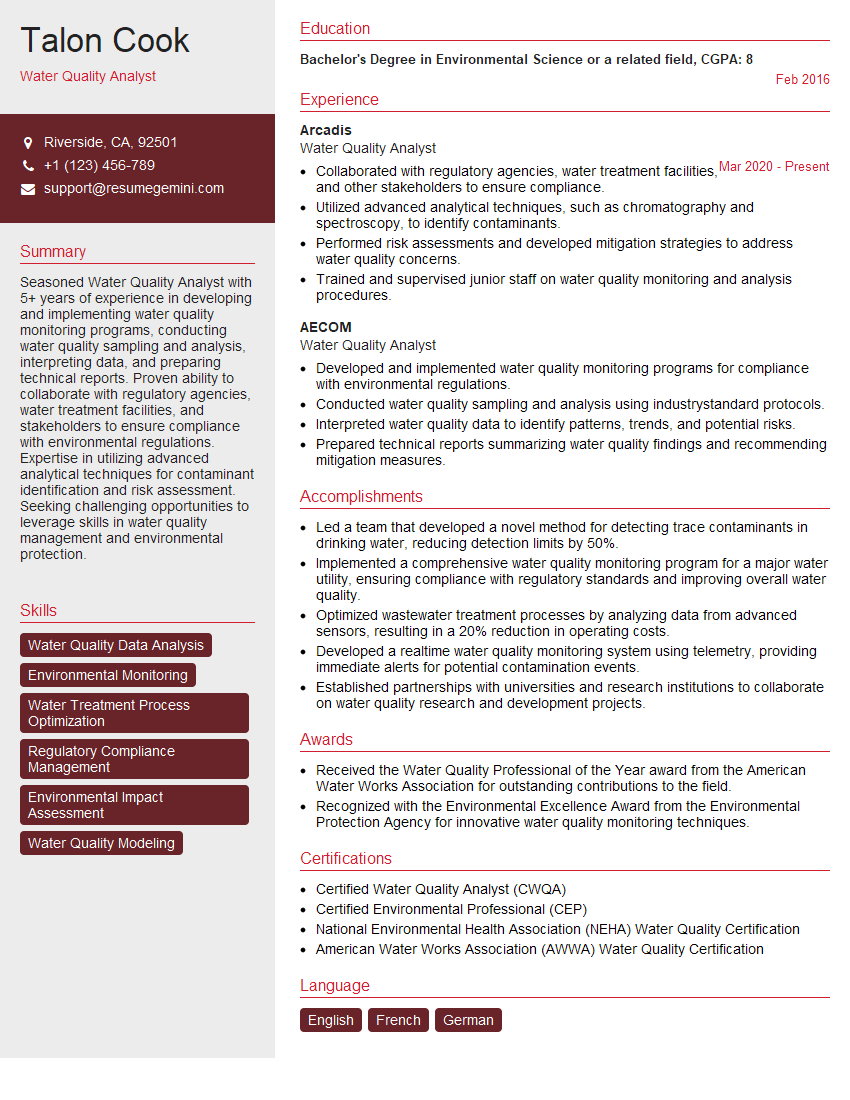
Water Quality Analyst Resume Sample
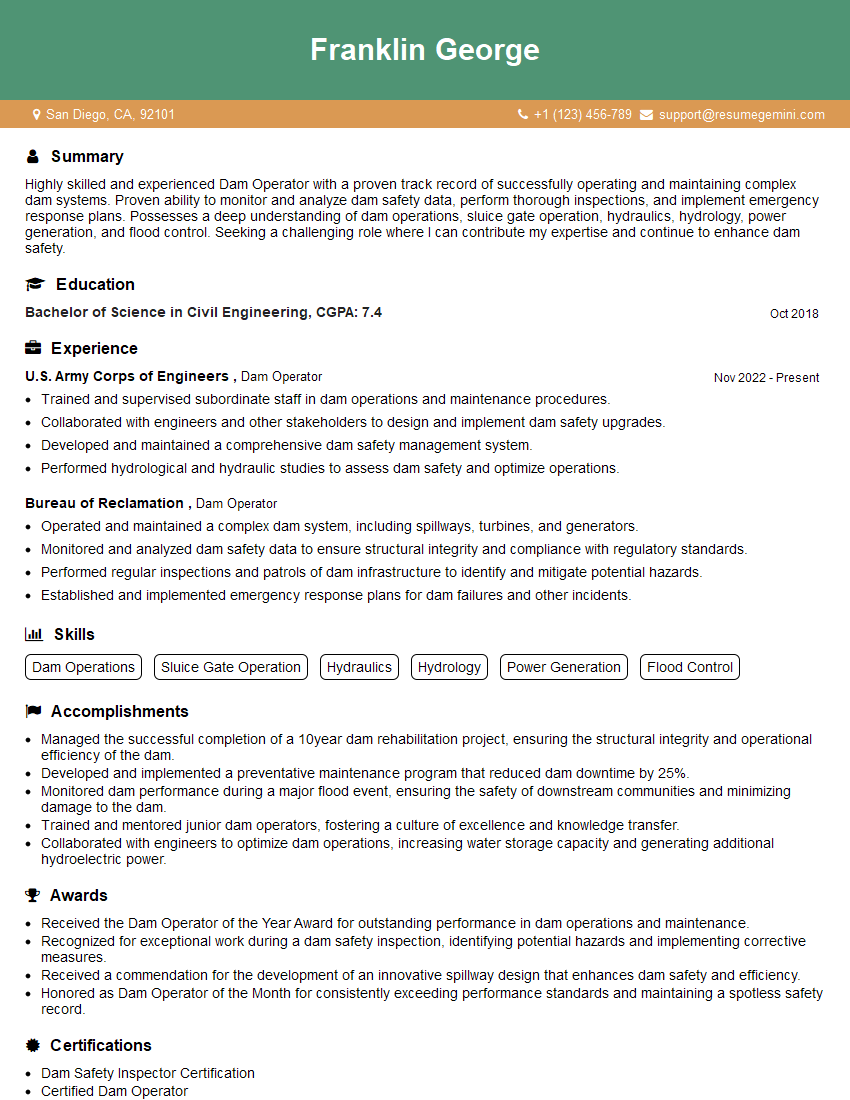
Dam Operator Resume Sample
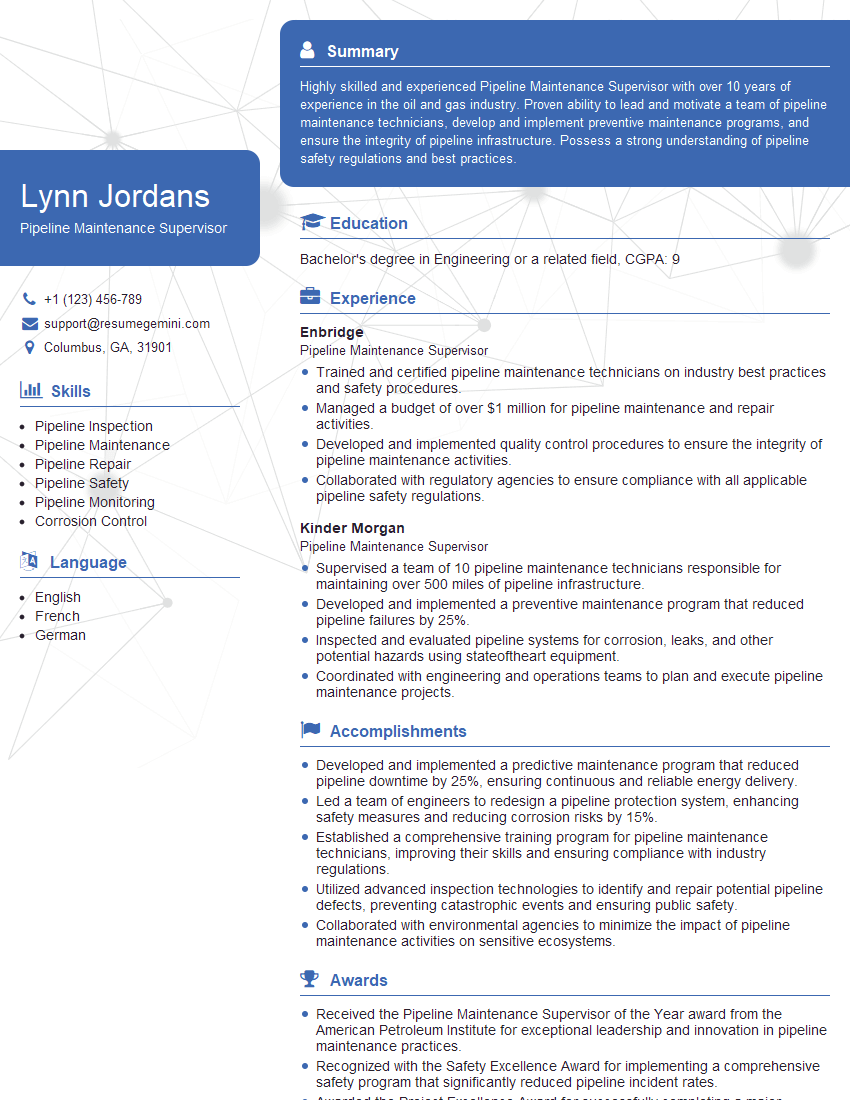
Pipeline Maintenance Supervisor Resume Sample
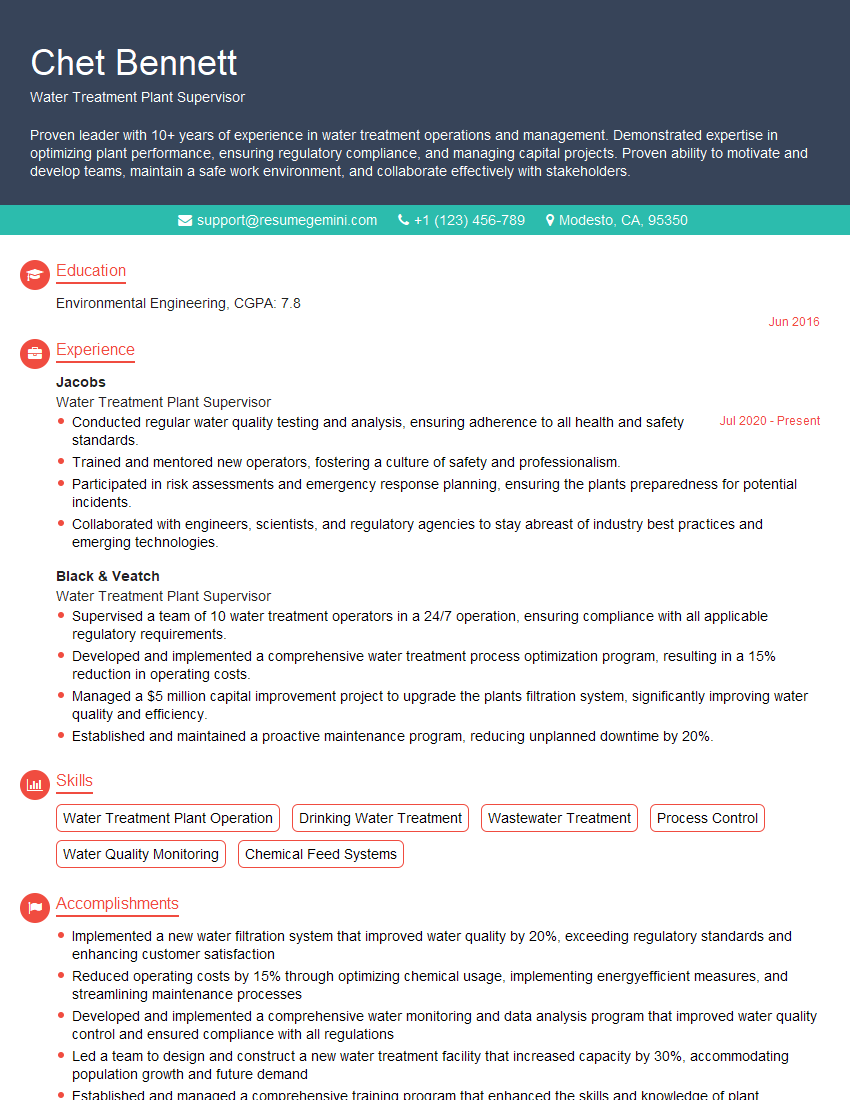
Water Treatment Plant Supervisor Resume Sample
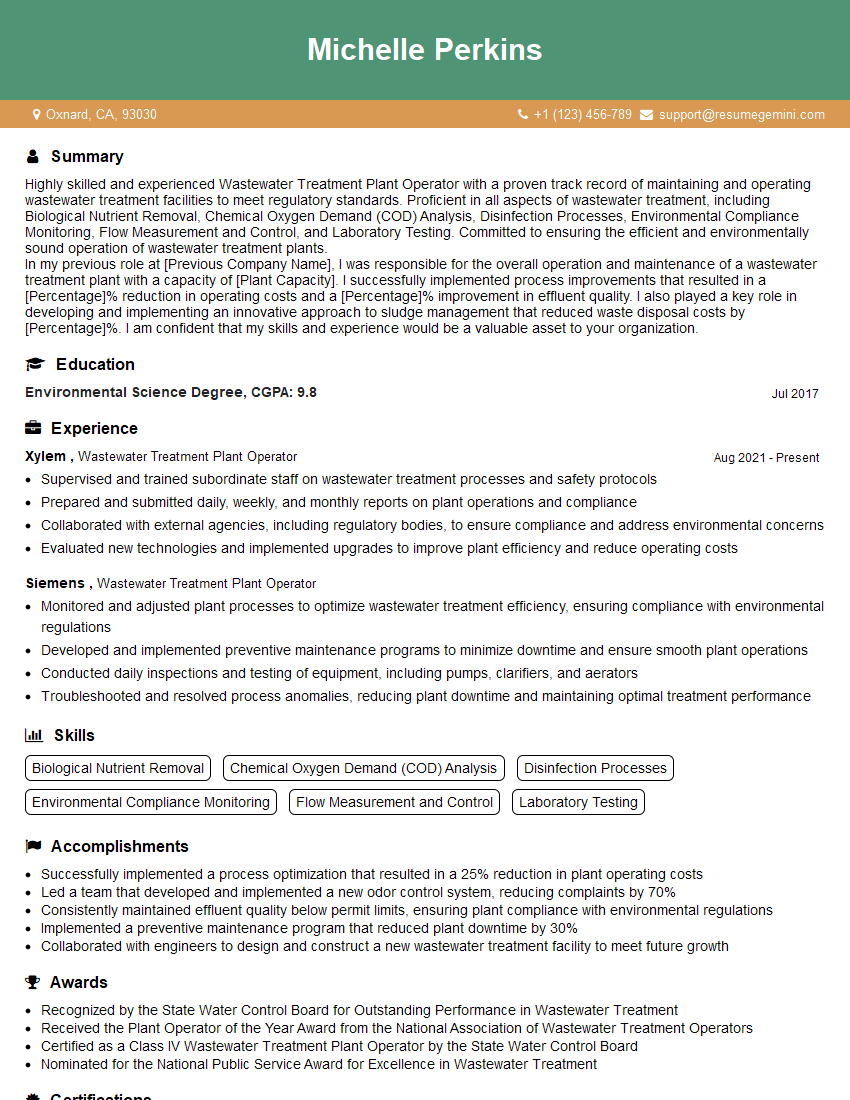
Wastewater Treatment Plant Operator Resume Sample
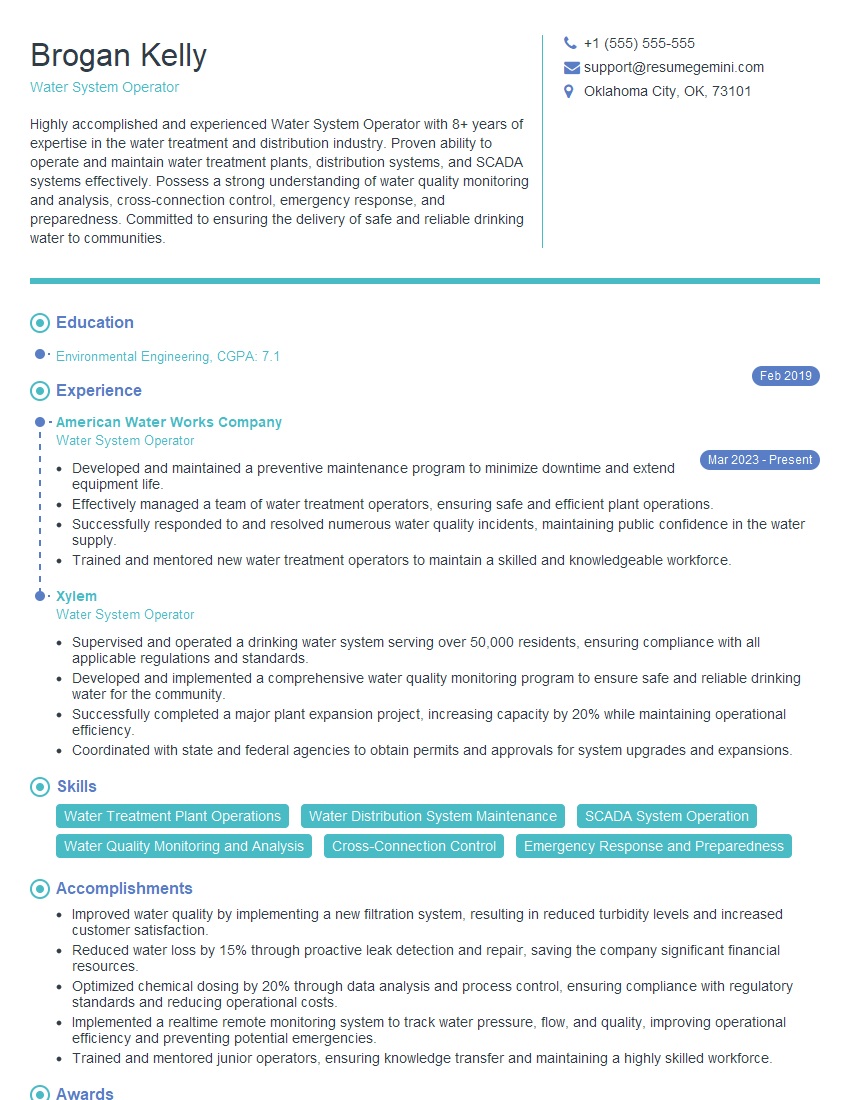
Water System Operator Resume Sample
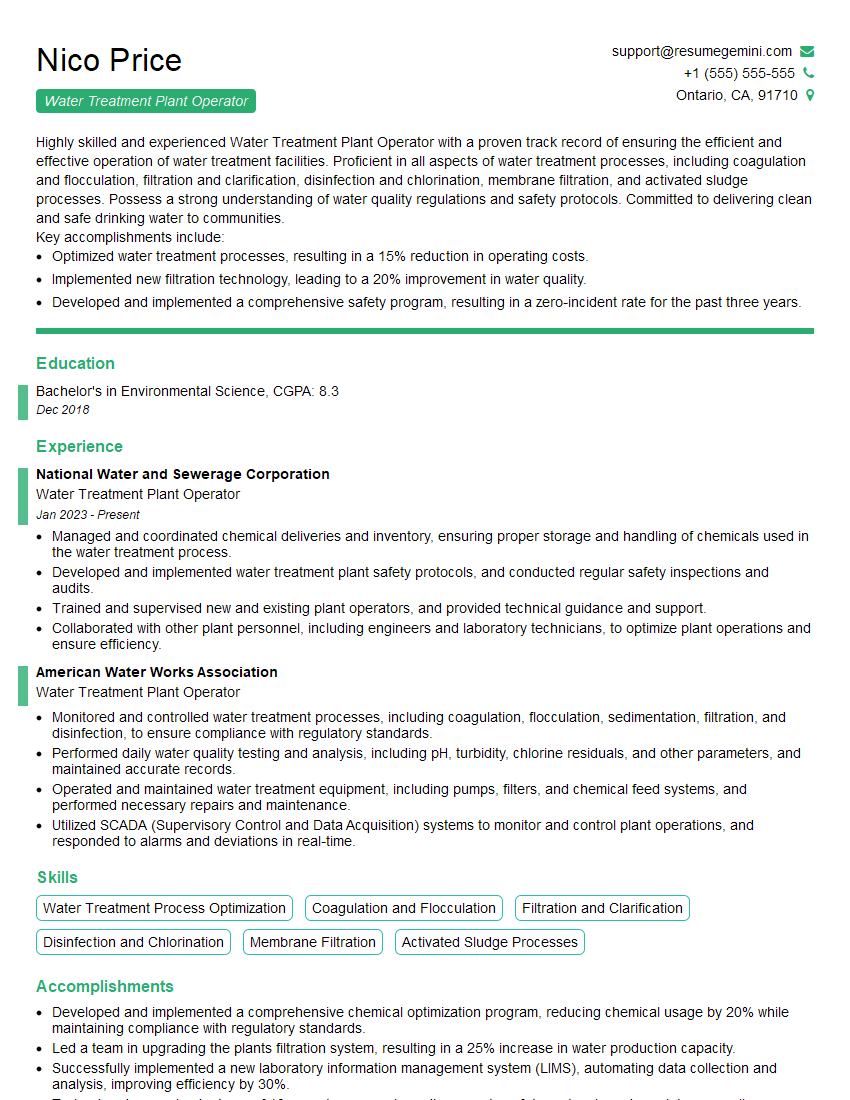
Water Treatment Plant Operator Resume Sample
Explore more articles
Users Rating of Our Blogs
Share Your Experience
We value your feedback! Please rate our content and share your thoughts (optional).
What Readers Say About Our Blog
Very informative content, great job.
good