The right preparation can turn an interview into an opportunity to showcase your expertise. This guide to Water Flow Measurement interview questions is your ultimate resource, providing key insights and tips to help you ace your responses and stand out as a top candidate.
Questions Asked in Water Flow Measurement Interview
Q 1. Explain the different types of flow meters and their applications.
Flow meters are instruments used to measure the volumetric flow rate of fluids (liquids or gases). Different types cater to various applications and fluid properties. The choice depends on factors such as fluid viscosity, pressure, temperature, pipe size, and the required accuracy.
- Differential Pressure Flow Meters: These meters, like orifice plates, Venturi tubes, and flow nozzles, measure flow rate based on the pressure drop across a restriction in the pipe. They are widely used in industrial applications due to their robustness and relatively low cost. Think of it like putting your thumb partially over a garden hose – the pressure drops, and the flow rate changes accordingly.
- Velocity Flow Meters: These meters, such as ultrasonic flow meters and electromagnetic flow meters, directly measure the fluid velocity. Ultrasonic meters use sound waves to determine velocity, while electromagnetic meters utilize Faraday’s Law of Induction. They are useful for clean fluids and are often employed in applications requiring high accuracy.
- Positive Displacement Flow Meters: These meters, such as rotary vane and piston meters, measure flow by trapping a known volume of fluid and counting the number of volumes passing through. These are accurate for viscous fluids and precise flow measurements, often seen in metering applications such as fuel dispensing.
- Area Flow Meters: These meters, like rotameters, measure flow rate based on the area of a variable restriction. A float rises or falls in a tapered tube depending on flow rate, providing a visual indication. They are often used for low-pressure applications requiring a simple visual flow monitoring.
- Mass Flow Meters: These meters measure the mass flow rate, unlike volumetric flow meters which measure volume. Common types include Coriolis flow meters and thermal mass flow meters. Coriolis meters measure the Coriolis force created by fluid flow, while thermal meters measure the temperature difference caused by heating the fluid. They are crucial in applications demanding precise mass measurement, such as chemical processing.
For example, a differential pressure flow meter might be ideal for measuring the flow of water in a large pipeline, while a positive displacement meter might be preferred for accurately dispensing a specific amount of a viscous chemical.
Q 2. Describe the principles of operation for a differential pressure flow meter.
Differential pressure flow meters operate on the principle of Bernoulli’s equation, which relates fluid pressure to velocity. A restriction (orifice plate, Venturi tube, flow nozzle) is placed in the pipe. This restriction causes a pressure drop proportional to the square of the flow velocity. The pressure difference (ΔP) across the restriction is measured using pressure taps, and this ΔP is directly related to the flow rate.
The equation used is often a variation of:
Q = C * A * √(ΔP / ρ)where:
Qis the volumetric flow rateCis the flow coefficient (depends on the meter type and geometry)Ais the cross-sectional area of the restrictionΔPis the differential pressureρis the fluid density
The flow coefficient accounts for losses due to friction and other factors. Calibration is crucial to determine an accurate value for C specific to each meter and its installation.
Q 3. How do you calibrate a flow meter?
Flow meter calibration involves comparing the meter’s reading to a known flow rate. This ensures accuracy and traceability to standards. The process usually involves:
- Establishing a reference flow: This can be done using a standard flow meter, a weighing tank (measuring the mass of fluid over time), or a volumetric tank (measuring the volume of fluid over time).
- Setting up the test rig: The flow meter to be calibrated is installed in a test loop alongside the reference flow meter. The fluid properties (temperature, pressure, viscosity) should be carefully monitored and maintained consistent.
- Performing the calibration: The flow rate is varied over the expected operating range, and readings from both the reference and the flow meter under test are recorded for each flow rate.
- Generating a calibration curve: The data is plotted to create a calibration curve, showing the relationship between the flow meter reading and the actual flow rate. This curve corrects for any deviations from the ideal behaviour of the flow meter.
- Applying correction factors: The calibration curve provides correction factors that can be applied to future readings to improve accuracy.
Different types of flow meters have different calibration techniques. For instance, some meters may require a specialized calibration facility, while others can be calibrated in situ.
Q 4. What are the common sources of error in flow measurement?
Several factors can contribute to errors in flow measurement. These include:
- Installation effects: Incorrect installation, such as upstream or downstream disturbances (valves, bends, etc.) can significantly affect the flow profile and lead to inaccurate readings.
- Fluid properties: Changes in fluid density, viscosity, and temperature can impact flow meter performance. For example, a change in temperature could affect the fluid’s density which impacts differential pressure measurements.
- Meter wear and tear: Over time, meters can suffer from wear and tear, leading to calibration drift and inaccuracies. Regular maintenance and inspection are important to minimise these errors.
- Environmental conditions: Ambient temperature and pressure fluctuations can affect flow measurement, particularly for certain meter types. Temperature compensation mechanisms or environmental controls might be necessary.
- Signal processing errors: Errors in data acquisition and processing can introduce uncertainty. Proper signal conditioning and data analysis techniques are needed to minimize these effects.
- Pipe condition: Build-up of scale or corrosion in the pipe can restrict flow and affect the meter’s reading.
Careful attention to installation procedures, regular maintenance, and proper data analysis are crucial for minimizing these errors.
Q 5. How do you handle flow measurement challenges in complex piping systems?
Complex piping systems present unique flow measurement challenges. The presence of multiple branches, bends, valves, and fittings can significantly disrupt the flow profile, making accurate measurements difficult.
Strategies for handling these challenges include:
- Strategic meter placement: Meters should be placed in locations where flow is relatively straight and undisturbed. This might involve installing straight pipe sections upstream and downstream of the meter (run of pipe). Computational Fluid Dynamics (CFD) simulations can be used to determine the optimal location.
- Flow conditioning devices: Devices like flow straighteners or straightening vanes can help to improve the flow profile before the meter. These mitigate the effects of upstream disturbances and promote more accurate readings.
- Multiple flow meters: Using multiple meters at different points in the system can provide a more comprehensive picture of the flow distribution. This is especially helpful in complex branched networks.
- Advanced flow modeling techniques: Sophisticated models and simulations (CFD) can help predict and compensate for flow disturbances and estimate the flow rates in sections without direct measurement.
- Tracer studies: In some cases, tracer studies using dye or radioactive isotopes can be used to determine flow patterns and velocities in complex systems. This is less common but useful for verifying models or identifying leaks.
It’s crucial to remember that the accuracy of flow measurement in complex systems relies on careful planning, proper installation and calibration, and possibly additional diagnostic techniques.
Q 6. Explain the concept of Reynolds number and its significance in flow measurement.
The Reynolds number (Re) is a dimensionless quantity that describes the flow regime of a fluid. It’s the ratio of inertial forces to viscous forces within the fluid. It’s defined as:
Re = (ρVD)/μwhere:
ρis the fluid densityVis the fluid velocityDis the characteristic length (e.g., pipe diameter)μis the dynamic viscosity of the fluid
A low Reynolds number (typically Re < 2300) indicates laminar flow, where the fluid flows in smooth, parallel layers. A high Reynolds number (typically Re > 4000) indicates turbulent flow, where the flow is chaotic and characterized by eddies and mixing. The transition zone between laminar and turbulent flow is typically between 2300 and 4000.
Significance in flow measurement: The Reynolds number influences the selection of appropriate flow meters and the accuracy of measurements. For example, some differential pressure flow meters are only accurate in turbulent flow, while others are better suited for laminar flow. Knowing the Reynolds number helps ensure that the chosen meter is suitable for the flow conditions.
Furthermore, the accuracy of empirical correlations used in flow calculations (like the flow coefficient in differential pressure meters) often depend on the flow regime indicated by the Reynolds number.
Q 7. What are the different methods for measuring open channel flow?
Open channel flow, such as in rivers or canals, requires different measurement techniques compared to pipe flow. Common methods include:
- Area-velocity methods: These methods involve measuring both the cross-sectional area of the flow and the average velocity. The flow rate is then calculated as the product of these two quantities. Velocity can be measured using current meters or acoustic Doppler velocimeters (ADVs).
- Weirs and flumes: Weirs are structures that create a controlled flow constriction, while flumes are open channels with a specifically shaped constriction. The flow over these structures is related to the height of the water surface upstream, which can be measured to determine the flow rate using empirical equations.
- Stage-discharge relationships: This involves establishing a relationship between the water level (stage) and the flow rate (discharge) through measurements at various flow conditions. This relationship, often presented as a rating curve, can be used to estimate flow rate from subsequent stage measurements.
- Acoustic methods: Techniques like Acoustic Doppler Current Profilers (ADCPs) can measure velocity profiles across the entire water column in open channels, providing detailed information on flow distribution and velocity.
The choice of method depends on factors such as the channel geometry, flow rate, required accuracy, and available resources. For example, weirs are suitable for smaller channels with relatively stable flow, while ADCPs are better suited for larger rivers or complex flow conditions.
Q 8. Describe the limitations of using ultrasonic flow meters.
Ultrasonic flow meters, while offering non-invasive measurement, have several limitations. Their accuracy can be affected by factors like fluid properties (e.g., high viscosity, presence of entrained air or solids), pipe material (roughness impacting signal reflection), and installation conditions (straight pipe runs are crucial for accurate readings). For instance, a highly viscous fluid like honey might attenuate the ultrasonic signal significantly, leading to inaccurate flow rate readings. Similarly, a partially filled pipe will present a challenge for accurate measurement. Another limitation is the sensitivity to the presence of gas bubbles or solids within the fluid. These can scatter or absorb the ultrasonic signal, creating erroneous measurements. Finally, installation requires careful attention to ensure sufficient straight pipe upstream and downstream to avoid signal distortion. Incorrect installation can negate the accuracy benefits, rendering the meter unreliable.
Q 9. How do you select the appropriate flow meter for a specific application?
Selecting the right flow meter involves considering several factors. Firstly, the fluid type is critical – is it clean water, wastewater, viscous liquid, slurry, or gas? Each fluid requires a different type of meter. Flow rate range is also crucial; some meters are suitable for low flows, while others are better for high flows. The pipe size and material influence the choice of meter design and installation. Accuracy requirements dictate the precision needed, influencing the choice between a simple mechanical meter and a sophisticated ultrasonic meter. The pressure and temperature of the fluid limit the choice of materials and sensors. Finally, factors like cost, maintenance requirements, and environmental conditions play a significant role. For example, measuring highly corrosive fluids would demand a meter made of corrosion-resistant materials, adding to the cost. A simple scenario: measuring water flow in a municipal pipeline requires a meter with high accuracy and robustness, potentially a magnetic flow meter. Conversely, measuring the flow of a viscous chemical in a small-diameter pipe might necessitate an in-line positive displacement meter. A thorough understanding of the application is crucial for an optimal selection.
Q 10. Explain the concept of head loss and its impact on flow measurement.
Head loss refers to the reduction in fluid pressure as a result of friction between the fluid and the pipe walls, as well as other factors like bends and fittings. This friction converts some of the fluid’s kinetic energy into heat. In flow measurement, head loss can directly impact the accuracy of the measurement. If significant head loss occurs upstream of the flow meter, the actual flow rate might be different from what the meter indicates. For example, a highly restricted pipe section before the meter can artificially lower the measured flow rate. Conversely, a poorly designed installation leading to excessive head loss can reduce the meter’s accuracy and potentially damage it over time. Proper pipe design, using appropriately sized pipes and fittings, is therefore essential to minimize head loss and maintain accurate flow measurements. Moreover, the head loss itself can be measured and accounted for during calculations, improving the precision of the overall measurement.
Q 11. What are the safety precautions associated with flow meter installation and maintenance?
Safety precautions during flow meter installation and maintenance are paramount. Always ensure the system is isolated and depressurized before working on it. Use appropriate personal protective equipment (PPE), including safety glasses, gloves, and possibly respirators, depending on the fluid. Follow the manufacturer’s instructions carefully, paying close attention to electrical hazards, especially when dealing with electronic flow meters. Be mindful of confined space entry protocols if the meter is installed in a confined space. When handling potentially hazardous fluids, ensure appropriate spill containment and emergency response procedures are in place. Regular inspections and maintenance, including cleaning and calibration as per the manufacturer’s recommendations, are essential to prevent failures and maintain accuracy, adding to the overall safety of the system.
Q 12. How do you interpret flow meter data and identify anomalies?
Interpreting flow meter data involves analyzing the readings over time, looking for trends and anomalies. Consistent and stable flow rates are expected under normal conditions. However, anomalies may include sudden changes in flow, fluctuations, or periods of zero flow. These anomalies might indicate issues like leaks, blockages, pump failures, or operational changes. For example, a sudden drop in flow rate could signify a leak in the pipeline. To identify anomalies, it’s crucial to establish a baseline of typical flow rates under normal operating conditions. Data visualization, using charts and graphs, makes it easier to identify deviations from the baseline. Further analysis may involve comparing the flow data with other parameters, like pressure or temperature, to identify the root cause of the anomaly. Statistical process control (SPC) techniques can also be used to formally identify statistically significant deviations from expected behavior.
Q 13. Describe your experience with data acquisition systems for flow measurement.
I have extensive experience working with data acquisition systems (DAS) for flow measurement, employing systems ranging from simple data loggers to complex SCADA (Supervisory Control and Data Acquisition) systems. My experience includes configuring DAS to interface with various flow meters, including ultrasonic, magnetic, and positive displacement types. This involved selecting appropriate sensors, configuring communication protocols (e.g., Modbus, Profibus), and ensuring data integrity through proper error checking and data validation. I have also worked on designing custom DAS architectures to suit specific project requirements, integrating flow data with other process parameters for comprehensive monitoring and control. For example, in a wastewater treatment plant, the DAS was integrated with level sensors, pH meters, and other process equipment for real-time monitoring and process optimization.
Q 14. What software or tools are you familiar with for analyzing flow data?
I am proficient in several software packages for analyzing flow data. This includes industry-standard software like MATLAB, Python (with libraries like pandas and matplotlib), and LabVIEW. These tools allow for data processing, statistical analysis, and visualization. I can perform tasks such as data cleaning, filtering, smoothing, trend analysis, and anomaly detection. I also have experience with specialized flow measurement software provided by manufacturers of flow meters, which aids in calibration, configuration, and data analysis specific to their products. These tools allow for creating comprehensive reports and dashboards for monitoring flow performance and identifying any potential problems.
Q 15. Explain the concept of flow rate and how it relates to volume flow rate.
Flow rate refers to the amount of fluid (liquid or gas) passing a specific point in a given time. Think of it like the speed of a river – a faster river has a higher flow rate. Volume flow rate, specifically, quantifies this as the volume of fluid passing a point per unit time. It’s typically expressed in units like cubic meters per second (m³/s) or gallons per minute (gpm).
For example, imagine a pipe carrying water. If 1 cubic meter of water passes through a section of the pipe every second, the volume flow rate is 1 m³/s. This is different from simply measuring the velocity of the water in the pipe, which would be a linear measure of speed, not volume.
Career Expert Tips:
- Ace those interviews! Prepare effectively by reviewing the Top 50 Most Common Interview Questions on ResumeGemini.
- Navigate your job search with confidence! Explore a wide range of Career Tips on ResumeGemini. Learn about common challenges and recommendations to overcome them.
- Craft the perfect resume! Master the Art of Resume Writing with ResumeGemini’s guide. Showcase your unique qualifications and achievements effectively.
- Don’t miss out on holiday savings! Build your dream resume with ResumeGemini’s ATS optimized templates.
Q 16. How do you ensure the accuracy and reliability of flow measurement data?
Ensuring accuracy and reliability in flow measurement requires a multi-faceted approach. First, proper selection of the flow meter is crucial. The choice depends on the fluid properties (viscosity, conductivity, etc.), pipe size, flow range, and required accuracy. Regular calibration against a traceable standard is essential. Calibration involves comparing the flow meter’s readings to a known accurate flow standard (like a weigh tank or a highly accurate master meter). This ensures the meter remains within its specified accuracy limits.
Furthermore, the installation of the flow meter must adhere to manufacturer guidelines. Straight pipe sections upstream and downstream are often critical for accurate readings to minimize disturbances to the flow profile. Regular maintenance, including cleaning and inspections, helps avoid blockages or wear that can affect accuracy. Finally, data logging and analysis, potentially including statistical process control (SPC) techniques, allow for the detection of anomalies and trends which can indicate potential problems.
Q 17. Describe your experience with different flow meter technologies, such as magnetic, ultrasonic, and vortex.
I have extensive experience with various flow meter technologies. Magnetic flow meters, for instance, are ideal for conductive fluids like wastewater or slurries. They measure the voltage induced by the fluid’s movement through a magnetic field, requiring no obstruction within the pipe. Ultrasonic flow meters, on the other hand, use sound waves to measure flow velocity, making them suitable for a wider range of fluids, including those with low conductivity. They can be clamp-on, requiring no pipe penetration, or inline.
Vortex flow meters, which measure the frequency of vortices shed by an obstruction in the flow path, are robust and suitable for harsh environments and high-viscosity fluids. Each technology has its strengths and weaknesses; the selection process always considers the specific application’s demands. For instance, in a clean water application with low conductivity, an ultrasonic clamp-on meter might be preferable for its non-invasive installation and suitability for non-conductive media. For a highly corrosive process, a robust vortex meter or a magnetic flow meter with appropriate lining might be more appropriate.
Q 18. How do you troubleshoot problems with malfunctioning flow meters?
Troubleshooting malfunctioning flow meters begins with a systematic approach. First, I’d check for obvious issues like power supply problems, damaged cables, or blockages in the flow path. If the meter has a digital display, error codes or unusual readings can often pinpoint the problem. Then I’d verify the installation – ensuring it meets the manufacturer’s specifications regarding straight pipe runs, proper orientation, and any necessary pressure or temperature compensation settings.
If the problem persists, a comparison of the flow meter’s readings with those from other instruments or methods can help identify inconsistencies. Calibration, as described earlier, is crucial. Sometimes, the meter might need a simple recalibration, while in other cases, more in-depth repairs or even replacement might be necessary. Detailed logs documenting the troubleshooting process are critical for effective problem solving and future maintenance.
Q 19. Explain the concept of flow profiling and its applications.
Flow profiling involves measuring the velocity of the fluid across the entire cross-sectional area of the pipe. It’s not just about getting a single average flow rate; it provides a detailed map of the velocity distribution. This is crucial because flow is rarely uniform across the pipe; there’s often a higher velocity in the center and lower velocity near the walls. Imagine a river – the current is faster in the middle than near the banks.
Applications include optimizing pipe design to reduce energy losses, identifying blockages or other flow restrictions, and ensuring accurate measurement of flow rate when the flow profile is non-uniform. For example, in a wastewater treatment plant, flow profiling can help optimize the design of sedimentation tanks. It can also improve the accuracy of larger flow meters by providing a better understanding of the flow profile entering the meter, thus allowing for correction factors to improve the accuracy of the averaged flow rate.
Q 20. How do you account for temperature variations in flow measurement?
Temperature variations affect fluid density and viscosity, which in turn impact flow rate measurements. Many flow meters are directly sensitive to these changes. For example, a volumetric flow meter will measure a lower flow rate at a higher temperature due to the decreased density and expansion of the fluid. Accurate measurement requires compensation for these effects.
Several methods address temperature variations. Some flow meters have built-in temperature compensation using sensors and algorithms that adjust the output based on the measured temperature. Others require external temperature measurement devices and correction factors derived from fluid property tables (like those used for correcting the density or viscosity of a fluid at different temperatures). This correction might be implemented in the data acquisition system, which adjusts the raw data from the flow meter using equations derived from the fluid’s properties at the known temperature.
Q 21. What are the different types of flow measurement units and their conversions?
Flow measurement units are diverse, depending on the application and the type of flow meter used. Common units include:
- Volume per unit time: m³/s (cubic meters per second), ft³/s (cubic feet per second), gpm (gallons per minute), l/s (liters per second)
- Mass per unit time: kg/s (kilograms per second), lb/s (pounds per second)
- Velocity: m/s (meters per second), ft/s (feet per second)
Conversions between these units are straightforward and often handled automatically by data acquisition systems. For example, converting from gpm to m³/s requires knowing the conversion factor between gallons and cubic meters and between minutes and seconds.
1 gpm = 0.06309 m³/min = 0.0010515 m³/s
The choice of unit depends on the specific needs of the application. For example, mass flow rate is important in applications involving the precise control of materials, while volumetric flow rate is more common for applications dealing with water or wastewater. Velocity is crucial in flow profiling and understanding the dynamics of fluid flow.
Q 22. Describe your experience with flow measurement in various industries (e.g., water treatment, oil & gas).
My experience in flow measurement spans diverse industries, primarily focusing on water treatment and oil & gas. In water treatment, I’ve been involved in projects ranging from optimizing water distribution networks to ensuring accurate metering for billing and process control. This often involves using technologies like electromagnetic flow meters, ultrasonic flow meters, and venturi meters, selecting the most appropriate technology based on factors like fluid properties, pipe size, and accuracy requirements. For example, I worked on a project where we replaced aging mechanical meters with ultrasonic flow meters in a large water treatment plant, leading to improved accuracy, reduced maintenance, and better data acquisition for real-time monitoring.
In the oil & gas sector, I’ve worked on projects focused on measuring the flow of crude oil, natural gas, and various process fluids. Here, the challenges are often related to the high pressures, temperatures, and viscosities of the fluids. I’ve gained significant experience with Coriolis flow meters, which are particularly well-suited for measuring the mass flow rate of these challenging fluids, and positive displacement meters for high accuracy applications. One notable project involved optimizing the flow measurement system in an offshore platform to ensure accurate accounting of production and minimize revenue loss. This required careful consideration of the environmental conditions and the need for robust and reliable instrumentation.
Q 23. How do you ensure compliance with relevant standards and regulations for flow measurement?
Ensuring compliance with relevant standards and regulations is paramount in flow measurement. This involves adhering to international standards like ISO/IEC 17025 for calibration and testing laboratories, and national standards specific to each industry. For example, in the water industry, we must adhere to EPA regulations regarding water quality monitoring and reporting. In oil & gas, compliance with API standards is crucial.
My approach involves a multi-faceted strategy: First, I ensure all instrumentation is properly calibrated using traceable standards. Second, I meticulously document all measurements and procedures, adhering to the specific record-keeping requirements of each project. Third, regular audits of our measurement systems are conducted to ensure continued compliance. Finally, I stay updated on any changes or revisions to the relevant standards to guarantee continued compliance. Any deviation from these standards is documented, investigated, and corrected following a defined corrective action procedure.
Q 24. Describe a challenging flow measurement project you have worked on and how you overcame the challenges.
One particularly challenging project involved measuring the flow of highly viscous slurry in a mining operation. The abrasive nature of the slurry caused rapid wear on traditional flow meters, leading to inaccurate readings and frequent replacements. This resulted in significant downtime and cost overruns.
To overcome this, I implemented a multi-step solution. First, we conducted extensive material testing to identify a flow meter with superior wear resistance. We opted for a specialized positive displacement meter with hardened internal components. Second, we implemented a robust cleaning and maintenance schedule to minimize wear and tear. Third, we installed online monitoring systems to continuously track the meter’s performance and alert us to any potential issues before they escalated. This proactive approach significantly improved the accuracy and reliability of our flow measurements, resulting in substantial cost savings and improved operational efficiency. The success of this project highlighted the importance of considering material compatibility and implementing robust preventative maintenance strategies when dealing with challenging fluids.
Q 25. What are your strengths and weaknesses regarding flow measurement?
My strengths lie in my problem-solving abilities, my deep understanding of various flow measurement technologies, and my experience in troubleshooting complex systems. I excel at adapting to different situations and finding creative solutions to challenges. My attention to detail ensures the accuracy and reliability of our measurements. I’m also a strong communicator, capable of explaining complex technical concepts to both technical and non-technical audiences.
One area I’m continuously working to improve is my proficiency in advanced data analytics techniques related to flow data. While I can effectively process and interpret flow data using standard methods, further development in this area would enhance my ability to extract more meaningful insights and optimize systems even further.
Q 26. How do you stay updated with the latest advancements in flow measurement technology?
Staying current with advancements in flow measurement technology is crucial. I actively participate in industry conferences and workshops, such as those organized by organizations like the American Water Works Association (AWWA) or the International Society of Automation (ISA). I subscribe to relevant industry journals and publications, and I frequently review technical papers and research articles. Furthermore, I maintain professional relationships with manufacturers and suppliers of flow measurement equipment, attending webinars and training sessions offered by them to learn about their latest product offerings. This continuous learning ensures I remain at the forefront of this evolving field.
Q 27. What are your salary expectations for this role?
My salary expectations are commensurate with my experience and the responsibilities of this role. Based on my research and understanding of the market rate for similar positions with my skillset and years of experience, I am seeking a salary in the range of [Insert Salary Range Here]. However, I am open to discussing this further based on the specific details of the job offer and the overall compensation package.
Q 28. Do you have any questions for me?
I have several questions regarding this role. First, can you elaborate on the specific technologies currently in use for flow measurement within this organization? Secondly, what are the key performance indicators (KPIs) for this position? Finally, what opportunities are there for professional development and career advancement within the company?
Key Topics to Learn for Water Flow Measurement Interview
- Fundamentals of Fluid Mechanics: Understand principles like Bernoulli’s equation, continuity equation, and energy losses in pipes. This forms the theoretical bedrock of flow measurement.
- Flow Measurement Technologies: Become familiar with various methods, including orifice plates, Venturi meters, ultrasonic flow meters, magnetic flow meters, and turbine flow meters. Know their operating principles, advantages, disadvantages, and appropriate applications.
- Calibration and Accuracy: Grasp the importance of calibration procedures and understand the factors influencing measurement accuracy (e.g., temperature, pressure, pipe roughness). Be prepared to discuss error analysis and mitigation strategies.
- Data Acquisition and Analysis: Explore methods for collecting, processing, and interpreting flow data. Familiarity with relevant software and data analysis techniques is crucial.
- Practical Applications: Be ready to discuss real-world applications in various industries, such as water distribution, wastewater treatment, irrigation, and industrial process control. Think about specific examples and challenges.
- Troubleshooting and Problem Solving: Practice diagnosing issues related to inaccurate flow measurements. This could involve identifying faulty equipment, analyzing data anomalies, or understanding the impact of system limitations.
- Specific Meter Selection Criteria: Understand the factors influencing the choice of a particular flow meter for a given application (e.g., fluid properties, flow rate range, pressure, cost).
Next Steps
Mastering water flow measurement opens doors to exciting and impactful careers in various engineering and environmental fields. A strong understanding of these principles is highly sought after, leading to better job opportunities and career advancement. To significantly boost your job prospects, creating an ATS-friendly resume is essential. This ensures your application gets noticed by recruiters and hiring managers. We highly recommend using ResumeGemini to craft a professional and effective resume. ResumeGemini offers a streamlined process and provides examples of resumes tailored to Water Flow Measurement, helping you present your skills and experience in the best possible light. Take the next step towards your dream job – build a winning resume with ResumeGemini today.
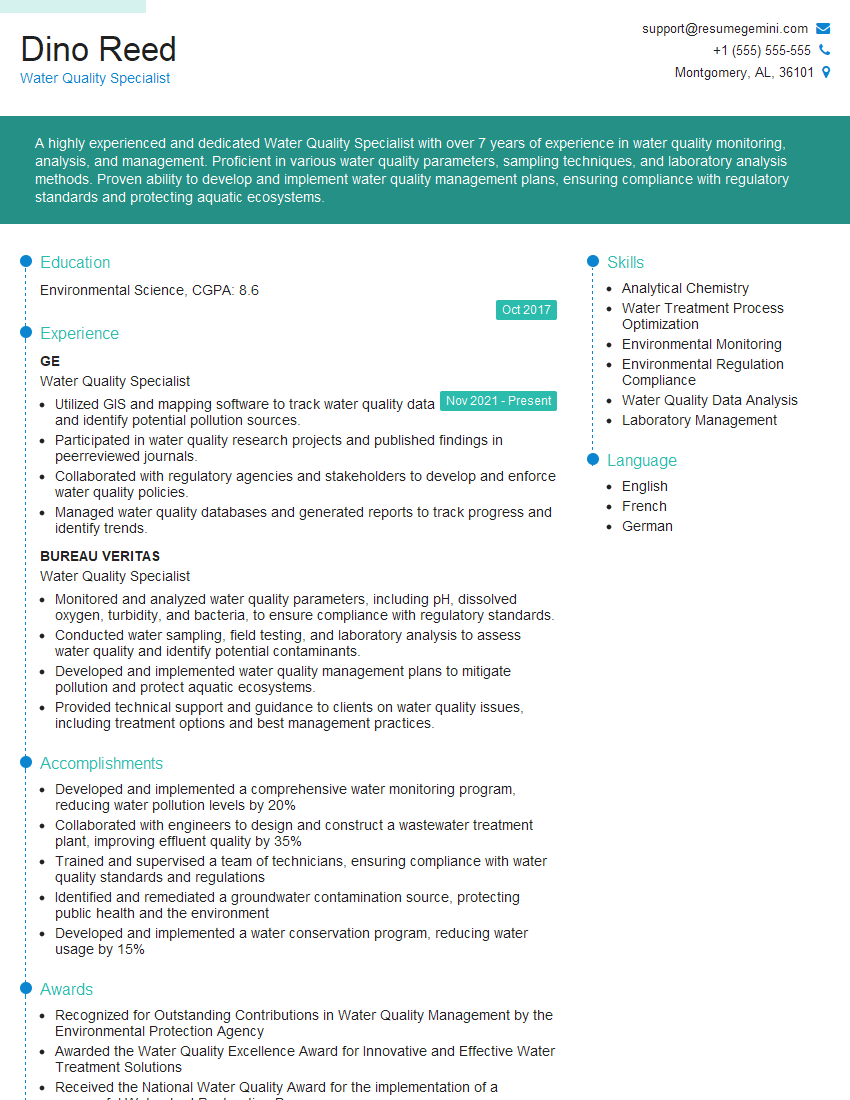
Water Quality Specialist Resume Sample
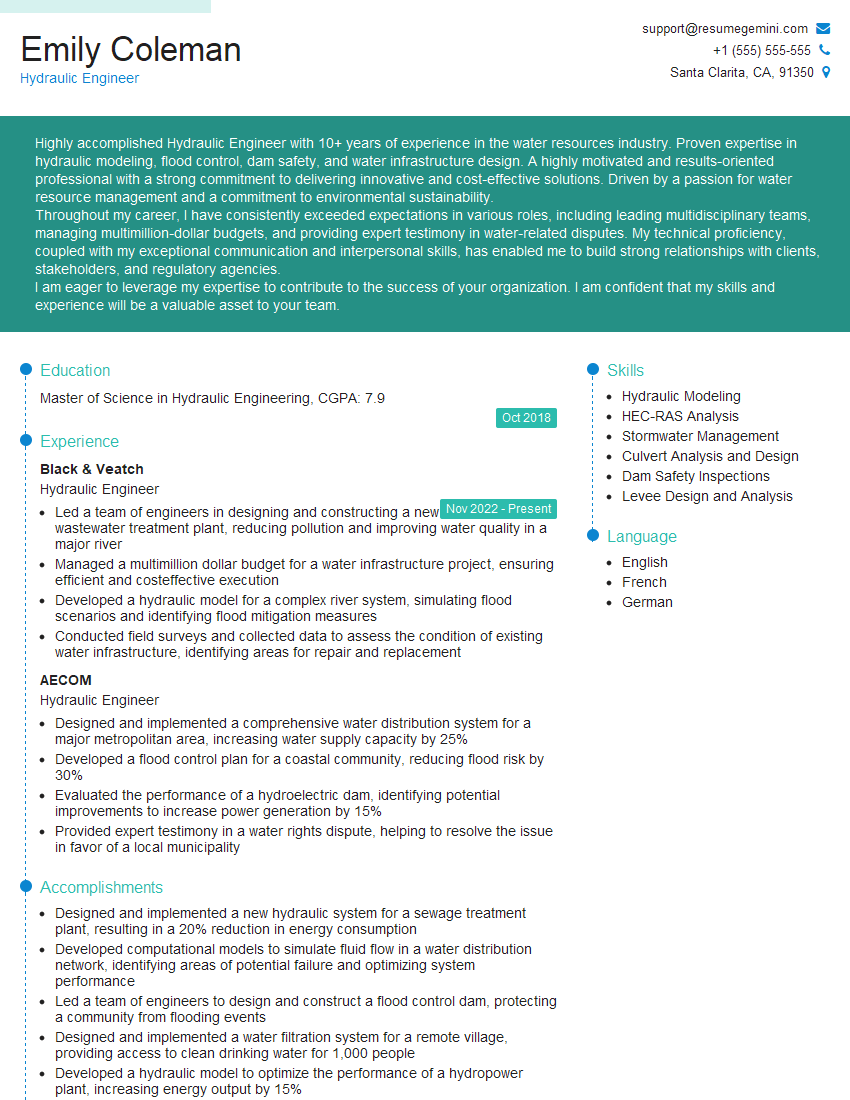
Hydraulic Engineer Resume Sample
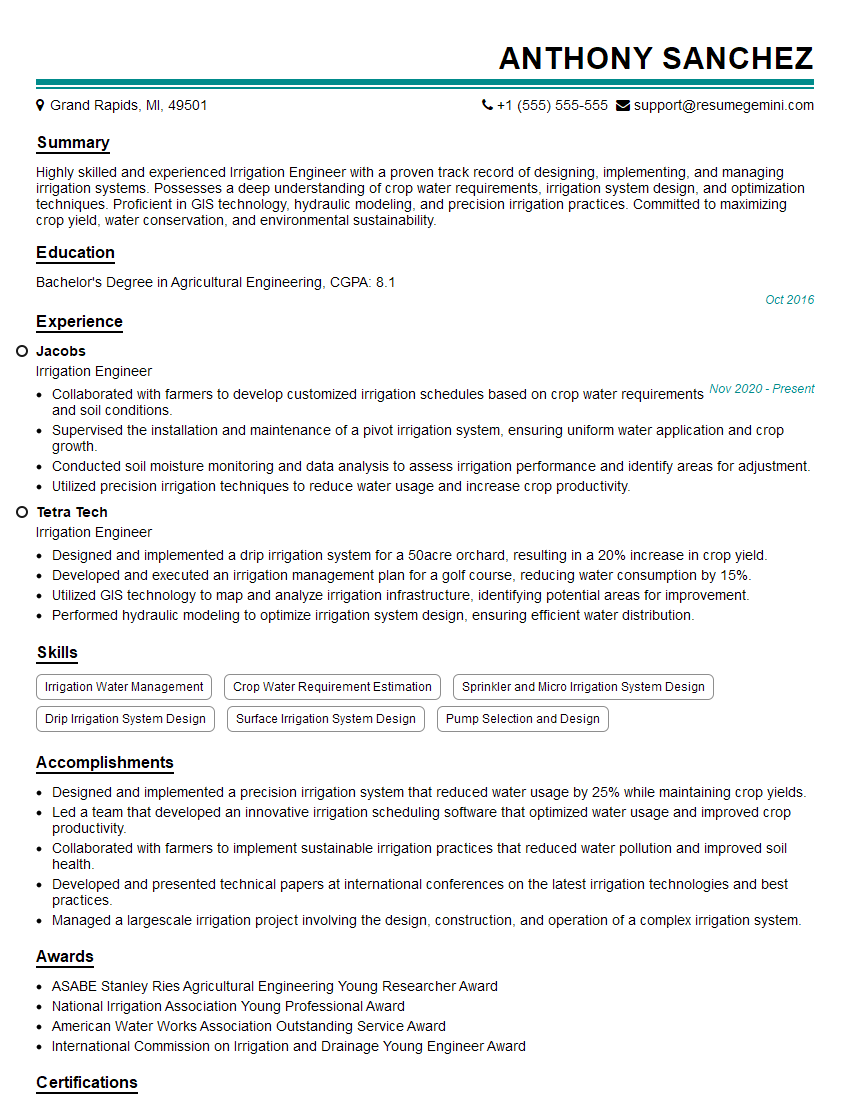
Irrigation Engineer Resume Sample
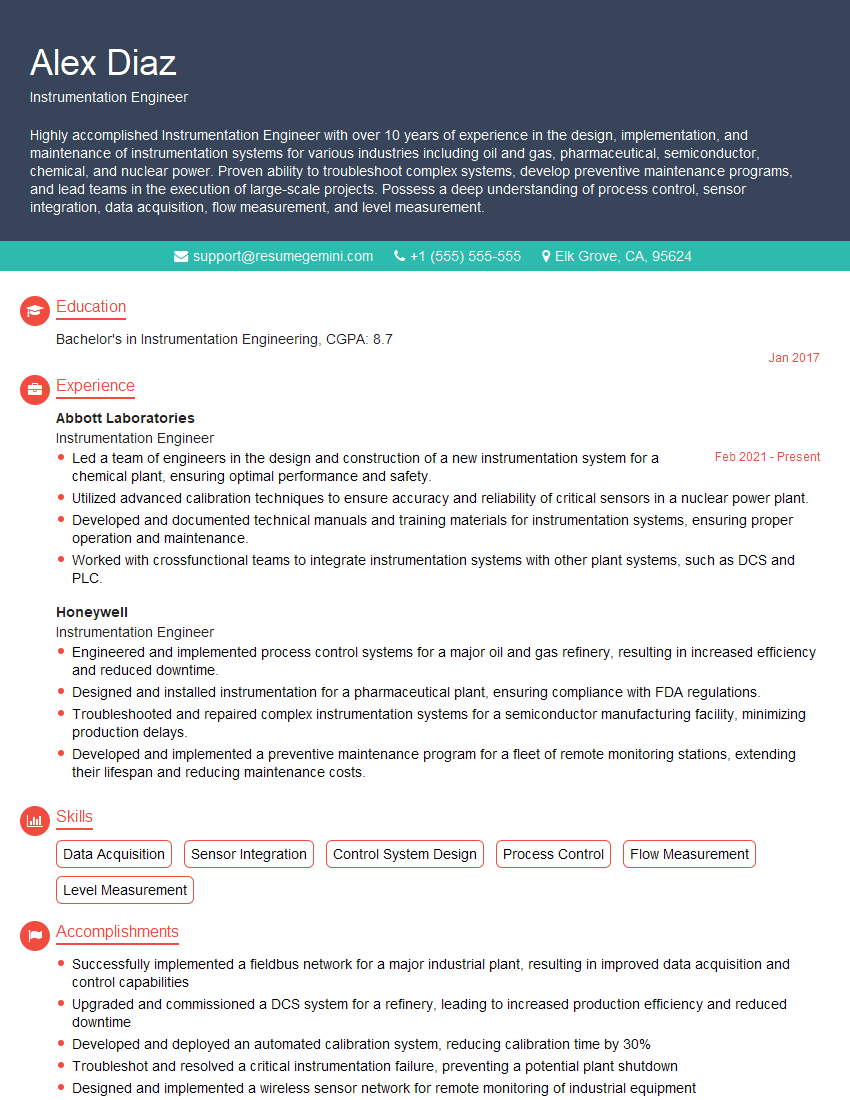
Instrumentation Engineer Resume Sample
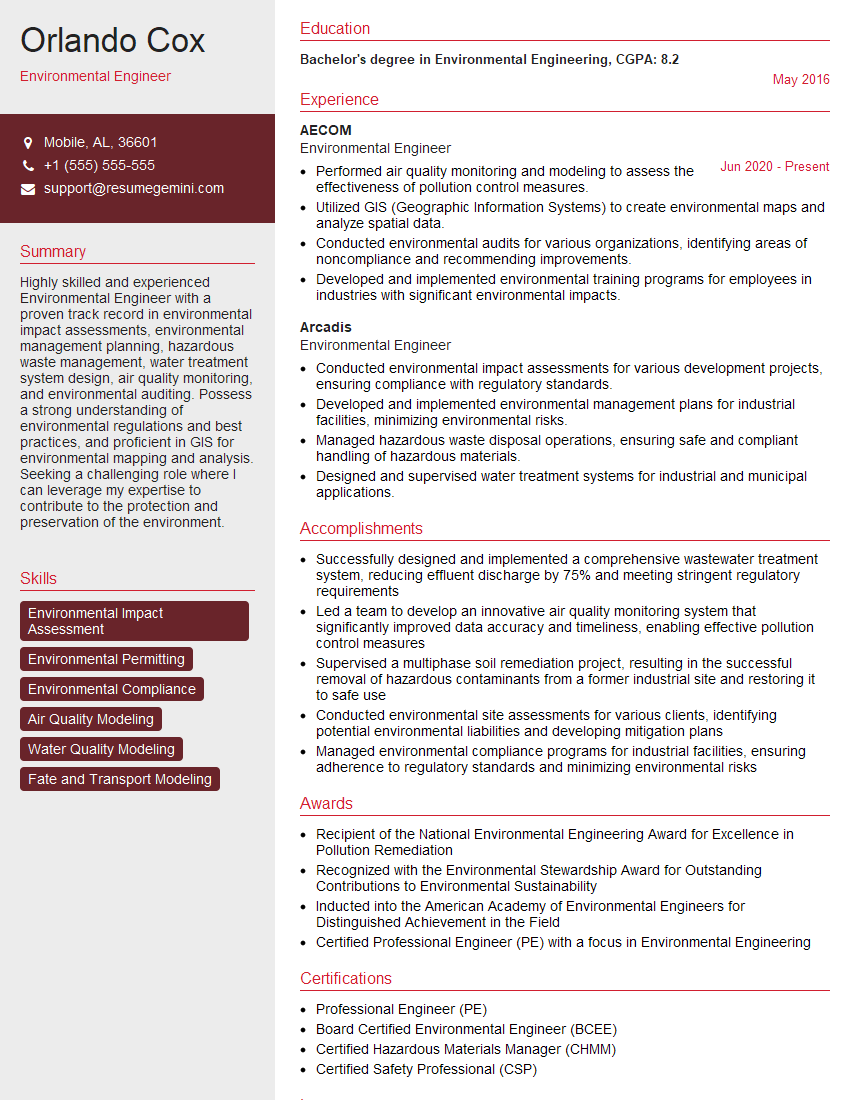
Environmental Engineer Resume Sample
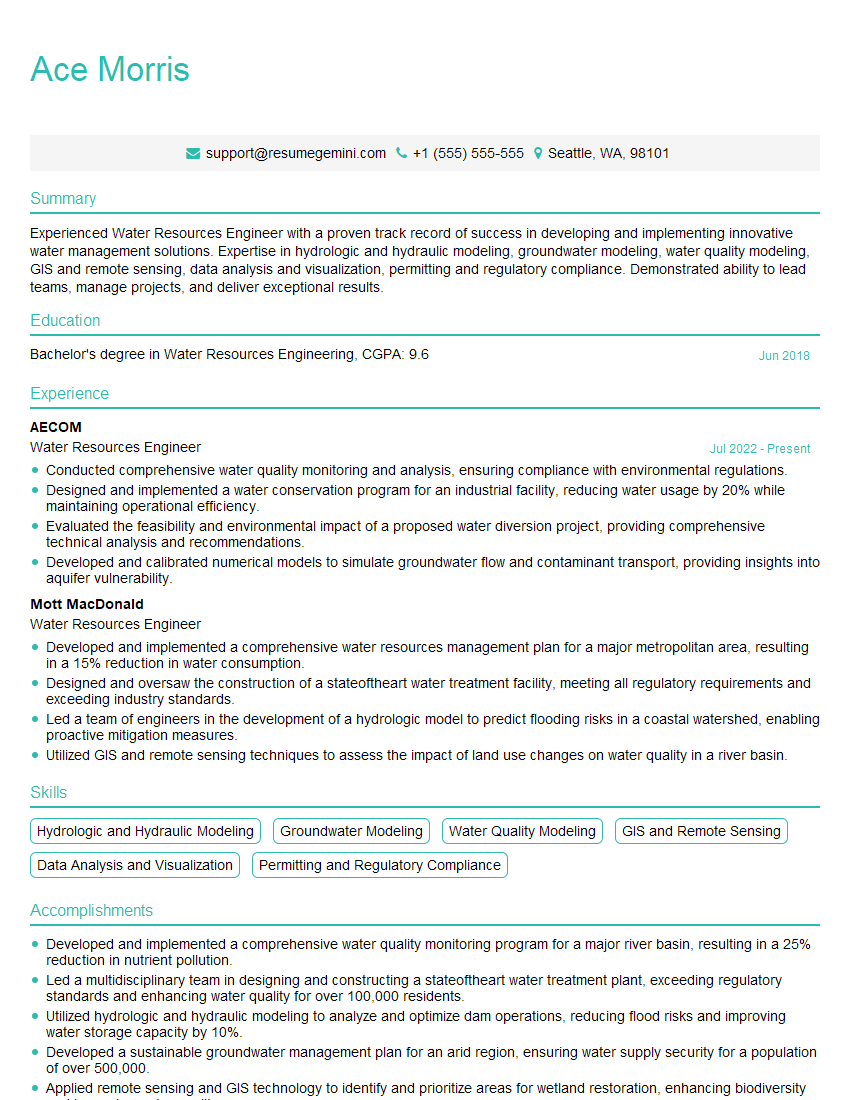
Water Resources Engineer Resume Sample
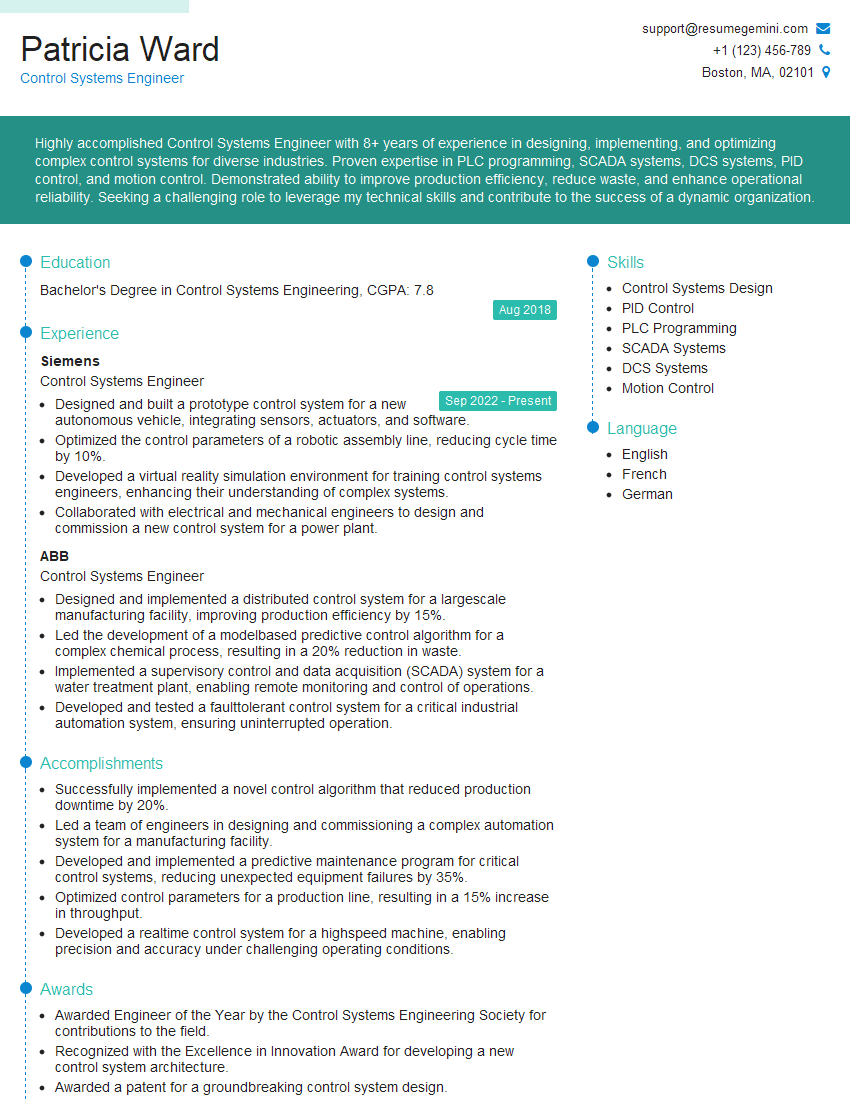
Control Systems Engineer Resume Sample
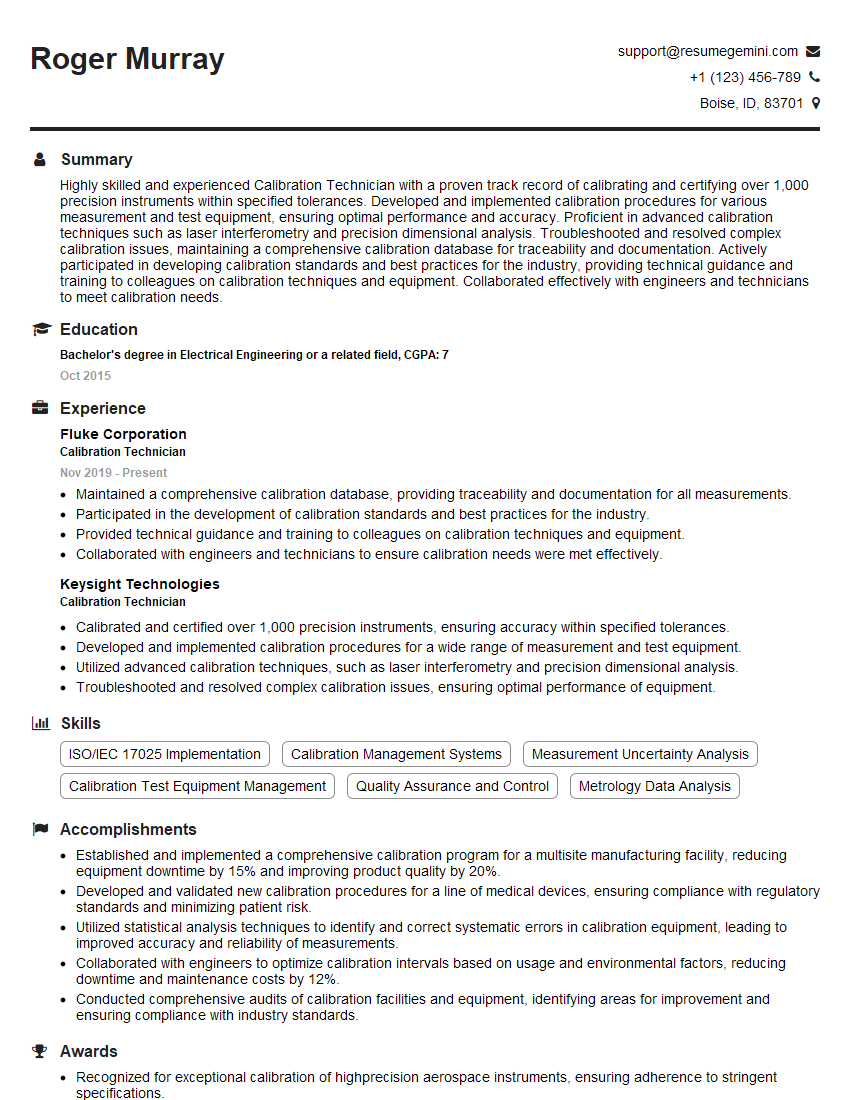
Calibration Technician Resume Sample
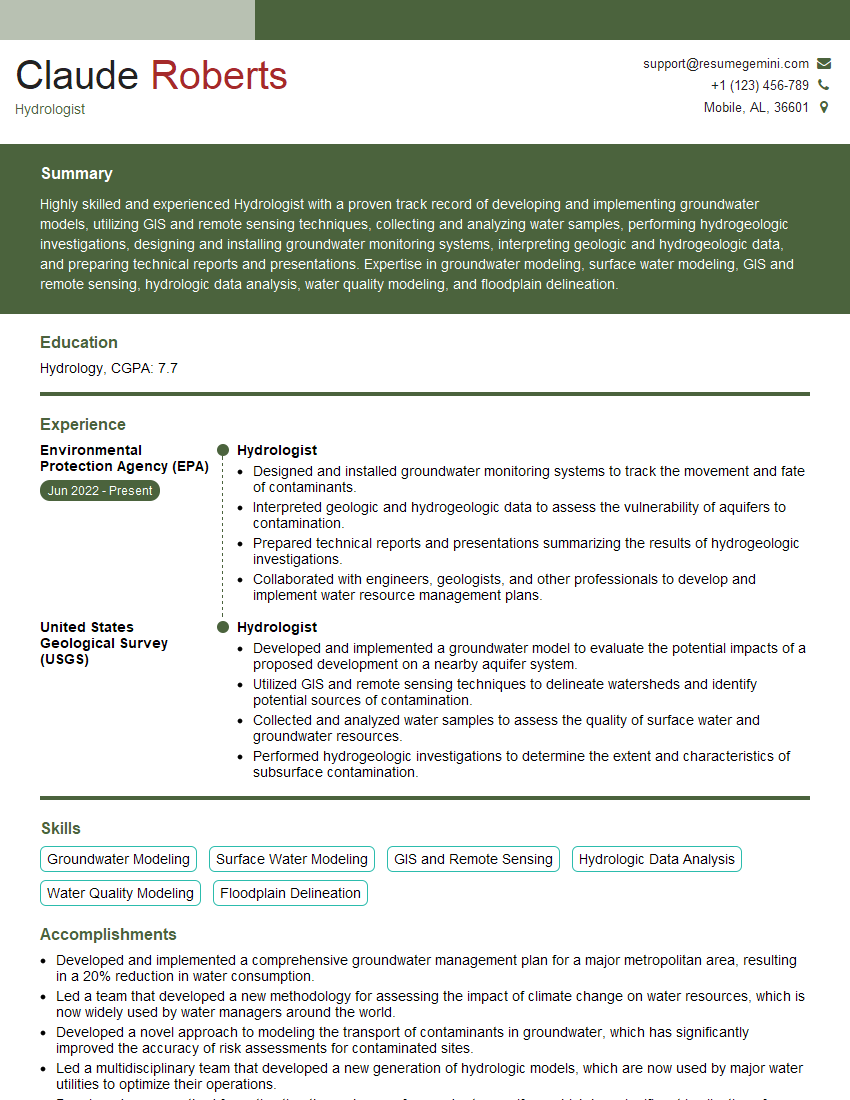
Hydrologist Resume Sample
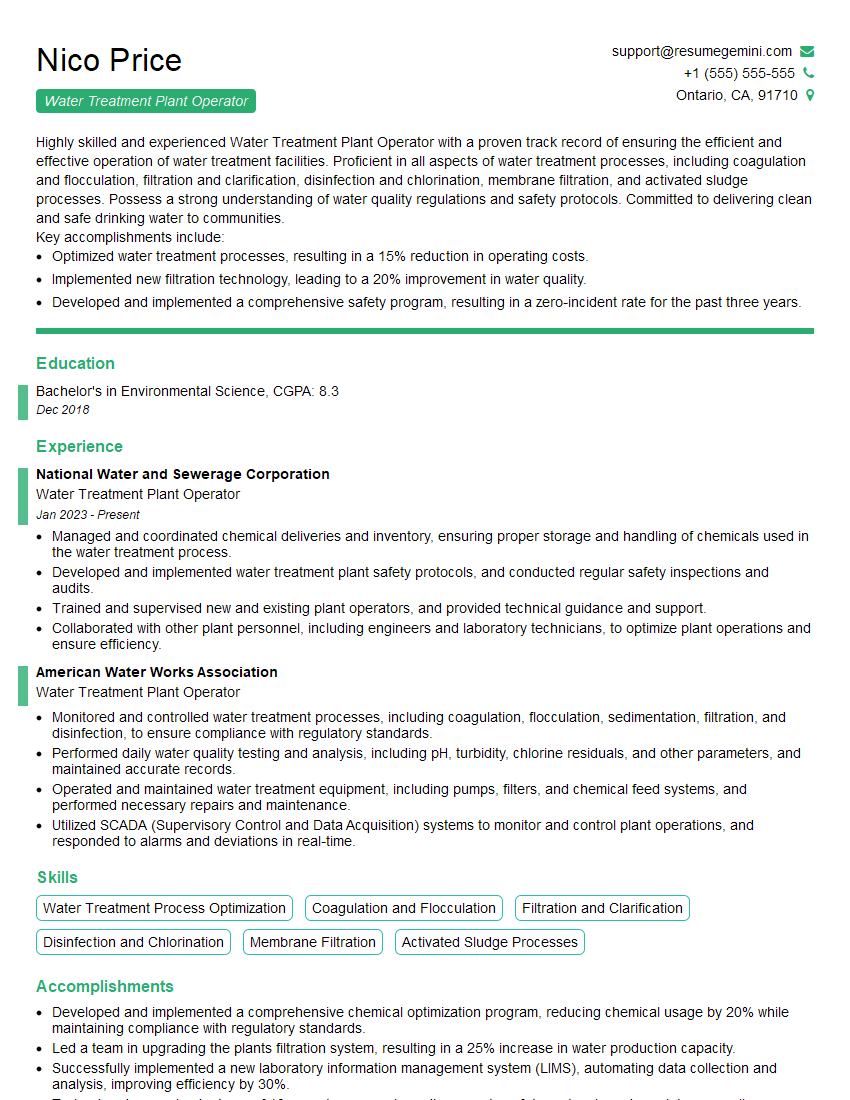
Water Treatment Plant Operator Resume Sample
Explore more articles
Users Rating of Our Blogs
Share Your Experience
We value your feedback! Please rate our content and share your thoughts (optional).
What Readers Say About Our Blog
Very informative content, great job.
good