Interviews are opportunities to demonstrate your expertise, and this guide is here to help you shine. Explore the essential Water Use Efficiency Analysis interview questions that employers frequently ask, paired with strategies for crafting responses that set you apart from the competition.
Questions Asked in Water Use Efficiency Analysis Interview
Q 1. Explain the concept of water use efficiency (WUE).
Water Use Efficiency (WUE) is a crucial concept in sustainable water management, particularly in agriculture. It’s essentially a measure of how efficiently plants use water to produce biomass (dry matter) or yield. A higher WUE means more biomass or yield is produced per unit of water consumed. Think of it like fuel efficiency in a car – a more efficient car gets more miles per gallon, just as a plant with high WUE produces more yield per unit of water. It’s often expressed as the ratio of biomass produced (or yield) to the amount of water transpired or evapotranspired.
Q 2. Describe different methods for measuring WUE in agriculture.
Measuring WUE involves quantifying both water use and plant productivity. Several methods exist:
- Yield-based WUE: This is the simplest method, calculating the ratio of yield (e.g., kg/ha) to the total amount of water used (e.g., mm). It’s easy to understand and apply but may not capture the full picture of water use by the plant.
- Transpiration-based WUE: This method measures the amount of water transpired by the plant (water lost through stomata) relative to biomass produced. Lysimeters (weighing devices that measure water loss from a soil column) are often used for precise measurement. This provides a more accurate reflection of plant water use efficiency at the plant level.
- Remote Sensing: Advanced techniques like satellite imagery and drones can provide large-scale estimations of WUE by assessing vegetation indices (like NDVI – Normalized Difference Vegetation Index) and crop water stress. This is particularly useful for monitoring WUE across vast areas.
- Stable Isotope Techniques: Using stable isotopes of water (e.g., 18O, 2H) allows researchers to trace water movement and sources within plants and soil. This offers insights into plant water uptake and utilization efficiency.
The choice of method depends on factors like the scale of measurement, available resources, and the specific research questions.
Q 3. What are the key factors influencing WUE in various crops?
Many factors interact to influence WUE in different crops. These include:
- Genetics: Different cultivars within a crop species exhibit varying WUE due to inherent differences in their physiological characteristics and water use patterns.
- Climate: Temperature, rainfall, solar radiation, and humidity directly affect evapotranspiration and thus WUE. High temperatures and low humidity increase water loss.
- Soil Conditions: Soil type, water holding capacity, and nutrient availability significantly impact water uptake by plants and thus WUE. Well-drained, fertile soils generally support higher WUE.
- Management Practices: Irrigation scheduling, fertilization, and pest control all influence WUE. Efficient irrigation practices can maximize water use for crop production.
- Crop Type: Different crops have different water requirements and WUE characteristics. C4 plants (like maize and sugarcane) generally have higher WUE than C3 plants (like wheat and rice) under certain conditions.
Optimizing these factors is crucial for improving WUE in any specific cropping system. For instance, selecting drought-tolerant varieties, implementing precise irrigation, and employing appropriate soil management techniques are effective strategies.
Q 4. How does climate change impact WUE?
Climate change poses significant challenges to WUE. Increased temperatures lead to higher evapotranspiration rates, reducing WUE. Changes in rainfall patterns – including more intense rainfall events and longer droughts – create unpredictable water availability, making it difficult to optimize irrigation and leading to reduced WUE. More frequent extreme weather events can also damage crops, impacting yields and thus WUE. Further, shifts in growing seasons and the spread of pests and diseases can add further complications.
Adaptation strategies are crucial, including developing drought-resistant crop varieties, improving irrigation management (e.g., using deficit irrigation techniques), and implementing water harvesting practices to better cope with climate variability.
Q 5. Explain the role of irrigation scheduling in improving WUE.
Irrigation scheduling plays a critical role in improving WUE. It involves applying irrigation water at the right time and in the right amount to meet crop water needs while minimizing water loss. This reduces unnecessary water application, saving water and energy and enhancing WUE.
Effective scheduling relies on monitoring soil moisture, weather data (temperature, rainfall, evaporation), and plant water status. Techniques like soil moisture sensors, weather stations, and plant-based indicators (e.g., leaf water potential) can inform irrigation decisions. Employing strategies like deficit irrigation (controlled water stress), where irrigation is intentionally reduced during certain growth stages without significantly compromising yield, can also enhance WUE.
Q 6. Discuss different irrigation technologies and their impact on WUE.
Several irrigation technologies directly impact WUE:
- Drip Irrigation: Delivers water directly to the plant roots, minimizing evaporation and runoff. This results in high WUE and efficient water use.
- Sprinkler Irrigation: Applies water as a spray, but can lead to significant evaporation losses, particularly in hot and windy conditions. Modern sprinkler systems with improved nozzles can mitigate these losses.
- Surface Irrigation: Floods water over the field. It’s generally less efficient than other methods due to high evaporation and runoff losses.
- Subsurface Irrigation: Water is applied beneath the soil surface, reducing evaporation loss. This technique is particularly effective in sandy soils.
The choice of technology depends on factors such as soil type, topography, climate, and crop type. For example, drip irrigation is well-suited for orchards and vineyards, while sprinkler irrigation might be preferred for larger fields with uniform topography.
Q 7. What are the benefits of using water-efficient irrigation systems?
Water-efficient irrigation systems provide numerous benefits:
- Reduced Water Consumption: Less water is used to produce the same yield, saving valuable water resources.
- Improved Crop Yields: Efficient water application ensures optimal crop growth and potentially higher yields.
- Lower Energy Costs: Less pumping is required, reducing energy consumption and operating expenses.
- Enhanced Soil Health: Targeted watering minimizes soil erosion and compaction, maintaining soil health.
- Environmental Benefits: Reduced water use translates to decreased environmental impacts such as groundwater depletion and salinity.
- Economic Savings: Lower water and energy costs contribute to improved farm profitability.
These benefits contribute to sustainable agricultural practices and enhance overall water security. For instance, a farmer switching from flood irrigation to drip irrigation might significantly reduce water consumption, save on energy bills, and increase his overall profits while protecting local water resources.
Q 8. How do you assess the economic viability of implementing water-efficient technologies?
Assessing the economic viability of water-efficient technologies requires a thorough cost-benefit analysis. We need to compare the upfront investment costs of the technology against the long-term savings in water bills, reduced energy consumption (for pumping and treatment), and potential increases in crop yields or industrial output.
For example, installing drip irrigation instead of flood irrigation might have a higher initial cost, but it leads to significant water savings, resulting in lower operational expenses over time. We’d calculate the net present value (NPV) of the investment, considering factors like the discount rate, the lifespan of the technology, and potential future water price increases. A positive NPV suggests economic viability. Sensitivity analysis is also crucial; we’d explore how changes in water prices or crop yields could impact the project’s profitability.
Furthermore, we assess indirect economic benefits such as improved water security, reduced environmental impact, and enhanced reputation. This holistic approach ensures a complete understanding of the project’s economic value.
Q 9. Describe different water audit methodologies.
Water audit methodologies vary depending on the scale (household, farm, industry) and objective. However, they generally involve these steps:
- Data Collection: This includes gathering information on water sources, consumption patterns, metering data (if available), and infrastructure details. Methods include reviewing bills, installing flow meters, and conducting site inspections.
- Leak Detection: Identifying and quantifying water losses due to leaks in pipes, fittings, or irrigation systems is critical. This often involves pressure testing, acoustic leak detection, or visual inspection.
- Consumption Analysis: Analyzing water use data to identify high-consumption areas or periods. This could involve comparing consumption against benchmarks or similar facilities.
- Reporting and Recommendations: Summarizing the findings, highlighting areas of water loss or inefficient use, and proposing specific measures to improve water efficiency. This might involve replacing inefficient fixtures, implementing water-saving technologies, or changing operational practices.
For instance, a farm audit might involve measuring irrigation efficiency using evapotranspiration techniques, while an industrial audit could focus on process optimization and wastewater recycling.
Q 10. Explain how remote sensing can be used to monitor WUE.
Remote sensing, using satellites or aerial platforms, offers a powerful tool for monitoring water use efficiency (WUE) at larger scales. It can provide spatially explicit information on factors influencing WUE, such as vegetation health, soil moisture, and evapotranspiration (ET).
For example, Normalized Difference Vegetation Index (NDVI) derived from satellite imagery can be used as a proxy for plant biomass and photosynthetic activity. By correlating NDVI with precipitation and irrigation data, we can estimate crop water productivity. Similarly, thermal infrared imagery can help in estimating ET, representing the amount of water transpired by plants and evaporated from the soil surface. Comparing ET with the amount of water applied helps to determine irrigation efficiency.
Advanced techniques like remote sensing-based soil moisture estimation further aid in understanding water availability and use. Combining various remote sensing datasets with ground-based measurements enhances the accuracy and reliability of WUE assessments.
Q 11. How can GIS be utilized for analyzing water use patterns?
Geographic Information Systems (GIS) provide a powerful platform for visualizing, analyzing, and managing spatial data related to water use. GIS can integrate various datasets, including water consumption data, land use maps, soil type information, and infrastructure networks, to create a comprehensive picture of water use patterns.
For example, overlaying water consumption data with land use maps can identify areas with high water intensity in specific land use types (e.g., agriculture, industry). This can help in targeting water conservation interventions. Similarly, integrating soil data with irrigation schedules can help optimize irrigation practices and improve WUE. Spatial analysis tools within GIS, such as spatial autocorrelation and geostatistics, can help in identifying spatial patterns and trends in water use, facilitating more effective management strategies.
Network analysis within GIS can be used to model water distribution systems, identifying bottlenecks and potential improvements in efficiency. This makes GIS invaluable for water resource planning and management.
Q 12. What are the key indicators used to evaluate the success of a water conservation project?
Evaluating the success of a water conservation project requires a multifaceted approach using several key indicators:
- Water Savings: The most direct measure, quantifying the reduction in water consumption achieved by the project. This requires accurate baseline data and post-implementation monitoring.
- Cost Savings: Measuring the reduction in water bills and operational expenses resulting from water conservation efforts.
- Environmental Impact: Assessing the reduction in water stress on ecosystems and improvements in water quality. This could involve monitoring changes in groundwater levels or streamflow.
- Social Equity: Ensuring that the benefits of water conservation are distributed fairly and do not disproportionately affect vulnerable populations.
- Project Sustainability: Assessing the long-term viability of the project and its ability to maintain its effectiveness over time. This involves considering factors like community engagement and institutional capacity.
A successful project should demonstrate positive impacts across these indicators, providing a holistic assessment of its overall effectiveness.
Q 13. Discuss the role of soil water retention in improving WUE.
Soil water retention plays a crucial role in improving water use efficiency (WUE) by enhancing the availability of water to plants. Soils with high water-holding capacity can store more water after irrigation or rainfall, reducing the frequency of irrigation and minimizing water loss through deep percolation or runoff.
Improved soil structure through practices like no-till farming, cover cropping, and organic matter addition enhance water infiltration and retention. This means plants can access water over a longer period, reducing the need for frequent irrigation. This reduces water stress on plants leading to healthier growth and better yields with less water input, thus improving WUE. Healthy soils also reduce evaporation losses by acting as a buffer against direct sun exposure.
Conversely, degraded soils with low organic matter and poor structure lead to increased runoff and reduced water retention, resulting in lower WUE.
Q 14. Explain the concept of water footprint and its significance.
The water footprint represents the total volume of freshwater used to produce goods and services consumed by a specific individual, community, or business. It encompasses three components:
- Blue water footprint: The amount of surface and groundwater directly withdrawn for consumption or processing.
- Green water footprint: The amount of rainwater evaporated from soil during the production of a good or service, often associated with agriculture.
- Grey water footprint: The amount of water required to assimilate pollutants produced during the production process, reflecting the water needed to dilute pollutants to acceptable levels.
Understanding a water footprint is significant because it highlights the hidden water consumption embedded in our daily lives and the environmental impacts associated with production processes. It encourages sustainable consumption patterns by raising awareness of water scarcity issues and promoting efficient water management practices across various sectors. For example, comparing the water footprints of different food production methods can inform more water-efficient dietary choices.
Q 15. Describe different water stress indicators.
Water stress indicators quantify the pressure on water resources, reflecting the balance between water availability and demand. Several indicators exist, each offering a different perspective.
Palmer Drought Severity Index (PDSI): A widely used meteorological drought index that assesses dryness based on precipitation and temperature. A negative PDSI indicates drought severity.
Standardized Precipitation Index (SPI): Similar to PDSI but uses only precipitation data, making it applicable in diverse climates. It’s particularly useful for identifying agricultural droughts.
Water Stress Ratio (WSR): Calculates the ratio of total water withdrawals to renewable water resources. A WSR exceeding 20% often indicates high water stress.
Groundwater Depletion Rate: Measures the rate at which groundwater levels are declining, revealing unsustainable extraction practices.
Crop Water Stress Index (CWSI): Specifically for agriculture, it indicates the difference between actual and potential transpiration rates, pinpointing plant stress levels due to water scarcity.
For instance, a high WSR in a region coupled with a negative PDSI signifies a severe water crisis demanding immediate attention and conservation strategies. The choice of indicator depends on the context; agricultural assessment might prioritize SPI or CWSI, while a broader water resource management plan would likely use WSR and groundwater depletion rates.
Career Expert Tips:
- Ace those interviews! Prepare effectively by reviewing the Top 50 Most Common Interview Questions on ResumeGemini.
- Navigate your job search with confidence! Explore a wide range of Career Tips on ResumeGemini. Learn about common challenges and recommendations to overcome them.
- Craft the perfect resume! Master the Art of Resume Writing with ResumeGemini’s guide. Showcase your unique qualifications and achievements effectively.
- Don’t miss out on holiday savings! Build your dream resume with ResumeGemini’s ATS optimized templates.
Q 16. How can precision agriculture enhance WUE?
Precision agriculture significantly enhances Water Use Efficiency (WUE) by optimizing water application based on real-time data and site-specific conditions. Instead of blanket irrigation, it targets water only where and when it’s needed.
Variable Rate Irrigation (VRI): Sensors and GPS technology allow for precise control of irrigation intensity, delivering more water to areas with higher crop water demand and less to areas already sufficiently hydrated. This reduces water waste and improves crop yields.
Soil Moisture Sensors: These sensors provide continuous real-time information on soil moisture levels, allowing farmers to irrigate only when necessary, preventing over-irrigation and runoff.
Remote Sensing and GIS: Satellite imagery and GIS mapping tools help analyze vegetation health and soil characteristics, informing irrigation scheduling and identifying areas requiring additional attention.
Weather Forecasting: Integrating weather forecasts allows farmers to adjust irrigation schedules proactively based on predicted rainfall events, avoiding unnecessary water use.
Imagine a vineyard using VRI – sensors detect varying soil moisture across the slopes. VRI systems then precisely adjust water application, ensuring each vine receives the optimal amount. This results in significant water savings compared to traditional flood irrigation, without compromising grape quality.
Q 17. Explain the role of drought management in water conservation.
Drought management plays a crucial role in water conservation by mitigating the impacts of water scarcity and promoting long-term sustainable water use. It’s a proactive approach that involves several key elements.
Early Warning Systems: Monitoring weather patterns and soil moisture levels to predict drought conditions allows for timely interventions.
Water Allocation Policies: Implementing regulations to prioritize water for essential needs (drinking water, human health) during droughts.
Water Demand Management: Encouraging water conservation practices among households, industries, and agriculture through public awareness campaigns and incentives.
Drought-resistant Crops: Promoting the cultivation of crops that require less water, enhancing resilience to drought conditions.
Water Storage and Reuse: Investing in water storage infrastructure (reservoirs, dams) and promoting wastewater reuse for irrigation and non-potable purposes.
For example, during a drought, a region might implement water rationing, restrict agricultural water use, and encourage rainwater harvesting, thereby reducing overall water consumption and protecting vital water resources. Effective drought management not only addresses immediate crises but also builds resilience to future droughts.
Q 18. Discuss the impact of water pricing policies on WUE.
Water pricing policies are powerful tools for influencing water use efficiency. By reflecting the true cost of water, these policies incentivize conservation and discourage wasteful practices.
Increasing Block Pricing: Charging higher rates for increasing water consumption discourages excessive use while keeping base rates affordable.
Incentive-based Pricing: Rewarding efficient water users with lower rates motivates water conservation efforts.
Taxation on Water-intensive Activities: Imposing taxes on industries or agricultural practices that heavily consume water can encourage them to adopt more efficient technologies.
Water Trading: Allowing water rights to be traded between users can efficiently allocate water to those who value it most.
Imagine a city implementing increasing block pricing. Households using less water receive lower bills, whereas those exceeding a certain threshold pay significantly more. This encourages responsible water use, ultimately conserving water for the entire community. Properly designed water pricing policies can dramatically improve WUE by aligning economic incentives with sustainable water practices.
Q 19. What are some common challenges in improving WUE in developing countries?
Improving WUE in developing countries faces unique challenges, often stemming from limited resources and infrastructure.
Poverty and Lack of Awareness: Many individuals lack the resources or understanding to invest in water-efficient technologies or practices.
Limited Access to Technology: Advanced irrigation systems and water-saving technologies may be expensive or unavailable.
Inadequate Infrastructure: Leaky pipes and inefficient water distribution networks lead to significant water losses before it reaches the end-user.
Lack of Institutional Capacity: Weak governance structures and limited enforcement of water regulations hinder the adoption of sustainable water management practices.
Climate Change Vulnerability: Increased frequency and intensity of droughts exacerbate water scarcity.
Addressing these challenges requires a multi-faceted approach, including investments in water infrastructure, capacity building, promoting affordable water-efficient technologies, public awareness campaigns, and strong policy frameworks. For example, providing subsidized access to drought-resistant seeds and training on water-efficient irrigation techniques can significantly enhance WUE in agricultural communities.
Q 20. Describe different water reuse strategies and their effectiveness.
Water reuse strategies involve collecting and treating wastewater for various purposes, minimizing reliance on fresh water sources. The effectiveness of these strategies varies depending on the treatment level and intended use.
Greywater Recycling: Recycling wastewater from showers, sinks, and laundry for non-potable applications like toilet flushing or irrigation. This requires basic treatment to remove solids and pathogens.
Blackwater Recycling: Recycling wastewater from toilets, typically requiring advanced treatment to remove harmful contaminants before reuse (e.g., for irrigation after advanced disinfection).
Industrial Wastewater Reuse: Treating industrial wastewater to meet specific quality standards before reuse in industrial processes or for irrigation. This requires tailored treatment based on the industry’s specific waste characteristics.
Agricultural Irrigation with Treated Wastewater: Using treated wastewater for irrigating crops. The level of treatment depends on the crop type and potential risks to human health.
For example, a factory using treated wastewater in its cooling towers conserves fresh water and reduces its environmental footprint. Similarly, municipalities might use treated wastewater for irrigation in parks and green spaces, significantly reducing their water demand.
Q 21. Explain the principles of water harvesting and its applications.
Water harvesting involves collecting rainwater or runoff for later use. The principles are based on capturing and storing water, minimizing losses through evaporation and infiltration.
Rooftop Harvesting: Collecting rainwater from rooftops through gutters and directing it into storage tanks. This is a simple, effective way for households and small communities to supplement their water supply.
Surface Runoff Harvesting: Capturing runoff from paved surfaces or agricultural fields using ditches, swales, or infiltration basins. This method requires careful design to prevent erosion and pollution.
Groundwater Recharge: Directing harvested water into the ground to replenish groundwater aquifers. This requires proper site selection and infiltration techniques.
Applications range from household use and small-scale irrigation to larger-scale water resource management. In arid and semi-arid regions, rainwater harvesting can play a vital role in ensuring water security. For instance, a village might construct a community rainwater harvesting system to provide water for drinking and irrigation, building resilience to droughts.
Q 22. How can you evaluate the effectiveness of water conservation programs?
Evaluating the effectiveness of water conservation programs requires a multi-faceted approach, combining quantitative and qualitative assessments. We need to move beyond simply looking at overall water consumption and delve into the specific impacts of the program.
- Baseline Data: First, establishing a robust baseline of water use before program implementation is crucial. This provides a benchmark against which to measure changes. This often involves analyzing historical water consumption data from various sources like utility bills, agricultural records, or industrial reports.
- Quantitative Metrics: Key performance indicators (KPIs) should be clearly defined and tracked. These might include percentage reduction in water consumption, changes in water use efficiency (WUE) – the ratio of output (e.g., crop yield) to input (water used) – and cost savings. For example, we might compare the pre-program and post-program WUE of a specific irrigation district, calculating the difference in yield per unit of water.
- Qualitative Assessments: Surveys, interviews, and focus groups with stakeholders (farmers, businesses, residents) can help gauge program acceptance, identify challenges, and understand behavioral changes. For instance, feedback from farmers might reveal whether new irrigation technologies are user-friendly and effective.
- Impact Evaluation: Finally, we must assess the overall impact. Did the program achieve its stated goals? Were there unintended consequences? A cost-benefit analysis can help determine the program’s economic viability and its societal impact. For example, we would assess if the cost savings due to reduced water bills outweigh the investments made in the program.
A holistic evaluation combines all these approaches to provide a comprehensive understanding of program effectiveness.
Q 23. Discuss the importance of stakeholder engagement in improving WUE.
Stakeholder engagement is paramount for improving Water Use Efficiency (WUE). Successful WUE initiatives require the collaborative participation of all those affected by water use and management.
- Identifying Stakeholders: This involves identifying all relevant parties, including farmers, industrial users, municipalities, environmental groups, and policymakers. Each stakeholder has unique perspectives and needs.
- Collaborative Planning: Open communication and participatory planning processes are vital. Stakeholders should be involved in setting goals, developing strategies, and selecting appropriate technologies. For instance, a participatory process might involve workshops where farmers can share their experiences and propose solutions.
- Capacity Building: Training and education programs can build stakeholder capacity to understand and adopt WUE practices. This can involve workshops, on-farm demonstrations, and educational materials tailored to different groups.
- Incentive Programs: Financial incentives, such as subsidies for water-efficient technologies or rebates for water conservation, can encourage participation.
- Addressing Conflicts: Stakeholder engagement also involves addressing potential conflicts over water resources. This may involve facilitating negotiations between different water users to ensure equitable distribution and sustainable management.
By prioritizing stakeholder engagement, we create a sense of ownership and commitment that fosters the long-term success of WUE improvements.
Q 24. Describe the role of modeling and simulation in optimizing WUE.
Modeling and simulation play a crucial role in optimizing WUE. They allow us to test different management strategies and predict their outcomes before implementation, saving time and resources.
- Water Balance Models: These models simulate the movement of water through a system (e.g., a watershed, an irrigation system). They can help us understand water availability, evapotranspiration rates, and the impact of different management practices on water resources.
- Crop Growth Models: These models simulate plant growth and yield responses to different water inputs. They are used to optimize irrigation scheduling and determine the optimal water allocation for maximizing crop production while minimizing water use.
- Economic Models: These models help assess the economic feasibility of different WUE strategies, taking into account costs, benefits, and risks. This helps determine if the improved efficiency leads to a positive return on investment.
- Scenario Planning: Models allow us to explore various future scenarios, such as changes in climate or population growth, and assess their impact on water availability and WUE.
For example, a model might simulate the impact of switching from flood irrigation to drip irrigation on crop yield and water use in a specific agricultural region. The results can then inform decision-making regarding technology adoption.
Q 25. What are some best practices for water management in agriculture?
Best practices for water management in agriculture focus on optimizing water use while maintaining or improving crop yields. They often involve a combination of technological and management strategies:
- Precision Irrigation: Techniques like drip irrigation, micro-sprinklers, and subsurface drip irrigation deliver water directly to plant roots, minimizing evaporation and runoff.
- Soil Moisture Monitoring: Sensors and remote sensing technologies help farmers monitor soil moisture levels, allowing them to irrigate only when necessary.
- Improved Irrigation Scheduling: Using weather forecasts and evapotranspiration data to optimize irrigation schedules, reducing water waste.
- Water-Efficient Crops: Selecting drought-tolerant crop varieties or those with high WUE can significantly reduce water demand.
- Improved Drainage: Efficient drainage systems remove excess water, preventing waterlogging and improving soil aeration.
- Cover Cropping: Planting cover crops can improve soil health, reduce erosion, and improve water infiltration.
- Integrated Pest Management (IPM): IPM strategies minimize pesticide use, reducing water pollution and protecting water quality.
These strategies, when implemented effectively, can lead to substantial improvements in both water use efficiency and agricultural productivity.
Q 26. How can you integrate WUE into sustainable development goals?
Integrating WUE into sustainable development goals (SDGs) is crucial, as water scarcity threatens many of the SDGs. WUE contributes directly to several goals:
- SDG 2 (Zero Hunger): Improved WUE in agriculture enhances food security and increases crop yields, contributing to ending hunger.
- SDG 6 (Clean Water and Sanitation): Efficient water use reduces the pressure on water resources, ensuring availability and sustainable management of water for all.
- SDG 12 (Responsible Consumption and Production): WUE promotes sustainable consumption and production patterns by reducing water waste and promoting efficient resource management.
- SDG 13 (Climate Action): Efficient water management can reduce greenhouse gas emissions associated with water extraction and irrigation.
- SDG 15 (Life on Land): Sustainable water management protects terrestrial ecosystems and biodiversity by minimizing water stress and preserving habitats.
By incorporating WUE into national and regional development strategies, we can achieve significant progress towards these SDGs and build a more sustainable and resilient future.
Q 27. Explain the concept of virtual water and its implications.
Virtual water refers to the volume of water used in the production of goods and services, from the initial stages of production to the final product. It’s the ‘hidden’ water embedded in our daily lives.
For example, producing one kilogram of beef requires approximately 15,000 liters of virtual water, including water used for raising livestock, processing, and transportation. Similarly, a cotton t-shirt might embody thousands of liters of virtual water due to the water-intensive cotton farming.
- Implications: Understanding virtual water is critical for several reasons. It helps us recognize the water footprint of our consumption patterns. It reveals how water is globally traded through the exchange of goods; countries that export water-intensive products are essentially exporting virtual water.
- Water Security: Countries with limited water resources need to carefully manage their virtual water imports and exports to ensure water security. They must consider the impact of their trading patterns on their water resources.
- Sustainable Consumption: Awareness of virtual water can encourage more sustainable consumption patterns by promoting the purchase of products with lower water footprints.
Analyzing virtual water flow helps us make more informed choices and promotes more sustainable practices.
Q 28. Describe your experience in analyzing water use data and interpreting the results.
Throughout my career, I’ve extensively worked with diverse water use data sets, including agricultural irrigation data, municipal water usage records, and industrial water consumption figures. My analysis often involves:
- Data Cleaning and Preprocessing: This crucial initial step involves handling missing data, dealing with outliers, and ensuring data consistency. I employ various statistical techniques and data visualization tools to identify and address data quality issues.
- Statistical Analysis: I use statistical methods, including regression analysis, time series analysis, and hypothesis testing, to identify trends, patterns, and correlations in water use data. For example, I might use regression analysis to explore the relationship between crop yield and irrigation water use.
- Water Use Efficiency Calculations: I routinely calculate WUE indicators, such as yield per unit of water consumed or water productivity. These calculations help assess the efficiency of water use in various sectors.
- Spatial Analysis: For geographically referenced data, I use GIS software to map water use patterns and identify areas with high or low water use efficiency. This spatial context helps us understand the geographical distribution of water stress and guide targeted interventions.
- Report Writing and Visualization: Finally, I communicate my findings through clear and concise reports, using charts, graphs, and maps to effectively visualize the results. My goal is to translate complex data into actionable insights.
For example, in a recent project analyzing agricultural water use, I identified areas with low WUE due to inefficient irrigation practices. My analysis then informed the design of a targeted training program for farmers in those regions. This led to a significant improvement in water use efficiency and crop yields.
Key Topics to Learn for Water Use Efficiency Analysis Interview
- Water Balance Concepts: Understanding evapotranspiration, infiltration, runoff, and their impact on overall water use efficiency. Practical application: Analyzing water balance data from agricultural fields to optimize irrigation scheduling.
- Crop Water Requirements: Determining crop-specific water needs using various methods (e.g., crop coefficients, evapotranspiration models). Practical application: Developing irrigation strategies for maximizing yield while minimizing water consumption.
- Irrigation Techniques and Technologies: Evaluating the efficiency of different irrigation methods (e.g., drip, sprinkler, surface). Practical application: Comparing the water use efficiency of different irrigation systems for a specific crop and climate.
- Remote Sensing and GIS Applications: Utilizing satellite imagery and GIS tools for monitoring water stress, estimating crop water requirements, and evaluating irrigation performance. Practical application: Mapping areas with high water stress using NDVI indices and GIS analysis.
- Water Use Efficiency Metrics: Calculating and interpreting key indicators such as irrigation water use efficiency (IWUE), water productivity, and consumptive water use. Practical application: Analyzing the impact of different management practices on water use efficiency metrics.
- Water Audit and Management: Conducting water audits to identify water losses and inefficiencies in various systems (e.g., municipal, industrial, agricultural). Practical application: Developing strategies for reducing water losses and improving overall water management.
- Modeling and Simulation: Utilizing hydrological models to simulate water use and evaluate the impact of different management scenarios. Practical application: Predicting the effects of climate change on water availability and water use efficiency.
- Data Analysis and Interpretation: Proficiency in statistical analysis and data visualization techniques for interpreting water use data and drawing meaningful conclusions. Practical application: Presenting water use efficiency findings clearly and concisely to stakeholders.
Next Steps
Mastering Water Use Efficiency Analysis opens doors to exciting career opportunities in environmental consulting, agriculture, water resource management, and research. A strong understanding of these concepts is highly valued by employers. To significantly boost your job prospects, create an ATS-friendly resume that highlights your skills and experience effectively. ResumeGemini is a trusted resource to help you build a professional resume that makes a lasting impression on recruiters. Examples of resumes tailored to Water Use Efficiency Analysis are available to help you get started.
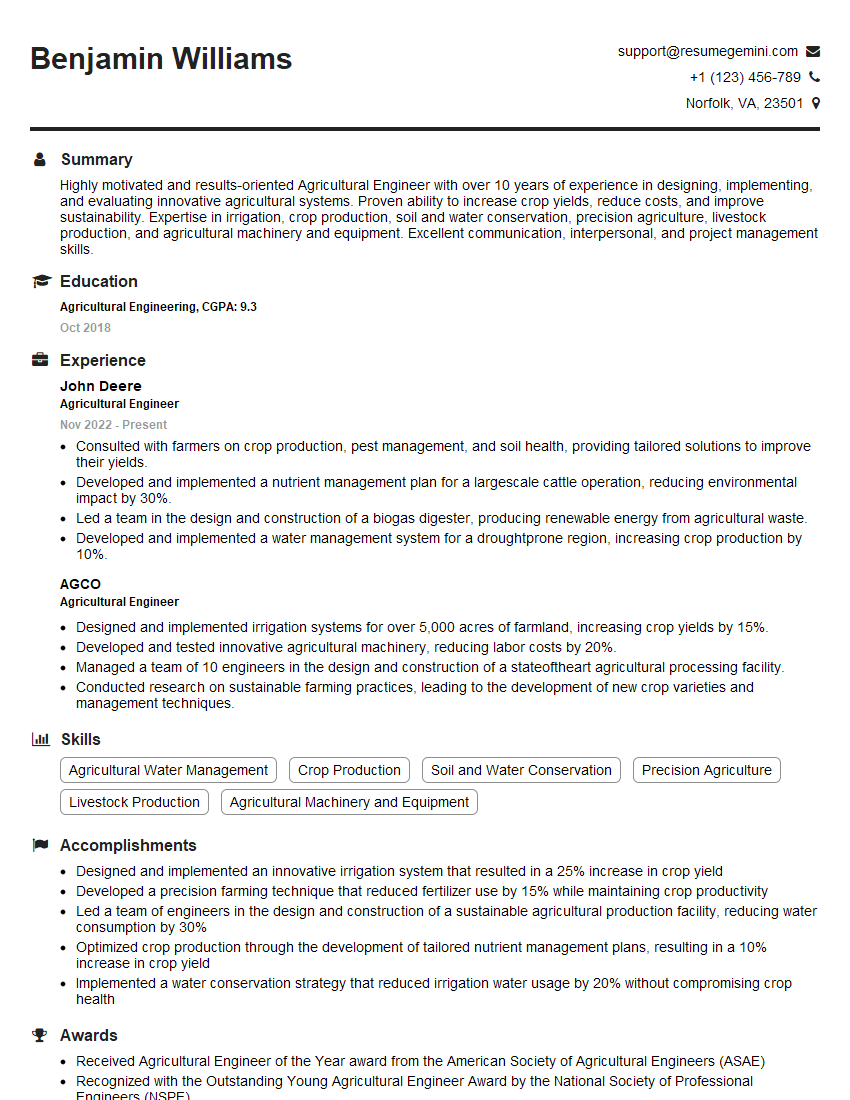
Agricultural Engineer Resume Sample

Drainage Engineer Resume Sample
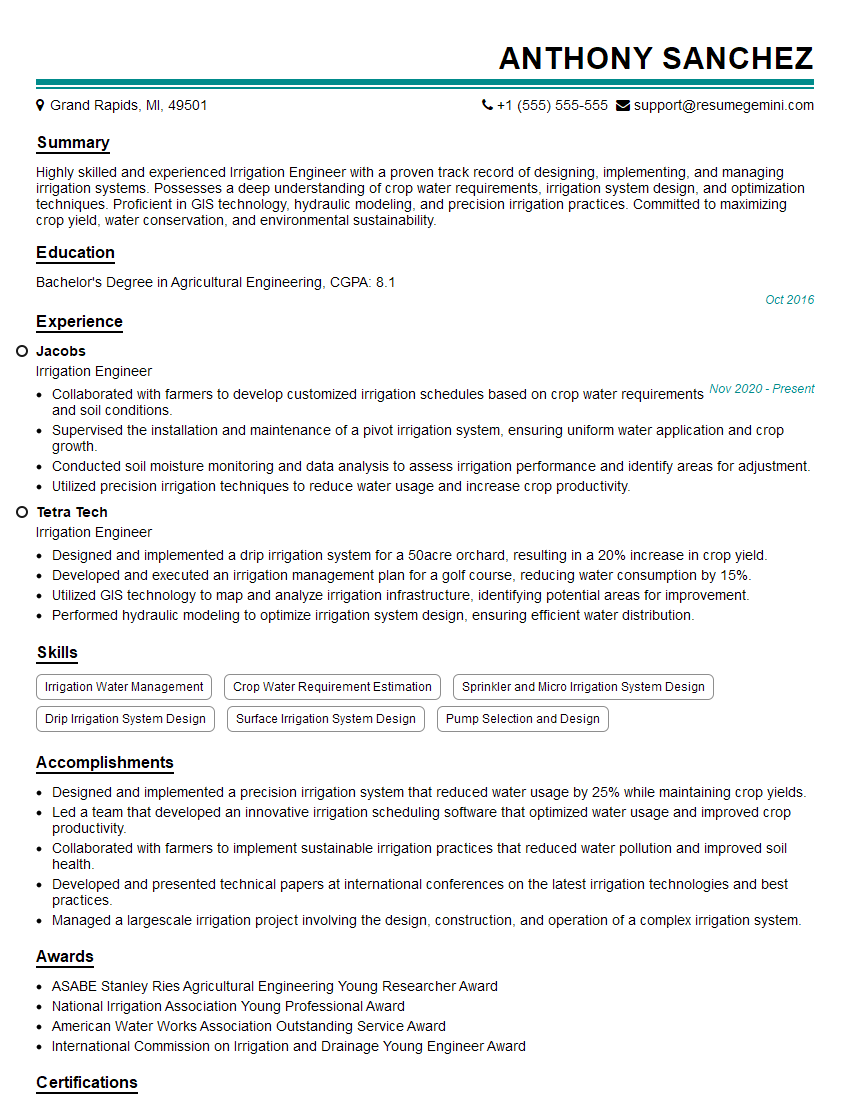
Irrigation Engineer Resume Sample
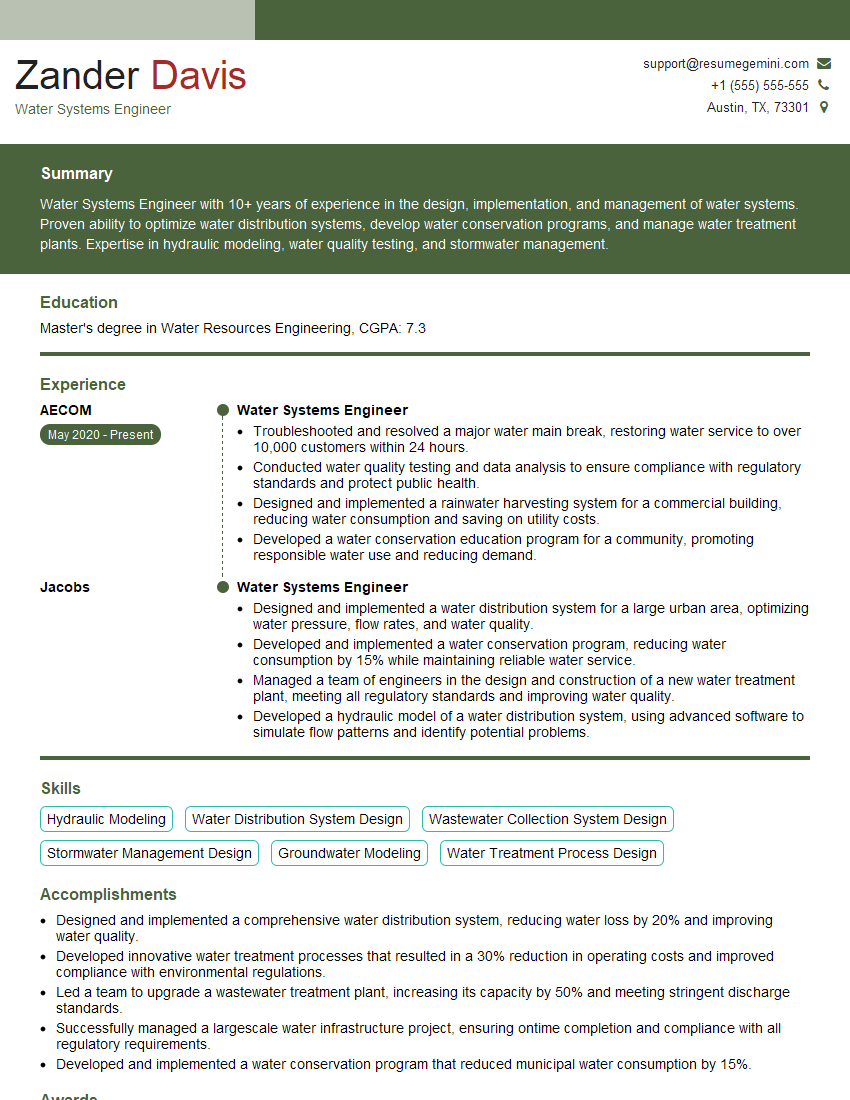
Water Systems Engineer Resume Sample
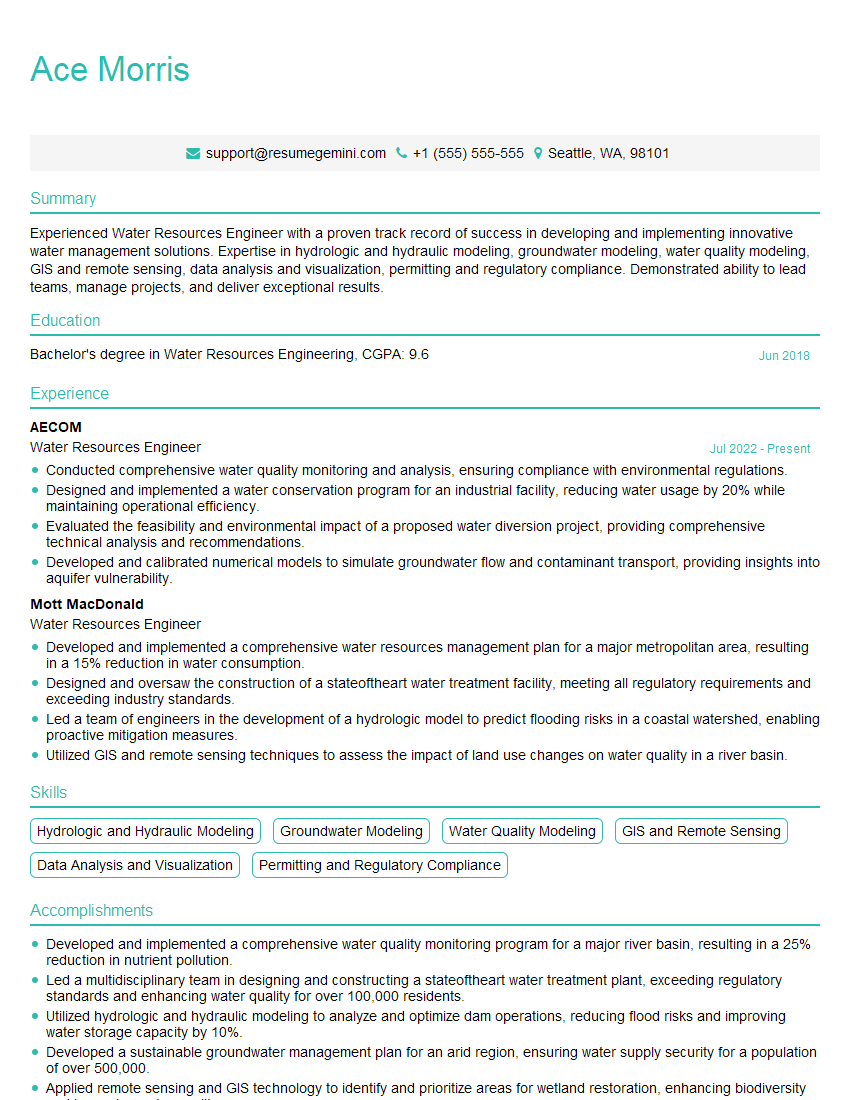
Water Resources Engineer Resume Sample
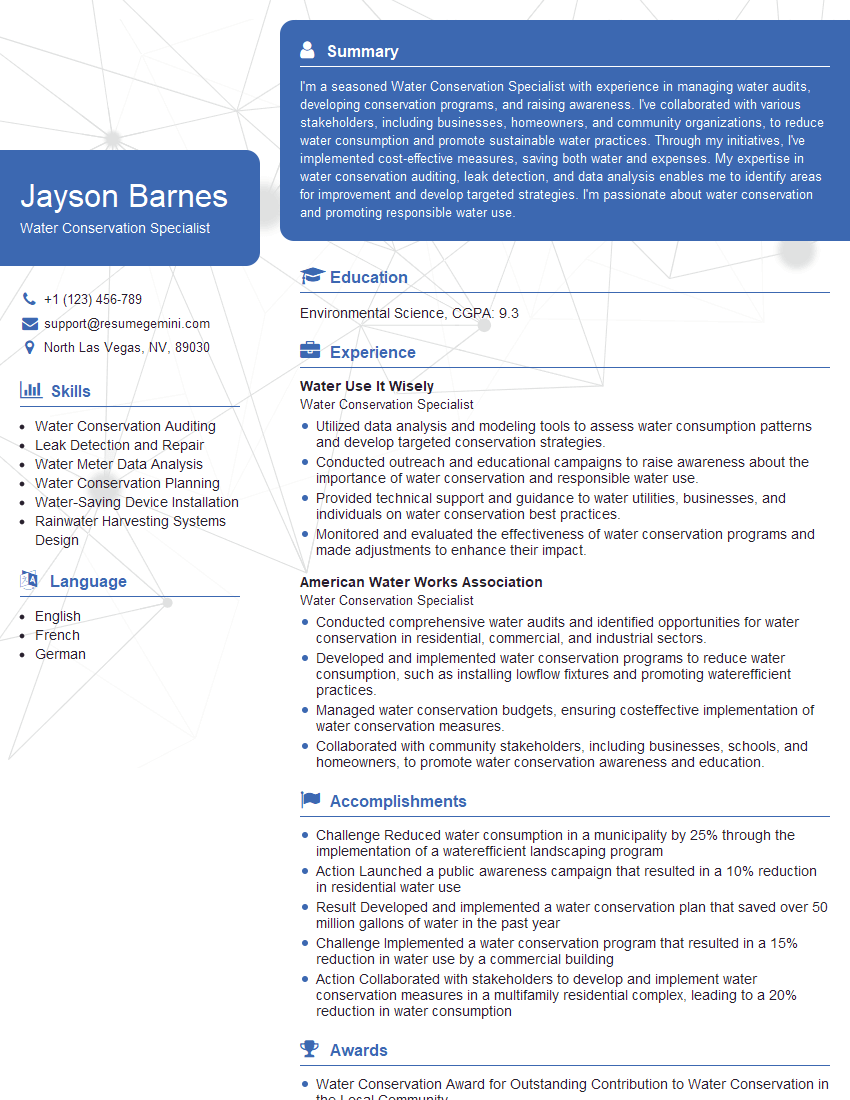
Water Conservation Specialist Resume Sample
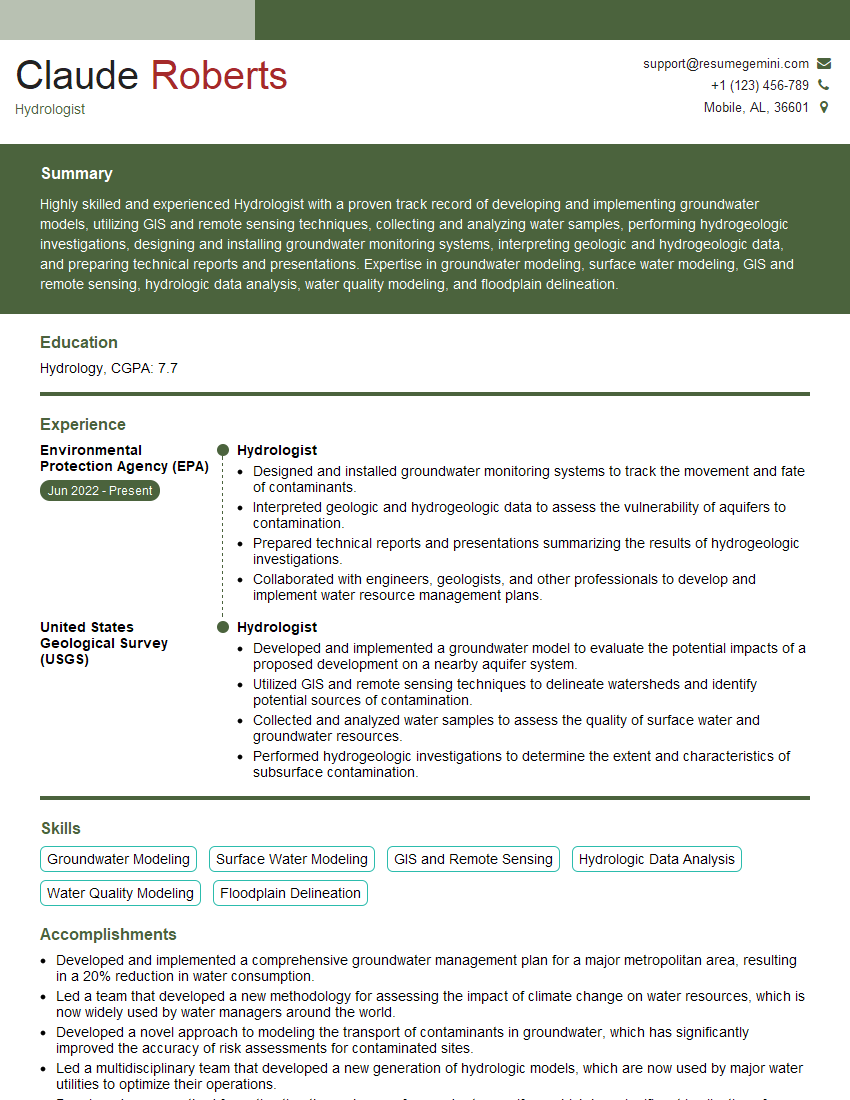
Hydrologist Resume Sample
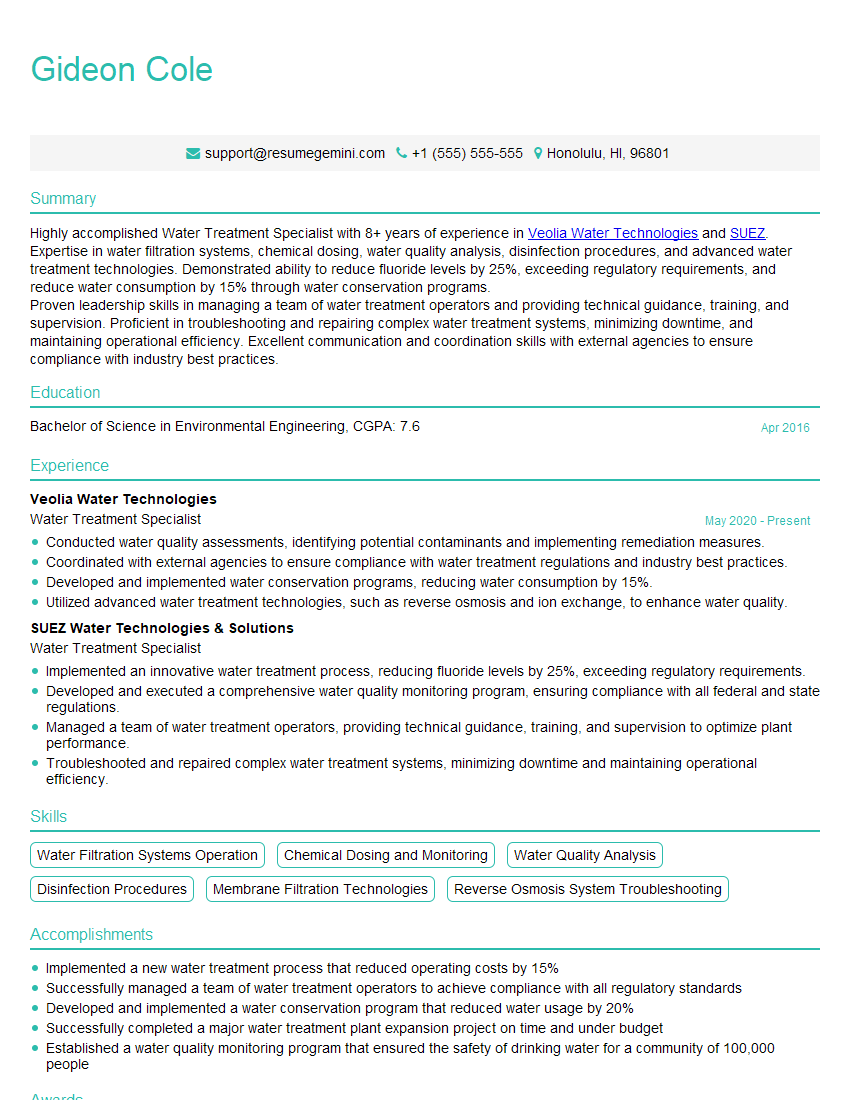
Water Treatment Specialist Resume Sample
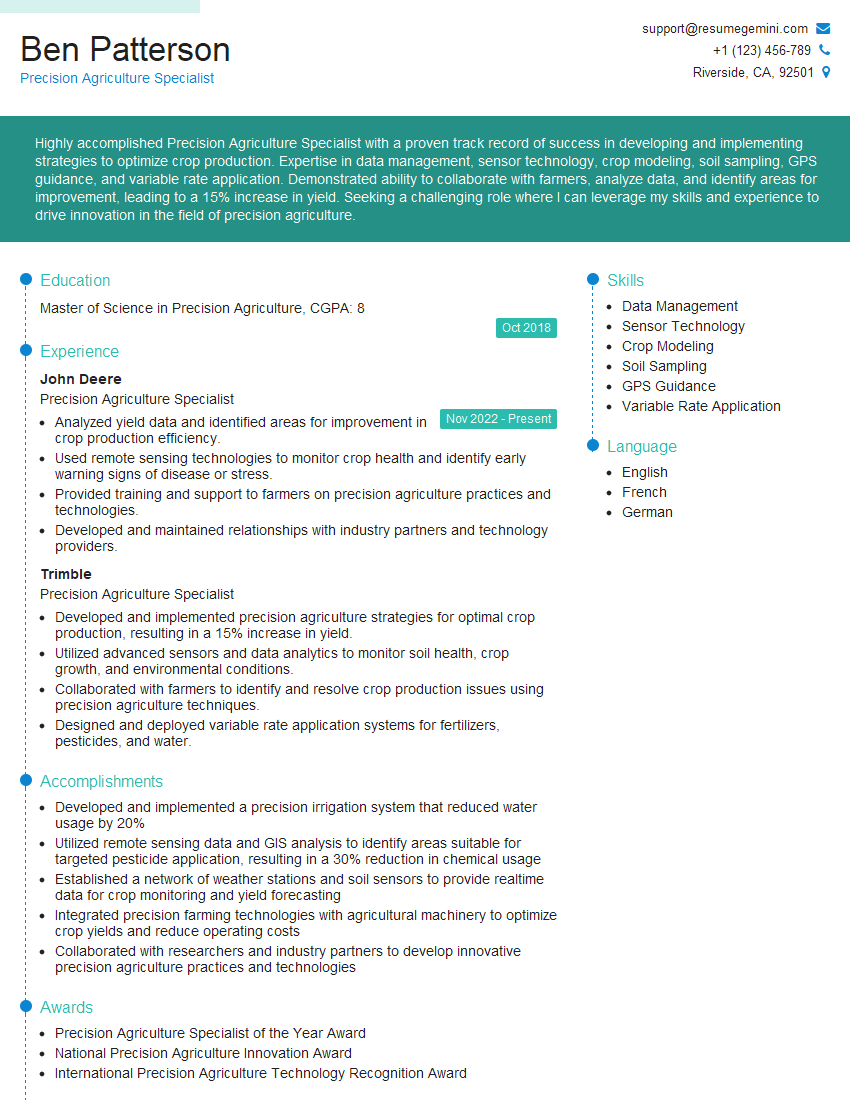
Precision Agriculture Specialist Resume Sample
Explore more articles
Users Rating of Our Blogs
Share Your Experience
We value your feedback! Please rate our content and share your thoughts (optional).
What Readers Say About Our Blog
Very informative content, great job.
good