Preparation is the key to success in any interview. In this post, we’ll explore crucial Weapons Systems Employment interview questions and equip you with strategies to craft impactful answers. Whether you’re a beginner or a pro, these tips will elevate your preparation.
Questions Asked in Weapons Systems Employment Interview
Q 1. Describe the different types of guided munitions and their respective advantages and disadvantages.
Guided munitions are weapons that use a guidance system to precisely hit a target. Several types exist, each with its strengths and weaknesses:
- GPS-guided: These munitions use GPS signals to navigate to pre-programmed coordinates.
- Advantages: High accuracy, relatively inexpensive, all-weather capability.
- Disadvantages: Vulnerable to GPS jamming or spoofing, requires clear line of sight to satellites.
- Laser-guided: These munitions are guided by a laser beam illuminating the target.
- Advantages: High precision, effective against moving targets, can be used in adverse weather conditions.
- Disadvantages: Requires laser designator to illuminate the target, susceptible to countermeasures such as smoke or dust.
- Infrared (IR)-guided: These munitions home in on the heat signature of the target.
- Advantages: Passive guidance (no need for external illumination), suitable for targets with thermal contrast.
- Disadvantages: Sensitive to background clutter, can be decoyed by heat sources.
- Image-guided (TV/IIR): These munitions utilize a camera system for target recognition and tracking.
- Advantages: High precision, good for discriminating between targets.
- Disadvantages: Expensive, more complex systems, potentially vulnerable to adverse weather conditions.
- Inertial Navigation Systems (INS): These use internal sensors to measure acceleration and rotation to calculate position and orientation, often augmented by GPS.
- Advantages: Autonomous navigation capability, self-contained.
- Disadvantages: Accuracy degrades over time due to drift, often requires other sensors for precise targeting.
For example, a GPS-guided bomb might be ideal for a large-scale bombing campaign where pinpoint accuracy isn’t paramount but cost-effectiveness is. In contrast, a laser-guided bomb might be preferred for a surgical strike against a high-value target.
Q 2. Explain the concept of ‘kill chain’ in weapons systems employment.
The ‘kill chain’ describes the sequence of events from target identification to target destruction. It is a crucial concept in weapons systems employment. The chain typically involves:
- Find: Intelligence gathering and target identification (using intelligence, surveillance, and reconnaissance – ISR – assets).
- Fix: Locating and precisely determining the target’s position.
- Track: Continuously monitoring the target’s location and movement.
- Target: Selecting the appropriate weapon and engaging the target.
- Engage: Launching the weapon and guiding it to the target.
- Assess: Evaluating the effectiveness of the strike and taking appropriate follow-on action.
Think of it as a chain – if any link breaks, the entire process fails. Effective kill chain management requires seamless integration between intelligence, surveillance, and weapons systems. For instance, a malfunction in the ‘track’ phase due to sensor failure could compromise the entire engagement.
Q 3. What are the key factors to consider when integrating a new weapons system into an existing platform?
Integrating a new weapons system into an existing platform demands careful consideration of several factors:
- Physical Integration: Will the weapon fit physically into the platform? This involves considerations of size, weight, power requirements, and interface compatibility with the platform’s existing systems.
- Software Integration: Can the weapons system’s software seamlessly integrate with the existing platform’s software? This requires compatibility checks and thorough testing to ensure the weapon functions as designed and doesn’t interfere with other systems.
- Operational Compatibility: How well will the new system work within the existing operational procedures? This necessitates training and adjustments to tactics, techniques, and procedures (TTPs) and effective communication across teams.
- Safety: What are the safety implications of integrating the new weapon system? This demands stringent safety protocols and comprehensive risk assessment to prevent accidents and ensure the safety of personnel.
- Cost: What are the overall costs associated with integration, including the procurement, modification of the platform, and training?
- Maintainability: Can the platform’s existing maintenance personnel support the new weapon system? If specialized training or tools are needed, these costs must be considered.
A poorly executed integration can lead to system malfunctions, reduced effectiveness, and increased costs. For example, a case of insufficient power supply to the new weapon system can render it unusable on the platform.
Q 4. How do you assess the effectiveness of a weapons system?
Assessing weapons system effectiveness involves a multifaceted approach combining quantitative and qualitative data:
- Probability of Kill (Pk): This metric measures the likelihood of a single weapon destroying a target. This is determined through testing and simulations.
- Circular Error Probable (CEP): This represents the radius within which 50% of the rounds impact the target, indicating accuracy.
- Reliability: How consistently does the weapon perform as designed under various conditions?
- Maintainability: How easily and quickly can the weapon be maintained and repaired?
- Survivability: How well can the weapon survive enemy attacks and harsh environmental conditions?
- Cost-Effectiveness: Considering the cost versus the effectiveness achieved.
- Post-Mission Analysis: Detailed examination of data collected during field tests or combat operations to assess system performance and operator feedback.
Each metric provides insights into different aspects of the weapon’s effectiveness. For instance, a high Pk but a large CEP might suggest a powerful weapon but with inconsistent accuracy.
Q 5. Describe your experience with weapons system simulations and modeling.
I have extensive experience with weapons system simulations and modeling using software such as [Mention specific software used, e.g., Six Sigma, MATLAB, etc.]. This includes developing and running simulations to model various scenarios, analyze weapon performance, and optimize engagement strategies.
My work involves creating detailed models of weapons, targets, and the environment to predict weapon effectiveness under different conditions. For example, I’ve used simulations to assess the impact of weather conditions on the accuracy of GPS-guided munitions or evaluate the effectiveness of different countermeasures against various threat systems.
These simulations allow for cost-effective testing, the exploration of various ‘what-if’ scenarios, and the identification of potential vulnerabilities or weaknesses before deploying the weapon system in real-world situations.
Q 6. Explain the role of sensor fusion in modern weapons systems.
Sensor fusion is the process of integrating data from multiple sensors to achieve a more comprehensive and accurate understanding of the environment. In modern weapons systems, this is crucial for improved target identification, tracking, and engagement.
For example, a modern fighter jet might combine data from radar, infrared sensors, and electro-optical cameras to build a complete picture of the battlefield. The radar provides long-range detection, the infrared sensor identifies heat signatures, and the camera provides high-resolution imagery for positive target identification. By combining this data, the weapon system can accurately identify targets, even in challenging environments.
Sensor fusion improves situational awareness, reduces reliance on any single sensor, and improves overall system robustness. It helps mitigate the limitations of individual sensors, such as radar being susceptible to electronic countermeasures or infrared sensors being affected by weather conditions.
Q 7. What are the ethical considerations surrounding autonomous weapons systems?
The development and deployment of autonomous weapons systems (AWS), also known as lethal autonomous weapons (LAWs), raise significant ethical concerns:
- Accountability: Who is responsible when an AWS makes a mistake and causes harm? The lack of human control raises concerns about accountability and the potential for misuse.
- Discrimination: Can an AWS reliably distinguish between combatants and civilians in complex scenarios? Bias in algorithms or sensor data could lead to unintended civilian casualties.
- Escalation: The rapid deployment and autonomous nature of AWS could lower the threshold for armed conflict, potentially leading to uncontrolled escalation.
- Humanity: The delegation of life-or-death decisions to machines raises fundamental questions about human dignity, judgment, and control.
International discussions are ongoing to establish regulations and guidelines for the development and use of AWS. These discussions highlight the importance of ensuring human oversight, transparency, and accountability in the development and deployment of such systems to prevent potential catastrophic outcomes.
Q 8. How do you ensure the maintainability and supportability of a weapons system?
Ensuring maintainability and supportability of a weapons system is paramount for its operational effectiveness and longevity. It’s not just about fixing things when they break; it’s about designing for ease of maintenance from the outset. This involves a multifaceted approach encompassing design, documentation, training, and logistical support.
- Design for Maintainability (DfM): This principle dictates that the system should be designed with easy access to components, modularity for quick replacements, and standardized parts to minimize complexity. Imagine a car engine: a well-designed engine with easily accessible parts is much easier to maintain than one with parts crammed together.
- Comprehensive Documentation: Detailed technical manuals, schematics, and troubleshooting guides are essential. This ensures technicians have the information they need to diagnose and resolve issues efficiently. Think of it like a well-written recipe – the clearer the instructions, the easier it is to replicate the outcome.
- Robust Training Programs: Well-trained personnel are critical. Regular training updates, simulations, and hands-on experience ensure technicians can handle repairs and maintenance effectively. A pilot needs rigorous training to fly a sophisticated aircraft; similarly, technicians need extensive training to maintain complex weapons systems.
- Effective Supply Chain Management: This involves having readily available spare parts, tools, and equipment. A well-managed supply chain minimizes downtime caused by part shortages. This is akin to a well-stocked kitchen – having all the necessary ingredients on hand ensures you can cook a meal without delay.
- Built-in Diagnostics: Modern systems often incorporate self-diagnostic capabilities, alerting technicians to potential problems before they escalate. This proactive approach reduces downtime and prevents catastrophic failures. This is similar to a car’s check engine light, which alerts the driver to a potential issue.
Q 9. Discuss your understanding of different targeting algorithms.
Targeting algorithms are the brains behind guiding weapons to their intended targets. Different algorithms exist, each with its strengths and weaknesses, tailored to specific scenarios and weapon types.
- Proportional Navigation (PN): This classic algorithm calculates the required guidance commands based on the relative velocity between the weapon and the target. It’s simple and effective but can be susceptible to target maneuvers.
- Augmented Proportional Navigation (APN): APN improves upon PN by adding a term to account for target acceleration, making it more robust against evasive maneuvers. This is particularly useful for intercepting agile targets like missiles.
- Line-of-Sight (LOS) Guidance: This approach keeps the weapon pointed directly at the target, requiring continuous updates on target location. It’s straightforward but can be vulnerable to target maneuvers and line-of-sight obstructions.
- Command to Line-of-Sight (CLOS) Guidance: CLOS combines LOS with predictive calculations to anticipate target movement, making it more accurate than pure LOS guidance.
- Beam Riding Guidance: This method guides the weapon along a beam of energy, such as a laser, emitted from the launch platform. Accuracy depends on maintaining a clear beam path to the target.
The choice of algorithm depends on factors like target characteristics (speed, maneuverability), weapon capabilities, and environmental conditions. For instance, an air-to-air missile might use APN to effectively engage a maneuvering aircraft, while a ground-to-ground missile might use CLOS to account for the target’s movement and terrain.
Q 10. Describe your experience with testing and evaluating weapons systems.
My experience in testing and evaluating weapons systems encompasses a range of methodologies, from simulations to live-fire exercises. It’s a rigorous process aiming to ensure the system performs as intended and meets its operational requirements under various conditions.
- System-Level Tests: These encompass functional and performance tests to validate that all the system components work together as designed. This might involve testing the range, accuracy, reliability, and lethality of the weapon.
- Component-Level Tests: These are conducted to assess the functionality and performance of individual components of the system. For example, testing the individual sensors, actuators, or communication systems.
- Environmental Tests: Weapons systems are subjected to extreme conditions such as high and low temperatures, humidity, and vibration to ensure their reliability in diverse environments. Think of testing a missile’s ability to withstand the stresses of launch and flight.
- Live-Fire Exercises: This involves deploying the weapon under realistic combat scenarios to evaluate its overall performance. This provides valuable data on its effectiveness in real-world conditions, but is significantly more expensive and risky than other testing methods.
- Data Analysis and Reporting: Thorough analysis of test data is essential for identifying strengths, weaknesses, and areas for improvement. This data informs future system modifications and enhances overall system performance.
Throughout this process, rigorous documentation and adherence to safety protocols are of utmost importance. I’ve been involved in multiple projects, using a combination of these methods to thoroughly evaluate weapons systems and ensure their operational readiness.
Q 11. How do you manage risks associated with weapons system deployment?
Managing risks associated with weapons system deployment is crucial. It involves identifying potential hazards, assessing their likelihood and impact, and implementing mitigation strategies. This is often approached using a structured risk management framework.
- Risk Identification: This involves systematically identifying potential problems that could arise during deployment, such as technical malfunctions, logistical challenges, environmental factors, or even human error. Techniques like brainstorming and hazard and operability studies (HAZOP) are employed.
- Risk Assessment: Once identified, risks are evaluated based on their likelihood and potential severity. This might involve a qualitative assessment (e.g., high, medium, low) or a quantitative assessment based on statistical data and probabilities.
- Risk Mitigation: This is where we develop strategies to reduce the likelihood or impact of identified risks. Strategies can include redesigning system components, implementing redundant systems, improving training, enhancing logistical support, or establishing contingency plans.
- Risk Monitoring and Control: Continuous monitoring is crucial. During deployment, risks need to be regularly reassessed, and mitigation strategies adapted as needed. This might involve using real-time data to track system performance and identify emerging risks.
- Contingency Planning: Having robust plans in place to handle unexpected events is crucial. This involves developing alternative courses of action in the event that primary plans fail.
A structured approach to risk management is vital for ensuring safe and effective weapons system deployment.
Q 12. Explain the process of selecting the optimal weapons system for a specific mission.
Selecting the optimal weapons system for a specific mission involves a careful consideration of various factors, often using a structured decision-making process.
- Mission Requirements Definition: Clearly defining the mission objectives, including the target type, environment, engagement range, and desired level of accuracy, is the first step. What are we trying to achieve with this weapon?
- System Capabilities Analysis: Assessing the capabilities of available weapons systems against the defined mission requirements is next. This might involve comparing various systems based on range, accuracy, payload, lethality, and other relevant parameters.
- Cost-Effectiveness Analysis: Comparing the cost of acquisition, operation, and maintenance of different systems is essential. We need to ensure the system provides the best value for the money invested.
- Operational Constraints Analysis: Considering operational limitations like availability of launch platforms, logistical requirements, and environmental factors is crucial. Can this weapon be deployed effectively in the given environment and with available resources?
- Risk Assessment: A risk assessment needs to consider the potential risks associated with employing each system. What are the risks of malfunction, collateral damage, or operational failure?
- Decision-Making: A thorough comparison of different weapons systems using a multi-criteria decision analysis technique can aid in choosing the optimal option. This might include assigning weights to different criteria based on their importance to the mission.
The final selection is a balance between effectiveness, cost, risk, and operational constraints. This process often involves extensive modeling and simulations to predict system performance under various scenarios.
Q 13. What are the key performance indicators (KPIs) for a weapons system?
Key Performance Indicators (KPIs) for a weapons system vary depending on the specific system and its intended purpose, but several common KPIs are used across the board. These metrics help assess the system’s performance and effectiveness.
- Accuracy: How precisely the weapon hits its intended target. Measured as circular error probable (CEP) or other relevant metrics.
- Range: The maximum distance the weapon can effectively engage a target.
- Reliability: The probability that the weapon will function correctly when needed. Often expressed as mean time between failures (MTBF).
- Lethality: The weapon’s ability to neutralize its target. This depends on factors such as warhead type, explosive yield, and target vulnerability.
- Survivability: The probability that the weapon will reach its target without being intercepted or destroyed. This is crucial for offensive weapons, especially in contested airspace.
- Maintainability: How easily the system can be maintained and repaired. Measured by factors such as mean time to repair (MTTR).
- Cost-Effectiveness: The overall cost of the system relative to its performance. This is crucial for long-term budget planning.
- Safety: Ensuring the system functions safely without posing undue risk to personnel or civilian populations.
Tracking these KPIs throughout the weapon system’s lifecycle allows for continuous improvement and ensures the system remains effective and cost-efficient.
Q 14. Describe your understanding of weapon system life cycle management.
Weapon system life cycle management (WSLM) encompasses all activities associated with a weapons system from its conceptualization to its eventual disposal. It is a structured approach to managing the system throughout its entire lifespan.
- Concept & Definition: This initial phase defines the system’s purpose, capabilities, and operational requirements. This often involves detailed feasibility studies and technological assessments.
- Design & Development: This phase involves designing, prototyping, and testing the system. Extensive simulations and modeling are used to optimize the system’s design and performance.
- Production & Deployment: Once the design is finalized and validated, the system is produced in quantity and deployed to operational units. This phase includes logistical support and training for personnel.
- Operation & Sustainment: This is the longest phase, during which the system is actively used. It includes regular maintenance, repairs, upgrades, and modernization efforts to maintain operational effectiveness.
- Disposal: The final phase involves safely decommissioning and disposing of the system at the end of its operational life. This must comply with environmental regulations and safety standards.
Effective WSLM is crucial for maximizing the system’s operational life, minimizing its cost, and ensuring its safety and effectiveness throughout its lifespan. It requires careful planning, coordination, and management at every stage.
Q 15. How familiar are you with different types of warheads and their effects?
My familiarity with warheads extends across various types, encompassing their design, functionality, and effects. This includes high-explosive (HE) warheads, which utilize chemical reactions for a blast effect; shaped charges, designed to focus explosive energy for penetration; thermobaric warheads, producing a high-temperature, high-pressure explosion; nuclear warheads, harnessing nuclear fission or fusion for immense destructive power; and finally, cluster munitions, dispensing numerous smaller bomblets over a wide area. Understanding their effects necessitates considering factors such as blast radius, fragmentation patterns, thermal effects, and the resulting collateral damage. For instance, a shaped charge’s effectiveness depends on the standoff distance and target material, while the fallout from a nuclear warhead requires extensive modelling to assess its long-term impact.
- High Explosive (HE): Creates a shockwave and fragmentation, effective against lightly armored targets and personnel.
- Shaped Charge: Focuses explosive force into a high-velocity jet, ideal for penetrating armor.
- Thermobaric: Consumes oxygen, creating a vacuum and a devastating pressure wave, effective against structures and personnel in confined spaces.
- Nuclear: Releases massive energy through nuclear reactions, causing widespread destruction through blast, thermal radiation, and nuclear fallout.
- Cluster Munitions: Disperse numerous submunitions, increasing area coverage but raising concerns about unexploded ordnance.
Career Expert Tips:
- Ace those interviews! Prepare effectively by reviewing the Top 50 Most Common Interview Questions on ResumeGemini.
- Navigate your job search with confidence! Explore a wide range of Career Tips on ResumeGemini. Learn about common challenges and recommendations to overcome them.
- Craft the perfect resume! Master the Art of Resume Writing with ResumeGemini’s guide. Showcase your unique qualifications and achievements effectively.
- Don’t miss out on holiday savings! Build your dream resume with ResumeGemini’s ATS optimized templates.
Q 16. Explain your experience with system safety engineering in the context of weapons systems.
System safety engineering is paramount in weapons systems development. My experience encompasses all phases, from initial design and risk assessment to testing and deployment. I’ve utilized techniques like Hazard and Operability (HAZOP) studies to identify potential hazards and Failure Modes and Effects Analysis (FMEA) to determine the probability and severity of failures. A critical aspect is ensuring compliance with relevant safety standards and regulations, which often necessitates rigorous documentation and verification procedures. For example, in one project, we implemented a redundant safety system to prevent accidental detonation, incorporating multiple layers of fail-safes to mitigate the risk of catastrophic failure. This involved developing comprehensive safety cases, demonstrating the mitigation of identified risks to an acceptable level.
Q 17. How do you ensure interoperability between different weapons systems?
Ensuring interoperability between different weapons systems demands a multifaceted approach. This starts with standardized communication protocols, such as using common data link architectures like Link 16. Furthermore, a focus on open architecture systems facilitates seamless integration and minimizes reliance on proprietary technologies. Data exchange formats must be carefully defined and implemented, adhering to established standards like NATO’s STANAGs. Finally, rigorous interoperability testing is crucial to identify and resolve any compatibility issues before deployment. In one project, we integrated a new radar system with existing command and control infrastructure, requiring careful consideration of data formats, communication bandwidth, and timing constraints. Extensive testing across various operational scenarios validated the system’s interoperability and reliability.
Q 18. What is your experience with cybersecurity vulnerabilities in weapons systems?
Cybersecurity is a significant concern in modern weapons systems. My experience includes vulnerability assessments, penetration testing, and the implementation of security controls to protect against cyber threats. This involves employing both hardware and software security measures, such as firewalls, intrusion detection systems, and secure coding practices. Regular security audits and updates are vital for mitigating emerging vulnerabilities. We’ve implemented a layered security approach, combining network security with application-level security measures, to protect against various attack vectors. Understanding the attack surface and employing defensive techniques tailored to specific vulnerabilities is critical. For instance, we implemented a secure boot process and encrypted communications to protect against malicious code injection and data interception.
Q 19. Describe your experience with data analysis in relation to weapons system performance.
Data analysis plays a crucial role in optimizing weapons system performance. I have extensive experience analyzing data from various sources, including sensor data, flight logs, and test results, using statistical methods and data visualization tools. This enables us to identify trends, anomalies, and areas for improvement. For example, in one project, we analyzed flight data to optimize the trajectory of a missile, resulting in improved accuracy and range. We used regression analysis to model the relationship between different parameters, allowing us to predict the performance under various conditions. This involved using tools like MATLAB and Python with dedicated data analysis libraries to extract meaningful insights and improve performance.
Q 20. How do you manage budget constraints in a weapons systems project?
Managing budget constraints in weapons systems projects requires a disciplined and proactive approach. This begins with meticulous planning and resource allocation from the outset. We employ techniques like earned value management (EVM) to track progress and identify potential cost overruns. Regular cost-benefit analyses help prioritize tasks and features based on their impact on overall performance. Furthermore, we explore cost-reduction strategies, such as leveraging commercial off-the-shelf (COTS) components and optimizing the design for manufacturability. In one instance, we successfully implemented a phased approach to development, prioritizing essential features in the initial phases and deferring less critical elements to later stages, allowing for budget flexibility and efficient resource management.
Q 21. Explain your understanding of different types of communication systems used in weapons platforms.
Weapons platforms utilize a range of communication systems tailored to their specific requirements. These include line-of-sight radio systems for short-range communication, satellite communication for long-range and beyond-line-of-sight capabilities, and data links for high-bandwidth data transfer. The selection of a specific system depends on factors such as range, bandwidth, security, and environmental conditions. For example, a fighter jet might employ a combination of VHF/UHF radios for air-to-air communication, satellite communication for coordinating with ground forces, and a secure data link for exchanging tactical information. Understanding the tradeoffs between different communication technologies is vital for selecting the most appropriate solution for a given application. Furthermore, managing the inherent vulnerabilities of communication systems, such as jamming and interception, is crucial for maintaining operational security.
Q 22. Describe your approach to troubleshooting complex weapons system malfunctions.
Troubleshooting complex weapons system malfunctions requires a systematic and methodical approach. My strategy centers on a structured diagnostic process, starting with a thorough understanding of the system’s operational parameters and the specific nature of the malfunction. This involves carefully reviewing system logs, sensor data, and operator reports to identify patterns or anomalies.
I employ a ‘divide and conquer’ methodology, systematically isolating potential problem areas. This often involves checking for obvious issues like power supply failures, loose connections, or software glitches before moving on to more complex components. For example, if a missile fails to launch, I would first verify power to the launch system, then examine the guidance system, then check the warhead’s integrity, and so on.
Furthermore, I leverage diagnostic tools and equipment specific to the weapons system. These might range from built-in test equipment (BITE) to sophisticated signal analyzers. Data analysis from these tools, coupled with reference manuals and technical documentation, helps pinpoint the root cause of the malfunction. Finally, effective documentation of the troubleshooting process – including steps taken, results obtained, and corrective actions – is critical for future maintenance and analysis.
Q 23. How do you stay current with advancements in weapons systems technology?
Staying current in the rapidly evolving field of weapons systems technology requires a multi-pronged approach. I actively participate in professional organizations like the AIAA (American Institute of Aeronautics and Astronautics) and attend industry conferences and seminars to learn about the latest advancements.
I also regularly review relevant technical journals, publications, and online resources. This includes publications from government agencies, academic institutions, and industry leaders. Following key experts and thought leaders on social media platforms focused on defense technology is another valuable way to stay informed about emerging trends.
Hands-on experience is invaluable. Whenever possible, I seek opportunities to work with new technologies, either through training programs or direct involvement in projects involving cutting-edge weapons systems. This ensures that my knowledge isn’t just theoretical, but grounded in practical application.
Q 24. What is your experience with collaborating with multidisciplinary teams on weapons systems projects?
I have extensive experience collaborating with multidisciplinary teams, a critical element in weapons systems development. These teams typically include engineers from various disciplines (electrical, mechanical, software), technicians, logisticians, and often representatives from the military. Effective collaboration requires strong communication skills, a willingness to compromise, and the ability to understand and respect diverse perspectives.
In one project involving the integration of a new targeting system, I worked with a team comprising software engineers, systems engineers, and flight test engineers. My role focused on ensuring the system’s compatibility with existing weapons platforms and addressing any integration challenges. Through open communication and regular progress meetings, we successfully integrated the new system, meeting all performance requirements and deadlines.
My approach emphasizes fostering a collaborative environment where each team member feels empowered to contribute their expertise. Open communication channels, shared project goals, and clearly defined roles and responsibilities are vital in achieving success in complex multidisciplinary projects.
Q 25. Explain your understanding of the impact of electromagnetic interference (EMI) on weapons systems.
Electromagnetic interference (EMI) significantly impacts the performance and reliability of weapons systems. EMI, which is unwanted electromagnetic energy, can disrupt system functionality through various mechanisms. It can cause malfunctions in sensitive electronic components, corrupt data, and even trigger unintended actions. The severity of the impact depends on factors such as the strength and frequency of the EMI, the susceptibility of the affected components, and the system’s inherent robustness against EMI.
For instance, a strong burst of radio frequency energy could disrupt the operation of a radar system, leading to inaccurate target detection or tracking. Similarly, EMI can interfere with the communication links between a weapon and its launch platform, potentially resulting in a failed launch or misdirected target engagement. Mitigation strategies typically involve shielding sensitive components, employing filters to block unwanted frequencies, and implementing robust grounding techniques.
Understanding EMI is critical in designing and deploying effective weapons systems. It requires careful consideration of the electromagnetic environment, robust design practices, and rigorous testing to ensure system resilience against EMI threats. This includes electromagnetic compatibility (EMC) testing to evaluate a system’s ability to function correctly in the presence of EMI and electromagnetic pulse (EMP) hardening for protection against high-energy electromagnetic events.
Q 26. Discuss your experience with developing and implementing weapons systems training programs.
Developing and implementing effective weapons systems training programs requires a deep understanding of both the system’s functionality and the learners’ needs. My approach involves a needs analysis to identify the specific knowledge and skills required for operators and maintainers. This is followed by the development of a curriculum that covers both theoretical concepts and practical applications.
I leverage a variety of training methods including classroom instruction, hands-on simulations, and realistic scenarios in virtual or live environments. For example, I have developed training programs that utilized sophisticated simulators to replicate real-world operational conditions, allowing trainees to practice their skills in a safe and controlled environment. This includes incorporating elements of decision-making under pressure and troubleshooting real-world scenarios.
Assessment is crucial. I design training programs that incorporate regular evaluations to monitor trainees’ progress and identify areas requiring further instruction or practice. This could include written tests, practical exercises, and performance-based assessments. Finally, continuous improvement is vital. Post-training feedback is used to refine the curriculum and ensure the program remains relevant and effective.
Q 27. Describe your experience with the acquisition process for weapons systems.
I have significant experience with the weapons systems acquisition process, which is a complex and multifaceted endeavor involving numerous stakeholders. It typically begins with identifying a military need and progresses through various phases, including concept definition, technology development, system design, production, testing, and deployment. Each phase requires rigorous planning, risk assessment, and resource allocation.
My experience includes participation in proposal development, program management, and system integration. I understand the importance of adhering to stringent regulations and guidelines throughout the acquisition lifecycle. This includes cost estimation, schedule management, and performance monitoring. The process demands meticulous documentation at each stage, ensuring transparency and accountability.
Effective communication and collaboration are critical. The acquisition process often involves interactions with government agencies, contractors, and end-users. The ability to navigate these relationships and manage expectations is vital for successful program execution. A deep understanding of cost and schedule constraints, as well as technical performance requirements, is essential for success.
Q 28. How familiar are you with different types of propulsion systems used in weapons platforms?
I am familiar with a range of propulsion systems used in weapons platforms, from simple rocket motors to complex turbofan engines. The choice of propulsion system depends on factors such as the weapon’s range, speed, payload capacity, and operational environment.
Rocket motors, which utilize the expulsion of hot gases to generate thrust, are common in missiles and rockets due to their high thrust-to-weight ratio. Different types of rocket motors exist, including solid-propellant, liquid-propellant, and hybrid motors, each with its advantages and disadvantages in terms of performance, cost, and safety.
Turbofan engines, used in aircraft and some drones, are more efficient for sustained flight but are heavier and more complex. Ramjets and scramjets are used for supersonic flight, offering advantages in speed but often requiring specific operational conditions. Understanding the capabilities and limitations of each propulsion system is crucial for effective weapons system design and operation.
Key Topics to Learn for Weapons Systems Employment Interview
- System Architecture & Design: Understanding the overall design and integration of weapon systems, including hardware and software components. Consider exploring different system architectures and their trade-offs.
- Operational Effectiveness & Tactics: Analyzing the performance of weapon systems in various operational scenarios. This includes understanding the impact of environmental factors and potential countermeasures.
- Maintenance & Logistics: Familiarize yourself with the lifecycle management of weapon systems, including maintenance procedures, supply chain considerations, and logistical challenges.
- Testing & Evaluation: Understanding the methods and processes involved in testing and evaluating the effectiveness and reliability of weapon systems. This includes both theoretical and practical aspects.
- Safety & Security Protocols: Demonstrate a strong understanding of safety protocols and security measures associated with handling and deploying weapon systems. This includes risk assessment and mitigation strategies.
- Data Analysis & Interpretation: Analyzing performance data from weapon systems to identify trends, optimize performance, and inform future development. This includes proficiency in data visualization and statistical analysis techniques.
- Problem-Solving & Troubleshooting: Demonstrate your ability to identify and resolve complex technical problems related to weapon systems. Prepare examples showcasing your analytical and problem-solving skills.
- Technological Advancements: Stay updated on current trends and emerging technologies in the field of weapons systems. This demonstrates your commitment to continuous learning and professional development.
Next Steps
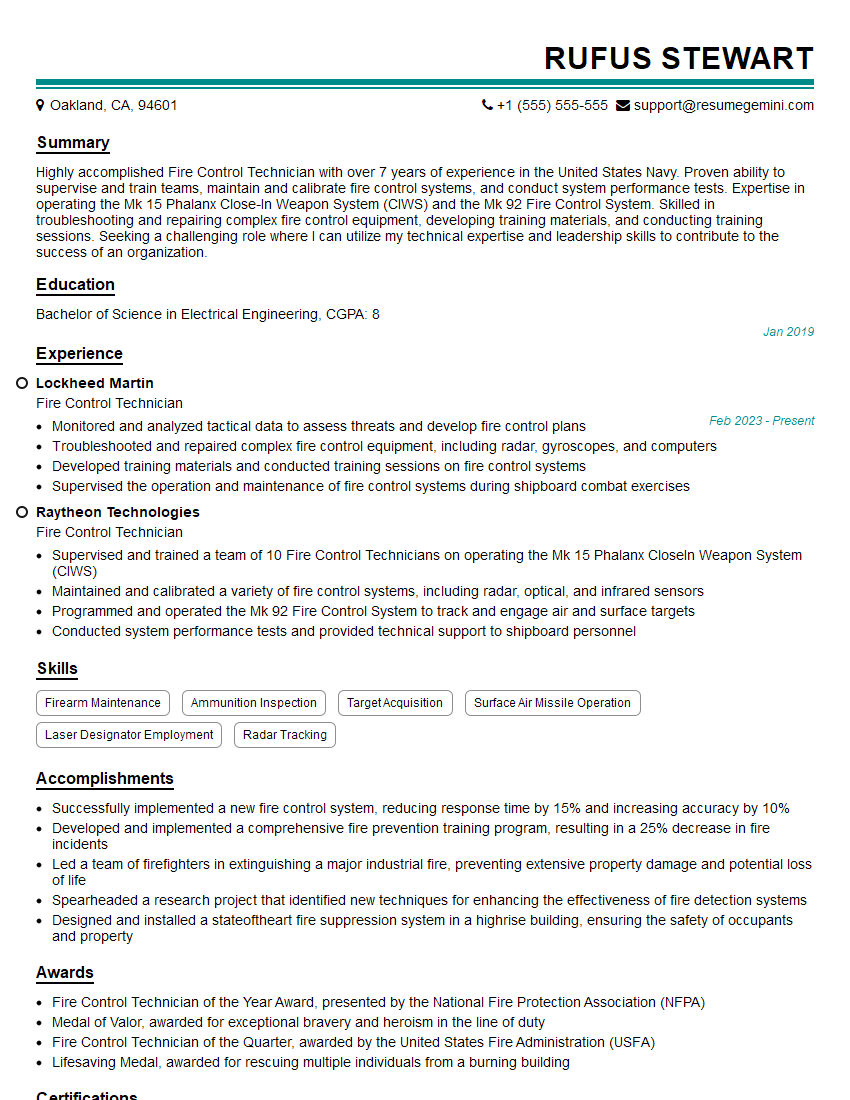
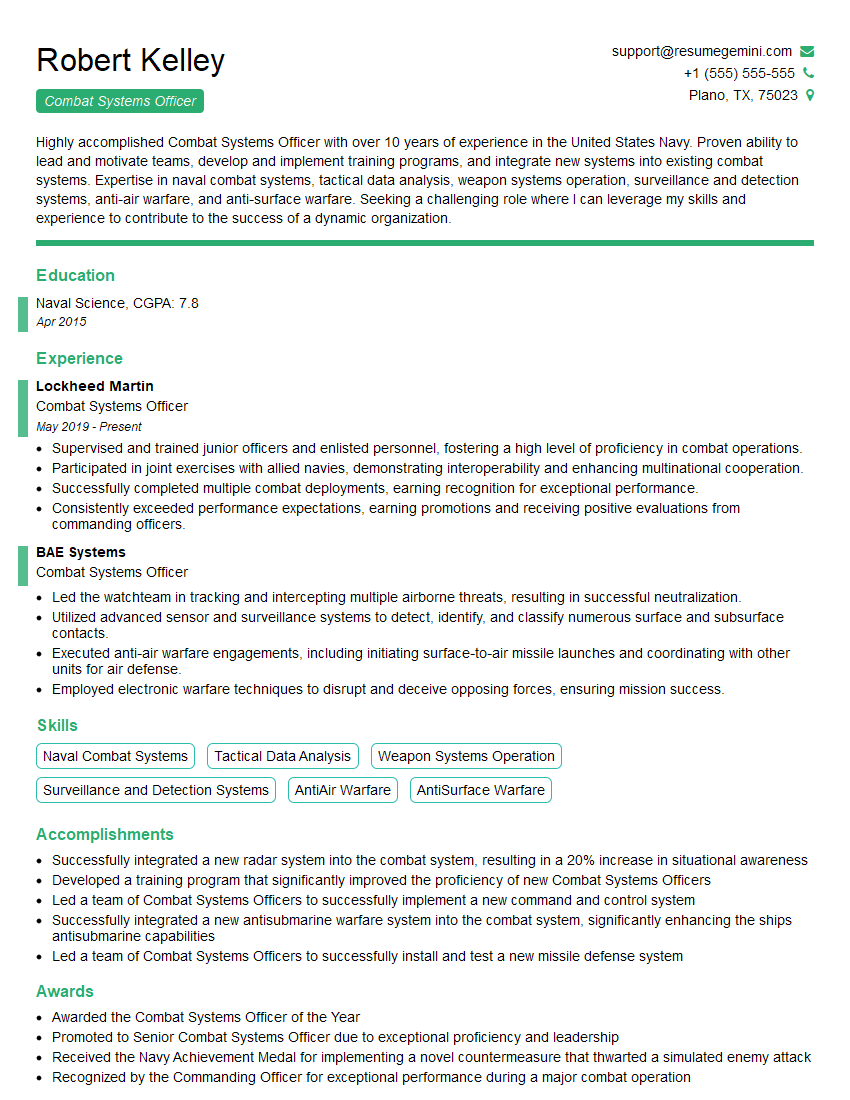
Mastering Weapons Systems Employment opens doors to a rewarding career with significant impact. To maximize your job prospects, a strong, ATS-friendly resume is crucial. ResumeGemini can help you craft a compelling resume that showcases your skills and experience effectively. We provide examples of resumes tailored to Weapons Systems Employment to guide you through the process. Invest time in building a professional resume that highlights your unique qualifications – it’s an investment in your future success.
Explore more articles
Users Rating of Our Blogs
Share Your Experience
We value your feedback! Please rate our content and share your thoughts (optional).
What Readers Say About Our Blog
good