Preparation is the key to success in any interview. In this post, we’ll explore crucial Weather Analysis and Monitoring interview questions and equip you with strategies to craft impactful answers. Whether you’re a beginner or a pro, these tips will elevate your preparation.
Questions Asked in Weather Analysis and Monitoring Interview
Q 1. Explain the difference between weather and climate.
Weather refers to the short-term state of the atmosphere at a particular time and place, encompassing elements like temperature, humidity, precipitation, wind, and cloud cover. Think of it as the daily mood of the atmosphere. Climate, on the other hand, describes the long-term average weather patterns of a region over a period of at least 30 years. It represents the typical weather conditions for a specific location, including seasonal variations and extremes. It’s like the atmosphere’s personality; a long-term trend rather than a snapshot.
For example, a sunny day with a high of 75°F is weather. The fact that a particular region experiences hot, humid summers and mild, wet winters is climate. Understanding the difference is crucial because weather forecasts are for immediate needs, while climate data is used for long-term planning, such as infrastructure development and agricultural practices.
Q 2. Describe the various types of weather forecasting models.
Weather forecasting models use complex equations to simulate the atmosphere’s behavior. They range from simple statistical models to highly sophisticated numerical weather prediction (NWP) systems. Here are some types:
- Numerical Weather Prediction (NWP): These models are the workhorses of modern forecasting. They solve equations based on the fundamental laws of physics, using powerful computers to simulate atmospheric processes. They utilize gridded data, dividing the atmosphere into a three-dimensional grid and calculating changes based on the initial conditions. Examples include the Global Forecast System (GFS) and the European Centre for Medium-Range Weather Forecasts (ECMWF) model.
- Statistical Models: These models use historical weather data and statistical relationships to predict future weather. They are simpler than NWP models and are often used for shorter-range forecasts or specific weather phenomena. For example, a model might predict the probability of rain based on past relationships between temperature, humidity and precipitation.
- Ensemble Forecasting: This approach runs multiple NWP models with slightly different initial conditions and parameters to account for uncertainties. The results are then combined to provide a range of possible outcomes, offering a probability-based forecast. This helps account for inherent limitations in atmospheric observations and model limitations.
- Analog Forecasting: This method compares current weather patterns with similar historical weather patterns, inferring future outcomes. This method is particularly useful in supplementing NWP models, often used for long-range forecasting where uncertainty is higher.
Q 3. How do you interpret weather maps and charts?
Interpreting weather maps and charts requires understanding the symbols and data presented. Weather maps typically include:
- Isobars: Lines connecting points of equal atmospheric pressure, indicating areas of high and low pressure. High-pressure systems are often associated with fair weather, while low-pressure systems are frequently associated with storms.
- Isopleths: Lines connecting points of equal temperature (isotherms), humidity (isohumes), or other meteorological parameters. For instance, isotherms allow for identification of thermal gradients, crucial for understanding air movements.
- Fronts: Boundaries between air masses of differing temperatures and densities. Cold fronts bring rapid temperature drops and often precipitation; warm fronts result in a gradual increase in temperature with widespread clouds and precipitation.
- Symbols: Icons representing current weather conditions (e.g., rain, snow, clouds), wind direction and speed, etc. Each symbol has a specific meaning, easily found in meteorological guides.
- Satellite and Radar Imagery: These provide visual representations of clouds, precipitation, and atmospheric motion. Satellite images provide broad-scale views, while radar data give detailed local precipitation information.
By analyzing the interplay of these elements, meteorologists construct a comprehensive picture of the current weather and predict its future evolution. Experience is crucial for accurate interpretation, integrating pattern recognition and physical understanding of atmospheric processes.
Q 4. What are the limitations of weather forecasting?
Weather forecasting, despite significant advances, has inherent limitations:
- Chaos Theory: The atmosphere is a chaotic system, meaning small changes in initial conditions can lead to large differences in the outcome. Even with the most advanced models, slight inaccuracies in observations can lead to significant forecast errors, especially for longer timeframes.
- Data Limitations: Observations are sparse and not evenly distributed across the globe. Gathering comprehensive data, especially over oceans and remote regions, remains a challenge.
- Model Complexity and Limitations: Models simplify complex atmospheric processes; they cannot fully account for the interaction of every atmospheric element. This inevitably leads to inaccuracies and uncertainties.
- Subgrid-Scale Processes: Weather processes occur at scales smaller than the resolution of most models (e.g., individual thunderstorms). These processes are parameterized, not explicitly simulated, leading to potential errors.
- Computational Resources: Running sophisticated models requires enormous computing power, limiting the ability to generate highly resolved forecasts for extended periods.
These limitations are acknowledged in professional forecasting practices through the use of probability forecasts, confidence intervals, and ensemble forecasting techniques. Forecasters emphasize the uncertainty associated with their predictions, especially for longer lead times.
Q 5. Explain the concept of atmospheric pressure and its role in weather patterns.
Atmospheric pressure is the force exerted by the weight of air molecules above a given point. It’s measured in millibars (mb) or hectopascals (hPa). Pressure differences drive wind. Air flows from areas of high pressure to areas of low pressure, creating wind.
High-pressure systems (anticyclones) are associated with sinking air, resulting in generally calm, clear weather. Low-pressure systems (cyclones) feature rising air, leading to cloud formation and precipitation. The steeper the pressure gradient (the greater the difference in pressure over a given distance), the stronger the winds. For example, a sharp gradient between a high and low-pressure system creates strong winds, possibly a storm. Understanding atmospheric pressure is fundamental to weather analysis and prediction because it’s a key driver of atmospheric motion and weather systems.
Q 6. Describe the different types of clouds and their association with weather.
Clouds are classified based on their altitude and shape. Their presence and type are strongly linked to weather conditions.
- High-level clouds (above 6,000 meters): These are typically composed of ice crystals. Cirrus clouds are wispy and feathery, often indicating fair weather. Cirrostratus clouds form a thin veil across the sky, sometimes preceding a warm front. Cirrocumulus clouds appear as small, white patches.
- Mid-level clouds (2,000-6,000 meters): These can consist of water droplets or ice crystals. Altostratus clouds are grayish sheets that may obscure the sun; they often precede precipitation. Altocumulus clouds are layered and puffy.
- Low-level clouds (below 2,000 meters): These are usually composed of water droplets. Stratus clouds are flat, gray layers that can produce drizzle. Stratocumulus clouds are low, lumpy layers. Nimbostratus clouds are dark, gray rain clouds associated with continuous precipitation.
- Vertical clouds (extending through multiple levels): Cumulus clouds are puffy, fair-weather clouds. Cumulonimbus clouds are towering thunderclouds that produce heavy rain, hail, strong winds, and lightning.
Observing cloud types is crucial for identifying developing weather systems and predicting likely precipitation, temperature changes and wind speed.
Q 7. How do you analyze weather data from various sources (satellites, radar, surface observations)?
Analyzing weather data from multiple sources provides a comprehensive view of the atmospheric state. Data integration is key.
- Surface Observations: These are ground-based measurements of temperature, humidity, wind speed and direction, pressure, precipitation, and visibility at weather stations worldwide. This forms the base for many models.
- Radar Data: Weather radar uses radio waves to detect precipitation and estimate its intensity and type. Doppler radar also measures the velocity of precipitation, crucial for tracking storms and identifying severe weather threats.
- Satellite Data: Weather satellites provide images of cloud cover, temperature profiles, and other atmospheric parameters. Geostationary satellites provide continuous monitoring of a specific region, while polar-orbiting satellites offer global coverage at different times of day. Satellite data allows for monitoring of regions with sparse surface observation networks.
Data assimilation techniques combine data from various sources to create a consistent picture of the atmosphere’s state as input for weather models. Quality control procedures are critical to remove errors and outliers. Modern weather centers employ sophisticated data assimilation systems to integrate heterogeneous data efficiently and accurately, ensuring the highest quality forecast products.
Q 8. What are some common weather hazards and how are they predicted?
Common weather hazards include severe thunderstorms, tornadoes, hurricanes, blizzards, floods, heat waves, and droughts. Predicting these hazards involves a multi-faceted approach utilizing various data sources and sophisticated models.
Severe Thunderstorms: Predicted using numerical weather prediction (NWP) models that analyze atmospheric instability, moisture content, wind shear, and lift. Look for combinations of high instability (temperature differences), abundant moisture, and strong wind shear (changes in wind speed and direction with height) as these are key ingredients. The Storm Prediction Center (SPC) in the US issues outlooks and watches based on these model outputs and other data.
Tornadoes: Predicting tornadoes is more challenging than predicting thunderstorms. While NWP models help identify areas with favorable conditions (supercells), spotter networks, radar data (hook echoes are a classic indicator), and sophisticated Doppler radar analysis are crucial for timely warnings.
Hurricanes: Trackable using satellite imagery, reconnaissance flights, and NWP models tailored for tropical cyclone development and movement. Intensity forecasts rely on analyzing factors like sea surface temperature, wind shear, and atmospheric pressure.
Blizzards, Floods, and other Hazards: These are predicted using combinations of NWP models, hydrological models (for floods), and observational data like snow depth, river levels, and soil moisture.
Essentially, predicting weather hazards involves understanding the physical processes that lead to their formation, using models to simulate these processes, and integrating observational data to refine and improve forecasts. The lead time for predictions varies significantly depending on the hazard.
Q 9. Explain the concept of atmospheric stability and instability.
Atmospheric stability refers to the atmosphere’s resistance to vertical motion. Think of it like a layered cake: a stable atmosphere is like a tightly packed cake – air parcels resist rising or sinking. An unstable atmosphere is like a fluffy, airy cake – air parcels readily rise, leading to cloud development and potentially severe weather.
Stable Atmosphere: When a rising air parcel cools faster than the surrounding air, it becomes denser and sinks back down. This suppresses vertical motion, leading to clear skies or stratiform (layered) clouds. Examples: calm, clear nights with little wind; high-pressure systems are often associated with stable conditions.
Unstable Atmosphere: When a rising air parcel cools slower than the surrounding air, it remains less dense and continues to rise. This encourages vertical motion, leading to cumuliform (puffy) clouds and potentially thunderstorms. Examples: warm, humid days with strong solar heating; low-pressure systems are frequently linked to unstable conditions.
The stability of the atmosphere is determined by several factors, including temperature gradients (how temperature changes with altitude), moisture content, and wind shear.
Q 10. Describe the process of thunderstorm formation.
Thunderstorm formation is a complex process, but essentially it requires three key ingredients: moisture, lift (upward movement of air), and instability.
Moisture: Ample moisture in the lower atmosphere provides the water vapor necessary for cloud and precipitation formation. Think of it as the fuel for the storm.
Lift: A mechanism is needed to force the moist air upwards. This can be caused by several factors: daytime solar heating (convection), frontal boundaries (where air masses collide), orographic lift (air forced upwards by mountains). This lift initiates the upward movement that initiates the storm.
Instability: An unstable atmosphere allows the rising air parcel to continue to rise, forming a cumulonimbus cloud (the thunderstorm cloud). Without instability, the rising air would sink back down preventing the storm development.
As the moist air rises, it cools and condenses, forming cumulus clouds. If the instability is strong enough, these clouds grow vertically, leading to the development of towering cumulonimbus clouds. Within these clouds, strong updrafts and downdrafts develop, generating lightning, thunder, heavy rain, and potentially hail and tornadoes.
Q 11. How do you use weather models to predict future weather conditions?
Weather models are complex computer programs that solve the equations governing atmospheric motion and thermodynamics. They use vast amounts of observational data (from satellites, weather stations, radar, etc.) as input. The output is a prediction of future weather conditions.
The process involves:
Data Assimilation: Combining observational data with the model’s current state to create the best possible initial conditions for the forecast.
Model Integration: Running the model forward in time, solving the equations to predict the future state of the atmosphere.
Post-processing: Analyzing the model output, including statistical corrections, to produce user-friendly forecasts. Different models may be run for ensemble forecasting and to compare their outputs.
Different models have varying strengths and weaknesses. Some excel at predicting large-scale features like the track of a hurricane, while others are better at smaller-scale features like localized thunderstorms. Meteorologists carefully consider the strengths and weaknesses of various models when issuing forecasts.
Q 12. What are the key factors influencing precipitation?
Precipitation formation is a multifaceted process that depends on several key factors:
Atmospheric Moisture: The amount of water vapor in the air. More moisture means more potential for precipitation.
Atmospheric Lift: Mechanisms that force air upwards, such as convection, fronts, or orographic lift, as discussed previously.
Atmospheric Stability: Unstable air promotes strong updrafts, leading to the development of large cumulonimbus clouds capable of producing heavy precipitation.
Condensation Nuclei: Microscopic particles in the air that provide surfaces for water vapor to condense upon. These are essential for cloud formation.
Temperature: The temperature of the atmosphere influences the type of precipitation (rain, snow, sleet, freezing rain). Temperatures below freezing are required for snow, while different temperature profiles in the lower atmosphere lead to the formation of sleet or freezing rain.
In essence, precipitation requires a sufficient supply of moisture, a mechanism for lifting this moisture, and conditions conducive to condensation and the growth of precipitation particles. The interaction of these factors determines the intensity, type, and location of precipitation.
Q 13. Explain the concept of jet streams and their influence on weather.
Jet streams are narrow bands of strong winds in the upper atmosphere (typically 7-12 km altitude). They meander in a west-to-east direction, influencing weather patterns on a large scale.
Influence on Weather:
Steering of Weather Systems: Jet streams act as highways for weather systems, guiding storms and fronts across continents. A strong polar jet stream can rapidly usher in cold air masses, while a strong subtropical jet stream can transport warm, moist air. The position and strength of the jet stream can significantly impact the timing and intensity of weather events.
Formation of Cyclones and Anticyclones: The interactions between jet stream features and surface pressure systems contribute to the formation and intensification of cyclones (low-pressure systems) and anticyclones (high-pressure systems), which in turn greatly influence the day-to-day weather we experience.
Vertical Motion: Jet stream dynamics cause air to rise and sink, influencing cloud formation and precipitation. For example, the rising air ahead of a trough in the jet stream can initiate thunderstorm development.
Understanding jet stream patterns is vital for medium-range weather forecasting (3-10 days). Jet stream forecasts are incorporated into larger weather prediction models.
Q 14. How do you interpret weather radar data?
Weather radar uses radio waves to detect precipitation and estimate its intensity. The radar transmits pulses of radio waves, and the signals reflected back from precipitation particles are analyzed to determine the type, intensity, and movement of the precipitation.
Interpreting weather radar data involves understanding several key aspects:
Reflectivity: The intensity of the reflected signal, which is related to the amount of precipitation. Higher reflectivity values indicate heavier rainfall or hail. Typically displayed using a color scale, with brighter colors showing higher reflectivity.
Velocity: The speed and direction of the precipitation particles, indicating wind flow within the storm. This is especially important for identifying areas of rotation, which can be indicative of tornado formation. Often displayed with arrows or color showing the movement toward or away from the radar.
Storm Structure: Radar images reveal the shape and structure of the storm. Features such as hook echoes (associated with tornadoes), bow echoes (associated with damaging winds), and mesocyclones (rotating updrafts within thunderstorms) can be identified through radar analysis.
Meteorologists use radar data, often in conjunction with other data sources, to issue warnings and advisories about severe weather events. Software and image processing are now heavily used to aid in the interpretation of data, helping provide advanced warning and detailed information of weather events.
Q 15. How do you use weather satellites to monitor weather patterns?
Weather satellites are crucial for monitoring weather patterns because they provide a global perspective impossible to achieve with ground-based observations alone. They carry a variety of instruments that measure different aspects of the atmosphere and Earth’s surface. For example, geostationary satellites, like GOES (Geostationary Operational Environmental Satellites) in the US, orbit at the same speed as the Earth’s rotation, providing continuous monitoring of a specific region. Polar-orbiting satellites, like NOAA’s POES (Polar-orbiting Operational Environmental Satellites), cover the entire globe in a series of passes, offering broader coverage but less frequent observations of any one location.
These satellites use various sensors to collect data. Infrared (IR) sensors detect the heat emitted by clouds and the Earth’s surface, allowing us to determine cloud top temperatures and infer cloud type and height. Visible sensors capture reflected sunlight, providing images of clouds and surface features during daylight hours. Water vapor sensors measure the amount of water vapor in the atmosphere, helping to identify areas of moisture that could lead to precipitation. Microwave sensors can penetrate clouds, allowing us to observe precipitation and surface features even during nighttime or when clouds are present.
By analyzing the data from these different sensors, meteorologists can create images and animations that reveal the movement and evolution of weather systems. This allows for better prediction of severe weather events like hurricanes, blizzards, and thunderstorms, ultimately contributing to timely warnings and safer communities.
Career Expert Tips:
- Ace those interviews! Prepare effectively by reviewing the Top 50 Most Common Interview Questions on ResumeGemini.
- Navigate your job search with confidence! Explore a wide range of Career Tips on ResumeGemini. Learn about common challenges and recommendations to overcome them.
- Craft the perfect resume! Master the Art of Resume Writing with ResumeGemini’s guide. Showcase your unique qualifications and achievements effectively.
- Don’t miss out on holiday savings! Build your dream resume with ResumeGemini’s ATS optimized templates.
Q 16. Explain the difference between synoptic and mesoscale meteorology.
Synoptic and mesoscale meteorology differ primarily in the spatial and temporal scales they examine. Synoptic meteorology focuses on large-scale weather systems, typically covering areas of hundreds to thousands of kilometers and lasting days to weeks. Think of high and low-pressure systems dominating weather maps, the jet stream, and large frontal systems. These systems are studied using surface observations, upper-air data (from radiosondes and aircraft), and satellite imagery to understand their overall structure and evolution.
Mesoscale meteorology, on the other hand, deals with smaller-scale weather phenomena, typically ranging from a few to a few hundred kilometers in size and lasting from minutes to hours. Examples include thunderstorms, tornadoes, sea breezes, and even localized areas of heavy rainfall or snowfall. Mesoscale meteorology relies heavily on high-resolution data from Doppler radar, surface mesonetworks (dense networks of automated weather stations), and increasingly, from sophisticated numerical weather prediction (NWP) models with fine spatial resolutions.
The distinction isn’t absolute; there’s overlap. For instance, a severe thunderstorm (mesoscale) can be embedded within a larger synoptic system like a mid-latitude cyclone. However, the difference in scale necessitates different observational techniques and analytical approaches. Understanding both scales is crucial for accurate and comprehensive weather forecasting.
Q 17. Describe your experience with numerical weather prediction models.
My experience with numerical weather prediction (NWP) models spans several years, encompassing both operational and research applications. I’ve worked extensively with models like the Global Forecast System (GFS), the High-Resolution Rapid Refresh (HRRR), and the Weather Research and Forecasting (WRF) model. My work involves not only running these models but also understanding their strengths and limitations, evaluating their forecasts against observations, and contributing to model improvements.
With the GFS, for example, I’ve utilized its global coverage to analyze large-scale atmospheric patterns and to prepare forecasts for extended periods. The HRRR’s high-resolution output has been invaluable for short-term forecasting of high-impact weather, like severe thunderstorms and flash floods, where localized details are critical. With WRF, I’ve participated in research projects investigating the impact of different model configurations on the accuracy of forecasts in complex terrain.
My expertise extends to data assimilation, a crucial aspect of NWP. This involves combining observations from various sources—satellites, radar, surface stations—with the model’s predictions to produce the most accurate initial conditions for the forecast. I’m familiar with various data assimilation techniques, including variational methods and ensemble Kalman filters. I’m also proficient in using model output statistics (MOS) to statistically post-process model forecasts, which often improves their accuracy and reliability.
Q 18. How do you handle uncertainty in weather forecasting?
Uncertainty is inherent in weather forecasting. Atmospheric systems are chaotic, meaning small initial errors can lead to significant differences in the forecast over time – the famous ‘butterfly effect’. We address this uncertainty through several strategies.
- Ensemble forecasting: Running the same model multiple times with slightly different initial conditions generates an ensemble of forecasts. The spread in the ensemble provides a measure of forecast uncertainty. For example, if an ensemble of forecasts for rainfall shows a large range of possible amounts, we know the uncertainty is high.
- Probabilistic forecasting: Instead of predicting a single value (e.g., 2 inches of rain), we provide a probability distribution. For example, we might state a 70% chance of more than 1 inch of rain. This acknowledges the range of possible outcomes.
- Verification and evaluation: Continuously evaluating forecasts against observations helps to identify biases and weaknesses in the models and improve forecasting skill. This iterative process is crucial for reducing uncertainty over time.
- Communication of uncertainty: Clearly communicating the uncertainty inherent in the forecast to the public is crucial. We use terms like “possible,” “likely,” and “uncertain” to convey the level of confidence in the forecast.
Essentially, embracing uncertainty and communicating it transparently is key to responsible weather forecasting.
Q 19. What are the ethical considerations in weather forecasting?
Ethical considerations in weather forecasting are paramount. The impact of inaccurate or poorly communicated forecasts can be severe, leading to loss of life, property damage, and economic disruption. Key ethical considerations include:
- Accuracy and transparency: Forecasts should be as accurate as possible, and limitations and uncertainties should be clearly communicated. Overconfidence or withholding crucial information is unethical.
- Impartiality and objectivity: Forecasts should be based on scientific evidence, free from political or economic influence.
- Accessibility and equity: Weather information should be accessible to everyone, regardless of socioeconomic status, location, or language. This involves ensuring that warnings reach vulnerable populations effectively.
- Data privacy: Handling weather data responsibly and protecting individual privacy when using location-based information is critical.
- Responsible use of forecasts: Forecasting tools should not be used to promote fear-mongering or to spread misinformation.
Maintaining high ethical standards builds public trust and ensures that weather information serves the greater good.
Q 20. How do you communicate weather information effectively to different audiences?
Communicating weather information effectively requires tailoring the message to the specific audience. For the general public, concise, easily understood language and visual aids (maps, charts) are essential. Using analogies (e.g., comparing wind speeds to familiar experiences) can increase comprehension. For emergency managers, precise details about the timing, intensity, and location of hazardous weather are vital, often requiring technical language and detailed quantitative data.
For farmers, information about temperature, rainfall, and soil moisture is crucial for decision-making. For the aviation industry, wind speed, wind shear, and visibility are critical. I use various communication methods, including:
- Public weather briefings: Presenting weather information clearly and concisely to diverse groups.
- Social media: Using platforms like Twitter and Facebook for rapid dissemination of warnings and updates.
- Web-based products: Designing user-friendly websites and interactive maps that provide access to forecast information.
- Collaboration with media outlets: Working with journalists to ensure accurate and effective communication of forecasts.
Effective communication requires clear and concise language, visual aids, and an understanding of the audience’s needs and information processing capabilities.
Q 21. Describe your experience with weather data analysis software.
I have extensive experience using a variety of weather data analysis software packages. My proficiency includes using programming languages such as Python with libraries like NumPy, SciPy, and Matplotlib for data manipulation, analysis, and visualization. I routinely use GrADS (Grid Analysis and Display System) for analyzing gridded weather data and creating visualizations of meteorological fields. I’m also experienced with using Integrated Data Viewer (IDV), a versatile software for visualizing weather data from multiple sources.
Furthermore, I am familiar with using specialized software for processing radar data and satellite imagery, including tools for quality control, data extraction, and analysis. I have also used Geographic Information Systems (GIS) software to integrate weather data with geographic information for applications such as flood modeling and impact assessment.
My skills in data analysis software extend to database management, enabling efficient storage, retrieval, and manipulation of large weather datasets. This expertise is crucial for extracting meaningful insights from vast quantities of information to improve forecasting accuracy and inform decision-making processes.
Q 22. How do you validate weather model output?
Validating weather model output is crucial for ensuring its accuracy and reliability. We don’t just look at a single number; it’s a multifaceted process involving several techniques. Think of it like judging a recipe – you need to check multiple aspects to ensure it’s successful.
- Comparison with Observations: This is the most fundamental step. We compare the model’s predictions (temperature, precipitation, wind speed, etc.) against real-world observations from weather stations, satellites, radar, and other sources. Discrepancies highlight areas needing improvement.
- Statistical Metrics: We use various statistical metrics like Root Mean Square Error (RMSE), Mean Absolute Error (MAE), and correlation coefficients to quantitatively assess the model’s performance. Lower RMSE and MAE values indicate better accuracy.
- Ensemble Forecasting: Running multiple models with slightly different initial conditions and parameterizations creates an ensemble forecast. Analyzing the spread and consensus of the ensemble helps gauge the forecast uncertainty and improve confidence in the predictions. Think of it as getting multiple opinions from different experts – the more they agree, the more confident you become.
- Verification against past events: We retrospectively analyze the model’s performance against historical weather events to evaluate its skill in various conditions and extreme weather phenomena. This is crucial for improving future predictions.
- Bias Correction: Weather models often exhibit systematic biases (e.g., consistently overestimating rainfall). We use statistical techniques to correct these biases and improve the forecast’s accuracy.
For example, if a model consistently underpredicts snowfall in a specific region, we might adjust the model parameters or incorporate additional data sources to improve its performance in that area.
Q 23. What are some common errors in weather forecasting?
Errors in weather forecasting are inevitable due to the chaotic nature of the atmosphere and limitations in our understanding and data collection. Some common errors include:
- Initial Condition Errors: Slight inaccuracies in the initial atmospheric state (temperature, pressure, humidity, wind) – often due to incomplete or sparse observational data – can lead to significant forecast errors over time, akin to a butterfly flapping its wings and causing a hurricane.
- Model Limitations: Weather models simplify complex atmospheric processes. They might not perfectly represent sub-grid scale processes (processes occurring at scales smaller than the model’s grid resolution) like cloud formation or turbulent mixing, leading to uncertainties.
- Data Assimilation Challenges: Integrating diverse data sources (satellites, radar, surface observations) into the model can be challenging, leading to errors in the representation of the atmospheric state.
- Parameterization Uncertainties: Many physical processes in the atmosphere are represented using parameterizations (simplified mathematical representations). Uncertainties in these parameterizations can affect forecast accuracy.
- Computational Limits: Running very high-resolution models requires immense computing power; compromises in resolution can lead to errors, especially in representing small-scale weather systems.
For instance, predicting the exact track and intensity of a hurricane remains challenging because of the complex interactions between the ocean and atmosphere, which models don’t fully capture.
Q 24. How do you stay up-to-date with the latest advancements in meteorology?
Staying current in meteorology requires continuous learning and engagement with the field’s rapidly evolving landscape. My approach is multi-pronged:
- Peer-Reviewed Publications: I regularly read journals like the Monthly Weather Review, Journal of the Atmospheric Sciences, and Weather and Forecasting to stay abreast of the latest research findings and methodological advancements.
- Conferences and Workshops: Attending conferences like the American Meteorological Society (AMS) annual meeting allows me to network with experts, learn about new techniques, and hear about cutting-edge research.
- Online Resources: I utilize online platforms, including meteorological society websites and reputable online journals, to access research papers, webinars, and tutorials on advanced modeling techniques and data analysis methods.
- Professional Networks: Engaging with colleagues and experts through online forums and professional organizations facilitates knowledge sharing and allows me to stay updated on emerging trends and challenges.
- Training and Courses: I regularly participate in short courses and workshops focused on specific areas of meteorology (e.g., advanced data assimilation, high-resolution modeling) to improve my skills and expand my knowledge.
For example, I recently completed a course on machine learning techniques applied to weather forecasting, which has significantly enhanced my ability to analyze and interpret large weather datasets.
Q 25. Describe your experience working with weather-related datasets.
Throughout my career, I’ve extensively worked with various weather-related datasets, ranging from surface observations to satellite imagery and model output. My experience includes:
- Surface Observations: I’ve used data from weather stations worldwide to analyze temperature, precipitation, humidity, wind speed, and other meteorological parameters. This often involves quality control checks to identify and correct errors in the data.
- Satellite Data: I have experience working with satellite imagery from various sensors (e.g., GOES, AVHRR, MODIS), using them for cloud analysis, precipitation estimation, and monitoring atmospheric conditions. This requires specialized software and understanding of remote sensing principles.
- Radar Data: I’ve used weather radar data to analyze precipitation intensity, type, and movement. This involves working with radar reflectivity, velocity, and other products to understand the dynamics of weather systems.
- Numerical Weather Prediction (NWP) Model Output: I have extensive experience working with output from global and regional NWP models, performing quality control, bias correction, and data analysis. This typically involves using programming languages such as Python or R.
A specific example includes a project where I used machine learning techniques to analyze satellite and radar data to improve the accuracy of precipitation forecasts in mountainous regions.
Q 26. Explain your understanding of climate change and its impact on weather patterns.
Climate change is a long-term shift in global temperatures and weather patterns, primarily driven by human activities, particularly the emission of greenhouse gases. It’s not just about gradual warming; it significantly influences weather patterns by altering the energy balance of the Earth’s climate system.
- Increased Frequency and Intensity of Extreme Weather Events: Climate change is increasing the likelihood and severity of heatwaves, droughts, floods, hurricanes, and wildfires. The warmer atmosphere holds more moisture, leading to more intense precipitation events. Changes in ocean temperatures also fuel stronger hurricanes.
- Changes in Precipitation Patterns: Some regions experience increased rainfall, while others face intensified droughts. This disruption to water resources has significant implications for agriculture, water management, and ecosystems.
- Sea Level Rise: Melting glaciers and thermal expansion of ocean water due to warming lead to rising sea levels, increasing the risk of coastal flooding and erosion.
- Ocean Acidification: Absorption of excess CO2 by the oceans causes acidification, harming marine life and ecosystems.
Understanding the impacts of climate change on weather is crucial for developing effective adaptation and mitigation strategies. For example, by analyzing historical and projected climate data, we can assess the vulnerability of specific regions to extreme weather events and inform better infrastructure planning and disaster preparedness measures.
Q 27. How do you assess the accuracy of a weather forecast?
Assessing the accuracy of a weather forecast involves a combination of quantitative and qualitative methods. It’s not simply about whether it rained or not but about how well the forecast captured the various aspects of the weather.
- Statistical Metrics: We use metrics like RMSE, MAE, and skill scores (comparing the forecast to a simpler forecast like a climatological average) to quantify the forecast accuracy. A lower RMSE indicates a more accurate forecast.
- Qualitative Assessment: We evaluate how well the forecast captured the timing, location, and intensity of weather phenomena. Even a forecast with a relatively low RMSE might be considered poor if it failed to predict a crucial aspect of a weather event.
- Verification against Observations: Comparing the forecast with observations from various sources (weather stations, satellites, radar) helps identify systematic errors or biases in the forecast.
- Ensemble Forecast Spread: The spread of an ensemble forecast reflects the uncertainty associated with the prediction. A narrow spread indicates greater confidence in the forecast, while a wide spread highlights considerable uncertainty.
- User Needs and Context: Accuracy assessment should also consider the specific needs and context of the user. For example, a farmer needs highly accurate precipitation forecasts, while a general public forecast might prioritize communicating the likelihood of rain.
Imagine a hurricane forecast: A forecast that accurately predicts the hurricane’s landfall location but underestimates its intensity is still considered a significant failure due to its crucial public safety implications.
Q 28. Describe a challenging weather event you’ve analyzed and how you approached it.
One particularly challenging weather event I analyzed was the rapid intensification of Hurricane Patricia in 2015. It went from a Category 2 to a Category 5 hurricane in just 24 hours, making it the strongest hurricane ever recorded in the Eastern Pacific.
The challenge lay in understanding the factors that contributed to this rapid intensification. My approach involved:
- Data Integration: I combined satellite data (showing the hurricane’s structure and intensity), in-situ buoy measurements (providing ocean temperature and salinity), and numerical weather prediction model output. This allowed me to understand the interaction between the hurricane and the ocean.
- Advanced Modeling Techniques: I used high-resolution numerical weather prediction models with improved physics parameterizations to simulate the hurricane’s evolution. This allowed a better representation of the small-scale processes associated with rapid intensification.
- Data Visualization and Analysis: Creating detailed visualizations of the atmospheric and oceanic conditions helped reveal crucial details about the hurricane’s structure and dynamics. This highlighted the factors contributing to the rapid intensification, such as unusually warm ocean temperatures, low wind shear, and a favorable upper-level atmospheric environment.
- Uncertainty Quantification: I performed sensitivity analyses to evaluate the role of different factors in the rapid intensification process and to quantify the uncertainties associated with the forecasts.
Through this multi-faceted approach, we gained a more comprehensive understanding of the factors leading to Hurricane Patricia’s rapid intensification, allowing for better preparedness for similar events in the future. This also led to improvements in hurricane prediction models.
Key Topics to Learn for Weather Analysis and Monitoring Interview
- Atmospheric Thermodynamics: Understanding atmospheric stability, temperature profiles, and their influence on weather patterns. Practical application: Interpreting sounding data to predict convective potential.
- Synoptic Meteorology: Analyzing weather maps (surface, upper-air charts) to identify weather systems and forecast their evolution. Practical application: Forecasting precipitation amounts and timing based on synoptic analysis.
- Mesoscale Meteorology: Studying smaller-scale weather phenomena like thunderstorms, tornadoes, and microbursts. Practical application: Using radar and satellite data to identify and track severe weather events.
- Weather Forecasting Models: Understanding the principles behind numerical weather prediction (NWP) models and their limitations. Practical application: Evaluating model output and incorporating it into a forecast.
- Data Analysis and Visualization: Proficiency in using meteorological software and tools to analyze and visualize weather data. Practical application: Creating effective graphical presentations of weather data for communication.
- Climate Science Fundamentals: Basic understanding of climate change impacts and their influence on weather patterns. Practical application: Addressing climate-related questions during the interview and demonstrating awareness of the broader context.
- Instrumentation and Observing Systems: Familiarity with various weather instruments (e.g., radiosondes, surface stations, radar, satellites). Practical application: Explaining the strengths and limitations of different observing systems.
- Weather Communication and Presentation: Clearly and concisely conveying complex meteorological information to a variety of audiences. Practical application: Demonstrating strong communication skills throughout the interview process.
Next Steps
Mastering Weather Analysis and Monitoring opens doors to exciting careers in forecasting, research, consulting, and more. A strong understanding of these core principles is essential for career advancement and securing your ideal role. To significantly improve your job prospects, creating a well-structured, ATS-friendly resume is paramount. We highly recommend using ResumeGemini to build a professional and impactful resume tailored to the specific requirements of Weather Analysis and Monitoring positions. Examples of resumes optimized for this field are available within ResumeGemini to help guide you. Invest in your future – build a resume that stands out!

Atmospheric Scientist Resume Sample
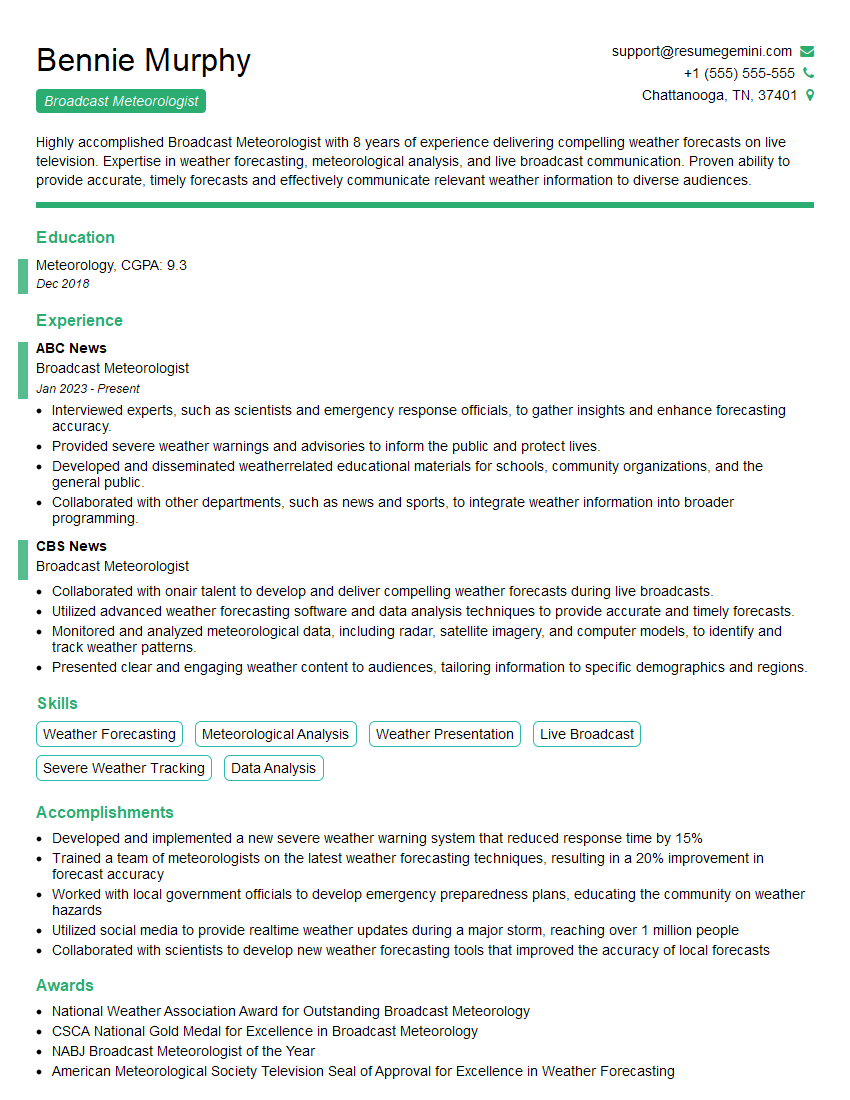
Broadcast Meteorologist Resume Sample
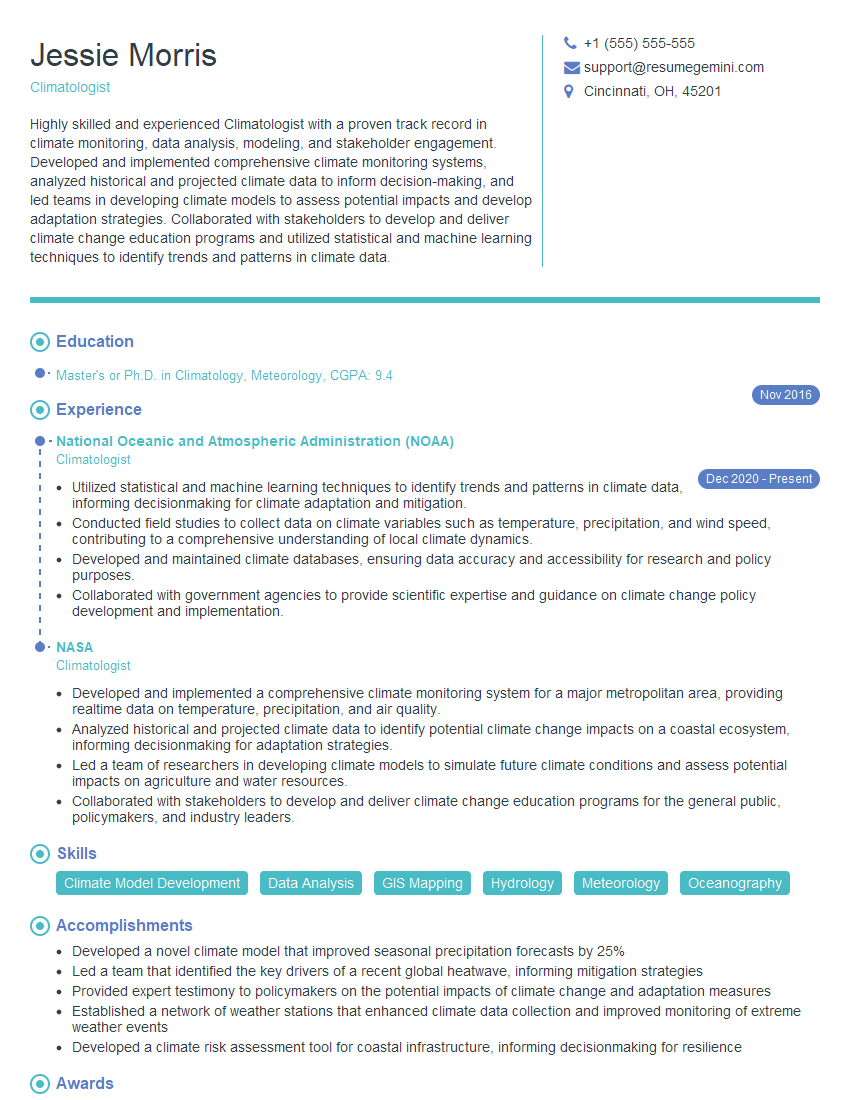
Climatologist Resume Sample
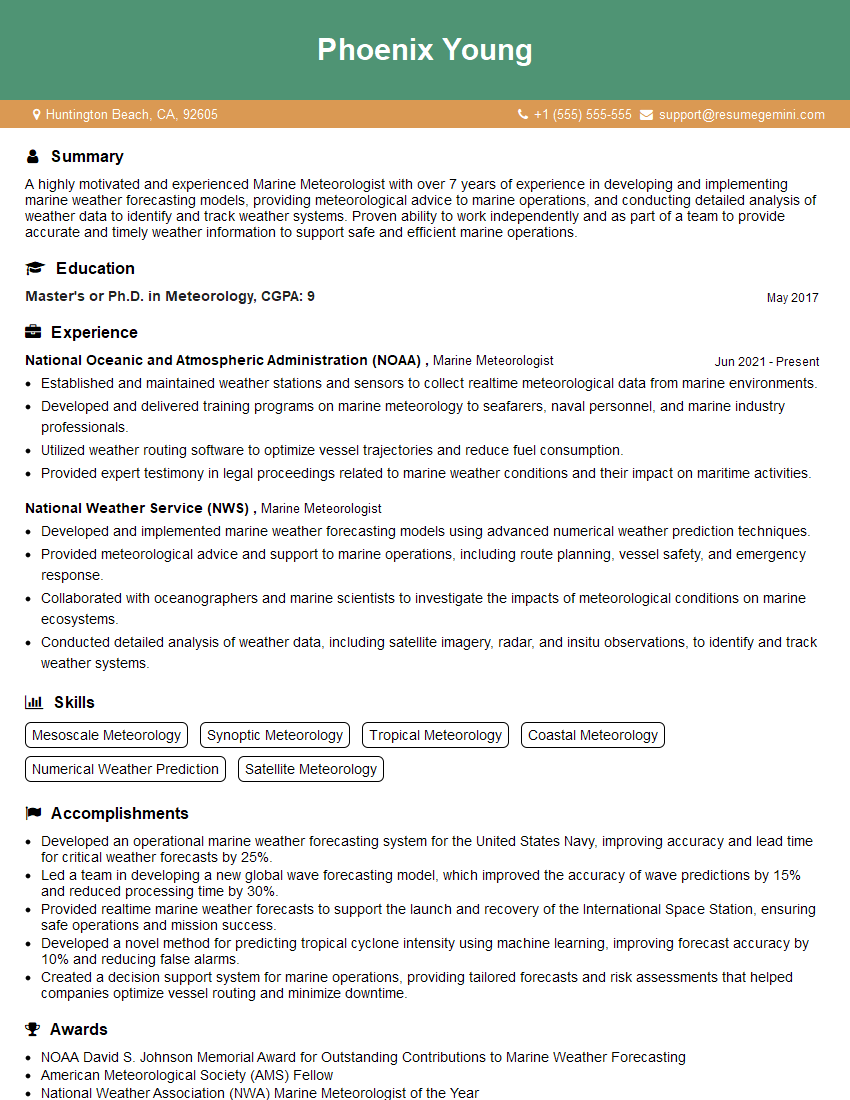
Marine Meteorologist Resume Sample

Meteorologist Resume Sample

Operational Meteorologist Resume Sample

Synoptic Meteorologist Resume Sample

Weather Analyst Resume Sample
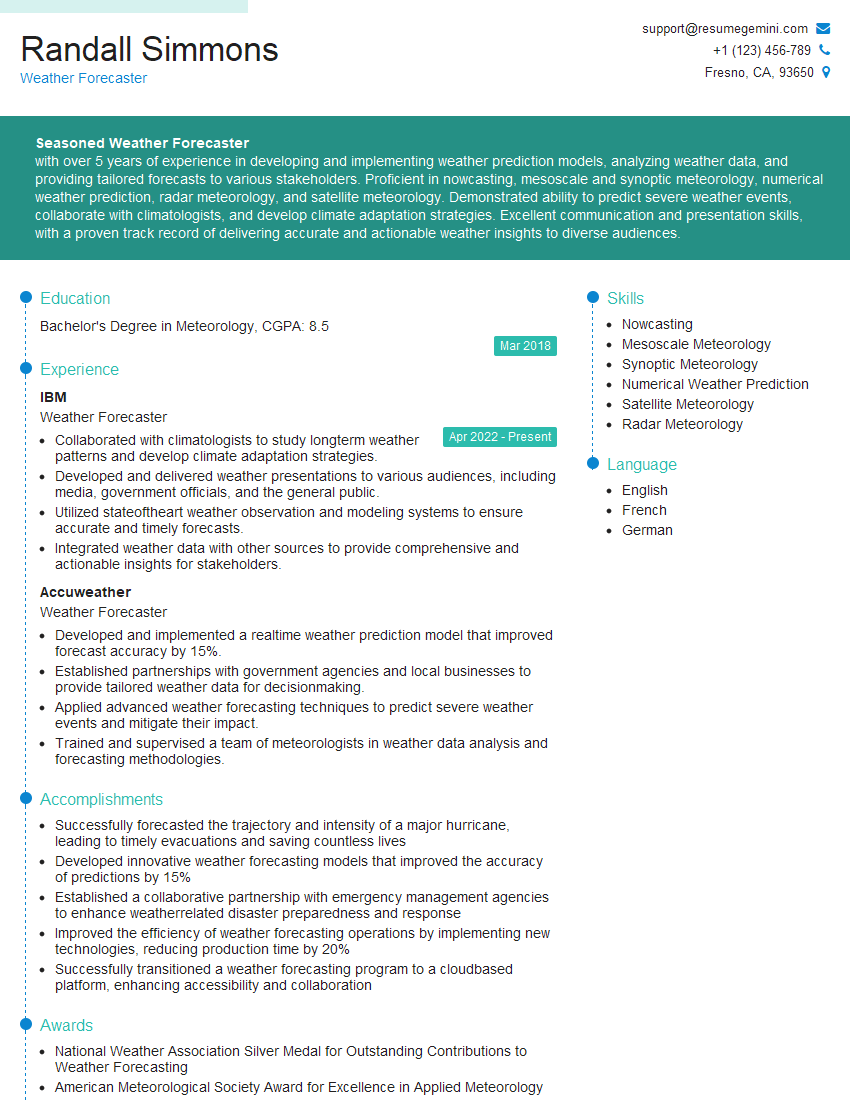
Weather Forecaster Resume Sample
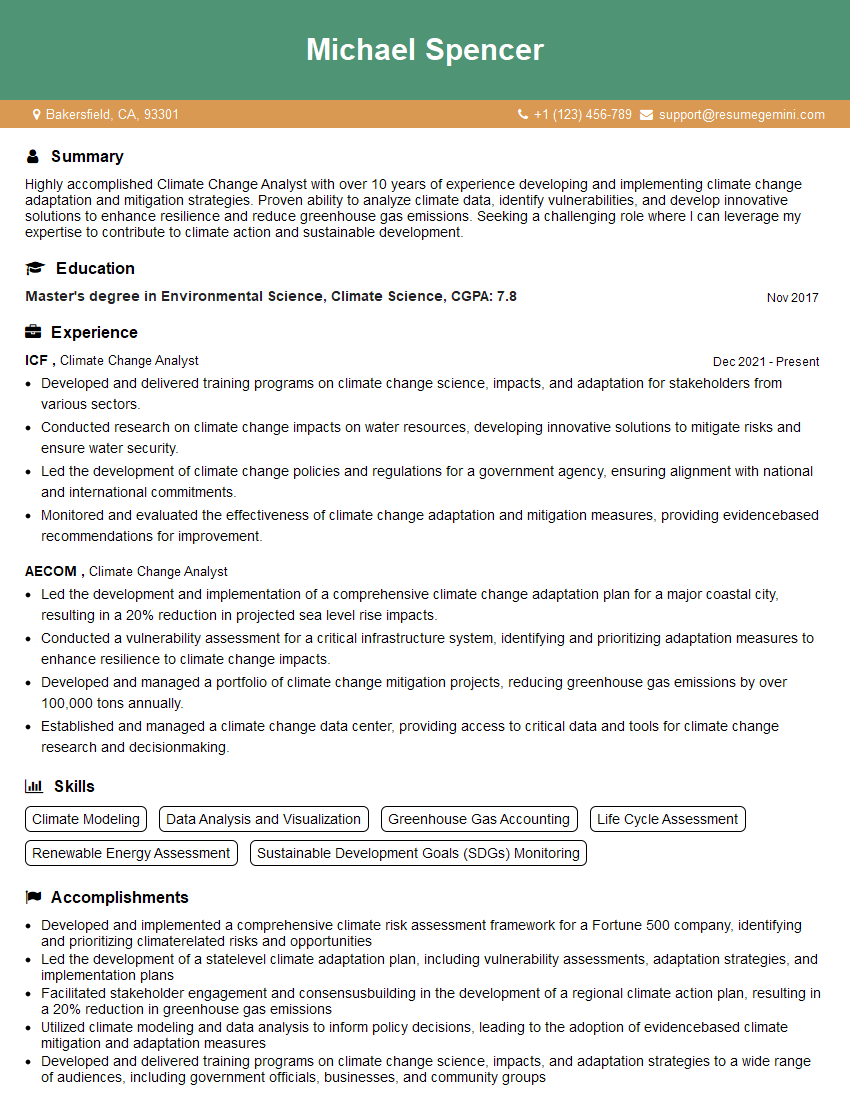
Climate Change Analyst Resume Sample

Meteorological Technician Resume Sample

Weather Observer Resume Sample
Explore more articles
Users Rating of Our Blogs
Share Your Experience
We value your feedback! Please rate our content and share your thoughts (optional).
What Readers Say About Our Blog
Very informative content, great job.
good