The thought of an interview can be nerve-wracking, but the right preparation can make all the difference. Explore this comprehensive guide to Web and Digital Content Creation interview questions and gain the confidence you need to showcase your abilities and secure the role.
Questions Asked in Web and Digital Content Creation Interview
Q 1. Explain your content strategy process.
My content strategy process is a cyclical one, focused on achieving specific business goals. It begins with a thorough understanding of the target audience, their needs, pain points, and online behavior. This informs the content pillars – overarching topics that will consistently provide value. Next, I develop a content calendar, outlining the type, format, and publishing schedule of content. This calendar isn’t rigid; it allows for flexibility based on performance data and emerging trends.
Following publication, I meticulously analyze the performance of each piece of content using key metrics (discussed further in the next question). This data drives optimization and informs future content decisions, creating a continuous improvement loop. Finally, the entire process is regularly reviewed and adjusted to ensure alignment with evolving business objectives. For example, if a particular campaign on social media focusing on short video content significantly outperforms blog posts, I’ll allocate more resources to video in subsequent campaigns.
- Audience Research: Surveys, competitor analysis, social listening.
- Content Pillars: Broad themes that encompass multiple content pieces.
- Content Calendar: A detailed schedule for content creation and distribution.
- Performance Analysis: Tracking metrics to assess effectiveness.
- Optimization: Making adjustments based on data analysis.
Q 2. How do you measure the success of a content marketing campaign?
Measuring the success of a content marketing campaign goes beyond simply looking at vanity metrics like likes and shares. It requires a multi-faceted approach focused on key performance indicators (KPIs) aligned with overarching business goals.
For example, if the goal is lead generation, KPIs would include conversion rates (website visitors to leads), cost per lead (CPL), and lead quality. If brand awareness is the priority, I’d track social media reach, website traffic, and brand mentions. We can even look at more sophisticated metrics like engagement rate (likes, comments, shares relative to reach), average session duration, bounce rate, and click-through rates (CTRs) for email marketing or ads.
I always use a combination of quantitative and qualitative data. Quantitative data is drawn from analytics platforms (like Google Analytics) and CRM systems. Qualitative data might come from user surveys, social media comments, and customer feedback. This holistic approach provides a much clearer picture of success.
Q 3. Describe your experience with SEO best practices.
My SEO best practices are centered around providing valuable, relevant, and high-quality content tailored to user search intent. This involves a thorough understanding of the technical aspects of SEO as well as the creative elements.
On-page optimization includes meticulous keyword research and implementation (discussed further in question 7), crafting compelling meta descriptions, optimizing header tags (H1, H2, etc.), ensuring fast page load speeds, and building a strong internal linking structure. Off-page optimization focuses on building high-quality backlinks from reputable websites. I prioritize earning these links naturally through creating content worthy of sharing and engagement, rather than relying on potentially harmful black-hat techniques. I also regularly monitor website performance using Google Search Console and other analytics tools to identify and address any SEO issues.
For instance, I recently worked on a project where we increased organic traffic by 30% in six months by focusing on improving content quality, targeting relevant long-tail keywords, and building strong relationships with other relevant websites to acquire backlinks. This involved a regular review and update of the content’s SEO elements, as well as implementing technical changes to website speed and structure.
Q 4. What content management systems (CMS) are you familiar with?
I’m proficient in several popular Content Management Systems (CMS), including WordPress, Drupal, and HubSpot. My experience with WordPress is particularly extensive, as it’s highly versatile and widely used. I’m comfortable working with both the front-end (user interface) and back-end (database and functionality) aspects of these platforms. This includes customizing themes, managing plugins, optimizing site performance, and ensuring security.
My familiarity with Drupal extends to its robust capabilities for managing large-scale websites with complex content structures. HubSpot provides a great platform for integrated marketing and content management, particularly for inbound marketing strategies.
Q 5. How do you ensure content consistency across multiple platforms?
Maintaining content consistency across multiple platforms is crucial for brand recognition and user experience. I achieve this through a combination of strategies:
- Centralized Content Repository: Utilizing a single source of truth for all content, typically a CMS, ensures that any updates or changes are reflected everywhere.
- Style Guides and Brand Guidelines: These documents define the brand’s voice, tone, visual style, and formatting conventions, ensuring consistency in messaging and design across platforms.
- Content Repurposing Strategy: Turning one piece of content into several formats (e.g., a blog post into an infographic, a video, and a series of social media posts). This leverages existing content while maximizing reach and engagement.
- Cross-Platform Scheduling Tools: Tools like Hootsuite or Buffer help schedule and manage content across multiple social media channels, ensuring timely and consistent posting.
For instance, a blog post about a new product launch could be summarized into shorter posts for Twitter and Instagram, accompanied by relevant images or videos. The same core message remains, tailored to suit each platform’s unique characteristics.
Q 6. How do you adapt your content for different audiences?
Adapting content for different audiences requires a deep understanding of their unique characteristics, including demographics, psychographics, interests, and needs. My approach involves segmenting the audience based on these factors, then tailoring the content accordingly.
For example: A technical white paper would employ a formal tone and specialized terminology when targeting experienced professionals in a particular field, whereas a social media post promoting the same product would utilize simpler language, eye-catching visuals, and a more conversational tone to reach a broader audience.
I use different content formats to reach these varied groups. Infographics and videos work well for visual learners, while longer-form blog posts are suitable for in-depth information seekers. By understanding the unique needs of each audience, I ensure that the message resonates effectively and promotes engagement.
Q 7. Describe your experience with keyword research and analysis.
Keyword research and analysis are fundamental to successful SEO. My process begins with identifying relevant keywords related to the business or topic. I use a combination of tools like Google Keyword Planner, Ahrefs, SEMrush, and Moz Keyword Explorer. This helps me identify keywords with high search volume, low competition, and relevance to the target audience.
Beyond just search volume, I also analyze keyword intent. Understanding whether users are searching for informational, transactional, or navigational content guides the type of content I create. For example, a keyword like “best running shoes” implies a transactional intent (users are looking to buy), whereas “how to train for a marathon” implies an informational intent (users seek advice and guidance).
I use this data to inform the creation of content that directly addresses the user’s search intent, optimizing title tags, meta descriptions, and headings with the most relevant keywords. Regular monitoring and analysis of keyword rankings help refine my strategy and ensure ongoing relevance.
Q 8. How do you handle content deadlines and prioritize tasks?
Effective content deadline management hinges on a proactive approach. I begin by breaking down large projects into smaller, manageable tasks with clearly defined deadlines. I use project management tools like Trello or Asana to visualize these tasks, assign priorities, and track progress. My prioritization strategy follows a combination of urgency and importance, using methods like the Eisenhower Matrix (urgent/important). For example, if a crucial blog post is due tomorrow and a less time-sensitive social media update is also on the list, the blog post takes precedence. I also build buffer time into my schedule to account for unexpected delays or revisions. Regularly reviewing my schedule and adjusting priorities as needed ensures I stay on track and deliver high-quality content on time.
Q 9. What are your preferred tools for content creation and editing?
My content creation and editing workflow relies on a suite of tools tailored to different aspects of the process. For writing, I use Google Docs for its collaborative features and version history. Grammarly helps maintain consistent quality and style. For visual content, Canva is my go-to for creating graphics and social media assets. For video editing, I utilize Adobe Premiere Pro, while for audio, Audacity often suffices. For SEO optimization, I frequently use tools like SEMrush and Ahrefs. The selection of tools depends on the specific project and its requirements; however, maintaining consistency and mastering the tools I regularly use are key to efficiency.
Q 10. How do you stay updated on the latest content marketing trends?
Staying abreast of content marketing trends is crucial for remaining competitive. I follow industry influencers and thought leaders on platforms like Twitter and LinkedIn. I subscribe to relevant newsletters and podcasts, such as those from Neil Patel or HubSpot. I actively participate in online communities and forums dedicated to content marketing, engaging in discussions and learning from others’ experiences. Attending webinars and online conferences provides valuable insights into the latest strategies and technologies. I also analyze successful campaigns from competitors and industry leaders to identify emerging trends and best practices. This multi-faceted approach ensures a well-rounded understanding of the ever-evolving landscape.
Q 11. How do you collaborate with designers and developers?
Collaboration with designers and developers is integral to successful content creation. I believe in fostering open communication from the outset. Before starting a project, I ensure a clear understanding of the project goals, target audience, and desired aesthetic. I provide designers with detailed briefs including content outlines, style guides, and any specific requirements. I actively participate in design reviews, providing constructive feedback and ensuring alignment with the content strategy. With developers, I work closely to ensure the seamless integration of content into the website or application. I provide them with clear specifications, such as content formats and metadata. Regular check-ins and feedback loops are essential to maintaining a smooth workflow and achieving a cohesive final product. Tools like Slack and project management software facilitate efficient communication and collaboration.
Q 12. Describe your experience with A/B testing and content optimization.
A/B testing and content optimization are essential for maximizing content performance. I have extensive experience running A/B tests on various elements, such as headlines, calls to action, and visual design. Tools like Google Optimize are invaluable for this process. For example, I might test two different headlines for a blog post to determine which one achieves a higher click-through rate. Data analysis is crucial – after a sufficient sample size, I evaluate the results and identify the winning variation. Based on these findings, I continuously optimize content to improve engagement metrics like time on page, bounce rate, and conversion rates. This iterative process of testing, analyzing, and refining content is critical for ensuring that it resonates with the target audience and achieves the desired outcomes.
Q 13. Explain your understanding of user experience (UX) and its impact on content.
User experience (UX) is paramount in content creation. It encompasses all aspects of a user’s interaction with content, influencing their overall experience and satisfaction. A positive UX translates to higher engagement, increased conversion rates, and improved brand loyalty. Consider the readability of the content; clear structure, concise sentences, and appropriate formatting are vital. Content should also be easily accessible across different devices and screen sizes. The use of visuals, such as images and videos, can enhance engagement and understanding. Furthermore, intuitive navigation, easy search functionality, and quick loading times contribute to a positive user experience. Ignoring UX principles can lead to frustrated users, high bounce rates, and ultimately, failure to achieve content goals. Prioritizing UX ensures content is not only informative but also enjoyable and effective for the intended audience.
Q 14. How do you manage and resolve content conflicts?
Content conflicts can arise from various sources, such as differing opinions on tone, style, or factual accuracy. My approach to resolving these conflicts emphasizes open communication and collaboration. I encourage all stakeholders to express their perspectives clearly and respectfully. We analyze the points of contention and identify the underlying issues. I facilitate discussions to find common ground and arrive at a solution that balances all viewpoints while prioritizing the overall goals. If a consensus cannot be reached, I may escalate the matter to a relevant decision-maker. Documenting the decision-making process and rationale ensures clarity and consistency moving forward. The emphasis is always on finding solutions that serve the best interests of the project and the audience, ensuring the final product is high-quality and coherent.
Q 15. What is your experience with content repurposing?
Content repurposing is the art of transforming existing content into new formats or pieces to reach a wider audience and maximize its value. It’s not about plagiarism; it’s about strategically re-presenting your core message in different ways to cater to varying preferences and platforms.
For example, a detailed blog post could be repurposed into a series of shorter social media posts, an infographic, a short video, or even a podcast episode. I’ve successfully repurposed a long-form white paper on SEO best practices into a webinar, a series of LinkedIn articles, and a concise infographic for quick social media sharing. This significantly amplified its reach and impact, generating more leads and brand awareness.
- Identifying Key Messages: I start by extracting the most important takeaways from the original content.
- Analyzing Target Audience: Understanding the new platform’s audience helps determine the best format and tone.
- Format Selection: Choosing the appropriate format (e.g., video, infographic, social media post) for the new platform is crucial.
- Optimization: Each format requires tailored optimization (e.g., keyword research for blog posts, compelling visuals for infographics).
Career Expert Tips:
- Ace those interviews! Prepare effectively by reviewing the Top 50 Most Common Interview Questions on ResumeGemini.
- Navigate your job search with confidence! Explore a wide range of Career Tips on ResumeGemini. Learn about common challenges and recommendations to overcome them.
- Craft the perfect resume! Master the Art of Resume Writing with ResumeGemini’s guide. Showcase your unique qualifications and achievements effectively.
- Don’t miss out on holiday savings! Build your dream resume with ResumeGemini’s ATS optimized templates.
Q 16. How do you ensure your content is accessible to all users?
Ensuring content accessibility is paramount for reaching the widest possible audience. This involves adhering to WCAG (Web Content Accessibility Guidelines) standards and employing various strategies to accommodate users with disabilities.
My approach includes using alt text for all images to describe their content for visually impaired users. I also utilize semantic HTML, such as heading tags ( to ) for proper structure and screen reader compatibility. Furthermore, I ensure sufficient color contrast between text and background, provide captions and transcripts for videos, and use structured data markup (schema.org) to help search engines understand the content better. I also offer text alternatives for any non-text content, and ensure keyboard navigation works seamlessly. For example, in designing a website, I would ensure all interactive elements are accessible via keyboard and avoid relying solely on color for conveying meaning.
Q 17. Explain your approach to creating engaging and shareable content.
Creating engaging and shareable content involves understanding your audience’s needs, pain points, and interests. I focus on crafting compelling narratives that resonate emotionally, utilize high-quality visuals, and optimize content for easy sharing across various platforms.
My approach includes using a storytelling framework to weave engaging narratives around the core message. I leverage data and statistics to support my claims and add credibility. Visually rich content, such as infographics and videos, are essential for capturing attention in today’s fast-paced digital world. I also incorporate clear calls to action (CTAs), making it easy for users to take the next step, whether it’s subscribing, leaving a comment, or sharing the content. For example, I once created a video explaining complex financial concepts using simple animations and storytelling, which resulted in a significantly high engagement rate and numerous shares.
Q 18. How do you measure the ROI of your content creation efforts?
Measuring the ROI of content creation isn’t just about vanity metrics like likes and shares. It requires a comprehensive approach that ties content performance to business goals. I use a combination of qualitative and quantitative methods.
Quantitatively, I track website traffic, bounce rates, conversion rates (e.g., leads generated, sales closed), and social media engagement. Google Analytics is invaluable for this. Qualitative measures include surveying users to gauge their satisfaction and understanding of the content. For example, if a blog post leads to an increase in sales inquiries and subsequent conversions, I can directly link that post’s success to revenue generation. The ultimate goal is to demonstrate a clear connection between content efforts and measurable business outcomes.
Q 19. Describe your experience with content analytics and reporting.
Content analytics and reporting are crucial for understanding what resonates with the audience and what needs improvement. My experience involves utilizing various analytics tools to track key performance indicators (KPIs) and generate insightful reports.
I’m proficient in using Google Analytics, social media analytics platforms, and other tools to track metrics such as website traffic, engagement rates, conversion rates, and keyword rankings. I create customized reports that highlight key findings, identify areas for improvement, and provide data-driven recommendations for future content strategies. For instance, analyzing Google Analytics data might reveal that a particular blog post has a low engagement rate despite high traffic, indicating a need to improve its content or call to action.
Q 20. How do you handle negative feedback on your content?
Handling negative feedback is an essential aspect of content creation. Instead of viewing it as a personal attack, I see it as an opportunity for improvement and engagement.
My response strategy involves acknowledging the feedback, demonstrating empathy, and addressing concerns thoughtfully. I aim to respond professionally and constructively, even if the criticism is harsh. If appropriate, I might revise the content or add a clarification. For example, if someone points out an inaccuracy in my content, I promptly correct it and thank them for bringing it to my attention. Openly addressing criticism builds trust and demonstrates a commitment to quality.
Q 21. What is your experience with different content formats (e.g., blog posts, videos, infographics)?
I have extensive experience working with various content formats, tailoring my approach to the specific platform and audience. I understand the strengths and limitations of each format.
- Blog posts: Ideal for in-depth explanations and thought leadership.
- Videos: Excellent for engaging audiences visually and conveying complex information in a concise manner.
- Infographics: Perfect for presenting data and complex information in a visually appealing and easily digestible format.
- Podcasts: Provide an intimate way to connect with the audience and build relationships.
- Social Media Posts: Short, engaging pieces optimized for different social media platforms.
My ability to adapt my writing style and approach to each format allows me to create impactful content that effectively reaches the target audience, regardless of the medium.
Q 22. Describe your process for conducting content audits.
A content audit is a systematic examination of your existing online content to identify what’s working, what’s not, and what needs improvement. It’s like taking inventory of your digital assets to optimize their performance and ensure alignment with your overall business goals. My process involves several key stages:
- Defining Scope and Objectives: First, I clearly define the purpose of the audit. Are we focusing on SEO, user experience, brand consistency, or a combination? This dictates the tools and metrics I’ll use. For instance, an SEO-focused audit would heavily involve keyword analysis, while a UX audit would prioritize user journey mapping.
- Content Inventory: I create a comprehensive list of all existing content, including URLs, content type (blog posts, landing pages, videos, etc.), publication date, and author. Tools like Screaming Frog or custom scripts can automate this for larger websites.
- Content Analysis: This is where I assess the quality, relevance, and performance of each piece of content. This involves analyzing factors such as:
- SEO: Keyword usage, meta descriptions, backlink profile
- UX: Readability, navigation, mobile responsiveness
- Engagement: Bounce rate, time on page, conversion rates
- Brand Consistency: Tone of voice, messaging, visual style
- Gap Analysis: Based on the analysis, I identify gaps in content, areas for improvement, and opportunities for new content creation. This might reveal missing keyword coverage, outdated information, or content that isn’t performing well.
- Reporting and Recommendations: Finally, I compile a detailed report summarizing my findings, highlighting key issues, and recommending actionable steps for improvement. This report usually includes prioritized recommendations, a timeline for implementation, and potential resource allocation.
For example, in a recent audit for a client’s e-commerce website, I discovered that many product pages lacked high-quality images and detailed descriptions, leading to low conversion rates. My recommendations included investing in professional product photography and creating more compelling product descriptions to boost sales.
Q 23. How do you ensure the quality and accuracy of your content?
Ensuring content quality and accuracy is paramount. My approach involves a multi-layered process:
- Fact-Checking and Verification: All information is meticulously checked against reliable sources. This includes using reputable websites, academic journals, and industry reports. I cross-reference information and avoid relying on single sources whenever possible.
- Style Guides and Editorial Processes: Adherence to established style guides and editorial workflows is critical. This includes consistency in tone of voice, grammar, spelling, and formatting. Using a style guide ensures uniformity across all content and maintains brand consistency.
- Multiple Rounds of Review: I always incorporate multiple rounds of review and editing. This involves peer review, copyediting, and proofreading to catch errors and ensure clarity. A fresh pair of eyes can often identify issues that the original author might miss.
- Content Management System (CMS) Workflow: Using a robust CMS with built-in workflow features allows for efficient collaboration, version control, and content approval processes. This minimizes errors and ensures that only high-quality content is published.
- Plagiarism Checks: I utilize plagiarism detection tools to ensure originality and avoid copyright infringement. This protects both the client’s brand and safeguards against legal issues.
For instance, for a recent blog post about a complex technical topic, I involved a subject matter expert in the review process to ensure the accuracy of the technical details and ensure it was easy for the reader to understand. This collaborative approach helped produce a highly accurate and well-received piece.
Q 24. What is your approach to content promotion and distribution?
Content promotion and distribution is crucial for maximizing reach and impact. My strategy involves a multi-channel approach that is tailored to the specific content and target audience:
- Search Engine Optimization (SEO): I leverage SEO best practices to improve organic search visibility. This includes keyword research, on-page optimization, and link building.
- Social Media Marketing: I create engaging social media content and utilize a mix of organic posting and paid advertising to reach a wider audience on platforms like Twitter, Facebook, LinkedIn, and Instagram. The strategy varies depending on the platform and the audience.
- Email Marketing: Email marketing remains a powerful tool for nurturing leads and driving conversions. I create targeted email campaigns to promote content to subscribers.
- Paid Advertising: I leverage paid advertising platforms like Google Ads and social media ads to target specific demographics and interests.
- Content Syndication: Submitting content to relevant websites and online publications extends reach and builds credibility.
- Influencer Marketing: Partnering with relevant influencers can significantly increase content visibility and engagement.
For example, when promoting a white paper on a particular topic, I’d use a combination of SEO optimization, targeted LinkedIn advertising, and email marketing to reach the relevant professional audience.
Q 25. Explain your experience with social media content strategies.
My experience with social media content strategies is extensive. I understand that a successful strategy requires understanding each platform’s nuances and tailoring content accordingly. I focus on:
- Platform-Specific Content: Creating content that resonates with the specific audience and format of each platform. For example, short, visually appealing videos work well on Instagram, while in-depth articles are more suitable for LinkedIn.
- Community Engagement: Actively engaging with followers through comments, replies, and direct messaging builds brand loyalty and fosters a sense of community.
- Data-Driven Optimization: Tracking key metrics such as engagement rate, reach, and click-through rate to continually optimize content performance and adjust strategies as needed.
- Hashtag Strategy: Using relevant and trending hashtags to increase content discoverability.
- Content Calendar: Creating and adhering to a content calendar ensures consistent posting and planned promotional activities.
- Paid Social Media Advertising: Utilizing paid advertising to boost reach and target specific demographics.
For a client in the food industry, I developed a social media strategy focused on high-quality food photography and video, engaging recipe content, and interactive polls and quizzes. This strategy resulted in significant follower growth and increased engagement.
Q 26. How familiar are you with content calendars and planning?
I am very familiar with content calendars and planning. They are essential for maintaining consistency and achieving content marketing goals. My approach includes:
- Goal Setting: Defining clear content marketing goals, such as increasing brand awareness, generating leads, or driving sales.
- Audience Analysis: Understanding the target audience’s preferences, interests, and consumption habits.
- Keyword Research: Identifying relevant keywords to optimize content for search engines.
- Content Topic Ideation: Brainstorming and selecting relevant and engaging content topics aligned with the goals and audience.
- Content Format Selection: Choosing the most appropriate content formats (blog posts, videos, infographics, etc.) based on the topic and audience.
- Scheduling and Publishing: Using scheduling tools to plan and automate content publishing.
- Performance Tracking and Analysis: Monitoring key metrics to evaluate performance and make adjustments as needed.
I typically use tools like Trello, Asana, or Google Sheets to manage content calendars. A well-structured calendar ensures that content is created and published consistently, leading to improved results and better audience engagement.
Q 27. Describe your experience with content governance and compliance.
Content governance and compliance are crucial for mitigating risks and ensuring legal and ethical standards are met. My experience encompasses:
- Developing Content Policies and Guidelines: Creating clear guidelines that define acceptable content, including brand voice, style, tone, and legal considerations.
- Legal Review Processes: Ensuring that all content is reviewed by legal counsel to avoid copyright infringement, defamation, and other legal issues.
- Data Privacy Compliance: Adhering to data privacy regulations such as GDPR and CCPA, especially when collecting and using user data.
- Accessibility Compliance: Ensuring that all content is accessible to people with disabilities, following WCAG guidelines.
- Content Approval Workflows: Implementing formal content approval workflows to ensure consistency and accuracy before publication.
- Content Archiving and Retention: Establishing processes for managing and archiving content to meet compliance requirements.
For example, in a recent project for a financial institution, I ensured that all content adhered to strict regulatory requirements for financial marketing communications. This involved working closely with legal and compliance teams to develop comprehensive content guidelines and a robust approval process.
Q 28. How do you track and analyze content performance metrics?
Tracking and analyzing content performance metrics is essential for optimizing content strategies and demonstrating ROI. I typically track:
- Website Analytics: Using tools like Google Analytics to track website traffic, bounce rate, time on page, and other key metrics.
- Social Media Analytics: Monitoring social media engagement, reach, and follower growth.
- Conversion Rates: Tracking the number of visitors who complete desired actions, such as making a purchase or filling out a form.
- Keyword Rankings: Monitoring keyword rankings in search engine results pages (SERPs).
- Backlinks: Tracking the number and quality of backlinks to the website.
- Brand Mentions: Tracking brand mentions across various platforms to understand brand perception and sentiment.
I use data visualization tools like Google Data Studio to create dashboards that provide a clear overview of content performance. This data-driven approach allows for continuous improvement and informed decision-making. For instance, by analyzing Google Analytics data, I could identify underperforming content and recommend strategies for improvement, such as updating outdated information or improving SEO optimization. This data-driven approach maximizes the effectiveness of the content strategy.
Key Topics to Learn for Web and Digital Content Creation Interview
- Content Strategy & Planning: Understanding audience needs, defining content goals, and developing a comprehensive content calendar. Practical application: Creating a content strategy for a new social media campaign.
- SEO & Content Optimization: Implementing SEO best practices to improve search engine rankings. Practical application: Keyword research and on-page optimization techniques for blog posts.
- Content Writing & Editing: Crafting compelling and engaging written content across various platforms (blog posts, website copy, social media updates). Practical application: Revising and editing content for clarity, accuracy, and style.
- Content Management Systems (CMS): Experience with platforms like WordPress, Drupal, or other CMS to manage and publish content effectively. Practical application: Understanding template customization and plugin management within a CMS.
- Visual Content Creation: Understanding the importance of visuals and creating or curating engaging images, videos, and infographics. Practical application: Choosing appropriate visuals to complement written content and enhance user experience.
- Social Media Marketing: Developing and implementing social media strategies to increase brand awareness and engagement. Practical application: Creating a social media content plan and analyzing its performance.
- Analytics & Reporting: Measuring the effectiveness of content using analytics tools like Google Analytics. Practical application: Interpreting website traffic data and using it to inform future content strategies.
- Content Formats & Distribution: Adapting content for different formats (blog posts, infographics, videos, podcasts) and distributing content effectively across multiple channels. Practical application: Understanding the strengths and weaknesses of various content formats.
- Accessibility & Inclusivity: Creating content that is accessible to everyone, regardless of their abilities. Practical application: Following accessibility guidelines when creating web content.
- Brand Voice & Messaging: Maintaining a consistent brand voice and messaging across all content platforms. Practical application: Crafting a brand style guide and adhering to it during content creation.
Next Steps
Mastering Web and Digital Content Creation opens doors to exciting and rewarding career opportunities. To stand out, a strong, ATS-friendly resume is crucial. ResumeGemini is a trusted resource that can help you build a professional resume that highlights your skills and experience effectively. ResumeGemini offers examples of resumes tailored to Web and Digital Content Creation to help guide you in creating your own compelling application materials. Invest the time – it’s an investment in your future success!

Marketing Communications Manager Resume Sample

Social Media Manager Resume Sample
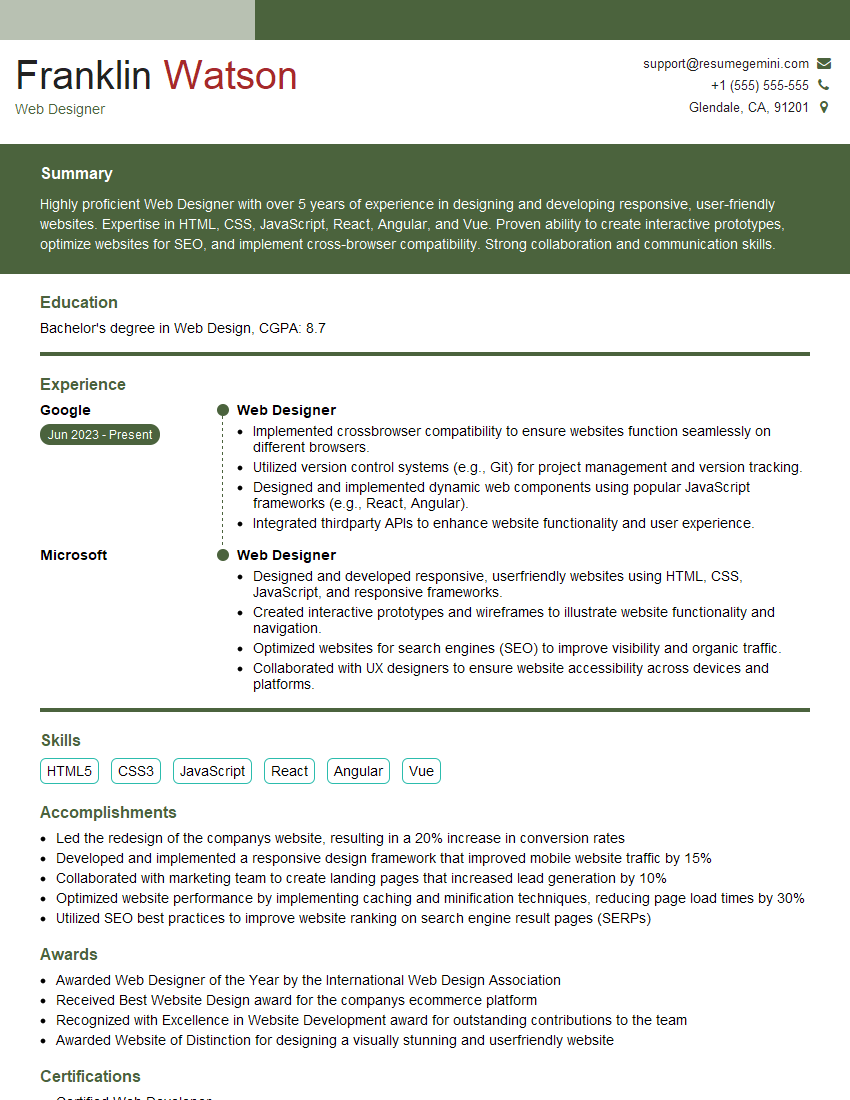
Web Designer Resume Sample
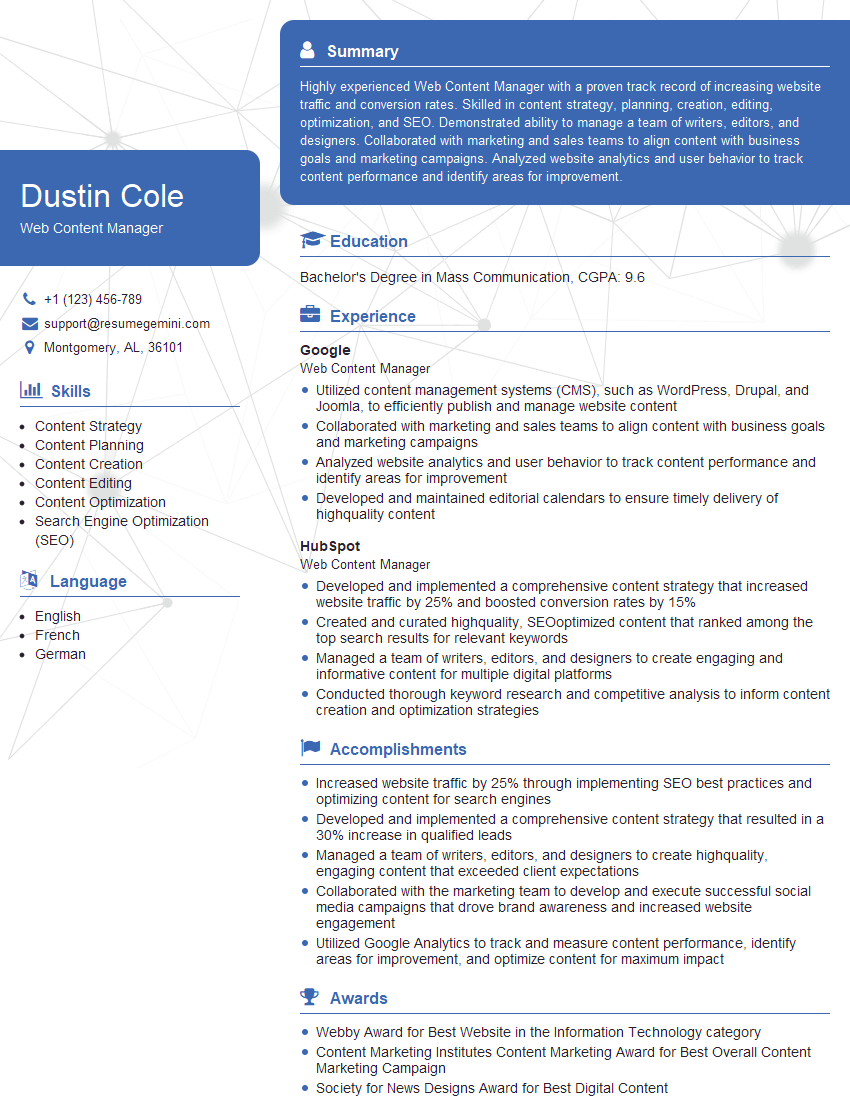
Web Content Manager Resume Sample
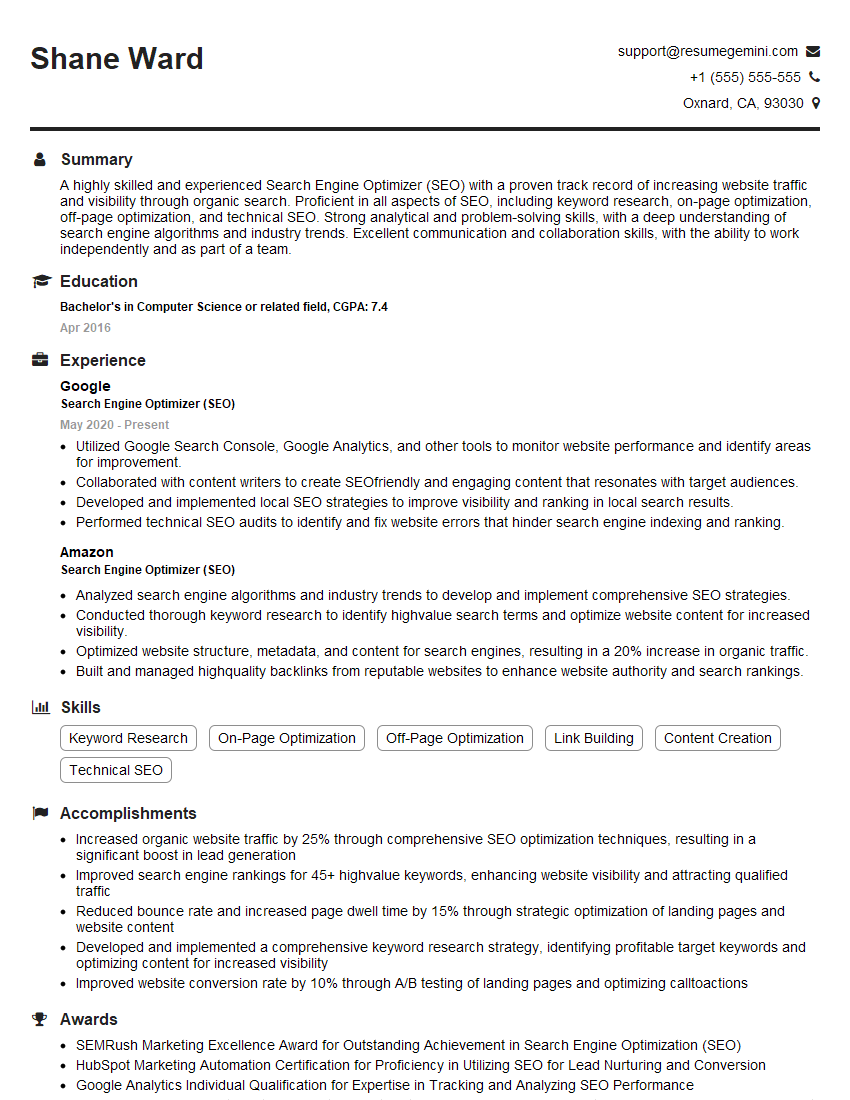
Search Engine Optimizer (SEO) Resume Sample
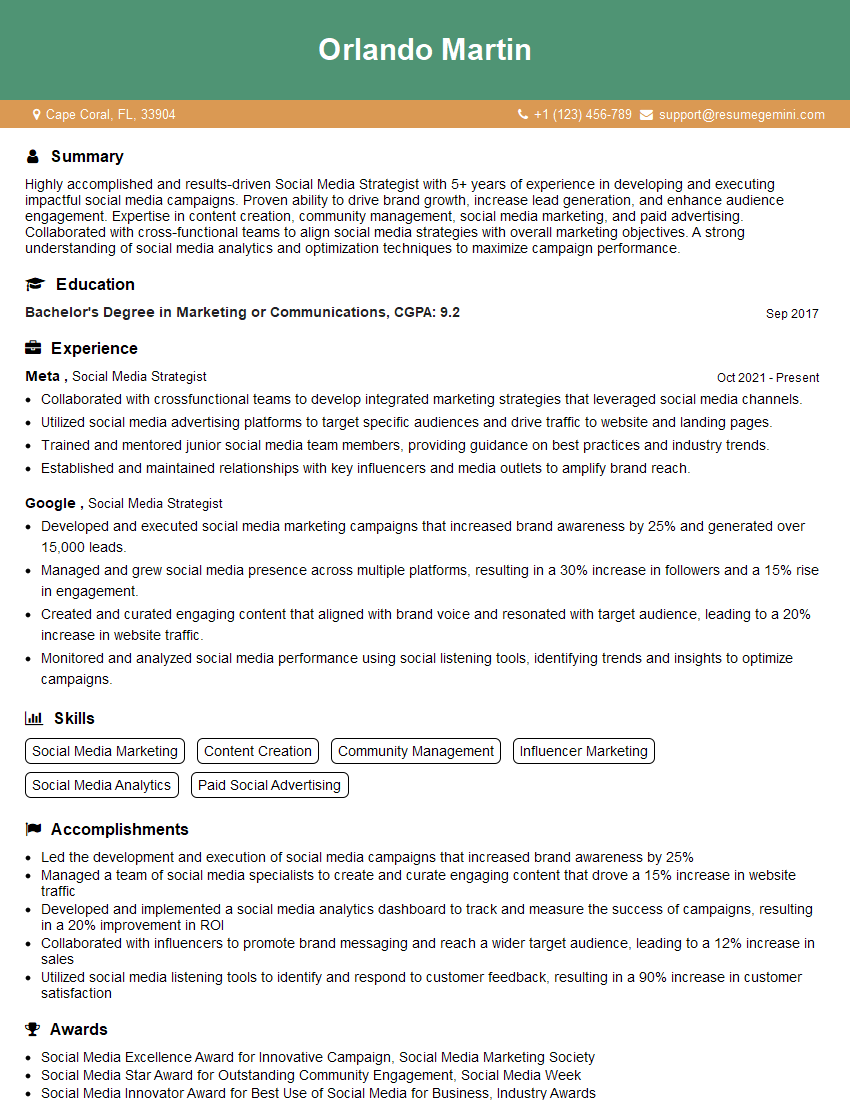
Social Media Strategist Resume Sample

Content Strategist Resume Sample
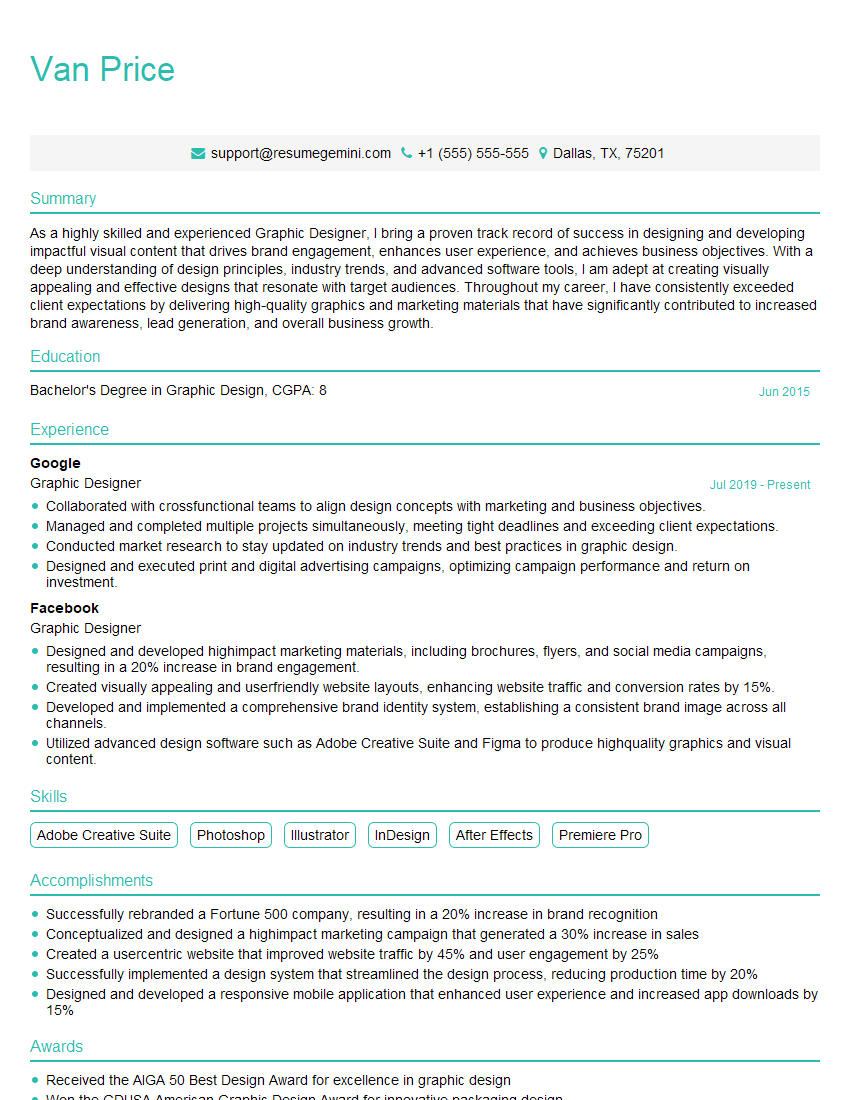
Graphic Designer Resume Sample
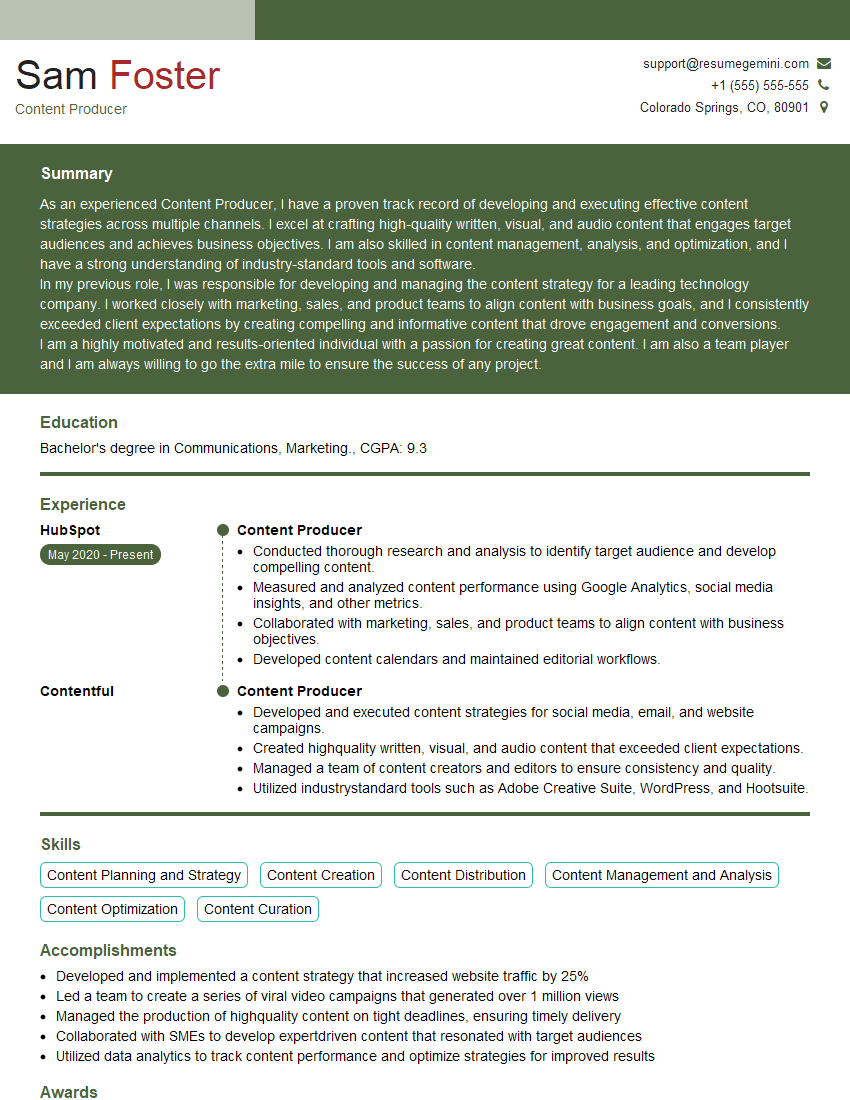
Content Producer Resume Sample
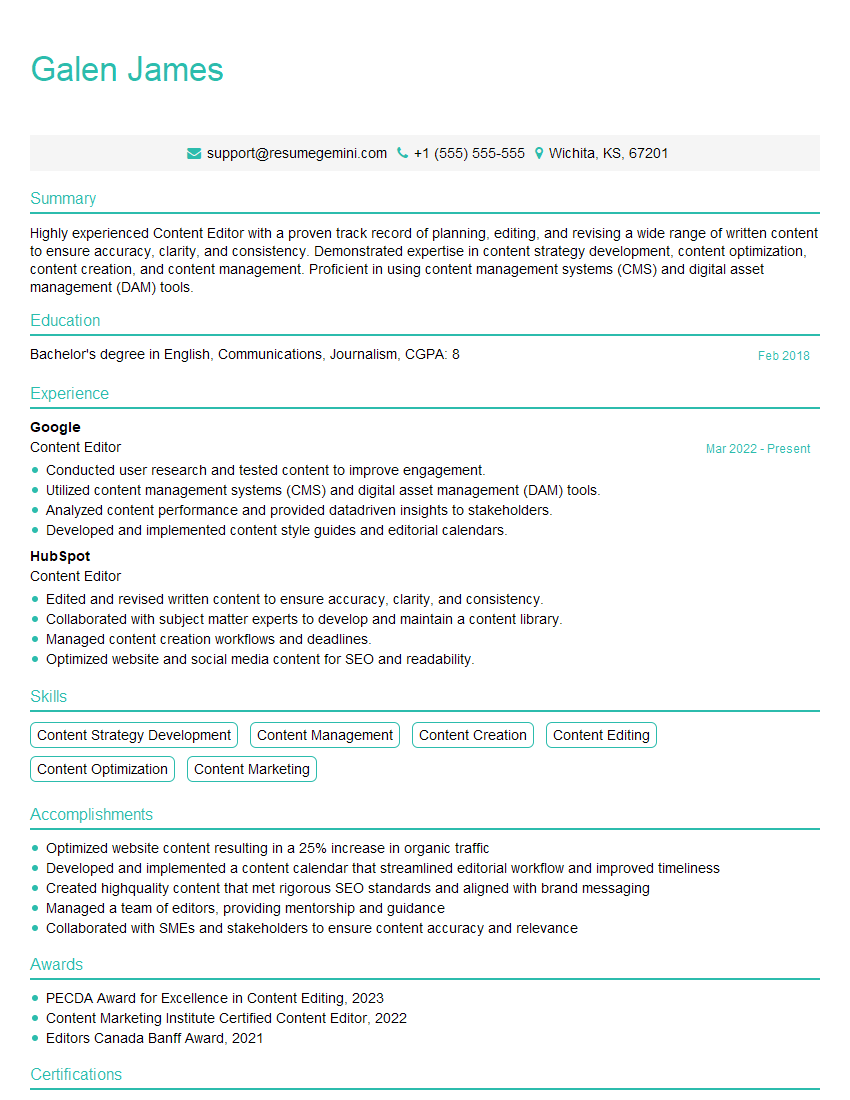
Content Editor Resume Sample

Technical Writer Resume Sample

Copywriter Resume Sample
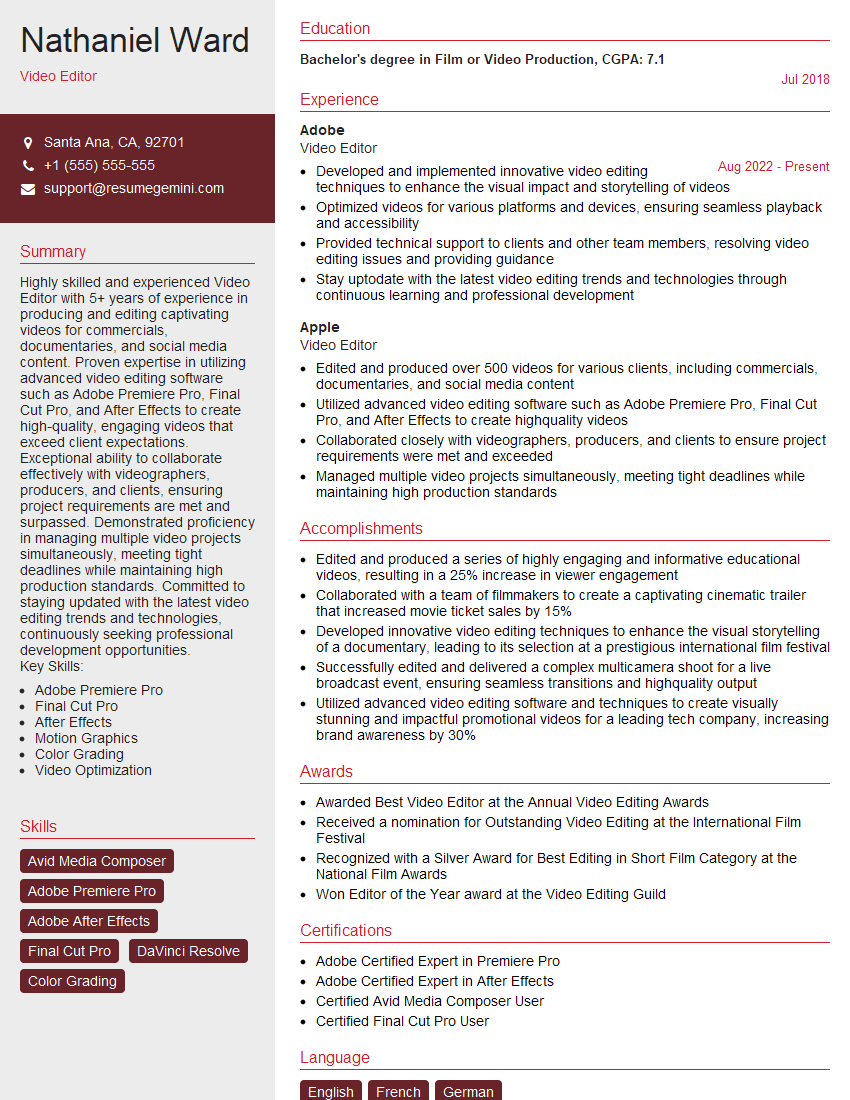
Video Editor Resume Sample
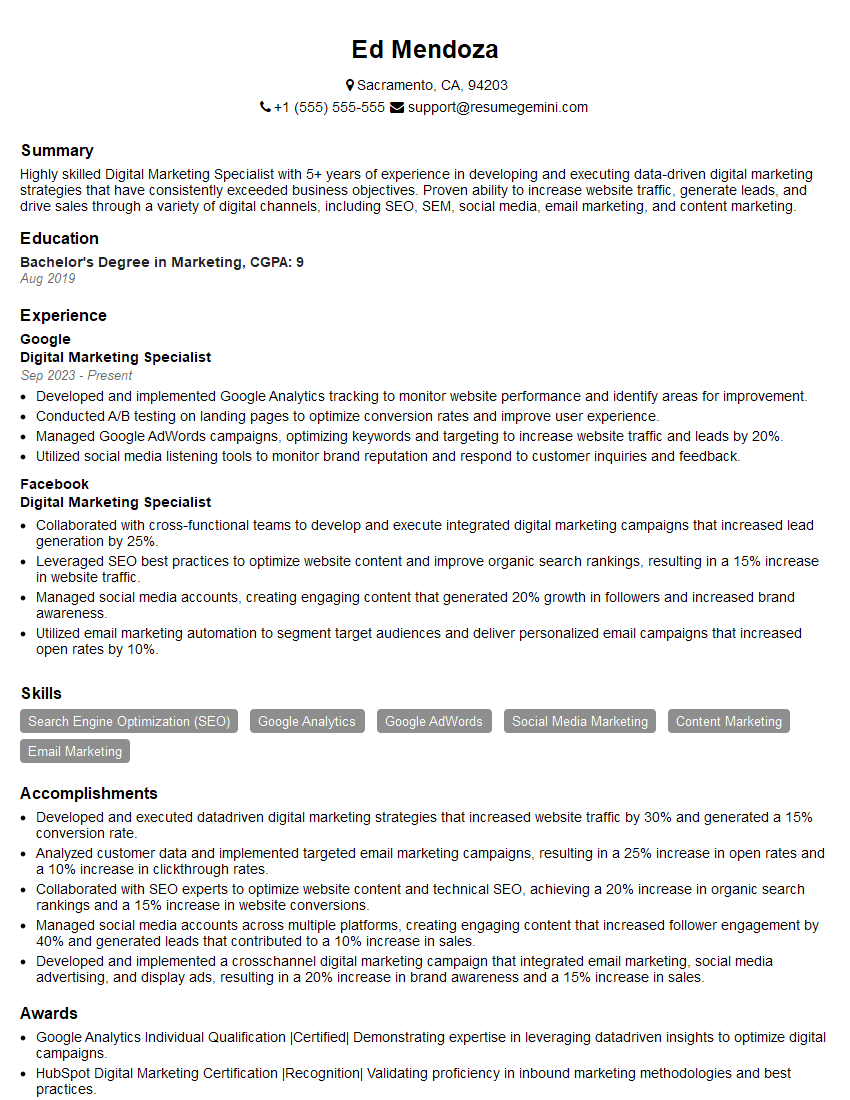
Digital Marketing Specialist Resume Sample
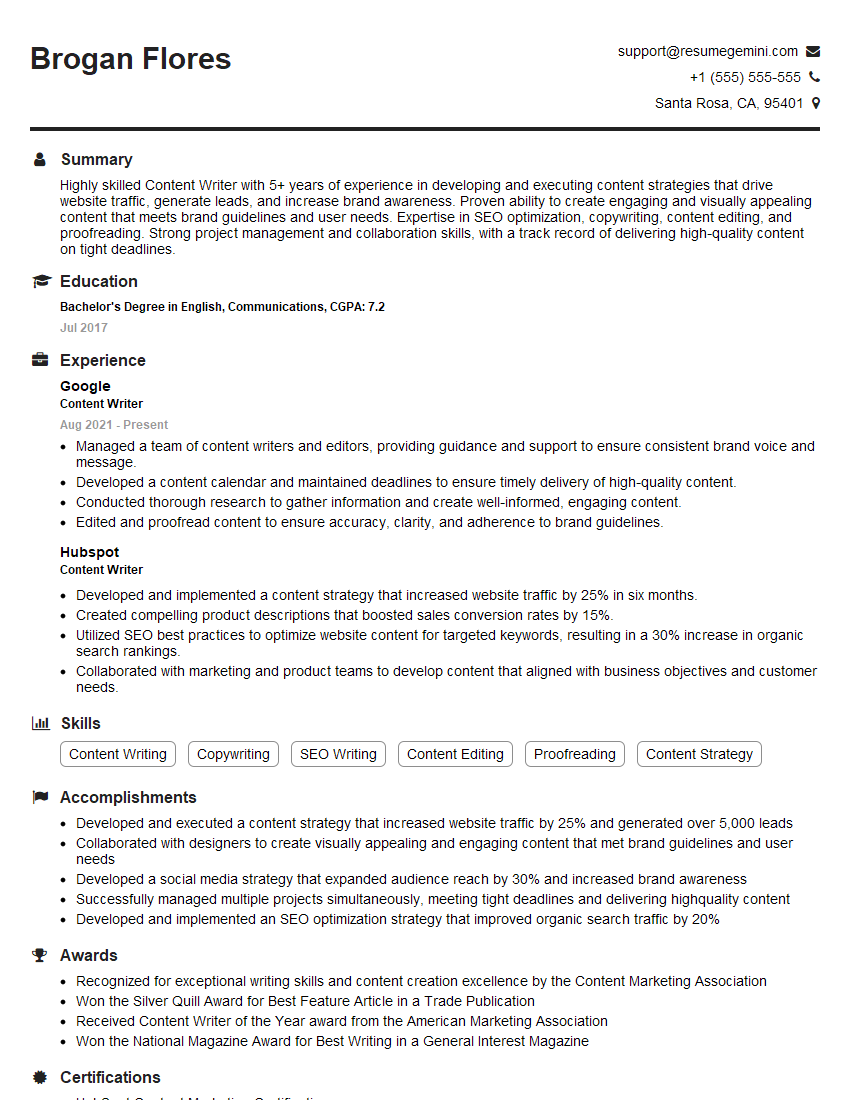
Content Writer Resume Sample
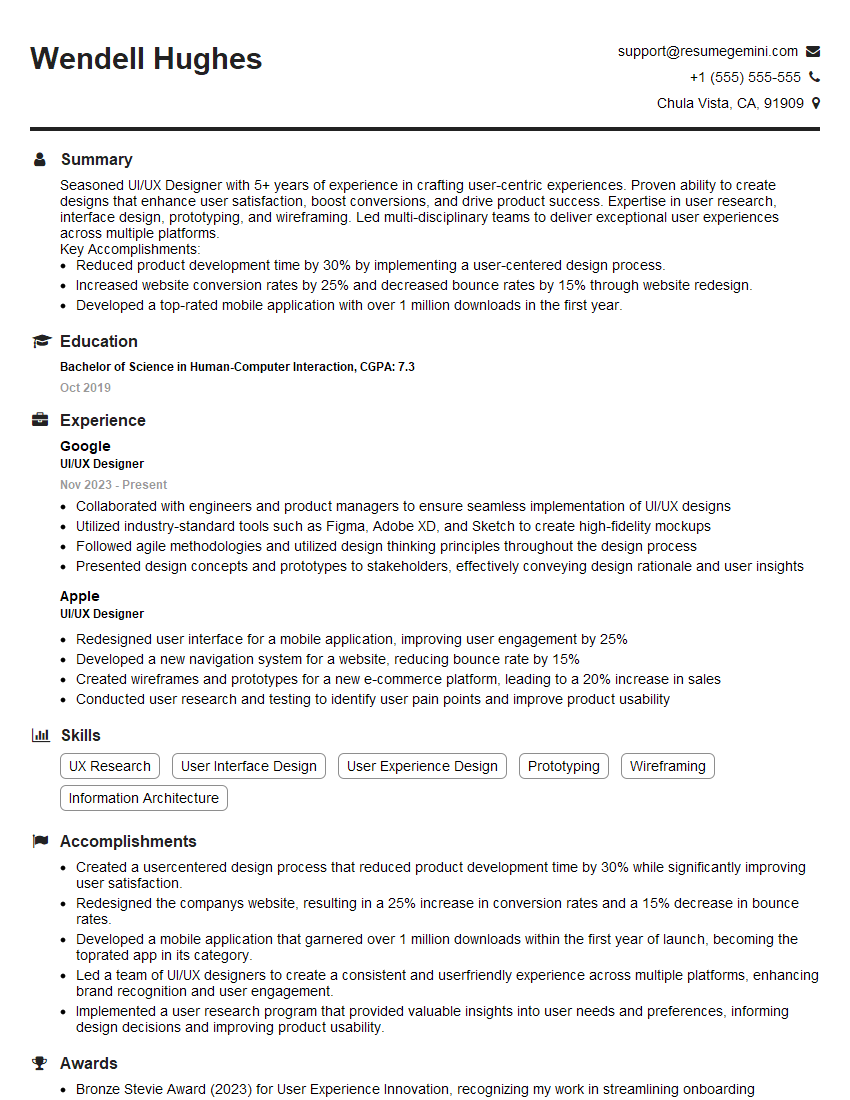
UI/UX Designer Resume Sample
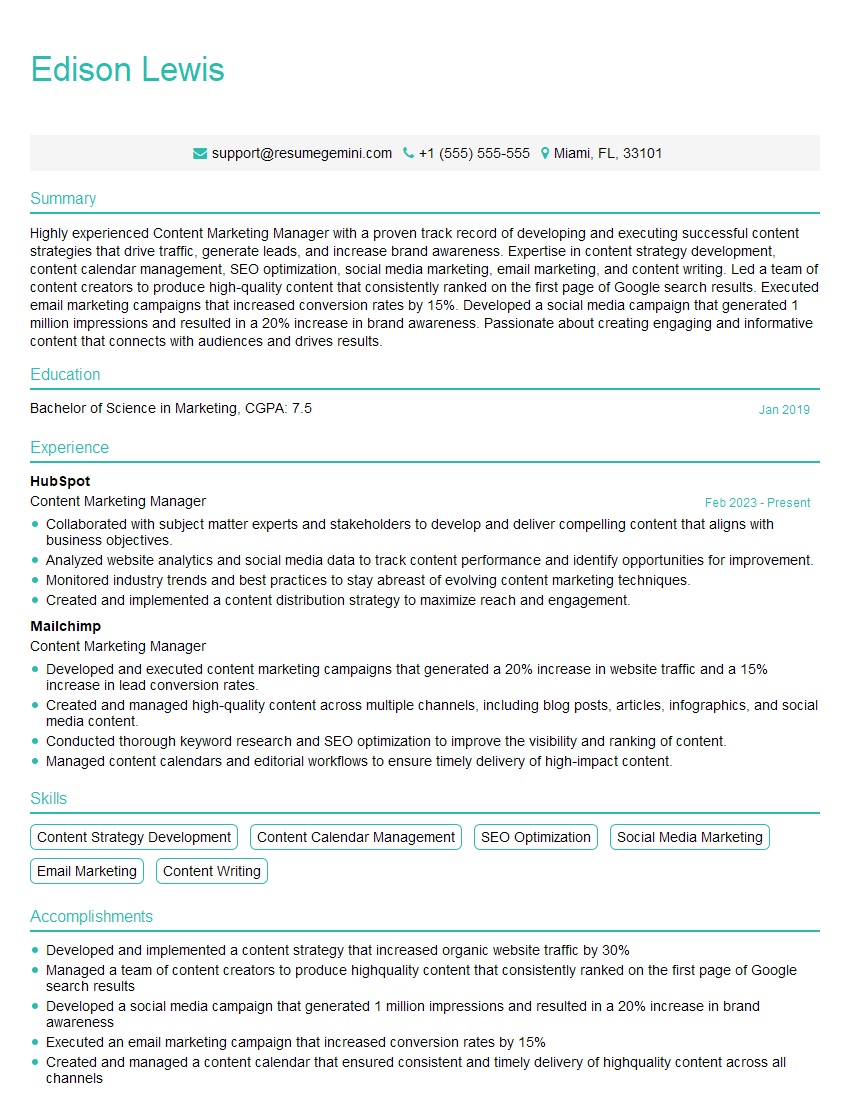
Content Marketing Manager Resume Sample
- Marketing Communications Manager
- Social Media Manager
- Web Designer
- Web Content Manager
- Search Engine Optimizer (SEO)
- Social Media Strategist
- Content Strategist
- Graphic Designer
- Content Producer
- Content Editor
- Technical Writer
- Copywriter
- Video Editor
- Digital Marketing Specialist
- Content Writer
- UI/UX Designer
- Content Marketing Manager
Explore more articles
Users Rating of Our Blogs
Share Your Experience
We value your feedback! Please rate our content and share your thoughts (optional).
What Readers Say About Our Blog
Very informative content, great job.
good