Interviews are opportunities to demonstrate your expertise, and this guide is here to help you shine. Explore the essential Web Inspection and Monitoring interview questions that employers frequently ask, paired with strategies for crafting responses that set you apart from the competition.
Questions Asked in Web Inspection and Monitoring Interview
Q 1. Explain the difference between synthetic and real user monitoring.
Synthetic monitoring and real user monitoring (RUM) are both crucial for understanding website performance, but they approach the problem from different angles. Think of synthetic monitoring as a scheduled health check-up, while RUM is like observing a patient’s daily activities.
Synthetic monitoring uses automated scripts to simulate user interactions on your website from various locations. These scripts mimic actions like page loads, form submissions, and button clicks. The results provide data on response times, errors, and overall website availability. It’s great for proactively identifying issues before they impact real users.
Real user monitoring (RUM), on the other hand, directly measures the actual experience of real users on your website. It collects performance data from actual user sessions, providing insights into page load times, error rates, and other metrics experienced by your audience. This provides invaluable context about how your website performs under real-world conditions.
The key difference lies in the data source: synthetic monitoring uses simulated users, while RUM uses real users. Both are vital; synthetic monitoring catches early problems, while RUM shows the actual user experience.
Q 2. Describe your experience with various web performance testing tools (e.g., GTmetrix, Lighthouse, WebPageTest).
I’ve extensively used various web performance testing tools throughout my career. GTmetrix, Lighthouse, and WebPageTest are among my favorites, each offering a unique set of strengths.
- GTmetrix: I frequently use GTmetrix for its detailed analysis of page speed, highlighting opportunities for improvement in both front-end and back-end performance. Its recommendations are clear and actionable, often suggesting specific changes to optimize images, CSS, and JavaScript.
- Lighthouse: Integrated into Chrome DevTools, Lighthouse is a powerful tool for auditing website performance, accessibility, best practices, SEO, and PWA aspects. I find its report scoring system and clear suggestions helpful for quickly identifying areas that need attention and prioritizing improvements.
- WebPageTest: For a more in-depth and comprehensive performance analysis, I rely on WebPageTest. I appreciate its ability to simulate different network conditions and geographic locations, giving a realistic view of how the website performs for users in diverse environments. The waterfall charts and detailed metrics help pinpoint specific bottlenecks.
For example, on a recent project, I used WebPageTest to identify a significant slow-down caused by a poorly optimized image. GTmetrix then helped me pinpoint the specific image and suggest optimal compression techniques. Lighthouse confirmed the improvements after implementation.
Q 3. How do you identify and diagnose performance bottlenecks in a web application?
Identifying performance bottlenecks requires a systematic approach combining various techniques. My process typically involves:
- Gathering performance data: I start by using tools like those mentioned earlier (GTmetrix, Lighthouse, WebPageTest) to obtain baseline performance data. This includes metrics like page load time, Time To First Byte (TTFB), and First Contentful Paint (FCP).
- Analyzing network requests: Using browser developer tools’ network tab, I meticulously examine the individual requests made by the page. Slow or failing requests are prime suspects. I look at request types (images, CSS, JavaScript), sizes, and response times.
- Profiling JavaScript execution: If JavaScript is suspected, I utilize the profiler in developer tools to identify slow functions or inefficient code segments. This helps optimize JavaScript performance, reducing execution time.
- Server-side analysis: I often need to collaborate with backend developers to analyze server-side performance. This may involve examining server logs, database queries, and application code.
- Database optimization: Slow database queries can significantly impact performance. I work with database administrators to optimize queries and ensure database indexes are correctly implemented.
- Caching strategies: Implementing and optimizing caching mechanisms at different levels (browser, CDN, server) significantly reduces response time for frequently accessed resources.
For instance, on a recent project, a slow database query was identified as the culprit. Optimizing the query reduced page load times by 30%.
Q 4. What are common HTTP status codes and their significance in web monitoring?
HTTP status codes are three-digit numbers that indicate the outcome of a client’s request to a server. Understanding them is vital for web monitoring as they reflect the health and responsiveness of your website.
- 2xx (Success): Indicates that the request was successfully received, understood, and accepted.
200 OKis the most common, showing everything went smoothly. - 3xx (Redirection): The client needs to take further action to complete the request.
301 Moved Permanentlyand302 Foundare common examples, redirecting users to a new URL. - 4xx (Client Error): The request contains an error on the client-side.
404 Not Foundis the most notorious, meaning the requested resource doesn’t exist.403 Forbiddenmeans the client lacks permission to access the resource. - 5xx (Server Error): The server encountered an unexpected condition preventing it from fulfilling the request.
500 Internal Server Erroris a general server problem, while503 Service Unavailableindicates the server is temporarily down.
Monitoring these codes through web monitoring tools is crucial. A spike in 5xx errors, for example, immediately points to a serious server-side issue requiring attention.
Q 5. Explain the concept of RUM (Real User Monitoring) and its benefits.
Real User Monitoring (RUM) provides a direct measurement of how your website performs from the perspective of your actual users. It’s like having a tiny spy in every user’s browser, reporting back on their experience. Instead of simulating user behavior, RUM captures actual user interactions, network conditions, and performance metrics in real time.
Benefits of RUM:
- Real-world insights: RUM data directly reflects the actual user experience, revealing issues not always caught by synthetic monitoring.
- Improved user experience: By identifying and addressing performance bottlenecks observed by real users, you directly improve website usability and satisfaction.
- Prioritization of fixes: RUM helps focus efforts on the most impactful performance issues, ensuring resources are directed where they’re most needed.
- Business impact assessment: By connecting performance issues to user engagement metrics (e.g., bounce rate, conversion rate), you can quantify the impact of performance problems on business outcomes.
For example, RUM might reveal that users on mobile devices experience significantly slower page load times than desktop users, guiding optimization efforts accordingly.
Q 6. How do you use browser developer tools for web inspection and debugging?
Browser developer tools are an indispensable part of my web inspection and debugging workflow. They’re like a powerful microscope for examining every detail of a website’s behavior.
I regularly use the following features:
- Network tab: I use this to analyze network requests, identify slow resources, and pinpoint bottlenecks. It shows request timings, sizes, and HTTP status codes, allowing for thorough investigation.
- Elements tab: I inspect the HTML structure of a webpage, examine CSS styles, and debug layout issues. This is vital for understanding how elements are rendered and identifying styling conflicts.
- Console tab: This displays JavaScript errors, warnings, and logs. I use it to track execution flow, identify errors, and debug JavaScript code directly in the browser.
- Performance tab (or Profiles tab): This allows for performance profiling, identifying bottlenecks in JavaScript execution and rendering.
- Sources tab: This allows debugging of JavaScript code. Setting breakpoints and stepping through the code helps identify problems.
For instance, I recently used the network tab to discover a large image wasn’t compressed, causing a significant delay. I then used the Elements tab to inspect its CSS to see if it could be smaller.
Q 7. Describe your experience with APM (Application Performance Monitoring) tools.
Application Performance Monitoring (APM) tools provide a holistic view of application performance, going beyond just website front-end. They monitor the entire application stack, including servers, databases, and APIs, providing a comprehensive understanding of performance bottlenecks.
My experience includes working with various APM tools, each with strengths and weaknesses. These tools typically provide:
- Transaction tracing: Tracking the flow of requests across the application layers to identify slow components.
- Error tracking: Monitoring and analyzing application errors, providing insights into their frequency, impact, and root cause.
- Metrics dashboards: Presenting key performance indicators (KPIs) such as response times, error rates, and resource utilization.
- Code-level profiling: Providing detailed performance insights down to individual code lines, identifying performance hotspots.
In one project, an APM tool helped us discover that a seemingly unrelated database query was unexpectedly slowing down the entire application, something that wouldn’t have been immediately apparent with just front-end tools. This led to significant performance gains after database optimization.
Q 8. Explain different types of web performance tests (e.g., load testing, stress testing, endurance testing).
Web performance tests are crucial for ensuring a website’s speed, stability, and scalability. Different tests target different aspects of performance:
- Load Testing: Simulates a specific number of concurrent users accessing the website simultaneously. This helps determine how the site performs under expected traffic conditions. For example, we might simulate 1000 users browsing the product catalog to see if the server can handle the load without significant slowdowns or crashes.
- Stress Testing: Pushes the website beyond its expected limits to identify breaking points. It helps understand the site’s resilience and determine how it behaves under extreme pressure, such as a sudden surge in traffic due to a viral marketing campaign. This reveals the site’s maximum capacity and potential bottlenecks.
- Endurance Testing: Tests the website’s stability and performance over an extended period under sustained load. This helps identify memory leaks, resource exhaustion, or other issues that might only emerge after hours or days of continuous operation. For example, we might run this test for 24 hours with a constant load of 500 users to check for performance degradation over time.
Each test type provides valuable insights, and often, a combination is used to build a comprehensive understanding of a website’s performance profile.
Q 9. How do you prioritize performance issues based on their impact?
Prioritizing performance issues requires a systematic approach. I typically use a combination of impact and urgency to categorize them. We consider:
- Business Impact: How significantly does the issue affect key business metrics like conversion rates, revenue, or customer satisfaction? A slow checkout process has a higher priority than a minor visual glitch on a rarely visited page.
- User Impact: How frustrating or disruptive is the issue for users? A long page load time will impact a larger user base than a minor error message seen by a few users.
- Frequency: How often does the issue occur? Frequent errors demand immediate attention, while infrequent ones can be addressed later.
- Severity: How critical is the issue? A complete website crash has a higher severity than a slow-loading image.
I use a matrix or a simple scoring system to weigh these factors and assign priorities. This ensures that the most critical issues are addressed first, maximizing impact and minimizing user disruption.
Q 10. What are some key metrics you track for web performance?
Key metrics for web performance monitoring fall into several categories:
- Page Load Time: The total time taken to fully load a page, a crucial indicator of overall user experience.
- Time to First Byte (TTFB): The time it takes for the browser to receive the first byte of data from the server. It reflects server response time.
- First Contentful Paint (FCP): The time at which the browser renders the first piece of content on the page. Indicates visual progress to the user.
- Largest Contentful Paint (LCP): The time when the largest content element is rendered. Measures the perceived load speed.
- Cumulative Layout Shift (CLS): Measures visual stability. A high CLS indicates unexpected page shifts, impacting user experience.
- First Input Delay (FID): Measures how quickly the page becomes interactive. A high FID indicates poor responsiveness.
- Error Rate: The number of errors encountered during page loading or interactions.
- Server Response Time: The time taken by the server to respond to requests.
These metrics provide a holistic view of web performance, enabling focused optimization efforts.
Q 11. Explain the concept of caching and its impact on web performance.
Caching is a technique that stores copies of frequently accessed web resources (like images, CSS files, and JavaScript) closer to the user. This significantly reduces the amount of data that needs to be fetched from the origin server, resulting in faster page load times.
How it works: Caches can exist at various levels – browser cache, CDN cache, server-side cache. When a user requests a resource, the cache is checked first. If the resource is found, it’s served from the cache; otherwise, it’s fetched from the origin server, and a copy is stored in the cache for future requests.
Impact on performance: Caching dramatically reduces server load, network latency, and page load time. It enhances user experience and improves scalability. However, careful management is crucial to ensure cached resources are up-to-date and consistent.
Example: Imagine a popular image on a news website. With caching, after the first user downloads it, subsequent users retrieve it from a nearby cache (CDN), leading to almost instant loading for them.
Q 12. How do you handle performance issues in a production environment?
Handling performance issues in production requires a methodical approach, emphasizing minimal disruption to users. My process typically involves:
- Identify the problem: Use monitoring tools to pinpoint the affected areas and gather performance metrics. Analyze logs and user reports.
- Diagnose the root cause: Investigate potential issues, such as database slowdowns, inefficient code, network bottlenecks, or resource constraints. Profiling tools are essential here.
- Implement a solution: Develop a fix, prioritizing quick wins where possible. This could involve code optimization, database tuning, or scaling resources.
- Test the solution: Thoroughly test the fix in a staging environment before deploying it to production to minimize the risk of introducing further issues.
- Deploy the solution: Roll out the changes gradually, monitoring closely for unexpected consequences. Use techniques like canary deployments or blue/green deployments to minimize risks.
- Monitor and refine: Continuously monitor performance metrics after deployment to ensure the issue is resolved and to identify potential follow-up optimizations.
The key is rapid response, careful testing, and iterative improvement. Communication with stakeholders is vital throughout the process.
Q 13. Describe your experience with using a CDN (Content Delivery Network).
I have extensive experience leveraging CDNs (Content Delivery Networks) to improve website performance and scalability. CDNs distribute website content across multiple servers globally, ensuring that users receive content from the geographically closest server. This minimizes latency and improves speed, particularly for users in regions far from the origin server.
Practical applications: I’ve used CDNs to:
- Reduce page load times: By serving static content (images, CSS, JavaScript) from servers closer to users, we’ve seen significant reductions in TTFB and overall page load times.
- Improve scalability: CDNs handle traffic spikes efficiently, preventing server overload during peak periods. This is especially important for websites with global reach or those experiencing seasonal traffic surges.
- Enhance security: Some CDNs offer advanced security features like DDoS protection, shielding websites from malicious attacks.
- Optimize for different devices: CDNs can deliver optimized content based on device type (desktop, mobile) and network conditions.
Selecting the right CDN provider and configuring it optimally are crucial steps to maximize its benefits. I have experience working with various providers and customizing CDN configurations to meet specific project needs.
Q 14. How do you analyze and interpret web server logs?
Web server logs are invaluable sources of information about website performance and activity. Analyzing them helps identify errors, security threats, and performance bottlenecks. My approach involves:
- Log Aggregation: Centralizing logs from multiple servers into a single location for easier analysis. Tools like ELK stack (Elasticsearch, Logstash, Kibana) or Splunk are commonly used.
- Filtering and Pattern Matching: Using regular expressions or search queries to isolate specific events or errors within the log files. For example, identifying all requests resulting in a 500 error code.
- Error Analysis: Focusing on error logs to pinpoint problematic areas. Analyzing error messages helps identify the root cause of issues like database connection errors or application crashes.
- Performance Monitoring: Examining request times, response codes, and other metrics to assess overall performance. This involves analyzing things like average request processing time and identifying slow requests.
- Traffic Analysis: Understanding the website’s traffic patterns – peak hours, popular pages, and user behavior – to optimize resource allocation and identify potential scalability issues.
- Security Auditing: Detecting suspicious activity, like unauthorized access attempts, which are often logged by the web server.
Log analysis requires a blend of technical skills and investigative abilities to connect disparate events and identify underlying problems. Effective log analysis is critical for proactive performance management and security.
Q 15. Explain your understanding of network protocols and their role in web performance.
Network protocols are the set of rules governing how data is transmitted across a network. In web performance, they’re crucial because every interaction – from a user clicking a link to loading an image – involves a series of protocol exchanges. Understanding these protocols is vital for diagnosing performance bottlenecks.
For example, HTTP (Hypertext Transfer Protocol) is the foundation of the web; it dictates how web browsers request and receive web pages. HTTPS (HTTP Secure) adds security through encryption. TCP (Transmission Control Protocol) ensures reliable data delivery, while UDP (User Datagram Protocol) offers faster, less reliable transmission, often used for streaming. DNS (Domain Name System) translates domain names into IP addresses, a critical step before any web page can be accessed.
A slow DNS lookup, for instance, can significantly impact initial page load time. Similarly, inefficient use of HTTP/2, which allows multiplexing of requests over a single connection, can lead to delays. Understanding how these protocols interact and where potential bottlenecks might occur is essential for effective web performance optimization.
Career Expert Tips:
- Ace those interviews! Prepare effectively by reviewing the Top 50 Most Common Interview Questions on ResumeGemini.
- Navigate your job search with confidence! Explore a wide range of Career Tips on ResumeGemini. Learn about common challenges and recommendations to overcome them.
- Craft the perfect resume! Master the Art of Resume Writing with ResumeGemini’s guide. Showcase your unique qualifications and achievements effectively.
- Don’t miss out on holiday savings! Build your dream resume with ResumeGemini’s ATS optimized templates.
Q 16. What are some common causes of slow website loading times?
Slow website loading times have several common causes, often intertwined. They can be broadly categorized into front-end and back-end issues.
- Front-end issues: These relate to how the website renders in the user’s browser. Examples include:
- Large images or videos: Unoptimized media significantly impacts load times.
- Unminified CSS and JavaScript: Large, uncompressed code files take longer to download and parse.
- Blocking render-blocking JavaScript: Scripts that execute before the page content is rendered delay visual display.
- Excessive HTTP requests: Each request adds overhead; minimizing them improves performance.
- Poorly structured HTML: Inefficient code can hinder browser rendering.
- Back-end issues: These are related to server-side processing and database operations. Examples include:
- Slow database queries: Inefficient database interactions can bottleneck the entire process.
- Server overload: High traffic or insufficient server resources can result in slow response times.
- Inefficient code on the server: Poorly written server-side code can create processing delays.
- Third-party scripts: External scripts, if poorly optimized or unreliable, can impede performance.
Identifying the root cause often requires a combination of tools and techniques, such as browser developer tools, server-side monitoring, and network analysis.
Q 17. How do you ensure the accuracy and reliability of your web performance data?
Ensuring accuracy and reliability in web performance data is paramount. This involves several key strategies:
- Multiple monitoring locations: Using geographically diverse monitoring points provides a more complete picture of performance from various locations and networks. This mitigates biases from a single location’s network conditions.
- Synthetic monitoring and real user monitoring (RUM): Combining synthetic monitoring (simulated user tests) with RUM (actual user data) provides a holistic view. Synthetic monitoring offers consistent, controlled testing, while RUM captures real-world user experiences.
- Regularly calibrating monitoring tools: Periodically checking the accuracy of monitoring tools against known benchmarks helps identify and correct any discrepancies.
- Robust error handling: Monitoring systems must reliably capture and report errors, providing context and details to facilitate accurate diagnosis.
- Data validation and anomaly detection: Implementing algorithms that detect unusual data patterns – such as sudden spikes or drops – helps filter out spurious readings and highlight genuine problems.
For example, a sudden increase in error rates from a specific server might indicate a problem with that server, which warrants immediate investigation.
Q 18. How do you collaborate with development teams to improve web performance?
Collaboration with development teams is critical for effective web performance improvement. This involves:
- Regular performance reviews: Sharing performance data and insights with developers through regular meetings and reports allows for collaborative problem-solving.
- Providing actionable insights: Instead of merely reporting issues, provide specific recommendations and solutions, accompanied by supporting data and analysis.
- Utilizing collaborative tools: Tools like Jira or Slack can facilitate communication and task management, allowing developers to address performance issues efficiently.
- Providing training and mentorship: Educating developers about performance best practices and providing guidance on optimization techniques helps to build a performance-conscious culture.
- Integrating performance testing into the development pipeline: Incorporating automated performance testing into the continuous integration/continuous delivery (CI/CD) process helps identify and address performance issues early in the development lifecycle.
In practice, this might involve working with developers to optimize images, refactor inefficient code, or tune database queries. Regular feedback loops and collaborative problem-solving are key.
Q 19. Explain your experience with setting up and managing monitoring alerts.
Setting up and managing monitoring alerts involves carefully defining thresholds and actions. This requires a thorough understanding of the system’s normal behavior to distinguish between expected fluctuations and actual problems.
I typically use a tiered approach:
- Critical alerts: Triggered by severe performance degradation, such as complete website outages or extremely high error rates. These alerts usually require immediate action and often involve waking up on-call engineers.
- Major alerts: Triggered by significant performance dips that might not immediately lead to failure, but warrant investigation and proactive action. These might lead to performance tuning or scalability adjustments.
- Minor alerts: Triggered by smaller performance deviations that might be indicative of emerging problems. These alerts allow proactive monitoring and prevent minor issues from escalating.
Alerting systems should be configurable and allow for different notification methods (email, SMS, PagerDuty) based on the alert’s severity and the recipient’s role. False positives should be minimized through careful threshold setting and intelligent filtering.
Q 20. Describe your experience with different types of monitoring dashboards.
I’ve worked with various monitoring dashboards, each with its strengths and weaknesses. They generally fall into a few categories:
- Time-series dashboards: These display performance metrics over time, often using charts and graphs to visualize trends. They’re excellent for identifying patterns and detecting anomalies.
- Geographic dashboards: These show performance data broken down by geographic location, highlighting regional performance variations and helping to identify network-related problems.
- Application-specific dashboards: These are tailored to specific applications or services, providing detailed insights into their performance characteristics. They often integrate with other tools for deeper analysis.
- Custom dashboards: These allow flexible customization to meet specific needs and integrate diverse data sources. They can offer a tailored view that combines data from multiple tools.
The choice of dashboard depends on the specific requirements of the project and the user’s needs. For instance, a simple time-series dashboard may suffice for a small website, while a complex, custom dashboard is needed for large, intricate applications.
Q 21. How do you identify and troubleshoot network connectivity issues?
Identifying and troubleshooting network connectivity issues requires a systematic approach. It often involves a combination of tools and techniques.
- Ping tests: Checking connectivity to servers using
pingdetermines basic reachability. Slow response times or packet loss indicate connectivity problems. - Traceroute: Using
traceroutereveals the path packets take to reach the server, helping identify points of failure along the network route. - Network monitoring tools: Specialized tools like SolarWinds or PRTG provide detailed network performance data, visualizing traffic flows and identifying bottlenecks.
- Browser developer tools: Analyzing network requests in browser developer tools can pinpoint slow-loading resources or failed requests.
- Server-side logs: Examining server logs for errors or warnings can provide insights into potential issues.
For instance, if traceroute shows high latency or packet loss at a specific hop, it points to a problem within that network segment. This might involve contacting the network provider or investigating internal routing issues.
Q 22. What is your experience with using command-line tools for web inspection?
Command-line tools are invaluable for deep web inspection. They offer a level of control and granularity often unavailable through graphical user interfaces (GUIs). My experience encompasses using tools like curl for inspecting HTTP requests and responses, wget for downloading files and analyzing headers, and tcpdump/Wireshark for network packet analysis to pinpoint bottlenecks or security issues. For example, using curl -v example.com provides a verbose output showing every step of the HTTP transaction, including headers, cookies, and the response code, allowing me to quickly identify issues like slow server response times or incorrect redirects. I also frequently use tools like grep and awk to filter and parse the output of these commands for efficient analysis of large datasets. This command-line proficiency allows for rapid troubleshooting and provides detailed insights not readily available through GUI-based tools.
Q 23. Explain the importance of security in web monitoring.
Security is paramount in web monitoring. Compromised monitoring systems can become entry points for attackers, potentially leading to data breaches, service disruptions, or even complete website takeover. My approach focuses on several key areas: securing access to monitoring dashboards with strong authentication and authorization mechanisms, encrypting sensitive data transmitted between monitoring agents and servers, regularly updating monitoring tools and libraries to patch vulnerabilities, and implementing intrusion detection systems to monitor for suspicious activity. For instance, I’d advocate for using HTTPS for all communication, employing robust password policies, and regularly auditing access logs. A breach of a web monitoring system could be far more damaging than a website compromise itself, as attackers gain insights into the website’s infrastructure and vulnerabilities.
Q 24. Describe your approach to documenting performance issues and resolutions.
My documentation approach for performance issues and resolutions follows a structured format to ensure clarity and reproducibility. I use a combination of textual descriptions, screenshots, code snippets, and performance metrics. Each documented issue includes a detailed description of the problem, the steps taken to reproduce it, the analysis conducted (e.g., identifying bottlenecks using profiling tools), and the implemented solution. I leverage tools like Jira or Confluence to create detailed tickets that include all relevant information. For example, if a slow database query is identified, the documentation would include the SQL query, execution plan, profiling results, and the modifications implemented (e.g., adding indexes, optimizing the query). This methodical approach allows for efficient troubleshooting of recurring problems and helps others easily understand and resolve similar issues in the future. Thorough documentation is crucial for efficient collaboration and knowledge transfer within a team.
Q 25. How do you measure the success of your web performance optimization efforts?
Measuring the success of web performance optimization relies on establishing clear, measurable Key Performance Indicators (KPIs) before starting any optimization work. These KPIs might include page load time, Time to First Byte (TTFB), bounce rate, conversion rate, and user engagement metrics. I use tools like Google Analytics, Google PageSpeed Insights, and web server logs to track these metrics. Success is measured by comparing the KPIs before and after implementing optimizations. For instance, a successful optimization might be reducing the average page load time from 5 seconds to 2 seconds, resulting in a significant decrease in bounce rate and a noticeable increase in conversion rates. It is crucial to correlate performance improvements with business objectives; a faster website isn’t valuable unless it translates to tangible business benefits.
Q 26. Explain your familiarity with different types of web servers (e.g., Apache, Nginx).
I have extensive experience with Apache and Nginx, the two most prevalent web servers. Apache, known for its robustness and module-rich ecosystem, offers great flexibility but can sometimes be less performant than Nginx for high-traffic scenarios. Nginx, on the other hand, is highly efficient and often preferred for serving static content and handling reverse proxy tasks. My experience includes configuring virtual hosts, managing SSL certificates, optimizing server settings (e.g., worker processes, caching), and troubleshooting common errors. I understand the different strengths and weaknesses of each and can choose appropriately based on the specific needs of a project. For example, I might use Apache for a website with complex back-end requirements and Nginx as a reverse proxy to improve performance and security.
Q 27. How do you handle conflicting priorities between web performance and other project goals?
Handling conflicting priorities between web performance and other project goals requires effective communication and prioritization. This often involves a balanced approach, where performance improvements are integrated incrementally rather than implemented in a disruptive manner. For instance, if a feature launch is prioritized over immediate performance gains, I’d work to identify the least impactful optimizations that can be implemented without delaying the launch. I’d then schedule more extensive performance improvements for a later phase, after the feature launch. This usually involves creating a roadmap that incorporates both performance improvements and other project objectives, clearly communicating trade-offs and setting realistic expectations. Open communication with stakeholders is vital to ensure that everyone is aligned on the strategy and priorities.
Q 28. Describe your experience with implementing and maintaining a web monitoring system.
I have extensive experience implementing and maintaining web monitoring systems using tools like Prometheus, Grafana, Nagios, and Datadog. My process involves setting up monitoring agents on servers and applications, configuring alerts for critical events (e.g., high CPU utilization, slow database queries, failed server connections), and creating dashboards to visualize key performance metrics. The system needs to be scalable and resilient to handle potential failures. I focus on creating comprehensive dashboards that provide an overview of the system’s health, allowing for proactive identification of potential problems. Regular maintenance includes updating monitoring agents and software, reviewing alerts and dashboards, and investigating false positives. A well-maintained monitoring system is essential for ensuring website uptime and identifying performance bottlenecks before they impact users.
Key Topics to Learn for Web Inspection and Monitoring Interview
- Network Protocols: Understanding HTTP, HTTPS, TCP/IP, and DNS is fundamental. Consider practical application scenarios involving packet analysis and troubleshooting network latency issues.
- Web Server Technologies: Familiarize yourself with common web server architectures (Apache, Nginx) and their configurations. Explore practical applications in diagnosing server-side performance bottlenecks.
- Monitoring Tools and Platforms: Gain practical experience with popular monitoring tools like Prometheus, Grafana, Nagios, or Datadog. Understand their functionalities and how to interpret their outputs effectively.
- Log Analysis and Troubleshooting: Master the art of analyzing server logs, browser developer tools, and network logs to identify and resolve issues. Practice diagnosing errors based on different log types.
- Security Considerations: Understand common web vulnerabilities (e.g., SQL injection, XSS) and how monitoring can help detect and prevent attacks. Explore practical applications of security monitoring tools and techniques.
- Performance Optimization: Learn how to identify and address performance bottlenecks using web inspection tools. Practice analyzing website performance metrics and proposing optimization strategies.
- Alerting and Incident Management: Understand how to configure alerts based on critical metrics and effectively manage incidents. Practice responding to simulated incidents and escalating issues as needed.
- Cloud Monitoring: If relevant to the role, familiarize yourself with cloud-specific monitoring tools and techniques (e.g., AWS CloudWatch, Azure Monitor, Google Cloud Monitoring). Practice using these tools for cloud-based applications.
Next Steps
Mastering Web Inspection and Monitoring opens doors to exciting and challenging roles in a rapidly growing field. A strong foundation in these skills will significantly enhance your career prospects and allow you to contribute meaningfully to a team. To maximize your chances of landing your dream job, creating an ATS-friendly resume is crucial. ResumeGemini is a trusted resource that can help you build a professional and impactful resume, ensuring your skills and experience shine through. Examples of resumes tailored to Web Inspection and Monitoring are available through ResumeGemini to guide you in crafting your perfect application.

Technical Project Manager Resume Sample

Network Engineer Resume Sample

Web Analyst Resume Sample

Web Architect Resume Sample

Infrastructure Engineer Resume Sample
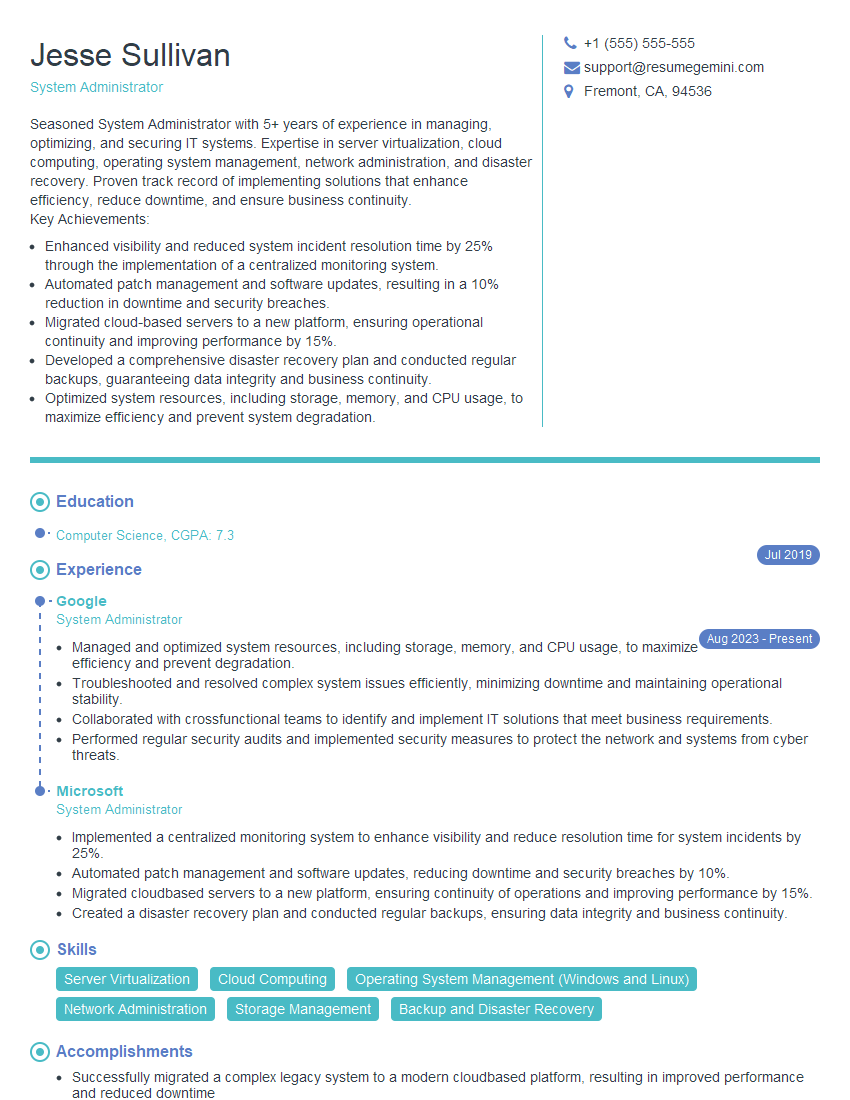
System Administrator Resume Sample

IT Manager Resume Sample

Database Administrator Resume Sample

DevOps Engineer Resume Sample

Performance Tester Resume Sample

Cloud Engineer Resume Sample
Explore more articles
Users Rating of Our Blogs
Share Your Experience
We value your feedback! Please rate our content and share your thoughts (optional).
What Readers Say About Our Blog
Very informative content, great job.
good