Cracking a skill-specific interview, like one for Wildlife Damage Repair and Prevention, requires understanding the nuances of the role. In this blog, we present the questions you’re most likely to encounter, along with insights into how to answer them effectively. Let’s ensure you’re ready to make a strong impression.
Questions Asked in Wildlife Damage Repair and Prevention Interview
Q 1. Describe your experience with various wildlife exclusion techniques.
Wildlife exclusion is all about preventing animals from entering structures or areas where they shouldn’t be. It’s a crucial part of wildlife damage management, focusing on long-term solutions rather than just dealing with immediate problems. My experience encompasses a wide range of techniques, tailored to the specific animal and the situation.
Material Selection: Choosing the right materials is key. For example, I use galvanized steel mesh for rodent exclusion because it’s strong, durable, and gnaw-resistant. For larger animals like raccoons, heavier gauge wire or solid metal sheeting might be necessary. The size of the mesh opening also matters – small enough to deter the target animal, but large enough for proper ventilation.
Entry Point Identification and Sealing: This is the foundation of effective exclusion. I meticulously inspect buildings, identifying any cracks, gaps, or holes – even small ones – that animals can exploit. This often involves checking around pipes, vents, utility lines, and roof edges. I then seal these points using appropriate materials, such as expanding foam, caulking, or specialized mesh.
One-Way Doors: These are invaluable for safely removing animals already inside a structure. A one-way door allows the animal to exit but prevents it from re-entering. They’re particularly useful for attics or wall voids.
Specialized Techniques: Depending on the species, more specialized techniques may be required. For example, excluding bats might involve installing bat houses to provide alternative roosting sites and then sealing entry points to the building. Bird exclusion often involves installing bird netting or spikes to prevent them from nesting or roosting on structures.
For instance, I once worked on a historic building infested with squirrels. We had to carefully devise an exclusion plan that preserved the building’s architectural integrity while effectively sealing every possible entry point. It involved a combination of specialized mesh, caulking, and discreetly placed one-way doors.
Q 2. What are the most common methods for rodent control, and their effectiveness?
Rodent control involves a multi-pronged approach emphasizing prevention and humane methods. Simply trapping or poisoning isn’t always effective or ethical. The most common methods include:
Exclusion: This is the most effective long-term solution. Sealing all possible entry points – around pipes, gaps in foundations, and holes in walls – prevents rodents from entering. This often involves using steel wool, mesh, and caulk.
Trapping: Snap traps or live traps can be effective for catching rodents. Snap traps should be used cautiously and according to local regulations. Live traps are more humane, allowing for relocation of the animals far away from the property.
Rodenticide (Poison): Rodenticide use should be a last resort and only employed by licensed professionals due to safety concerns. These should be used cautiously and only in areas inaccessible to children and pets. There are various types, including anticoagulants that cause internal bleeding after multiple feedings.
Sanitation: Keeping areas clean and free of food scraps, garbage, and clutter dramatically reduces rodent attraction. Proper food storage and regular cleaning are essential.
Effectiveness varies depending on the method and situation. Exclusion is the most effective long-term solution, while trapping is effective for immediate control. Rodenticide should be a last resort.
Q 3. How do you identify the source of wildlife damage in a building?
Identifying the source of wildlife damage requires a thorough and systematic inspection. It’s like being a wildlife detective! I start by:
Visual Inspection: I carefully examine the exterior and interior of the building, looking for signs of entry points, droppings, tracks, gnaw marks, nesting materials, and damage to structures.
Listening for Sounds: Sometimes, you can hear scratching or other noises that indicate animal activity within the walls or attic.
Checking for Odor: Animals leave behind characteristic smells. For instance, the strong musky odor of a raccoon is easily recognizable.
Analyzing Damage: The type of damage can offer clues about the culprit. For example, gnaw marks on wood usually point to rodents, while larger claw marks may indicate raccoons or other larger animals.
For example, I once investigated a house with insulation damage in the attic. By carefully examining the entry points, I determined that squirrels were the culprits, and the evidence led to a solution focusing on sealing exterior entry points and using one-way doors to safely remove the resident squirrels.
Q 4. Explain your experience with repairing wildlife-caused damage to structures.
Repairing wildlife-caused damage involves careful assessment, material selection, and skilled craftsmanship. The goal is to restore structural integrity and prevent future damage. My experience includes:
Structural Repairs: This might involve replacing damaged wood, repairing holes in walls or roofs, or reinforcing weakened areas. I use durable, weather-resistant materials that are resistant to further animal damage.
Insulation Replacement: Animals often damage insulation, creating entry points and compromising energy efficiency. Replacement often involves removing contaminated insulation and installing new, rodent-resistant insulation.
Exterior Repairs: Repairing damage to siding, roofing, or other exterior elements is crucial to prevent future entry points. This often requires matching existing materials for aesthetic consistency.
Cleaning and Sanitation: Thorough cleaning of areas affected by wildlife activity is essential. This involves removing droppings, nests, and other debris to prevent disease and odors.
I once repaired extensive damage to a home’s attic caused by a family of raccoons. This involved not only replacing damaged rafters and insulation but also repairing the roof and sealing all entry points to prevent future infestations.
Q 5. What are the legal and ethical considerations in wildlife removal?
Legal and ethical considerations are paramount in wildlife removal. The key is to prioritize humane treatment and comply with all applicable laws and regulations.
Local Laws and Regulations: Many jurisdictions have specific regulations regarding wildlife control. Some animals are protected, and their removal requires permits or specialized licenses. It’s crucial to understand and comply with these laws.
Humane Treatment: Animals should be treated with respect and compassion. Methods causing unnecessary suffering are unethical and often illegal. Live trapping and relocation are preferred wherever possible.
Public Safety: Wildlife removal should be conducted safely, minimizing risks to both the public and the animals involved. This might involve using appropriate safety equipment and employing techniques that avoid confrontation with aggressive animals.
Environmental Impact: Relocation should be done responsibly, ensuring that animals are released into suitable habitats where they can survive. Avoid simply relocating animals to a different location within the same area.
For example, I encountered a situation where a homeowner wanted to remove a family of bats from their attic. Instead of simply killing them, I secured a permit, implemented humane removal strategies, and relocated the bats to a suitable location outside of the community.
Q 6. Describe your knowledge of different wildlife repellent methods.
Wildlife repellents aim to discourage animals from entering or staying in certain areas. However, it’s important to understand that they’re rarely a complete solution on their own and are often most effective when combined with other techniques like exclusion.
Visual Repellents: These include shiny objects, reflective tape, or frightening figures placed strategically to scare animals away. Their effectiveness is often limited and depends on the species.
Olfactory Repellents: These are substances with strong smells that animals find unpleasant. Examples include commercially available predator urine (like coyote or fox urine), ammonia, or certain essential oils. Their effectiveness can vary with different species and their sense of smell.
Taste Repellents: These are bitter or unpleasant-tasting substances applied to surfaces animals may chew on, such as plants or wood. They are commonly used to deter deer from eating garden plants.
Sonic Repellents: These devices emit ultrasonic sounds that are unpleasant to some animals, but their effectiveness is debated, as many animals can become habituated to these sounds.
It’s crucial to remember that repellents require regular reapplication and their effectiveness varies widely. They are most effective as part of a comprehensive wildlife management strategy.
Q 7. How do you handle aggressive or dangerous wildlife encounters?
Encounters with aggressive or dangerous wildlife require caution, professionalism, and often, specialized expertise. Safety is the top priority.
Avoid Direct Confrontation: Never approach or corner an aggressive animal. Give it ample space to retreat.
Make Yourself Appear Large: Raise your arms, wave a jacket, or make loud noises to discourage an attack.
Professional Assistance: If you encounter a dangerous animal, such as a bear, mountain lion, or venomous snake, immediately contact wildlife professionals or animal control.
Appropriate Protective Gear: If professional intervention isn’t immediately available, appropriate protective gear, like thick clothing or heavy-duty gloves, might offer some protection.
Knowledge of Animal Behavior: Understanding the animal’s behavior and what triggers aggression is essential to responding effectively.
For example, during a job where a homeowner had a territorial raccoon in their backyard, I used hazing techniques (loud noises, bright lights) to deter it from approaching the house while waiting for animal control to arrive and handle the animal safely and according to local regulations.
Q 8. What safety measures do you prioritize when working with wildlife?
Safety is paramount when working with wildlife. My approach prioritizes both my safety and the safety of the animals. This involves understanding the specific species I’m dealing with and their potential behaviors. For example, I always wear appropriate personal protective equipment (PPE), including heavy-duty gloves, eye protection, and sturdy clothing to prevent scratches, bites, or stings. I maintain a safe distance, particularly from potentially aggressive animals like raccoons or skunks, observing them from a distance to better assess the situation before approaching. I never handle animals directly without proper training and the necessary safety equipment, like humane traps. In cases of suspected rabies or other diseases, I always follow the established protocols and immediately report any incidents to the appropriate wildlife agencies.
- PPE Usage: Always wear gloves, eye protection, and sturdy clothing.
- Safe Distance: Maintain a safe distance from animals, observing before approaching.
- Trained Personnel: Never handle animals without proper training and equipment.
- Disease Reporting: Report any incidents involving possible disease transmission immediately.
Q 9. What experience do you have with trapping and relocation of wildlife?
I have extensive experience in trapping and relocating wildlife, focusing on humane and ethical practices. My experience spans various species, including squirrels, raccoons, opossums, and birds. I’m certified in the use of humane traps, ensuring minimal stress and injury to the animals. I understand the legal requirements for trapping and relocation, varying by species and location. A recent example involved a family of raccoons that had taken up residence in a homeowner’s attic. After assessing the situation and ensuring the safety of both the residents and the raccoons, I used one-way door traps to safely remove them. Subsequently, I relocated them to a suitable habitat far from residential areas, ensuring their survival. I meticulously document every step of the process, adhering to all relevant regulations.
- Humane Trapping: Certified in the use of humane traps.
- Species-Specific Handling: Experienced with various species, from squirrels to raccoons.
- Legal Compliance: Adherence to all relevant trapping and relocation regulations.
- Thorough Documentation: Meticulous record-keeping of the entire process.
Q 10. How do you assess the level of damage caused by wildlife?
Assessing wildlife damage involves a systematic approach. I begin with a thorough visual inspection of the affected area, carefully documenting the extent and nature of the damage using photographs and detailed notes. This includes identifying the type of damage (e.g., gnaw marks, burrows, droppings), the location, and the severity. I also look for clues to identify the species responsible. For example, the size and shape of droppings can help differentiate between species. Following the inspection, I analyze the findings, considering factors like the type of structure damaged, the cost of repair, and the potential for future damage. This comprehensive assessment guides the development of appropriate solutions, balancing the need for repair with the protection and conservation of the animals.
- Visual Inspection: Thorough examination and photographic documentation of damage.
- Species Identification: Using clues like droppings, tracks, and gnaw marks.
- Severity Assessment: Determining the extent and cost of repair.
- Future Damage Prevention: Considering the risk of future damage and preventative measures.
Q 11. Describe your knowledge of various wildlife species and their behaviors.
My knowledge of wildlife species and their behaviors is extensive. I understand the ecological roles of various species and their natural behaviors. This is critical for effective damage prevention and control. For instance, I understand that squirrels commonly access attics through gaps in roofing or siding, while raccoons might enter through chimneys or under decks. Knowledge of their nocturnal or diurnal habits informs my trapping strategies. I’m familiar with the communication methods of different species, which helps me gauge their level of stress or aggression. This understanding also guides my recommendations for deterrents, taking into account the specific behavioral traits of the species involved. I regularly consult updated scientific literature and attend workshops to stay abreast of the latest research and best practices.
- Species-Specific Behavior: Understanding the habits and behaviors of various wildlife.
- Ecological Roles: Knowledge of the roles animals play in their ecosystems.
- Communication Signals: Recognizing and interpreting animal communication.
- Continuous Learning: Staying up-to-date with the latest research and best practices.
Q 12. What is your experience with preventing future wildlife damage?
Preventing future wildlife damage is a core aspect of my work. This involves implementing exclusion methods to block access points. For instance, repairing holes and gaps in structures, installing chimney caps, and sealing openings around pipes and vents. I also use deterrents tailored to specific animals, such as motion-activated sprinklers to discourage animals from certain areas or scent deterrents like predator urine. Modifying the environment to remove attractants is equally important – this could involve securing garbage cans, removing bird feeders that attract unwanted animals, and keeping yards clean and free of debris. I always emphasize long-term solutions over quick fixes, educating clients on responsible practices to deter wildlife from their property.
- Exclusion Methods: Repairing holes, installing caps, and sealing openings.
- Deterrents: Utilizing motion sensors, scent deterrents, and other repellents.
- Attractant Removal: Securing garbage, removing bird feeders, and cleaning debris.
- Client Education: Instructing clients on long-term preventative measures.
Q 13. What software or tools do you use to document your work?
I use a combination of software and tools to document my work meticulously. My primary tool is a field notebook for on-site notes, sketches, and photographs. I then transfer this information into a comprehensive database management system (DBMS) that allows me to organize client data, project details, species identification, and damage assessments. This database is essential for tracking progress and generating reports. I also utilize GPS technology to pinpoint the locations of wildlife activity and damage on properties. Photography plays a vital role, providing visual evidence of the damage, the species involved, and the implemented solutions. I use professional-grade photography equipment for high-quality images that can be included in reports. This robust documentation system ensures accurate record-keeping and improves communication with clients.
- Field Notebook: On-site notes, sketches, and photographs.
- DBMS: Database management system for comprehensive data organization.
- GPS Technology: Pinpointing locations of wildlife activity.
- Professional Photography: High-quality images for reports and documentation.
Q 14. How do you communicate with clients about wildlife damage and solutions?
Effective communication with clients is crucial for success. I begin by explaining the assessment process in clear, non-technical terms, ensuring they understand the nature and extent of the damage. I then present my findings and recommendations in a straightforward manner, using visuals such as maps and photographs to illustrate the problems and proposed solutions. I answer all their questions patiently, addressing any concerns they may have. I strive to establish a collaborative relationship, involving the clients in the decision-making process, ensuring they feel informed and empowered. After completing the work, I provide a detailed written report summarizing my findings, the solutions implemented, and preventive measures for future damage. Follow-up communication is essential, ensuring client satisfaction and addressing any lingering questions or concerns.
- Clear and Concise Explanations: Avoiding jargon and using visual aids.
- Collaborative Approach: Involving clients in the decision-making process.
- Detailed Written Reports: Summarizing findings, solutions, and preventative measures.
- Follow-up Communication: Ensuring client satisfaction and addressing concerns.
Q 15. Explain your experience with habitat modification to deter wildlife.
Habitat modification is a cornerstone of proactive wildlife damage prevention. Instead of reacting to damage, we alter the environment to make it less attractive or accessible to the target species. This often involves removing attractants, creating barriers, and improving the overall landscape.
For example, I worked on a project where deer were causing significant damage to a homeowner’s garden. Instead of lethal control, we implemented several habitat modifications. First, we installed a tall, sturdy fence to physically deter deer from entering the area. Second, we removed some dense shrubs that provided cover for deer to hide and rest. Third, we strategically planted deer-resistant plants and bushes to offer a less appealing alternative to the homeowner’s vegetables. The combination of these methods drastically reduced deer activity in the garden, eliminating the need for any other intervention.
Another example involved dealing with raccoons getting into a bird feeder. We raised the bird feeder to make it inaccessible to raccoons while ensuring it was easily reachable by birds. Simple adjustments like this can have a huge impact.
Career Expert Tips:
- Ace those interviews! Prepare effectively by reviewing the Top 50 Most Common Interview Questions on ResumeGemini.
- Navigate your job search with confidence! Explore a wide range of Career Tips on ResumeGemini. Learn about common challenges and recommendations to overcome them.
- Craft the perfect resume! Master the Art of Resume Writing with ResumeGemini’s guide. Showcase your unique qualifications and achievements effectively.
- Don’t miss out on holiday savings! Build your dream resume with ResumeGemini’s ATS optimized templates.
Q 16. What are some effective non-lethal wildlife control methods?
Effective non-lethal wildlife control prioritizes deterrents and modifications over direct harm. Many methods exist, each tailored to a specific species and situation.
- Repellents: These can be chemical (taste or scent aversions) or visual (flashing lights, reflective tape). For example, applying commercial deer repellent to plants or using motion-activated sprinklers to scare away raccoons are common tactics.
- Exclusion: This focuses on physically preventing wildlife access. This could involve sealing gaps in buildings, using wire mesh to protect gardens, or installing one-way doors to safely remove animals from structures.
- Habitat Modification (as discussed previously): Altering the environment makes the area less attractive to the wildlife.
- Relocation: In some cases, humanely trapping and relocating animals to a suitable habitat away from human conflicts is possible. It’s crucial to obtain the necessary permits and ensure that animals are released in suitable habitats where they can thrive without causing conflicts.
Choosing the right method depends on many factors, including the species, the severity of the problem, and local regulations.
Q 17. Describe your experience with using different types of traps.
My experience with traps spans various types, always emphasizing humane capture and safe handling. I’ve used foothold traps (for larger animals like coyotes, following strict ethical guidelines and adhering to all local and state laws), snare traps (carefully deployed to target specific animals and checked frequently), and live traps (cage traps for small mammals and birds). Each trap type requires careful consideration of the target species, location, and potential risks to non-target animals.
For example, when dealing with a nuisance beaver dam causing flooding, I might utilize a live trap to capture the beaver, then relocate it to a more suitable area. However, using a foothold trap for a beaver would be inhumane and unethical. Choosing the right trap is paramount to both effective wildlife management and animal welfare.
Critical safety precautions are always followed when using any trap. Proper placement, regular checking, and safe handling protocols are non-negotiable.
Q 18. How do you determine the appropriate course of action for wildlife control?
Determining the appropriate course of action for wildlife control involves a systematic approach. It starts with a thorough assessment to identify:
- The species involved: Accurate identification guides appropriate control measures.
- The extent of the damage: How significant is the problem? Is it a minor nuisance or a serious threat?
- The site’s characteristics: The environment influences the methods available.
- Legal and ethical considerations: Local regulations and animal welfare are paramount.
After the assessment, I weigh the pros and cons of various options, prioritizing non-lethal methods whenever possible. I also factor in the costs and long-term effectiveness. Sometimes a combination of methods is most effective, such as habitat modification paired with repellents. Clear communication with the client is vital to ensure they understand the plan and its implications.
For example, if persistent rodent activity is damaging a building, I might recommend exclusion methods (sealing entry points) alongside the use of traps as needed to manage existing rodents. Simple solutions are often the best solutions, while ensuring the integrity of the structure is maintained.
Q 19. Explain your understanding of integrated pest management (IPM) principles.
Integrated Pest Management (IPM) principles in wildlife damage control emphasize a holistic, preventative approach that minimizes harm to wildlife and the environment while effectively managing conflicts. It’s a multi-pronged strategy.
- Monitoring: Regularly assessing the situation to understand wildlife activity and the effectiveness of control measures.
- Prevention: Modifying the environment to make it less attractive to wildlife.
- Control: Using the least harmful methods to address the immediate problem. This prioritizes non-lethal methods first.
- Evaluation: Assessing the effectiveness of applied methods to refine future strategies.
IPM avoids a ‘one-size-fits-all’ approach and emphasizes long-term solutions rather than quick fixes. This makes it a cost-effective and sustainable method.
Q 20. What are some common misconceptions about wildlife control?
Several common misconceptions surround wildlife control. One is that all animals are easily trapped or removed. This is not true. Certain species are more difficult to manage than others, and some methods may not be effective or even appropriate.
Another misconception is that lethal control is always the most effective solution. Non-lethal methods should always be prioritized. Lethal control should only be considered as a last resort, and only after exhausting all humane alternatives.
Finally, many believe that relocating animals solves problems. In reality, simply moving an animal can disrupt the local ecosystem and may not permanently resolve the conflict if the root cause isn’t addressed.
Q 21. How do you handle emergency situations involving wildlife damage?
Emergency situations involving wildlife damage, such as a rabid animal attack or a dangerous animal intrusion into a building, require swift and safe action. Prioritization of human safety is paramount.
My approach begins with assessing the immediate threat. If immediate danger is present, I contact relevant authorities, such as animal control or law enforcement. This might involve securing the area, notifying residents, or even evacuating individuals if necessary. Once the immediate danger is contained, I assess the situation to determine the best course of action. This may involve safely removing the animal, implementing immediate deterrents, or restoring structural integrity damaged by the wildlife. Detailed documentation of the event and the actions taken is crucial for future reference and liability purposes.
Q 22. How do you maintain accurate records and reports of your work?
Maintaining accurate records is paramount in wildlife damage management. It ensures accountability, allows for effective tracking of progress, and provides valuable data for future projects. My system involves a combination of digital and physical record-keeping.
- Digital Records: I use specialized software to log each job, including client details, property location (often using GPS coordinates), species involved, damage assessment, methods employed, materials used, costs, and photographs or videos documenting the situation before, during, and after intervention. This data is securely backed up.
- Physical Records: I maintain hard copies of all relevant permits, contracts, and invoices. These physical records serve as a secondary safeguard against data loss and are organized chronologically for easy retrieval.
- Reporting: Regular reports are generated, summarizing completed projects, outlining expenses, and highlighting any significant findings. These reports are customized to meet client needs and regulatory requirements. For example, a report for an insurance company would differ significantly from a report for a private landowner.
This meticulous approach ensures transparency and facilitates informed decision-making, both for myself and my clients.
Q 23. What are the limitations of different wildlife control methods?
Different wildlife control methods each have limitations. It’s crucial to understand these limitations before implementing any strategy.
- Repellents: While effective in deterring some animals initially, repellents often require repeated applications, lose effectiveness over time due to weather or habituation, and might not work for all species or individuals. For example, a scent repellent for deer might be washed away by rain and ineffective on a particularly persistent individual.
- Trapping: Trapping is humane and efficient for some species, but it requires proper licensing, knowledge of trapping techniques to avoid injury to the animal, and careful consideration of relocation sites to prevent re-infestation or ecological disruption. Furthermore, certain animals are notoriously difficult to trap.
- Exclusion methods: These techniques, such as installing barriers to prevent access, are highly effective but can be expensive and require skilled installation to be fully functional. For example, excluding raccoons from an attic might require substantial repairs and professional installation of screens and vents.
- Relocation: Relocation might seem like a humane solution, but it can be stressful for the animal and may not be successful long-term due to the animal’s ability to return to its original territory or struggle to find resources in a new environment. Furthermore, relocation is frequently prohibited or requires specific permits.
Choosing the most appropriate method necessitates a thorough assessment of the situation, considering the species involved, the extent of the damage, ethical considerations, and legal requirements.
Q 24. How do you stay updated on the latest wildlife management techniques?
Staying current in wildlife management is essential. I achieve this through a multi-pronged approach:
- Professional Organizations: Active membership in organizations like the Wildlife Society and the National Pest Management Association provides access to publications, conferences, and networking opportunities with other professionals.
- Continuing Education: I regularly participate in workshops, seminars, and online courses focused on advancements in wildlife damage control, new technologies, and best practices.
- Scientific Literature: I stay abreast of the latest research by reading peer-reviewed journals and scientific publications related to wildlife behavior, ecology, and management techniques.
- Industry Publications and Websites: Trade magazines and reputable online resources offer valuable insights into new products, techniques, and regulatory updates.
Continuous learning is crucial for maintaining the highest standards of professionalism and providing clients with the most effective and humane solutions.
Q 25. Describe your experience with working in diverse environmental settings.
My experience spans diverse environments. I’ve worked in suburban settings dealing with nuisance wildlife like raccoons and squirrels, rural areas addressing agricultural damage from deer and birds, and even urban environments tackling issues with pigeons and rats.
- Adaptability: Each setting presents unique challenges. For example, controlling wildlife in a densely populated urban area requires a different approach than managing wildlife in a sprawling agricultural field. I adapt my strategies and techniques to ensure effectiveness and minimize disruption.
- Problem-Solving: The diversity of environments has honed my problem-solving skills. I’ve learned to analyze the specific factors affecting wildlife behavior in each setting, such as habitat availability, food sources, and human interaction.
- Environmental Awareness: My experience fosters a deep understanding of the delicate balance of ecosystems. I prioritize solutions that minimize harm to non-target species and the environment as a whole.
This breadth of experience makes me a highly versatile and adaptable wildlife damage professional.
Q 26. What is your experience with working independently and as part of a team?
I am comfortable working both independently and as part of a team. Independent work often involves assessing damage, developing management plans, and executing the plan on-site. This requires self-motivation, strong organizational skills, and the ability to make sound judgments in the field.
Teamwork is essential for larger or more complex projects. I thrive in collaborative environments, effectively communicating with colleagues, sharing expertise, and coordinating efforts to achieve common goals. For example, working with a construction crew to ensure that wildlife exclusion measures are integrated into new building designs requires strong communication and collaboration.
Ultimately, my adaptability and collaborative spirit make me a valuable asset in any setting.
Q 27. Describe a time you had to troubleshoot a complex wildlife damage issue.
I once encountered a persistent problem with groundhogs undermining a client’s retaining wall. Initial trapping efforts were unsuccessful. The groundhogs kept returning, suggesting a nearby burrow system I hadn’t located.
Troubleshooting Steps:
- Thorough Inspection: I conducted a more extensive inspection of the property, looking beyond the immediate area of damage. I discovered several additional entrance holes hidden under dense vegetation.
- Strategic Trapping: I adjusted my trapping strategy, placing traps near these newly discovered burrows and employing a variety of lure techniques. This targeted approach proved significantly more successful.
- Habitat Modification: Once the groundhogs were removed, I collaborated with the client on landscaping changes to reduce the attractiveness of the area to groundhogs in the future. This involved removing excess vegetation and installing wire mesh barriers around vulnerable areas of the wall.
The key to resolving this issue was persistent observation, adaptation of my methods, and a holistic approach that addressed both immediate and long-term solutions.
Q 28. What are your salary expectations for this position?
My salary expectations are commensurate with my experience and the requirements of this position. I am confident my skills and expertise align well with the demands of this role, and I am open to discussing a competitive compensation package that reflects my value.
Key Topics to Learn for Wildlife Damage Repair and Prevention Interview
- Wildlife Identification and Behavior: Understanding common wildlife species causing damage (e.g., rodents, birds, deer) and their typical behaviors, habitat preferences, and damage patterns.
- Damage Assessment and Repair Techniques: Assessing the extent of damage to structures, crops, or landscapes caused by wildlife and applying appropriate repair methods, including structural reinforcement and landscaping modifications.
- Prevention Strategies and Exclusion Methods: Implementing effective strategies to deter wildlife from causing damage, such as exclusion techniques (fencing, sealing entry points), habitat modification, and repellents. This includes understanding the limitations and efficacy of different methods.
- Legal and Ethical Considerations: Familiarizing yourself with relevant laws and regulations regarding wildlife management and control, including humane treatment and permitting requirements.
- Integrated Pest Management (IPM) Principles: Applying IPM principles to wildlife damage management, prioritizing non-lethal methods and minimizing environmental impact.
- Material Selection and Application: Choosing appropriate materials for repairs and preventative measures, considering durability, cost-effectiveness, and environmental compatibility.
- Safety Procedures and Equipment: Understanding and adhering to safety protocols when working with wildlife and using specialized equipment (e.g., traps, deterrents).
- Problem-Solving and Critical Thinking: Developing strategies to analyze wildlife damage situations, identify root causes, and devise effective solutions, considering both short-term and long-term effects.
- Communication and Client Interaction: Effectively communicating with clients, explaining damage assessment findings, proposing solutions, and managing expectations.
Next Steps
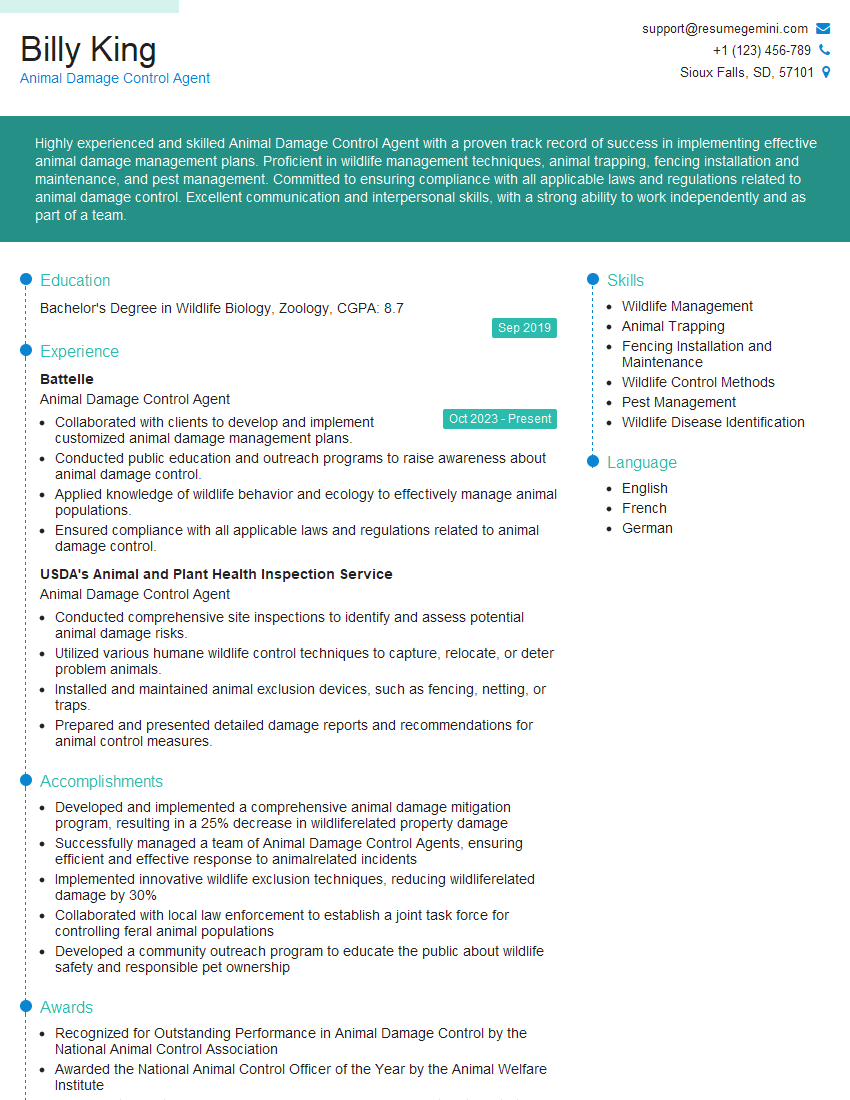
Mastering Wildlife Damage Repair and Prevention opens doors to a rewarding career with diverse opportunities for growth and specialization. A strong resume is crucial to showcasing your skills and experience to potential employers. To significantly improve your job prospects, focus on crafting an ATS-friendly resume that highlights your accomplishments and qualifications. ResumeGemini is a trusted resource that can help you build a professional and impactful resume tailored to the specific requirements of this field. Examples of resumes tailored to Wildlife Damage Repair and Prevention are available to guide you.

Explore more articles
Users Rating of Our Blogs
Share Your Experience
We value your feedback! Please rate our content and share your thoughts (optional).
What Readers Say About Our Blog
Very informative content, great job.
good