Interviews are more than just a Q&A session—they’re a chance to prove your worth. This blog dives into essential Wildlife Education and Outreach interview questions and expert tips to help you align your answers with what hiring managers are looking for. Start preparing to shine!
Questions Asked in Wildlife Education and Outreach Interview
Q 1. Describe your experience developing and delivering wildlife education programs for diverse audiences.
Developing and delivering effective wildlife education programs requires a multifaceted approach. My experience spans creating curriculum for diverse audiences, ranging from preschoolers to senior citizens, and from casual nature enthusiasts to aspiring wildlife biologists. I’ve designed programs focused on various themes, including habitat conservation, endangered species, responsible wildlife viewing, and the impact of climate change.
For example, I developed a program for elementary school children using interactive games and storytelling to teach about local bird species and their habitats. For adults, I led workshops on citizen science initiatives, incorporating data analysis and hands-on fieldwork. In each instance, I tailor the content, delivery style, and activities to resonate with the specific audience’s knowledge base and interests.
Success hinges on understanding the audience’s existing knowledge and tailoring the information to their level. I incorporate various learning styles – visual, auditory, and kinesthetic – through diverse activities such as presentations, nature walks, games, crafts, and hands-on experiments. This ensures a dynamic and engaging learning experience that fosters a deeper understanding of wildlife and conservation.
Q 2. Explain your approach to adapting wildlife education materials for different age groups.
Adapting materials for different age groups is crucial for effective wildlife education. My approach involves a developmental understanding of how children and adults learn. For younger children (preschool to elementary), I use simple language, engaging visuals, storytelling, and hands-on activities like puppet shows or crafts to illustrate complex concepts. For example, I might use a catchy song to teach about the food chain.
With older children (middle and high school), I incorporate more complex scientific concepts, problem-solving activities, and opportunities for critical thinking. For example, I might lead a discussion on the ethics of wildlife trade or the impact of human activities on ecosystems. Adults benefit from in-depth information, opportunities for discussion and debate, and the chance to participate in active conservation initiatives. I might organize a workshop focusing on ecological restoration or community-based conservation projects.
The key is to maintain age-appropriate content while keeping the information engaging and relevant. I always ensure that materials are visually appealing and easy to understand regardless of the age group.
Q 3. How would you assess the effectiveness of a wildlife education program?
Assessing the effectiveness of a wildlife education program is critical to understand its impact and make improvements. I employ a multi-pronged approach that combines quantitative and qualitative data collection methods.
Quantitative methods include pre- and post-program surveys measuring changes in knowledge, attitudes, and behaviors related to wildlife conservation. I also track program participation rates and analyze demographic data.
Qualitative methods involve gathering feedback through focus groups, individual interviews, or observation of participant engagement during program activities. These methods provide rich insights into participant experiences and learning outcomes. For example, I might ask participants to reflect on what they learned, how they felt about the program, and how they plan to apply this knowledge in the future. Analyzing both types of data helps me to get a complete picture of program impact.
This data-driven approach allows me to make informed decisions about program improvement and ensure that future programs are even more effective.
Q 4. What strategies do you employ to engage diverse learners in wildlife conservation?
Engaging diverse learners requires understanding their unique backgrounds, learning styles, and needs. I use several strategies to ensure inclusivity and participation.
- Culturally relevant content: I adapt program materials to reflect the cultural backgrounds and perspectives of the participants.
- Multilingual resources: I provide materials and presentations in multiple languages where needed.
- Differentiated instruction: I create activities catering to different learning styles (visual, auditory, kinesthetic) and levels of prior knowledge.
- Accessibility considerations: I ensure program accessibility for individuals with disabilities, offering materials in alternative formats and adapting activities.
- Community partnerships: I collaborate with community organizations to ensure representation and reach diverse audiences.
For instance, while teaching about traditional ecological knowledge, I include the perspectives and practices of Indigenous communities. By embracing diversity, I create an inclusive learning environment that enriches the learning experience for all.
Q 5. Describe your experience using various teaching methodologies in a wildlife education setting.
My approach to wildlife education incorporates a variety of teaching methodologies to cater to diverse learning styles and needs. I don’t rely on a single method but rather integrate several based on the program goals and the audience.
- Experiential learning: Hands-on activities, nature walks, and fieldwork are central to my programs. Participants learn by doing, fostering a deeper understanding and appreciation for wildlife.
- Inquiry-based learning: I encourage questioning, critical thinking, and problem-solving through guided discussions and investigations.
- Project-based learning: Participants engage in longer-term projects, such as habitat restoration or citizen science initiatives.
- Storytelling: Narratives and anecdotes make complex concepts more accessible and engaging, particularly for younger audiences.
- Games and simulations: Interactive games and simulations provide engaging ways to teach about complex ecological concepts.
For example, a program on the impact of pollution on marine life might involve a hands-on experiment demonstrating the effects of oil spills, a game simulating the food web dynamics, and a discussion on the importance of reducing plastic waste. This multi-method approach enhances engagement and learning retention.
Q 6. How do you incorporate technology into your wildlife education programs?
Technology plays a vital role in enhancing wildlife education. I incorporate various technological tools to create engaging and effective programs.
- Interactive presentations: PowerPoint presentations with videos, images, and interactive elements capture attention and convey information dynamically.
- Virtual field trips: Virtual reality and 360° videos allow participants to experience wildlife habitats and observe animals in their natural environments.
- Educational apps and games: Engaging apps and games reinforce learning and provide opportunities for practice.
- Online learning platforms: Online courses and resources offer flexibility and accessibility.
- Citizen science platforms: Participants can contribute to real-world research through online data collection and analysis tools.
For example, I’ve used drone footage to show participants inaccessible wildlife habitats, and I’ve implemented online surveys to track program effectiveness. This strategic integration enhances the overall learning experience and broadens program reach.
Q 7. How would you handle a situation where a participant shows disruptive behavior during a wildlife program?
Handling disruptive behavior requires a calm and professional approach, prioritizing the safety and well-being of all participants. My approach is based on understanding the root cause of the disruption.
Step 1: Observation and Assessment: I first assess the situation to determine the nature and severity of the disruptive behavior. Is it a minor distraction or a more serious issue requiring intervention?
Step 2: Addressing the Behavior: For minor disruptions, a gentle reminder or redirecting the individual’s attention to the activity might suffice. For more serious behavior, I might address the participant privately, explaining the importance of respectful behavior and the impact on other learners.
Step 3: Collaboration and Support: If the behavior continues, I collaborate with parents or guardians (if applicable) and/or other program staff to develop strategies for support. Sometimes, removing the individual from the program is necessary to ensure a safe and productive learning environment for everyone.
Step 4: Post-Incident Reflection: After the incident, I review the situation to identify any factors contributing to the disruption and explore ways to prevent similar situations in the future. This might involve adapting program activities, enhancing communication strategies, or revising the program’s overall structure. The goal is to create a welcoming, inclusive environment where everyone feels safe and respected.
Q 8. Explain your understanding of wildlife conservation challenges and how you integrate them into your education programs.
Wildlife conservation faces numerous interconnected challenges, broadly categorized as habitat loss, climate change, poaching, human-wildlife conflict, and invasive species. My education programs directly address these by incorporating them into the curriculum. For example, when discussing habitat loss, we explore case studies like deforestation and its impact on orangutans, using engaging visuals and interactive activities to illustrate the consequences. For climate change, we discuss how changing weather patterns affect migration patterns of birds and the survival of polar bears. We emphasize solutions, like sustainable forestry practices and renewable energy, fostering a sense of agency in students. Poaching is addressed by explaining the devastating impact on endangered species and showcasing the role of conservation organizations in combating it. Human-wildlife conflict is explored through real-world examples, discussing mitigation strategies such as community-based conservation initiatives and the importance of respecting wildlife boundaries. Finally, we illustrate how invasive species disrupt ecosystems using the example of the impact of Burmese pythons on the Everglades ecosystem. By integrating these challenges, students gain a holistic understanding of the complexities involved and their role in conservation.
Q 9. Describe your experience in developing educational materials, such as brochures, presentations, or lesson plans.
I have extensive experience creating diverse educational materials. For instance, I developed a brochure on responsible wildlife viewing, using compelling photography and concise text, outlining ethical guidelines like maintaining a safe distance and minimizing disturbance. I’ve also created interactive presentations using multimedia, incorporating videos, animations, and quizzes to enhance student engagement. My lesson plans are aligned with various educational standards and incorporate age-appropriate activities such as hands-on crafts, field trips, and games to make learning enjoyable and memorable. For example, a lesson on the water cycle included a simple experiment to demonstrate evaporation and condensation, directly relating it to the needs of wildlife. One particularly successful project involved creating a series of short videos featuring local wildlife experts, which we shared on social media to expand our reach.
Q 10. How do you ensure the accuracy and credibility of the information you present in your wildlife education programs?
Accuracy and credibility are paramount. I always rely on peer-reviewed scientific literature, reputable conservation organizations (like the IUCN and WWF), and government agencies for my information. I cross-reference data from multiple sources and maintain a strict citation policy. Furthermore, I regularly update my materials to reflect the latest scientific findings and best practices. Whenever uncertainties exist, I explicitly state them, emphasizing the importance of ongoing research. I also collaborate with subject matter experts, such as wildlife biologists and ecologists, to validate my materials and ensure their scientific accuracy. This multi-faceted approach minimizes bias and ensures that the information presented is robust, reliable, and trustworthy.
Q 11. How do you promote environmental stewardship and responsible wildlife interactions?
Promoting environmental stewardship and responsible wildlife interactions is a core aspect of my programs. We use storytelling and real-life scenarios to illustrate the consequences of irresponsible behavior. For instance, we discuss the dangers of feeding wild animals, explaining how it disrupts their natural behaviors and can lead to dependency and conflict. We emphasize the importance of reducing our carbon footprint and promoting sustainable lifestyles through activities like recycling and reducing waste. We also advocate for supporting ethical wildlife tourism and purchasing products from sustainable sources. Role-playing exercises, where students act out scenarios involving human-wildlife encounters, help them understand the ethical dilemmas and make informed decisions. This participatory approach helps solidify their understanding and promotes responsible attitudes toward the environment and wildlife.
Q 12. What is your experience with working with volunteers in a wildlife education context?
I have extensive experience coordinating and managing volunteers in wildlife education projects. I begin by providing thorough training, encompassing program specifics, safety protocols, and communication strategies. I utilize different volunteer roles based on individual skills and interests, ensuring everyone feels valued and empowered. For example, some volunteers excel at leading guided nature walks, while others are adept at creating educational materials or managing social media. Regular feedback and appreciation sessions maintain volunteer engagement and morale. A strong communication system, including regular meetings and email updates, is crucial for effective coordination. I also document volunteer contributions, recognizing their hard work and dedication, contributing to a sense of community and shared purpose. This collaborative approach significantly amplifies program effectiveness.
Q 13. Describe your understanding of different learning styles and how you cater to them.
I recognize that people learn in diverse ways (visual, auditory, kinesthetic, etc.). To cater to these differences, I incorporate a variety of teaching methods. Visual learners benefit from diagrams, photos, and videos. Auditory learners engage with discussions and audio recordings. Kinesthetic learners participate in hands-on activities, like nature walks and wildlife-themed crafts. For example, when teaching about bird migration, I use maps to show migration routes (visual), play bird songs (auditory), and have students create model birds (kinesthetic). By incorporating diverse learning styles into my programs, I ensure that all participants have opportunities to engage actively and successfully grasp the concepts. I also use formative assessments throughout the program to gauge understanding and adjust my teaching approach as needed.
Q 14. Explain your approach to evaluating learning outcomes in your wildlife education programs.
Evaluating learning outcomes involves a multi-pronged approach. Pre- and post-program quizzes assess knowledge gain. Observations during activities gauge participation and comprehension. Feedback forms gather participant perspectives and identify areas for improvement. For example, I might ask participants to write a short essay about a conservation issue or design a public awareness campaign. This allows for a deeper evaluation of their understanding and ability to apply their knowledge. Analyzing data collected through these methods provides insights into program effectiveness and allows for continuous improvement. By actively assessing learning outcomes, I refine my teaching strategies and ensure that my programs achieve their intended goals.
Q 15. How do you incorporate hands-on activities and experiential learning into your wildlife education programs?
Hands-on activities are crucial for effective wildlife education. They transform passive learning into active engagement, fostering deeper understanding and retention. Instead of simply lecturing about animal adaptations, for instance, I might have participants build miniature nests using natural materials, mimicking bird-building strategies. This allows them to directly experience the challenges and ingenuity involved.
- Nature walks and scavenger hunts: These activities encourage observation skills and familiarity with local flora and fauna. I might design a scavenger hunt focusing on identifying animal tracks or signs of animal activity.
- Interactive games and simulations: Games like ‘Predator vs. Prey’ can illustrate food webs and ecological relationships in a fun, competitive way. Simulations of habitat loss can demonstrate the impact of human activity on wildlife populations.
- Arts and crafts: Creating animal masks or sculptures allows for creative expression while reinforcing knowledge about animal characteristics and habitats. For example, sculpting a turtle shell highlights its protective function.
- Citizen science projects: Participating in data collection for a local conservation effort, such as bird counts or water quality monitoring, provides a real-world application of learned concepts and instills a sense of responsibility.
Experiential learning is about doing, not just knowing. These methods ensure participants connect with the subject matter on a deeper, more meaningful level, leading to sustained interest and responsible actions.
Career Expert Tips:
- Ace those interviews! Prepare effectively by reviewing the Top 50 Most Common Interview Questions on ResumeGemini.
- Navigate your job search with confidence! Explore a wide range of Career Tips on ResumeGemini. Learn about common challenges and recommendations to overcome them.
- Craft the perfect resume! Master the Art of Resume Writing with ResumeGemini’s guide. Showcase your unique qualifications and achievements effectively.
- Don’t miss out on holiday savings! Build your dream resume with ResumeGemini’s ATS optimized templates.
Q 16. How would you create a compelling narrative to engage an audience about a specific wildlife issue?
Creating a compelling narrative requires weaving together emotion, facts, and a relatable story. Let’s say I’m educating about the plight of sea turtles. I wouldn’t simply present statistics on population decline. Instead, I would start with a captivating anecdote: perhaps the story of a young sea turtle navigating the dangers of plastic pollution to reach the ocean. This immediately engages the emotional connection.
Then, I would incorporate factual information in a digestible format. For instance, I’d explain how plastic ingestion causes internal injuries and how light pollution disorients hatchlings, leading them away from the ocean. Finally, I would empower the audience by showcasing successful conservation initiatives and outlining practical steps they can take to help, like reducing plastic use or supporting organizations dedicated to sea turtle protection. The narrative arc would move from a problem, to an understanding of its causes, and finally to solutions, inspiring action.
Q 17. Describe your experience with public speaking and presentation skills in a wildlife education setting.
Public speaking and presentation skills are fundamental to my work. I’ve delivered numerous presentations to diverse audiences, ranging from schoolchildren to seasoned conservationists, adapting my style and content to each group’s needs and understanding. I’ve presented at conferences, led workshops, and conducted interactive classroom sessions.
My approach emphasizes clarity, engagement, and visual aids. I use storytelling, humor, and interactive elements to maintain audience interest. I regularly receive positive feedback on the clarity of my presentations and the effectiveness of the activities I incorporate. I also actively seek feedback to refine my techniques and ensure maximum impact. For instance, I once incorporated audience questions into a presentation about the effects of climate change, and this resulted in a more dynamic and engaged discussion.
Q 18. How would you address misinformation or misconceptions about wildlife?
Addressing misinformation requires a tactful and evidence-based approach. Instead of directly confronting individuals, I focus on presenting accurate information in a clear and accessible manner. For example, if someone believes sharks are inherently dangerous man-eaters, I’d start by acknowledging their fear, then present data on shark attacks versus human-caused shark deaths. I would highlight the ecological importance of sharks and the threats they face, fostering empathy and understanding.
I also use visual aids, such as graphs and images, to support my arguments. Finally, I encourage critical thinking by prompting audience questions and discussions, allowing participants to reach their own conclusions based on accurate information. The goal is not to shame or lecture, but to empower individuals with knowledge and encourage a shift in perspective.
Q 19. What are some ethical considerations when conducting wildlife education outreach?
Ethical considerations are paramount in wildlife education outreach. We must prioritize the well-being of animals and the integrity of the environment. This includes:
- Animal welfare: Avoiding any practices that could stress or harm animals. This includes maintaining appropriate distances from wildlife, refraining from disturbing habitats, and never encouraging interactions that could lead to habituation or dependence on humans.
- Data privacy and collection: If engaging in citizen science projects, ensuring adherence to ethical guidelines related to data collection and responsible use of information.
- Cultural sensitivity: Being mindful of local traditions and beliefs related to wildlife and respecting Indigenous knowledge systems.
- Truthfulness and accuracy: Ensuring all information presented is factual and up-to-date, avoiding sensationalism or misleading statements. Misrepresenting animal behaviours or conservation issues is unethical.
- Sustainability: Minimizing our environmental footprint through responsible resource use and travel practices.
Ultimately, ethical conduct is about ensuring our educational efforts contribute positively to both wildlife and the communities we engage with.
Q 20. Explain your familiarity with relevant wildlife regulations and guidelines.
I am familiar with various wildlife regulations and guidelines, including those related to endangered species protection (e.g., CITES), habitat preservation, and responsible wildlife viewing practices. My understanding extends to both federal and state-level laws and regulations within the relevant jurisdictions where my programs operate. This includes knowledge of permits required for specific activities, restrictions on handling or interacting with certain species, and regulations governing data collection or research involving wildlife.
Staying updated on these regulations is an ongoing process, and I regularly consult relevant government agencies and professional organizations to ensure compliance and to inform my educational programs. This ensures my work is not only impactful but also legally sound and ethically responsible.
Q 21. How do you foster collaboration among stakeholders involved in wildlife conservation education?
Collaboration is essential for effective wildlife conservation education. I actively foster relationships with various stakeholders, including:
- Government agencies: Partnering with park services, wildlife management agencies, and environmental protection organizations to access resources and ensure alignment with conservation goals.
- Non-profit organizations: Collaborating with NGOs focused on wildlife conservation and education to amplify our reach and leverage their expertise.
- Researchers and scientists: Working with researchers to incorporate the latest scientific findings into my educational materials and programs.
- Local communities: Engaging with local residents and Indigenous communities to incorporate traditional ecological knowledge and ensure programs are relevant and culturally sensitive.
- Educators: Collaborating with schools and universities to integrate wildlife education into curricula.
These partnerships allow for a more comprehensive and effective approach to wildlife education, ensuring a broader impact and greater sustainability of conservation efforts.
Q 22. Describe your experience in securing funding or grants for wildlife education projects.
Securing funding for wildlife education projects often involves a multifaceted approach, combining strong grant writing skills with a deep understanding of funding organizations’ priorities. My experience includes identifying potential funding sources, such as government agencies (like the National Fish and Wildlife Foundation or state environmental departments), private foundations (dedicated to conservation or education), and corporate sponsorships. I meticulously research each organization’s grant guidelines, ensuring alignment between the project goals and their funding criteria.
For example, when securing funding for a program on urban wildlife conservation, I focused on highlighting the program’s community engagement aspect and its contribution to environmental literacy. I emphasized measurable outcomes – for instance, the number of participants, increased knowledge scores post-program, and documented changes in participants’ attitudes towards wildlife conservation. The grant proposal included a detailed budget, justifying every expense, and a robust evaluation plan outlining how the program’s success would be assessed.
Furthermore, I build strong relationships with grant reviewers and program officers, attending networking events and engaging in follow-up communication after submission. Building trust and demonstrating credibility significantly increases the chances of successful funding acquisition. This proactive approach ensures that my projects receive the necessary resources to achieve their conservation education goals effectively.
Q 23. How would you develop a marketing strategy to promote a wildlife education event or program?
Developing a robust marketing strategy for a wildlife education event or program requires a multi-channel approach tailored to the target audience. It begins with identifying the specific demographics, interests, and communication preferences of the intended participants (e.g., children, families, adults, specific school groups).
- Social Media Marketing: Utilizing platforms like Facebook, Instagram, and Twitter allows for targeted advertising campaigns, engaging visuals (photos and videos of wildlife), and interactive content (polls, quizzes). I leverage storytelling to connect with audiences emotionally.
- Website and Email Marketing: A dedicated webpage with event details, registration forms, and visually appealing graphics is crucial. Email marketing is used for sending out targeted announcements, reminders, and post-event follow-ups.
- Public Relations and Media Outreach: Press releases, articles in local newspapers and magazines, and collaborations with local radio stations or television programs create broader awareness.
- Partnerships and Collaborations: Partnering with local schools, community organizations, and nature centers broadens reach and leverages existing networks.
- Print Marketing: Flyers, posters, and brochures remain effective tools, particularly for reaching communities with limited internet access.
For instance, when promoting a family-friendly wildlife festival, we used vibrant images of animals and children interacting with nature in our marketing materials. The website included interactive maps, activity schedules, and clear registration instructions. We also partnered with local businesses to offer discounts to participants.
Q 24. Describe your experience working with different age groups – children, teens, and adults.
My experience spans working with a diverse range of age groups, each requiring a tailored approach to education. Working with children involves incorporating interactive games, storytelling, hands-on activities, and age-appropriate language. For example, a program for younger children might involve a puppet show about animal habitats, whereas a program for older children could feature a wildlife tracking activity.
Teenagers benefit from more in-depth discussions, critical thinking exercises, and opportunities for leadership and volunteer work. I often integrate current events related to conservation, allowing them to explore the connection between science and real-world challenges. For instance, I’ve designed workshops around wildlife conservation careers or led a citizen science project involving data collection and analysis.
Adults require a more sophisticated approach, often focused on problem-solving, scientific research, and policy discussions. Educational opportunities can include workshops on wildlife management techniques, expert presentations, or guided nature walks. I’ve conducted workshops on conservation policy for adults and citizen science projects focused on wildlife monitoring.
Throughout, the common thread is fostering engagement, adapting my delivery to different learning styles, and focusing on making the experience enjoyable and relevant to each group’s interests and developmental stages.
Q 25. How do you adapt your communication style to reach different audiences?
Adapting communication style to different audiences is fundamental to effective wildlife education. I employ several techniques. For younger audiences, I use simpler language, incorporate visuals, and make the content highly interactive. For teenagers, I focus on relevance to their lives, incorporating current events, engaging in discussions, and providing opportunities for critical thinking. With adults, I use more complex scientific terminology, invite deeper engagement through discussions and debates, and tailor information to their professional interests and experiences.
For example, when explaining the concept of biodiversity, I might use colorful illustrations and simple metaphors for young children (“Imagine a garden with many different kinds of flowers—that’s biodiversity!”). With teenagers, I might discuss the economic implications of biodiversity loss. With adults, I might delve into the ecological mechanisms driving biodiversity and current conservation strategies. Always, I try to relate information to their prior knowledge and experiences, making the subject matter readily understandable and engaging.
Q 26. How do you measure the impact of your outreach programs?
Measuring the impact of outreach programs is crucial for demonstrating effectiveness and informing future improvements. My approach involves a multi-faceted evaluation strategy. This involves:
- Pre- and Post-Program Assessments: Using questionnaires or tests to gauge knowledge, attitudes, and behaviors related to wildlife before and after participation. This provides quantitative data on learning gains.
- Participant Feedback: Collecting feedback through surveys or focus groups to understand participants’ experiences, identify areas for improvement, and assess overall satisfaction.
- Attendance and Participation Rates: Tracking participation numbers provides an indication of program reach and engagement.
- Behavioral Changes: Measuring changes in participant behavior following the program, such as increased volunteering, reduced consumption of wildlife products, or altered attitudes towards conservation.
- Long-Term Follow-Up: Conducting follow-up surveys or interviews to assess the lasting impact of the program on participants’ knowledge, attitudes, and actions.
For example, in a program on responsible pet ownership, pre- and post-program surveys measured knowledge of responsible dog walking and waste disposal. Post-program surveys also measured changes in participants’ attitudes toward wildlife. This multifaceted approach provides a comprehensive understanding of the program’s effectiveness.
Q 27. Describe a time you had to troubleshoot a problem during a wildlife education program. How did you resolve it?
During a school visit to present a program on raptors, the highlight of the program—a live demonstration with a rehabilitated red-tailed hawk—was jeopardized when the hawk became unexpectedly agitated. The bird’s handler noted that the sudden increase in classroom noise and bright lights may have stressed the hawk.
My immediate response was to prioritize the safety of the bird and the students. I calmly redirected the students’ attention, dimming the lights and requesting their cooperation in keeping the classroom quiet. I used a pre-planned contingency plan, engaging the children with a prepared slideshow discussing the hawk’s natural habitat and behaviors while allowing the handler to calm the bird. Once the hawk was settled, we resumed the live demonstration, providing additional context and adjusting our approach to minimize future disruptions. This involved emphasizing quiet observation and careful movement around the animal.
The incident highlighted the importance of having backup plans and being adaptable in handling unexpected situations. This experience reinforced the need for careful risk assessment and contingency planning in all wildlife education programs involving live animals.
Q 28. What professional development activities have you undertaken to enhance your wildlife education skills?
Continuous professional development is key to maintaining expertise in wildlife education. I regularly engage in activities to enhance my skills and knowledge. This includes:
- Attending conferences and workshops: Participating in national and international conferences focused on wildlife education, conservation, and environmental communication allows me to stay abreast of current research, best practices, and innovative teaching methodologies.
- Taking online courses and workshops: Engaging in online learning opportunities provides flexibility in learning new skills, such as advanced curriculum design, digital storytelling, or specific wildlife identification and biology courses.
- Mentorship and networking: Engaging with experienced wildlife educators, researchers, and conservationists through mentorship programs, networking events, and professional organizations builds collaborations and enhances expertise.
- Reading professional journals and publications: Keeping current with relevant literature, research findings, and best practices in the field allows for continuous learning and refinement of educational strategies.
For example, I recently completed a course on designing accessible educational materials for learners with disabilities, further improving my ability to create inclusive and effective programs for diverse audiences. This commitment to ongoing professional development ensures that my programs remain relevant, impactful, and aligned with the latest research and best practices.
Key Topics to Learn for Wildlife Education and Outreach Interview
- Understanding Diverse Audiences: Tailoring educational materials and presentation styles to connect effectively with various age groups, backgrounds, and levels of prior knowledge. Consider adapting your approach for children, adults, diverse cultural groups, and individuals with disabilities.
- Curriculum Development and Lesson Planning: Designing engaging and informative educational programs on wildlife conservation, habitats, animal behavior, and related topics. This includes creating hands-on activities, incorporating multimedia resources, and aligning your curriculum with educational standards.
- Interpretive Communication Techniques: Mastering skills in storytelling, active listening, and clear communication to effectively convey complex information about wildlife and conservation issues in a relatable and accessible manner. Practice explaining technical information to non-technical audiences.
- Program Evaluation and Assessment: Developing and implementing methods to measure the effectiveness of your educational programs, gather feedback, and make data-driven improvements. Understanding how to evaluate learning outcomes is crucial.
- Conservation Education Strategies: Applying your knowledge to promote responsible wildlife viewing, habitat protection, and sustainable practices. This includes understanding the role of advocacy and community engagement.
- Risk Management and Safety Procedures: Prioritizing safety in wildlife encounters and educational settings. Understanding how to handle unexpected situations and ensure the well-being of both participants and wildlife.
- Public Speaking and Presentation Skills: Developing confidence and proficiency in delivering engaging presentations to various audiences, from small groups to large auditoriums. Practice your delivery and incorporate visual aids effectively.
- Collaboration and Teamwork: Working effectively with other professionals, volunteers, and community partners to achieve shared conservation education goals. Highlight your experience working in collaborative environments.
Next Steps
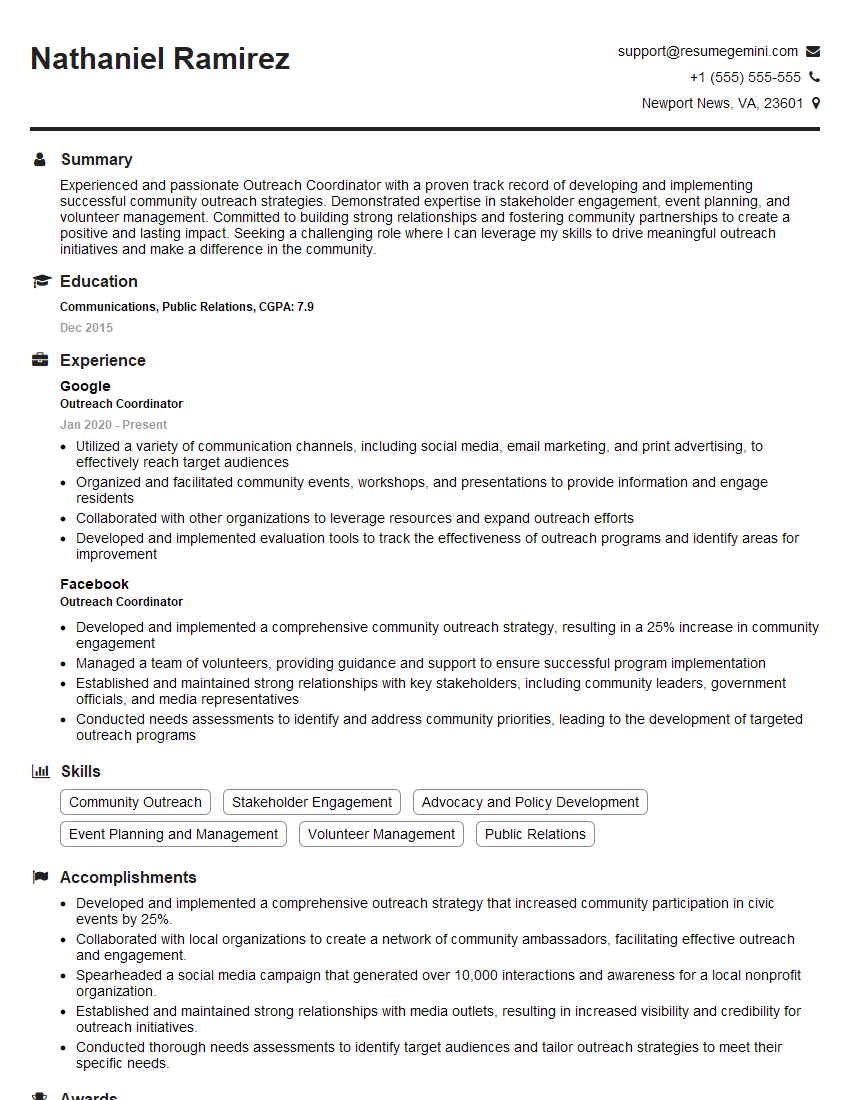
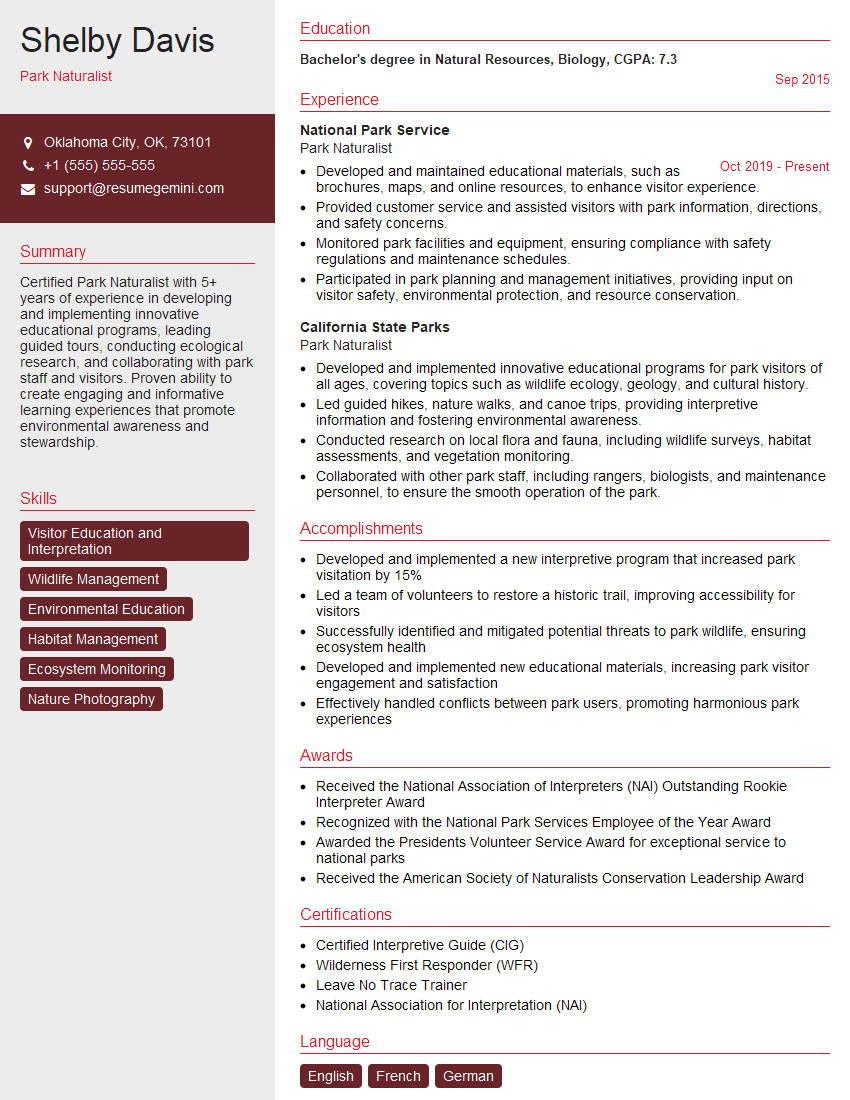
Mastering Wildlife Education and Outreach opens doors to a fulfilling career contributing to conservation efforts and inspiring future generations. To significantly enhance your job prospects, creating a strong, ATS-friendly resume is vital. ResumeGemini is a trusted resource to help you build a professional resume that showcases your skills and experience effectively. Examples of resumes tailored to Wildlife Education and Outreach are available to guide you in crafting a compelling application. Invest time in building a strong resume – it’s your first impression on potential employers.


Explore more articles
Users Rating of Our Blogs
Share Your Experience
We value your feedback! Please rate our content and share your thoughts (optional).
What Readers Say About Our Blog
Very informative content, great job.
good