Every successful interview starts with knowing what to expect. In this blog, we’ll take you through the top Wildlife Management Plan Development interview questions, breaking them down with expert tips to help you deliver impactful answers. Step into your next interview fully prepared and ready to succeed.
Questions Asked in Wildlife Management Plan Development Interview
Q 1. Describe your experience in developing comprehensive wildlife management plans.
My experience in developing comprehensive wildlife management plans spans over 15 years, encompassing a wide range of ecosystems and species. I’ve led the development of plans for everything from small, localized projects focused on endangered butterflies to large-scale initiatives managing migratory bird populations across multiple states. This includes conducting thorough needs assessments, stakeholder engagement, habitat assessments, threat prioritization, and the development of measurable goals and objectives. For instance, in one project, I led the creation of a plan to mitigate habitat loss for the endangered red-cockaded woodpecker in a rapidly developing region. This involved extensive community engagement, securing land easements, and creating artificial nesting cavities.
Another significant project involved developing a comprehensive plan for managing deer populations in a national park, balancing the ecological needs of the park with the interests of local communities and tourism.
Q 2. Explain the key components of a successful wildlife management plan.
A successful wildlife management plan hinges on several key components. Think of it as a blueprint for a healthy ecosystem. First, a thorough needs assessment establishes the baseline, identifying the current status of the target wildlife species and their habitats. Next, clearly defined goals and objectives provide direction, outlining what we aim to achieve. These should be SMART – Specific, Measurable, Achievable, Relevant, and Time-bound. The plan must also detail management actions – the specific strategies and techniques to be employed to achieve the objectives, such as habitat restoration, population monitoring, or controlling invasive species. A crucial element is monitoring and evaluation; we need to track progress, adapt strategies, and measure the overall effectiveness of the plan. Finally, stakeholder engagement ensures buy-in and collaboration from all affected parties.
Q 3. How do you conduct a thorough needs assessment for a wildlife management plan?
Conducting a thorough needs assessment is the cornerstone of effective wildlife management planning. It involves a multi-faceted approach. We begin with literature review – examining existing research and data on the target species, its habitat requirements, and known threats. This is followed by field surveys to gather primary data, including population counts, habitat mapping, and assessments of habitat quality. We use various techniques, from direct observation and camera trapping to GIS mapping and remotely sensed data. We also consider the socio-economic context, interviewing local communities and stakeholders to understand their perspectives and potential impacts. For example, assessing the effects of agricultural practices on wildlife habitats.
All this data helps us understand the current status, identify knowledge gaps, and prioritize actions. Imagine trying to build a house without a blueprint; the needs assessment is that blueprint for our wildlife management project.
Q 4. What are the critical steps in setting goals and objectives for a wildlife management plan?
Setting SMART goals and objectives is critical for ensuring a plan’s success. We start by identifying the overall vision – what do we want to achieve for the target wildlife population and its habitat in the long term? Then, we translate that vision into specific, measurable, achievable, relevant, and time-bound objectives. For example, instead of a vague goal like ‘improve habitat,’ we might set an objective such as ‘restore 50 acres of degraded riparian habitat by 2025.’ This allows us to track progress and measure success. We also incorporate performance indicators, such as population growth rate or habitat quality index, to monitor progress and make adjustments as needed.
Q 5. How do you incorporate stakeholder engagement into the wildlife management planning process?
Stakeholder engagement is paramount. It’s not just about informing people; it’s about building partnerships. We start by identifying all stakeholders – including landowners, local communities, government agencies, NGOs, and potentially even tourism operators. We employ various engagement methods, such as public meetings, workshops, surveys, and focus groups. It’s vital to ensure that all voices are heard, and concerns are addressed. Open communication and transparency are key. For example, we might host a series of public forums to discuss a controversial management decision, ensuring that everyone has an opportunity to express their views and participate in shaping the plan.
Q 6. Describe your experience with habitat assessment and mapping techniques.
My experience with habitat assessment and mapping involves a range of techniques, from traditional field surveys to advanced remote sensing and GIS analysis. We use ground truthing – direct observation and data collection in the field – to validate remotely sensed data. We also utilize aerial photography, satellite imagery, and LiDAR to map vegetation types, habitat fragmentation, and other key features. GIS software is crucial for integrating and analyzing this data, allowing us to create detailed habitat maps and assess changes over time. For example, we might use GIS to model habitat suitability for a particular species, identify potential connectivity corridors, or analyze the impact of land-use change on habitat quality.
Q 7. How do you identify and prioritize conservation threats to wildlife populations?
Identifying and prioritizing conservation threats is crucial. We use a combination of approaches. We start by identifying potential threats, such as habitat loss, poaching, invasive species, disease outbreaks, and climate change. We then assess the severity, likelihood, and potential impact of each threat. Tools like threat matrices can help prioritize threats based on their relative importance. This helps us focus resources on the most critical issues. For instance, if habitat loss is identified as the most significant threat, the plan would prioritize habitat restoration and protection measures.
Q 8. Explain your approach to monitoring and evaluating the effectiveness of wildlife management strategies.
Monitoring and evaluating wildlife management strategies is crucial for ensuring their effectiveness. My approach involves a multi-faceted strategy combining quantitative and qualitative data collection. It begins with clearly defined objectives and measurable indicators, established during the planning phase. These indicators could include population size, habitat quality, species distribution, or human-wildlife conflict incidence.
We then implement a robust monitoring program using a variety of techniques, depending on the species and the management goals. This might include:
- Population surveys: Using techniques like mark-recapture, camera trapping, or aerial surveys to estimate population size and trends.
- Habitat assessments: Employing vegetation surveys, soil analysis, and remote sensing to evaluate habitat condition and changes over time.
- Monitoring of human-wildlife interactions: Tracking incidents of conflict, assessing public attitudes, and gathering data on human activities within wildlife habitats.
Data analysis employs statistical methods to assess trends and evaluate the impact of management actions. We use statistical significance testing to determine if observed changes are due to management or natural variation. For instance, if we’re implementing a habitat restoration project, we’d compare population trends in restored areas versus control areas using statistical methods like t-tests or ANOVA. Regular reporting, using clear visualizations and accessible language, ensures transparency and informs adaptive management decisions. Finally, a comprehensive evaluation process, possibly involving external review, helps determine overall project success and areas for improvement.
Q 9. How do you incorporate adaptive management principles into wildlife management plans?
Adaptive management is essential for dealing with the inherent uncertainty in wildlife management. It’s a cyclical process that emphasizes learning and adjusting strategies based on new information. Instead of rigid, static plans, we design our management plans with built-in flexibility.
Here’s how I incorporate adaptive management principles:
- Clearly defined objectives and hypotheses: Each management action is framed as a testable hypothesis. For example, ‘Reducing grazing pressure in this area will increase elk calf survival.’
- Monitoring and evaluation: A robust monitoring program, as described in the previous answer, is crucial for collecting data to assess the effectiveness of management actions.
- Analysis and feedback loop: Collected data is analyzed to assess whether the hypotheses were supported. Results directly inform the adaptation of future management strategies.
- Decision-making framework: A transparent decision-making process is critical for integrating new information and adjusting management actions accordingly. This could involve stakeholder engagement and collaborative decision-making.
For example, if our elk calf survival hypothesis isn’t supported by data, we might revise our grazing management strategy, perhaps implementing more targeted grazing restrictions or adjusting the timing of grazing seasons. This iterative process allows for continuous improvement and learning, resulting in more effective and resilient wildlife management plans.
Q 10. What are the common challenges in implementing wildlife management plans, and how do you address them?
Implementing wildlife management plans often faces significant challenges. Common issues include:
- Funding limitations: Adequate funding is essential for effective monitoring, research, and implementation of management actions.
- Stakeholder conflicts: Balancing the needs of diverse stakeholders (e.g., landowners, hunters, environmental groups) can be difficult.
- Political influences: Political priorities and changes can sometimes undermine long-term management objectives.
- Lack of data or information: Insufficient data can hinder effective planning and decision-making.
- Enforcement challenges: Ensuring compliance with regulations and management actions can be problematic.
To address these challenges, I employ several strategies:
- Secure diverse funding sources: This might involve securing government grants, engaging private donors, or developing partnerships with NGOs.
- Facilitate stakeholder engagement: Establishing communication channels, holding public forums, and creating collaborative platforms are crucial to build consensus and address conflicts.
- Build strong relationships with decision-makers: Advocating for the importance of wildlife conservation and effective management can help ensure political support.
- Prioritize data collection and research: Investing in scientific research to fill data gaps is essential for evidence-based management.
- Develop effective enforcement strategies: Collaborating with law enforcement agencies and establishing monitoring mechanisms can improve compliance.
Successful implementation requires proactive problem-solving, adaptability, and a commitment to collaboration.
Q 11. How do you use GIS and other spatial data analysis tools in wildlife management planning?
Geographic Information Systems (GIS) are indispensable tools for wildlife management planning. They allow us to visualize, analyze, and manage spatial data, leading to more effective and targeted interventions. I utilize GIS extensively in several ways:
- Habitat mapping and analysis: GIS allows us to create detailed maps of habitats, identifying areas of high ecological value, critical habitat, or areas susceptible to degradation. We can then analyze these maps to identify key habitat features and their connectivity.
- Species distribution modeling: Using GIS and species occurrence data, we can build predictive models to forecast species distribution under different scenarios (e.g., climate change, habitat alteration). This helps to prioritize conservation efforts and identify potential areas of conflict.
- Planning conservation corridors: GIS helps to design effective conservation corridors that connect fragmented habitats, enabling species movement and gene flow.
- Assessing human-wildlife conflict risk: We can overlay spatial data on human activities (e.g., roads, settlements) with wildlife distribution maps to identify high-risk areas for conflict. This information can then guide targeted interventions.
- Monitoring and evaluation: GIS assists in visualizing the effects of management actions on wildlife populations and habitats, facilitating effective monitoring and evaluation of management success.
For instance, we might use ArcGIS or QGIS to overlay data on wildlife sightings with land use maps to identify areas where development is encroaching on critical habitat, enabling proactive mitigation strategies.
Q 12. Describe your experience with population modeling and forecasting techniques.
Population modeling is critical for predicting future population trends and evaluating the effectiveness of management strategies. My experience encompasses a range of techniques, including:
- Matrix population models: These models project population growth based on age-specific survival and fecundity rates. They are useful for assessing the impact of factors like harvesting or habitat loss.
- Spatially explicit population models: These models integrate spatial information, considering factors like habitat quality and dispersal patterns. They are particularly useful for understanding metapopulation dynamics (populations of a species inhabiting a landscape).
- Integrated population models (IPMs): These combine data from multiple sources (e.g., surveys, harvest data) using statistical methods to provide a more robust and comprehensive assessment of population trends. This helps in reducing uncertainty in estimates.
- Agent-based models: These simulate individual behavior within a population and their interaction with their environment. They are useful for understanding complex ecological processes and exploring ‘what if’ scenarios.
Choosing the appropriate model depends on the available data and the specific management questions being addressed. Software such as R, along with specific packages like Matrix and nimble, are frequently used to perform these complex calculations. The outputs of these models inform management decisions regarding harvesting quotas, habitat protection, or the identification of threatened populations.
Q 13. How do you develop and implement strategies for managing human-wildlife conflict?
Managing human-wildlife conflict is a significant challenge requiring a multi-pronged approach. My strategies focus on mitigation, compensation, and community engagement:
- Mitigation strategies: These aim to reduce conflict before it occurs. Examples include habitat modification (e.g., creating barriers to prevent wildlife access to human settlements), promoting responsible land use practices, and providing incentives for coexistence.
- Compensation schemes: Providing financial or other forms of compensation to individuals who suffer losses due to wildlife can alleviate resentment and encourage cooperation. This might include crop damage compensation or livestock insurance.
- Community engagement: Educating communities about wildlife behavior, conflict prevention techniques, and coexistence strategies is essential. This often involves collaborative workshops, training programs, and the creation of community-based conservation initiatives.
- Lethal control (when necessary): In extreme cases where human safety is at stake, lethal control might be considered as a last resort. This should be carefully planned and implemented, based on sound scientific principles and with appropriate ethical considerations.
For example, in an area with frequent human-elephant conflict, we might implement electric fencing around agricultural lands, provide elephant-resistant crops, and establish a community-based monitoring program to report elephant movements, combining mitigation and community engagement. Effective human-wildlife conflict management requires careful planning, stakeholder collaboration, and a focus on both short-term solutions and long-term sustainability.
Q 14. Explain your knowledge of relevant legislation and regulations related to wildlife management.
My knowledge of wildlife legislation and regulations is extensive and essential for my work. I understand the interplay of international, national, and state/provincial laws governing wildlife conservation and management. This knowledge extends to:
- Endangered Species Acts (ESA): Understanding the legal protections afforded to endangered and threatened species, and the processes involved in listing and delisting species.
- Hunting and trapping regulations: Familiarity with regulations governing hunting seasons, bag limits, and licensing requirements.
- Habitat protection laws: Knowledge of laws related to the protection and restoration of wildlife habitats, including the establishment of protected areas and conservation easements.
- International treaties: Awareness of international conventions and agreements, such as CITES (Convention on International Trade in Endangered Species), and their implications for wildlife management.
- Environmental impact assessments: Understanding the requirements for environmental assessments to minimize the impact of development projects on wildlife.
Staying updated on legislative changes is crucial. This involves continuous professional development, reviewing legal updates and case law, and collaborating with legal experts to ensure all management actions are compliant and ethical. Ignoring legal requirements can result in significant legal and reputational repercussions.
Q 15. How do you ensure the plan’s sustainability and long-term effectiveness?
Ensuring a wildlife management plan’s long-term effectiveness hinges on adaptability and proactive measures. It’s not enough to create a static document; the plan must evolve with the changing environment and new scientific understanding.
- Adaptive Management: This cyclical process involves setting objectives, implementing actions, monitoring results, and then adjusting strategies based on what we learn. For example, if a habitat restoration project isn’t yielding the expected increase in a target species’ population, we’d analyze the data, identify potential shortcomings (e.g., insufficient water sources, predation pressure), and modify our approach accordingly.
- Stakeholder Engagement: Sustained success requires buy-in from local communities, landowners, and other stakeholders. Regular communication, collaboration, and conflict resolution are crucial to maintaining support and ensuring the plan remains relevant to everyone involved. A community-based conservation program, for instance, might involve local residents in monitoring efforts, providing valuable data and a sense of ownership.
- Funding Diversification: Securing long-term funding is essential. We need to explore diverse funding sources, including grants, government allocations, private donations, and ecotourism initiatives to avoid dependence on any single source. This reduces vulnerability to funding cuts and promotes sustainability.
- Monitoring and Evaluation: Regular monitoring of key indicators (population numbers, habitat condition, etc.) using appropriate metrics is essential to track progress and identify potential problems early. This allows for timely interventions to prevent setbacks and ensures that the plan remains effective.
Career Expert Tips:
- Ace those interviews! Prepare effectively by reviewing the Top 50 Most Common Interview Questions on ResumeGemini.
- Navigate your job search with confidence! Explore a wide range of Career Tips on ResumeGemini. Learn about common challenges and recommendations to overcome them.
- Craft the perfect resume! Master the Art of Resume Writing with ResumeGemini’s guide. Showcase your unique qualifications and achievements effectively.
- Don’t miss out on holiday savings! Build your dream resume with ResumeGemini’s ATS optimized templates.
Q 16. Describe your experience with budget development and resource allocation for wildlife management projects.
Budget development for wildlife management is a meticulous process that involves detailed cost estimations, prioritizing needs, and justifying expenditures to stakeholders.
- Needs Assessment: First, we identify the project’s key objectives and the resources needed to achieve them, including personnel, equipment, materials, and travel. This might involve calculating the cost of habitat restoration, surveying wildlife populations, or implementing disease surveillance programs.
- Prioritization: Based on scientific data and stakeholder input, we prioritize projects and allocate resources accordingly. For example, if a species is critically endangered, its conservation might receive higher priority than a project focused on a more common species.
- Budget Justification: We create a comprehensive budget proposal justifying each expenditure, highlighting its alignment with the overall plan objectives and expected outcomes. This often includes cost-benefit analyses to demonstrate the project’s value.
- Resource Allocation: Once the budget is approved, we develop a detailed work plan that allocates resources effectively to different tasks and timelines. This ensures that funds are used efficiently and that the project remains on schedule.
- Example: In a project to control invasive plants threatening a wetland ecosystem, the budget would include costs for herbicide purchase, labor for application, equipment rental, monitoring, and reporting. We might choose a cost-effective biocontrol method in addition to or instead of herbicides, depending on the budget and the nature of the invasive plant species.
Q 17. How do you communicate wildlife management plans effectively to diverse audiences?
Effective communication is vital for the success of any wildlife management plan. We need to tailor our messages to resonate with diverse audiences, including scientists, policymakers, land managers, local communities, and the general public.
- Targeted Messaging: We use different communication styles and channels to reach each audience effectively. For scientists, we might use peer-reviewed publications and technical reports, while for the public, we may use social media, educational materials, and public events.
- Visual Aids: Infographics, maps, photographs, and videos can make complex information more accessible and engaging for a wider audience. This approach is effective for conveying the impacts of human activities on wildlife and the importance of conservation efforts.
- Interactive Platforms: Workshops, public forums, and online platforms can provide opportunities for two-way communication, fostering understanding and addressing concerns.
- Storytelling: Using narratives to connect with people emotionally helps them understand the importance of wildlife conservation. Sharing success stories or highlighting the challenges faced by particular species can be incredibly effective.
- Translation and Interpretation: In areas with multiple languages, we ensure that information is translated accurately to make it accessible to all community members.
Q 18. How do you incorporate climate change considerations into wildlife management plans?
Climate change is a critical factor that must be integrated into wildlife management plans. It’s altering habitats, shifting species ranges, and increasing the frequency and intensity of extreme weather events.
- Climate Projections: We use climate models and projections to anticipate how climate change will impact wildlife populations and their habitats in the planning area.
- Habitat Adaptation Strategies: The plan should include strategies to enhance habitat resilience to climate change impacts, such as restoring degraded areas, creating wildlife corridors, and protecting critical habitat from development.
- Assisted Migration: In some cases, assisted migration—carefully moving species to more suitable habitats—may be considered, though it needs careful ethical and scientific evaluation.
- Vulnerability Assessments: Identifying species and habitats most vulnerable to climate change helps prioritize conservation efforts.
- Monitoring and Adaptation: Regular monitoring of climate impacts and species responses is crucial, allowing us to adapt the plan as needed.
- Example: A plan for managing a coastal bird species might incorporate strategies to protect nesting sites from sea-level rise, such as beach nourishment or creating artificial nesting islands.
Q 19. What is your approach to developing and implementing strategies for invasive species control?
Invasive species pose a significant threat to biodiversity. A comprehensive strategy for invasive species control requires a multi-pronged approach.
- Early Detection and Rapid Response: This is crucial. Early detection of invasive species greatly increases the chances of successful eradication or containment. This usually requires ongoing monitoring programs and rapid response teams.
- Prevention: Preventing the introduction and spread of invasive species is the most effective approach. This includes biosecurity measures at ports and borders, promoting the use of native plants, and educating the public about the risks of invasive species.
- Control Methods: Control methods vary depending on the species and the context. These can include mechanical removal, chemical control (herbicides, pesticides), biological control (introducing natural predators or pathogens), or a combination of methods. We always choose the most environmentally sound and effective approach.
- Community Involvement: Engaging local communities in early detection and control efforts is essential. Citizen science programs can greatly enhance monitoring efforts and increase public awareness.
- Example: Managing an invasive plant species might involve a combination of herbicide application in high-density areas, manual removal in sensitive areas, and public education programs to prevent its further spread.
Q 20. Describe your experience with wildlife disease management and surveillance.
Wildlife disease surveillance and management are critical components of any comprehensive wildlife management plan. Diseases can decimate populations and disrupt ecosystem function.
- Surveillance: We establish monitoring programs to detect and track disease outbreaks. This might involve collecting samples from wildlife populations, conducting necropsies, and using remote sensing technologies to detect disease signs.
- Disease Diagnostics: Accurate and timely diagnosis is crucial for effective management. This often involves collaboration with veterinary laboratories and wildlife health experts.
- Control Measures: Control measures vary depending on the disease and species involved. These might include vaccination programs, habitat management to reduce disease transmission, or quarantine measures.
- Risk Assessment: We conduct risk assessments to identify factors that increase disease transmission and implement measures to mitigate these risks.
- Example: Managing a disease outbreak in a deer population might involve vaccination of captive deer, habitat management to reduce deer density and stress levels, and public health measures to minimize human-wildlife contact.
Q 21. How do you incorporate scientific research findings into wildlife management decision-making?
Scientific research is the foundation of effective wildlife management. Decisions should be data-driven and informed by the best available science.
- Literature Reviews: We conduct thorough literature reviews to assess the existing knowledge base on the target species, their habitat, and relevant management techniques.
- Data Collection and Analysis: We collect data on population trends, habitat conditions, and other relevant variables using appropriate methodologies and analytical techniques.
- Adaptive Management: Scientific monitoring and evaluation data are used to refine and adapt management strategies over time.
- Collaboration with Researchers: We collaborate with researchers to design and implement research projects that address key management questions. This ensures that our management decisions are informed by the most current and relevant scientific information.
- Peer Review and Transparency: Management plans and decisions should be subject to peer review and transparent processes to ensure quality and accountability. This increases public trust in our decisions.
- Example: If research indicates that a certain habitat restoration technique is more effective than another, we’d incorporate the superior technique into our management plan.
Q 22. What are some of the ethical considerations in wildlife management?
Ethical considerations in wildlife management are paramount and deeply interwoven with the very purpose of conservation. We’re not just managing populations; we’re managing sentient beings within complex ecosystems. This necessitates a careful balancing act between human needs and the well-being of wildlife. Key ethical considerations include:
- Animal welfare: Minimizing suffering during management actions like culling or relocation. This involves using humane methods and justifying actions based on scientific evidence and demonstrated necessity, not convenience.
- Fairness and equity: Ensuring that management decisions don’t disproportionately impact certain groups of people, such as Indigenous communities who may have traditional rights or dependencies on specific wildlife populations.
- Transparency and accountability: Openly communicating management goals, methods, and outcomes to the public and stakeholders, allowing for scrutiny and feedback.
- Precautionary principle: When uncertainty exists about the potential impacts of a management action, erring on the side of caution to prevent irreversible harm to wildlife populations or their habitats.
- Biodiversity conservation: Considering the interconnectedness of species and ecosystems, managing not just for individual species but for the health of the entire system. A focus on individual species can sometimes have unintended negative consequences on other elements of the ecosystem.
For instance, a decision to control an invasive species might involve the use of pesticides. Ethically, we must assess the potential harm to non-target species and explore less harmful alternatives before proceeding.
Q 23. How do you prioritize conservation actions when resources are limited?
Prioritizing conservation actions with limited resources requires a strategic and data-driven approach. We often employ frameworks like cost-effectiveness analysis and triage systems to make informed decisions. Here’s a breakdown:
- Identify conservation goals: Clearly define specific, measurable, achievable, relevant, and time-bound (SMART) objectives. For example, ‘increase the population of the endangered snow leopard by 20% in five years’.
- Assess threats: Identify the most significant threats to each conservation goal. This could involve habitat loss, poaching, disease, or climate change.
- Evaluate potential actions: Develop a range of management interventions to address the identified threats. These might include habitat restoration, anti-poaching patrols, disease surveillance, or climate adaptation strategies.
- Conduct cost-benefit analysis: Assess the cost-effectiveness of each intervention, considering both the financial costs and the potential ecological benefits (e.g., population growth, habitat improvement). We often use modeling techniques to predict the outcomes of different interventions.
- Prioritize actions based on cost-effectiveness and urgency: Focus on the interventions that yield the greatest benefits for the least cost, and prioritize actions that address the most urgent threats.
- Adaptive management: Regularly monitor the effectiveness of implemented actions and adapt the management strategy as needed. This is crucial, as unexpected events and outcomes can necessitate changes to the original plan.
Imagine a scenario where funding is limited for protecting three endangered species. A cost-benefit analysis might reveal that investing in habitat restoration for species A yields the greatest return, while interventions for species B and C are less cost-effective. Prioritization would then focus on species A, allocating the remaining resources to the most promising actions for species B and C, based on their likelihood of success.
Q 24. How do you measure the success of a wildlife management plan?
Measuring the success of a wildlife management plan requires a multifaceted approach that goes beyond simply counting animals. We need to track changes across multiple indicators to get a comprehensive picture. Some key metrics include:
- Population size and trends: Monitoring population numbers, growth rates, and age structure to assess if management actions are effectively increasing or stabilizing populations.
- Habitat quality and extent: Measuring changes in habitat area, quality, and connectivity to determine if management interventions are benefiting wildlife habitat.
- Species distribution and range: Tracking changes in species distribution and range to assess if management actions are promoting population expansion or recovery.
- Genetic diversity: Assessing genetic diversity to ensure populations have the resilience to withstand environmental changes and diseases.
- Community involvement and support: Measuring the level of community involvement and support for the management plan to ensure long-term sustainability.
- Economic impacts: Evaluating the economic benefits of the management plan, such as tourism revenue or reduced agricultural damage.
For example, a successful plan to conserve a specific bird species might show an increase in its population size, an improvement in habitat quality (e.g., increased forest cover), and an expansion of its range. The success would not be solely judged by the increase in numbers, but the integration of these various factors.
Q 25. Describe a time you had to make a difficult decision regarding wildlife management.
During a project involving the management of an overpopulated deer herd in a suburban area, I faced a difficult decision. The deer were causing significant damage to gardens and posing a growing risk to human safety due to increased road collisions. The local community was divided: some demanded immediate culling, while others advocated for non-lethal methods such as relocation.
Culling, while effective in population control, raised ethical concerns about animal welfare and potential negative public perception. Relocation, on the other hand, was costly, logistically challenging, and didn’t guarantee long-term success. The deer could simply repopulate the area.
After careful consideration of all options, including extensive community consultation, we opted for a phased approach. We implemented a focused culling program for a limited period, targeting only the most problematic animals using the most humane methods possible. Simultaneously, we launched a comprehensive public education campaign to promote deer-resistant landscaping and responsible driving habits. This approach attempted to balance the need for population control with ethical concerns and community sentiment. While not perfect, it was deemed the best compromise in a complex situation.
Q 26. How do you ensure public safety while implementing wildlife management strategies?
Ensuring public safety during wildlife management is crucial. It requires a proactive and multi-pronged approach:
- Risk assessment: Identify potential risks to public safety associated with specific wildlife and management actions. This could involve analyzing animal behavior, habitat use, and potential conflict zones.
- Public education and awareness campaigns: Educate the public about wildlife behavior, potential risks, and appropriate safety measures. This might include signage, workshops, and media outreach.
- Hazard mitigation: Implement measures to reduce the likelihood of human-wildlife conflict. This could involve installing fences, modifying habitats, or creating wildlife corridors to keep animals away from populated areas.
- Emergency response plans: Develop plans to respond to wildlife-related emergencies, such as attacks or disease outbreaks. This includes coordinating with emergency services and having protocols for safe animal removal or control.
- Regulation and enforcement: Establish regulations to control human activities that might increase the risk of conflict, such as feeding wildlife or disturbing their habitats. This also involves enforcing regulations to ensure public safety.
For example, in areas with high bear populations, public education might emphasize proper food storage, while hazard mitigation might involve installing bear-resistant garbage containers.
Q 27. Explain your understanding of ecosystem-based management approaches.
Ecosystem-based management (EBM) views wildlife not in isolation, but as integral components of larger ecological systems. It shifts the focus from managing individual species to managing the entire ecosystem to achieve ecological, social, and economic goals. Instead of targeting a single species, EBM considers the interactions among all species, their habitats, and the human communities that depend on them.
Key principles of EBM include:
- Holistic approach: Considering the interconnectedness of all components of the ecosystem, including physical, biological, and social factors.
- Adaptive management: Continuously monitoring and adjusting management strategies based on new information and feedback from the system.
- Precautionary approach: Prioritizing actions that minimize risks to ecosystem health and function.
- Stakeholder engagement: Involving all relevant stakeholders, including local communities, government agencies, and scientists, in decision-making processes.
- Long-term perspective: Focusing on the long-term sustainability of the ecosystem, rather than short-term gains.
For example, instead of solely focusing on increasing salmon populations, an EBM approach might consider restoring riparian habitats, managing forest practices to maintain water quality, and engaging local communities in sustainable fishing practices. This integrated approach acknowledges that the health of the salmon population depends on the overall health of the river ecosystem and its human users.
Key Topics to Learn for Wildlife Management Plan Development Interview
- Population Dynamics: Understanding population growth models, carrying capacity, and factors influencing wildlife populations (e.g., habitat, predation, disease).
- Habitat Assessment and Management: Techniques for assessing habitat quality, identifying limiting factors, and developing strategies for habitat restoration and improvement. Practical application: Designing a habitat restoration project for a specific species.
- Wildlife Monitoring and Data Analysis: Methods for collecting and analyzing wildlife data (e.g., population surveys, camera trapping), and interpreting results to inform management decisions. Practical application: Analyzing population trend data to assess the effectiveness of a management intervention.
- Conservation Planning and Prioritization: Principles of conservation planning, including identifying conservation priorities, setting measurable objectives, and developing adaptive management strategies. Practical application: Developing a prioritized action plan for a threatened species.
- Stakeholder Engagement and Collaboration: Effective communication and collaboration with diverse stakeholders (e.g., landowners, government agencies, local communities) to build consensus and support for wildlife management plans. Practical application: Facilitating a community meeting to discuss a proposed wildlife management plan.
- Legal and Regulatory Frameworks: Understanding relevant legislation, regulations, and policies related to wildlife management and conservation. Practical application: Ensuring a wildlife management plan complies with all applicable laws and regulations.
- GIS and Spatial Analysis: Utilizing Geographic Information Systems (GIS) for mapping wildlife habitats, analyzing spatial data, and visualizing management scenarios. Practical application: Creating a map of suitable habitat for a target species.
- Adaptive Management: Implementing a cyclical process of planning, monitoring, evaluating, and adjusting wildlife management strategies based on new data and feedback. Practical application: Modifying a management plan in response to unexpected changes in wildlife populations or habitat conditions.
Next Steps
Mastering Wildlife Management Plan Development is crucial for advancing your career in conservation and resource management. It demonstrates a comprehensive understanding of ecological principles and their practical application. To significantly boost your job prospects, create a compelling and ATS-friendly resume that highlights your skills and experience. We strongly encourage you to leverage ResumeGemini, a trusted resource for crafting professional resumes. ResumeGemini provides examples of resumes tailored specifically to Wildlife Management Plan Development roles, ensuring your application stands out from the competition.
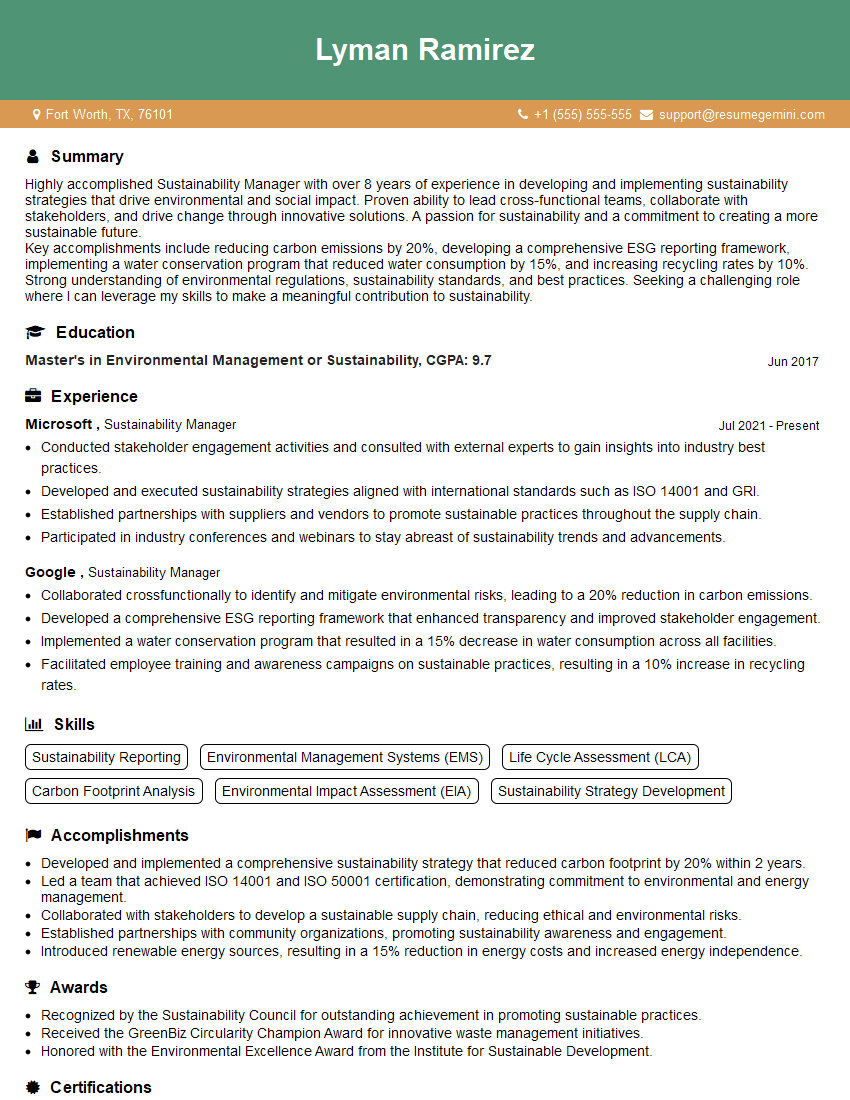
Sustainability Manager Resume Sample
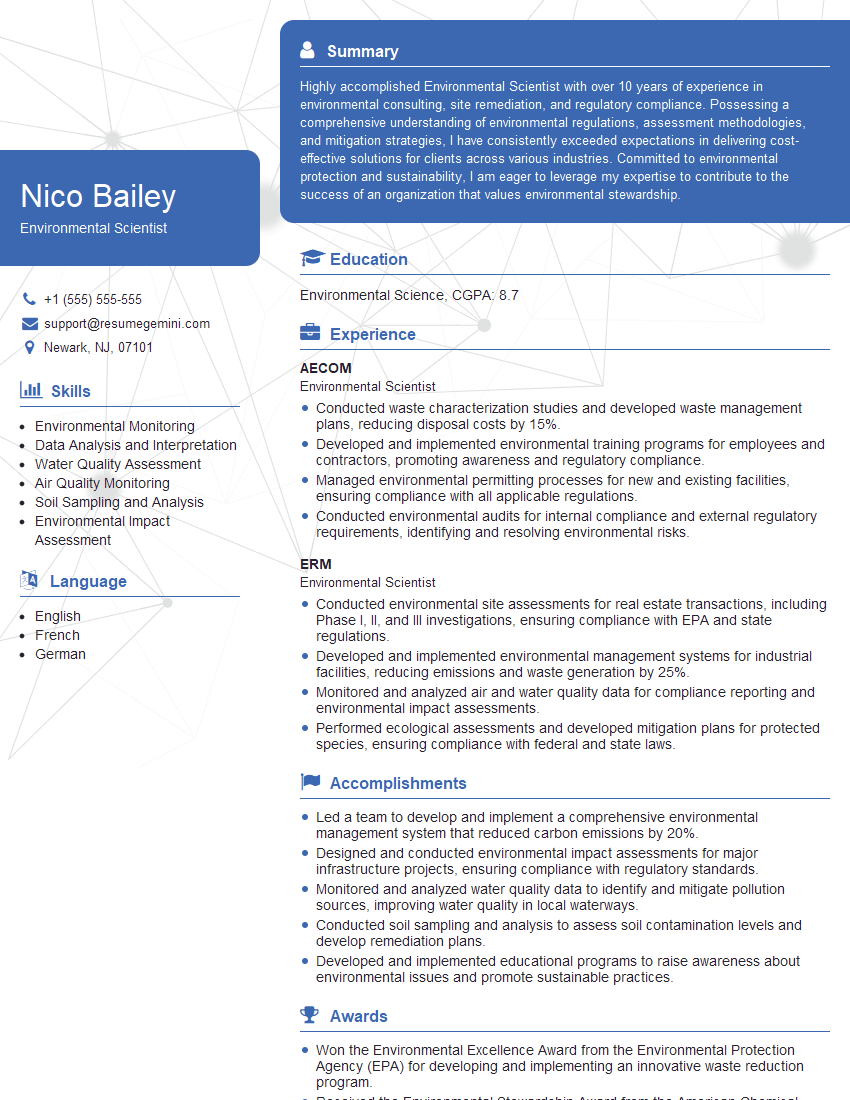
Environmental Scientist Resume Sample
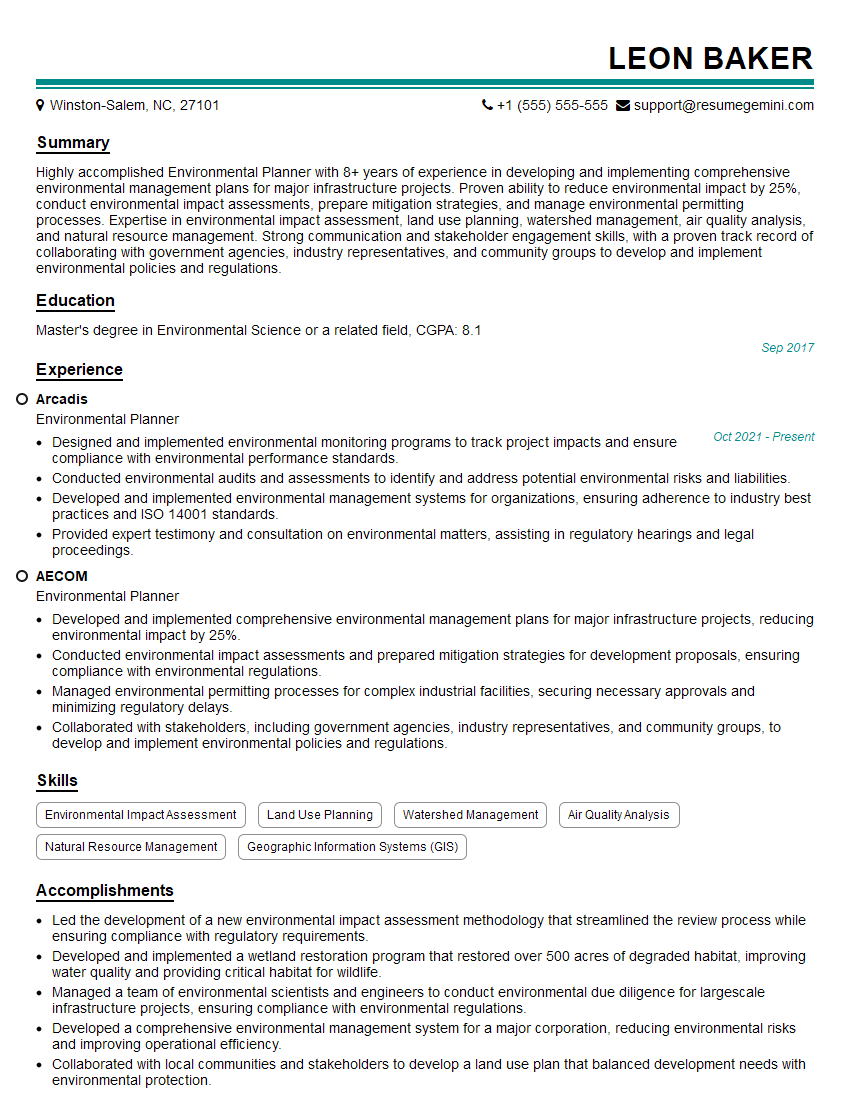
Environmental Planner Resume Sample
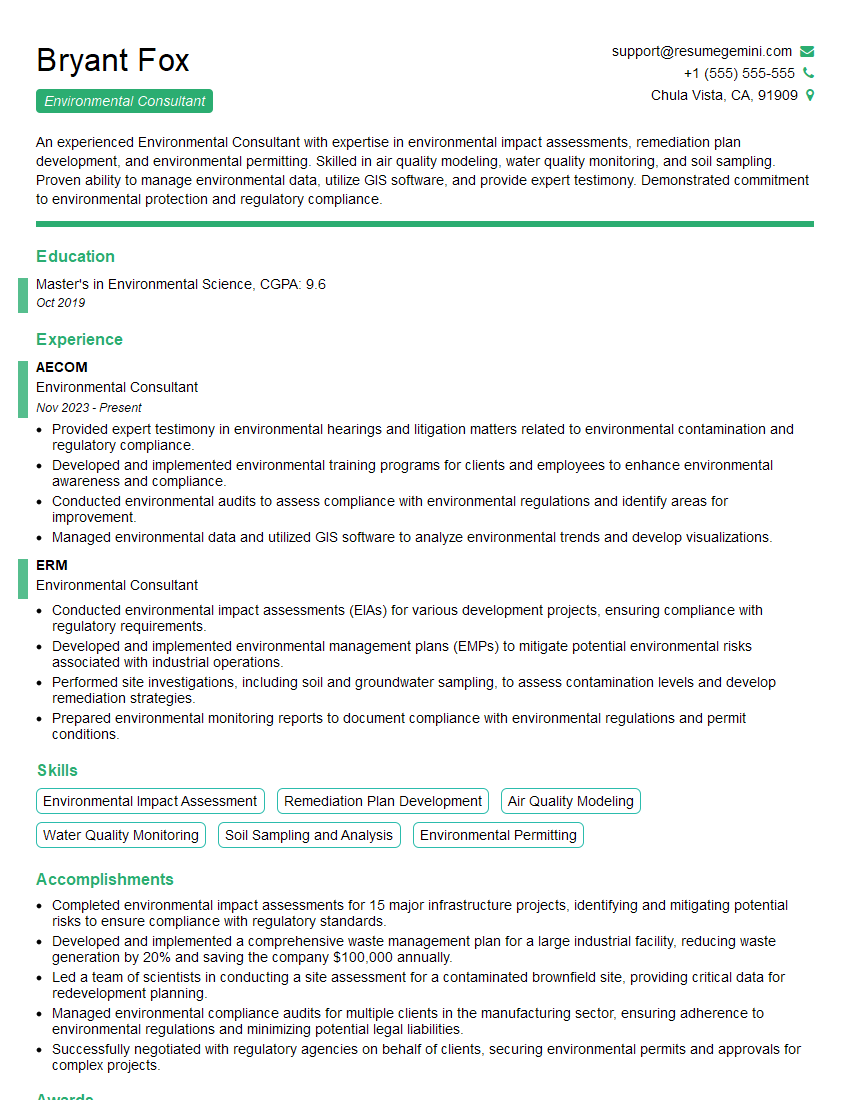
Environmental Consultant Resume Sample
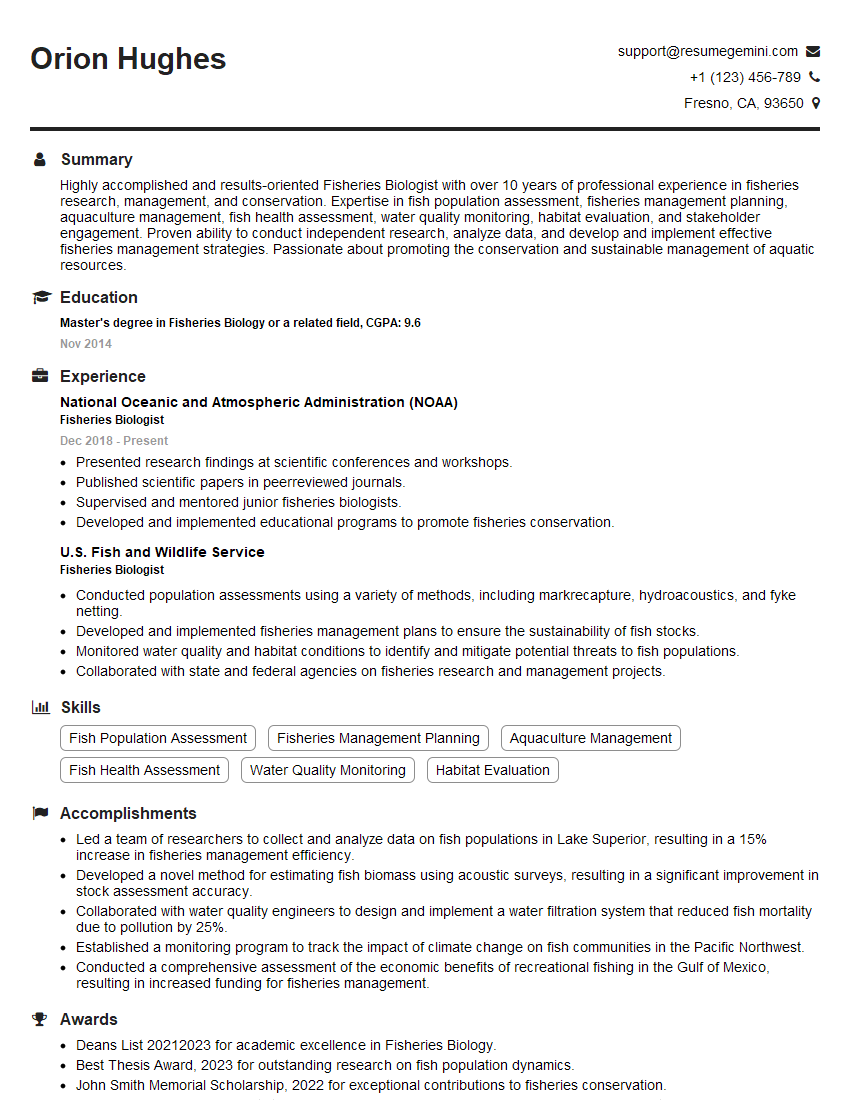
Fisheries Biologist Resume Sample

Wildlife Biologist Resume Sample
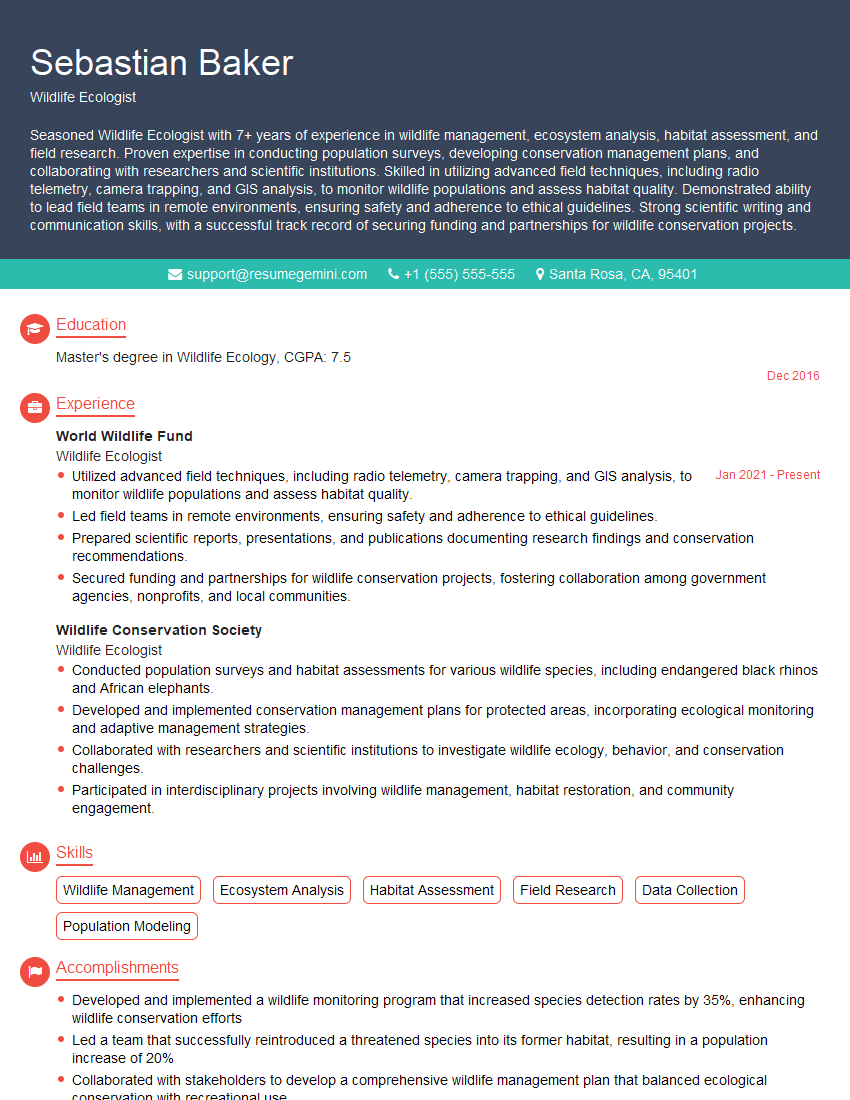
Wildlife Ecologist Resume Sample
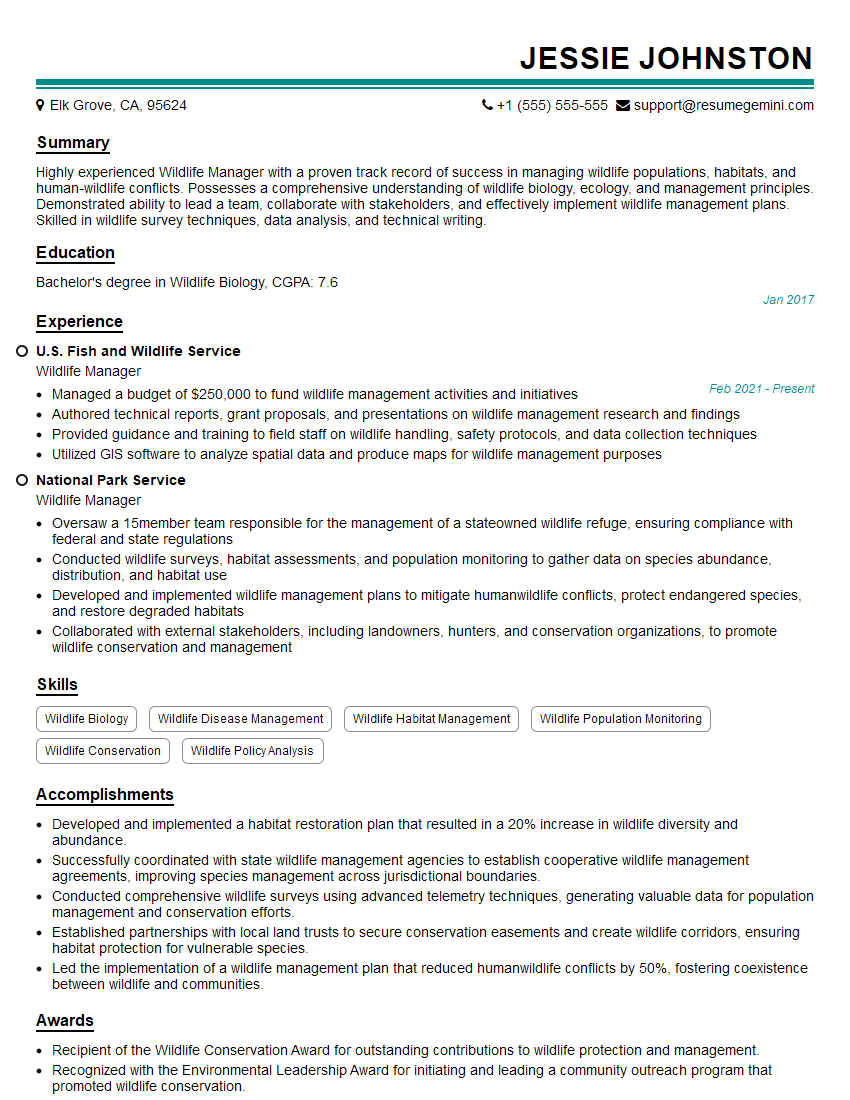
Wildlife Manager Resume Sample
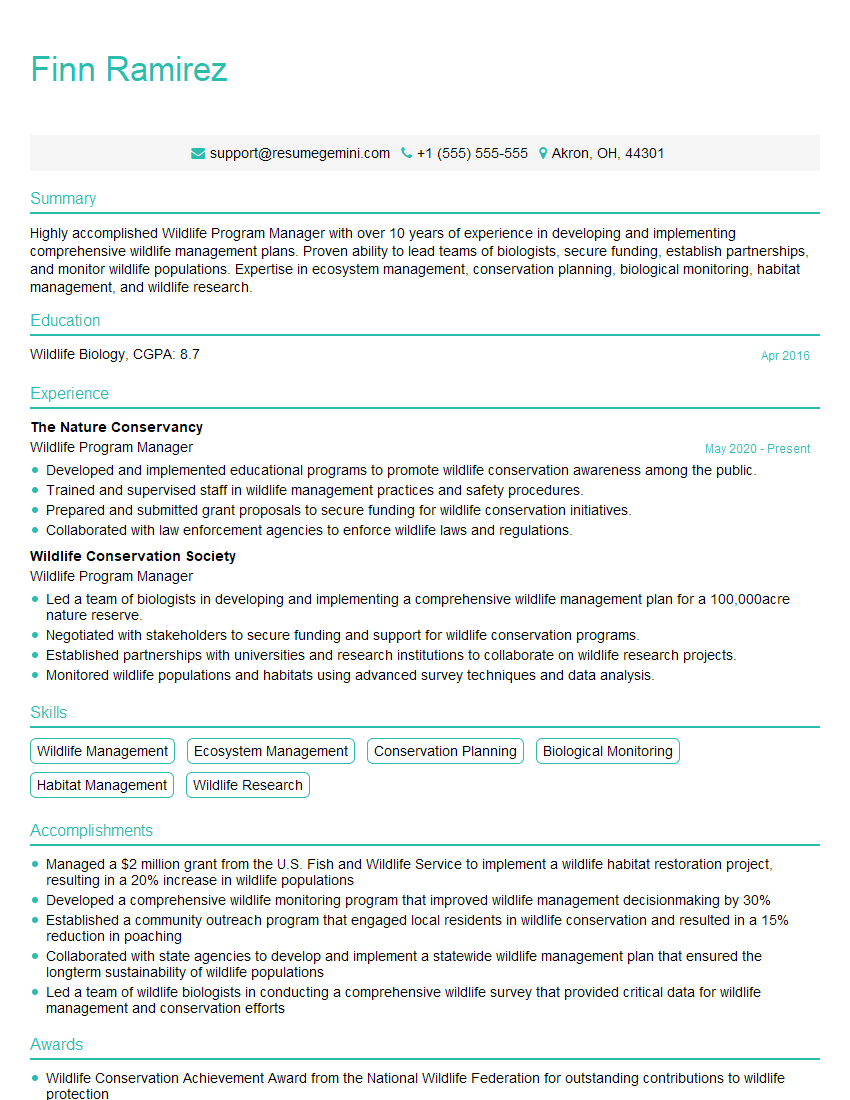
Wildlife Program Manager Resume Sample

Wildlife Technician Resume Sample
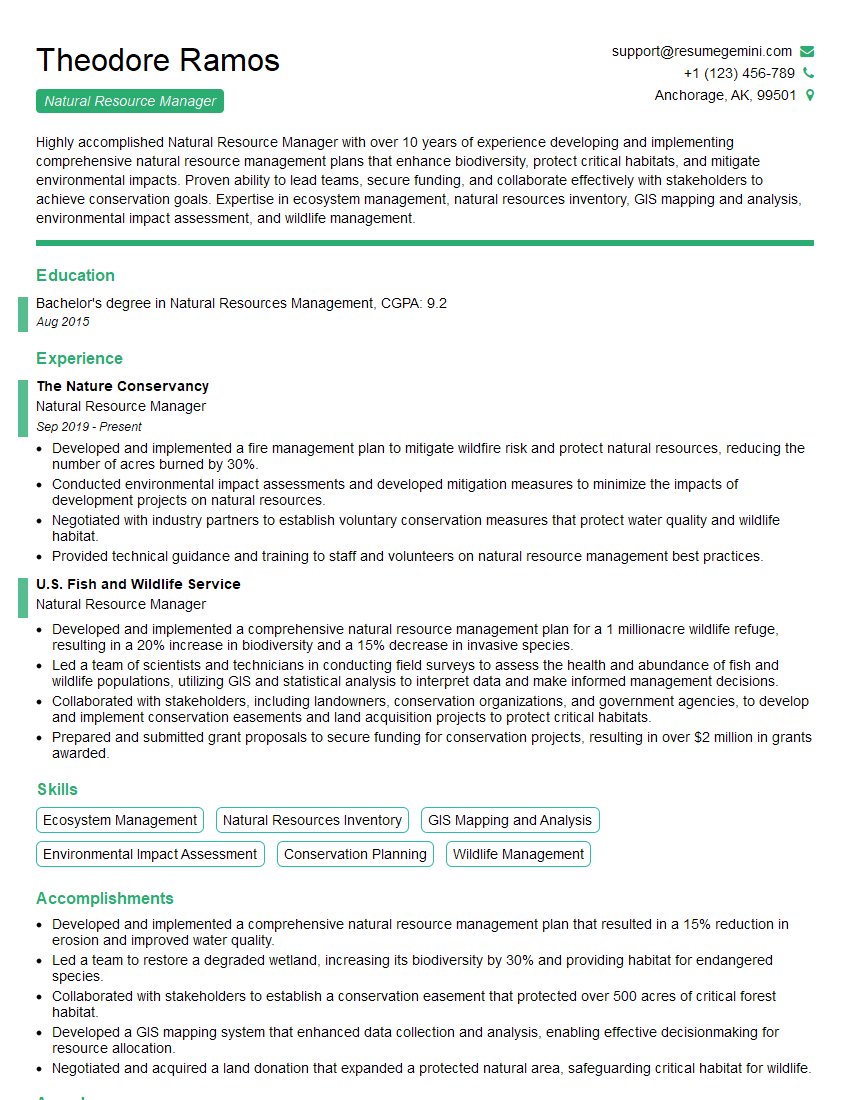
Natural Resource Manager Resume Sample
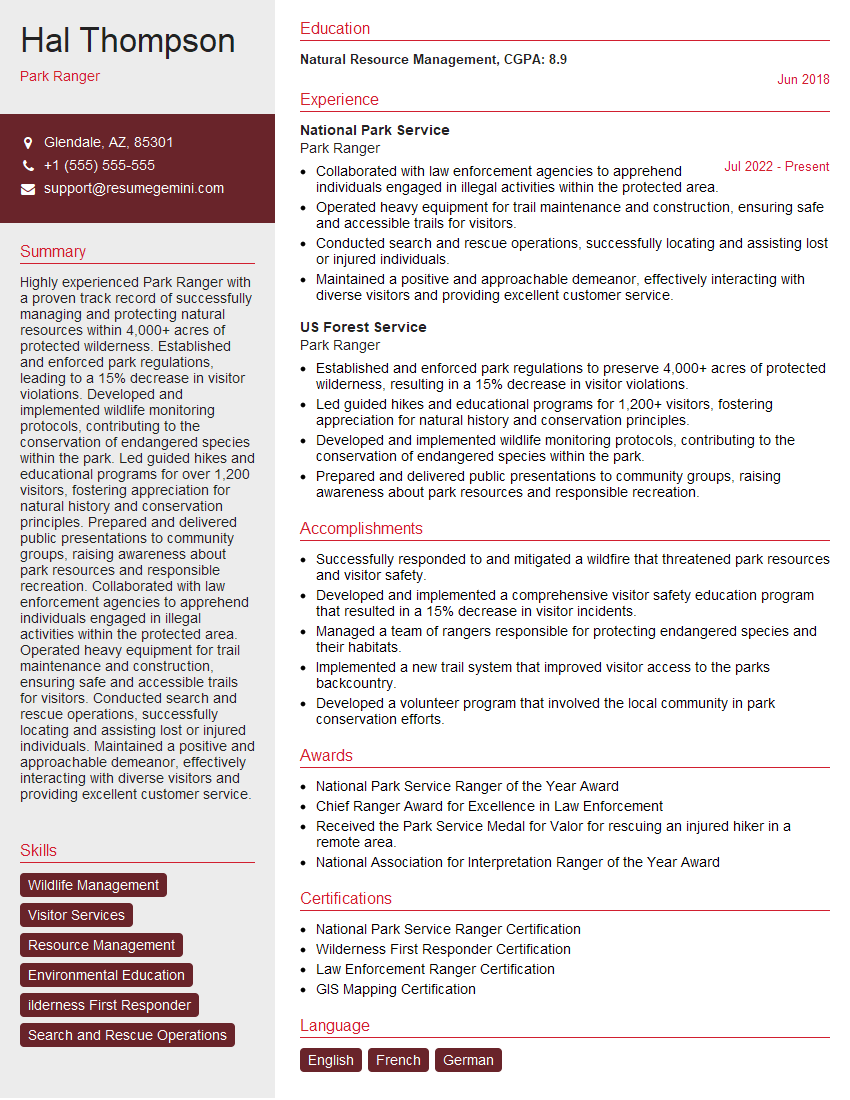
Park Ranger Resume Sample

Conservation Planner Resume Sample
Explore more articles
Users Rating of Our Blogs
Share Your Experience
We value your feedback! Please rate our content and share your thoughts (optional).
What Readers Say About Our Blog
Very informative content, great job.
good