Every successful interview starts with knowing what to expect. In this blog, we’ll take you through the top Wildlife Research and Monitoring interview questions, breaking them down with expert tips to help you deliver impactful answers. Step into your next interview fully prepared and ready to succeed.
Questions Asked in Wildlife Research and Monitoring Interview
Q 1. Describe your experience with different wildlife sampling techniques (e.g., mark-recapture, transect surveys).
Wildlife sampling techniques are crucial for estimating population sizes and densities, understanding habitat use, and assessing species distribution. I have extensive experience with a variety of methods, including mark-recapture and transect surveys. Mark-recapture techniques, such as the Lincoln-Petersen index, involve capturing, marking, and releasing animals, then resampling the population to estimate the total number. For example, I’ve used this method to estimate the population size of small mammals in fragmented forest patches. We captured, marked (using ear tags), and released a cohort of mice. After a suitable interval, we recaptured a sample, and the proportion of marked individuals allowed us to estimate the total population. Transect surveys, on the other hand, involve systematically walking or driving along predetermined lines (transects) and recording the number of animals observed. This is particularly useful for large or elusive species like birds or ungulates. In one study, I used line transect sampling to monitor the abundance of a threatened bird species along different riparian zones, allowing us to compare population densities in areas with varying levels of habitat degradation. The choice of method depends heavily on the target species, habitat, and research objectives.
Q 2. Explain your understanding of population viability analysis (PVA).
Population viability analysis (PVA) is a powerful tool used to assess the long-term probability of a species or population persisting in a given environment. It incorporates demographic data (e.g., birth rates, death rates, sex ratios), environmental stochasticity (random fluctuations in environmental conditions), and potentially demographic stochasticity (random fluctuations in birth and death rates due to small population size). PVA models can simulate the population’s trajectory over time under different scenarios, including changes in habitat quality, climate change, or harvesting pressures. For example, I used PVA in a project assessing the risk of extinction for a threatened amphibian population facing habitat loss due to urbanization. The model helped identify critical factors affecting population persistence, such as minimum habitat size and effective population size. This informed conservation strategies and helped prioritize actions to improve the chances of long-term survival for the species. The output of a PVA often includes metrics like extinction probability within a defined timeframe or minimum viable population size.
Q 3. How would you design a study to assess the impact of habitat fragmentation on a specific wildlife species?
To assess the impact of habitat fragmentation on a specific wildlife species, I would design a study using a combination of approaches. First, I’d need to clearly define my study species and the spatial extent of fragmentation. A before-after-control-impact (BACI) design would be effective. This design involves comparing the population parameters of the focal species in fragmented habitats (impact sites) to those in less fragmented control habitats, both before and after the fragmentation event occurred (or a similar event that alters fragmentation, such as forest fire). I would use a variety of techniques to collect data, including:
- Population monitoring: Employing mark-recapture or transect surveys to monitor population density, size, and survival rates in both fragmented and control areas.
- Home range analysis: Utilizing telemetry (GPS collars or radio transmitters) to study the movement patterns and home range sizes of individuals to assess how fragmentation restricts their movements.
- Genetic analysis: Investigating genetic diversity and gene flow between fragmented populations to determine the effects of isolation.
- Habitat characterization: Quantifying habitat quality and resource availability in both fragmented and control habitats using GIS and remote sensing.
Statistical analysis would then be performed to compare population parameters and other metrics between the fragmented and control areas, both before and after the fragmentation event, to determine the significance of the fragmentation’s impact. This allows us to directly link fragmentation to changes in the species’ population dynamics and behaviour.
Q 4. What statistical software are you proficient in, and how have you applied it to wildlife research?
I am proficient in several statistical software packages, including R, SAS, and SPSS. R is my primary tool, given its flexibility and wide range of packages specifically designed for ecological analysis. For example, in a recent study investigating the effects of climate change on bird migration patterns, I used R to perform generalized linear mixed models (GLMMs) to analyze the relationship between various environmental variables (temperature, precipitation) and bird arrival times. The lme4 package in R was essential for this. library(lme4)model <- glmer(arrival_time ~ temperature + precipitation + (1|year), data = bird_data, family = gaussian)
Q 5. Describe your experience with GIS and its application in wildlife research and monitoring.
GIS (Geographic Information Systems) is an integral part of my workflow in wildlife research and monitoring. I extensively use ArcGIS and QGIS for spatial analysis, data visualization, and map creation. For instance, in a habitat suitability modelling study for a threatened primate species, I used GIS to overlay various environmental layers (elevation, vegetation type, proximity to water sources) with the locations of primate sightings to create a map of potential habitat. This helped prioritize conservation efforts by identifying areas of high habitat suitability. Furthermore, I use GIS to analyze species distribution patterns, home range overlap, and habitat fragmentation. I often use spatial autocorrelation analysis to ensure spatial independence in my data before conducting statistical modelling. In another project, I used GIS to model potential corridors between fragmented populations of a large mammal to inform conservation planning and restoration efforts. These analyses enable visualization of spatial data, leading to a better understanding of the ecological processes influencing wildlife populations.
Q 6. How do you handle ethical considerations in wildlife research, particularly involving animal welfare?
Ethical considerations are paramount in wildlife research. Animal welfare is my top priority. I strictly adhere to guidelines and regulations set forth by relevant authorities (e.g., IACUC). Before undertaking any research involving animals, I ensure that the study has a clear scientific justification and that any potential risks to animals are minimized. I obtain necessary permits and approvals and employ methods that cause the least amount of stress or disturbance to the animals. For example, when capturing animals for marking, we use humane capture techniques and minimize handling time. We carefully monitor their health after capture and release them quickly. If using telemetry, we ensure the devices are lightweight and cause minimal discomfort. I also prioritize non-invasive sampling methods wherever possible. In all cases, our research protocols are meticulously planned to ensure animal welfare is prioritized. Transparency and open communication with stakeholders and regulatory bodies are also crucial aspects of ensuring ethical conduct.
Q 7. Explain your understanding of different wildlife telemetry techniques and their limitations.
Wildlife telemetry involves tracking the movement and behaviour of animals using electronic devices such as GPS collars, radio transmitters, or accelerometers. GPS collars provide precise location data, allowing for detailed analysis of home ranges, movement patterns, and habitat use. However, they are expensive, require regular battery changes (potentially involving recapture), and may be too bulky for smaller animals. Radio transmitters offer a less expensive and longer-lasting alternative, but their location accuracy is less precise. Accelerometers, meanwhile, record movement activity, which can provide insights into animal behaviour, but require sophisticated algorithms for data interpretation. Each technique has its own set of limitations. For instance, GPS signals can be unreliable in dense forests, and radio signals can be interfered with by environmental factors. The choice of telemetry technique depends on factors such as the target species, research objectives, budget, and the trade-off between accuracy, cost, and animal welfare.
Q 8. Describe your experience with data management and analysis in a wildlife research context.
Data management and analysis are the backbone of any successful wildlife research project. My experience encompasses the entire process, from initial data collection in the field to the final interpretation and publication of results. This involves meticulously recording observations, using various data logging techniques, and employing robust database management systems like Access or PostgreSQL. For example, in a recent study on snow leopard population dynamics, I used GPS collar data to model habitat use, analyzing spatial data with ArcGIS and R, incorporating statistical methods such as kernel density estimation and resource selection functions. I also have extensive experience cleaning and validating data to account for errors or inconsistencies. Data visualization is crucial; I regularly use programs such as R and Python (with libraries like ggplot2 and matplotlib) to create informative graphs and maps to present my findings clearly.
Q 9. How do you interpret and present complex wildlife research data to both technical and non-technical audiences?
Communicating complex wildlife research data effectively requires tailoring the message to the audience. For technical audiences, like fellow scientists, I present detailed findings using graphs, statistical analyses, and academic writing conventions. I might use robust statistical models, incorporating uncertainty and error into my presentation. For instance, when discussing habitat suitability, I’d present model coefficients, p-values, and confidence intervals. However, when communicating with non-technical audiences, like policymakers or the general public, I simplify complex concepts, using visual aids like maps, infographics, and engaging storytelling. I focus on the key takeaways and avoid technical jargon. For example, instead of discussing ‘resource selection functions’, I’d explain the snow leopard’s preferred habitat in simple terms such as ‘steep slopes and rocky areas.’
Q 10. What are the key threats to biodiversity, and how can research contribute to conservation efforts?
Biodiversity faces numerous threats, largely driven by human activities. Habitat loss and fragmentation due to deforestation, agriculture, and urbanization top the list. Climate change alters species distributions and interactions, causing stress on already vulnerable populations. Pollution, both chemical and noise, has detrimental effects on various species. Invasive species outcompete native flora and fauna, disrupting ecological balance. Overexploitation, through hunting, fishing, and poaching, depletes populations. Research plays a vital role in understanding these threats, identifying vulnerable species and ecosystems, and informing conservation strategies. For example, population viability analysis can predict the likelihood of species extinction under different scenarios, guiding conservation management decisions. Research also aids in identifying effective conservation interventions, such as habitat restoration or anti-poaching measures, enabling targeted and impactful actions.
Q 11. Describe your experience with designing and implementing wildlife monitoring programs.
Designing and implementing effective wildlife monitoring programs requires a systematic approach. It begins with clearly defining the research questions and objectives. This then informs the selection of appropriate study species, sampling methods, and data collection protocols. The next step involves choosing the right technology – such as camera traps, GPS collars, or acoustic recorders – depending on the species and the research goals. For example, in a study monitoring elusive nocturnal animals, camera traps would be ideal. Sampling design is crucial; techniques like stratified random sampling ensure representation across the study area. Finally, it is essential to establish a robust data management system to ensure data quality and long-term accessibility. I have experience designing and managing numerous monitoring programs, including long-term population studies and impact assessments of conservation initiatives.
Q 12. How do you ensure the accuracy and reliability of wildlife data collection?
Ensuring data accuracy and reliability is paramount in wildlife research. This involves a multi-faceted approach starting with rigorous training of field technicians on standardized data collection protocols. Detailed field manuals and quality control checks are implemented to minimize errors. Calibration and maintenance of equipment are crucial – for instance, regular calibration of camera traps ensures proper image capture. Data validation procedures involve cross-checking and cleaning data, identifying and correcting inconsistencies or outliers. For example, GPS data may be checked for improbable locations, and unusual camera trap captures may be reviewed to exclude false positives. Data entry and management are further subjected to checks and balances to maintain accuracy. The use of quality assurance/quality control measures is essential in building trust in the collected data.
Q 13. What are some common biases in wildlife research, and how do you mitigate them?
Wildlife research is susceptible to various biases that can affect the validity of findings. Sampling bias occurs when the sample does not accurately represent the population, for example, if only easily accessible areas are surveyed. Observer bias can influence data collection, especially when visual identification is involved. Detection bias arises when certain individuals or events are more likely to be detected than others, such as animals easier to observe due to their behavior. I mitigate these biases through careful study design – employing appropriate sampling methods, employing multiple observers for data validation, and implementing blind data analysis when possible. Using statistical methods to account for biases during data analysis is also crucial. For example, I use occupancy models to account for imperfect detection of animals.
Q 14. How would you address a situation where your field data does not support your initial hypotheses?
When field data doesn’t support the initial hypotheses, it’s not a failure; it’s an opportunity for scientific advancement. The first step is to carefully re-examine the data for errors or inconsistencies. I then critically evaluate the study design, considering possible biases that might have influenced the results. I might consult the literature for alternative explanations, review the underlying assumptions of my hypotheses, and refine the hypotheses based on the new findings. Statistical analysis needs to be re-examined. The next step might involve conducting further research or data collection to address the discrepancies. It is important to transparently report the unexpected findings and discuss potential reasons for the unexpected results in any publication or presentation. This process highlights the iterative nature of scientific research and its contribution to a better understanding of the natural world.
Q 15. What is your experience with remote sensing technologies and their use in wildlife studies?
Remote sensing technologies are invaluable tools in wildlife research, allowing us to monitor animals and their habitats from a distance. This minimizes disturbance and enables large-scale studies that would be impossible through traditional methods. My experience encompasses using various techniques, including satellite imagery (e.g., Landsat, Sentinel), aerial photography, and Unmanned Aerial Vehicles (UAVs or drones).
For instance, I’ve used Landsat imagery to map habitat changes over decades in a national park, identifying areas of deforestation and subsequent impacts on primate populations. This involved analyzing spectral signatures to differentiate forest types and assessing changes in forest cover using GIS software. Similarly, I’ve employed UAVs equipped with high-resolution cameras to monitor nesting sites of endangered seabirds, obtaining detailed images to assess nest density and chick survival rates without disturbing the birds. These technologies allow us to quantify habitat quality, track animal movements, and monitor population trends efficiently and effectively.
Beyond image analysis, I’ve also worked with LiDAR (Light Detection and Ranging) data to create detailed 3D models of terrain, crucial for understanding animal movement patterns in challenging landscapes. Data analysis typically involves using software packages such as ArcGIS, ERDAS IMAGINE, and ENVI to process and interpret the remotely sensed data.
Career Expert Tips:
- Ace those interviews! Prepare effectively by reviewing the Top 50 Most Common Interview Questions on ResumeGemini.
- Navigate your job search with confidence! Explore a wide range of Career Tips on ResumeGemini. Learn about common challenges and recommendations to overcome them.
- Craft the perfect resume! Master the Art of Resume Writing with ResumeGemini’s guide. Showcase your unique qualifications and achievements effectively.
- Don’t miss out on holiday savings! Build your dream resume with ResumeGemini’s ATS optimized templates.
Q 16. How do you collaborate effectively with other researchers and stakeholders in a wildlife project?
Effective collaboration is paramount in wildlife research. My approach emphasizes open communication, shared responsibility, and a clear understanding of each stakeholder’s role and expertise. I believe in building strong relationships based on mutual respect and trust.
- Clear communication: Regular meetings, shared online platforms (e.g., Google Drive, shared databases), and transparent data sharing are key. This ensures everyone is informed and on the same page.
- Defined roles and responsibilities: From the outset, we clarify individual contributions, avoiding duplication of effort and promoting efficiency. This often involves creating a detailed project plan outlining tasks, timelines, and deliverables.
- Inclusivity and diverse perspectives: I actively seek input from all stakeholders, including local communities, government agencies, and other researchers. Valuing their diverse knowledge and experiences enhances the project’s relevance and impact.
- Conflict resolution: Disagreements are inevitable, so a collaborative approach to conflict resolution is important. This involves open discussion, finding common ground, and compromising when necessary. A transparent decision-making process helps maintain fairness.
For example, in a recent project studying the impacts of climate change on migratory birds, I worked with ornithologists, climate scientists, local conservation groups, and government agencies. The success of this project relied on our collective expertise and shared commitment to achieving our conservation goals.
Q 17. Describe your experience with writing scientific reports and publications.
Writing scientific reports and publications is an integral part of wildlife research, allowing us to disseminate our findings to a wider audience and contribute to the broader scientific community. My experience includes writing peer-reviewed journal articles, technical reports, and grant proposals. I am familiar with various writing styles and publication formats.
I always begin with a clear outline, structuring the manuscript logically, from introduction to conclusion. Each section is carefully crafted to present the findings in a concise and accurate manner, using data tables, graphs, and images to enhance clarity and impact. Data is rigorously analysed and presented using appropriate statistical methods. Furthermore, rigorous peer review is essential, and I actively seek feedback from colleagues to refine the manuscript before submission. Throughout this process, I focus on clarity, precision, and conciseness, always ensuring the results are presented in an easily understandable manner for both specialists and the general public.
My publications cover a range of topics, including population dynamics, habitat use, and the impact of human activities on wildlife. For example, I recently co-authored a paper published in *Conservation Biology* on the effectiveness of protected area management in safeguarding an endangered primate species, the results of which directly influenced policy recommendations within a specific government agency.
Q 18. Explain your understanding of wildlife conservation legislation and regulations.
A strong understanding of wildlife conservation legislation and regulations is critical for conducting ethical and legally compliant research. My knowledge encompasses both international and national laws, including CITES (Convention on International Trade in Endangered Species), ESA (Endangered Species Act in the US), and various national and regional acts related to wildlife protection and habitat management. I am acutely aware of the permits and licenses required for different research activities, ensuring all my work adheres to the strictest legal standards.
Understanding these regulations involves more than just knowing the laws themselves; it’s about comprehending their practical implications for research design and fieldwork. For instance, in studying endangered species, it’s crucial to understand the restrictions on handling, sampling, and data collection that may be mandated by conservation laws. Similarly, understanding habitat protection laws is critical for obtaining necessary access permits to conduct field research. Non-compliance can have severe legal and ethical consequences.
My experience includes navigating complex permitting processes in various jurisdictions, consistently ensuring our research operates within the bounds of the law and contributes to responsible wildlife management.
Q 19. How do you manage fieldwork challenges such as inclement weather or difficult terrain?
Fieldwork presents many challenges, especially in remote or harsh environments. Inclement weather and difficult terrain are common obstacles. My approach focuses on preparedness, adaptability, and safety.
- Pre-emptive planning: Thorough planning minimizes risks. This includes conducting a comprehensive risk assessment, developing contingency plans for adverse weather conditions, and ensuring sufficient equipment is available (e.g., appropriate clothing, backup communication systems, first-aid kits).
- Adaptability: Field research often requires adjusting to unforeseen circumstances. I maintain flexibility, ready to alter research plans as needed. For instance, we might need to postpone certain fieldwork tasks due to heavy rain or adjust sampling strategies based on unexpected terrain difficulties.
- Safety protocols: Safety is paramount. This involves adhering to strict safety guidelines, including working in teams, carrying personal locator beacons (PLBs), and communicating regularly with base camp or support teams. Regular training in first aid and wilderness survival is also essential.
- Technology integration: Employing weather forecasting tools and GIS mapping systems helps in efficient planning and route optimization, mitigating the impact of difficult terrain or inclement weather.
For example, during a mountain gorilla study, we were once forced to relocate our camp due to sudden heavy rainfall and landslides. Our pre-planned alternative site and emergency communication system allowed us to continue our work, albeit with adjustments. Our safety protocols and comprehensive preparation helped mitigate the risks posed by the challenging weather conditions.
Q 20. What are the advantages and disadvantages of different wildlife tracking methods?
Various methods are available for tracking wildlife, each with its own advantages and disadvantages. The optimal choice depends on the species, research question, and available resources.
- Radio-telemetry: This involves attaching radio transmitters to animals to track their movements. Advantages: Provides precise location data in real-time. Disadvantages: Can be expensive, invasive (requires capture and handling), and the transmitter’s weight and size may affect the animal’s behavior.
- GPS tracking: GPS collars record location data and often other biological data (e.g., activity, temperature). Advantages: Highly accurate, provides detailed movement data over extended periods. Disadvantages: Expensive, requires capture, battery life is limited, may not work well in dense forest canopies.
- Camera trapping: Using motion-activated cameras to photograph animals. Advantages: Non-invasive, relatively inexpensive, allows identification of species and individuals. Disadvantages: Cannot track animal movements continuously, data analysis can be time-consuming.
- Scat detection: Collecting animal dung to analyze diet, hormones, and genetics. Advantages: Non-invasive, can provide valuable information about animal behavior and health. Disadvantages: Can be difficult to associate scat with specific individuals, data interpretation can be challenging.
- Mark and recapture: Individual animals are marked and released, then recaptured to estimate population size and other parameters. Advantages: Relatively inexpensive, can provide valuable population estimates. Disadvantages: Can be stressful for the animals, requires considerable effort in capturing and handling animals.
The selection of appropriate tracking methods requires careful consideration of factors such as the species’ behavior, habitat, research objectives, and available resources. Often, a combination of methods provides a more comprehensive dataset.
Q 21. How do you assess the effectiveness of conservation interventions?
Assessing the effectiveness of conservation interventions requires a robust evaluation framework. This involves establishing clear objectives, selecting appropriate metrics, and employing rigorous statistical analysis. The process usually includes:
- Baseline data: Gathering data before the intervention begins is crucial to establish a benchmark against which to measure change.
- Monitoring: Regularly collecting data during and after the intervention. This could involve population counts, habitat assessments, and other relevant indicators.
- Statistical analysis: Comparing data collected before and after the intervention using appropriate statistical methods to determine whether there is a significant positive impact.
- Adaptive management: Regularly reviewing the effectiveness of the intervention and modifying it based on the results obtained. This is an iterative process, allowing for adjustments based on real-world outcomes.
- Multiple indicators: Utilizing a range of indicators to assess different aspects of the intervention. Focusing on a single indicator might provide an incomplete picture.
For example, in evaluating the impact of a habitat restoration project on a threatened bird species, we would measure changes in bird population size, nest success rates, and habitat quality. Statistical analysis would help determine whether the restoration project had a statistically significant positive impact on the bird population. This process is crucial for making informed decisions about resource allocation and refining conservation strategies.
Q 22. Describe your understanding of wildlife disease ecology and surveillance.
Wildlife disease ecology is the study of how diseases affect wildlife populations, their habitats, and the wider ecosystem. Surveillance involves the systematic monitoring of wildlife health to detect, investigate, and control disease outbreaks. It’s like having a comprehensive health check for the animal kingdom. This involves understanding the interplay between the pathogen (disease-causing agent), the host (the animal), and the environment. For example, a change in environmental conditions might increase the prevalence of a particular parasite or make animals more susceptible to a virus.
My understanding includes experience with various surveillance techniques including passive surveillance (relying on reports from veterinarians, hunters, etc.), active surveillance (conducting targeted sampling and testing), and the use of advanced molecular techniques for pathogen identification and characterization. In one project, we used serological surveys to monitor the prevalence of a canine distemper virus in a raccoon population, helping us understand disease spread and inform management strategies.
- Understanding Disease Dynamics: We investigate how factors like population density, host immunity, and climate change influence disease prevalence and transmission.
- Early Detection: Surveillance systems help us detect outbreaks early, allowing for rapid response measures such as vaccination or quarantine.
- Disease Management: Understanding disease ecology informs the development of effective control strategies that minimize the impact on wildlife and ecosystem health.
Q 23. Explain your experience with using camera traps or other non-invasive wildlife monitoring techniques.
Camera traps are my go-to tool for non-invasive wildlife monitoring. They allow us to observe animals in their natural habitat without disturbing them, collecting data on species presence, abundance, activity patterns, and even social interactions. Think of them as sophisticated, automated wildlife paparazzi! I’ve extensively used them in various ecosystems, from tropical rainforests to temperate forests. For instance, in one study we used camera traps to assess the effectiveness of habitat restoration efforts on the population of a critically endangered primate species. The data we collected provided concrete evidence to support conservation management decisions.
Beyond camera traps, I’m experienced with other non-invasive techniques like scat analysis (identifying species and diet through fecal samples), track surveys (measuring animal movement and abundance based on footprints), and acoustic monitoring (recording and analyzing animal vocalizations). Each technique has its strengths and limitations, and I often integrate multiple methods to get a comprehensive picture of the wildlife community.
Q 24. How would you determine the carrying capacity of a habitat for a specific wildlife species?
Determining carrying capacity – the maximum population size an environment can sustain indefinitely – isn’t straightforward. It’s a dynamic concept affected by many factors. We use a combination of methods, often starting with a thorough understanding of the species’ resource requirements (food, water, shelter). For example, for an herbivore, we’d assess the available forage in the habitat, accounting for seasonal variation.
We might use a variety of approaches:
- Habitat suitability models: GIS software helps us map areas of suitable habitat, factoring in factors like vegetation cover, elevation, proximity to water sources. This gives us an estimate of potential habitat area.
- Population density estimates: We can conduct surveys (e.g., line transects, mark-recapture studies) to assess the current population density. Comparing this to the available resources can suggest if the population is near or exceeding carrying capacity.
- Long-term monitoring: Tracking population fluctuations over time helps identify patterns that might signal the approach to, or exceeding of, carrying capacity (e.g., increased mortality, decreased reproductive rates).
It’s crucial to remember that carrying capacity isn’t static. It can vary due to environmental changes, disease outbreaks, or human activities. Therefore, ongoing monitoring is essential.
Q 25. Describe your experience with analyzing spatial data using GIS software.
I’m proficient in using GIS software (ArcGIS, QGIS) for spatial data analysis in wildlife research. This involves everything from creating maps of species distribution and habitat suitability to analyzing animal movement patterns and designing effective sampling strategies. My experience spans various aspects of GIS, including:
- Spatial data creation and management: Working with GPS data, remote sensing imagery (satellite and aerial photos), and creating geodatabases.
- Spatial analysis: Employing tools like buffer analysis, overlay analysis, and spatial statistics to answer research questions.
- Data visualization: Producing maps and figures that effectively communicate research findings to a variety of audiences.
For instance, in one project we used GIS to map the home ranges of individual jaguars, allowing us to assess their space use in relation to habitat fragmentation caused by human activities. The results showed how human infrastructure was affecting the animals and informed conservation recommendations.
I’m also familiar with R and Python for spatial data processing and advanced statistical analysis.
Q 26. What is your experience with using various types of wildlife capture and handling techniques?
My experience with wildlife capture and handling techniques is extensive, always prioritizing animal welfare and safety. This includes a range of methods adapted to the specific species and research objectives. I’ve used everything from mist nets for birds to dart guns for large mammals, and have adhered strictly to ethical guidelines and permits.
Specific techniques include:
- Mist nets: Used for capturing birds and small mammals, requiring careful setup and monitoring to avoid injury.
- Sherman traps: Small live traps used for rodents and other small mammals.
- Snare traps: Used cautiously and only with appropriate permits, typically for larger mammals.
- Dart guns: For immobilizing larger mammals, requiring specialized training and strict adherence to safety protocols to minimize stress and ensure animal safety.
All capture and handling procedures are conducted according to ethical guidelines and in compliance with relevant regulations. Post-capture handling, including data collection (measurements, samples), and release, is performed with the utmost care to minimize stress and potential harm.
Q 27. How do you prioritize research projects based on conservation needs and available resources?
Prioritizing research projects requires a careful balancing act between conservation needs and resource availability. I use a structured approach that integrates scientific rigor with practical constraints.
My approach involves:
- Needs Assessment: Identifying pressing conservation challenges based on existing knowledge, stakeholder input, and emerging threats. This may involve reviewing scientific literature, consulting with conservation organizations, or participating in community engagement activities.
- Feasibility Assessment: Evaluating the feasibility of different research questions based on available resources (funding, personnel, equipment, time). This could involve identifying logistical constraints in certain regions, accessibility to equipment, or the availability of skilled personnel.
- Impact Assessment: Assessing the potential impact of the research outcomes on conservation efforts. Prioritizing projects with the potential to inform effective management decisions is paramount.
- Risk Assessment: Evaluating potential risks associated with field research (e.g., safety concerns, potential impact on study species).
Ultimately, the selection of projects reflects a strategy that maximizes impact with the given resources, and prioritizes the most urgent conservation needs.
Q 28. Describe your experience with presenting research findings at conferences or workshops.
Presenting research findings is a crucial aspect of scientific communication and its impact. I’ve presented my work at numerous national and international conferences and workshops, tailoring my presentations to the specific audience and context. My experience spans various presentation formats:
- Oral Presentations: Delivering engaging talks that clearly communicate research findings, methodology, and implications for conservation.
- Poster Presentations: Designing visually appealing posters that effectively summarize key findings and encourage interaction with attendees.
- Workshops and Training Sessions: Sharing my expertise with other researchers, conservation practitioners, or community members.
I strive for clear, concise presentations that avoid jargon and use visuals effectively. I always welcome questions and discussions, seeing these as opportunities to expand upon the findings and their broader implications. For example, at a recent conference, I presented findings on the impact of climate change on a particular bird species, initiating discussions with other researchers leading to potential collaborations.
Key Topics to Learn for Wildlife Research and Monitoring Interview
- Population Ecology: Understanding population dynamics, including growth, decline, and carrying capacity. Practical application: Designing and implementing population monitoring programs using mark-recapture techniques or camera trapping.
- Habitat Assessment and Management: Evaluating habitat quality, identifying threats, and developing conservation strategies. Practical application: Using GIS and remote sensing to analyze habitat changes over time.
- Wildlife Sampling Techniques: Mastering various data collection methods, including scat analysis, telemetry, and acoustic monitoring. Practical application: Selecting appropriate sampling techniques based on study objectives and species characteristics.
- Data Analysis and Interpretation: Proficiency in statistical analysis and data visualization to draw meaningful conclusions from collected data. Practical application: Using R or similar software to analyze population trends and habitat relationships.
- Conservation Biology Principles: Understanding the threats to biodiversity and the application of conservation principles in research and management. Practical application: Designing conservation strategies to mitigate human-wildlife conflict.
- Research Design and Methodology: Developing and implementing robust research projects, including experimental design and data management. Practical application: Formulating testable hypotheses and designing appropriate research methods.
- Ethical Considerations in Wildlife Research: Understanding and adhering to ethical guidelines for animal welfare and research integrity. Practical application: Implementing protocols for minimizing disturbance to wildlife during research activities.
Next Steps
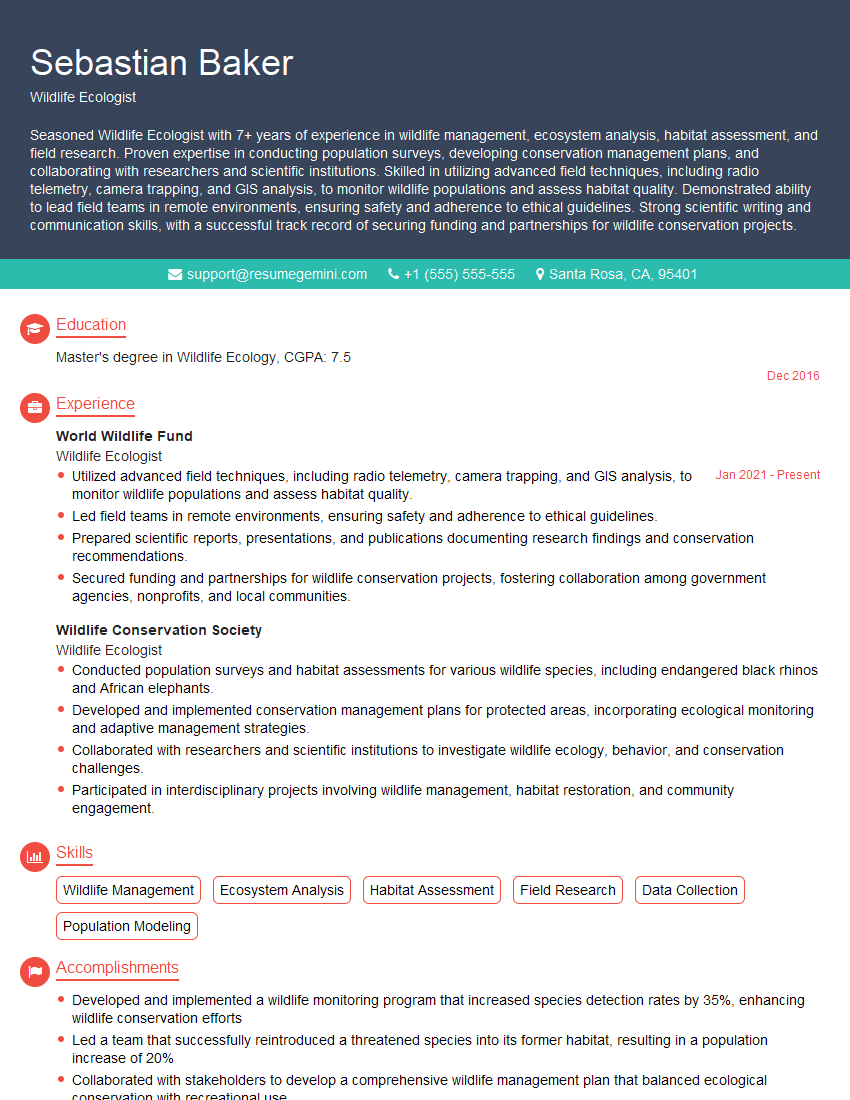
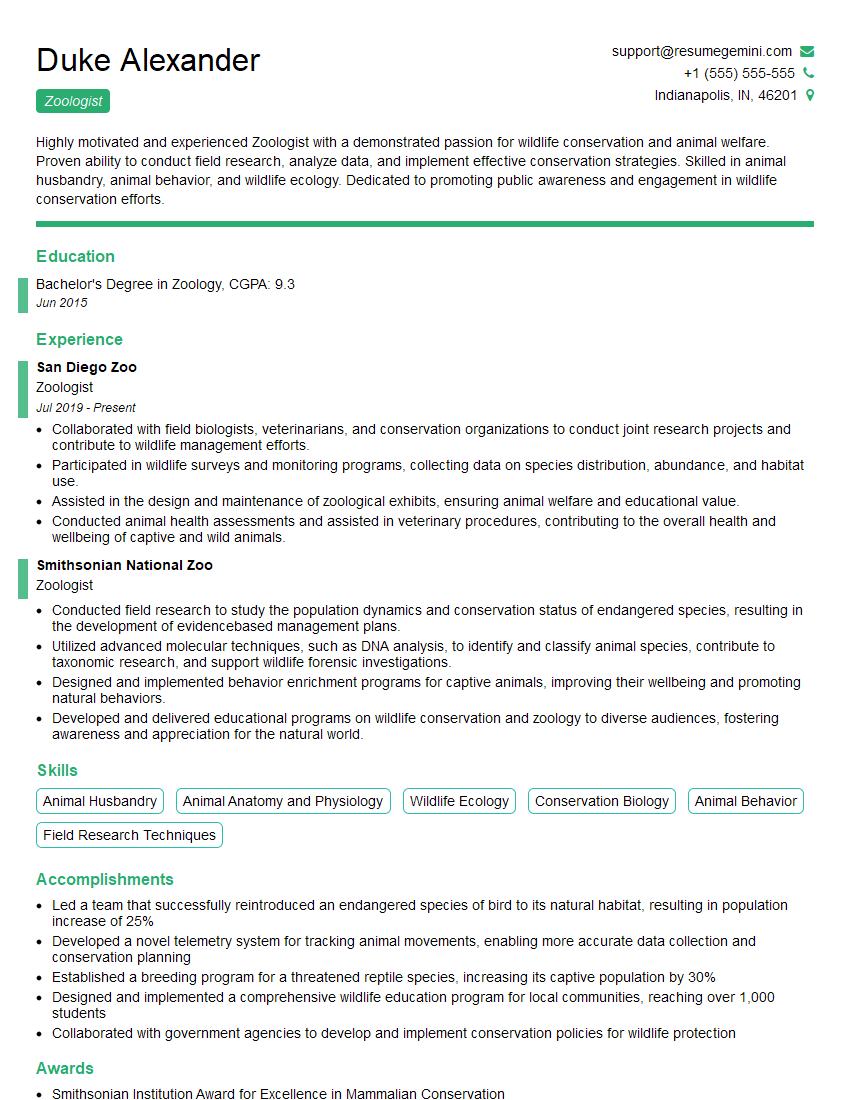
Mastering Wildlife Research and Monitoring opens doors to a rewarding career with diverse opportunities in conservation, research, and management. To maximize your job prospects, creating a strong, ATS-friendly resume is crucial. ResumeGemini is a trusted resource that can help you build a professional and impactful resume that highlights your skills and experience effectively. We provide examples of resumes tailored to Wildlife Research and Monitoring to help you get started. Invest in your future – build a compelling resume today!




Explore more articles
Users Rating of Our Blogs
Share Your Experience
We value your feedback! Please rate our content and share your thoughts (optional).
What Readers Say About Our Blog
Very informative content, great job.
good