The right preparation can turn an interview into an opportunity to showcase your expertise. This guide to Wind Tunnel Facility Design and Operations interview questions is your ultimate resource, providing key insights and tips to help you ace your responses and stand out as a top candidate.
Questions Asked in Wind Tunnel Facility Design and Operations Interview
Q 1. Explain the different types of wind tunnels and their applications.
Wind tunnels are classified based on their design and application. The most common types are:
- Closed-circuit wind tunnels: These tunnels recirculate the air, resulting in higher efficiency and more stable flow conditions. They’re ideal for precise measurements and are commonly used in aerospace and automotive research.
- Open-circuit wind tunnels: Air flows through the tunnel once and is then discharged into the atmosphere. These are simpler and less expensive to build than closed-circuit tunnels, but they offer less precise flow control and are often used for less demanding applications, such as architectural modeling.
- Subsonic wind tunnels: Designed for testing at speeds below the speed of sound. They’re widely used for testing aircraft, cars, and other objects at typical flight or driving speeds.
- Supersonic wind tunnels: These tunnels generate airflow at speeds exceeding the speed of sound. They’re crucial for designing high-speed aircraft and missiles.
- Hypersonic wind tunnels: Capable of producing airflow at extremely high speeds, several times the speed of sound. These are used for advanced aerospace research and development, often involving extreme temperatures and pressures.
- Transonic wind tunnels: Designed to operate around the speed of sound, encompassing both subsonic and supersonic flow regimes. Testing in this regime is complex due to the presence of shock waves.
The choice of wind tunnel type depends heavily on the specific testing requirements, including the speed range, accuracy needed, and budget constraints. For instance, a researcher studying high-speed train aerodynamics would likely choose a subsonic wind tunnel, while designing a supersonic jet would necessitate a supersonic or even hypersonic facility.
Q 2. Describe the key components of a closed-circuit wind tunnel.
A closed-circuit wind tunnel consists of several key components working in concert to create and control airflow. These include:
- Fan: This is the heart of the tunnel, responsible for driving the airflow. Powerful fans are required to overcome the pressure drop across the test section.
- Test Section: This is where the model is placed and the experiments are conducted. It’s designed to have a uniform and low-turbulence airflow.
- Diffuser: The diffuser gradually increases the cross-sectional area of the airflow, slowing it down and reducing the pressure. This increases the pressure and reduces the velocity to allow the air to flow back through the fan at reduced speeds.
- Corner Vanes/Contraction Section: This section guides and smooths the airflow to ensure even distribution and minimize turbulence.
- Return Duct: Connects the diffuser to the fan to complete the airflow loop.
- Honeycomb: A honeycomb structure placed before the test section straightens out the airflow.
- Screens: Wire mesh screens help to further reduce turbulence in the airflow.
Imagine a circular race track: the fan is like the engine pushing the cars, the test section is the straight where they are timed, the diffuser is a gradual curve slowing the cars down, and the return duct is the rest of the track leading back to the starting line.
Q 3. How is wind tunnel blockage corrected for?
Wind tunnel blockage refers to the percentage of the test section cross-sectional area occupied by the model. A large blockage can significantly affect the airflow and lead to inaccurate results. Corrections are crucial to account for this influence.
Blockage correction methods are based on empirical correlations and computational fluid dynamics (CFD). These methods adjust the measured data to account for the disturbance in the airflow caused by the model. The most common method involves using correction factors that depend on the blockage ratio (model area/test section area) and the model’s shape. Sophisticated techniques use CFD simulations to model the flow field around the model and calculate the blockage effects more accurately.
For instance, if a model occupies 10% of the test section area, appropriate correction factors would be applied to the measured forces and moments to account for the increased velocity and pressure gradients around the model. Failing to correct for blockage can lead to systematic errors in the measurements, for example underestimating drag or overestimating lift.
Q 4. What are the common sources of error in wind tunnel testing?
Wind tunnel testing is prone to several sources of error, affecting the accuracy and reliability of the data. These include:
- Model support interference: The support system used to hold the model in place can influence the airflow around the model, introducing errors.
- Tunnel wall interference: The proximity of the model to the tunnel walls can disrupt the airflow and create inaccuracies.
- Turbulence in the freestream: Non-uniformities in the incoming flow can affect the accuracy of measurements.
- Instrumentation errors: Faulty sensors or calibration problems in the instrumentation can lead to errors.
- Model imperfections: Imperfections or irregularities in the model’s surface can influence the aerodynamic characteristics.
- Test section flow quality: Variations in the uniformity of the velocity and turbulence levels can introduce measurement errors.
Careful planning, precise model construction, high-quality instrumentation, and appropriate correction methods are essential to minimize these errors. Regular calibration of equipment and validation of procedures are also crucial aspects of ensuring data reliability.
Q 5. Explain the importance of proper model mounting and support systems.
Proper model mounting and support systems are critical for obtaining accurate and reliable wind tunnel data. The support system should minimize its influence on the flow around the model. Incorrect mounting can cause significant errors in the measured forces and moments, potentially leading to flawed conclusions.
Different support systems exist, depending on the model’s size, shape and the type of measurement. These include:
- Sting mounts: A slender sting connects the model to the balance, minimizing blockage and interference. These are very common for aerodynamic model testing.
- Force balances: Precision instruments that measure the forces and moments acting on the model. Careful design of the balances and mounting points ensures minimal interference.
- Support struts: These are used for larger models or when sting mounts are not feasible, but careful consideration must be given to minimize flow interference.
A poorly designed support system can introduce substantial errors. For instance, a large support strut could block a significant portion of the airflow around a wing, leading to an underestimation of the lift generated. Careful consideration must be given to the support system’s design and its impact on the test results.
Q 6. Describe the different types of instrumentation used in wind tunnels.
Wind tunnel instrumentation plays a vital role in acquiring accurate and comprehensive data. The types of instruments used vary widely depending on the test objective, but common examples include:
- Force and moment balances: Measure forces and moments acting on the model, providing data on lift, drag, and pitching moment.
- Pressure transducers: Measure pressure at various points on the model’s surface, providing data for surface pressure distribution analysis.
- Hot-wire anemometers: Measure local velocities and turbulence intensity within the flow field.
- Particle image velocimetry (PIV): A non-intrusive technique that captures the velocity field around the model, providing a detailed picture of flow patterns.
- Laser Doppler velocimetry (LDV): Another non-intrusive technique that measures velocities at specific points in the flow.
- Surface oil flow visualization: Provides qualitative information about flow separation and surface streamlines.
The selection of instruments is guided by the specific needs of the experiment. For example, understanding the lift and drag characteristics might only need a force balance, while detailed analysis of the flow field would require PIV or LDV systems.
Q 7. How do you ensure accurate data acquisition and processing in a wind tunnel?
Accurate data acquisition and processing are crucial for reliable wind tunnel testing. Several steps ensure this:
- Calibration: All instruments must be carefully calibrated before and after testing to ensure accuracy. This involves comparing the instrument readings against known standards.
- Data acquisition system: A robust data acquisition system is vital to capture data reliably, typically using computer-controlled systems with high sampling rates.
- Data validation: The acquired data should be checked for any inconsistencies or errors. This includes examining for outliers or unrealistic values.
- Data reduction: Raw data needs to be processed and reduced to meaningful quantities. This involves applying corrections for blockage, model support interference, and other factors.
- Uncertainty analysis: An assessment of the uncertainty associated with the measurements is essential. This involves quantifying the potential errors and their impact on the final results.
- Data visualization: Data should be presented in clear and informative visualizations such as graphs and charts, facilitating the analysis and interpretation of results.
For instance, if an unexpected spike is observed in the pressure data, it’s essential to trace its origin and potentially remove it or re-run the test to ensure that it wasn’t a sensor malfunction or other issue. Thoroughness in all these steps is essential for creating credible conclusions.
Q 8. Explain the concept of Reynolds number and its significance in wind tunnel testing.
The Reynolds number (Re) is a dimensionless quantity in fluid mechanics that represents the ratio of inertial forces to viscous forces within a fluid. It’s crucial in wind tunnel testing because it dictates whether the flow is laminar (smooth) or turbulent. A low Reynolds number indicates a laminar flow, while a high Reynolds number indicates a turbulent flow. The significance lies in the fact that the flow regime dramatically impacts the aerodynamic characteristics of the tested object. For instance, a wing’s lift and drag coefficients change considerably depending on whether the flow around it is laminar or turbulent.
The Reynolds number is calculated using the formula: Re = (ρVL)/μ, where:
- ρ is the fluid density
- V is the flow velocity
- L is a characteristic length (e.g., the chord length of an airfoil)
- μ is the dynamic viscosity of the fluid
In wind tunnel testing, achieving dynamic similarity—matching the Reynolds number of the full-scale object—is paramount to ensure accurate results. If the wind tunnel test doesn’t match the full-scale Reynolds number, extrapolating the results to the real-world application becomes unreliable. For example, testing a model airplane at a lower Reynolds number than its full-scale counterpart will likely underestimate the drag, potentially leading to inaccurate performance predictions.
Q 9. How do you calibrate a wind tunnel?
Calibrating a wind tunnel is a critical process to ensure accurate measurements. It involves determining the relationship between the measured parameters (like pressure, velocity, and forces) and the actual flow conditions within the test section. This is typically done using a combination of techniques.
One common method involves using a Pitot-static tube or multiple pressure taps to measure the velocity profile across the test section. By comparing the measured velocity profile to the theoretical profile for an ideal uniform flow, we can identify and quantify any non-uniformities or deviations. This helps establish a correction factor for subsequent tests. We may use sophisticated laser-based methods like Particle Image Velocimetry (PIV) for high accuracy velocity mapping.
Another essential aspect of calibration involves verifying the accuracy of the balance used to measure forces and moments on the tested model. This involves applying known forces and moments to the balance and comparing the measured values to the applied ones, identifying any offsets or scaling errors to correct in the data.
The entire calibration process is meticulously documented, and a calibration certificate is usually generated, detailing the accuracy and limitations of the wind tunnel for specific test conditions (speed ranges, model sizes). This calibration must be repeated periodically to maintain the tunnel’s reliability.
Q 10. Describe the safety protocols necessary for operating a wind tunnel.
Safety is paramount in wind tunnel operations. The high-velocity airflow poses significant risks if proper precautions aren’t taken. Comprehensive safety protocols are essential and often include:
- Restricted Access: Only authorized personnel should be allowed in the wind tunnel facility during operation, with strict entry protocols.
- Emergency Shutdown System: A readily accessible emergency stop button is required, along with backup systems for immediate power cutoff.
- Personal Protective Equipment (PPE): Personnel working near the wind tunnel must wear appropriate PPE, including safety glasses, earplugs, and possibly even protective clothing depending on the test setup.
- Proper Ventilation: Adequate ventilation is needed to prevent the buildup of harmful fumes or dust.
- Model Mounting and Securing: The tested models must be securely mounted to prevent them from detaching and becoming projectiles. This often involves advanced mounting mechanisms with safety interlocks.
- Regular Inspections: Regular safety checks and equipment maintenance are performed to ensure everything is in optimal condition and to minimize the risk of failures.
- Emergency Response Plan: A well-defined emergency response plan must be in place, covering all possible scenarios (e.g., model failure, power outage, injury). Regular training of personnel on emergency procedures is necessary.
Failure to adhere to these protocols can lead to serious accidents, emphasizing the importance of stringent safety management in wind tunnel facilities.
Q 11. What are the advantages and disadvantages of using a wind tunnel versus CFD?
Wind tunnels and Computational Fluid Dynamics (CFD) are both valuable tools for aerodynamic analysis, but they have distinct advantages and disadvantages.
Wind Tunnels:
- Advantages: Provides experimental data directly reflecting real-world physics, offering high fidelity for complex geometries and flow phenomena. It’s well-suited for capturing transient effects and handling intricate interactions.
- Disadvantages: Expensive to build and operate, relatively inflexible to changes in test conditions, can be time-consuming, and may have limited scalability to full-scale Reynolds numbers.
CFD:
- Advantages: Relatively inexpensive and faster than wind tunnel testing, offering flexibility in exploring a vast range of parameters and configurations, and easy scalability to different Reynolds numbers. It’s suitable for preliminary design and optimization.
- Disadvantages: Requires accurate models and assumptions, which can affect the accuracy of the results, and may struggle with complex geometries and turbulent flows.
In practice, the optimal approach is often a combined one, using CFD for preliminary design and optimization, followed by wind tunnel testing to validate and refine the results, especially for critical applications.
Q 12. How do you design a wind tunnel test section for a specific application?
Designing a wind tunnel test section for a specific application involves careful consideration of several factors. The primary goal is to create a flow field that is as uniform and representative of the desired conditions as possible. The shape and dimensions of the test section are crucial to achieve this.
Factors to Consider:
- Test Object Size: The test section must be large enough to accommodate the test object with sufficient clearance to avoid wall effects.
- Required Flow Velocity Range: The test section’s dimensions and the fan’s capacity must be adequate to achieve the required flow speeds.
- Turbulence Level: Low turbulence levels are typically desired, requiring careful design of the contraction section and the test section itself to minimize flow disturbances.
- Flow Uniformity: The flow should be as uniform as possible across the test section, with minimal velocity gradients, achieved using various flow straighteners and screens.
- Pressure Distribution: A uniform pressure distribution is desirable to minimize pressure gradients and related flow disturbances.
- Optical Access: Depending on the measurement techniques employed (e.g., PIV, Schlieren), sufficient optical access may be needed.
The design process often involves computational simulations (CFD) to optimize the test section geometry and ensure the desired flow characteristics are met before physical construction. This iterative design process helps minimize the number of physical iterations, reducing cost and time.
Q 13. Explain the role of turbulence management in wind tunnel design.
Turbulence management is crucial in wind tunnel design as it significantly impacts the accuracy of the results. Excessive turbulence can mask subtle aerodynamic effects and lead to inaccurate measurements of lift, drag, and other aerodynamic properties. The goal is to create a flow field that is as close to laminar or ‘free stream’ conditions as possible.
Methods used for turbulence management include:
- Honeycomb Flow Straighteners: Honeycomb structures effectively straighten the flow by eliminating large-scale vortices and other disturbances. They reduce the turbulence intensity and provide a more uniform flow.
- Screens/Mesh: Screens are placed upstream of the test section to further attenuate turbulence and enhance flow uniformity. They reduce the turbulent energy in the flow.
- Contraction Section Design: The shape and dimensions of the contraction section are carefully designed to accelerate the flow smoothly and minimize boundary layer growth and turbulence generation.
- Boundary Layer Control: In some sophisticated wind tunnels, boundary layer suction techniques are used to remove the slow-moving boundary layer from the walls of the test section, reducing turbulence generation and maintaining flow uniformity.
- Test Section Design: The test section itself is often designed with smooth walls and appropriate shapes to minimize disturbance effects.
The level of turbulence in the test section is quantified and reported as a percentage of the free stream velocity, and this parameter is considered a crucial indicator of the wind tunnel’s quality.
Q 14. How do you handle unexpected issues or malfunctions during wind tunnel testing?
Unexpected issues and malfunctions during wind tunnel testing are inevitable. A well-defined procedure is necessary to handle such situations effectively, balancing safety and minimizing downtime.
Steps to Take:
- Immediate Shutdown: If the problem poses a safety risk, immediately shut down the wind tunnel using the emergency stop system.
- Assess the Situation: Carefully assess the nature and severity of the malfunction. Determine if it’s a minor issue (e.g., a loose wire) or a major problem requiring extensive repair.
- Isolate the Problem: Attempt to isolate the source of the problem, to minimize the impact on other systems.
- Implement Corrective Actions: Based on the assessment, implement appropriate corrective actions. This might involve simple repairs, replacing faulty components, or calling in specialized technicians.
- Data Recovery: Attempt to salvage any useful data collected before the malfunction occurred. This will often be part of the post-test data processing.
- Documentation: Thoroughly document the incident, including the time of occurrence, the nature of the problem, the actions taken, and any lessons learned. This ensures future incidents can be avoided or handled more efficiently.
- Preventive Maintenance: Review the incident to identify any potential underlying causes that might lead to future malfunctions and implement preventive maintenance procedures to address those potential failures.
A proactive approach, focusing on regular maintenance, thorough training of personnel, and a well-defined emergency response plan, is the best way to minimize disruptions and ensure the safe and efficient operation of the wind tunnel facility.
Q 15. Describe the process of planning and executing a wind tunnel test.
Planning and executing a wind tunnel test is a meticulous process, akin to orchestrating a complex scientific experiment. It begins with clearly defining the test objectives – what aerodynamic characteristics need to be measured? What is the Reynolds number range? What model geometry and scale are appropriate?
Next, we develop a detailed test plan. This includes:
- Model design and manufacture: Creating an accurate scaled model of the object being tested, paying close attention to surface finish and dimensional accuracy.
- Instrumentation selection: Choosing the appropriate sensors (pressure taps, force balances, hot-wire anemometry, particle image velocimetry (PIV), etc.) based on the test objectives. This step often involves considering the spatial resolution and accuracy needed.
- Test matrix definition: Determining the range of test conditions (e.g., angles of attack, yaw angles, freestream velocity) to cover the desired operational envelope.
- Data acquisition and reduction plan: This involves outlining the process for collecting, storing, and processing the raw data, including quality control checks. Often, customized scripts are written to automate these procedures.
Test execution involves setting up the model in the wind tunnel, calibrating the instrumentation, running the tests according to the plan, and continuously monitoring the data quality. Post-test data analysis, involving sophisticated software, is crucial for extracting meaningful results and generating reports.
For example, during a test on an aircraft wing, we might vary the angle of attack to observe lift and drag changes, potentially correlating data from pressure taps with overall force balance measurements. A thorough plan ensures the test is efficient and the results are reliable.
Career Expert Tips:
- Ace those interviews! Prepare effectively by reviewing the Top 50 Most Common Interview Questions on ResumeGemini.
- Navigate your job search with confidence! Explore a wide range of Career Tips on ResumeGemini. Learn about common challenges and recommendations to overcome them.
- Craft the perfect resume! Master the Art of Resume Writing with ResumeGemini’s guide. Showcase your unique qualifications and achievements effectively.
- Don’t miss out on holiday savings! Build your dream resume with ResumeGemini’s ATS optimized templates.
Q 16. What software packages are you familiar with for wind tunnel data analysis?
I’m proficient in several software packages commonly used for wind tunnel data analysis. These include:
- Tecplot: A powerful visualization and analysis tool widely used for plotting and interpreting complex CFD and experimental data, enabling detailed examination of velocity fields, pressure distributions, and other aerodynamic parameters.
- MATLAB: A versatile programming environment used for data manipulation, statistical analysis, and custom algorithm development for specialized post-processing tasks. We often use it for signal processing, uncertainty analysis, and automating repetitive calculations.
- ANSYS: Besides its CFD capabilities, ANSYS offers tools for integrating experimental data with simulations, allowing for validation and correlation studies.
- LabVIEW: This graphical programming environment is essential for designing and implementing custom data acquisition systems, particularly for complex or unique experimental setups.
The choice of software depends on the specific needs of a project. For instance, Tecplot is excellent for visualizing flow fields, while MATLAB is better suited for advanced statistical analysis.
Q 17. How do you ensure the integrity and reliability of wind tunnel data?
Ensuring data integrity and reliability is paramount. We employ a multi-pronged approach:
- Calibration and validation: All instrumentation is rigorously calibrated before and after each test run against traceable standards. This process verifies the accuracy of our measurements. We might compare our wind tunnel data with established data from similar models or computational fluid dynamics (CFD) simulations as another validation step.
- Uncertainty analysis: We systematically quantify the uncertainties associated with each measurement, considering sources like sensor accuracy, data acquisition errors, and model imperfections. This helps us understand the range of possible errors and the confidence level in our results.
- Repeatability tests: We run multiple test runs under identical conditions to assess the repeatability and consistency of the data. Significant deviations signal potential problems with the setup or instrumentation.
- Data quality checks: Automated scripts and visual inspections are used to identify and flag any anomalies or outliers in the data that might be caused by equipment malfunction or external influences. We rigorously document every step of the process.
For example, during a lift and drag measurement, inconsistencies might point towards a problem with the balance calibration or a model defect. A thorough analysis is essential to determine the root cause and maintain data integrity.
Q 18. Explain the principles of boundary layer control in wind tunnels.
Boundary layer control in wind tunnels aims to minimize the influence of the tunnel walls on the flow around the test model. The boundary layer is the region of slowed flow near the wall. If uncontrolled, this layer can distort the free stream flow and lead to inaccurate measurements.
Methods for boundary layer control include:
- Porous walls: These walls allow a controlled amount of air to be sucked through, reducing the boundary layer thickness and preventing separation. This ensures a more uniform flow around the model.
- Boundary layer suction: Similar to porous walls, localized suction slots remove the boundary layer, creating a more uniform free stream velocity. This method provides more precise control but is more complex to implement.
- Streamlining: Carefully designed tunnel walls and corners minimize flow separation and turbulence. This approach is less effective than active control methods but is important for overall tunnel design.
- Honeycomb screens: Placed upstream of the test section, honeycomb screens straighten and homogenize the flow, reducing turbulence intensity. This is a passive technique that serves as a fundamental component of almost every wind tunnel.
Imagine a river flowing near the bank – the water slows down near the shore (boundary layer). Boundary layer control is analogous to creating a wider, faster-flowing central channel to minimize the impact of the slow-moving water near the bank on the overall river flow.
Q 19. Describe different methods for measuring pressure in a wind tunnel.
Several methods exist for measuring pressure in a wind tunnel, each with its strengths and weaknesses:
- Pressure taps: Small holes drilled into the model surface connect to pressure transducers, providing precise measurements at specific locations. They are excellent for detailed pressure distribution mapping but are invasive and require careful design to minimize their impact on the flow.
- Pressure scanners: These devices allow for rapid measurements at multiple points, improving efficiency. They are particularly useful for unsteady pressure measurements.
- Five-hole probes: These probes measure the three-dimensional velocity components and static pressure at a single point. They offer a non-invasive way to map velocity and pressure fields.
- Micro-pressure sensors: These are increasingly used for high-resolution measurements, even allowing for measurement on the model surface without pressure taps.
The choice of method depends on the test’s requirements and the complexity of the model geometry. For instance, pressure taps are ideal for mapping pressure distributions on a simple airfoil, while five-hole probes are better suited for studying complex three-dimensional flows.
Q 20. What are the considerations for designing a wind tunnel for high-speed testing?
Designing a wind tunnel for high-speed testing presents significant challenges compared to low-speed facilities. Key considerations include:
- Power requirements: High-speed flows demand significantly more power to overcome the increased drag forces. This often necessitates the use of high-performance compressors and motors.
- Heat transfer: The high velocity leads to increased aerodynamic heating, potentially causing structural damage to the tunnel or the model. Advanced cooling systems may be needed to maintain acceptable temperatures.
- Material selection: The components of the tunnel, particularly the test section and diffuser, must be able to withstand the high speeds and pressures involved. Special materials may be required to ensure structural integrity.
- Noise and vibration control: High-speed flow generates substantially higher noise and vibration levels. Robust isolation and mitigation strategies are crucial.
- Instrumentation: Specialized instrumentation capable of accurately measuring high-speed flow parameters is necessary. This could involve specialized pressure sensors and optical techniques.
For instance, a supersonic wind tunnel may require a sophisticated nozzle design to achieve the desired Mach number and a robust cooling system to manage the high temperatures generated by the supersonic flow.
Q 21. How do you minimize vibration and noise in a wind tunnel facility?
Minimizing vibration and noise in a wind tunnel is crucial for accurate measurements and a safe working environment. Strategies include:
- Foundation design: A robust foundation, often isolated from the surrounding structures, is critical to reduce ground-borne vibrations. This might involve a massive concrete foundation resting on vibration dampers.
- Acoustic treatment: Sound-absorbing materials are used to line the walls of the wind tunnel, particularly in the test section and diffuser, to reduce noise levels. This could involve specialized acoustic panels or porous materials.
- Vibration isolation: The tunnel components, particularly the test section and fan, are often mounted on vibration isolators to minimize the transmission of vibrations. These isolators absorb vibrations and prevent them from propagating through the structure.
- Active noise control: Advanced systems can actively monitor and counteract noise using anti-noise sources. This is a more sophisticated approach that can significantly reduce noise levels.
- Flow control: Proper design of the tunnel components, such as the contraction section and diffuser, can help reduce turbulence and noise generation.
For example, a carefully designed foundation with vibration dampers helps prevent ground vibrations from affecting the test section’s stability and the accuracy of measurements. A combination of passive and active noise control is essential in high-speed wind tunnels.
Q 22. Explain the role of environmental control in wind tunnel operation.
Environmental control is paramount in wind tunnel operation because even slight variations in temperature, humidity, and pressure can significantly affect the accuracy and reliability of test results. Think of it like baking a cake – if your oven temperature fluctuates, the cake won’t turn out right. Similarly, inconsistent environmental conditions in a wind tunnel can lead to inaccurate aerodynamic data.
Specifically, temperature affects air density, which directly influences the velocity and pressure measurements. Humidity impacts air density as well, and can lead to condensation issues within the tunnel, potentially damaging equipment. Pressure variations can cause inconsistencies in the airflow, leading to inaccurate readings. Therefore, sophisticated environmental control systems are implemented, often including:
- Precise Temperature Control: Maintaining a constant temperature within a narrow tolerance (e.g., ±0.1°C) through a sophisticated HVAC system.
- Humidity Control: Using dehumidifiers or humidifiers to regulate humidity levels to prevent condensation and maintain consistent air density.
- Pressure Control: Employing pressure regulators and monitoring systems to maintain a stable pressure within the test section.
For instance, in testing aircraft models, even a small deviation in air density can alter lift and drag coefficients, compromising the validity of the analysis. Robust environmental control ensures the repeatability and reliability of experiments, critical for validating simulations and designing safer, more efficient vehicles.
Q 23. How do you select appropriate instrumentation for different types of wind tunnel tests?
Selecting appropriate instrumentation depends heavily on the specific type of wind tunnel test being conducted. Different tests require different measurements, and the accuracy required dictates the sophistication of the instruments. Imagine choosing tools for a specific carpentry project: you wouldn’t use a hammer to screw in a screw!
For example:
- Pressure Measurements: For basic aerodynamic tests, pressure transducers or pressure taps might suffice. More complex tests requiring high accuracy may necessitate using advanced pressure scanning systems.
- Velocity Measurements: Pitot-static tubes or hot-wire anemometers are commonly used for velocity measurements. Laser Doppler Velocimetry (LDV) provides highly precise, non-intrusive measurements of velocity in complex flow fields, often used for detailed turbulence studies.
- Force and Moment Measurements: Multi-component balances, often six-component, are used to measure forces (lift, drag, side force) and moments (pitch, yaw, roll) acting on a model. These balances have to be carefully calibrated for high accuracy.
- Flow Visualization: Smoke, tufts, or oil flow techniques are employed for qualitative flow visualization. Particle Image Velocimetry (PIV) provides quantitative data on the flow field.
In selecting instruments, factors like accuracy, range, sensitivity, and environmental robustness are considered. Calibration is also crucial to ensure the reliability of the data obtained. For instance, a high-frequency response pressure transducer might be necessary for unsteady flow studies, while a simpler transducer would be suitable for steady-state measurements.
Q 24. Describe the process of maintaining and troubleshooting wind tunnel equipment.
Maintaining and troubleshooting wind tunnel equipment is a continuous process, requiring a proactive approach and detailed understanding of the facility’s systems. Think of it as regularly servicing a car – preventative maintenance is key to avoiding major breakdowns.
The process typically involves:
- Regular Inspections: Routine inspections of all equipment (fans, motors, instrumentation, control systems) to detect wear, tear, or anomalies.
- Calibration: Regular calibration of instruments to ensure accuracy and compliance with standards. Calibration frequency depends on instrument type and usage.
- Preventative Maintenance: Scheduled maintenance tasks such as lubrication, cleaning, and component replacements, to prevent failures and extend equipment lifespan.
- Troubleshooting: Addressing problems promptly and effectively using diagnostic tools, technical documentation, and expert knowledge.
Troubleshooting a malfunction requires systematic analysis. For example, if a fan fails, we would check power supply, motor condition, bearings, and blade integrity. A drop in airflow could stem from various issues including fan malfunction, blockage in the test section, or leaks in the tunnel’s ducting. We’d use pressure and velocity measurements to isolate the problem area. Detailed records are crucial for tracking maintenance, calibrations, and troubleshooting activities. This is essential not only for the upkeep of the facility, but also for regulatory compliance and insurance purposes.
Q 25. What are the key performance indicators (KPIs) for a wind tunnel facility?
Key Performance Indicators (KPIs) for a wind tunnel facility are designed to assess its efficiency, reliability, and overall performance. These can be broadly categorized into operational efficiency, data quality, and client satisfaction.
Examples of KPIs include:
- Uptime: Percentage of time the wind tunnel is operational and available for testing.
- Test Turnaround Time: Time taken to complete a test from setup to data analysis.
- Data Quality Metrics: Accuracy and repeatability of measurements, as assessed through calibration and control experiments.
- Maintenance Cost: Cost associated with maintaining and repairing the facility.
- Client Satisfaction: Feedback from clients on the quality of service and data provided.
- Safety Record: Number of safety incidents and near-misses.
Tracking these KPIs allows management to identify areas for improvement, optimize resource allocation, and justify investment in upgrades or modifications. For example, consistently low uptime might suggest a need for improved maintenance procedures or equipment upgrades. High maintenance costs could indicate aging equipment requiring replacement.
Q 26. How do you manage and analyze large datasets from wind tunnel testing?
Wind tunnel testing generates massive datasets, often requiring specialized software and techniques for effective management and analysis. Think of trying to sort through a mountain of sand grains by hand – it’s impossible without the right tools!
Our approach includes:
- Data Acquisition Systems: Utilizing advanced data acquisition systems that automate data collection and integrate with data management software.
- Data Storage and Management: Implementing robust data storage solutions, often utilizing cloud-based platforms for efficient storage and accessibility.
- Data Processing and Visualization: Using specialized software (e.g., MATLAB, Python with scientific libraries) for data filtering, processing, and visualization, enabling identification of trends and anomalies.
- Statistical Analysis: Employing statistical methods such as regression analysis, uncertainty quantification, and error analysis to draw accurate conclusions from the data.
- Data Validation and Verification: Implementing rigorous validation procedures to ensure data quality and consistency, often involving comparisons with theoretical models or previous experimental data.
For instance, we might use MATLAB to process pressure data from thousands of sensors, then visualize the results as pressure contours on a model’s surface to understand the pressure distribution. This visualization helps in the interpretation and communication of the results.
Q 27. Describe your experience with different types of wind tunnel models.
My experience encompasses a wide range of wind tunnel models, from simple rigid models to complex, dynamically scaled models. The choice of model depends entirely on the specific test objectives.
Examples include:
- Rigid Models: These are relatively simple, static models used for basic aerodynamic characterization, such as measuring lift and drag on an airfoil or a simple vehicle body. These are useful for initial design exploration.
- Flexible Models: These models incorporate flexible components to simulate real-world deformation under aerodynamic loads. This is crucial for studying aeroelastic phenomena, such as flutter in aircraft wings.
- Dynamically Scaled Models: These are models designed to simulate the dynamic behavior of a full-scale object. This may require sophisticated control systems to replicate the actual flight conditions or vehicle maneuvers. This approach is essential for studying complex phenomena like aircraft handling qualities or building response to wind.
- Moving-Part Models: These models incorporate moving parts, such as control surfaces on an aircraft or rotating components on a wind turbine. These are used to study the aerodynamic interaction between moving parts.
The selection process considers factors such as the level of detail needed, the complexity of the flow phenomena, the budget, and the testing time available. In one project, we used a dynamically scaled model of a high-rise building to simulate its response to turbulent wind, providing crucial data for structural design.
Q 28. How would you approach troubleshooting a significant drop in wind tunnel airflow?
A significant drop in wind tunnel airflow is a serious issue that requires immediate attention. The approach should be systematic and methodical, utilizing available instrumentation and knowledge of the wind tunnel systems.
The troubleshooting process would involve:
- Safety First: Secure the wind tunnel and ensure all personnel are safe before proceeding.
- Data Review: Examine the data collected from various sensors (pressure, velocity, power consumption) to identify potential causes. Look for unusual readings or trends.
- Visual Inspection: Carefully inspect the tunnel for any obvious obstructions or damage, starting from the fan to the test section, including the ducting and flow conditioning elements. Are there any foreign objects?
- Component Checks: Check the condition of the fan motor, belts, bearings, and blades. Verify power supply and control systems.
- Pressure Drop Analysis: Measure pressure drop across different sections of the tunnel to identify the location of the restriction or leak.
- Leak Detection: If a leak is suspected, employ leak detection techniques, such as pressure decay tests, to locate and repair any leaks in the ducting or seals.
- Calibration Checks: Verify that the instrumentation is calibrated correctly. Incorrect calibration can lead to false indications.
For instance, if we find a significant pressure drop across the test section, we might suspect a blockage or incorrect setting of the flow control system. This is where detailed knowledge of the tunnel’s design and components proves crucial. Documentation and historical data can also be invaluable in tracing the root cause and establishing solutions.
Key Topics to Learn for Wind Tunnel Facility Design and Operations Interview
- Aerodynamic Design Principles: Understanding airflow characteristics, boundary layers, and turbulence effects within the wind tunnel test section. Practical application includes selecting appropriate wind tunnel type for specific testing needs.
- Instrumentation and Measurement Techniques: Proficiency in using pressure transducers, hot-wire anemometry, and other sensors for accurate data acquisition. Problem-solving involves troubleshooting malfunctioning equipment and ensuring data validity.
- Data Acquisition and Analysis: Familiarity with software for data logging, processing, and visualization. Practical application includes generating meaningful reports from experimental data and identifying trends.
- Facility Safety and Operations: Understanding safety protocols, emergency procedures, and routine maintenance tasks. Problem-solving includes risk assessment and mitigation strategies for potential hazards.
- Wind Tunnel Types and Applications: Knowledge of different wind tunnel designs (e.g., open-circuit, closed-circuit, subsonic, supersonic) and their suitability for various aerospace, automotive, and architectural applications. Practical application includes choosing the right wind tunnel for a given project.
- Computational Fluid Dynamics (CFD) Integration: Understanding how CFD simulations complement experimental wind tunnel testing. Problem-solving includes comparing and contrasting experimental and simulated results.
- Model Design and Construction: Understanding the importance of accurate model scaling and manufacturing techniques to ensure reliable test results. Practical application involves specifying model requirements and collaborating with model makers.
- Test Planning and Execution: Developing detailed test plans, managing test schedules, and coordinating with various teams. Problem-solving includes adapting to unforeseen circumstances during testing.
Next Steps
Mastering Wind Tunnel Facility Design and Operations opens doors to exciting and rewarding careers in aerospace, automotive, and research fields. Your expertise in this specialized area is highly sought after. To maximize your job prospects, crafting an ATS-friendly resume is crucial. This ensures your qualifications are effectively communicated to potential employers. ResumeGemini is a trusted resource to help you build a professional and impactful resume, showcasing your unique skills and experience in the most effective way. Examples of resumes tailored to Wind Tunnel Facility Design and Operations are available to guide you through the process.
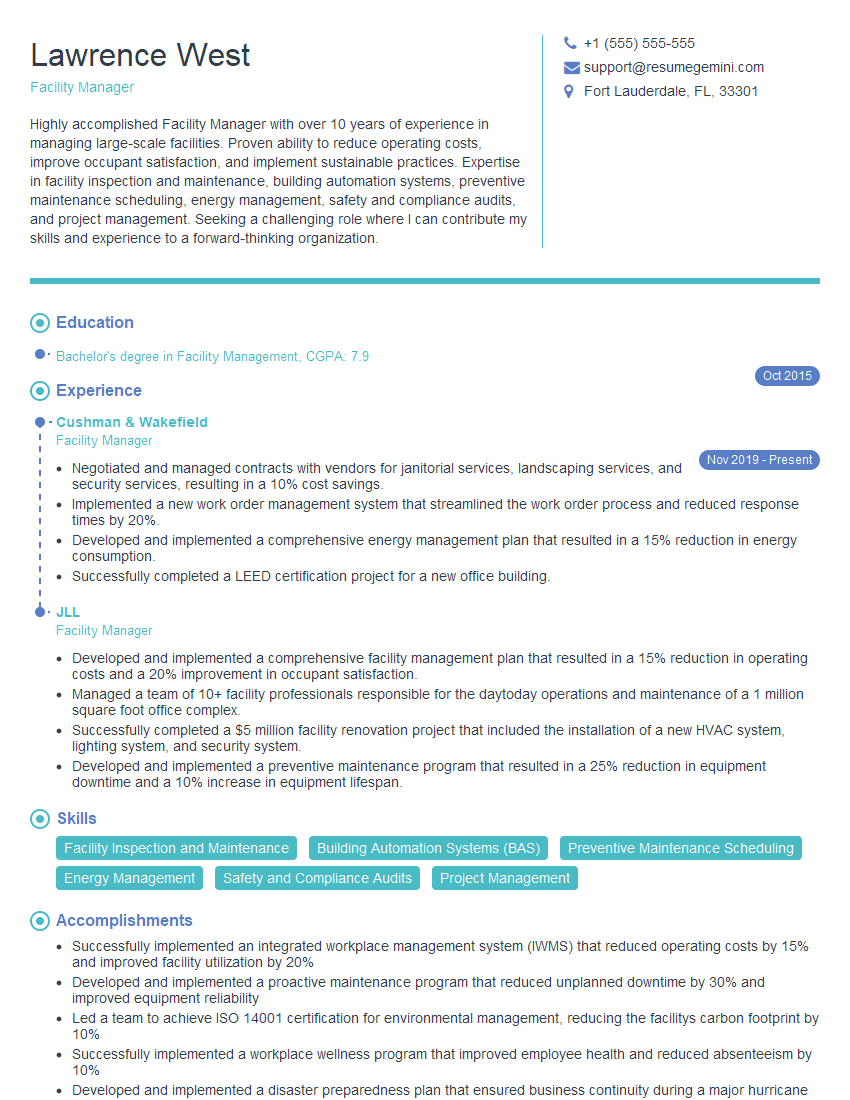
Facility Manager Resume Sample

Systems Integration Engineer Resume Sample
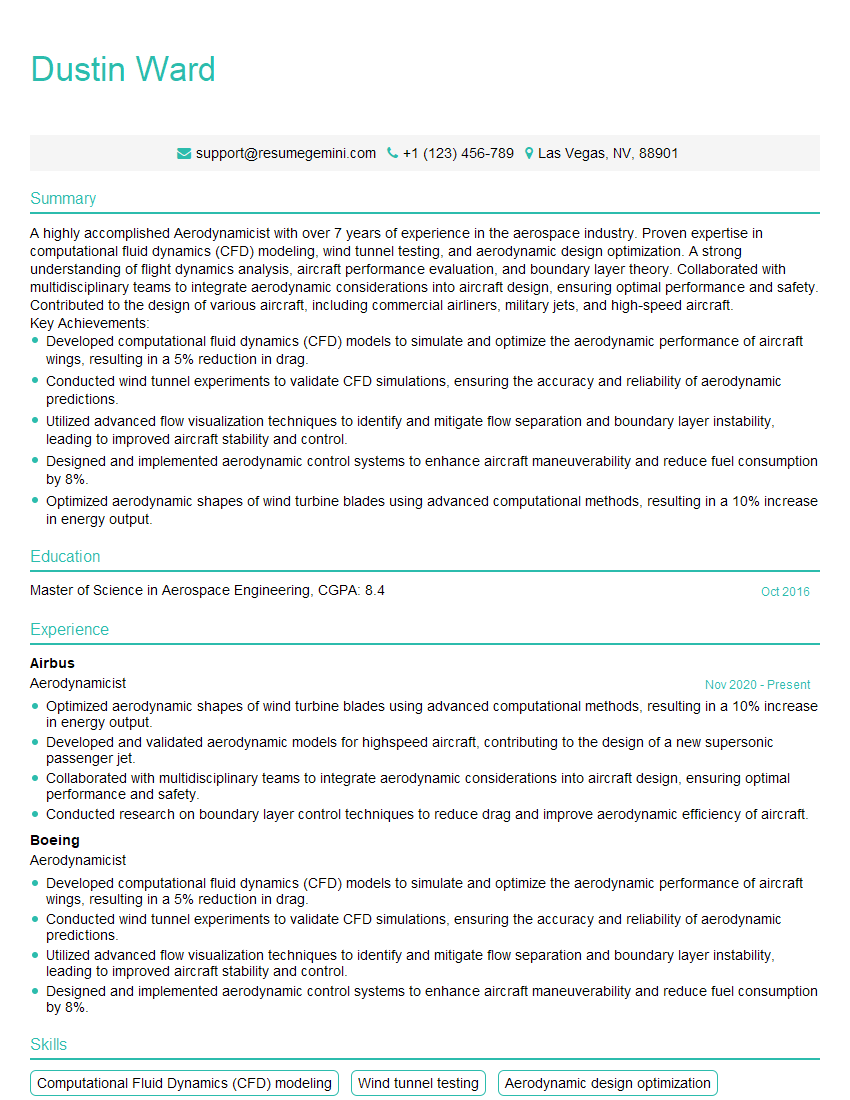
Aerodynamicist Resume Sample
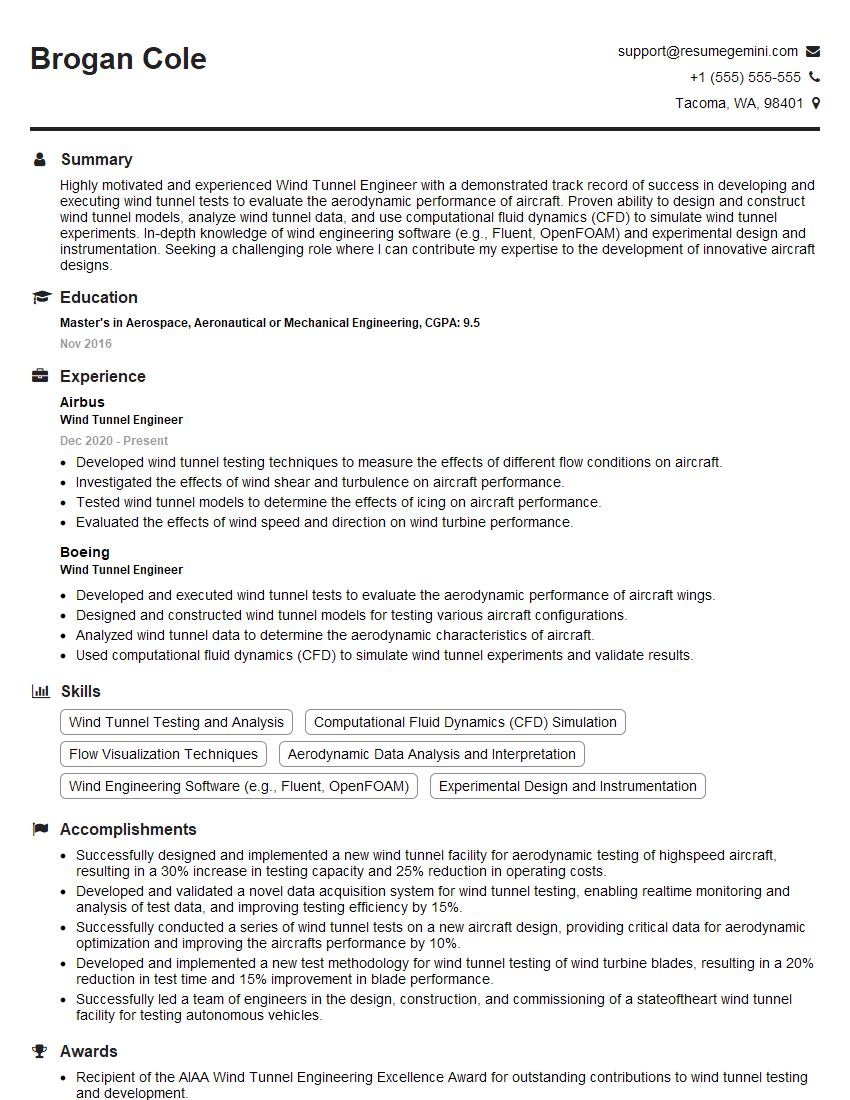
Wind Tunnel Engineer Resume Sample
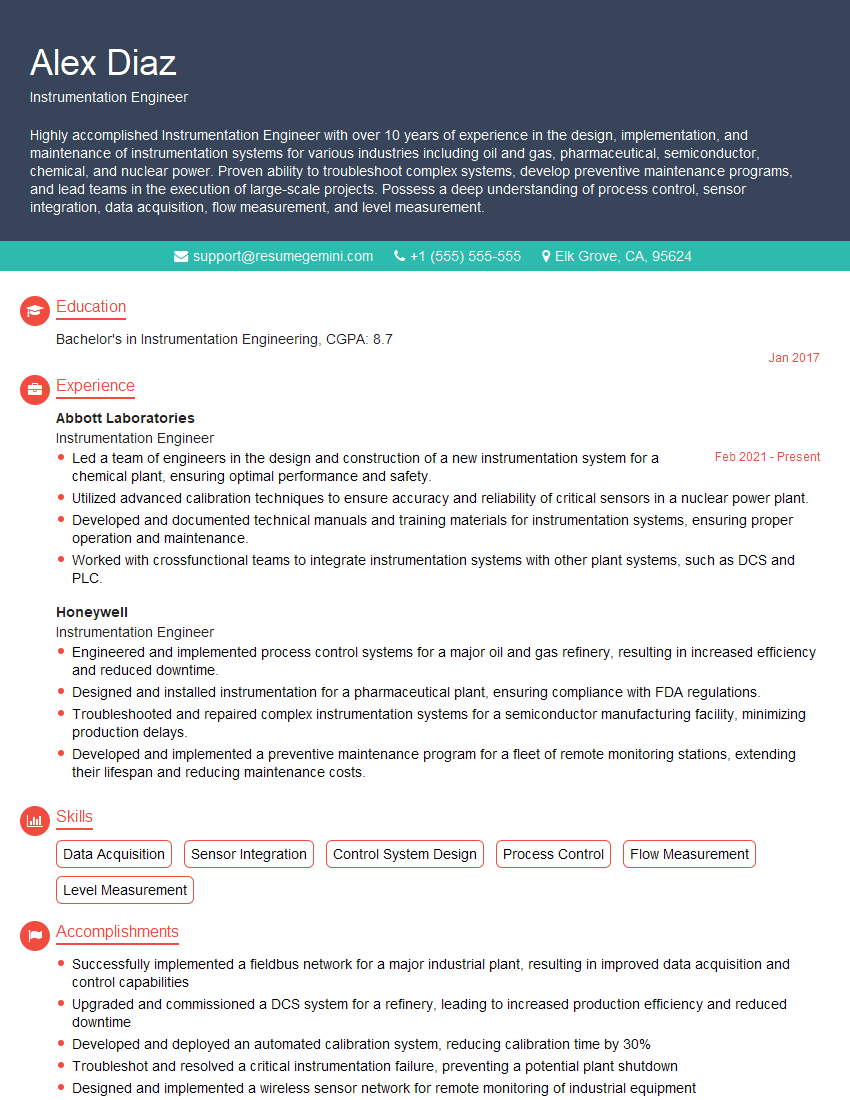
Instrumentation Engineer Resume Sample
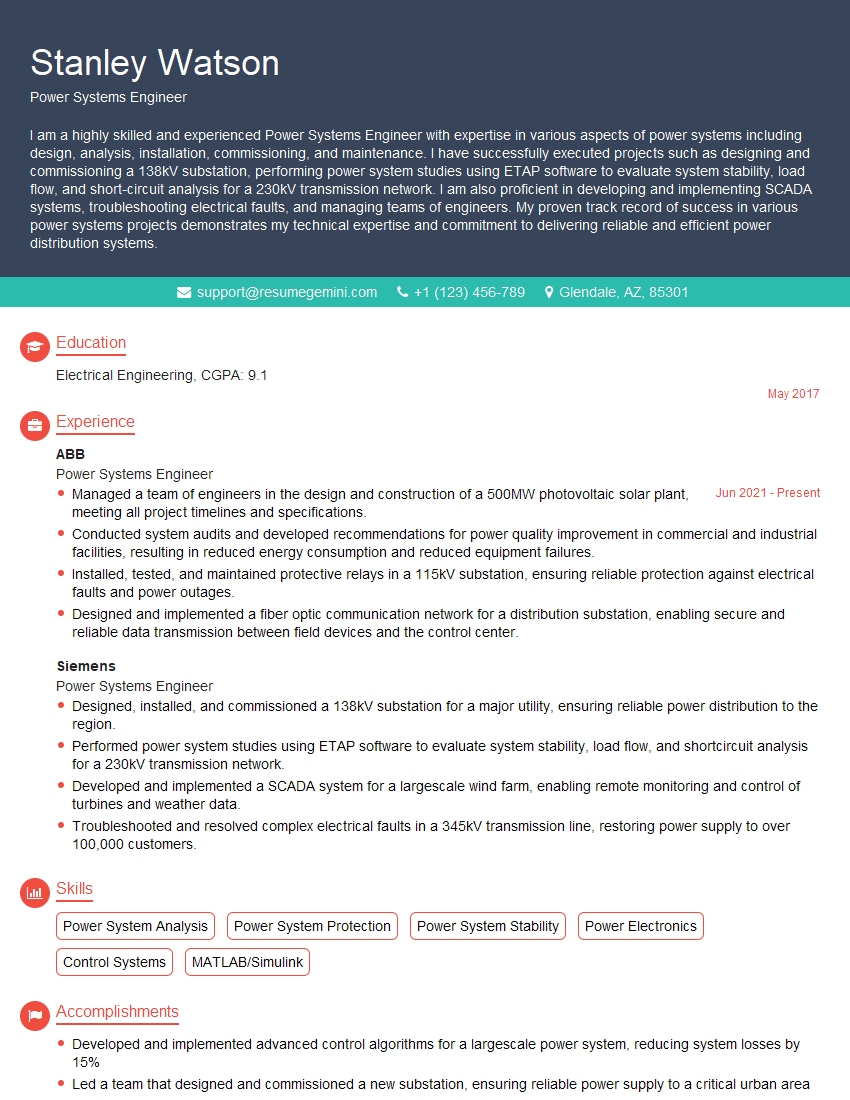
Power Systems Engineer Resume Sample

Control Systems Engineer Resume Sample

Wind Tunnel Technician Resume Sample
Explore more articles
Users Rating of Our Blogs
Share Your Experience
We value your feedback! Please rate our content and share your thoughts (optional).
What Readers Say About Our Blog
Very informative content, great job.
good