Preparation is the key to success in any interview. In this post, we’ll explore crucial Winder Operation interview questions and equip you with strategies to craft impactful answers. Whether you’re a beginner or a pro, these tips will elevate your preparation.
Questions Asked in Winder Operation Interview
Q 1. Explain the different types of winding techniques.
Winding techniques are crucial in various industries, from manufacturing electrical motors to producing textiles. The choice of technique depends heavily on the material being wound, the desired coil shape, and the application’s requirements. Here are some common types:
- Helical Winding: This is the most common method, where the wire is wound in a spiral pattern around a cylindrical former. Think of a spring – that’s a helical winding. It’s simple, efficient, and widely used for inductors and transformers.
- Layer Winding: In layer winding, the wire is wound in concentric layers, filling one layer completely before starting the next. This technique is often used for creating coils with higher packing density and reduced inductance variation. It’s common in applications where space is limited.
- Universal Winding: This complex method is used for armatures in electrical machines. It ensures a uniform distribution of the winding and minimizes harmonic content in the generated voltage, leading to smoother operation. It involves a specific pattern of coil placement to achieve this balance.
- Toroidal Winding: This involves winding wire around a toroidal core, creating a donut-shaped coil. Toroidal windings are known for their low magnetic leakage and are often used in power supplies and filters.
- Cross-Wound: This technique, commonly used in transformers, involves winding the coil in multiple sections, with each section wound in the opposite direction to the previous one. This helps reduce the effects of induced voltage and improve stability.
The selection of the winding technique is a critical decision that impacts the performance, efficiency, and reliability of the final product.
Q 2. Describe your experience with various winding machine types.
Throughout my career, I’ve had extensive experience operating and maintaining a variety of winding machines. This includes:
- Automatic Winding Machines: These machines are highly automated and capable of winding complex coils with high precision and speed. I’ve worked extensively with CNC-controlled machines that allow for precise control over tension, speed, and winding patterns. For example, I’ve used machines capable of winding thousands of turns of fine wire onto small bobbins with minimal error.
- Semi-Automatic Winding Machines: These machines provide a balance between automation and manual control. I have experience using these machines for tasks requiring more operator intervention, such as winding coils with irregularly shaped formers or those requiring manual adjustments during the winding process. I find this type of machine offers greater flexibility for less standardized tasks.
- Manual Winding Machines: While less common in high-volume production, I’m familiar with manual winding techniques and machines, which are often used for prototypes, small batches, or specialized applications requiring highly skilled operators. This experience provided me with a deep understanding of the fundamental principles of winding.
My experience spans across various machine manufacturers and models, giving me a comprehensive understanding of their strengths, weaknesses, and maintenance requirements. I can quickly adapt to new machines and troubleshoot issues effectively.
Q 3. How do you ensure consistent tension during the winding process?
Maintaining consistent tension is paramount in winding operations. Inconsistent tension leads to a variety of defects, including loose windings, broken wires, and uneven coil shapes. I employ several strategies to achieve this:
- Tension Control Systems: Most modern winding machines are equipped with sophisticated tension control systems, often using load cells or capacitive sensors. I regularly calibrate and monitor these systems to ensure they are accurately measuring and maintaining the desired tension. For instance, I carefully set the tension parameters based on the wire diameter and material properties.
- Proper Winding Parameters: The winding speed, tension, and payout rate must be optimized based on the wire material, diameter, and desired coil characteristics. I leverage my experience to determine the optimal parameters for each winding job.
- Regular Maintenance: I perform regular maintenance on the winding machine, including cleaning, lubrication, and inspection of the tensioning mechanism. A well-maintained machine ensures consistent and reliable performance.
- Material Selection: Selecting the right type and quality of wire is vital. Using wire that is too brittle or too soft can lead to tension inconsistencies. I carefully select wire that matches the requirements of the winding application.
By employing these methods, I consistently achieve high-quality windings with minimal defects.
Q 4. What are the common causes of winding defects and how do you troubleshoot them?
Winding defects can stem from various causes, and effective troubleshooting requires a systematic approach. Common defects include:
- Broken Wires: Often caused by excessive tension, wire flaws, or improper handling. Troubleshooting involves checking tension settings, inspecting wire quality, and adjusting winding parameters.
- Loose Windings: This typically results from insufficient tension, worn winding guides, or improper winding techniques. The solution involves increasing tension, replacing worn parts, and verifying proper winding procedures.
- Uneven Windings: This can result from inconsistencies in tension, speed, or winding mechanism issues. Troubleshooting includes careful analysis of winding parameters, machine calibration, and inspecting the winding guides and bobbin.
- Birdnesting: This chaotic winding pattern is typically caused by sudden tension changes or snags. Addressing this requires identifying the source of the snag, reviewing tension settings, and possibly adjusting the payout mechanism.
My troubleshooting process involves systematically eliminating potential causes, starting with the most likely. I use a combination of visual inspection, parameter adjustments, and machine diagnostic tools to pinpoint and rectify the root cause of any winding defect.
Q 5. Explain the importance of maintaining proper winding speed and parameters.
Maintaining proper winding speed and parameters is critical for several reasons:
- Coil Quality: Optimal speed and parameters ensure consistent tension, leading to a well-formed, tightly wound coil. Incorrect settings can result in loose windings, broken wires, or uneven coil geometry, impacting performance and reliability.
- Efficiency: Properly adjusted speed maximizes throughput without compromising quality. Running too fast risks defects, while running too slow decreases production efficiency.
- Material Usage: Optimized parameters minimize material waste. Excessive tension can lead to wire breakage and material loss, while insufficient tension can result in loose windings and potentially require re-winding.
- Machine Lifespan: Operating the machine within its specified parameters extends its lifespan by reducing wear and tear on its components.
Think of it like baking a cake: Following the recipe (parameters) and baking at the correct temperature (speed) ensures a perfect result. Deviation can lead to a ruined cake (defective coil).
Q 6. How do you monitor and control the winding process for optimal results?
Monitoring and controlling the winding process for optimal results requires a multi-faceted approach:
- Real-time Monitoring: Modern winding machines typically include digital displays and data acquisition systems that provide real-time feedback on parameters such as tension, speed, and wire payout. I continuously monitor these parameters to ensure they remain within the specified tolerances.
- Automated Control Systems: Many machines incorporate closed-loop control systems that automatically adjust parameters to maintain optimal winding conditions. I configure and calibrate these systems to ensure they function correctly.
- Visual Inspection: Regular visual checks of the winding process are essential to detect any irregularities such as loose windings, broken wires, or other defects. Early detection allows for prompt intervention and prevents larger issues.
- Statistical Process Control (SPC): For high-volume production, I implement SPC techniques to track and analyze key parameters over time. This allows for proactive identification of trends and potential problems before they impact product quality.
A proactive and vigilant approach to monitoring and control is crucial for consistent, high-quality results.
Q 7. Describe your experience with quality control procedures in winding operations.
Quality control is an integral part of any winding operation. My experience encompasses various methods:
- Visual Inspection: This is the first line of defense, examining each coil for defects such as loose windings, broken wires, or uneven coil geometry. I employ standardized checklists and criteria to ensure consistency.
- Dimensional Measurement: I use precision instruments such as calipers and micrometers to verify the dimensions of the coils, ensuring they meet the specified tolerances. This is particularly critical for applications where precise dimensions are crucial.
- Electrical Testing: Depending on the application, I conduct electrical tests to verify the coil’s inductance, resistance, and other electrical properties. This ensures the coil meets its functional specifications.
- Statistical Sampling: For high-volume production, I utilize statistical sampling techniques to assess the quality of a representative subset of the coils. This provides a statistically significant measure of overall product quality.
- Documentation and Traceability: Maintaining detailed records of the winding process, including parameters and quality control results, ensures traceability and helps in identifying and resolving potential issues.
My commitment to rigorous quality control ensures consistent, high-quality products that meet the most stringent requirements.
Q 8. How do you handle material jams or breakages during winding?
Handling material jams or breakages during winding requires a systematic approach prioritizing safety and minimizing downtime. First, I always ensure the machine is safely powered down before attempting any intervention. The specific procedure depends on the type of jam. For instance, a simple thread jam in a textile winding operation might involve carefully unwinding the tangled section by hand, using specialized tools if necessary. If the jam is more severe, involving a breakage of the material or a blockage in the winding mechanism, a more detailed investigation is needed. This could involve carefully inspecting the winding path for obstructions, checking the tension settings, and assessing the condition of the material itself. In some cases, I might need to disassemble parts of the machine under strict adherence to safety protocols to remove the blockage.
A crucial element is preventative maintenance. Regular checks of the winding path, tension systems, and material feed ensure early detection of potential problems, reducing the likelihood of jams or breakages. Documentation is key. I meticulously record the type of jam, the cause (if determined), the corrective action taken, and the downtime incurred. This information is invaluable for identifying patterns and improving our preventative maintenance strategies, ultimately reducing production disruptions.
Q 9. What safety precautions do you follow while operating winding machinery?
Safety is paramount in any winding operation. My approach is guided by a layered safety system. This begins with a thorough pre-operation inspection of the machine, verifying all guards are in place, emergency stop mechanisms are functioning correctly, and the working area is clear of obstructions. Personal Protective Equipment (PPE), including safety glasses, gloves, and appropriate clothing, is always worn. I strictly adhere to the manufacturer’s safety guidelines and the company’s safety procedures. Before starting any maintenance or repair work, I ensure the machine is completely de-energized and locked out using lockout/tagout procedures. I regularly participate in safety training programs to remain updated on best practices and hazard identification. A critical aspect is reporting any unsafe condition or near miss incidents immediately. Proactive reporting allows for timely corrective actions, minimizing the risk of accidents.
Q 10. Explain your understanding of different winding patterns (e.g., center-wound, side-wound).
Winding patterns are crucial for achieving the desired product characteristics. Center-wound is the most common method, where the material is wound around a central core, creating a cylindrical package. This method is efficient and produces a stable package. Side-wound, on the other hand, involves winding the material onto a spool with the material layering against a flat side. This method is often used for specific applications requiring a particular shape or easier material access. Other patterns like over-end winding and spiral winding are also employed, each tailored to the material properties and end-use application. The choice of pattern depends on factors like material type, desired package dimensions, and the required strength and stability of the finished product. For instance, delicate films might require a center-wound pattern with careful tension control to avoid damage, whereas a more robust textile might be suited to a side-wound pattern.
Q 11. How do you calculate the required amount of material for a specific winding job?
Calculating the required material amount depends on several factors. The most critical factors are the desired dimensions of the final wound package (diameter and width/length), the material thickness, and the winding pattern used. A simplified calculation for a center-wound cylindrical package would involve calculating the volume of the cylinder and then converting that volume to the length of material based on its thickness and density. The formula would generally look something like this:
Volume = π * r² * h(where r is the radius and h is the height of the cylinder). This volume is then multiplied by the density of the material and divided by the cross-sectional area of the material. This gives an approximation of the required material length. However, this is a simplified calculation, and practical considerations such as material waste during winding and the density variation of different batches of materials need to be taken into account in a real-world scenario. More complex calculations are required for other winding patterns. I rely on specialized winding software for more accurate calculations, especially for complex designs or unique material properties.
Q 12. Describe your experience with different types of winding materials (e.g., paper, film, textile).
My experience encompasses a broad range of winding materials, including paper, films (both plastic and metallic), and textiles. Each material presents unique challenges and requires specific winding parameters. Paper, for instance, is prone to tearing and requires careful tension control. Different types of paper, such as kraft paper or tissue paper, require different tension settings and winding speeds. Films can be more delicate, especially thin films, demanding precise winding to avoid creasing or wrinkling. The surface properties and possible static charge of films also need consideration to prevent adhesion issues. Textiles, such as yarns and fabrics, require different winding techniques and tension controls depending on their fiber type and weave. I have worked extensively with different types of fibers like cotton, polyester, and nylon, each of which has its own specific characteristics that affect the winding process. My experience allows me to adapt winding parameters to minimize waste and maintain consistent product quality for different materials.
Q 13. How do you maintain cleanliness and order in your work area?
Maintaining a clean and organized work area is essential for safety, efficiency, and product quality. My routine begins with cleaning the immediate vicinity of the winding machine before starting work. This includes removing any debris, ensuring proper disposal of waste materials, and organizing tools and supplies. I maintain a designated space for each material type and keep the machine itself clean and free of dust and lint. Regular preventative maintenance contributes to cleanliness as it often includes cleaning and lubrication of machine components. This attention to detail is not only essential for preventing machine malfunctions but also for preventing cross-contamination, particularly crucial in industries processing sensitive materials. A clean workspace also helps reduce the risk of accidents caused by tripping hazards or misplaced tools. I also ensure that all waste material is disposed of according to company guidelines and environmental regulations.
Q 14. Describe your experience with automated winding systems.
I have significant experience with automated winding systems, including PLC-controlled machines and robotic systems. These systems offer advantages in terms of increased speed, precision, and consistency. My experience includes programming and troubleshooting automated winding systems. For example, I have worked with systems that automatically adjust tension, speed, and winding pattern based on real-time feedback from sensors. These systems often require expertise in PLC programming and machine vision systems. Troubleshooting these automated systems typically involves using diagnostic tools to isolate faults, understanding the control logic, and making the necessary adjustments or repairs. The benefits of automation are numerous, including higher production rates, reduced labor costs, and improved product consistency. However, a key challenge is ensuring the reliability and proper maintenance of these complex systems to avoid downtime.
Q 15. How do you identify and report machine malfunctions?
Identifying and reporting machine malfunctions is crucial for maintaining safety and production efficiency. My approach is systematic and involves several steps. First, I carefully observe the machine for any unusual sounds, vibrations, or smells – think of it like listening to your car; a strange noise is a warning sign. Then, I check the control panel for any error codes or warning lights. These are often specific indicators pointing to the problem. If the issue isn’t immediately apparent, I consult the machine’s operating manual and troubleshoot based on the provided diagnostics. I use a checklist to ensure a thorough examination of all relevant components. Finally, I document the malfunction – including date, time, observed symptoms, and any corrective actions taken – in the designated logbook. This detailed record is essential for tracking recurring problems and improving maintenance procedures. A serious malfunction would require immediately halting operation and notifying my supervisor.
For example, if I notice a persistent high-pitched squeal from the braking system of a winder, I’d immediately shut it down, log the event, and inform my supervisor. The squeal, possibly indicating worn brake pads, would require immediate attention to prevent damage to the winding equipment or the product itself.
Career Expert Tips:
- Ace those interviews! Prepare effectively by reviewing the Top 50 Most Common Interview Questions on ResumeGemini.
- Navigate your job search with confidence! Explore a wide range of Career Tips on ResumeGemini. Learn about common challenges and recommendations to overcome them.
- Craft the perfect resume! Master the Art of Resume Writing with ResumeGemini’s guide. Showcase your unique qualifications and achievements effectively.
- Don’t miss out on holiday savings! Build your dream resume with ResumeGemini’s ATS optimized templates.
Q 16. Explain your understanding of preventative maintenance for winding equipment.
Preventative maintenance is the cornerstone of efficient and safe winder operation. It focuses on proactively identifying and addressing potential issues before they lead to breakdowns. This involves a scheduled program of inspections, lubrication, and component replacements. Think of it like regular checkups for your health – better to catch small problems early than to wait for a major crisis.
My understanding encompasses various aspects, including:
- Regular Inspections: Visual checks for wear and tear on belts, gears, brakes, and other moving parts. This includes checking for signs of friction, misalignment, or loose connections.
- Lubrication: Applying appropriate lubricants to moving parts to reduce friction and extend their lifespan. This is done according to the manufacturer’s specifications to prevent damage from over or under lubrication.
- Component Replacement: Replacing worn-out or damaged components before they fail completely. This might involve changing belts, replacing bearings, or overhauling braking systems. The frequency of these replacements is usually based on usage and manufacturer’s recommendations.
- Calibration and Testing: Regular calibration of tension control systems and safety devices to ensure they’re functioning optimally. I use standardized testing methods to verify that the machine continues to meet safety and quality standards.
A well-maintained winder minimizes downtime, reduces the risk of accidents, and extends the life of the equipment, ultimately saving time and money.
Q 17. How do you handle different reel sizes and configurations?
Handling different reel sizes and configurations requires adaptability and precision. The process involves understanding the specific requirements of each reel type and adjusting the winder accordingly. This includes setting the appropriate parameters for reel diameter, width, and core size. It’s vital to carefully consider the material’s properties and adjust the winding tension to prevent damage and ensure consistent winding quality. I also prioritize safety in this process, ensuring that all reels are securely mounted and that safety guards are properly in place. Different reel configurations might include differing core sizes, material weights, or even the need for specialized flanges or adapters. The adjustment process usually involves using control panels and mechanical adjustments on the winder, followed by careful observation during the initial winding stages to identify and correct any minor imperfections.
For instance, switching from a small diameter reel to a large one might involve adjusting the tension control, winding speed and possibly adding support arms for proper alignment. The process includes consulting the technical manuals, adjusting the settings according to the specified reel parameters, and always performing a test run to observe the winding quality before proceeding with a full production run. Safety is the utmost priority and the entire process should always be carried out within the safety protocols of the company.
Q 18. What are the key performance indicators (KPIs) for a winder operator?
Key Performance Indicators (KPIs) for a winder operator center around efficiency, quality, and safety. Some critical KPIs include:
- Uptime: The percentage of time the winder is operational and producing. Maximizing uptime minimizes production downtime.
- Production Rate: The amount of material wound per unit of time, ensuring we’re meeting the production targets.
- Waste Rate: The percentage of material wasted due to defects or errors. Minimizing waste is crucial for cost efficiency.
- Defect Rate: The number of defects found in the wound material per unit of production. Low defect rates indicate high quality.
- Safety Incidents: The number of safety incidents or near misses. A record of zero incidents is the ultimate goal.
- Changeover Time: Time required to switch between different reel sizes or materials. Efficient changeovers optimize workflow.
Regular monitoring of these KPIs provides insights into operational efficiency, allowing for improvements and adjustments to meet the organization’s objectives.
Q 19. How do you ensure the proper labeling and packaging of wound materials?
Proper labeling and packaging are essential for traceability, quality control, and preventing material damage. My process involves using pre-printed labels with clear and concise information including:
- Material identification: Type, grade, batch number, etc.
- Date and time of winding: Ensuring traceability.
- Operator ID: For accountability.
- Reel specifications: Diameter, width, etc.
These labels are securely affixed to the reel. Then, I package the wound material appropriately, often using protective coverings such as shrink wrap or cardboard to prevent damage during transportation and storage. I always ensure that the packaging is sturdy enough to withstand handling and transit. Finally, I cross-check the label information against the production records to ensure accuracy. Clear, accurate labeling and packaging are fundamental for preventing errors, ensuring quality, and enabling efficient inventory management.
Q 20. Describe your experience working under pressure and meeting deadlines.
Working under pressure and meeting deadlines is a regular part of my job. I thrive in fast-paced environments and have developed several strategies to manage pressure effectively. One key aspect is maintaining a clear understanding of priorities. I prioritize tasks based on urgency and importance, focusing on the most critical items first. I utilize time management techniques such as creating detailed schedules, breaking down large tasks into smaller, manageable chunks, and setting realistic deadlines. I’m also proactive in communicating potential issues or delays to my supervisor early on, avoiding surprises and enabling collaborative problem-solving. In addition, I’m adept at multitasking and switching between tasks smoothly. This minimizes downtime and improves productivity. For instance, during periods of high demand, I’ve successfully managed multiple winding operations simultaneously, switching between different reel types, while maintaining product quality and safety standards.
Q 21. How do you prioritize tasks and manage your workload effectively?
Effective task prioritization and workload management are vital for success. I use a combination of techniques to keep myself organized and productive. First, I create a daily or weekly plan listing all tasks, prioritizing them based on urgency and importance using methods like the Eisenhower Matrix (urgent/important). I then allocate specific time slots for each task, aiming for realistic completion times. I use visual aids like checklists and Kanban boards to track progress. This helps me visualize workflow and identify potential bottlenecks. I’m also proficient in using scheduling software and other digital tools to manage my time efficiently. Regularly reviewing my progress and adjusting my plan as needed is essential. This ensures that I remain flexible and adapt to unexpected changes or delays. Finally, I regularly communicate with my supervisor and team members to ensure coordination and avoid unnecessary duplication of effort. Open communication improves efficiency and productivity.
Q 22. What is your experience with using winding-related software or systems?
Throughout my career, I’ve extensively used various winding-related software and systems. This includes sophisticated computer-aided design (CAD) software for designing winding patterns and predicting performance, production management systems for scheduling and tracking winding operations, and specialized software for controlling the winding machines themselves. For instance, I’ve worked with a system that allowed real-time monitoring of tension, speed, and other critical parameters, providing immediate feedback for adjustments and proactive problem-solving. In another role, I used a dedicated software package to manage the winding of high-precision coils for medical devices, ensuring complete traceability and quality control.
My experience extends to using data acquisition systems for collecting and analyzing winding data, helping to optimize processes and identify areas for improvement. I’m proficient in interpreting the data generated by these systems and using it to make data-driven decisions, leading to increased efficiency and higher quality output.
Q 23. How do you adapt to changes in production requirements or schedules?
Adapting to changes in production is a key part of this job. My approach is methodical and proactive. When a change request comes, I first analyze its impact on the current schedule and resources. This involves assessing the required adjustments to the winding parameters, material needs, and personnel allocation. I then communicate the implications clearly to the relevant team members.
For example, if we receive an urgent order requiring a different winding pattern, I would immediately re-program the winding machine, ensuring all safety protocols are followed. I’d coordinate with the material handling team to ensure the necessary materials are readily available and adjust the production schedule to accommodate the new priority. I believe in open communication and teamwork; proactively addressing challenges head-on is critical to maintaining efficiency and meeting deadlines.
Q 24. Explain your understanding of the different types of core mandrels used in winding.
Core mandrels are essential for creating the base form around which coils are wound. Different applications demand different mandrel types. Common types include:
- Metal Mandrels: Durable and precise, often used for high-temperature applications or when dimensional accuracy is critical. Examples include steel, aluminum, and copper mandrels.
- Ceramic Mandrels: Ideal for high-temperature, corrosive environments, offering excellent dimensional stability. They are often used in applications involving high-temperature baking or curing processes.
- Plastic Mandrels: These are cost-effective and easy to use but may have limitations in terms of temperature resistance and durability. They are suitable for many lower-temperature applications.
- Composite Mandrels: These offer a combination of properties, such as high strength and low weight. They can be customized to meet specific needs.
The choice of mandrel depends on factors like the material being wound, the required coil dimensions, the winding process parameters (temperature, pressure), and the desired final product properties.
Q 25. How do you ensure the correct alignment and placement of the core mandrel?
Ensuring correct core mandrel alignment and placement is crucial for consistent winding quality. We use a combination of techniques:
- Precision Fixtures: Specialized fixtures hold the mandrel in place with great accuracy, minimizing misalignment.
- Optical Alignment Systems: These systems use lasers or cameras to precisely align the mandrel before the winding process begins.
- Automated Loading Systems: In advanced winding operations, robots or automated systems accurately place the mandrels onto the winding machine.
- Visual Inspection: Before commencing the winding process, a visual check ensures the mandrel is correctly positioned and secured.
Careful attention to these procedures is key to prevent defects and inconsistencies in the final product. Inaccurate placement can result in uneven windings, poor coil shape, and potential damage to the winding machine.
Q 26. Describe your experience with different types of winding adhesives or coatings.
My experience encompasses various winding adhesives and coatings, each with its unique properties and applications. This includes:
- Epoxy Resins: These are widely used due to their excellent adhesion, strength, and chemical resistance. They are often chosen for high-performance applications.
- Acrylic Adhesives: These offer good adhesion and are often preferred for their ease of use and lower cost. However, they may have limited temperature and chemical resistance compared to epoxies.
- Silicone-Based Coatings: These are beneficial in high-temperature applications and offer good dielectric properties, making them ideal for electrical windings.
- Urethane Coatings: Used for applications requiring abrasion resistance, impact resistance, and excellent flexibility.
Selecting the appropriate adhesive or coating is crucial as it impacts the final product’s durability, performance, and longevity. The choice depends heavily on the specific application and the environmental conditions the final product will face.
Q 27. How do you maintain accurate records of winding parameters and production output?
Maintaining accurate records is paramount. We utilize a combination of manual and automated methods. Each winding operation is meticulously documented, recording parameters such as:
- Winding Speed: Measured in revolutions per minute (RPM) or meters per minute.
- Tension: Critical for maintaining coil consistency and preventing defects. Usually measured in Newtons or pounds-force.
- Number of Layers: The total number of winding layers.
- Core Mandrel Type: Specific type of mandrel used.
- Adhesive/Coating Used: Type and batch number of the material used.
This data is often logged directly into the winding machine’s control system. The data is then transferred to a central database, allowing for easy retrieval and analysis. Regular audits ensure the accuracy and integrity of these records. This detailed record-keeping is critical for traceability, quality control, and continuous improvement efforts.
Q 28. Explain your process for troubleshooting a low-tension winding issue.
Troubleshooting low-tension winding involves a systematic approach. First, I’d identify the specific symptoms and their extent – is the tension consistently low, or does it fluctuate? Then, I follow these steps:
- Check the Tension Control System: Examine the tension control mechanism for any malfunctions, including worn parts, incorrect settings, or sensor issues.
- Inspect the Winding Material: Verify the material’s properties, checking for defects or damage. Low-quality material or improper handling can lead to low tension.
- Evaluate the Core Mandrel: Check for any defects or irregularities on the core mandrel’s surface that might impede smooth winding. A rough surface can create friction and reduce tension.
- Examine the Winding Machine: Look for mechanical issues in the machine’s components, paying particular attention to the tensioning mechanism and any drive belts or pulleys.
- Review Winding Parameters: Ensure the winding speed and other settings are appropriate for the material being used.
- Check the Adhesive/Coating: Excessive adhesive or coating can increase friction and lower tension.
Through careful inspection and systematic checks, the root cause is usually identified and rectified. Documenting the steps and findings is crucial for both problem resolution and future prevention of similar issues.
Key Topics to Learn for Winder Operation Interview
- Winder Mechanics: Understanding the fundamental principles of tension control, torque, and speed regulation in winding processes. This includes different types of winders and their applications.
- Material Handling: Knowledge of various materials used in winding operations (e.g., yarn, wire, film) and the associated challenges in handling and processing them. Practical experience with material loading, unwinding, and quality control is beneficial.
- Process Optimization: Familiarity with techniques for optimizing winding parameters to improve efficiency, reduce waste, and enhance product quality. This includes understanding process variables and their impact on the final product.
- Troubleshooting and Maintenance: Ability to identify and resolve common issues in winding operations. Understanding preventative maintenance procedures and troubleshooting techniques is crucial.
- Safety Procedures: Comprehensive knowledge of safety regulations and best practices related to Winder Operation, including machine guarding, lockout/tagout procedures, and personal protective equipment (PPE).
- Quality Control: Understanding the importance of quality control in winding processes and the methods used to ensure consistent product quality. This includes inspection techniques and the use of quality control instruments.
- Automation and Controls: Familiarity with automated winding systems and the control systems used to manage them (e.g., PLC programming, HMI interfaces). Understanding data acquisition and analysis related to winding operations is a plus.
Next Steps
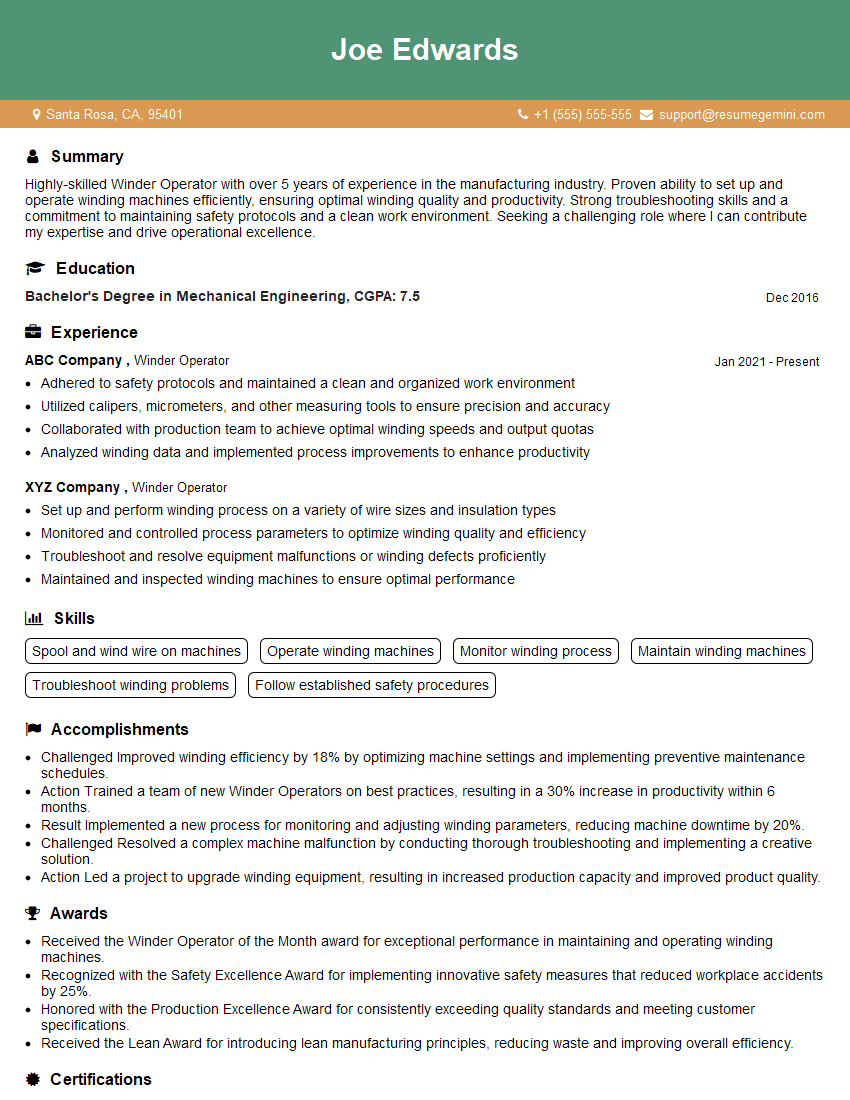
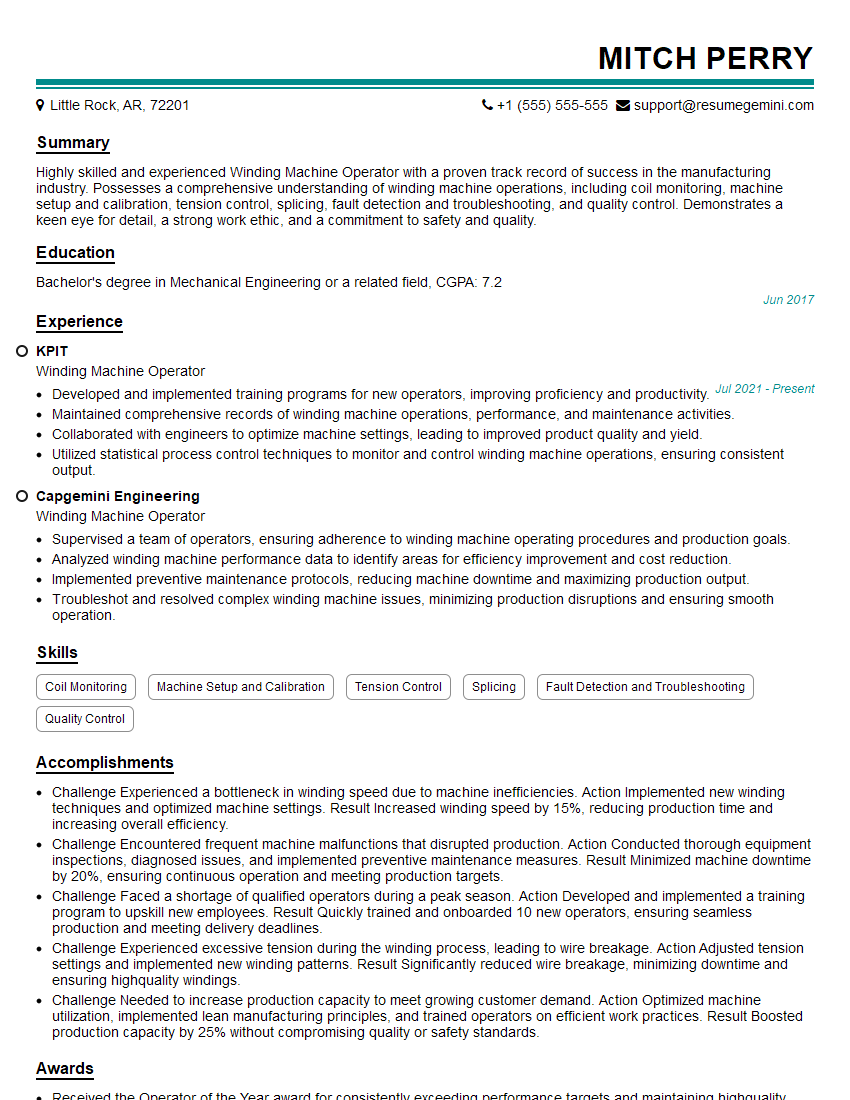
Mastering Winder Operation opens doors to exciting career opportunities in manufacturing and related industries, offering excellent growth potential and rewarding challenges. To maximize your chances of landing your dream role, creating a strong, ATS-friendly resume is vital. ResumeGemini is a trusted resource to help you build a professional resume that highlights your skills and experience effectively. We provide examples of resumes tailored to Winder Operation to help you craft a compelling application.
Explore more articles
Users Rating of Our Blogs
Share Your Experience
We value your feedback! Please rate our content and share your thoughts (optional).
What Readers Say About Our Blog
Very informative content, great job.
good