The right preparation can turn an interview into an opportunity to showcase your expertise. This guide to Windrower Operation interview questions is your ultimate resource, providing key insights and tips to help you ace your responses and stand out as a top candidate.
Questions Asked in Windrower Operation Interview
Q 1. Describe your experience operating different types of windrowers.
My experience encompasses operating a wide range of windrowers, from smaller, self-propelled models ideal for smaller fields and varied terrain, to larger pull-type machines best suited for large-scale operations in flat, open areas. I’ve worked with both disc and drum-type windrowers, each having its own strengths and weaknesses depending on the crop and conditions. For instance, disc windrowers are generally preferred for more delicate crops like alfalfa to minimize leaf loss, while drum windrowers are often better for tougher crops like hay with thicker stems. I’m proficient in operating machines from various manufacturers, allowing me to adapt quickly to different control layouts and functionalities.
For example, I once worked with a pull-type drum windrower on a large wheat field. The machine’s size and capacity significantly increased our harvesting efficiency compared to using smaller self-propelled units. Conversely, I used a smaller, self-propelled disc windrower on a hilly alfalfa field, where its maneuverability was crucial for navigating the terrain and minimizing crop damage.
Q 2. What are the common maintenance checks you perform before operating a windrower?
Before operating any windrower, a thorough pre-operation check is paramount. This includes a visual inspection of all components, checking fluid levels (engine oil, hydraulic fluid, coolant), and ensuring the machine is free from any obvious damage or debris. I always start with the safety systems – checking the PTO shield is securely in place, confirming the brakes are functional, and verifying the emergency stop system is responsive. I then inspect the cutting components, such as the knives or drums, for wear and tear, ensuring they’re sharp and properly aligned. I also check the pickup reel, ensuring it’s correctly adjusted and not damaged, and examine the windrow shaping components for any blockages. Finally, a brief engine run-up is performed to check for any unusual noises or vibrations.
- Checking fluid levels (engine oil, hydraulic fluid, coolant)
- Inspecting cutting components (knives, drums) for wear and tear
- Verifying safety systems (PTO shield, brakes, emergency stop)
- Examining the pickup reel for damage and adjustment
- Checking windrow shaping components for blockages
Q 3. Explain the process of adjusting windrower settings for various crop types.
Adjusting windrower settings for different crop types is crucial for optimizing harvest efficiency and minimizing crop loss. Key adjustments involve the cutting height, windrow width, and the speed of the pickup reel and the windrower’s forward speed. For instance, a taller cutting height might be necessary for a taller crop like sorghum to avoid ground loss. Conversely, a lower cutting height may be preferable for a low-lying crop like clover to maximize yield. Similarly, a wider windrow might be suitable for crops that need more air circulation for drying, while a narrower windrow is sometimes better for easier handling with balers.
The pickup reel speed needs to match the forward speed and crop density. Too fast a reel can damage the crop or lead to clogging, while too slow can result in poor pickup. Each crop type has optimal settings for these factors and understanding these is vital for effective windrowing. I typically consult the windrower’s operator’s manual and adjust these settings based on experience and the specific crop’s condition that day.
Q 4. How do you identify and address common windrower malfunctions?
Identifying and addressing malfunctions requires a systematic approach. I begin by observing the symptoms – is the windrower not picking up the crop effectively? Is there an unusual noise or vibration? Is there clogging in the machine? I then use my understanding of the windrower’s mechanics to pinpoint the probable cause. For example, a lack of crop pickup often points to a problem with the reel or the knives/drums. An unusual noise could indicate bearing wear, a broken belt, or a problem with the drive system. Clogging often results from improper adjustments or foreign objects.
My troubleshooting process involves checking individual components, starting with the most likely causes based on the symptoms. This often includes checking belts, checking for blockages in the header and the conveying system, inspecting for broken parts, and carefully evaluating the functionality of hydraulic systems. In more complex scenarios, I would consult the machine’s manual or contact a qualified mechanic. For instance, if the cutting knives are dull or damaged, I might sharpen or replace them. If there’s a hydraulic leak, I’d isolate the leak and repair or replace the faulty component. Prevention is key; regular maintenance drastically reduces malfunction occurrences.
Q 5. What safety procedures do you follow while operating a windrower?
Safety is my top priority when operating a windrower. Before starting any work, I ensure that all safety devices are functioning correctly, including the PTO shield, brakes, and emergency stop system. I always wear appropriate personal protective equipment (PPE), such as safety glasses, hearing protection, and sturdy work boots. I maintain a safe distance from moving parts and avoid reaching into the machine while it’s running. I’m mindful of the surroundings and avoid operating the windrower near obstacles or other people. I pay close attention to the windrow’s location to ensure it doesn’t obstruct traffic or create hazards. Regular inspection of the machine is part of the safety process and helps prevent many incidents before they occur.
In addition to personal safety, I am always aware of environmental factors. I check the weather forecast to avoid operating the machine during inclement weather. I regularly monitor the machine’s operation to ensure it’s running safely and efficiently. Finally, I follow all safety guidelines provided by the manufacturer and the farm’s safety procedures.
Q 6. Describe your experience with different cutting heights and windrow widths.
My experience covers a wide range of cutting heights and windrow widths, tailored to different crop types and harvesting conditions. Cutting height is crucial for minimizing crop losses and maximizing yield. For example, a lower cutting height is usually preferred for low-growing crops like clover, while a higher cutting height might be necessary for taller crops like corn to avoid scalping. Windrow width affects drying efficiency; wider windrows allow for better air circulation, aiding faster drying, whereas narrower windrows might be better suited for certain baling equipment.
I’ve worked with various cutting heights ranging from a few inches for clover to over a foot for taller crops. Similarly, I have experience with windrow widths from narrow windrows (suitable for smaller balers or swathers) to wider ones that are efficient for larger balers. The choice is always dependent on the specific conditions, the crop being harvested, and the equipment used for subsequent stages of the harvesting process.
Q 7. How do you ensure optimal crop flow and prevent clogging in the windrower?
Ensuring optimal crop flow and preventing clogging requires a combination of proper machine setup and attentive operation. The key is to maintain a balance between the forward speed of the machine and the speed of the pickup reel. A properly adjusted pickup reel ensures consistent feeding of the crop into the machine. If the reel is too slow, it won’t pick up the crop efficiently; if it’s too fast, it can damage the crop or lead to clogging. Regular cleaning of the windrower’s components, such as the auger and conveyor belts, is essential to prevent blockages. Maintaining the correct cutting height and windrow width is also vital for preventing clogging.
Other factors include monitoring crop moisture content – excessively wet crops are more prone to clogging. Addressing issues like uneven terrain by carefully adjusting the windrower’s cutting height is also beneficial. Finally, regular maintenance, including sharpening the knives and inspecting the machine’s components for wear and tear, helps prevent clogging and ensures smooth operation. A clogged windrower needs to be addressed immediately and safely to avoid further issues.
Q 8. What are the signs of a worn or damaged knife section?
Identifying a worn or damaged knife section on a windrower is crucial for maintaining efficient and clean harvesting. Several key signs indicate the need for attention or replacement. Think of the knife section as a finely honed scissor; dullness significantly impacts performance.
Dull or chipped blades: This is the most obvious sign. Dull blades will leave ragged cuts on the crop, reducing the quality of the windrow and potentially causing increased losses. You’ll notice uneven cuts and perhaps even whole stalks uncut.
Bent or broken blades: Impact with rocks or other debris can bend or break blades, rendering them ineffective. This usually leads to uneven cutting and a less consistent windrow. A visual inspection is key here.
Excessive wear on the cutting edges: Even with regular sharpening, the cutting edges will eventually wear down. This results in slower cutting speeds and a decline in the quality of the cut. Measuring blade thickness against factory specifications helps quantify this.
Increased vibration or noise: A worn knife section will often cause increased vibration and noise from the machine. This is usually a sign of imbalance and needs immediate attention, before damage spreads.
Regular inspection and preventative maintenance, including sharpening and blade replacement as needed, is essential to prolong the life of the knife section and ensure high-quality windrowing.
Q 9. How do you handle unexpected weather conditions during windrowing?
Unexpected weather during windrowing presents a significant challenge. Safety and crop quality are paramount. Imagine you’re halfway through a field when a sudden thunderstorm rolls in. Your immediate response is vital.
Safety first: The most crucial step is to prioritize the safety of the operator and any other personnel in the field. Immediately stop the windrower and find safe shelter. Heavy machinery and lightning are a dangerous combination.
Crop protection: Assess the crop’s condition and how it might be impacted by the weather. Heavy rain can cause lodging (laying down) and potentially damage the crop. If possible, quickly cover or protect exposed swaths, but safety should always be the number one priority.
Adapt your strategy: Once the immediate threat passes, reassess the situation and determine if you can continue windrowing. If the crop is severely damaged or the weather conditions remain unfavorable, it might be necessary to delay operations.
Monitor weather forecasts: Always check weather forecasts before starting fieldwork and remain vigilant throughout the day. Technology, such as weather apps, can give early warnings of approaching storms.
Effective weather monitoring and preparedness can significantly reduce losses and ensure the safe operation of the windrower.
Q 10. Explain your understanding of different windrower components and their functions.
The windrower is a sophisticated machine with several interconnected components working together to create a consistent windrow. It’s like a finely tuned orchestra, where each instrument plays a vital role.
Cutting unit: This is the heart of the windrower, responsible for cutting the crop. It consists of the knife section (blades), guards, and reel to feed the crop into the blades smoothly. The reel’s height adjustment is crucial.
Pickup unit: This gathers the cut crop and feeds it into the windrowing mechanism. Different windrowers have different types of pickup units, such as auger-type or drum-type. The design impacts crop handling and efficiency.
Windrow forming mechanism: This is responsible for shaping the windrow. Common designs include conveyor belts or rotating paddles that carefully deposit the crop into a controlled row.
Powertrain: The engine, transmission, and drive system provide the power needed to operate all the other components. Proper maintenance is crucial for ensuring reliable performance. Engine power impacts operational efficiency.
Hydraulic system: This system controls the various functions of the windrower, such as the height of the cutting unit and the position of the windrow forming mechanism. Hydraulic fluid levels are crucial to performance and maintenance.
Understanding each component’s function and interrelationship is key to troubleshooting problems and operating the windrower effectively. A mechanical aptitude is very helpful.
Q 11. What are the critical factors in achieving efficient windrowing?
Efficient windrowing hinges on several critical factors that ensure crop quality, reduce losses, and optimize operational efficiency. Think of it like baking a cake – each ingredient is essential for a perfect result.
Proper machine setup: This includes correct cutting height, reel speed, and windrow width, tailored to the crop and field conditions. This requires understanding and adjusting parameters.
Appropriate forward speed: The speed should match the crop conditions and the machine’s capabilities to avoid clogging or leaving uncut material. Over-speeding can damage the crop and the machine.
Sharp knives and well-maintained equipment: Dull knives result in poor cuts, increased losses, and more wear on the machine. Regular inspection and servicing is paramount for efficiency.
Consistent windrow formation: A uniform windrow is crucial for subsequent harvesting operations, such as baling or picking. Uneven windrows lead to losses and inefficiency in later processes.
Operator skill and experience: A skilled operator can make significant differences in windrowing efficiency, adapting their operation to varying conditions, noticing and fixing problems.
Paying close attention to these aspects will significantly improve the efficiency and quality of the windrowing process. Each factor is interconnected.
Q 12. How do you determine the appropriate speed for different field conditions?
Determining the appropriate windrower speed is crucial for optimal efficiency and crop quality. It’s like finding the right pace for a marathon – too fast, and you’ll exhaust yourself; too slow, and you’ll never finish. The right speed depends on various factors.
Crop type and condition: Dense, heavy crops require a slower speed than lighter crops. Also, mature crops often require a slower approach.
Field conditions: Uneven terrain or rocky fields will require a slower speed to prevent damage to the machine and the crop. Smooth, level fields allow for faster speeds.
Windrower capabilities: The type and condition of the windrower will affect the optimal speed. A newer, more powerful machine can often handle a faster speed than an older one.
Desired windrow size and quality: Larger windrows may require a slower speed to ensure proper formation. Maintaining quality requires a consistent speed.
Experienced operators learn to adjust their speed based on visual cues – are there any uncut stalks? Is the windrow consistent? A good operator can optimize speed through careful observation and experience.
Q 13. Describe your experience with GPS-guided windrowing systems.
GPS-guided windrowing systems significantly enhance accuracy and efficiency. Imagine using a GPS device to precisely guide a harvester and ensuring straight, even rows. This eliminates overlap and ensures complete field coverage.
Improved accuracy: GPS guidance eliminates human error, resulting in straighter windrows and reduced overlap or gaps between rows. This translates directly to higher efficiency.
Increased efficiency: By minimizing overlap, GPS guidance reduces the time spent windrowing, resulting in faster field coverage. Operators can focus on monitoring machine performance and crop quality.
Reduced crop damage: Precision guidance helps prevent accidental damage to the crop from overlaps or missed areas. It is gentler on the crop.
Data logging and analysis: Many GPS systems provide data on windrowing speed, coverage, and other metrics, which can be used to improve future operations. The data shows areas of inefficiency.
My experience with GPS-guided systems has shown a significant improvement in efficiency and crop quality compared to traditional methods. It’s a valuable tool for modern windrowing operations.
Q 14. How do you ensure the quality and consistency of the windrow?
Ensuring quality and consistency in windrow formation requires attention to several factors throughout the process, similar to ensuring a baker’s dozen of perfectly consistent loaves of bread. It’s not just about getting it done, but about the quality.
Proper machine setup: Correct adjustments to cutting height, reel speed, and windrow width are essential. This ensures the crop is cut cleanly and deposited uniformly.
Consistent forward speed: Maintaining a steady speed throughout the field prevents variations in windrow density and size. Avoid speeding and slowing inconsistently.
Regular monitoring: Constant observation of windrow formation is crucial to identify and correct any inconsistencies early on. Look for variations and gaps.
Proper maintenance: Well-maintained equipment, especially sharp knives and functional windrowing components, contributes to consistent windrow quality. Maintenance ensures consistent operation.
Appropriate crop handling: Gentle handling of the crop minimizes damage and ensures a high-quality windrow. Avoid overly aggressive settings.
By focusing on these aspects, a farmer can achieve high-quality and consistent windrows, optimizing efficiency for downstream processes like baling or picking.
Q 15. How do you minimize crop losses during the windrowing process?
Minimizing crop losses during windrowing hinges on several key factors, all centered around careful machine operation and pre-harvest preparation. Think of it like harvesting a delicate crop—you need a gentle hand and the right tools.
Proper Machine Adjustment: The windrower’s cutting height, reel speed, and header configuration must be adjusted precisely for the specific crop and its maturity. Too low, and you’ll lose yield; too high, and you’ll leave crop behind. For example, a taller crop like barley might need a higher cutting height than a shorter crop like wheat.
Optimal Field Conditions: Windrowing should ideally be done under dry conditions to prevent spoilage and ensure smooth operation. Wet crops are more prone to clogging and losses. I’ve seen significant yield loss in years with unusually wet harvests where we had to reschedule windrowing until the crop dried sufficiently.
Careful Operation: Smooth, consistent driving is crucial to prevent crop scattering or damage. Sudden acceleration or braking can cause losses. Furthermore, paying attention to the wind direction and avoiding high winds minimizes the chances of losing material to wind drift.
Regular Maintenance: A well-maintained windrower, with sharp knives and a clean header, is essential for minimizing crop losses. Dull knives can cause significant crop damage and loss, and a clogged header can lead to both crop loss and machine breakdown.
Career Expert Tips:
- Ace those interviews! Prepare effectively by reviewing the Top 50 Most Common Interview Questions on ResumeGemini.
- Navigate your job search with confidence! Explore a wide range of Career Tips on ResumeGemini. Learn about common challenges and recommendations to overcome them.
- Craft the perfect resume! Master the Art of Resume Writing with ResumeGemini’s guide. Showcase your unique qualifications and achievements effectively.
- Don’t miss out on holiday savings! Build your dream resume with ResumeGemini’s ATS optimized templates.
Q 16. What is your experience with preventative maintenance schedules for a windrower?
Preventative maintenance is the cornerstone of reliable windrower operation and extends its lifespan. My approach is based on a structured schedule, combining manufacturer recommendations with my own experience in diverse conditions. I approach it like regularly servicing a car: preventing small problems from turning into major ones.
Daily Checks: Before each day’s work, I perform a thorough visual inspection, checking fluid levels (engine oil, hydraulic fluid, coolant), tire pressure, belts, and the condition of the cutting knives. I even look for loose bolts – a small thing that can quickly become a major problem.
Regular Servicing: This includes more in-depth checks and servicing at set intervals, such as changing engine oil and filters, lubricating moving parts, and inspecting the header for wear and tear. The frequency depends on the machine’s operating hours and the intensity of use. For example, in a high-volume harvest season, these checks might be weekly, whereas in quieter periods, they could be monthly.
Seasonal Maintenance: Before and after each harvest season, I perform a complete overhaul. This involves a more comprehensive inspection, cleaning, and potentially replacing worn parts to ensure the machine is ready for the next season. This might involve taking the machine to a workshop for a proper inspection by mechanics.
Q 17. How familiar are you with different types of windrower headers?
My experience encompasses a wide range of windrower headers, each designed for specific crops and conditions. Think of it like having different tools for different jobs.
Standard Draper Headers: These are versatile and commonly used for various grains like wheat, barley, and oats. They gently gather the crop and feed it to the machine, minimizing losses.
Pickup Headers: These are ideal for crops that have already been swathed (laid down), gathering the crop from the windrow. They are efficient but can be less gentle, leading to potential quality issues if not used correctly.
Platform Headers: These headers are designed to cut crops at ground level and are usually found on larger combines but can be adapted for windrowing in certain applications.
Corn Headers: Specifically designed for harvesting corn, these headers are quite different from those used for grain crops and involve a more specialized approach to the operation.
Understanding the strengths and limitations of each header type is vital for selecting the right equipment for a specific job and optimizing efficiency and yield.
Q 18. What are some common causes of windrower breakdowns and how do you troubleshoot them?
Windrower breakdowns can be frustrating, but systematic troubleshooting is key to swift resolution. I approach these issues methodically, almost like solving a puzzle.
Engine Problems: Issues like stalling, overheating, or unusual noises often point to problems with fuel delivery, ignition, or the cooling system. This requires checking fuel lines, spark plugs, and coolant levels. I’ve seen many breakdowns caused by a simple lack of fuel or a blocked fuel filter.
Hydraulic Issues: Problems with the hydraulic system can manifest in sluggish operation of the header, reel, or auger. Leaking hoses, low hydraulic fluid, or malfunctioning pumps are potential causes, requiring checks of pressure and fluid levels.
Header Problems: Clogged augers, damaged knives, or belt slippage can impede the cutting and feeding of the crop. Regular cleaning and maintenance, along with attention to proper cutting height, are crucial.
Electrical Issues: Faulty wiring, blown fuses, or malfunctioning sensors can also lead to breakdowns. Checking electrical connections and fuses is often the first step.
In any breakdown, safety is paramount. Before attempting any repairs, I ensure the machine is switched off and secured, and I might consult the machine’s manual for more detailed troubleshooting steps.
Q 19. How do you ensure the safety of yourself and others while operating a windrower?
Safety is my top priority when operating a windrower. It’s not just about me; it’s about the safety of everyone around me, including other workers and the public.
Pre-Operational Checks: Before starting, I perform a thorough inspection of the machine, ensuring everything is in working order and safe to operate. This includes checking the safety features, such as the PTO (power take-off) shield, and ensuring all guards are in place.
Personal Protective Equipment (PPE): I always wear appropriate PPE, including hearing protection, safety glasses, sturdy work boots, and appropriate clothing. A high-visibility vest is crucial for working in a field where visibility might be limited.
Awareness of Surroundings: I’m constantly aware of my surroundings, watching out for other people, equipment, and potential hazards. This is especially crucial when working in close proximity to other machines or farm workers.
Safe Operating Procedures: I always follow established safe operating procedures, paying attention to the manufacturer’s guidelines and any specific safety rules set by the farm or company.
Emergency Procedures: I am familiar with emergency procedures in case of accidents or breakdowns. Knowing how to quickly and safely shut down the machine is essential.
Q 20. Describe your experience working with different types of terrain and crops.
My experience spans a diverse range of terrains and crops, highlighting the adaptability needed in this profession. Each presents unique challenges.
Terrain: I’ve operated windrowers on everything from flat, level fields to hilly and uneven terrain. Working on slopes requires extra caution and skill to prevent rollovers and ensure safe operation. Adjusting speed and maintaining a steady approach are key on uneven ground. On very uneven terrain, it’s important to choose the right machinery and potentially to avoid windrowing in certain areas.
Crops: My experience includes handling various crops, including wheat, barley, oats, canola, and alfalfa. Each crop has its own optimal windrowing parameters. For example, alfalfa requires a different cutting height and reel speed than wheat. The condition of the crop – whether it’s dry or damp, lodged or standing – also impacts the operation.
Adapting my approach to different terrains and crops demonstrates my versatility and problem-solving skills. This isn’t just about operating a machine; it’s about understanding the interaction between the machine, the environment, and the crop.
Q 21. How do you manage fuel consumption efficiently while windrowing?
Efficient fuel management is crucial for both economic and environmental reasons. It’s like driving a car: a gentle touch saves gas and money.
Proper Maintenance: A well-maintained engine burns fuel more efficiently. Regular servicing, including cleaning air filters and checking engine performance, is vital. I’ve found that even a slightly dirty air filter can have a noticeable impact on fuel consumption.
Optimal Operating Speed: The windrower should be operated at an appropriate speed for the crop and terrain conditions. Excessive speed increases fuel consumption without significantly increasing output. I avoid unnecessarily high speeds and find that a consistent speed provides both better quality windrows and fuel savings.
Appropriate Gear Selection: Using the correct gear for the operating conditions helps to avoid engine lugging, which wastes fuel. I select my gears based on the terrain and the crop density, minimizing excess load on the engine.
Avoiding Idling: Minimize idling time by turning off the machine when it is not in use. This small change can accumulate significant savings over the course of a long day.
Q 22. Explain your understanding of the impact of windrower operation on soil health.
Windrower operation’s impact on soil health is significant and multifaceted. While it’s a necessary step in harvesting many crops, the way it’s performed can either promote or degrade soil quality. Proper operation minimizes soil compaction and erosion, while improper techniques can lead to serious damage.
- Positive Impacts: Minimal soil disturbance with careful operation. The windrower’s wheels, if properly adjusted for ground conditions, can cause minimal compaction. Leaving crop residue on the surface provides soil cover, reducing erosion and improving water infiltration.
- Negative Impacts: Excessive passes over the same area lead to soil compaction, reducing aeration and root growth. If the windrower is too aggressive, it can expose soil to the elements increasing the risk of wind and water erosion. Uneven ground pressure from poorly maintained windrowers also exacerbates compaction.
For example, I once worked on a farm where the previous operator consistently used improper tire pressure. This resulted in significant soil compaction, necessitating remediation efforts like deep tillage the following year which impacted yield and increased overall costs.
Q 23. How do you maintain accurate records of windrowing operations?
Maintaining accurate records of windrowing operations is crucial for farm management, optimizing efficiency, and complying with regulations. I utilize a combination of digital and paper-based methods to ensure completeness and accuracy.
- Field Maps & GPS Data: I use GPS-enabled machinery that tracks field progress, automatically recording data like acreage covered, speed, and time spent in each section. This data is then downloaded and integrated with field maps.
- Daily Logs: I maintain detailed daily logs noting things like machine maintenance, fuel consumption, repairs, crop yields (estimated based on windrow volume), weather conditions, and any observed issues.
- Yield Monitoring Systems: Some more advanced windrowers have built-in yield monitoring systems that provide real-time data on the harvested material, adding another layer of precision to my records.
This comprehensive recording system allows for informed decision-making regarding future harvests, including adjustments to machinery settings, fertilizer application, or even crop rotation strategies.
Q 24. Describe a situation where you had to solve a problem related to windrower operation.
During a particularly wet harvest season, I encountered a recurring issue with the windrower’s pickup reel clogging with mud and damp vegetation. This significantly reduced harvesting efficiency and risked damaging the machine. My approach to solving this involved a multi-pronged strategy:
- Initial Assessment: I first examined the condition of the pickup reel teeth, finding them to be dull and worn, exacerbating the problem.
- Temporary Fix: I cleaned the reel thoroughly and adjusted the reel speed and angle to optimize material flow. This offered a short-term solution, improving efficiency somewhat.
- Long-Term Solution: I then recommended to the farm manager that the reel teeth be replaced and the machine’s undercarriage be inspected for any adjustments to improve ground clearance. This preventative maintenance proved highly effective in subsequent harvests.
The issue highlighted the importance of regular maintenance, adapting to varying weather conditions, and the need for proactive problem-solving to minimize downtime and maximize efficiency.
Q 25. What is your experience with different brands and models of windrowers?
My experience encompasses a variety of windrower brands and models, including John Deere, Case IH, and New Holland. I’ve operated machines ranging from smaller, more compact models suitable for smaller farms to larger, high-capacity machines ideal for large-scale operations. My experience extends to both older models requiring mechanical knowledge and newer models incorporating advanced technology such as GPS guidance and yield monitoring.
My understanding extends beyond just operation, encompassing maintenance and troubleshooting of each brand and model. This allows me to adapt quickly to different machines and contribute effectively in diverse environments.
Q 26. How do you adapt your windrowing techniques to varying crop densities?
Adapting windrowing techniques to varying crop densities is essential for optimal harvesting. It’s like adjusting the pace of a chef based on the ingredients; sometimes you need a slower, more precise approach, sometimes a faster one.
- Low Crop Density: I’ll adjust the windrower’s ground speed to a slower pace to ensure all the crop is picked up. I might also adjust the reel speed to a lower setting to prevent material from being scattered. The windrow size can be adjusted to accommodate the smaller volume of crop.
- High Crop Density: For dense crops, I increase ground speed to maximize efficiency while keeping an eye on the cutter bar to avoid clogging and making necessary adjustments to ensure even windrows.
Understanding the capabilities of the machine and the crop’s condition is vital. Regular monitoring allows for timely adjustments, maximizing output without compromising crop quality or damaging the equipment.
Q 27. Explain your familiarity with relevant safety regulations and procedures.
Safety is paramount in windrower operation. My familiarity with relevant regulations and procedures encompasses several key areas:
- Personal Protective Equipment (PPE): I consistently use appropriate PPE including safety glasses, hearing protection, sturdy work boots, and in some cases, a hard hat depending on the conditions.
- Machine Pre-operation Checks: Before starting, I rigorously inspect the windrower, checking fluid levels, tire pressure, and the operational functionality of all components. This helps prevent accidents and breakdowns.
- Traffic Safety: I am highly aware of traffic regulations and employ appropriate safety measures including the use of hazard lights and safety flags when operating near roadways.
- Emergency Procedures: I understand emergency shut-off procedures and am familiar with first aid and reporting procedures in case of accidents or injuries.
Adherence to these safety protocols is non-negotiable, ensuring both personal safety and the safety of others working in the field.
Q 28. Describe your approach to teamwork and communication in a harvesting team.
Effective teamwork and communication are essential for a successful harvest. My approach centers around clear, proactive communication and mutual respect.
- Pre-Harvest Meetings: I believe in holding pre-harvest meetings to discuss the harvest plan, task assignments, safety protocols, and potential challenges.
- Open Communication: Throughout the harvest, I maintain open communication with the team, reporting any issues, providing updates on progress, and coordinating tasks. This ensures everyone is informed and working efficiently.
- Mutual Support: I actively assist teammates when needed, fostering a collaborative atmosphere where everyone feels valued and supported.
- Problem-Solving as a Team: We work collaboratively to identify and solve problems, drawing on the expertise of each team member. This proactive approach enhances problem-solving capabilities and strengthens team cohesion.
Teamwork fosters a safer and more productive environment, reducing stress and improving morale.
Key Topics to Learn for Windrower Operation Interview
- Understanding Windrower Mechanics: Learn the inner workings of a windrower, including the cutting mechanism, reel operation, windrowing process, and key components.
- Practical Application: Practice describing scenarios where you’ve adjusted settings for different crop types (e.g., wheat, barley) or field conditions (e.g., slope, crop density) to optimize windrowing efficiency.
- Safety Procedures and Regulations: Demonstrate a thorough understanding of safety protocols, pre-operational checks, and relevant industry regulations for operating windrowers safely and efficiently.
- Maintenance and Troubleshooting: Be prepared to discuss routine maintenance tasks, common malfunctions, and effective troubleshooting techniques to minimize downtime and ensure optimal performance.
- Yield Optimization: Explain your understanding of factors influencing windrowing efficiency and yield, and how to maximize crop yield through proper windrower operation.
- Data Interpretation and Record-Keeping: Discuss your experience in tracking performance metrics, interpreting data to identify areas for improvement, and maintaining accurate operational records.
- Environmental Awareness: Show your understanding of minimizing environmental impact during windrower operation, such as fuel efficiency and soil conservation practices.
Next Steps
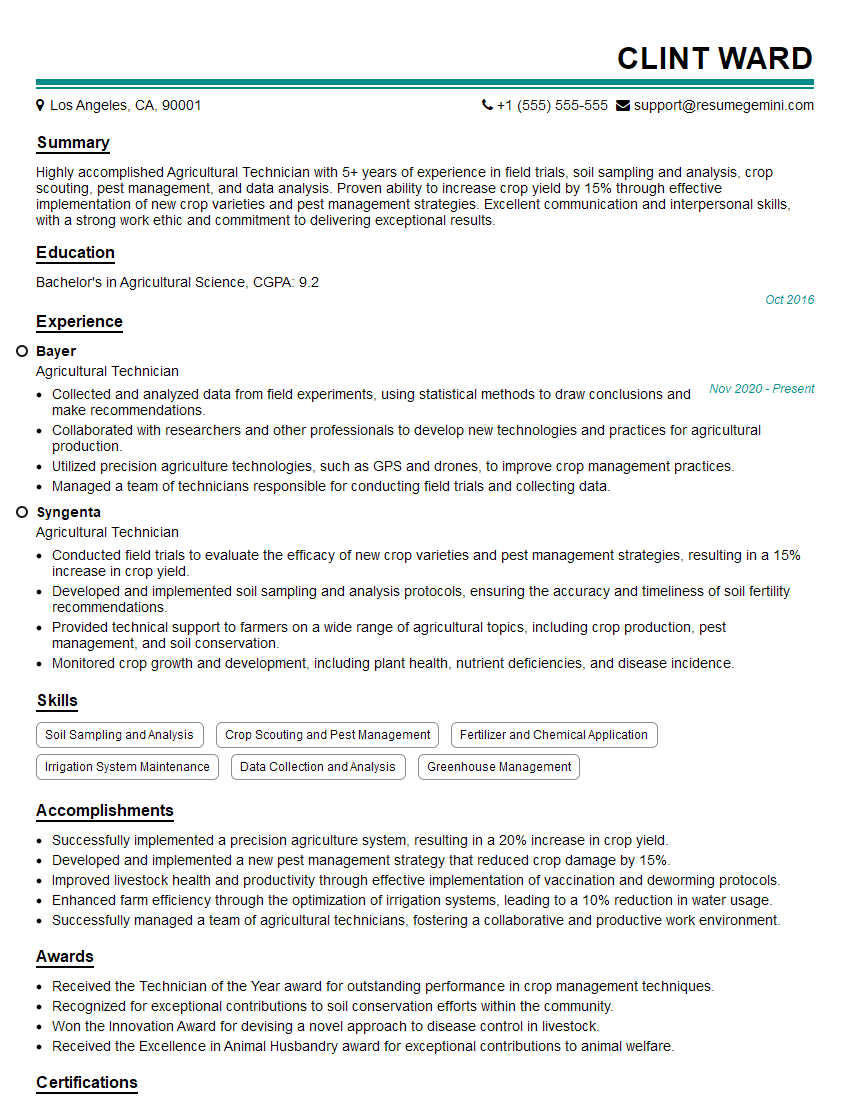
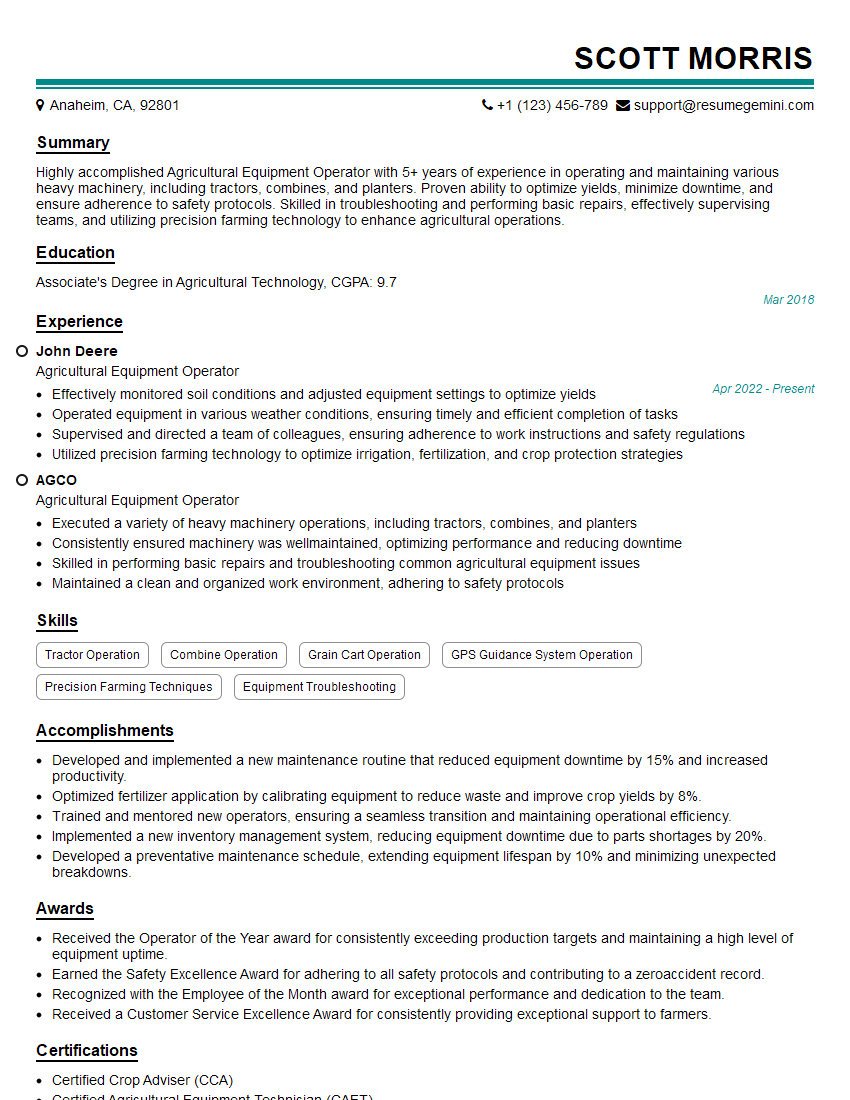
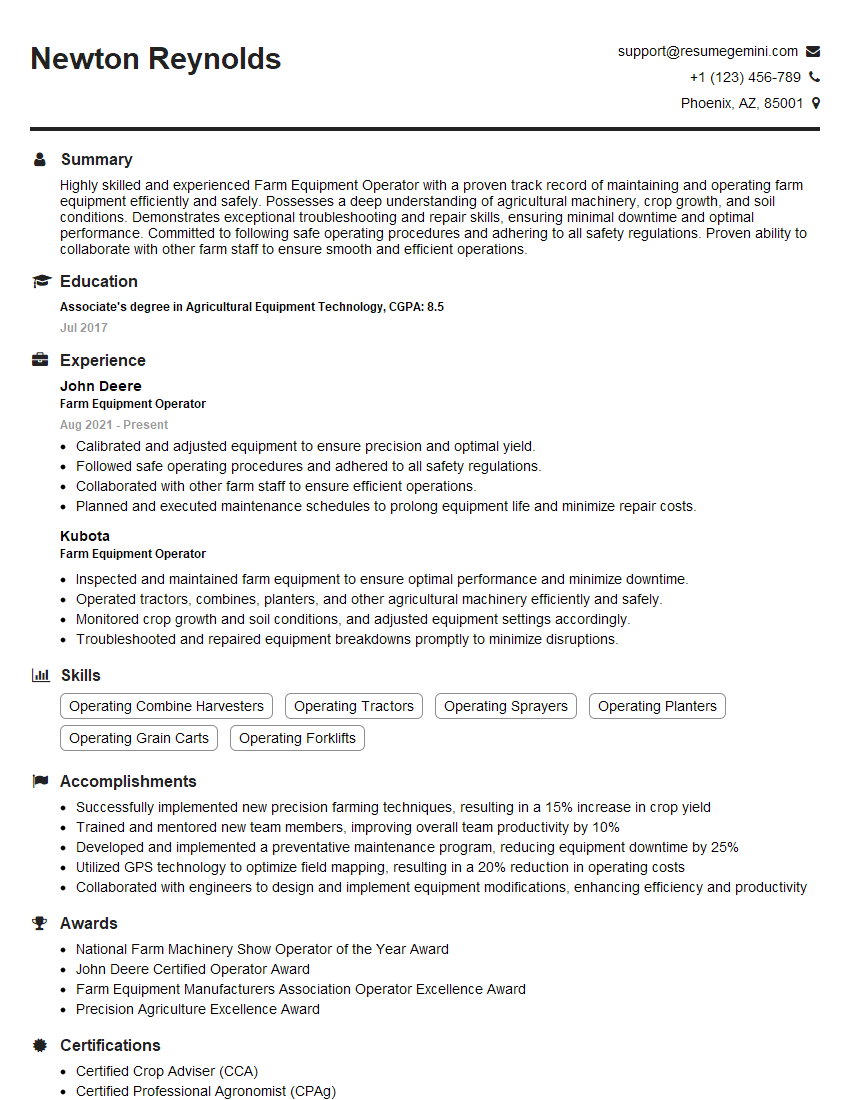
Mastering windrower operation opens doors to a rewarding career in agriculture, offering opportunities for advancement and specialization. A strong resume is crucial for showcasing your skills and experience to potential employers. To increase your chances of landing your dream job, create an ATS-friendly resume that highlights your key qualifications and achievements. ResumeGemini is a trusted resource that can help you build a professional and impactful resume tailored to the agricultural industry. We provide examples of resumes specifically designed for Windrower Operators to help guide you in creating a winning application.




Explore more articles
Users Rating of Our Blogs
Share Your Experience
We value your feedback! Please rate our content and share your thoughts (optional).
What Readers Say About Our Blog
good