Every successful interview starts with knowing what to expect. In this blog, we’ll take you through the top Wood-Based Construction interview questions, breaking them down with expert tips to help you deliver impactful answers. Step into your next interview fully prepared and ready to succeed.
Questions Asked in Wood-Based Construction Interview
Q 1. Explain the different types of wood suitable for structural applications.
Selecting the right wood for structural applications is crucial for building safety and longevity. The suitability depends on factors like strength, durability, and resistance to decay. Several species excel in different situations.
- Softwoods: These generally come from coniferous trees (trees with needles, like pine and fir) and are typically less dense and less expensive than hardwoods. Examples include:
- Spruce: Known for its strength-to-weight ratio, often used in framing and engineered wood products.
- Pine: A versatile choice, used in framing, decking, and other applications. Different pine species vary in strength and durability.
- Fir: Similar to spruce in strength, frequently used in dimensional lumber and engineered wood.
- Hardwoods: These originate from deciduous trees (trees that lose their leaves, like oak and maple) and are generally denser, stronger, and more resistant to wear and tear. However, they’re often more costly. Examples include:
- Oak: Exceptionally strong and durable, often used for flooring, beams, and high-end furniture, though less common in standard framing.
- Maple: Hard and stable, suitable for flooring and some structural components where its hardness is beneficial.
- Engineered Wood Products: These combine smaller pieces of wood, often softwoods, into larger, stronger components. Examples include:
- Glulam (Glue Laminated Timber): Made by gluing layers of lumber together, allowing for large, strong beams and columns.
- LVL (Laminated Veneer Lumber): Composed of thin layers of wood veneer glued together, typically used in headers and beams.
- CLT (Cross-Laminated Timber): Layers of lumber are stacked perpendicularly and glued, creating large, strong panels. This is discussed further in a later question.
The choice of wood depends significantly on the specific application, budget, and local availability. Structural engineers carefully consider these factors when designing a building.
Q 2. Describe the process of framing a typical residential wall.
Framing a residential wall is a systematic process that involves several steps. Think of it like building with giant LEGOs, but with precision and adherence to building codes.
- Laying the foundation: The wall starts with a bottom plate (a horizontal piece of lumber) that sits on the foundation or floor system. This provides the base for the entire wall.
- Erecting studs: Vertical lumber pieces, called studs (typically 2x4s or 2x6s), are placed evenly spaced along the bottom plate. Spacing usually follows building codes and is often 16 inches or 24 inches on center.
- Adding top plate: Another horizontal lumber piece, the top plate, is fixed on top of the studs, connecting them and creating a strong frame.
- Sheathing: Plywood or oriented strand board (OSB) sheets are attached to the exterior of the stud frame to provide structural stability and a surface for exterior cladding.
- Bracing: Diagonal bracing or other methods, like adding blocking between studs, might be needed to prevent racking (twisting) of the wall assembly. This is particularly important for taller walls.
- Insulation and vapor barrier: Insulation is added within the wall cavity to provide thermal efficiency. A vapor barrier helps control moisture.
- Finishing: The final step often involves installing drywall or other interior wall coverings.
Proper framing ensures the wall’s strength, stability, and energy efficiency. Skilled carpenters use various tools and techniques to ensure precise alignment and secure connections.
Q 3. What are the advantages and disadvantages of using CLT (Cross-Laminated Timber)?
Cross-Laminated Timber (CLT) is a modern, engineered wood product gaining popularity for its versatility and sustainability. It’s essentially a massive sandwich of lumber layers glued together with the wood grain oriented perpendicularly in each layer.
Advantages:
- High strength and stiffness: CLT panels are incredibly strong in both tension and compression, making them ideal for load-bearing walls, floors, and roofs.
- Seismic performance: The layered construction provides excellent resistance to seismic activity.
- Sustainability: CLT uses sustainably harvested wood, and the manufacturing process is relatively efficient and environmentally friendly.
- Pre-fabrication: CLT panels can be prefabricated off-site, speeding up construction and reducing on-site waste.
- Aesthetic appeal: The exposed wood grain can create a beautiful interior finish, reducing the need for extensive drywall.
Disadvantages:
- Cost: CLT can be more expensive than traditional framing materials initially, although the speed of construction can offset some of this.
- Transportation: The large size of CLT panels can make transportation challenging and may require specialized equipment.
- Moisture sensitivity: Like all wood, CLT is susceptible to moisture damage; proper protection and treatment are essential.
- Fire resistance: While CLT exhibits good fire resistance, proper fire protection measures are still necessary, often involving specialized coatings.
In summary, CLT offers many benefits for modern construction, but careful consideration of the cost, transportation, and moisture management is needed.
Q 4. How do you ensure proper moisture content in lumber before construction?
Controlling moisture content in lumber before construction is paramount to prevent warping, shrinkage, and structural issues. Wood naturally absorbs and releases moisture, and significant fluctuations can lead to problems.
The process involves several steps:
- Proper storage: Lumber should be stored under cover, off the ground, and properly stacked to allow for air circulation. Avoid direct sunlight and excessive humidity.
- Moisture meters: These tools measure the moisture content of wood, allowing for precise assessment. Different types of meters exist, including pin-type and surface-type meters.
- Drying: If the lumber is too wet, kiln drying is often used to reduce the moisture content to the desired level (typically 12-19% for framing lumber). This is a controlled process that removes moisture gradually without damaging the wood.
- Acclimation: Once the lumber is at the target moisture content, it should be allowed to acclimate to the ambient conditions of the construction site. This helps to prevent significant changes in moisture content during construction.
- Planning and scheduling: Proper planning and scheduling of the project ensure that the lumber is ordered and processed with sufficient time for drying and acclimation.
Failing to control moisture content can result in significant issues during and after construction, leading to repairs, replacements, and potentially compromising the structural integrity of the building. Therefore, careful monitoring and proactive management are crucial.
Q 5. Explain the different types of wood connections and their applications.
Wood connections are critical for transferring loads and ensuring the stability of a structure. Various methods exist, each suitable for different situations.
- Nail connections: Simple and cost-effective, often used for framing. The choice of nail size and type depends on the wood species, load, and building code.
- Screw connections: Provide stronger connections than nails, often preferred in areas with higher loads or where greater resistance to withdrawal is needed. Different screw types (e.g., structural screws) exist for specific applications.
- Bolt connections: Used for heavy-duty applications, such as large beams or columns, where high strength is required. Bolts are typically tightened with washers and nuts.
- Wood adhesives: Glues can be used to create strong, durable connections, especially in engineered wood products like CLT and glulam. The choice of adhesive depends on the wood species and application.
- Metal connectors: These plates, angles, and other connectors provide additional strength and stability to joints, especially in areas with complex load transfer requirements. They are especially common in seismic zones.
- Dowel connections: Wooden pins (dowels) are used to create strong joints, often in furniture making but can be used structurally.
The selection of a connection method requires careful engineering considerations, factoring in loads, wood species, and construction methods. An incorrect connection can compromise the structural integrity of the building.
Q 6. What are common building codes and regulations related to wood construction?
Building codes and regulations related to wood construction vary by location, but common themes exist to ensure safety and structural integrity.
- International Building Code (IBC): While not a law in itself, the IBC serves as a model code widely adopted by various jurisdictions. It provides detailed requirements for wood construction, including allowable stresses, design methods, and fire safety.
- Local building codes: Each region or municipality often has its own building codes that may supplement or modify the IBC. It’s crucial to check local regulations before commencing construction.
- Prescriptive vs. performance-based design: Codes typically offer both prescriptive (specific requirements) and performance-based (demonstrating compliance through calculations) approaches to design. Engineers may choose the most suitable path.
- Fire safety: Codes address fire protection for wood structures, specifying requirements for fire-resistant treatments, compartmentalization, and egress planning.
- Load and resistance factor design (LRFD): This design method is widely used in wood structures to account for uncertainties in material properties and loads, leading to safer and more reliable buildings.
- Moisture content requirements: Codes specify allowable moisture content for lumber, ensuring structural performance is not compromised.
Adhering to building codes is essential for legal compliance and safety. Ignoring regulations can have serious consequences, including structural failure and legal liabilities.
Q 7. Describe your experience with different types of wood finishes and treatments.
My experience encompasses a wide range of wood finishes and treatments, each with its unique properties and applications.
- Paints: Provide protection against the elements and offer aesthetic variety. Exterior paints need to be weather-resistant, while interior paints focus on durability and appearance.
- Stains: Penetrate the wood, enhancing its natural color and grain pattern while providing some protection. Various types are available, from water-based to oil-based, each with different properties.
- Sealants: Protect the wood from moisture and decay. These can range from simple penetrating sealers to thicker coatings that provide more substantial protection.
- Preservatives: Treat wood to protect against insects, fungi, and decay, especially important for exterior applications. Pressure-treated lumber is a common example.
- Fire retardants: Apply to wood to improve its fire resistance. These can be topical treatments or pressure-impregnated. These are often required in specific building applications.
The choice of finish depends on the application, environmental conditions, and aesthetic preferences. I’ve worked with many finishes, selecting the most appropriate based on a project’s needs, considering factors such as cost, durability, and environmental impact.
For instance, I once worked on a project where a naturally aged look was desired, and we carefully selected a low-impact stain to highlight the beauty of the wood without obscuring its character. In another project focusing on fire safety, a fire-retardant coating was essential to meet building code requirements.
Q 8. How do you manage and mitigate risks associated with wood construction?
Managing risks in wood construction requires a proactive, multi-faceted approach. We begin with thorough site assessments to identify potential hazards like soil conditions, weather exposure, and proximity to utilities. Design considerations are crucial; we use appropriate species of wood, ensuring correct grading and sizing to meet structural requirements and minimize risks of failure. We meticulously review drawings and specifications, checking for potential conflicts and design flaws. During construction, we implement robust quality control measures, including regular inspections and testing to verify material quality and workmanship. This includes moisture content checks and visual inspections for defects. Finally, we leverage advanced modeling and simulation techniques to predict and mitigate risks associated with structural performance under various load scenarios. For instance, we might use finite element analysis to assess the behavior of a complex timber frame under seismic loading. Beyond structural aspects, safety protocols regarding handling heavy timbers and the use of power tools are paramount.
Q 9. Explain your understanding of sustainable wood sourcing and construction practices.
Sustainable wood sourcing and construction practices are central to responsible building. This involves selecting wood from certified sustainable forests managed according to principles of responsible forestry. Certifications like the Forest Stewardship Council (FSC) and Programme for the Endorsement of Forest Certification (PEFC) provide assurance of responsible sourcing. We prioritize using locally sourced wood to reduce transportation emissions. In addition to material sourcing, we incorporate design strategies that minimize waste. This might include prefabrication techniques that optimize material usage and reduce on-site waste generation. Furthermore, we focus on designing buildings that are energy-efficient, using appropriate insulation and passive solar design to reduce the overall environmental impact. We are committed to choosing wood products with minimal chemical treatments and favor recycled or reclaimed wood where appropriate. Finally, we always ensure end-of-life considerations are included in the design, aiming for deconstruction and reuse rather than demolition and landfill disposal.
Q 10. Describe your experience with timber frame construction techniques.
I have extensive experience with timber frame construction, from small residential projects to larger commercial structures. My work encompasses all phases, from initial design and detailing using CAD software to on-site assembly and connection detailing. I’m proficient in various joinery techniques, including traditional mortise and tenon joints, and modern techniques using steel connectors. I understand the importance of precise measurements and tolerances in timber framing to ensure structural integrity and aesthetic appeal. One memorable project involved the construction of a large barn using locally sourced Douglas fir. The intricate detailing of the frame required careful planning and execution, and the end result was a beautiful and structurally sound building that showcased the elegance of timber framing. The use of specialized equipment like heavy-duty timber cranes and precision cutting tools is integral to this type of construction, and ensuring safe operation is always a priority.
Q 11. What is your experience with working with engineered wood products (e.g., Glulam, LVL)?
Engineered wood products (EWPs) are indispensable in modern wood construction. My experience includes working with Glulam (glued laminated timber) beams and columns for long spans and LVL (laminated veneer lumber) for structural elements like headers and beams. I understand the properties and design considerations unique to these materials. For instance, Glulam allows for the creation of large, aesthetically pleasing beams that are strong and flexible. LVL offers superior strength and dimensional stability compared to solid lumber. I’ve used EWPs in a variety of projects, including multi-story residential buildings and commercial structures, leveraging their inherent advantages in terms of strength, stiffness, and design flexibility. The use of design software and understanding the manufacturer’s specifications are crucial for proper implementation of these materials.
Q 12. How do you identify and address common wood defects?
Identifying and addressing wood defects is critical for ensuring structural integrity and preventing future problems. Visual inspection is the first step, carefully checking for knots, cracks, decay, and insect infestation. Using tools like a moisture meter helps in detecting excessive moisture content, which can weaken the wood. For hidden defects, non-destructive testing methods might be employed. The severity of a defect dictates how it’s addressed. Minor defects might be acceptable with appropriate adjustments to design, while severe defects necessitate replacement of the affected member. For instance, a small knot in a less stressed area of a beam might be acceptable, whereas a significant crack running through a structural member would require replacement. Knowledge of different wood species and their susceptibility to various defects is essential for informed decision-making.
Q 13. Describe your experience with different types of wood adhesives and fasteners.
I have experience with a range of wood adhesives and fasteners, from traditional wood glues to high-performance structural adhesives and various types of nails, screws, and bolts. The choice of adhesive or fastener depends on several factors, including the type of wood, the structural requirements, and the environmental conditions. For example, exterior applications might require waterproof adhesives and corrosion-resistant fasteners. Structural adhesives offer significant strength and durability, especially in load-bearing applications. I’m familiar with different types of wood screws designed for specific applications, and I understand the importance of proper drilling techniques to avoid splitting the wood. Understanding the chemical properties of different adhesives, including their setting time and curing characteristics, is essential for successful and long-lasting results.
Q 14. What safety procedures do you follow when working with power tools and machinery?
Safety is paramount in any construction project, and working with power tools and machinery in wood construction is no exception. Before operating any tool, I always ensure it’s properly maintained and functioning correctly. I wear appropriate personal protective equipment (PPE), including safety glasses, hearing protection, and dust masks. When operating tools like chainsaws and table saws, I follow strict safety protocols, including using push sticks and maintaining a safe distance from the blade. I am trained in emergency procedures, including how to respond to injuries and equipment malfunctions. Regular tool maintenance and adherence to safety regulations contribute to creating a safe and productive work environment. Regular training on safe equipment operation and proper PPE usage reinforces a safety-conscious approach.
Q 15. How do you ensure the accuracy of measurements and cuts in wood construction?
Accuracy in measurements and cuts is paramount in wood construction, impacting the structural integrity and aesthetic appeal of the final product. We employ several strategies to ensure precision.
- Precise Measuring Tools: I always use calibrated measuring tapes, levels, squares, and laser measuring tools. Regular calibration ensures accuracy. For example, before starting a project, I’ll check my tape measure against a known standard to ensure it’s not stretched or damaged.
- Layout Techniques: Careful layout is crucial. I use snap lines to mark cutting lines on lumber, ensuring precise cuts. This prevents errors and saves material. Think of it like drawing a detailed map before embarking on a journey—it guides every step.
- Multiple Measurements: I always double-check, and sometimes even triple-check, measurements before making a cut, especially for critical components. This redundancy minimizes errors caused by human oversight.
- Jig and Fixture Usage: For repetitive cuts or complex joinery, I utilize jigs and fixtures. These templates ensure consistent and accurate results every time. Think of it like using a cookie cutter for consistent cookies – the jig ensures the same precise cut repeatedly.
- Computer-Aided Design (CAD): For larger projects, using CAD software allows for precise digital modeling and cut lists, minimizing errors in the field.
Career Expert Tips:
- Ace those interviews! Prepare effectively by reviewing the Top 50 Most Common Interview Questions on ResumeGemini.
- Navigate your job search with confidence! Explore a wide range of Career Tips on ResumeGemini. Learn about common challenges and recommendations to overcome them.
- Craft the perfect resume! Master the Art of Resume Writing with ResumeGemini’s guide. Showcase your unique qualifications and achievements effectively.
- Don’t miss out on holiday savings! Build your dream resume with ResumeGemini’s ATS optimized templates.
Q 16. Describe your experience with blueprint reading and interpretation.
Blueprint reading and interpretation are fundamental skills in wood construction. My experience spans over [Number] years, encompassing a wide range of projects from residential renovations to commercial structures.
I’m proficient in interpreting various architectural symbols, understanding elevations, sections, and plans. I can extract information regarding dimensions, material specifications, and construction details. I understand how different views (plans, elevations, sections, and details) work together to create a complete picture of the project. I can identify potential conflicts or ambiguities early on and resolve them through collaboration with architects and engineers. For example, on a recent project, I spotted a discrepancy in the framing plan that could have led to structural instability, which I flagged early and had corrected.
I’m also adept at using the information in the blueprints to create cutting lists, material takeoffs, and sequencing construction phases to optimize workflow and efficiency. I have a keen eye for detail, allowing me to translate complex design information into practical construction steps.
Q 17. How do you manage a team of carpenters or other construction workers?
Managing a team requires strong leadership, communication, and organizational skills. My approach focuses on fostering a collaborative and safe working environment.
- Clear Communication: I ensure that everyone understands the project’s goals, their individual roles, and the expectations. Regular team meetings are essential for updates and addressing concerns.
- Delegation and Empowerment: I delegate tasks based on individual skill sets, providing support and guidance as needed. Empowering team members boosts morale and efficiency.
- Conflict Resolution: I proactively address conflicts, mediating disputes fairly and ensuring a positive working relationship.
- Safety First: Safety is paramount. I enforce strict safety protocols and conduct regular safety briefings. I’ve personally been instrumental in reducing site accidents by [Percentage or Number] in previous projects.
- Motivation and Recognition: I recognize and appreciate individual contributions, motivating the team to achieve project goals and fostering a sense of accomplishment.
Q 18. What is your experience with project scheduling and budgeting?
Project scheduling and budgeting are critical for successful project delivery. My experience includes developing and managing detailed schedules using various project management software.
I can create realistic schedules that account for task dependencies, resource availability, and potential delays. I regularly monitor progress against the schedule, making adjustments as needed. For example, I use Gantt charts to visualize task dependencies and critical paths, allowing for proactive identification of potential scheduling bottlenecks.
Similarly, I’m skilled in developing accurate project budgets, encompassing material costs, labor costs, equipment rentals, and contingency funds. I track expenses meticulously, identifying and addressing any budget variances promptly. I often use spreadsheet software to track expenses against the budget and generate reports for clients. A keen eye for cost-effective material selection has saved projects significant amounts of money in the past.
Q 19. How do you handle unexpected problems or delays on a construction site?
Unexpected problems and delays are inevitable in construction. My approach centers around proactive problem-solving and effective communication.
- Problem Identification: I quickly identify the root cause of the problem, assessing its impact on the schedule and budget.
- Solution Development: I brainstorm solutions with the team, considering various options and their implications. This often involves consulting with engineers or subcontractors.
- Communication: I promptly communicate the problem and the proposed solutions to all stakeholders, including clients. Transparency builds trust.
- Risk Mitigation: I develop contingency plans to minimize the impact of future unexpected events. For instance, maintaining extra materials in stock for common issues.
- Documentation: I meticulously document the problem, the solution implemented, and any lessons learned, to inform future projects.
For instance, on a recent project, a sudden rainstorm caused a delay. We swiftly adapted by relocating some indoor tasks and implementing protective measures, minimizing the overall impact on the project timeline.
Q 20. Describe your experience with quality control inspections during construction.
Quality control is integral to ensuring a structurally sound and aesthetically pleasing building. My experience involves conducting thorough inspections at various stages of the project.
I follow checklists and industry standards, carefully reviewing each aspect of the work, from foundation to finish. This includes checking for plumbness, squareness, proper fastening techniques, and compliance with building codes. I use various tools to ensure quality, such as levels, plumb bobs, and tape measures. I document all findings, addressing any deficiencies immediately. I also utilize photographic and video documentation to record the progress and highlight any areas needing attention.
I regularly collaborate with inspectors to ensure compliance and address any concerns proactively. A proactive approach to quality control prevents costly rework and ensures client satisfaction. On previous projects, our rigorous quality control measures resulted in minimal rework and a higher-than-average client satisfaction rate.
Q 21. Explain your understanding of different types of foundations suitable for wood structures.
The choice of foundation for a wood structure depends on several factors, including soil conditions, building size, and local building codes. There are several types, each suited to different conditions.
- Crawl Space Foundations: These foundations feature a low, vented space beneath the structure, providing access for utilities and pest control. They are suitable for areas with well-drained soil.
- Slab-on-Grade Foundations: A concrete slab poured directly onto the ground, offering a cost-effective solution for level ground. They’re best suited for stable soil conditions.
- Basement Foundations: These provide usable space below grade but are more expensive and require more excavation. Suitable for areas where water drainage is not an issue.
- Pier and Beam Foundations: This involves setting concrete piers into the ground and supporting the structure with beams, offering good ground ventilation and resistance to seismic activity. Ideal for sloped or unstable soil conditions.
Choosing the right foundation requires a thorough site assessment and engineering analysis to ensure structural integrity and long-term stability of the building.
Q 22. What software or tools are you familiar with for design or construction management?
My expertise in wood-based construction involves proficiency in several software and tools. For design, I’m highly skilled in Autodesk Revit, using its capabilities for BIM (Building Information Modeling) to model complex structures, manage schedules, and coordinate different building systems. I also utilize SketchUp for quick conceptual design and visualization, its ease of use being invaluable in client presentations. For structural analysis, I am proficient in RISA-3D, a powerful tool that allows for accurate calculations of wood member stresses and deflections, ensuring structural integrity. In terms of construction management, I utilize Microsoft Project for scheduling and resource allocation, and Procore for project collaboration and documentation.
Q 23. How do you ensure the structural integrity of a wood building?
Ensuring structural integrity in a wood building is paramount. This involves a multi-faceted approach starting from the design phase. We begin by using appropriate engineering design software like RISA-3D to analyze loads – dead loads (weight of the structure), live loads (occupancy, snow), and wind loads – and ensure that all structural elements, such as beams, columns, and connections, are adequately sized to withstand these forces. We meticulously select the right type and grade of lumber, adhering to standards set by organizations like the American Wood Council (AWC). Proper connection design is critical; we specify appropriate fasteners and connection techniques, often employing engineered wood products like laminated veneer lumber (LVL) or parallel strand lumber (PSL) for increased strength and stability in critical areas. On-site inspection during construction is vital to ensure that the design specifications are followed precisely. Regular quality checks and adherence to building codes are fundamental to guaranteeing the long-term structural soundness of the building.
Q 24. What are your experience with different types of roofing systems for wood construction?
My experience encompasses a range of roofing systems for wood construction. I’ve worked with traditional shingle roofs, which offer a cost-effective and aesthetically pleasing solution for many projects. For steeper slopes, slate roofing provides exceptional durability and longevity, although it is a more expensive option. In more contemporary designs, I’ve utilized metal roofing systems, known for their long lifespan, fire resistance, and energy efficiency. For larger-scale projects, built-up roofing (BUR) systems using multiple layers of roofing felt and asphalt are sometimes appropriate, particularly for flat or low-slope roofs. The choice of roofing system depends on many factors including the building’s design, budget, climate, and aesthetic considerations. For example, in areas with heavy snowfall, a roof designed to shed snow effectively is crucial, while in areas prone to wildfires, fire-resistant materials are paramount. The selection process always involves a detailed assessment of these factors and relevant building codes.
Q 25. Describe your understanding of fire protection methods in wood construction.
Fire protection in wood construction is often misunderstood. Wood, while combustible, possesses inherent fire-resistant properties. Its ability to char slowly creates a protective layer, slowing the spread of fire. However, appropriate fire protection strategies are still crucial. These strategies can include using fire-resistant treated lumber, installing fire-rated walls and floors, incorporating automatic sprinkler systems, and strategically placing fire-resistant barriers in critical areas. The design of the building itself plays a vital role. Compartmentalization, achieved through strategically placed fire walls, helps to contain a fire, preventing its rapid spread throughout the structure. The selection of appropriate fire-retardant materials, such as gypsum board, in walls and ceilings is also important. Furthermore, adherence to relevant building codes and fire safety regulations is non-negotiable, and regular fire safety inspections are critical to ensure continued protection.
Q 26. How do you ensure the energy efficiency of wood buildings?
Energy efficiency in wood buildings is achieved through a combination of design strategies and material selection. Proper insulation is paramount, employing high-performance insulation materials in walls, roofs, and floors to minimize heat transfer. Air sealing is equally crucial; we meticulously seal any gaps or cracks in the building envelope to prevent air leakage, reducing energy loss due to infiltration. High-performance windows and doors with low U-values (a measure of thermal transmittance) are essential for minimizing heat loss through glazing. We often incorporate strategies like passive solar design, utilizing the sun’s energy for heating and reducing reliance on mechanical systems. The selection of energy-efficient appliances and mechanical systems, such as high-efficiency HVAC systems and LED lighting, completes the picture. Proper building orientation and shading strategies can further enhance energy efficiency, reducing the need for climate control.
Q 27. Explain your approach to working collaboratively with architects and engineers.
Collaboration is essential in wood construction. My approach involves open and transparent communication with architects and engineers from the very beginning of a project. We establish a shared understanding of the project goals, budget, and timeline. I actively participate in design reviews, providing input on the feasibility and constructability of design elements, offering suggestions based on my experience in working with wood. I utilize BIM software, like Revit, to facilitate collaboration, enabling seamless sharing of design information and coordination of different trades. Regular meetings and progress updates ensure everyone stays informed and any potential conflicts are addressed proactively. This collaborative process fosters a strong team dynamic and leads to better project outcomes.
Q 28. Describe a challenging wood construction project you’ve worked on and how you overcame the difficulties.
One challenging project involved constructing a multi-story residential building using cross-laminated timber (CLT). The challenge arose from the complexity of the CLT panel fabrication and installation, requiring precise coordination and specialized handling equipment. The tight tolerances inherent in CLT construction demanded meticulous planning and execution to ensure that all panels fitted perfectly. We overcame this by engaging with experienced CLT fabricators and installers early in the design phase. We also implemented a rigorous quality control process, involving regular inspections and close monitoring of the installation process. Detailed 3D modeling using Revit allowed us to visualize and address potential issues before they occurred on-site, avoiding costly delays. By fostering clear communication and collaboration with the entire team, we successfully completed the project, delivering a structurally sound and aesthetically pleasing building that met all design and quality standards.
Key Topics to Learn for Wood-Based Construction Interview
- Timber Engineering Principles: Understanding stress, strain, and the behavior of wood under load. This includes knowledge of different wood species and their properties.
- Practical Application: Designing load-bearing walls, roof systems, and other structural components using engineered wood products (e.g., glulam, LVL). Calculating required dimensions and connections.
- Sustainable Forestry and Wood Procurement: Familiarize yourself with environmentally responsible sourcing practices and certifications (e.g., FSC).
- Construction Methods and Techniques: Mastering various joining techniques (nails, screws, bolts, adhesives), understanding different framing systems (platform, balloon), and the use of specialized tools and machinery.
- Building Codes and Regulations: Understanding relevant building codes and regulations related to wood construction in your region. This includes fire safety and structural requirements.
- Cost Estimation and Project Management: Developing accurate cost estimates for wood-based projects and managing timelines and resources effectively.
- Health and Safety: Demonstrating awareness of workplace safety regulations and best practices specific to wood construction (e.g., fall protection, dust control).
- Problem-Solving in Wood Construction: Be prepared to discuss how you would approach common challenges, such as wood defects, moisture issues, or unexpected site conditions.
- Advanced Topics (for Senior Roles): Explore topics like seismic design for wood structures, advanced connection techniques, and the use of Computer-Aided Design (CAD) software for wood construction.
Next Steps
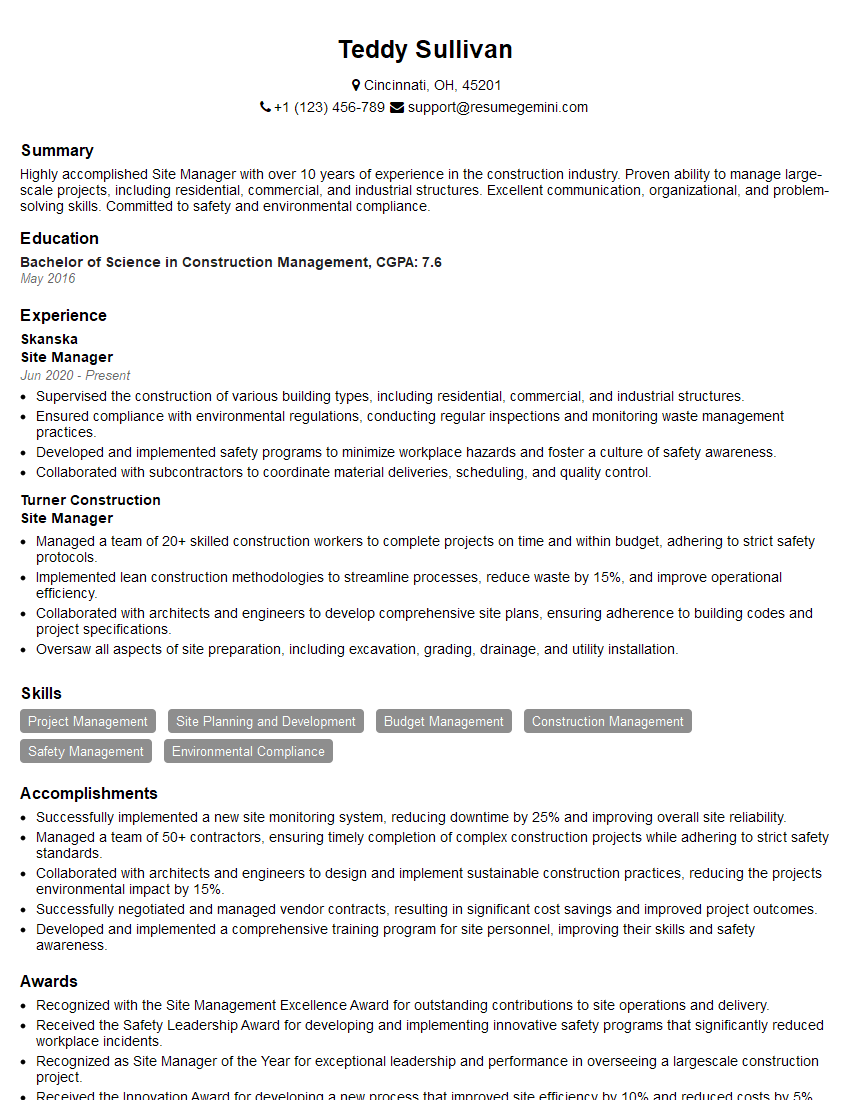
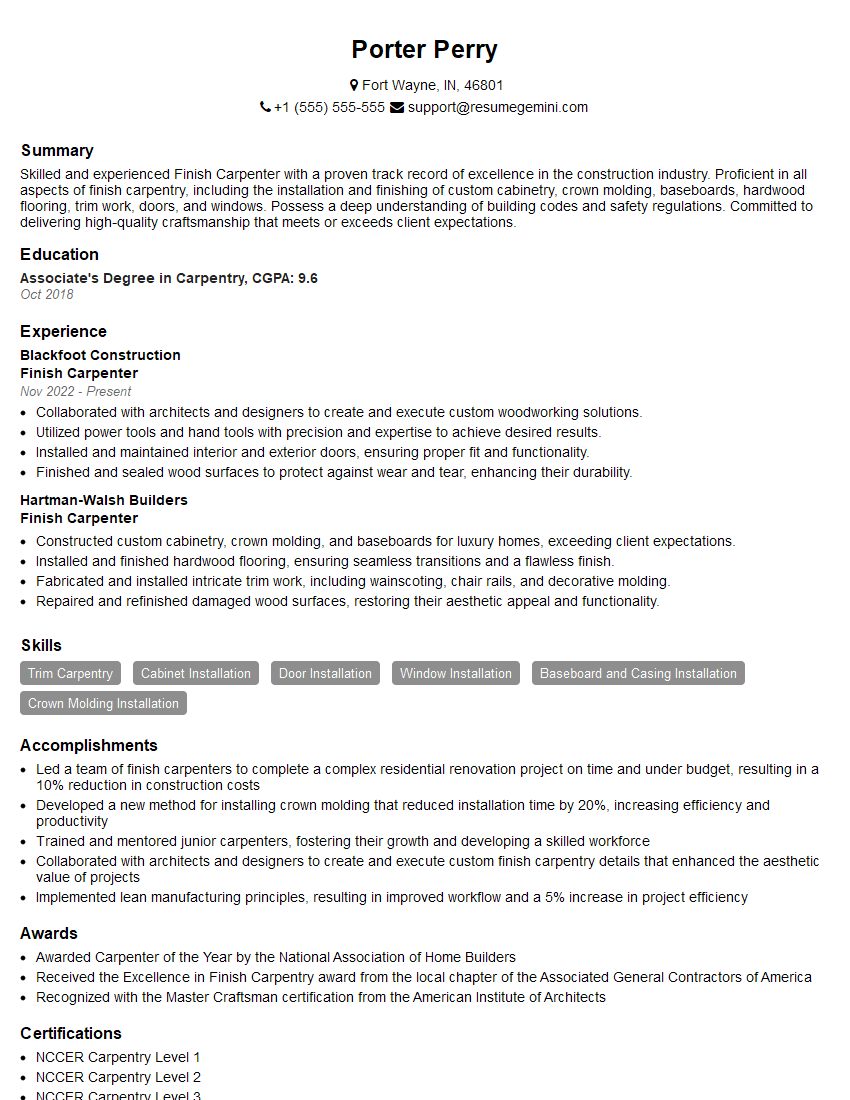
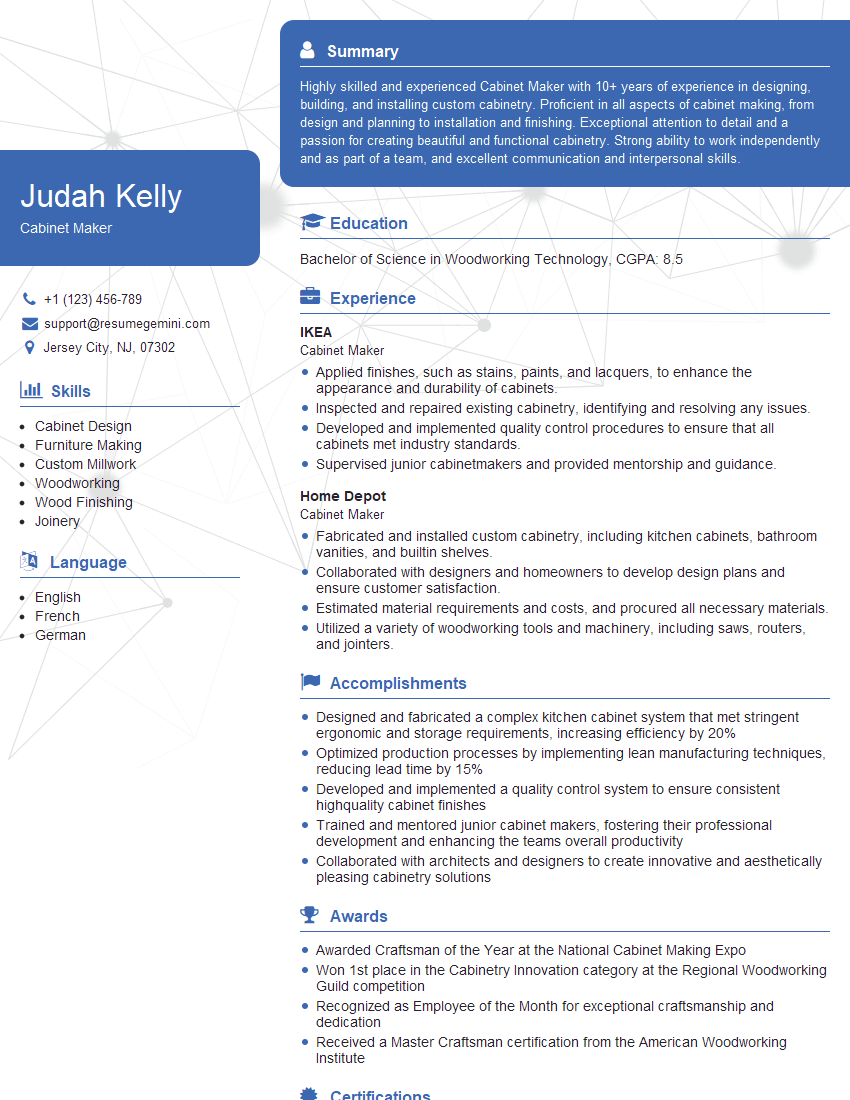
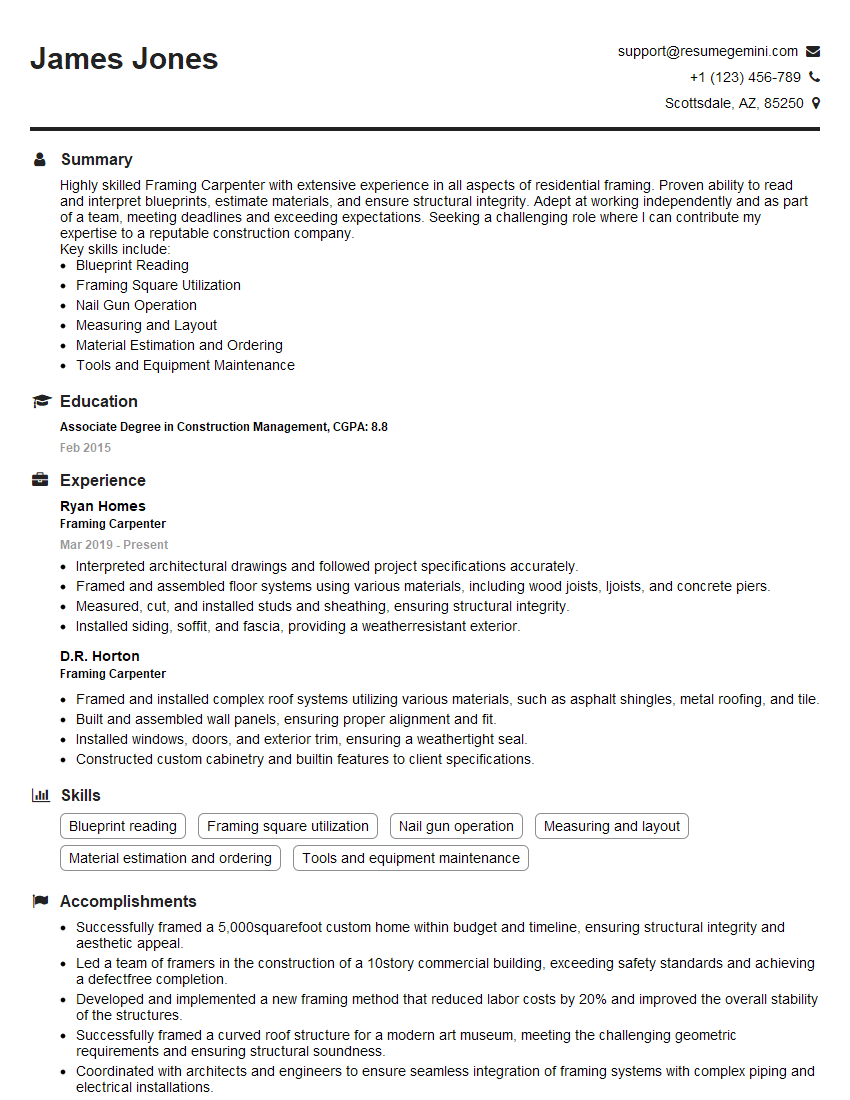
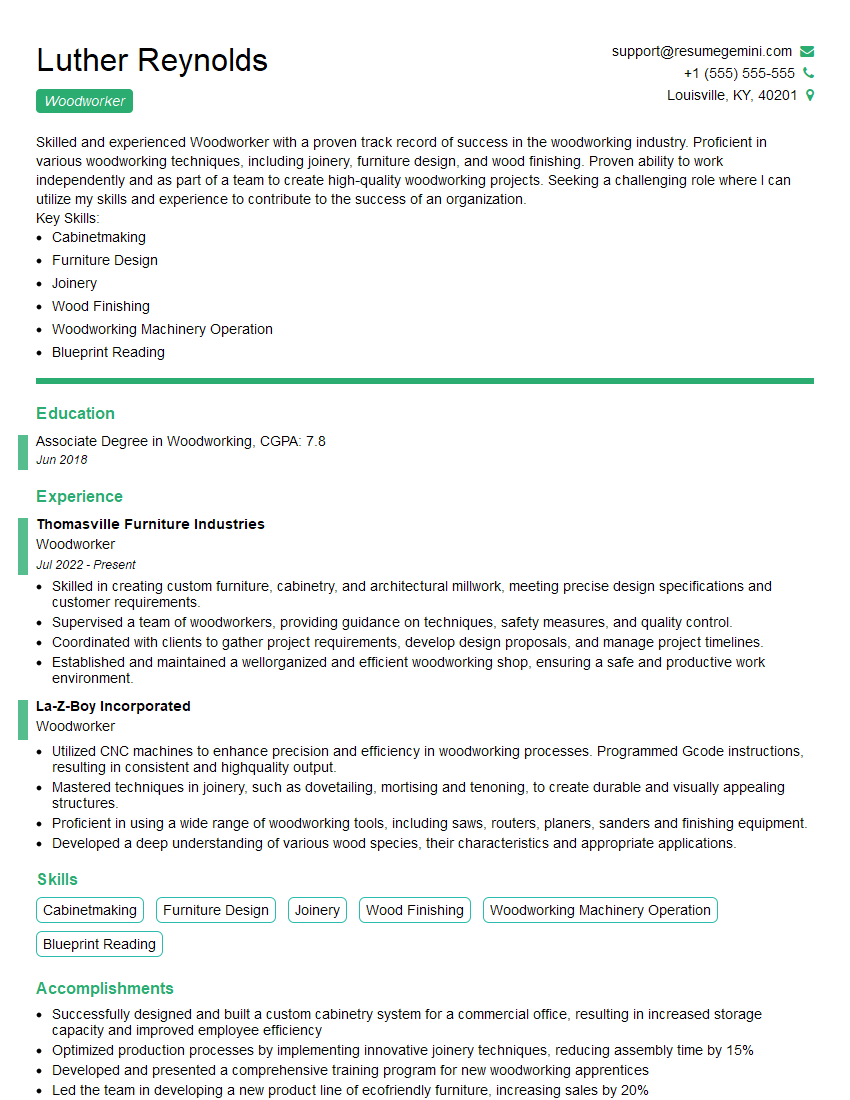
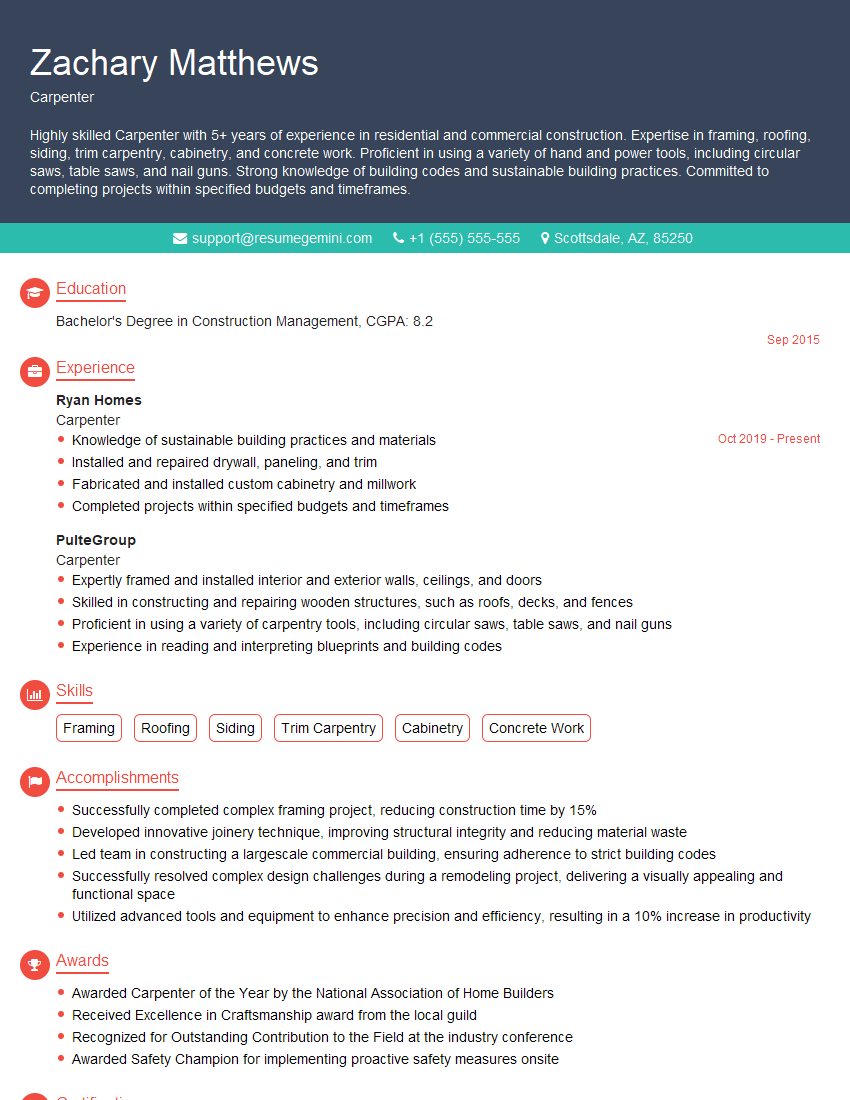
Mastering Wood-Based Construction principles opens doors to exciting and rewarding career opportunities, offering diverse roles with increasing responsibility and earning potential. To maximize your chances of landing your dream job, invest time in crafting a strong, ATS-friendly resume. ResumeGemini is a trusted resource that can significantly enhance your resume-building experience, helping you present your skills and experience in the best possible light. ResumeGemini provides examples of resumes tailored to the Wood-Based Construction industry, giving you a head-start in creating a compelling document that showcases your expertise.

Explore more articles
Users Rating of Our Blogs
Share Your Experience
We value your feedback! Please rate our content and share your thoughts (optional).
What Readers Say About Our Blog
Very informative content, great job.
good