Interviews are opportunities to demonstrate your expertise, and this guide is here to help you shine. Explore the essential Working Knowledge of Sewing Machines interview questions that employers frequently ask, paired with strategies for crafting responses that set you apart from the competition.
Questions Asked in Working Knowledge of Sewing Machines Interview
Q 1. What types of sewing machines are you familiar with?
My experience encompasses a wide range of sewing machines, from basic mechanical models to advanced computerized machines. I’m proficient with both domestic and industrial sewing machines. This includes straight stitch machines ideal for mass production, zigzag machines for versatility, sergers for professional-grade finishing, and even specialized embroidery machines. I’ve worked extensively with brands like Singer, Brother, Janome, and Bernina, familiarizing myself with their unique features and functionalities.
- Mechanical Machines: These offer a fundamental understanding of the sewing process and are great for learning the basics. Their simplicity allows for easy troubleshooting.
- Computerized Machines: These machines offer programmable stitches, automatic features, and advanced settings, allowing for precision and efficiency in complex projects.
- Industrial Machines: I’ve used these in production settings, appreciating their durability and high-speed capabilities. They demand a different skill set in terms of maintenance and operation.
- Sergers/Overlock Machines: My experience with sergers includes creating professional-looking seams and finishing edges, critical for garment construction and durability.
Q 2. Describe your experience with different sewing machine needles.
Selecting the right needle is crucial for successful sewing. The type of needle depends on the fabric type and the thread being used. Using the wrong needle can lead to skipped stitches, broken needles, or damage to the fabric.
- Universal Needles: These are all-purpose needles suitable for most woven fabrics.
- Ballpoint Needles: Designed for knit fabrics, these needles prevent snagging or damage to the delicate loops of the fabric.
- Jeans Needles: These stronger needles are built to handle thick, heavy fabrics like denim.
- Embroidery Needles: These sharp needles are designed for embroidery thread and delicate fabrics, preventing fabric damage.
- Leather Needles: These needles are designed with a sharp point to pierce thick leather and have a larger eye to accommodate thicker threads.
For example, attempting to sew a delicate silk garment with a denim needle would undoubtedly result in holes and damage. Conversely, sewing denim with a ballpoint needle would result in broken needles.
Q 3. How do you troubleshoot a jammed sewing machine?
Troubleshooting a jammed sewing machine requires a systematic approach. I always start with the most common causes.
- Check the Bobbin: Make sure the bobbin is properly wound, inserted correctly, and has enough thread. A poorly wound bobbin is a frequent culprit.
- Inspect the Needle: Examine the needle for bending, damage, or incorrect insertion. A bent or dull needle will easily cause jams.
- Thread Tension: Adjust the upper and lower tension dials. Uneven tension is a common cause of jamming and skipped stitches. Often, a test piece can identify whether the upper or lower tension is too tight or loose.
- Clear the Fabric and Thread: Remove any fabric scraps or tangled threads that may be caught under the presser foot or around the feed dogs.
- Check the Feed Dogs: Ensure the feed dogs are functioning correctly and not obstructed.
- Clean the Machine: Use a sewing machine brush or compressed air to remove lint and debris that may accumulate in the hook area and other moving parts.
If the problem persists after these checks, I would consult the machine’s manual or seek professional assistance. Documenting the troubleshooting steps ensures that similar issues can be addressed efficiently in the future.
Q 4. Explain the importance of proper tension in sewing.
Proper tension is absolutely critical for producing even, professional-looking stitches. It involves a balance between the upper tension (from the spool of thread) and the lower tension (from the bobbin).
Too much upper tension will cause the thread to pull the top fabric to the bottom fabric, making the stitching puckered on the top and loose on the bottom. Too much lower tension results in the opposite effect – loose top stitching and tight bottom stitching. Balanced tension creates smooth and even stitching on both sides of the fabric.
The ideal tension will vary depending on the fabric, thread type, and stitch pattern. I frequently use test swatches to fine-tune the tension before beginning a project. This allows for adjustments and reduces the risk of ruining expensive fabric. I’ve had experiences where adjustments are necessary when switching thread weights mid-project.
Q 5. What are the different types of stitches and when would you use each?
Many different stitches exist, each serving a unique purpose. Here are some common examples:
- Straight Stitch: The most basic stitch, used for seams, topstitching, and general sewing. It’s the backbone of most sewing projects.
- Zigzag Stitch: Used for finishing raw edges to prevent fraying, attaching elastic, and decorative purposes. Its versatility is a huge advantage.
- Overlock Stitch: Creates a professional finish on seams, preventing fraying and offering a clean, neat edge. Ideal for garment construction and prevents unraveling.
- Blind Hem Stitch: Almost invisible, this stitch is used for hemming garments, creating a clean and discreet finish.
- Buttonhole Stitch: Creates buttonholes with varied styles, allowing for customization and precision.
- Satin Stitch: Used for decorative purposes, creating filled-in areas with a smooth satin-like appearance.
The choice of stitch depends entirely on the project. For example, a straight stitch is sufficient for a simple tote bag, whereas a project requiring stretch, such as leggings, would benefit from a zigzag or overlock stitch for seam finishing.
Q 6. How do you maintain and clean a sewing machine?
Regular maintenance is key to ensuring the longevity and optimal performance of a sewing machine. This includes both cleaning and lubrication.
- Regular Cleaning: After each use, brush away lint and threads that accumulate around the needle, feed dogs, and bobbin area. A soft brush is ideal.
- Periodic Deep Cleaning: Depending on usage, a more thorough cleaning may be needed every few months. This might involve removing the needle plate, bobbin case, and other components for careful cleaning. Compressed air is helpful for removing dust from hard-to-reach areas.
- Lubrication: Sewing machine oil is crucial for lubricating moving parts and preventing wear and tear. Use a high-quality sewing machine oil and apply it sparingly to the recommended areas as specified in your machine’s manual.
- Bobbin Case Care: Keep the bobbin case clean and free from lint. A dirty bobbin case can significantly impact stitch quality.
- Storage: Cover your sewing machine when not in use to prevent dust accumulation.
Ignoring these steps can lead to poor stitch quality, machine jams, and ultimately, more costly repairs.
Q 7. What safety precautions do you take when operating a sewing machine?
Safety is paramount when operating a sewing machine. I always follow these precautions:
- Keep Fingers Clear: Never place fingers near the needle while the machine is in operation. Use a thimble for added protection.
- Proper Needle Insertion: Always ensure the needle is correctly inserted before operating the machine. An incorrectly inserted needle can cause serious injury or machine damage.
- Secure Fabric: Always secure the fabric under the presser foot before starting to sew.
- Machine Maintenance: Regular maintenance will prevent unexpected breakdowns and reduce the likelihood of accidents.
- Keep the Area Clean: Keep the sewing area free of clutter to prevent tripping hazards.
- Unplug Machine: Always unplug the machine when performing maintenance or cleaning.
- Never Leave the Machine Unattended: Switch off and unplug the machine when leaving it, even for a short period.
Following these safety guidelines prevents accidents and ensures a safe sewing environment. It is a habit I’ve developed to prevent injury to myself and any bystanders.
Q 8. Describe your experience with industrial sewing machines.
My experience with industrial sewing machines spans over 15 years, encompassing a wide range of models from renowned manufacturers like Juki, Singer, and Durkopp Adler. I’ve worked extensively with both single-needle and multi-needle machines, performing diverse tasks including heavy-duty stitching for denim, delicate work on fine silks, and high-speed production runs on various fabrics. This experience includes troubleshooting, maintenance, and minor repairs, ensuring optimal machine performance. For instance, I was instrumental in streamlining a production line by optimizing the stitch settings on a Juki high-speed machine, resulting in a 15% increase in output while maintaining stitch quality.
My proficiency extends to understanding the nuances of different feed systems (walking foot, direct drive, etc.), needle types and sizes, and appropriate tension adjustments for a variety of materials. I’m comfortable working with various attachments and specialized feet, adapting the machine to specific project needs.
Q 9. How do you adjust the stitch length and width?
Adjusting stitch length and width on a sewing machine is crucial for achieving the desired aesthetic and structural integrity of a garment or project. Most machines have dedicated dials or controls for these adjustments. The stitch length, typically measured in stitches per inch (spi), is adjusted using a dial that usually ranges from 0 to 4 or higher. A shorter stitch length (higher spi) creates denser, more durable seams, ideal for areas under stress. Longer stitch lengths are often used for basting or decorative purposes.
Stitch width, often controlled by a separate dial or lever, dictates the spacing between parallel stitches. A wider stitch width is useful for creating decorative stitches or zigzag seams, while a narrow width is preferred for straight seams. The exact location and operation of these controls vary slightly depending on the sewing machine model, but their functionality remains consistent. For example, a shorter stitch length is critical when sewing heavy-duty fabrics like canvas, while a wider stitch width is perfect for creating a decorative zig-zag stitch on a child’s dress.
Q 10. How do you thread a sewing machine?
Threading a sewing machine can seem daunting, but with a methodical approach, it becomes straightforward. The process generally involves several steps:
- Raise the presser foot and needle to their highest position. This provides better access to the threading path.
- Wind the bobbin. This is a separate process involving placing empty bobbin on a bobbin winder and feeding thread from spool.
- Insert the bobbin into the bobbin case. Carefully place the wound bobbin into the bobbin case, ensuring it’s securely in place.
- Thread the upper tension assembly. This involves guiding the thread through a series of discs, guides, and tension controls, carefully following the threading diagram printed on the machine.
- Insert the bobbin case into the shuttle. This carefully done part usually involves opening a compartment on the machine, placing the case and closing.
- Engage the needle. Put the thread through the needle carefully, following the specific instruction for your machine model.
- Test the threading by sewing a few test stitches.
Each sewing machine model has a slightly different threading path, so it’s essential to refer to the machine’s owner’s manual for specific instructions and diagrams. A common mistake is not engaging the needle properly. If the needle is not correctly threaded, the machine won’t sew correctly.
Q 11. What is your experience with different types of fabrics?
My experience encompasses a wide spectrum of fabrics, from delicate silks and chiffons to heavy-duty denim, canvas, and leather. I’m adept at identifying the characteristics of each fabric—its drape, weight, weave, and fiber content—and adjusting the sewing machine settings accordingly. For instance, sewing silk requires a fine needle, reduced stitch length, and minimal tension to prevent breakage or puckering. Conversely, sewing denim necessitates a heavy-duty needle, a longer stitch length for durability, and increased tension to hold the fabric together.
Working with different fabrics has honed my skills in selecting appropriate needles, thread types, and presser feet. I am also experienced in using techniques like easing, gathering, and interfacing to manage fabric behavior and maintain neat seams.
Q 12. How do you handle fabric that is difficult to sew?
Sewing difficult fabrics, such as slippery silks, stretchy knits, or thick, layered materials, requires a combination of appropriate techniques and machine adjustments. For instance, slippery fabrics tend to shift under the presser foot; this problem can be solved by using a walking foot attachment, which provides an even feed from both the top and bottom of the fabric. For stretchy fabrics, a stretch needle and a ballpoint needle are necessary to prevent snags and tears. Using a smaller stitch length can add more stability and support to the seam.
Thick or layered fabrics can be difficult to penetrate with the needle; this issue often requires a heavier-duty needle and reduced sewing speed to avoid breakage and overheating. Using pins to control the fabric alignment or using a rotary cutter to make the seams and patterns beforehand ensures precise cuts.
Understanding the specific challenges posed by each fabric type and adapting my approach accordingly are key to successfully sewing a wide variety of materials. One specific example of this was using specialized techniques to stitch several layers of heavy leather in order to construct a high-quality saddle bag
Q 13. What is your experience with pattern reading and following?
I have extensive experience in pattern reading and following. I am proficient in understanding various pattern markings, including seam allowances, notches, grainlines, and darts. I’m skilled in adjusting patterns for different sizes and body types and making alterations as needed.
My pattern-making skills allow me to visualize how the finished garment will look from the pattern pieces and identify potential construction issues before they arise. I can accurately cut and assemble pattern pieces, ensuring that the final garment fits correctly and meets the desired specifications. This includes understanding the significance of accurate measurements and adjusting patterns to achieve a perfect fit for the customer, for example, altering a dress pattern to accommodate a specific body shape
Q 14. Can you identify common sewing machine malfunctions and their solutions?
Identifying and resolving common sewing machine malfunctions is a critical aspect of my expertise. Some common issues include:
- Broken needles: Often caused by hitting pins or sewing too quickly through heavy fabrics. Solution: Replace the needle immediately.
- Skipped stitches: Can result from improper threading, a bent needle, or incorrect tension. Solution: Check threading, replace the needle, and adjust the tension.
- Jammed bobbin case: Can occur due to incorrect bobbin placement or thread buildup. Solution: Check bobbin placement and clean the bobbin case.
- Uneven stitch length: Can be caused by inconsistent speed or faulty feed dogs. Solution: Adjust the speed control, and check feed dogs for any obstruction.
- Tension problems: Can result from improper threading, a dirty tension assembly, or a worn-out tension spring. Solution: Check threading, clean the tension assembly, and replace the tension spring if necessary.
My experience allows me to quickly diagnose the cause of malfunctions, implement effective solutions, and prevent future problems through proper machine maintenance and preventative measures. For example, I once diagnosed a persistent skipped stitch issue on an industrial machine as being caused by a slightly bent needle, a problem easily fixed and averted additional time and production losses.
Q 15. How do you identify and correct skipped stitches?
Skipped stitches are a common sewing frustration, often caused by a combination of factors. Identifying the culprit requires a systematic approach. First, check your needle – is it the right size and type for your fabric? A bent or dull needle is a major offender. Next, examine the thread – is it the correct type and weight for your fabric and machine? Using the wrong thread can cause tension issues. Then, inspect your bobbin case and bobbin itself. A poorly wound bobbin or a tangled bobbin thread is a frequent cause of skipped stitches. Finally, verify the tension settings on both the upper and lower threads. Incorrect tension can lead to inconsistent stitching and skipped stitches.
To correct skipped stitches:
- Replace the needle: A new needle is the cheapest and often most effective fix.
- Check and rethread the machine: Make sure the thread is correctly threaded through all guides and the tension discs. A single misplaced thread can ruin your stitches.
- Rewind the bobbin: A poorly wound bobbin creates uneven tension and skipped stitches. Ensure the bobbin is wound tightly and evenly.
- Adjust the tension: Experiment with the upper and lower tension dials, adjusting incrementally until you achieve even stitches. Too loose or too tight thread tension is a significant factor.
- Clean the machine: Lint and dust build-up can interfere with the smooth operation of the machine. Cleaning the feed dogs and bobbin area is vital.
For example, I once spent hours troubleshooting skipped stitches only to realize I’d accidentally used a ballpoint needle (designed for knits) on a delicate silk. Switching to a sharp needle instantly solved the problem!
Career Expert Tips:
- Ace those interviews! Prepare effectively by reviewing the Top 50 Most Common Interview Questions on ResumeGemini.
- Navigate your job search with confidence! Explore a wide range of Career Tips on ResumeGemini. Learn about common challenges and recommendations to overcome them.
- Craft the perfect resume! Master the Art of Resume Writing with ResumeGemini’s guide. Showcase your unique qualifications and achievements effectively.
- Don’t miss out on holiday savings! Build your dream resume with ResumeGemini’s ATS optimized templates.
Q 16. Explain the importance of proper bobbin winding.
Proper bobbin winding is crucial for consistent stitch quality and prevents frustrating problems like skipped stitches, broken threads, and uneven stitching. A poorly wound bobbin will create inconsistent tension, leading to these issues. Imagine trying to build a house with uneven bricks – the structure will be weak and unreliable. Similarly, an unevenly wound bobbin will cause your stitches to be inconsistent and unreliable.
Key aspects of proper bobbin winding include:
- Using the correct bobbin: Ensure you are using the bobbin designed for your specific sewing machine model.
- Using the correct thread: Employ the same type and weight of thread as used in the upper spool to maintain balanced tension.
- Even winding: The thread should be wound evenly and tightly onto the bobbin without overlapping or gaps. This prevents bunching and tension irregularities.
- Leaving a small tail: Leaving a short thread tail helps to prevent the thread from slipping and creating problems when inserting the bobbin into the bobbin case.
I’ve seen countless projects compromised by improperly wound bobbins – the time saved by winding a bobbin correctly far outweighs the time wasted troubleshooting problems later.
Q 17. What is your experience with different types of sewing machine feet?
My experience with sewing machine feet spans a wide range of applications and types. Different feet are essential for various sewing tasks and fabrics. For example, a zipper foot allows for precise stitching close to a zipper, while a buttonhole foot is designed specifically to create perfectly sized buttonholes. I am proficient in using feet designed for:
- General purpose feet: These are the workhorse feet, suitable for most basic sewing tasks.
- Zipper feet: Enable close stitching next to zippers.
- Buttonhole feet: Create consistently sized and shaped buttonholes.
- Walking feet: Prevent fabric slippage and are ideal for sewing multiple layers or difficult fabrics.
- Blind hem feet: Create invisible hems.
- Rolled hem feet: Create delicate rolled hems.
- Cording feet: Allow for the incorporation of cording into seams.
My experience includes troubleshooting issues arising from incorrect foot selection. For instance, attempting to stitch thick layers with a standard presser foot will result in inconsistent feeding and skipped stitches. Choosing the right foot for the job is critical in achieving professional results.
Q 18. How do you perform basic sewing machine maintenance?
Regular maintenance is vital for keeping your sewing machine running smoothly and preventing costly repairs. My basic maintenance routine includes:
- Cleaning: Regularly brush away dust and lint from the machine using a soft brush or compressed air. Pay particular attention to the bobbin case area, feed dogs, and shuttle race.
- Lubrication: Apply a high-quality sewing machine oil to the designated lubrication points (consult your machine’s manual). This helps keep moving parts running smoothly and prevents friction.
- Needle checks and replacements: Inspect needles for bending or damage and replace them frequently, especially when sewing heavy fabrics or encountering skipped stitches. A dull or bent needle can affect stitch quality and machine performance.
- Tension adjustments: Periodically check and adjust the upper and lower thread tension to ensure even stitch formation.
- Bobbin case cleaning: Clean the bobbin case thoroughly to remove lint and debris, ensuring smooth bobbin rotation.
Preventing problems through consistent maintenance saves time and money in the long run. I always follow my manufacturer’s guidelines, ensuring the long life and excellent performance of my machines.
Q 19. What is your experience with sergers/overlock machines?
I have extensive experience with sergers/overlock machines. These machines are invaluable for creating professional-looking seams with clean finishes, preventing fraying, and adding decorative elements. My experience includes:
- Overlocking seams: Creating neat and durable overlocked seams on various fabrics.
- Different stitch types: I am proficient in creating a variety of overlock stitches, from basic overlocking to rolled hems, and decorative stitches.
- Troubleshooting: I am adept at diagnosing and fixing common problems associated with sergers, such as loopers not forming correctly or tension issues.
- Maintenance: I regularly clean and maintain my sergers, ensuring optimal performance.
Sergers are crucial for garments and projects that require a professional finish and durability; I find them especially useful for stretchy fabrics where fraying is a concern.
Q 20. How familiar are you with different types of seams?
My familiarity with different types of seams encompasses both basic and advanced techniques. Understanding the properties of various seams is essential for choosing the right one for a specific project and fabric. Some common seam types I frequently use include:
- Plain seam: A basic seam, suitable for many fabrics.
- French seam: A strong, clean-finished seam, perfect for sheer or delicate fabrics.
- Seam allowance: The fabric between the stitching line and the raw edge; the amount depends on the fabric and garment type.
- Flat-felled seam: A durable, professional-looking seam commonly used in menswear.
- Hong Kong seam: A high-end seam with a bias bound edge, ideal for high-quality garments.
The choice of seam impacts the finished garment’s durability, aesthetics, and overall quality. I often choose a seam type based on the fabric’s drape, weight, and intended use of the finished product.
Q 21. How do you ensure consistent stitch quality?
Consistent stitch quality is paramount in sewing. It’s achieved through careful attention to detail and a systematic approach. My strategies for ensuring consistent stitch quality involve:
- Proper threading: Precisely following the threading diagram of the machine, ensuring the thread is correctly routed through all guides.
- Correct needle selection: Using a needle that is appropriate for the type of fabric and thread weight.
- Optimal tension: Achieving the right balance between upper and lower thread tension is crucial. Testing on scraps of fabric before starting a project helps refine this.
- Consistent speed: Avoid rushing, maintaining a steady speed while sewing. Fast sewing can lead to skipped stitches or uneven stitching.
- Regular machine maintenance: Keeping the machine clean, lubricated, and in good working order is crucial for reliable stitching.
- Fabric preparation: Pre-washing fabrics removes sizing and helps ensure even stitching.
By consistently applying these strategies, I’m able to achieve professional-looking seams and stitch quality in all my sewing projects.
Q 22. Describe your experience with computerized sewing machines.
My experience with computerized sewing machines spans over ten years, encompassing both industrial and domestic models. I’m proficient in operating a wide range of brands and models, from basic computerized machines with pre-programmed stitches to advanced systems with intricate embroidery capabilities and digital design integration. This includes programming stitch patterns, adjusting stitch settings (length, width, density), utilizing automatic features like buttonhole makers and needle threaders, and troubleshooting software and hardware issues. I’ve also worked with machines that allow for the import of digital designs, which requires a solid understanding of design software and file formats (like .DST or .EXP). For example, I once had to troubleshoot a machine that wasn’t reading the design files correctly; I diagnosed the issue as a corrupted file and, after successfully converting the design to a compatible format, was able to complete the project on time.
Q 23. How do you manage time effectively while working on a sewing machine?
Effective time management while sewing involves meticulous planning and execution. Before I start a project, I thoroughly analyze the pattern, fabric requirements, and desired outcome. This allows me to create a realistic timeline, breaking down the project into smaller, manageable tasks. I prioritize tasks based on their urgency and complexity. I also utilize time-saving techniques like pre-cutting fabric and organizing my workspace to minimize interruptions and maximize efficiency. For example, when working on a large batch of identical items in a production setting, I might use techniques like chain piecing to reduce the time spent on thread changes. Maintaining a clean and organized workspace keeps things running smoothly, avoids costly mistakes, and ensures I maintain focus.
Q 24. How do you troubleshoot a broken needle?
Troubleshooting a broken needle involves a systematic approach. First, I always ensure the machine is unplugged for safety. Then, I carefully inspect the needle for bends, blunt tips, or damage. A bent needle will likely cause skipped stitches or breakage. A blunt needle may result in fabric damage or thread breakage. If the needle is damaged, I replace it with a fresh one of the correct size and type for the fabric and thread being used. Next, I examine the needle plate for any obstructions or burrs that might be causing the needle to snag or break. I check that the needle is properly inserted and tightened – this is crucial! An incorrectly inserted needle is a common culprit. If these checks don’t solve the problem, I will inspect the bobbin case and bobbin for any issues, making sure the bobbin is correctly wound and seated. If problems persist, I’ll consult the machine’s manual or seek assistance from a qualified technician.
Q 25. What is your experience working in a fast-paced production environment?
I’ve worked in fast-paced production environments for several years, successfully meeting tight deadlines and high-volume production quotas. My experience in such settings has honed my ability to maintain a consistent pace, prioritize tasks effectively, work under pressure, and adapt to changing priorities. I am adept at multi-tasking, quickly switching between different sewing tasks or machine setups as needed. I am also skilled in identifying and addressing potential bottlenecks in the production process to ensure smooth workflow. In one instance, our team was facing a significant backlog due to a machine malfunction. By quickly identifying and addressing the issue (a faulty sensor), I helped the team return to full capacity and prevent further delays. Experience has taught me that precision and efficiency are critical in a fast-paced setting, and I pride myself on my ability to deliver quality work under pressure.
Q 26. What are your strengths and weaknesses as a sewing machine operator?
My strengths as a sewing machine operator include my precision, speed, adaptability, and problem-solving skills. I possess a keen eye for detail, ensuring high-quality stitching and consistent results. I am proficient in operating various types of sewing machines and can quickly adapt to new techniques or projects. My ability to troubleshoot and solve machine problems efficiently keeps production running smoothly. My weakness, if I had to identify one, is sometimes getting so focused on a detail that I lose sight of the larger picture. To mitigate this, I regularly review my progress against the overall project plan to ensure that I stay on track. This self-awareness has made me a more effective and efficient operator.
Q 27. How do you handle workplace safety concerns related to sewing machines?
Workplace safety is paramount, especially when working with sewing machines. My commitment to safety begins with adhering to all safety regulations and guidelines, including proper machine maintenance and regular inspections. This includes ensuring that the machine is correctly grounded and the surrounding area is clean and uncluttered. I always use safety guards when provided and maintain appropriate posture to avoid strain. I also ensure that I use the appropriate needle and thread for the fabric type and never operate a machine when tired or distracted. Furthermore, I’m always proactive in reporting any potential safety hazards, damaged equipment, or unsafe practices to my supervisor immediately. A stitch in time saves nine, and preventing accidents is crucial.
Q 28. Describe a time you had to solve a challenging sewing machine problem.
During a large-scale production run, we encountered a consistent problem with the feed dogs – the mechanism that moves the fabric – causing inconsistent stitching. It was particularly frustrating as the problem was intermittent. After systematically eliminating other potential causes, I discovered that tiny fabric scraps were accumulating under the needle plate, interfering with the feed dogs’ movement. The solution was simple but critical: implementing a more thorough cleaning procedure at regular intervals, checking the needle plate for obstructions, and training other operators on the importance of meticulous cleaning. Solving the problem not only improved the quality of our work but also prevented further downtime and delays.
Key Topics to Learn for Working Knowledge of Sewing Machines Interview
- Machine Types and Functionality: Understanding the differences between various sewing machine types (e.g., industrial, domestic, serger) and their specific applications. Knowing the function of key components like the feed dogs, presser foot, and stitch length regulator.
- Stitch Selection and Application: Demonstrating knowledge of different stitch types (straight stitch, zigzag, blind hem, etc.) and their appropriate uses in various fabrics and projects. Understanding stitch tension and its impact on the final product.
- Fabric Selection and Handling: Knowing how different fabric types (e.g., silk, cotton, denim) affect sewing techniques and machine settings. Understanding proper fabric preparation and handling to avoid issues like jamming or breakage.
- Troubleshooting and Maintenance: Demonstrating the ability to identify and resolve common sewing machine problems (e.g., skipped stitches, broken needles, thread jams). Understanding basic maintenance procedures like cleaning, oiling, and needle changes.
- Safety Procedures: Highlighting a comprehensive understanding of safe sewing machine operation, including proper needle handling, and awareness of potential hazards.
- Sewing Machine Operation: Practical knowledge of threading the machine, adjusting settings, and operating the machine efficiently and effectively.
- Advanced Techniques (Optional): Depending on the role, interviewers may delve into more advanced techniques like free-motion quilting, embroidery, or using specialized attachments. Familiarize yourself with these if applicable to the position.
Next Steps
Mastering a working knowledge of sewing machines opens doors to diverse and rewarding career opportunities within the fashion, textile, and manufacturing industries. A strong understanding of these concepts is crucial for showcasing your skills and expertise to potential employers. To maximize your chances of landing your dream job, focus on creating an ATS-friendly resume that highlights your abilities effectively. ResumeGemini is a trusted resource that can help you build a professional and impactful resume. We offer examples of resumes tailored to highlight Working Knowledge of Sewing Machines, allowing you to showcase your qualifications with confidence.
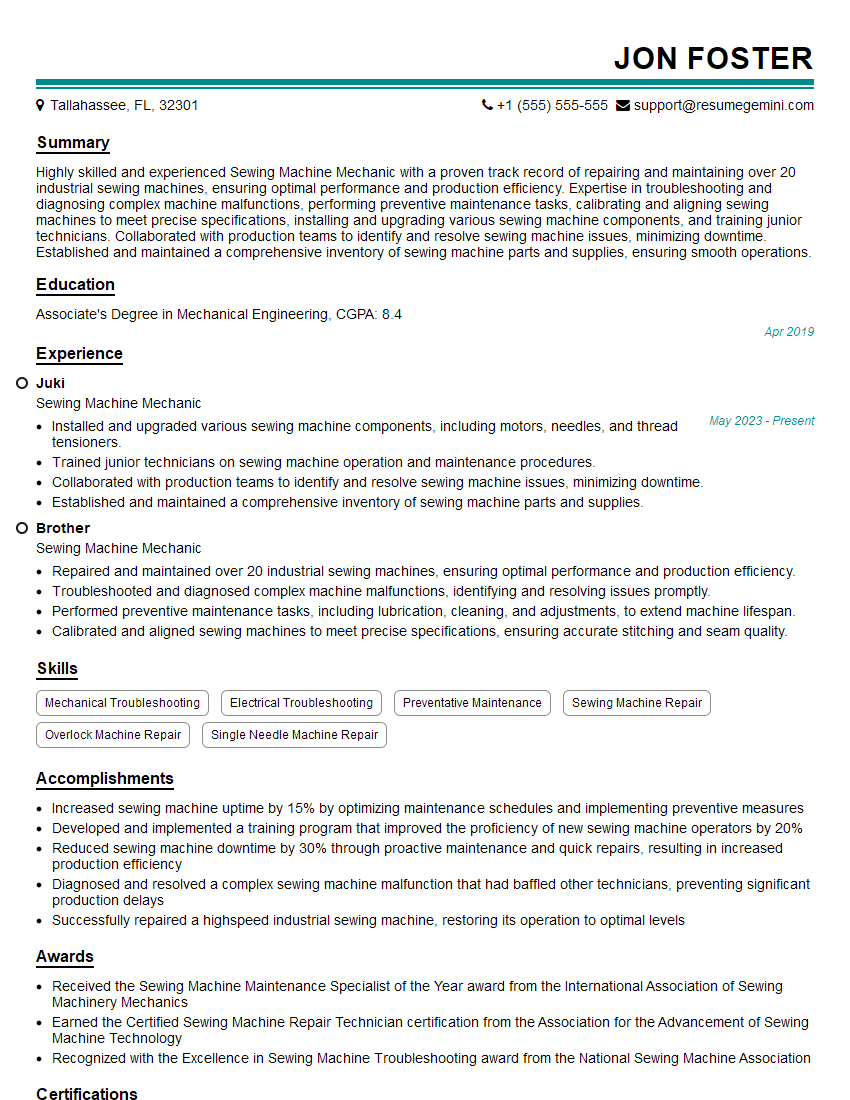
Sewing Machine Mechanic Resume Sample
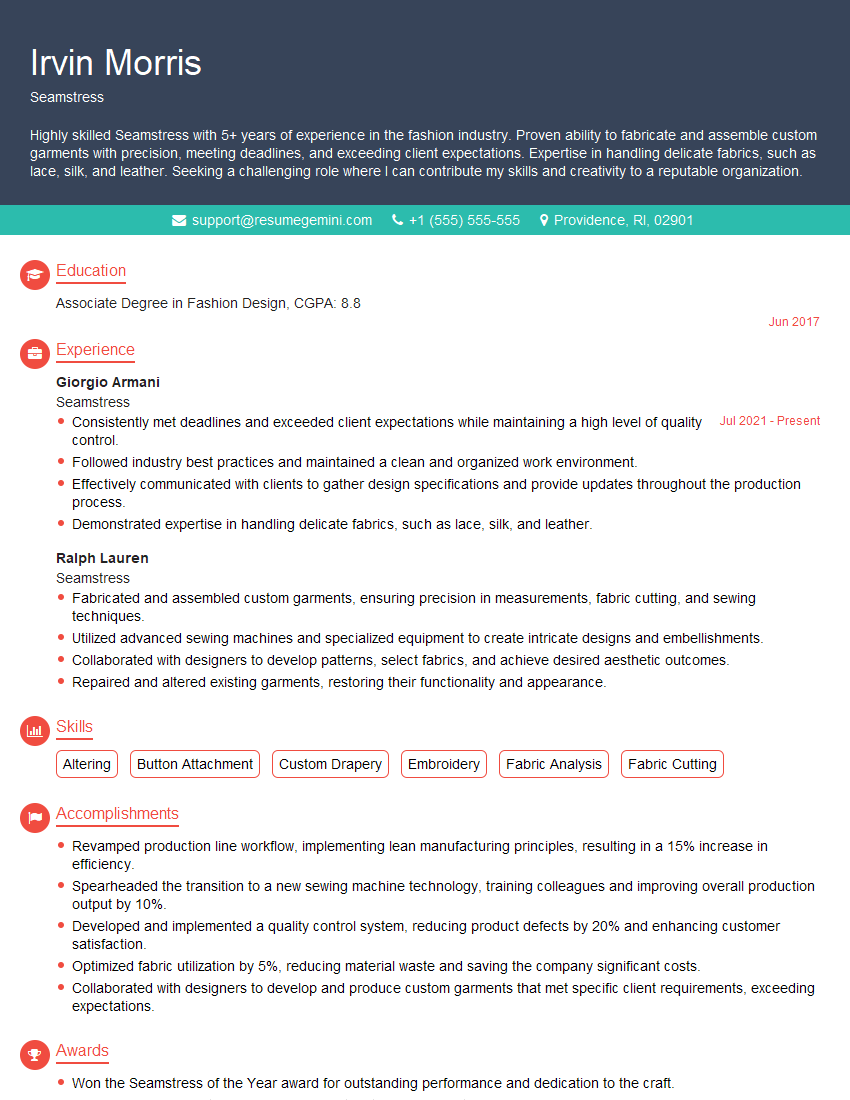
Seamstress Resume Sample
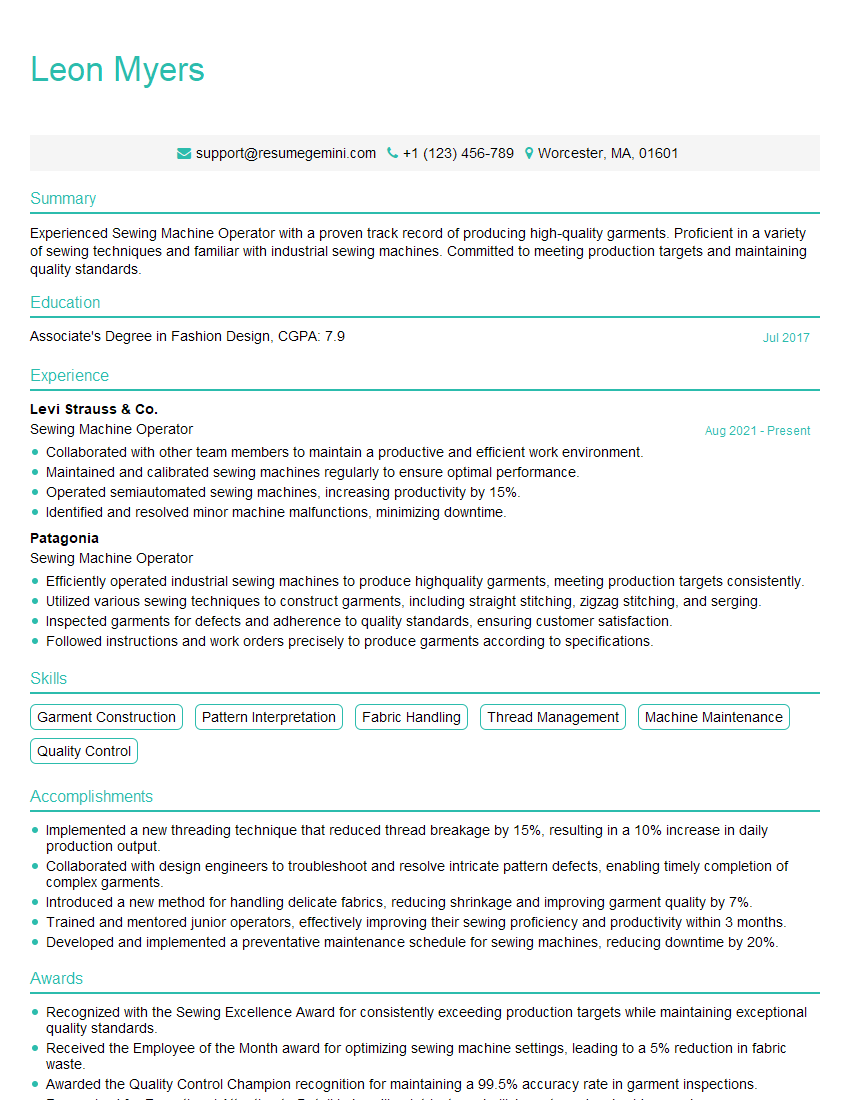
Sewing Machine Operator Resume Sample
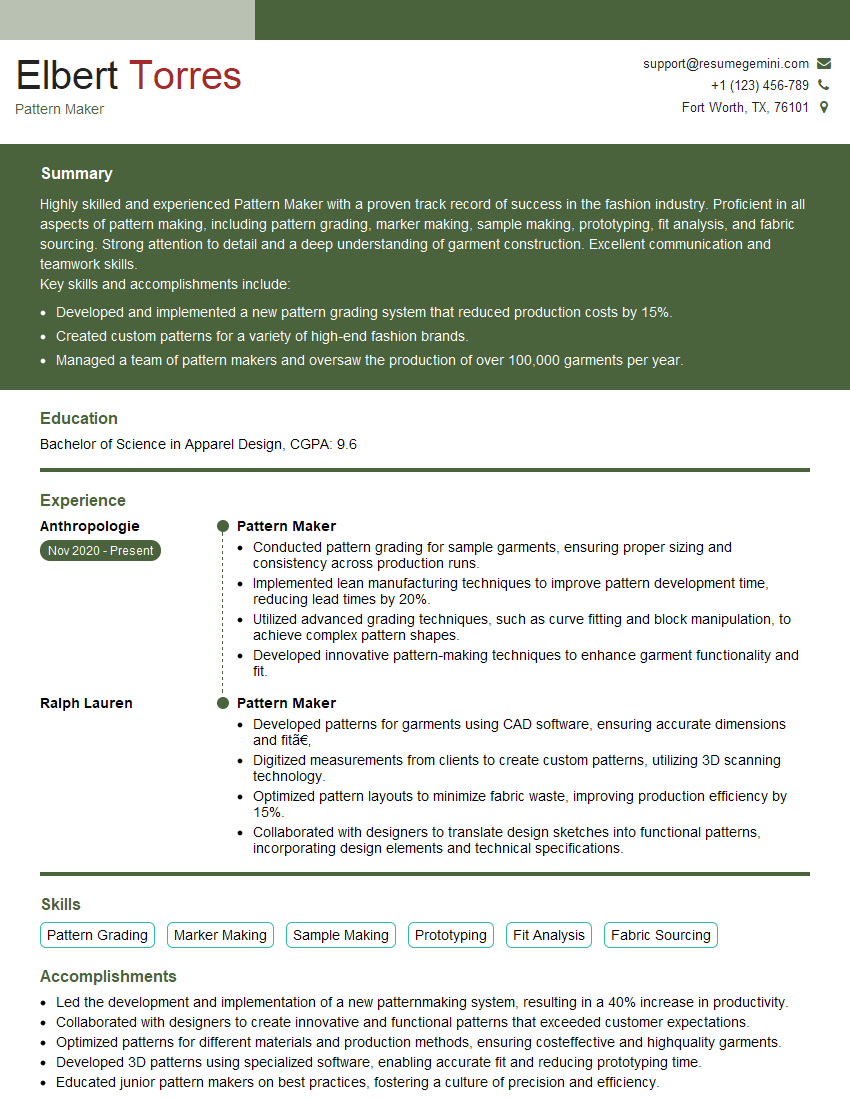
Pattern Maker Resume Sample
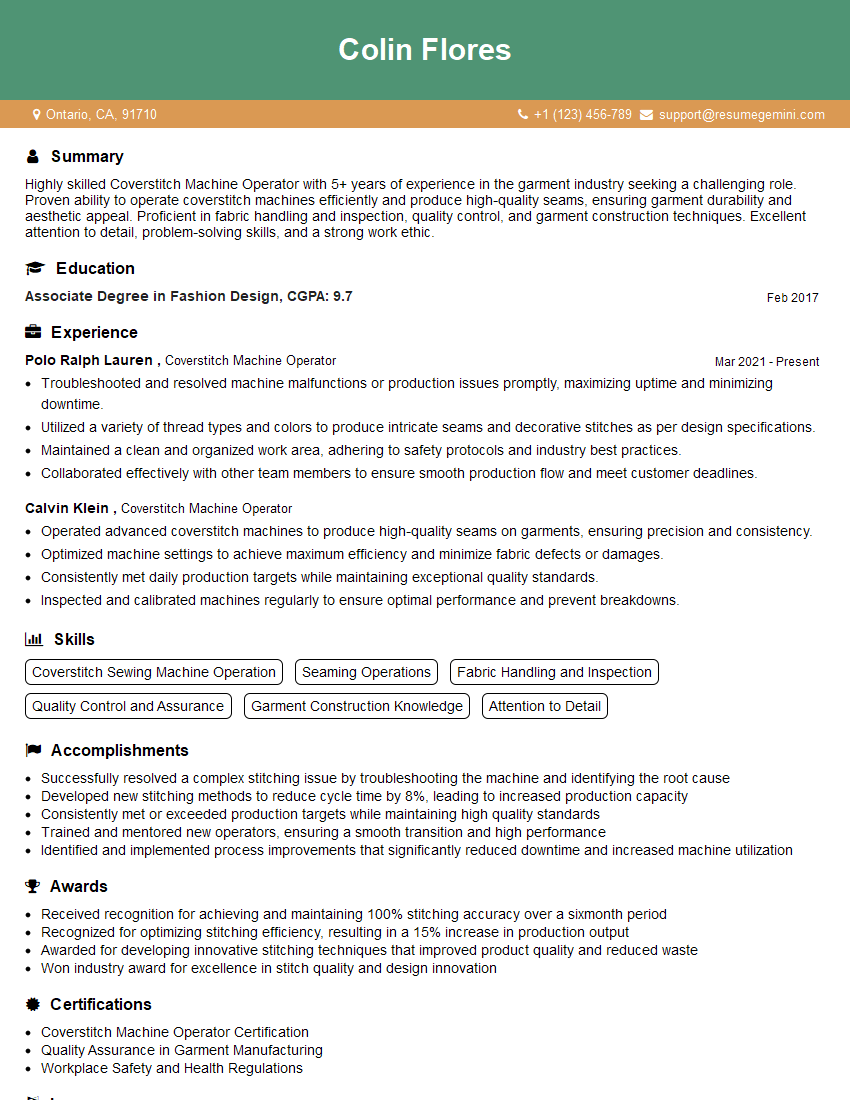
Coverstitch Machine Operator Resume Sample

Embroidery Machine Operator Resume Sample
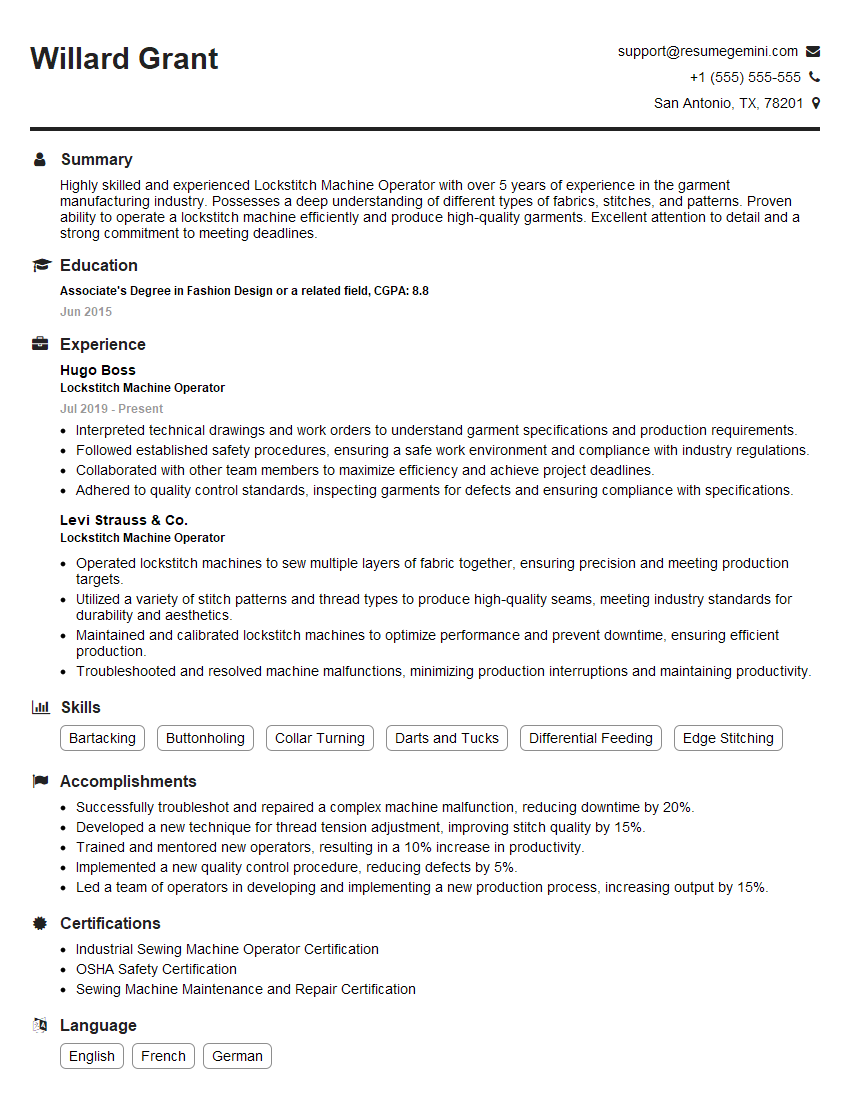
Lockstitch Machine Operator Resume Sample
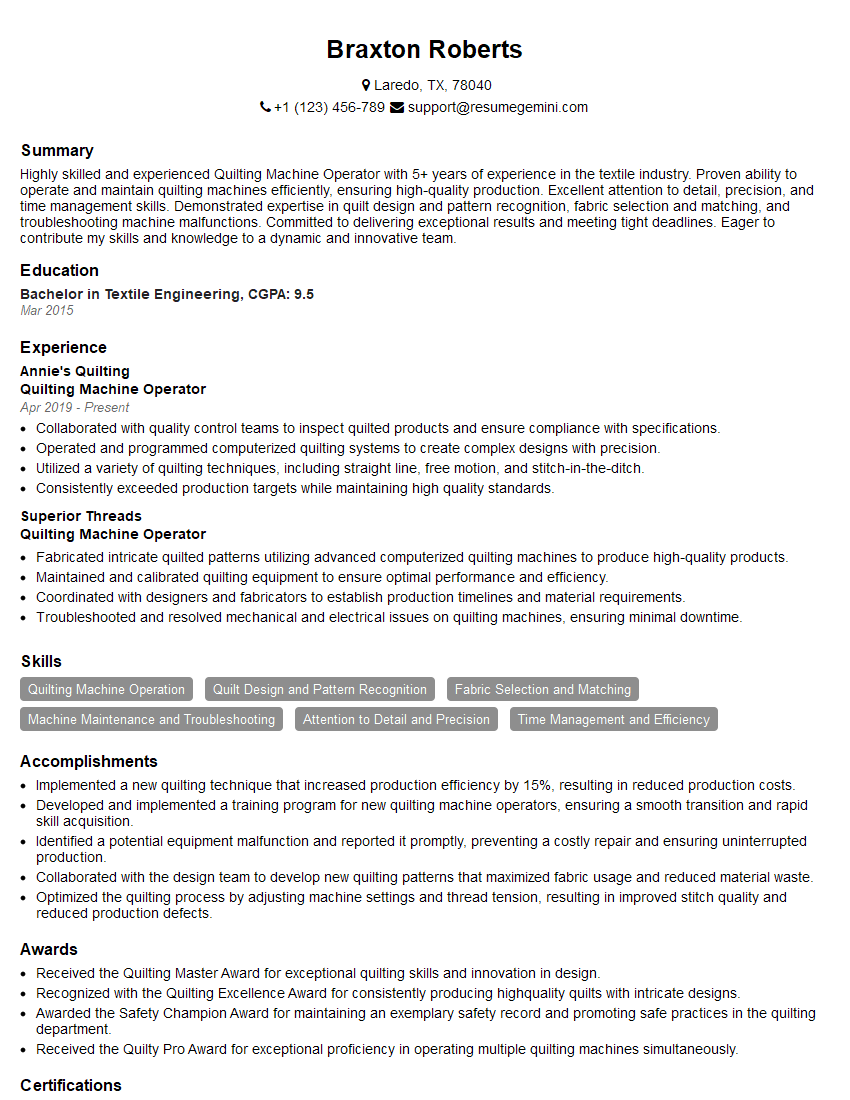
Quilting Machine Operator Resume Sample
Sample Maker Resume Sample
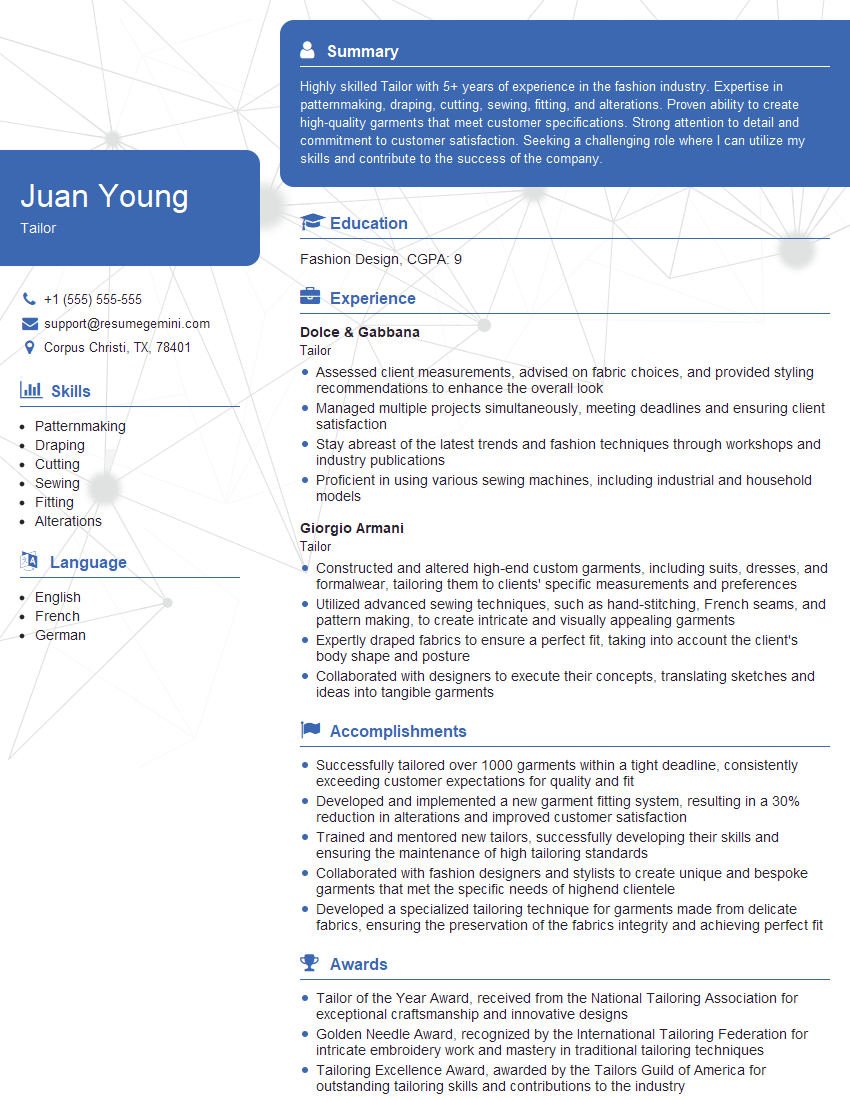
Tailor Resume Sample
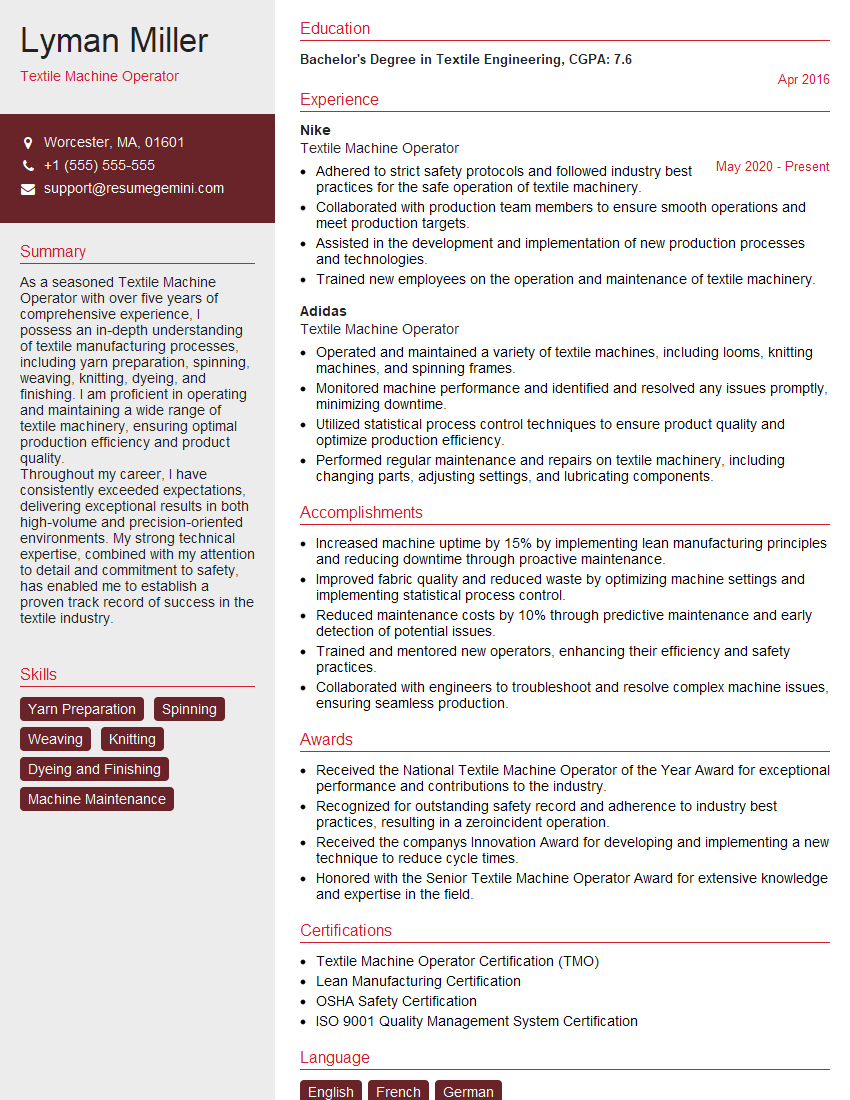
Textile Machine Operator Resume Sample
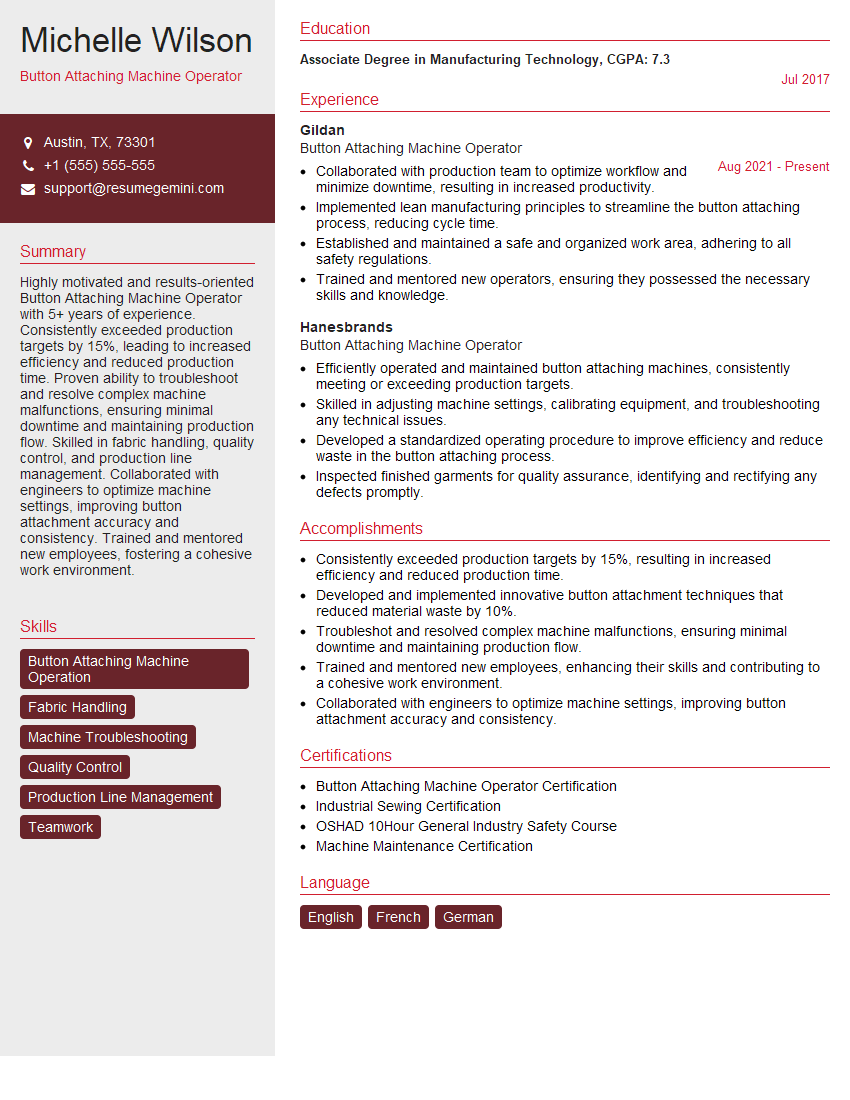
Button Attaching Machine Operator Resume Sample
Explore more articles
Users Rating of Our Blogs
Share Your Experience
We value your feedback! Please rate our content and share your thoughts (optional).
What Readers Say About Our Blog
Very informative content, great job.
good