Interviews are opportunities to demonstrate your expertise, and this guide is here to help you shine. Explore the essential Working with diverse printing materials and substrates interview questions that employers frequently ask, paired with strategies for crafting responses that set you apart from the competition.
Questions Asked in Working with diverse printing materials and substrates Interview
Q 1. What are the key differences between coated and uncoated papers?
The primary difference between coated and uncoated papers lies in the surface treatment. Coated papers have a layer of coating (typically clay, calcium carbonate, or polymers) applied to the surface, resulting in a smoother, glossier finish. Uncoated papers lack this coating, giving them a more textured, absorbent surface.
- Coated Paper: Offers superior print quality, especially for high-resolution images and vibrant colors. The smooth surface prevents ink from feathering or bleeding. However, it can be more expensive and less environmentally friendly due to the coating process. Examples include glossy magazine paper and photo paper.
- Uncoated Paper: Ideal for applications where ink absorption is desirable, such as fine art printing or letterheads. It offers a natural, tactile feel but may result in less vibrant colors and slightly less sharpness compared to coated paper. Examples include most book papers and stationery.
Think of it like this: coated paper is like a smooth, polished countertop – the ink sits on top, creating a vibrant, crisp image. Uncoated paper is more like porous concrete – the ink soaks in, resulting in a more subtle appearance. The choice depends heavily on the desired aesthetic and print quality.
Q 2. Explain the properties of various printing substrates, such as vinyl, canvas, and corrugated cardboard.
Different substrates bring unique properties to the printing process. Let’s explore some examples:
- Vinyl: A durable, flexible plastic substrate excellent for outdoor signage, banners, and vehicle wraps. Its strength and weather resistance make it ideal for long-lasting applications. However, it can be more challenging to print on than paper, often requiring specialized inks and equipment.
- Canvas: A natural fabric known for its texture and artistic appeal. Its absorbent nature requires specific inks (like UV-cured inks) to prevent bleeding and ensure vibrant color saturation. The texture can add a unique artistic element to the printed image, but may result in less sharp detail than smoother substrates.
- Corrugated Cardboard: A strong, cost-effective substrate primarily used for packaging. Its fluted structure makes it challenging to achieve high-resolution prints, and the absorbency can be a concern. Water-based inks are often unsuitable, and specialized techniques may be needed to ensure proper adhesion.
The selection of the substrate directly impacts the print method, ink type, and overall project cost. Each offers a different set of challenges and opportunities for creativity.
Q 3. Describe your experience with different types of inks (e.g., UV, solvent, water-based).
My experience encompasses a wide range of inks, each with its own strengths and weaknesses:
- UV (Ultraviolet) Cured Inks: These inks are cured by UV light, resulting in a quick-drying, highly durable finish. Ideal for outdoor applications and substrates requiring scratch resistance. They offer excellent color vibrancy but require specialized UV printing equipment. I’ve used them extensively for signage and point-of-sale displays.
- Solvent-Based Inks: Known for their high-pigment density and excellent adhesion to various substrates, including plastics and metals. They offer vibrant colors and superior durability, but are environmentally less friendly and require well-ventilated spaces due to strong solvents. We used these extensively for large format printing on vinyl and plastics.
- Water-Based Inks: Environmentally friendly and readily available, they are commonly used on paper and fabrics. They produce less odor and are safer to work with. However, they may not be as durable or vibrant as UV or solvent-based inks, especially in outdoor settings. These are often my first choice for eco-friendly projects.
Selecting the appropriate ink is crucial for achieving desired results and ensuring the longevity of the printed product. The substrate type heavily influences this choice.
Q 4. How do you determine the best printing method for a specific substrate?
Determining the best printing method for a specific substrate involves careful consideration of several factors:
- Substrate properties: Absorbency, texture, thickness, and material type (paper, vinyl, fabric, etc.) all influence the choice of printing method.
- Desired print quality: High-resolution images require methods like offset or digital printing with fine detail capabilities. Simple graphics may allow for less complex screen printing.
- Project volume: Large-scale projects benefit from offset printing for cost-effectiveness, while smaller projects may be better suited to digital or screen printing.
- Budget: Offset printing has higher initial costs but lower per-unit costs for large runs. Digital printing is more cost-effective for shorter runs.
- Durability requirements: UV curing is essential for outdoor applications or where scratch resistance is critical.
For instance, if I were printing high-resolution photos on canvas, I’d opt for a UV-curable inkjet printer. For a large-scale banner on vinyl, I would likely choose solvent-based wide-format inkjet printing. For a short run of business cards on coated paper, digital printing would be the most appropriate.
Q 5. What are some common challenges encountered when printing on non-standard substrates?
Printing on non-standard substrates often presents unique challenges:
- Ink adhesion: Some materials may not readily accept ink, requiring pretreatment or specialized inks to ensure proper adhesion. This is frequently an issue with plastics or metals.
- Substrate warping or distortion: The printing process can sometimes cause substrates to warp or distort, especially with thicker materials or those with high moisture content.
- Material damage: High heat or pressure during printing could damage delicate or heat-sensitive substrates.
- Difficult handling: Unusual shapes or sizes can complicate feeding and processing during printing.
Careful pre-press preparation is key to overcoming these challenges. Testing different printing parameters, applying appropriate primers, and using specialized equipment are often necessary to ensure a successful print.
Q 6. How do you ensure color consistency across different substrates?
Maintaining color consistency across different substrates is critical for brand consistency and accurate representation. Here’s how I approach it:
- Color management system (CMS): Employing a robust CMS like Adobe Color Management Modules is essential. This helps control the color throughout the workflow, from design to output.
- Substrate profiling: Creating ICC profiles for each substrate ensures accurate color representation. These profiles map the color response of the substrate and the printer, allowing for accurate color transformation.
- Proofing: Using color proofing techniques, such as soft proofing on screen and hard proofing using proof prints on representative substrates, helps validate color accuracy before full-scale production.
- Standardized color spaces: Working in a consistent color space, such as sRGB or Adobe RGB, helps reduce color variations across different devices and substrates.
For example, if I’m printing the same design on both coated and uncoated paper, I create ICC profiles for both, ensuring the color appears consistent despite the different absorbency and surface textures.
Q 7. Describe your experience with color management and profile creation.
Color management and profile creation are integral aspects of my expertise. I have extensive experience using various software packages (such as X-Rite i1Profiler, Epson Color Calibration Utility) to create accurate ICC profiles for different printers and substrates. This involves measuring the color response of the printer and substrate using a spectrophotometer. The resulting profile is then embedded into the print job, ensuring accurate color reproduction.
Creating a profile is similar to creating a translator. The spectrophotometer gathers data (the language) of how the printer and substrate respond to color input. The software then translates this data into a profile that allows other software (like Adobe Photoshop) to predict how to accurately create the desired output color on that specific combination.
This process requires a meticulous approach and careful attention to detail. Regular profile updates are crucial as printer performance and ink characteristics can change over time.
Q 8. Explain the importance of substrate selection in relation to print durability and longevity.
Substrate selection is paramount for print durability and longevity. The choice of material directly impacts how well the ink adheres, how resistant the finished product is to wear and tear, and how long the print will last before fading or degrading. Think of it like choosing the right foundation for a house – a weak foundation leads to a weak structure.
- Paper: Uncoated paper is absorbent, resulting in vibrant colors but potentially less durable against water or abrasion. Coated paper, on the other hand, offers better water resistance and longevity, but the ink may not absorb as deeply, potentially impacting vibrancy.
- Cardboard and Corrugated Board: These substrates are chosen for their strength and ability to hold their shape, suitable for packaging or display. The type of cardboard (e.g., single-wall, double-wall) significantly impacts durability and print quality.
- Synthetic Materials (e.g., Vinyl, PVC): These offer exceptional durability and weather resistance, making them ideal for outdoor signage or applications facing harsh conditions. They can also offer vibrant colors and a wider gamut.
- Textiles: The type of textile, its weave, and its treatment dictate the longevity and appearance of the print. Natural fibers might require special inks to prevent fading, while synthetics offer increased durability and vibrant prints.
For instance, if I’m printing artwork intended for long-term display, I would select a high-quality archival paper or canvas with UV-resistant inks. For a temporary outdoor banner, a durable vinyl would be the preferred substrate.
Q 9. How do you handle substrate warping or other material defects during the printing process?
Substrate warping or defects are common challenges. My approach involves a multi-step process to mitigate issues and ensure print quality:
- Careful Material Selection: Prioritizing high-quality substrates from reputable suppliers reduces the likelihood of defects. I also ensure proper storage conditions to prevent warping before even beginning the print job.
- Pre-press Preparation: This includes inspecting each sheet for imperfections like warping, tears, or discoloration. For severely warped substrates, I may use a press designed to accommodate such variations or pre-condition the material by carefully applying heat and pressure.
- Accurate Feeding and Alignment: Maintaining consistent feeding is crucial. Using appropriate rollers and tension settings on the press prevents slippage and damage caused by misaligned sheets.
- Targeted Adjustments: If warping occurs during printing, I adjust the press settings (e.g., roller pressure, feed speed) to accommodate the substrate’s behavior. Minor warping can sometimes be corrected through careful adjustment.
- Quality Control: Consistent inspection throughout the printing process helps catch issues early, allowing for immediate adjustments. Any severely defective sheets are immediately removed to maintain the overall quality of the finished product.
For example, I once encountered a batch of cardboard with inconsistent thickness. I adjusted the press feed to compensate for this variance, ensuring even ink application and reducing wasted materials.
Q 10. What are your preferred methods for testing the printability of a new substrate?
Testing the printability of a new substrate is a crucial step. My preferred methods involve a combination of:
- Ink Adhesion Test: Applying small swatches of different inks to the substrate and testing their adhesion after drying. I look for any signs of cracking or peeling. I may also use different ink types, depending on the intended printing method (e.g., UV, solvent, water-based).
- Color Consistency Test: Printing a color chart or test pattern to assess color reproduction and consistency across the substrate. This helps determine if the substrate’s properties affect color accuracy.
- Substrate Absorption Test: Assessing the substrate’s absorbency to choose appropriate inks and prevent issues like ink bleeding or feathering. This often involves measuring ink penetration and drying time.
- Durability Tests: Subjecting print samples to various conditions (e.g., water, UV light, abrasion) to evaluate the longevity of the printed image. These tests reveal the substrate’s resistance to fading, scratching, and other forms of wear and tear.
For example, before printing a large quantity of posters on a new type of textured paper, I would conduct these tests to determine the best ink type and ensure the final product meets the client’s quality expectations.
Q 11. Describe your experience with different finishing techniques (e.g., laminating, embossing, die-cutting).
I have extensive experience with various finishing techniques that enhance the visual appeal and durability of printed materials. These techniques add value and create unique effects.
- Laminating: Applying a protective film over the print provides water resistance, UV protection, and enhances the overall durability. Different laminate types (gloss, matte, textured) offer various visual and tactile effects. I choose the best laminate based on the substrate and intended use.
- Embossing: Creates a three-dimensional effect by pressing a design into the substrate. This adds texture and depth, making the print more tactile and visually engaging. Embossing is often used for high-end packaging or invitations.
- Die-cutting: Using a specialized die to cut precise shapes or designs into the printed material. This allows for creative shapes and custom designs, used extensively in packaging, labels, or promotional materials. I’ve worked on projects requiring intricate, multi-layered die-cuts.
For instance, I recently used gloss lamination to protect a brochure printed on uncoated paper and die-cutting to create custom-shaped labels for a new product launch. The combination enhanced the overall presentation and impact.
Q 12. How do you manage inventory of printing materials and substrates?
Efficient inventory management is crucial for smooth printing operations. My approach includes:
- Regular Stock Audits: Performing regular physical counts of all printing materials and substrates to accurately track quantities on hand.
- Inventory Management System (IMS): Using a software-based IMS to monitor stock levels, track usage, and predict future needs. This helps to optimize purchasing and reduce waste.
- FIFO (First-In, First-Out) System: Implementing a FIFO system to ensure that older materials are used first, preventing spoilage or obsolescence. I meticulously track the date of receipt of every material.
- Storage Optimization: Maintaining proper storage conditions to prevent damage or deterioration of materials. This includes appropriate temperature, humidity control, and protection from light and dust.
- Supplier Relationships: Building strong relationships with reliable suppliers ensures timely delivery and high-quality materials.
A well-managed inventory system avoids costly stockouts and reduces waste, ensuring continuous, efficient operation.
Q 13. Explain your experience with different types of printing presses.
My experience encompasses a variety of printing presses, each with its strengths and limitations:
- Offset Presses: Ideal for high-volume printing with excellent color accuracy and consistent results. I have extensive experience operating various sizes of offset presses, from small format to large web presses.
- Digital Presses: Versatile for short runs and personalized printing. I’m proficient in using different digital printing technologies, including toner-based and inkjet systems. Digital offers quick turnaround and customisation benefits.
- Screen Printing Presses: Best suited for printing on non-traditional substrates like textiles or promotional items. I have hands-on experience setting up screens and printing on various fabrics and merchandise.
- Flexographic Presses: Widely used for packaging and labels due to their ability to print on flexible materials like film and foil. I’m familiar with operating flexo presses and understanding the specific requirements for inks and substrates used in packaging applications.
The choice of press depends heavily on the project’s specific needs, such as volume, substrate type, and budget. I select the most appropriate press for optimal results.
Q 14. How do you troubleshoot common printing issues related to substrate incompatibility?
Troubleshooting substrate incompatibility issues often requires a systematic approach:
- Identify the Problem: Carefully analyze the print defect. Is it ink bleeding, feathering, poor adhesion, or something else?
- Review Substrate Specifications: Verify that the substrate is compatible with the chosen inks and printing method. Consult the substrate manufacturer’s specifications for recommended inks and printing parameters.
- Ink and Printing Settings Adjustments: Try modifying ink type, viscosity, drying time, and printing parameters (e.g., pressure, speed) to see if the issue resolves.
- Pre-treatment: Consider pre-treating the substrate using primers or other surface treatments to enhance ink adhesion. This is particularly important for challenging substrates with low surface energy.
- Material Testing: Conduct additional tests to evaluate ink adhesion, color consistency, and durability on the specific substrate. This may involve using a control substrate for comparison.
For instance, I encountered ink bleeding on a coated paper that wasn’t intended for high-resolution printing. By switching to a dedicated high-resolution ink and adjusting the pressure settings, I was able to solve the problem. Often, the solution isn’t simply switching the materials, but finding the best combination of substrate, ink, and printing settings.
Q 15. Describe your experience working with specialized substrates such as metallic or textured papers.
Working with specialized substrates like metallic or textured papers adds a significant dimension to print design, moving beyond standard papers to enhance the visual and tactile experience. My experience encompasses a wide range of these materials, including various metallic stocks (from subtle pearlescent finishes to highly reflective foils), textured papers (linen, canvas, etc.), and even substrates with unique embossing or debossing.
For instance, I once worked on a project requiring a deep-blue metallic paper for luxury business cards. The challenge wasn’t just the material’s cost, but its unique printing properties. Certain inks bled more than others, so careful color profiling and testing were essential to achieve the desired rich, even color. Similarly, when working with textured papers, the ink absorption varies, requiring adjustments to the printing process to prevent uneven ink distribution. I meticulously test print on samples before committing to a large print run. The results speak for themselves – a beautiful, high-quality product that conveys the client’s brand perfectly.
Career Expert Tips:
- Ace those interviews! Prepare effectively by reviewing the Top 50 Most Common Interview Questions on ResumeGemini.
- Navigate your job search with confidence! Explore a wide range of Career Tips on ResumeGemini. Learn about common challenges and recommendations to overcome them.
- Craft the perfect resume! Master the Art of Resume Writing with ResumeGemini’s guide. Showcase your unique qualifications and achievements effectively.
- Don’t miss out on holiday savings! Build your dream resume with ResumeGemini’s ATS optimized templates.
Q 16. How do you calculate material costs for different substrates and print jobs?
Calculating material costs for different substrates is crucial for accurate budgeting and pricing. It’s a multi-step process that begins with identifying all materials needed: paper stock, inks, coatings (if any), and any additional components such as adhesives or die-cutting materials. Each material is priced per unit (e.g., per sheet or per kilogram), and the total quantity is calculated based on the project’s requirements.
For example, let’s say we need 500 sheets of 100lb metallic paper costing $20 per ream (500 sheets) and 100ml of specialized ink costing $15 per bottle. The calculation would be: (500 sheets / 500 sheets/ream) * $20/ream + $15/bottle = $20 + $15 = $35. This is then multiplied by the number of colors or print processes to account for multi-color prints or specialized finishing techniques like embossing.
Waste calculation is also important. I usually account for a 5-10% waste factor, depending on the material and printing complexity. This is added to the initial material cost estimate to ensure accuracy and avoid unpleasant budget surprises.
Q 17. What software do you use to design for various printing substrates?
My design workflow leverages a combination of software, tailored to the specific needs of the printing substrate. Adobe Creative Suite (Photoshop, Illustrator, and InDesign) remains my core suite. I use these to create the initial designs, manage color profiles, and prepare print-ready files.
For more specialized projects involving highly textured papers, I might utilize software such as Esko ArtiosCAD for advanced packaging design or prepress solutions. The choice of software is dictated by the complexity of the design and the substrate’s unique properties. I always ensure my files are outputted with the correct color space (usually CMYK for print), appropriate resolution, and bleed settings to accommodate any finishing processes.
Q 18. Explain your understanding of different print resolutions and their impact on substrate choice.
Print resolution is critical, especially when working with fine details or unique substrates. A higher resolution (measured in dots per inch, or dpi) results in sharper images and text, crucial for luxurious or textured papers where imperfections are easily noticeable. A low-resolution print on high-quality paper can actually diminish the impact of the material.
For example, a metallic paper with a subtle embossed texture needs a higher resolution (at least 300 dpi) to avoid pixelation and ensure the intricate details are clearly visible. Conversely, a coarse canvas material might tolerate a slightly lower resolution without significant quality loss. The choice of resolution needs to be carefully balanced with the desired print quality and the substrate’s capabilities. Higher resolutions often translate to increased printing costs and slower production time.
Q 19. How do you ensure the sustainability of materials used in printing?
Sustainability is a paramount concern in my work. I prioritize the use of environmentally friendly printing materials and processes. This involves selecting substrates from manufacturers certified by organizations like the Forest Stewardship Council (FSC), ensuring the paper comes from responsibly managed forests.
I also focus on minimizing waste. This includes careful planning to reduce the amount of material used, employing techniques such as nesting files for efficient cutting, and utilizing print-on-demand services where appropriate to reduce excess inventory. Furthermore, I encourage clients to opt for vegetable-based inks, which are biodegradable and less harmful to the environment than traditional petroleum-based inks.
Q 20. Describe your experience with managing print projects with tight deadlines.
Managing print projects with tight deadlines requires a structured approach and meticulous planning. My strategy involves clearly defining project scope, timelines, and deliverables right from the start. This typically involves detailed project briefs and regular communication with the client and printing teams. I use project management tools and create detailed checklists to ensure all stages of production are efficiently completed and monitored.
In a recent project with a two-week deadline, we had to produce high-quality brochures for a major conference. Through clear communication, efficient team coordination, and careful oversight of each step from design to print and delivery, we not only met the deadline but also delivered a superior product to the client, strengthening our business relationship.
Q 21. How do you communicate effectively with clients regarding substrate selection and options?
Effective communication with clients regarding substrate selection is crucial for successful project outcomes. I begin by presenting a range of substrate options relevant to their project’s needs and budget. I usually provide physical samples for them to touch and experience the visual and tactile qualities of different materials. I will also explain the printing implications of each option (such as color reproduction, texture interactions, or finishing possibilities).
I often involve the client in the testing process, showing them mockups or small test prints to ensure they are happy with the final look and feel. This collaborative approach avoids misunderstandings, resulting in a product that perfectly matches the client’s vision and expectations. Open communication, visual aids, and a strong focus on the client’s needs are essential to this process.
Q 22. How do you stay up-to-date on new printing materials and technologies?
Staying current in the dynamic world of printing materials and technologies requires a multi-pronged approach. I regularly subscribe to industry publications like Printing Impressions and WhatTheyThink, attending trade shows such as drupa and Graph Expo to see firsthand the latest innovations. Online resources, such as manufacturer websites and technical blogs, are invaluable for keeping abreast of new product releases and technological advancements. Furthermore, I actively participate in online forums and professional organizations, engaging in discussions with colleagues and experts to exchange knowledge and insights. Finally, I prioritize hands-on experimentation; whenever possible, I source samples of new materials to test their properties and capabilities in our production environment. This ensures that our print shop remains at the forefront of printing innovation.
Q 23. Explain your knowledge of different paper weights and their suitability for various applications.
Paper weight, usually expressed in pounds (lbs) or grams per square meter (gsm), significantly impacts print quality and application suitability. Lighter weight papers, such as 20lb bond (around 75gsm), are ideal for everyday documents and stationery due to their cost-effectiveness and ease of handling. They’re less durable, however, and unsuitable for high-traffic items. Mid-weight papers, such as 24lb cover stock (around 90-100gsm), strike a balance, providing decent durability for brochures and flyers. Heavier papers, like 65lb cover (around 170gsm) or even card stock (over 200gsm), are chosen for business cards, postcards, and projects requiring high rigidity and a luxurious feel. Consider a wedding invitation – the thicker, heavier paper adds to the perceived value and elegance. Choosing the correct weight depends on the intended use, budget, and desired aesthetic.
- Less than 70gsm: Lightweight, suitable for letterheads and low-quality prints.
- 70-100gsm: Common for flyers and brochures, offering balance between cost and quality.
- 100-170gsm: Suitable for heavier brochures, postcards, and business cards.
- 170gsm and above: Used for high-end applications needing durability and visual impact.
Q 24. How do you handle situations where a client requests a challenging substrate?
When a client requests a challenging substrate – like a textured fabric, wood, or unusually shaped material – a thorough discussion is paramount. I start by understanding their vision and the reasons behind choosing that particular material. Then, I analyze the substrate’s properties (thickness, surface texture, porosity, etc.) to determine its printability. This often involves testing small samples using various printing methods to assess ink adhesion and image quality. If direct printing is unsuitable, I might propose alternative techniques like digitally printed vinyl overlays or other creative solutions. For example, when asked to print on a curved surface, we employed UV-curable inks which allowed us to print directly onto the three-dimensional shape. Transparent materials are printed on differently to achieve the desired opacity and visual appeal. Open communication with the client throughout this process is key to managing expectations and delivering a satisfactory result, even if the initial approach needs adjustment.
Q 25. What is your experience with large format printing and its associated substrates?
My experience with large format printing encompasses a wide range of substrates and applications. We frequently utilize materials like vinyl banners (for outdoor advertising), canvas (for fine art reproductions), and photo paper (for stunning displays). Understanding the durability and weather resistance required for outdoor applications is crucial. For example, choosing a self-adhesive vinyl with UV protection is vital for long-lasting outdoor signage. Similarly, the choice of canvas material and ink type affects the longevity and appearance of fine art prints. In interior spaces, fabrics, wallpapers and even back-lit films can be used for impactful visual displays. Knowledge of different lamination techniques is essential for protecting large format prints from damage and enhancing their lifespan. For instance, matte lamination provides UV protection while maintaining a subtle finish, while gloss lamination enhances vibrancy but can be more prone to fingerprints.
Q 26. How do you ensure the correct handling and storage of sensitive printing substrates?
Proper handling and storage of sensitive substrates are essential to maintain their quality and printability. This involves understanding the material’s specific requirements. For instance, some papers are highly susceptible to moisture and must be stored in a climate-controlled environment to prevent warping or curling. Others are sensitive to light and need to be kept away from direct sunlight to avoid fading. We use archival-quality boxes and protective sleeves for high-value substrates. The storage area itself must be clean, dry and free from dust or contaminants which could harm the materials. Organization is also vital to ensure efficient retrieval and prevent damage from mishandling. First-in, first-out (FIFO) storage systems are helpful for managing materials with limited shelf life.
Q 27. What safety precautions do you take when working with different printing materials?
Safety is paramount when working with printing materials. We adhere strictly to all relevant safety data sheets (SDS) to understand potential hazards associated with different inks, solvents, and substrates. This includes wearing appropriate personal protective equipment (PPE), such as gloves, eye protection, and respirators, when handling potentially harmful chemicals. Proper ventilation is crucial to minimize exposure to fumes, and we have implemented well-maintained exhaust systems in our printing areas. Regular cleaning and maintenance of equipment are vital to prevent accidents. Moreover, we conduct regular safety training for all employees to ensure awareness and safe working practices, including the proper disposal of waste materials and adherence to fire safety protocols.
Q 28. Describe your experience with eco-friendly and sustainable printing materials.
My experience encompasses a growing range of eco-friendly and sustainable printing materials. We use vegetable-based inks, which are biodegradable and minimize environmental impact compared to petroleum-based inks. We actively seek out recycled papers and substrates whenever possible. Moreover, our print shop is actively reducing waste by implementing practices such as double-sided printing, optimizing layout to minimize material usage, and recycling our consumables and paper scraps. We are exploring the use of bioplastics and other innovative sustainable materials to further minimize our environmental footprint. Choosing a printer with a commitment to sustainability is increasingly important for clients seeking environmentally responsible printing options, and it’s a trend I am excited to be a part of.
Key Topics to Learn for Working with Diverse Printing Materials and Substrates Interview
- Understanding Material Properties: Explore the physical and chemical characteristics of various substrates (paper, vinyl, canvas, fabric, etc.), including their weight, texture, absorbency, and durability. Consider how these properties influence print quality and finishing techniques.
- Print Processes and Their Suitability: Learn the strengths and limitations of different printing methods (offset, digital, screen, large format) in relation to various substrates. Understand which processes are best suited for specific materials and desired print results.
- Color Management and Calibration: Grasp the importance of accurate color reproduction across different substrates. Familiarize yourself with color profiles, proofing methods, and techniques for achieving consistent color across various materials.
- Pre-press Preparation and File Handling: Understand the crucial role of proper file preparation for different substrates, including image resolution, color modes, and file formats. Learn about techniques for optimizing files for efficient printing.
- Finishing Techniques and Applications: Explore various finishing options such as laminating, embossing, die-cutting, and binding. Understand how these techniques enhance the final product and which are appropriate for different substrates.
- Troubleshooting and Problem-Solving: Develop your ability to identify and solve common printing issues related to substrate choice, ink compatibility, and equipment settings. This includes understanding the causes of issues like bleeding, dot gain, and substrate warping.
- Sustainability and Eco-Friendly Practices: Demonstrate awareness of environmentally responsible printing practices, including the use of recycled materials and sustainable inks.
Next Steps
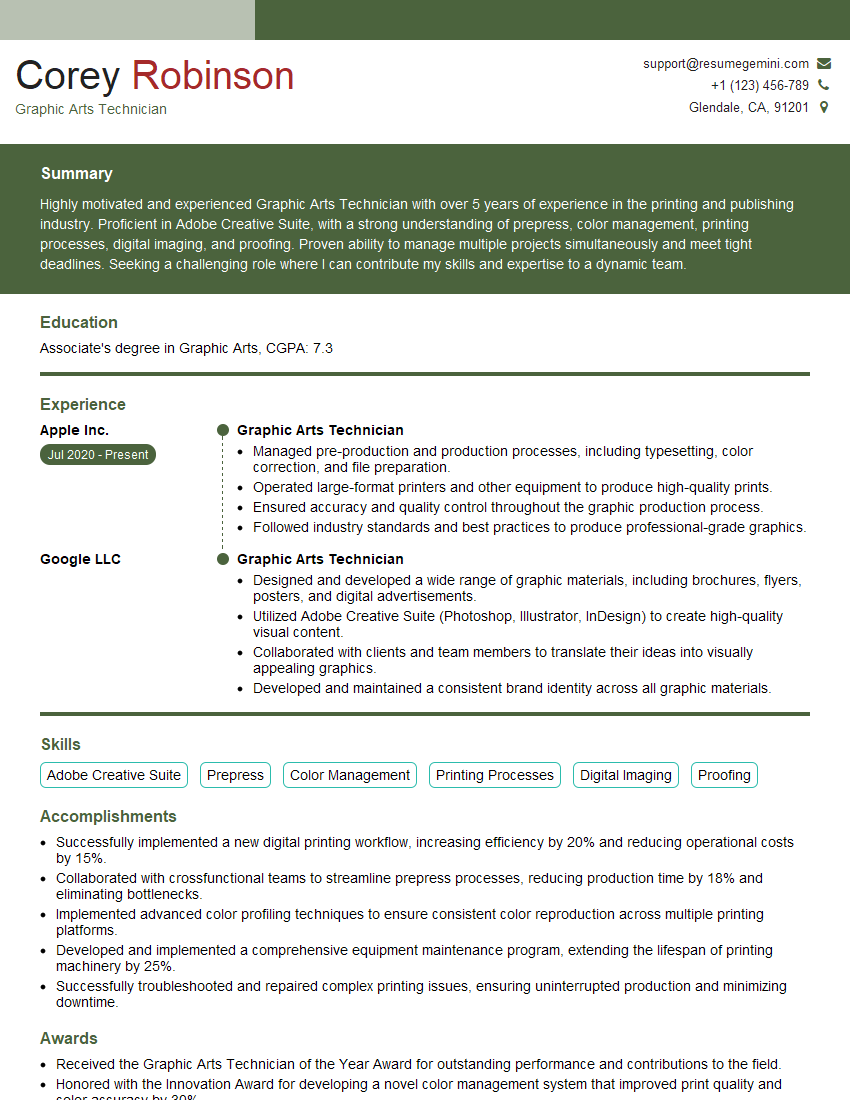
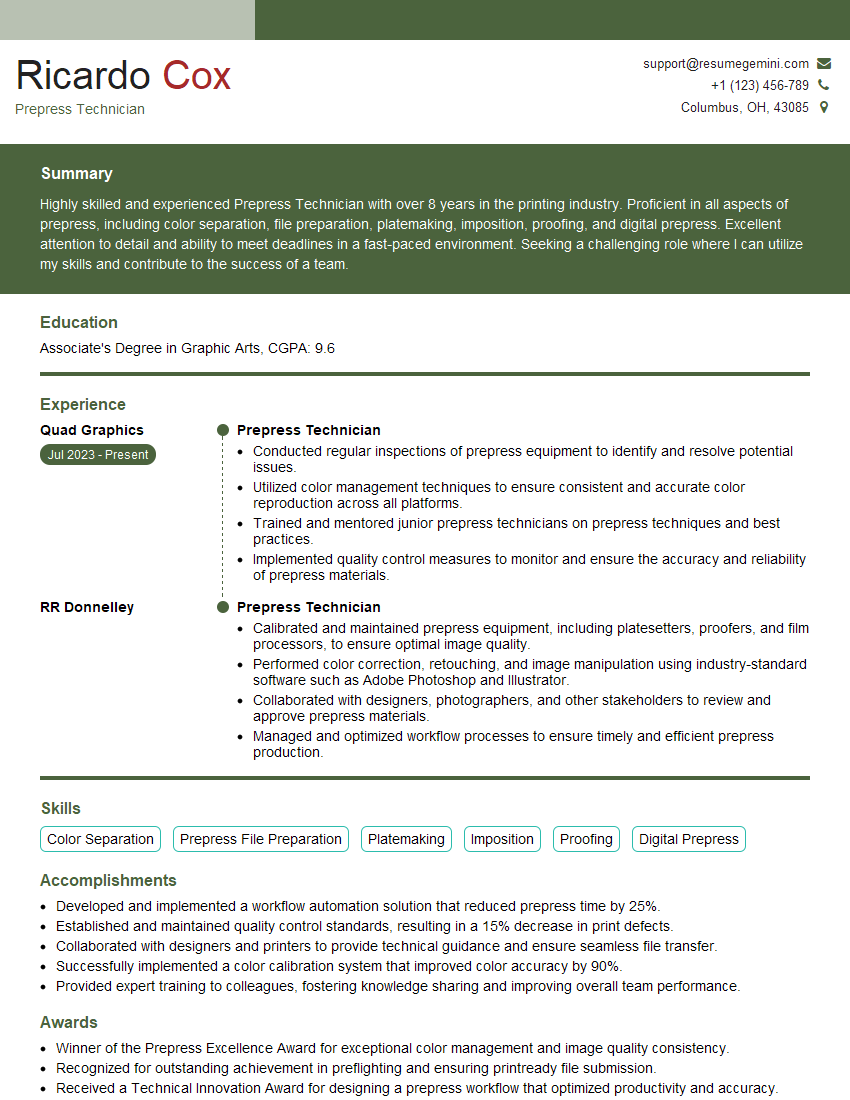
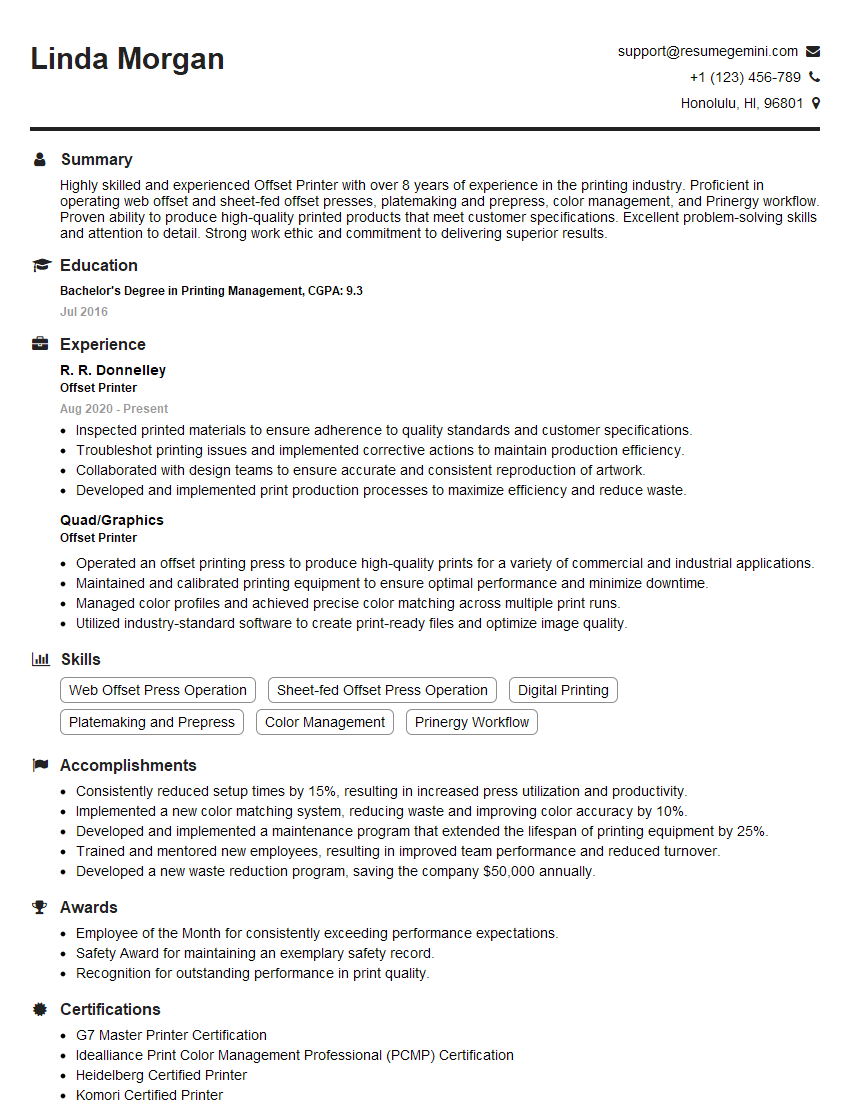
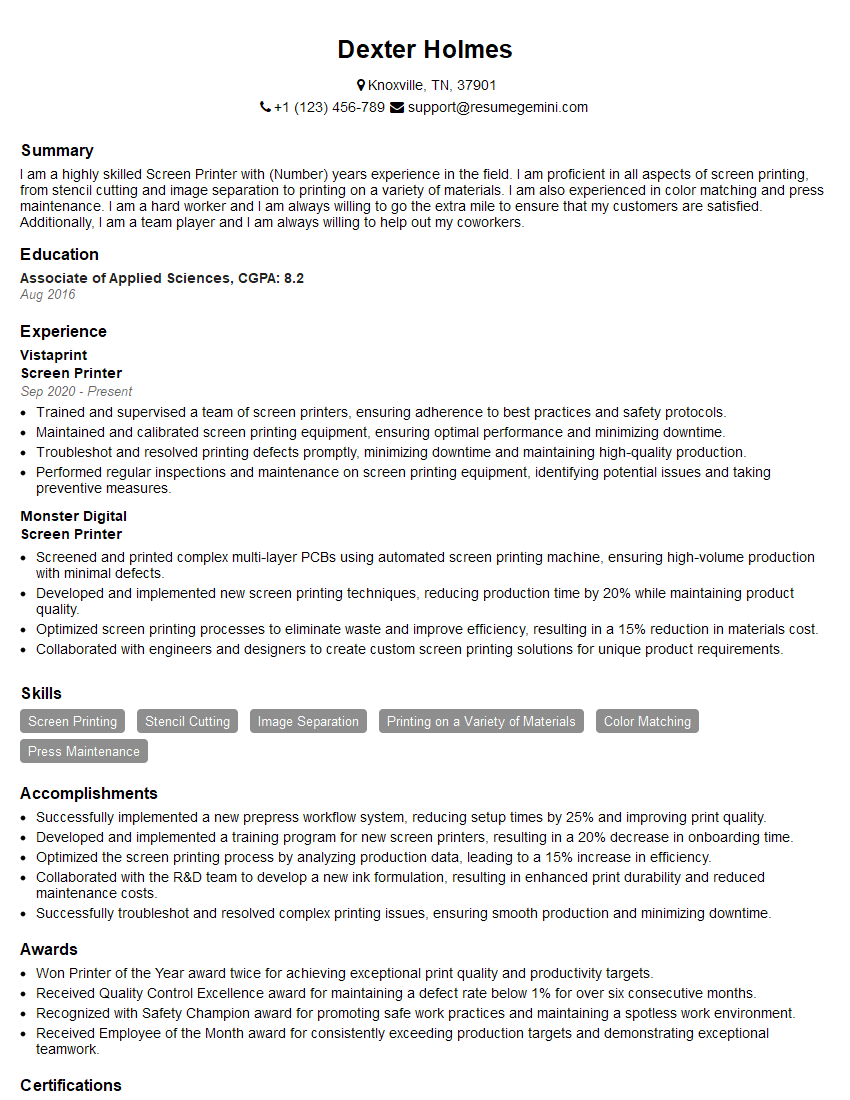
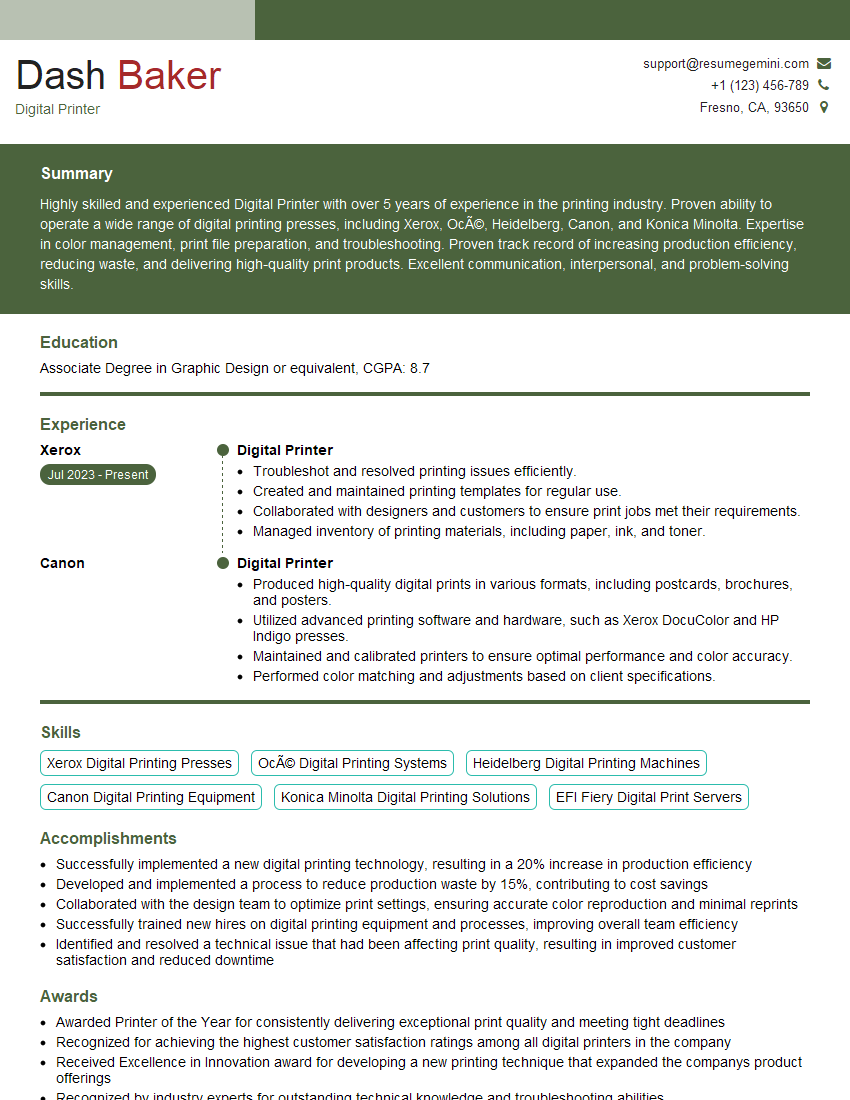
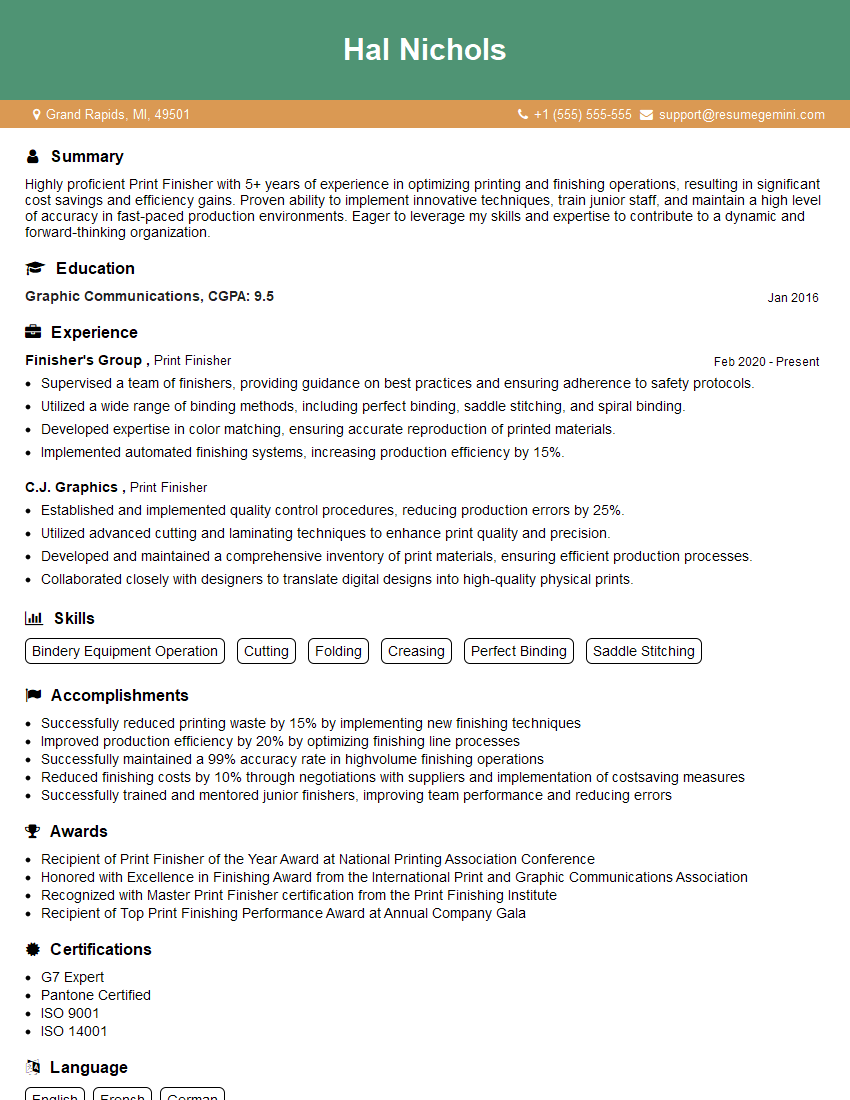
Mastering the art of working with diverse printing materials and substrates is crucial for career advancement in the printing and graphic design industries. A strong understanding of these concepts demonstrates your technical proficiency and problem-solving abilities, making you a highly valuable asset to any team. To significantly boost your job prospects, create an ATS-friendly resume that highlights your skills and experience effectively. ResumeGemini is a trusted resource that can help you build a professional and impactful resume tailored to your specific skills. Examples of resumes tailored to working with diverse printing materials and substrates are available to further assist your job search.


Explore more articles
Users Rating of Our Blogs
Share Your Experience
We value your feedback! Please rate our content and share your thoughts (optional).
What Readers Say About Our Blog
Very informative content, great job.
good