Interviews are more than just a Q&A session—they’re a chance to prove your worth. This blog dives into essential Workover rig operation interview questions and expert tips to help you align your answers with what hiring managers are looking for. Start preparing to shine!
Questions Asked in Workover rig operation Interview
Q 1. Explain the different types of workover operations.
Workover operations encompass a wide range of activities aimed at maintaining, repairing, or enhancing the productivity of an existing well. They’re essentially interventions performed after the initial drilling and completion phases. These operations can be broadly categorized as follows:
- Well Stimulation: This involves techniques to increase hydrocarbon flow, such as acidizing (dissolving formation damage) or fracturing (creating fissures to improve permeability). For example, we might acidize a sandstone formation to remove clay particles clogging the pore spaces.
- Well Repair: This addresses problems like leaks, corrosion, or damaged equipment. A common example is replacing a perforated casing section that has become compromised.
- Production Enhancement: These operations aim to improve the well’s production rate. This might involve replacing worn-out downhole equipment, such as pumps, or optimizing the completion design.
- Plugging and Abandonment: This is the final stage of a well’s life, where it’s permanently sealed to prevent environmental contamination. It involves carefully cementing off different sections of the wellbore.
- Fishing Operations: This involves retrieving dropped or damaged tools and equipment from the wellbore. These are often complex and challenging operations, requiring specialized equipment and expertise.
The specific type of workover operation depends entirely on the well’s condition and the issues it’s facing. Each operation requires meticulous planning and execution to ensure safety and efficiency.
Q 2. Describe the safety procedures you follow on a workover rig.
Safety is paramount on a workover rig. Our procedures are rigorously enforced and cover every aspect of the operation. Key elements include:
- Pre-Job Safety Meetings: Detailed risk assessments are conducted before each job, identifying potential hazards and mitigation strategies. Every team member participates and signs off on the plan.
- Personal Protective Equipment (PPE): Mandatory PPE, including hard hats, safety glasses, gloves, and flame-resistant clothing, is worn at all times on the rig. Specific PPE requirements are defined based on the ongoing task.
- Permit-to-Work System: All critical operations, such as high-pressure operations or hot work, require a formal permit-to-work, ensuring that all necessary safety precautions are in place before commencing.
- Emergency Response Plan: A comprehensive emergency response plan is in place, including procedures for well control incidents, fires, and medical emergencies. Regular drills ensure everyone is prepared to respond effectively.
- Regular Inspections and Maintenance: Equipment undergoes frequent inspections and maintenance to ensure it’s in safe operating condition. This is crucial to prevent equipment failures that could lead to accidents.
- Competency Training: All personnel receive thorough training in safe work practices and emergency procedures. Regular refresher courses ensure skills remain up to date.
Think of it like this: safety isn’t just a checklist; it’s a culture ingrained in every aspect of our work. We don’t just follow procedures; we proactively identify and mitigate risks to ensure the safety of everyone involved.
Q 3. What are the common causes of well control issues during workovers?
Well control issues during workovers often stem from a failure to properly manage pressure. Common causes include:
- Loss of wellbore integrity: This can result from corrosion, erosion, or inadequate cementing, allowing fluids to flow unexpectedly.
- Kicks: Unexpected influx of formation fluids into the wellbore, exceeding the well’s capacity to manage the pressure. This often results from pressure imbalances between the wellbore and the formation.
- Equipment failure: Malfunctioning valves, pumps, or other equipment can lead to loss of control over well pressure.
- Insufficient mud weight: Inadequate drilling fluid density can fail to prevent formation fluids from flowing into the wellbore.
- Improper wellbore preparation: Inadequate cleaning or lack of sufficient isolation of different zones in the well can lead to unexpected fluid movement.
Addressing these issues requires a methodical approach, starting with accurate pressure monitoring, effective communication, and quick, decisive actions to restore well control. Proper well control procedures, rigorously followed, are essential for preventing these issues.
Q 4. How do you troubleshoot a stuck pipe situation during a workover?
A stuck pipe situation during a workover is a serious event that requires careful and systematic troubleshooting. The approach involves a series of steps:
- Assessment: First, we need to determine the nature and cause of the stuck pipe. Is it due to differential sticking (pressure differences causing the pipe to adhere to the wellbore), mechanical sticking (pipe snagged on something), or a combination?
- Freeing Attempts: We begin with less aggressive methods, such as applying weight to break the pipe free. We might also use vibration tools or chemicals to loosen the pipe.
- Circulation: Circulating the drilling fluid helps to remove debris and reduce friction. This can sometimes free the stuck pipe.
- Washover: If circulation fails, we might try washing over the stuck section by pumping drilling fluid at high velocity to remove the formation material causing the blockage.
- Mechanical Freeing Tools: If simpler methods fail, we might use specialized tools such as jarring tools (to impart shock loads), or other specialized fishing tools designed to dislodge the stuck pipe.
- Cutting and Retrieving: As a last resort, we may need to cut the pipe and retrieve the sections individually. This is a complex process and can be time-consuming and costly.
Throughout this process, we meticulously monitor well pressure and adjust our techniques as needed. The key is patience and careful planning, avoiding aggressive force that could worsen the situation.
Q 5. Explain the process of running and retrieving tubing in a workover operation.
Running and retrieving tubing during a workover is a critical procedure, requiring precision and care. The steps are as follows:
- Running Tubing: This begins with prepping the tubing string, checking for damage and attaching necessary accessories. The tubing is then lowered into the wellbore using the workover rig’s drawworks, carefully monitored to ensure smooth descent and proper seating.
- Making Connections: Each joint of tubing is connected subsurface, usually with a threaded connection. Accurate alignment and proper torque are crucial to prevent leaks.
- Testing: After running the tubing, the string is pressure tested to ensure its integrity. This checks for any leaks or damage.
- Retrieving Tubing: This is the reverse process. We begin by breaking the connections between tubing joints, lifting the tubing string slowly and carefully to prevent damage. The string is then brought back to surface and inspected.
Throughout both procedures, accurate monitoring of weight, tension and position is crucial, preventing damage to the tubing string or the wellbore. Proper communication between the rig crew is paramount to guarantee a safe and successful operation.
Q 6. What are the different types of drilling fluids used in workovers and their purpose?
The choice of drilling fluid (also called mud) during a workover depends heavily on the well’s specific conditions and the operation being performed. Different fluids serve different purposes:
- Water-based muds: These are cost-effective and environmentally friendly, suitable for many operations. However, they might not always provide adequate control in high-pressure, high-temperature wells or in certain formations.
- Oil-based muds: These offer superior lubricity and better shale stability, suitable for challenging wells. They’re more expensive and environmentally impactful than water-based muds.
- Synthetic-based muds: These combine the advantages of both water-based and oil-based muds, providing good lubricity and shale stability while having less environmental impact.
- Polymer muds: These use polymers to modify the rheological properties of the mud, offering better control over pressure and wellbore stability.
The selection of drilling fluid requires careful consideration of factors such as formation type, pressure, temperature, and environmental regulations. The wrong mud can compromise wellbore stability and well control, highlighting the importance of correct fluid selection for successful workovers.
Q 7. Describe your experience with well logging during a workover operation.
Well logging during workovers provides crucial data for assessing well condition and guiding subsequent operations. My experience includes supervising and interpreting various logging tools to obtain data on parameters such as:
- Production logging: This assesses flow rates, pressure profiles, and fluid compositions within the wellbore, helping to identify zones contributing to production.
- Temperature logging: This helps identify flow patterns and potential leaks in the wellbore.
- Caliper logging: This measures the diameter of the wellbore, helping to detect corrosion or erosion.
- Cement bond logs: This evaluates the quality of cement behind the casing, identifying potential areas of weakness that could compromise well integrity.
For example, during a recent workover, a production log revealed a significant drop in flow rate in a specific zone, prompting us to investigate and ultimately successfully remove a blockage. The insights gained are critical for efficient and effective interventions, ensuring we’re targeting our efforts for the maximum improvement in well performance.
Q 8. How do you calculate the pump pressure required for a specific workover operation?
Calculating pump pressure for a workover operation involves considering several factors. It’s not a single formula, but rather a process of estimating frictional losses and pressure requirements at different stages of the operation. Think of it like planning a road trip – you need to account for elevation changes, road conditions (pipe friction), and the weight of your cargo (fluid column).
The fundamental equation is a variation of Darcy-Weisbach, incorporating several components:
- Friction Pressure Loss: This accounts for the resistance the fluid encounters as it flows through the tubing and any restrictions. Factors influencing this include pipe diameter, length, fluid viscosity, and flow rate. We use specialized software or lookup tables for this calculation, often based on the specific fluid and pipe configurations.
- Hydrostatic Pressure: This is the pressure exerted by the column of fluid in the wellbore. It’s calculated by multiplying the fluid density, gravity, and the vertical depth of the fluid column. This is crucial for understanding the pressure required to overcome the existing fluid column.
- Formation Pressure: This is the pressure of the reservoir formation itself. We need to know this to determine if we’re overcoming formation pressure or injecting fluid into it. This is typically obtained from well testing data.
- Treatment Pressure: This is the additional pressure required for specific treatments like acidizing or fracturing. This component is treatment-specific and may involve specialized tools or calculations, depending on the process.
In practice, we start with an estimated pressure, then monitor the actual pressure during the operation to adjust the pump accordingly. We often use pressure gauges and downhole pressure sensors to make sure we remain within safe operating limits.
Example: Let’s say we’re trying to displace a high-viscosity fluid. We’ll calculate the frictional losses (high due to viscosity) along with the hydrostatic pressure exerted by the existing fluid column. This will give us a minimum required pump pressure to successfully displace the fluid. We always add a safety margin to account for unforeseen circumstances.
Q 9. Explain the importance of proper wellhead maintenance during workovers.
Proper wellhead maintenance is paramount during workovers because it’s the primary barrier preventing uncontrolled well flow and protecting personnel and the environment. A compromised wellhead can lead to catastrophic events, including blowouts and well control issues. Think of it as the cork on a champagne bottle – crucial for containment.
Maintenance activities include:
- Regular Inspection: Visual inspection for signs of corrosion, leaks, or damage to the wellhead components (casing head, tubing head, etc.).
- Pressure Testing: Periodic testing to ensure wellhead integrity and leak-tightness.
- Lubrication: Regular lubrication of moving parts to prevent seizing and ensure smooth operation of valves and other mechanisms.
- Bolt Tightening: Checking and tightening wellhead bolts according to manufacturer specifications to ensure a proper seal.
- Repair and Replacement: Addressing any identified damage by repairing or replacing compromised components.
Failing to perform proper wellhead maintenance increases the risk of equipment failure, environmental damage, and potential injuries or fatalities. It’s a non-negotiable aspect of ensuring a safe and efficient workover operation.
Q 10. Describe your experience with different types of workover equipment.
My experience encompasses a wide range of workover equipment, including:
- Workover Rigs: I’ve worked with both land-based and offshore rigs, ranging from smaller, more mobile units to larger, more complex systems. This includes experience with different types of drawworks, mud pumps, and hoisting systems.
- Tubing and Casing Running Tools: Extensive experience with various types of tongs, elevators, slips, and other tools necessary for running and pulling tubing and casing strings.
- Well Control Equipment: Proficient in using various well control equipment, including blowout preventers (BOPs), choke manifolds, and kill lines. Understanding the operation and limitations of these systems is critical for safety.
- Downhole Tools: I have experience deploying and retrieving a variety of downhole tools such as perforating guns, packers, and logging tools. This often requires specialized knowledge of the tools’ operating parameters and safety protocols.
- Fluid Handling Equipment: I’m familiar with different types of mud pumps, mixing tanks, and other equipment used to handle drilling fluids and other chemicals during workover operations.
This experience allows me to adapt to different situations and optimize equipment usage for a particular well’s conditions. I am always up-to-date on new technologies and best practices.
Q 11. How do you ensure the safe handling and storage of chemicals on a workover rig?
Safe handling and storage of chemicals on a workover rig is critical due to the potential hazards associated with these substances. Proper procedures are non-negotiable and are enforced rigorously.
Key aspects include:
- Material Safety Data Sheets (MSDS): We meticulously review MSDS for each chemical used, understanding its hazards and required handling procedures. This includes awareness of potential health effects, flammability, and reactivity.
- Storage: Chemicals are stored in designated areas, properly labeled, and secured to prevent spills or unauthorized access. Incompatible chemicals are kept separate to prevent dangerous reactions.
- Personal Protective Equipment (PPE): Appropriate PPE, such as gloves, eye protection, respirators, and protective clothing, is always used when handling chemicals. Training is provided to ensure correct use.
- Spill Response Plan: A comprehensive spill response plan is in place, outlining procedures for containing and cleaning up any chemical spills. This often includes specialized absorbent materials and appropriate disposal methods.
- Waste Management: Safe disposal of chemical waste in accordance with environmental regulations is paramount. This often involves using licensed waste disposal companies.
In my experience, a strong safety culture and regular training sessions are key to ensuring safe chemical handling and storage practices are followed diligently. We conduct regular drills and inspections to maintain preparedness and competency.
Q 12. What is your experience with different types of completion techniques?
My experience with completion techniques spans various methods, each tailored to the specific reservoir characteristics and well objectives:
- Packer Completions: These isolate different zones within a wellbore, allowing for selective production or stimulation. I have experience setting and retrieving packers, ensuring proper zonal isolation.
- Perforating Completions: This technique creates openings in the casing or liner to allow hydrocarbons to flow into the wellbore. I’ve been involved in selecting the appropriate perforating guns, setting charges, and monitoring the perforation process.
- Gravel Packing Completions: This involves placing a gravel pack around the wellbore to prevent sand production and maintain wellbore stability. My experience covers deploying and monitoring gravel packs, ensuring proper placement.
- Cased-Hole Completions: I have experience with completions where the well is completed through the casing, often using perforations and other completion tools.
- Open-Hole Completions: I’ve also worked with open-hole completions, particularly where the wellbore is left uncased for enhanced productivity in certain geological formations.
Choosing the right completion technique requires a thorough understanding of the reservoir properties and well conditions. This necessitates close collaboration with reservoir engineers and other specialists.
Q 13. How do you manage a workover crew and ensure efficiency?
Managing a workover crew effectively requires a combination of strong leadership, clear communication, and a focus on safety. It’s like orchestrating a complex symphony – everyone needs to play their part in harmony.
My approach includes:
- Pre-Job Planning: Thorough planning, including detailed job procedures and risk assessments, is essential. This ensures everyone understands their roles and responsibilities.
- Clear Communication: Maintaining open and clear communication among the crew is crucial. Regular briefings and updates keep everyone informed and involved.
- Delegation: I delegate tasks effectively, ensuring each member of the crew is assigned appropriate responsibilities based on their skills and experience.
- Motivation and Teamwork: I foster a positive and collaborative environment, encouraging teamwork and recognizing individual contributions.
- Safety Emphasis: Safety is my utmost priority. I enforce strict adherence to safety procedures and proactively identify and mitigate potential hazards.
- Problem-Solving: I lead by example, actively solving problems and encouraging creative problem-solving within the team.
Using a combination of these strategies, I ensure the crew operates efficiently and safely, completing workover operations on time and within budget.
Q 14. Explain your understanding of pressure control during a workover.
Pressure control is the cornerstone of safe and successful workover operations. It involves managing the pressure within the wellbore to prevent uncontrolled flow and potential well control incidents. Think of it as maintaining a delicate balance – too much pressure, and you risk a blowout; too little, and you may not achieve your objectives.
Key aspects include:
- Monitoring: Continuously monitoring wellbore pressure using various pressure gauges and sensors to ensure pressures remain within acceptable limits.
- Well Control Equipment: Proper operation and maintenance of well control equipment, such as BOPs, is essential to prevent uncontrolled well flow. Regular testing and inspections are vital.
- Kill Operations: Knowing how to execute kill operations to control well pressure in case of an emergency is crucial. This involves using mud or other fluids to increase hydrostatic pressure and control flow.
- Pressure Testing: Conducting pressure tests on wellhead components and other equipment to ensure integrity and prevent leaks.
- Fluid Management: Careful management of fluid levels and densities within the wellbore to maintain appropriate pressure control. The correct selection of drilling mud and other fluids is crucial.
Effective pressure control requires a thorough understanding of wellbore dynamics, well control procedures, and the ability to respond promptly and effectively to unexpected pressure changes. This requires experience, training, and a strong commitment to safety.
Q 15. How do you identify and mitigate potential environmental risks during workovers?
Identifying and mitigating environmental risks during workovers is paramount. It’s not just about compliance; it’s about protecting our shared environment and ensuring the long-term sustainability of our operations. We begin with a comprehensive environmental risk assessment before any work commences. This assessment considers potential spills of drilling fluids, produced water, or hydrocarbons; air emissions from equipment; and the potential impact on local flora and fauna.
- Spill Prevention and Control: We implement strict procedures for handling and storing fluids, including the use of secondary containment, regular inspections of equipment, and emergency response plans. For example, we utilize spill kits and absorbent booms at all times near the wellhead and storage tanks. We also ensure proper disposal of waste materials according to all regulations.
- Air Quality Management: We monitor air emissions from our equipment, ensuring that they adhere to all environmental standards. This might include regular checks on engine emissions, the proper use of ventilation systems, and the implementation of fugitive emission control measures. A recent workover involved the use of a low-emission diesel engine to minimize particulate matter.
- Waste Management: Proper waste management is crucial. We implement strict protocols for the collection, treatment, and disposal of drilling muds, cuttings, and other wastes, working closely with licensed disposal facilities. This includes detailed documentation and reporting of all waste streams.
- Wildlife Protection: During our risk assessment, we also consider the impact on local wildlife. This may involve measures such as installing bird deterrents, adjusting operations to minimize noise pollution, and developing strategies to avoid disturbing nesting areas. On one project near a sensitive wetland, we adjusted the rig’s operating schedule to avoid disrupting the local bird population’s breeding season.
Regular training and drills ensure that the entire team is well-versed in emergency response procedures and understands their responsibilities in minimizing environmental impact. Proactive environmental stewardship is an integral part of every workover operation.
Career Expert Tips:
- Ace those interviews! Prepare effectively by reviewing the Top 50 Most Common Interview Questions on ResumeGemini.
- Navigate your job search with confidence! Explore a wide range of Career Tips on ResumeGemini. Learn about common challenges and recommendations to overcome them.
- Craft the perfect resume! Master the Art of Resume Writing with ResumeGemini’s guide. Showcase your unique qualifications and achievements effectively.
- Don’t miss out on holiday savings! Build your dream resume with ResumeGemini’s ATS optimized templates.
Q 16. Describe your experience with troubleshooting mechanical issues on a workover rig.
Troubleshooting mechanical issues on a workover rig requires a systematic approach. My experience spans various scenarios, from minor component failures to major system malfunctions. I usually begin with a thorough visual inspection, followed by a methodical diagnostic process.
- Identifying the Problem: The first step is accurately identifying the root cause. This may involve checking pressure gauges, listening for unusual noises, and examining components for wear and tear. For instance, if the top drive is malfunctioning, I’d check for power issues, hydraulic leaks, or mechanical problems in the drive system.
- Data Analysis: Real-time data from the rig’s monitoring systems plays a crucial role. Analyzing pressure and torque readings, along with other parameters, can help pinpoint the exact location and nature of the issue. For example, anomalous pressure spikes during a pump-down operation could indicate a blockage in the tubing.
- Systematic Troubleshooting: Once a problem is identified, a systematic approach is needed. This might involve isolating components, conducting functional tests, and checking wiring diagrams and schematics. I use a logical tree approach to isolate problems, working through possibilities step by step.
- Repair or Replacement: Depending on the nature of the problem, repairs can range from simple adjustments to replacing major components. We maintain a comprehensive inventory of spare parts to minimize downtime. I prioritize safety and efficiency during repairs, adhering to all safety protocols.
My experience also includes working with various specialized tools and diagnostic equipment to troubleshoot issues related to the mud pumps, drawworks, top drive, and other critical systems. A recent instance involved a critical failure in the mud pump, which I diagnosed as a cracked cylinder. By using a diagnostic tool that measured hydraulic pressure and flow, I was able to pinpoint the leak in the cylinder head, and we were able to replace it efficiently, minimizing downtime.
Q 17. What is your experience with hydraulic fracturing (fracking) during workovers?
Hydraulic fracturing, or fracking, is often integrated into workover operations to stimulate well productivity. My experience includes participating in multiple fracking jobs as part of various workover projects. This involves understanding the different stages of the process, from designing the stimulation plan to executing the treatment and monitoring the results.
- Pre-Frac Evaluation: Before fracking, we thoroughly analyze well data to determine the optimal fracturing design. This includes interpreting pressure tests, reviewing geological data, and identifying the target zones. I often use specialized software to model the fracturing process.
- Treatment Execution: Executing a frack job involves managing the pumping of fracturing fluids (water, proppants, and additives) at high pressure to create fractures in the reservoir rock. This requires close monitoring of pressure and flow rates to ensure safe and effective treatment.
- Post-Frac Evaluation: After the treatment, we monitor the well’s performance to assess the success of the stimulation. This includes analyzing production rates and pressure build-up data to gauge the effectiveness of the fracking operation.
- Safety and Environmental Considerations: Fracking operations require stringent safety measures to prevent wellbore instability, fluid leaks, and environmental contamination. This includes careful well control procedures and meticulous waste management.
A particularly challenging project involved a complex fracture design in a low-permeability reservoir. By carefully analyzing pre-treatment data and using advanced modeling software, we were able to optimize the proppant placement and achieve a significant increase in well productivity.
Q 18. How do you interpret pressure and flow rate data during a workover?
Interpreting pressure and flow rate data during a workover is fundamental to understanding the well’s behavior and making informed decisions. These parameters provide real-time insights into the well’s condition and the effectiveness of various workover operations.
- Pressure Data Interpretation: Pressure measurements, such as bottomhole pressure (BHP) and tubing pressure, reveal information about the reservoir pressure, the presence of obstructions, and the integrity of the wellbore. For example, a sudden drop in pressure could indicate a leak or a communication with a different formation.
- Flow Rate Analysis: Monitoring flow rates helps us assess production capacity, identify fluid flow restrictions, and gauge the efficiency of stimulation treatments. Unexpected changes in flow rate can alert us to potential problems.
- Pressure-Flow Rate Relationships: Analyzing the relationship between pressure and flow rate provides crucial insights into the well’s productivity and the effectiveness of interventions. For example, a high pressure drop for a given flow rate indicates a flow restriction, potentially due to scale buildup or formation damage.
- Pressure Transient Testing: Specialized pressure testing techniques, such as pressure buildup tests and drawdown tests, provide detailed information about reservoir properties, formation permeability, and wellbore skin effects. I’m proficient in interpreting the results of these tests to guide decisions on stimulation and completion strategies.
In one instance, an unexpected increase in pressure during a workover led us to identify a partial blockage in the tubing. By carefully analyzing the pressure and flow rate data and conducting a thorough investigation, we were able to clear the blockage and restore production.
Q 19. Explain your experience with coiled tubing operations during workovers.
Coiled tubing (CT) operations are frequently used during workovers for various interventions, such as cleaning out debris, running tools, and performing stimulation treatments. My experience includes operating and supervising a wide range of CT operations.
- CT Deployment and Retrieval: I’m proficient in deploying and retrieving coiled tubing, ensuring safe and efficient operations. This involves proper planning, communication, and adherence to all safety protocols.
- Tool Running: I have extensive experience running various tools using coiled tubing, including milling tools, fishing tools, and stimulation tools. Careful planning and precise control are essential to avoid damage to the wellbore or the equipment.
- Stimulation Treatments: CT is frequently used for performing acidizing, fracturing, and other stimulation treatments. Monitoring pressure and flow rates is crucial to ensure successful treatments.
- Troubleshooting and Problem Solving: My experience includes troubleshooting various issues encountered during CT operations, such as stuck pipes, tool malfunctions, and leaks. This requires a systematic approach, good problem-solving skills, and the ability to make sound decisions under pressure.
In one instance, we used coiled tubing to successfully retrieve a stuck downhole tool, avoiding a potentially expensive and time-consuming workover operation. My knowledge of CT equipment, operational procedures, and troubleshooting techniques proved crucial in averting a costly delay.
Q 20. How do you handle emergency situations such as a well blowout?
Handling emergency situations like a well blowout requires immediate, decisive action based on a well-defined emergency response plan. Safety is the absolute priority, followed by well control.
- Immediate Actions: The first step involves activating the emergency response plan, evacuating personnel from the immediate danger zone, and notifying relevant authorities. We would shut down all non-essential equipment and prepare emergency equipment.
- Well Control Procedures: The primary goal is to regain control of the well. This might involve activating the blowout preventer (BOP), initiating kill operations, and deploying other well control equipment. Knowing how to properly use and maintain BOPs is critical.
- Emergency Equipment: We have readily accessible equipment, such as kill lines, choke lines, and mud pumps, always prepared for deployment. We also conduct regular drills and training exercises to ensure that the team is prepared to handle a well control emergency efficiently and effectively.
- Environmental Protection: Concurrent with well control efforts, we strive to minimize environmental impact. This might involve containing any spills and taking measures to prevent further contamination.
While I have not personally experienced a well blowout, I have participated in numerous emergency response drills and training exercises, which have provided me with the knowledge and experience to manage such a situation effectively. My focus would be on the safety of personnel and the quick, efficient regaining of well control, following the established procedures to minimize both environmental and economic damage.
Q 21. Describe your experience with using various types of lifting equipment on a workover rig.
Workover rigs utilize various types of lifting equipment for handling heavy components and materials. My experience encompasses the safe and efficient use of these systems.
- Crown Block and Traveling Block: These are essential components for hoisting heavy loads such as casing and tubing strings. I’m experienced in calculating loads, ensuring proper rigging, and conducting regular inspections to ensure safe operations.
- Derrick and Substructure: I understand the structural integrity of the derrick and substructure and know how to safely use and maintain these critical elements. Inspections are carried out regularly and I know how to correctly assess weight limitations.
- Cranes: Various types of cranes, including mobile cranes and derrick cranes, are used for moving equipment and materials around the rig site. I have experience with crane operations, load calculations, and rigging procedures to prevent accidents.
- Hydraulic and Pneumatic Lifters: Smaller loads might be moved using hydraulic or pneumatic lifting devices. I have experience with a variety of these tools and have been trained in their safe usage and maintenance.
For example, I was responsible for the safe handling and hoisting of a large casing string during a recent well completion. I carefully planned the lifting operation, supervised the rigging crew, and ensured all safety measures were in place. The operation was completed successfully, without incident, due to our thorough planning and careful execution.
Q 22. What are the different types of cementing techniques used during workovers?
Cementing in workovers is crucial for zonal isolation, preventing fluid migration, and providing support for the wellbore. The techniques employed depend largely on the specific well conditions and the objective of the workover. We commonly use several methods:
- Primary Cementing (Repair): This involves removing damaged or deteriorated cement and replacing it with fresh cement slurry. This is often done during a remedial workover to fix a leaking casing or damaged cement sheath.
- Squeeze Cementing: This technique is used to seal off leaks or perforations in the casing or formation. High-pressure pumps force cement into the damaged area, squeezing it into place to form a seal. This is particularly useful when dealing with small leaks or fractures.
- Selective Cementing: This method involves placing cement in specific zones of the wellbore without affecting other sections. This requires careful placement of packers and other tools to isolate the target zones. It is critical for operations requiring precise cement placement around sensitive intervals.
- Plug & Abandonment Cementing: This is the final cementing operation when a well is being permanently decommissioned. Large volumes of cement are used to completely fill the wellbore, ensuring its integrity and preventing environmental contamination. This often involves multiple stages and meticulous planning.
The choice of cement slurry type and placement method is crucial for successful cementing operations and depends on factors like pressure, temperature, and the type of formation.
Q 23. How do you monitor and control the mud properties during a workover operation?
Monitoring and controlling mud properties is paramount in workover operations to ensure wellbore stability, prevent formation damage, and maintain efficient drilling. We use a combination of techniques:
- Regular Mud Logging: Continuous monitoring of mud parameters, including density, viscosity, pH, and filtration rate, is done using specialized equipment on the rig. Any deviation from the pre-planned parameters signals a potential issue.
- Rheological Testing: Regular rheological tests are conducted to assess the mud’s flow characteristics and its ability to carry cuttings to the surface. This involves measuring parameters like yield point, plastic viscosity, and gel strength.
- Mud Weight Control: Maintaining the correct mud weight is critical for preventing wellbore instability and kicks (unexpected influx of formation fluids). This is controlled by adding or removing weighting agents.
- Chemical Treatment: Chemicals like polymers, clay stabilizers, and fluid loss additives are used to modify mud properties and maintain optimal performance. The chemical treatments are regularly assessed and adjusted based on the test results.
- Solids Control: Effective solids control is crucial to prevent mud thickening and formation damage. This involves using shale shakers, desanders, and desilters to remove drilled solids from the mud system.
During a workover, we have to adjust our mud properties dynamically, adapting to the changing conditions in the wellbore. For instance, a sudden increase in mud weight might be needed to control a kick, or a decrease might be required to minimize formation fracture risk. Any changes are documented thoroughly and analyzed for overall optimization.
Q 24. Explain your experience with using specialized tools for workover operations (e.g., fishing tools).
I have extensive experience using specialized tools, particularly fishing tools, to retrieve lost or damaged equipment from the wellbore. These operations are critical to prevent delays and ensure operational safety.
- Overshot: Used to retrieve broken drill strings or casing. The overshot is a specialized tool with gripping mechanisms that secure the damaged component.
- Jarring Tools: Used to free stuck pipe by applying a series of sharp impacts. The controlled shock can break the frictional grip that is preventing retrieval.
- Fishing Magnets: Used for retrieving metallic objects dropped in the wellbore. The magnet’s strength needs to be tailored for the object’s size and magnetic properties.
- Wrenching Tools: Used for manipulating stuck down-hole tools or equipment. These tools provide additional torque or leverage to rotate equipment.
One memorable incident involved a fishing job where a crucial downhole assembly was stuck due to differential sticking. We strategically deployed a combination of jarring tools, followed by a carefully planned overshot operation. This successfully freed the tool and avoided costly rig time and potential wellbore damage. Each fishing operation requires careful planning, meticulous execution, and a thorough understanding of the well’s specific conditions.
Q 25. How do you ensure compliance with all relevant safety regulations and procedures?
Safety is our top priority. We meticulously adhere to all relevant safety regulations and procedures, including those defined by OSHA, API, and the specific country’s regulatory bodies. Our approach includes:
- Rig-site Safety Meetings: Daily safety meetings are conducted to address hazards, discuss safety procedures, and reinforce safety awareness among the entire crew.
- Permit-to-Work System: Every task, particularly those involving high-risk operations, requires a formal permit-to-work. This ensures that all safety precautions are addressed before work begins.
- Emergency Response Plan: We have a comprehensive emergency response plan in place to handle various emergencies. This plan is reviewed and updated regularly to reflect changes in the operating environment.
- Personal Protective Equipment (PPE): All personnel are required to use appropriate PPE, including hard hats, safety glasses, gloves, and hearing protection.
- Hazard Identification and Risk Assessment (HIRA): Before each operation, a thorough HIRA is performed to identify potential hazards and mitigate risks.
Compliance is not merely a set of rules; it is an ingrained culture. We believe that a proactive safety approach, coupled with proper training and supervision, is essential to create a safe work environment. Consistent monitoring and reporting ensure that any deviations from safety procedures are immediately addressed.
Q 26. Describe your experience with different types of logging tools used in workover operations.
Logging tools provide crucial information about the wellbore conditions during workover operations. The specific tools used depend on the workover objective. Common types include:
- Caliper Logs: Measure the diameter of the wellbore, helping to identify areas of casing collapse or erosion.
- Temperature Logs: Detect temperature variations in the wellbore, which can indicate fluid flow or cement integrity issues.
- Pressure Logs: Measure the pressure in different zones of the wellbore, helping to assess formation pressure and potential for wellbore instability.
- Cement Bond Logs: Assess the quality of the cement bond between the casing and the formation, detecting weak areas or voids.
- Acoustic Logs: Provide information about formation properties and fractures. Useful for characterizing the reservoir and identifying potential pathways for fluid movement.
For instance, during a workover aimed at repairing a leaking casing, we might utilize caliper and cement bond logs to pinpoint the precise location and extent of the damage before initiating the repair operation. The integration of logging data guides our decisions, improving operational efficiency and the chances of successful completion.
Q 27. How do you plan and execute a complex workover operation?
Planning and executing a complex workover operation is a multi-stage process. It requires detailed pre-planning, meticulous execution, and constant monitoring throughout the operation. We follow a systematic approach:
- Well History Review: A thorough review of the well’s history is undertaken to understand past operations, challenges faced, and potential issues.
- Objectives Definition: Clearly defining the workover objectives—whether it is well stimulation, plugging and abandoning, or remedial work—is crucial. The objectives must be precisely defined for optimized operations.
- Engineering Design: This includes designing the workover strategy, selecting the appropriate tools and equipment, and developing detailed procedures.
- Risk Assessment and Mitigation: A comprehensive risk assessment is conducted to identify potential hazards and develop mitigation strategies.
- Materials and Equipment Procurement: Ensuring the availability of all necessary materials and equipment before commencement is critical to preventing delays.
- Crew Briefing and Training: Thorough crew briefing and training are necessary to ensure everyone understands their roles and responsibilities.
- Operation Execution: Strict adherence to the pre-defined procedures is essential. Constant monitoring and communication are crucial throughout the operation.
- Post-Operation Review: A post-operation review is conducted to analyze the performance of the workover operation, identify areas of improvement, and learn from any challenges faced.
For example, during a workover involving multiple stages of stimulation and zonal isolation, the planning phase becomes significantly more complex. The team needs to account for potential interactions between different stages, develop precise procedures for isolating zones, and plan for contingency scenarios. We also use specialized software for simulation and modeling that aids in optimizing the operation and predicting potential problems.
Q 28. Describe your experience with using a workover rig simulator.
Workover rig simulators provide a safe and controlled environment to practice complex workover operations before undertaking them in a real-world setting. My experience with these simulators has been invaluable.
- Scenario Creation: Simulators allow us to recreate various well conditions and operational scenarios, including emergencies. This allows for thorough practice before implementation in actual work.
- Tool Selection and Operation: We can practice operating different workover tools in a virtual environment, familiarizing ourselves with their functionality and limitations before deploying them in a real-well environment. The hands-on virtual experience minimizes the risk of mistakes in real operations.
- Decision-Making and Problem Solving: Simulators provide a platform for decision-making under pressure, practicing how to respond to unexpected events or equipment malfunctions. This improves problem-solving skills that are essential for a successful workover.
- Teamwork and Coordination: Simulators foster teamwork and coordination within the workover crew. The collaborative virtual practice improves coordination and efficiency in actual operations.
Using the simulator, I’ve practiced complex scenarios like retrieving stuck pipe using various fishing tools under challenging wellbore conditions. This allowed me to become familiar with the sequence of operations and refine my decision-making skills before executing such operations in a real-well environment. This virtual experience reduced operational risk and enhanced efficiency in real-world applications.
Key Topics to Learn for Workover Rig Operation Interview
- Rig Equipment & Systems: Understanding the function and operation of key components like pumps, drawworks, mud systems, and wellheads. This includes preventative maintenance procedures and troubleshooting common malfunctions.
- Well Control Principles: Mastering well control techniques, including the application of various safety procedures and emergency response protocols. Practical application should focus on scenarios involving kicks, lost circulation, and wellbore instability.
- Workover Procedures: Familiarize yourself with various workover operations, such as fishing, remedial work, well completion, and stimulation treatments. Understanding the sequence of operations and potential challenges is crucial.
- Safety Procedures and Regulations: Deep understanding of relevant safety regulations, risk assessment methodologies, and emergency response plans. Demonstrating commitment to a safe working environment is paramount.
- Fluid Mechanics and Pressure Management: Theoretical knowledge of fluid dynamics and its practical application in controlling pressure within the wellbore. This includes calculating pressure gradients and understanding the effects of various fluids.
- Troubleshooting and Problem-Solving: Develop your ability to analyze problems efficiently and effectively, detailing your approach to diagnosing and resolving equipment malfunctions or operational issues under pressure.
- Communication and Teamwork: Highlight your experience collaborating effectively within a team environment, emphasizing clear communication and the ability to contribute positively to a high-pressure work setting.
Next Steps
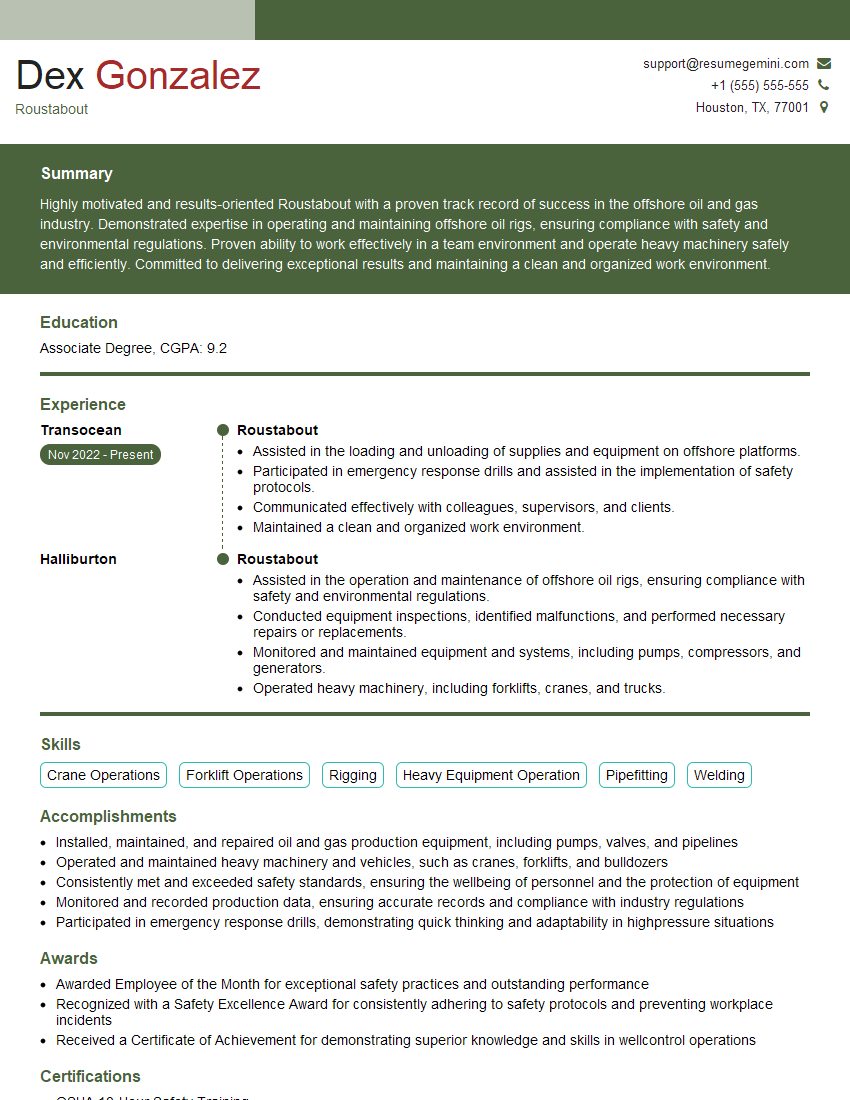
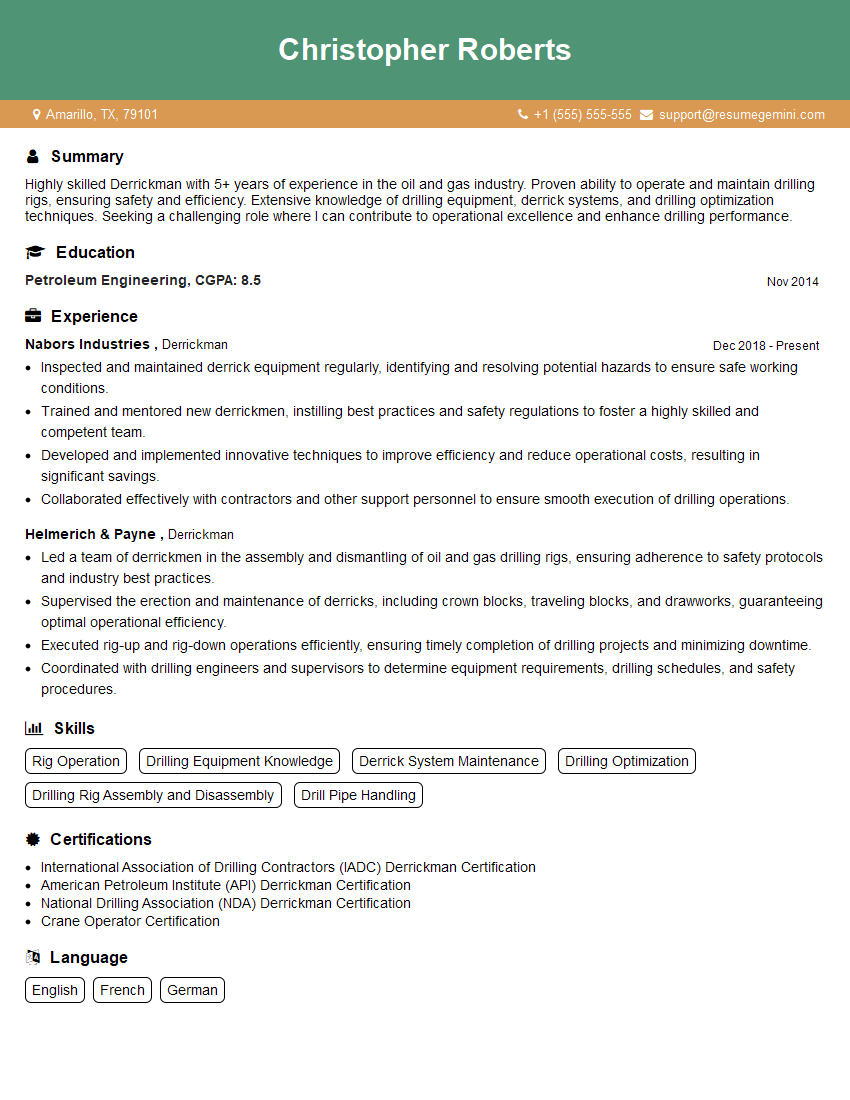
Mastering Workover rig operation opens doors to exciting career advancements and higher earning potential within the oil and gas industry. To maximize your job prospects, creating a compelling and ATS-friendly resume is crucial. ResumeGemini is a trusted resource that can help you build a professional resume that showcases your skills and experience effectively. We provide examples of resumes tailored specifically to Workover rig operation to help you present your qualifications in the best possible light. Invest the time to craft a resume that reflects your expertise and will help you secure your dream job.

Explore more articles
Users Rating of Our Blogs
Share Your Experience
We value your feedback! Please rate our content and share your thoughts (optional).