Are you ready to stand out in your next interview? Understanding and preparing for Workplace Design interview questions is a game-changer. In this blog, we’ve compiled key questions and expert advice to help you showcase your skills with confidence and precision. Let’s get started on your journey to acing the interview.
Questions Asked in Workplace Design Interview
Q 1. Describe your experience with different workplace design methodologies (e.g., Agile, Activity-Based Working).
My experience spans various workplace design methodologies, focusing on how they impact employee experience and organizational efficiency. Agile methodologies, for example, emphasize iterative design and flexibility. I’ve worked on projects where we started with a basic space plan, then iteratively refined it based on team feedback and evolving needs, using short sprints to test and adjust the design. This is particularly effective for startups and tech companies experiencing rapid growth.
Activity-Based Working (ABW) is another key methodology. In ABW projects, I’ve focused on creating a diverse range of work settings – from quiet zones for focused work to collaborative hubs for brainstorming sessions and social interaction. For example, one project involved designing a space with dedicated quiet rooms, open collaborative areas with writable walls, and informal lounge spaces to cater to different work styles and tasks. Success with ABW hinges on thorough employee engagement and a clear understanding of how different teams operate to ensure appropriate space allocation.
Beyond Agile and ABW, I’ve also incorporated principles of Lean design, prioritizing efficiency and minimizing waste in space usage and resource allocation. This often involves detailed space utilization analysis and optimization of workflows to reduce unnecessary movement and travel time within the workplace.
Q 2. How do you incorporate sustainability principles into your workplace design projects?
Sustainability is paramount in my design process. It’s not just an add-on; it’s integral to every decision. I incorporate sustainable principles from the initial concept stage through to project completion and beyond. This includes specifying sustainable materials with low embodied carbon, such as recycled content or rapidly renewable resources. For instance, I’ve used reclaimed wood for flooring and furniture in several projects, minimizing environmental impact.
Beyond materials, I focus on energy efficiency. This involves designing for optimal natural daylighting to reduce reliance on artificial lighting, incorporating energy-efficient HVAC systems, and utilizing smart building technologies for energy management. Water conservation is another key area. I select low-flow fixtures and explore rainwater harvesting solutions where feasible.
Finally, I prioritize designing for durability and longevity. This reduces the need for frequent renovations and replacements, minimizing waste and the associated environmental impact. The entire lifecycle of the building materials and design are considered.
Q 3. Explain your process for space planning and optimizing layouts for improved workflow.
My space planning process begins with a thorough understanding of the client’s needs, including their organizational structure, workflow, and culture. This involves conducting comprehensive needs assessments through interviews, surveys, and observations. I then translate this information into a detailed space program, outlining the required areas for different functions and teams.
Using software like AutoCAD and Revit, I develop various layout options, considering factors like adjacency needs (e.g., placing related departments close together), circulation patterns, and accessibility. I use space planning software to optimize layouts for efficiency, maximizing usable space while minimizing wasted area. I’ll often create 3D models to visualize the space and allow stakeholders to experience the layout virtually.
Throughout the process, I iterate on designs, testing different configurations to find the optimal solution that supports the workflow and meets the client’s needs. Data analysis tools are used to quantify the impact of different layout options on employee movement and collaboration.
Q 4. Describe your experience with designing for accessibility and inclusivity.
Designing for accessibility and inclusivity is a core principle of my work. It’s not just about meeting minimum legal requirements; it’s about creating a welcoming and usable space for everyone. This starts with understanding accessibility standards and guidelines, such as ADA (Americans with Disabilities Act) or equivalent local regulations.
In practice, this means designing spaces with appropriate ramps, elevators, and accessible restrooms. I also ensure that furniture is adaptable and accessible to people with mobility challenges, including adjustable desks and ergonomic seating options. Clear signage, sufficient lighting, and color contrast are also crucial for users with visual impairments.
Beyond physical accessibility, I consider cognitive and sensory needs. This involves designing spaces with appropriate levels of noise and lighting, providing clear wayfinding and avoiding overwhelming sensory stimuli. Inclusivity is further enhanced by incorporating a diverse range of seating options and work settings to cater to different preferences and needs.
Q 5. How do you handle conflicting stakeholder needs and priorities in a design project?
Handling conflicting stakeholder needs requires effective communication, collaboration, and a facilitative approach. I start by actively listening to each stakeholder’s concerns and priorities, ensuring that everyone feels heard and understood. I then work to identify common ground and find creative solutions that address everyone’s needs as much as possible.
Prioritization is key. I use techniques like weighted scoring or prioritization matrices to rank stakeholders’ needs based on factors such as impact, feasibility, and budget constraints. Compromise is often necessary, but I strive to find win-win solutions that balance competing interests. Regular communication and transparency are crucial throughout the process to keep stakeholders informed and involved.
Visual aids, such as concept sketches and 3D models, can help facilitate communication and resolve conflicts by allowing stakeholders to see and understand the design in a concrete way. Sometimes, using a design workshop format can be beneficial in resolving conflict and coming to a mutual understanding.
Q 6. What software and tools are you proficient in using for workplace design (e.g., AutoCAD, Revit, SketchUp)?
I’m proficient in a range of software and tools for workplace design, including AutoCAD for 2D drafting and detailed drawings, Revit for 3D modeling and BIM (Building Information Modeling), and SketchUp for quick conceptualization and visualization. I also utilize space planning software such as Space Designer and other specialized design applications. These tools allow me to create accurate and detailed designs, manage project information effectively, and collaborate with clients and other stakeholders.
Beyond design software, I’m skilled in project management tools such as Microsoft Project and collaborative platforms like Slack and Microsoft Teams for efficient communication and coordination. I also use data analysis tools to gather and interpret usage data to support decision making and measure the success of design interventions.
Q 7. How do you assess the success of a workplace design project after implementation?
Assessing the success of a workplace design project requires a multifaceted approach that goes beyond simply observing whether the space looks nice. Post-occupancy evaluation (POE) is a crucial step. This involves gathering data on how the space is actually being used after implementation. This data can be qualitative (e.g., through employee surveys and interviews) or quantitative (e.g., tracking space utilization rates and occupancy sensors).
Key metrics include employee satisfaction, productivity levels, collaboration rates, and overall well-being. I’ll analyze this data to identify areas where the design has been successful and areas that require improvement. For example, if employee surveys reveal dissatisfaction with the lighting or acoustics in a particular area, this would indicate a need for adjustments. Following up with users is important to measure long-term effectiveness and understand how users’ needs might have changed.
This feedback loop is vital for continuous improvement and ensures that future workplace design projects learn from past successes and challenges. This iterative approach helps optimize workplace design and ensure ongoing relevance.
Q 8. Explain your understanding of ergonomics and its impact on workplace design.
Ergonomics is the science of designing the workplace to fit the worker, not the other way around. It focuses on creating a work environment that promotes physical comfort, reduces strain and injury, and ultimately boosts productivity and employee well-being. In workplace design, this translates to careful consideration of factors like chair height and adjustability, monitor placement, keyboard and mouse positioning, lighting, and overall workspace layout. Ignoring ergonomics can lead to musculoskeletal disorders (MSDs) like carpal tunnel syndrome, back pain, and eye strain, resulting in decreased productivity, increased healthcare costs, and employee dissatisfaction.
For example, I recently designed a call center where we implemented adjustable sit-stand desks, ergonomic chairs with lumbar support, and appropriately positioned monitors to minimize neck strain. Pre- and post-implementation surveys showed a significant reduction in reported musculoskeletal discomfort and a noticeable improvement in employee morale.
Another example would be the strategic placement of equipment to minimize reaching and twisting. A poorly designed workflow can force employees into awkward postures all day, leading to long-term health problems. A well-designed workflow, however, can anticipate movements and optimize the physical arrangement to support smooth and efficient work.
Q 9. How do you incorporate technology and its integration into your workplace designs?
Technology integration is paramount in modern workplace design. It’s not just about providing enough power outlets and Wi-Fi; it’s about thoughtfully incorporating technology to enhance collaboration, communication, and workflow efficiency. This involves understanding how different teams utilize technology and designing spaces to support those needs.
- Smart Meeting Rooms: Integrating interactive whiteboards, video conferencing systems, and intuitive room scheduling software allows for seamless collaboration, both in-person and remotely.
- Activity-Based Working (ABW): Offering a variety of spaces – quiet zones for focused work, collaborative hubs for teamwork, and social areas for informal interactions – caters to different technological needs and work styles.
- Wireless Connectivity & Power: Ensuring robust Wi-Fi coverage and readily accessible power outlets throughout the office is crucial. This includes considering the needs of mobile workers and integrating wireless charging points.
- Data & Security: Designing spaces with appropriate security measures for sensitive data, such as secure servers and access control systems, is vital.
For instance, in a recent project for a tech startup, we designed a central collaborative hub with large interactive screens, comfortable seating, and integrated video conferencing capabilities. This allowed teams to easily brainstorm, share ideas, and collaborate efficiently regardless of location.
Q 10. Describe your experience with post-occupancy evaluations (POE).
Post-occupancy evaluations (POEs) are crucial for evaluating the success of a workplace design. They involve gathering feedback from occupants after they’ve been using the space for a period of time, typically six months to a year. This feedback is essential for identifying areas where the design falls short and making improvements. The process typically involves surveys, interviews, observations, and data analysis.
I’ve conducted numerous POEs using a mixed-methods approach. This includes quantitative data such as occupancy rates and energy consumption, as well as qualitative data through employee surveys and observations of how people actually use the space. For example, in one project, the initial design included a large open-plan area, intended to foster collaboration. However, the POE revealed that the noise levels were too high for focused work, leading to decreased productivity. As a result, we implemented acoustic solutions, creating quieter zones within the open plan, improving employee satisfaction and productivity.
POEs are not just about identifying problems; they are invaluable for validating successful design features and gathering insights for future projects. They provide a feedback loop to continuously refine workplace design strategies and ensure they meet the needs of the occupants.
Q 11. What are the key factors to consider when designing for different company cultures?
Company culture significantly influences workplace design. A company with a collaborative culture will require different spaces than one with a more independent, focused culture. Key factors to consider include:
- Communication Style: Open-plan offices are better suited for collaborative cultures, while private offices might be preferred for more independent work styles.
- Hierarchy: Hierarchical companies may opt for more defined private offices and executive suites, while flat organizations may favor open and shared spaces.
- Innovation & Creativity: Companies that value innovation often incorporate spaces that inspire creativity, such as breakout rooms, informal meeting areas, and art installations.
- Work Style: Does the company primarily use individual workstations, hot-desking, or activity-based working? The design must accommodate the chosen work style.
- Brand Identity: The design should reflect the company’s brand values and visual identity through the use of color, materials, and overall aesthetics.
For a fast-paced tech company, for example, I’d prioritize open collaborative spaces, flexible furniture, and vibrant colors to reflect their dynamic culture. For a more traditional financial institution, I might opt for a more formal design with private offices and a focus on functionality and security.
Q 12. How do you manage budgets and timelines in workplace design projects?
Managing budgets and timelines effectively in workplace design is crucial. It involves meticulous planning, proactive communication, and a clear understanding of priorities. I use a phased approach:
- Detailed Budgeting: This involves creating a comprehensive budget that includes all aspects of the project, from design fees and construction costs to furniture and technology. Contingency planning is crucial to account for unforeseen expenses.
- Phased Approach: Breaking down the project into smaller, manageable phases allows for better control of costs and timelines. This helps identify and address potential issues early on.
- Regular Progress Meetings: Frequent communication with the client and the project team ensures everyone is aligned and any potential issues are identified and addressed promptly.
- Value Engineering: Identifying cost-effective alternatives without compromising quality or functionality.
- Project Management Software: Utilizing tools like Gantt charts and project management software to track progress, manage tasks, and ensure deadlines are met.
By employing these strategies, I aim to deliver projects on time and within budget while still achieving the desired design outcomes. For example, on a recent project with a limited budget, we opted for cost-effective materials without sacrificing aesthetics, using a combination of high-quality and budget-friendly options.
Q 13. Explain your understanding of building codes and regulations related to workplace design.
Building codes and regulations are paramount in workplace design. Ignoring them can lead to costly delays, legal issues, and even safety hazards. My understanding encompasses a wide range of codes, including:
- Accessibility: Ensuring compliance with ADA (Americans with Disabilities Act) guidelines and other accessibility standards is crucial to create inclusive workspaces.
- Fire Safety: This includes proper placement of fire exits, fire suppression systems, and fire-resistant materials.
- Occupancy Limits: Designing spaces that comply with occupancy limits to ensure safety and avoid overcrowding.
- Electrical Codes: Meeting electrical codes for wiring, lighting, and power distribution.
- HVAC (Heating, Ventilation, and Air Conditioning): Ensuring adequate ventilation and temperature control for a healthy and comfortable work environment.
I always work closely with architects, engineers, and building inspectors to ensure compliance throughout the design and construction process. A thorough understanding of these codes helps anticipate potential problems and avoid costly setbacks. For example, careful consideration of ADA guidelines early in the design phase can prevent expensive modifications later in the project.
Q 14. How do you stay up-to-date with the latest trends and best practices in workplace design?
Staying current in workplace design requires continuous learning. I achieve this through a multi-pronged approach:
- Industry Publications and Journals: I regularly read leading publications in the field to stay informed about emerging trends and best practices.
- Industry Conferences and Events: Attending conferences and workshops allows me to network with other professionals and learn about innovative design solutions.
- Continuing Education Courses: I actively participate in continuing education programs to update my knowledge on relevant codes, technologies, and design principles.
- Online Resources and Professional Organizations: Utilizing online platforms and engaging with professional organizations helps me access the latest research and information.
- Case Studies and Site Visits: Studying successful workplace designs and conducting site visits provide valuable insights and inspiration.
For example, I recently attended a conference on biophilic design, learning about how incorporating natural elements into the workplace can improve employee well-being and productivity. This knowledge is directly applicable to my current projects, allowing me to incorporate sustainable and human-centered design principles.
Q 15. Describe your experience with different types of workplace settings (e.g., open plan, private offices).
My experience spans a wide range of workplace settings, from traditional private offices to modern open-plan layouts, and even hybrid models incorporating both. I’ve worked on projects involving activity-based working (ABW) spaces, dedicated quiet zones, collaborative hubs, and even specialized environments like design studios and tech labs. Each setting presents unique challenges and opportunities.
For example, designing a private office focuses on individual productivity and confidentiality, emphasizing elements like soundproofing, personal storage, and adjustable lighting. In contrast, an open-plan office necessitates careful consideration of acoustics, visual privacy, and the creation of informal meeting areas to foster collaboration. The success of any design hinges on a deep understanding of the organization’s culture and the needs of its employees. I’ve found that successful designs often integrate a mix of these settings, creating a flexible environment that caters to diverse work styles and preferences.
Career Expert Tips:
- Ace those interviews! Prepare effectively by reviewing the Top 50 Most Common Interview Questions on ResumeGemini.
- Navigate your job search with confidence! Explore a wide range of Career Tips on ResumeGemini. Learn about common challenges and recommendations to overcome them.
- Craft the perfect resume! Master the Art of Resume Writing with ResumeGemini’s guide. Showcase your unique qualifications and achievements effectively.
- Don’t miss out on holiday savings! Build your dream resume with ResumeGemini’s ATS optimized templates.
Q 16. How do you collaborate effectively with architects, contractors, and other stakeholders?
Effective collaboration with architects, contractors, and other stakeholders is paramount. I believe in establishing clear communication channels from the outset. This includes regular meetings, shared project management tools, and detailed documentation. I actively seek input from all stakeholders, valuing their expertise and perspectives. For instance, I work closely with architects to ensure the design is structurally sound and aesthetically pleasing, while collaborating with contractors to ensure the project stays within budget and timelines. With other stakeholders, like IT or HR, I ensure seamless integration of technology and alignment with company policies. Open and transparent communication minimizes misunderstandings and leads to a more cohesive and successful project.
Q 17. What are your preferred methods for gathering user input and feedback during the design process?
Gathering user input is crucial. My preferred methods involve a multi-pronged approach. This typically starts with surveys and questionnaires to gather broad data on employee preferences and needs. Following this, I conduct focus groups and individual interviews to delve deeper into specific concerns and preferences. I find that observing employees in their current workspace provides valuable insights into their workflow and pain points. Finally, post-occupancy evaluations (POEs) allow us to assess the design’s effectiveness after implementation and make any necessary adjustments. These evaluations use both quantitative data (e.g., employee satisfaction surveys) and qualitative data (e.g., observational studies). This iterative process ensures the design meets the needs of its users.
Q 18. Describe a challenging workplace design project you overcame and the solution you implemented.
One challenging project involved designing a workspace for a rapidly growing tech startup. Their initial brief was vague, demanding a ‘creative’ and ‘innovative’ space but lacking specific requirements. The biggest hurdle was managing the evolving needs of a company constantly expanding and changing its structure.
My solution was to design a highly modular and adaptable workspace. We utilized flexible furniture, reconfigurable walls, and easily accessible power and data points. This allowed the team to easily adjust the space to meet their ever-changing needs. We also incorporated agile project management principles into the design process, conducting regular check-ins with the client to ensure alignment. This iterative approach, combined with modular design elements, allowed us to successfully navigate the challenges of a dynamic work environment, ultimately creating a highly functional and inspiring space.
Q 19. How do you balance aesthetics with functionality in your designs?
Balancing aesthetics and functionality is a key aspect of successful workplace design. It’s not about choosing one over the other; rather, it’s about finding the harmonious intersection. A beautiful space that is impractical or uncomfortable will not be effective. Similarly, a purely functional space lacking aesthetic appeal will likely lack inspiration and engagement.
For instance, selecting materials that are both durable and visually appealing is crucial. Ergonomic furniture that supports health and wellbeing can also be aesthetically pleasing. Natural light, biophilic design elements (incorporation of natural elements), and thoughtful color palettes contribute to both the aesthetic appeal and overall well-being of the space. The best designs seamlessly integrate form and function, resulting in a space that is both beautiful and highly effective.
Q 20. What is your approach to designing for a flexible and adaptable workspace?
Designing for flexibility and adaptability is essential in today’s dynamic work environments. This involves creating spaces that can easily accommodate changing team structures, technologies, and work styles. Key strategies include using modular furniture, easily reconfigurable layouts, and robust infrastructure capable of supporting evolving technological needs.
For instance, hot-desking solutions allow employees to choose their workspaces based on their needs for the day. The use of mobile technology and wireless connectivity eliminates reliance on fixed desk locations. Furthermore, incorporating multi-functional spaces that can be used for a variety of purposes (meetings, presentations, informal collaborations) optimizes space utilization. By embracing adaptability in the design process, we create workspaces that are not only responsive to current needs but also resilient to future changes.
Q 21. How do you incorporate health and wellbeing considerations into your workplace designs?
Health and wellbeing are no longer optional considerations but integral parts of effective workplace design. This encompasses several key aspects. Firstly, good air quality is vital, achieved through proper ventilation and air filtration systems. Ergonomic furniture and adjustable workstations are crucial for preventing musculoskeletal issues. Access to natural light and views to the outside significantly impacts mood and productivity. Incorporating biophilic design elements—plants, natural materials, and natural light—contributes to a more calming and restorative environment.
Furthermore, creating spaces that encourage movement and physical activity, such as walking meeting areas or conveniently located staircases, is essential. Designated quiet zones offer spaces for respite and focused work, reducing stress and promoting well-being. Careful consideration of acoustics, minimizing noise pollution, is also vital for creating a conducive and healthy work environment.
Q 22. Describe your experience with designing for different scales of projects (e.g., small offices, large corporate campuses).
Designing for different scales requires a flexible approach. For small offices, the focus is on maximizing functionality within a limited space, often prioritizing efficient layouts and multi-functional furniture. I’ve worked on projects ranging from cozy co-working spaces for startups, where we incorporated adaptable furniture and shared resources to optimize space, to designing the layout for a small dental practice, meticulously planning workflow and optimizing the sterile environment. Larger corporate campuses, on the other hand, demand a more complex strategy that incorporates aspects such as wayfinding, zoning for different departments, and building robust infrastructure to support a larger workforce. A recent project involved designing a new headquarters for a tech company, which included designing open-plan work areas, specialized labs, collaborative hubs, and quiet zones, all interconnected efficiently. In both cases, the core principle remains the same: creating a space that supports the client’s needs and fosters productivity and wellbeing.
Q 23. Explain your understanding of different types of workplace furniture and their applications.
Workplace furniture plays a critical role in creating a functional and aesthetically pleasing environment. Understanding the nuances of different furniture types is key. For example, benching systems are excellent for creating collaborative spaces, but require careful consideration of personal storage needs. Task chairs need to support ergonomic principles, preventing repetitive strain injuries. Meeting room furniture should be adaptable and promote inclusive collaboration. We often select furniture based on its durability, sustainability, and ability to support different working styles. For instance, in one project, we integrated height-adjustable desks to cater to employees who preferred standing, promoting activity and wellbeing. We also used modular seating to create flexibility in the meeting areas, allowing easy adaptation to various team sizes and meeting formats.
Q 24. How do you manage change and adapt to evolving client needs throughout a project?
Managing change effectively is crucial. I employ a proactive approach by establishing open communication channels and regular check-ins with clients. Changes are inevitable, and the key is to embrace them. We use agile methodologies, adapting our plans based on feedback and new requirements. For example, in a recent project, the client initially envisioned a completely open-plan office. After initial design reviews and feedback from focus groups, we realized that incorporating some private spaces and quiet zones was crucial for concentration and focused work. We seamlessly integrated these changes, ensuring minimal disruption to the timeline and budget. This involved collaborative discussions and a willingness to re-evaluate our initial design assumptions.
Q 25. How would you approach designing a workplace for remote and hybrid workers?
Designing for remote and hybrid workers necessitates a thoughtful approach. The workplace needs to function as a vibrant hub for collaboration and connection, rather than just rows of individual desks. The design should prioritize:
- Flexible workspaces: A mix of individual workspaces, collaboration areas, and quiet zones.
- Technology integration: Seamless connectivity, high-quality audio-visual equipment for virtual meetings.
- Comfortable and inviting atmosphere: Creating a space people want to come to, fostering a sense of community.
- Amenities: Spaces for relaxation, socialization, and wellness initiatives.
Q 26. What are the key metrics you would use to measure the effectiveness of a workplace design?
Measuring the effectiveness of workplace design requires a multifaceted approach using both quantitative and qualitative metrics. Key metrics include:
- Employee satisfaction surveys: Assessing employee well-being, productivity, and satisfaction with the workspace.
- Space utilization data: Tracking occupancy rates and identifying areas for optimization.
- Productivity metrics: Measuring output, efficiency, and project completion rates.
- Environmental impact assessment: Evaluating energy consumption, water usage, and waste reduction.
- Health and safety records: Monitoring accident rates and employee health issues.
Q 27. Describe your experience with creating design presentations and communicating your vision to clients.
Creating compelling design presentations is vital for effective client communication. I leverage a variety of mediums including 3D renderings, virtual tours, and physical models to present our vision vividly. I focus on presenting the ‘story’ behind the design—highlighting how the space will meet client needs and contribute to their organizational goals. I’ve found that interactive presentations, incorporating client feedback during the presentation itself, enhances engagement and ensures the final design truly reflects their vision. For instance, in one presentation, we utilized a virtual reality headset to allow clients to virtually ‘walk through’ the designed space, leading to more insightful feedback and a more collaborative design process.
Q 28. How familiar are you with the concept of ‘future-proofing’ a workplace design?
Future-proofing a workplace design involves anticipating future needs and technological advancements. This requires a flexible and adaptable approach. Key elements include designing spaces that can be easily reconfigured, incorporating robust infrastructure to accommodate evolving technologies, and selecting furniture and finishes that are durable and sustainable. We might incorporate flexible partitions, adaptable furniture, and robust cabling systems to support technological changes. For example, including readily accessible power and data points throughout the space facilitates adjustments to the layout or introduction of new technologies. Sustainability is also crucial, encompassing the use of eco-friendly materials and building systems designed to minimize environmental impact. By carefully considering these factors, we ensure that the workplace remains relevant and functional well into the future.
Key Topics to Learn for Workplace Design Interview
- Space Planning & Layout: Understanding principles of workflow, ergonomics, and team dynamics to optimize space utilization. Practical application: Designing a collaborative workspace for a marketing team, considering both individual needs and team interaction.
- Workplace Technology & Integration: Familiarizing yourself with the latest technologies impacting workplace design, such as smart building systems and collaborative software. Practical application: Proposing a technology solution to improve communication and efficiency in a remote work environment.
- Sustainability & Wellbeing: Incorporating sustainable materials and practices, focusing on employee well-being through design choices that promote health and productivity. Practical application: Designing a biophilic office space that promotes mental and physical well-being.
- Accessibility & Inclusivity: Designing spaces that are accessible and inclusive for all employees, regardless of ability. Practical application: Adapting a workspace to accommodate employees with mobility limitations.
- Branding & Corporate Identity: Understanding how workplace design reflects and reinforces a company’s brand and culture. Practical application: Creating a workplace design that effectively communicates a company’s innovative and collaborative ethos.
- Project Management & Budgeting: Managing the design process, including timelines, budgets, and stakeholder communication. Practical application: Developing a detailed project plan for a large-scale office renovation.
- Building Codes & Regulations: Understanding relevant building codes and regulations to ensure compliance and safety. Practical application: Ensuring a design proposal adheres to all necessary fire safety and accessibility standards.
Next Steps
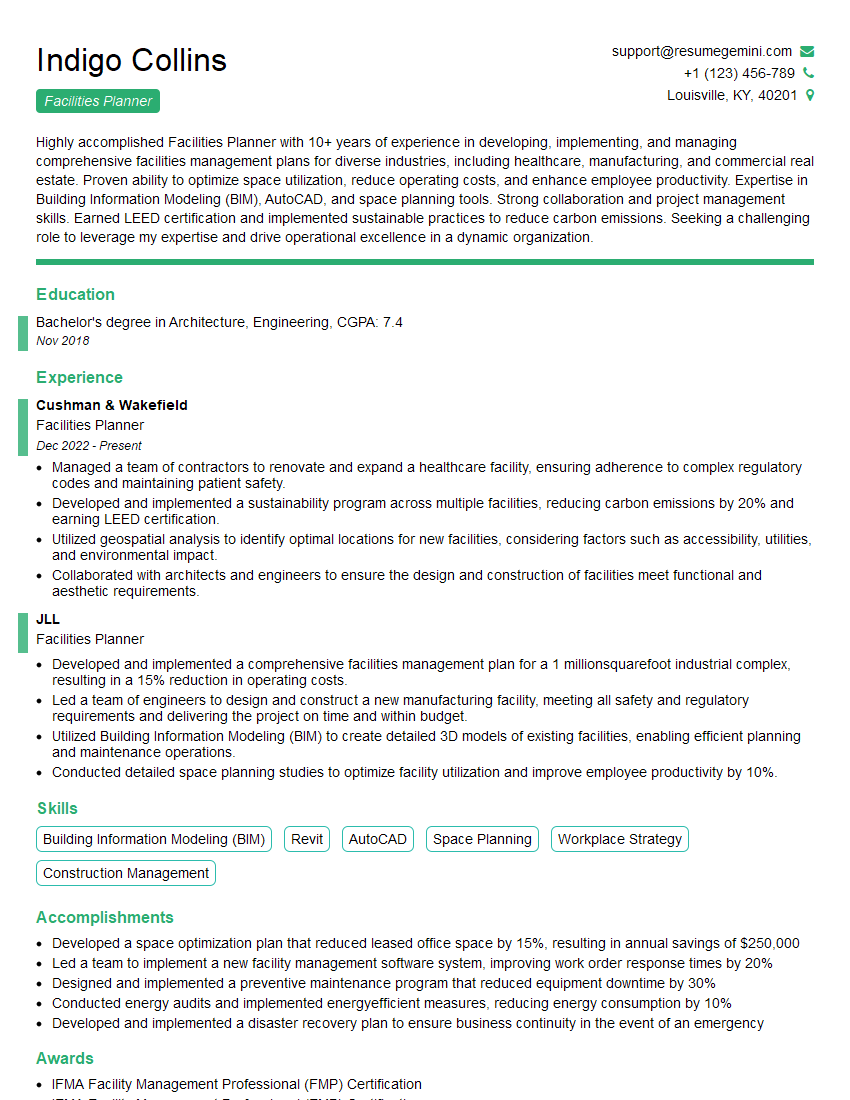
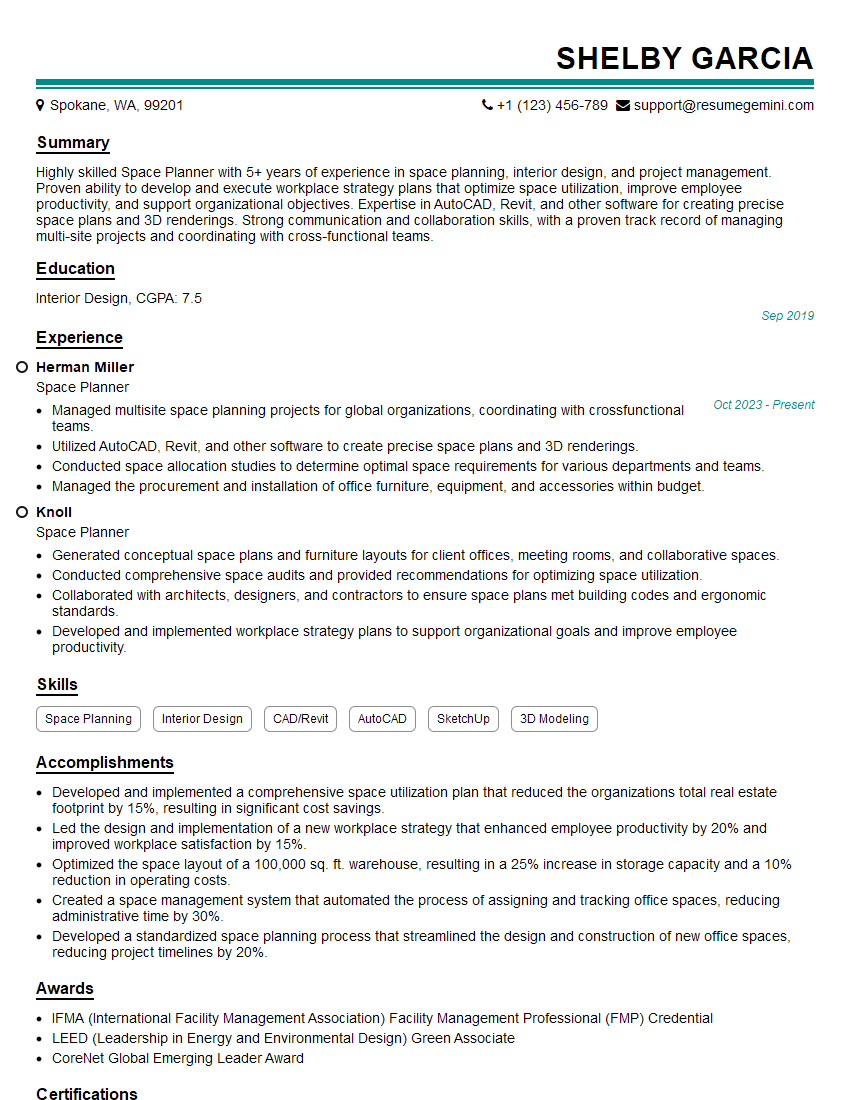
Mastering Workplace Design opens doors to exciting and impactful careers, allowing you to shape environments that foster productivity, collaboration, and well-being. To maximize your job prospects, a strong, ATS-friendly resume is crucial. ResumeGemini is a trusted resource to help you craft a compelling resume that showcases your skills and experience effectively. Examples of resumes tailored to Workplace Design are available to help you get started. Invest in your professional presentation – it’s the key to unlocking your dream career in this dynamic field.
Explore more articles
Users Rating of Our Blogs
Share Your Experience
We value your feedback! Please rate our content and share your thoughts (optional).
What Readers Say About Our Blog
Very informative content, great job.
good