Interviews are opportunities to demonstrate your expertise, and this guide is here to help you shine. Explore the essential Zigzag Stitch Sewing interview questions that employers frequently ask, paired with strategies for crafting responses that set you apart from the competition.
Questions Asked in Zigzag Stitch Sewing Interview
Q 1. What are the different types of zigzag stitches and their applications?
Zigzag stitches aren’t just one stitch; they’re a family of stitches, all variations on a basic back-and-forth pattern. The key difference lies in the stitch width and length, which dramatically change the stitch’s application.
- Standard Zigzag: The most common type, used for securing seams, preventing fraying, and adding decorative touches. Imagine it as the workhorse of zigzag stitches – versatile and reliable.
- Narrow Zigzag: A tighter zigzag, often used for finishing seams on lightweight fabrics or for overcast stitching to prevent unraveling. Think of it as a precision tool for delicate fabrics.
- Wide Zigzag: A wider zigzag used for decorative purposes or to create a more substantial seam. This one adds a bold visual impact to your projects.
- Triple Zigzag: Creates three parallel zigzag lines, adding even more strength and visual interest. It’s like having three layers of protection for your seams.
- Fancy Zigzag: Many machines offer programmable fancy zigzags—creating intricate patterns ideal for embroidery and decorative stitching. These stitches add a professional touch to your work.
The application depends on the desired outcome. A narrow zigzag is perfect for finishing the raw edge of silk, while a wide zigzag might be your go-to for attaching two heavy fabrics together.
Q 2. Explain the relationship between stitch width, stitch length, and fabric type.
The relationship between stitch width, stitch length, and fabric type is crucial for achieving a strong and aesthetically pleasing stitch. Think of it like building a house – you need the right materials and techniques for a sturdy structure.
- Stitch Width: This refers to the horizontal distance between the leftmost and rightmost points of the zigzag. A wider stitch is better suited for heavier fabrics, offering more surface area for secure stitching, while a narrow stitch works better with lighter fabrics, preventing puckering.
- Stitch Length: This controls the vertical distance between each stitch. Shorter stitch lengths are stronger and better for stretchy or delicate fabrics, creating a closer weave. Longer stitch lengths are appropriate for less-stretchy, heavier fabrics, where a tighter stitch might cause puckering.
- Fabric Type: The fabric dictates the ideal combination. For instance, delicate silk requires a short stitch length and narrow stitch width, whereas denim would benefit from a longer stitch length and wider width to prevent breakage.
For example, sewing a button on a lightweight shirt would call for a short stitch length and narrow stitch width, whereas sewing a seam on a heavy canvas bag requires a longer length and wider width.
Q 3. How do you adjust stitch settings for different fabrics (e.g., lightweight vs. heavyweight)?
Adjusting stitch settings for different fabrics is key to success. It’s all about finding the right balance to prevent breakage, puckering, or skipped stitches. Think of it as tailoring the stitch to the fabric.
- Lightweight Fabrics (Silk, chiffon): Use a shorter stitch length (around 1-2 mm) and a narrower stitch width (around 1-2 mm). This prevents damage and ensures a neat finish.
- Medium-Weight Fabrics (Cotton, linen): A slightly longer stitch length (around 2-3 mm) and a slightly wider width (around 2-3 mm) often works well. It provides sufficient strength without causing excessive puckering.
- Heavyweight Fabrics (Denim, canvas): Use a longer stitch length (around 3-4 mm or even longer) and a wider stitch width (around 3-4 mm or more), depending on the fabric thickness. This ensures strong stitching and prevents the needle from breaking.
Always test your settings on a scrap piece of fabric before working on your project. This is a vital step in preventing mistakes on your final piece.
Q 4. Describe the process of troubleshooting a jammed zigzag stitch.
A jammed zigzag stitch can be frustrating, but a systematic approach will usually solve the problem. First, assess the situation, then take steps to resolve it.
- Power Off: Always unplug the machine before troubleshooting to prevent injury.
- Inspect the Needle: Check for bending, damage, or incorrect insertion. A bent needle can cause serious problems. Replace the needle if necessary.
- Check the Bobbin: Ensure the bobbin is correctly wound and inserted. A poorly wound or improperly inserted bobbin is a frequent cause of jamming.
- Clear Lint and Debris: Carefully remove any lint, threads, or debris from the bobbin area, needle plate, and feed dogs. Build-up can obstruct movement and cause jams.
- Inspect the Feed Dogs: Make sure the feed dogs are moving freely. If they are obstructed, the fabric won’t feed correctly.
- Check the Stitch Plate: Make sure there isn’t anything caught under the stitch plate.
- Test the Stitch: Try stitching a test seam after addressing potential issues.
If the problem persists, consult your sewing machine’s manual or a qualified technician.
Q 5. What are the common causes of skipped stitches in a zigzag stitch?
Skipped stitches in a zigzag can result from several factors, and addressing these systematically will often resolve the issue.
- Incorrect Needle: Using the wrong needle size or type for the fabric can lead to skipped stitches. A dull or bent needle is a frequent culprit.
- Incorrect Tension: Uneven tension between the upper and lower threads is a common cause of skipped stitches. Adjust the tension until you achieve even stitching.
- Incorrect Thread: Using the wrong thread type (e.g., too thick or too thin) or damaged thread can lead to missed stitches.
- Bobbin Issues: A poorly wound or improperly inserted bobbin can result in inconsistent stitching.
- Machine Maintenance: A dirty or poorly maintained machine can also cause skipped stitches. Regular cleaning and lubrication are essential.
Remember, always start with the simplest explanations first. For instance, check the thread for knots and make sure that it is threaded correctly in the machine.
Q 6. How do you prevent puckering when using a zigzag stitch on curved seams?
Puckering on curved seams is a common problem, but it can be avoided with the right technique and stitch settings.
- Reduce Stitch Length: Using a shorter stitch length on curves provides more control and reduces puckering.
- Use Smaller Zigzag Width: A narrow zigzag will contribute to less puckering on curved seams.
- Clip Curves: Carefully clip into the curves of the seam allowance, but not too deeply, to ease the fabric and reduce tension.
- Use a Seam Ripper Sparingly: If minor puckering occurs, you can carefully remove stitches using a seam ripper and re-stitch.
- Lower Feed Dogs: For tight curves, lowering your machine’s feed dogs can give you more control over the fabric.
- Use a Walking Foot: If severe puckering persists, using a walking foot will help to feed both layers evenly, even on tricky fabrics.
Practice makes perfect! Working with scraps and getting used to easing the fabric into the stitch is essential for avoiding puckering.
Q 7. Explain the importance of proper tension settings for a zigzag stitch.
Proper tension is paramount for a successful zigzag stitch. It’s the delicate balance between the upper and lower threads, ensuring even stitching and preventing skipped stitches or puckering. Imagine it as the perfect harmony between two singers – they need to be in sync to produce beautiful music.
Too much upper tension will cause the upper thread to pull the lower thread to the surface, leading to puckering and visible stitching on the top. Too little upper tension creates loose stitches, often resulting in skipped stitches. Proper tension is achieved through adjusting the tension dial on your machine until the threads interlock evenly on both the top and bottom of the fabric.
Always test your tension on a scrap piece of the same fabric you’re working with, making adjustments until you achieve consistent, even stitching. Each machine has its own nuances, so familiarity and practice are essential for achieving perfect tension settings.
Q 8. How do you select the appropriate needle size and type for a zigzag stitch?
Choosing the right needle is crucial for a beautiful, consistent zigzag stitch. The fabric dictates the needle size and type. Think of it like choosing the right tool for a job – you wouldn’t use a hammer to screw in a screw!
- Fabric Weight: Lighter fabrics (silk, chiffon) require finer needles (sizes 60/8 to 70/10). Medium-weight fabrics (cotton, linen) use needles sized 75/11 to 90/14. Heavier fabrics (denim, canvas) need larger needles (sizes 100/16 and up).
- Fabric Type: The needle type is also important. Knit fabrics benefit from ballpoint needles, which glide between the loops of the knit preventing skipped stitches or snags. Woven fabrics generally work well with universal needles, which have a sharp point for piercing the threads of the fabric.
- Needle System: Always make sure the needle system (e.g., 130/705H, 15×1) matches your sewing machine. Using the wrong system can cause damage to your machine.
For example, sewing a delicate silk scarf would require a size 70/10 sharp needle, whereas sewing a thick denim jacket calls for a size 100/16 denim needle.
Q 9. What are the advantages of using a zigzag stitch over a straight stitch?
Zigzag stitches offer several advantages over straight stitches, primarily related to their versatility and strength. Think of a straight stitch as a single line – easily broken. A zigzag is like a braid, more resilient.
- Durability: The interlocking nature of the zigzag stitch creates a stronger seam, particularly useful in areas prone to stress or wear and tear, like seams on children’s clothes.
- Stretch: It allows for give and flexibility, making it ideal for stretchy fabrics like knits, preventing seam breakage during movement.
- Preventing Fraying: The zigzag stitch’s ability to encase the raw edges makes it an excellent choice for finishing seams, which prevents fraying and adds durability.
- Decorative Effects: Zigzag stitching also offers a variety of decorative applications, adding texture and interest to your projects.
For instance, a zigzag stitch used on the seams of a pair of jeans will be much more resistant to ripping than a straight stitch alone. Similarly, a zigzag stitch is essential when sewing a knit t-shirt to allow for movement without seam failure.
Q 10. Describe the use of a zigzag stitch for finishing seams (e.g., overlocking).
Zigzag stitching is a valuable technique for seam finishing, often referred to as overlocking. It neatly encases the raw edges of fabric, preventing fraying and creating a professional finish. This is like wrapping a present – you don’t leave the edges raw.
The process involves stitching a zigzag along the raw edges of the seam allowance. The width and length of the stitch determine the amount of fabric encased. A wider stitch will encase more fabric, while a narrower stitch provides a more delicate finish. It’s particularly useful in preventing fraying on fabrics that tend to unravel easily, such as cotton and linen. Many machines even have a specific overlock stitch setting to make this easier.
For example, after sewing a seam on a cotton dress, a zigzag stitch can be applied to the seam allowance to prevent fraying and create a more durable and aesthetically pleasing finish.
Q 11. How do you achieve a neat and even zigzag stitch?
Achieving a neat and even zigzag stitch requires attention to several factors. It’s like writing – practice makes perfect.
- Consistent Speed: Maintain a steady sewing speed; rushing can lead to uneven stitches.
- Proper Tension: Adjust the upper and lower thread tension for a balanced stitch. Uneven tension will result in a stitch that’s too loose or too tight.
- Correct Stitch Length and Width: Experiment with different stitch length and width settings to find the optimal combination for your fabric and desired stitch appearance.
- Fabric Guidance: Guide the fabric evenly under the presser foot to ensure smooth feed through the machine.
- Needle and Machine Maintenance: A sharp needle and a well-maintained machine are essential. A dull or bent needle will produce inconsistent stitches.
Start by practicing on scrap fabric before working on your project. Adjusting the settings and getting a feel for the machine’s responsiveness will lead to a more professional result.
Q 12. What are the safety precautions you take when using a sewing machine with a zigzag stitch?
Safety is paramount when using any sewing machine, especially when working with a zigzag stitch due to the moving parts. Treat it like operating any other power tool.
- Finger Placement: Keep fingers away from the needle and presser foot while the machine is running.
- Machine Maintenance: Regularly clean and oil the machine to avoid malfunctions and potential injuries.
- Proper Grounding: Ensure the machine is properly grounded to prevent electric shock.
- Needle Disposal: Use caution when changing needles; dispose of used needles properly in a designated container.
- Proper Lighting: Ensure adequate lighting to avoid eye strain and accidents.
Always remember to unplug the machine when not in use or when cleaning/maintaining.
Q 13. How do you maintain your sewing machine to ensure consistent zigzag stitches?
Regular maintenance is key to consistent zigzag stitches. It’s like servicing your car – it will run better.
- Clean the Bobbin Area: Lint and dust can accumulate and interfere with the stitch formation. Regularly clean the bobbin area with a brush or compressed air.
- Lubricate Moving Parts: Apply sewing machine oil to the recommended moving parts as per the manufacturer’s instructions. This reduces friction and ensures smooth operation.
- Check and Clean the Feed Dogs: Clean the feed dogs to ensure proper fabric feeding, avoiding skipped stitches.
- Inspect the Needle: Regularly check the needle for bends or damage. Replace if necessary.
- Check the Tension: Periodically check and adjust the tension settings to maintain consistent stitch quality.
Following the manufacturer’s maintenance instructions will ensure your machine stays in optimal condition and produces perfect zigzag stitches consistently.
Q 14. What is the appropriate needle position for a zigzag stitch?
The needle position for a zigzag stitch is typically centered, but it can be adjusted for specific applications. Imagine it as the anchor point for the stitch.
The center position is the default and is generally used for standard zigzag stitching, seam finishing, and most decorative stitches. However, some sewing machines allow for adjusting the needle position to the left or right. This feature is useful for creating specialized stitches or when working with very narrow seams. For example, you might shift the needle to the left for stitching close to a folded edge to ensure the stitches only penetrate the required fabric layer.
Always consult your sewing machine’s manual for instructions on how to adjust the needle position and its effect on your stitching.
Q 15. Explain the difference between a wide and narrow zigzag stitch.
The difference between a wide and narrow zigzag stitch lies primarily in the width of the stitch, which is the distance between the leftmost and rightmost points of the zig and zag. A narrow zigzag stitch has a smaller width, typically used for seams that need to be strong and less bulky, like joining two pieces of woven fabric. Think of it like sewing with a very thin, slightly wavy line. A wide zigzag stitch has a broader width, offering more stretch and flexibility. It’s often chosen for stretchy materials like knits where more give is required. It resembles a wider, more pronounced wave.
Imagine stitching a button onto a shirt: a narrow zigzag is ideal for securing the button firmly. In contrast, attaching a stretchy cuff to a sweater calls for a wide zigzag stitch to accommodate movement.
Career Expert Tips:
- Ace those interviews! Prepare effectively by reviewing the Top 50 Most Common Interview Questions on ResumeGemini.
- Navigate your job search with confidence! Explore a wide range of Career Tips on ResumeGemini. Learn about common challenges and recommendations to overcome them.
- Craft the perfect resume! Master the Art of Resume Writing with ResumeGemini’s guide. Showcase your unique qualifications and achievements effectively.
- Don’t miss out on holiday savings! Build your dream resume with ResumeGemini’s ATS optimized templates.
Q 16. How do you use a zigzag stitch to sew knits effectively?
Sewing knits effectively with a zigzag stitch requires understanding that knit fabrics are inherently stretchy. A wide zigzag stitch, with an appropriate stitch length, is key here. The wider width allows for the give-and-take of the fabric as it stretches, preventing the seam from breaking or pulling apart. The stitch length should be adjusted to match the knit’s stretch – a longer length allows for greater flexibility while a shorter length offers more strength. It’s all about finding the right balance. Using a ballpoint needle is crucial; standard needles can pierce knit fibers, creating holes.
For example, when sewing a neckline on a knit top, I would use a wide, slightly longer zigzag stitch to give the seam the necessary stretch to accommodate the wearer’s movements. The key is to test your stitch settings on a scrap piece of the same fabric before you begin the main work.
Q 17. How would you repair a broken zigzag stitch in a finished garment?
Repairing a broken zigzag stitch in a finished garment requires precision and attention to detail. First, you need to carefully examine the break to determine its extent. If it’s a small gap, use a needle and thread matching the garment’s color to carefully stitch over the broken section, mirroring the original zigzag pattern as closely as possible. For more extensive damage, you may need to remove several stitches near the break to ensure a clean repair. Always use a small, sharp needle and a fine thread. Once the repair is complete, lightly press the area with an iron to blend the repair into the surrounding fabric.
Think of it like patching a small hole in a wall – you need to match the existing texture and color as seamlessly as possible for the repair to be invisible.
Q 18. How do you adjust the pressure foot for different fabric weights using a zigzag stitch?
Adjusting the presser foot pressure is crucial for achieving even stitching with different fabric weights when using a zigzag stitch. For lightweight fabrics like silk or chiffon, you need to reduce the pressure to prevent puckering. Too much pressure can distort delicate materials. For medium-weight fabrics such as cotton, a standard pressure setting usually works well. For heavyweight fabrics like denim or canvas, you’ll need to increase the pressure to ensure that the fabric feeds smoothly through the machine and the stitches are securely formed. The goal is always to have the fabric lying flat and even under the presser foot. Most sewing machines have a dial or knob to adjust the presser foot pressure; consult your machine’s manual for specific instructions.
Q 19. What are the limitations of using a zigzag stitch?
While the zigzag stitch is incredibly versatile, it does have limitations. It’s not ideal for applications demanding extreme strength, especially on heavier materials under high tension. A straight stitch is generally stronger. It also creates bulkier seams compared to a straight stitch, which can be noticeable in fine fabrics. Additionally, the decorative nature of certain zigzag patterns can compromise structural integrity if the application is solely about strength. Therefore, it is important to choose the right stitch for the task.
For example, you would not use a zigzag stitch for the main seams of a heavy-duty sail or a critical structural element of a garment; a straight stitch would be much more suitable in these contexts.
Q 20. How do you apply a zigzag stitch for decorative purposes?
Zigzag stitches offer a multitude of decorative possibilities. By adjusting the stitch width, length, and even the density of the stitching, you can create various interesting patterns. A narrow, short zigzag stitch can mimic a simple line, while a wider, longer stitch creates a more dramatic effect. Combining zigzag stitches with other decorative stitches enhances the creativity. You can create outlines, fill areas with textured stitches, or even embroider small designs using different stitch settings. Some machines offer programmable zigzag patterns for even more advanced decorative effects.
Imagine embroidering a floral design on a child’s dress – a combination of different zigzag stitch widths and lengths would be a fun and effective way to give the garment a unique, personalized touch.
Q 21. Describe the use of a zigzag stitch in creating buttonholes.
The zigzag stitch plays a crucial role in creating strong and durable buttonholes. A zigzag stitch is used to create the buttonhole itself, forming a secure, reinforced edge that prevents unraveling. The machine’s zigzag function typically allows you to stitch a rectangular or oval buttonhole. The width of the zigzag determines the buttonhole’s width, while the stitch length controls the buttonhole’s length and density. Once the buttonhole is stitched, a small vertical slit is carefully cut within the stitching to allow for the button to pass through. The zigzag stitching provides a professional, secure finish.
For example, creating a perfectly formed buttonhole on a tailored shirt requires precise control over the zigzag stitch parameters – a precise stitch creates a professional and long-lasting buttonhole.
Q 22. How do you prevent thread breakage when using a zigzag stitch?
Preventing thread breakage during zigzag stitching relies on a multi-pronged approach focusing on thread quality, machine maintenance, and proper technique.
- Use high-quality thread: A stronger thread, like a good quality polyester or cotton thread, is less prone to snapping under the tension of the zigzag stitch. Avoid using very fine or damaged threads. Think of it like building a bridge – you wouldn’t use weak rope!
- Check your needle: A bent, dull, or incorrect needle size is a major culprit for thread breakage. Regularly inspect your needle and replace it as needed. The right needle size for your fabric and thread type is crucial. For instance, a heavier denim requires a sturdier needle than a delicate silk.
- Adjust tension: Proper tension is paramount. Too much tension will cause the thread to break frequently, while too little will result in loose, uneven stitches. Your machine’s manual will guide you on adjusting the upper and lower tension to find the sweet spot for your thread and fabric combination.
- Clean your machine: Lint and debris buildup in the bobbin case and feed mechanism increase friction and can lead to thread breakage. Regularly clean your machine with a soft brush or compressed air. This is like keeping your car engine clean for optimal performance.
- Slow and steady wins the race: Avoid rushing the process. Sew at a moderate speed, especially when working with challenging fabrics or complex stitch patterns. This helps prevent strain on the thread and allows for smoother stitching.
Q 23. How do you handle different thread types when using a zigzag stitch?
Different thread types have varying strengths and textures, impacting the quality of your zigzag stitch.
- Thread weight: Heavier threads (like 40 wt) are better suited for thicker fabrics and demanding applications, while lighter threads (like 60 wt) are ideal for fine fabrics where a delicate stitch is needed.
- Fiber content: Polyester threads are stronger and more resistant to wear than cotton, making them a better choice for projects requiring durability. Cotton threads offer a softer hand and are ideal for projects where a natural look is desired.
- Thread compatibility: It’s essential to match the thread type to the needle and fabric. Using the wrong thread can cause breakage, skipped stitches, or uneven stitch formation. For example, using a heavy thread with a fine needle on lightweight fabric is a recipe for disaster.
Experimenting with different thread types on scraps of your target fabric can help determine the best combination for achieving the desired stitch quality and durability.
Q 24. What is the effect of using different feed dog speeds on a zigzag stitch?
Feed dog speed significantly affects the appearance and quality of a zigzag stitch.
- Faster speeds: Produce stitches that may appear slightly less precise or may show more inconsistencies, especially on challenging fabrics like stretch materials or thick weaves. It’s like trying to write quickly – the letters may be less uniform.
- Slower speeds: Offer better control and allow for more precise stitching, resulting in a cleaner, more consistent zigzag stitch. Think of it as carefully painting a picture – the slower and more controlled approach produces better results.
Choosing the appropriate feed dog speed depends on your project’s complexity, fabric type, and desired stitch quality. For intricate designs or delicate fabrics, using a slower speed is highly recommended. With practice, you’ll learn to intuitively adjust the speed based on these factors.
Q 25. How do you achieve consistent stitch length using a zigzag stitch?
Achieving consistent stitch length in a zigzag stitch requires attention to both machine settings and sewing technique.
- Stitch length control: Most sewing machines have a dial or digital display to adjust the stitch length. Experiment with different settings on scrap fabric to find the optimal length for your project and fabric type.
- Consistent feeding: Evenly guiding the fabric through the machine is crucial. Avoid pulling or pushing the fabric, which can cause inconsistencies in stitch length. Let the feed dogs do their job and maintain a steady hand.
- Fabric type: The fabric’s thickness and texture will influence the stitch length. Thicker fabrics may require a slightly longer stitch length, while finer fabrics may benefit from a shorter stitch.
- Regular maintenance: A well-maintained machine is essential for consistent stitch length. Regularly clean and lubricate your machine according to the manufacturer’s recommendations.
Q 26. Describe your experience with different types of sewing machines and their zigzag stitch capabilities.
My experience spans a range of sewing machines, from basic models to advanced computerized machines. I’ve worked with both mechanical and electronic machines and have observed some key differences in their zigzag stitch capabilities:
- Basic mechanical machines: Typically offer a limited range of zigzag stitch widths and lengths, but they’re reliable and easy to maintain. They’re perfect for learning the basics of zigzag stitching and simple sewing projects.
- Advanced mechanical machines: Often provide more stitch options, including adjustable zigzag widths, lengths, and even decorative zigzag variations. This opens up creative possibilities.
- Computerized sewing machines: Offer a wide array of programmable stitch patterns and settings, including many different zigzag variations. They often have digital displays and precise control, ideal for complex designs and projects where consistency is paramount. I find their memory functions especially helpful for replicating successful stitch settings.
Regardless of the machine type, understanding the machine’s manual and practicing on scraps are key to mastering the zigzag stitch on any model.
Q 27. How do you identify and rectify incorrect zigzag stitch settings?
Identifying and rectifying incorrect zigzag stitch settings requires systematic troubleshooting.
- Visual inspection: First, examine the stitch quality. Are the stitches uneven, too wide or narrow, too long or short, or skipping? Note the specific flaws.
- Check the settings: Review your machine’s settings, including stitch length, stitch width, upper and lower tension, and needle position. Compare these to the machine’s manual or any saved settings for the desired stitch.
- Test stitches: Make test stitches on scrap fabric to isolate the problem. Adjust settings one at a time – for example, slightly increasing or decreasing the stitch width or length – and observe the changes in the stitch pattern. This helps pinpoint the culprit quickly.
- Needle and thread: A dull or improperly sized needle can also cause inconsistent stitches. Ensure you are using a suitable needle for your fabric and thread. Replace the needle if necessary.
- Clean and maintain: A clean and well-maintained machine is essential for consistent stitch quality. Clean out any lint or debris in the bobbin area and feed dogs.
If the problem persists after troubleshooting, it’s best to consult your machine’s manual or a qualified sewing machine technician.
Q 28. Explain your approach to learning and mastering new sewing techniques, including zigzag stitches.
My approach to mastering new sewing techniques, including zigzag stitches, involves a structured and hands-on learning process:
- Research and understand: I begin by researching the technique thoroughly – reading books, articles, and online tutorials, watching videos, and studying different resources to build a solid theoretical foundation.
- Practice on scraps: I always start with practice on scrap fabric before working on my actual project. This allows me to experiment with different settings, fabric types, and thread weights without risk. Think of it as practicing scales on a piano before playing a concert.
- Break it down: I break down complex techniques into smaller, manageable steps. This makes the learning process less overwhelming and allows for focused practice and improvement on individual aspects.
- Seek feedback: I actively seek feedback from experienced sewers or instructors to identify areas for improvement and refine my technique. A fresh pair of eyes can often catch things I’ve missed.
- Document and reflect: I keep detailed notes on my experiments and successes. This helps me remember what worked and what didn’t, allowing me to improve future attempts.
Patience and persistence are crucial to mastering any sewing technique. It’s a journey of continuous learning and refinement.
Key Topics to Learn for Your Zigzag Stitch Sewing Interview
- Understanding Zigzag Stitch Mechanics: Explore the stitch formation, tension control, and its impact on fabric types. Consider the differences between various zigzag stitch widths and lengths.
- Fabric Selection and Application: Discuss appropriate fabric choices for zigzag stitching, considering factors like weight, weave, and stretch. Understand applications like seam finishing, decorative stitching, and mending.
- Troubleshooting Common Issues: Learn how to identify and resolve problems like skipped stitches, uneven stitching, or broken needles. Discuss preventative measures and machine maintenance.
- Stitch Variations and Customization: Investigate different types of zigzag stitches (e.g., narrow, wide, elongated) and how they’re applied to achieve specific aesthetic or functional results. Explore customizing stitch settings to achieve desired outcomes.
- Advanced Techniques: Research advanced applications, such as creating decorative effects, blind hems, or stretch stitches using the zigzag stitch as a base.
- Machine Maintenance and Care: Understand the importance of proper machine maintenance, including cleaning, lubrication, and needle changes, to ensure optimal zigzag stitch performance.
Next Steps
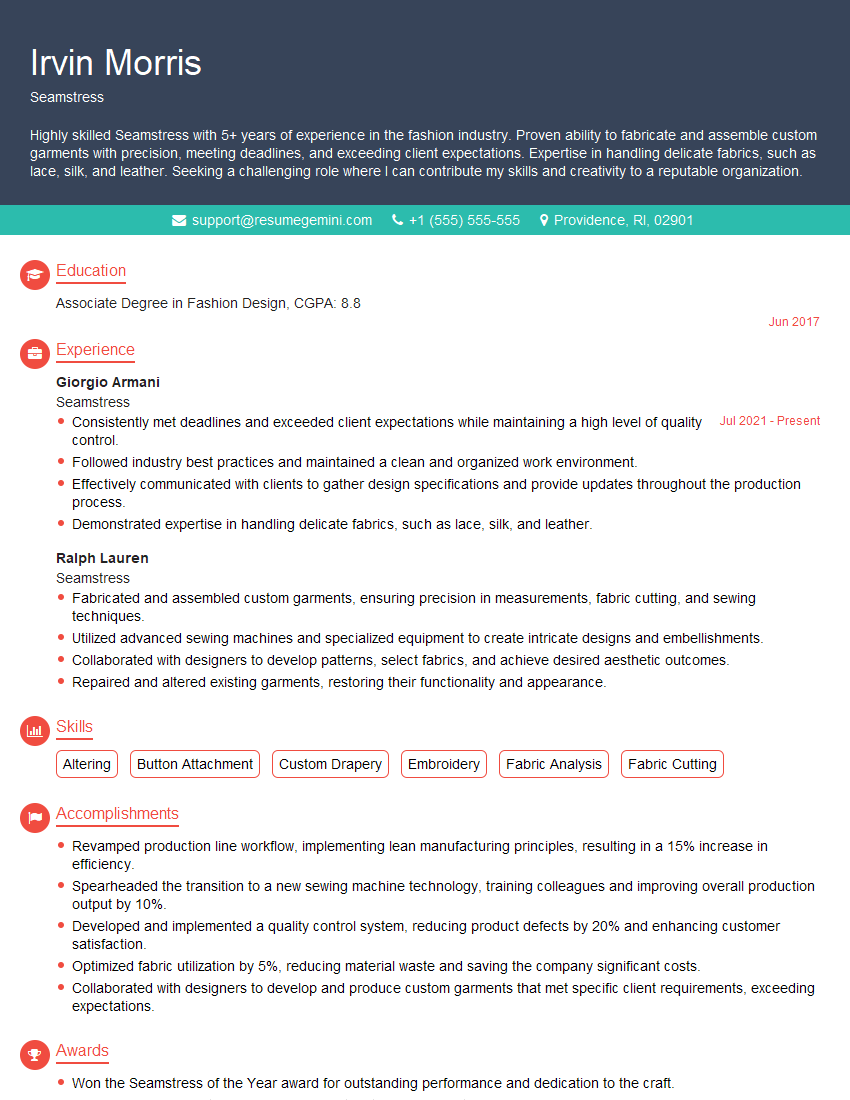
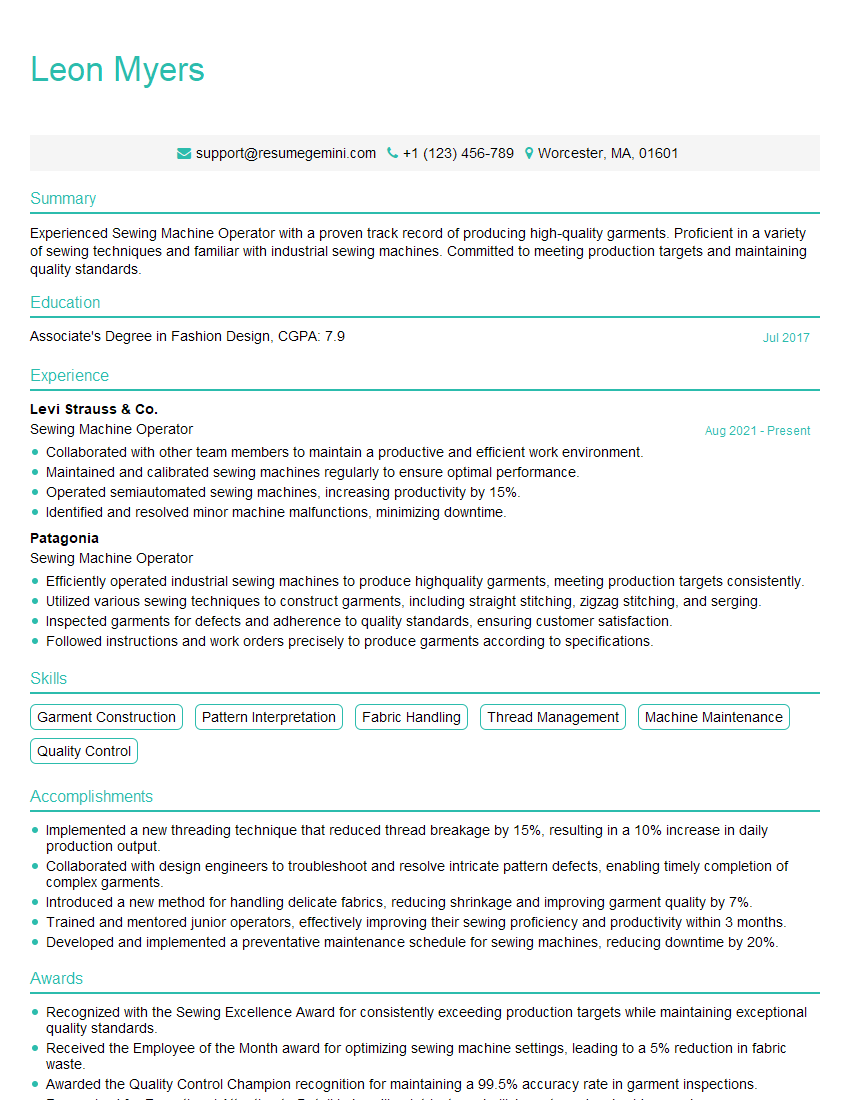
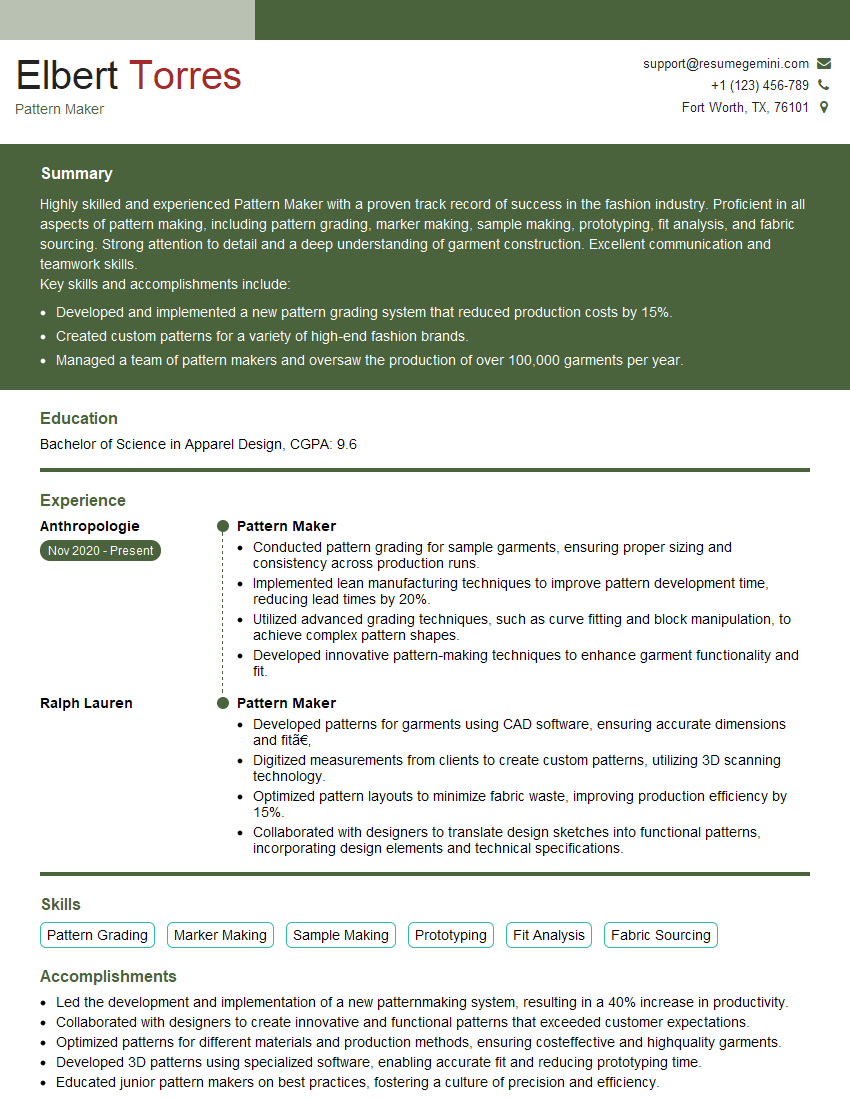
Mastering zigzag stitch sewing opens doors to diverse roles in the fashion and textile industries, offering opportunities for career advancement and higher earning potential. To maximize your job prospects, create a professional, ATS-friendly resume that highlights your skills and experience. We strongly recommend using ResumeGemini to build a compelling resume. ResumeGemini offers a streamlined process and provides examples of resumes tailored specifically to Zigzag Stitch Sewing roles, helping you present your qualifications effectively to potential employers.


Explore more articles
Users Rating of Our Blogs
Share Your Experience
We value your feedback! Please rate our content and share your thoughts (optional).
What Readers Say About Our Blog
Very informative content, great job.
good