The thought of an interview can be nerve-wracking, but the right preparation can make all the difference. Explore this comprehensive guide to Zoonotic Disease Control interview questions and gain the confidence you need to showcase your abilities and secure the role.
Questions Asked in Zoonotic Disease Control Interview
Q 1. Explain the One Health approach to zoonotic disease control.
The One Health approach is a collaborative, multisectoral effort to achieve optimal health outcomes recognizing the interconnectedness of human, animal, and environmental health. Instead of viewing these areas in isolation, One Health emphasizes that the health of each is inextricably linked. A disease outbreak in animals, for example, can quickly spill over into the human population, impacting human health and potentially leading to economic consequences.
In practice, this means that veterinarians, physicians, environmental scientists, public health officials, and other stakeholders work together to prevent, detect, and respond to zoonotic diseases. This collaborative effort focuses on sharing information, coordinating actions, and developing integrated strategies for disease control and prevention. For instance, a One Health approach to rabies control would involve vaccinating animals, educating communities about safe handling of animals, and improving sanitation to reduce exposure risk to both humans and animals.
- Improved Surveillance: Joint surveillance programs across sectors provide an early warning system for emerging infectious diseases.
- Integrated Responses: Coordinated responses involving all relevant sectors ensure comprehensive and effective management of outbreaks.
- Enhanced Prevention: Collaboration enables the implementation of preventative measures at various levels, addressing the root causes of zoonotic disease emergence.
Q 2. Describe the lifecycle of a zoonotic disease.
The lifecycle of a zoonotic disease begins with an infectious agent residing in an animal reservoir (the host where the pathogen normally lives and multiplies). This reservoir can be wild, domestic, or even farmed animals. Transmission to humans occurs through various pathways – direct contact with an infected animal, consuming contaminated food or water, or through vector-borne transmission (e.g., mosquito or tick).
Once in humans, the pathogen may cause illness (or remain asymptomatic). Humans can then either recover, succumb to the disease, or become a source of transmission to other humans (human-to-human transmission). In some cases, humans can also transmit the pathogen back to animals, creating a complex transmission cycle. The pathogen’s survival and transmission depend greatly on environmental factors like temperature, humidity, and the presence of vectors. Let’s consider Avian Influenza as an example. The virus typically circulates among wild birds, occasionally spilling over to poultry. Humans can get infected through direct contact with infected poultry or contaminated environments.
Q 3. What are the key factors contributing to zoonotic disease emergence?
Several key factors contribute to the emergence of zoonotic diseases. These can be broadly categorized as environmental changes, human activities, and pathogen characteristics.
- Environmental Changes: Deforestation, climate change, and habitat loss force wildlife closer to human populations, increasing the likelihood of contact and disease transmission.
- Human Activities: Intensive agriculture, wildlife trade, and urbanization create opportunities for pathogens to jump from animals to humans. The rise in international travel and trade facilitates the rapid spread of diseases across geographical boundaries.
- Pathogen Characteristics: Factors such as the pathogen’s ability to adapt to new hosts, its virulence, and its mode of transmission play crucial roles in determining its potential to cause an outbreak. A highly adaptable and virulent pathogen with efficient transmission mechanisms is more likely to cause a widespread outbreak.
For example, the emergence of Nipah virus is linked to deforestation and increased human encroachment on bat habitats, while the spread of COVID-19 was facilitated by global travel and trade.
Q 4. Discuss the role of wildlife in the transmission of zoonotic diseases.
Wildlife plays a significant role in the transmission of zoonotic diseases, often acting as reservoirs or intermediate hosts. Many zoonotic pathogens have evolved to circulate naturally within wild animal populations. When these animals come into contact with humans (direct or indirect), disease transmission can occur.
Examples include bats acting as reservoirs for several viruses like Ebola and Nipah, rodents as carriers of hantaviruses, and birds as reservoirs for avian influenza. Furthermore, the movement of wildlife, particularly through illegal wildlife trade, can facilitate the long-distance spread of pathogens. The interaction of humans with wildlife through activities such as hunting, farming, and ecotourism also increases the risk of zoonotic disease transmission. Therefore, understanding wildlife ecology and behavior is crucial for effective zoonotic disease surveillance and control.
Q 5. Explain different methods for surveillance and detection of zoonotic diseases.
Surveillance and detection of zoonotic diseases employ various methods, focusing on early identification and prevention. These methods are multifaceted and often integrated.
- Active Surveillance: This involves actively searching for diseases in specific populations through systematic sampling and testing (e.g., regular testing of livestock for certain diseases).
- Passive Surveillance: This relies on reporting from healthcare professionals, veterinarians, and laboratories (e.g., doctors reporting suspected cases of zoonotic illness).
- Sentinel Surveillance: This uses carefully selected populations or geographical areas to monitor disease trends (e.g., monitoring bird populations for avian influenza).
- Molecular Surveillance: This utilizes techniques like PCR to detect pathogens in environmental samples, animal samples, and human samples. This allows for early detection of novel pathogens before widespread outbreaks occur.
- Epidemiological Investigations: This involves tracking the spread of diseases through interviews, case mapping, and analysis of data to understand transmission patterns.
A multi-pronged approach that integrates these methods is essential for effective surveillance and control.
Q 6. What are the challenges in controlling zoonotic diseases in developing countries?
Controlling zoonotic diseases in developing countries presents unique challenges. Many factors contribute to this difficulty:
- Limited Resources: Developing countries often lack sufficient funding, infrastructure, and trained personnel for effective surveillance, prevention, and control measures.
- Poverty and Food Insecurity: Poverty forces people to rely on subsistence farming and close contact with animals, increasing exposure risk. Food insecurity can lead to increased consumption of unsafe food products, facilitating disease transmission.
- Weak Healthcare Systems: Inadequate healthcare infrastructure and access to healthcare services make it difficult to diagnose, treat, and manage outbreaks effectively.
- Lack of Awareness: Limited public awareness and understanding of zoonotic diseases can hinder implementation of preventive strategies.
- Environmental Factors: Many developing countries face environmental challenges such as deforestation, poor sanitation, and inadequate waste management, all of which create favorable conditions for disease emergence and spread.
Addressing these challenges requires international collaborations, investment in healthcare infrastructure, community engagement, and capacity building.
Q 7. Describe various risk assessment tools used in zoonotic disease management.
Risk assessment tools are crucial for managing zoonotic diseases. They help identify hazards, assess their likelihood, and determine potential consequences, guiding prevention and control strategies.
- Quantitative Risk Assessment (QRA): This uses numerical data to estimate the probability and severity of risks. It often involves modeling and statistical analysis, but its usefulness depends on the availability of robust data.
- Qualitative Risk Assessment (QRA): This employs descriptive categories and expert judgment to evaluate risks, useful when quantitative data is scarce.
- Hazard Analysis and Critical Control Points (HACCP): This systematic approach is used particularly in the food industry to identify and manage hazards throughout the food production chain.
- Risk Mapping: This visual tool displays the geographical distribution of risk factors, providing a clear picture of areas requiring focused interventions.
The choice of risk assessment tool depends on the specific context, available resources, and the complexity of the situation. Often, a combination of approaches is used for a comprehensive risk profile.
Q 8. How do you determine the effectiveness of a zoonotic disease control program?
Determining the effectiveness of a zoonotic disease control program requires a multifaceted approach, going beyond simply tracking case numbers. We need to assess the program’s impact across various parameters.
- Reduction in incidence and prevalence: A successful program will demonstrably lower the number of new cases (incidence) and the overall number of existing cases (prevalence) of the targeted zoonotic disease. We’d look at trends over time, comparing pre- and post-intervention data.
- Improved surveillance systems: A better understanding of the disease’s spread, including its geographic distribution and risk factors, indicates improved surveillance. This involves analyzing data from various sources – veterinary clinics, human hospitals, and environmental samples.
- Changes in risk behaviors: Effective programs change human and animal behavior related to the zoonotic disease. For example, improved hand hygiene practices after contact with animals or changes in livestock management practices signify success.
- Economic impact assessment: A successful program should reduce the economic burden caused by the disease, such as decreased healthcare costs, reduced lost productivity, and minimized trade restrictions.
- Community engagement and knowledge: Measuring improvements in community awareness and engagement shows a program’s overall effectiveness. This could involve surveys or focus groups assessing community knowledge about disease transmission and prevention methods.
For example, a rabies control program’s effectiveness might be measured by a reduction in human rabies deaths, an increase in dog vaccination rates, and improved public awareness of rabies prevention. We might also track the number of reported animal bites and the promptness of post-exposure prophylaxis.
Q 9. What is the importance of interdisciplinary collaboration in zoonotic disease control?
Interdisciplinary collaboration is absolutely crucial for effective zoonotic disease control. The complexity of these diseases demands expertise from diverse fields.
- Veterinary medicine: Crucial for understanding the disease in animal populations, diagnosing cases, and implementing control measures in animals.
- Human medicine: Essential for diagnosing and treating human cases, managing outbreaks, and researching human health impacts.
- Epidemiology: Provides the framework for investigating disease outbreaks, identifying risk factors, and developing control strategies.
- Ecology: Offers insights into the environmental factors that influence disease transmission, including habitat changes and wildlife interactions.
- Public health: Plays a vital role in implementing public health interventions, educating communities, and coordinating responses to outbreaks.
- Social sciences: Provides understanding of human behaviors, cultural practices, and community perceptions, crucial for designing effective and culturally appropriate interventions.
Imagine tackling a zoonotic disease like Lyme disease. You need veterinarians to monitor tick populations on wildlife, epidemiologists to track human cases and identify risk areas, public health officials to educate the public on tick bite prevention, and ecologists to assess how habitat changes affect tick populations.
Q 10. Explain the role of vector control in preventing zoonotic diseases.
Vector control plays a central role in preventing many zoonotic diseases, as many are transmitted by vectors such as mosquitoes, ticks, fleas, and flies.
- Reducing vector populations: Methods include insecticide spraying, larvicides for mosquito breeding sites, and environmental modifications to limit breeding habitats.
- Protecting against vector bites: This includes personal protective measures like insect repellents, long clothing, and bed nets.
- Controlling animal reservoirs: Vectors often rely on animal hosts. Controlling the animal reservoir population, such as rodent control to reduce plague transmission, can indirectly limit zoonotic disease spread.
For example, controlling mosquito populations is essential for preventing diseases like Zika, West Nile virus, and malaria. Similarly, reducing tick populations is key in combating Lyme disease and other tick-borne illnesses. The strategy must be tailored to the specific vector and the disease it transmits.
Q 11. Describe different methods for controlling the spread of zoonotic diseases within a community.
Controlling the spread of zoonotic diseases within a community requires a multi-pronged approach.
- Surveillance and early detection: Establishing robust surveillance systems to detect cases early allows for rapid response and containment.
- Vaccination: Where available, vaccination of both humans and animals is crucial in preventing disease outbreaks.
- Hygiene and sanitation: Improved hygiene practices, including handwashing and proper food handling, can limit the transmission of many zoonotic diseases.
- Vector control: As discussed earlier, controlling vectors is a cornerstone of preventing many zoonotic diseases.
- Environmental management: Managing the environment to reduce contact between humans and animals, such as proper waste disposal and rodent control, can minimize disease transmission.
- Public health education: Educating the public about risk factors, prevention measures, and early symptoms is critical for community engagement and disease control.
- Quarantine and isolation: In some cases, isolating infected individuals and quarantining exposed individuals can prevent further spread.
For instance, in a community experiencing a potential avian influenza outbreak, control measures might involve quarantining infected poultry, culling infected flocks, restricting movement of birds, and educating the public about safe handling of poultry.
Q 12. Discuss the ethical considerations involved in zoonotic disease research.
Ethical considerations in zoonotic disease research are paramount. We must balance the need for scientific advancement with the welfare of both humans and animals.
- Animal welfare: Research involving animals must adhere to strict ethical guidelines, minimizing suffering and ensuring humane treatment. This often involves using the 3Rs: Replacement, Reduction, and Refinement.
- Informed consent: Human participants in research must provide informed consent, understanding the risks and benefits of participation.
- Data privacy and confidentiality: Protecting the privacy and confidentiality of individuals involved in the research is crucial.
- Benefit sharing: Research should benefit the communities where the research is conducted, ensuring that findings are accessible and contribute to the improvement of public health in those areas.
- Equity and justice: Research should be conducted equitably, avoiding exploitation or marginalization of vulnerable populations.
For example, research on a zoonotic disease affecting a specific indigenous community must involve their active participation, ensure that research results are shared with and benefit the community, and respect their cultural practices.
Q 13. What are the key differences between endemic, epidemic, and pandemic zoonotic diseases?
These terms describe the geographic distribution and duration of zoonotic diseases:
- Endemic: A disease that is constantly present at a low level in a particular geographic area. For example, Lyme disease is endemic in many parts of the United States.
- Epidemic: A sudden increase in the number of cases of a disease in a specific geographic area, exceeding the expected level. An example would be a localized outbreak of avian influenza in a poultry farm.
- Pandemic: A worldwide epidemic, affecting a very large population across multiple countries or continents. The COVID-19 pandemic serves as a recent, devastating example.
The key difference lies in the scale and geographic spread. Endemic implies a consistent, low level; epidemic represents a significant increase in a localized area; and pandemic signifies a global spread.
Q 14. How do you communicate complex scientific information to a non-scientific audience?
Communicating complex scientific information to a non-scientific audience requires careful planning and a shift in perspective. We need to translate jargon into everyday language and use effective communication strategies.
- Use simple language and avoid jargon: Define any technical terms and use analogies to explain complex concepts. Instead of saying ‘viral pathogenesis,’ you could say ‘how the virus causes disease.’
- Visual aids: Charts, graphs, and images can make complex data more accessible and engaging.
- Storytelling: Relating scientific information to real-life stories or case studies can make it more relatable and memorable.
- Interactive communication: Encourage questions and discussions to ensure understanding and address concerns.
- Tailor the message: Adapt the information to the audience’s background knowledge and level of understanding.
For example, when discussing the risk of rabies, instead of using epidemiological terms, you might show a picture of a rabid animal and explain the importance of vaccination and avoiding contact with wild animals in simple terms, focusing on the consequences of infection.
Q 15. Describe your experience with outbreak investigation and response.
My experience in outbreak investigation and response spans over 15 years, encompassing numerous zoonotic disease events. I’ve been involved in everything from initial case identification and epidemiological investigation to the implementation of control measures and post-outbreak evaluation. For example, during the 2018 Nipah virus outbreak in Kerala, India, I led a team in tracing the viral spread, identifying the fruit bat reservoir, and implementing community education programs to prevent further transmission. This involved detailed contact tracing, environmental sampling, and rigorous data analysis to pinpoint infection sources and transmission pathways. We used a combination of traditional epidemiological methods and modern tools such as GIS mapping to visualize the outbreak and guide intervention strategies. Another significant experience involved working with the CDC during the early stages of the COVID-19 pandemic, focusing on understanding the zoonotic origins and developing effective communication strategies for public health messaging.
- Case Identification and Confirmation: Utilizing laboratory diagnostic techniques and epidemiological data to pinpoint infected individuals.
- Contact Tracing: Identifying and monitoring individuals who may have been exposed to the pathogen.
- Epidemiological Investigation: Determining the source, mode of transmission, and risk factors associated with the outbreak.
- Control Measures: Implementing strategies such as quarantine, isolation, vaccination, and environmental sanitation to limit the spread.
- Post-Outbreak Evaluation: Assessing the effectiveness of control measures and identifying areas for improvement in future responses.
Career Expert Tips:
- Ace those interviews! Prepare effectively by reviewing the Top 50 Most Common Interview Questions on ResumeGemini.
- Navigate your job search with confidence! Explore a wide range of Career Tips on ResumeGemini. Learn about common challenges and recommendations to overcome them.
- Craft the perfect resume! Master the Art of Resume Writing with ResumeGemini’s guide. Showcase your unique qualifications and achievements effectively.
- Don’t miss out on holiday savings! Build your dream resume with ResumeGemini’s ATS optimized templates.
Q 16. What are the limitations of current zoonotic disease control strategies?
Current zoonotic disease control strategies face several limitations. One major challenge is the increasing interconnectedness of the world, which facilitates rapid pathogen spread. Another is the difficulty in accurately predicting and preparing for emerging zoonotic diseases, especially those with novel pathogens. The complexity of ecological systems and the interplay between human, animal, and environmental factors make precise risk assessment difficult. Further limitations include:
- Resource Constraints: Insufficient funding and personnel often hinder effective surveillance and response.
- Diagnostic Challenges: Rapid and accurate diagnostics are crucial, but limited access to advanced laboratory testing remains a barrier in many regions.
- Lack of Public Awareness: Insufficient public understanding of zoonotic diseases and preventative measures leads to inconsistent compliance with recommended behaviors.
- One Health Approach Gaps: Collaboration across sectors (human, animal, and environmental health) is essential, but often hampered by communication barriers and differing priorities.
- Antimicrobial Resistance: The increasing prevalence of antimicrobial resistance threatens the effectiveness of treatments for zoonotic infections.
Q 17. How can public health interventions reduce the risk of zoonotic disease transmission?
Public health interventions play a vital role in mitigating zoonotic disease transmission. Effective strategies focus on breaking the chain of infection at various points. This can involve a multi-pronged approach, including:
- Surveillance and Early Warning Systems: Establishing robust surveillance systems to detect and monitor disease outbreaks promptly allows for rapid response and containment.
- Improving Sanitation and Hygiene: Promoting safe food handling practices, access to clean water, and proper waste disposal significantly reduces transmission risk.
- Vector Control: Targeting disease vectors like mosquitoes, ticks, and rodents through strategies like insecticide spraying, habitat modification, and personal protective measures is critical.
- Safe Animal Handling Practices: Educating the public and professionals on safe animal handling, including avoiding contact with wild animals and proper hygiene after handling livestock, is paramount.
- Vaccination Campaigns: Implementing effective vaccination programs for both animals and humans, where available, provides a strong line of defense.
- Community Engagement and Education: Raising public awareness about zoonotic disease risks and preventive measures promotes behavioral change and increased compliance.
- Strengthening One Health Collaboration: Fostering collaborations between human, animal, and environmental health sectors leads to a more comprehensive and effective response.
For instance, effective handwashing campaigns have been shown to drastically reduce the transmission of many zoonotic diseases, demonstrating the power of simple public health interventions.
Q 18. Describe your familiarity with relevant legislation and regulations related to zoonotic diseases.
My familiarity with relevant legislation and regulations related to zoonotic diseases is extensive. I regularly consult and apply regulations such as the WHO International Health Regulations (IHR), national animal health codes, and various guidelines related to biosafety and biosecurity. Understanding these regulations is vital for ensuring that outbreak investigations and response activities are legally sound and comply with international best practices. I understand the legal frameworks surrounding reporting requirements, quarantine protocols, and the control of potentially infected animals and products. Furthermore, I’m aware of the ethical considerations involved in zoonotic disease control, particularly concerning animal welfare and human rights.
Q 19. Explain the role of vaccination in preventing zoonotic diseases.
Vaccination plays a crucial role in preventing zoonotic diseases. Effective vaccines can significantly reduce the incidence of infection and its severity, protecting both animal populations and humans. For example, rabies vaccination in dogs has been highly successful in preventing human rabies cases, demonstrating the power of vaccination in breaking the transmission cycle. The success of vaccination programs depends on factors such as vaccine efficacy, coverage rates, and logistical aspects of vaccine delivery. However, vaccine development for zoonotic diseases can be challenging due to the diversity of pathogens, variations in host immune responses, and potential side effects.
In some cases, vaccination of animal reservoirs can be a critical control measure, as seen with the success of programs aimed at vaccinating wildlife against rabies. However, the practicality of vaccinating wild animal populations can be a significant logistical challenge. For humans, vaccines against diseases like rabies, influenza, and some forms of encephalitis, which have zoonotic origins, are crucial preventative measures.
Q 20. Discuss the importance of data analysis in identifying zoonotic disease trends.
Data analysis is essential for identifying zoonotic disease trends and patterns. By analyzing epidemiological data, including case reports, surveillance data, and environmental factors, we can gain insights into the distribution, incidence, and risk factors associated with these diseases. This data analysis can involve diverse techniques, including statistical modeling, time series analysis, and spatial analysis. For example, analyzing trends in Lyme disease incidence over time and in relation to environmental factors such as tick populations and climate change allows us to better predict and manage outbreaks. Identifying clusters of cases can also indicate potential hotspots or emerging outbreaks, allowing for targeted interventions. This data-driven approach is crucial for informing public health strategies and resource allocation.
Example: Using R to analyze time series data of West Nile Virus cases in a specific region.
Q 21. What is your experience with GIS mapping and its applications in zoonotic disease surveillance?
My experience with GIS mapping and its applications in zoonotic disease surveillance is substantial. GIS provides a powerful tool to visualize the spatial distribution of diseases, identify clusters, and understand the environmental factors that influence transmission. I’ve utilized GIS to create maps depicting the spread of various zoonotic diseases, allowing for better targeting of interventions and resource allocation. For instance, I’ve used GIS to overlay data on animal populations, human settlements, and environmental features to identify areas at high risk for rabies transmission. This helps prioritize vaccination campaigns and educational efforts. Furthermore, I’ve employed spatial statistical methods within GIS to detect spatial clusters and identify potential disease hotspots, guiding field investigations and enabling targeted prevention strategies. This ability to visualize and analyze data geographically is fundamental to effective surveillance and response activities.
Q 22. How do you handle conflicting data sources during a zoonotic disease investigation?
Conflicting data during a zoonotic disease investigation is a common challenge. It often arises from differences in data collection methods, reporting delays, or variations in diagnostic techniques used across different institutions or geographical locations. Imagine a situation where one surveillance system reports a high incidence of a particular disease in a specific region, while another, using a different methodology, reports a much lower rate. This discrepancy necessitates a systematic approach to resolve the inconsistencies.
My approach involves a multi-step process. Firstly, I carefully review the methodologies used by each data source, looking for potential biases, limitations, or variations in definitions. For instance, differences in case definitions (e.g., varying criteria for confirming a diagnosis) can significantly impact reported numbers. Secondly, I assess the quality and completeness of data, considering factors such as sampling methods, data entry errors, and the timeliness of reporting. Missing data or inconsistencies can often point to problems with the source’s reliability. Finally, I integrate the data using appropriate statistical techniques, possibly employing hierarchical modeling or meta-analysis to reconcile differences and account for uncertainty. This process always involves careful consideration of the inherent limitations of each dataset and a clear justification for any conclusions drawn. In some cases, it may be necessary to conduct additional field investigations to resolve major discrepancies or obtain more reliable data.
Q 23. Describe your understanding of different diagnostic techniques for zoonotic diseases.
Diagnosing zoonotic diseases requires a diverse range of techniques, tailored to the specific pathogen and the species involved. These methods can broadly be categorized into direct and indirect detection approaches. Direct detection focuses on identifying the pathogen itself, while indirect detection looks for evidence of the infection, such as an immune response.
- Direct detection: This often involves microbiological culture, where the pathogen is grown in a lab to confirm its presence. PCR (polymerase chain reaction) is another crucial tool, allowing for highly sensitive and specific detection of genetic material from the pathogen. Serological techniques can also directly detect viral or bacterial components in bodily fluids.
- Indirect detection: Serological tests, such as ELISA (enzyme-linked immunosorbent assay), detect antibodies produced by the host’s immune system in response to infection. These tests can indicate past or current exposure, even if the pathogen is no longer actively replicating. Histopathology, examining tissue samples under a microscope, can reveal characteristic changes caused by the infection.
For example, diagnosing rabies often involves direct detection through fluorescent antibody testing on brain tissue. In contrast, detecting Lyme disease might rely on ELISA to detect antibodies in blood samples. Selecting the appropriate diagnostic technique requires careful consideration of the clinical presentation, the suspected pathogen, and the available resources.
Q 24. Explain the concept of spillover events in zoonotic disease transmission.
A spillover event is the transmission of a pathogen from a reservoir host (an animal that typically harbors the pathogen without showing severe symptoms) to a new host species, often a human. Think of it as a spillover from a reservoir of infection into a new population. These events are crucial in the emergence of new zoonotic diseases.
Several factors can increase the likelihood of spillover events. These include habitat encroachment (bringing humans into closer contact with wildlife), changes in wildlife populations (possibly due to disease or habitat destruction), and the intensity of human-wildlife interactions. The Nipah virus outbreak, initially from fruit bats to pigs and then humans, is a stark example of a spillover event. The emergence of COVID-19, likely originating from a bat, illustrates the potential for devastating consequences when a spillover event introduces a novel pathogen into a human population. Understanding the ecology of pathogens and the factors that drive spillover events is critical for developing effective prevention strategies. This often involves research at the wildlife-human interface and implementing strategies to reduce contact between wildlife and human populations.
Q 25. How can we improve collaboration between human and animal health sectors?
Improving collaboration between human and animal health sectors—also known as ‘One Health’—is paramount to controlling zoonotic diseases. This requires breaking down traditional silos and fostering a collaborative environment.
- Joint surveillance systems: Establishing shared platforms for data collection and analysis is critical. This allows for a more comprehensive understanding of disease patterns and risk factors.
- Shared training programs: Educating professionals from both sectors about the principles of zoonotic disease control can enhance mutual understanding and improve communication.
- Integrated response plans: Pre-established protocols for responding to zoonotic outbreaks can streamline communication and ensure a coordinated response.
- Joint research projects: Collaborative research initiatives can significantly improve our understanding of zoonotic disease transmission and prevention strategies.
For instance, a coordinated effort to monitor bird flu in poultry farms and surrounding human populations can effectively prevent large-scale outbreaks. The success of the One Health approach heavily depends on strong communication, shared goals, and a willingness to bridge the gaps between disciplines.
Q 26. What are the potential impacts of climate change on zoonotic disease transmission?
Climate change significantly influences the transmission of zoonotic diseases. Changing temperature and precipitation patterns alter ecosystems and the distribution of vectors (such as mosquitos or ticks), expanding the geographical range of diseases. For example, warming temperatures could enable disease vectors to survive in previously unsuitable regions, increasing the incidence of vector-borne diseases. Changes in rainfall patterns can affect the breeding grounds of vectors and influence pathogen prevalence.
Furthermore, climate change can lead to changes in wildlife behavior and distribution, potentially increasing interactions between humans and wildlife, thereby increasing opportunities for pathogen transmission. Melting permafrost poses a unique risk, as it could release ancient pathogens into the environment. For example, the increase in Lyme disease incidence in certain regions has been linked to climate change-related changes in tick populations. Understanding these impacts is vital in predicting and mitigating the risk of future outbreaks.
Q 27. Discuss the role of antimicrobial resistance in complicating zoonotic disease management.
Antimicrobial resistance (AMR) is a major threat, significantly complicating the management of zoonotic diseases. AMR refers to the ability of microorganisms (bacteria, viruses, fungi, and parasites) to resist the effects of antimicrobial drugs, making infections more difficult to treat. This phenomenon is particularly problematic in zoonotic diseases, as pathogens can acquire resistance in animal populations and then transmit it to humans.
The widespread use of antibiotics in agriculture and human medicine contributes to AMR. When antibiotics are used indiscriminately, bacteria develop resistance mechanisms and can pass these along through horizontal gene transfer. This makes infections caused by resistant zoonotic pathogens far more challenging to control. For example, the emergence of antibiotic-resistant strains of Salmonella, a common zoonotic pathogen, is a serious concern. Strategies to combat AMR include promoting responsible antibiotic use in both humans and animals, developing new antimicrobial drugs, and improving infection prevention and control measures.
Q 28. Describe your experience with developing and implementing zoonotic disease prevention programs.
Throughout my career, I’ve been involved in developing and implementing several zoonotic disease prevention programs. One notable project involved designing a community-based intervention program in a region experiencing frequent outbreaks of leptospirosis (a bacterial disease spread through contact with infected animal urine). The program had several components:
- Community engagement: We worked with local communities to raise awareness about leptospirosis transmission, prevention strategies, and seeking timely medical care.
- Improved sanitation: We collaborated with local authorities to improve sanitation infrastructure and waste management systems, reducing contact with contaminated water sources.
- Rodent control: We implemented strategies for rodent control, as rats are significant reservoirs of the disease.
- Vaccination campaigns: We organized vaccination campaigns for high-risk populations, such as farmers and sanitation workers.
The success of the program was evaluated by monitoring disease incidence rates before and after the intervention. The data showed a significant reduction in leptospirosis cases after the implementation of the multi-pronged intervention. This experience underscored the importance of a holistic approach, integrating community engagement, environmental improvements, and public health interventions to achieve effective disease control.
Key Topics to Learn for Zoonotic Disease Control Interview
- Epidemiology of Zoonotic Diseases: Understanding disease transmission dynamics, reservoirs, and risk factors. This includes mastering concepts like R0 and the impact of environmental factors.
- Disease Surveillance and Outbreak Investigation: Practical application of epidemiological methods to detect, investigate, and control outbreaks. This includes data analysis, contact tracing, and risk assessment.
- One Health Approach: Understanding the interconnectedness of human, animal, and environmental health in zoonotic disease control. This involves collaborative approaches and interdisciplinary teamwork.
- Prevention and Control Strategies: Knowledge of vaccination programs, vector control, sanitation improvements, and public health interventions to prevent zoonotic disease transmission.
- Wildlife Disease Management: Strategies for managing zoonotic diseases in wildlife populations, including surveillance, culling, and habitat management.
- Risk Assessment and Communication: Ability to assess risk factors, communicate effectively with various stakeholders, and develop tailored risk communication strategies.
- Legislation and Policy: Understanding relevant national and international regulations and policies related to zoonotic disease control.
- Data Analysis and Interpretation: Proficiency in using statistical software and interpreting epidemiological data to inform decision-making.
Next Steps
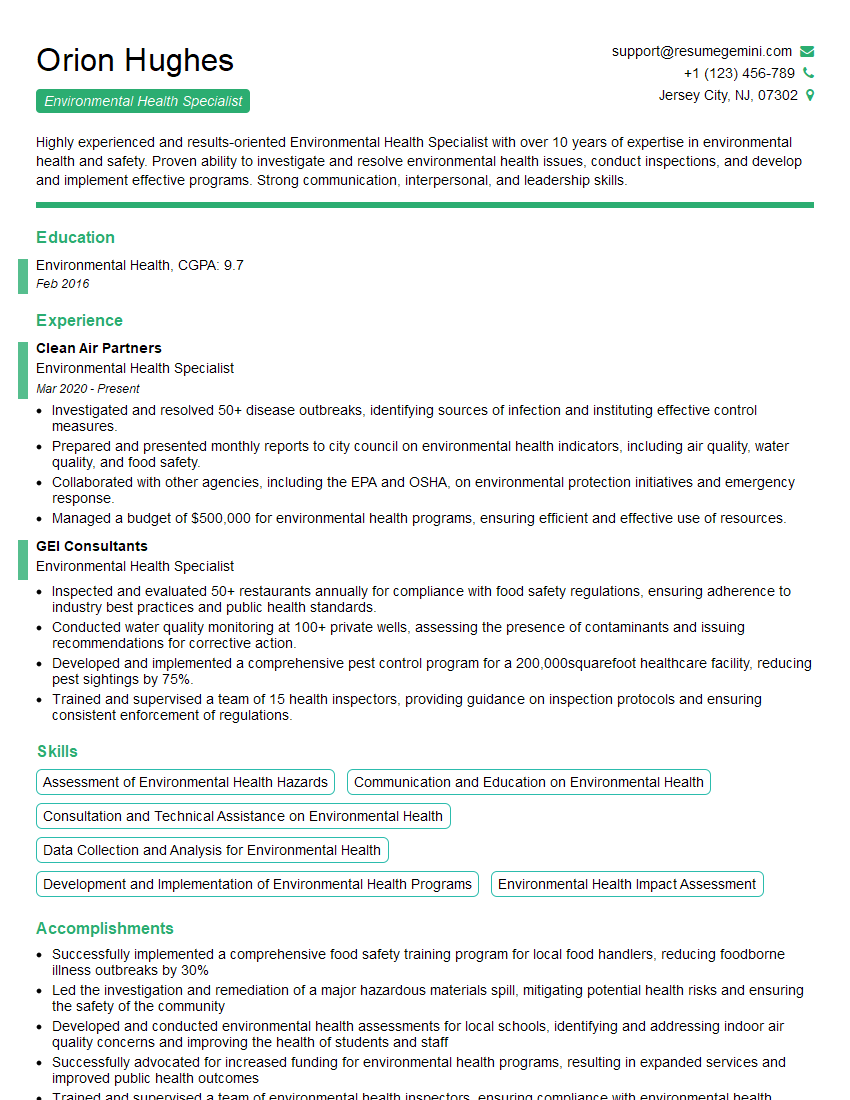
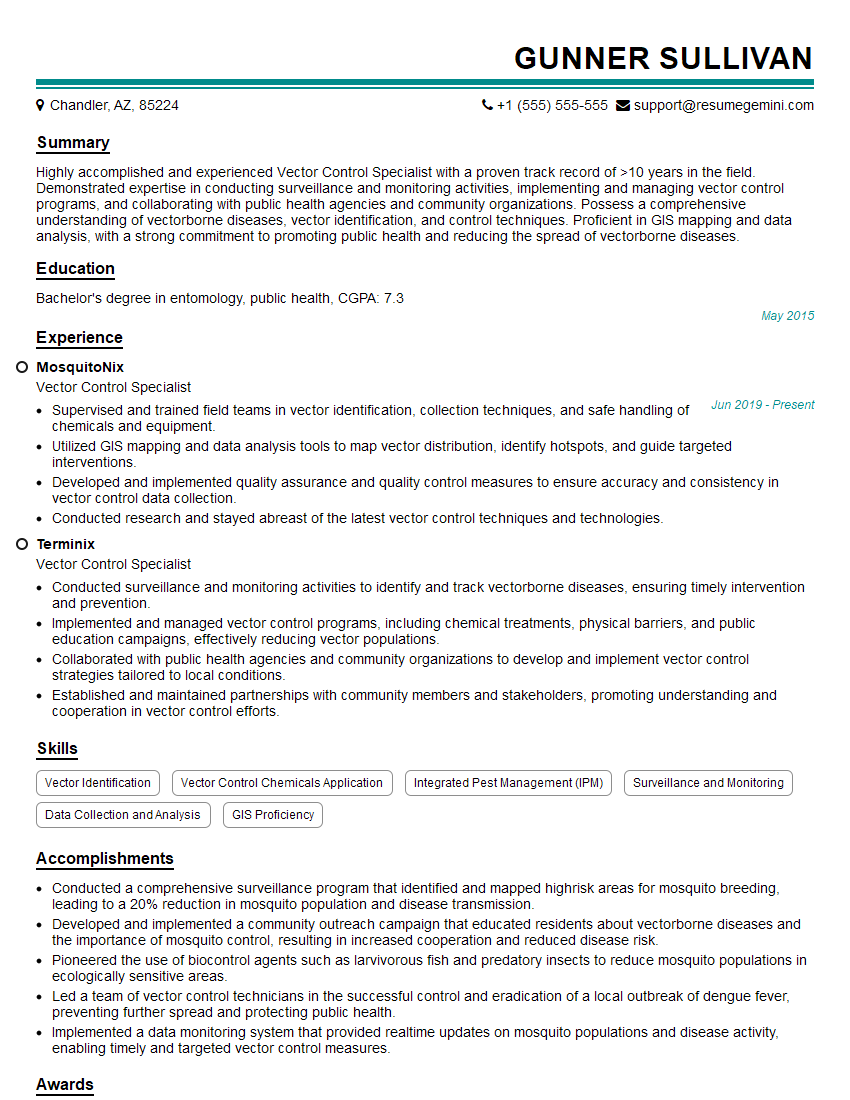
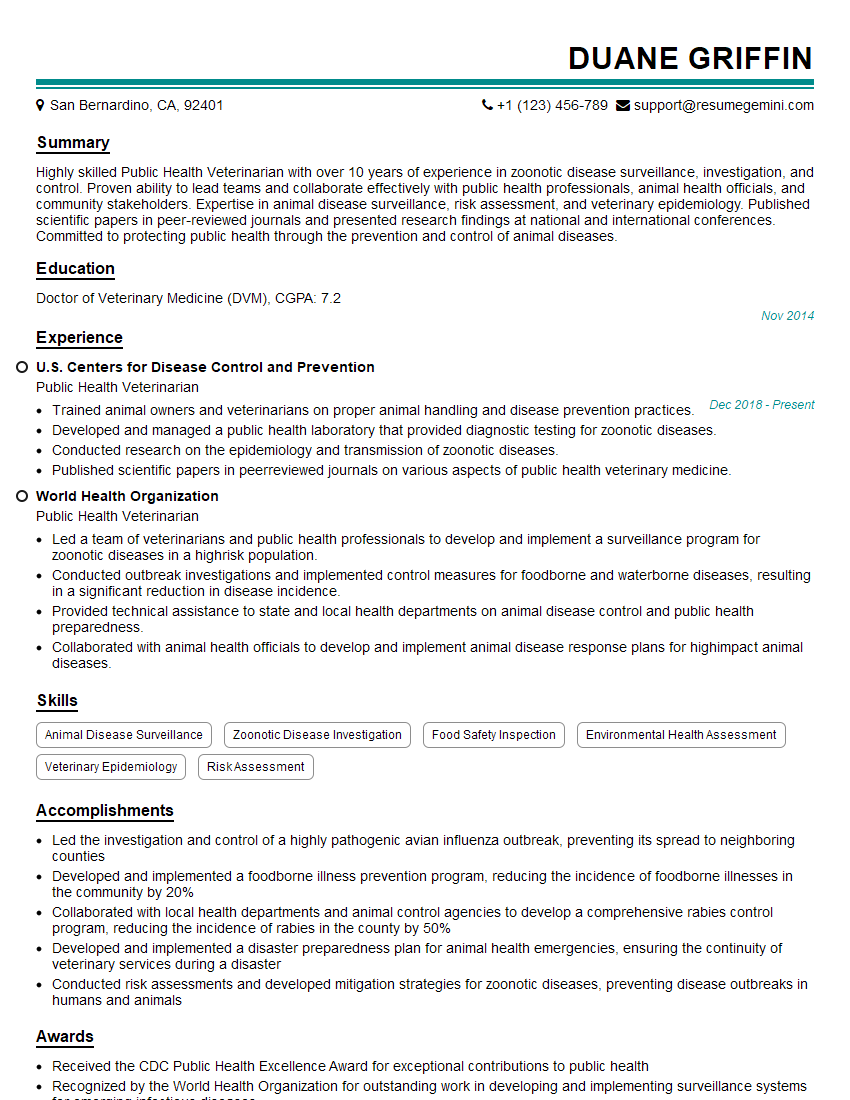
Mastering Zoonotic Disease Control opens doors to a rewarding career with significant impact on global health. To maximize your job prospects, a strong, ATS-friendly resume is crucial. ResumeGemini is a trusted resource that can help you craft a compelling and effective resume tailored to showcase your skills and experience in this specialized field. We provide examples of resumes specifically designed for Zoonotic Disease Control professionals to guide you in creating a document that stands out. Invest time in building a resume that accurately reflects your expertise and increases your chances of landing your dream role.
Explore more articles
Users Rating of Our Blogs
Share Your Experience
We value your feedback! Please rate our content and share your thoughts (optional).
What Readers Say About Our Blog
Very informative content, great job.
good