Are you ready to stand out in your next interview? Understanding and preparing for Concrete Texturing interview questions is a game-changer. In this blog, we’ve compiled key questions and expert advice to help you showcase your skills with confidence and precision. Let’s get started on your journey to acing the interview.
Questions Asked in Concrete Texturing Interview
Q 1. Describe your experience with various concrete texturing techniques.
Concrete texturing is a multifaceted process offering a wide array of aesthetic and functional outcomes. My experience spans numerous techniques, from the relatively simple, like broom finishing, to the more complex, such as stamping and exposed aggregate. I’ve worked extensively with:
- Broom Finishing: Creating textured patterns using various brooms – natural bristle brooms for a rustic look, or stiff synthetic brooms for a more defined pattern. This is a cost-effective and versatile method.
- Stamping: Impressing patterns into freshly poured concrete using textured stamps, creating the illusion of natural stone, brick, or tile. I’ve worked with a vast range of stamp designs, from classic to contemporary styles.
- Exposed Aggregate: Washing away the cement paste to reveal the underlying aggregate, resulting in a unique and durable finish. I’ve perfected techniques for varying aggregate exposure levels, controlling the resulting texture and appearance.
- Acid Staining: Applying acid-based stains to create intricate color variations and highlight the texture of the concrete. I have experience with different acid stain types and application techniques to achieve desired effects.
- Spray-On Textures: Using specialized spray equipment to apply various textured coatings. This allows for creating a range of unique finishes, from subtle to highly decorative.
Each technique demands precision and a keen eye for detail to achieve the desired visual effect and ensure structural integrity.
Q 2. What types of tools and equipment are used in concrete texturing?
The tools and equipment used in concrete texturing are varied and depend heavily on the chosen technique. However, some common tools include:
- Trowels: For initial smoothing and preparation of the concrete surface. Different trowel sizes and types provide flexibility.
- Brooms: Various types of brooms are crucial for broom finishing, each delivering a distinct texture.
- Stamping Mats and Stamps: Essential for stamped concrete, these provide the patterns and texture.
- Power Washers: Used for cleaning and preparing the surface, especially critical for exposed aggregate finishes. Different nozzle types help control the water pressure and intensity.
- Acid Stains & Sealers: Used for staining, protecting, and enhancing the final finish. Choosing the right sealer is important for long-term durability.
- Spray Equipment: For spray-on textures, specialized spray equipment with variable pressure settings is needed.
- Concrete Vibrator: To remove air bubbles and ensure a solid, consistent concrete surface, critical for a good base.
- Measuring Tools and Mixing Equipment: Precise measuring and mixing are vital for the correct concrete mix design.
Safety equipment, including gloves, eye protection, and respirators, is always essential.
Q 3. Explain the process of creating a stamped concrete finish.
Creating a stamped concrete finish is a multi-step process requiring precision and timing. Here’s a breakdown:
- Preparation: The concrete slab needs to be properly prepared and leveled. This includes ensuring the correct slump (consistency) of the concrete mix.
- Color Hardener Application: A colored powder is broadcasted onto the surface before it sets, integrating color and enhancing durability.
- Stamping: Using stamping mats and/or individual stamps, the chosen pattern is impressed into the concrete surface. This is done while the concrete is still workable but firm enough to hold the imprint.
- Texturizing and Detailing: Tools like textured rollers or sponges might be used to add further texture detail to the stamped surface.
- Release Agent Application: A release agent helps prevent the stamps from sticking to the concrete. This must be applied strategically to avoid streaks and ensure a uniform finish.
- Cleaning and Sealing: Once the concrete has sufficiently cured, the surface is carefully cleaned to remove any excess release agent. A high-quality sealer is then applied to protect and enhance the color and durability of the stamped concrete.
The timing of each step is crucial for successful stamping; the concrete must be at the right consistency to allow for proper stamping and prevent damage. It’s akin to baking – precise timing is key for the best results.
Q 4. How do you achieve a specific texture on concrete?
Achieving a specific texture on concrete involves careful consideration of the chosen technique and the tools used. For instance:
- For a smooth finish: Multiple passes with a steel trowel, ensuring consistent pressure and working the concrete until it’s smooth and even.
- For a textured finish: Using a broom to create a variety of patterns, from linear to circular, adjusting broom type and pressure to control the depth of the texture.
- For a rustic finish: Intentionally leaving some aggregate exposed, using a specific brushing technique or a wash technique to reveal the aggregate.
- For a patterned finish: Using stamping techniques, choosing the appropriate stamps and ensuring proper application of release agent.
The level of experience and understanding of concrete’s properties significantly impacts the final texture and quality. Small variations in technique can result in dramatically different outcomes.
Q 5. What are the different types of concrete overlays and their applications?
Concrete overlays offer a cost-effective way to renovate and improve existing concrete surfaces. There are several types, each with specific applications:
- Polymer Modified Overlays: These overlays increase durability, bond strength, and provide a smooth, wear-resistant surface. Ideal for driveways, patios, and other high-traffic areas.
- Microtopping Overlays: Thin, self-leveling overlays providing a seamless, smooth finish with superior aesthetics. Often used for interior floors and creating modern, minimalist designs.
- Stamped Concrete Overlays: Applying a thin layer of concrete over an existing slab, then stamping it to create a new pattern or texture. A great way to revitalize old concrete and add curb appeal.
- Colored Concrete Overlays: Adding color to the overlay to create a specific look and enhance visual appeal. Colors can be integrated into the mix or applied as a stain after the overlay has cured.
Choosing the correct overlay depends on factors such as the existing concrete’s condition, the desired finish, and the budget. Understanding the properties of each type is essential for a successful application.
Q 6. Describe your experience with exposed aggregate finishes.
Exposed aggregate finishes create a visually stunning and durable surface by revealing the underlying aggregate stones. My experience includes various techniques for achieving this, from hand-washing to specialized equipment use. The crucial aspects involve:
- Aggregate Selection: Carefully choosing the type, size, and color of the aggregate based on the aesthetic goals and project requirements.
- Concrete Mix Design: Formulating a concrete mix with the correct proportions of cement, sand, and aggregate to ensure proper bonding and exposure of the aggregate. This needs to be adapted to the specific aggregate and desired finish.
- Surface Preparation: Preparing the surface before the exposure process to ensure an even finish and avoid inconsistencies.
- Exposure Method: Choosing the best method for exposing the aggregate – using power washing, hand-brushing, or a combination thereof. This is chosen based on the aggregate type and the desired level of exposure.
- Sealing: Protecting the exposed aggregate with a high-quality sealant to prevent staining and enhance durability. This is often a multi-stage process.
I’ve successfully executed numerous projects involving exposed aggregate, mastering different techniques to match various architectural styles and client preferences. This process requires attention to detail at each stage to achieve a high-quality, aesthetically pleasing result.
Q 7. How do you ensure the durability of a concrete texture?
Ensuring the durability of a concrete texture involves a combination of proper preparation, material selection, and post-installation care. Key factors include:
- Proper Concrete Mix Design: Using high-quality materials and ensuring the correct water-cement ratio for optimal strength and durability.
- Adequate Curing: Allowing sufficient time for the concrete to cure properly, protecting it from rapid drying, extreme temperatures, and freezing conditions. This helps to ensure the concrete’s strength and prevents cracking.
- Appropriate Sealer Application: Applying a high-quality sealer designed for the specific type of concrete texture and exposure conditions. Sealers protect against weathering, staining, and deterioration.
- Control Joints: Implementing control joints to mitigate cracking caused by thermal expansion and contraction. Properly placed joints will guide cracking in predictable areas, reducing damage.
- Regular Maintenance: Regular cleaning and inspection can help prevent problems from developing and extend the lifespan of the concrete texture. Regular cleaning with a mild detergent removes dirt and grime.
By paying meticulous attention to these details, the concrete texture’s longevity and aesthetic appeal can be greatly enhanced, ensuring a long-lasting and visually appealing result.
Q 8. What are some common problems encountered in concrete texturing and how do you solve them?
Common problems in concrete texturing often stem from improper preparation, incorrect application of the texturing method, or adverse weather conditions. For instance, a poorly consolidated concrete surface might result in uneven texture or the texturing tool pulling up the surface. Insufficient curing can lead to cracking and premature deterioration of the texture.
- Uneven Texture: This is usually solved by ensuring the concrete is properly consolidated before texturing and using consistent pressure and technique with the texturing tool. Pre-texturing surface preparation, such as using a bull float to create a smoother base, can also greatly improve consistency.
- Cracking: Cracking often arises from rapid drying or insufficient curing. The solution involves proper curing techniques, such as using curing compounds or keeping the concrete moist for an extended period. Adding a shrinkage-reducing admixture to the concrete mix can also mitigate this issue.
- Tool Marks: Sometimes, unwanted tool marks can show, requiring patching and re-texturing. This is prevented by using the appropriate tools for the desired finish and practicing consistent technique.
- Bleeding: Excess water rising to the surface during concrete placement can weaken the surface layer and affect texture. This is addressed through proper mix design, using low water-cement ratios, and employing effective consolidation techniques.
Addressing these problems requires a combination of preventative measures and corrective actions, highlighting the importance of experience and attention to detail throughout the process.
Q 9. Explain your understanding of concrete curing and its impact on texture.
Concrete curing is the process of maintaining moisture and temperature control to allow the hydration of cement, which is essential for concrete strength and durability. The impact on texture is significant because insufficient curing can lead to surface cracking, dusting, and a weakened texture, compromising its aesthetic appeal and longevity. Think of it like baking a cake – you need the right temperature and moisture for a perfect outcome. Similarly, concrete needs ideal conditions to fully develop its strength and maintain its textured surface.
Proper curing helps maintain the integrity of the applied texture, preventing the surface from becoming brittle and prone to damage. Different curing methods, such as membrane curing, fog spraying, or ponding, can be selected depending on the project’s requirements and environmental conditions. For instance, using a curing compound helps prevent moisture loss and ensures a consistent cure, especially in hot and windy conditions.
Q 10. How do you prepare a concrete surface for texturing?
Preparing a concrete surface for texturing is crucial for achieving a high-quality and durable finish. The process typically involves several steps. Firstly, the surface must be clean, free of any debris, laitance (a weak layer on the surface), and curing compounds. A power washer can be effective for removing laitance, but care must be taken not to damage the surface. Then, the surface should be even; any significant irregularities may affect the final texture and its uniformity. A bull float can level the surface before texturing. This step is often overlooked but is essential for a professional-looking outcome. Finally, before applying the texture, make sure the concrete has reached the appropriate level of strength and has sufficiently cured, as specified by the project requirements and the type of concrete used.
Q 11. What safety precautions do you take when working with concrete?
Safety is paramount when working with concrete. Concrete work involves potential hazards like slips, trips, falls, and exposure to hazardous materials. My safety precautions include:
- Personal Protective Equipment (PPE): Always wearing safety glasses, gloves, steel-toed boots, and a dust mask, depending on the task.
- Fall Protection: Using harnesses and guardrails when working at heights.
- Respiratory Protection: Using respirators when working with dry concrete or using power tools to control dust inhalation.
- Skin Protection: Protecting skin from concrete’s alkaline nature by using protective creams and changing clothes immediately after work.
- Proper Handling and Storage: Correctly storing and handling materials to prevent spills and injuries.
- Site Safety: Ensuring the work area is well-lit and free of obstacles.
Regular safety briefings and adherence to the relevant safety regulations are essential to avoid accidents and ensure a safe work environment for myself and my team.
Q 12. How do you estimate the materials needed for a concrete texturing project?
Estimating materials requires accurate measurements of the area to be textured, considering any wastage. I usually start by calculating the surface area of the concrete to be textured. This is often expressed in square feet or square meters. I then consider the type of texture to be applied, as different techniques require varying amounts of material. For instance, applying a stamped concrete texture will require significantly more material than simply using a broom finish. Next, I factor in a waste allowance of typically 5-10%, accounting for unevenness, mistakes, or excess material needed. Finally, the estimated quantities of concrete, texturing materials (e.g., release agents, pigments, sealers), and any other necessary materials (like forms or curing compounds) are calculated and listed to get a complete materials estimate. It’s crucial to cross-check these calculations with established industry standards or manufacturer’s recommendations.
Q 13. Describe your experience with different types of concrete mixes.
My experience encompasses a range of concrete mixes, from standard mixes for pavements and driveways to specialized mixes designed for specific texturing techniques. I’m familiar with mixes containing various admixtures such as air-entraining agents to improve freeze-thaw resistance, water-reducing admixtures to improve workability, and fiber reinforcement to enhance strength and crack control. I’ve worked with mixes tailored for specific textures. For instance, mixes with higher aggregate content are sometimes used for exposed aggregate finishes, while mixes with finer aggregate are preferred for smoother textures. Understanding the properties of different mixes and their impact on texture is vital for choosing the right mix for a particular project and desired aesthetic. For instance, a mix with a higher water-cement ratio will generally be easier to texture, but may lead to a weaker concrete over time if not properly cured.
Q 14. How do you deal with unexpected challenges during a project?
Dealing with unexpected challenges requires quick thinking and problem-solving skills. I’ve faced unexpected issues such as encountering subsurface voids in the concrete, discovering the concrete mix was unsuitable for the chosen texturing method, or experiencing extreme weather during a project. My approach involves a structured process:
- Assessment: I begin by carefully assessing the nature and extent of the problem.
- Consultation: If needed, I consult with engineers, suppliers, or other experts to gain additional insights and solutions.
- Problem Solving: I implement the most appropriate solution, which may involve adjustments to the process, material substitutions, or even complete rework of sections.
- Documentation: I thoroughly document the challenge, the solution implemented, and the outcomes. This process helps improve future projects.
My experience has shown that proactive planning, thorough preparation, and a flexible approach are essential in managing unforeseen challenges effectively.
Q 15. What are the different types of sealers used for concrete and when would you use each one?
Concrete sealers protect against deterioration, enhancing durability and aesthetics. The choice depends heavily on the application and desired outcome. Here are some common types:
- Acrylic Sealers: These are water-based, offering good protection against water damage and UV degradation. They’re easy to apply and relatively inexpensive, making them suitable for most residential applications and driveways. For example, I’d recommend an acrylic sealer for a homeowner wanting to protect their newly poured patio.
- Epoxy Sealers: These are two-part sealers offering superior protection against chemicals, abrasion, and heavy traffic. They’re ideal for industrial settings, garages, or areas with high wear and tear. I used an epoxy sealer on a commercial parking garage project to ensure long-lasting protection against vehicle fluids and salt in winter conditions.
- Penetrating Sealers: These sealers soak into the concrete, enhancing its natural look while providing water resistance. They’re excellent for maintaining the natural texture of the concrete, but offer less surface protection than film-forming sealers. Think of a beautifully exposed aggregate walkway; a penetrating sealer would be perfect to maintain its aesthetic and prevent staining.
- Silane/Siloxane Sealers: These are deep-penetrating sealers that offer excellent protection against water damage and freeze-thaw cycles. They are particularly useful in harsh climates and for concrete subject to significant moisture exposure. A recent project involving a pool deck called for this type of sealer to ensure longevity.
The selection process always involves considering factors such as budget, anticipated traffic, climate conditions, and the desired aesthetic outcome.
Career Expert Tips:
- Ace those interviews! Prepare effectively by reviewing the Top 50 Most Common Interview Questions on ResumeGemini.
- Navigate your job search with confidence! Explore a wide range of Career Tips on ResumeGemini. Learn about common challenges and recommendations to overcome them.
- Craft the perfect resume! Master the Art of Resume Writing with ResumeGemini’s guide. Showcase your unique qualifications and achievements effectively.
- Don’t miss out on holiday savings! Build your dream resume with ResumeGemini’s ATS optimized templates.
Q 16. How do you ensure the quality control of your concrete work?
Quality control in concrete work is paramount. My approach is multi-faceted and starts from the initial design stage:
- Material Selection: I meticulously select high-quality cement, aggregates, and admixtures, ensuring they meet the project specifications. This includes verifying certifications and conducting independent tests if needed.
- Batching and Mixing: Precise measurement and mixing are crucial. We use calibrated equipment and follow strict procedures to ensure consistent concrete quality in every batch. This minimizes variations in strength, color, and texture.
- Placement and Consolidation: Proper placement and compaction techniques are crucial to eliminate voids and ensure a uniform finish. We regularly monitor the process, using vibration equipment to ensure proper density.
- Curing: Adequate curing is essential for concrete strength and durability. We employ various curing methods, such as water curing or membrane curing, tailored to the project’s requirements and environmental conditions. This ensures optimal hydration and minimizes cracking.
- Regular Testing: We conduct regular compressive strength testing of the cured concrete to verify it meets the project specifications. This involves taking core samples and testing them in a certified laboratory.
- Visual Inspection: Ongoing visual inspection throughout the process is critical to identify and rectify any defects promptly. This helps prevent small issues from escalating into major problems.
My commitment to quality control isn’t just about meeting standards; it’s about building structures that stand the test of time and exceed client expectations.
Q 17. Explain your experience with color hardeners and integral colors in concrete.
Color hardeners and integral colors are two distinct methods of adding color to concrete. Both have their advantages and disadvantages.
- Color Hardeners: These are dry-shake powders containing metallic oxides and other color pigments that are broadcast onto the surface of the fresh concrete. They not only add color but also increase surface hardness and abrasion resistance. I’ve used color hardeners extensively on commercial flooring projects requiring durability and a consistent color. A recent example is a warehouse floor that needed to withstand heavy forklift traffic.
- Integral Colors: These are liquid pigments added to the concrete mix before pouring. They provide a consistent color throughout the entire concrete slab. This method is ideal for projects requiring a uniform color and where a seamless, non-porous surface is desired. I used integral color for a large poured-in-place concrete wall where a solid, consistent color was crucial to the design’s aesthetics.
The choice between color hardeners and integral colors depends on the project’s requirements, the desired aesthetic, and the budget. Often, a combination of both methods can be used to create unique and visually appealing results.
Q 18. What is your experience with repairing damaged concrete textures?
Repairing damaged concrete textures requires careful assessment and a tailored approach. The process typically involves:
- Assessment: Determining the extent of the damage is the first step. This includes identifying the cause of damage (e.g., cracking, spalling, staining) and evaluating the structural integrity of the concrete.
- Preparation: This involves cleaning the damaged area, removing loose or deteriorated concrete, and preparing the surface for repair. This often includes chipping out damaged sections to ensure a good bond with the repair material.
- Repair: The choice of repair material depends on the type and extent of the damage. Options include patching compounds, epoxy resins, or concrete overlays. I often use specialized patching compounds that closely match the existing texture and color.
- Finishing: After the repair material has cured, the surface is often finished to match the surrounding concrete. This may involve texturing, staining, or sealing to ensure a seamless blend.
One particularly challenging repair involved recreating a complex stamped concrete pattern on a section of a sidewalk that had been damaged by tree roots. It required careful matching of the existing texture and color using specialized repair materials and skilled hand-finishing techniques.
Q 19. Describe your understanding of different types of concrete pigments.
Concrete pigments are essential for achieving desired colors. Different types offer various properties and performance characteristics.
- Inorganic Pigments: These are natural earth pigments or metallic oxides, known for their durability, lightfastness, and resistance to fading. They offer excellent color consistency and are commonly used in exterior applications. Examples include iron oxides for reds, yellows, and browns, and chromium oxide greens.
- Organic Pigments: These are synthetic pigments that offer a wider range of vibrant colors, including blues and greens that are difficult to achieve with inorganic pigments. However, they might be less lightfast and fade over time, particularly in harsh UV conditions. Their application often requires more careful consideration.
- Carbon Black: This is used to create gray and black shades in concrete. It offers good durability and color consistency.
The choice of pigment depends on factors like the project’s location (interior or exterior), the desired color intensity and hue, and the budget. I always advise clients on the best pigment choice based on these factors, balancing aesthetics and long-term durability.
Q 20. How do you create a specific pattern or design on concrete?
Creating specific patterns or designs on concrete involves a range of techniques, chosen based on the complexity of the design and the desired aesthetic.
- Stamping: This involves pressing textured mats or stamps into the fresh concrete to create patterns like brick, stone, or wood. This method is popular for driveways and patios.
- Scoring: This technique uses tools to create lines or grooves in the concrete, creating patterns like flagstone or cobblestone.
- Stenciling: This method uses stencils to apply color or texture to the concrete. It’s particularly useful for intricate designs and logos.
- Texturing with Tools: Various tools, like brooms, trowels, and brushes, can be used to create unique textures in the concrete surface.
- Form liners: Pre-formed liners inserted into the concrete formwork create a unique three-dimensional texture on the concrete.
For intricate designs, it’s often beneficial to create a prototype or mock-up beforehand to visualize the final outcome. I also emphasize the importance of timing and skilled application to achieve the desired result, as the texture and design are imprinted onto the concrete while it is still fresh.
Q 21. What software or tools do you use to design concrete textures?
While there isn’t specific software dedicated solely to designing concrete textures, several tools are valuable in the process.
- CAD Software (AutoCAD, Revit): These are essential for creating detailed drawings and plans of the concrete structures, allowing for precise dimensions and layout of any patterns or designs.
- Image Editing Software (Photoshop, GIMP): These are useful for creating visual representations of the desired texture or pattern. This helps in visualizing the final product and communicating the design intent to the client.
- 3D Modeling Software (SketchUp, Blender): For more complex designs, 3D modeling software can be used to create realistic renderings, enabling a more detailed visualization of the textured concrete and its integration into the overall project.
In addition to software, I rely heavily on physical samples and mock-ups. These tangible representations ensure accuracy and help in selecting appropriate colors, textures, and patterns to meet the project’s requirements.
Q 22. Explain your experience with working on large-scale concrete texturing projects.
My experience with large-scale concrete texturing projects spans over a decade, encompassing a wide range of projects from expansive commercial plazas to intricate architectural details on high-rise buildings. I’ve been involved in projects requiring diverse texturing techniques, from simple brushed finishes to complex stamped and exposed aggregate designs. For example, on a recent project involving a large parking garage, we utilized a combination of stamped concrete and exposed aggregate to create visually appealing and durable surfaces that met specific client requirements for aesthetics and functionality. Another significant project involved the texturing of a multi-acre plaza using various techniques to create a visually interesting space. This required careful planning, meticulous execution, and close coordination with other trades involved in the project to ensure timely completion and quality standards were met.
I understand the logistical challenges inherent in large-scale projects, including material procurement, crew management, and adherence to tight deadlines. My experience allows me to proactively address potential issues and ensure project success.
Q 23. How do you manage your time and resources effectively on a concrete project?
Effective time and resource management on a concrete project is paramount. I employ a multifaceted approach, starting with meticulous planning that includes detailed scheduling and accurate material estimations. This involves using project management software to track progress, allocate resources, and identify potential bottlenecks. For example, I use Gantt charts to visually represent project timelines and allocate tasks based on resource availability. I also meticulously review blueprints and specifications to ensure that the correct materials and equipment are ordered in a timely manner.
On-site, I actively monitor crew performance, adjusting tasks and resources as needed. Regular communication is crucial—daily meetings help me to identify and resolve any arising issues promptly. My goal is always to complete projects within budget and on schedule, and efficient resource management is essential to achieving this.
Q 24. Describe your understanding of environmental regulations related to concrete work.
I possess a comprehensive understanding of environmental regulations pertaining to concrete work, including those related to waste disposal, water usage, and air quality. These regulations vary by location, and I always ensure that my work adheres to all applicable local, state, and federal guidelines. For example, I am well-versed in proper disposal methods for concrete washout water, using environmentally friendly techniques to minimize impact. I also understand the implications of using specific concrete admixtures and how to select options that minimize environmental impact. Staying updated on the latest regulations is an ongoing commitment, utilizing industry publications and attending relevant workshops to ensure compliance and best practices are maintained.
Q 25. How do you communicate with clients and other members of the construction team?
Clear and consistent communication is fundamental to successful project execution. With clients, I maintain regular updates, offering clear and concise explanations of project progress, addressing concerns promptly, and ensuring that their vision is accurately reflected in the final product. I encourage open dialogue, actively seeking feedback throughout the project lifecycle. This often involves presenting visual mock-ups and samples to ensure the client’s complete understanding and satisfaction.
Within the construction team, I foster a collaborative environment, using daily briefings to coordinate activities and ensure everyone is working towards the same goals. Open communication channels prevent misunderstandings and ensure efficiency.
Q 26. What are your strengths and weaknesses as a concrete texturing specialist?
My strengths as a concrete texturing specialist lie in my meticulous attention to detail, my ability to adapt to various project requirements, and my proficiency in a broad range of texturing techniques. I am known for my ability to deliver high-quality work that meets both aesthetic and functional expectations. I also possess strong leadership and organizational skills, enabling me to manage teams effectively and deliver projects on time and within budget.
An area I am always seeking to improve is my delegation skills in even larger projects. While proficient, I sometimes find it challenging to fully relinquish control of certain tasks, and I am actively working on improving my delegation strategies to ensure efficient use of the available workforce.
Q 27. Where do you see yourself in five years in the concrete industry?
In five years, I envision myself in a leadership role within the concrete industry, possibly managing a team of concrete texturing specialists or leading innovative projects that push the boundaries of concrete artistry and functionality. I aim to broaden my knowledge of sustainable concrete practices and incorporate them into my projects. I also see myself actively contributing to the industry through mentorship or participation in professional organizations.
Q 28. Are you comfortable working outdoors in various weather conditions?
Yes, absolutely. Working outdoors in various weather conditions is an inherent aspect of concrete texturing. I am prepared for all types of weather, adapting my work schedule and techniques as needed. I take appropriate safety precautions, such as utilizing protective clothing and equipment, and scheduling work accordingly to minimize exposure to extreme weather conditions. Safety is paramount, and I always prioritize it over productivity.
Key Topics to Learn for Your Concrete Texturing Interview
- Types of Concrete Textures: Understanding various techniques like stamping, brooming, and spraying, and their respective applications.
- Surface Preparation: Mastering the crucial steps involved in preparing the concrete surface for optimal texturing, including cleaning, patching, and curing.
- Tools and Equipment: Familiarity with different tools used in concrete texturing, their proper usage, maintenance, and safety procedures.
- Concrete Mix Design: Knowing the importance of proper concrete mix design for achieving desired texture and strength. Understanding the impact of water-cement ratio and aggregate selection.
- Color Hardeners and Pigments: Understanding how to integrate color hardeners and pigments for achieving specific aesthetic outcomes and enhancing durability.
- Troubleshooting Common Issues: Developing problem-solving skills to address issues like cracking, discoloration, and improper texture formation during the process.
- Safety Regulations and Best Practices: Demonstrating knowledge of relevant safety regulations, personal protective equipment (PPE) requirements, and environmentally conscious practices.
- Estimating and Budgeting: Understanding how to accurately estimate material costs, labor, and project timelines for concrete texturing projects.
- Project Management Fundamentals: Demonstrating basic project management skills, including scheduling, coordination, and quality control.
Next Steps
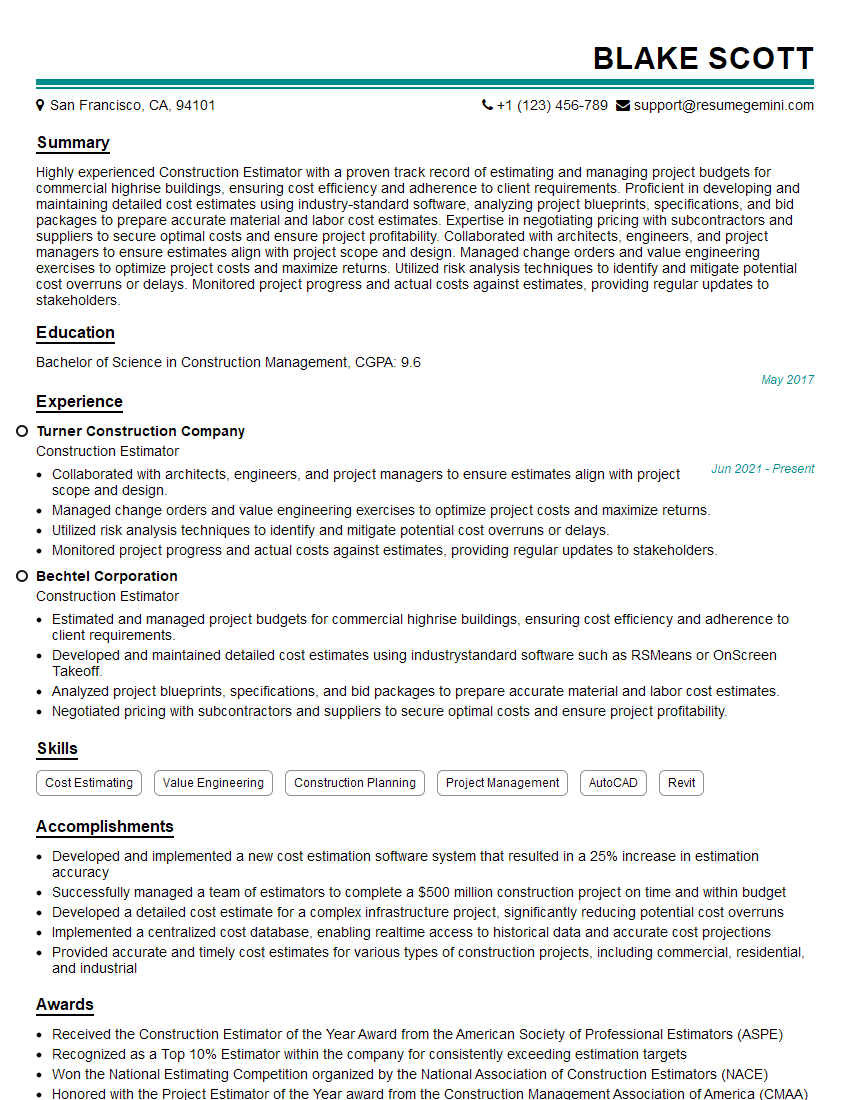
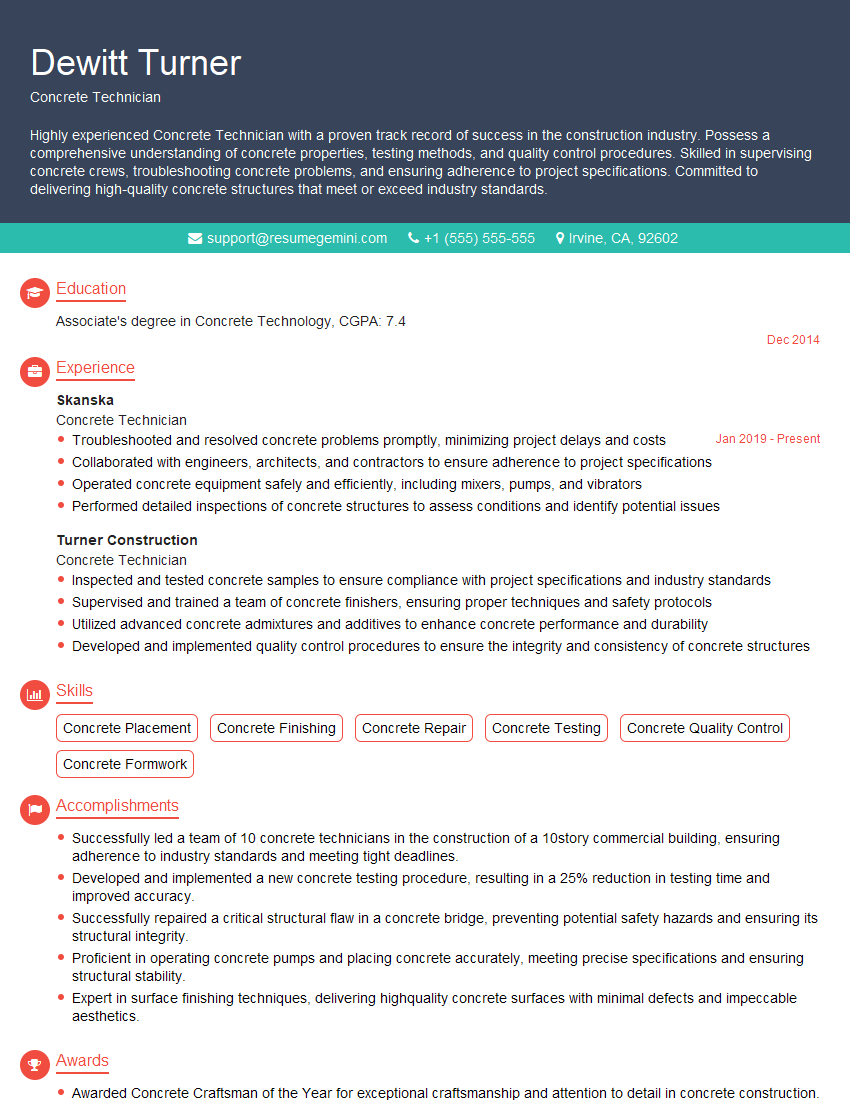
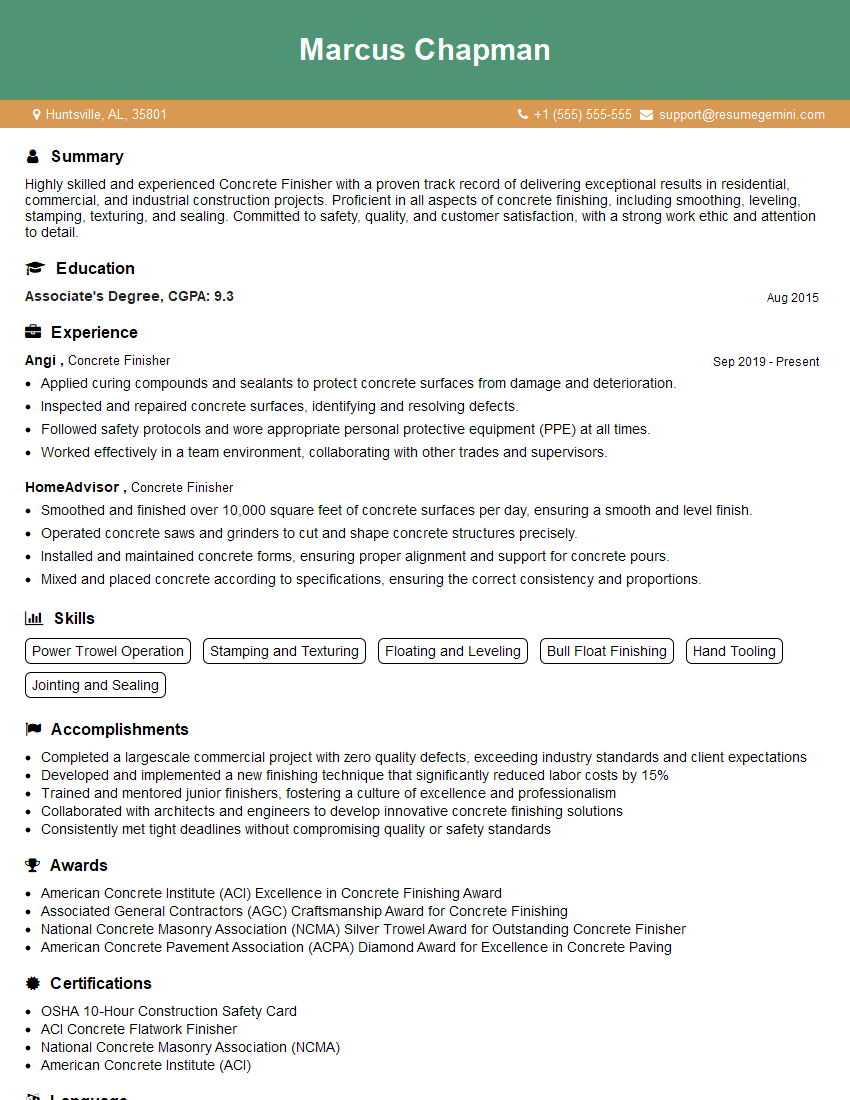
Mastering concrete texturing opens doors to a rewarding career with diverse opportunities for growth and specialization. To increase your chances of landing your dream job, it’s crucial to present yourself effectively. Creating an ATS-friendly resume is key to getting noticed by recruiters and hiring managers. We strongly recommend using ResumeGemini, a trusted resource for building professional and impactful resumes. ResumeGemini provides examples of resumes specifically tailored to the concrete texturing industry, ensuring your application stands out from the competition. Invest time in crafting a compelling resume—it’s your first impression and a crucial step towards your success.


Explore more articles
Users Rating of Our Blogs
Share Your Experience
We value your feedback! Please rate our content and share your thoughts (optional).
What Readers Say About Our Blog
Very informative content, great job.
good