Cracking a skill-specific interview, like one for Veterinary Terminology and Communication, requires understanding the nuances of the role. In this blog, we present the questions you’re most likely to encounter, along with insights into how to answer them effectively. Let’s ensure you’re ready to make a strong impression.
Questions Asked in Veterinary Terminology and Communication Interview
Q 1. Define ‘pyrexia’.
Pyrexia simply means fever. It’s a clinical sign indicating an elevated body temperature above the normal range for a particular species. The normal temperature varies depending on the animal (dogs, cats, birds, etc.) and even within the same species, factors like age and activity level can play a role. For example, a dog might be considered pyrexic if its rectal temperature is above 102.5°F (39.2°C), while a cat might be considered pyrexic above 103°F (39.4°C). Pyrexia is not a disease itself but rather a symptom often indicating an underlying infection, inflammation, or other medical condition requiring further investigation.
Q 2. What is the difference between ‘euthanasia’ and ‘thanatos’?
While both terms relate to death, ‘euthanasia’ and ‘thanatos’ have distinct meanings in veterinary contexts. ‘Thanatos’ is a more general term referring to death itself, often used in a clinical or scientific setting. It’s a neutral descriptor of the biological event. ‘Euthanasia,’ on the other hand, is the intentional act of ending a life to relieve suffering. In veterinary medicine, euthanasia is a carefully considered procedure performed by a veterinarian to alleviate pain and suffering in an animal with an incurable and/or debilitating condition, ensuring a peaceful and humane passing. It’s an ethically and legally regulated practice. Thus, thanatos is the event, while euthanasia is a specific, humane method of achieving that event.
Q 3. Explain the meaning of ‘cephalic’ in veterinary terms.
In veterinary anatomy, ‘cephalic’ refers to the head or head end of the body. It’s a directional term. For instance, the cephalic vein in a dog or cat is a superficial vein located on the front leg, closer to the head. Understanding cephalic is crucial for accurate descriptions of anatomical locations, procedures, and injuries. Think of it as a way to pinpoint locations on an animal, similar to using ‘anterior’ (front) and ‘posterior’ (back) in human anatomy. For example, a cephalic laceration would mean a wound on the head region of the animal.
Q 4. Translate ‘tachycardia’ into layman’s terms.
Tachycardia means a rapid heart rate. It’s a fast heartbeat, usually expressed as beats per minute (BPM), that’s above the normal range for a given animal species and size. For example, if a dog normally has a heart rate of around 70 BPM, and it suddenly measures 150 BPM, that would be considered tachycardia. This can be a symptom of various conditions, such as stress, excitement, infection, heart disease, or other underlying medical issues. Think of it like your heart racing when you are scared or exercising vigorously – but this is a sustained elevated heart rate.
Q 5. What does ‘BCS’ stand for in veterinary medicine and how is it assessed?
BCS stands for Body Condition Score. It’s a systematic way of assessing an animal’s body fat and muscle mass, providing a numerical representation of its overall nutritional status. Veterinarians use a standardized scale, usually ranging from 1 (emaciated) to 9 (obese), to evaluate an animal’s condition. Assessment involves palpating (feeling) the animal along its spine, ribs, hips, and other bony prominences. A healthy animal generally scores in the mid-range (4-5 for many dogs and cats), while a score above indicates overweight or obesity, and a score below suggests underweight or emaciation. Regular BCS assessment is essential for monitoring weight management, detecting early signs of malnutrition, or identifying potential health problems.
Q 6. How would you explain a complex medical diagnosis to a distraught client?
Explaining a complex diagnosis to a distraught client requires empathy, patience, and clear communication. I would start by acknowledging their distress and validating their emotions. Then, I’d break down the diagnosis into manageable chunks, using simple language avoiding technical jargon. I might employ analogies to help them understand. For example, instead of saying ‘hepatic lipidosis,’ I might explain it as ‘excess fat build-up in the liver,’ making the information relatable and comprehensible. I would always answer any questions honestly and comprehensively, providing a written summary of the diagnosis and treatment plan to reinforce understanding. I would also offer emotional support and refer them to support groups or resources if needed.
Q 7. Describe the proper method for communicating bad news to a pet owner.
Communicating bad news about a pet’s health requires sensitivity and professionalism. I would begin by choosing a private and comfortable setting. I would directly and honestly convey the diagnosis, but using compassionate language, avoiding euphemisms. I’d explain the situation in a clear and concise way, providing sufficient time for questions. I would validate the client’s feelings, allowing them to express their grief and emotions openly without interruption. Offering treatment options (if any), along with realistic expectations and prognosis, is important. Throughout, I would provide unwavering support and assure them that I’m there to assist them. Following up with written information and making myself available for further conversations are crucial aspects of providing comprehensive care, showing respect for their emotional state in a difficult time.
Q 8. What are some common abbreviations used in veterinary medical records?
Veterinary medical records often use abbreviations to save space and time. Many are fairly standard across practices, while others may be specific to a clinic or even a veterinarian. Here are some common examples:
Rx: PrescriptionSx: SurgeryTx: TreatmentDx: Diagnosisq.d.: once a dayb.i.d.: twice a dayt.i.d.: three times a dayq.i.d.: four times a dayprn: as neededPO: by mouthSCorSQ: subcutaneousIM: intramuscularIV: intravenouskg: kilogramsg: gramsmg: milligramsCBC: complete blood countUA: urinalysis
Understanding these abbreviations is crucial for efficient record-keeping and clear communication among veterinary professionals. It is also important to always use a standard set of abbreviations within a practice to avoid confusion.
Q 9. How do you handle a client who is unhappy with the cost of treatment?
Handling a client unhappy about treatment costs requires empathy, clear communication, and a focus on finding solutions. The key is to validate their concerns and demonstrate that you understand their financial situation. I’d start by actively listening to their concerns without interruption, and then I would explain the rationale behind each treatment recommendation, emphasizing its necessity for the pet’s health. If cost is truly prohibitive, I’d explore alternative options, such as:
- Payment plans: Offering payment plans or working with financing companies to make the treatment more manageable.
- Negotiating the treatment plan: Sometimes it’s possible to adjust the treatment plan to reduce costs without compromising the animal’s care. For example, some medications can be purchased from a less expensive source while maintaining efficacy.
- Prioritizing care: Determining which treatments are absolutely essential and focusing on those first, while possibly deferring others that are less urgent.
- Referral to lower-cost options: If appropriate, referring them to lower-cost clinics or animal welfare organizations.
Transparency is key. It’s crucial to be honest and upfront about all costs associated with treatment and to answer any questions fully and patiently. Ultimately, my goal is to find a solution that is both affordable for the client and provides the best possible care for their pet.
Q 10. Differentiate between ‘prophylactic’ and ‘therapeutic’ treatments.
The difference between prophylactic and therapeutic treatments lies in their purpose:
- Prophylactic treatment aims to prevent disease. It’s like preventative maintenance on a car. Examples include vaccinations to prevent infectious diseases, flea and tick preventatives, and heartworm preventative medication. These treatments are given before a disease has manifested.
- Therapeutic treatment aims to cure or manage an existing disease. This is like repairing a broken part in a car. Examples include antibiotics to treat an infection, pain medication for arthritis, or chemotherapy for cancer. These treatments are given after a disease has been diagnosed.
While both are essential for animal health, understanding the distinction helps in developing appropriate treatment plans and managing patient expectations.
Q 11. What is the meaning of ‘patent ductus arteriosus’?
‘Patent ductus arteriosus’ (PDA) is a congenital heart defect affecting newborn animals, primarily dogs. It refers to a condition where the ductus arteriosus, a blood vessel connecting the pulmonary artery and aorta during fetal development, fails to close after birth. This leads to abnormal blood flow and can cause various health issues depending on the severity of the defect.
In simpler terms, imagine a shortcut in the heart’s plumbing that should close after birth, but doesn’t. This shortcut causes some of the blood to take a less efficient route, putting extra stress on the heart and lungs. The severity ranges from asymptomatic (showing no symptoms) to life-threatening, requiring surgical intervention.
Q 12. Explain the significance of ‘signalment’ in a patient’s history.
‘Signalment’ refers to the basic identifying features of a patient. It’s like a quick snapshot of the patient’s demographics and appearance. This information is incredibly important because it provides valuable context for assessing the patient’s health. Signalment typically includes:
- Species: Dog, cat, bird, reptile, etc.
- Breed: Specific breed (e.g., Labrador Retriever, Siamese cat).
- Age: In years, months, or days.
- Sex: Male, female, or neutered/spayed.
- Weight: Often in kilograms.
- Color: Description of coat color and markings.
Knowing the signalment helps the veterinarian quickly assess potential predispositions to certain diseases based on breed, age, and sex, allowing for a more targeted approach to diagnosis and treatment. For example, a specific breed of dog might be genetically predisposed to hip dysplasia.
Q 13. How would you explain the difference between ‘anorexia’ and ‘inappetence’ to a client?
While both anorexia and inappetence describe a decrease in appetite, there’s a subtle but important difference:
- Anorexia is a complete loss of appetite. The animal shows no interest in food whatsoever.
- Inappetence is a decreased appetite. The animal might eat a little less than usual or be picky about what it eats.
Imagine a child: anorexia would be refusing all food entirely, while inappetence might mean only eating a small portion of their favorite dish instead of a full meal. Explaining this distinction to a client is important as it helps define the severity of the issue and aids in the development of appropriate management plans.
Q 14. What is the correct terminology for a dog’s upper jaw?
The correct terminology for a dog’s upper jaw is the maxilla.
Q 15. Explain the process of effectively relaying test results to a veterinarian.
Relaying test results to a veterinarian requires precision and clarity. It’s crucial to present the information in a structured manner, focusing on the most significant findings and their clinical implications. I begin by identifying the patient and the tests performed. Then, I present the results using clear, concise language, avoiding technical jargon unless absolutely necessary, and if used, defining it. I highlight any critical values or abnormalities, explaining their potential significance. I never interpret the results myself; I simply present the objective data. For example, instead of saying ‘The blood work shows liver damage,’ I would say ‘The ALT and ALP levels are significantly elevated, indicating potential hepatocellular injury.’ This allows the veterinarian to make their own informed diagnosis. Finally, I offer to answer any questions and provide additional context if needed. This approach ensures the veterinarian has all the necessary information to make the best decisions for the patient.
Career Expert Tips:
- Ace those interviews! Prepare effectively by reviewing the Top 50 Most Common Interview Questions on ResumeGemini.
- Navigate your job search with confidence! Explore a wide range of Career Tips on ResumeGemini. Learn about common challenges and recommendations to overcome them.
- Craft the perfect resume! Master the Art of Resume Writing with ResumeGemini’s guide. Showcase your unique qualifications and achievements effectively.
- Don’t miss out on holiday savings! Build your dream resume with ResumeGemini’s ATS optimized templates.
Q 16. How do you ensure clear and concise communication with veterinary staff?
Clear and concise communication with veterinary staff is paramount for efficient teamwork and patient care. I achieve this through active listening, respectful dialogue, and precise terminology. I always make sure to use standardized abbreviations and medical terminology where appropriate, avoiding colloquialisms to minimize misunderstanding. When explaining a situation or requesting information, I use the SBAR framework: Situation (briefly describe the patient and the issue), Background (relevant history), Assessment (my findings or concerns), and Recommendation (suggesting a course of action). For example, if a patient’s condition has deteriorated, I would communicate using SBAR to relay the information concisely and ensure immediate attention. This structured approach ensures that the crucial information is delivered effectively and efficiently. Furthermore, I always strive for open communication, encouraging staff to ask questions and provide feedback.
Q 17. Describe a situation where you had to explain a complex procedure to a client.
I once had to explain a complex surgical procedure, a femoral head ostectomy (FHO), to a client whose dog suffered from severe hip dysplasia. The client was understandably anxious, so I started by explaining the disease process in simple terms, using analogies to help them understand. I compared the damaged hip joint to a worn-out car bearing. Then, I explained the FHO procedure, describing how the head of the femur would be removed, allowing the leg to move more freely, alleviating pain. I used visual aids, showing diagrams and even a short video of the procedure. Throughout the explanation, I answered all their questions patiently, addressing their concerns about post-operative care, rehabilitation, and potential complications. I also provided written information detailing the procedure, recovery, and potential risks. The key was to break down complex medical information into digestible chunks, using relatable language and visuals to facilitate their understanding and promote informed consent.
Q 18. What is your strategy for handling difficult or challenging clients?
Handling difficult or challenging clients requires empathy, patience, and effective communication skills. My first priority is to actively listen to their concerns without interrupting. I validate their feelings and acknowledge their perspectives, even if I don’t agree with them. I try to understand the root cause of their frustration, whether it’s a misunderstanding about the treatment plan, financial concerns, or perceived lack of communication. Once I understand their concerns, I offer a clear and concise explanation of the situation, using simple language and avoiding technical jargon. I remain calm and professional, even in stressful situations, offering alternative solutions and compromise where possible. If the situation escalates, I always involve a supervisor or manager to de-escalate the situation and ensure the client’s needs are addressed appropriately. The goal is to find a resolution that is mutually acceptable, while always maintaining professionalism and respect.
Q 19. What are the ethical considerations in veterinary communication?
Ethical considerations in veterinary communication are paramount. Honesty, integrity, and compassion are foundational. It’s crucial to provide accurate and complete information to clients, without withholding negative prognostic information. Informed consent is vital; clients need to understand all aspects of their pet’s diagnosis, treatment options, risks, and potential outcomes before making decisions. Maintaining client confidentiality is also essential. We must respect their privacy and only disclose information to those with a legitimate need to know. Transparency in pricing and fees is vital to build trust and avoid potential conflicts of interest. Ultimately, all our communications should be driven by the best interests of the animal and the well-being of the client.
Q 20. How do you maintain client confidentiality in a veterinary setting?
Maintaining client confidentiality in a veterinary setting is crucial. We only access and discuss patient records on a need-to-know basis. All client information, including medical records, financial information, and personal details, is kept securely in a locked filing system or electronic database that is password-protected and accessible only to authorized personnel. We never disclose client information to unauthorized individuals or discuss patients publicly. We adhere to strict protocols for handling sensitive information and ensure that all staff members are fully trained on the importance of confidentiality. Compliance with data protection regulations is crucial and is routinely reviewed to ensure ongoing compliance.
Q 21. What is your understanding of HIPAA regulations as they pertain to veterinary practice?
While HIPAA (Health Insurance Portability and Accountability Act) primarily applies to human health information, understanding its principles is valuable in veterinary practice. Though veterinary practices aren’t directly subject to HIPAA, the principles of protecting patient privacy and confidential information are analogous. We uphold the same standards of data protection and security, ensuring that patient data is handled responsibly and ethically. The principles of confidentiality, data security, and informed consent, central to HIPAA, are equally critical in maintaining ethical veterinary practices. We adhere to data protection regulations relevant to our jurisdiction, safeguarding client information to a standard equivalent to HIPAA’s requirements.
Q 22. How do you handle a situation where you are unsure of the meaning of a veterinary term?
Encountering an unfamiliar veterinary term is a common occurrence, and handling it professionally is crucial. My approach involves a multi-step process:
Immediate clarification: I politely ask the person who used the term for its definition. Context is key—understanding how the term was used helps me grasp its meaning better. For instance, if someone mentions ‘pyometra,’ I would ask for clarification on the specific presentation or context to ascertain if they are referring to a uterine infection in a dog or cat.
Resource consultation: If immediate clarification isn’t possible, I immediately consult reputable veterinary resources like veterinary textbooks (e.g., ‘Veterinary Textbook of Cardiology’), professional journals (e.g., Journal of the American Veterinary Medical Association), or online veterinary dictionaries. I prioritize peer-reviewed sources to ensure accuracy.
Cross-referencing: Once I find a definition, I cross-reference it with several other sources to ensure consistency and comprehensive understanding. This helps prevent misinterpretations based on potentially outdated or niche uses of the term.
Confirmation and application: After gaining confidence in my understanding, I summarize the meaning to ensure clarity. I always confirm my understanding to avoid using the term incorrectly in communication with clients or colleagues. For example, after looking up the term ‘dyspnea’, I would make sure I understand it’s not just about rapid breathing but also the overall respiratory difficulty involved before discussing it with a client.
Q 23. Explain the importance of active listening in veterinary communication.
Active listening is paramount in veterinary communication. It ensures we understand the client’s concerns fully, leading to more effective treatment plans and improved client satisfaction. It goes beyond simply hearing; it’s about understanding the emotional context of what’s being communicated. Imagine a client describing their pet’s lethargy; active listening means not only understanding the physical symptoms but also recognizing their underlying worry and potential fear about their pet’s health. This involves:
Paying close attention: I maintain eye contact (without being intimidating), avoid interrupting, and focus entirely on the client’s words and body language.
Reflecting and summarizing: I regularly paraphrase or summarize what the client has said to ensure accurate understanding and demonstrate engagement (e.g., ‘So, if I understand correctly, your dog has been vomiting and has lost his appetite for the past two days…’). This shows I’m actively processing their information.
Asking clarifying questions: Open-ended questions (e.g., ‘Can you tell me more about…’) encourage clients to elaborate, revealing crucial information that might not be explicitly stated.
Empathy and understanding: Demonstrating empathy is crucial. Acknowledging their feelings—’I understand this must be very stressful for you’—creates a supportive atmosphere where clients feel comfortable sharing.
Q 24. How do you adapt your communication style to different types of clients?
Adapting communication style is essential because clients have varying levels of veterinary knowledge, personalities, and communication preferences. I tailor my approach to ensure clear and effective communication.
Explaining complex terms simply: For clients with limited veterinary knowledge, I avoid jargon and explain technical terms in plain language, using analogies or relatable examples. For example, instead of saying ‘hepatic insufficiency,’ I might say, ‘Your pet’s liver isn’t working as well as it should.’
Addressing emotional needs: Some clients need emotional support, while others prefer a direct, fact-based approach. I assess the client’s emotional state and adapt accordingly. A grieving client losing a pet needs a compassionate and empathetic response, different from a client seeking information on routine vaccinations.
Considering communication styles: Some clients are visual learners, others auditory, and some kinesthetic. I might use visual aids like diagrams or videos for visual learners, explain concepts verbally for auditory learners, and provide hands-on demonstrations for kinesthetic learners.
Respecting communication preferences: Some clients prefer brief and concise communication, while others desire more detailed explanations. I adjust the level of detail to their preferences, always prioritizing clarity and accuracy.
Q 25. Describe a time you had to use your communication skills to de-escalate a tense situation with a client.
I once had a client become extremely upset when receiving the diagnosis of a terminal illness for their beloved dog. The client was verbally aggressive and refused to believe the diagnosis. My approach involved:
Active listening and empathy: I listened patiently to their anger and frustration, validating their feelings without arguing or dismissing their emotions. I acknowledged their grief and the difficult situation they were facing.
Clear and calm explanation: I calmly reiterated the diagnosis using plain language, avoiding technical jargon. I presented the diagnostic evidence in a compassionate and understandable manner, answering their questions patiently.
Offering options and support: I explained available treatment options, emphasizing quality of life considerations and focusing on making their pet comfortable. I offered resources, such as a pet loss support group, to help them cope.
Maintaining professional boundaries: Despite their distress, I maintained a professional and respectful demeanor. I never raised my voice or became defensive.
Through patient communication and empathy, the client eventually calmed down and was able to discuss treatment options with a clearer perspective. This experience emphasized the importance of emotional intelligence and effective communication in high-stress situations.
Q 26. What resources do you utilize to stay updated on veterinary terminology and best practices?
Staying updated in veterinary terminology and best practices requires a proactive and multifaceted approach. I use various resources to ensure my knowledge remains current and relevant.
Professional journals and publications: I regularly read peer-reviewed journals like the Journal of the American Veterinary Medical Association (JAVMA) and specialty journals relevant to my area of interest.
Veterinary textbooks: I maintain access to updated veterinary textbooks to look up specific terms and review current veterinary knowledge.
Online veterinary databases: I use online resources, such as veterinary encyclopedias and databases, to quickly look up definitions and access the latest research findings.
Continuing education courses and conferences: I actively participate in continuing education courses and conferences to learn about new advancements, techniques, and terminology. These events allow for interaction with experts and other professionals.
Networking with colleagues: I maintain a strong professional network through colleagues and mentors. Discussing cases and sharing knowledge helps ensure my skills and understanding remain up to date.
Q 27. How do you prioritize competing demands in a busy veterinary setting, especially regarding communication tasks?
Prioritizing competing demands in a busy veterinary setting requires effective time management and organizational skills. When dealing with communication tasks, I use a structured approach:
Triaging communication needs: I prioritize urgent communication tasks (e.g., critical patient updates) over less urgent ones (e.g., routine appointment reminders).
Utilizing technology: I use electronic health records (EHR) and practice management software to manage communication efficiently. This allows for quick access to client information and streamlined communication channels.
Batching similar tasks: I group similar communication tasks (e.g., making phone calls to clients) to minimize context switching and improve efficiency.
Delegating when appropriate: I delegate tasks that can be effectively handled by other staff members, freeing up my time to focus on higher-priority communication needs.
Setting realistic expectations: I set realistic goals for daily communication tasks to avoid feeling overwhelmed.
Q 28. What are your strategies for documenting veterinary procedures and observations effectively?
Effective documentation is crucial for maintaining accurate records, ensuring continuity of care, and avoiding legal complications. My strategies for documenting veterinary procedures and observations include:
Using clear and concise language: I avoid jargon and use plain language that is easily understood by other veterinary professionals.
Maintaining chronological order: I document events in chronological order to ensure a clear timeline of patient care.
Being specific and objective: I focus on objective observations and avoid subjective interpretations. Instead of saying ‘the dog seemed depressed,’ I would write ‘the dog exhibited lethargy, decreased appetite, and was withdrawn.’
Including relevant details: I document all relevant details, including the date, time, species, breed, age, weight, presenting complaint, diagnosis, treatment administered, and client instructions.
Using standardized abbreviations and terminology: I use standardized abbreviations and terminology to ensure consistency and clarity across the practice.
Regularly reviewing and updating records: I regularly review and update patient records to ensure accuracy and completeness.
Key Topics to Learn for Veterinary Terminology and Communication Interview
- Medical Terminology: Understanding prefixes, suffixes, and root words commonly used in veterinary medicine. This includes accurately interpreting medical reports and patient records.
- Species-Specific Terminology: Familiarizing yourself with the unique anatomical and physiological terms for various animal species (canine, feline, equine, etc.). Practical application involves correctly identifying conditions and treatments based on the species.
- Diagnostic Imaging and Procedures: Knowing the terminology associated with X-rays, ultrasounds, blood tests, and other diagnostic tools. This ensures clear communication with veterinarians and technicians regarding patient findings.
- Pharmacology and Medication: Understanding common veterinary medications, their uses, and potential side effects. Practical application: accurately interpreting medication instructions and explaining them to clients.
- Client Communication: Developing effective communication skills to explain complex medical information to clients in a clear, concise, and compassionate manner. This involves active listening and empathy.
- Record Keeping and Documentation: Mastering proper veterinary record-keeping techniques, ensuring accuracy and compliance with regulations. This includes using standardized terminology for consistency and clarity.
- Professional Communication: Understanding ethical considerations and professional boundaries in communication with colleagues, clients, and supervisors. This includes effective teamwork and conflict resolution.
- Problem-Solving and Critical Thinking: Applying your knowledge of veterinary terminology to interpret patient information and contribute to effective diagnosis and treatment plans.
Next Steps
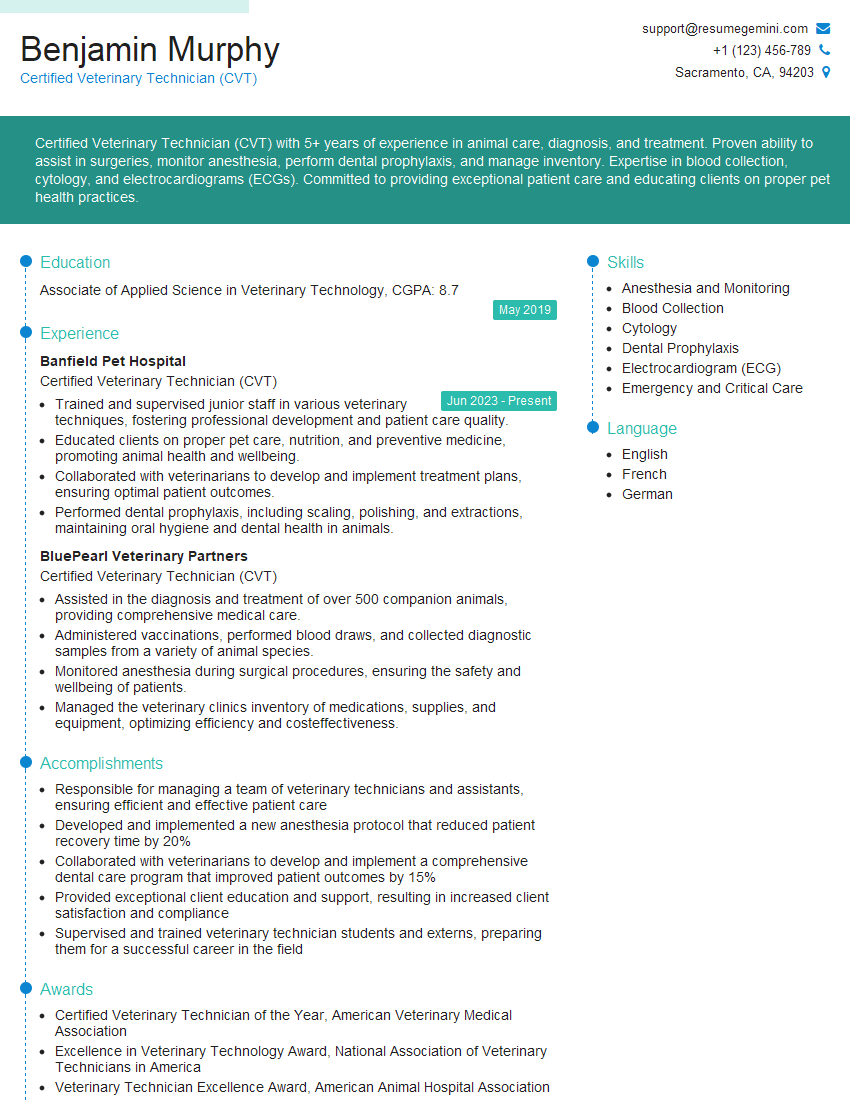
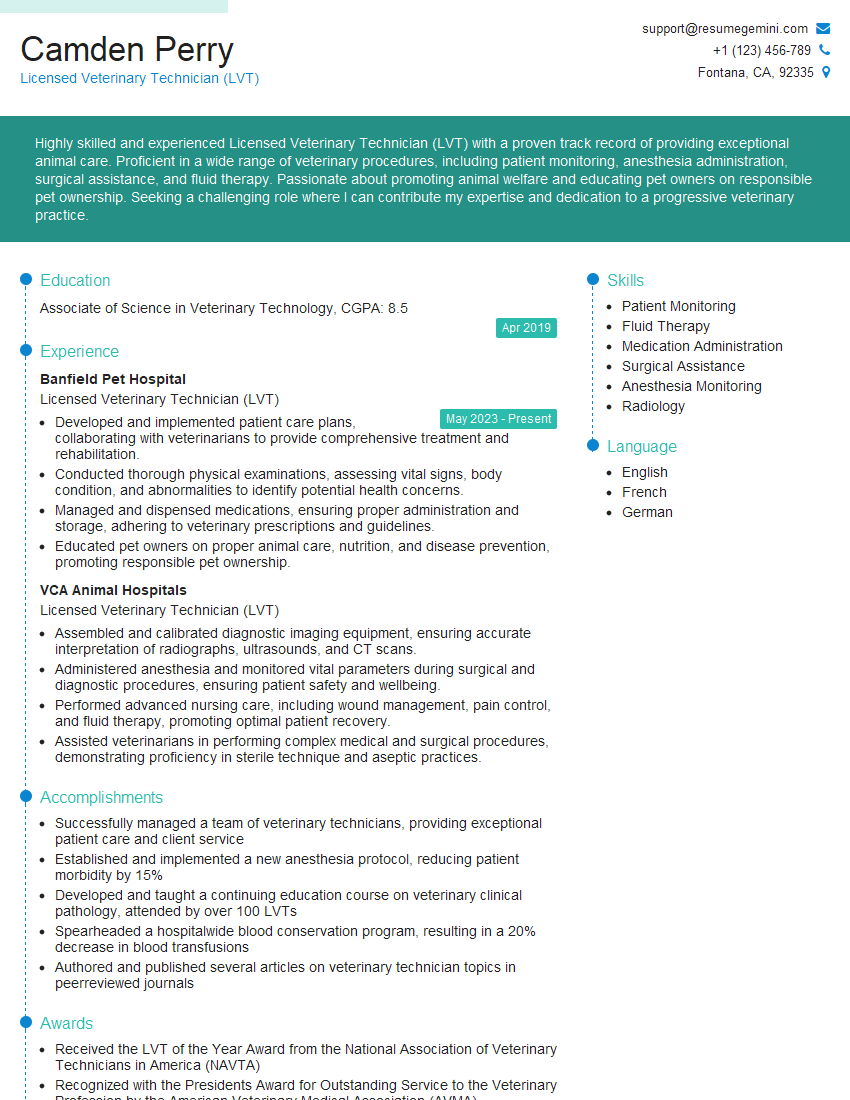
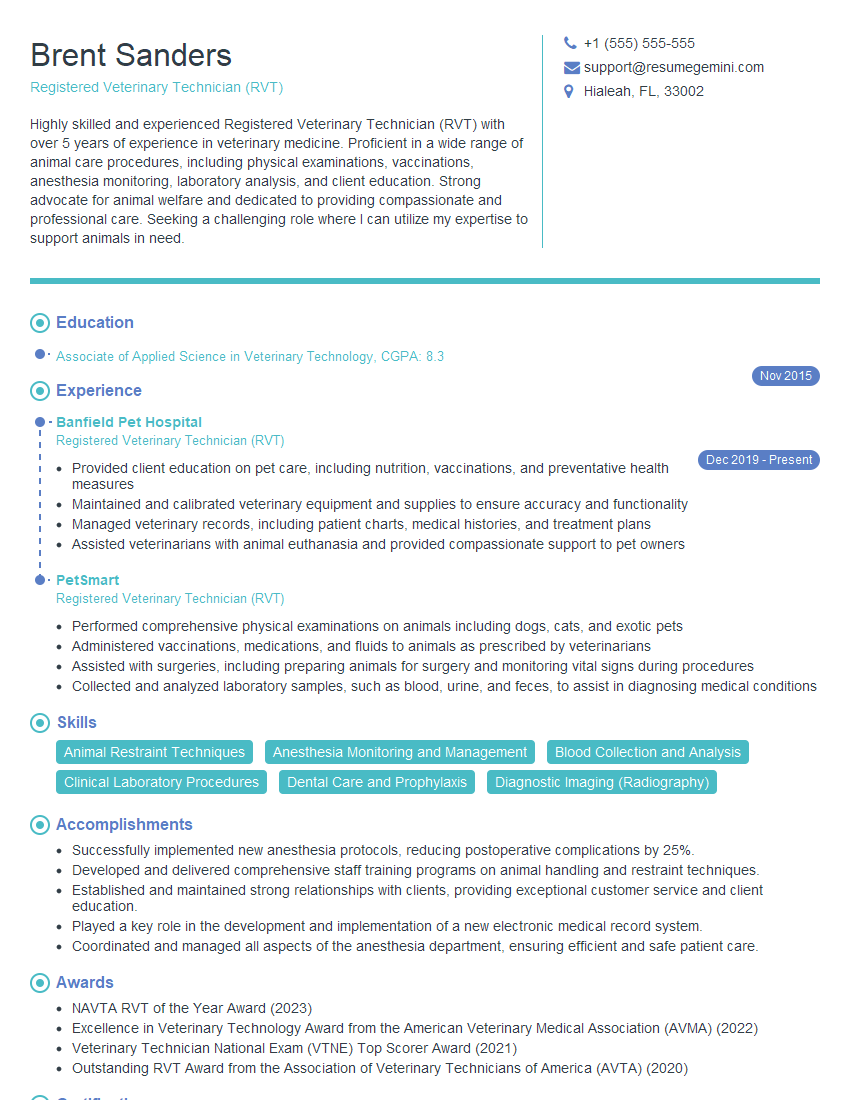
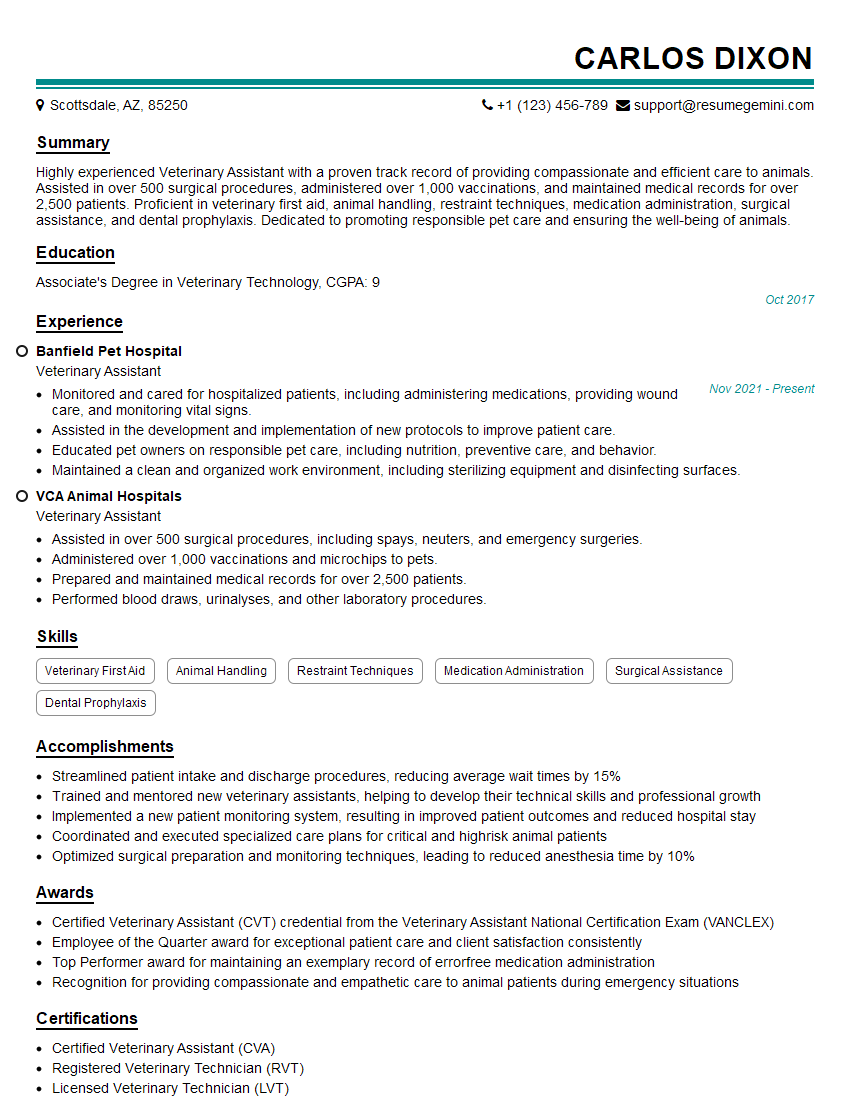
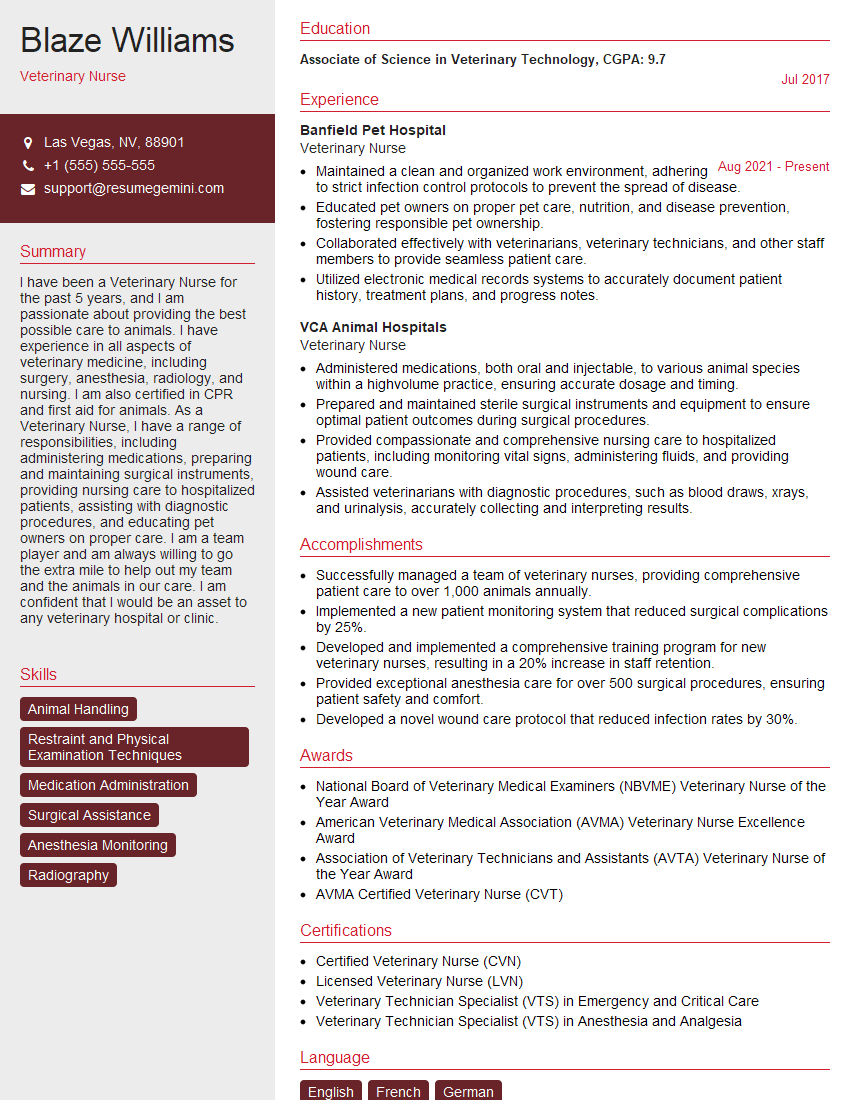
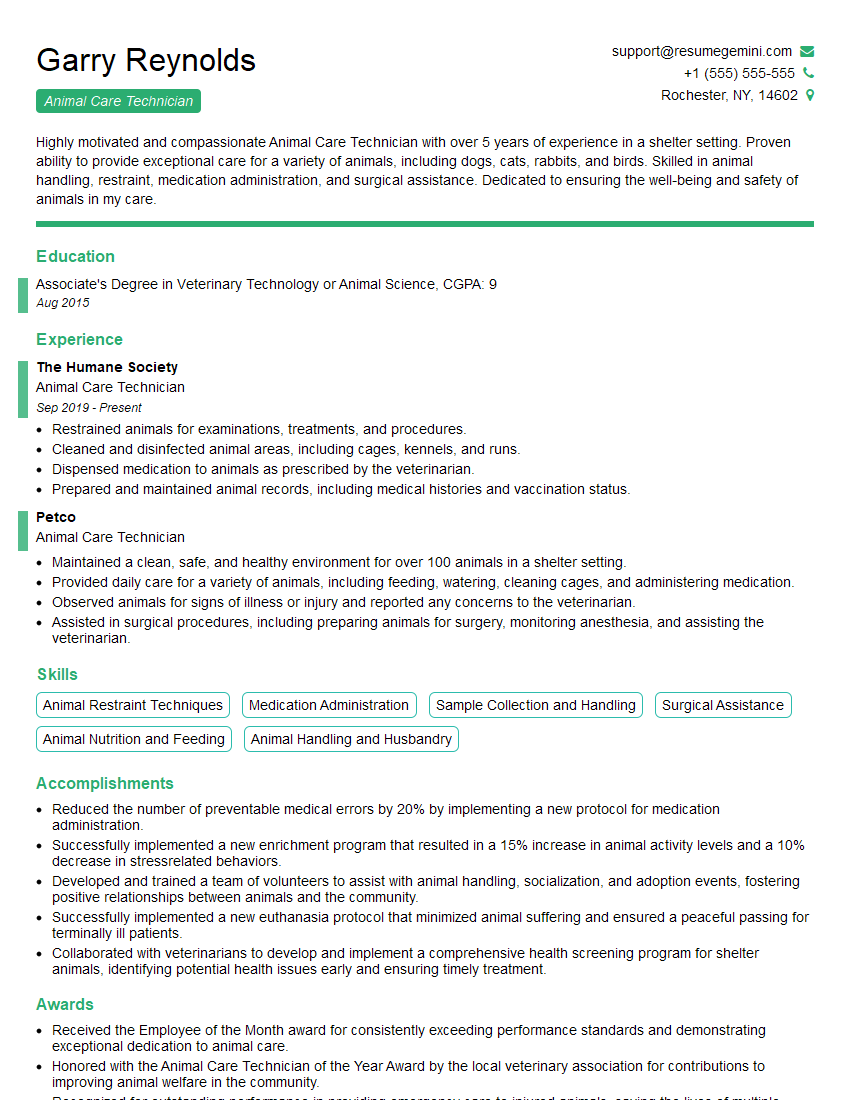
Mastering veterinary terminology and communication is crucial for career advancement in this field. Clear and confident communication builds trust with clients and colleagues, leading to improved patient care and stronger professional relationships. To maximize your job prospects, focus on creating an ATS-friendly resume that highlights your skills and experience effectively. ResumeGemini is a trusted resource to help you build a professional and impactful resume. They provide examples of resumes tailored to Veterinary Terminology and Communication, ensuring your application stands out.
Explore more articles
Users Rating of Our Blogs
Share Your Experience
We value your feedback! Please rate our content and share your thoughts (optional).
What Readers Say About Our Blog
Very informative content, great job.
good