Interviews are more than just a Q&A session—they’re a chance to prove your worth. This blog dives into essential Art Sales interview questions and expert tips to help you align your answers with what hiring managers are looking for. Start preparing to shine!
Questions Asked in Art Sales Interview
Q 1. Describe your experience with CRM systems in managing art sales leads.
CRM systems are indispensable for managing art sales leads. I’ve extensively used systems like Salesforce and Zoho CRM to track interactions, manage contact information, and nurture leads through the sales funnel. For example, I segment leads based on their collecting interests (e.g., Impressionism, Contemporary Sculpture) and their purchase history. This allows for highly targeted communication, improving conversion rates. My process involves inputting all contact details, notes from conversations (both in-person and phone), and scheduled follow-ups. I use the CRM to track engagement with marketing materials – email opens, website visits, and event attendance – to gauge interest and tailor future communication. This data-driven approach ensures efficient lead management and maximizes sales opportunities.
Further, I leverage CRM features like automated email sequences for lead nurturing and reporting tools to monitor key performance indicators (KPIs) like lead conversion rates and sales cycle length. This allows me to continuously refine my sales strategy and identify areas for improvement. For instance, a CRM report might reveal that leads responding to email campaigns featuring specific artists convert at a higher rate, informing future marketing efforts.
Q 2. How do you identify and qualify potential high-value art clients?
Identifying high-value art clients requires a multifaceted approach. It starts with understanding their profile: are they seasoned collectors with established collections or emerging collectors with significant disposable income and a passion for art? I leverage a combination of methods, including attending high-profile art events (auctions, gallery openings), researching online databases of collectors, and utilizing networking within the art world.
Qualifying potential clients involves assessing their financial capacity, collecting history, and commitment to art acquisition. This can be achieved through conversations, reviewing their purchasing habits (if available), and understanding their investment goals. I also look for signs of serious intent, such as attending private viewings, requesting detailed information on artwork provenance, and expressing a clear understanding of market values. For example, a client casually inquiring about prices may not be a high-value lead, while one meticulously researching the history and authenticity of a piece indicates higher potential.
Q 3. Explain your approach to pricing artwork for sale.
Pricing artwork is a complex process that balances artistic merit, market demand, and the artist’s reputation. It’s not a simple formula, but rather a judgment call informed by several factors. Firstly, we thoroughly research comparable artworks by the same artist or from similar periods and styles that have sold recently. Auction records, gallery sales data, and private sales information are key sources. We also consider the artwork’s size, medium, condition, and significance – a unique piece with exceptional provenance will command a higher price.
The artist’s reputation and market position play a crucial role. Established artists with consistent demand will have higher prices than emerging artists. Finally, the gallery or dealer’s markup is also a factor, contributing to the final sale price. Sometimes, we may need to adjust the price based on market fluctuations and buyer negotiation. I often use a price range instead of a fixed price, offering flexibility during negotiations. For example, a painting might be priced within a range of $10,000 – $15,000 depending on the buyer and the negotiation process.
Q 4. How do you handle objections from potential buyers during negotiations?
Handling objections is a crucial aspect of art sales. I approach objections not as roadblocks, but as opportunities to address concerns and build trust. I listen attentively, acknowledge the buyer’s perspective, and then respond directly with factual information, or by offering alternative solutions.
Common objections might include price, condition, or authenticity. For price concerns, I might highlight the artwork’s investment potential or unique qualities. For condition issues, I offer transparent disclosure and potentially adjust the price accordingly. Authenticity concerns are addressed by presenting documentation such as provenance records or expert opinions. For instance, if a buyer objects to the price, I might emphasize the artist’s rising market value or the rarity of the piece. My goal is always to provide information that empowers the buyer to make an informed decision. Building rapport and maintaining a professional yet friendly demeanor is also critical in addressing objections successfully.
Q 5. What strategies do you use to build and maintain relationships with artists?
Strong artist relationships are essential for a successful art sales career. I nurture these relationships through open communication, transparency, and mutual respect. Regular meetings, both in-person and virtual, are crucial. These meetings allow me to understand the artist’s creative process, upcoming projects, and their long-term goals. I share market insights and provide constructive feedback on their work.
I offer personalized marketing plans and work closely with artists to showcase their pieces in a way that accurately reflects their style and vision. This includes gallery representation, curated exhibitions, and targeted marketing campaigns. It’s crucial to be honest and transparent about sales figures, commission structures, and expectations. I believe in celebrating their successes and providing support during challenging times. Building trust and strong rapport is paramount in fostering long-term collaborations that benefit both the artist and the gallery.
Q 6. Describe your experience with art authentication and provenance research.
Art authentication and provenance research are critical for establishing the legitimacy and value of artwork. My experience includes working with independent art authenticators, examining archival documents, and consulting with experts in various art historical periods.
Provenance research involves tracing the ownership history of a piece, building a comprehensive chain of custody from the artist to the present. This involves verifying past sales records, exhibition histories, and other documentation. I utilize various resources, including auction house archives, museum records, and private collections databases. For example, I might verify an artwork’s authenticity through comparing it to known works by the artist or by consulting with experts on the artist’s signature, style, and techniques. If discrepancies arise, I seek further investigation or expert opinions to confirm authenticity before proceeding with sales. A robust provenance record not only ensures the legitimacy of the artwork but also significantly enhances its value.
Q 7. How do you market and promote artwork to target audiences?
Marketing and promoting artwork involves crafting targeted strategies to reach specific audiences. We utilize various channels to showcase artwork, depending on the target demographic and the artwork’s characteristics. For example, social media platforms like Instagram and Facebook are excellent tools for visually appealing content and reaching a broad audience. High-quality professional photographs and videos are essential. We tailor the message and imagery for each platform, recognizing platform-specific strengths (e.g., Instagram’s visual focus, LinkedIn’s professional network).
Public relations involves building relationships with influential art critics, journalists, and bloggers to secure features and reviews. We also participate in art fairs and exhibitions to gain exposure, building our network and engaging directly with potential clients. Additionally, email marketing, targeted towards collectors and art enthusiasts, allows us to disseminate information and build a customer database. Finally, collaborating with other galleries and art institutions can provide cross-promotional opportunities and extend our reach to new audiences.
Q 8. Explain your process for handling art shipping and insurance.
Art shipping and insurance are critical for protecting valuable artwork during transit. My process begins with a thorough assessment of the artwork’s size, fragility, and value to determine the appropriate packaging and shipping method. I prioritize reputable, specialized art shippers who are insured and experienced in handling delicate pieces. For instance, I’ve worked with companies that use climate-controlled vehicles and custom-built crates for particularly sensitive works.
Insurance is crucial. I work with reputable insurance brokers who specialize in fine art to secure adequate coverage against damage, loss, or theft during transit. The policy amount is determined based on the artwork’s appraised value and includes coverage for unforeseen circumstances. We typically utilize all-risks policies for maximum protection. Comprehensive documentation, including high-resolution images, provenance records, and appraisals, are provided to the insurer. For international shipments, I ensure compliance with all customs regulations and documentation requirements to avoid delays and potential complications.
Q 9. How do you manage sales transactions and documentation?
Managing sales transactions and documentation requires meticulous attention to detail. I utilize a robust CRM (Customer Relationship Management) system to track all aspects of a sale, from initial client contact to final payment. This includes contact information, artwork details, sales agreements, payment schedules, and shipping information. Sales agreements are carefully drafted to protect both the buyer and seller, outlining payment terms, shipping responsibilities, and any warranties or guarantees. We use secure online payment gateways for transactions, ensuring buyer and seller protection. All financial transactions are meticulously recorded and reconciled. Following a sale, the buyer receives detailed paperwork including an invoice, a certificate of authenticity, and proof of insurance for shipment.
Q 10. Describe your experience with different sales channels (online, in-person, auctions).
My experience spans various sales channels, each with its own advantages and challenges. In-person sales allow for a personal connection with the client, enabling a deeper understanding of their preferences and building trust. This often involves private viewings, gallery exhibitions, and art fairs. Online sales, via my own website or established platforms, expand reach and allow for global exposure. This requires high-quality images, detailed descriptions, and a user-friendly interface. Auctions provide a competitive environment that can drive up prices, but require careful preparation, including accurate estimations and effective marketing. For example, I recently successfully sold a contemporary sculpture through an online auction by partnering with a reputable auction house, leveraging their marketing expertise and trusted platform.
Q 11. What is your experience with negotiating commissions and payment terms?
Negotiating commissions and payment terms is a crucial aspect of art sales. My commission structure is transparent and discussed upfront with both the artist and the buyer. It typically involves a percentage of the sale price, which can vary depending on the artwork, artist, and overall market conditions. Payment terms are also carefully negotiated, often involving a deposit upon agreement, followed by the balance upon delivery or completion of the transaction. Payment methods are tailored to the buyer’s preferences and security, with options like wire transfers, escrow services, and other secure methods. I’ve successfully negotiated various payment plans to accommodate clients’ specific financial circumstances while safeguarding my interests. For example, I have structured payment schedules for larger works that enable buyers to complete their purchase over a reasonable period.
Q 12. How do you handle difficult clients or challenging sales situations?
Handling difficult clients or challenging sales situations requires patience, diplomacy, and strong communication skills. I actively listen to client concerns, address them with empathy, and offer solutions within the boundaries of ethical business practices. Transparency is key; I ensure all expectations and terms are clearly communicated. In situations involving disputes or disagreements, I strive for a mutually agreeable resolution, sometimes involving mediation. For instance, I once addressed a client’s concerns about the condition of a painting by offering an independent appraisal to validate its authenticity and value, resulting in a positive resolution.
Q 13. Describe your knowledge of art market trends and current valuations.
Keeping abreast of art market trends and current valuations is essential. I regularly monitor auction results, art market reports, and industry publications to stay informed about price fluctuations, emerging artists, and evolving collecting trends. I utilize various resources, including online databases and professional art appraisal services, to determine accurate valuations. Understanding factors like artist reputation, provenance, condition, and current market demand is crucial for accurate valuation. For instance, I noticed a significant rise in the value of mid-century modern furniture recently, which informed my pricing strategy for relevant pieces in my inventory.
Q 14. What is your understanding of art law and regulations?
A solid understanding of art law and regulations is paramount. This includes copyright law, intellectual property rights, authentication procedures, and import/export regulations. I am familiar with contract law as it pertains to sales agreements and dispute resolution. I also understand the importance of proper provenance documentation to avoid legal complications. In international sales, I ensure compliance with all relevant customs regulations. When navigating complex legal issues, I consult with legal professionals specializing in art law to ensure full compliance and protection for my clients and myself.
Q 15. How do you stay up-to-date on the latest developments in the art world?
Staying current in the dynamic art world requires a multi-faceted approach. It’s not just about following one source; it’s about building a comprehensive understanding from diverse channels.
Art Market Reports and Publications: I regularly read publications like Artnet News, Art Basel’s online resources, and the Art Newspaper. These provide crucial market analysis, auction results, and insights into emerging trends. For example, a recent Artnet report highlighted a significant surge in interest for digital art, which I’ve incorporated into my client consultations.
Auction House Websites: Sotheby’s, Christie’s, and Phillips’ websites are invaluable. I meticulously track auction results – not just the hammer prices, but also the pre-sale estimates and the number of bidders. This data paints a clear picture of market demand and valuation.
Gallery Visits and Art Fairs: Attending international art fairs like Art Basel and Frieze is essential for experiencing artworks firsthand and networking with galleries and other professionals. I actively engage with gallery representatives to stay abreast of the latest exhibitions and acquisitions.
Art Databases and Indices: Utilizing databases like Artprice and others helps me track artist performance over time, providing historical context to better assess the investment potential of a piece.
Networking and Relationships: Building strong relationships with artists, curators, and collectors is paramount. These connections provide access to exclusive information and emerging trends before they become widespread knowledge. For instance, a curator friend recently tipped me off about a rising young artist whose work I now believe has significant future potential.
Career Expert Tips:
- Ace those interviews! Prepare effectively by reviewing the Top 50 Most Common Interview Questions on ResumeGemini.
- Navigate your job search with confidence! Explore a wide range of Career Tips on ResumeGemini. Learn about common challenges and recommendations to overcome them.
- Craft the perfect resume! Master the Art of Resume Writing with ResumeGemini’s guide. Showcase your unique qualifications and achievements effectively.
- Don’t miss out on holiday savings! Build your dream resume with ResumeGemini’s ATS optimized templates.
Q 16. Describe your experience with building and managing an art sales team (if applicable).
I’ve had the privilege of leading and mentoring art sales teams for over ten years. Building a successful team hinges on a combination of recruitment, training, and fostering a collaborative environment.
Recruitment: I look for individuals with a passion for art, strong communication skills, and a demonstrable understanding of the art market. I believe a diverse team, with members possessing various specializations, enriches our approach. For instance, having a specialist in Impressionist art alongside someone with expertise in contemporary sculpture broadens our client base.
Training: Providing ongoing training is crucial. This includes workshops on art history, market analysis, client relationship management, and negotiation tactics. I encourage team members to pursue professional certifications in areas of their expertise. Regular performance reviews and feedback sessions are vital to address challenges and highlight successes.
Collaboration and Motivation: I foster a culture of open communication and teamwork. Regular team meetings, brainstorming sessions, and shared access to market data enable everyone to feel invested in collective success. I also believe in incentivizing performance through commission structures and bonus programs. Acknowledging individual accomplishments motivates the entire team.
Managing involves delegating effectively, ensuring consistent communication, and providing support. This includes monitoring sales progress, resolving client issues, and celebrating successes. I use CRM software to manage client interactions and track sales pipelines, allowing for an efficient and transparent workflow.
Q 17. How do you leverage social media and digital marketing for art sales?
Social media and digital marketing are indispensable for reaching a wider audience in the art world. I employ a multifaceted strategy to leverage these tools.
High-Quality Visual Content: Instagram and other visual platforms are crucial. We invest in professional photography and videography to showcase artworks in the best possible light. Captivating visuals are far more effective than lengthy descriptions.
Targeted Advertising: Utilizing targeted advertising on platforms like Instagram and Facebook allows us to reach specific demographics interested in particular art styles or price ranges. This is much more efficient than blanket marketing.
Engaging Content: We don’t just post images; we create informative content, including behind-the-scenes glimpses into the gallery or artist studios, interviews with artists, and articles on art history or market trends. This builds engagement and positions us as thought leaders.
Email Marketing: Email remains a potent tool for nurturing relationships with clients and prospective buyers. We send targeted newsletters highlighting new acquisitions, upcoming exhibitions, or market updates. This allows for personalized communication and maintaining client engagement.
Website Optimization: Our website is optimized for search engines (SEO) to ensure visibility to those seeking art online. It features high-resolution images, detailed descriptions, and secure online payment options.
I track the performance of our social media and digital marketing efforts through analytics tools to constantly refine our strategy and maximize our reach.
Q 18. Explain your process for evaluating the investment potential of artwork.
Evaluating the investment potential of artwork is a complex process that goes beyond simply looking at aesthetics. It’s a thorough assessment involving multiple factors.
Artist’s Track Record: I meticulously research the artist’s history, examining past auction results, gallery representation, critical acclaim, and museum acquisitions. An artist with a consistently strong auction record and growing recognition is a more secure investment.
Market Demand: Understanding current market trends is critical. Is there a growing interest in the artist’s style or subject matter? Are similar works selling well? Market research informs my assessment.
Condition of the Artwork: The artwork’s condition significantly impacts its value. Scratches, discoloration, or damage can substantially decrease its worth. I often consult with art conservators for a professional evaluation.
Provenance: Knowing the history of the artwork – its ownership and exhibition history – adds value. A clear and well-documented provenance enhances authenticity and trustworthiness.
Rarity and Uniqueness: Unique or rare works, from a limited edition print to a one-of-a-kind sculpture, are often more desirable and command higher prices.
Ultimately, my evaluation is a synthesis of these factors. I present my assessment alongside risk factors and potential returns to clients, empowering them to make informed investment decisions.
Q 19. How do you handle client expectations and manage their portfolios?
Managing client expectations and portfolios requires transparency, open communication, and a deep understanding of their individual goals.
Clear Communication: I maintain regular contact with clients, providing updates on market trends, the status of their investments, and any significant developments. I use clear, non-technical language to avoid confusion.
Personalized Approach: Each client has different needs and risk tolerances. I take the time to understand their investment objectives – are they looking for short-term gains, long-term appreciation, or diversification? – to craft a personalized strategy.
Risk Management: I openly discuss the inherent risks associated with art investments. While some artworks have the potential for significant appreciation, there’s also the possibility of loss. Transparency regarding these risks is essential for building trust.
Portfolio Diversification: I advise on diversification strategies to mitigate risk. Investing in a variety of artists, styles, and price points can protect against market fluctuations.
Regular Reviews: I conduct regular portfolio reviews with clients, discussing performance, market changes, and adjusting strategies based on evolving needs or market conditions.
Building strong, trusting relationships with clients is paramount. Honesty and responsiveness are key to exceeding expectations and fostering long-term partnerships.
Q 20. Describe your understanding of different art collecting trends.
Art collecting trends are constantly evolving, driven by economic factors, social movements, and technological advancements. Currently, I’m observing several key trends:
Increased Interest in Emerging Artists: There’s a growing appetite for discovering and investing in the works of emerging artists, seeking the potential for high returns before widespread recognition.
Focus on Inclusivity and Diversity: Collectors are increasingly seeking out works by artists from diverse backgrounds and those representing underrepresented voices, reflecting a broader societal shift.
Sustainability and Ethical Sourcing: Conscious collecting is gaining traction, with a focus on artists and galleries that prioritize sustainable practices and ethical sourcing of materials.
Digital Art and NFTs: The rise of digital art and non-fungible tokens (NFTs) has dramatically altered the landscape. While still nascent, this market is experiencing significant growth and presents unique investment opportunities.
Continued Demand for Blue-Chip Artists: Classic and established artists continue to command high prices, demonstrating the enduring value of masterworks and the stability they offer in uncertain markets.
Understanding these trends allows me to advise clients on investment strategies that align with their interests and risk profiles. I actively track these developments and adapt my recommendations to reflect market dynamics.
Q 21. How do you assess the condition and value of artwork?
Assessing the condition and value of artwork requires a keen eye, technical knowledge, and often, the expertise of specialists.
Visual Inspection: I begin with a careful visual inspection, looking for signs of damage, such as cracks, scratches, discoloration, or repairs. This requires a trained eye to identify subtle issues.
Technical Examination: For more thorough assessment, I often employ technical methods, including ultraviolet (UV) light examination to detect restoration or inpainting, and infrared reflectography to reveal underdrawings or previous alterations.
Provenance Research: Thorough documentation of ownership history is critical. A verifiable provenance enhances authenticity and value. This may involve contacting auction houses, galleries, and archives.
Expert Consultation: For valuable or delicate pieces, I frequently consult with art conservators and specialists to assess the artwork’s condition and provide a detailed report. This ensures an accurate assessment of the work’s condition and any potential restoration needs.
Comparative Market Analysis: I then compare the artwork to similar works that have been sold at auction or through galleries. This helps establish a market benchmark and inform value estimation.
The final valuation is a synthesis of all this information. It’s crucial to present the valuation transparently to the client, outlining the factors influencing the price and any potential limitations or uncertainties.
Q 22. How do you identify and address potential risks associated with art sales transactions?
Identifying and addressing risks in art sales requires a multi-faceted approach, encompassing due diligence, legal safeguards, and a deep understanding of the art market. It’s like navigating a minefield – one wrong step can have significant consequences.
Authenticity Verification: This is paramount. We utilize reputable experts for provenance research, scientific testing (like pigment analysis), and cross-referencing with auction records and museum catalogues. For example, a recent sale involved a suspected forgery; thorough investigation using infrared imaging revealed inconsistencies, preventing a costly mistake.
Legal Compliance: Understanding and adhering to regulations regarding import/export, taxation, and sanctions are critical. We work closely with legal counsel to ensure compliance in all transactions, irrespective of the artwork’s origin or destination. A clear contract outlining payment terms, ownership transfer, and responsibilities is always prepared and reviewed with legal professionals.
Financial Risk Mitigation: Securing payments through escrow accounts protects both buyer and seller. We also conduct thorough due diligence on buyers to assess their financial capacity, minimizing the risk of non-payment. For high-value pieces, we may work with specialized financial institutions that handle the art market’s unique needs.
Insurance and Transportation: Comprehensive insurance covers the artwork from the moment it leaves the seller’s possession to its arrival at the buyer’s location. We partner with specialist art insurers and reputable shippers who understand the fragility and value of the artwork.
Q 23. How familiar are you with different art insurance options?
My familiarity with art insurance options is extensive. It’s not just about finding the cheapest policy; it’s about finding the right coverage for the specific artwork and the associated risks. Think of it as tailoring insurance to a unique, priceless garment.
Fine Art Insurance: This covers loss, damage, and theft, often including coverage for transit, storage, and restoration. Policies can be tailored to cover specific artworks or entire collections.
All-Risk Policies: These offer broader coverage, encompassing a wider range of risks beyond those typically covered by standard fine art policies.
Valuations: Accurate appraisals are crucial. We work with independent, reputable appraisers to ensure the insurance policy reflects the accurate value of the artwork. This is often a critical component in securing appropriate coverage.
Specific Riders: These can be added to a policy to cover specific risks, like damage due to environmental factors or accidental breakage.
Choosing the right insurance isn’t just a box-ticking exercise; it’s an integral part of safeguarding the investment and mitigating potential losses.
Q 24. What is your experience with art restoration and conservation?
While I don’t personally conduct restorations, I have a strong working relationship with leading conservators and restorers. Understanding their process is crucial, particularly when advising clients on the value and condition of artworks. It’s vital to be able to distinguish between appropriate restoration and potentially damaging interventions.
My experience involves:
Commissioning restoration reports: These reports are often required for insurance purposes and provide a detailed account of the artwork’s condition, the proposed restoration methods, and the associated costs.
Advising clients on the suitability of restoration: Restoration can enhance the value of some pieces, but improper restoration can significantly diminish it. This necessitates a keen eye for detail and an understanding of conservation ethics.
Negotiating restoration costs: Restoration can be expensive; I ensure transparent and fair pricing for my clients.
The key is collaboration. I act as a bridge between the client, the conservator, and the insurer, ensuring that the restoration process is handled ethically and professionally.
Q 25. How do you build trust and rapport with high-net-worth individuals?
Building trust with high-net-worth individuals requires more than just expertise; it requires discretion, empathy, and a genuine understanding of their motivations and collecting goals. It’s about building a relationship, not just closing a sale.
Confidentiality: This is paramount. High-net-worth individuals value privacy, and I ensure all transactions and communications are handled with the utmost discretion.
Personalized Service: I tailor my approach to each client’s individual needs and preferences, considering their collecting history, investment strategies, and aesthetic tastes. I treat each client as a unique individual, not just a number.
Building Long-Term Relationships: I don’t view each sale as a one-off transaction. Instead, I aim to cultivate lasting relationships with clients, providing ongoing advice and guidance on their collections. This fosters loyalty and generates repeat business.
Transparency and Honesty: Open communication is crucial. I provide clear, concise information about the artworks, the market, and the associated risks.
Essentially, it’s about demonstrating integrity, professionalism, and a genuine passion for art.
Q 26. Describe your experience with generating sales reports and analytics.
Generating comprehensive sales reports and analytics is essential for tracking performance, identifying trends, and informing future strategies. I use a combination of spreadsheets and specialized art market analytics software to produce detailed reports that provide insights into:
Sales Revenue: Total sales, average sale price, and sales volume over specific periods.
Client Acquisition Costs: Tracking the costs associated with acquiring new clients, allowing for evaluation of marketing ROI.
Sales by Artist/Medium: Identifying which artists or art mediums are performing best.
Market Trends: Analyzing sales data to identify emerging trends in the art market.
Inventory Management: Tracking unsold inventory to determine the efficiency of inventory management.
The data is presented in clear, concise visualizations – charts, graphs – making it easy for clients and stakeholders to understand the key performance indicators.
Q 27. How do you handle returns or disputes related to artwork sales?
Handling returns or disputes requires a calm, professional approach, prioritizing clear communication and a commitment to finding fair resolutions. It’s about maintaining relationships while upholding integrity.
Contract Review: The first step involves carefully reviewing the sales contract to understand the terms and conditions related to returns and disputes. This includes examining clauses regarding authenticity, condition, and delivery.
Mediation and Negotiation: I strive for amicable resolutions through mediation and negotiation, aiming to find a compromise that satisfies both buyer and seller. Sometimes, independent experts are called in for a second opinion, particularly regarding authenticity issues.
Arbitration or Litigation: If a mutually acceptable solution can’t be reached, I’m prepared to escalate the matter to arbitration or litigation. This is a last resort, and we always explore all possible avenues to resolve the situation amicably first.
Documentation: Meticulous record-keeping is crucial, including communication logs, condition reports, and transaction details. This documentation is invaluable in the event of a dispute.
The goal is to resolve the matter fairly and professionally, minimizing negative impact on the client relationship.
Q 28. What is your approach to closing deals and securing sales?
Closing deals effectively in art sales involves building rapport, understanding client needs, and presenting a compelling case for the artwork. It’s about more than just the price tag; it’s about the story, the investment, and the potential.
Building Rapport: This is the foundation. Understanding the client’s motivations and collecting interests enables a tailored approach. I ask questions, listen actively, and build a genuine connection.
Presenting a Compelling Narrative: Art is not just an asset; it’s a story. I present the artwork’s history, significance, and artistic merit, highlighting its value and investment potential.
Strategic Pricing: Pricing must reflect market value, but negotiation is always a part of the process. I aim to find a price that is mutually acceptable to both buyer and seller.
Post-Sale Follow-up: After the deal is closed, I follow up to ensure the artwork is delivered safely and that the client is satisfied. This fosters loyalty and generates positive word-of-mouth referrals.
Closing a deal is the culmination of a process – a journey of building trust and shared understanding.
Key Topics to Learn for Art Sales Interview
- Understanding the Art Market: Develop a strong grasp of market trends, pricing strategies, and the various segments within the art world (e.g., contemporary, modern, Impressionist).
- Client Relationship Management (CRM): Learn how to build rapport with collectors, understand their preferences, and manage client expectations effectively. This includes techniques for building trust and long-term relationships.
- Art Appraisal and Valuation: Familiarize yourself with the methods used to assess the value of artworks, considering factors like artist reputation, provenance, condition, and market demand.
- Sales Techniques and Negotiation: Practice persuasive communication, active listening, and effective negotiation strategies to close sales and achieve mutually beneficial outcomes.
- Legal and Ethical Considerations: Understand the legal frameworks surrounding art sales, including contracts, authentication, and ethical practices within the industry.
- Digital Art Sales & Online Platforms: Explore the growing role of online platforms and digital technologies in art sales, including strategies for online marketing and e-commerce.
- Art History and Artist Knowledge: Develop a solid understanding of art history and significant artists to effectively communicate with clients and build credibility.
- Problem-solving in Sales: Prepare examples demonstrating your ability to handle objections, address client concerns, and navigate challenging sales situations.
Next Steps
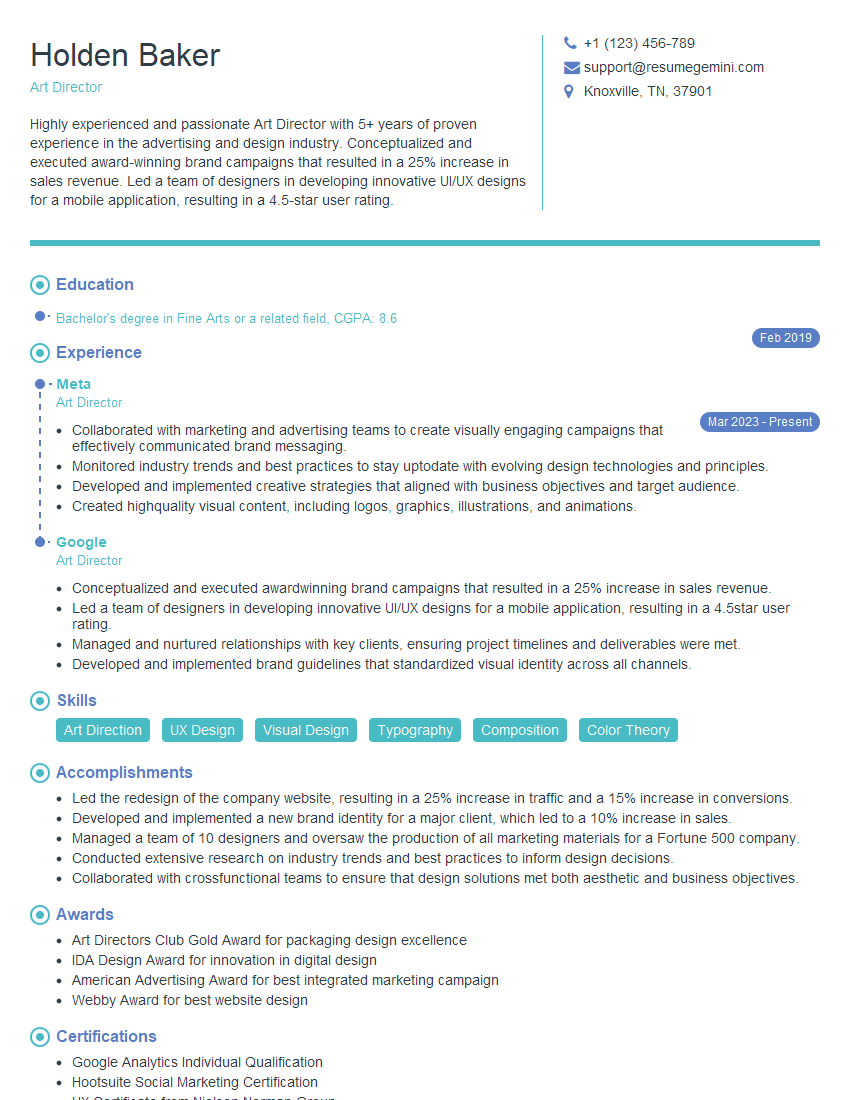
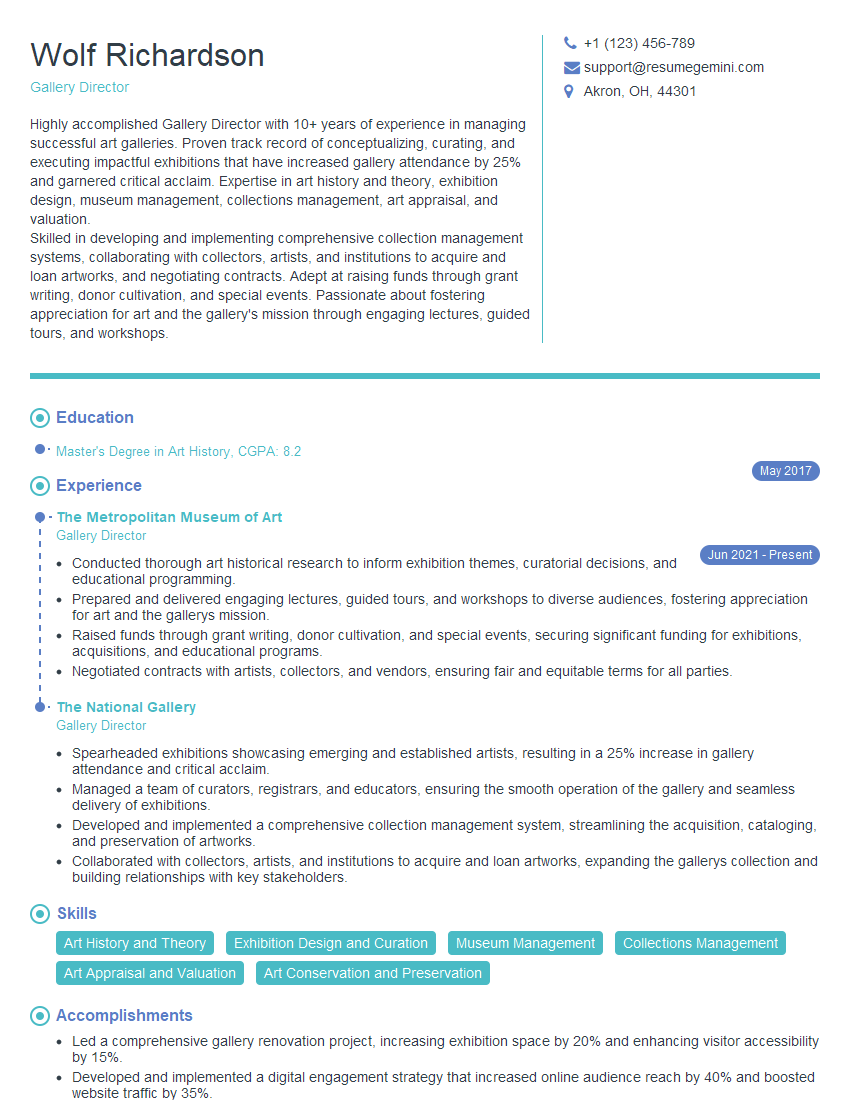
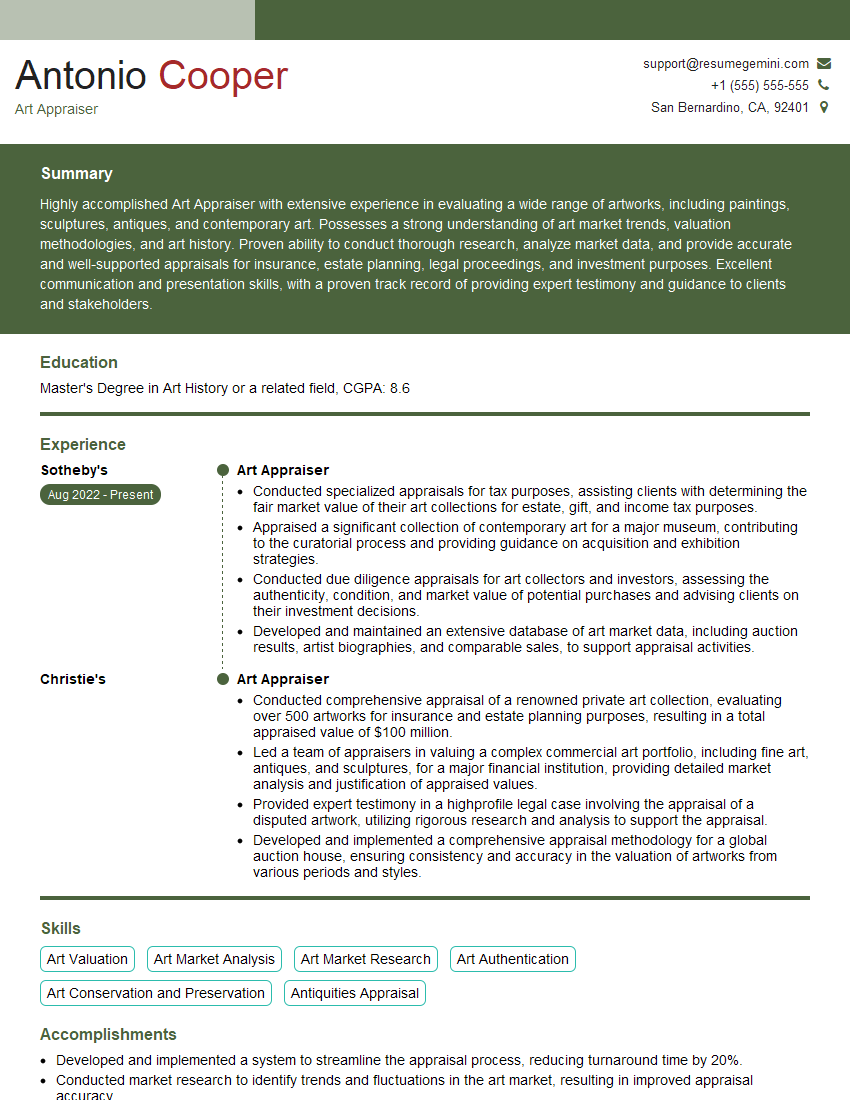
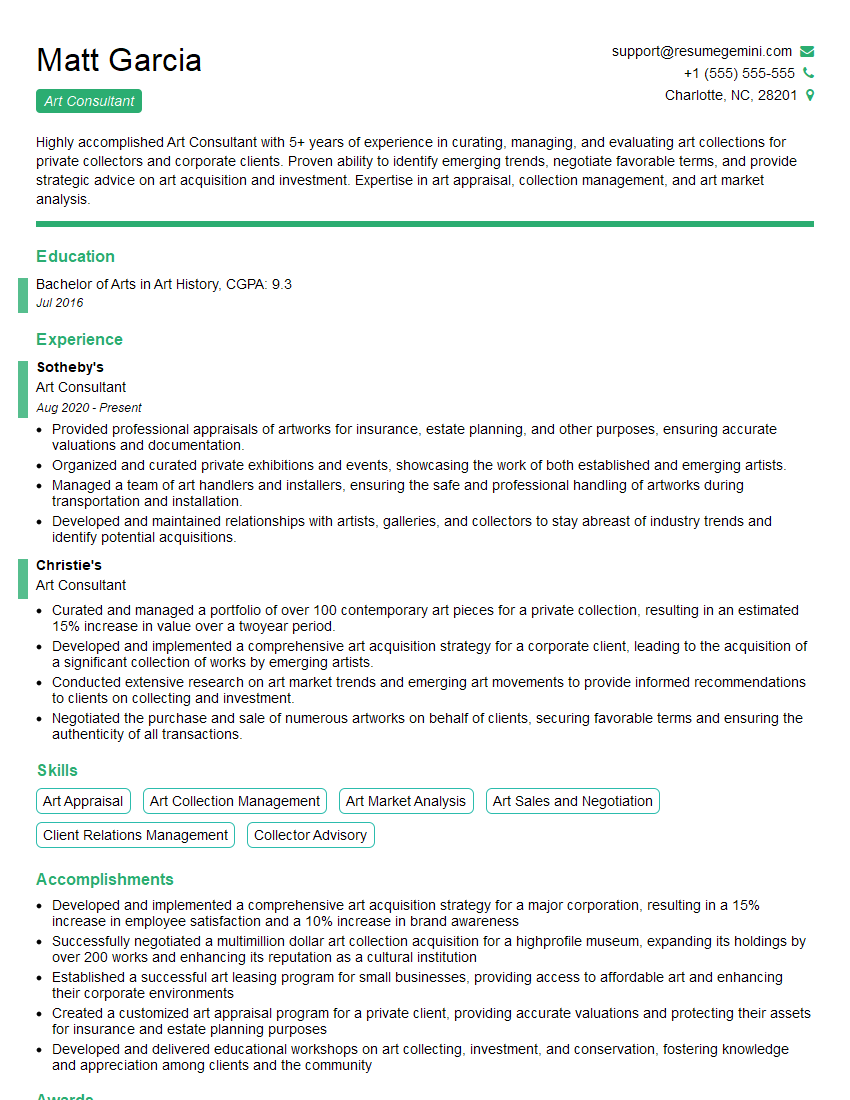
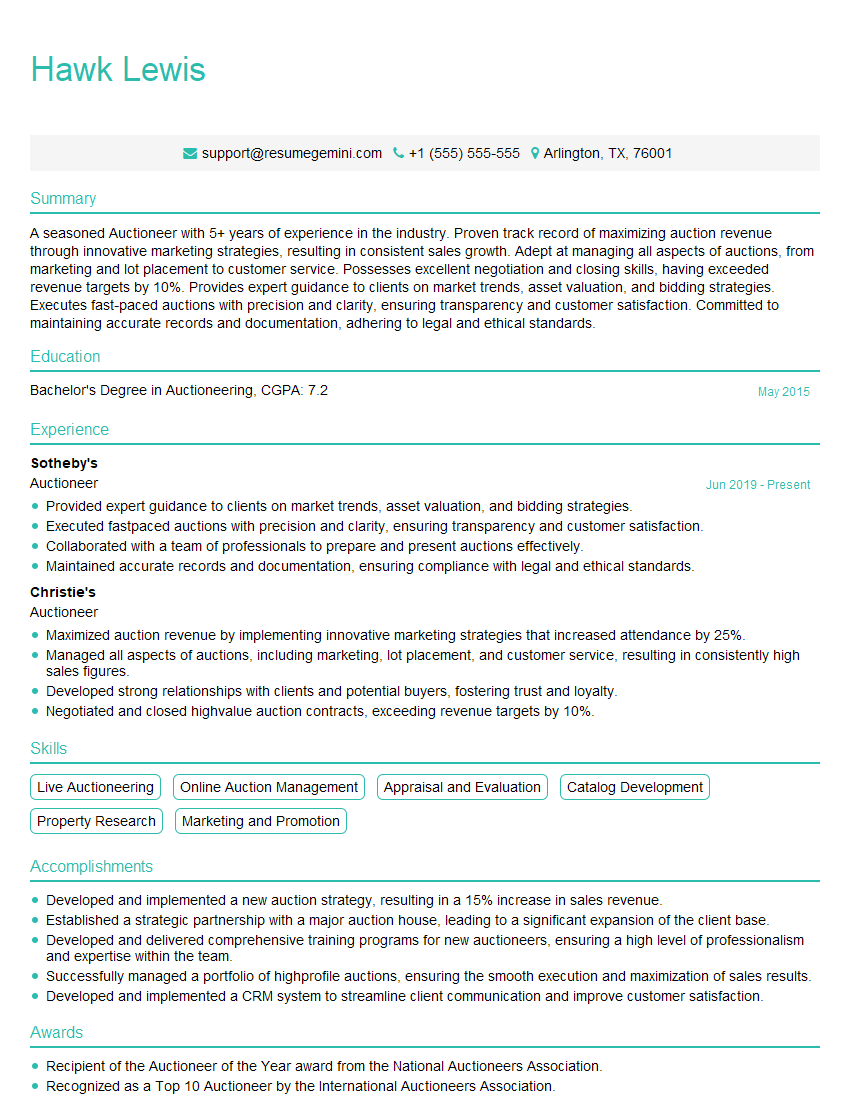
Mastering art sales opens doors to a dynamic and rewarding career, offering opportunities for professional growth and financial success. A strong resume is crucial for making a positive first impression and increasing your chances of landing your dream job. To ensure your resume is ATS-friendly and showcases your skills effectively, we strongly recommend using ResumeGemini. ResumeGemini provides a user-friendly platform to create professional and compelling resumes. Examples of resumes tailored to Art Sales are available to help guide you in creating yours.
Explore more articles
Users Rating of Our Blogs
Share Your Experience
We value your feedback! Please rate our content and share your thoughts (optional).
What Readers Say About Our Blog
Very informative content, great job.
good