The right preparation can turn an interview into an opportunity to showcase your expertise. This guide to Value Stream Management interview questions is your ultimate resource, providing key insights and tips to help you ace your responses and stand out as a top candidate.
Questions Asked in Value Stream Management Interview
Q 1. Define Value Stream Management (VSM).
Value Stream Management (VSM) is a holistic, data-driven approach to optimizing the flow of value from idea to customer. It goes beyond simply improving individual processes; it focuses on identifying and eliminating waste across the entire value stream, which encompasses all the steps involved in delivering a product or service. Think of it as a continuous improvement journey, not a one-time project. Instead of focusing on departmental silos, VSM encourages cross-functional collaboration to achieve end-to-end efficiency.
Imagine a relay race: each team member represents a department or stage in the process. VSM aims to improve the baton handoffs, ensuring a smooth and fast race to the finish line (customer delivery), rather than optimizing each runner’s individual performance in isolation.
Q 2. Explain the key principles of Value Stream Mapping.
Value Stream Mapping (VSM) is a core tool within VSM. Its key principles revolve around visualizing the current state of the value stream, identifying waste, and then designing a future state that dramatically improves efficiency and flow. The key principles include:
- Visualizing the Process: Create a detailed diagram of every step involved in delivering value, from raw materials to the customer. This provides a shared understanding of the entire process.
- Identifying Waste: Use tools like the seven types of waste (Muda) to pinpoint areas of inefficiency and non-value-added activities.
- Data Collection: Collect accurate data on lead times, cycle times, inventory levels, and other key metrics to quantify the current state.
- Collaboration: Engage people from across all parts of the value stream in the mapping process. This ensures buy-in and shared ownership of improvement initiatives.
- Future State Mapping: Develop a map of the improved, future state process, outlining how waste will be eliminated and efficiency improved.
- Implementation: Create a detailed plan for implementing the changes identified in the future state map, including timelines and responsibilities.
Q 3. Describe the different types of waste in a value stream.
Waste, or Muda in Japanese, is anything that doesn’t add value to the customer. There are several types, often categorized as:
- Transportation: Unnecessary movement of materials or information.
- Inventory: Excess materials, work-in-progress, or finished goods.
- Motion: Unnecessary movements by people or equipment.
- Waiting: Delays in the process, such as waiting for materials or approvals.
- Overproduction: Producing more than is needed or before it’s needed.
- Over-processing: Performing more work than necessary to meet customer requirements.
- Defects: Errors or imperfections that require rework or scrap.
For example, in a software development company, waiting for code reviews could represent ‘waiting’ waste, while building features not requested by the customer represents ‘overproduction’ waste.
Q 4. How do you identify bottlenecks in a value stream?
Bottlenecks are points in the value stream where work slows down or stops. They can be identified through several methods:
- Visual Inspection of Value Stream Map: Look for areas with high lead times, inventory buildup, or significant delays on the map.
- Data Analysis: Analyze process metrics such as cycle time, throughput, and utilization to identify areas with low performance.
- Gemba Walks: Observe the process on the shop floor (or equivalent for knowledge work) to directly identify points of congestion or delays.
- Little’s Law: Use this queuing theory formula (Average Inventory = Average Throughput * Average Lead Time) to quantitatively identify bottlenecks. A high inventory level with low throughput indicates a bottleneck.
For instance, a software development team might find a bottleneck in the testing phase if code constantly piles up waiting to be tested, leading to long lead times for feature releases.
Q 5. What metrics are used to measure value stream performance?
Several metrics are vital for measuring value stream performance, and they often depend on the specific industry and context. Some common metrics include:
- Lead Time: The total time it takes to deliver a product or service from start to finish.
- Cycle Time: The time it takes to complete a single unit of work.
- Throughput: The rate at which value is delivered.
- Inventory Levels: The amount of work-in-progress or finished goods.
- Defect Rate: The percentage of products or services that contain defects.
- Customer Satisfaction: Measures how satisfied customers are with the product or service.
- Cost per Unit: The cost of producing a single unit of the product or service.
Tracking these metrics over time provides insights into the effectiveness of improvement initiatives.
Q 6. Explain the role of Kaizen in Value Stream Management.
Kaizen, meaning ‘continuous improvement’ in Japanese, is a crucial element of VSM. It’s a philosophy that emphasizes making small, incremental improvements consistently rather than large, disruptive changes. This iterative approach makes improvements more manageable, sustainable, and less likely to encounter resistance. Kaizen events are often short workshops where teams focus on specific improvement opportunities identified during value stream mapping.
For example, a team might use a Kaizen event to streamline a particular process step, eliminating a small amount of waste. These small wins, consistently applied, lead to significant overall improvements over time.
Q 7. How do you prioritize improvement initiatives in a value stream?
Prioritizing improvement initiatives requires a strategic approach. Several frameworks can be used:
- Value vs. Effort Matrix: Plot initiatives based on their potential value and the effort required to implement them. Prioritize high-value, low-effort initiatives first.
- Impact Mapping: Work backward from desired outcomes to identify the most impactful initiatives that will contribute to achieving those goals.
- Data-Driven Approach: Prioritize initiatives based on data analysis. For example, focus on addressing bottlenecks with the highest impact on lead time reduction.
- Pareto Principle (80/20 Rule): Focus on the 20% of initiatives that will deliver 80% of the value.
A balanced approach, combining data analysis, strategic vision, and a consideration of team capacity, is essential for effective prioritization.
Q 8. Describe your experience with Lean methodologies.
My experience with Lean methodologies is extensive, spanning over eight years across various industries. I’ve been involved in numerous Lean transformations, from implementing Kaizen events to facilitating value stream mapping workshops. I’m proficient in applying Lean principles like waste reduction (Muda), continuous improvement (Kaizen), and respect for people.
For instance, in a previous role at a manufacturing company, we successfully reduced production lead times by 40% by implementing a pull system and eliminating bottlenecks identified through a value stream map. We focused on reducing seven types of waste: Transportation, Inventory, Motion, Waiting, Overproduction, Over-processing, and Defects (TIMWOOD). This involved cross-functional collaboration and continuous monitoring using Kanban boards and other visual management tools.
Another example involved a software development project where we implemented Lean software development principles such as Scrum and Kanban, resulting in improved sprint velocity and reduced cycle time. We used techniques like story mapping to visualize the workflow and identify areas for improvement. My Lean experience extends beyond the theoretical; I actively apply these principles to solve real-world problems and drive organizational efficiency.
Q 9. What is the difference between a value stream and a process?
While often used interchangeably, a value stream and a process are distinct concepts. A process is a series of steps taken to achieve a specific outcome. It focuses on a single department or function. A value stream, however, encompasses all the steps involved in delivering a product or service from beginning to end, regardless of departmental boundaries. It focuses on the entire customer journey.
Think of making a pizza: The process might be ‘preparing the dough,’ or ‘adding toppings’. The value stream, however, encompasses everything from ordering ingredients, preparing the dough, adding toppings, baking the pizza, serving it to the customer, and even receiving payment. The value stream highlights all activities, value-adding and non-value-adding, that contribute to the final customer experience. Understanding this distinction is crucial for effective VSM implementation as it necessitates a holistic view beyond individual departmental silos.
Q 10. How do you engage stakeholders in Value Stream improvement projects?
Engaging stakeholders effectively is paramount to the success of any VSM improvement project. My approach is multi-faceted and starts with building consensus and establishing a shared vision. I initiate this by:
- Facilitating workshops: Interactive workshops bring together representatives from across the value stream, fostering collaboration and shared understanding.
- Data-driven communication: Presenting objective data, such as cycle times and waste percentages, helps demonstrate the need for change and the potential for improvement. Visual aids such as value stream maps are crucial here.
- Building trust and relationships: Open communication and active listening are crucial. I aim to understand their concerns, acknowledge their contributions, and actively seek their input throughout the process.
- Early and frequent communication: Regular updates, progress reports, and feedback sessions keep everyone informed and involved, preventing misunderstandings and fostering a sense of ownership.
- Celebrating successes: Acknowledging and celebrating achievements – no matter how small – reinforces positive behaviors and motivates continued engagement.
Ultimately, it’s about building a collaborative environment where everyone feels heard, valued, and invested in the project’s success.
Q 11. Explain your experience with data analysis in Value Stream Management.
Data analysis is the backbone of effective VSM. I leverage data to identify bottlenecks, measure process performance, and track improvement initiatives. My experience includes using various tools and techniques:
- Process mining: Analyzing event logs to understand the actual flow of work and identify deviations from the expected process.
- Statistical process control (SPC): Monitoring key process variables to detect variations and potential problems early on.
- Business intelligence (BI) tools: Utilizing dashboards and reports to track key performance indicators (KPIs) such as lead time, cycle time, and defect rates.
- Spreadsheet software (Excel, Google Sheets): For data manipulation, calculation of key metrics, and creation of charts and graphs to visualize data insights.
For example, in one project, we used process mining to reveal unexpected delays in a specific stage of the process. This led to targeted improvements that significantly reduced cycle time. Data-driven insights are crucial for informed decision-making and ensuring the effectiveness of VSM initiatives.
Q 12. How do you handle resistance to change during VSM implementation?
Resistance to change is inevitable during VSM implementation. My approach focuses on addressing concerns proactively and building buy-in through:
- Transparency and open communication: Clearly communicating the goals, benefits, and potential challenges of VSM helps address concerns and misconceptions.
- Active listening and empathy: Understanding and acknowledging the concerns of resistant individuals is crucial for building trust and overcoming objections.
- Pilot projects and iterative implementation: Starting with small, manageable projects allows for testing, learning, and demonstrating success before broader implementation.
- Training and development: Providing training on new processes and tools empowers employees and increases their comfort level with the changes.
- Involving resistant individuals in the process: Engaging resistant individuals in the design and implementation phases fosters ownership and reduces resistance.
- Celebrate small wins and early success: Demonstrating tangible improvements builds momentum and encourages further buy-in.
Ultimately, successful change management relies on addressing underlying concerns, demonstrating value, and empowering individuals through active participation.
Q 13. Describe your experience with different VSM tools and software.
I have experience with a variety of VSM tools and software, both dedicated VSM platforms and general-purpose software. This includes:
- Value stream mapping software: Software specifically designed for creating and analyzing value stream maps, facilitating collaboration, and simulating different scenarios (examples would include specialized commercial software).
- Process mining tools: Software that analyzes event logs to visualize and optimize processes (examples would include several commercial process mining platforms).
- Project management software (Jira, Asana): For managing tasks, tracking progress, and facilitating collaboration throughout the VSM project lifecycle.
- Spreadsheet software (Excel, Google Sheets): For data analysis, creating charts, and visualizing key performance indicators.
- Business intelligence (BI) tools: Dashboards and reporting tools for tracking key metrics and measuring progress.
My selection of tools depends on the specific needs of the project and the resources available. I’m adept at leveraging the strengths of different tools to achieve optimal results.
Q 14. How do you measure the ROI of VSM initiatives?
Measuring the ROI of VSM initiatives requires a multifaceted approach focusing on both quantitative and qualitative metrics. Quantifiable metrics include:
- Reduced lead time: The time it takes to deliver a product or service from start to finish.
- Improved cycle time: The time it takes to complete a single step or task in the process.
- Reduced inventory: Lowering the amount of work in progress (WIP) and finished goods.
- Decreased defects: Fewer errors and rework, leading to improved quality and reduced costs.
- Increased throughput: Higher volume of products or services delivered in a given time period.
- Cost reduction: Savings from reduced waste, improved efficiency, and optimized resource utilization.
Qualitative metrics focus on broader improvements such as improved employee morale, enhanced customer satisfaction, and increased organizational agility. It is crucial to define clear KPIs before the implementation to track progress and demonstrate the overall value of the VSM initiative. A well-defined ROI calculation, combined with qualitative benefits, provides a strong business case for continued VSM implementation and optimization.
Q 15. How would you approach improving a complex, multi-departmental value stream?
Improving a complex, multi-departmental value stream requires a systematic approach. Think of it like optimizing a complex machine – you can’t just tweak one part; you need to understand how all the parts interact.
- Mapping the Value Stream: The first step is to create a comprehensive value stream map (VSM) that visually represents the entire process, from beginning to end, across all departments involved. This involves identifying all steps, delays, handoffs, and bottlenecks.
- Identifying Waste: Using the VSM, we analyze the process for various types of waste (Muda), such as:
- Transportation: Unnecessary movement of materials or information.
- Inventory: Excess work-in-progress (WIP).
- Motion: Unnecessary movement of people.
- Waiting: Delays between steps.
- Overproduction: Producing more than needed.
- Over-processing: Doing more work than necessary.
- Defects: Errors requiring rework.
- Untapped Talent: Not utilizing employee skills effectively.
- Prioritizing Improvement Areas: Based on the identified waste, we prioritize areas for improvement focusing on those with the biggest impact on lead time, cost, or quality. This often involves using data analysis to understand the magnitude of each waste type.
- Implementing Improvements: This could involve anything from streamlining processes, automating tasks, improving communication, or implementing lean principles like Kaizen events (small, focused improvement projects) or Kanban systems (visual workflow management). Crucially, we need to involve representatives from all affected departments.
- Monitoring and Measuring Results: Post-implementation, we continuously monitor key metrics (lead time, cycle time, defect rate, etc.) to measure the impact of improvements. This data feeds into further iterations of improvement.
For example, in a software development value stream, we might find significant waiting time between development and testing. Addressing this could involve implementing automated testing or better coordination between teams.
Career Expert Tips:
- Ace those interviews! Prepare effectively by reviewing the Top 50 Most Common Interview Questions on ResumeGemini.
- Navigate your job search with confidence! Explore a wide range of Career Tips on ResumeGemini. Learn about common challenges and recommendations to overcome them.
- Craft the perfect resume! Master the Art of Resume Writing with ResumeGemini’s guide. Showcase your unique qualifications and achievements effectively.
- Don’t miss out on holiday savings! Build your dream resume with ResumeGemini’s ATS optimized templates.
Q 16. Describe a time you identified and eliminated waste in a process.
In a previous project involving order fulfillment, we identified a significant delay in the shipping process. The warehouse team was spending considerable time manually searching for orders amidst a disorganized inventory system. This was a classic example of waste due to motion and searching (and implicitly, waiting).
To eliminate this waste, we implemented a new warehouse management system (WMS) with barcode scanning. This automated order location and picking, significantly reducing the time spent searching for items. We also reorganized the warehouse layout to optimize picking routes. The result was a 40% reduction in shipping time and a notable improvement in employee satisfaction.
Q 17. What are the challenges of implementing VSM in a large organization?
Implementing VSM in a large organization presents several challenges:
- Resistance to Change: Large organizations often have established processes and ingrained ways of working. Change can be met with resistance from employees who are comfortable with the status quo. This requires careful change management strategies.
- Siloed Departments: The very nature of large organizations can lead to departmental silos, making it difficult to achieve the cross-functional collaboration required for effective VSM implementation.
- Data Collection and Analysis: Gathering accurate and reliable data from various departments can be challenging. Inconsistencies in data formats and systems can hinder analysis.
- Lack of Management Support: VSM initiatives require strong leadership support and commitment from senior management to overcome resistance and provide necessary resources.
- Scaling VSM: Applying VSM principles across a large, complex organization requires a phased approach and careful scaling to avoid overwhelming resources.
- Maintaining Momentum: Sustaining the initial gains and ensuring continued improvement requires ongoing effort and dedication.
Overcoming these challenges often involves a combination of strong leadership, effective communication, and the use of appropriate tools and techniques.
Q 18. How do you ensure sustainability of improvements after a VSM project?
Sustainability of VSM improvements is crucial. It’s not enough to implement changes; you need to embed them into the organizational culture. This is achieved through:
- Embedding VSM into Daily Work: Make VSM part of the regular operational rhythm. Regularly review value stream maps, track key metrics, and conduct kaizen events.
- Training and Development: Provide ongoing training to employees on VSM principles and tools, empowering them to identify and address waste continuously.
- Building Ownership: Engage employees in the improvement process, giving them ownership of the changes implemented. This fosters a culture of continuous improvement.
- Developing VSM Champions: Identify and nurture individuals within each department who are passionate about VSM and can act as champions, promoting the principles and driving further improvements.
- Linking VSM to Performance Metrics: Connect VSM improvements to individual and team performance metrics, ensuring continued focus on optimization.
- Regular Reviews and Adjustments: Regularly review the value stream maps and adjust them as needed to reflect changes in processes, customer needs, or technologies.
For instance, incorporating VSM principles into performance reviews and rewarding employees for their contributions to continuous improvement strongly incentivizes sustained improvements.
Q 19. Explain the relationship between VSM and Agile methodologies.
VSM and Agile methodologies are complementary. VSM provides a holistic view of the entire value stream, while Agile focuses on iterative development within individual teams. Think of VSM as the big picture and Agile as the zoomed-in view.
VSM helps identify bottlenecks and areas for improvement across the entire value stream, including aspects outside the scope of individual Agile teams. Agile, with its focus on iterative development, rapid feedback, and continuous improvement, provides a framework for implementing improvements within individual teams and accelerating the delivery of value. They work best together.
For example, a VSM might reveal a significant bottleneck in the testing phase. Agile practices, like test-driven development and continuous integration, can be implemented to address this bottleneck within the development teams, thereby improving the overall value stream.
Q 20. How do you incorporate customer feedback into VSM initiatives?
Incorporating customer feedback is vital for ensuring that your VSM initiatives focus on delivering what truly matters to your customers. This can be done in several ways:
- Customer Surveys and Feedback Forms: Regularly collect customer feedback through surveys, feedback forms, and other channels.
- Customer Interviews: Conducting in-depth interviews with customers provides rich insights into their needs and pain points.
- Focus Groups: Organize focus groups to gather feedback from a representative sample of customers.
- Social Media Monitoring: Monitor social media channels to understand customer sentiment and identify areas for improvement.
- Net Promoter Score (NPS): Track NPS to measure customer loyalty and identify potential issues.
This feedback should be used to inform the value stream mapping process, identifying areas where customer needs are not being met and prioritizing improvements that enhance the customer experience.
For example, customer feedback might reveal that delivery speed is a critical factor for customer satisfaction. This would highlight the need to focus VSM efforts on reducing lead times in the fulfillment process.
Q 21. What is your experience with different VSM notation techniques?
I have experience with various VSM notation techniques, including:
- Traditional VSM: This uses a standard set of symbols and conventions to represent different elements of the value stream, including processes, inventory, transportation, etc. It is highly visual and effective for understanding the flow of materials and information.
- Lean Value Stream Mapping: This is an extension of traditional VSM, incorporating principles of Lean manufacturing, focusing on identifying and eliminating waste.
- Service Value Stream Mapping: This is adapted for service-oriented organizations, focusing on the flow of information and services rather than physical materials.
- Process Value Stream Mapping: This focuses on documenting the end-to-end process of a specific task or product, including all inputs, steps, and outputs.
The choice of notation depends on the specific context and the goals of the VSM initiative. I am proficient in using these notations to create clear, concise, and actionable maps that effectively communicate the state of the value stream and guide improvement efforts. [Example: A symbol might represent a process step with its cycle time indicated numerically.]
Q 22. Describe your experience with Value Stream Health Check processes.
A Value Stream Health Check is a diagnostic process used to assess the efficiency and effectiveness of a value stream. It involves a thorough examination of all activities involved in delivering a product or service from beginning to end, identifying bottlenecks, waste, and areas for improvement. Think of it as a comprehensive medical checkup for your business processes.
My experience involves leading multiple health checks across various organizations. This includes facilitating workshops, conducting interviews with stakeholders across all levels, analyzing data from various sources (e.g., project management tools, defect tracking systems, customer feedback), and ultimately creating a visual representation of the value stream, highlighting areas of strength and weakness. We use tools like process mapping (swim lane diagrams, value stream maps) and key performance indicators (KPIs) such as cycle time, lead time, and defect rate to quantify the health of the value stream. For example, in one project, we uncovered a significant delay caused by a handoff between two departments; a simple process adjustment reduced the cycle time by 40%.
The output of a health check isn’t just a report; it’s a roadmap for improvement. We prioritize improvement opportunities based on their potential impact and feasibility, translating our findings into actionable recommendations and improvement initiatives.
Q 23. How do you use VSM to identify opportunities for automation?
Value Stream Mapping (VSM) is a powerful tool for identifying automation opportunities. By visually mapping the entire value stream, from order placement to delivery, we can clearly see where manual, repetitive, or error-prone tasks are taking place. These are prime candidates for automation.
My approach involves three key steps:
- Identify Bottlenecks and Waste: The VSM highlights areas with long cycle times, high defect rates, excessive inventory, or significant waiting times. These are often areas ripe for automation. For instance, a long process step involving manual data entry can be automated using Robotic Process Automation (RPA).
- Analyze Tasks for Automatability: We assess the suitability of tasks for automation based on factors such as repetition, volume, and data structure. Tasks that involve unstructured data or require complex human judgment are typically not good candidates for early automation.
- Prioritize Automation Opportunities: Based on the potential return on investment (ROI), feasibility, and alignment with strategic goals, we prioritize automation initiatives. We often utilize a weighted scoring system to rank potential automation projects.
For example, in a manufacturing environment, we might identify that a significant portion of time is spent manually inspecting products. By implementing automated vision systems, we can significantly reduce inspection time, improve accuracy, and free up human workers for more value-added tasks.
Q 24. How do you communicate the value of VSM to non-technical stakeholders?
Communicating the value of VSM to non-technical stakeholders requires translating technical jargon into business language. Instead of talking about cycle times and lead times, we focus on the impact on the bottom line – reduced costs, improved efficiency, faster delivery, and increased customer satisfaction.
I typically use a combination of techniques:
- Focus on Business Outcomes: Instead of dwelling on the methodology, I highlight the tangible benefits. For example, “By streamlining this process, we can reduce delivery time by 20%, leading to increased customer satisfaction and potentially increased revenue.”
- Use Visual Aids: Value stream maps are incredibly effective tools for visualizing the flow of value and highlighting areas for improvement. Even those without a technical background can easily understand the visual representation of the process.
- Tell Stories: Sharing real-world examples and success stories from similar projects helps build credibility and demonstrates the impact of VSM.
- Quantify the Benefits: Use data and metrics to support claims. For example, “This initiative is projected to save the company $X per year.”
The key is to demonstrate how VSM directly contributes to achieving the organization’s strategic goals and business objectives, making it relevant and valuable to everyone involved.
Q 25. What are some common pitfalls to avoid during VSM implementation?
Several pitfalls can hinder a successful VSM implementation. Avoiding these is crucial for achieving the desired outcomes.
- Lack of Executive Sponsorship: VSM initiatives require strong leadership support and commitment to drive change and overcome organizational resistance.
- Insufficient Stakeholder Engagement: Involving all relevant stakeholders from the beginning is crucial for gathering accurate data and ensuring buy-in for improvements.
- Ignoring Cultural Aspects: Organizational culture significantly impacts the success of VSM. Resistance to change, siloed thinking, and lack of collaboration can hinder progress.
- Overlooking the ‘Why’: Focusing solely on the ‘what’ (process mapping) without addressing the ‘why’ (strategic goals and customer needs) can lead to ineffective improvements.
- Lack of Follow-Through: Implementing improvements identified through VSM requires dedicated resources and consistent follow-up to ensure that changes are sustained and deliver the expected benefits.
- Focusing only on efficiency and not effectiveness: While efficiency is important, ensuring the process delivers the correct value is key. Optimizing an inefficient process that delivers the wrong thing is still a bad process.
Addressing these potential issues proactively significantly improves the likelihood of a successful VSM implementation.
Q 26. Describe your experience using VSM in a specific industry.
I have extensive experience applying VSM in the healthcare industry, specifically within a large hospital system. We focused on improving the patient discharge process. The existing process involved multiple handoffs between different departments (nursing, pharmacy, billing), leading to significant delays and errors.
Through a comprehensive value stream map, we identified bottlenecks, such as delays in obtaining prescriptions and processing insurance claims. We implemented several improvements, including:
- Electronic Prescription System: Automated the prescription process, eliminating manual paperwork and reducing errors.
- Streamlined Insurance Claim Processing: Integrated billing systems to automate claim submissions and accelerate payments.
- Improved Communication Channels: Implemented a centralized communication system to improve coordination between departments.
These improvements led to a significant reduction in patient discharge time, improved patient satisfaction, and reduced administrative costs. This demonstrated how VSM can transform complex processes in a highly regulated industry while significantly impacting patient care and operational efficiency.
Q 27. How do you adapt your VSM approach to different organizational cultures?
Adapting VSM to different organizational cultures requires a nuanced approach. A ‘one-size-fits-all’ strategy rarely works. Understanding the existing culture is paramount before initiating any VSM activities.
My approach involves:
- Cultural Assessment: Begin by understanding the organizational culture. This includes assessing the level of collaboration, communication styles, power dynamics, and the degree of resistance to change.
- Tailored Communication: Adapt communication strategies to resonate with the specific culture. For example, in a hierarchical culture, it is important to involve leadership at the beginning and show a clear link to strategic goals. In a flat organizational structure, collaborative workshops may be more effective.
- Incremental Implementation: Starting with a small, manageable project allows for early wins and demonstrates the value of VSM, building momentum and gaining buy-in from employees. Then, we scale up gradually.
- Empowerment and Engagement: Involving employees in the process ensures ownership and minimizes resistance. It’s essential to empower employees and acknowledge their contributions to foster a sense of collaboration and ownership.
- Celebrate Successes: Recognizing and celebrating successes helps reinforce positive behaviors and builds enthusiasm for continued improvement.
Ultimately, adapting to different cultures requires flexibility, empathy, and a willingness to adjust the approach based on the specific organizational context.
Key Topics to Learn for Value Stream Management Interview
- Value Stream Mapping: Understand the principles of value stream mapping, including identifying value-added and non-value-added activities. Practice creating maps for different scenarios and analyzing bottlenecks.
- Lean Principles & Agile Methodologies: Demonstrate a strong grasp of how lean thinking and agile frameworks (like Scrum, Kanban) intersect with and support Value Stream Management. Be ready to discuss practical applications in project management.
- Process Improvement Techniques: Familiarize yourself with various process improvement methodologies such as Kaizen, Six Sigma, and 5S. Be prepared to explain how these techniques can be applied to optimize value streams.
- Metrics and Measurement: Understand key performance indicators (KPIs) used in Value Stream Management, such as lead time, cycle time, and throughput. Know how to collect, analyze, and interpret data to identify areas for improvement.
- Technology and Tools: Gain familiarity with software and tools used for Value Stream Management, including process mining tools and project management platforms. Discuss their practical applications and benefits.
- Change Management & Organizational Culture: Understand the importance of effective communication and stakeholder management when implementing Value Stream Management initiatives. Discuss how to overcome resistance to change and foster a culture of continuous improvement.
- Waste Elimination (Muda): Be prepared to discuss the seven types of waste (muda) and how to identify and eliminate them within a value stream. Provide real-world examples of waste reduction strategies.
Next Steps
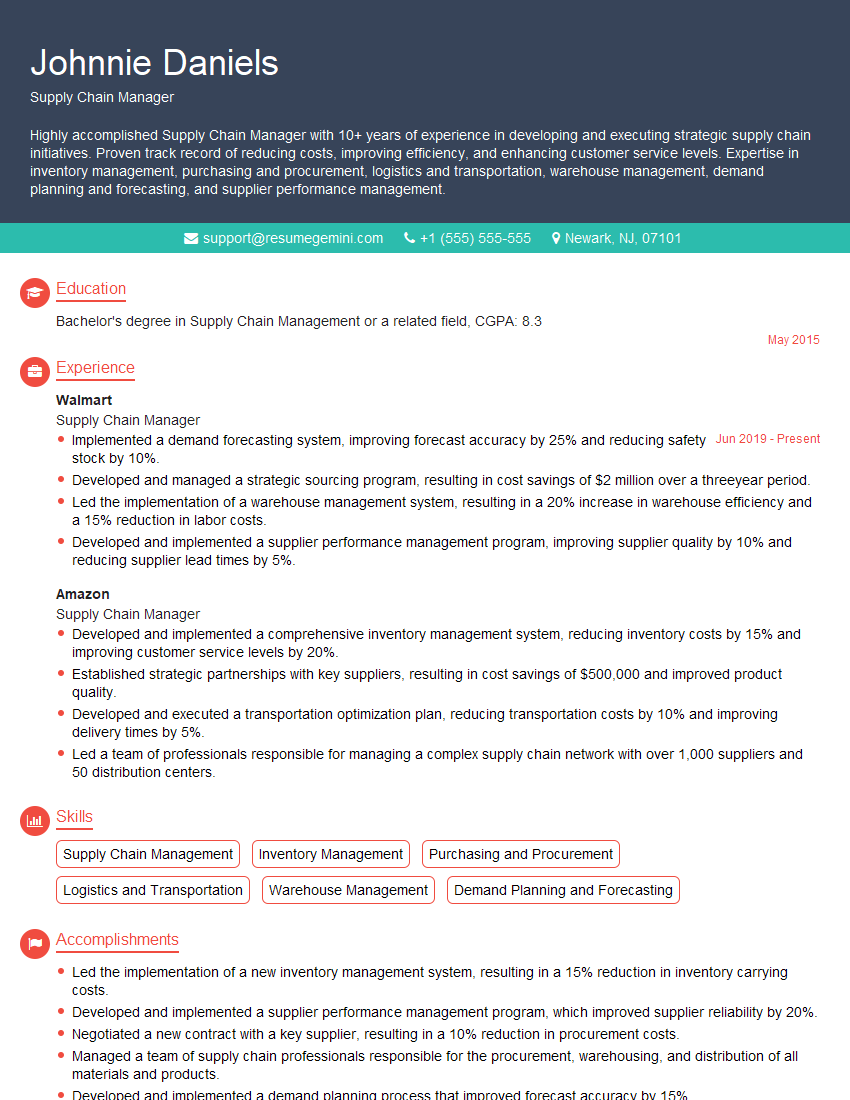
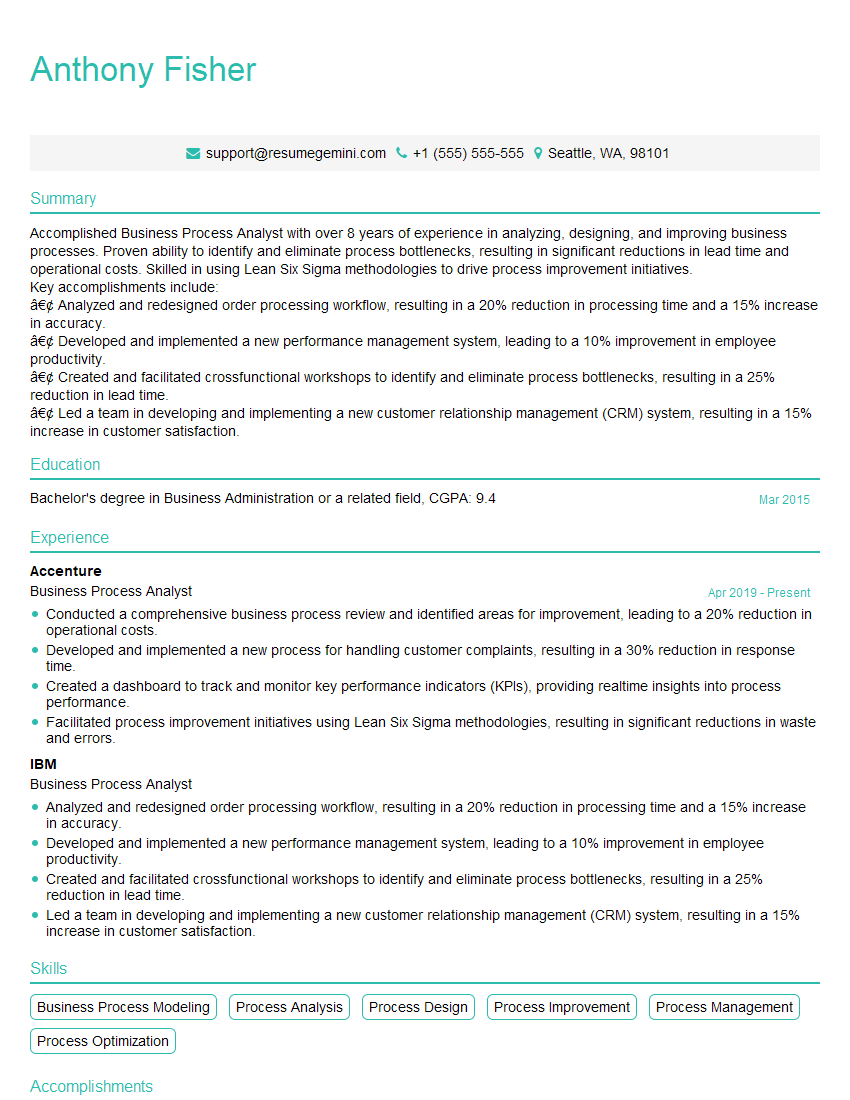
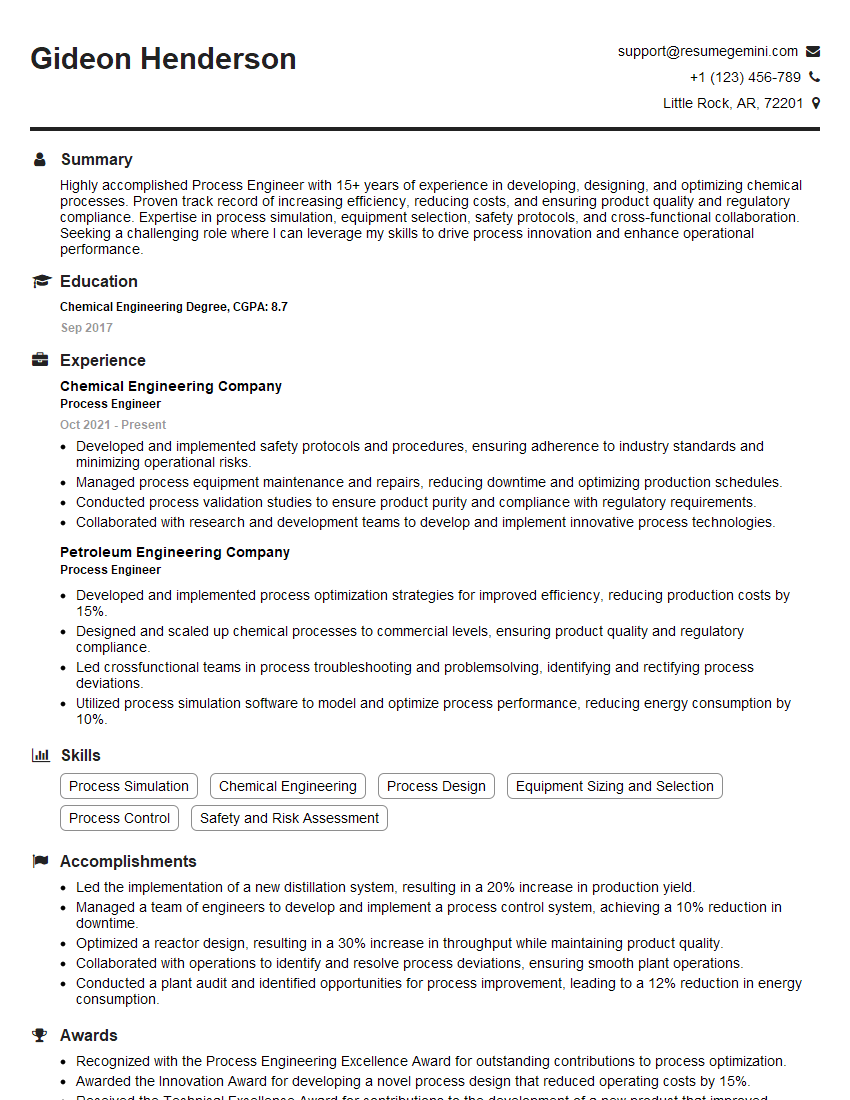
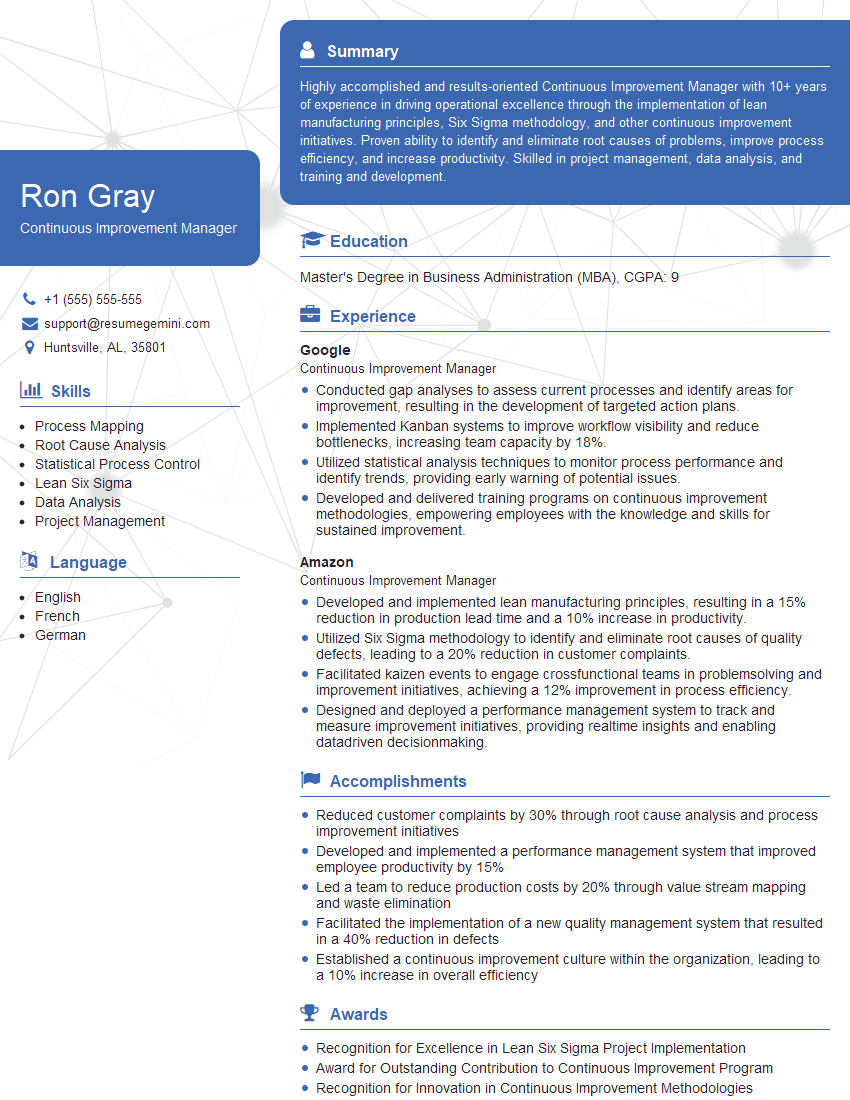
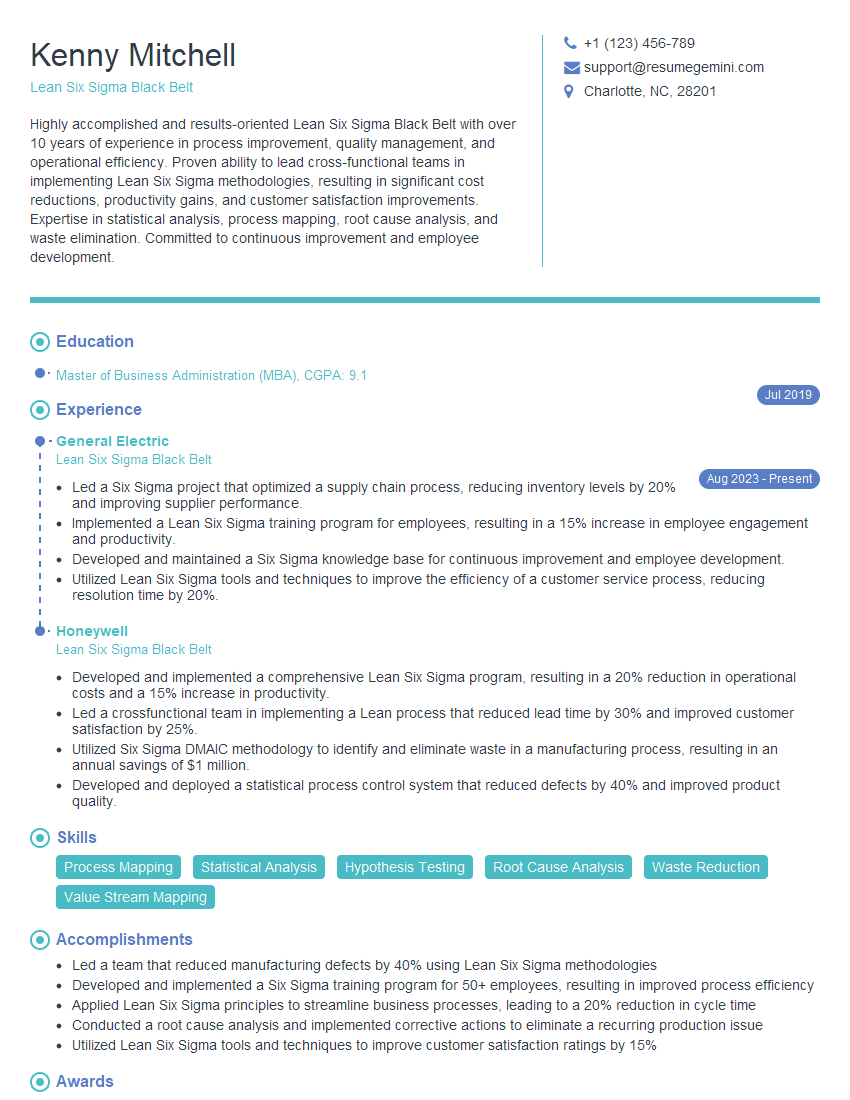
Mastering Value Stream Management is crucial for career advancement in today’s dynamic business environment. It demonstrates a deep understanding of operational efficiency and continuous improvement, skills highly sought after by organizations across various industries. To maximize your job prospects, creating a strong, ATS-friendly resume is essential. ResumeGemini can help you craft a compelling resume that highlights your Value Stream Management expertise and increases your chances of landing your dream job. Examples of resumes tailored to Value Stream Management are available to guide you.

Explore more articles
Users Rating of Our Blogs
Share Your Experience
We value your feedback! Please rate our content and share your thoughts (optional).
What Readers Say About Our Blog
Very informative content, great job.
good