Feeling uncertain about what to expect in your upcoming interview? We’ve got you covered! This blog highlights the most important Skillful in constructing and painting stage props interview questions and provides actionable advice to help you stand out as the ideal candidate. Let’s pave the way for your success.
Questions Asked in Skillful in constructing and painting stage props Interview
Q 1. Describe your experience with various wood types used in prop construction.
My experience encompasses a wide range of wood types, each chosen strategically based on the prop’s requirements. For instance, I often use Pine for its affordability and ease of carving, ideal for rustic props or large-scale pieces where cost-effectiveness is crucial. A recent project involved creating a large, weathered wagon wheel – pine was perfect for this because of its workable nature and ability to realistically mimic aged wood.
Oak, on the other hand, is a premium choice known for its strength and durability. I select oak for props that need to withstand significant wear and tear, like sturdy chests or thrones. For a recent historical drama, I built a king’s throne entirely from oak to ensure it could support the actor’s weight and repeated use over the course of several performances.
Balsa wood is my go-to for lightweight, delicate props. It’s incredibly easy to sculpt and shape, perfect for intricate architectural details or fragile-looking elements. I used balsa wood extensively to create a series of ornate, crumbling columns for a fantasy play, achieving a convincing aged look without the weight and bulk of heavier woods.
Finally, Plywood offers exceptional stability and is excellent for constructing flat surfaces or bases for props. Its layered construction makes it highly resistant to warping, ensuring a stable foundation for any elaborate piece.
Q 2. What are the different types of paints you are proficient with and their applications?
My paint proficiency spans several types, each suited to different applications. Acrylics are my workhorse – they’re versatile, water-based, clean up easily, and offer a wide range of colors and finishes (matte, satin, gloss). I use them for most of my base coats and detailed painting. For example, I used acrylics to meticulously paint intricate floral designs on a series of hand-carved wooden boxes.
Oil paints provide a richer depth of color and allow for smoother blending, perfect for achieving realistic textures. I’ll opt for oils when I’m creating a highly realistic effect, such as weathering a wooden sword to make it look aged and battle-worn. The longer drying time allows for more controlled blending and layering.
Spray paints offer excellent coverage for large surfaces and can create uniform finishes. They’re efficient when painting backdrops or large prop elements but require proper ventilation and safety precautions. I recently used spray paint to quickly create a consistent, distressed metal look on a large, sheet-metal prop.
Finally, I also use specialized paints like metallic paints for achieving specific finishes, and gesso as a primer to prepare surfaces before painting.
Q 3. Explain your process for creating a detailed prop from a design sketch.
My process for creating a detailed prop begins with a thorough understanding of the design sketch. First, I analyze the sketch to identify the materials needed, the construction techniques required, and any potential challenges. I then create a detailed breakdown of the construction process, including steps, measurements, and material lists. This ensures a clear, organized approach.
Next, I fabricate the prop’s framework, typically using wood or other structural materials. This forms the foundation of the prop, providing a solid base for attaching detailed elements. Once the framework is complete, I begin adding the details, carefully following the sketch. This might involve carving, sculpting, or assembling smaller components.
After the structural aspects are finished, I begin the finishing process. This involves sanding, priming, and painting. I often use multiple layers of paint to create depth and realism. The final steps include applying any necessary finishes, such as varnish or sealant, to protect the prop and enhance its longevity.
For example, when constructing a highly detailed medieval helmet from the sketch, I would first construct the helmet’s basic shape from plywood, then sculpt and add intricate details using a combination of clay and epoxy putty, before finally priming, painting, and sealing the finished piece.
Q 4. How do you manage time constraints and deadlines in a fast-paced production environment?
Managing time effectively in fast-paced productions requires meticulous planning and prioritization. I start by breaking down large projects into smaller, manageable tasks. This allows me to track progress efficiently and identify potential bottlenecks early on. I create detailed schedules outlining each step and its estimated time, ensuring realistic deadlines.
Communication is key. I maintain constant communication with the production team to ensure I’m aware of any changes or adjustments needed. This allows for flexibility and prevents delays. When faced with unforeseen challenges, I prioritize tasks based on urgency and impact, focusing on the most crucial aspects to meet the overall deadline. If absolutely necessary, I leverage my network of skilled collaborators to delegate parts of a project to expedite the process.
For instance, during a recent musical, when the lead’s prop sword broke unexpectedly, I immediately prioritized its repair, utilizing rapid-drying materials and working after hours to ensure the performance could continue as planned.
Q 5. What safety precautions do you follow when using power tools and handling paints?
Safety is paramount in my workflow. When using power tools, I always wear appropriate safety gear, including eye protection, hearing protection, and a dust mask. I ensure all tools are properly maintained and operated according to manufacturer instructions. I regularly inspect my tools for any signs of damage and replace them as needed.
When working with paints, I ensure adequate ventilation. I wear a respirator when working with potentially harmful materials and avoid direct skin contact. I use designated paint containers and properly dispose of paint waste according to regulations. I work in a well-lit and organized workspace, reducing the risk of accidents. I also keep a first-aid kit readily available.
Thorough clean-up is also part of my safety routine. This includes cleaning the workspace of any debris or spills, properly disposing of hazardous materials, and cleaning and storing tools in their designated places.
Q 6. Describe your experience with different sculpting materials (e.g., clay, foam, resin).
My sculpting experience extends to a range of materials, each with its unique properties. Clay is versatile for modeling and shaping, ideal for creating rough drafts or complex organic forms. Its malleability allows for easy adjustments, but it requires careful drying and firing or sealing to maintain its shape. I often use clay for creating preliminary models of intricate props before finalizing them in a more durable material.
Foam (such as polyurethane foam) is lightweight and easily carved, making it perfect for creating larger-than-life props or elements that need to be lightweight. I’ve used foam extensively to create oversized, fantastical creatures or architectural elements for theatrical productions.
Resin offers a hard, durable finish that’s ideal for creating smooth, detailed surfaces. It can be cast in molds to create exact replicas or intricate elements. I’ve used resin casting to produce detailed armor pieces, weapon components, and even jewelry for various projects.
Q 7. How do you ensure the durability and longevity of your stage props?
Ensuring the longevity and durability of my stage props involves careful material selection and construction techniques. I use high-quality materials appropriate for the intended use of the prop. For example, choosing durable hardwoods for props subjected to heavy use or selecting weather-resistant materials for outdoor scenes.
Robust construction is vital. I reinforce joints and structures using appropriate methods, like strong adhesives, screws, dowels, or even metal supports. This prevents breakage and ensures the prop remains intact during repeated use and handling.
Finally, appropriate finishing techniques play a crucial role. I use protective sealants and finishes, such as varnish or polyurethane, to protect the prop from wear and tear. This not only enhances its appearance but also extends its lifespan, minimizing the need for repairs or replacements.
Q 8. How do you match paint colors accurately to a provided sample?
Matching paint colors accurately is crucial for maintaining visual consistency in stage productions. My process involves several steps. First, I use a color-matching system, often a spectrophotometer, to obtain the precise color values (L*a*b* or RGB) of the sample. This provides objective numerical data, removing guesswork. Then, I input these values into my paint mixing software, which calculates the required proportions of base colors and tints needed to replicate the sample. I always start with a small test batch, applying it to a material similar to the prop to assess the match under different lighting conditions. Minor adjustments are often needed to account for differences in the substrate. Finally, I meticulously document the exact color formula, including the brand and batch number of each pigment used, for future reference or replication if needed.
For example, recently I had to match a specific shade of distressed green for a set of vintage suitcases. The spectrophotometer reading gave me a precise L*a*b* value, and the software guided me in mixing the exact proportions of phthalo green, yellow ochre, and titanium white. Even with this, I applied a small test batch to scrap wood and made minor adjustments to the amount of yellow ochre to perfectly replicate the sample’s subtle warmth.
Q 9. Explain your process for repairing damaged props.
Repairing damaged props requires a multifaceted approach, prioritizing both the structural integrity and the aesthetic appearance. My process begins with a thorough assessment of the damage – is it a crack, a chip, a tear, or something more extensive? For cracks or chips in wood, I use wood filler, carefully matching the color and grain. For larger areas, I might need to reconstruct sections using similar wood and joinery techniques. Fabric tears are repaired using appropriate stitching methods, often invisible mending techniques to maintain the prop’s original look. Paint damage is addressed by touch-ups, carefully blending the new paint with the surrounding area. I always test any repair materials on an inconspicuous area first to ensure compatibility.
For instance, I once had to repair a large crack in a wooden chair used in a period piece. I used a two-part epoxy wood filler that matched the chair’s dark oak color. After it cured, I carefully sanded it smooth and then applied a layer of stain and varnish to blend the repair seamlessly with the existing finish.
Q 10. What software or tools do you use for prop design and planning?
I use a combination of software and tools for prop design and planning, tailored to the complexity of the project. For 2D design and drafting, I rely on programs like Adobe Illustrator and Photoshop to create detailed plans and visualize textures and finishes. For 3D modeling and more complex designs, I utilize SketchUp or Blender to create accurate scale models, enabling me to identify potential structural issues or construction challenges early on. I often use these tools to create detailed construction drawings and material lists for the builders.
In addition to software, physical tools play a vital role. I use a tape measure, calipers, and various hand tools for precise measurements and material handling. The planning stage also includes creating detailed scale drawings of props, ensuring accurate measurements are transferred to the physical creation process.
Q 11. Describe your experience with distressing or aging props.
Distressing or aging props is an art form that adds realism and authenticity to stage productions. Techniques vary greatly depending on the material and the desired effect. For wood, I might use techniques such as dry brushing, sanding, and applying washes of stain or paint to create a weathered look. For fabrics, techniques like tea staining, strategically placed abrasions, and applying layers of paint and then distressing them are commonly employed. I might also use specialized chemicals to achieve specific effects, such as creating cracks in paint. The key is to create an effect that looks natural and believable, avoiding the appearance of artificial aging.
For example, to age a wooden chest, I’d start by applying a base coat of paint, then selectively sand certain areas to reveal the wood grain. I would then apply washes of dark brown and black paint to create shadows and depth, followed by dry brushing with a lighter color to highlight areas that would naturally receive more wear.
Q 12. How do you handle unexpected problems or design changes during a production?
Handling unexpected problems or design changes during a production requires adaptability and resourcefulness. My approach focuses on clear communication, creative problem-solving, and a willingness to adjust plans on the fly. I always prioritize maintaining open communication with the director, set designer, and other relevant team members. If a design change arises, I thoroughly assess its impact on the existing schedule and budget, exploring alternative solutions that meet both the artistic vision and practical constraints. Sometimes, this involves improvising new techniques or sourcing alternative materials quickly.
For instance, I once faced a last-minute change where a prop needed to be significantly smaller than originally planned. By quickly adapting my construction plans and using different materials, I was able to create the revised prop within the tight deadline without compromising quality. Effective communication and collaboration with the team were crucial in ensuring a smooth transition.
Q 13. What are the differences between water-based and oil-based paints?
Water-based and oil-based paints differ significantly in their composition, application, and properties. Water-based paints, also known as acrylics or latex paints, use water as a solvent, making them easier to clean up and less toxic. They generally dry faster and have a lower odor, making them more suitable for indoor use. Oil-based paints, on the other hand, use mineral spirits or turpentine as solvents, resulting in a slower drying time, a stronger odor, and a more durable finish. Oil-based paints typically offer a richer, more saturated color and are known for their superior adhesion to certain materials. However, their clean-up process is more complex, requiring mineral spirits, and they pose greater environmental and health concerns.
In my work, I select the paint type based on the project’s specific needs. For fast-drying projects or indoor work where minimizing odor is important, I often prefer water-based paints. For exterior projects or applications requiring exceptional durability, oil-based paints are often a more suitable choice. Careful consideration is given to the material being painted as well. Certain materials, like metal, might benefit more from the superior adhesion properties of oil-based paints.
Q 14. How do you maintain the organization and cleanliness of your workspace?
Maintaining a clean and organized workspace is essential for efficient and safe work practices. My approach involves a combination of practical strategies and a mindset of proactive organization. This includes dedicating specific areas for different tasks – painting, woodworking, and storage – to avoid cross-contamination and streamline workflows. Tools are stored in designated places, clearly labelled and readily accessible. Materials are organized by type and color, reducing search time and improving efficiency. I regularly clean up spills immediately, and at the end of each day, I thoroughly clean and organize my work area. This preventative approach minimizes the risk of accidents and allows for a more focused and productive working environment.
I also implement a system of regular inventory checks, making sure I have adequate supplies on hand. This prevents delays and disruptions to ongoing projects. Regular decluttering of materials ensures that the space remains efficient and allows for easy access to needed tools and supplies.
Q 15. Describe your experience working with various fabrics and materials in prop construction.
My experience with various fabrics and materials in prop construction is extensive. I’ve worked with everything from lightweight silks and cottons for delicate costumes and draperies to heavy-duty canvas and leather for robust furniture and weaponry. Understanding the properties of each material is crucial. For instance, I’d use a sturdy linen for a historical-era chair, knowing its ability to hold its shape and take paint well. Conversely, a lightweight chiffon would be perfect for ethereal stage curtains, requiring a different approach to construction and finishing. I’m also experienced with synthetics, including various plastics and foams, often used for creating modern or futuristic props where durability and specific shapes are prioritized. I always consider the material’s drape, durability, and how it will react to paint, glue, and other finishing elements.
- Example: For a recent production of ‘Macbeth’, I constructed a large tapestry using heavy wool felt for a realistic and historically appropriate look. The felt’s thickness allowed for excellent detail in the painted design, and its durability ensured it would withstand multiple performances.
- Example: In a modern play, I built a futuristic weapon using EVA foam and then coated it with a plastic resin for a polished, hard-shell finish. This required different cutting and shaping techniques compared to working with natural fabrics.
Career Expert Tips:
- Ace those interviews! Prepare effectively by reviewing the Top 50 Most Common Interview Questions on ResumeGemini.
- Navigate your job search with confidence! Explore a wide range of Career Tips on ResumeGemini. Learn about common challenges and recommendations to overcome them.
- Craft the perfect resume! Master the Art of Resume Writing with ResumeGemini’s guide. Showcase your unique qualifications and achievements effectively.
- Don’t miss out on holiday savings! Build your dream resume with ResumeGemini’s ATS optimized templates.
Q 16. Explain your understanding of different joinery techniques.
My understanding of joinery techniques is fundamental to prop construction. I’m proficient in a range of methods, from simple techniques like gluing and screwing to more advanced methods like mortise and tenon joints, dovetail joints, and lap joints. The choice of joint depends heavily on the material, the stress the prop will endure, and the desired aesthetic. For example, a simple glued and screwed joint might suffice for a less visible or less-stressed part of a prop, while a mortise and tenon joint offers greater strength and is suitable for visible components requiring durability. I also utilize specialized techniques for specific materials, such as stitching for fabrics and welding for metal components. Understanding wood grain direction is essential for ensuring strong and aesthetically pleasing joints, preventing warping and splitting.
- Example: For a recently constructed wooden chest, I utilized a robust mortise and tenon joint for the corners, ensuring strength and a visually appealing finish.
- Example: When building a delicate, decorative birdcage, I employed a less visually intrusive method, such as dovetail joints, to maintain the aesthetic integrity of the design.
Q 17. How do you create convincing textures on your props?
Creating convincing textures is a key aspect of prop realism. I employ a variety of techniques to achieve this, depending on the desired effect and the materials used. Simple methods include using textured paints, applying layers of different paints to build depth, or using sponges and brushes to create uneven surfaces. More complex methods involve sculpting, using molding pastes, adding fabric, or incorporating found objects to achieve specific textures. For example, to create a convincingly aged wooden surface, I might use a combination of washes, dry brushing, and potentially even applying a thin layer of crackle paint for a more weathered look. The key is to understand how materials age and weather naturally and to replicate those patterns.
- Example: For a stone wall prop, I used a combination of textured plaster, various shades of paint, and dry brushing techniques to give the appearance of real stone. I even used small pebbles and other debris to add further realism.
- Example: Creating a realistic leather texture involved applying several layers of paint and then using a heat gun to slightly crack and texture the finish.
Q 18. Describe your experience with prop finishing techniques (e.g., varnishing, sealing).
Prop finishing is critical for durability and aesthetic appeal. I’m experienced in a wide array of techniques, from simple varnishing to more complex processes like antiquing and distressing. The choice of finish depends heavily on the material and the intended effect. For instance, a water-based varnish might be appropriate for a wooden prop intended for indoor use, while a more durable polyurethane varnish might be necessary for an outdoor prop. Sealing is crucial to protect the prop from damage, whether it’s from moisture, wear, or the environment. I also utilize specific techniques like antiquing to add character and age to props, including techniques like dry brushing and glazing. Safety is paramount, always using proper ventilation when working with solvents and following manufacturer’s instructions.
- Example: To protect a painted wooden sword, I applied several coats of a high-quality polyurethane varnish for durability and scratch resistance.
- Example: An antique-looking chair required multiple layers of paint, distressing techniques like sanding and chipping, and finally a sealing coat to protect the distressed finish.
Q 19. How do you collaborate effectively with other members of the production team?
Collaboration is essential in theatre production. I thrive in a team environment and prioritize open communication. I always ensure I receive clear design briefs and maintain regular communication with the set designer, director, and other craftspeople to ensure the props meet the production’s vision and timeline. Before commencing construction, I often create detailed sketches and mock-ups, presenting them to the team for feedback and approval. This proactive approach minimizes misunderstandings and ensures the final product aligns perfectly with the overall production. I’m also willing to adapt and accommodate changes as needed, remaining flexible throughout the process.
- Example: During a recent production, the set designer made a late change to the color scheme. I immediately adjusted my painting schedule and communicated the revised timeline to the rest of the team.
- Example: I frequently consult with the costume designer to ensure my props are visually cohesive with the overall aesthetic.
Q 20. What is your experience with mold making and casting techniques?
I have considerable experience with mold making and casting techniques, utilizing both traditional and more advanced methods. I’m proficient in creating molds using various materials such as silicone, plaster, and alginate, depending on the project’s requirements. I understand the importance of detail work in creating accurate and durable molds. Once a mold is made, I’m capable of casting in various materials including resin, plaster, concrete, and even chocolate. The process requires careful attention to detail, ensuring proper mixing ratios and controlled curing processes to achieve the desired quality and strength. Safety precautions are always top priority when working with potentially hazardous materials.
- Example: I created a silicone mold of a weathered skull to create multiple resin copies for a gothic-themed production.
- Example: I used plaster molds to create multiple copies of a decorative cornice for a historically accurate set.
Q 21. How do you adapt your construction methods for different scales of props?
Adapting construction methods to different scales is a critical skill. Building a miniature prop requires different techniques compared to building a full-scale one. For smaller props, I often use more delicate materials and smaller tools, paying careful attention to detail. Conversely, for larger props, structural integrity is paramount, requiring more robust materials and often different joining techniques. The approach to finishing may also need to change depending on scale—smaller props might require finer detailing and careful handling. Scale modeling requires precision and careful planning; I often create detailed scale drawings or 3D models to ensure proportions and functionality are maintained across all scales.
- Example: For a miniature model of a castle, I used card stock, balsa wood, and various glues to construct the structures; the approach to painting and texturing was much more detailed than for a full-scale prop.
- Example: When scaling up a simple chair from a dollhouse size to a life-size version, I had to change from simple glued joints to more robust mortise and tenon joints to ensure structural integrity.
Q 22. Describe a time you had to troubleshoot a complex prop problem.
One challenging project involved a massive, articulated dragon prop for a fantasy play. The mechanism for its wings, designed to flap realistically, malfunctioned during the final dress rehearsal. The gears were binding, and the motor was overheating.
My troubleshooting involved a systematic approach. First, I carefully examined each gear, identifying a small piece of debris lodged between two crucial components. Removing it resolved part of the issue. Then, I checked the motor’s wiring and lubrication, discovering insufficient lubrication leading to friction and heat. After re-lubricating and tightening a few loose connections, the mechanism worked flawlessly. This experience highlighted the importance of meticulous construction and thorough pre-show checks. The success demonstrated my ability to quickly diagnose and resolve complex mechanical problems under pressure.
Q 23. Explain your understanding of weight and balance considerations in prop design.
Weight and balance are paramount in prop design. An unbalanced prop is not only aesthetically displeasing but also poses a significant safety risk. For instance, a heavy prop top-heavy prop might easily topple over, causing injury or damage.
My approach involves careful material selection, considering weight and density. Lightweight materials such as balsa wood, foam core, and lightweight plastics are often preferred where possible. However, for strength, I sometimes incorporate reinforced structures such as internal supports made from metal or sturdy wood. I always strive for a low center of gravity, distributing weight evenly to improve stability. For large or complex props, detailed weight calculations and balance tests are crucial before final assembly. I often create scaled models to assess weight distribution before committing to full-scale construction, preventing costly mistakes later on.
Q 24. How do you ensure props meet safety regulations and standards?
Safety is my top priority. I adhere strictly to relevant regulations and standards, including those related to fire safety, structural integrity, and electrical safety.
For example, all electrical components in props must be appropriately insulated and protected. I utilize only certified electrical components and implement robust safety checks before each performance. Flammable materials are used judiciously and are treated with fire retardant. Furthermore, props with moving parts undergo rigorous testing to ensure they are stable and safe for actors and audiences. Documentation of these tests is always maintained. I always prioritize safety during the construction process, ensuring proper use of power tools and following safety guidelines. The use of appropriate safety gear like gloves and goggles is mandatory.
Q 25. Describe your experience with special effects techniques applied to props.
I have extensive experience incorporating special effects into props. This includes integrating LED lighting for subtle glow effects, implementing pneumatic systems for moving parts, and creating illusionistic effects using materials like translucent fabrics and carefully placed lighting.
For instance, I once created a ‘smoking’ cauldron for a witch’s scene. This involved designing a small, concealed smoke machine inside the cauldron, fed by a tube that emitted a realistic, non-toxic fog. Another example involved a chest that appeared to open and close magically. This used a hidden motor and carefully planned mechanical linkages. These examples showcase my ability to blend creativity, technical skill, and safety measures in creating memorable visual effects.
Q 26. What is your proficiency with different types of brushes and painting tools?
My proficiency with various brushes and painting tools is extensive. I’m skilled in using a wide range, from fine sable brushes for intricate detailing to large hog bristle brushes for applying base coats. I also utilize airbrushes for smooth transitions and gradients. I’m comfortable using various techniques such as dry brushing, stippling, sponging, and washes, selecting the appropriate tools and techniques based on the desired surface texture and finish. Beyond brushes, I’m adept with specialized tools like palette knives for texturing and rollers for large areas. Mastering these techniques allows me to create realistic finishes, from weathered wood to gleaming metal, achieving a wide array of textures and colors.
Q 27. How do you manage inventory and sourcing of materials for prop construction?
Effective inventory and material sourcing are critical. I utilize a digital inventory management system to track materials, ensuring I have enough supplies on hand for projects. This system also allows me to identify materials that are low in stock and triggers the ordering process.
For sourcing, I maintain a network of reliable suppliers, both local and online, for various materials, including wood, plastics, fabrics, paints, and hardware. I compare prices and quality to ensure cost-effectiveness. I also prioritize sustainable and environmentally friendly materials whenever possible. This ensures a balance between project needs and responsible procurement practices.
Q 28. Describe your experience working on projects with specific historical or period requirements.
I have worked extensively on projects with specific historical or period requirements. Accuracy is crucial in such productions.
For example, I recently constructed props for a Shakespearean play, requiring meticulous research into Elizabethan-era furniture styles and materials. I carefully replicated the designs using period-appropriate techniques and materials, referring to historical sources and collaborating with historical consultants to ensure authenticity. Similarly, I worked on a production set in the Wild West, needing to create accurate replicas of period weapons and props, paying close attention to details like wood grain and metal finishing. This research and attention to detail ensured the props were historically accurate and contributed to the overall authenticity of the production.
Key Topics to Learn for Skillful in Constructing and Painting Stage Props Interview
- Material Selection and Properties: Understanding the strengths and weaknesses of various materials (wood, foam, plaster, metal, fabrics) for different prop types and applications. Knowing which materials best suit specific design needs and budgets.
- Construction Techniques: Mastering joinery methods (for wood), sculpting techniques (for foam), mold-making (for plaster), and metalworking basics. Demonstrating proficiency in using appropriate tools and machinery safely and efficiently.
- Painting and Finishing Techniques: Proficiency in various painting methods (brushwork, spraying, sponging, distressing), understanding color theory and its application to stage design, and familiarity with various finishes (varnish, lacquer, sealant) to achieve desired effects and durability.
- Blueprint Reading and Interpretation: Understanding scale drawings, technical specifications, and design details to accurately construct and paint props according to provided plans.
- Problem-solving and Adaptability: Demonstrating the ability to troubleshoot construction challenges, find creative solutions to material limitations, and adapt to changing design requirements or time constraints.
- Health and Safety Regulations: Understanding and adhering to workshop safety protocols, proper handling of materials and tools, and awareness of relevant health and safety regulations.
- Budgeting and Resource Management: Demonstrating an understanding of cost-effective material sourcing, efficient use of resources, and managing projects within budgetary limitations.
Next Steps
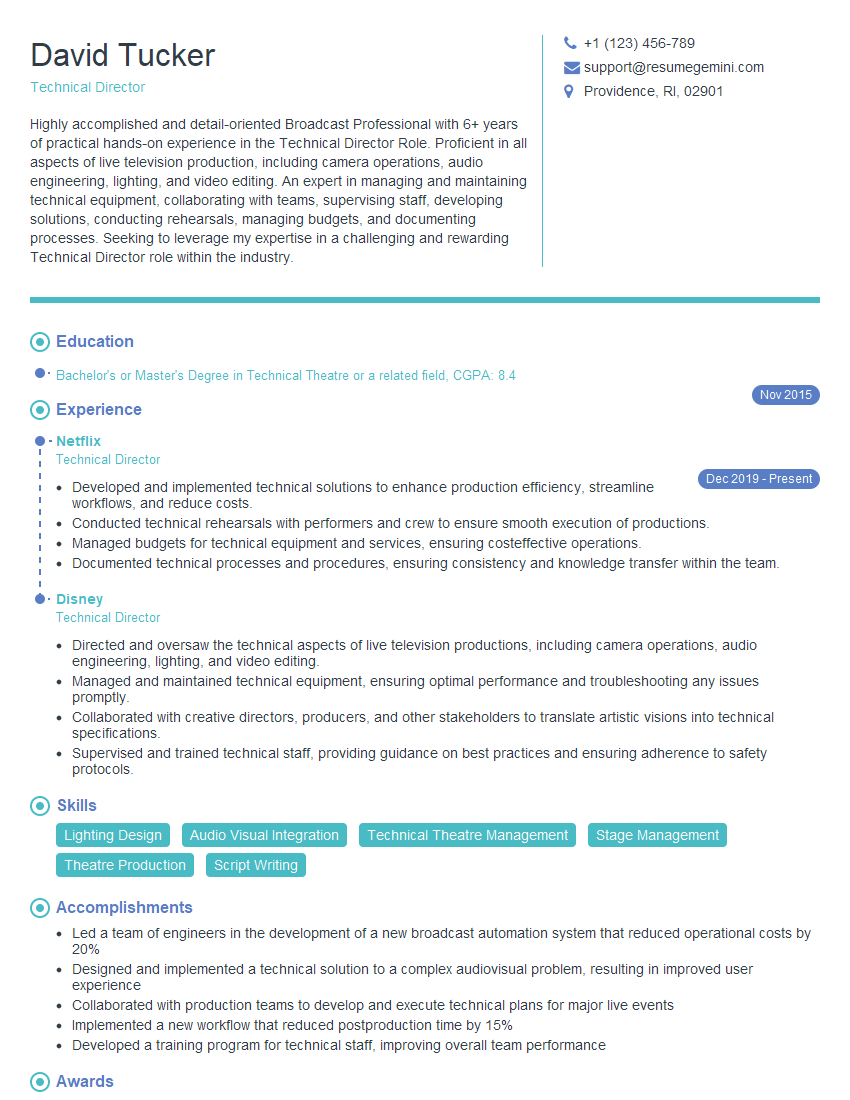
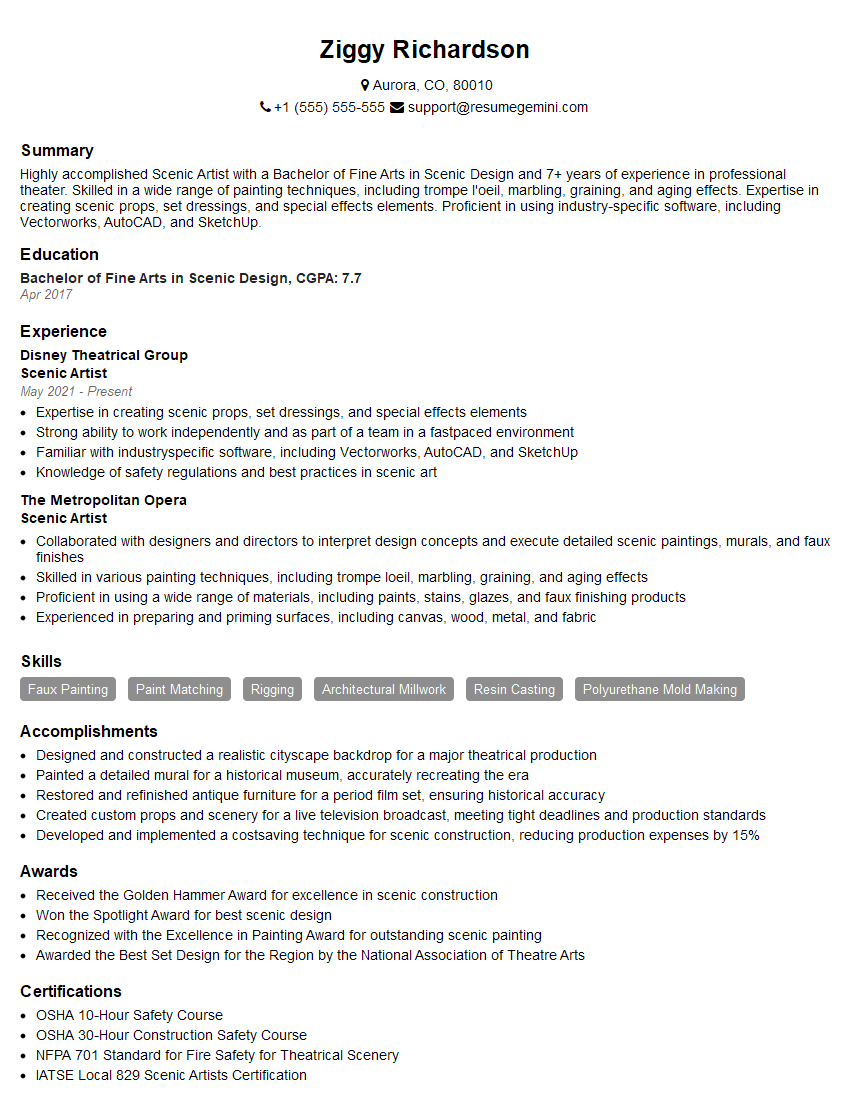
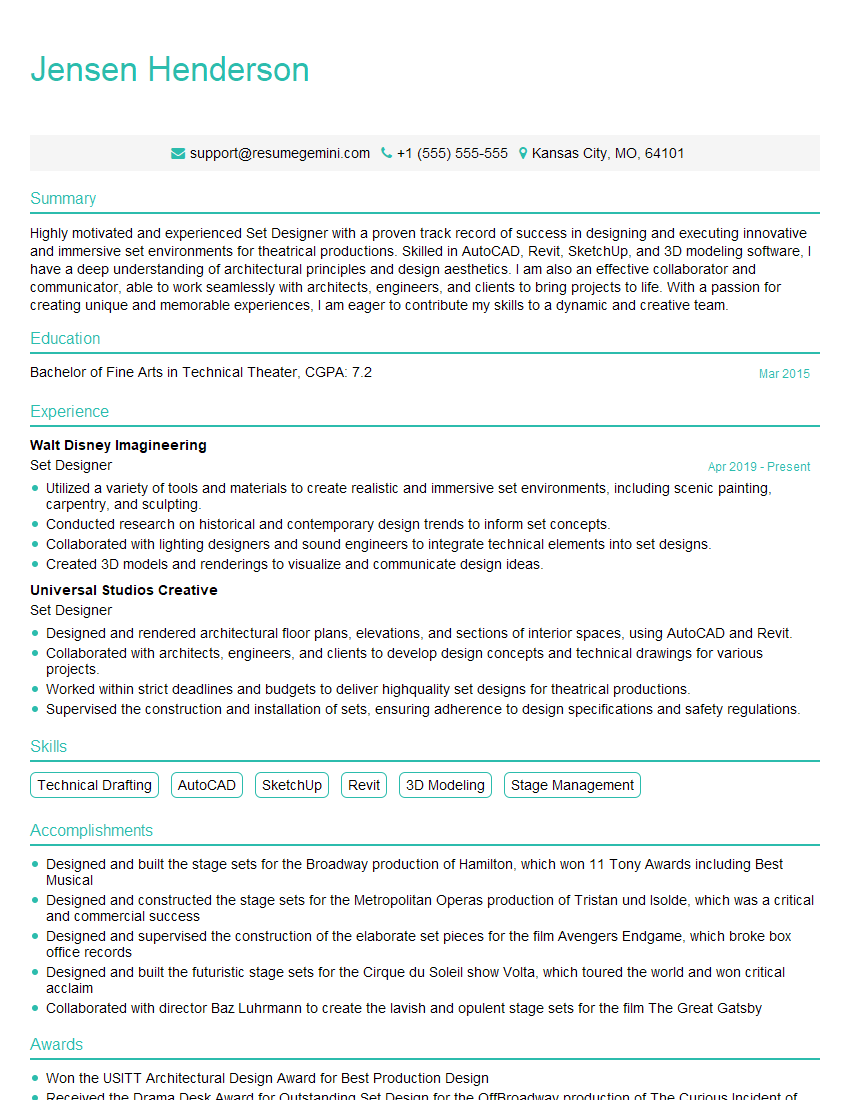
Mastering the skill of constructing and painting stage props opens doors to exciting career opportunities in theatre, film, television, and event production. A strong resume is crucial for showcasing your expertise and securing your dream role. To significantly increase your chances of getting noticed by recruiters and Applicant Tracking Systems (ATS), focus on building a well-structured, ATS-friendly resume that highlights your achievements and skills. ResumeGemini is a trusted resource to help you create a professional and impactful resume. Examples of resumes tailored to showcasing expertise in constructing and painting stage props are available, providing you with valuable templates and inspiration for your own resume.
Explore more articles
Users Rating of Our Blogs
Share Your Experience
We value your feedback! Please rate our content and share your thoughts (optional).
What Readers Say About Our Blog
Very informative content, great job.
good